
Submitted:
10 June 2026
Posted:
11 June 2026
You are already at the latest version
Abstract
Background: Rheumatoid arthritis-associated interstitial lung disease (RA-ILD) is an important extra-articular manifestation of rheumatoid arthritis and is associated with impaired pulmonary function and poor clinical outcomes. Although interstitial abnormalities in RA-ILD have been widely studied, airway involvement, particularly small airway dysfunction, has received less attention. This study aimed to evaluate small airway function and impulse oscillometry parameters in patients with RA-ILD and to explore their associations with disease severity. Methods: This retrospective study included patients with RA-ILD who were treated at Beijing Jishuitan Hospital, Capital Medical University, between January 2021 and December 2025. Age- and sex-matched healthy individuals without pulmonary disease were included as controls. Clinical data, high-resolution computed tomography (HRCT) findings, pulmonary function parameters, and impulse oscillometry indices were collected. Small airway function was assessed using MEF25–75%, MEF50%, and MEF25%. Disease severity was evaluated using HRCT visual scores, the gender–age–physiology (GAP) score, and the composite physiologic index (CPI). Subgroup analyses were performed according to the presence of small airway dysfunction, HRCT subtype, and history of RA-related joint surgery. Correlations between airway function parameters and disease severity indices were analyzed. Results: A total of 255 patients with RA-ILD were included, including 85 men (33.3%), with a mean age of 67.53 years. Compared with controls, patients with RA-ILD had significantly lower BMI, FVC%, TLC%, and DLCO% (all P < 0.05). Small airway function parameters, including MEF25–75%, MEF50%, and MEF25%, were significantly reduced in the RA-ILD group. Impulse oscillometry showed significantly higher Z5, R5–R20, R5/R20, and Fres, and significantly lower X5 in patients with RA-ILD compared with controls. Patients with RA-ILD and small airway dysfunction had lower FVC% than those without small airway dysfunction (87.7% vs. 95.46%, P = 0.015), and their GAP scores tended to be higher, although the difference did not reach statistical significance (2.59 vs. 1.79, P = 0.055). Among different ILD subtypes, only MEF50% differed significantly among the UIP, NSIP, and other-pattern groups. No significant differences in airway function or disease severity were observed between patients with and without a history of RA-related joint surgery. Correlation analysis showed that MEF25–75%, MEF50%, and MEF25% were negatively correlated with GAP score and positively correlated with FVC%. MEF25–75% and MEF50% were also positively correlated with DLCO%. Conclusions: Patients with RA-ILD showed evidence of small airway dysfunction, increased airway resistance, and reduced airway compliance. Small airway function parameters were associated with FVC%, DLCO%, and GAP score, suggesting that small airway dysfunction may be related to disease severity in RA-ILD. Assessment of small airway function and impulse oscillometry may provide useful supplementary information for the clinical evaluation and monitoring of RA-ILD.
Keywords:
rheumatoid arthritis
; interstitial lung disease
; small airway dysfunction
; impulse oscillometry
; pulmonary function
; disease severity
Rheumatoid arthritis (RA) is a systemic autoimmune disease primarily characterized by symmetric polyarticular synovitis, with a global prevalence of 0.46%[1]. Pulmonary involvement is one of its common extra-articular manifestations. Rheumatoid arthritis–associated interstitial lung disease (RA-ILD), an important pulmonary complication, has a reported prevalence of approximately 10–50% among RA patients[2]. Compared with RA patients without ILD (RA–non-ILD), those with RA-ILD exhibit a 2–10-fold increase in mortality, and the median survival after diagnosis is less than 3 years[3].
The airway mucosa may serve as an initial site for RA-related immune activation[4,5]. Computed tomography (CT) reveals airway abnormalities in up to 61% of RA patients[6], predominantly including bronchiectasis, bronchiolitis, and airway wall thickening, with 20.7% exhibiting associated airflow limitation. Quantitative high-resolution CT (HRCT) analyses indicate that metrics such as airway wall thickness and emphysema correlate with the severity of respiratory symptoms in RA.
However, whether RA-ILD patients exhibit airway functional abnormalities, the characteristics of such abnormalities, and the relationship between airway function and RA-ILD severity remain unclear. Evidence from large, targeted clinical studies is lacking. Therefore, systematically investigating airway functional abnormalities in RA-ILD and their clinical relevance is critical for improving pathophysiological understanding, optimizing clinical assessment, and guiding individualized management strategies.
Methods
Study Population
Among 3,605 patients with rheumatoid arthritis who visited Beijing Jishuitan Hospital, Capital Medical University, between January 2021 and December 2025, patients diagnosed with RA-ILD were selected retrospectively as the study group. Healthy individuals undergoing routine health examinations, without pulmonary disease, were selected as the control group. The controls were matched with the study group for sex and age, with no statistically significant between-group differences.Ethical approval was waived by ethics committee
Inclusion Criteria
Patients were included if they met the following criteria:
- Fulfillment of the 2010 American College of Rheumatology/European League Against Rheumatism classification criteria for RA[7];
- Diagnosis of ILD confirmed by chest HRCT and completion of comprehensive pulmonary function testing;
- Availability of complete clinical baseline data and examination results.
Exclusion Criteria
Patients were excluded if they met any of the following criteria:
- Coexisting pulmonary infection, lung cancer, bronchiectasis, asthma, chronic obstructive pulmonary disease, or other pulmonary diseases;
- Incomplete chest HRCT or pulmonary function test results;
- Severe dysfunction of major organs, including the heart, liver, or kidneys.
Baseline Data Collection
General demographic and clinical data were collected uniformly for all participants, including sex, age, smoking history, body mass index, comorbidities such as hypertension, diabetes mellitus, coronary heart disease, and cerebrovascular disease, as well as RA-related clinical data.
HRCT Examination and Disease Assessment
Chest HRCT images were independently reviewed by two experienced radiologists in a double-blind manner. ILD was diagnosed and classified according to HRCT findings into usual interstitial pneumonia (UIP), nonspecific interstitial pneumonia (NSIP), or other patterns. ILD severity was assessed using a visual CT scoring system. The gender–age–physiology (GAP) score and the composite physiologic index (CPI) were also calculated to comprehensively evaluate disease severity.
For the visual CT score of ILD severity[8], each lung lobe was scored from 0 to 5 according to the percentage of interstitial abnormalities. The total fibrosis score ranged from 0 to 25, and severity was classified as mild (0–8), moderate (9–16), or severe (17–25).
The GAP score was calculated according to the scoring and staging method proposed by Ley et al. in 2012[9]. Sex, age, forced vital capacity percent predicted, and diffusing capacity of the lung for carbon monoxide percent predicted were scored, and the total score was used as the GAP score. Patients were classified into three stages according to the total GAP score: stage I, 0–3 points; stage II, 4–5 points; and stage III, 6–8 points.
The CPI was used to describe overall pulmonary function status in patients with IPF[10]. Three parameters were included in the formula: DLCO%, FVC%, and FEV1%. Patients with IPF were divided into two groups according to the CPI[11]: low CPI group, CPI ≤41; and high CPI group, CPI >41.
The CPI was calculated as follows:
CPI = 91.0 − (0.65 × DLCO%pred) − (0.53 × FVC%pred) + (0.34 × FEV1%pred).
Pulmonary Function Testing
Comprehensive pulmonary function testing was performed using standardized pulmonary function equipment. The following parameters were recorded: ventilatory function indices, including forced expiratory volume in 1 second percent predicted (FEV1%), forced vital capacity percent predicted (FVC%), and FEV1/FVC ratio; small airway function indices, including maximum expiratory flow between 75% and 25% of FVC (MEF25–75%), maximum expiratory flow at 50% of FVC (MEF50%), and maximum expiratory flow at 25% of FVC (MEF25%); lung volume index, including total lung capacity percent predicted (TLC%); diffusing capacity index, including diffusing capacity of the lung for carbon monoxide percent predicted (DLCO%); and impulse oscillometry indices, including respiratory impedance at 5 Hz (Z5), the difference between airway resistance at 5 Hz and 20 Hz (R5–R20), R5/R20, reactance at 5 Hz (X5), and resonant frequency (Fres).
Subgroup Analyses
Small airway dysfunction was defined as at least two of the following three indices being less than 65% of the predicted value: MEF25–75%, MEF50%, and MEF25%[12]. According to the presence or absence of small airway dysfunction, patients with RA-ILD were divided into a small airway dysfunction group and a non-small airway dysfunction group, and disease severity was compared between the two groups.
According to HRCT patterns of RA-ILD, patients were further divided into the UIP group, NSIP group, and other-pattern group. Small airway function indices were compared among these groups to explore the potential impact of ILD subtype on small airway function.
According to whether patients had undergone RA-related joint surgery, RA-ILD patients were divided into a surgery group and a non-surgery group. In this study, a history of RA-related joint surgery was considered to indicate more severe joint involvement. Small airway function was compared between the two groups to assess whether it differed according to the severity of joint disease.
Statistical Analysis
Data were analyzed using SPSS version 26.0. Continuous variables were expressed as mean ± standard deviation. Between-group comparisons were performed using the t test, analysis of variance, or nonparametric tests, as appropriate. Categorical variables were expressed as rates or percentages, and between-group comparisons were performed using the χ² test. Baseline characteristics were compared between groups. Pulmonary function, particularly small airway function and impulse oscillometry parameters, was compared between groups. Pearson or Spearman correlation analysis was used to evaluate associations between airway function parameters and disease severity. A two-sided P value <0.05 was considered statistically significant.
Results
A total of 255 patients with RA-ILD were included in the study, including 85 men (33.3%). The mean age was 67.53 years, and 25.1% of the patients had a history of smoking. BMI, FVC%, TLC%, and DLCO% were significantly lower in the RA-ILD group than in the control group, with statistically significant differences (P < 0.05). Details are shown in Table 1.
Other comorbidities included reflux esophagitis, atrophic gastritis, gastric ulcer, atrial fibrillation, renal calculi, and other conditions. BMI:Body Mass Index; FVC%:Forced Vital Capacity percentage of predicted; TLC%:Total Lung Capacity percentage of predicted; DLCO%pred:Diffusing capacity of the Lung for Carbon Monoxide percentage of predicted.

Table 1.
Comparison of baseline characteristics between the RA-ILD group and the control group.
| RA-ILD(255 cases) | Control(230 cases) | t value/χ² | P value | |
|---|---|---|---|---|
| Sex (Male/Female) | 85:170 | 79:151 | ||
| Age | 67.53±10.13 | 66.52±9.32 | 0.93 | 0.63 |
| Smoking history(%) | 25.1% | 22.6% | ||
| Underlying diseases | ||||
| Hypertension | 124 | 104 | ||
| Diabetes mellitus | 52 | 30 | ||
| Coronary heart disease | 36 | 13 | ||
| Cerebrovascular disease | 10 | 5 | ||
| Others | 15 | 8 | ||
| BMI(kg/m2) | 24.39±3.41 | 26.19±3.52 | -4.64 | <0.001 |
| FVC% | 93.06±16.62 | 102.85±12.39 | -5.79 | <0.001 |
| TLC% | 95.72±16.49 | 101.86±12.87 | -3.62 | <0.001 |
| DLCO% | 69.91±20.20 | 89.76±13.72 | -9.86 | <0.001 |
Comparison of Small Airway Function Parameters Between the RA-ILD Group and the Control Group
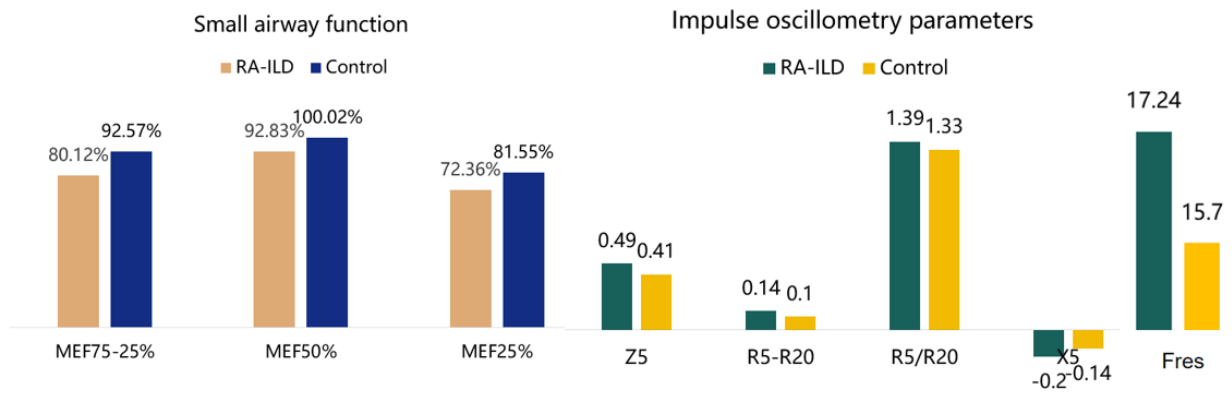
Small airway function parameters were significantly lower in the RA-ILD group than in the control group, and the between-group differences were statistically significant (P < 0.05) (Figure 1). Impulse oscillometry showed that Z5, R5–R20, R5/R20, and Fres were significantly higher in the RA-ILD group than in the control group, whereas X5 was significantly lower. All between-group differences were statistically significant (P < 0.05).
Subgroup Analysis of Patients with RA-ILD
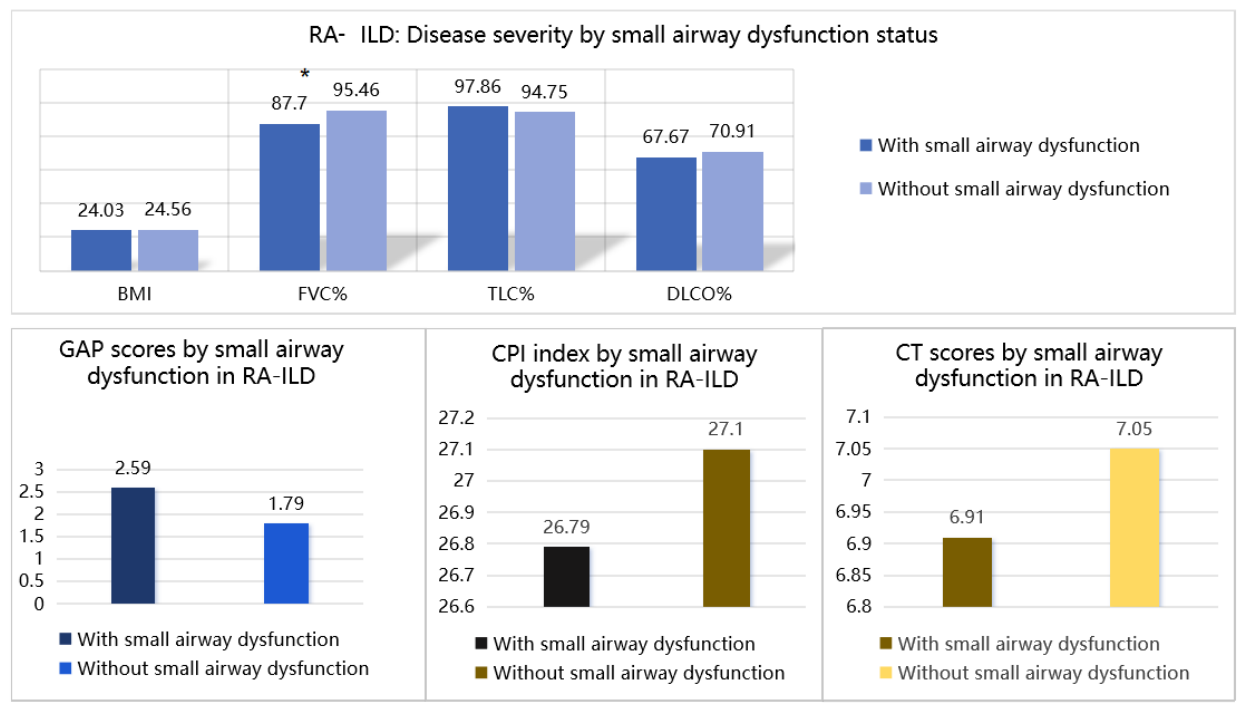
Patients with RA-ILD were divided into a small airway dysfunction group and a non-small airway dysfunction group according to the presence or absence of small airway dysfunction. FVC% was significantly lower in the small airway dysfunction group than in the non-small airway dysfunction group (87.7% vs. 95.46%, P = 0.015). The GAP score was higher in the small airway dysfunction group than in the non-small airway dysfunction group (2.59 vs. 1.79), although the between-group difference did not reach statistical significance (P = 0.055).
There were no statistically significant differences between the two groups in BMI, TLC%, DLCO%, CPI, or CT extent score (all P > 0.05).
Figure 2.
Comparison of disease severity between RA-ILD patients with and without small airway dysfunction *: P < 0.05.
Figure 2.
Comparison of disease severity between RA-ILD patients with and without small airway dysfunction *: P < 0.05.
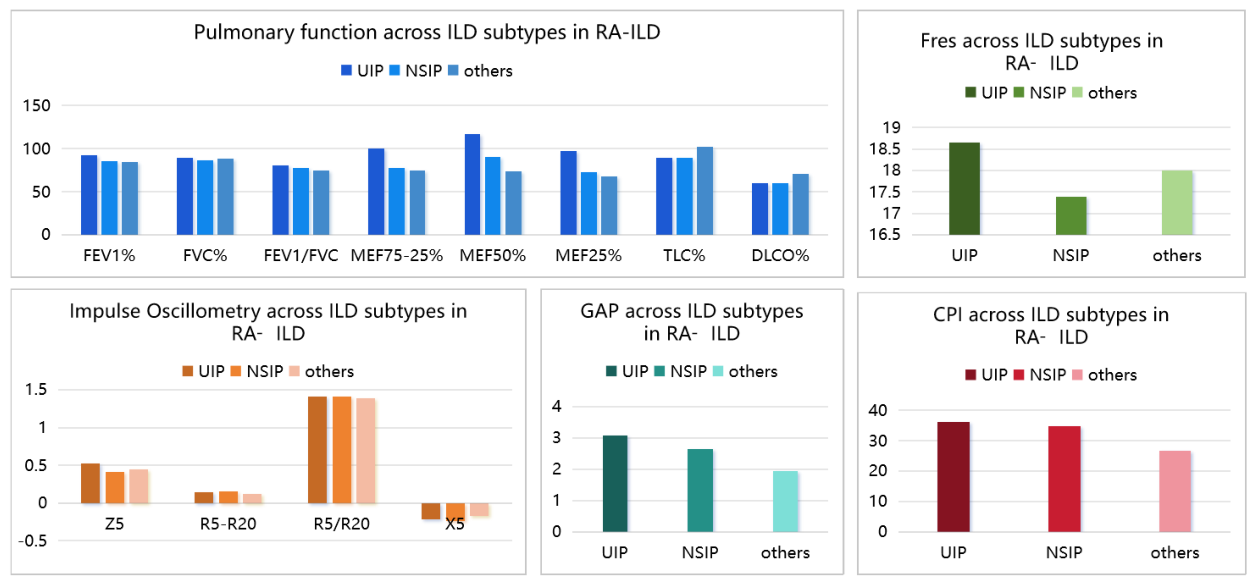
Patients with RA-ILD were classified into the UIP, NSIP, and other-pattern groups according to ILD subtype. Comparisons among the three groups showed a statistically significant difference in MEF50% across ILD subtypes (117.24 vs. 90.08 vs. 74.05, P = 0.034).
No statistically significant differences were observed among the subtype groups in ventilatory function parameters, including FEV1%, FVC%, and FEV1/FVC; small airway function parameters, including MEF25–75% and MEF25%; impulse oscillometry parameters, including Z5 and R5–R20; or TLC%, RV/TLC, DLCO%, GAP score, and CPI (all P > 0.05).
Figure 3.
Comparison of pulmonary function among RA-ILD patients with different ILD subtypes *: P < 0.05.
Figure 3.
Comparison of pulmonary function among RA-ILD patients with different ILD subtypes *: P < 0.05.
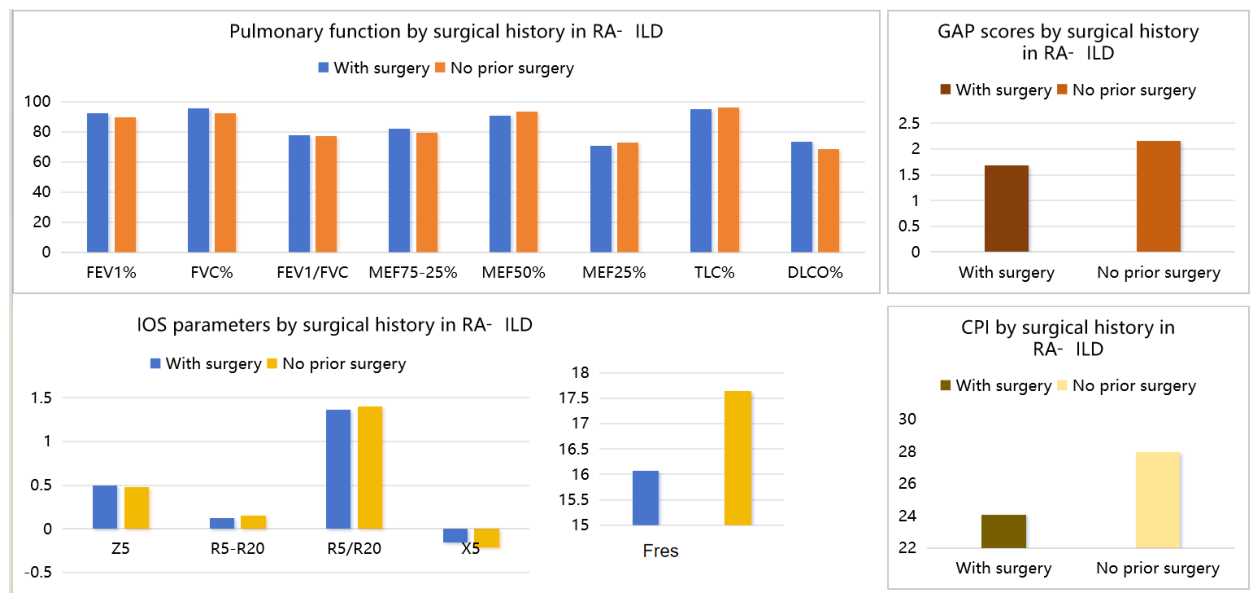
Patients with RA-ILD were divided into a surgery group and a non-surgery group according to whether they had undergone RA-related joint surgery. Between-group comparisons showed no statistically significant differences in ventilatory function parameters, including FEV1%, FVC%, and FEV1/FVC; small airway function parameters, including MEF25–75%, MEF50%, and MEF25%; impulse oscillometry parameters, including Z5, R5–R20, and X5; or TLC%, RV/TLC, DLCO%, GAP score, and CPI (all P > 0.05).
These findings suggest that a history of RA-related joint surgery was not clearly associated with airway function or disease severity in patients with RA-ILD.
Figure 4.
Comparison of disease severity between RA-ILD patients with and without a history of RA-related joint surgery.
Figure 4.
Comparison of disease severity between RA-ILD patients with and without a history of RA-related joint surgery.
Correlations Between Small Airway Function Parameters and Disease Severity
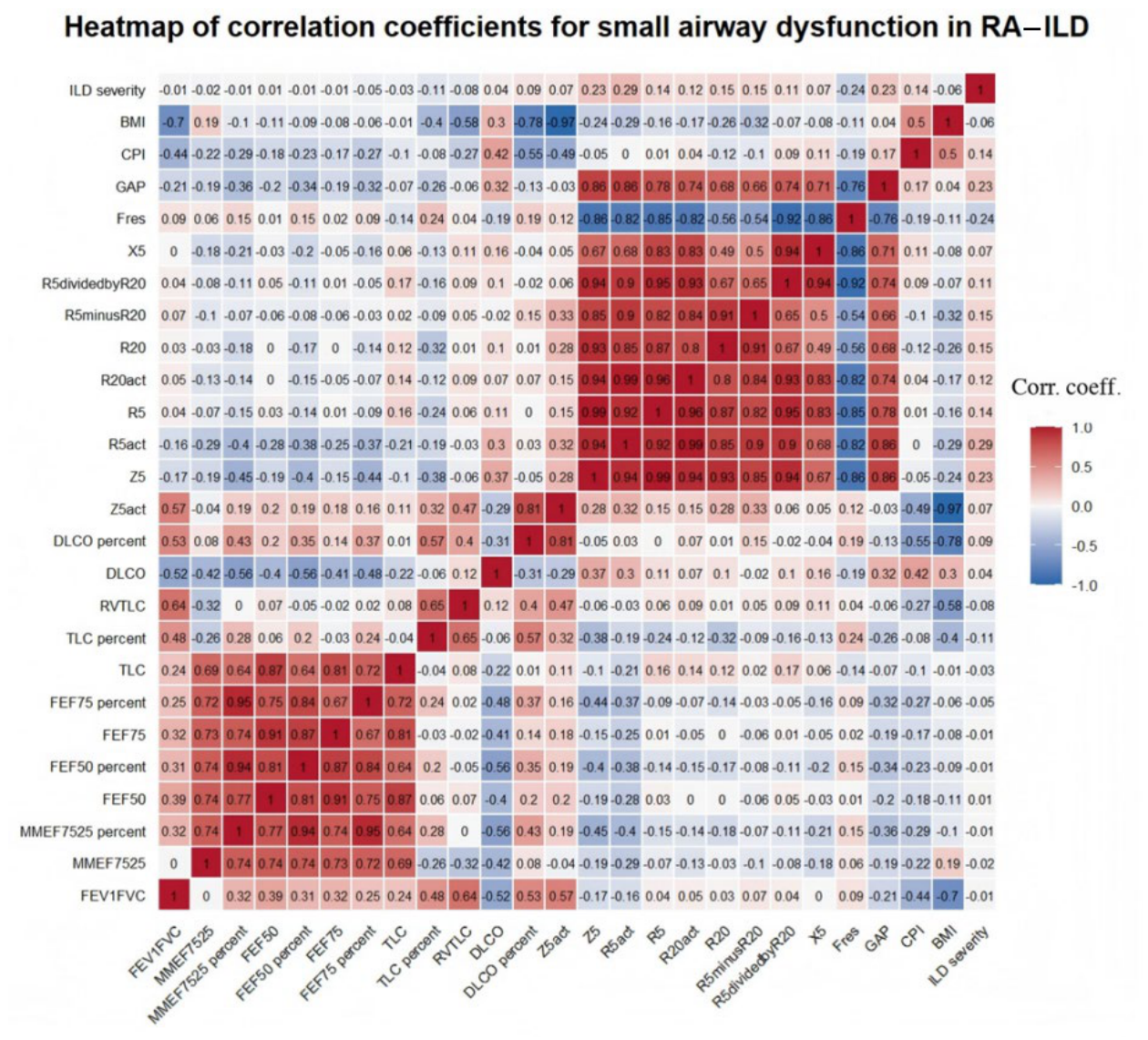
Pearson correlation analysis showed that small airway function parameters were significantly associated with disease severity and key pulmonary function parameters in patients with RA-ILD. MEF25–75%, MEF50%, and MEF25% were all significantly negatively correlated with the GAP score (P < 0.05). MEF25–75%, MEF50%, and MEF25% were all significantly positively correlated with FVC% (P < 0.01). In addition, MEF25–75% and MEF50% were significantly positively correlated with DLCO% (P < 0.05). Among impulse oscillometry parameters, Z5 was significantly positively correlated with DLCO% (P < 0.05).
Figure 5.
Correlations between small airway function parameters and disease severity.
Discussion
In this study, analysis of clinical data from a relatively large cohort showed that patients with RA-ILD had airway functional abnormalities, characterized mainly by small airway dysfunction. Small airway function parameters were also associated with RA-ILD disease severity. These findings provide additional indices for the clinical assessment and monitoring of RA-ILD and address the limited attention previously given to airway involvement in RA-ILD.
Pulmonary involvement in RA may affect multiple anatomical structures, including the interstitium, airways, and pulmonary vasculature, and may manifest as interstitial lung disease, bronchiectasis, and other pulmonary abnormalities[13]. Previous studies have mainly focused on the interstitial features, prognosis, and treatment strategies of RA-ILD, whereas changes in airway function have received comparatively less attention. In the present study, patients with RA-ILD showed reductions not only in FVC%, TLC%, and DLCO%, reflecting impaired ventilatory and diffusing capacity, but also in small airway function parameters, including MEF25–75%, MEF50%, and MEF25%. Patients with RA-ILD and small airway dysfunction had lower FVC%, and their GAP scores tended to be higher. Correlation analysis further showed that small airway function parameters, including MEF25–75%, MEF50%, and MEF25%, were negatively correlated with GAP score and positively correlated with FVC% and DLCO%. These findings suggest that small airway dysfunction may be associated with impaired ventilatory function and disease severity in patients with RA-ILD. Small airway function parameters may therefore serve as supplementary indicators for assessing RA-ILD severity. Compared with conventional parameters such as FVC% and DLCO%, these indices may be more sensitive to subtle structural and functional pulmonary impairment, thereby providing a potential clinical basis for earlier recognition of disease progression and timely intervention.
Comparative analysis among different ILD subtypes showed that only MEF50% differed significantly among the UIP, NSIP, and other-pattern groups, whereas no significant differences were observed in other airway function parameters, impulse oscillometry parameters, or disease severity indices. These findings suggest that airway functional abnormalities in RA-ILD may not be strongly associated with the pathological subtype of ILD. Airway involvement in RA-ILD may represent a common manifestation of systemic autoimmune injury in RA rather than a secondary change specific to a particular ILD subtype. This also suggests that airway involvement and interstitial lesions may represent two relatively independent pathological processes in RA-related pulmonary disease.
The development of RA is considered to result from interactions between genetic and environmental factors, and this interaction may begin in the bronchial mucosa[14]. Anti-cyclic citrullinated peptide (anti-CCP) antibodies are specific serological markers of RA, and their production is closely related to citrullination of bronchial epithelial cells[15]. Chronic airway inflammation may activate peptidylarginine deiminases in epithelial cells, leading to abnormal protein citrullination[16], which may subsequently trigger autoimmune responses and the production of anti-CCP antibodies[17]. This process may contribute both to the development of RA and to local airway injury. Therefore, airway injury and interstitial fibrosis may be driven in parallel[18,19]. Previous studies have detected anti-citrullinated protein antibodies (ACPAs) in sputum and bronchoalveolar lavage fluid from patients with RA and individuals at high risk of RA[5,20,21].
The small airways are delicate pulmonary structures with narrow lumens, thin walls, and no cartilaginous support. They may therefore be particularly susceptible to inflammatory and immune-mediated injury. Early small airway lesions often lack obvious clinical symptoms, and conventional ventilatory parameters may remain normal. Assessment of small airway function parameters and impulse oscillometry may help detect small airway dysfunction. In the present study, compared with controls, patients with RA-ILD had increased Z5, R5–R20, and Fres, and decreased X5. Impulse oscillometry is a noninvasive method that applies forced oscillatory signals during quiet tidal breathing to assess airway resistance and reactance. R5–R20 is commonly used as an estimate of small airway resistance. An increase in R5–R20 may indicate peripheral small airway dysfunction and may occur before abnormalities in conventional pulmonary function parameters, such as FEV1/FVC and MEF. Thus, it may serve as an early screening indicator of small airway impairment. Compared with conventional pulmonary function testing, oscillometry is less time-consuming, has been reported to correlate more closely with symptom scores, and may better reflect the functional status of the small or peripheral airways[22].
Low-frequency oscillatory signals can reach the peripheral airways; therefore, X5 may reflect the overall elastic properties of the airway system, particularly those of the peripheral small airways. Yamamoto et al. reported that X5, Fres, and low-frequency reactance area (ALX/AX) were positively correlated with HRCT fibrosis scores, whereas vital capacity and FVC were negatively correlated with oscillometry parameters and HRCT fibrosis scores[23]. Gogali et al. found that 27% of patients with early IPF had abnormal R5–R20, which was associated with MEF25–75% <60% predicted, suggesting its potential value as an early indicator of small airway dysfunction[24]. Wu et al. also reported that end-inspiratory reactance and inspiratory X5 were strongly correlated with FVC, further supporting the potential relationship between oscillometry parameters, restrictive pulmonary impairment, and small airway mechanical function[25].
However, there are currently no universally accepted normal reference values for IOS parameters, and interpretation should be based on laboratory-specific reference ranges adjusted for age, sex, and height. During testing, coughing, breath-holding, or improper posture may lead to transient increases in some parameters, and repeat testing may be required. In addition, severe obesity, which increases chest wall resistance, and conditions such as pleural effusion or pneumothorax, which compress lung tissue, may mask airway functional abnormalities. Therefore, IOS results should be interpreted in combination with chest imaging findings.
This study has several limitations. First, as a single-center retrospective study, selection bias may be present. Second, long-term follow-up was not performed; therefore, the predictive value of small airway dysfunction for long-term outcomes in patients with RA-ILD, including survival, disease progression, and risk of acute exacerbation, could not be determined. Third, pathological and histological data from the airway mucosa were not available, which limited further clarification of the pathological morphology and molecular mechanisms underlying airway dysfunction in RA-ILD. Future multicenter prospective cohort studies combining quantitative airway analysis on chest HRCT, pathological assessment, and other techniques are needed to further investigate the molecular mechanisms of airway dysfunction in RA-ILD and to determine its predictive value for long-term survival and disease progression.
Conclusion
RA-ILD is associated with small airway dysfunction, accompanied by increased airway resistance and reduced airway compliance. Impulse oscillometry parameters may sensitively reflect small airway abnormalities and may serve as useful tools for evaluating airway involvement in patients with RA-ILD.
Patients with RA-ILD and small airway dysfunction had lower FVC%. Small airway function parameters in RA-ILD were associated with FVC and GAP score, suggesting that small airway dysfunction may be related to ILD severity. Small airway function assessment may therefore provide an important supplement to conventional evaluation of RA-ILD severity and may help support earlier identification of disease progression.
References
- Finckh, A.; et al. Global epidemiology of rheumatoid arthritis. Nat. Rev. Rheumatol. 2022, 18, 591–602. [Google Scholar] [CrossRef]
- Bongartz, T.; et al. Incidence and mortality of interstitial lung disease in rheumatoid arthritis: a population-based study. Arthritis Rheum. 2010, 62, 1583–1591. [Google Scholar] [CrossRef] [PubMed]
- Mena-Vazquez, N.; et al. Predictors of Progression and Mortality in Patients with Prevalent Rheumatoid Arthritis and Interstitial Lung Disease: A Prospective Cohort Study. J. Clin. Med. 2021, 10. [Google Scholar] [CrossRef] [PubMed]
- Holers, V.M.; et al. Rheumatoid arthritis and the mucosal origins hypothesis: protection turns to destruction. Nat. Rev. Rheumatol. 2018, 14, 542–557. [Google Scholar] [CrossRef]
- Kelmenson, L.B.; Demoruelle, M.K.; Deane, K.D. The Complex Role of the Lung in the Pathogenesis and Clinical Outcomes of Rheumatoid Arthritis. Curr. Rheumatol. Rep. 2016, 18, 69. [Google Scholar] [CrossRef]
- Matson, S.M.; et al. Airways Abnormalities in a Prospective Cohort of Patients With Rheumatoid Arthritis. Chest 2025, 167, 495–506. [Google Scholar] [CrossRef] [PubMed]
- Kay, J.; Upchurch, K.S. ACR/EULAR 2010 rheumatoid arthritis classification criteria. Rheumatology 2012, 51, vi5–vi9. [Google Scholar] [CrossRef]
- Gay, S.E.; et al. Idiopathic pulmonary fibrosis: predicting response to therapy and survival. Am. J. Respir. Crit. Care Med. 1998, 157, 1063–72. [Google Scholar] [CrossRef]
- Ley, B.; et al. A multidimensional index and staging system for idiopathic pulmonary fibrosis. Ann. Intern Med. 2012, 156, 684–691. [Google Scholar] [CrossRef]
- Wells, A.U.; et al. Idiopathic pulmonary fibrosis: a composite physiologic index derived from disease extent observed by computed tomography. Am. J. Respir. Crit. Care Med. 2003, 167, 962–969. [Google Scholar] [CrossRef]
- Mura, M.; et al. Predicting survival in newly diagnosed idiopathic pulmonary fibrosis: a 3-year prospective study. Eur. Respir. J. 2012, 40, 101–109. [Google Scholar] [CrossRef] [PubMed]
- Wang, X.; et al. Small airway lesions appear with the course of IPF and relate to the severity of pulmonary fibrosis progression. BMC Pulm. Med. 2025, 25, 465. [Google Scholar] [CrossRef] [PubMed]
- Kadura, S.; Raghu, G. Rheumatoid arthritis-interstitial lung disease: manifestations and current concepts in pathogenesis and management. Eur. Respir. Rev. 2021, 30. [Google Scholar] [CrossRef] [PubMed]
- Demoruelle, M.K.; et al. Brief report: airways abnormalities and rheumatoid arthritis-related autoantibodies in subjects without arthritis: early injury or initiating site of autoimmunity? Arthritis Rheum. 2012, 64, 1756–1761. [Google Scholar] [CrossRef]
- Klareskog, L.; Amara, K.; Malmstrom, V. Adaptive immunity in rheumatoid arthritis: anticitrulline and other antibodies in the pathogenesis of rheumatoid arthritis. Curr. Opin. Rheumatol. 2014, 26, 72–79. [Google Scholar] [CrossRef]
- Luban, S.; Li, Z. Citrullinated peptide and its relevance to rheumatoid arthritis: an update. Int. J. Rheum. Dis. 2010, 13, 284–287. [Google Scholar] [CrossRef]
- Bang, S.; et al. Smoking increases rheumatoid arthritis susceptibility in individuals carrying the HLA-DRB1 shared epitope, regardless of rheumatoid factor or anti-cyclic citrullinated peptide antibody status. Arthritis Rheum. 2010, 62, 369–377. [Google Scholar] [CrossRef]
- Reynisdottir, G.; et al. Structural changes and antibody enrichment in the lungs are early features of anti-citrullinated protein antibody-positive rheumatoid arthritis. Arthritis Rheumatol. 2014, 66, 31–39. [Google Scholar] [CrossRef]
- Chatzidionisyou, A.; Catrina, A.I. The lung in rheumatoid arthritis, cause or consequence? Curr. Opin. Rheumatol. 2016, 28, 76–82. [Google Scholar]
- Deane, K.D.; Norris, J.M.; Holers, V.M. Preclinical rheumatoid arthritis: identification, evaluation, and future directions for investigation. Rheum. Dis. Clin. North Am. 2010, 36, 213–241. [Google Scholar] [CrossRef]
- Willis, V.C.; et al. Sputum autoantibodies in patients with established rheumatoid arthritis and subjects at risk of future clinically apparent disease. Arthritis Rheum. 2013, 65, 2545–2554. [Google Scholar] [CrossRef] [PubMed]
- Patel, S.; et al. A comparison of respiratory oscillometry and spirometry in idiopathic pulmonary fibrosis: performance time, symptom burden and test-retest reliability. ERJ Open Res. 2024, 10. [Google Scholar] [CrossRef] [PubMed]
- Yamamoto, Y.; et al. Oscillometry and computed tomography findings in patients with idiopathic pulmonary fibrosis. ERJ Open Res. 2020, 6. [Google Scholar] [CrossRef] [PubMed]
- Gogali, A.; et al. Oscillometry Assesses Small Airway Disease and Reveals Peripheral Lung Pathology in Early Pulmonary Fibrosis: A Cross-Sectional Study. Diagnostics 2024, 14. [Google Scholar] [CrossRef]
- Wu, J.K.Y.; et al. Correlation of respiratory oscillometry with CT image analysis in a prospective cohort of idiopathic pulmonary fibrosis. BMJ Open Respir. Res. 2022, 9. [Google Scholar] [CrossRef]
Figure 1.
Comparison of small airway function and impulse oscillometry parameters between the RA-ILD group and the control group *: P < 0.05.
Figure 1.
Comparison of small airway function and impulse oscillometry parameters between the RA-ILD group and the control group *: P < 0.05.
Disclaimer/Publisher’s Note: The statements, opinions and data contained in all publications are solely those of the individual author(s) and contributor(s) and not of MDPI and/or the editor(s). MDPI and/or the editor(s) disclaim responsibility for any injury to people or property resulting from any ideas, methods, instructions or products referred to in the content. |
© 2026 by the authors. Licensee MDPI, Basel, Switzerland. This article is an open access article distributed under the terms and conditions of the Creative Commons Attribution (CC BY) license.
Copyright: This open access article is published under a Creative Commons CC BY 4.0 license, which permit the free download, distribution, and reuse, provided that the author and preprint are cited in any reuse.


