

Submitted:
08 June 2026
Posted:
10 June 2026
You are already at the latest version
Abstract
Background: Access to home- and community-based rehabilitation (HCBR) remains limited for older adults with disabilities in rural settings, particularly in Appalachian regions where intersecting social, structural, and geographic barriers persist. Translating complex, multi-source evidence into actionable tools is critical to support context-sensitive intervention design.Objective: To develop evidence-informed user personas representing older adults with disabilities in rural Appalachia and to illustrate interacting barriers to HCBR access, while advancing a transparent methodology for persona development.Methods: This mixed-methods study employed an integrated, multi-layer analytic approach combining multi-source data extraction from literature, population-level datasets, related personas, and qualitative interviews with older adults with disabilities in the region. These data were synthesized using an integrative framework approach guided by Andersen’s Behavioral Model of Health Services Use, enabling translation into persona attributes and narratives. Stakeholder feedback was used to refine personas and enhance contextual relevance. Explicit linkage between source data, synthesized findings, and persona characteristics supported transparency and reproducibility.Results: Four distinct, evidence-informed personas were developed, structured around functional profiles and caregiving contexts, including neurological, musculoskeletal, and multimorbidity-related disability, as well as a dementia caregiver profile. These personas capture heterogeneous and intersecting barriers to HCBR access, including transportation limitations, digital connectivity challenges, and socioeconomic constraints, alongside individual-level goals, narratives, challenges, and actionable insights. Embedding these multidimensional factors into user-centered empathy-driven representations might support stakeholder understanding, prioritization, and context-sensitive intervention design.Conclusions: This study demonstrates a structured, multi-source approach to persona development that integrates knowledge synthesis, population-level indicators, and qualitative insights into user-centered representations. The resulting personas provide a practical foundation for stakeholder-engaged strategies to improve equitable access to rehabilitation services in underserved rural populations.
Keywords:
rural health services
; rural health
; appalachian region
; home care services
; rehabilitation
Introduction
As the population ages, the prevalence of disability continues to rise.[1] In the United States, disability among adults increased from 20% in 2013 to 29% in 2022, and affects 44% of adults aged 65 years and older.[2,3] Disability is also more prevalent in rural than urban areas; rural residents are 24% more likely to have multiple disabilities and 18% more likely to have a long-term disability, even after adjusting for age, sex, race, education, and poverty.[4,5] People with disabilities, particularly those living in rural communities, are more likely to experience poverty, higher living costs,[6] and forgo needed healthcare because of cost,[7] despite having poorer health status and greater chronic disease burden.[2]
In the United States, access-to-care differences disproportionately affect rural, low-income, older, and disabled populations, especially where these characteristics intersect.[8,9] In rural areas, limited service availability, workforce shortages, lower insurance coverage, and inadequate income to cover out-of-pocket costs restrict access to care.[7] Long travel distances and limited transportation options further exacerbate these barriers, particularly for individuals with disabilities.[10,11,12] Telerehabilitation is recommended as a strategy to improve rural access to care,[13,14,15,16] but adoption may be limited by broadband availability and digital literacy barriers, especially among older adults.[15,17,18,19,20,21,22]
To support aging in place, i.e., remaining in one’s home or community while aging with or experiencing disability,[23,24]older adults require reliable access to home- or community-based rehabilitation (HCBR) services, including occupational, physical, and speech and language therapy. These services are essential for maintaining functional independence and quality of life.[24,25,26,27] However, equitable access to HCBR services varies by geography, with lower availability and utilization in rural and economically disadvantaged counties.[25,28,29] Following acute events such as stroke or hip fracture, rural older adults are more often discharged to nursing facilities rather than home and receive fewer home rehabilitation visits when discharged home.[30] Disparities also persist for individuals with long-term rehabilitation needs; for example, rural residents with dementia receive less home health care, spend more time in nursing homes, and have shorter survival.[31]
Appalachia is a multi-state region spanning across 13 states and is characterized by longstanding socioeconomic disadvantage, poorer health, and adverse social determinants;[32,33] these disparities most pronounced in rural communities, compared with the United States overall, but also relative to non-Appalachian rural areas and state averages. For example, rural Appalachian communities in Ohio experience higher rates of disability, poverty, poor health, and limited healthcare access compared with non-Appalachian Ohio and national averages.[34,35,36,37,38,39] Disability benefit receipt is 38% higher in Appalachian Ohio than in non-Appalachian Ohio and 43% higher than the national average.[34] Notably, 12 of Ohio’s 13 lowest-ranked counties in County Health Rankings are located in rural Appalachia,[38,40] and improving access to care is a priority in all Ohio Appalachian Community Health Improvement Plans.[38] Overall, rural older adults with disabilities—particularly those living in the most underserved or economically deprived communities, such as in rural Appalachia, Ohio—experience compounded disadvantages compared with urban and non-disabled populations.[8,41,42]
One stakeholder-facing approach to representing these intersectional risks to access care is the use of user personas,[43,44,45] which synthesize empirical evidence into fictional yet plausible vignettes reflecting common archetypes of the needs, barriers, and preferences of service users. Personas can provide enhanced understanding of users and customers to improve the user-centered design of systems and products,[46] and be an effective tool to promote a user-centered approach and a valuable participatory method in service or tool co-design.[47] Sets of personas can represent different user needs and circumstances, can support empathy, shared understanding, and decision-making in policy, practice, and implementation research.[43,44,45] Yet, to our knowledge, there are not sets of personas reflecting evidence-based needs and barriers to access HCBR of rural residents in the United States, especially in rural Appalachia.
In this paper, we integrate evidence from literature reviews, geographic health and utilization data, and qualitative interviews with older adults in rural Appalachia to develop a set of older personas experiencing disability and representing common barriers to accessing HCBR services. These personas can help support policymakers, healthcare organizations, public health practitioners, and community stakeholders in co-designing or implementing strategies to improve equitable access to HCBR in rural Appalachia.
Materials and Methods
Ethics:
The study was approved by The Ohio State University Institutional Review Board (IRB ID: STUDY20250099). All participants who completed interviews to inform persona development provided written informed consent.
Study Design:
This study reports a mixed-methods persona development process to support stakeholder-engaged codesign aimed at improving access to care for older adults with disabilities in underserved rural Appalachian Ohio. The approach aligns with recent guidance emphasizing complementarity across data sources.[45,46,47] Quantitative data and prior synthesized evidence identify higher-level patterns and segments, while qualitative data and stakeholder input provide contextualized, narrative-rich insights that enhance accuracy and empathy in user representation.[45,46,47]
Accordingly, the process followed five steps:
- Synthesis of literature and public-domain datasets;
- Determination of persona number, type, and structure;
- Qualitative interviews;
- Integrated framework synthesis guided by Andersen’s Model of Health Services Use;[48] and
- Stakeholder validation and refinement.
1) Use of literature and public-domain datasets
To identify common rural access needs, barriers, and experiences, we drew on systematically synthesized literature iteratively identified by the research team. Altogether, 13 recent systematic, scoping, or umbrella reviews (2021–2026) informed persona content, spanning rural care access, rehabilitation disparities, care transitions (including dementia), digital health barriers, caregiver experiences, post-acute care, and financial hardship. These reviews were organized into key analytic domains (Table 1) to support structured synthesis and mapping to persona attributes. Together, these sources identified recurring structural and health-system barriers for care access for older adults or their informal caregivers living in rural underserved areas.
Table Systematic, scoping, umbrella and other key reviews used to inform the persona development.
We also identified six recent persona sets (2020–2025). Five were from non-U.S. contexts: three on older adults with disabilities,[60,61,62] one on people with chronic pain,[63] and one rural residents access to primary care;[64] geographically, these focused on Canada[60,62,64], Italy,[61] and multiple European countries.[63] The literature-based sources informed structure but not content due to health system differences. One U.S.-based set of personas focused on rural caregivers of individuals with Alzheimer’s disease and related dementias,[65,66] which informed here on the development of both the personas’ structure and content.
Finally, we incorporated public-domain datasets on population health, social determinants of health, and healthcare utilization, including those embedded within multi-domain, place-based indices or translated into interactive geospatial maps. Focusing on national data and, in particular, rural Appalachian Ohio, we extracted local estimates from the CDC Disability and Health Data System,[67] CDC PLACES,[68] County Health Rankings[69,70], and the Social Vulnerability Index[71,72,73] We also used county-level mapped data on home-based therapy need and utilization for rural Appalachia, Ohio, among Original Medicare beneficiaries relative to state and national benchmarks.[74,75]
2) Number, type, and structure of personas:
Prior work typically includes three to five personas for decision-making and codesign.[60,61,64,76] Based on Step 1, we defined four functional profiles among older adults in rural Appalachia:
(1) post-acute neurological disability (e.g., stroke);
(2) post-acute musculoskeletal conditions (e.g., hip fracture or replacement);
(3) multiple chronic conditions and disabilities; and
(4) informal caregivers of individuals living with dementia.
Drawing on existing persona development guidance, personas were initially structured to include the following attributes:
3) Qualitative interviews
To enrich the personas with contextualized, narrative-driven insights,[45,46,47,60] we conducted 1-hour semi-structured interviews with older adults with disabilities living in underserved rural Appalachian Ohio. Interviews focused on actionable barriers and lived experiences in accessing home- and community-based rehabilitation (HCBR) and informed key persona attributes.
We conducted five interviews (mean age 78 years; range 66–90), using clustered recruitment aligned with the three initial personas. One interview, representing the postacute neurological disability persona, was conducted with an informal caregiver for a person with stroke-related communication impairments; this resulted in two interviews informing that persona, reflecting the central role of caregivers in such contexts. Two interviews were also conducted with individuals with multiple chronic conditions, and one with a person with hip fracture. We prioritized these three personas given their limited support from the literature. For the fourth persona (caregiver of a person with dementia), we instead integrated content from persona work by Jolliff et al., which used a multi-step development process including qualitative interviews in rural U.S. settings.[65,66]
Participants were recruited through a local postacute rehabilitation provider, using records of former patients (up to ~14 months post-discharge). The provider screened for eligibility (e.g., age, health and functional status) and obtained permission from the research team to initiate contact, consistent with IRB-approved procedures. Participants could choose interview modality (in person at a location of their choice or telephone) and select a $35 physical gift card vendor of preference. This approach accounted for accessibility barriers (e.g., limited utility of gift cards from a typical e-commerce provider in rural settings), as highlighted by a regional community advisory board during study design; notably, no participants selected a gift card from an e-commerce provider.
4) Integrated framework synthesis
We applied a framework synthesis approach[77] to integrate evidence from multiple sources, including literature reviews, population health databases, published personas, and qualitative interviews. Framework synthesis uses an a priori conceptual model to guide data extraction, analysis, and integration across heterogeneous sources. In this study, Andersen’s Behavioral Model of Health Services Use[48] was selected to structure synthesis.
Andersen’s model is widely used in health services research and is well suited for mixed-methods integration, conceptualizing healthcare use as shaped by interactions among predisposing characteristics, enabling resources, and need factors within broader contextual influences.[48] This framework enabled integration of individual-level insights (e.g., interviews and prior persona work) with structural and environmental conditions (e.g., literature and population-level data), linking lived experiences and preferences with quantitative indicators such as utilization patterns and population health metrics. Within this study, the model served as an organizing scaffold to map multi-source evidence onto persona attributes, ensuring each persona reflected not only clinical and functional status but also the social, economic, and health system factors influencing access to HCBR.
Framework synthesis was conducted by author pairs, with one lead and one confirmatory reviewer at each step, including translation of synthesized findings into persona attributes
5) Persona validation and refinement through stakeholder feedback
Following development of the draft personas, we sought feedback from key regional stakeholders to refine and validate the set. Stakeholders included local scholars with expertise in aging and healthcare access, leaders of regional aging services, and others with both professional and lived experience in the region.
We elicited written, open-ended feedback, which was iteratively incorporated to support context-sensitive refinement of the four personas. Feedback could address structure, content, and tone, with the goal of enhancing contextual relevance, completeness, and acceptability of the final personas.
Results
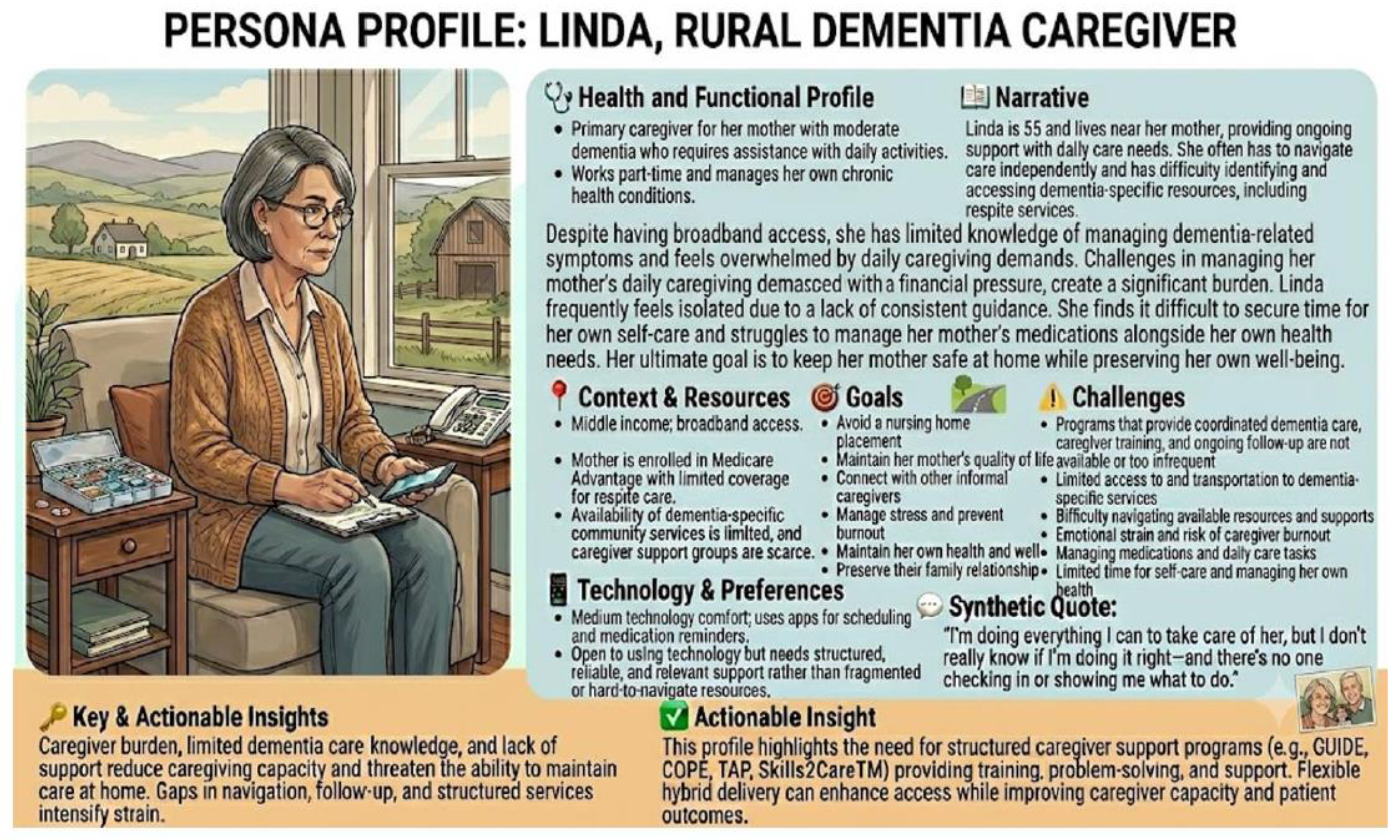
Figure 1, Figure 2, Figure 3 and Figure 4 present the final personas developed through the multi-method process. Supplementary Appendix 1 provides the same underlying content in run text format.
The content populating each persona was primarily derived from the integrative framework synthesis (Table 2).
Organized according to the key domains of Andersen’s Behavioral Model of Health Services Use,[48] Table 2 integrates coded evidence from the literature and population-level datasets, qualitative interviews and related personas, and their subsequent translation into the final persona set. Feedback from regional stakeholders further enhanced the structure and content of the personas, including the integration of intersecting barriers to care access under “challenges” and the inclusion of “actionable insights” to support local codesign processes addressing system- and service-level constraints in access to HCBR.
Across the four personas, distinct yet overlapping configurations of health status, functional limitations, and contextual constraints illustrate the diversity of HCBR access needs in rural populations.
Persona 1 (Rural Stroke Survivor) represents an individual recovering from stroke with ongoing functional limitations at home following inpatient discharge, who may benefit from structured transitional support programs. His access to care is shaped by transportation, coverage, and the availability of rehabilitation services.
Persona 2 (Hip Replacement / High Fall Risk) represents an individual recovering from hip fracture and replacement with ongoing mobility limitations and elevated fall risk at home following discharge, who may benefit from structured fall prevention and rehabilitation programs. Her access to care is shaped by awareness, transportation, financial constraints, and the availability of rehabilitation and community-based services.
Persona 3 (Frail Older Person with Multiple Chronic Conditions) represents an individual with multiple chronic conditions and substantial functional dependence living at home, who may benefit from multi-component home-based programs integrating rehabilitation, care coordination, and environmental supports. Her access to care is shaped by socioeconomic constraints, transportation, service availability, and the complexity of navigating systems of care.
Persona 4 (Rural Dementia Caregiver) represents a caregiver supporting a family member with dementia at home while managing her own health and responsibilities, who may benefit from structured caregiver support programs providing training and ongoing guidance. Her access to care is shaped by service availability, system navigation challenges, and the availability of dementia-specific resources and support structures.
Taken together, the personas demonstrate how barriers to HCBR access accumulate across domains such as health needs, service availability, financial coverage, and social support — occurring in tandem rather than being isolated factors. They also reflect variation in awareness, preferences, and readiness to engage with services, particularly in relation to technology use and the acceptability of telehealth versus in-person care.
Table Integrated framework synthesis of the multi-sourced data coded against the Anderson’s model of health services use.
| Anderson’s Model of Health Services Use | Coding Structure (content analysis) access to care: older residents with disabilities or informal caregivers of those with dementia; live in rural areas |
Data from Literature / Datasets: Contextual Level - attributes of communities, systems, or environments |
Local Individual Interviews and Personas of caregivers of people living with dementia Individual Level - attributes of persons or households |
Persona Attributes | ||
| Domain | Subdomain |
Codes |
Subcodes | Synthesized extractions | Synthesized extractions and/or selected Quotes | Translation into the Personas (structure or content) |
|
Predisposing Enabling |
Demographics |
Age | - Growing burden of Aging |
- Rural populations are disproportionately older (1) (Ekren et al., 2025; University of Wisconsin Population Health Institute, 2025) |
- Not applicable |
- Personas 1, 2, and 3 reflect older adults, and persona 4 is caregiver to an older adult. - Persona 2 reflects lack of caregiver support from migrated adult children. |
| Gender | - Disproportionately women - Older < open to digital technology |
- Older women most frequently outlive men and have no spouse/children to support home living - Older women are less likely to engage with digital health technology. (2) |
- Not applicable |
- Personas 2, 3, and 4 are female. - Personas 2 and 3 are older women with low and very low technology comfort. |
||
| Beliefs (and knowledge) | Literacy | - < educational attainment - < health & tech literacy |
- Rural populations have < educational attainment (3) - Rural populations have lower health and technology literacy (1,2,4,5) |
- Dementia caregivers may have limited knowledge about dementia and dementia care (Jolliff et al., 2024) |
- Persona 4 has limited knowledge: dementia care. - Personas 1, 2 and 3 have very low to moderate technology comfort; Persona 2 had a lack of telehealth options that fit her technology comfort. |
|
| Service awareness | - Unaware of available services and tools |
- Patients may be unaware of the available rehab services and tools in their area (2,5–7) |
- Participants 1, 2, and 5 were unaware how rehab services might be delivered in the home using digital health technology, e.g.: “I don't know what they do in home health [for rehab], I don't know.” – Participant 5 | - Persona 2 is unaware of available services and community resources | ||
| Beliefs | - Trust and mistrust - Other attitudes toward healthcare services - Health-related preferences - Coping and resilience strategies |
- Some rural older adults report mistrust of digital health technology and prefer face-to-face human interaction (2) - Some rural residents with disability report a high level of trust in their physicians (2,4) - Positive coping strategies can mitigate stigma and stress of living with or caring for people living with disability (6) |
- Perceived mismanagement of polypharmacy: She’s been with polypharmacy [issues] over the last few years… doctors are uhm... giving her stuff, looking at her med list and then giving it to her anyways… it just was crazy!’” – Participant 4 - Participants viewed home care as reserved for people with worse health than (participants 1, 2, and 5), and invasive (participant 5). - Participants 2 & 3 preferred receiving consistent care from the same therapist. - Dementia caregivers valued the care recipient’s independence and diverse sources of health information. |
- Persona 3 has had uncomfortable prior experiences with telehealth where the provider became mad with her, contributing to her mistrust of providers and digital health technology. - Persona 1 is apprehensive of new technology - Persona 3 reflects a preference for face-to-face human interaction with the same provider, but fears that fears that home health care may be invasive. - Persona 4 is in need of social and professional support to develop positive coping strategies |
||
| Social | Sociocultural | - Social isolation - Cultural norms and values - Social stigma |
- Rural people with disability experience social isolation and stigmatization (6) - Cultural norms around self-sufficiency may be a barrier to seeking care (4) and using digital health(2) |
- Interviews suggested participants experienced social stigma around the need for home-based healthcare (participants 1, 2, and 5), perceived lack of independence (participants 2, 3, and 5), and need for dementia care, e.g.: “I can drive myself. I'd just like to be on my own. I just don’t like having to depend on anybody.” | - Personas 2, 3, and 4: socially isolated; want to maintain independence at home. - Persona 3 was raised to ‘not be a burden’: Persona 1 worries about stigmatization |
|
|
Enabling Need |
Health Policy | Coverage and referral | - Limited or no health insurance coverage - Administrative complexity |
- Rural populations may have no (1) or inadequate (4) insurance coverage - Administrative complexity of health insurance coverage exacerbates service supply shortage (4) |
- Participants 3 and 4 reported insurance coverage caps dictated level and duration of rehab services, and point of care delivery. - Participant 2 and dementia caregivers reported difficulty managing administrative burden of insurance coverage. |
- Persona 1 exceeded his Medicare Part B coverage cap; remains unaware of options available; it all seems too complex and a lot of paperwork. - Persona 2 exceeded Medicare Part B coverage - Personas 1-4: discharged home without HCBR |
| Provider referral | - Need for provider referral - Inconsistent referral and level of care |
- No consistent guidelines on appropriate level of PAC referral (8) - Rural residents are discharged to SNF/NH and HHC less often than urban residents (9) |
- Participants 1, 2, and 4 reported the need for provider referral to gain coverage for rehab services. | - Personas 1, 2 and 4 were discharged home without HCBR in place |
||
| Reimbursement | - Provider licensure for telehealth - Low /inconsistent reimbursement |
- Nearest providers may not be licensed in the state in which the patient resides (10) - Low and/or inconsistent reimbursement for providers leads to workforce recruitment/retention issues (11) |
- Not applicable | - Persona 1 has no specialized therapy options locally available, and the nearest providers are out of state and not licensed to provide home-based care out of state | ||
| Organization | Accessibility | - Inaccessible community services - Materials and equipment needed for remote care - Network and cellular connectivity |
- Rural people with disability have lower access to community services (3) - Community centers may have physical accessibility issues (4,7) and limited hours of operation (7) - Patients may lack appropriate treatment materials (1) at point of delivery, including technology equipment (5) - Network connectivity issues (1,2,5,6) and inadequate cellular coverage (6) impede rural telehealth delivery |
- Participants 3 and 4 were concerned they lacked appropriate treatment materials and equipment at home for home-based rehab care, e.g.: “Well, it's easier [to do rehab] here at home, because I didn't have to get out [of the house]. But then they had more equipment at the hospital that I could do. Like I said, the bicycle and the… thing that [gestures] strengthens your arms.” – Participant 3 |
- Persona 1 uses a wheelchair and has trouble navigating inaccessible community services - Persona 3 relies on a landline - Persona 1 experiences broadband limitation that made telehealth difficult - Persona 2 desires> home rehab but is concerned she does not have the appropriate equipment |
|
| Service supply | - Limited service availability |
- Rural areas are characterized by services supply shortage in low-density markets (1,3,4,6–10,12) - Local home health providers, when existent, only offer some therapy options (e.g. physical therapy) but not others (e.g. occupational therapy) |
- Participant 4 + dementia caregivers reported a shortage of home care requiring them to drive to local outpatient rehab services or forego care, e.g.: “few home health and respite care services are available, and Dan has had negative experiences with the limited services that do exist which have caused him to discontinue use.” (Jolliff et al., 2024) | - Persona 4 struggles to find respite care and dementia-friendly resources and has limited dementia-support programs locally available - Personas 1, 2 and 3 have limited or no specialized therapy options locally available |
||
| Workforce | - Provider shortage - Workforce recruitment & retention issues - Inadequate provider knowledge, training, and support |
- There are a limited number of providers (1,2,4,6,7,12) and specialists (1) available in rural areas - Workforce recruitment and retention issues contribute to reduced provider availability (1,6,7,12) - Providers may lack training (1,2,4) and administrative & technical support (1,2) for digital health technology; they may lack training for culturally-appropriate care delivery for rural people with disability (1,2,4,6,7) and may be unaware of available services (7) |
- Participant 4 reported a limited number of home-based rehab therapists available, especially speech and language therapists: “[The inpatient rehab hospital] acted like, when they were searching for a place, they couldn’t find people that would come to your house, especially the speech people you know.” – Participant 4 |
- All 4 personas have a limited number of providers in their area; Persona 1 has no specialized therapy options locally available for some therapy types. - Persona 3 reflects prior telephone support was uncomfortable – could not figure out the provider instructions and the provider was becoming mad. - Persona 1 reflects low information of community resources after discharge and no care transition. |
||
| System complexity | - Fragmented care and incompatible EHRs | - Lack of care coordination across hospital, home, and community care (9) and follow-up after patient discharge (6) contributes to rural disparities in PAC use | - One participant reported fragmented care and incompatible EHRs across 3 different regional healthcare systems: “We have [3 care systems] and that’s one of the things that creates problems (…) because they don’t share information. (…) That‘s the worst thing and it’s probably the most dangerous thing!” – Participant 4 | - Persona 1 was discharged from inpatient rehab with no home or community support. Low information of resources. - Personas 1, 2 & 4 were discharged without HCBR. Persona 4 is frustrated with no follow up. - Personas 3 & 4 struggled keeping track of meds. |
||
|
Care Delivery |
Quality | - Low quality of care | - Rural patients receive poorer quality care than urban counterparts (6,11) and report perceived low quality and clinical effectiveness of rural health services (7) | - Participants 2 and 4 reported perceived low quality of home-based and digital, e.g.: “(…)a few of those, phone and video visits. I personally refuse (…) they charge me the same amount of money for a 5-m conversation and there’s no exam. […] I just don't believe it can be effective.” – Participant 4 | - Persona 1 thinks telehealth is low quality. - Persona 3 thinks the home health services are low quality and ineffective and fears that technology would replace human interaction and local care. |
|
| Financing | Income | - Lower socioeconomic status | - Rural populations have lower income (1), limited employment options (3,4), and more often live in poverty (1,13) |
- Overall, participants and dementia caregivers reported low income and/or struggling with the cost of living. | - Persona 1 and 3 had limited income. - Persona 1 is at risk for food insecurity and Persona 3 experiences food insecurity. |
|
| Costs of care | - Prohibitive costs - Disability-related costs |
- Direct and indirect costs of care are prohibitive (4,7) and force rural patients to make trade-offs between costs of care and travel and other life necessities (1,6) - Costs associated with disability cause additional financial strain (1,6,13) |
- Dementia caregivers struggled with the cost of home health care and had difficulty finding financial support for the amount of time they spent caregiving. - Participant 2 had to pay out of pocket for installation of accessibility device. |
- Personas 1, 2, and 4 experience cost barriers, including costs of care, and costs of home modifications after stroke and dementia. Persona 2: Out-of-pocket pay for assistive devices |
||
| Geography | Travel | - Long travel distances - Limited transportation - Need to drive to outpatient rehab |
- Rural areas often require long travel distances to nearest health care facility (1,4,6,7,11) - Rural areas often lack public transportation infrastructure (3,4,6,7) |
- Participants 2 and 4 and dementia caregivers lived in remote areas: “’The nearest town where our address is, don’t laugh, it’s less than 80 people..’” (Jolliff et al., 2024) - Participants 2, 3, and 4 required family support-persons to drive to their outpatient rehab; Participant 5 drove despite feeling uncertain about driving ability. |
- Personas 1, 2, and 3 experience transportation barriers and were 25+ miles away from nearest rehab facility. - Persona 1 needs a not-always available family member to drive him to outpatient care or risk driving himself despite impaired ability |
|
| Geography | - Terrain and climate | - Difficult terrain and climate lead to inaccessible road conditions (4,6,7) | - Not Applicable | - Persona 1 sometimes misses appointments due to poor road conditions. | ||
| Support | Social support | - Informal support - Formal support |
- Rural people with disability may lack family and community support (3,6) - Available community support primarily came from the local community/senior center and local hospital |
- Participants 2-5 and dementia caregivers relied on family members, neighbors, and other informal support sources. - Participants 1-3 & caregivers had limited support, e.g.: “although his siblings live nearby, they do not assist with caregiving, which creates resentment and overwhelm for Larry.” (Jolliff et al., 2024) - Available community support came from the local community/senior center (participants 1 3, and 5), hospital (participant 3), and other local social services like Veterans for Foreign Wars (participant 5) and Aging and Disability Resource Centers (Jolliff et al., 2024; Jolliff et al., 2025) |
- Personas 2, 3, and 4 have limited social support. - Persona 2 primarily relies on the community senior center since her children have left the area. |
|
| Information sources | - Information sources | - Not applicable | - Participant 2 and dementia caregivers relied on informal sources: “(…) there was [home health] but the doctor said there was [an outpatient rehab clinic] attached to the hospital that he should have been to, so [home health] was cancelled and [the doctor] sent him to the [rehab clinic next to the] hospital – Participant 2 | - Persona 3 primarily gets her health information from informal sources. Persona 2: inpatient discharge doctors discouraged home health care or supports in favor of the outpatient clinic attached to the hospital in the context of limited Medicare part B co-pays. |
||
| Caregiver burden | - Caregivers with disability - Caregiver burden |
- Caregivers are often overburdened with care responsibilities and emotional strain (6) -Caregivers express a lack of knowledge that impacts the care provided to their family members (8) |
- Some participants’ primary family support-person also experienced disability. - Dementia caregivers had limited support to assist with caregiving needs, e.g.: “She feels misunderstood by people who are not caregivers; however, she knows few other caregivers, which she attributes to living in a rural state.” (1) |
- Persona 4 is overwhelmed by caregiving responsibilities and financial challenges and struggles to manage her own chronic health conditions. | ||
| Need | Evaluated | Unmet | - Unmet need |
- Rural residents have higher unmet healthcare needs than urban residents (4) | - Not applicable. | - All 4 personas have unmet home-based care needs |
| Perceived Need | Lower perception than need | - Perceived unmet needs - No perceived need for rehab or home-based health care - Perceived unmet needs for dementia caregivers |
- Rural patients are less likely to be aware of the need for rehabilitative services (1,3,4,6,7) |
- Participants 1 and 2 “furniture surfed” to get around their house without their cane and participant 3 fractured her back while cleaning her bathroom: “they think—because I didn't fall that time, but it was right after I mopped the bathroom and kitchen floor that my back started hurting (…) I went to the hospital [and found out it was fractured].” - Participants 2, 3, and 5 did not perceive the need for home healthcare, but participant 3 fractured her back from cleaning: “probably [home health could help with cleaning]” - Dementia caregivers reported unmet need for advanced medication- and symptom-tracking systems and self-care. |
- Persona 2 wants to regain confidence to walk outside and inside the without fear of falling; want to avoid another fall with consequences – like it already happened after mopping the floor. - Persona 1 wants to walk without an assistive device again and has difficulty with stairs - Persona 2 is not aware that she benefits from further rehabilitation or fall prevention care; she thinks this is how aging is - Persona 4 has limited time for self-care and difficulty managing her mother’s medications. |
|
|
Health Behaviors Outcomes |
Process of care | Communication |
- Negative encounters with providers - Communication challenges |
- Negative encounters with providers, including stigmatization and discrimination, contribute to consumer dissatisfaction (6,7) - Communication challenges with providers (6) - Provider-patient/caregiver communication challenges occur among rural residents with disability (6,7) -Providers are unable to provide adequate physical and observational interventions by telehealth (5) |
- Dementia caregivers “few home health and respite care services are available, and Dan has had negative experiences with the limited services that do exist which have caused him to discontinue use. As a result, he receives little formal support for caregiving.” (Jolliff et al., 2024) - Participant 4 reported tense communication with primary care team surrounding dangerous polypharmacy and medication management that lead to multiple ICU visits |
- Persona 3 has had uncomfortable prior experiences with telehealth where the provider became mad with her, contributing to her mistrust of providers and digital health tech. - Persona 4 is frustrated that her mother’s providers did not include her in her mother’s discharge plan and has difficulty managing her mother’s medications. |
| Remote care delivery | - Unreliability of digital health technology |
- Digital health technology may come with technical difficulties and lack reliability (1) |
- Not applicable. | - Network connectivity issues make telehealth solutions challenging for Persona 1. | ||
| Healthcare Utilization | Utilization Patterns | - Lower use of home-based care - Healthcare delay and avoidance - Difficulty adhering to daily exercises |
- Rural people with disabilities use home care at lower rates and nursing home care at higher rates (11,12) - Past negative encounters with providers lead to delay and avoidance of health care needs (7) |
- Participants reported limited utilization of home health, with only one participant (#3) receiving it. - Dementia caregivers reported avoiding home health and respite care services due to negative encounters. - Participants 1, 2, and 3 had difficulty adhering to daily exercises without clinician oversight, e.g.: “ it's difficult just kind of disciplining myself to do [it] every day.” |
- Only Persona 3 utilizes home care. - Persona 3 is slow to trust new providers; avoids telehealth because of past negative encounters. - Persona 3 has a hard time keeping up with her recommended exercises, including as translated to the main quote. |
|
| Health and health care outcomes | Perceived Health | Poor health | - Poor perceived health |
- Not applicable | - Participants 2 & 5 perceived their health to be poor and perceiving no need for continued or more rehab: “[I had] a car accident. I broke two bones in my leg, and in my ankle, and I'm a mess. […] I’m just having a hard time recovering.” – Participant 5 | - Persona 2 experiences pain and fear of falling but is unaware that she would benefit from further rehabilitative or fall prevention care because she thinks pain and fall risk are “how aging is”. |
|
Evaluated Health |
- High rates of disability, mortality, and poor health |
- Rural residents have higher rates of chronic conditions, disability, and poor health (1), and mobility impairment (3), stroke (10), and mortality rates (12) | - Not applicable | - Persona 1 is a stroke survivor, Persona 3 is frail with multiple chronic conditions, and Personas 1, 2, and 3 have mobility disability. | ||
| Consumer Satisfaction | Not great with remote or waiting | - Reduced patient satisfaction with remote care - Long waiting times |
- Rural residents report reduced satisfaction with care lacking face-to-face contact (2) and prefer in-person care (1) - Rural patients report high satisfaction with existing local in-person options and are unmotivated to try different modes of delivery (2) - Long waiting times due to limited available services lead to low intervention intensity (1,6,7,12) |
- “I personally refuse to do those [telehealth and videocall appointments]. I got rid of [it] because they charge me the same amount for a [brief] conversation and there’s no exam and I just refuse. Participant 4 - All participants reported satisfaction with existing local in-person rehab services and providers, e.g.: I've had nothing but positive experiences.” – Participant 2 - One participant reported reduced satisfaction and anxiety with receiving care from multiple different therapists rather than one consistent provider. |
- Persona 3 prefers face-to-face care but is dissatisfied with the home-health care she receives and thinks it is low quality. - Persona 1 has limited motivation to try telehealth and does not think good healthcare can be delivered over the phone. - Persona 3 has long wait times between appointments ND low intervention intensity. - Persona 4 feels support visits are too infrequent. |
|
While the personas were informed by the content in Table 2, that table represents a higher-level synthesis. Detailed framework synthesis outputs, such as extracted content from the literature/population datasets and de-identified interview quotes or related personas, are provided in Supplementary Tables 1 and 2, respectively. Together, these materials ensure transparency from source evidence through to persona development.
Discussion
This study used an integrated mixed-methods approach to develop a set of evidence-informed user personas representing older adults with disabilities in underserved rural Appalachia, focusing on interacting barriers to accessing HCBR. These findings extend prior work on rural health disparities by translating heterogeneous evidence and new data into stakeholder-facing tools that support interpretation, empathy, and context-sensitive intervention design. By integrating literature, population-level data, and qualitative interviews through a structured framework synthesis, supplemented by stakeholder feedback, the resulting personas provide a contextualized and actionable representation of intersecting barriers to care.
Under an intersectionality lens,[8,78,79] these personas move beyond single-axis explanations (e.g., disability, rurality, or age alone) to capture how overlapping social, structural, and geographic factors co-produce inequities in access to HCBR. Constraints related to transportation, workforce availability, digital connectivity, and socioeconomic resources do not operate independently but interact to shape compounded disadvantage. By embedding these intersections into coherent, user-centered narratives, the personas make visible otherwise fragmented evidence and support a more nuanced understanding of access barriers in rural settings.
These patterns are further consistent with Andersen’s Behavioral Model of Health Services Use, reflecting interacting predisposing, enabling, and need-related factors. Structural and system-level constraints—such as workforce shortages, transportation barriers, cost burden, and service fragmentation—were pervasive and often intensified by rural context, aligning with prior evidence on disparities in access to post-acute and rehabilitation services.[25,29,53,80] These barriers intersected with individual-level factors, including multimorbidity, functional limitations, and digital access constraints.[57,58] Qualitative findings added depth, illustrating how these barriers are experienced and negotiated in daily life, including the preferences for service delivery modes that include an in-person element, not fully reliant on telehealth options. Together, these findings reinforce that access to HCBR in rural Appalachia is shaped by dynamic, multi-level interactions rather than isolated barriers.
For older adults with disabilities, HCBR promotes health, functioning, and ageing in place rather than institutionalization.[25,81] However, access remains inequitable in rural populations,[25,31] including rural Appalachia in Ohio, where disability prevalence and poverty rates exceed state and national levels.[34,35,36,37,38,39] This gap underscores the need to deploy evidence-based strategies[82,83,84,85,86] that are tailored to local contexts and responsive to intersecting barriers to access. In this context, the personas developed in this study translate complex, multi-source evidence into practical, user-centered representations that can inform the design, adaptation, and targeting of HCBR strategies. By foregrounding heterogeneity within rural populations, they support more precise identification of needs and barriers, enhance stakeholder deliberation, and improve the contextual fit and acceptability of interventions. In this way, personas can serve as a bridge between evidence synthesis and implementation.
The personas developed in this study are intended as practical tools to support stakeholder-engaged design and implementation of strategies to improve HCBR access. By representing common user archetypes grounded in empirical evidence, they can facilitate shared understanding among policymakers, healthcare organizations, and community partners, and support prioritization and tailoring of interventions.
Consistent with this role, the personas are intended as practical tools to support stakeholder-engaged design and implementation. By representing common archetypes grounded in empirical evidence, they can facilitate shared understanding across policymakers, healthcare organizations, and community partners, and support prioritization and tailoring of interventions. In our ongoing work, we plan to use this set of personas to support regional, community-engaged codesign processes aimed at improving access to HCBR. These processes will leverage local knowledge and existing service structures to develop strategies that are both evidence-based and responsive to interacting determinants of access represented in the personas.
The findings also highlight the need for multi-level strategies that address both structural and individual barriers. This includes addressing workforce shortages and transportation limitations, expanding hybrid service models (combining in-person and task-sharing with community-level workers with tele-mentoring support), including some rehabilitation services in primary care, and strengthening support for informal caregivers. [53,87] While telerehabilitation has been proposed as a solution to improve rural access,[15,53,57] the personas illustrate how digital literacy, broadband access, and user preferences may constrain adoption if not addressed alongside broader enabling resources. More broadly, this work focuses on developing knowledge translation and data-to-action tools, integrating and translating epidemiologic, health services, and qualitative evidence into formats that are more likely accessible and actionable for local decision-making.
Methodologically, this study contributes a transparent and structured approach to persona development. The analytic process spanned three linked layers: (1) detailed multi-source data extraction (supplementary materials), (2) structured synthesis guided by Andersen’s model (main tables), and (3) translation into persona attributes and narratives. By explicitly linking source-level evidence to synthesized findings and persona characteristics, this approach enhances transparency and reproducibility, addressing common concerns about subjectivity in persona development. It also demonstrates how qualitative insights and population-level indicators can be systematically integrated into user-centered representations. This approach may be applicable to other areas of health services and implementation research.
Limitations
Several limitations should be considered. First, qualitative interviews were conducted with a small, purposive sample and focused on selected persona types, which may limit representativeness; however, interviews were intended to contextualize and refine persona attributes rather than achieve thematic saturation. Second, one persona (caregiver of a person with dementia) was informed by existing literature-based factors and personas derived from interviews themselves,[65,66,88] which may introduce differences in contextual alignment despite adaptation to the rural Appalachian context, even though one of the references used participants from a rural Appalachian context itself.[88] Third, recruitment through a single postacute provider may bias perspectives toward individuals already connected to care, potentially underrepresenting those facing the greatest access barriers. Fourth, although multiple data sources were integrated, underlying datasets have known limitations (e.g., measurement constraints, temporal changes in documentation). Fifth, personas necessarily simplify complex realities and may not capture the full heterogeneity within rural populations. Nonetheless, providing both condensed synthesis tables and detailed supplementary extraction enhances transparency and allows readers to trace how heterogeneous evidence informed persona development. Finally, although this paper reports on the development of the personas, including stakeholder refinement, its use to inform policy, public health, health system, and community-based planning and practices have not been tested yet.
Future research should evaluate the use of these personas in real-world stakeholder processes, including their influence on decision-making, codesign, and implementation outcomes. We plan to begin to use these personas for community-based codesign of access-to-care solutions soon. Expanding persona development with larger and more diverse qualitative samples, and integrating personas into interactive data platforms (e.g., geospatial tools), may further enhance usability and scalability. Finally, advanced analytics, including machine learning, can be applied into the quantitative part of the mixed-methods persona development, for developing empirically-derived phenotypes of intersecting access-to-care variables.[44,45].
Conclusions
This study demonstrates the feasibility and value of a multi-step, mixed-methods, framework-informed approach to persona development for representing barriers to HCBR access in rural Appalachia. Our personas used prior work on rural health disparities, including systematic reviews, to extend on that work and translating heterogeneous evidence into personas as a stakeholder-facing tool that supports interpretation, empathy, and context-sensitive intervention design. By linking multi-source evidence to user-centered outputs, the resulting personas provide a foundation for stakeholder-engaged, data-informed strategies to improve equitable access to rehabilitation services among older adults with disabilities in underserved rural settings.
Supplementary Materials
The following supporting information can be downloaded at the website of this paper posted on Preprints.org.
Author Contributions
Conceptualization: TJ; Formal Analysis: KM, TJ; Funding Acquisition: TJ; Investigation: KM, CM; Methodology: TJ, KM, GMT, CC; Project Administration: TJ; Supervision: TJ; Validation: NZ, JA, CM, GMT, CC; Visualization: KM, TJ; Writing Original Draft: TJ, KM; Writing – review & editing: GMT, CC
Funding
The project described was supported by Award Number UM1TR004548 from the National Center For Advancing.
Translational Sciences
The content is solely the responsibility of the authors and does not necessarily represent the official views of the National Center For Advancing Translational Sciences or the National Institutes of Health.
References
- Varadaraj, V.; Deal, J.A.; Campanile, J.; et al. National Prevalence of Disability and Disability Types Among Adults in the US. JAMA Netw. Open 2021, 4, e2130358. [Google Scholar] [CrossRef] [PubMed]
- CDC. Disability and Health Data System (DHDS). 2004. Available online: http://dhds.cdc.gov.
- Okoro, C.A.; Hollis, N.D.; Cyrus, A.C.; et al. Prevalence of Disabilities and Health Care Access by Disability Status and Type Among Adults - United States. MMWR Morb. Mortal. Wkly. Rep. 2018, 67, 882–887. [Google Scholar] [CrossRef]
- Zhao, G.; Okoro, C.A.; Hsia, J.; et al. Prevalence of Disability and Disability Types by Urban-Rural County Classification-U.S. Am. J. Prev. Med. 2019, 57, 749–756. [Google Scholar] [CrossRef]
- Sage, R.; Ward, B.; Myers, A.; et al. Transitory and Enduring Disability Among Urban and Rural People. J. Rural Health 2019, 35, 460–470. [Google Scholar] [CrossRef]
- Mitra, S.; Palmer, M.; Kim, H.; et al. Extra costs of living with a disability: A review and agenda for research. Disabil. Health J. 2017, 10, 475–484. [Google Scholar] [CrossRef]
- Centers for Medicare; Medicaid Services. The CMS Framework for Advancing Health Care in Rural, Tribal, and Geographically Isolated Communities. 2022. [Google Scholar]
- Cohen, A. The Challenges of Intersectionality in the Lives of Older Adults Living in Rural Areas with Limited Financial Resources. Gerontol. Geriatr. Med. 2021, 7, 23337214211009363. [Google Scholar] [CrossRef]
- Ott, J.; Champagne, S.N.; Bachani, A.M.; et al. Scoping 'sex' and 'gender' in rehabilitation: (mis)representations and effects. Int. J. Equity Health 2022, 21, 179. [Google Scholar] [CrossRef] [PubMed]
- Nikolaisen, M.; Arntzen, C.; Eliassen, M.; et al. Rehabilitation models for community integration of adults with acquired brain injury in rural areas: a scoping review. Rural Remote Health 2024, 24, 8281. [Google Scholar] [CrossRef]
- Boehle, S.G. Aging in place as a non-driver in Appalachian Ohio. The Gerontologist 2015, 55, 555. [Google Scholar] [CrossRef]
- Siconolfi, D.; Shih, R.A.; Friedman, E.M.; et al. Rural-Urban Disparities in Access to Home- and Community-Based Services and Supports: Stakeholder Perspectives From 14 States. J. Am. Med. Dir. Assoc. 2019, 20, 503–508.e1. [Google Scholar] [CrossRef]
- Hildebrand, M.W.; Geller, D.; Proffitt, R. Occupational Therapy Practice Guidelines for Adults With Stroke. Am. J. Occup. Ther. 2023, 77. [Google Scholar] [CrossRef]
- Feigin, V.L.; Owolabi, M.O. Pragmatic solutions to reduce the global burden of stroke: a World Stroke Organization-Lancet Neurology Commission. Lancet Neurol. 2023. [CrossRef]
- Salbach, N.M.; Mountain, A.; Lindsay, M.P.; et al. Canadian Stroke Best Practice Recommendations: Virtual Stroke Rehabilitation Interim Consensus Statement. Am. J. Phys. Med. Rehabil. 2022, 101, 1076–1082. [Google Scholar] [CrossRef]
- Winstein, C.J.; Stein, J.; Arena, R.; et al. Guidelines for Adult Stroke Rehabilitation and Recovery: A Guideline for Healthcare Professionals From the American Heart Association/American Stroke Association. Stroke 2016, 47, e98–e169. [Google Scholar] [CrossRef]
- Kringle, E.A.; Skidmore, E.R.; Baum, M.C.; et al. Stakeholders' Experiences Using Videoconferencing for a Group-Based Stroke Intervention During COVID-19: A Thematic Analysis. The American journal of occupational therapy: official publication of the American Occupational Therapy Association 2023, 77. [Google Scholar] [CrossRef] [PubMed]
- Hale-Gallardo, J.L.; Kreider, C.M.; Jia, H.; et al. Telerehabilitation for Rural Veterans: A Qualitative Assessment of Barriers and Facilitators to Implementation. J. Multidiscip. Healthc. 2020, 13, 559–570. [Google Scholar] [CrossRef]
- Zhu, C.; Tran, P.M.; Dreyer, R.P.; et al. Disparities in Internet Use Among US Stroke Survivors: Implications for Telerehabilitation During COVID-19 and Beyond. Stroke 2022, 53, e90–e91. [Google Scholar] [CrossRef]
- Harrington, R.A.; Califf, R.M.; Balamurugan, A.; et al. Call to Action: Rural Health: A Presidential Advisory From the American Heart Association and American Stroke Association. Circulation 2020, 141, e615–e644. [Google Scholar] [CrossRef] [PubMed]
- Gately, M.E.; Quach, E.D.; Shirk, S.D.; et al. Understanding Variation in Adoption of Video Telehealth and Implications for Health Care Systems. Med. Res. Arch. 2022, 10. [Google Scholar] [CrossRef]
- Swietek, K.; Jones, K.A.; Bettger, J.P.; et al. What Explains Inequalities in Telehealth Utilization Among North Carolina Medicaid Beneficiaries? Telemed. J. E Health 2024, 30, e2319–e2326. [Google Scholar] [CrossRef]
- Bolster-Foucault, C.; Vedel, I.; Busa, G.; et al. Social inequity in ageing in place among older adults in Organisation for Economic Cooperation and Development countries: a mixed studies systematic review. Age Ageing 2024, 53. [Google Scholar] [CrossRef] [PubMed]
- Ohio Department of Aging. State Plan on Aging, 2023-2026. 2022. [Google Scholar]
- Quigley, D.D.; Chastain, A.M.; Kang, J.A.; et al. Systematic Review of Rural and Urban Differences in Care Provided by Home Health Agencies in the United States. J. Am. Med. Dir. Assoc. 2022, 23, 1653.e1–1653.e13. [Google Scholar] [CrossRef]
- Hong, I.; Goodwin, J.S.; Reistetter, T.A.; et al. Comparison of Functional Status Improvements Among Patients With Stroke Receiving Postacute Care in Inpatient Rehabilitation vs Skilled Nursing Facilities. JAMA Netw. Open 2019, 2, e1916646. [Google Scholar] [CrossRef]
- Jesus, T.S.; Landry, M.D. Global need: including rehabilitation in health system strengthening. Lancet 2021, 397, 665–666. [Google Scholar] [CrossRef]
- Weaver, R.H.; Roberto, K.A. Location Matters: Disparities in the Likelihood of Receiving Services in Late Life. Int. J. Aging Hum. Dev. 2021, 93, 653–672. [Google Scholar] [CrossRef] [PubMed]
- Kosar, C.M.; Loomer, L.; Ferdows, N.B.; et al. Assessment of Rural-Urban Differences in Postacute Care Utilization and Outcomes Among Older US Adults. JAMA Netw. Open 2020, 3, e1918738. [Google Scholar] [CrossRef]
- Falvey, J.R.; Murphy, T.E.; Gill, T.M.; et al. Home Health Rehabilitation Utilization Among Medicare Beneficiaries Following Critical Illness. J. Am. Geriatr. Soc. 2020, 68, 1512–1519. [Google Scholar] [CrossRef]
- Rahman, M.; White, E.M.; Thomas, K.S.; et al. Assessment of Rural-Urban Differences in Health Care Use and Survival Among Medicare Beneficiaries With Alzheimer Disease and Related Dementia. JAMA Netw. Open 2020, 3, e2022111. [Google Scholar] [CrossRef] [PubMed]
- Appalchian Regional Commission. Health Disparities in Appalachia 2017. Available online: https://www.arc.gov/report/health-disparities-in-appalachia/.
- Cronin, C.E. Contextualizing Appalachian health needs. Lancet Reg. Health Am. 2023, 18, 100428. [Google Scholar] [CrossRef]
- Creating a Culture of Health in Appalachia. Health Disparities in Appalachia: Appalachian Regional Commission. 2024. Available online: https://healthinappalachia.org/.
- Ohio Department of Health. Ohio Health Assessment - Demographic Characteristics 2024. Available online: https://analytics.das.ohio.gov/t/ODHPIPUB/views/SHA_FINAL_Domain_Demographics/11_Demographics?%3Aembed=y&%3AisGuestRedirectFromVizportal=y&%3Alinktarget=_self.
- Wing, J.J.; Rajczyk, J.I.; Burke, J.F. Geographic Distribution of Social Service Resources for Stroke Survivors in Ohio Varies by Rurality. Stroke 2023, 54, 3128–3137. [Google Scholar] [CrossRef]
- Hash, K.M.; Schreurs, B.G.; Tolley, S.M.; et al. Health Disparities in Appalachian and Other Rural Communities. Int. J. Aging Hum. Dev. 2024, 98, 56–68. [Google Scholar] [CrossRef] [PubMed]
- Ohio Rural Health Association. Ohio Rural Health Improvement Plan, 2021.
- Srygley SK, N.; Elliott, D. The Appalachian Region: A Data Overview from the 2018-2022 American Community Survey: Appalachian Regional Comission; 2024. [Google Scholar]
- County Health Rankings & Roadmaps. Health Data. 2024. Available online: https://www.countyhealthrankings.org/health-data.
- Mitra, M.; Long-Bellil, L.; Moura, I.; et al. Advancing Health Equity And Reducing Health Disparities For People With Disabilities In The United States. Health Aff. (Millwood) 2022, 41, 1379–1386. [Google Scholar] [CrossRef]
- Ipsen, C.; Hall, J.P.; Lui, J. Editorial: Rural disability and community participation. Front Rehabil. Sci. 2022, 3, 1049578. [Google Scholar] [CrossRef]
- Dominello, A.; Cheek, C.; Clay-Williams, R. The use of personas to involve consumers in healthcare co-design: a scoping review. BMC Health Serv. Res. 2025, 25, 649. [Google Scholar] [CrossRef]
- Tauro, E.; Gorini, A.; Bilo, G.; et al. A novel data-driven approach for Personas validation in healthcare using self-supervised machine learning. J. Biomed. Inform. 2025, 165, 104815. [Google Scholar] [CrossRef] [PubMed]
- Jansen, B.J.; Salminen, J.O.; Jung, S.-G. Data-Driven Personas for Enhanced User Understanding: Combining Empathy with Rationality for Better Insights to Analytics. Data Inf. Manag. 2020, 4, 1–17. [Google Scholar] [CrossRef]
- Jansen, B.J.; Jung, S.G.; Nielsen, L.; Guan, K.W.; Salminen, J. How to create personas: Three persona creation methodologies with implications for practical employment. Pac. Asia J. Assoc. Inf. Syst. 2022, 14, 1. [Google Scholar] [CrossRef]
- Dominello, A.; Cheek, C.; Clay-Williams, R. The use of personas to involve consumers in healthcare co-design: a scoping review. BMC Health Serv. Res. 2025, 25, 649. [Google Scholar] [CrossRef]
- Lederle, M.; Tempes, J.; Bitzer, E.M. Application of Andersen's behavioural model of health services use: a scoping review with a focus on qualitative health services research. BMJ Open 2021, 11, e045018. [Google Scholar] [CrossRef] [PubMed]
- Mesmar, A.; Mbaabu Limungi, G.; Elmadani, M.; et al. Bridging healthcare disparities: a systematic review of healthcare access for disabled individuals in rural and urban areas. Front Health Serv. 2025, 5, 1695320. [Google Scholar] [CrossRef] [PubMed]
- Dassah, E.; Aldersey, H.; McColl, M.A.; et al. Factors affecting access to primary health care services for persons with disabilities in rural areas: a "best-fit" framework synthesis. Glob. Health Res. Policy 2018, 3, 36. [Google Scholar] [CrossRef]
- Ifejika, N.L.; Awosika, O.O.; Black, T.; et al. Improving Access to Stroke Rehabilitation and Recovery: A Policy Statement From the American Heart Association/American Stroke Association. Stroke 2025, 56, e218–e233. [Google Scholar] [CrossRef]
- Greene, L.; Brain, J.; Watkins, P.; et al. Mind the gap: a systematic review of barriers, facilitators, and experiences of care transitions for people living with dementia and their informal caregivers. Gerontologist 2026, 66. [Google Scholar] [CrossRef]
- Ayres, S.N.; Monteiro, P.C.; Doyle, N.W.; et al. Rural rehabilitation disparities and strengthening strategies: Umbrella review. Work 2026, 10519815261435564. [Google Scholar] [CrossRef] [PubMed]
- Morse-Karzen, B.; Lee, J.W.; Stone, P.W.; et al. Post-Acute Care Trends and Disparities After Joint Replacements in the United States, 1991-2018: A Systematic Review. J. Am. Med. Dir. Assoc. 2024, 25, 105149. [Google Scholar] [CrossRef]
- Lindsay, S.; Abdeahad, N.; Leo, S.; et al. Disability and rurality: a systematic review of qualitative studies of experiences with disability among families with children and youth with disabilities. Disabil. Rehabil. 2025, 47, 6781–6804. [Google Scholar] [CrossRef]
- Arsenault-Lapierre, G.; Bui, T.X.; Le Berre, M.; et al. Rural and urban differences in quality of dementia care of persons with dementia and caregivers across all domains: a systematic review. BMC Health Serv. Res. 2023, 23, 102. [Google Scholar] [CrossRef] [PubMed]
- Hepburn, J.; Williams, L.; McCann, L. Barriers to and Facilitators of Digital Health Technology Adoption Among Older Adults With Chronic Diseases: Updated Systematic Review. JMIR Aging 2025, 8, e80000. [Google Scholar] [CrossRef] [PubMed]
- Rettinger, L.; Kuhn, S. Barriers to Video Call-Based Telehealth in Allied Health Professions and Nursing: Scoping Review and Mapping Process. J. Med. Internet Res. 2023, 25, e46715. [Google Scholar] [CrossRef]
- Kaycee, B. Y.M. Disability and Financial Hardships in Rural Regions: A Scopus Review. Glob. J. Intellect. Dev. Disabil. 2021, 9, 555756. [Google Scholar]
- Provencher, V.; Baillargeon, D.; Abdulrazak, B.; et al. Developing a One-Stop Platform Transportation Planning Service to Help Older Adults Move Around in Their Community Where, When, and How They Wish: Protocol for a Living Lab Study. JMIR Res. Protoc. 2022, 11, e33894. [Google Scholar] [CrossRef]
- Liotta, G.; Roller-Wirnsberger, R.; Iaccarino, G.; et al. From the bench to practice - Field integration of community-based services for older citizens with different levels of functional limitation across European Regions. Transl. Med. UniSa 2020, 23, 1–8. [Google Scholar] [CrossRef]
- Lokker, C.; Gentles, S.J.; Ganann, R.; et al. Knowledge translation strategies for sharing evidence-based health information with older adults and their caregivers: findings from a persona-scenario method. BMC Geriatr. 2021, 21, 665. [Google Scholar] [CrossRef]
- Baker, M.B.; Liu, E.C.; Bully, M.A.; et al. Overcoming Barriers: A Comprehensive Review of Chronic Pain Management and Accessibility Challenges in Rural America. Healthcare 2024, 12. [Google Scholar] [CrossRef]
- Burton, L.; Rush, K.L.; Seaton, C.L.; et al. Generating user-driven patient personas to support preventive health care activities of rural-living unattached patients. PEC Innov. 2024, 4, 100274. [Google Scholar] [CrossRef]
- Jolliff, A.; Loganathar, P.; Holden, R.J.; et al. Creating User Personas to Represent the Needs of Dementia Caregivers Who Support Medication Management at Home: Persona Development and Qualitative Study. JMIR Aging 2025, 8, e63944. [Google Scholar] [CrossRef]
- Jolliff, A.; Hill, J.R.; Zuraw, M.; et al. Representing the Needs of Rural Caregivers of People Living With Alzheimer's Disease and Related Dementias Through User Personas. Innov. Aging 2024, 8, igae096. [Google Scholar] [CrossRef] [PubMed]
- CDC. Disability and Health Data System. 2025. Available online: https://dhds.cdc.gov/LP?CategoryId=&go=GO.
- CDC. PLACES: Local Data for Better Health. 2025. Available online: https://www.cdc.gov/places/index.html.
- University of Wisconsin Population Health Institute. County Health Rankings & Roadmaps 2025. Available online: https://www.countyhealthrankings.org.
- Ekren, E.; Maleki, S.; Curran, C.; et al. Health differences between rural and non-rural Texas counties based on 2023 County Health Rankings. BMC Health Serv. Res. 2025, 25, 2. [Google Scholar] [CrossRef]
- Chen, E.W.; Wu, W.C.; Han, L.; et al. Disparities in Geographic Access to Cardiac Rehabilitation Among Socially Vulnerable Communities. J. Am. Heart Assoc. 2025, 14, e040815. [Google Scholar] [CrossRef]
- Morenz, A.M.; Liao, J.M.; Au, D.H.; et al. Area-Level Socioeconomic Disadvantage and Health Care Spending: A Systematic Review. JAMA Netw. Open 2024, 7, e2356121. [Google Scholar] [CrossRef]
- CDC. Social Vulnerability Index 2024. Available online: https://www.atsdr.cdc.gov/place-health/php/svi/index.html.
- Jesus, T.; Masterson, K. Map 1 Ohio Rehab Access 2026. Available online: https://ohiostate.maps.arcgis.com/apps/instant/basic/index.html?appid=87f388b688b8471f941aa8b051260ba1.
- Jesus, T.S. F.M.; Monteiro, P.C.; Pinho, C.S.; Delaney, G.; Heinemann, A.W.; Deutsch, A. Interactive maps of county-level postacute rehabilitation therapy utilization across the United States based on ten years of Original Medicare data: user-centered codesign. PREPRINT (Version 1) available at Research Square, 2026. [Google Scholar] [CrossRef]
- Zaraa, S.; Steve White, H.; Stergachis, A.; et al. Using design thinking to strengthen the community pharmacist's role in epilepsy care. Epilepsy Behav. 2024, 150, 109542. [Google Scholar] [CrossRef]
- Dixon-Woods, M. Using framework-based synthesis for conducting reviews of qualitative studies. BMC Med. 2011, 9, 39. [Google Scholar] [CrossRef]
- Rogers, W.A.; Ramadhani, W.A.; Harris, M.T. Defining Aging in Place: The Intersectionality of Space, Person, and Time. Innov. Aging 2020, 4, igaa036. [Google Scholar] [CrossRef]
- Weil, J. Intersectionality and the role of the lifecourse in older women's lives. J. Women Aging 2023, 35, 1–3. [Google Scholar] [CrossRef] [PubMed]
- Jesus, T.S. F.M.; Monteiro, P.C.; Pinho, C.S.; Delaney, G.; Heinemann, A.W.; Deutsch, A. Spatiotemporal GIS-based analyses of riskadjusted postacute therapy utilization in Original Medicare: a decade-long analysis identifying longterm and emerging cold spots. PREPRINT (Version 1) available at Research Square, 2026. [Google Scholar] [CrossRef]
- Rosenwohl-Mack, A.; Schumacher, K.; Fang, M.L.; et al. A new conceptual model of experiences of aging in place in the United States: Results of a systematic review and meta-ethnography of qualitative studies. Int. J. Nurs. Stud. 2020, 103, 103496. [Google Scholar] [CrossRef] [PubMed]
- County Health Rankings and Roadmaps. What Works for Health - Access to care: University of Wisconsin and Robert Wood Johnson Foundation. 2024. Available online: https://www.countyhealthrankings.org/strategies-and-solutions/what-works-for-health/strategies?f%5B0%5D=health-factor%3AAccess%20to%20Care.
- Administration for Community Living. Aging and Disability Evidence-Based Programs and Practices 2018. Available online: https://acl.gov/programs/strengthening-aging-and-disability-networks/aging-and-disability-evidence-based-programs.
- Rural Health Information Hub. Evidence-Based Toolkits for Rural Community Health.
- Rural Health Information Hub. Access to Care for Rural People with Disabilities Toolkit 2016. Available online: https://www.ruralhealthinfo.org/toolkits/disabilities.pdf.
- Robert Wood Johnson Foundation; University of Wisconsin Population Health Institute. What Works? Strategies to Improve Rural Health; Madison, WI, 2015. [Google Scholar]
- Seijas, V.; Maritz, R.; Mishra, S.; et al. Rehabilitation in primary care for an ageing population: a secondary analysis from a scoping review of rehabilitation delivery models. BMC Health Serv. Res. 2024, 24, 123. [Google Scholar] [CrossRef]
- Savla, J.; Roberto, K.A.; Blieszner, R.; et al. Family Caregivers in Rural Appalachia Caring for Older Relatives With Dementia: Predictors of Service Use. Innov. Aging 2022, 6, igab055. [Google Scholar] [CrossRef]
Figure 1.
Persona 1 focused on a rural male stroke survivor.
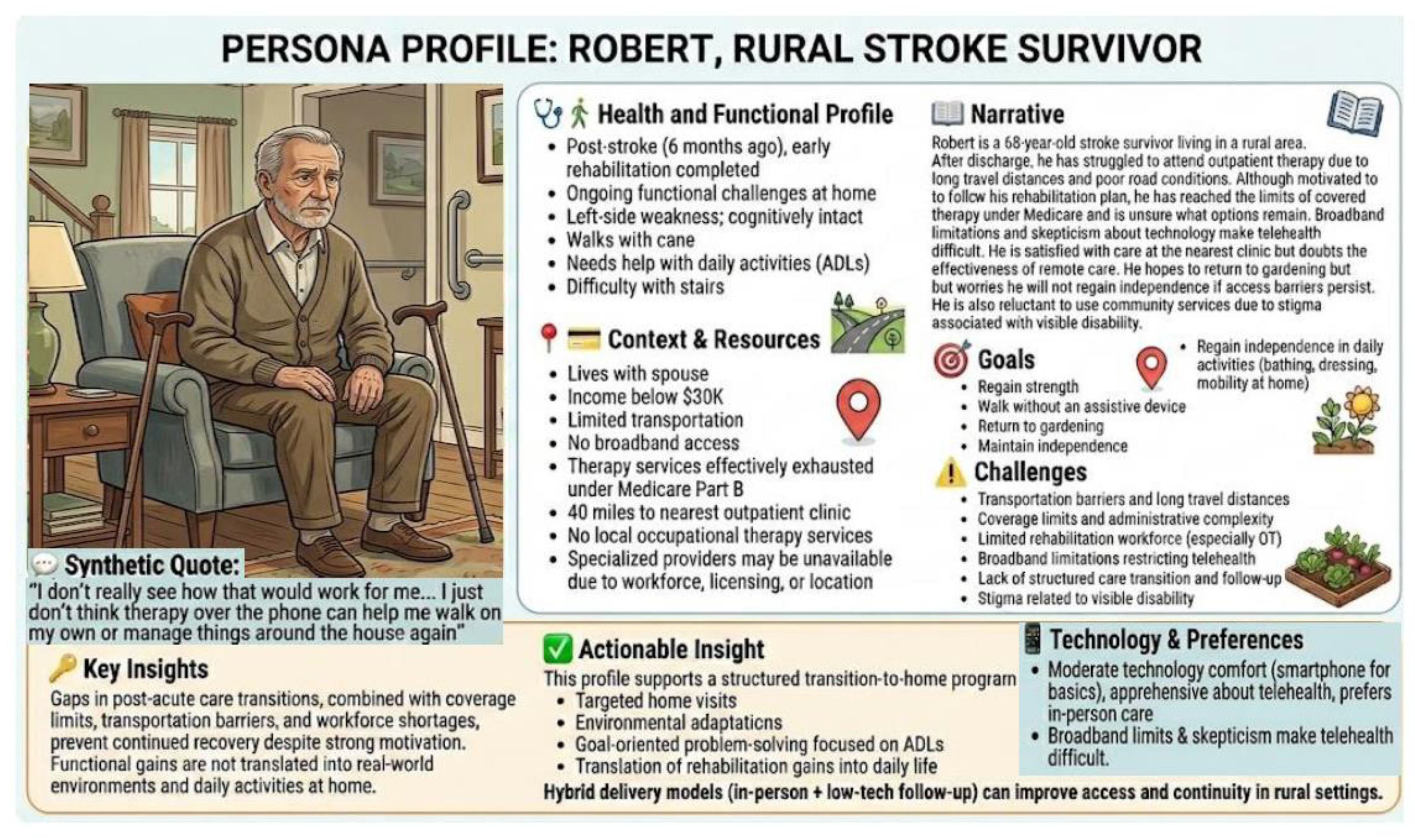
Figure 2.
Persona 2 focused on an older woman with prior hip fracture and replacement from a fall and further fall risks.
Figure 2.
Persona 2 focused on an older woman with prior hip fracture and replacement from a fall and further fall risks.
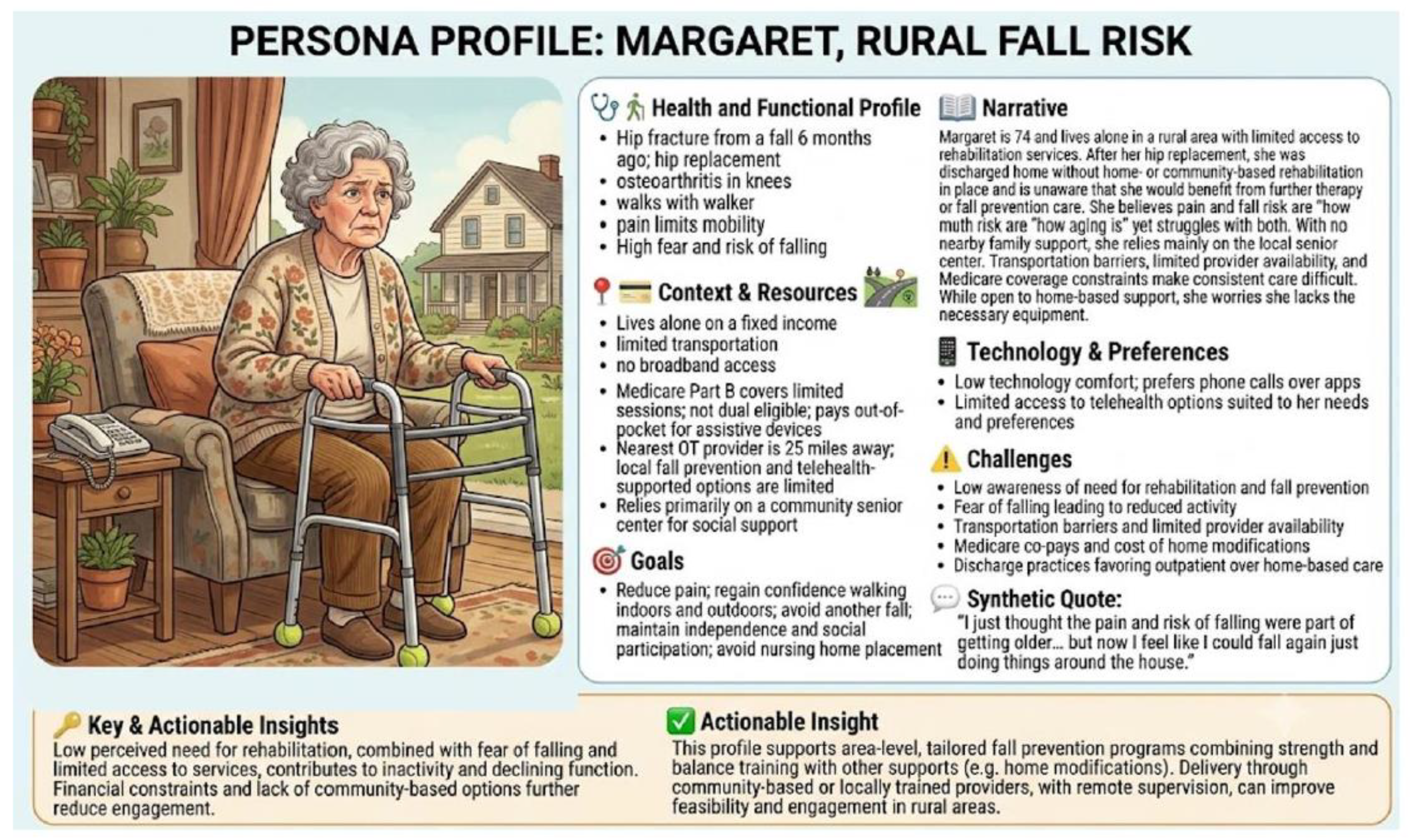
Figure 3.
Persona 3 focused on an older woman with prior hip fracture and replacement from a fall and further fall risks.
Figure 3.
Persona 3 focused on an older woman with prior hip fracture and replacement from a fall and further fall risks.
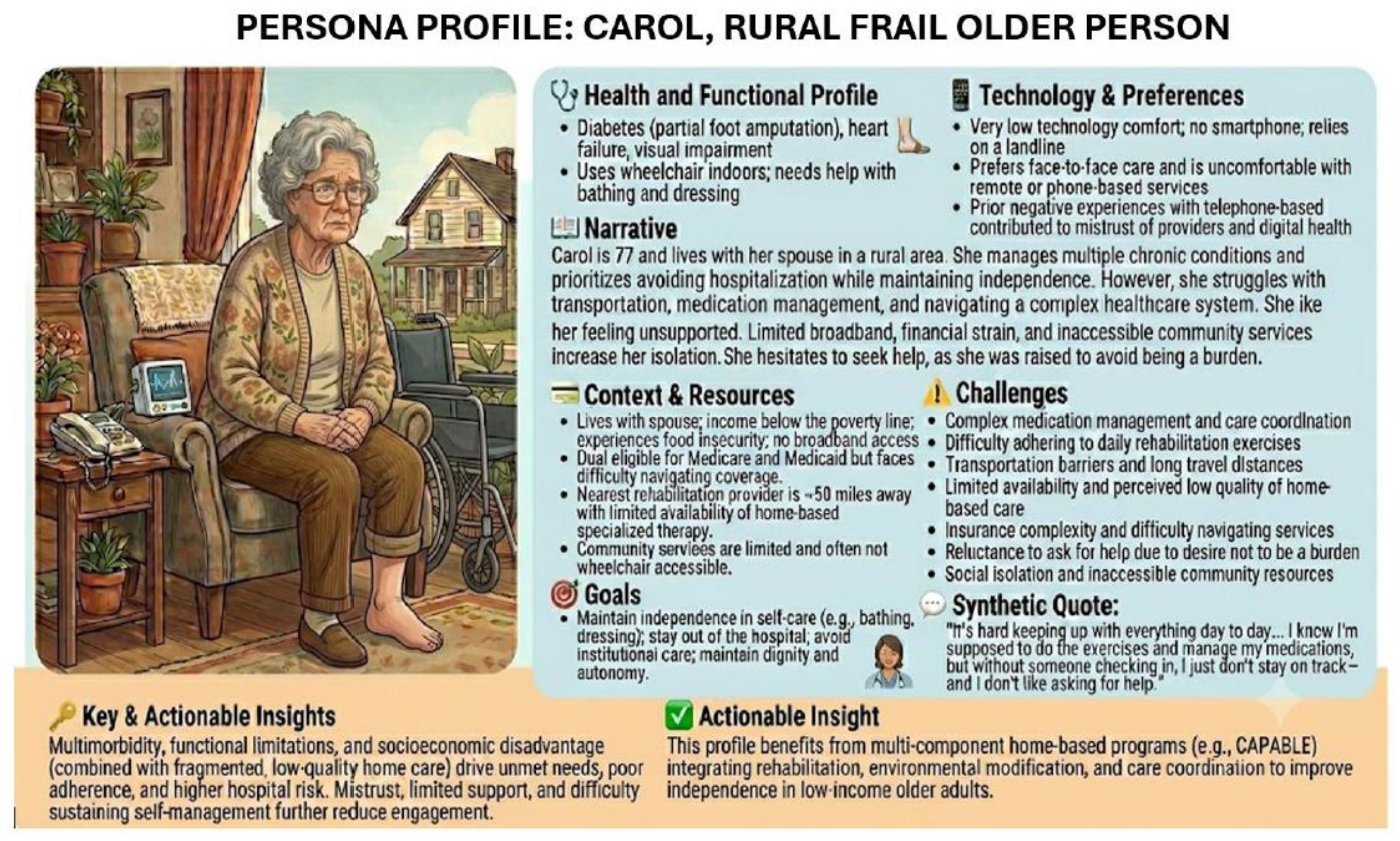
Figure 4.
Persona 4 focused a woman who is an informal caregiver of her mother with Alzeihmer’s.
Disclaimer/Publisher’s Note: The statements, opinions and data contained in all publications are solely those of the individual author(s) and contributor(s) and not of MDPI and/or the editor(s). MDPI and/or the editor(s) disclaim responsibility for any injury to people or property resulting from any ideas, methods, instructions or products referred to in the content. |
© 2026 by the authors. Licensee MDPI, Basel, Switzerland. This article is an open access article distributed under the terms and conditions of the Creative Commons Attribution (CC BY) license (http://creativecommons.org/licenses/by/4.0/).
Copyright: This open access article is published under a Creative Commons CC BY 4.0 license, which permit the free download, distribution, and reuse, provided that the author and preprint are cited in any reuse.


