

Submitted:
09 June 2026
Posted:
10 June 2026
You are already at the latest version
Abstract
Hopkins syndrome (HS) is a rare paediatric condition characterized by acute flaccid paralysis following an asthma attack and is classically attributed to irreversible anterior horn cell damage. Despite decades of case reports, its pathophysiology remains poorly understood, and therapeutic responses to intravenous steroids or immunoglobulins are inconsistent. Nineteen paediatric cases reported over the past 30 years were reviewed, and marked heterogeneity in clinical presentation, neuroimaging findings, treatment timing, and outcomes was identified. Notably, several patients, particularly those with upper extremity involvement, showed substantial or complete recovery, suggesting that HS represents a spectrum of disorders rather than a single entity. Delayed diagnosis and treatment were frequent and likely contributed to irreversible motor neuron injury. Based on clinical patterns and emerging experimental evidence, a unified model is proposed, in which asthma-associated vascular vulnerability, microcirculatory dysfunction, and amplified neuroinflammation converge to produce region-specific injury in the spinal anterior horn. This perspective reframes HS as a potentially treatable condition when recognized early, emphasizing the importance of optimal asthma control, vigilance for neurological symptoms after asthma attacks, and timely initiation of immunomodulatory therapy. Clarifying the neurovascular and inflammatory mechanisms underlying HS may improve outcomes and guide future research on this rare but devastating disorder.
Keywords:
Hopkins syndrome
; post-asthmatic amyotrophy
; mast cells
; microglia
; vascular remodelling
; motor neuron
1. Introduction
In 1974, Hopkins described a series of 10 children with poliomyelitis-like illnesses that occurred 4–7 days after an acute asthma attack [1]. Patients with Hopkins syndrome (HS) experience an abrupt onset of flaccid paralysis in one of their upper or lower limbs due to motor neuron damage in the anterior regions of the spinal cord. Despite receiving intravenous steroid pulse (IVMP) and immunoglobulin (IVIg) therapy, most patients develop permanent flaccid paralysis or weakness. The following hypotheses have been proposed: 1) minor immunosuppression following an asthma attack and direct viral invasion of anterior horn cells [2,3], and 2) an allergic mechanism similar to that in atopic myelitis [4]. Eighteen cases that were reported after a comprehensive 1991 review were investigated [2], diagnostic and treatment challenges were re-examined, and new perspectives on the underlying pathologies were proposed, as well as directions for future research.
2. Materials and Methods
A literature search was conducted on PubMed and Google Scholar for case reports published between 1992 and 2026, using the keywords: “Hopkins syndrome” and “asthma”. To minimize language bias, we searched the Japanese databases (J-STAGE and CiNii) for studies published in Japanese. Searches in Japanese databases were conducted using Japanese translations of the English search terms. 19 cases were identified [5,6,7,8,9,10,11,12,13,14,15,16,17,18,19,20,21]. Clinical presentations, magnetic resonance imaging (MRI) results, electrophysiological findings, and other diagnostic data (Supplementary Table 1) were compared.
3. Results
The data are presented in Supplementary Table 1.
3.1. Age and Sex Differences
Patient age ranged from 4 months to 15 years, with a male-to-female ratio of 12:7. In accordance with the source case reports, “sex” in this study (including Supplementary Table 1) was defined based on binary biological sex reported at the time of diagnosis. Because the reviewed literature lacked detailed information, deeper dimensions of sex gender could not be evaluated.
3.2. History of Asthma and Allergy
Three patients experienced their first asthma attack at the time of presentation [11,15,17]. A 4-month-old infant presented with recurrent wheezing and denervation-related asymmetric paralysis, as confirmed by muscle biopsy [18]. Increased serum immunoglobulin E (IgE) concentrations were reported in nine cases [5,6,7,8,10,11,12,19,21]. Eight patients exhibited sensory disturbances [10,12] or pain [5,6,9,11,13], and none had a history of atopy. IgE antibodies specific to Alternaria [21], Dermatophagoides [11,15,19], house dust mites [7,11,12,21], and ticks [7] were detected.
3.3. Time from Paralysis Onset to Referral
3.4. Time from Onset to Starting Therapy
Paralysis that developed during hospitalization for asthma was not treated until > 5 days [17], > 8 days [20], or 23 days [15] after onset. Treatment was not initiated in the early days of the acute phase in any of the cases. Of the 18 patients, seven were unable to receive any treatment. In three cases, treatment was not described [5,16]; three patients were observed as a result of factors related to the chronic phase having become evident [7,21,22]; and one case was treated with antibiotics alone [8].
3.5. Steroid Therapy Before Onset
3.6. Infection
Six cases were preceded by febrile illness [7,9,10,11,18,21], and in one case, paralysis developed during a febrile episode caused by echovirus 13 infection [11]. The diagnosis of echovirus 13 [11], mycoplasma [8], and enterovirus 71 infections [21] was based on a significant increase in antibody titres. Enterovirus D68 [15] and coxsackievirus type A24 genomes [23] were detected in endotracheal aspirates and stool samples, respectively. However, no viral genome was directly detected in the cerebrospinal fluid (CSF) based on polymerase chain reaction (PCR).
3.7. Clinical Features
The onset of weakness or flaccid paralysis occurred within a few to 14 days following an asthma attack. Asymmetrical paralysis or weakness was observed in the upper (left-dominant [9]) and lower (left-dominant [15,17,18]) extremities; no right-dominant cases were reported. Thirteen patients had monoplegia affecting the upper extremities (right [5,16], left [6,10,14,21]) and lower extremities (right [5,7,8], left [11,19,20,22]). One patient experienced flaccid paralysis in both legs, which recurred in the legs and subsequently in the arms [12]. Another patient experienced recurrence of both legs paralysis [18]. Moreover, in several cases, sensory disturbances and pain precede paralysis or weakness. These included bilateral leg paraesthesia (IgE: 558 IU/L) [12], neck pain (IgE: very high [5], 1080 IU/L [6]), and shoulder pain on the side of the affected upper limb [9]; thigh pain in the anterior aspect of the affected side (IgE: not described) [13]; and lower limb pain on the side of the paralyzed limb (IgE: 644 IU/L) [11]. One patient experienced a sphincter disturbance [12]. No cranial nerve abnormalities were observed.
3.8. Cerebrospinal Fluid
Elevated protein levels (>40 mg/dL) were observed in three cases [5,12,20], whereas pleocytosis (cell count >6/μL) was reported in two cases [13,21]. Protein levels and pleocytosis were elevated in four cases [10,11,15,19], were normal in seven [6,7,8,9,14,18,22], and not described in three [5,16,17]. An elevated immunoglobulin G index was observed in two cases [12,19]. Oligoclonal bands were detected in one case [14]. The timing of CSF testing varied, ranging from 8 days before the onset of monoplegia [20] to 1 month [5] and 83 days [21] after onset. Pro-inflammatory cytokine levels were not analysed in any of the cases.
3.9. Magnetic Resonance Imaging
In five cases, the timing of spinal MRI, whether during the acute or subacute phase, was not clearly reported [12,13,18,19,22]. High T2 signal intensity in the spinal cord was reported in nine cases [5,6,10,11,13,15,16,20,21], including one case in which it was detected more than 83 days after onset [21]. In one case, T2 hyperintensity was observed in the anterior horn and adjacent white matter [13]. In the remaining seven cases, T2 hyperintensity was confined to the anterior horn. In two cases, although no abnormalities were found during the acute phase, T2 hyperintensity in the anterior horn and diffuse white matter lesions emerged 18 days [11] and 10 months [5] after onset, respectively. Contrast-enhanced MRI was performed in four cases [6,13,16,17]. None of the cases with hyperintensity showed enhancement of the anterior horn. Among the four patients who underwent contrast-enhanced MRI, one exhibited bilateral enhancement of the anterior nerve root [17]. The optimal timing for performing an MRI remains uncertain.
3.10. Needle Electromyography
3.11. Therapy
Treatments included IVIg alone [9,14,17], IVMP alone [20], IVMP followed by oral prednisolone [12,19], IVIg followed by IVMP [11,12,15], IVMP followed by IVIg [13], oral prednisolone [6,10], an unspecified steroid [18], antibiotics only [8], and no therapy owing to the chronic stage [7,21,22]. In some cases, treatment has not been described [5,16].
3.12. Neurological Outcome
4. Interpretation
4.1. Left Dominant Involvement and Male Predominance
Left-sided dominance was observed in patients with asymmetrical paralysis or weakness. A review of 22 cases by Shahar et al. based on reports published up to 1991 revealed a male-to-female ratio of 14:8 [2]. This ratio is almost identical to that found in the present study (12:7). Although a male predominance was observed, the exact aetiology remains undermined. Further studies are required to clarify this discrepancy is driven by biological sex factors or gender-related environmental differences.
4.2. Prognosis and Delay in Diagnosis and Treatment
A 1991 review [2], which included 10 cases from the original report by Hopkins [1], reported permanent paralysis in 22 cases. Our study showed that 12 of 19 cases showed no improvement at least in one extremity [6,7,8,11,15,16,17,18,19,20,21,22], suggesting the therapeutic effectiveness of IVMP and/or IVIg to some degree. However, the small sample size and variability in the acute and subacute phases make it difficult to assess the effects of IVMP alone, IVMP combined with IVIg, or IVIg alone. Moreover, treatment choice and prognosis did not appear to be related (Supplementary Table 1). However, it is crucial to consider the time lag between symptom onset and treatment, as it can significantly affect the outcome.
The reasons for delayed referral—4 weeks [9], 6 weeks [6], or 3 months [7]—have not been documented. In the case of a 2-year-old boy (83 days post-onset) [21], an initial diagnosis of nursemaid’s elbow was made; however, he visited several medical institutions before the correct cause was identified. The patient was eventually diagnosed with HS, based on a history of asthma attacks, by a paediatric neurologist. Nursemaid’s elbow was initially diagnosed in a 22-month-old infant [16]. In another case of 2-year-old boy (5 months post-onset), initial diagnosis was transient synovitis of the hip [22]. Clinicians should, therefore, be aware that paralysis in children presenting with such symptoms can initially be overlooked or misattributed to an orthopaedic condition, such as arthritis or joint disease. In three cases where symptom onset occurred during hospitalization, the time from onset to initiation of therapy was at least 5 days (10-year-old; recovery from intubation and sedation, treated with IVIg alone) [17], at least 8 days (5-year-old; treated with IVMP alone) [20], and 23 days (5-year-old; recovery from intubation and sedation; treated with IVIg followed by IVMP) [15]. Two 5-year-old patients showed slight and mild recovery from paralysis. These cases suggest that paralysis may be difficult to detect in children after an asthma attack, even during hospitalization. In cases where sedatives are administered for artificial respiration in patients with asthma exacerbation, clinicians should monitor limb movements and asymmetries between the left and right sides, even under sedation.
Distinguishing asthma attacks from viral bronchitis in paediatric clinics is often challenging. However, by the time paralysis becomes evident, a significant number of motor neurons and axons may have already undergone irreversible changes. Therefore, paediatricians and general practitioners should recognize HS early, before complete paralysis occurs. Shahar et al. reviewed 22 cases in 1991 and found that 10 patients experienced muscle pain [2]. Therefore, pain in the neck, upper arms, and legs should be considered an important warning sign of HS; and clinicians should avoid misattributing these symptoms to orthopaedic conditions and immediately refer the patient to a paediatric neurologist. Children are more likely to report pain rather than discomfort during the early stages of paralysis. Therefore, if a child reports pain after an asthma attack, clinicians should carefully examine the muscle strength and deep tendon reflexes in the affected area. If uncertainty remains, an MRI or electrophysiological test should be performed before paralysis becomes complete.
4.3. Diagnostic Problems in Hopkins Syndrome
4.3.1. Variation in Timing of Magnetic Resonance Imaging and Use of Gadolinium Enhancement
MRI findings in HS, as presented above, typically show high T2-weighted signal intensities in the anterior horn region [5,6,10,11,13,15,16,20,21]. In one case, an enhancement effect in the anterior motor nerve roots was also observed in the T1-weighted image [17].
HS is rare, and the timing of MRI differs among patients. Thus, the same pathological condition may be observed at different stages, complicating efforts to understand the fundamental pathology of HS. Furthermore, gadolinium use in patients with asthma is associated with an increased risk of anaphylaxis. Therefore, the benefits and risks of using gadolinium must be carefully considered before its use in patients with HS. Furthermore, MRI using apparent diffusion coefficient values is more sensitive than T2-weighted imaging for the early detection of Wallerian axonal degeneration [24]. Thus, the diffusion coefficient values may serve as a safe and informative tool for the evaluation of HS.
4.3.2. Needle Electromyography
EMG is essential for evaluating motor neuron damage to differentiate between motor neuron disease and peripheral neuropathy. In HS, identifying motor neuron damage as the cause of paralysis is essential for accurate diagnosis. However, performing needle EMG in children is often challenging. Among the 19 cases, needle EMG was not described in four patients [10,15,16,21], and in one case, it was not performed owing to a lack of consent [13].
On EMG, denervation patterns, including fibrillation potentials, have been observed even in cases of complete recovery [14] and recovery with minimal muscular weakness [9]. In contrast, residual paralysis persisted in some cases despite normal [12] or absent denervation findings on EMG [11]. Therefore, EMG findings and clinical prognoses should be interpreted with caution. Given the potential for recovery in children, adequate treatment and rehabilitation should be provided for HS, even in cases of denervation on EMG.
4.3.3. Cerebrospinal Fluid Examination
The timing of lumbar puncture, similar to that of MRI, is important. Performing a lumbar puncture during the subacute stage may affect the results of virus isolation. Identification of the causative virus may require improved PCR sensitivity and comprehensive pathogen detection. Moreover, to the best of our knowledge, no report has examined inflammatory cytokine measurements that distinguish HS from virus-induced anterior or transverse myelitis.
4.3.4. Importance of Distinguishing Treatable Hopkins Syndrome from Classic Hopkins Syndrome
Our study showed that four cases with upper-extremity paralysis exhibited complete [9,14] or marked [10,12] recovery in at least one extremity following therapy. In the original Hopkins report, only 2 of the 10 patients had upper limb paralysis, and both had severe disability [1]. Therefore, these four cases may have had a different pathology from the 10 cases reported by Hopkins and may represent variants within the HS spectrum disorders.
In the first case, IVIg was effective [9]. The authors speculated that immunoglobulins compete for binding to immune complexes, pathological antibodies, or Fc receptors in the central nervous system [9]. Thus, immune complexes produced by infection, and their adherence to motor neurons, may contribute to a reversible loss of function underlying HS.
In the second case, IVIg was effective [14], and CSF examination was normal, except for a positive oligoclonal band and cluster of differentiation 8-positive T lymphocytes, suggesting an immune-mediated mechanism of neuroinflammation.
In the third case, oral prednisolone was effective [10]. It was speculated that the symptoms resulted from an inflammatory lesion primarily affecting the white matter surrounding the anterior horn of the spinal cord [10].
In the fourth case, IVIG followed by IVMP and oral PSL was effective, and the IgG index was increased. The patient experienced a recurrence of muscular weakness in all four extremities [12].
Moreover, in a 5-year-old boy, marked recovery (right lower extremity) and complete recovery (left lower extremity) were observed, IVMP followed by IVIg therapy was effective [13]. CSF examination revealed increased protein levels and pleocytosis. T2-weighted MRI revealed loss of grey-white matter differentiation, suggesting an oedematous lesion in the transverse myelitis.
These cases suggest that HS may not be a single disease, but rather a combination of primary and secondary effects on spinal motor neurons caused by various pathological conditions. Since a significant number of treatable HS spectrum disorders exist, delays in diagnosis and treatment can result in irreversible motor-neuron damage, even if the underlying conditions are the same. Therefore, it is important to carefully evaluate deep tendon reflexes in cases of asymmetric limb weakness or monoplegia following an asthmatic attack. HS should be included in the differential diagnosis if there is a decrease or absence of deep tendon reflexes. MRI T2 imaging is necessary to evaluate HS cases treatable with IVMP, given the possibility of transverse myelitis. The decision to prioritize IVMP or IVIg should be made promptly. If swelling of the spinal cord or poor grey-white matter differentiation occurs, IVMP can be prioritized to reduce oedema and prevent irreversible motor-neuron damage. In hospitals where EMG cannot be performed promptly, and in children for whom testing is not feasible, treatment should be prioritized when T2-weighted imaging suggests a treatable condition such as transverse myelitis. Although EMG can be used to evaluate motor-neuron disorders, it is challenging to use as a basis for the immediate selection of IVMP or IVIg. Additionally, if paralysis occurs during a viral infection, then IVIg may be an option because it is expected to contain neutralizing antibodies against the virus.
5. Future Perspective
5.1. Limitations of Conventional Hypotheses
Hopkins’s original report was published more than 50 years ago. The proposed mechanisms since then can be summarized as follows. 1. Immune suppression and stress during an acute bronchial asthma attack caused by viral infection may enable viral invasion into the anterior horn cells [2,3]. 2. Activation of latent, vaccinated poliovirus in anterior horn cells due to a non-specific immunodeficiency condition caused by bronchial asthma [7]. 3. Intrathecal immunoglobulin synthesis and immune-mediated mechanisms [14]. 4. Cross-reactivity between asthma-related antigens and motor neurons may lead to an immune response, a mechanism proposed for atopic myelitis [4,12]. However, this condition is difficult to explain using conventional hypotheses of allergy, immune response, or direct viral invasion. This lack of explanatory power is due to the ineffectiveness of IVIg and IVMP, with the observed improvement resembling natural recovery. Furthermore, no virus has been isolated from the CSF.
In this study, none of the patients had atopic dermatitis, and neither the blood levels of non-specific IgE nor house dust mite-specific IgE appeared to correlate with disease severity or therapeutic response. However, some patients with HS experience sensory disturbances (IgE 558) [12] and hyperesthesia (IgE 400) [10], suggesting a possible overlap between HS pathogenesis and atopic disorders [4,12]. Similar to the role of platelet aggregation in impairing microcirculation and contributing to the pathogenesis of atopic myelitis [25], platelet activation has been observed during asthma attacks [26]. Therefore, we examined the pathogenesis from perspectives beyond immunity and allergies, and proposed future research directions.
5.2. New Hypothesis: Asthma-Associated Neurovascular Vulnerability of the Anterior Horn
5.2.1. Vascular Endothelial Growth Factor-Mediated Abnormal Vascular Remodelling in the Anterior Horn of the Spinal Cord
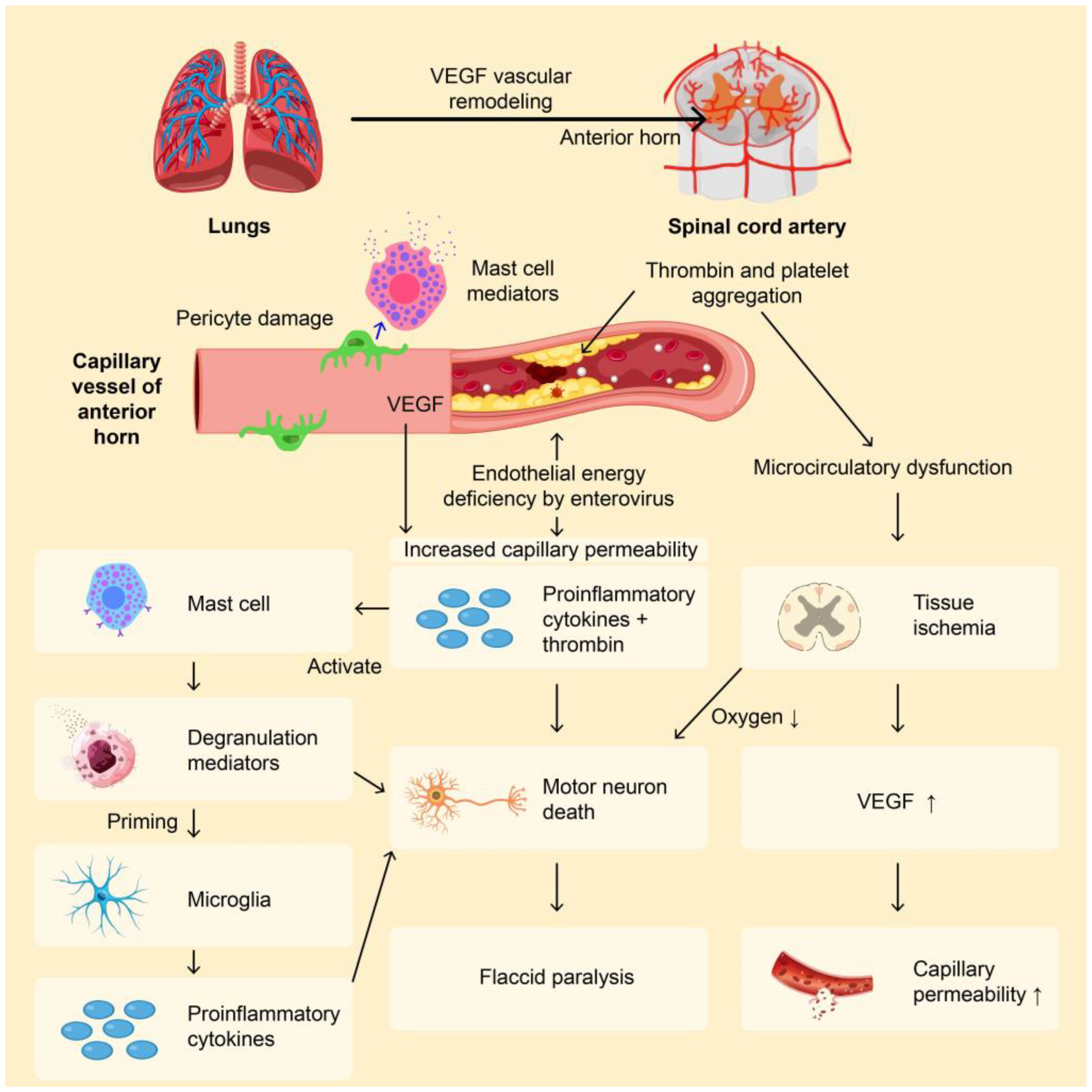
Microvessels in the anterior horn of the spinal cord had less pericyte coverage [27]. Moreover, vascular endothelial growth factor (VEGF) serves as both a circulating biomarker of asthma [28] and as a key factor in airway vascular remodelling [29]. VEGF acts as a negative regulator of pericytes [30] and increases the permeability of the blood-brain barrier [31]. Therefore, in patients with asthma, abnormal capillary remodelling may occur in the anterior horn of the spinal cord, where pericyte coverage is low. Moreover, inhaled allergen-induced lung inflammation in neonatal mice causes pericyte damage via mast cell-derived proteases, and pericyte loss leads to impaired microcirculation and tissue hypoxia [32]. Similar to lung capillary vessels, those in the anterior horns of children with asthma may be repeatedly exposed to unphysiologically high levels of VEGF and mast cell-derived mediators. This may result in pericyte loss and hypoxia. Thus, a vicious cycle involving VEGF-pericyte damage-activation of hypoxia inducible factor-1α/VEGF signalling may occur subclinically and may ultimately disrupt capillary integrity during asthma exacerbations.
5.2.2. Activation of Thrombin and Platelet Aggregation
Platelet aggregation [26] and thrombin formation [33] increase under these conditions. Thrombin activates mast cells, triggering the release of proteases [34].
Thrombin not only activates intracellular protease signals, leading to motor-neuron death via an apoptotic mechanism [35], but also increases blood–brain barrier permeability [36]. Moreover, thrombomodulin, a transmembrane glycoprotein receptor that deactivates thrombin and induces activated protein C formation, is expressed at lower levels in blood vessels proximal to the blood–nerve barrier [37]. Therefore, thrombin activation due to the exacerbation of asthma may lead to increased coagulation in these areas. Thrombin-induced hypercoagulability may contribute to peripheral nerve ischemia and irreversible axonal injury.
5.2.3. Activation of Mast Cell–Microglia Interaction in the Spinal Cord by Asthma
Chronic asthma leads to the activation of microglia in the brain, contributing to neuroinflammation [38]. Similarly, asthma may lead to chronic activation of microglia in the spinal cord. In addition, viral infections can exacerbate asthma and simultaneously result in excessive activation of microglia in the spinal cord. Moreover, mast cell degranulation activates microglia, which play a role in inducing a neuroinflammatory response [39]. Thus, acute asthma exacerbation may activate mast cells in the spinal cord via circulating mediators and cytokines, thereby priming microglial inflammatory responses. This activation can augment the disruption of capillary barrier integrity in the most susceptible region, the anterior horn, and induce pro-inflammatory cytokine production in the white matter by microglia and oligodendrocytes. Moreover, mast cell-derived granules induce apoptosis of oligodendrocytes [40]. Therefore, the measurement of VEGF, pro-inflammatory cytokines, mast cell-derived proteases, thrombin, and the coagulation system in the CSF may also be useful (Summarized in Figure 1).
HS results from the convergence of asthma-associated processes affecting the spinal anterior horn:
Vascular vulnerability. Asthma exacerbations increase circulating vascular endothelial growth factor (VEGF), particularly affecting spinal regions with low pericyte coverage, leading to capillary instability and susceptibility to hypoxia.
Microcirculatory and coagulation disturbances
Asthma-related platelet activation and thrombin generation impair microcirculation, increase barrier permeability, and promote secondary neuronal injury.
Neuroinflammatory amplification
Mast cell activation and primed microglia synergistically disrupt the local microenvironment, inducing delayed motor-neuron injury.
5.3. Region-Specific Vulnerability
The consistent male predominance and left-sided asymmetry observed across reports suggest region-specific vulnerability rather than random viral damage.
5.4. Controlling Asthma by Inhaled Steroids May Prevent Hopkins Syndrome
Inhaled budesonide can suppress VEGF mRNA expression in the airway and alveolar epithelial cells [41]. If elevated circulating VEGF in asthma partly reflects pulmonary production, inhaled budesonide may attenuate VEGF-mediated disruption of capillary integrity in the anterior horn. Moreover, inhaled budesonide suppresses inflammatory cytokine production and neural loss in the brain during chronic asthma [38]. In one case of complete recovery in a 3-year-old girl with flaccid paralysis of the left upper limb, inhaled budesonide was administered before the onset of paralysis [14]. One of the two children receiving the budesonide treatment was 22 months old; therefore, it is possible that he was unable to effectively inhale the medication. Thus, long-term treatment with inhaled budesonide to control asthma may have suppressed the release of VEGF from the lungs and activation of microglia in the spinal cord. The widespread use of inhaled budesonide may partially explain the apparent decline in reported HS cases; however, alternative explanations, including under-recognition, cannot be excluded.
5.5. Genomic Analysis of Viruses
Coxsackievirus A24 was detected in the stool of a 3-year-old girl with developed HS, and whole-genome analysis was subsequently performed. Sequence differences of 3.5%–19.4% were identical when compared with non-paralytic cases [23]. Future studies should include genetic and neurotoxic analyses.
5.6. Increasing the Sensitivity of Polymerase Chain Reaction and Using Comprehensive Detection of Viral Genomes
At the time of the paralysis diagnosis, several days to weeks had already passed since the asthma attacks. Consequently, the virus may not have been isolated from the CSF or detected using conventional PCR methods. Efforts to develop a highly sensitive assay for detecting viral genomes in the CSF [15] highlight the need to improve PCR sensitivity and conduct comprehensive viral screening.
6. Conclusion
Hopkins syndrome is best understood as a heterogeneous spectrum of asthma-associated neurovascular and neuroinflammatory disorders rather than a single disease entity. Early recognition of motor weakness after asthma attacks, optimal asthma control, and timely initiation of immunomodulatory therapy are essential to prevent irreversible motor-neuron damage. Refining this conceptual framework may improve the outcomes and guide future research.
Supplementary Materials
Table S1: Clinical, radiological, and immunological features of 19 paediatric cases of Hopkins syndrome.
Author Contributions
Tatsuro Nobutoki: Conceptualization, investigation, writing – original draft, writing – review, and editing.
Funding
This research did not receive any specific grant from funding agencies in the public, commercial, or not-for-profit sectors.
Institutional Review Board Statement
Not applicable.
Informed Consent Statement
Not applicable (This study is a literature review and does not involve human participants).
Consent for Publication
Not applicable.
Data Availability Statement
Data sharing is not applicable to this article as no datasets were generated or analysed during the current study.
Acknowledgments
The author would like to thank Editage (www.editage.jp) for English language editing and figure preparation.
Declarations of Interest
The author declares no conflicts of interest.
Declaration of generative AI and AI-assisted technologies in the manuscript preparation process
During the preparation of this work the author used ChatGPT-5.2 (OpenAI, San Francisco, CA, USA) in order to improve the language of the manuscript. After using this tool, the author reviewed and edited the content as needed and take full responsibility for the content of the published article.
Abbreviations
The following abbreviations are used in this manuscript:
| CSF | cerebrospinal fluid |
| EMG | electromyography |
| HS | Hopkins syndrome |
| IgE | immunoglobulin E |
| IVIg | immunoglobulin |
| IVMP | intravenous steroid pulse |
| MRI | magnetic resonance imaging |
| PCR | polymerase chain reaction |
| VEGF | vascular endothelial growth factor |
References
- Hopkins, I.J. A new syndrome: poliomyelitis-like illness associated with acute asthma in childhood. Aust. Paediatr. J. 1974, 10, 273–276. [Google Scholar] [CrossRef] [PubMed]
- Shahar, E.M.; Hwang, P.A.; Niesen, C.E.; Murphy, E.G. Poliomyelitis-like paralysis during recovery from acute bronchial asthma: possible etiology and risk factors. Pediatrics. 1991, 88, 276–279. [Google Scholar] [CrossRef]
- Manson, J.I.; Thong, Y.H. Immunological abnormalities in the syndrome of poliomyelitis-like illness associated with acute bronchial asthma (Hopkin's syndrome). Arch. Dis. Child. 1980, 55, 26–32. [Google Scholar] [CrossRef] [PubMed]
- Kira, J.; Isobe, N.; Kawano, Y.; Osoegawa, M.; Ohyagi, Y.; Mihara, F.; Murai, H. Atopic myelitis with focal amyotrophy: a possible link to Hopkins syndrome. J. Neurol. Sci. 2008, 269, 143–151. [Google Scholar] [CrossRef] [PubMed]
- Liedholm, L.J.; Eeg-Olofsson, O.; Ekenberg, B.E.; Nicolaysen, R.B.; Torbergsen, T. Acute postasthmatic amyotrophy (Hopkins' syndrome). Muscle Nerve. 1994, 17, 769–772. [Google Scholar] [CrossRef] [PubMed]
- Arita, J.; Nakae, Y.; Matsushima, H.; Maekawa, K. Hopkins syndrome: T2-weighted high intensity of anterior horn on spinal MR imaging. Pediatr. Neurol. 1995, 13, 263–265. [Google Scholar] [CrossRef] [PubMed]
- Mizuno, Y.; Komori, S.; Shigetomo, R.; Kurihara, E.; Tamagawa, K.; Komiya, K. Poliomyelitis-like illness after acute asthma (Hopkins syndrome): a histological study of biopsied muscle in a case. Brain Dev. 1995, 17, 126–129. [Google Scholar] [CrossRef] [PubMed]
- Acharya, A.B.; Lakhani, P.K. Hopkins syndrome associated with Mycoplasma infection. Pediatr. Neurol. 1997, 16, 54–55. [Google Scholar] [CrossRef] [PubMed]
- Cohen, H.A.; Ashkenasi, A.; Ring, H.; Weiss, R.; Wolach, B.; Paret, G.; Barzilai, A. Poliomyelitis-like syndrome following asthmatic attack (Hopkins' syndrome)--recovery associated with i.v. gamma globulin treatment. Infection. 1998, 26, 247–249. [Google Scholar] [CrossRef] [PubMed]
- Nakano, Y.; Kohira, R.; Yamazaki, H.; Fujita, N.; Fuchigami, T.; Okubo, O.; Harada, K. Hopkins syndrome: oral prednisolone was effective for the paralysis. No To Hattatsu. 2001, 33, 69–73. (in Japanese). [Google Scholar] [PubMed]
- Ohe, M.; Kikuchi, M.; Kashii, H.; Suwabe, M.; Muraoki, Y.; Hoshino, H. Hopkins syndrome associated with Echovirus type13 infection. Shonika Rinsho. 2007, 1138–1142. (in Japanese). [Google Scholar]
- Pavone, P.; Longo, M.R.; Scalia, F.; Polosa, R.; Kira, J.; Falsaperla, R. Recurrent Hopkin's syndrome: a case report and review of the literature. J. Neurol. Sci. 2010, 297, 89–91. [Google Scholar] [CrossRef] [PubMed]
- Yeung, S.C.; Antonio, G.; Ip, K.S. Flaccid paralysis of the limbs after an asthmatic attack. Pediatr. Neurol. 2010, 42, 133–136. [Google Scholar] [CrossRef] [PubMed]
- Cantarin-Extremera, V.; Gonzalez-Gutierrez-Solana, L.; Ramirez-Orellana, M.; Lopez-Marin, L.; Duat-Rodriguez, A.; Ruiz-Falco-Rojas, M.L. Immune-mediated mechanisms in the pathogenesis of Hopkins syndrome. Pediatr. Neurol. 2012, 47, 373–374. [Google Scholar] [CrossRef] [PubMed]
- Hayashi, F.; Hayashi, S.; Matsuse, D.; Yamasaki, R.; Yonekura, K.; Kira, J.I. Hopkins syndrome following the first episode of bronchial asthma associated with enterovirus D68: a case report. BMC Neurol. 2018, 18, 71. [Google Scholar] [CrossRef] [PubMed]
- Gateau, K.L.; David, H.; Lowe, C.G. Hopkins Syndrome: Post Flaccid Paralysis After an Asthma Exacerbation. Pediatr. Emerg. Care. 2019, 35, e190–e191. [Google Scholar] [CrossRef] [PubMed]
- Goncalves, T.A.P.; Zotin, M.C.Z.; Moreira, C.L.; Frezatti, R.S.S.; Santos, A.C.; Junior, W.M.; Tomaselli, P.J. Hopkins Syndrome: An Uncommon Cause of Weakness in Intensive Care Unit. Pediatr. Neurol. 2024, 163, 4–6. [Google Scholar] [CrossRef] [PubMed]
- Nora, D.B.; Gomes, I.; El Ammar, G.; Nunes, M.L. Hopkins' syndrome in the differential diagnosis of flaccid paralysis in children: clinical and neurophysiological features. Case report. Arq. Neuropsiquiatr. 2003, 61, 494–498. [Google Scholar] [CrossRef] [PubMed]
- Horiuchi, I.; Yamasaki, K.; Osoegawa, M.; Ohyagi, Y.; Okayama, A.; Kurokawa, T.; Yamada, T.; Kira, J. Acute myelitis after asthma attacks with onset after puberty. J. Neurol. Neurosurg. Psychiatry. 2000, 68, 665–668. [Google Scholar] [CrossRef] [PubMed]
- Kumar, P.; Kumar, P.; Ry, K. Monocrural flaccid paralysis following asthmatic attack (post asthmatic amyotrophy) - case report & minireview. Clin. Neurol. Neurosurg. 2014, 123, 1–3. [Google Scholar] [CrossRef] [PubMed]
- Sugaya, K.; Hamano, S.; Matsuura, R.; Kikuchi, K.; Tanaka, F.; Minamitani, M. Hopkins syndrome associated with Enterovirus 71 infection. J. Jpn. Pediatr. Soc. 2013, 111, 1125–1128. (in Japanese). [Google Scholar]
- Camelo-Filho, A.E.; da Rosa, R.F.; Sá Barreto Lima, P.L.G.; Timbó, S.S.; Paulino, A.C.; Carneiro, M.L.M.; de Souza, F.L.P.; Braga-Neto, P.; Nóbrega, P.R.; Pessoa, A.L.S. Multimodal neurophysiological and ultrasound evaluation in Hopkins syndrome: a case report. Egypt. J. Neurol. Psychiatry Neurosurg. 2026, 12, 105. [Google Scholar] [CrossRef]
- Laxmivandana, R.; Yergolkar, P.; Rajeshwari, M.; Chitambar, S.D. Genomic characterization of coxsackievirus type A24 strains associated with acute flaccid paralysis and rarely identified Hopkins syndrome. Arch. Virol. 2014, 159, 3125–3129. [Google Scholar] [CrossRef] [PubMed]
- Zhang, F.; Lu, G.M.; Zee, C.S. Comparative study of the sensitivity of ADC value and T(2) relaxation time for early detection of Wallerian degeneration. Eur. J. Radiol. 2011, 79, 118–123. [Google Scholar] [CrossRef] [PubMed]
- Ainiding, G.; Yamashita, K.; Torii, T.; Furuta, K.; Isobe, N.; Matsushita, T.; Masaki, K.; Matsumoto, S.; Kira, J. Clinical disability progression and platelet GP IIb/IIIa values in patients with atopic myelitis. J. Neuroimmunol. 2012, 246, 108–112. [Google Scholar] [CrossRef] [PubMed]
- Moritani, C.; Ishioka, S.; Haruta, Y.; Kambe, M.; Yamakido, M. Activation of platelets in bronchial asthma. Chest. 1998, 113, 452–458. [Google Scholar] [CrossRef] [PubMed]
- Winkler, E.A.; Sengillo, J.D.; Bell, R.D.; Wang, J.; Zlokovic, B.V. Blood-spinal cord barrier pericyte reductions contribute to increased capillary permeability. J. Cereb. Blood Flow Metab. 2012, 32, 1841–1852. [Google Scholar] [CrossRef] [PubMed]
- Lee, P.H.; An, M.H.; Jang, A.S. Angiogenesis Factors as Emerging Circulating Biomarkers in Asthma. Allergy Asthma Immunol. Res. 2025, 17, 22–31. [Google Scholar] [CrossRef] [PubMed]
- Meyer, N.; Akdis, C.A. Vascular endothelial growth factor as a key inducer of angiogenesis in the asthmatic airways. Curr. Allergy Asthma Rep. 2013, 13, 1–9. [Google Scholar] [CrossRef] [PubMed]
- Greenberg, J.I.; Shields, D.J.; Barillas, S.G.; Acevedo, L.M.; Murphy, E.; Huang, J.; Scheppke, L.; Stockmann, C.; Johnson, R.S.; Angle, N.; et al. A role for VEGF as a negative regulator of pericyte function and vessel maturation. Nature. 2008, 456, 809–813. [Google Scholar] [CrossRef] [PubMed]
- Argaw, A.T.; Asp, L.; Zhang, J.; Navrazhina, K.; Pham, T.; Mariani, J.N.; Mahase, S.; Dutta, D.J.; Seto, J.; Kramer, E.G.; et al. Astrocyte-derived VEGF-A drives blood-brain barrier disruption in CNS inflammatory disease. J. Clin. Invest. 2012, 122, 2454–2468. [Google Scholar] [CrossRef] [PubMed]
- Joulia, R.; Puttur, F.; Stolting, H.; Traves, W.J.; Entwistle, L.J.; Voitovich, A.; Garcia Martin, M.; Al-Sahaf, M.; Bonner, K.; Scotney, E.; et al. Mast cell activation disrupts interactions between endothelial cells and pericytes during early life allergic asthma. J. Clin. Invest. 2024, 134. [Google Scholar] [CrossRef] [PubMed]
- Bazan-Socha, S.; Mastalerz, L.; Cybulska, A.; Zareba, L.; Kremers, R.; Zabczyk, M.; Pulka, G.; Iwaniec, T.; Hemker, C.; Undas, A. Prothrombotic State in Asthma Is Related to Increased Levels of Inflammatory Cytokines, IL-6 and TNFalpha, in Peripheral Blood. Inflammation. 2017, 40, 1225–1235. [Google Scholar] [CrossRef] [PubMed]
- Fang, X.; Liao, R.; Yu, Y.; Li, J.; Guo, Z.; Zhu, T. Thrombin Induces Secretion of Multiple Cytokines and Expression of Protease-Activated Receptors in Mouse Mast Cell Line. Mediat. Inflamm. 2019, 2019, 4952131. [Google Scholar] [CrossRef] [PubMed]
- Smirnova, I.V.; Zhang, S.X.; Citron, B.A.; Arnold, P.M.; Festoff, B.W. Thrombin is an extracellular signal that activates intracellular death protease pathways inducing apoptosis in model motor neurons. J. Neurobiol. 1998, 36, 64–80. [Google Scholar] [CrossRef]
- Brailoiu, E.; Shipsky, M.M.; Yan, G.; Abood, M.E.; Brailoiu, G.C. Mechanisms of modulation of brain microvascular endothelial cells function by thrombin. Brain Res. 2017, 1657, 167–175. [Google Scholar] [CrossRef] [PubMed]
- Hafer-Macko, C.E.; Ivey, F.M.; Gyure, K.A.; Sorkin, J.D.; Macko, R.F. Reduced thrombomodulin in human peripheral nerve microvasculature. Muscle Nerve. 2002, 26, 218–224. [Google Scholar] [CrossRef] [PubMed]
- Xia, M.X.; Ding, X.; Qi, J.; Gu, J.; Hu, G.; Sun, X.L. Inhaled budesonide protects against chronic asthma-induced neuroinflammation in mouse brain. J. Neuroimmunol. 2014, 273, 53–57. [Google Scholar] [CrossRef] [PubMed]
- Dong, H.; Zhang, X.; Wang, Y.; Zhou, X.; Qian, Y.; Zhang, S. Suppression of Brain Mast Cells Degranulation Inhibits Microglial Activation and Central Nervous System Inflammation. Mol. Neurobiol. 2017, 54, 997–1007. [Google Scholar] [CrossRef] [PubMed]
- Medic, N.; Lorenzon, P.; Vita, F.; Trevisan, E.; Marchioli, A.; Soranzo, M.R.; Fabbretti, E.; Zabucchi, G. Mast cell adhesion induces cytoskeletal modifications and programmed cell death in oligodendrocytes. J. Neuroimmunol. 2010, 218, 57–66. [Google Scholar] [CrossRef] [PubMed]
- Bandi, N.; Kompella, U.B. Budesonide reduces vascular endothelial growth factor secretion and expression in airway (Calu-1) and alveolar (A549) epithelial cells. Eur. J. Pharmacol. 2001, 425, 109–116. [Google Scholar] [CrossRef] [PubMed]
Figure 1.
A Unified Pathophysiological Model of Hopkins Syndrome (HS).
Disclaimer/Publisher’s Note: The statements, opinions and data contained in all publications are solely those of the individual author(s) and contributor(s) and not of MDPI and/or the editor(s). MDPI and/or the editor(s) disclaim responsibility for any injury to people or property resulting from any ideas, methods, instructions or products referred to in the content. |
© 2026 by the author. Licensee MDPI, Basel, Switzerland. This article is an open access article distributed under the terms and conditions of the Creative Commons Attribution (CC BY) license.
Copyright: This open access article is published under a Creative Commons CC BY 4.0 license, which permit the free download, distribution, and reuse, provided that the author and preprint are cited in any reuse.


