
Submitted:
09 June 2026
Posted:
22 June 2026
You are already at the latest version
Abstract
Background/objectives: Antimicrobial stewardship (AMS) is essential to optimise an-tibiotic use and limit antimicrobial resistance (AMR), particularly in peadiatric popu-lations where diagnostic uncertainty and system constraints complicate care. This study investigated critical AMS indicators; missed antibiotic doses, microbiological diagnostics, and antibiotic prescribing at hospital discharge which are key challenges that may affect treatment outcomes in hospitalized children under five years. Methods: A prospective descriptive study was conducted in two tertiary peadiatric hospitals in Zambia among children aged 29 days to 59 months. Information on missed antibiotic doses, microbiological investigations, and antibiotic prescribing at discharge from hospitalization was obtained from medical records and medication charts. Re-sults: Patients experienced 1–8 missed doses, most commonly involving benzylpenicil-lin and ceftriaxone. Documentation of reasons for missed doses was largely absent. Microbiological testing was requested in 36.6% of patients, but only 14.8% of antibiotic prescriptions were supported by culture and susceptibility testing. Of requested tests, 80.9% of results were unavailable at discharge, limiting clinical utility. Only 19.1% of results were available, with a low culture positivity rate (27.3%). Overall, 41.8% of pa-tients were discharged on antibiotics, predominantly from the WHO “Access” group (78%), though 22% were “Watch” antibiotics, and none from the “Reserve” group. Shorter hospital stay was significantly associated with discharge antibiotic prescribing (p = 0.0079; χ² = 78.577, p < 0.001). Conclusions: Significant AMS gaps exist, includ-ing frequent missed doses, limited diagnostic support, and high discharge antibiotic use. Strengthening medication administration systems, improving laboratory capacity and turnaround times, and optimizing discharge prescribing are critical to enhancing peadiatric AMS and reducing AMR.
Keywords:
antimicrobial stewardship
; peadiatric
; missed doses
; microbiological diagnostics
; antibiotic prescribing at discharge
1. Introduction
Antimicrobial stewardship (AMS) is a coordinated, evidence-based approach that promotes the rational, safe, and effective use of antimicrobial agents to optimise clinical outcomes while minimizing the emergence and spread of antimicrobial resistance (AMR). The growing global threat of AMR has been strongly linked to inappropriate and excessive antibiotic use, underscoring the importance of robust stewardship interventions across healthcare settings[1,2].
In peadiatric populations, the implementation of AMS is particularly challenging due to clinical complexity, a high burden of infectious diseases, age-specific pharmacological considerations, and systemic constraints within healthcare systems[3,4,5,6]. This population is especially vulnerable to severe bacterial infections, including pneumonia, sepsis, and meningitis, where timely initiation and completion of appropriate antimicrobial therapy are critical to reducing morbidity and mortality[7,8,9,10]. The appropriate use of antibiotics in hospitalized children under five years of age therefore remains a foundation of high-quality clinical care and a key priority for AMS programs.
However, evidence indicates that suboptimal antibiotic practices occur across inpatient and transitional care settings. Two major areas of concern have been identified: (1) missed or omitted antibiotic doses during hospitalization, which may compromise therapeutic efficacy and contribute to treatment failure; and (2) inappropriate, unnecessary, or prolonged antibiotic prescribing at the point of discharge. Studies have shown that a substantial proportion of peadiatric discharge prescriptions are suboptimal in terms of antibiotic choice or duration, highlighting a critical gap in stewardship oversight. These studies have demonstrated that patients are frequently prescribed unnecessary, suboptimal, or prolonged courses of antibiotics at discharge, contributing to adverse drug events, increased healthcare costs, and the amplification of AMR [11,12,13,14,15]. A USA study showed that of 30% patients from children’s hospitals discharged on antibiotics, as high as 80% were suboptimal in terms of choice and days of therapy (DOT)[15]. Transitions of care such as discharge to home or transfer to another healthcare facility are recognized as high-risk periods for inappropriate continuation of antimicrobial therapy. Several drivers contribute to inappropriate antibiotic use at the point of discharge such as absence of culture and antimicrobial susceptibility testing (AST) results, prescriber uncertainty, lack of protocols for common infections, and limited AMS oversight as the focus is mostly on in-patient prescribing. Additionally, AMS opportunities are often missed in children with confirmed viral infections, where antibiotics are not discontinued despite evidence supporting a non-bacterial cause [16,17]. This reflects both diagnostic uncertainty and clinician caution, but also underscores the need for improved integration of laboratory diagnostics into clinical decision-making.
However, stewardship efforts are frequently complicated by diagnostic uncertainty, particularly in settings where laboratory capacity is limited. Delayed availability of laboratory results or, in some cases, the complete absence of microbiological and diagnostic data can significantly hinder timely, evidence-based clinical decision-making. This challenge is further amplified by the high prevalence of viral infections in young children, many of which present with clinical features that overlap with bacterial infections. Consequently, antibiotics are often initiated or continued empirically despite a viral etiology, contributing to unnecessary antimicrobial exposure and increased risk of resistance [11,13,18].
Addressing these diagnostic, clinical, and operational challenges including delayed or unavailable laboratory results, missed inpatient doses, and suboptimal discharge prescribing is essential to improving patient outcomes and strengthening antimicrobial stewardship efforts in peadiatric care.
The United Kingdom Stewardship frameworks therefore emphasize the importance of optimizing treatment duration, avoiding unnecessary discharge prescriptions, and limiting the use of “Watch” group antibiotics, including fluoroquinolones and third-generation cephalosporins, in line with WHO AWaRe classification principles (WHO, 2019). A multinational consensus review stresses the need for optimal regimen, dose, duration, and route, supported by microbiology and local resistance patterns, and embedded within AMS programs that include audit and feedback[19].
Against this backdrop, the present study aimed to (1) determine the frequency and underlying causes of missed antibiotic doses, (2) determine availability of laboratory results for decision making, and (3) evaluate patterns of antibiotic prescribing at hospital discharge in peadiatric tertiary care setting. A comprehensive understanding of these factors is essential to inform targeted AMS interventions, improve medication safety, and promote the rational and effective use of antimicrobials in children.
2. Results
A total of 385 patient files were reviewed across the two participating tertiary peadiatric hospitals: the University Teaching Hospitals Children’s Hospital (UTHs-CH) in Lusaka Province and Arthur Davison Children’s Hospital (ADCH) in the Copperbelt Province. Of these, 179 (46.4%) records were obtained from UTHs-CH, while 206 (53.6%) were from ADCH.
Overall, male patients accounted for 56.9%(219/385) of the cohort with female patients accounting for 34.1% (166/385), with no statistically significant difference observed be-tween the two hospitals (p - 0.58). Children under two years of age constituted the majority of the cohort, representing 239/385 (61.9%). Majority of the patients admitted to the two hospitals, across all age groups were prescribed antibiotics 73.2% at UTH-CH and 88.8% at ADCH.
2.1. Missed Antibiotic Doses
The patients experienced between one and eight missed antibiotic doses during their course of treatment. The antibiotics most frequently prescribed were benzylpenicillin and ceftriaxone accounting for 43% and 35% respectively. These were the mostly as-sociated with missed doses. More than half of the affected patients missed one to two doses of benzylpenicillin, while approximately 20% missed at least one dose of ceftriaxone. Documentation of the reasons for missed doses was notably limited. In almost all of cases, no reason was recorded in the medication administration charts. Only one instance included a documented cause, identified as a “tissued cannula,” indicating intravenous access failure. There was no significant difference of the frequency of missed doses) between the two hospitals (Χ2 = 8.3256, p-0.4023), Table 1.
2.2. Microbiology Diagnostic Testing
Among the 314 patient records in which antibiotics were prescribed, only 115/314 (36.6%) had documentation indicating that microbiological investigations specifically culture and AST were requested. At the prescription level, of the 183 antibiotics pre-scribed, only 27/183 (14.8%) were supported by requests for culture and AST. Notably, the UTHs-CH demonstrated a higher rate of microbiological test requests, with 88/131 (67.2%) compared to the corresponding rates at ADCH with 27/183 (14.8%).
Despite these requests, the availability of microbiology results at the time of patient discharge was limited. Of the 115 cases with requested investigations, results were unavailable in 93/115 (80.9%) of cases. Among the 22/115 (19.1%) cases with available results, only 6/22 (27.3%) yielded positive findings, while the remainder were negative. At the facility level, results were unavailable at discharge in 87.5% of micro-biology requests at UTHs-CH and 59.3% at ADCH, Table 2.
The organisms isolated from the 6 positive cultures included Enterobacter species, Enterococcus species, Klebsiella pneumoniae, Proteus species, Pseudomonas aeruginosa, and Staphylococcus aureus. Klebsiella pneumoniae was isolated from an ear swab of a 6-month-old child with severe acute malnutrition (SAM) diagnosed with otitis media; this patient was treated with piperacillin/tazobactam, which was not included among the antibiotics tested. Enterobacter, Enterococcus, and Proteus species were isolated from urine specimens, while Staphylococcus aureus was recovered from a blood culture of a 2-month-old female patient diagnosed with sepsis.
2.3. Antibiotic Prescribing at Discharge
Out of a total of 385 patients in the study, 161 (41.8%) were discharged on antibiotic therapy. About 87% who were on antibiotics during admission were discharged on antibiotics (146/168), while 27% who were not on antibiotics during admission were also discharged on antibiotics (15/56). The most commonly prescribed antibiotics at discharge were: Amoxicillin (29%), Amoxicillin/clavulanic acid (16%), Phenoxymethylpenicillin (11%), Cephalexin (10%), Ciprofloxacin (9%), and Cefixime (6%). Other antibiotics included azithromycin, cefpodoxime, benzathine penicillin, cefuroxime, cloxacillin, phenoxy penicillin, ampicillin/cloxacillin, ampicillin, trimethoprim/sulphamethoxazole, nitrofurantoin and metronidazole, Table 3.
According to the pharmacological classification, classification of discharge antibiotics according to the WHO AWaRe framework showed that the majority (78%) belonged to the Access group, while 22% were classified as Watch antibiotics. No Reserve antibiotics were prescribed. The variance in antibiotic distribution across AWaRe categories was 28.5.
The top ten conditions for antibiotic prescriptions post-hospitalization are illustrated in Figure 1. Predominant diagnoses included respiratory illnesses, primarily of viral origin, such as bronchiolitis, coryzal illness, and other upper respiratory infections. Additionally, some patients diagnosed with malaria during hospitalization were pre-scribed antibiotics at discharged. This data highlights prescribing patterns post hospitalization in clinical practice.
A notable observation is that 24% (15/56) of patients not on antibiotics during hospitalization, received prescriptions at discharge. Conversely, 76% (146/168) of those treated with antibiotics during their stay continued on them upon discharge, high-lighting ongoing antibiotic use post-hospitalization Figure 2. There was no docu-mentation on reasons for the prescriptions.
2.4. Association Between Hospital Stay and Discharge
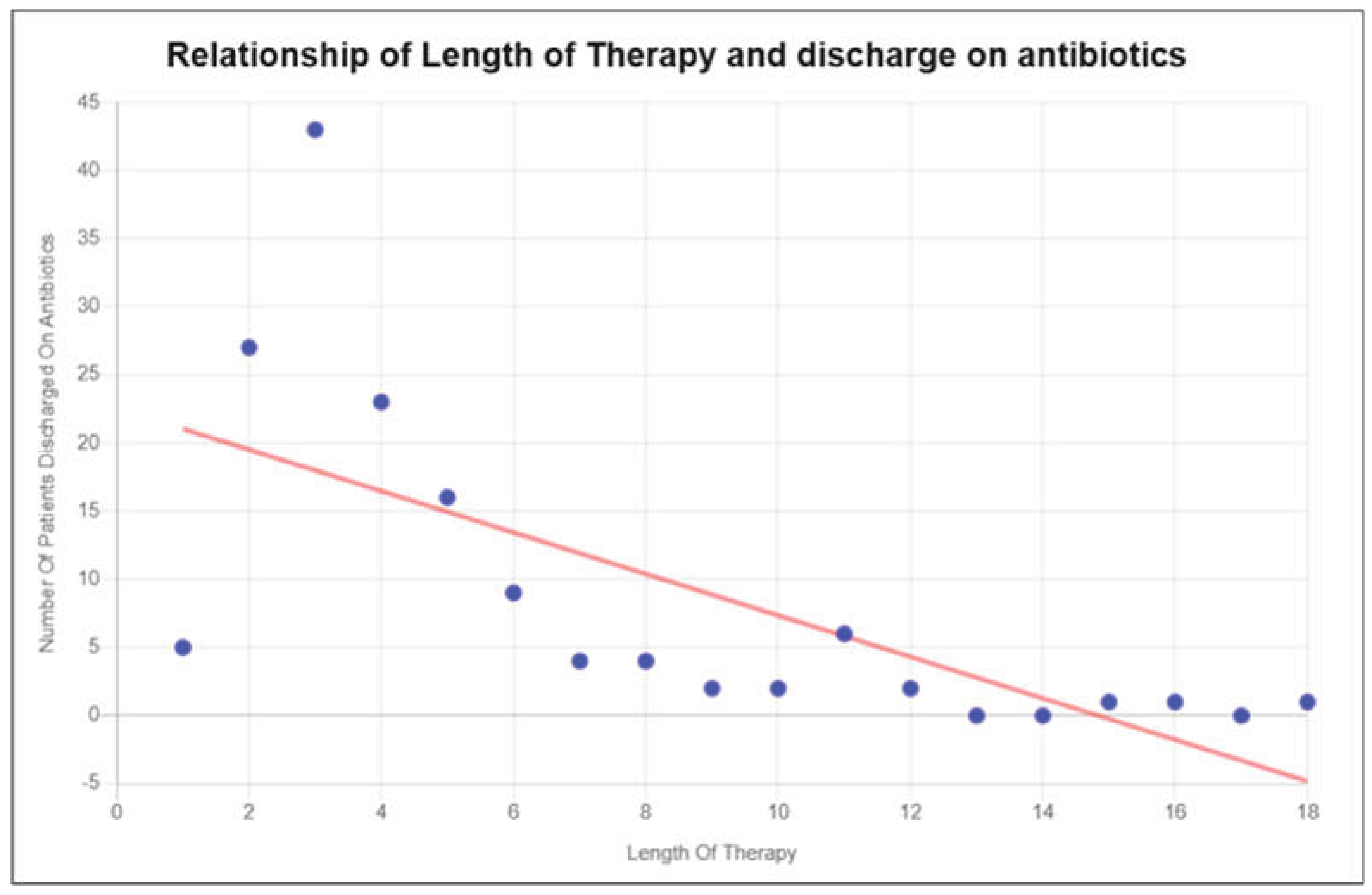
The duration of inpatient antibiotic therapy ranged from 1 to 18 days, with a mean duration of 9.5 days (SD ±5.3), a median of 9.5 days, and an interquartile range (IQR) of 9 days, reflecting moderate variability in treatment duration. Further analysis demonstrated that most patients discharged on antibiotics had shorter hospital stays (1–6 days). The likelihood ratio chi-square test showed a strong and statistically significant association between length of stay and antibiotic prescribing at discharge (χ² = 78.577, p < 0.001). Simple linear regression analysis corroborated these findings, indicating that shorter duration of hospital stay was a significant predictor of antibiotic prescription at discharge.
Figure 3.
Relationship of Length of Therapy and antibiotic prescribing post-hospitalization.
3. Discussion
This study identified two critical gaps in AMS within paediatric inpatient care: (1) frequent missed antibiotic doses and (2) significant rates of antibiotic prescribing at hospital discharge. Both findings highlight systemic challenges that have important implications for clinical outcomes and AMR.
Missed antibiotic doses were most commonly associated with benzylpenicillin, a β-lactam antibiotic that typically requires multiple daily administrations. This pattern likely reflects operational constraints such as high nursing workload, competing clinical priorities, and challenges in maintaining strict dosing schedules. Given that β-lactam antibiotics exhibit time-dependent pharmacodynamics, maintaining serum drug concentrations above the minimum inhibitory concentration is essential for therapeutic efficacy. Consequently, missed doses may lead to suboptimal treatment, increased risk of clinical failure, prolonged hospitalisation, and the emergence of resistant organisms [20].
The finding that approximately 20% of ceftriaxone doses were missed—despite its convenient once-daily dosing suggests that medication omissions are not solely related to dosing frequency but may reflect broader systemic issues in medication administration processes. These may include workflow inefficiencies, documentation gaps, and limited accountability mechanisms. Similar findings from previous studies conducted at UTHs-CH indicate that missed doses are a persistent problem in this setting, underscoring the need for system-level interventions such as improved workflow design, routine adherence monitoring, and targeted staff education on the clinical importance of timely antibiotic administration [21,22].
There are identified substantial gaps in the utilization and clinical impact of microbiology diagnostic testing among paediatric inpatients receiving antibiotics. Only 36.6% of patient records with antibiotic prescriptions had a documented request for microbiological investigations (culture and AST). When analysed per antibiotic prescription, this proportion was even lower (14.8%), indicating that the majority of antimicrobial therapy was initiated empirically without microbiological confirmation and results were not available to support escalation and de-escalation of antibiotic therapy. The low testing rates and delayed or unavailable laboratory results suggests that both diagnostic and AMS systems require strengthening.
While UTHs-CH had higher test request rates, the lack of timely results at both institutions underscores that test utilization alone is insufficient without concurrent improvements in laboratory efficiency and result reporting systems. It is therefore important to strengthen diagnostic stewardship practices, including protocols for timely specimen collection prior to antibiotic initiation, improve both yield and clinical relevance of results. These findings are consistent with reports from other low- and middle-income countries (LMICs), where diagnostic stewardship remains suboptimal. In a multicentre paediatric study in South Africa only 28% of patients had cultures requested, with results available in just 38% of cases[23]. Similarly, point prevalence surveys conducted across African and Asian settings have demonstrated low rates of microbiological testing prior to antibiotic initiation, often below 40%, reflecting reliance on empiric therapy due to systemic and operational constraints [24,25,26]. High-income regions report substantially greater use of microbiological diagnostics. European studies show cultures are obtained for most severe or hospitalised paediatric infections. Global data indicate variable prevalence of targeted antibiotic therapy based on microbiological findings; a worldwide prevalence study of paediatric healthcare-associated infections reported antibiotic prescribing rates ranging from 23.8% in Africa to 39.4% in Australia[27]. These differences likely reflect disparities in diagnostic capacity and antimicrobial stewardship practices. Developed countries are supported by well-resourced laboratory infrastructure and integrated AMS stewardship programmes. These differences highlight persistent inequities in access to diagnostic services and their integration into clinical care.
The low availability of results at discharge is a critical finding and reflects several well-documented challenges in Low- Middle-Income Countries (LMIC) settings. These include prolonged laboratory turnaround times, limited laboratory capacity, shortages of trained personnel, stock-outs of culture media and reagents, and inefficient specimen transport systems[28,29]. It is worth investing in modern diagnostic technologies, such as Matrix-Assisted Laser desorption ionization-time of flight (MALDI-TOF) and multiplex polymerase chain reaction (PCR) to allow for rapid and accurate identification of infectious pathogens and certain AMR genes which reduces on the turn-around-time of laboratory results[30,31]. Even among the limited number of available results only 27.3% were culture-positive. Strong diagnostic stewardship practices, including protocols for timely specimen collection prior to antibiotic initiation, improve both yield and clinical relevance of results.
Overall, these findings are consistent with regional and global evidence demonstrating that limited access to timely and reliable microbiological diagnostics remains a major barrier to optimal antimicrobial use in paediatric care. Addressing these gaps will require coordinated investments in laboratory infrastructure, workforce capacity, supply chain management, and integration of diagnostic stewardship into routine clinical practice.
The high proportion of patients (41.8%) discharged on antibiotics represents an additional and significant stewardship concern. The observed association between shorter hospital stays and increased likelihood of discharge antibiotic prescribing suggests a tendency toward precautionary continuation of therapy beyond inpatient care, rather than decisions guided strictly by clinical indications. This finding is consistent with global evidence identifying transitions of care as high-risk periods for inappropriate antimicrobial use, often resulting in unnecessary or prolonged antibiotic courses [11,14].
Although most discharge prescriptions were from the Access category of the WHO AWaRe classification, the use of Watch antibiotics including fluoroquinolones and third-generation cephalosporins is concerning[11]. This pattern, together with suboptimal choices and durations, undermines prudent antibiotic stewardship. These agents are associated with a higher propensity to drive AMR and are recommended for more restricted use in stewardship frameworks. Paediatric AMS guidelines emphasise limiting the routine use of such antibiotics and ensuring that their prescription is supported by clear clinical justification (WHO, 2019).
Addressing all these challenges requires a multifaceted approach. Key interventions include the implementation of structured antibiotic review processes at discharge, development and enforcement of evidence-based guidelines for duration of therapy in common paediatric infections, and the integration of pharmacist-led stewardship activities. Additionally, systems should be established to monitor and reduce missed doses, alongside strengthening documentation practices to ensure that reasons for omissions are consistently recorded. Collectively, these strategies have the potential to reduce unnecessary antibiotic exposure, optimise treatment outcomes, and mitigate the risk of AMR.
Conclusion
Missed antibiotic doses and high rates of discharge antibiotic prescribing represent significant challenges to effective AMS in paediatric healthcare settings. These issues reflect both operational and clinical decision-making gaps that can adversely affect patient outcomes and contribute to the growing burden of antimicrobial resistance.
Targeted interventions are required to improve the reliability of medication administration and to ensure that antibiotics prescribed at discharge are clinically indicated, appropriately selected, and optimally dosed. Strengthening stewardship efforts at both the point of care and during transitions of care is essential to promote rational antimicrobial use, improve patient safety, and reduce the risk of resistance in paediatric populations. There is an urgent need to strengthen laboratory infrastructure and human resource capability to effectively enhance AMS.
4. Materials and Methods
This was a prospective descriptive study conducted at two tertiary-level healthcare institutions specializing in peadiatric care, located in the Copperbelt and Lusaka provinces of Zambia. The study employed a systematic approach to data collection through the review of inpatient medical records and medication administration charts, ensuring comprehensive capture of both clinical and treatment-related information.
A structured data collection tool, adapted from the WHO Point Prevalence Survey (PPS) methodology, was utilized to enhance standardization, reliability, and comparability of findings across study sites. The variables collected included antibiotic frequency and causes of missed doses, antibiotic prescribed at the point of hospital discharge, and microbiological investigations performed during admission. These investigations considered in this study was culture and AST, as well as the availability and utilization of results to guide clinical decision-making.
The study population comprised peadiatric patients aged 29 days to 59 months (4 years and 11 months) who were admitted to the two participating tertiary-level peadiatric hospitals. All eligible patients within this age group were included in the study, irrespective of whether they received antibiotic therapy or not. This inclusive approach enabled a comprehensive assessment of antimicrobial use, prescribing patterns, and related clinical practices across the study setting.
Documentation of missed antibiotic doses commenced from the first day of prescribed therapy and continued until completion of the treatment course. For patients with no missed doses, a value of zero (0) was recorded, while each missed dose episode was documented individually where applicable. Medication administration records were systematically reviewed to identify and categories the reasons for missed doses. These were grouped into predefined categories, including stock shortages, caregiver inability to procure medication, patient-related factors (e.g., patient asleep), and clinical or technical challenges (e.g., difficulty with intravenous access). Additional categories included multiple contributing factors and unknown, where no reason was documented.
Data on laboratory investigations undertaken during hospital admission were collected, including specimen type, diagnostic tests performed, and microbiological results where available. Retrospective microbiology data was also analyzed. This facilitated evaluation of the extent to which antimicrobial therapy was guided or supported by laboratory evidence, particularly culture and antimicrobial susceptibility testing.
Patient records were reviewed at the point of hospital discharge to determine whether antibiotics were prescribed. For patients discharged on antibiotics, detailed information was collected on the specific agents prescribed, including their type and pharmacological class and the WHO AWaRe (Access, Watch, Reserve) classification framework to assess prescribing patterns and alignment with antimicrobial stewardship principles.
Data were analyzed using descriptive statistical methods. The frequencies and percentages of each continuous variable studied were generated using excel. Data was also analyzed using IBM® SPSS® for Windows version 27. A simple logistic regression was used to determine the numerical relationship between two variables. For practice comparison among hospitals or units, categorical variables were assessed using Pearson Chi-squared test (χ2 test). For all statistical analyses, the significance was set at p<0.05.
5. Conclusions
Missed antibiotic doses and high rates of discharge antibiotic prescribing represent significant challenges to effective AMS in peadiatric healthcare settings. These is-sues reflect both operational and clinical decision-making gaps that can adversely affect patient outcomes and contribute to the growing burden of antimicrobial resistance.
Targeted interventions are required to improve the reliability of medication ad-ministration and to ensure that antibiotics prescribed at discharge are clinically indicated, appropriately selected, and optimally dosed. Strengthening stewardship efforts at both the point of care and during transitions of care is essential to promote rational antimicrobial use, improve patient safety, and reduce the risk of resistance in peadiatric populations. There is an urgent need to strengthen laboratory infrastructure and human resource capability to effectively enhance AMS.
Author Contributions
Conceptualization, Chileshe Lukwesa. Evans M. Mpabalwani, methodology, Chileshe Lukwesa.; validation, Evans M. Mpabalwani; formal analysis, Chileshe Lukwesa; investigation, Chileshe Lukwesa, Mwelwa Chikombola, Davis Sondashi, Nayuda Kaonga.; resources, Chileshe Lukwesa; data curation, Chileshe Lukwesa, writing original draft preparation, Chileshe Lukwesa.; writing review and editing, Evans M. Mpabalwani. Shadrick M Ngosa, Nayuda Kaonga, ; visualization, Chileshe Lukwesa.; supervision, Evans M. Mpabalwani; project administration, Chileshe Lukwesa.; funding acquisition, Chileshe Lukwesa. All authors have read and agreed to the published version of the manuscript.
Funding
This research received no external funding.
Institutional Review Board Statement
The study was conducted in accordance with the Declaration of Helsinki, and approved by the University of Zambia Biomedical Research Ethics Committee (UNZABREC) and the National Health Research Authority (NHRA), protocol code 5182-2024 and date of approval 19TH July 2024, and protocol code NHRA-1488/20/08/2024 date of approval 27th August 2024) respectively.
Informed Consent Statement
Informed consent was obtained from all subjects involved in the study.
Data Availability Statement
The antibiotic data utilization form was converted to a google form format and an excel format dataset was generated. Qualitative data on AMS was collected using a check-list. Data sharing is restricted by the conditions of ethical approval and institution policies. De-identified aggregated data are presented in the manuscript and individual level data can only be accessed with prior approval from the ethics committee and hospital authorities.
Acknowledgments
I wish to acknowledge the support of the Senior Medical Superintendents, the heads of clinical care, the nursing staff, clinical teams, pharmacists, and data clerks at the UTH-Children’s Hospital and ADCH for their support during this study. The authors have reviewed and edited the output and take full responsibility for the content of this publication.
Conflicts of Interest
The authors declare that there are no commercial, financial, or personal relationships that could be construed as potential conflicts of interest in the conduct and publication of this research.
Abbreviations
The following abbreviations are used in this manuscript:
| ADCH | Arthur Davison Chidren’s Hospital |
| AMS | Antimicrobial Stewardship |
| AMR | Antimicrobial Resistance |
| AST | Antibiotic susceptibility testing |
| AWaRe | Access, Watch, Reserve |
| DOT | Days of Therapy |
| LMIC | Low- Middle Income Countries |
| MALDI-TOF | Matrix-Assisted Laser Desorption Ionization |
| PCR | Polymerase Chain Reaction |
| UTH-CH | University Teaching Hospitals-Children’s Hospital |
| WHO | World Health Organization |
References
- WHO. Antimicrobial resistance. Global report on surveillance; World Health Organization, 2014; 3, p. 61. [Google Scholar] [CrossRef]
- Murray, C.J.; Ikuta, K.S.; Sharara, F.; Swetschinski, L.; Robles Aguilar, G.; Gray, A.; et al. Global burden of bacterial antimicrobial resistance in 2019: a systematic analysis. The Lancet 2022, 399(10325). [Google Scholar] [CrossRef] [PubMed]
- Probst, V.; Islamovic, F.; Mirza, A. Antimicrobial stewardship program in pediatric medicine. In Pediatric Investigation; John Wiley and Sons Inc, 2021; pp. 229–38. [Google Scholar] [CrossRef] [PubMed]
- Klatte, J.M. Pediatric Antimicrobial Stewardship Programs: Current Perspectives. In Pediatric Health Med Ther; 2020; Volume 11. [Google Scholar] [CrossRef] [PubMed]
- Principi, N.; Esposito, S. Antimicrobial stewardship in paediatrics. In BMC Infectious Diseases;PubMed; BioMed Central Ltd., 2016. [Google Scholar] [CrossRef] [PubMed]
- Godbout, E.J.; Pakyz, A.L.; Markley, J.D.; Noda, A.J.; Stevens, M.P. Pediatric Antimicrobial Stewardship: State of the Art. In Current Infectious Disease Reports; 2018. [Google Scholar] [CrossRef] [PubMed]
- WHO. Child mortality (under 5 years). Fact sheets. 2022, 37. [Google Scholar] [PubMed]
- UNICEF. Monitoring the situation of children and women Mortality among children, adolescents and youth aged 5-24. 2021. [Google Scholar] [PubMed]
- UNICEF. Child Mortality - UNICEF DATA. 2023. [Google Scholar] [PubMed]
- Muhammad, F. Child Mortality in Africa: An Infectious Disease Perspective. Open Microbiol. J. 2022, 16(1). [Google Scholar] [CrossRef]
- Vaughn, V.M.; Hersh, A.L.; Spivak, E.S. Antibiotic Overuse and Stewardship at Hospital Discharge: The Reducing Overuse of Antibiotics at Discharge Home Framework. Clin. Infect. Dis. 2022. [Google Scholar] [CrossRef] [PubMed]
- Vaughn, V.M.; Ratz, D.; Greene, M.T.; Flanders, S.A.; Gandhi, T.N.; Petty, L.A.; et al. Antibiotic Stewardship Strategies and Their Association with Antibiotic Overuse after Hospital Discharge: An Analysis of the Reducing Overuse of Antibiotics at Discharge (Road) Home Framework. Clin. Infect. Dis. 2022, 75(6). [Google Scholar] [CrossRef] [PubMed]
- Giesler, D.L.; Krein, S.; Brancaccio, A.; Mashrah, D.; Ratz, D.; Gandhi, T.; et al. Reducing overuse of antibiotics at discharge home: A single-center mixed methods pilot study. Am. J. Infect. Control 2022, 50(7). [Google Scholar] [CrossRef] [PubMed]
- Yogo, N.; Haas, M.K.; Knepper, B.C.; Burman, W.J.; Mehler, P.S.; Jenkins, T.C. Antibiotic Prescribing at the Transition from Hospitalization to Discharge: A Target for Antibiotic Stewardship. Infect. Control Hosp. Epidemiol. 2015, 36(4). [Google Scholar] [CrossRef] [PubMed]
- Same, R.G.; Lee, G.; Olson, J.; Bettinger, B.; Hersh, A.L.; Kronman, M.P.; et al. Discharge antibiotic prescribing at children’s hospitals with established antimicrobial stewardship programs. Infect. Control Hosp. Epidemiol. 2025, 46(6). [Google Scholar] [CrossRef] [PubMed]
- Kalasikam, M.; Jimenez-Truque, N.; Kloek, A.B.; Banerjee, R. Antibiotic overuse in a contemporary cohort of children hospitalized with influenza, RSV, or SARS-CoV-2: a retrospective cohort study. BMC Pediatr. 2025, 25(1). [Google Scholar] [CrossRef] [PubMed]
- Walls, T.; Stark, E.; Pattemore, P.; Jennings, L. Missed opportunities for antimicrobial stewardship in pre-school children admitted to hospital with lower respiratory tract infection. J. Paediatr. Child Health 2017, 53(6). [Google Scholar] [CrossRef] [PubMed]
- Conner, M.; Harris, W.H.; Bomkamp, J.P. ADD It Up: An Evaluation of Antibiotic Duration at Hospital Discharge at a Community Hospital. Open Forum Infect. Dis. 2021, 8(8). [Google Scholar] [CrossRef] [PubMed]
- McMullan, B.; Bryant, P.A.; Duffy, E.; Bielicki, J.; De Cock, P.; Science, M.; et al. Multinational consensus antimicrobial stewardship recommendations for children managed in hospital settings. Lancet Infect. Dis. 2023. [Google Scholar] [CrossRef] [PubMed]
- Martin, K.; Fatima, D.; Steward, M.; Webrod, M.; Ellah, Z.; Freeman, W.C.; et al. Medication administration omission errors: Frequency and their causes during medication administration process at Ndola Teaching Hospital in Zambia. Afr. J. Pharm. Pharmacol. 2021, 15(9). [Google Scholar] [CrossRef]
- Kampamba, M.; Mulolo, S.; Phiri, M.; Chulu, M.C.; Mufwambi, W.; Mudenda, S.; et al. Medication omissions in the first 48 hours after admission: failure in prescribed medicines reaching in-patients in paediatrics wards at the University Teaching Hospitals, Children’s Hospital in Lusaka, Zambia. Int. J. Basic Clin. Pharmacol. 2021, 10(12). [Google Scholar] [CrossRef]
- Skosana, P.P.; Schellack, N.; Godman, B.; Kurdi, A.; Bennie, M.; Kruger, D.; et al. A national, multicentre, web-based point prevalence survey of antimicrobial use and quality indices among hospitalised paediatric patients across South Africa. J. Glob. Antimicrob. Resist. 2022, 29. [Google Scholar] [CrossRef] [PubMed]
- Versporten, A.; Bielicki, J.; Drapier, N.; Sharland, M.; Goossens, H.; Calle, G.M.; et al. The worldwide antibiotic resistance and prescribing in european children (ARPEC) point prevalence survey: Developing hospital-quality indicators of antibiotic prescribing for children. J. Antimicrob. Chemother. 2016, 71(4). [Google Scholar] [CrossRef] [PubMed]
- Hsia, Y.; Lee, B.R.; Versporten, A.; Yang, Y.; Bielicki, J.; Jackson, C.; et al. Use of the WHO Access, Watch, and Reserve classification to define patterns of hospital antibiotic use (AWaRe): an analysis of paediatric survey data from 56 countries. Lancet Glob. Health 2019, 7(7). [Google Scholar] [CrossRef] [PubMed]
- Okeke, I.N.; Ojo, K.K. Antimicrobial use and resistance in Africa. In Antimicrobial Resistance in Developing Countries; 2010. [Google Scholar] [CrossRef]
- WHO. Antimicrobial stewardship programmes in health-care facilities in low- and middle-income countries: a WHO practical toolkit. JAC Antimicrob. Resist 2019, 1(3). [Google Scholar] [CrossRef] [PubMed]
- Reuter, C.H.; Palac, H.L.; Kociolek, L.K.; Zheng, X.T.; Chao, Y.Y.; Patel, R.M.; et al. Ideal and actual impact of rapid diagnostic testing and antibiotic stewardship on antibiotic prescribing and clinical outcomes in children with positive blood cultures. Pediatr. Infect. Dis. J. 2019, 38(2). [Google Scholar] [CrossRef] [PubMed]
- Avdic, E.; Carroll, K.C. The role of the microbiology laboratory in antimicrobial stewardship programs. In Infectious Disease Clinics of North America; 2014. [Google Scholar] [CrossRef] [PubMed]
Figure 1.
Top 10 conditions in which antibiotics were prescribed at discharge from hospitalization.
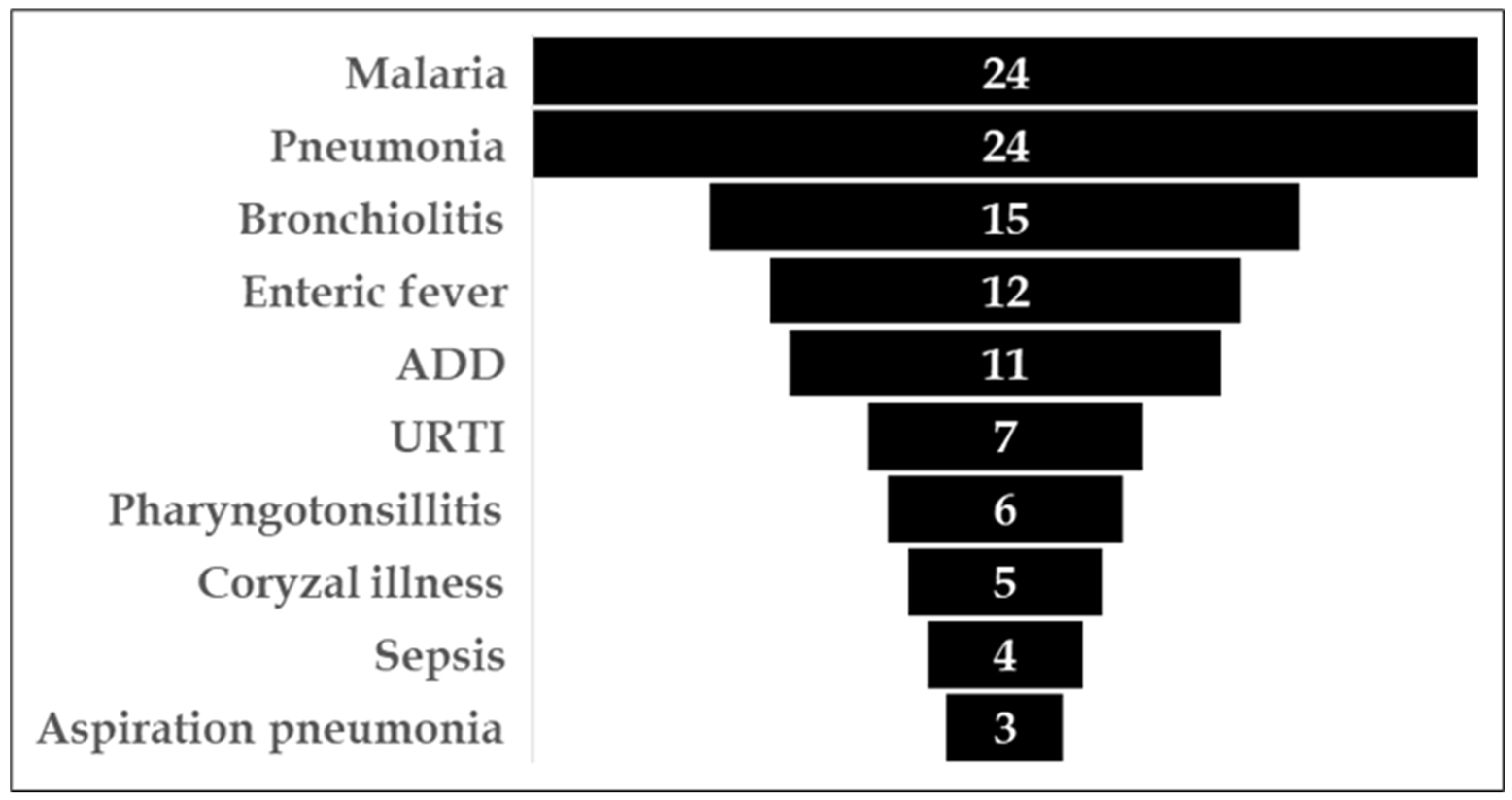
Figure 2.
Proportion of patients discharged on antibiotics after being on antibiotics during hospitalization, and those not prescribed antibiotics during hospitalization.
Figure 2.
Proportion of patients discharged on antibiotics after being on antibiotics during hospitalization, and those not prescribed antibiotics during hospitalization.
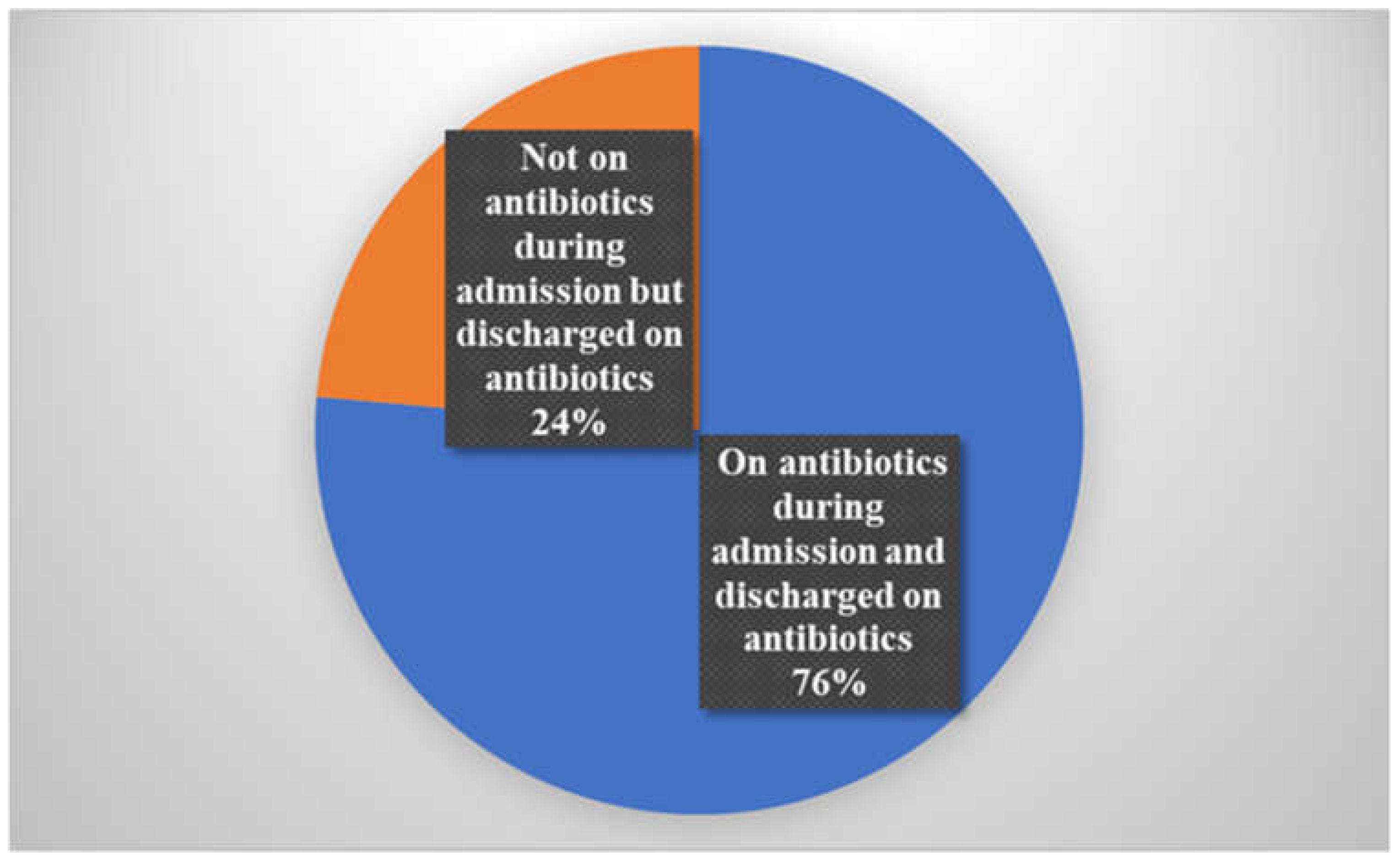

Table 1.
Frequency of missed administration of antibiotic doses.
| No. of missed doses | ADCH | UTHs-CH | ||
|---|---|---|---|---|
| Total | % | Total | % | |
| 0 | 126 | 75.4 | 79 | 64.8 |
| 1 | 16 | 9.6 | 16 | 13.1 |
| 2 | 11 | 6.6 | 10 | 8.2 |
| 3 | 9 | 5.4 | 6 | 4.9 |
| 4 | 3 | 1.8 | 5 | 4.1 |
| 5 | 1 | 0.6 | 2 | 1.6 |
| 6 | 1 | 0.6 | 1 | 0.8 |
| 7 | 0 | 0.0 | 2 | 1.6 |
| 8 | 0 | 0.0 | 1 | 0.8 |
| 167 | 100.00 | 122 | 100 | |
Table 2.
Culture and antibiotic susceptibility test results available at discharge from hospitalization at the two hospitals.
Table 2.
Culture and antibiotic susceptibility test results available at discharge from hospitalization at the two hospitals.
| Hospital | Negative culture result | Positive culture/AST result | No culture/AST results available at discharge | No culture/AST test requested | Total |
|---|---|---|---|---|---|
| ADCH | 37.0%(10) | 3.7%(1) | 59.3%(16) | 179 | 206 |
| UTHs-CH | 6.8%(6) | 5.7%(5) | 87.5%(77) | 91 | 179 |
| ALL | 13.9%(16) | 5.2%(6) | 80.9%(93) | 270 | 385 |
Table 3.
Antibiotics, frequency and classification of antibiotics prescribe at discharge from hospitalization.
Table 3.
Antibiotics, frequency and classification of antibiotics prescribe at discharge from hospitalization.
| Antibiotic | %(No.) | Classification | WHO AWaRe |
|---|---|---|---|
| Amoxicillin | 29 (47) | Penicillins | Access |
| Amoxicillin/clavulanic acid | 16 (26) | Beta-lactam/beta-lactamase inhibitor | Access |
| Phenoxy methyl penicillin | 11(18) | Penicillins | Access |
| Cefalexin | 10(16) | 1st generation cephalosporin | Access |
| Ciprofloxacin | 9(14) | Fluoroquinolone | Watch |
| Cefixime | 6(10) | 3rd generation cephalosporin | Watch |
| Azithromycin | 4(6) | Macrolides | Watch |
| Benzathine penicillin | 2(3) | Penicillins | Access |
| Cloxacillin | 2(4) | Penicillins | Access |
| Cefpodoxime | 2(4) | 3rd generation cephalosporin | Watch |
|
Sulphamethoxazole/ trimethoprim |
2(3) | Sulphonamide trimethoprim combination | Access |
| Cefuroxime | 1(1) | 2nd generation cephalosporin | Watch |
| Ampicillin | 1(1) | Penicillins | Access |
| Ampicloxacillin | 1(1) | Not recommended | N/A |
| Amoxicillin and Metronidazole | 1(1) | Penicillins/imidazole | Access/Access |
| Cloxacillin and Metronidazole | 1(1) | Penicillins/imidazole | Access/Access |
| Metronidazole oral | 1(1) | Imidazole | Watch |
| Nitrofurantoin | 1(1) | Nitrofuran derivatives | Access |
| Other | 1(1) | N/A | N/A |
Disclaimer/Publisher’s Note: The statements, opinions and data contained in all publications are solely those of the individual author(s) and contributor(s) and not of MDPI and/or the editor(s). MDPI and/or the editor(s) disclaim responsibility for any injury to people or property resulting from any ideas, methods, instructions or products referred to in the content. |
© 2026 by the authors. Licensee MDPI, Basel, Switzerland. This article is an open access article distributed under the terms and conditions of the Creative Commons Attribution (CC BY) license (http://creativecommons.org/licenses/by/4.0/).
Copyright: This open access article is published under a Creative Commons CC BY 4.0 license, which permit the free download, distribution, and reuse, provided that the author and preprint are cited in any reuse.


