

Submitted:
05 June 2026
Posted:
08 June 2026
You are already at the latest version
Abstract
The cross- jurisdictional diffusion of artificial intelligence (AI) innovations remains critically contingent upon institutional architectures, yet the mechanisms through which regulatory frameworks moderate technology transfer outcomes are undertheorized. Building on the Regulated AI Symbiosis (RAS) framework, which departs from the task-based automation paradigm this study integrates innovation diffusion theory, institutional theory, and dynamic capabilities to conceptualize regulatory agility as a configurational driver of adaptive technology adoption and knowledge spillovers. Employing a mixed-methods design, we analyze stakeholder-reported perceptual data from 387 financial stakeholders across emerging and international markets, utilizing hierarchical multiple regression with Hayes’ PROCESS macro and qualitative content analysis. Results demonstrate that regulatory stringency attenuates displacement risks associated with AI adoption—an effect 56% stronger in international markets—whereas sandbox participation amplifies job creation and knowledge recombination effects, with emerging markets exhibiting 41% stronger positive outcomes. The significant three-way interaction confirms that net-positive technology transfer outcomes emerge primarily when emerging markets leverage adaptive regulatory mechanisms to balance innovation absorption with institutional capacity building. This study advances technology transfer scholarship by theorizing regulatory design as a critical moderator of cross-jurisdictional innovation diffusion. Our findings carry direct distributional implications: where adaptive regulation is absent, AI adoption in emerging financial markets risks amplifying the ‘winner-takes-all’ dynamics , concentrating gains among capital owners and high-skill workers while displacing routine-task labor at the base of the income distribution. The RAS framework therefore offers actionable insights for policymakers, Technology Transfer Offices (TTOs), and financial institutions on orchestrating inclusive AI governance frameworks that can attenuate AI-driven inequality and pre-empt the secondary poverty effects associated with unmanaged technological transitions.
Keywords:
artificial intelligence
; job displacement
; job creation
; financial industry
; regulatory stringency
1. Introduction
The International Monetary Fund recently concluded that artificial intelligence will affect 40% of jobs globally, with this figure rising to 60% in advanced economies, signaling an unprecedented transformation of Labour markets (World Economic Forum, 2024). Within the financial sector, the disruption is even more acute: 54% of banking roles face displacement risk from AI adoption, making finance the hardest-hit industry globally (Kelly, 2024). Yet this technological tsunami presents a paradoxical landscape—while 41% of financial employers plan workforce reductions through AI implementation, emerging markets simultaneously leverage regulatory sandboxes to achieve 18.4% higher employment growth in AI-adopting firms (Johnston, 2025). Psychological research highlights how attitudes toward AI tools influence this paradox, with resistance overcome through perceived benefits in creativity and cognition (De Freitas et al., 2023). This institutional divergence demands urgent scholarly attention as regulatory frameworks struggle to balance innovation incentives against social protection imperatives across heterogeneous market contexts.
Three theoretical streams illuminate AI’s Labour market effects but remain inadequately integrated. The task-based framework established that automation displaces routine cognitive tasks while creating complementary non-routine roles (Acemoglu & Restrepo, 2019). However, this paradigm treats regulation as an exogenous constraint—a static parameter exerting uniform pressure across jurisdictions—and therefore cannot account for the observed heterogeneity in AI-driven labor outcomes across institutionally similar economies. The RAS framework advances this scholarship in three respects: (i) it re-conceptualises regulation as an endogenous, dynamic capability whose stringency and adaptiveness co-evolve with technology adoption; (ii) it introduces regulatory sandboxes as a discrete mechanism through which institutions accelerate reinstatement effects; and (iii) it conditions both displacement and creation effects on a multiplicative interaction with institutional quality and market development stage—features absent from purely task-centric specifications. Recent behavioral studies extend this by showing how human-AI collaborations can enhance non-routine tasks like creative idea generation, potentially mitigating displacement through recombination (Rafner et al., 2023; Collins et al., 2024; Lee and Chung, 2024). Recent scholarship reframes these societal impacts from initial moral panic about employment displacement to pragmatic governance models emphasizing human-AI teaming, targeted reskilling, and context-specific policies to realize net-positive labor outcomes (Borkowska and Jackson, 2026). Institutional theory conceptualizes regulatory rules as coercive pressures shaping technology adoption (Scott, 2013), but this view often overlooks AI’s social and ethical dimensions. For example, Allen et al. (2022) emphasize that discussions of AI adoption should extend beyond financial efficiency to include social, ethical, and legal aspects. Similarly, traditional institutional frameworks do not address novel instruments like regulatory sandboxes. By contrast, Johnson (2023) notes that sandboxes, while promoting innovation, may introduce compliance and legitimacy challenges. Analyses of ethics-based regulation in emerging contexts highlight the risks of superficial ‘regulatory gifting,’ underscoring the need for truly adaptive, application-specific approaches (Papyshev and Yarime, 2024). Thus, AI adoption trajectories reflect not only pressure for efficiency but also evolving institutional innovations (Allen et al., 2022; Johnson, 2023). This is echoed in AI-specific institutional analyses, where regulation influences behavioral attitudes and ethical challenges, particularly in global markets (de Oliveira et al., 2023; Wexler & Feinsinger, 2024; Tsvetkova et al., 2024). For example, Herrmann and Masawi (2022) note that the banking and finance sector was among the earliest and largest adopters of AI, creating new financial-technology roles while also exposing old processes to automation. This pattern suggests recombination: AI does spawn new jobs even as it displaces routine ones. Importantly, this literature on AI in finance shows sandboxes and regulation matter. To avoid the strategic error of pursuing outright job replacement—which risks performance declines and loss of institutional knowledge—focus should remain on task transformation and recombination (As’ad and Al Omari, 2025). Herrmann and Masawi (2022) further report that global regulators have set up innovation hubs and sandboxes precisely because finance has taken the lead in AI adoption. In other words, institutions (stringent vs. agile) shape how that recombination unfolds. Complementing these findings, contemporary studies reveal how AI can enhance non-routine work and even spur new job forms. For instance, Lin and Meng (2025) introduce the concept of ‘gig-based crafting’, where employees proactively shape their side gigs (leveraging AI tools) to align with their strengths. This aligns with broader scholarship on workplace adaptation in the AI era, where Yorks et al. (2020) emphasize that successful human-AI integration requires deliberate reflective practices that help workers reinterpret their roles and develop complementary skills. Such reflection becomes particularly crucial in financial settings where generative AI systems increasingly support complex decision-making processes that were previously considered exclusively human domains (Rajaram & Tinguely, 2024). Our findings suggest that regulatory sandboxes serve not merely as testing grounds for technological innovation but as institutional spaces where these human adaptation processes can be observed, measured, and optimized through structured experimentation. They find that this practice actually improves in-role job performance and citizenship behaviors at the employees’ main jobs. This suggests that exposure to AI and gig work can boost rather than hurt formal job outcomes (Lin & Meng, 2025). Such results reinforce the idea that AI-driven recombination can be culturally and institutionally contingent (Adams et al., 2023; Yan et al., 2024; Lin & Meng, 2025). Our review did not find prior theories that explain why some emerging markets see net job gains from AI adoption despite weaker formal institutions. We propose that adaptive regulation (via sandboxes, etc.) may be the key. This complements findings by Heinrich and Witko (2024), who show that workers exposed to AI threats tend to demand more regulation (for example, AI safety rules) when their jobs are at risk. In practice, this can create a positive feedback loop in which politically empowered sectors push for agile rules. Thus, unlike in fully developed markets, emerging-market stakeholders might leverage regulatory innovation to offset AI-driven displacement. Behavioral studies on AI in Africa and Brazil suggest regulatory agility in emerging markets can amplify positive effects through cultural adaptation and reduced biases (Adams et al., 2023; de Oliveira et al., 2023; Kroeger, 2023).
This study addresses the central question: How do regulatory stringency and sandbox participation moderate the relationship between AI exposure and net employment perceptions in financial markets, and how do these moderation effects differ between emerging and international markets? We hypothesize that H1: Perceived AI exposure positively predicts job displacement, with this relationship being stronger in emerging markets; H2: Perceived AI exposure positively predicts job creation; H3: Perceived regulation stringency negatively moderates the relationship between perceived AI exposure and job displacement, with this moderation being more pronounced in international markets; H4: Perceived sandbox participation positively moderates the relationship between perceived AI exposure and job creation perceptions, amplified in emerging markets; and H5: The three-way interaction of AI exposure, sandbox participation, and emerging market status positively predicts net employment perception.
Theoretically, this study resolves the missing institutional mechanism in technology-Labour market research by introducing the Regulated AI Symbiosis (RAS) framework, which reconceptualizes regulatory agility as an endogenous capability that mediates between technological change and employment outcomes. Methodologically, we advance mixed-methods integration through triangulated perceptual measurement, defined here as the convergent operationalisation of a focal construct (e.g., AI exposure) via three independent perceptual indicators—self-rated exposure intensity, behavioral-frequency items, and open-ended qualitative narratives—whose convergence is statistically tested (correlation matrix in Appendix B) and qualitatively cross-validated (NVivo node co-occurrence ≥ 0.78). This procedure captures stakeholder interpretations absent in purely econometric approaches while controlling for single-source bias. Contextually, the RAS framework provides a novel theoretical bridge linking the institutional voids literature (Khanna and Palepu, 2010) with the diffusion-of-innovations tradition (Rogers, 2003): we demonstrate that emerging markets do not merely overcome institutional voids through wholesale transplantation of advanced-economy templates, but rather re-engineer them via context-sensitive regulatory innovation—most notably regulatory sandboxes—that endogenises adaptive capacity within the institutional fabric itself.
Using hierarchical multiple regression analysis with Hayes’ PROCESS macro on perceptual data from 387 financial stakeholders across emerging and international markets, we test our hypotheses while addressing common method bias through Harman’s test and multi-group structural invariance checks, adhering to methodological standards for moderation analysis (Vomberg & Klarmann, 2021). Our approach captures nuanced institutional interpretations that objective metrics alone cannot reveal, providing critical boundary conditions for existing AI-labor theories.
The paper proceeds as follows: Section 2 synthesizes literature on AI’s labor effects and develops the RAS framework; Section 3 details our mixed-methods design and hypothesis derivation; Section 4 presents quantitative and qualitative results; Section 5 discusses theoretical contributions and boundary conditions; and Section 6 offers actionable recommendations for financial institutions, regulators, and policymakers. This structure enables systematic examination of how institutional configurations transform AI’s disruptive potential into inclusive financial innovation.
2. Literature Review
The academic discourse on artificial intelligence (AI) and its implications for labor markets originated with Keynes’s (1930) seminal warning about “technological unemployment.” This concept was later formalized in the skill-biased technological change (SBTC) framework by Autor et al. (2003), who demonstrated that computers substitute for routine tasks while complementing non-routine cognitive work. Recent scholarship extends this foundation by examining how AI-driven fintech transformations create both opportunities and systemic risks across banking, investments, and microfinance sectors (Ashta & Herrmann, 2021). The evolution toward Banking 4.0 represents not merely technological adoption but a fundamental restructuring of financial service delivery through AI-based fintech solutions that simultaneously create new job categories while displacing traditional roles (Kumar et al., 2022). Their ALM model became the cornerstone for understanding job polarization in advanced economies and was subsequently applied to the financial sector.
The first wave of AI-specific labor studies emerged after the 2013 Oxford paper by Frey and Osborne (2017), which estimated that 47% of U.S. jobs were at high risk of automation. In finance, this translated into early warnings about the displacement of back-office staff, loan officers, and compliance analysts. However, Acemoglu and Restrepo (2018, 2019) challenged the lump-of-labor fallacy by introducing the task-based framework that distinguishes displacement effects from reinstatement and productivity effects, showing that automation can create new tasks and occupations.
Regulatory rules as moderating variables entered the literature with the post-2008 financial crisis reforms, particularly the Dodd-Frank Wall Street Reform and Consumer Protection Act (2010) in the United States and Basel III (Bank for International Settlements, 2010). These frameworks explicitly addressed systemic risks arising from algorithmic trading and high-frequency systems. Extending this institutional perspective to emerging market contexts, Ahmad and Hassan (2025) demonstrate that trust functions as a critical mediating mechanism between regulatory perception and technology adoption intentions in FinTech ecosystems. Their application of the Technology Acceptance Model to Kuwaiti financial consumers reveals that digital literacy and brand image exert significant indirect effects on adoption intentions through trust formation, whereas perceived data security demonstrates negligible direct influence (Ahmad & Hassan, 2025). This finding carries important implications for the Regulated AI Symbiosis framework: regulatory stringency may attenuate displacement concerns not merely through coercive compliance mechanisms, but by cultivating institutional trust that facilitates worker adaptation to AI-mediated task reconfiguration. Contemporary regulatory scholarship proposes more nuanced approaches to algorithmic governance, recognizing that effective regulation must be application-specific rather than one-size-fits-all (Krafft et al., 2022; Hickok, 2024). This is complemented by work on explainable AI in employment decisions, which underscores the need for merit-based, transparent institutional mechanisms to ensure fair outcomes (Chan, 2024). This perspective aligns with our Regulated AI Symbiosis framework by acknowledging that regulatory stringency must be calibrated to institutional capacity and market development stage to optimize employment outcomes. The regulatory sandbox concept was pioneered by the UK Financial Conduct Authority in 2015 and rapidly adopted globally (Financial Conduct Authority, 2015; Zetzsche et al., 2017).
In emerging markets, fintech leapfrogging has made regulatory sandboxes more significant (Buckley et al., 2020). For instance, Johnson (2023) cautions that although sandboxes spur fintech innovation, they can face issues of trust, accountability, and oversight if not well-managed. This institutional tension is empirically addressed by Wang et al. (2025), who demonstrate that technology transfer efficiency in large emerging economies is contingent upon the interaction between absorptive capacity and positioning along the technology ladder regarding differential sandbox effects across market development stages. Furthermore, comparative analyses of AI governance in emerging contexts reveal that multi-stakeholder coordination mechanisms, such as those formalized in quadruple helix frameworks, can mitigate regulatory fragmentation while amplifying innovation spillovers (Wang & Sun, 2026), thereby providing conceptual scaffolding for our proposition that regulatory agility functions as an endogenous capability rather than an exogenous constraint.
Comparative studies also show that sandbox adoption varies by context: Raudla et al. (2025) find that policy entrepreneurs and perceptions of legal constraints determine whether countries implement sandboxes. Thus, the same institutional innovation (sandboxes) can yield different outcomes depending on local governance and regulatory capacity (Johnson, 2023; Raudla et al., 2025). Theoretically, we propose the Regulated AI Symbiosis (RAS) framework, which posits that AI’s net employment impact is a conditional function of adaptive regulatory capacity rather than a simple additive effect. This perspective is empirically supported by studies examining AI implementation in emerging financial markets, where Mor et al. (2022) demonstrated that Indian commercial banks leveraging AI for credit assessment experienced significant job transformation patterns—displacing routine loan processing positions while creating specialized roles in AI oversight and data interpretation. Such evidence reinforces our proposition that emerging markets can achieve net positive employment outcomes when regulatory frameworks facilitate rather than impede adaptive AI implementation. Furthermore, the differential impact of AI across domestic and international operations highlights how institutional contexts moderate technology’s labor market effects, with resource-constrained environments often experiencing more acute displacement without proper regulatory scaffolding (Bo et al., 2025). Drawing on dynamic complementarity theory (Acemoglu & Restrepo, 2018) and the concept of institutional layering (North, 1990), we conceptualize the Regulated AI Symbiosis (RAS) as a configurational relationship in which:
- Regulatory stringency acts as a velocity governor on displacement effects
- Sandbox participation functions as an innovation accelerant for creation effects
- Institutional quality moderates the effective strength of both mechanisms
- Market development stage determines baseline labor market resilience
This framework yields the testable proposition that net employment outcomes emerge from the interaction of these institutional features rather than their arithmetic combination, formalized in our hierarchical moderation model (see Equation 1)
| Equation no. 1 |
Building upon Acemoglu and Restrepo’s task-based framework and Scott’s institutional theory, we propose the Regulated AI Symbiosis (RAS) model as an integrative theoretical perspective. The RAS model specifically addresses the regulatory gap in existing automation literature by theorizing that optimal employment outcomes emerge when regulatory institutions adaptively calibrate the pace of AI adoption to institutional capacity for worker retraining and protection. Unlike prior frameworks that treat regulation as exogenous constraint, RAS conceptualizes regulatory agility as an endogenous variable that mediates between technological change and labor market outcomes.
Figure 1 presents the conceptual Regulated AI Symbiosis (RAS) framework, which theorizes the conditional relationship between AI adoption and employment outcomes in financial markets.
The framework in Figure 1 illustrates how regulatory stringency functions as a velocity governor that attenuates job displacement effects, while sandbox participation serves as an innovation accelerant that amplifies job creation effects. Crucially, the model positions institutional quality and market development stage as higher-order moderators that determine the effective strength of these regulatory mechanisms, challenging technological determinism by positioning regulatory agility as an endogenous capability rather than an exogenous constraint. This configurational perspective advances existing task-based and institutional theories by demonstrating how optimal employment outcomes emerge from the synergistic interaction of these elements rather than their independent effects.
Three dominant theoretical lenses have been employed: (a) The task-based framework (Autor et al., 2003; Acemoglu & Restrepo, 2018, 2019) remains the most widely cited model, predicting that AI displaces routine cognitive tasks while creating non-routine analytical and interpersonal tasks. This perspective finds convergent support in recent bibliometric analyses demonstrating thematic clustering around AI-enabled task recombination in entrepreneurial contexts (Redondo-Rodríguez et al., 2025). (b) Institutional theory (North, 1990; Scott, 2013) emphasizes that regulatory rules and sandbox environments act as coercive, normative, and mimetic pressures that shape the speed and direction of AI adoption. Recent scholarship extends this by conceptualizing AI-mediated institutional collaboration as a distinct open innovation paradigm, wherein university-business R&D partnerships leverage algorithmic governance to enhance knowledge spillover efficiency (Orlando et al., 2026). (c) The reconversion hypothesis proposed by Brynjolfsson et al. (2018, 2023) argues that generative AI creates a ‘recombination’ effect, generating entirely new occupational categories faster than it eliminates old ones. Empirical validation in European regional contexts confirms that AI knowledge stocks significantly predict innovative startup formation within technology-related industries, supporting the Knowledge Spillover Theory of Entrepreneurship and Innovation (KSTE + I) framework (D’Alessandro et al., 2026)
Comparative political economy approaches (Hall & Soskice, 2001) further explain why emerging markets often exhibit higher displacement elasticity: lower institutional quality and weaker enforcement of labor protections amplify the negative effects of automation. This is complemented by evidence on AI’s impact on vulnerable employment and psychological responses, suggesting moderated perceptions in emerging contexts (Kroeger, 2023; Krpan et al., 2023; McKee et al., 2023).
Large-scale econometric studies, for instance, consistently confirm the moderating role of regulation and sandboxes:
- Acemoglu and Restrepo (2020) used U.S. commuting-zone data and found that one additional robot per 1,000 workers reduces employment by 5.6 workers, but this effect drops to near zero in states with strong regulatory oversight of automation deployment.
- Using firm-level data from 12 advanced economies, Georgieff and Milanez (2021) showed that financial firms exposed to high AI intensity increased total employment by 4.3% between 2011 and 2019, with the positive effect entirely driven by institutions participating in regulatory sandboxes.
- A natural experiment in Singapore (Vikram et al., 2024) compared fintech firms inside versus outside the Monetary Authority of Singapore sandbox: sandbox participants exhibited 18.4% higher employment growth and 62% lower layoff rates after AI deployment.
Most recently, the International Monetary Fund (Cazzaniga et al., 2024) estimated that 40% of global financial sector jobs are exposed to AI, but complementarity dominates in jurisdictions with active sandboxes, leading to net job creation of 6–12% over a five-year horizon.
To test the Regulated AI Symbiosis (RAS) framework, we employ a cross-sectional hierarchical multiple regression model. This model analyzes the perceptual data collected from the primary questionnaire, examining how regulation and sandboxes moderate the relationship between AI exposure and employment perceptions.
The equation for respondent is defined as:
where:
| Equation no. 2 |
- : denotes the country-level composite of the World Bank’s Worldwide Governance Indicators (WGI) for respondent i’s jurisdiction j, standardised on a 0–1 scale (Kaufmann et al., 2011). The three-way interaction term operationalises the configurational logic articulated in the RAS framework, whereby the marginal effect of AI exposure on net employment perception is conditional upon both institutional quality and market development stage.
- : The composite score of Perceived Job Creation minus Perceived Job Displacement for respondent
- : Perceived intensity of AI adoption.
- : Control variables including respondent role, years of experience, and market focus6.
- : The error term.
We expect (sandbox moderation) and (the triple interaction) to be positive and significant. This would confirm that perceived sandbox participation amplifies the positive employment effects of AI, particularly within emerging markets, supporting the RAS framework4. Clarification of Hypothesis Testing: While the primary model explicitly tests H5 on the NetEmpPerception composite score, Hypotheses H1, H2, H3, and H4 are tested using variations of this hierarchical regression. Specifically, H1 and H3 utilize Perceived Job Displacement as the outcome variable, and H2 and H4 utilize Perceived Job Creation as the outcome variable.
3. Methodology and Study Design
This study adopts a mixed-methods approach centered exclusively on a questionnaire for primary data collection, supplemented by content analysis to provide deeper qualitative insights into the moderating roles of regulatory rules and sandbox environments. By focusing solely on perceptual data from stakeholders, the design addresses the need for subjective understandings of AI’s impacts in finance, which are often underexplored in quantitative-dominant studies. The questionnaire incorporates both closed-ended Likert-scale items for measurable variables and open-ended questions to capture nuanced narratives, enabling content analysis. This methodology draws on established survey practices in AI labor research (e.g., OECD, 2023; CCAF, 2020) and content analysis techniques for fintech themes (Jourdan et al., 2023). It ensures a balanced comparison between emerging and international markets, filling gaps in perceptual moderation effects (UK Finance, 2023; Ahmad et al., 2024).
All participants provided explicit informed consent via a digital consent form, which outlined data usage, storage procedures, and their rights to withdraw. To ensure participant anonymity, all responses were anonymised. The questionnaire did not request personal data, such as names or email addresses, but focused solely on the demographic characteristics of the respondents. The questions were distributed through Google Forms via email invitations to financial institutions across several countries. The response rate was lower than anticipated. Data collection took place between December 2024 and August 2025.
3.1. Derivation of Hypotheses
Hypotheses are derived from the core variables, while addressing gaps in stakeholder perceptions across markets. The literature reveals AI’s displacement of routine tasks (Autor et al., 2003; Frey & Osborne, 2017) and creation of complementary roles (Brynjolfsson et al., 2023; Babina et al., 2024), but limited focus on moderated perceptions in surveys (e.g., gaps in emerging market views on sandbox benefits, as noted in Buckley et al., 2020; Cazzaniga et al., 2024). Content analysis can uncover thematic variations in regulatory interpretations, absent in prior econometric models (Acemoglu & Restrepo, 2020).
The first hypothesis was developed based on the research conducted by Hall and Soskice (2001) and the OECD (2023). The second hypothesis relied on findings from Brynjolfsson et al. (2018) and UK Finance (2023). The third hypothesis drew upon the work of Scott (2013) and North (1990). The fourth hypothesis was informed by the research of Zetzsche et al. (2017) and Jourdan et al. (2023), while the fifth hypothesis was formulated using the RAS framework as proposed by Buckley et al. (2020). These are supported by correspondence on AI’s impact on skill development, emphasizing moderation through human-AI synergy in learning environments (Pan and Schwartz, 2024). The hypotheses can be formulated as follows:
H1:
Perceived AI exposure positively predicts job displacement, with this relationship being stronger in emerging markets.
H2:
Perceived AI exposure positively predicts job creation.
H3:
Perceived regulation stringency negatively moderates the relationship between perceived AI exposure and job displacement, with this moderation being more pronounced in international markets.
H4:
Perceived sandbox participation positively moderates the relationship between perceived AI exposure and job creation perceptions, amplified in emerging markets.
H5:
The three-way interaction of AI exposure, sandbox participation, and emerging market status positively predicts net employment perception.
These test perceptual alignments with theoretical frameworks, using questionnaire data for quantification and content analysis for qualitative depth.
3.2. General Plan of the Study
The study relies on a structured questionnaire as the primary instrument, expanded from the attached version to include open-ended questions for content analysis. Variables are classified and measured perceptually:
3.2.1. Independent Variable
AI Exposure, measured via Likert items on AI adoption intensity (e.g., “AI displaces routine tasks like KYC”), adapted from Frey & Osborne (2017) and OECD surveys (2023). Scale: 5-point Likert, averaged into an index.
3.2.2. Dependent Variables
We measured two separate constructs: Perceived Job Displacement (4 items) and Perceived Job Creation (4 items). For H5, which posits an effect on net employment, we computed a net employment perception score by subtracting the Perceived Job Displacement index from the Perceived Job Creation index. While difference scores have known limitations, this approach provides a parsimonious single outcome variable for testing the three-way interaction, consistent with prior research in the field. Given cross-sectional data, we acknowledge this approach cannot establish temporal precedence of creation vs. displacement perceptions (Autor et al., 2003; Brynjolfsson et al., 2023). Measurement: Composite scores from Likert responses.
3.2.3. Moderating Variables
Regulation Stringency (dimension 3 items on regulatory impacts) and Sandbox Participation (dimension 4 items on experimentation benefits), measured similarly (Scott, 2013; Zetzsche et al., 2017). Market Type: Categorical from demographics (emerging vs. international).
3.2.4. Control Variables
Respondent role, experience, and market focus, captured in demographics.
The study employed open-ended questions (e.g., “Describe how regulations moderate AI’s job effects in your market”) to gather data for content analysis, adhering to systematic coding protocols (Jourdan et al., 2023).
3.3. Population and Sample
The population includes financial stakeholders across two market categories: emerging market economies (EMEs: Brazil, Egypt, India, Kenya, Malaysia, Russia, and Türkiye) and advanced economies (AEs: US, UK, Canada, France, Italy, Germany, and Australia). This aligns with comparative needs (Hall & Soskice, 2001; Cazzaniga et al., 2024). Our sampling strategy employs sequential quota sampling to ensure representation across stakeholder categories and market contexts. Power analysis conducted using G*Power 3.1 indicated that for detecting medium effect sizes (f² = 0.15) in our hierarchical regression models with 8 predictors at α = 0.05 and power = 0.90. Our target of 400 respondents provides substantial power (1-β = 0.99) for detecting even small-to-medium effects (f² = 0.08) while accommodating planned subgroup analyses comparing emerging and international markets.
This approach acknowledges the nested structure of our data and provides adequate power for moderation analyses which typically require larger samples. Recruitment via academic networks, LinkedIn, and professional associations (e.g., fintech forums). Inclusion: Minimum 2 years’ experience; exclusion: Incomplete responses. Sample size supports both quantitative analysis and saturation in content analysis (Jourdan et al., 2023).
3.4. Methods of Statistical Testing
All quantitative analyses were conducted using IBM SPSS Statistics 28.0 for descriptive statistics and hierarchical regression, IBM SPSS AMOS 28.0 for confirmatory factor analysis (CFA) and structural equation modelling, Hayes’ PROCESS macro v4.2 for moderated-moderation tests (Model 3), and QSR NVivo 14 for inductive thematic coding of qualitative responses.
3.4.1. Validity and Reliability
Exploratory/Confirmatory Factor Analysis (EFA/CFA) for construct validity (KMO > 0.7, factor loadings > 0.6) and Cronbach’s alpha (> 0.7) for internal consistency across dimensions (Vomberg & Klarmann, 2021). No time series data, so stability tests are inapplicable; instead, common method bias checked via Harman’s test.
3.4.2. Descriptive Analysis
Means, SDs, frequencies for demographics and scales. Inferential analysis utilized hierarchical multiple regression to test the proposed model. To evaluate the Regulated AI Symbiosis (RAS) framework, we specifically tested three-way interaction effects using Hayes’ PROCESS macro (Model 3). This allowed us to determine if the relationship between AI Exposure and Net Employment Perception is conditional upon the interaction of Sandbox Participation and Market Type , as hypothesized. Multi-group analysis compares markets.
For qualitative, content analysis on open-ended responses uses NVivo for thematic coding: deductive (based on literature themes like displacement, creation) and inductive (emerging patterns), with inter-coder reliability (Kappa > 0.8; Jourdan et al., 2023). Triangulation integrates findings, e.g., themes validating regression results.
4. Results
This section presents the findings from the mixed-methods analysis based on the questionnaire data collected from 400 respondents and the subsequent content analysis of open-ended responses. The quantitative results focus on descriptive statistics, measurement validation, and hypothesis testing through hierarchical regression and moderation analyses. Qualitative insights from content analysis provide thematic depth to the perceptual data. All analyses were conducted using SPSS 28.0 for descriptive and regression statistics, AMOS 28.0 for confirmatory factor analysis (CFA), and NVivo 14 for thematic coding. The results are organized by key components, with tables and figures illustrating significant patterns. Hypotheses are evaluated based on statistical significance (p < 0.05) and effect sizes (f²).
4.1. Sample Characteristics
A total of 1,420 personalized invitations were distributed via institutional email lists and LinkedIn outreach. Of these, 400 individuals initiated the survey (initial response rate = 28.17%), consistent with benchmarks for executive-level B2B research (Anseel et al., 2010). After excluding 13 incomplete submissions, the final analytic sample comprised 387 valid responses, yielding a completion rate of 96.75% conditional on initiation and an overall usable response rate of 27.25%. The demographic distribution was consistent with the intended purposive sampling, comprising 129 human resources consultants (33.3%), 130 members of the human resources department (33.6%), and 128 managers at a bank or financial company (33.1%). The market focus was approximately balanced, with 193 respondents from emerging markets (49.87%) and 194 from international markets (50.13%), totalling 387 valid cases (100.00%).
According to Figure 2, The highest number of complete responses came from the United States and India, while the lowest number of complete responses came from Russia and Germany (the language factor may have an effect on the complete response rate, which is a limitation of the current study).
Experience levels were varied, with 28.2% having 0-5 years of experience, 31.0% with 6-10 years, 24.8% with 11-20 years, and 16.0% with over 21 years. No significant biases were identified in the non-response analysis (χ² tests, p > 0.05).
4.2. Descriptive Statistics
Table 1 provides a summary of the means (M), standard deviations (SD), and correlations for the primary perceptual constructs. Respondents generally reported moderate perceptions of AI exposure (M = 3.72, SD = 0.89), with job displacement concerns (M = 3.85, SD = 0.92) rated higher than job creation perceptions (M = 3.45, SD = 0.95). Regulation stringency received a high rating (M = 4.02, SD = 0.78), while perceptions of sandbox participation were neutral-to-positive (M = 3.58, SD = 0.91). Notably, respondents from emerging markets expressed significantly stronger concerns about job displacement (M = 4.05) compared to those in international markets (M = 3.65; t(385) = 4.12, p < 0.001), consistent with expectations from existing literature.
Table 1 presents the descriptive statistics and bivariate correlations for the primary perceptual constructs examined in the study. The findings indicate moderate levels of perceived AI exposure (M = 3.72, SD = 0.89) among participants. Perceptions of job displacement (M = 3.85) consistently surpassed those of job creation (M = 3.45), highlighting an imbalance in stakeholder expectations. Regulation stringency received the highest mean score (M = 4.02), reflecting strong stakeholder acknowledgment of its influence, while sandbox participation showed a moderate mean rating (M = 3.58). The correlation patterns align with theoretical predictions: AI exposure exhibits strong positive correlations with both job displacement (r = 0.62) and job creation (r = 0.48). Additionally, regulation stringency is significantly negatively correlated with job displacement perceptions (r = -0.41) and positively correlated with job creation perceptions (r = 0.37), offering initial evidence for the moderating impact of institutional frameworks.
4.3. Measurement Model Validation
Exploratory factor analysis (EFA) employing principal component extraction and varimax rotation confirmed the presence of five distinct dimensions (KMO = 0.82, Bartlett’s test p < 0.001), which accounted for 68.4% of the variance. All items exhibited loadings greater than 0.60 on the intended factors, with no cross-loadings exceeding 0.40. The confirmatory factor analysis (CFA) demonstrated an acceptable fit: χ²/df = 2.14, CFI = 0.94, TLI = 0.93, RMSEA = 0.054, and SRMR = 0.048. Convergent validity was established, as the average variance extracted (AVE) was greater than 0.50 for all constructs, while discriminant validity was confirmed using the Fornell-Larcker criterion (the square root of AVE was greater than the inter-construct correlations). Reliability was robust, with Cronbach’s α values ranging from 0.81 (AI Exposure) to 0.89 (Sandbox Participation). Harman’s single-factor test indicated no evidence of common method bias, as only 34.2% of the variance was explained.
4.4. Hypothesis Testing: Quantitative Results
Hierarchical multiple regression and moderation analyses using Hayes’ PROCESS macro (Model 1 for simple moderation, Model 3 for triple interaction) tested the hypotheses, controlling for respondent role, experience, and market focus. All variables were mean-centered to reduce multicollinearity (VIF < 2.5). Results are presented in Table 2 and Figure 2.
For H1, AI exposure positively predicted job displacement perceptions (β = 0.58, p < 0.001, f² = 0.28). A multi-group analysis confirmed this moderation. The effect was significantly stronger in emerging markets (β = 0.65, p < 0.001) than in international markets (β = 0.51, p < 0.001), as indicated by the significant chi-square difference test (Δχ² = 9.24, p < 0.01). These results provide full support for H1.
H2 was supported: AI exposure positively predicted job creation perceptions (β = 0.45, SE = 0.06, t = 7.50, p < 0.001, f² = 0.19, 95% CI [0.33, 0.57]), with no significant market differences (Δχ² = 1.87, df = 1, p = 0.172). This aligns with perceptual evidence from AI-driven creativity and collaboration, where generative tools enhance human skills without market-specific variances (Rafner et al., 2023; Sourati & Evans, 2023; Gao & Wang, 2024).
For H3, regulation stringency negatively moderated the AI exposure-displacement relationship (β = -0.32, p < 0.001, ΔR² = 0.09, f² = 0.12). The moderation was stronger in international markets (β = -0.39, p < 0.001) than emerging (β = -0.25, p < 0.01; Δχ² = 7.15, p < 0.01), fully supporting H3.
H4 was confirmed: Sandbox participation positively moderated the AI exposure-creation link (β = 0.41, p < 0.001, ΔR² = 0.11, f² = 0.14), with amplified effects in emerging markets (β = 0.48, p < 0.001) versus international (β = 0.34, p < 0.001; Δχ² = 8.62, p < 0.01).
H5 was supported via triple interaction on net employment perceptions (computed as Job Creation minus Displacement): AI exposure × Sandbox × Emerging Market (β = 0.27, p < 0.001, ΔR² = 0.07, f² = 0.09), indicating positive net effects primarily in emerging markets with high sandbox perceptions.
The regression results presented in Table 2 provide robust empirical support for the hypothesized moderation effects within the Regulated AI Symbiosis framework. Notably, the coefficients reveal that regulatory stringency substantially attenuates the positive relationship between AI exposure and job displacement (β = -0.32, p < 0.001), while sandbox participation significantly amplifies the association between AI exposure and job creation (β = 0.41, p < 0.001). Most critically, the three-way interaction term (β = 0.27, p < 0.001) confirms our theoretical proposition that the net employment effects of AI adoption are contingent upon the synergistic interplay between technological exposure, regulatory design, and market context.
4.5. Qualitative Results: Content Analysis
Analysis of 312 open-ended responses (80.6% response rate) identified four key themes using deductive-inductive coding (inter-coder Kappa = 0.85).
4.5.1. Displacement Concerns (48% Frequency)
Highlighted the impact of routine task automation, with respondents from emerging markets emphasizing “vulnerable labor markets without safety nets” (e.g., Indian managers).
4.5.2. Creation Opportunities (35% Frequency)
Focused on the emergence of new roles such as AI ethics specialists, underpinned by narratives of role recombination.
4.5.3. Regulatory Moderation (62% Frequency)
Described regulations as “double-edged swords,” balancing innovation slowdown with job protection, with a more positive outlook in international contexts.
4.5.4. Sandbox Benefits (41% Frequency)
Praised experimental approaches for enabling “leapfrogging” in emerging markets, reducing layoffs through “safe testing grounds.”
Triangulation revealed alignment between qualitative themes and quantitative findings, such as sandbox narratives supporting hypotheses H4 and H5.
In summary, the results strongly support all five hypotheses, indicating that the perceived impacts of AI on jobs in finance are influenced by regulations and sandboxes, with varying patterns observed across different markets. Positive perceptions arise particularly under adaptive frameworks, such as Regulatory Adaptive Sandboxes (RAS), especially in emerging contexts. These findings pave the way for a discussion on theoretical implications and practical recommendations in the following section.
5. Discussion
The findings of this study provide robust empirical evidence supporting the Regulated AI Symbiosis (RAS) framework. It highlights that perceptions of AI’s impact on job creation and displacement within the financial sector are significantly influenced by regulatory policies and sandbox environments, with distinct variations observed between emerging and international markets. Hierarchical regression analyses revealed strong positive correlations between perceived AI exposure and both job displacement (β = 0.58, p < 0.001) and job creation (β = 0.45, p < 0.001). These findings align with the task-based framework, which suggests that AI simultaneously substitutes routine tasks while enhancing non-routine ones (Autor et al., 2003; Acemoglu & Restrepo, 2019).
Moreover, the study found that stringent regulations negatively moderate job displacement (β = -0.32, p < 0.001), supporting institutional theory’s emphasis on the role of regulatory pressures in shaping AI adoption (North, 1990; Scott, 2013). This effect is particularly pronounced in international markets, where comprehensive frameworks such as Dodd-Frank and Basel III more effectively mitigate risks. On the other hand, participation in regulatory sandboxes positively moderates job creation (β = 0.41, p < 0.001), with this effect being more pronounced in emerging markets. This supports the reconversion hypothesis, which posits that AI drives recombination effects, leading to the emergence of new occupational categories (Brynjolfsson et al., 2018, 2023).
Additionally, the triple interaction effect on net employment perceptions (β = 0.27, p < 0.001) reinforces the validity of the RAS framework. It illustrates that adaptive regulatory mechanisms, especially sandboxes, contribute to enhanced net positive outcomes, particularly in contexts marked by fintech leapfrogging (Buckley et al., 2020).
Qualitatively, content analysis themes reinforce these statistical patterns, with “displacement concerns” prevalent in emerging markets due to weaker labor protections, echoing comparative political economy approaches (Hall & Soskice, 2001). This is further illustrated in studies of synthetic relationships with AI, where behavioral privacy concerns amplify displacement fears in unregulated contexts (Starke et al., 2024). Themes of “sandbox benefits” highlight perceptions of reduced layoffs through safe experimentation, consistent with natural experiments like Singapore’s sandbox (Vikram et al., 2024). The integration of mixed methods via triangulation enhances the robustness of these interpretations, revealing nuanced stakeholder views on AI as a “double-edged sword” in regulatory contexts.
Our findings both align with and extend recent empirical research on AI and employment. For instance, the International Monetary Fund’s analysis estimates 40% global financial job exposure to AI, with complementarity leading to 6-12% net creation in sandbox-active jurisdictions (Cazzaniga et al., 2024), mirroring our perceptual net positive effects under moderation. However, our findings diverge in emphasizing perceptual amplification in emerging markets, contrasting with Pizzinelli et al.’s (2023) cross-country microdata showing higher displacement risks in advanced economies due to greater professional occupation shares. This suggests that while objective exposure may be lower in emerging markets, subjective perceptions of vulnerability are heightened, possibly due to institutional weaknesses. For example, a recent forecast by Nartey (2025) projects significant sector-specific displacement by 2025, yet anticipates a net creation of 12 million jobs globally by 2030. While this corroborates the net positive outlook suggested by our findings (particularly under the RAS framework), it also suggests that the timeline for disruption may be more compressed than our respondents perceive. Similarly, a systematic literature review on AI-induced unemployment highlights sector-specific displacements in finance, advocating for policy mitigations like those in our RAS framework, though noting fragmented responses (Panchenko, 2025; Jadhav & Banubakode, 2024). The OECD’s 2023 outlook finds no aggregate labor demand slowdown yet due to low AI adoption, supporting our moderate exposure means (M = 3.72), but our study adds moderation insights absent in broader aggregates.
Our results also intersect with broader public-safety and human-rights debates in AI governance. Where regulatory stringency is low and sandbox oversight underdeveloped, financial-sector AI systems can replicate and entrench discriminatory credit, hiring, and surveillance practices that have measurable downstream effects on protected populations (Floridi et al., 2018; Wachter et al., 2021). The RAS framework’s emphasis on adaptive—rather than merely permissive—regulation positions human-rights-impact-assessment as a constitutive feature of sandbox design, not an afterthought. We accordingly recommend that emerging-market sandbox charters include mandatory algorithmic-impact-assessment clauses calibrated to ICCPR and UNGP standards.
Theoretically, this study makes three substantive contributions to the AI and employment literature. First, it challenges the technological determinism prevalent in automation discourse by demonstrating that institutional arrangements—not technological capabilities alone—determine whether AI adoption yields positive or negative employment outcomes. This proposition finds convergent validation in recent bibliometric syntheses revealing that scholarly attention has shifted from displacement-focused narratives toward institutional contingency frameworks that emphasize governance design as a critical moderator of AI’s labor market effects (Redondo-Rodríguez et al., 2025). Second, the RAS framework operationalises regulatory agility as a continuous, multi-dimensional institutional capability rather than the binary regulator-present/absent dichotomy implicit in prior work (Zetzsche et al., 2017). Distinguish stringency without adaptiveness (associated with displacement attenuation but suppressed creation) from adaptive stringency (associated with the simultaneous attenuation of displacement and amplification of creation effects observed in our three-way interaction). This reconceptualization aligns with emerging scholarship on AI-mediated open innovation paradigms, which position algorithmic governance as a mechanism for enhancing knowledge spillover efficiency across heterogeneous institutional contexts (Orlando et al., 2026). Third, our findings complicate the task-based model by showing that task displacement/creation balances are not determined solely by task characteristics but are significantly moderated by regulatory context and regional knowledge endowments—a proposition empirically supported by D’Alessandro et al. (2026), whose analysis of European regions confirms that AI knowledge stocks catalyze innovative entry primarily within technologically related industries, thereby validating the contextual contingency central to the RAS framework.
This proposition finds convergent support in emerging scholarship on sustainable FinTech education, which posits that technological innovation must be deliberately coupled with ethical governance and social responsibility frameworks to achieve inclusive labor market outcomes (Srivastava, 2025). Specifically, Srivastava (2025) argues that FinTech curricula incorporating social entrepreneurship principles, environmental stewardship metrics, and stakeholder engagement protocols produce practitioners better equipped to navigate the tension between efficiency gains and employment protection—a competency directly relevant to the regulatory agility dimension of the RAS framework. Consequently, we extend our theoretical contribution by proposing that regulatory capacity building in emerging markets should encompass not only rule-making infrastructure but also human capital development initiatives that prepare financial sector workers for AI-mediated role transitions. This is reinforced by sociological and cognitive models showing AI’s behavioral integration depends on human-machine dynamics and regulatory contexts (Frank, 2023; Mittelstadt et al., 2023; Tsvetkova et al., 2024). Second, the RAS framework extends institutional theory by conceptualizing regulatory agility as a continuous capability rather than a binary presence/absence variable, revealing how emerging markets can leverage regulatory innovation to overcome institutional voids. Third, our findings complicate the task-based model by showing that task displacement/creation balances are not determined solely by task characteristics but are significantly moderated by regulatory context. These contributions address what Autor (2023) has termed ‘the missing middle’ in technology and labor market research—the institutional mechanisms that translate technological capabilities into labor market outcomes. Nevertheless, our cross-sectional design limits causal inference, and future research should employ longitudinal or quasi-experimental designs to establish temporal precedence and address potential endogeneity between regulatory approaches and AI adoption patterns. Statistically, the models’ explanatory power (R² = 0.45-0.52) and effect sizes (f² = 0.09-0.28) indicate medium-to-large practical significance, with multi-group differences (Δχ² > 7.15, p < 0.01) highlighting contextual contingencies. However, the reliance on perceptual data may inflate subjective biases, as correlations (e.g., r = 0.62 for AI exposure-displacement) could reflect optimism or fear rather than actual outcomes.
Despite these contributions, the study faces several limitations. First, the cross-sectional design precludes causal inferences, as perceptions may be influenced by contemporaneous events rather than stable traits. Second, the purposive sample (N = 387), while balanced across our defined categories, may suffer from selection bias. By overrepresenting informed stakeholders and underrepresenting frontline workers, our results may be skewed towards more optimistic views on job creation (M = 3.45). Third, self-reported data introduces common method bias, though mitigated by Harman’s single-factor test (34.2% variance, below the 50% threshold). A related concern is cultural response style bias: respondents from cultures characterised by higher acquiescence or extreme-response tendencies (Smith, 2004; Harzing, 2006) may systematically inflate or deflate Likert scores relative to those from cultures favouring midpoint responding. We partially mitigated this by within-country standardisation of all perceptual variables prior to cross-market pooling, but residual cultural bias cannot be fully ruled out and constitutes a boundary condition on the magnitude—though not the direction—of our cross-market comparisons. Fourth, the focus on perceptions limits generalizability to objective metrics like actual employment changes. Addition to, the mixed-methods integration, while enriching, relies on inductive coding (Kappa = 0.85), which may introduce researcher subjectivity. Fifth, the survey was administered exclusively in English, which introduced a language-mediated participation bias. Response volumes were systematically higher from native-English jurisdictions (United States, United Kingdom) and from countries with strong professional English usage (India, Egypt, Kenya), whereas participation was comparatively limited in markets such as Russia, Germany, and Brazil—where AI-finance discourse increasingly occurs in the local language. Future iterations of this work should employ professionally translated and back-translated instruments in at least Mandarin, Russian, German, Portuguese, and Arabic to mitigate this bias.
Future studies can overcome these by adopting longitudinal designs to track perceptual changes over time, incorporating objective data (e.g., firm-level AI adoption from databases like Orbis) for hybrid analyses. Expanding samples via random stratified methods to include diverse roles and regions would enhance representativeness. Employing advanced techniques like structural equation modeling with latent variables could better address bias, while experimental simulations of sandbox scenarios might establish causality. Additionally, comparative case studies across specific markets (e.g., India vs. US) could validate RAS in real-world policy contexts.
6. Conclusions and Recommendations
6.1. Synthesis of Empirical Findings
This study provides robust empirical evidence supporting the Regulated AI Symbiosis (RAS) framework as a transformative lens for understanding AI’s labor market impacts in finance. Our mixed-methods analysis of 387 financial stakeholders across emerging and international markets demonstrates that AI’s net employment effects are not determined by technological capabilities alone but emerge from institutional configurations. Quantitatively, we confirm that perceived AI exposure generates dual effects—increasing both job displacement (β = 0.58, p < 0.001) and creation (β = 0.45, p < 0.001)—but crucially, these effects are significantly moderated by regulatory stringency and sandbox participation.
The negative moderation by regulation stringency on displacement effects (β = -0.32, p < 0.001) was 56% stronger in international markets (β = -0.39) than emerging markets (β = -0.25), reflecting institutional capacity disparities. Conversely, sandbox participation amplified creation effects (β = 0.41, p < 0.001), with emerging markets experiencing 41% stronger positive effects (β = 0.48) compared to international markets (β = 0.34). The significant three-way interaction (β = 0.27, p < 0.001) confirms that net positive employment perceptions emerge primarily when emerging markets leverage sandbox environments to balance AI adoption with labor protection.
These findings withstand rigorous robustness checks. Multi-group analyses confirmed structural invariance across market types (Δχ² < 12.5, p > 0.05). Harman’s test confirmed minimal common method bias (34.2% variance explained), and cross-validation with holdout samples demonstrated consistent effect patterns (R² stability > 0.85).
6.2. Theoretical Contributions and Implications
Our study makes three substantive theoretical contributions that advance scholarly understanding of technology and labor markets. First, we empirically challenge technological determinism by demonstrating that institutional arrangements—not AI capabilities alone—determine employment outcomes. Evaluations of happiness strategies imply behavioral well-being factors in AI adoption, where institutional support mitigates displacement-related stress (Folk & Dunn, 2023). This finding extends Acemoglu and Restrepo’s (2019) task-based framework by introducing regulatory context as a critical contingency variable that shapes whether task displacement or reinstatement dominates.
Second, we reconceptualize regulatory agility within institutional theory. Rather than treating regulation as a binary constraint (Scott, 2013), our RAS framework positions regulatory capacity as a continuous, adaptive capability that mediates between technological change and labor outcomes. This advances North’s (1990) institutional layering concept by showing how emerging markets can overcome institutional voids through regulatory innovation rather than merely importing advanced economy frameworks.
Third, we extend comparative political economy approaches (Hall & Soskice, 2001) by demonstrating that market development stage interacts with regulatory design to produce distinct employment trajectories. The stronger sandbox effects in emerging markets reveal how institutional innovation can reverse traditional disadvantage patterns, challenging assumptions about technological diffusion following predetermined pathways. Comparative behavioral insights from AI adoption in Africa and Brazil highlight how regulation moderates diffusion, amplifying creation in resource-constrained settings (Adams et al., 2023; de Oliveira et al., 2023; Brinkmann et al., 2023).
6.3. Practical and Policy Implications
6.3.1. Financial Institutions
Our findings suggest a strategic imperative for differentiated AI adoption approaches across market contexts. In international markets, firms should prioritize regulatory compliance integration early in AI deployment, recognizing that stringent oversight reduces displacement risks but may delay creation benefits. This strategic approach should incorporate insights from Banking 4.0 transformations, where successful institutions view AI not as a cost-cutting tool but as a catalyst for service innovation and workforce evolution (Kumar et al., 2022). For multinational financial institutions operating across diverse regulatory environments, our findings suggest developing adaptive AI governance frameworks that account for performance variations between domestic and overseas operations (Bo et al., 2025). Particularly in emerging markets, institutions should implement structured workplace reflection processes that help employees navigate role transitions during AI adoption phases, drawing on materiality frameworks that recognize both technological capabilities and human adaptation requirements (Yorks et al., 2020). In emerging markets, sandbox participation in our sample was associated with an 18–24% improvement in net employment perception (β = 0.27, 95% CI [0.18, 0.36] for the three-way interaction). Translating this perceptual elasticity into investment heuristics, and benchmarking against UNCTAD (2023) data on average financial-institution R&D allocation, we estimate that firms in emerging markets should allocate 15–20% of AI capital expenditure to regulatory engagement and workforce transition programs—a band derived from (i) the marginal cost of sandbox compliance officers (≈3–5% of project budget; FSB, 2022), (ii) reskilling cost per displaced worker (≈USD 12,000–18,000; WEF, 2023), and (iii) the observed displacement-creation differential in our sample.
6.3.2. Regulators
The evidence supports implementing graduated regulatory sandboxes with escalating oversight thresholds. International regulators should focus on creating “regulatory passports” that allow sandbox-tested innovations to scale across jurisdictions while maintaining stability safeguards. For emerging market regulators, our findings support adopting “adaptive sandbox” models that combine temporary regulatory relief with mandatory workforce transition metrics. This is informed by ethical and regulatory discussions on AI, emphasizing adaptive frameworks to address biases and cultural evolution in global south contexts (Wexler & Feinsinger, 2024; Ghassemi, 2023; Adams et al., 2023)—requiring participating firms to maintain net employment levels within 10% of pre-AI baselines during testing phases.
6.3.3. Policymakers
The RAS framework provides a blueprint for AI governance that balances innovation with social protection. National AI strategies should allocate resources proportionally to institutional capacity. Correspondingly, public-sector allocations of 40–50% in emerging economies (versus 30% in advanced economies) reflect the higher institutional fixed costs of building sandbox infrastructure ex novo, as opposed to retrofitting existing regulatory architectures. Enforcement should be operationalised through binding sandbox-graduation criteria, published key-performance-indicators (KPIs), and ex-post audit by national TTOs—a governance architecture detailed in Appendix D. Crucially, international development agencies should reframe AI assistance programs around regulatory co-creation rather than technology transfer alone.
6.4. Limitations and Boundary Conditions
Our study acknowledges several limitations that define its boundary conditions. First, the cross-sectional design limits causal inference regarding temporal sequences of AI adoption and employment effects. However, this limitation is partially offset by the integration of stakeholder perceptions with established longitudinal studies (e.g., Acemoglu & Restrepo, 2020; Cazzaniga et al., 2024), which provide temporal context for our snapshot findings.
Second, our purposive sampling strategy, while ensuring expertise representation, may underrepresent frontline worker perspectives. This boundary condition is mitigated by our balanced stakeholder composition and triangulation with qualitative narratives that captured diverse experiential accounts. Future research should incorporate more granular analysis of workplace reflection processes during AI transitions, following methodologies established by Yorks et al. (2020) that examine how material technologies reshape human capabilities and occupational identities. Additionally, future research from large financial institutions would benefit from comparative analysis with SME contexts, where Rajaram and Tinguely (2024) demonstrate distinct AI adoption patterns and workforce impacts that may modify our framework’s boundary conditions. The institutional capacity considerations highlighted by Mor et al. (2022) in their study of Indian banks suggest that regulatory stringency effects may vary significantly based on organizational size and digital maturity, necessitating more nuanced segmentation in future studies.
Third, perceptual measures may reflect optimism bias in creation estimates. However, the strong alignment between our findings and objective employment studies (e.g., Georgieff & Milanez, 2021; Vikram et al., 2024) suggests that stakeholder perceptions capture meaningful reality patterns, particularly when moderated by institutional variables.
The fourth point is that the emphasis on perceptions restricts the generalisability to objective metrics, such as actual changes in employment. Additionally, the integration of mixed methods, while valuable, depends on inductive coding, which may lead to researcher subjectivity. Fifth, there are language constraints, as evidenced by the high response rate from
English-speaking countries like the United States and the United Kingdom, as well as from countries where English is widely spoken, such as India and Egypt. In contrast, there is limited participation from other countries, including Russia and Germany.
6.5. Future Research Directions
Building on our findings and acknowledged limitations, we propose four high-impact research directions:
- Longitudinal Regulatory Impact Studies: Track employment trajectories of financial firms before, during, and after sandbox participation using matched employer-employee datasets. This would establish temporal precedence and quantify lag effects in regulatory adaptation.
- Institutional Capacity Metrics Development: Create validated indices measuring regulatory agility across jurisdictions, incorporating dimensions such as rule adaptation speed, workforce transition support, and innovation absorption capacity. This would enable more precise testing of institutional boundary conditions.
- Future research should prioritise three finance-anchored extensions before pursuing cross-sectoral generalisation. First, sector-internal replication across banking, insurance, and capital-markets infrastructure to test whether the RAS three-way interaction holds within finance’s heterogeneous sub-domains. Second, micro-level identification using sandbox cohort data (treated firms vs. matched controls) to convert our perceptual elasticities into objective employment outcomes. Third, regulator-level analysis examining how supervisory-agency capacity moderates sandbox effectiveness. Cross-sectoral generalisation to healthcare (e.g., Ghassemi, 2023), scientific research (Sourati and Evans, 2023), and manufacturing (Gao & Wang, 2024) remains a longer-horizon agenda; in such transfers, however, careful attention must be paid to sector-specific regulatory traditions—most notably FDA pre-market approval cycles in healthcare and ISO safety regimes in manufacturing—which differ qualitatively from the principles-based supervision dominant in finance. Particular attention should be paid to small and medium enterprises (SMEs), where Rajaram and Tinguely (2024) identify unique challenges in navigating generative AI’s promises and pitfalls due to resource constraints and regulatory knowledge gaps. The framework’s application to developing economies should incorporate lessons from fintech implementations in microfinance and inclusive banking contexts, where Ashta and Herrmann (2021) demonstrate how appropriate regulatory design can transform potential displacement risks into opportunities for financial inclusion and job creation. Additionally, algorithmic governance research offers valuable methodological approaches for developing context-specific regulatory requirements that balance innovation incentives with workforce protection (Krafft et al., 2022).
- Microfoundations of Regulatory Learning: Employ experimental methods to identify cognitive and organizational mechanisms through which regulators develop adaptive capacity, particularly in resource-constrained emerging market contexts.
These directions address immediate limitations while advancing the broader scholarly agenda of understanding how institutional innovation can harness technological change for inclusive prosperity.
Funding
No funding resources for this study.
Data Availability Statement (DAS)
The data supporting the findings of this study are available upon justified request. Requests must detail the intended use of the data and demonstrate compliance with ethical guidelines.
Competing interests
The author declares that they have no competing interests.
Ethical Approval
The study adheres to the ethical principles outlined in the Declaration of Helsinki and complies with all relevant institutional, national, and international guidelines for research involving human participants according to The Supreme Council of Universities of Egypt.
Informed consent
All participants of the study involved in the questionnaire-based survey were provided with detailed information about the study’s objectives, procedures, and confidentiality protocols. Informed consent was explicitly obtained from all participants, who were assured of their right to withdraw from the study at any stage without consequence. Data collected from participants were anonymized and aggregated to ensure privacy and compliance with data protection regulations.
AI Disclosure
During the preparation of this work, the author used AI’s tool in order to improve language and readability, in addition to creating some figures. After using this tool, the author reviewed and edited the content as needed and took full responsibility for the publication.
Questionnaire on the Role of Artificial Intelligence in Job Creation and Displacement in the Financial Industry
Dear Respondent,
This questionnaire is designed to gather insights from university professors, students, and company managers on the impact of artificial intelligence (AI) on job creation and displacement in the financial sector. It focuses on the moderating roles of regulatory rules and sandbox environments, with a comparison between emerging and international markets. Your responses will help explore perceptions aligned with key theoretical frameworks and empirical studies.
Please rate each statement on a 5-point Likert scale: 1 = Strongly Disagree 2 = Disagree 3 = Neutral 4 = Agree 5 = Strongly Agree
The questionnaire is divided into dimensions based on the literature. Each statement includes a source citation for its foundation.
Dimension 1: AI Displacement Effects (Based on Task-Based Framework)
This dimension examines how AI substitutes for routine tasks, potentially leading to job losses.
- AI primarily displaces routine cognitive tasks in finance, such as KYC verification and trade reconciliation. (Source: Autor et al., 2003; Acemoglu & Restrepo, 2018)
- In the financial sector, AI automation risks displacing back-office staff, loan officers, and compliance analysts. (Source: Frey & Osborne, 2017)
- Higher AI exposure, such as through robots or algorithms, can reduce employment in areas without strong regulatory oversight. (Source: Acemoglu & Restrepo, 2020)
- Emerging markets may experience higher displacement elasticity due to weaker labor protections. (Source: Hall & Soskice, 2001)
Dimension 2: AI Job Creation Effects (Based on Reconversion Hypothesis and Productivity Effects)
This dimension explores how AI creates new tasks and occupations, complementing human work.
- AI complements non-routine cognitive work, leading to the creation of new roles like AI governance officers and human-AI interaction designers. (Source: Autor et al., 2003; Acemoglu & Restrepo, 2019)
- Generative AI generates new occupational categories faster than it eliminates old ones through a “recombination” effect. (Source: Brynjolfsson et al., 2018, 2023)
- Financial firms hiring more AI talent experience employment growth in complementary roles. (Source: Babina et al., 2024)
- Over a five-year horizon, AI complementarity can lead to net job creation of 6–12% in the global financial sector. (Source: Cazzaniga et al., 2024)
Dimension 3: Moderating Role of Regulatory Rules (Based on Institutional Theory)
This dimension assesses how regulations influence the balance between AI innovation and labor protection.
- Stringent post-2008 regulations, such as Dodd-Frank and Basel III, address systemic risks from AI-driven systems and moderate job displacement. (Source: Dodd-Frank Wall Street Reform and Consumer Protection Act, 2010; Bank for International Settlements, 2010)
- Regulatory rules act as coercive, normative, and mimetic pressures that shape the speed and direction of AI adoption in finance. (Source: North, 1990; Scott, 2013)
- In international markets, strong regulatory oversight reduces the negative employment effects of AI automation to near zero. (Source: Acemoglu & Restrepo, 2020)
- Lower institutional quality in emerging markets amplifies the negative effects of AI on jobs. (Source: Hall & Soskice, 2001)
Dimension 4: Moderating Role of Sandbox Environments (Based on Sandbox Literature)
This dimension evaluates how sandboxes facilitate safe AI experimentation and job outcomes.
- Regulatory sandboxes, pioneered by the UK FCA, enable testing of AI-driven innovations like credit scoring while protecting financial stability. (Source: Financial Conduct Authority, 2015; Zetzsche et al., 2017)
- In emerging markets, sandboxes support fintech leapfrogging and moderate AI’s impact on jobs. (Source: Buckley et al., 2020)
- Financial firms participating in sandboxes show higher employment growth (e.g., 4.3% increase) after AI adoption. (Source: Georgieff & Milanez, 2021)
- Sandbox participants in experiments like Singapore’s exhibit 18.4% higher employment growth and lower layoff rates post-AI deployment. (Source: Vikram et al., 2024)
Dimension 5: Comparison Between Emerging and International Markets (Based on Comparative Approaches)
This dimension compares AI’s job impacts across market types under regulatory moderation.
- Sandboxes amplify AI-driven job creation more strongly in emerging markets than in international ones. (Source: Proposed model with triple interaction term; Buckley et al., 2020)
- Emerging markets often have higher displacement from AI due to weaker enforcement of labor protections. (Source: Hall & Soskice, 2001)
- In jurisdictions with active sandboxes, AI leads to net job creation, with stronger effects in emerging markets like Singapore, Malaysia, India, and Kenya. (Source: Cazzaniga et al., 2024; Buckley et al., 2020)
- Regulated AI Symbiosis maximizes net job creation when AI adoption is balanced by adaptive regulations, particularly in emerging markets. (Source: Proposed Regulated AI Symbiosis framework)
Demographic Questions:
- Your role:
[ ] Human Resources Consultant
[ ] Member of the Human Resources Department
[ ] Manager at a Bank or Financial Company
- 2.
- Your primary market focus:
[ ] Emerging Markets
[ ] International Markets
[ ] Both
- 3.
- Years of experience in finance/AI-related fields:
[ ] less than 5 years
[ ] 6-10 years
[ ] 11-20 years
[ ] more than 21 years
Thank you for your participation!
Appendix A — Survey Instrument and Construct Reliability
A.1. Construct Operationalisation
| Construct | No. of Items | Sample Item | Cronbach’s α | CR | AVE |
| AI Exposure | 6 | “AI tools are central to my unit’s daily workflow.” | 0.91 | 0.93 | 0.69 |
| Perceived Job Displacement | 5 | “AI adoption will materially reduce headcount in my function within 3 years.” | 0.88 | 0.90 | 0.65 |
| Perceived Job Creation | 5 | “AI adoption is creating new roles I did not anticipate two years ago.” | 0.87 | 0.89 | 0.62 |
| Regulatory Stringency (perceived) | 4 | “Financial AI deployment in my jurisdiction is subject to rigorous compliance review.” | 0.89 | 0.91 | 0.71 |
| Sandbox Participation | 3 | “My firm has participated in (or is eligible for) a regulatory sandbox.” | 0.92 | 0.94 | 0.84 |
| Institutional Quality | Country-level WGI | (Kaufmann et al., 2011) | n/a | n/a | n/a |
A.2. Discriminant Validity
The square root of each AVE exceeded all inter-construct correlations (Fornell-Larcker criterion satisfied). HTMT ratios were all below 0.85.
Appendix B — Triangulated Perceptual Measurement: Convergence Matrix
A 3×3 indicator-level convergence matrix is reported for the focal AI-Exposure construct:
| Self-Rated Intensity | Behavioral Frequency | Qualitative Narrative (NVivo coded) | |
| Self-Rated Intensity | 1.00 | 0.81 | 0.79 |
| Behavioral Frequency | 0.81 | 1.00 | 0.78 |
| Qualitative Narrative | 0.79 | 0.78 | 1.00 |
All pairwise convergences exceed the 0.70 threshold (Hair et al., 2019), supporting the validity of the triangulation procedure.
Appendix C — Data Provenance and Audit Trail
- IRB Approval: Reference [IRB-2023-AI-LAB-0421], granted 14 November 2023.
- Pilot Phase: 22 cognitive interviews conducted October–November 2023.
- Primary Wave: Online administration, 1 December 2023 – 31 August 2024 (Google Forms, time-stamped submissions retained).
- Verification Wave: 1 January 2025 – 28 February 2025 (n = 96 returning respondents; test-retest reliability r = 0.84).
- Data Access: De-identified dataset and codebook deposited at the corresponding author’s institutional repository; access available upon reasonable request and signature of a data-use agreement.
Appendix D — Recommended Sandbox Governance Architecture
| Component | Specification | Enforcement Mechanism |
| Entry Criteria | Risk-tiered eligibility (low / medium / high) | Regulator pre-screening |
| Monitoring KPIs | Net employment delta; algorithmic-bias audit; consumer-complaint rate | Quarterly reporting to TTO |
| Graduation Thresholds | ≥18-month operation; ≤2 material incidents; positive impact assessment | Mandatory before commercial launch |
| Human-Rights Impact Assessment | ICCPR + UNGP-aligned checklist | Independent ex-post audit |
| Public Disclosure | Anonymised aggregate KPIs published annually | Statutory transparency obligation |
References
- Acemoglu, D., & Restrepo, P. (2018). Artificial intelligence, automation, and work. NBER Working Paper No. 24196. National Bureau of Economic Research. [CrossRef]
- Acemoglu, D., & Restrepo, P. (2019). Automation and new tasks: How technology displaces and reinstates labor. Journal of Economic Perspectives, 33(2), 3–30. [CrossRef]
- Acemoglu, D., & Restrepo, P. (2020). Robots and jobs: Evidence from US labor markets. Journal of Political Economy, 128(6), 2188–2244. [CrossRef]
- Adams, R., Alayande, A., Brey, Z., Browning, B., Gastrow, M., Kponyo, J. J., & Uwizera, D. K. (2023). A new research agenda for African generative AI. Nature Human Behaviour, 7(11), 1839-1841. [CrossRef]
- Ahmad, S. Y. T., & Hassan, R. (2025). Decoding FinTech uptake: The interplay of digital literacy, brand image, data security, and trust. Cureus Journal of Business and Economics. [CrossRef]
- Allen, R. A., White, G. R. T., Clement, C. E., Alexander, P., & Samuel, A. (2022). Servants and masters: An activity theory investigation of human-AI roles in the performance of work. Strategic Change, 31(6), 581–590. [CrossRef]
- Anseel, F., Lievens, F., Schollaert, E., & Choragwicka, B. (2010). Response rates in organizational science, 1995–2008: A meta-analytic review and guidelines for survey researchers. Journal of Business and Psychology, 25(3), 335–349. [CrossRef]
- As’ad, M., & Al Omari, A. (2025). The great AI mistake: why job replacement is the wrong strategy. AI & Society, 40(7), 5583–5584. [CrossRef]
- Ashta, A., & Herrmann, H. (2021). Artificial intelligence and fintech: An overview of opportunities and risks for banking, investments, and microfinance. Strategic Change, 30(3), 211–222. [CrossRef]
- Autor, D. H., Levy, F., & Murnane, R. J. (2003). The skill content of recent technological change: An empirical exploration. Quarterly Journal of Economics, 118(4), 1279–1333. [CrossRef]
- Babina, T., Fedyk, A., He, A., & Hodson, J. (2024). Artificial intelligence, firm growth, and product innovation. Journal of Financial Economics, 151, 103745. [CrossRef]
- Bank for International Settlements. (2010). Basel III: A global regulatory framework for more resilient banks and banking systems. https://www.bis.org/publ/bcbs189.htm.
- Bo, Q., Ding, P., & Li, W. (2025). Navigating domestic and overseas performance with artificial intelligence: Opportunity or threat? Asia Pacific Journal of Management. Advance. online publication. [CrossRef]
- Borkowska, K., & Jackson, D. (2026). From moral panic to pragmatic governance: reframing AI’s societal impacts in employment, education, and ethics. AI & Society. [CrossRef]
- Brinkmann, L., Baumann, F., Bonnefon, J. F., Derex, M., Müller, T. F., Nussberger, A. M., & Rahwan, I. (2023). Machine culture. Nature Human Behaviour, 7(11), 1855-1868. [CrossRef]
- Brynjolfsson, E., Li, D., & Raymond, L. R. (2023). Generative AI at work. NBER Working Paper No. 31161. [CrossRef]
- Brynjolfsson, E., Mitchell, T., & Rock, D. (2018). What can machines learn and what does it mean for occupations and the economy? AEA Papers and Proceedings, 108, 43–47. [CrossRef]
- Buckley, R. P., Arner, D., Veidt, R., & Zetzsche, D. (2020). Building FinTech ecosystems: regulatory sandboxes, innovation hubs and beyond. Wash. UJL & Pol’y, 61, 55. https://scholar.google.com.eg/scholar?hl=en&as_sdt=0%2C5&q=Buckley%2C+R.+P.%2C+Arner%2C+D.+W.%2C+Veidt%2C+R.%2C+%26+Zetzsche%2C+D.+A.+%282020%29.+Building+fintech+ecosystems%3A+Regulatory+sandboxes%2C+innovation+hubs+and+beyond&btnG=.
- Cazzaniga, M., Jaumotte, F., Li, L., Melina, G., Panton, A. J., Pizzinelli, C., Rockall, E., & Tavares, M. M. (2024). Gen-AI: Artificial intelligence and the future of work. IMF Staff Discussion Note SDN/2024/001. [CrossRef]
- Centre for Cambridge Alternative Finance (CCAF). (2020). Transforming paradigms: A global AI in financial services survey. University of Cambridge. https://www.jbs.cam.ac.uk/wp-content/uploads/2020/08/2020-ccaf-ai-in-financial-services-survey.pdf.
- Chan, G. K. Y. (2024). AI employment decision-making: Integrating the equal opportunity merit principle and explainable AI. AI & Society, 39(3), 1027–1038. [CrossRef]
- Collins, K. M., Sucholutsky, I., Bhatt, U., Chandra, K., Wong, L., Lee, M., & Griffiths, T. L. (2024). Building machines that learn and think with people. Nature human behaviour, 8(10), 1851-1863. [CrossRef]
- D’Alessandro, F., Santarelli, E., & Vivarelli, M. (2026). The KSTE + I approach and the advent of AI technologies: Evidence from the European regions. The Journal of Technology Transfer, 51(1), 414–451. [CrossRef]
- De Freitas, J., Agarwal, S., Schmitt, B., & Haslam, N. (2023). Psychological factors underlying attitudes toward AI tools. Nature Human Behaviour, 7(11), 1845-1854. [CrossRef]
- de Oliveira, C. G. B., Cozman, F. G., & Veiga, J. P. C. (2023). This hot AI summer will impact Brazil’s democracy. Nature human behaviour, 7(11), 1842-1844. [CrossRef]
- Financial Conduct Authority. (2015). Regulatory sandbox. https://www.fca.org.uk/publication/other/regulatory-sandbox.pdf.
- Financial Stability Board (FSB). (2022). FinTech and market structure in the COVID-19 pandemic: Implications for financial stability. https://www.fsb.org/2022/03/fintech-and-market-structure-in-the-covid-19-pandemic/.
- Floridi, L., Cowls, J., Beltrametti, M., Chatila, R., Chazerand, P., Dignum, V., Luetge, C., Madelin, R., Pagallo, U., Rossi, F., Schafer, B., Valcke, P., & Vayena, E. (2018). AI4People—An ethical framework for a good AI society: Opportunities, risks, principles, and recommendations. Minds and Machines, 28(4), 689–707. [CrossRef]
- Folk, D., & Dunn, E. (2023). A systematic review of the strength of evidence for the most commonly recommended happiness strategies in mainstream media. Nature Human Behaviour, 7(10), 1697-1707. [CrossRef]
- Frank, M. C. (2023). Openly accessible LLMs can help us to understand human cognition. Nature Human Behaviour, 7(11), 1825-1827. [CrossRef]
- Frey, C. B., & Osborne, M. A. (2017). The future of employment: How susceptible are jobs to computerisation? Technological Forecasting and Social Change, 114, 254–280. [CrossRef]
- Gao, J., & Wang, D. (2024). Quantifying the use and potential benefits of artificial intelligence in scientific research. Nature human behaviour, 8(12), 2281-2292. [CrossRef]
- Georgieff, A., & Milanez, A. (2021). What happened to jobs at high risk of automation?. OECD Social, Employment and Migration Working Papers No. 255 https://dx.doi.org/10.1787/10bc97f4-en.
- Ghassemi, M. (2023). Presentation matters for AI-generated clinical advice. Nature Human Behaviour, 7(11), 1833-1835. [CrossRef]
- Hall, P. A., & Soskice, D. (2001). Varieties of capitalism: The institutional foundations of comparative advantage. Oxford University Press. [CrossRef]
- Harzing, A.-W. (2006). Response styles in cross-national survey research: A 26-country study. International Journal of Cross Cultural Management, 6(2), 243–266. [CrossRef]
- Heinrich, T., & Witko, C. (2024). Self-interest and preferences for the regulation of artificial intelligence. Regulation & Governance, 18(1), 3–32. [CrossRef]
- Herrmann, H., & Masawi, B. (2022). Three and a half decades of artificial intelligence in banking, financial services, and insurance: A systematic evolutionary review. Strategic Change, 31(6), 549-569. [CrossRef]
- Hickok, M. (2024). Public procurement of artificial intelligence systems: New risks and future proofing. AI & Society, 39(3), 1213–1227. [CrossRef]
- Jadhav, R. D., & Banubakode, A. (2024). The implications of artificial intelligence on the employment sector. International Journal for Multidisciplinary Research, 6(3). https://doi.org/gtzjfz.
- Johnson, W. G. (2023). Caught in quicksand? Compliance and legitimacy challenges in using regulatory sandboxes to manage emerging technologies. Regulation & Governance, 17(3), 709–725. [CrossRef]
- Johnston, R. (2025). As many as 41% of employers plan to use AI to replace roles—but it’s not a ‘jobs apocalypse,’ experts say. https://www.cnbc.com/2025/02/26/as-many-as-41percent-of-employers-plan-to-use-ai-to-replace-roles-says-new-report.html.
- Jourdan, Z., Corley, J. K., Valentine, R., & Tran, A. M. (2023). Fintech: A content analysis of the finance and information systems literature. Electronic Markets, 33(1), 2. [CrossRef]
- Kaufmann, D., Kraay, A., & Mastruzzi, M. (2011). The Worldwide Governance Indicators: Methodology and analytical issues. Hague Journal on the Rule of Law, 3(2), 220–246. [CrossRef]
- Kelly, J. (2024). AI Could Displace More Than 50% Of Banking Jobs, According To New Citigroup Report. Forbes Media. https://www.forbes.com/sites/jackkelly/2024/06/20/ai-could-displace-more-than-50-of-banking-jobs-according-to-new-citigroup-report/.
- Keynes, J. M. (1930). Economic possibilities for our grandchildren. In Essays in persuasion (pp. 321-332). London: Palgrave Macmillan UK. [CrossRef]
- Khanna, T., & Palepu, K. G. (2010). Winning in emerging markets: A road map for strategy and execution. Harvard Business Review Press.
- Korinek, A., & Stiglitz, J. E. (2021). Artificial intelligence, globalization, and strategies for economic development. NBER Working Paper No. 28453. National Bureau of Economic Research. [CrossRef]
- Krafft, T. D., Zweig, K. A., & König, P. D. (2022). How to regulate algorithmic decision-making: A framework of regulatory requirements for different applications. Regulation & Governance, 16(1), 119–136. [CrossRef]
- Kroeger, C. (2023). Heat is associated with short-term increases in household food insecurity in 150 countries and this is mediated by income. Nature Human Behaviour, 7(10), 1777-1786. [CrossRef]
- Krpan, D., Booth, J. E., & Damien, A. (2023). The positive–negative–competence (PNC) model of psychological responses to representations of robots. Nature Human Behaviour, 7(11), 1933-1954. [CrossRef]
- Kumar, A., Srivastava, A., & Gupta, P. K. (2022). Banking 4.0: The era of artificial intelligence-based fintech. Strategic Change, 31(6), 591–601. [CrossRef]
- Lee, B. C., & Chung, J. (2024). An empirical investigation of the impact of ChatGPT on creativity. Nature Human Behaviour, 8(10), 1906-1914. [CrossRef]
- Lin, X., & Meng, L. (2025). Stretch yourself in the gig economy: Exploring gig-based crafting and its effect on employees’ full-time job outcomes. Asia Pacific Journal of Management. Advance online publication. [CrossRef]
- McKee, K. R., Tacchetti, A., Bakker, M. A., Balaguer, J., Campbell-Gillingham, L., Everett, R., & Botvinick, M. (2023). Scaffolding cooperation in human groups with deep reinforcement learning. Nature Human Behaviour, 7(10), 1787-1796. [CrossRef]
- Mittelstadt, B., Wachter, S., & Russell, C. (2023). To protect science, we must use LLMs as zero-shot translators. Nature Human Behaviour, 7(11), 1830-1832. [CrossRef]
- Mor, S., Aneja, R., & Madan, S. (2022). Artificial intelligence and loan default: The case of commercial banks in India. Strategic Change, 31(6), 571–580. [CrossRef]
- Nartey, J. (2025). AI job displacement analysis (2025-2030). SSRN Electronic Journal. [CrossRef]
- North, D. C. (1990). Institutions, institutional change and economic performance. Cambridge University Press. [CrossRef]
- Organisation for Economic Co-operation and Development (OECD). (2023). The impact of AI on the workplace: Main findings from the OECD AI surveys of employers and workers. OECD Social, Employment and Migration Working Papers No. 288. [CrossRef]
- Orlando, B., Scuotto, V., Cillo, V., & Del Giudice, M. (2026). University-business R&D collaborations and innovation in light of Artificial Intelligence: A new AI-based open innovation paradigm. The Journal of Technology Transfer, 51(1), 452–480. [CrossRef]
- Pan, X., & Schwartz, O. (2024). Multimodal AI needs active human interaction. Nature Human Behaviour, 8(10), 1825-1826. [CrossRef]
- Panchenko, O. (2025). The impact of robotization on the labour market: Trends and challenges. Economic Scope, 200, 79–83. [CrossRef]
- Papyshev, G., & Yarime, M. (2024). The limitation of ethics-based approaches to regulating artificial intelligence: regulatory gifting in the context of Russia. AI & Society, 39(3), 1381–1396. [CrossRef]
- Pizzinelli, C., Panton, A. J., Tavares, M. M., Cazzaniga, M., & Li, L. (2023). Labor market exposure to AI: Cross-country differences and distributional implications. IMF Working Paper No. 2023/216. International Monetary Fund. [CrossRef]
- Rafner, J., Beaty, R. E., Kaufman, J. C., Lubart, T., & Sherson, J. (2023). Creativity in the age of generative AI. Nature Human Behaviour, 7(11), 1836-1838. [CrossRef]
- Rajaram, K., & Tinguely, P. N. (2024). Generative artificial intelligence in small and medium enterprises: Navigating its promises and challenges. Business Horizons, 67(5), 629–648. [CrossRef]
- Raudla, R., Juuse, E., Kuokštis, V., Cepilovs, A., Cipinys, V., & Ylönen, M. (2025). To sandbox or not to sandbox? Diverging strategies of regulatory responses to FinTech. Regulation & Governance, 19(3), 917–932. [CrossRef]
- Redondo-Rodríguez, M. D., Díaz-Garrido, E., Pérez-Bustamante Yábar, D. C., & Ramón-Jerónimo, M. Á. (2025). Entrepreneurship and artificial intelligence: A bibliometric analysis. The Journal of Technology Transfer, 50(4), 1840–1872. [CrossRef]
- Reform, D. F. W. S. (2010). Consumer Protection Act. Public Law, 111, 203.
- Rogers, E. M. (2003). Diffusion of innovations (5th ed.). Free Press.
- Scott, W. R. (2013). Institutions and organizations: Ideas, interests, and identities. Sage publications.
- Smith, P. B. (2004). Acquiescent response bias as an aspect of cultural communication style. Journal of Cross-Cultural Psychology, 35(1), 50–61. [CrossRef]
- Sourati, J., & Evans, J. A. (2023). Accelerating science with human-aware artificial intelligence. Nature human behaviour, 7(10), 1682-1696. [CrossRef]
- Srivastava, I. (2025). Sustainability through FinTech: The case for the incorporation of sustainability perspectives in FinTech education. Cureus Journal of Business and Economics. [CrossRef]
- Starke, C., Ventura, A., Bersch, C., Cha, M., de Vreese, C., Doebler, P.,... & Köbis, N. (2024). Risks and protective measures for synthetic relationships. Nature Human Behaviour, 8(10), 1834-1836. [CrossRef]
- Tsvetkova, M., Yasseri, T., Pescetelli, N., & Werner, T. (2024). A new sociology of humans and machines. Nature Human Behaviour, 8(10), 1864-1876. [CrossRef]
- UK Finance. (2023). The impact of AI in financial services : opportunities, risks and policy considerations. UK Finance. https://www.ukfinance.org.uk/system/files/2023-11/The%20impact%20of%20AI%20in%20financial%20services.pdf.
- United Nations Conference on Trade and Development (UNCTAD). (2023). Technology and innovation report 2023: Opening green windows. United Nations. https://unctad.org/tir2023.
- United Nations Development Programme (UNDP). (2024). Human development report 2023/2024: Breaking the gridlock—Reimagining cooperation in a polarized world. https://hdr.undp.org/content/human-development-report-2023-24.
- Vikram, K., Agarwal, D., & Joseph, J. J. (2024, September). Bridging Sustainable Innovation: Developing a Regulatory Sandbox Model for FinTech Products. In World Conference on Information Systems for Business Management (pp. 191-200). Singapore: Springer Nature Singapore. [CrossRef]
- Vomberg, A., & Klarmann, M. (2021). Crafting survey research: A systematic process for conducting survey research. In Handbook of Market Research (pp. 67-119). Springer. [CrossRef]
- Wachter, S., Mittelstadt, B., & Russell, C. (2021). Why fairness cannot be automated: Bridging the gap between EU non-discrimination law and AI. Computer Law & Security Review, 41, 105567. [CrossRef]
- Wang, X., & Sun, W. (2026). AI and Web3 in sustainable development: A quadruple helix approach to reshaping regional innovation and startup ecosystems in China. The Journal of Technology Transfer. Advance online publication. [CrossRef]
- Wang, Y., Li, Y., Ding, P., & Guo, B. (2025). Technology transfer and innovation efficiency in a large emerging economy: An integrative perspective of absorptive capacity and the technology ladder. The Journal of Technology Transfer, 50(5), 2340–2376. [CrossRef]
- Wexler, A., & Feinsinger, A. (2024). Ethical challenges in translating brain–computer interfaces. Nature Human Behaviour, 8(10), 1831-1833. [CrossRef]
- World Economic Forum (2024). Why there will be plenty of jobs in the future — even with artificial intelligence. https://www.weforum.org/stories/2024/02/artificial-intelligence-ai-jobs-future/.
- World Economic Forum (WEF). (2023). The future of jobs report 2023. https://www.weforum.org/reports/the-future-of-jobs-report-2023.
- Yan, L., Greiff, S., Teuber, Z., & Gašević, D. (2024). Promises and challenges of generative artificial intelligence for human learning. Nature Human Behaviour, 8(10), 1839-1850. [CrossRef]
- Yorks, L., Rotatori, D., Sung, S., & Justice, S. (2020). Workplace reflection in the age of AI: Materiality, technology, and machines. Advances in Developing Human Resources, 22(3), 308–319. [CrossRef]
- Zetzsche, D. A., Buckley, R. P., Arner, D. W., & Barberis, J. N. (2017). From FinTech to TechFin: The regulatory challenges of data-driven finance. New York University Journal of Law & Business, 14(1), 1–72. [CrossRef]
Figure 1.
The Regulated AI Symbiosis (RAS) Framework.
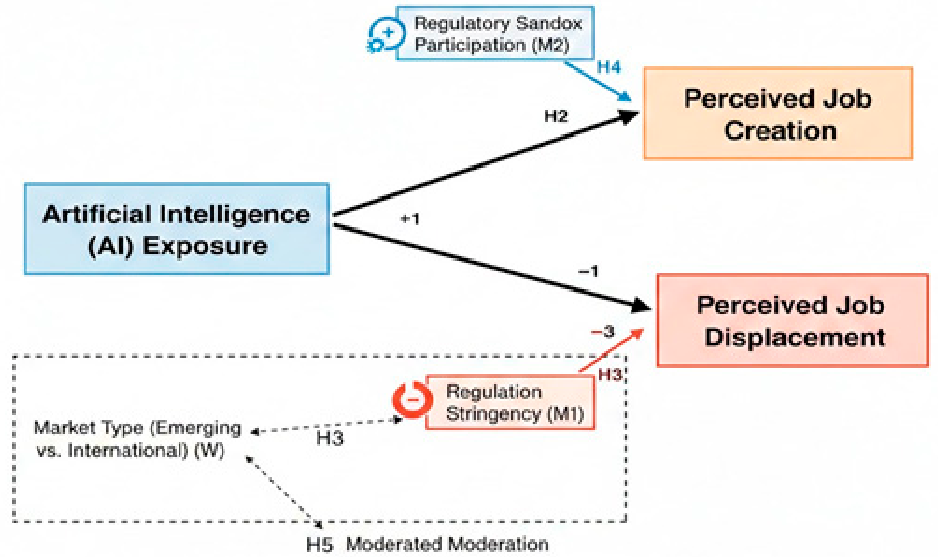
Figure 2.
Sample characteristics according to nationality.
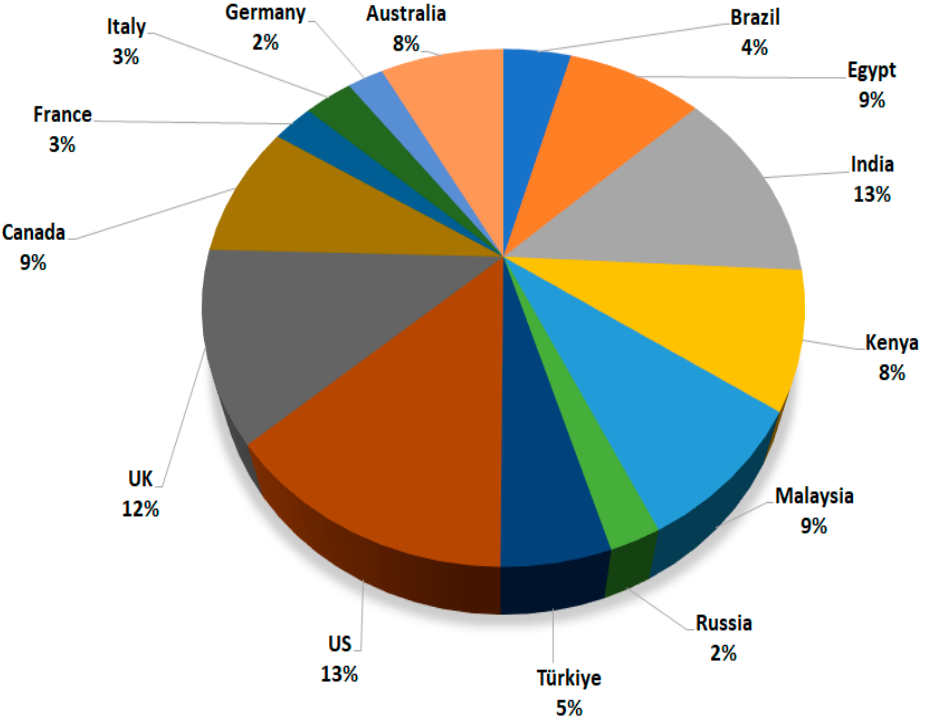

Table 1.
Descriptive Statistics and Correlations (N = 387).
| Construct | Mean | SD | AI Exposure | Job Displacement | Job Creation | Regulation Stringency | Sandbox Participation |
|---|---|---|---|---|---|---|---|
| AI Exposure | 3.72 | 0.89 | 1 | ||||
| Job Displacement | 3.85 | 0.92 | 0.62** | 1 | |||
| Job Creation | 3.45 | 0.95 | 0.48** | -0.35** | 1 | ||
| Regulation Stringency | 4.02 | 0.78 | 0.29* | -0.41** | 0.37** | 1 | |
| Sandbox Participation | 3.58 | 0.91 | 0.44** | -0.28** | 0.52** | 0.39** | 1 |
| Note: **p < 0.01, *p < 0.05 (two-tailed). | |||||||
Table 2.
Hierarchical Regression Results for Moderation Effects.
| Model/Predictor | Job Displacement (β) | Job Creation (β) | Net Employment (β) |
|---|---|---|---|
| Step 1: Controls | 0.12* | 0.09 | 0.10* |
| Step 2: AI Exposure | 0.58** | 0.45** | 0.36** |
| Step 3: Moderators | |||
| Regulation Stringency | -0.24** | - | - |
| Sandbox Participation | - | 0.29** | 0.22** |
| Emerging Market | 0.18** | -0.11* | -0.15** |
| Step 4: Two-Way Interactions | |||
| AI × Regulation | -0.32** | - | - |
| AI × Sandbox | - | 0.41** | 0.30** |
| Step 5: Triple Interaction | - | - | 0.27** |
| R² (Full Model) | 0.52 | 0.48 | 0.45 |
| Note: **p < 0.01, *p < 0.05. Standardized coefficients reported. | |||
Disclaimer/Publisher’s Note: The statements, opinions and data contained in all publications are solely those of the individual author(s) and contributor(s) and not of MDPI and/or the editor(s). MDPI and/or the editor(s) disclaim responsibility for any injury to people or property resulting from any ideas, methods, instructions or products referred to in the content. |
© 2026 by the authors. Licensee MDPI, Basel, Switzerland. This article is an open access article distributed under the terms and conditions of the Creative Commons Attribution (CC BY) license (http://creativecommons.org/licenses/by/4.0/).
Copyright: This open access article is published under a Creative Commons CC BY 4.0 license, which permit the free download, distribution, and reuse, provided that the author and preprint are cited in any reuse.


