

Submitted:
05 June 2026
Posted:
08 June 2026
You are already at the latest version
Abstract
Distal radial and ulnar fractures in miniature and toy-breed dogs are associated with high rates of delayed union, non-union, and refracture. This retrospective observational study evaluated the outcomes of simple distal radial and ulnar fractures treated by open reduction and internal fixation using a locking plate in a non-rigid configuration. Ten fractures in eight dogs weighing less than 5 kg were included. Cases were selected according to predefined biomechanical construct criteria, including a plate bridge ratio > 0.7, plate span ratio > 10, plate working length > 40% of plate length, and screw density < 0.6. Median radiographic follow-up was 224 days (range, 46–408 days). Radiographic bone healing was achieved in all cases, with a mean time to union of 53 days (range, 28–113 days) and healing occurred faster in skeletally immature dogs. Indirect bone healing with callus formation was observed in 7 of 10 fractures. Minor postoperative complications occurred in three cases and resolved with local treatment. No implant failures or refractures associated with previous screw holes were observed. A reduction in ulnar thickness was identified in evaluable cases, although this finding remained stable during follow-up and did not appear clinically relevant. These findings suggest that locking plate fixation in a non-rigid configuration provides reliable bone healing with a low complication rate in simple distal radial and ulnar fractures of miniature- and toy-breed dogs.
Keywords:
distal radial fracture
; toy-breed dog
; locking plate fixation
; veterinary orthopedics
; callus formation
Introduction
Radius and ulna fractures in dogs account for approximately 18% of all bone fractures, with traumatic injury due to a fall being the most common cause [1]. The distal third of the radius and ulna is particularly predisposed to fracture, especially in small-breed dogs [2] and its treatment presents unique challenges in veterinary orthopedics [3,4,5]. Several treatment options have been described, including external coaptation, intramedullary pinning, external skeletal fixation and bone plating; however, casts and intramedullary pinning are associated with high complication rates, including non-union and malunion due to poor mechanical stability and vascular compromise [4,6,7,8]. External skeletal fixation has shown favorable outcomes but requires intensive postoperative management and frequent follow-up [9,10,11,12,13,14,15,16]. Plate osteosynthesis has been widely described for the management of distal radial and ulnar fractures in toy and miniature-breed dogs, using both conventional [17,18,19] and locking systems with open [20,21,22] or minimally invasive [23,24] techniques.
Delayed union, malunion, non-union and refracture after implant removal are common complications of these fractures [25,26,27,28,29,30]. Biomechanical, technical and vascular factors specific to these patients have been proposed as contributors to this condition, although the exact underlying mechanism has not been definitively elucidated.
Initially, it was proposed that internal fixation using plates creates a construct with greater stiffness than the bone itself, resulting in load transfer away from the fracture site toward the implant. This phenomenon, known as stress shielding, leads to cortical osteopenia and bone remodeling, potentially predisposing to delayed union, non-union, or refracture after implant removal [31,32,33,34,35]. In addition, the distal radius and ulna in toy breeds are subjected to higher stress concentrations compared with larger dogs, which may further contribute to fracture occurrence and healing complications [2].
Local anatomical factors, including the small size of bone fragments—particularly the distal segment—, the limited contact surface between fracture fragments, the high incidence of short oblique fractures and the distracting forces exerted by the flexor musculature, have historically represented a technical challenge for stable plate fixation in these fractures [7,25,29,30].
The distal fracture region in small-breed dogs has a relatively limited vascular supply [4]. In addition, plate fixation has been shown to negatively affect cortical bone perfusion, and a direct correlation has been demonstrated between the extent of bone resorption and the plate–bone contact area [36,37,38].
The aim of this study is to describe outcomes of simple distal fractures in miniature and toy-breed dogs treated by open reduction and internal fixation using locking plates with non-rigid configuration and to discuss, in the authors’ opinion, the advantages of this approach in these particular cases.
Materials and Methods
Inclusion Criteria
A retrospective study was conducted at the Hospital de Urgencias Veterinarias de la Región de Murcia, including cases of fractures of distal aspect of the radius and ulna fractures in miniature ant toy-breed dogs (<5 kg) treated between January 2023 and February 2026. The inclusion criteria for this study were:
Fracture type: closed, transverse or short oblique fractures affecting the distal aspect of the radial diaphysis. To confirm this criterion, measurements (Figure 1) were performed using RadiAnt DICOM Viewer (Medixant, Poznań, Poland) on the mediolateral radiographic projection in each case. The total radial length (A) was measured postoperatively from the most proximal aspect of the radial head to the most distal aspect of the distal radial epiphysis, and the distal fragment length (F) was measured from the fracture line to the most distal aspect of the radial epiphysis. Only cases with an F/A ratio ≤ 0.4 were included. In these cases, the following measurements were also recorded: total plate length (B), distance between the proximal and distal screws adjacent to the fracture (C) and fracture length (D). Additionally, craniocaudal radial width at its narrowest point (G) was measured in mediolateral preoperative projections.
Surgical treatment: Fractures treated by open reduction and internal fixation using a single titanium cut-to-length locking reconstruction plate (Healthtech Solutions, Germany) placed on the cranial aspect of the radius, without the use of any additional fixation or external coaptation.
Plate and screw construct: Only cases meeting the following measurements, as previously described [24], were included: plate bridge ratio (PBR) > 0.7, which relates total plate length to total radial length (B/A); plate span ratio (PSR) > 10, relating total plate length to fracture length (B/D); plate working length, defined as the distance between the screws closest to each side of the fracture site, (PWL) > 40% of total plate length; and screw density (SD) < 0.6, defined as the number of screws divided by the total number of plate holes. Additionally, the ratio between plate thickness and the craniocaudal radial width at its narrowest point did not exceed 0.6.
Follow-up: Only cases with sufficient clinical and radiographic records to allow longitudinal follow-up until bone healing or non-union were included.
Data Collection
For each case, data on breed, age, sex, and body weight were recorded. Patients were classified as skeletally immature or mature based on age and the presence of open growth plates on radiographic evaluation. Fractures were classified as acute (<10 days from injury) or chronic (>10 days from injury).
The day of fracture treatment was recorded as day 0. Fracture reduction was assessed on mediolateral and craniocaudal radiographic projections. Reduction was classified according to the 50/50 rule as acceptable when at least 50% cortical apposition and contact between fragments were present in both projections or inadequate otherwise.
Regarding construct configuration, screw diameter, screw position within the plate, and whether screws were monocortical or bicortical were recorded. In addition, the total number of plate holes was documented.
All radiographic studies of the affected limb and the contralateral healthy limb obtained during the follow-up period were reviewed. These studies were used to determine whether ulnar thickness at its distal aspect was reduced at the time of bone healing and whether this reduction remained stable at the last radiographic follow-up (Figure 2).
Follow-up
Follow-up time was calculated from day 0 to the last radiographic record obtained at the same center where the surgical treatment was performed and was classified according to standard time frames as perioperative (0–3 months), short-term (3–6 months), mid-term (6–12 months) or long-term (>12 months). Complications were recorded throughout the follow-up period and classified as catastrophic, major, or minor [39]. The time to radiographic bone healing was determined and defined as restoration of cortical continuity of the radius in orthogonal projections. Bone healing was classified as secondary when callus formation was observed at any point during follow-up or as primary (direct) when no callus formation was detected. At that time, radiographic comparison in mediolateral projection of the affected ulnar thickness with the contralateral limb was performed. Functional limb use at the time of bone healing was also recorded and classified as complete, acceptable or unacceptable [39]. Implant-related complications (including implant failure, loosening, or infection) were recorded, as well as whether or not implant removal was performed after bone healing (partial or complete).
Results
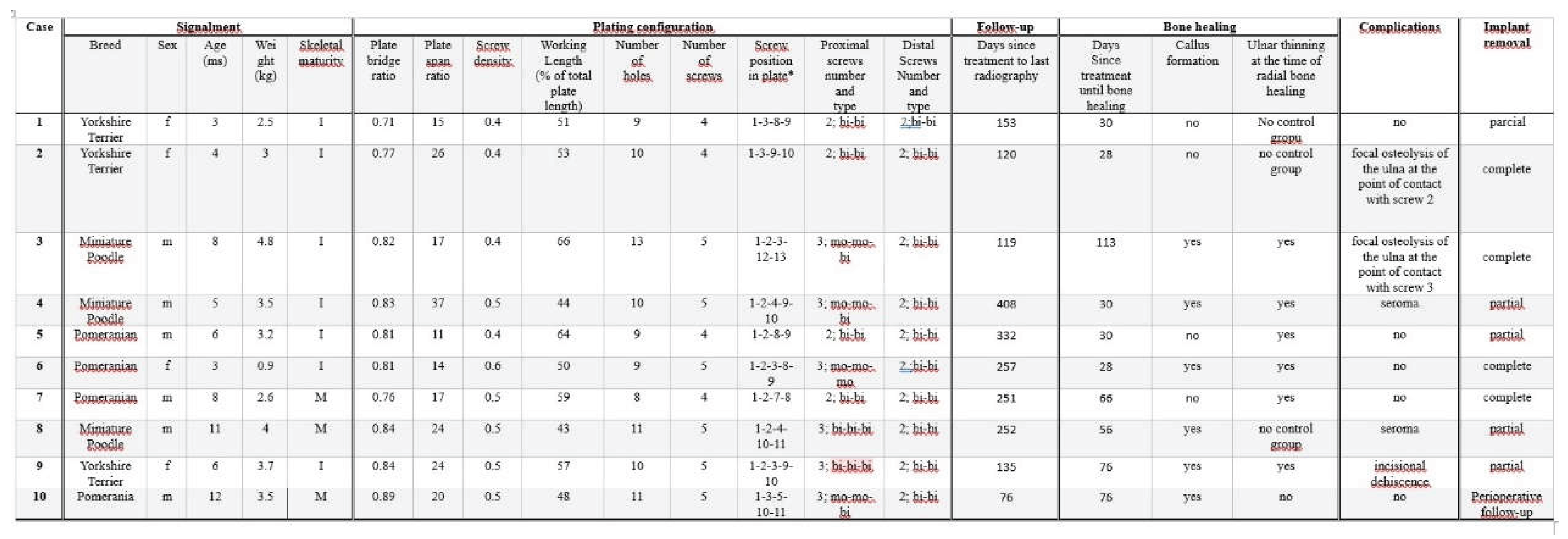
A total of 10 acute fractures met the inclusion criteria (Table 1), corresponding to 8 patients, as two dogs sustained bilateral fractures at different time points (cases 1 and 2; cases 4 and 8). At the time of fracture presentation, the most common breed was Pomeranian (n = 4), followed by Yorkshire Terrier and Miniature Poodle (n = 3 each). There were 6 males and 4 females included in the study. Mean body weight was 3.12 kg (range, 0.9–4.8 kg) and mean craniocaudal radial width at its narrowest point was 0.35 cm (range, 0.24–0.46 cm). Mean age was 6.6 months (range, 3–12 months) 7 fractures occurred in skeletally immature dogs and 3 in skeletally mature dogs. All radial fractures showed a simple short oblique configuration (Figure 3) extending from proximolateral to distomedial. This pattern was similar in the ulnar fractures, except in case 2, which presented a complex ulnar fracture.
Fracture reduction was classified as acceptable in all cases (Figure 4). Construct configuration parameters (Figure 5) showed a mean PBR of 0.81 (range, 0.71–0.89), mean PSR of 10.9 (range, 11.4–37.1), mean screw density was 0.47 (range, 0.40–0.60) and mean WL of 3.49 cm (range, 2.02–5.18 cm) corresponding to a mean of 56% (range, 44-69 %) of the total plate length. The mean number of plate holes was 10.0 (range, 8–13). The mean number of empty plate holes between the screws closest to each side to the fracture was 4.73 (range, 4–8). Screw diameter was 1.5 mm in one case (case 6) and 2.0 mm in nine cases. Distal fixation was achieved using two bicortical screws in all cases. Proximal fixation consisted of two bicortical screws in four cases, and three screws in different mono- or bicortical configurations in six cases.
Median radiographic follow-up time was 224 days (range, 46–408 days) being classified as perioperative in 1 case, short-term in 4 cases, mid-term in 3 cases and long-term in 2 cases. Radiographic follow-up for all cases is provided in Supplementary Materials.
Radiographic bone healing (Figure 6) was achieved in all cases, with a mean time to union of 53 days (range, 28–113 days). Healing time was shorter in skeletally immature dogs (47.9 days; range, 28–113 days) compared to skeletally mature dogs (66 days; range, 56–76 days). Callus formation (Figure 7) was observed in 7 out of 10 cases (70%) during the healing process. At the time of bone healing, in 7 cases (cases 3, 4, 5, 6, 7, 9 and 10) it was possible to compare ulnar thickness (Figure 8) on the mediolateral projection of the affected limb with that of the contralateral healthy limb. A reduction in ulnar thickness was observed in all of these cases except case 10. In the remaining three cases (cases 1, 2 and 8), objective comparison was not possible due to previous fractures affecting the contralateral limb; however, subjective evaluation suggested the presence of ulnar thinning. Limb function was classified as complete in all cases, with full use of the affected limb without pharmacological support.
Three minor postoperative complications were recorded, consisting of seroma formation in two cases and incisional complications in one case, all of which resolved with local treatment. In two cases, focal osteolysis of the ulna was observed at the point of contact with the tip of a proximal screw, which was resolved after implant removal.
In nine cases with short-term or longer follow-up, implant removal was performed, either totally (n = 4) or partially (n = 5). Removal was progressive in 7 cases (cases 1, 2, 4, 5, 6, 7 and 9) and performed in a single stage in two cases (cases 3 and 8). In one case (case 10) no implant removal was done at time study.
In one case (case 7) (Figure 9), a second fracture occurred 70 days after implant removal following a fall from a chair. Radiographic measurements confirmed that the new fracture site did not coincide with the first fracture location or with any previous screw holes; therefore, it was not classified as a refracture or implant-related complication. The fracture was treated using a 2.0 mm locking reconstruction plate with nine holes, applying three proximal and two distal bicortical screws, leaving four empty holes between the screws closest to the fracture site. Radiographic bone healing was achieved at 70 days and the fixation was subsequently dynamized by removal of all screws.
At the end of the follow-up period, all cases showed complete functional use of the affected limbs and in all cases with short-term or longer radiographic follow-up, ulnar thickness remained stable compared to the previous evaluation (Figure 10).
Discussion
Successful treatment of simple distal radial fractures in miniature and toy dogs using locking plates has been previously reported [20,21,22] characterized by low PBR and PSR values and high screw density, which can be considered stiff configurations. An exception is represented by reports using minimally invasive plate osteosynthesis (MIPO) techniques, in which preservation of periosteal vascularization and the fracture hematoma is emphasized as the main advantage [23,24]. This study reports excellent outcomes using open reduction and internal fixation with a locking plate in a non-rigid configuration. A thorough discussion of these findings is warranted.
In locking plate fracture fixation, multiple variables can be modified, including plate length, number and type of screws, screw distribution and fracture gap size. These factors directly influence implant stresses, construct stiffness, interfragmentary strain and ultimately the biological environment for fracture healing [40,41,42,43]. Traditionally, excessive construct stiffness has been associated with stress shielding [31,32,34]. This concept remains controversial, as bone resorption beneath plates has been observed regardless of plate stiffness [44], and because similar construct stiffness has been demonstrated in toy- and large-breed dogs despite the absence of bone resorption in the latter [45]. In the present study, only constructs fulfilling predefined criteria for non-rigid fixation [41,46,47] in terms of PBR, PSR, working length and screw density were included. We believe that this configuration is advantageous not only for reducing the potential effects of stress shielding, but more importantly for promoting callus formation. Secondary bone healing, characterized by callus formation, has been associated with stronger union compared to primary bone healing [48], which typically occurs under conditions of high construct stiffness. Bone healing through callus formation was observed in all cases except three. In these cases, the first follow-up radiographs were obtained when the healing process was already complete, and prior callus formation may have undergone remodeling and therefore not been detectable. The retrospective and observational nature of the study limits the ability to draw definitive conclusions in this regard, although the findings still support the proposed hypothesis.
Locking plate fixation has been shown to better preserve periosteal vascularization at the fracture site by minimizing the area of contact [38,46,49,50] and reducing pressure between the plate and the bone surface. However, this has been questioned by both experimental and clinical studies [51,52,53], which suggest that the actual plate–bone contact area is influenced more by the complex surface morphology of the bone and the surgeon’s ability to accurately contour the plate than by the plate design itself. The authors believe that the construct configuration used in the present study minimizes plate–bone contact and pressure specifically within the working length, where the absence of screws reduces the degree of plate apposition to the underlying bone surface. This region is also considered to have a more compromised vascular supply [4], making this effect potentially clinically relevant.
The use of a titanium plate with a long working length improves resistance to fatigue failure [54]. Nevertheless, accurate fracture reduction without a residual gap between bone segments is still recommended so that controlled interfragmentary motion can occur while maintaining adequate construct stability. Additionally, the use of long plates spanning a greater portion of the radius places the proximal end of the construct closer to the proximal radial epiphysis, reducing the lever arm generated at this location and therefore potentially decreasing the risk of stress concentration fractures [55].
The reduction in ulnar thickness observed in all cases may be related to the initial trauma, the surgical treatment or a combination of both factors. The authors believe that implant removal, whether performed progressively or in a single stage, may contribute to halting this process. However, in case 8, in which only one screw was removed, ulnar thickness remained stable at the end of the radiographic follow-up, 252 days after treatment, suggesting that this phenomenon may be self-limiting and not solely dependent on implant removal.
No refractures were observed following implant removal, suggesting that bone healing was mechanically robust. The authors believe that screw placement confined to the proximal and distal regions of the radius—areas subjected to lower mechanical stress in these patients—may reduce the risk of refracture through previous screw holes.
This study has several limitations, including a relatively small sample size, non-standardized radiographic follow-up timing, its retrospective nature and the absence of a control group, which limits direct comparison with other fixation strategies. Despite the relatively small sample size, the homogeneity of the individuals included and the standardized intervention performed in all cases provide important strength to the study.
In conclusion, the use of non-rigid locking plate constructs (plate bridge ratio (PBR) > 0.7; plate span ratio (PSR) > 10; working length (PWL) > 40% of plate length; screw density < 0.6) is a suitable treatment for simple distal radial fractures in miniature and toy-breed dogs (body weight < 5 kg; craniocaudal radial width < 0,46 cm). This configuration provided reliable bone healing within acceptable time frames and was associated with a low rate of complications across all follow-up periods. The construct design, defined by reduced stiffness, may promote callus formation and preservation of vascular supply. Although a reduction in ulnar thickness was observed, this finding remained stable over time and did not appear to have clinical relevance. Further prospective studies with larger sample sizes and control groups are warranted to confirm these findings.
Supplementary Materials
The following supporting information can be downloaded at the website of this paper posted on Preprints.org.
Conflicts of Interest
The authors declare no conflict of interest.
Ethical Approval
This study did not involve experimental research animals and did not cause additional suffering or interventions beyond standard clinical management. All procedures were performed as part of routine veterinary care with owner consent.
References
- Boudrieau, R.J. Fractures of the radius and ulna. In Textbook of Small Animal Surgery, 3rd ed.; Slatter, D., Ed.; Saunders: Philadelphia, PA, USA, 2003; Volume 2, pp. 1953–1973. [Google Scholar]
- Anggoro, D.; Purba, M.S.; Jiang, F.; Nishida, N.; Itoh, H.; Itamoto, K.; Nemoto, Y.; Nakaichi, M.; Sunahara, H.; Tani, K. Elucidation of the radius and ulna fracture mechanisms in toy poodle dogs using finite element analysis. J. Vet. Med. Sci. 2024, 86, 575–583. [Google Scholar] [CrossRef]
- Rudd, R.G.; Whitehair, J.G. Fractures of the radius and ulna. Vet. Clin. North Am. Small Anim. Pract. 1992, 22, 135–148. [Google Scholar] [CrossRef] [PubMed]
- Welch, J.A.; Boudrieau, R.J.; DeJardin, L.M.; Spodnick, G.J. The intraosseous blood supply of the canine radius: Implications for healing of distal fractures in small dogs. Vet. Surg. 1997, 26, 57–61. [Google Scholar] [CrossRef]
- Piermattei, D.L.; Flo, G.L.; DeCamp, C.E. Brinker, Piermattei, and Flo’s Handbook of Small Animal Orthopedics and Fracture Repair, 4th ed.; Elsevier: Amsterdam, The Netherlands, 2006. [Google Scholar]
- Herron, M.R. Repair of distal radio-ulnar fractures in toy breeds of dogs. Canine Pract. 1974, 1, 12–17. [Google Scholar]
- Larsen, L.J.; Roush, J.K.; McLaughlin, R.M. Bone plate fixation of distal radius and ulna fractures in small- and miniature-breed dogs. J. Am. Anim. Hosp. Assoc. 1999, 35, 243–250. [Google Scholar] [CrossRef]
- Lappin, M.R.; Aron, D.N.; Herron, H.L. Fractures of the radius and ulna in the dog. J. Am. Anim. Hosp. Assoc. 1983, 19, 643–650. [Google Scholar]
- Piras, L.; Cappellari, F.; Peirone, B.; Ferretti, A. Treatment of fractures of the distal radius and ulna in toy breed dogs with circular external skeletal fixation: A retrospective study. Vet. Comp. Orthop. Traumatol. 2011, 24, 228–235. [Google Scholar]
- Haas, B.; Reichler, I.M.; Montavon, P.M. Use of the tubular external fixator in the treatment of distal radial and ulnar fractures in small dogs and cats. Vet. Comp. Orthop. Traumatol. 2003, 16, 132–137. [Google Scholar]
- Laverty, P.H.; Johnson, A.L.; Toombs, J.P.; et al. Simple and multiple fractures of the radius treated with an external fixator. Vet. Comp. Orthop. Traumatol. 2002, 15, 97–103. [Google Scholar]
- Egger, C.E. A technique for the management of radial and ulnar fractures in miniature dogs using transfixation pins. J. Small Anim. Pract. 1990, 31, 377–387. [Google Scholar] [CrossRef]
- Johnson, A.L.; Kneller, S.K.; Weigel, R.M. Radial and tibial fracture repair with external skeletal fixation: Effects of fracture type, reduction and complications on healing. Vet. Surg. 1989, 18, 367–372. [Google Scholar] [CrossRef] [PubMed]
- Aikawa, T.; Miyazaki, Y.; Saitoh, Y.; Sadahiro, S.; Nishimura, M. Clinical outcomes of 119 miniature- and toy-breed dogs with 140 distal radial and ulnar fractures repaired with free-form multiplanar type II external skeletal fixation. Vet. Surg. 2019, 48, 938–946. [Google Scholar] [CrossRef] [PubMed]
- Bierens, D.; Unis, M.D.; Cabrera, S.Y.; Kass, P.H.; Owen, T.J.; Mueller, M.G. Radius and ulna fracture repair with the IMEX miniature circular external skeletal fixation system in 37 small and toy breed dogs: A retrospective study. Vet. Surg. 2017, 46, 587–595. [Google Scholar] [CrossRef]
- Gellermann, L.; Grußendorf, C. Surgical treatment of distal combined fractures of the radius and ulna in toy breeds using a type II external fixator and an intramedullary pin: A retrospective study. Tierarztl. Prax. Ausg. K. Kleintiere Heimtiere 2025, 53, 6–11. [Google Scholar]
- Watrous, G.K.; Moens, N.M. Cuttable plate fixation for small breed dogs with radius and ulna fractures: Retrospective study of 31 dogs. Can. Vet. J. 2017, 58(4), 377–382. [Google Scholar]
- De Arburn Parent, R.; Benamou, J.; Gatineau, M.; Clerfond, P.; Planté, J. Open reduction and cranial bone plate fixation of fractures involving the distal aspect of the radius and ulna in miniature- and toy-breed dogs: 102 cases (2008-2015). J. Am. Vet. Med. Assoc. 2017, 250(12), 1419–1426. [Google Scholar] [CrossRef]
- Hamilton, M.H.; Langley Hobbs, S.J. Use of the AO veterinary mini 'T'-plate for stabilisation of distal radius and ulna fractures in toy breed dogs. Vet. Comp. Orthop. Traumatol. Erratum in: Vet Comp Orthop Traumatol. 2005;18(2):114. PMID: 16594212. 2005, 18(1), 18–25. [Google Scholar]
- Gibert, S.; Ragetly, G.R.; Boudrieau, R.J. Locking compression plate stabilization of 20 distal radial and ulnar fractures in toy and miniature breed dogs. Vet. Comp. Orthop. Traumatol. 2015, 28, 441–447. [Google Scholar]
- Kang, B.J.; Ryu, H.H.; Park, S.; Kim, Y.; Kweon, O.K.; Hayashi, K. Clinical evaluation of a mini locking plate system for fracture repair of the radius and ulna in miniature breed dogs. Vet. Comp. Orthop. Traumatol. 2016, 29, 522–527. [Google Scholar] [CrossRef]
- Swepson, R.; Crowley, J.; Glyde, M.; de Bruyn, B.; Wills, D.; Beierer, L.; Newman, M.; Tan, C. Clinical and Radiographic Outcomes of 1.5-mm Locking Plate Fixation for 30 Radial and Ulnar Fractures in Dogs. Vet. Comp. Orthop. Traumatol. 2025, 38(6), 308–315. [Google Scholar] [CrossRef] [PubMed]
- Hudson, C.C.; Lewis, D.D.; Pozzi, A. Minimally invasive plate osteosynthesis in small animals: radius and ulna fractures. Vet. Clin. North Am. Small Anim. Pract. 2012, 42(5), 983–96, vii. [Google Scholar] [CrossRef] [PubMed]
- Pozzi, A.; Hudson, C.C.; Gauthier, C.M.; Lewis, D.D. Retrospective comparison of minimally invasive plate osteosynthesis and open reduction and internal fixation of radius-ulna fractures in dogs. Vet. Surg. 2013, 42(1), 19–27. [Google Scholar] [CrossRef]
- Waters, D.J.; Breur, G.J.; Toombs, J.P. Treatment of common forelimb fractures in miniature and toy breed dogs. J. Am. Anim. Hosp. Assoc. 1983, 19, 643–650. [Google Scholar]
- Muir, P. Distal antebrachial fractures in toy breed dogs. Compend. Contin. Educ. Pract. Vet. 1997, 19, 137–145. [Google Scholar]
- Hunt, J.M.; Aitken, M.L.; Denny, H.R.; et al. The complications of diaphyseal fractures in dogs: A review of 100 cases. J. Small Anim. Pract. 1980, 21, 3–119. [Google Scholar] [CrossRef]
- Sumner-Smith, G. A comparative investigation into the healing of fractures in miniature poodles and mongrel dogs. J. Small Anim. Pract. 1974, 15, 323–328. [Google Scholar] [CrossRef] [PubMed]
- Atilola, M.A.O.; Sumner-Smith, G. Nonunion fractures in dogs. J. Vet. Orthop. 1984, 3, 21–24. [Google Scholar]
- Vaughan, L.C. A clinical study of non-union fractures in the dog. J. Small Anim. Pract. 1964, 5, 173–177. [Google Scholar] [CrossRef]
- Huiskes, R.; Weinans, H.; van Rietbergen, B. The relationship between stress shielding and bone resorption around total hip stems and the effects of flexible materials. Clin. Orthop. Relat. Res. 1992, 274, 124–134. [Google Scholar] [CrossRef]
- Uhthoff, H.K.; Finnegan, M. The effects of metal plates on post-traumatic remodelling and bone mass. J. Bone Jt. Surg. Br. 1983, 65, 66–71. [Google Scholar] [CrossRef]
- Uhthoff, H.K.; Boisvert, D.; Finnegan, M. Cortical porosis under plates: Reaction to unloading or to necrosis? J. Bone Jt. Surg. Am. 1994, 76, 1507–1512. [Google Scholar] [CrossRef]
- Tonino, A.J.; Davidson, C.L.; Klopper, P.J.; et al. Protection from stress in bone and its effects: Experiments with stainless steel and plastic plates in dogs. J. Bone Jt. Surg. Br. 1976, 58, 107–113. [Google Scholar] [CrossRef]
- Lesser, A.S. Cancellous bone grafting at plate removal to counteract stress protection. J. Am. Vet. Med. Assoc. 1986, 189, 696–699. [Google Scholar] [CrossRef]
- Kregor, P.J.; Senft, D.; Parvin, D.; Campbell, C.; Toomey, S.; Parker, C.; Gillespy, T.; Swiontkowski, M.F. Cortical bone perfusion in plated fractured sheep tibiae. J. Orthop. Res. 1995, 13(5), 715–24. [Google Scholar] [CrossRef] [PubMed]
- Smith, S.R.; Bronk, J.T.; Kelly, P.J. Effect of fracture fixation on cortical bone blood flow. J. Orthop. Res. 1990, 8, 471–478. [Google Scholar] [CrossRef]
- Lippuner, K.; Vogel, R.; Tepic, S.; Rahn, B.A.; Cordey, J.; Perren, S.M. Effect of animal species and age on plate-induced vascular damage in cortical bone. Arch. Orthop. Trauma Surg. 1992, 111, 78–84. [Google Scholar] [CrossRef]
- Cook, J.L.; Evans, R.; Conzemius, M.G.; Lascelles, B.D.X.; McIlwraith, C.W.; Pozzi, A.; Clegg, P.; Innes, J.; Schulz, K.; Houlton, J.; Fortier, L.; Cross, A.R.; Hayashi, K.; Kapatkin, A.; Brown, D.C.; Stewart, A. Proposed definitions and criteria for reporting time frame, outcome, and complications for clinical orthopedic studies in veterinary medicine. Vet. Surg. 2010, 39, 905–908. [Google Scholar] [CrossRef] [PubMed]
- Bottlang, M.; Doornink, J.; Lujan, T.J.; Fitzpatrick, D.C.; Marsh, J.L.; Augat, P.; von Rechenberg, B.; Lesser, M.; Madey, S.M. Effects of construct stiffness on healing of fractures stabilized with locking plates. J. Bone Jt. Surg. Am. 2010, 92, 12–22. [Google Scholar] [CrossRef] [PubMed]
- Claes, L. Biomechanical principles and mechanobiologic aspects of flexible and locked plating. J. Orthop. Trauma 2011, 25, S4–S7. [Google Scholar] [CrossRef]
- Egol, K.A.; Kubiak, E.N.; Fulkerson, E.; Kummer, F.J.; Koval, K.J. Biomechanics of locked plates and screws. J. Orthop. Trauma 2004, 18, 488–493. [Google Scholar] [CrossRef]
- Oh, J.-K.; Sahu, D.; Ahn, Y.-H.; Lee, S.-J.; Tsutsumi, S.; Hwang, J.H.; Jung, D.-Y.; Perren, S.M.; Oh, C.-W. Effect of fracture gap on stability of compression plate fixation: A finite element study. J. Orthop. Res. 2010, 28, 462–467. [Google Scholar] [CrossRef]
- Carter, D.R.; Shimaoka, E.E.; Harris, W.H.; et al. Changes in long-bone structural properties during the first 8 weeks of plate implantation. J. Orthop. Res. 1984, 2, 80–89. [Google Scholar] [CrossRef]
- Gauthier, C.M.; Conrad, B.P.; Lewis, D.D.; et al. In vitro comparison of stiffness of plate fixation of radii from large- and small-breed dogs. Am. J. Vet. Res. 2011, 72, 1112–1117. [Google Scholar] [CrossRef]
- Gautier, E.; Sommer, C. Guidelines for the clinical application of the LCP. Injury 2003, 34, 63–76. [Google Scholar] [CrossRef] [PubMed]
- Kubiak, E.N.; Fulkerson, E.; Strauss, E.; Egol, K.A.; Koval, K.J. The evolution of locked plates. J. Bone Jt. Surg. Am. 2006, 88, 189–193. [Google Scholar]
- Tepic, S.; Remiger, A.R.; Morikawa, K.; Predieri, M.; Perren, S.M. Strength recovery in fractured sheep tibia treated with a plate or an internal fixator: an experimental study with a two-year follow-up. J. Orthop. Trauma. 1997, 11(1), 14–23. [Google Scholar] [CrossRef]
- Perren, S.M.; Klaue, K.; Pohler, O.; et al. The limited contact dynamic compression plate (LC-DCP). Arch. Orthop. Trauma Surg. 1990, 109, 304–310. [Google Scholar] [CrossRef]
- Schütz, M.; Südkamp, N.P. Revolution in plate osteosynthesis: new internal fixator systems. J. Orthop. Sci. 2003, 8(2), 252–8. [Google Scholar] [CrossRef] [PubMed]
- Field, J.R.; Hearn, T.C.; Caldwell, C.B. Bone plate fixation: an evaluation of interface contact area and force of the dynamic compression plate (DCP) and the limited contact-dynamic compression plate (LC-DCP) applied to cadaveric bone. J. Orthop. Trauma. 1997, 11(5), 368–73. [Google Scholar] [CrossRef]
- Jain, R.; Podworny, N.; Hearn, T.; Richards, R.R.; Schemitsch, E.H. A biomechanical evaluation of different plates for fixation of canine radial osteotomies. J. Trauma. 1998, 44(1), 193–7. [Google Scholar] [CrossRef]
- Kregor, P.J.; Senft, D.; Parvin, D.; Campbell, C.; Toomey, S.; Parker, C.; Gillespy, T.; Swiontkowski, M.F. Cortical bone perfusion in plated fractured sheep tibiae. J. Orthop. Res. 1995, 13, 715–724. [Google Scholar] [CrossRef] [PubMed]
- Hoffmeier, K.L.; Hofmann, G.O.; Mückley, T. Choosing a proper working length can improve the lifespan of locked plates: A biomechanical study. Clin. Biomech. 2011, 26, 405–409. [Google Scholar] [CrossRef] [PubMed]
- Barnhart, M.D.; Maritato, K.C. Locking Plates in Veterinary Orthopedics; Wiley: Hoboken, NJ, USA, 2021. [Google Scholar]
Figure 1.
Preoperative and immediate postoperative mediolateral radiographic projections in case 4 showing how the measurements of each case were performed to calculate the biomechanical construct configuration. Total radial length (A), plate length (B), distance between the two screws closest to the fracture (C), fracture length (D), proximal segment length (E), distal segment length (F) and radial width at its narrowest point (G).
Figure 1.
Preoperative and immediate postoperative mediolateral radiographic projections in case 4 showing how the measurements of each case were performed to calculate the biomechanical construct configuration. Total radial length (A), plate length (B), distance between the two screws closest to the fracture (C), fracture length (D), proximal segment length (E), distal segment length (F) and radial width at its narrowest point (G).
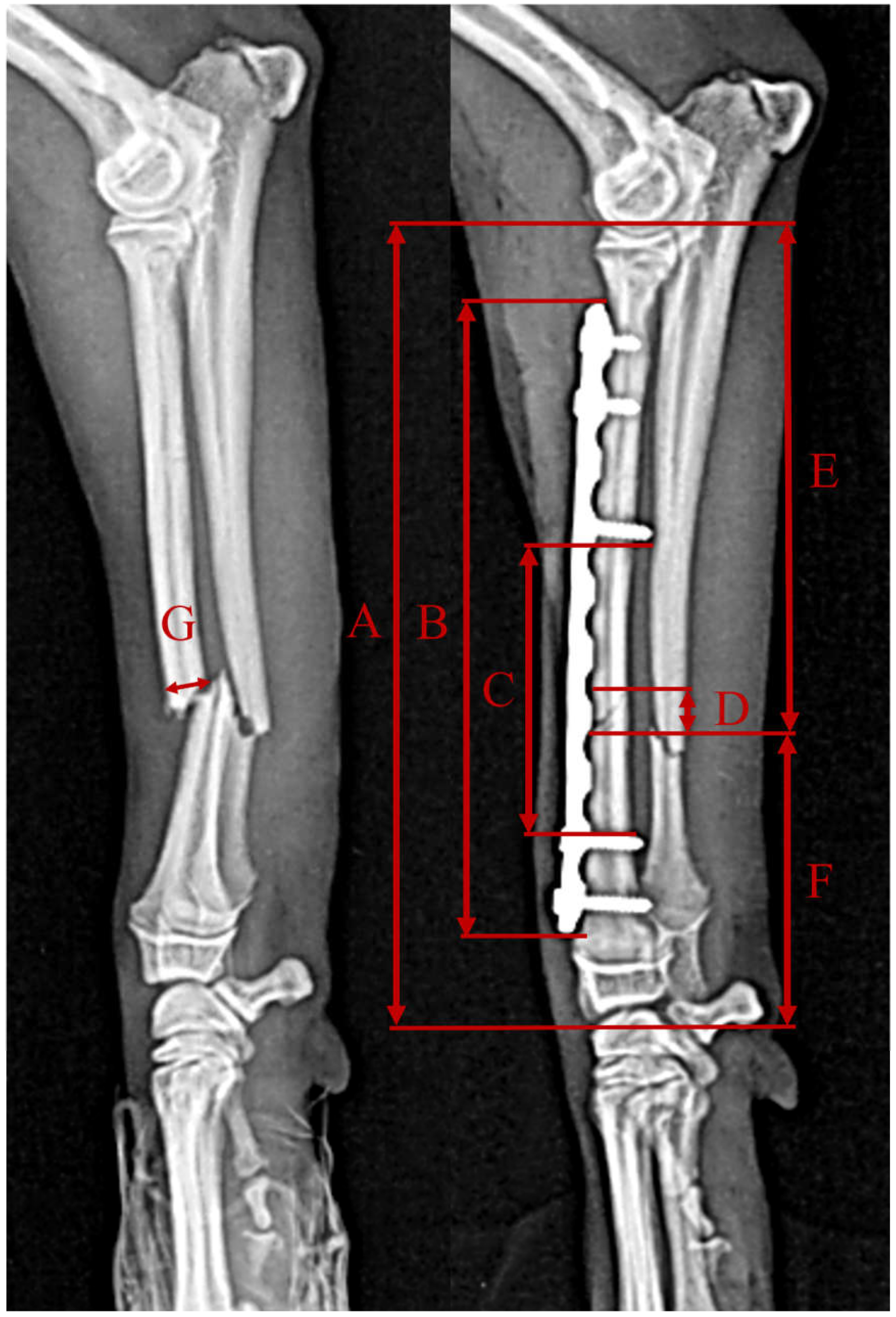
Figure 2.
Radiographic follow-up of case 4. Preoperative mediolateral and craniocaudal projections showing measurement of radial thickness at its narrowest point (a). Immediate postoperative projections showing plating configuration and measurements A, B, C, D, E, and F (b). At day 9 (c) bone remodeling and initial callus formation are observed. At day 30 (d) radiographic bone healing of the radius is completed, the ulna shows reduced thickness compared to the contralateral limb; screws 2, 3, 4 and 5 were removed. At day 79 (e), screw holes are filled with bone tissue and screw 1 was removed. Radiographic appearance at day 408 (f).
Figure 2.
Radiographic follow-up of case 4. Preoperative mediolateral and craniocaudal projections showing measurement of radial thickness at its narrowest point (a). Immediate postoperative projections showing plating configuration and measurements A, B, C, D, E, and F (b). At day 9 (c) bone remodeling and initial callus formation are observed. At day 30 (d) radiographic bone healing of the radius is completed, the ulna shows reduced thickness compared to the contralateral limb; screws 2, 3, 4 and 5 were removed. At day 79 (e), screw holes are filled with bone tissue and screw 1 was removed. Radiographic appearance at day 408 (f).
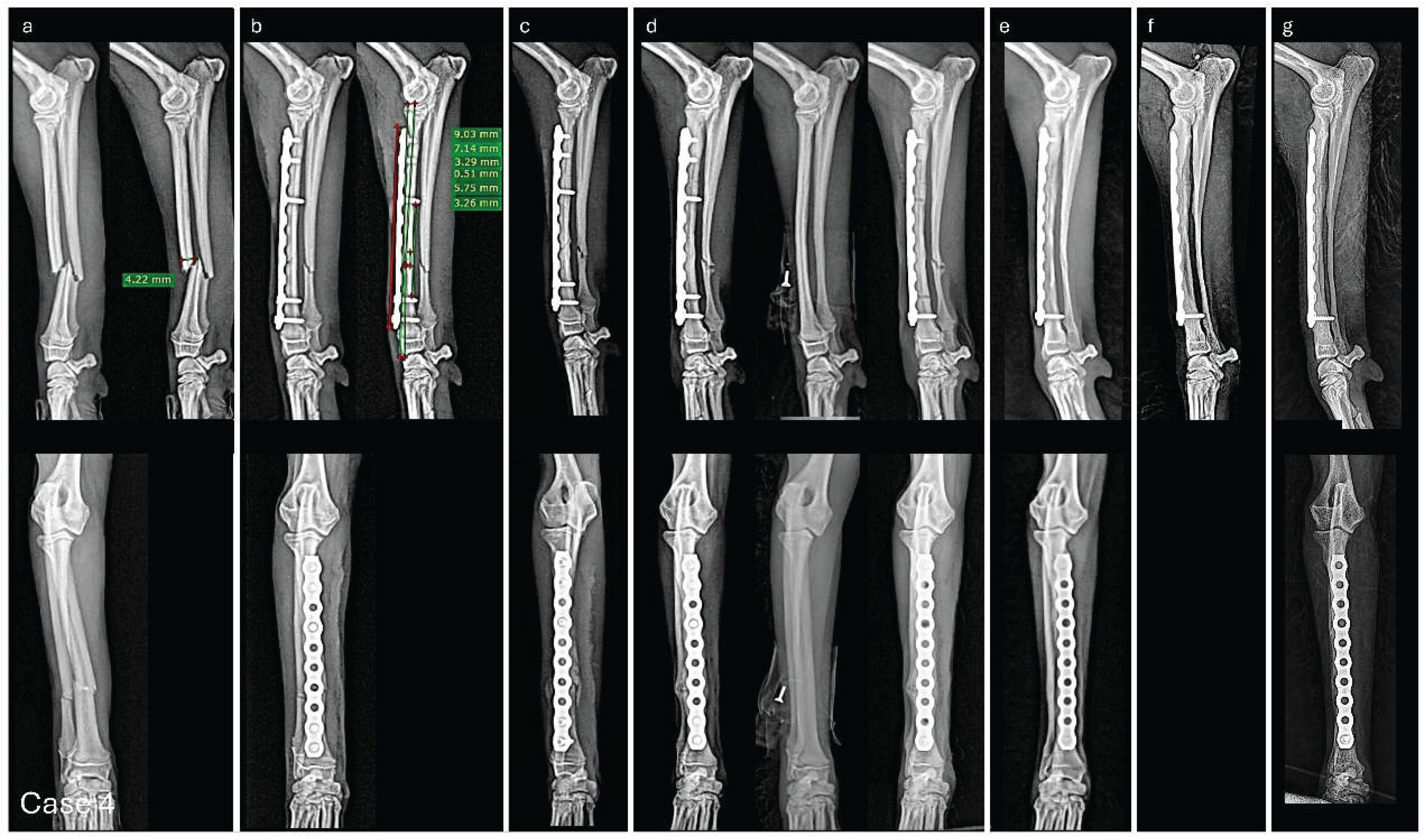
Figure 3.
Mediolateral and craniocaudal radiographic projections obtained at the time of presentation in the 10 cases included in the study. Each case is identified by its corresponding number preceded by the letter C in the upper left corner of each image.
Figure 3.
Mediolateral and craniocaudal radiographic projections obtained at the time of presentation in the 10 cases included in the study. Each case is identified by its corresponding number preceded by the letter C in the upper left corner of each image.
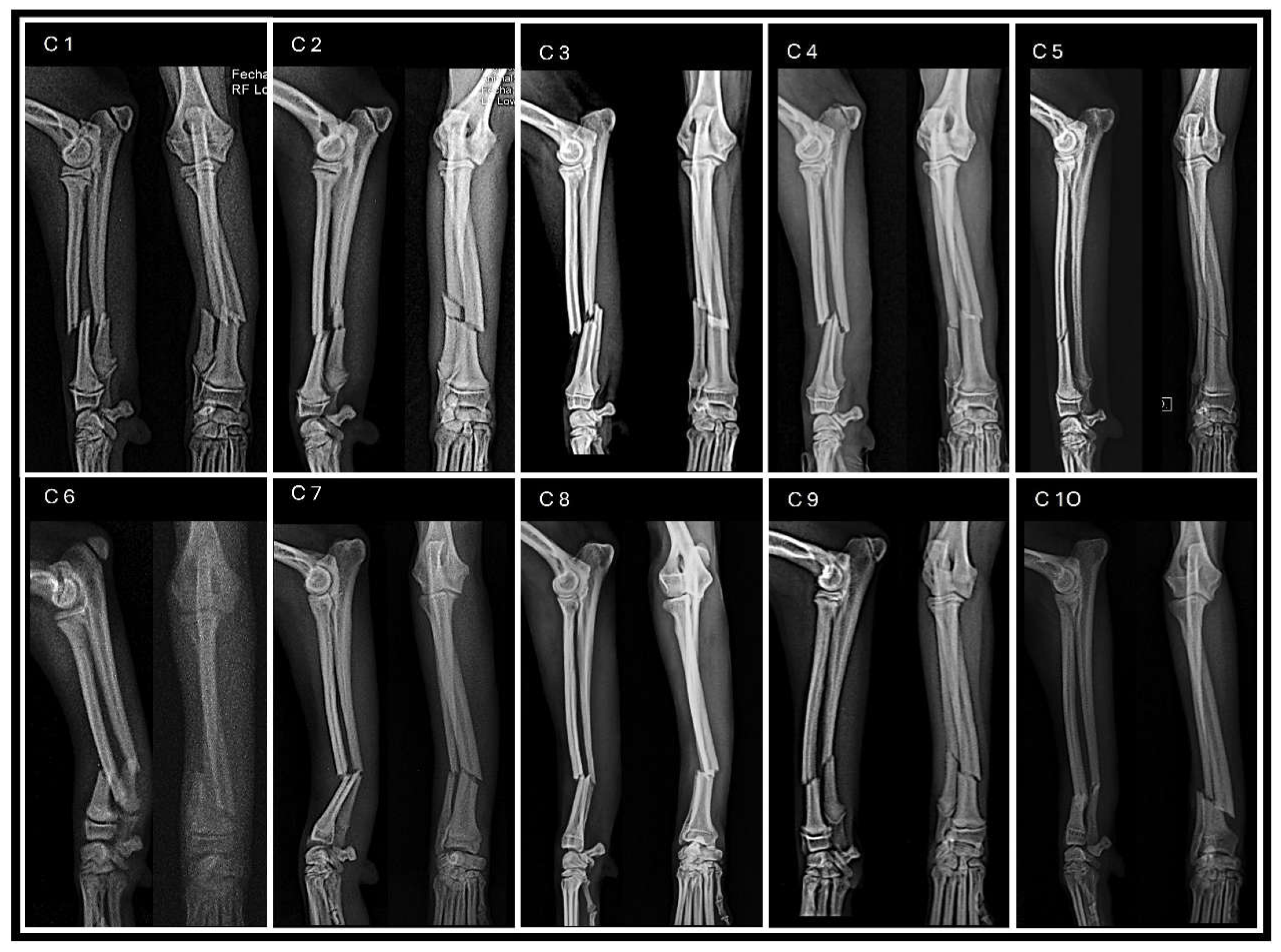
Figure 4.
Mediolateral and craniocaudal radiographic projections showing fixation using a single locking plate in each of the 10 cases included in the study. Each case is identified by its corresponding number preceded by the letter C in the upper left corner of each image.
Figure 4.
Mediolateral and craniocaudal radiographic projections showing fixation using a single locking plate in each of the 10 cases included in the study. Each case is identified by its corresponding number preceded by the letter C in the upper left corner of each image.
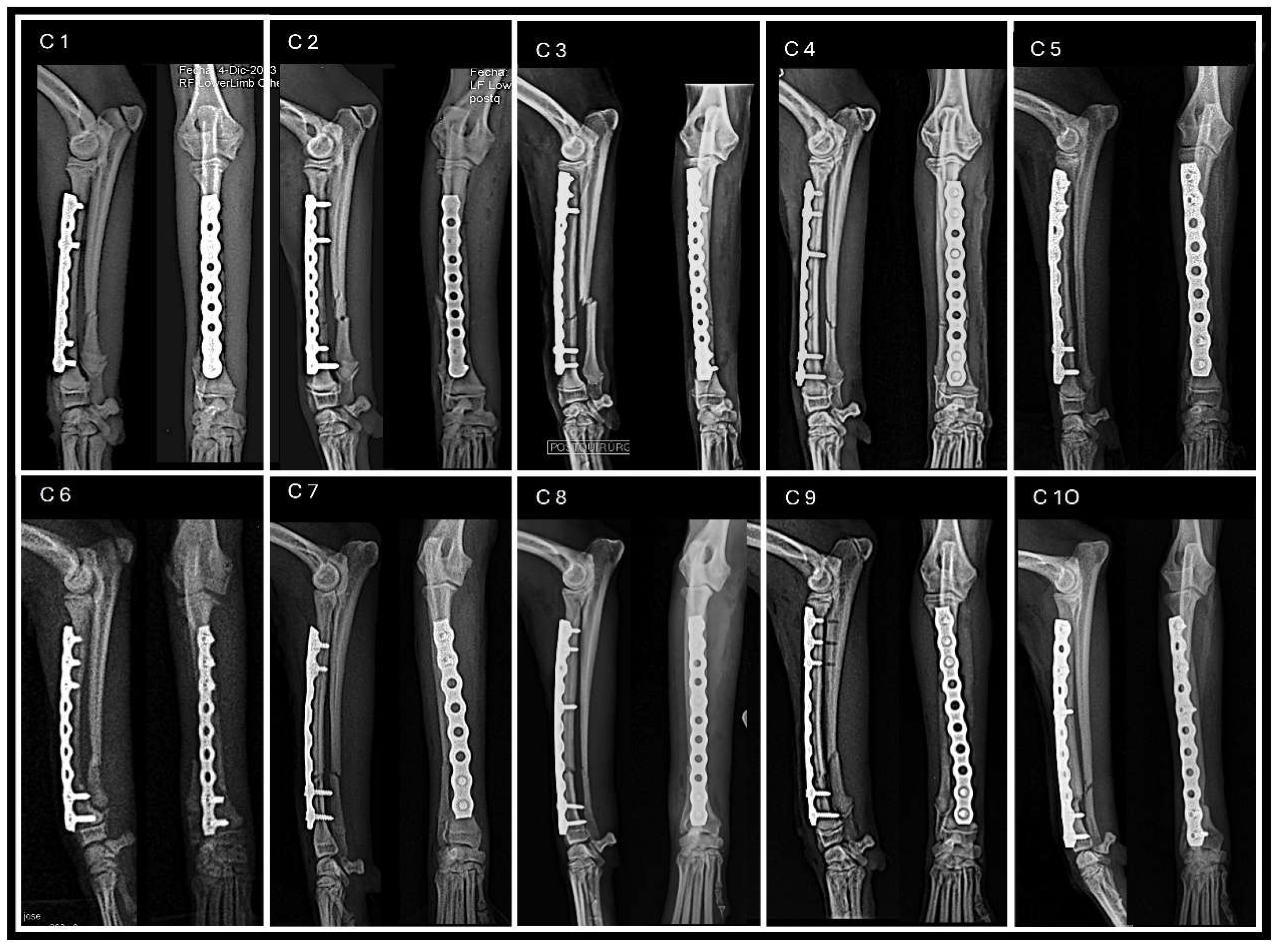
Figure 5.
Measurements performed on the preoperative and postoperative mediolateral projections in the 10 cases included in the study. Each case is identified by its corresponding number preceded by the letter C in the upper left corner of each image.
Figure 5.
Measurements performed on the preoperative and postoperative mediolateral projections in the 10 cases included in the study. Each case is identified by its corresponding number preceded by the letter C in the upper left corner of each image.
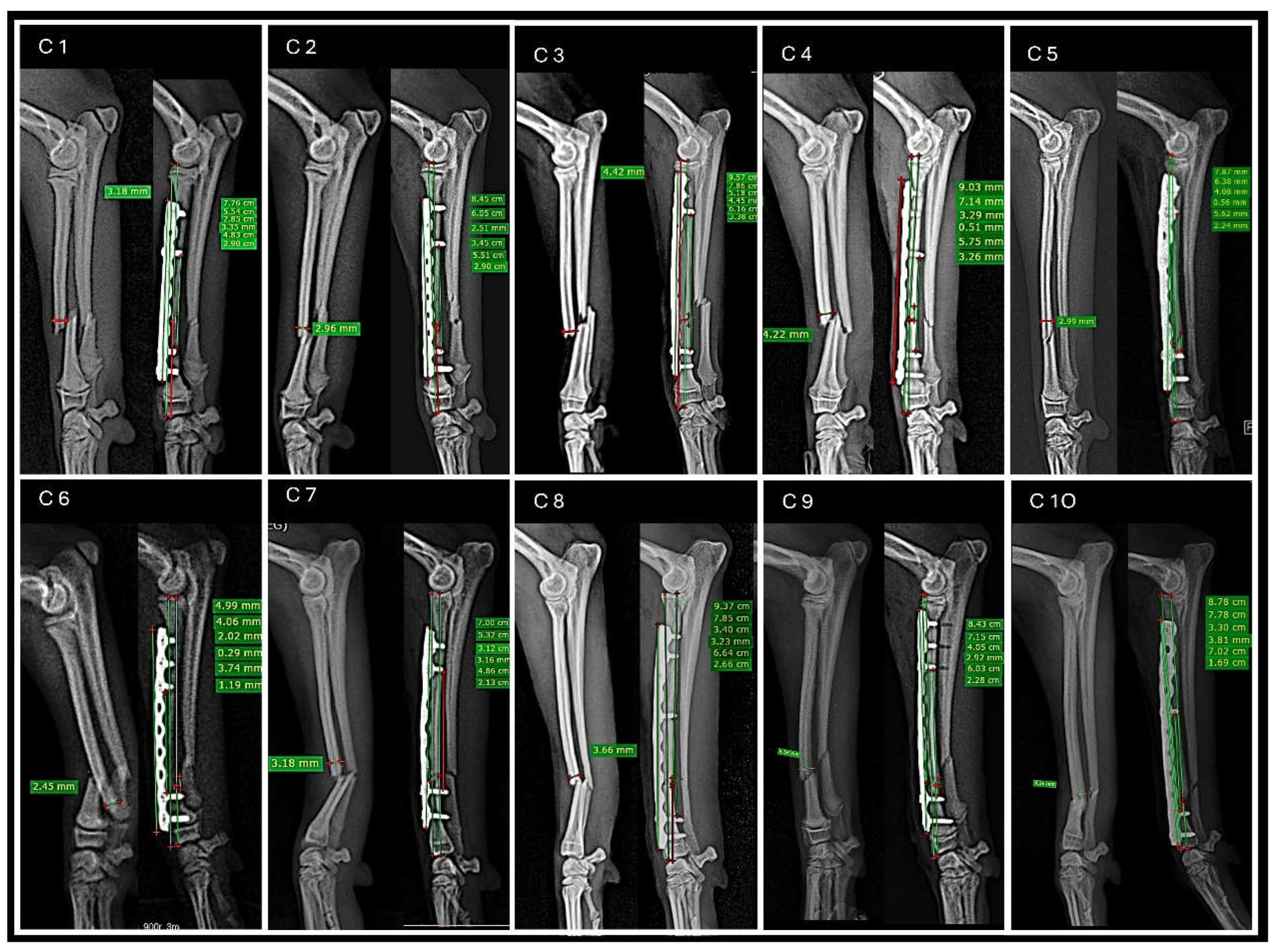
Figure 6.
Mediolateral and craniocaudal radiographic projections showing radiographic bone healing in the 10 cases included in the study. Each case is identified by its corresponding number preceded by the letter C in the upper left corner of each image.
Figure 6.
Mediolateral and craniocaudal radiographic projections showing radiographic bone healing in the 10 cases included in the study. Each case is identified by its corresponding number preceded by the letter C in the upper left corner of each image.
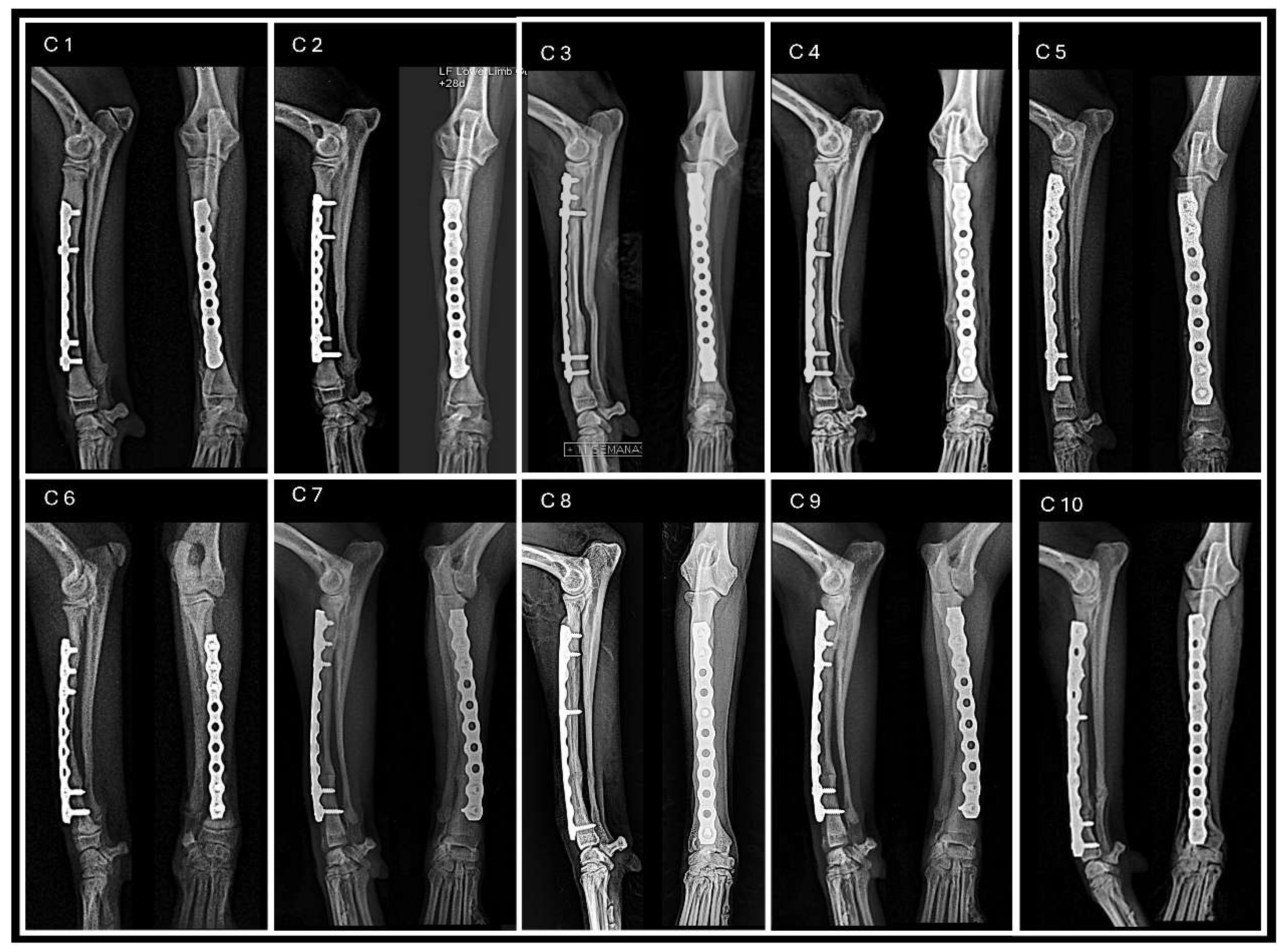
Figure 7.
Callus formation is shown in the 7 cases, in which indirect bone healing could be confirmed. Each case is identified by its corresponding number preceded by the letter C in the upper left corner of each image.
Figure 7.
Callus formation is shown in the 7 cases, in which indirect bone healing could be confirmed. Each case is identified by its corresponding number preceded by the letter C in the upper left corner of each image.
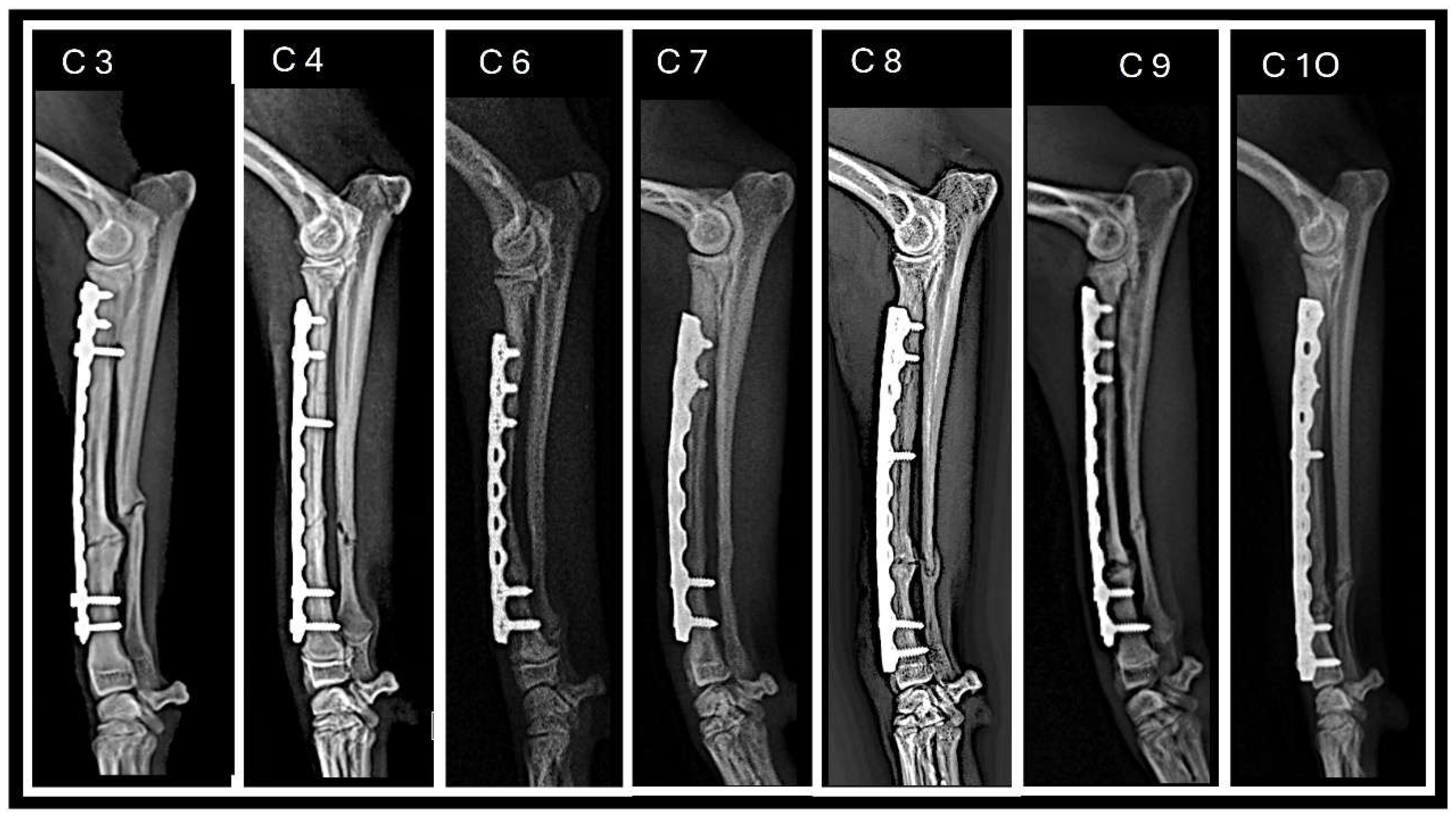
Figure 8.
Mediolateral radiographic projections of the affected limb (left image) and the contralateral limb (right image) obtained at the time of bone healing, showing comparison of ulnar thickness in each of the cases included in the study.
Figure 8.
Mediolateral radiographic projections of the affected limb (left image) and the contralateral limb (right image) obtained at the time of bone healing, showing comparison of ulnar thickness in each of the cases included in the study.
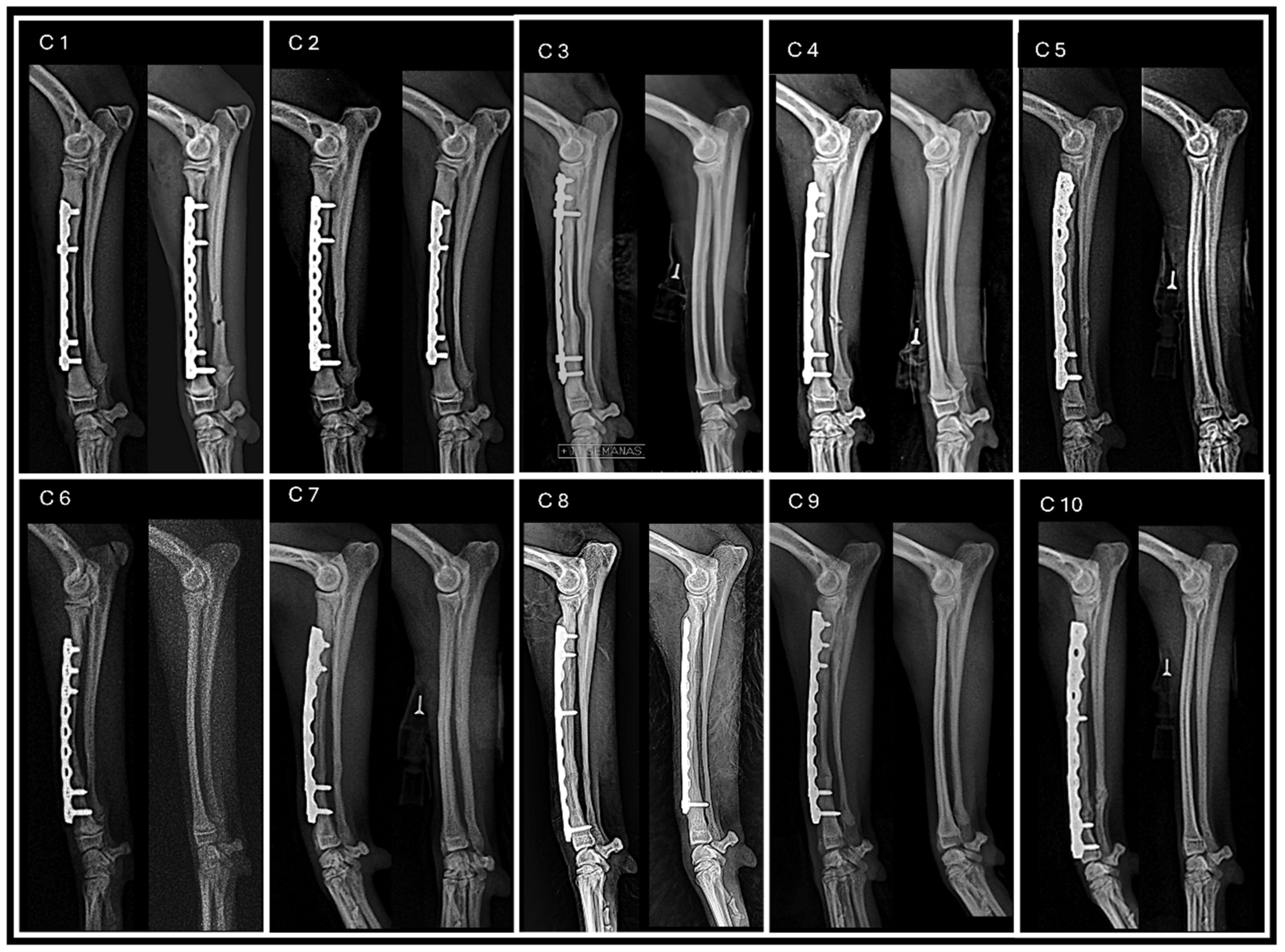
Figure 9.
Radiographic follow-up of case 7. Preoperative mediolateral and craniocaudal projections showing measurement of radial thickness at its narrowest point (a). Immediate postoperative projections showing plating configuration and measurements A, B, C, D, E, and F (b). At 66 days, bone healing is observed, with thinning of the ulna compared to the contralateral limb and screws 2 and 3 were removed (c). At 111 days, no further ulnar thinning was observed and the remaining implants were removed (d). Seventy days later, a second fracture of the radius and ulna occurred in a more proximal location relative to the initial fracture (e), which was treated with a locking plate in a non-rigid configuration again (f). Follow-up at 35 days (g), showing bone healing in progress, and 70 days (h), showing complete bone healing. At day 247 (i), the final follow-up is shown, the screws had been progressively removed, the screw holes were filled with bone tissue and ulnar thickness remained stable.
Figure 9.
Radiographic follow-up of case 7. Preoperative mediolateral and craniocaudal projections showing measurement of radial thickness at its narrowest point (a). Immediate postoperative projections showing plating configuration and measurements A, B, C, D, E, and F (b). At 66 days, bone healing is observed, with thinning of the ulna compared to the contralateral limb and screws 2 and 3 were removed (c). At 111 days, no further ulnar thinning was observed and the remaining implants were removed (d). Seventy days later, a second fracture of the radius and ulna occurred in a more proximal location relative to the initial fracture (e), which was treated with a locking plate in a non-rigid configuration again (f). Follow-up at 35 days (g), showing bone healing in progress, and 70 days (h), showing complete bone healing. At day 247 (i), the final follow-up is shown, the screws had been progressively removed, the screw holes were filled with bone tissue and ulnar thickness remained stable.
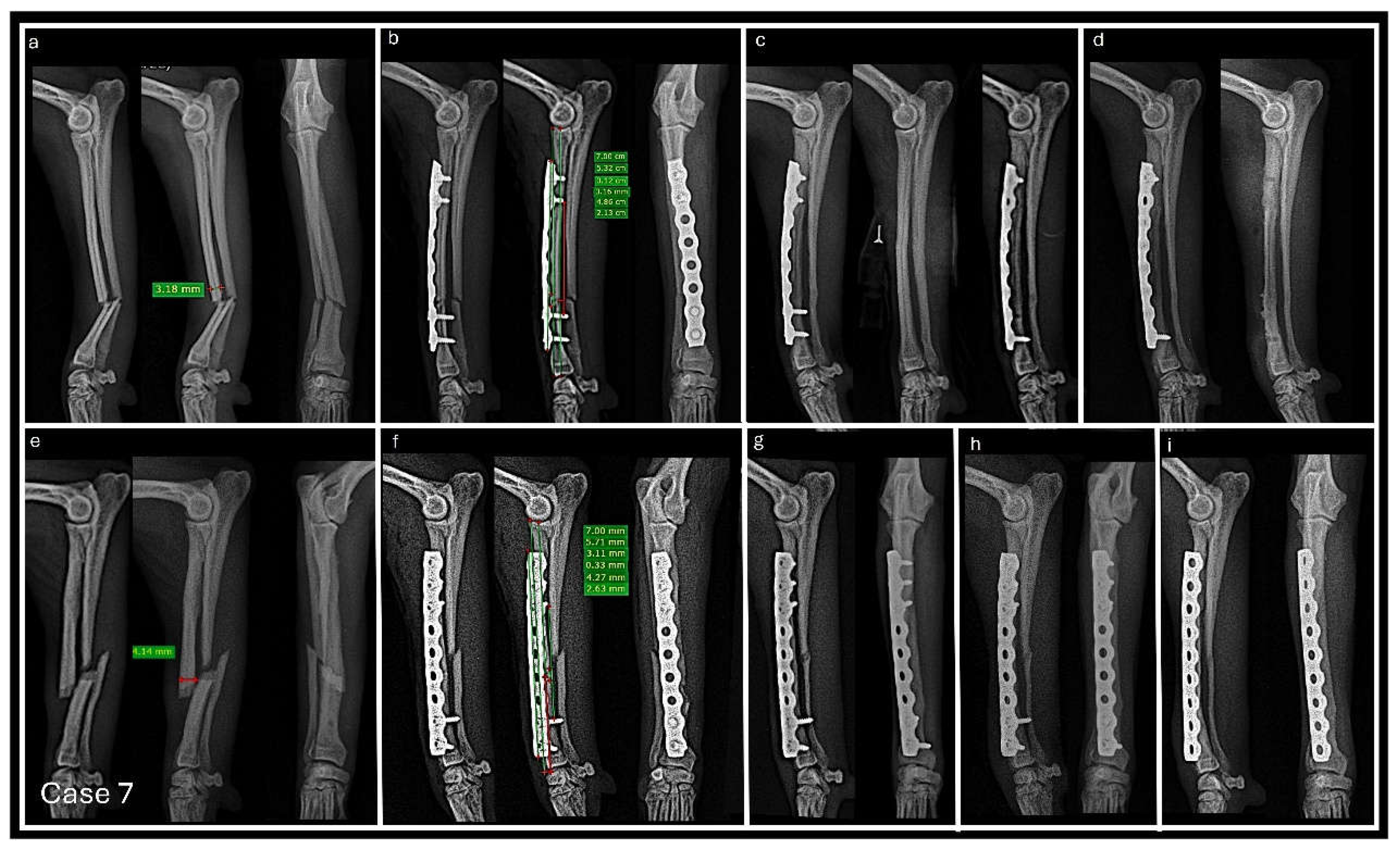
Figure 10.
Mediolateral radiographic projections obtained at the last radiographic follow-up of each of the 10 cases included in this study are shown. Each case is identified by its corresponding number preceded by the letter C in the upper left corner of each image.
Figure 10.
Mediolateral radiographic projections obtained at the last radiographic follow-up of each of the 10 cases included in this study are shown. Each case is identified by its corresponding number preceded by the letter C in the upper left corner of each image.
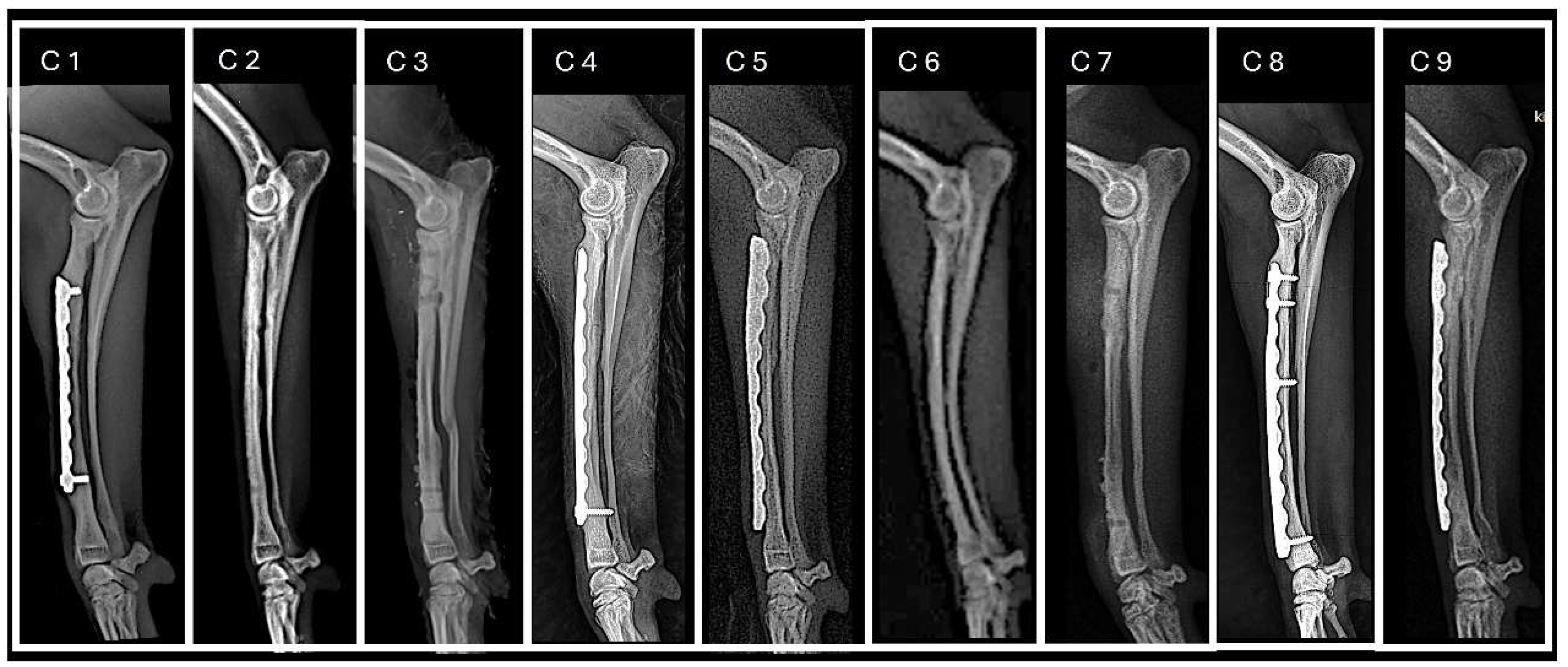

Table 1.
Data collection for all cases included in the study. Abbreviations: f, female; I, skeletally immature; M, skeletally mature; m, male; ms, months; bi, bicortical screws; mo, monocortical screws. *Screw position within the plate was described according to the hole occupied by each screw, considering hole 1 as the most proximal hole of the plate.
Table 1.
Data collection for all cases included in the study. Abbreviations: f, female; I, skeletally immature; M, skeletally mature; m, male; ms, months; bi, bicortical screws; mo, monocortical screws. *Screw position within the plate was described according to the hole occupied by each screw, considering hole 1 as the most proximal hole of the plate.
 |
Disclaimer/Publisher’s Note: The statements, opinions and data contained in all publications are solely those of the individual author(s) and contributor(s) and not of MDPI and/or the editor(s). MDPI and/or the editor(s) disclaim responsibility for any injury to people or property resulting from any ideas, methods, instructions or products referred to in the content. |
© 2026 by the authors. Licensee MDPI, Basel, Switzerland. This article is an open access article distributed under the terms and conditions of the Creative Commons Attribution (CC BY) license (http://creativecommons.org/licenses/by/4.0/).
Copyright: This open access article is published under a Creative Commons CC BY 4.0 license, which permit the free download, distribution, and reuse, provided that the author and preprint are cited in any reuse.


