

Submitted:
05 June 2026
Posted:
08 June 2026
You are already at the latest version
Abstract
Rosacea and topical corticosteroid-induced rosacea-like dermatitis (TCIRD) are cutaneous conditions that manifest as erythema, telangiectasia, papules and pustules on the face, accompanied by impairment of the skin barrier. Platelet rich plasma (PRP) constitutes a therapeutic procedure that utilizes a centrifuge to separate a concentrated platelets fraction from a low-volume plasma specimen. Use of PRP has expanded beyond wound healing and skin rejuvenation to include the treatment of inflammatory dermatological conditions. This review explores the clinical ramifications of PRP in the treatment of rosacea and TCIRD, conditions marked by inflammation in the skin. The study places particular emphasis on the effect of PRP on the pathogenesis of rosacea. A comprehensive search of the literature was conducted in this review to identify the efficacy of PRP as a therapeutic modality for rosacea and TCIRD. The effectiveness of PRP in the patient's clinic and the pathogenesis of these skin conditions have been thoroughly documented. Treatment outcomes demonstrated efficacy in addressing symptoms related to rosacea and TCIRD, with improvements observed and symptoms alleviated in these cases following PRP intervention. PRP may represent a potential therapeutic option for rosacea and TCIRD; however, further well-designed studies are required to establish its efficacy and optimal treatment protocols.
Keywords:
rosacea
; platelet-rich plasma
; intradermal injection
1. Introduction
Rosacea is a chronic inflammatory dermatological condition that primarily affects the cheeks, nose, chin, and forehead. It causes flushing, persistent erythema, phymatous changes, papules, pustules, and telangiectasias [1]. Topical corticosteroid-induced rosacea-like dermatitis (TCIRD) is a dermatological side effect of long-term and excessive topical corticosteroid application [2]. The clinical presentation of TCIRD is the result of the presence of rebound vasodilatation and proinflammatory cytokine release via multiple pathways. The lesions manifest as inflammatory papules and pustules that are monomorphic, distributed centrofacially, periorally, and periocullary, and located in areas that have been chronically exposed to topical steroids, particularly fluorinated types [3].
Platelet-rich plasma (PRP) is a therapeutic modality that employs a centrifuge to separate a concentrated fraction of platelets in a low-volume plasma sample [4]. It has the capacity to elicit a dose-responsive attraction of peripheral blood monocytes, consequently precipitating an alteration in the profile of pro-inflammatory cytokine secretion [5]. Platelets contain active proteins and growth factors (GFs) that facilitate the process of wound healing [6]. Following the injection of PRP, the secretion of GFs from alpha-granules commences 10 minutes later, with a minimum of 95% of the total released within the subsequent hour. The production of GFs by platelets persists for a duration of seven days, resulting in the stimulation of wound healing and tissue regeneration [7].
2. Materials and Methods
A comprehensive literature search was conducted in July 2025 in accordance with the PRISMA guidelines. The search was performed using the PubMed, Scopus and Google Scholar databases. The search terms used were "rosacea" OR “corticosteroid-induced rosacea- like dermatitis" OR “topical corticosteroid-induced rosacea- like dermatitis" AND "platelet rich plasma." The inclusion criteria for the present analysis encompassed human studies that evaluated the cutaneous effects of PRP. The exclusion criteria encompassed non-human studies, studies that did not analyze the skin's response to PRP (Figure 1).
3. Results
The existing literature comprises case reports that illustrate the impact of PRP in the treatment of rosacea and TCIRD (Table 1).
In a case series, a total of five patients with rosacea received treatment using PRP. The evaluation was conducted using the National Rosacea Society Standard grading system, which ranges from 0 to 48 points. In the cases under consideration, patients utilized medications for rosacea concomitantly with PRP treatment. The first case was a 48- year-old woman with a two- year history of ertythema telangiectatic rosacea (ETR) had vascular dilation persisted on her face. Following two sessions of PRP injections, the patient exhibited a substantial improvement in facial erythema. The second case presented a 35-year-old female patient with a two-year history of persistent bilateral cheek vascular dilation and a diagnosis of ETR. In the treatment plan, the patient underwent three sessions of PRP injections, meticulously administered in combination with two sessions of delicate pulsed light (DPL) therapy. The combination of PRP and DPL therapy has been shown to promote skin rejuvenation and reduce vascularity, resulting in a notable enhancement in the patient's condition. The third case was that of a 49-year-old woman who exhibited symptoms such as facial erythema, papules, and pustules and was diagnosed with papulopustular rosacea (PPR). Following three sessions of PRP treatment, the patient demonstrated a substantial improvement in skin lesion severity, with no recurrence observed for a period of six months. The fourth case presented as a PPR with recurrent facial erythema, papules, and pustules in a 36-year-old female patient. She received a single session of PRP injection in combination with botulinum toxin therapy and two sessions of DPL. This combination therapy resulted in an enhancement in her findings. The fifth patient was a 32-year-old woman with a two-year history of PPR. The patient exhibited symptoms such as facial and perioral erythema, papules, and pustules during the physical examination. Administration of two sessions of PRP treatment led to a substantial improvement in the rash, which resulted in the discontinuation of oral medications. The case series did not disclose any adverse effects [8].
In Ibrahim et al.'s study, a total of 45 patients (39 female, 6 male) were treated with PRP. A total of 26 patients were diagnosed with PPR, while 19 patients were diagnosed with ETR. Each patient was administered a series of 6 sessions PRP, with each session occurring at 2-week intervals. The treatment's efficacy was evaluated through a clinical assessment that included evaluations of changes in rosacea grading scale (RGS) scores, the Global Aesthetic Improvement Scale (GAIS), and patient satisfaction. Patients were additionally queried regarding their satisfaction level upon their final visit. A subsequent evaluation was conducted for a period of three months following the conclusion of the PRP application to ascertain the presence of any complications or reappearance of lesions. Prior to the administration of PRP treatment, the RGS score was 18.3 ± 4.98, while following the utilization, it decreased to 7.14 ± 2.98. At the 3-month follow-up, the RGS score was 7.99±3.16 (p=0.001). The assessment of GAIS scores indicated that 2.22% of subjects reported mild improvement, 4.44% reported moderate improvement, 42.22% reported marked improvement, and 51.11% reported excellent improvement. Following a three-month period, 46.67% of subjects reported a marked improvement, while 53.33% reported excellent improvement. The patient narrative satisfaction rate at 30 days post-treatment was found to be 88.89%, with an increase to 97.78% at 90 days. The occurrence of adverse events was reported to be minimal [9].
In the study conducted by Ghoz et al., a total of 40 patients diagnosed with rosacea, comprising 36 females and 4 males aged between 32 and 65 years old, were evaluated. The face has been segmented into two distinct components, which are designated as two groups. The right side of the face (Group A) was treated with a PRP injection, while the left side of the same patient was treated with a PPP injection (Group B). Each patient received six sessions with an interval of two weeks between each session. The patients were followed up for three months after the last session. A statistically significant difference was noted in RGS between the two groups, with Group A exhibiting superior improvement compared to Group B (p<0.001). In evaluating the efficacy of treatment according to the percentage of improvement and the GAIS, the percentage of improvement ranged from 50.0 to 90.0, with a mean of 72.50 ± 14.73, in Group A. In Group B, the percentage of improvement ranged from 10.0 to 80.0, with a mean of 50.50 ± 20.32. A statistically significant difference was observed between the percentage of improvement and GAIS scores of groups A and B, with group A demonstrating superior outcomes (p < 0.001). Additionally, a significant difference was observed between the two groups after a three-month follow-up period regarding RGS, that group A demonstrating superior outcomes (p < 0.001). Adverse effects were observed in the immediate post-injection period, manifesting as erythema, pain, ecchymosis, infection, and edema at the injection site. Subsequent follow-up periods revealed no further adverse effects [10].
In Hwang et al.'s study, three patients diagnosed with rosacea were observed for a period of one week, one month, two months, and three months following the PRP procedure. The evaluation encompassed a meticulous assessment of the progression of rosacea and an in-depth analysis of the skin texture and tone. In the first case, a 28-year-old female patient exhibited severe erythema in the regions of the cheek and chin, accompanied by the presence of telangiectasia in the lateral cheek region. Following the administration of PRP, notable improvement was observed during weeks 4 and 12. Additionally, the patient's perception of itching and dryness also demonstrated a marked improvement compared to the baseline. In the second case, a 30-year-oldfemale patient presented with severe recurrent facial flushing, accompanied by a sensation of fluctuating body temperature and a persistent folliculitis affecting the chin area. Prior to the administration of PRP, erythema and telangiectasia were observed across the cheek and chin, with a notable prevalence in the chin area. Additionally, folliculitis was evident. Following the administration of the PRP treatment, a notable improvement was observed in the recurrent facial flushing with temperature change, as well as in the telangiectasia of the lower lateral cheek area. In particular, the patient expressed satisfaction with the improvement in folliculitis in the chin area. In the third case, a 43-year-old male patient presented with severe erythema of the cheek and telangiectasia in the nasal alar area. Subsequent to the administration of PRP treatment, both the erythema and the telangiectasia showed marked improvement. Furthermore, the dermatological irregularities resulting from an imbalance of sebum and moisture were found to be stabilized [11].
Fan et al.'s study encompassed a sample of patients with TCIRD, comprising six female and one male individual, ranging in age from 25 to 60 years. Following two sessions of PRP administration, all patients exhibited a reduction in telangiectasia, erythema, and papules when compared to their pretreatment photographs, as determined by VISIA scans. The investigator-evaluated GAIS revealed that the findings had improved in five patients at day 30 and in all seven patients at day 60, with the efficacy sustained until day 210. At day 120, the appearance of the findings was rated as "much improved" by the investigators for six patients in comparison to the baseline assessment. All patients expressed satisfaction with the treatment, indicating that the PRP application was painless or only slightly painful and that the petechiae resulting from the injections were deemed acceptable. At the conclusion of the follow-up period on day 210, all patients expressed satisfaction with the changes in their appearance and the improvement in their symptoms [2].
A case report documented the treatment of a 46-year-old female patient diagnosed with TCIRD using PRP treatment. Two sessions of PRP treatment were administered at four-week intervals. A subsequent evaluation was conducted one month after the final application. In alignment with the clinician's assessment, the patient expressed satisfaction with the treatment outcome, noting notable improvements in facial redness, burning sensation, and thinning [12].
4. Discussion
Over the past decade, there has been a notable increase in the utilization of PRP in the field of dermatology, particularly in the domains of hair restoration, acne scar treatment, dermal augmentation, and striae distensae [2]. As has been demonstrated, platelets secrete protein GFs, including platelet-derived growth factor (PDGF), transforming growth factor beta (TGF-β), hepatocyte growth factor (HGF), vascular endothelial growth factor (VEGF), and epidermal growth factor (EGF). The use of autologous cells and tissues in conjunction with biologic regeneration modalities represents a promising avenue for skin rejuvenation. This approach employs topical and injectable GFs and cytokines, offering a potential solution for addressing various dermatological concerns [7,10,13,14]. PRP provides improvements in several key parameters, including skin erythema, skin firmness, skin elasticity, and skin barrier function [15]. The efficacy of PRP as a skin booster is typically achieved through microneedling or micro-injection techniques, with no significant differences observed in outcomes between these methods [16].
The potential therapeutic effect of PRP on rosacea can be understood in the context of its resemblance to the pathogenesis of photoaging. The reactive oxygen species (ROS) signaling pathway, which has been demonstrated to mediate the inflammatory process in the skin in dermal injury and dermal photoaging, has also been implicated in the pathogenesis of rosacea [14,17]. It has been demonstrated that exposure to UV radiation stimulates the production of ROS, which, in turn, activates cellular signaling pathways that elevate matrix metalloproteinase (MMP) expression in the skin. This elevated expression of MMPs leads to the breakdown of fibrous connective tissue and a reduction in collagen synthesis [18,19]. PRP has been shown to exert a direct effect on the extracellular matrix, characterized by an augmentation in type I collagen production and a diminution in MMPs expression [19]. That enhances dermal quality and reverse the process of natural aging through the proliferation and regulation of keratinocytes and fibroblasts [7]. Another notable mechanism of PRP therapy in the process of tissue rejuvenation is the stimulation of intracellular antioxidant enzymes, particularly glutathione, which acts in opposition to the oxidative stress that results from UV exposure [19].
Ghoz et al demonstrated a significant decrease in NF-κβ expression was observed in inflammatory cells via PRP in patients with rosacea [10]. Through HGF, PRP has been shown to attenuate the transactivating activity of NF-κβ, a protein involved in inflammatory response. Therefore, PRP therapy has the potential to elicit anti-inflammatory effects through NF-κβ signaling pathways [7,10].
In rosacea, inflammation is also affected by increase in interleukin (IL)-1, interferon gamma (IFN)-γ, and tumor necrosis factor (TNF)-α [17]. It is evident that the anti-inflammatory effects of PRP therapy are indicative of its ability to downregulate the release of these cytokines, including IL-1, IFN-γ, and TNF-α, in vitiligo [7]. The presence of comparable mechanisms in the pathogenesis of rosacea and vitiligo suggests the potential therapeutic efficacy of PRP therapy for rosacea. Additionally, PRP possesses antimicrobial properties such as defensin, kinocidins (PF4, CXCL, and CCL5), and thymosin β4 proteins, which offers protection against local infections at the injection site and demonstrates efficacy in the treatment of rosacea associated with Demodex spp. infection [7]. The restoration of skin barrier function is a critical component of the therapeutic approach in both rosacea and TCIRD [2,20]. Epidermal dysfunction represents a significant contributing factor to the increased trans-epidermal water loss observed in affected individuals [20]. The impact of PRP, characterized by the induction of collagen remodeling and the thickening of the superficial skin layer, has the potential to enhance cell regeneration [14]. PRP exerts the tissue regeneration effect via various cytokines, including PDGF, TGF-β, VEGF, fibroblast growth factor, HGF, EGF, and keratinocyte growth factor [7]. It has also been demonstrated that for patients with TCIRD, the administration of PRP leads to an increase in collagen production, resulting in augmented dermal thickness and the restoration of optimal skin barrier function. The augmented dermal thickness afforded a protective covering for the discernible capillaries [12]. Consequently, these processes can provide therapeutic benefits, such as facilitating the regeneration of the extracellular matrix in cases of rosacea and TCIRD.
Laboratory analysis of PRP revealed a variable CD34+ cell count, with concentrations ranging from 2.1-to 4.7-fold compared to peripheral blood mononuclear cells [21]. CD34 is predominantly recognized as a biomarker for hematopoietic stem cells and hematopoietic stem precursor cells; however, it has also been detected as a marker for various non-hematopoietic cells. Furthermore, the expression of CD34 has also been observed on endothelial precursors and fibroblast progenitors, which play a crucial role in the formation and maintenance of connective tissues [22]. Hwang et al. posited that PRP enriched with CD34+ stem cells may possess therapeutic potential and could serve as an effective adjunctive therapy in the treatment of rosacea [11].
Although the precise mechanism of action of PRP in the treatment of rosacea remains unclear, it might be postulated that the anti-inflammatory, antimicrobial, antioxidant and connective tissue regulation properties of PRP may be responsible for the observed healing outcomes (Figure 2).
A notable limitation of this systematic review is the inclusion of small patient cohorts and case series and reports, which may introduce bias and limit the generalizability of the findings. Additionally in one case series [8], PRP was utilized in a combinatorial manner with other treatment modalities in in a subset of rosacea cases. Therefore, the reliability of PRP treatment for rosacea remains uncertain. On the other hand, rosacea patients necessitate treatments that differ from conventional therapy methods. Consequently, PRP has emerged as a promising alternative treatment option, offering a potential combination therapy with other existing treatments.
5. Conclusions
Available preliminary evidence suggests that PRP may be a promising therapeutic option for rosacea and TCIRD. Improvements in clinical inflammatory findings and skin quality have been reported; however, the current evidence is limited predominantly to case reports and small case series. Therefore, no definitive conclusions regarding its efficacy or clinical utility can yet be drawn. Well-designed, adequately powered clinical trials are needed to clarify the potential benefits of PRP, establish optimal treatment protocols, determine the appropriate number and interval of sessions, evaluate the duration of treatment response, and assess recurrence rates.
Author Contributions
S.M. conceptualized the review, conducted the literature search and evaluation, and wrote and critically revised the manuscript. S.M. approved the final version of the manuscript.
Funding
This research received no external funding.
Institutional Review Board Statement
Not applicable.
Informed Consent Statement
Not applicable.
Data Availability Statement
No new data were generated or analyzed in this narrative review. All relevant sources are cited in the reference list.
Conflicts of Interest
The author declares no conflicts of interest.
References
- van Zuuren, E.J.; Arents, B.W.M.; van der Linden, M.M.D.; Vermeulen, S.; Fedorowicz, Z.; Tan, J. Rosacea: New concepts in classification and treatment. Am. J. Clin. Dermatol. 2021, 22, 457–465. [Google Scholar] [CrossRef]
- Fan, X.; Yin, Y.; Dou, W.; Li, T.; Xue, P.; Yang. e-induced rosacea-like dermatitis with platelet-rich plasma mesotherapy: Report of seven cases. Dermatol. Ther. (Heidelb.) 2021, 11, 615–623. [Google Scholar]
- Bhat, Y.J.; Manzoor, S.; Qayoom, S. Steroid-induced rosacea: A clinical study of 200 patients. Indian J. Dermatol. 2011, 56, 30–32. [Google Scholar] [CrossRef] [PubMed]
- Dashore, S.; Chouhan, K.; Nanda, S.; Sharma, A. Preparation of platelet-rich plasma: National IADVL PRP Taskforce recommendations. Indian Dermatol. Online J. 2021, 12, S12–S23. [Google Scholar] [CrossRef]
- Masoudi, E.A.; Ribas, J.; Kaushik, G.; Leijten, J.C.H.; Khademhosseini, A. Platelet-rich blood derivatives for stem cell-based tissue engineering and regeneration. Curr. Stem Cell Rep. 2016, 2, 33–42. [Google Scholar] [CrossRef]
- Peng, G.L. Platelet-rich plasma for skin rejuvenation: Facts, fiction, and pearls for practice. Facial Plast. Surg. Clin. North Am. 2019, 27, 405–411. [Google Scholar] [PubMed]
- Vladulescu, D.; Scurtu, L.G.; Simionescu, A.A.; Scurtu, F.; Popescu, M.I.; Simionescu, O. Platelet-rich plasma (PRP) in dermatology: Cellular and molecular mechanisms of action. Biomedicines 2024, 12, 7. [Google Scholar] [CrossRef] [PubMed]
- Pang, X.; Tan, L.; Zhao, B.; Kong, X.; Wang, H.; Hou, S. Successful treatment of complex and refractory rosacea using platelet-rich plasma injection therapy: Case series and review of the literature. J. Cosmet. Dermatol. 2025, 24, e70031. [Google Scholar] [CrossRef]
- Ibrahim, I.M.; Ayyash, M.H. The use of platelet rich plasma (PRP) in Iraqi rosacea patients. Int. J. Dermatol. Res. 2024, 6, 12–17. [Google Scholar] [CrossRef]
- Ghoz, M.T.; Mohamed, D.A.; Ibrahim, Z.A.; Hassan, G.F.R. Evaluation of the efficacy and safety of platelet rich plasma injection in treatment of rosacea. Dermatol. Ther. 2021, 34, e15049. [Google Scholar] [CrossRef]
- Hwang, U. Improvement of rosacea by injection of platelet-rich plasma. J. Cosmet. Med. 2019, 3, 125–129. [Google Scholar] [CrossRef]
- Konuş, A.; Ertuğrul, G.; Aktaş, H. Excellent response with platelet-rich plasma treatment in a case of steroid-induced rosacea-like dermatitis. J. Cosmet. Dermatol. 2022, 21, 2686–2687. [Google Scholar] [CrossRef] [PubMed]
- Yi, K.H.; Winayanuwattikun, W.; Kim, S.Y.; Wan, J.; Vachatimanont, V.; Putri, A.I.; Hidajat, I.J.; Yogya, Y.; Pamela, R. Retraction: Skin boosters: Definitions and varied classifications. Skin. Res. Technol. Retracted. 2024, 30, e13627. [Google Scholar] [CrossRef] [PubMed]
- Cameli, N.; Mariano, M.; Cordone, I.; Abril, E.; Masi, S.; Foddai, M.L. Autologous pure platelet-rich plasma dermal injections for facial skin rejuvenation: Clinical, instrumental, and flow cytometry assessment. Dermatol. Surg. 2017, 43, 826–835. [Google Scholar] [CrossRef]
- Lin, M.Y.; Lin, C.S.; Hu, S.; Chung, W.H. Progress in the use of platelet-rich plasma in aesthetic and medical dermatology. J. Clin. Aesthet. Dermatol. 2020, 13, 28–35. [Google Scholar]
- Hofny, E.R.M.; Abdel-Motaleb, A.A.; Ghazally, A.; Ahmed, A.M.; Hussein, M.R.A. Platelet-rich plasma is a useful therapeutic option in melasma. J. Dermatol. Treat. 2019, 30, 396–401. [Google Scholar] [CrossRef]
- Maden, S. Rosacea: An overview of its etiological factors, pathogenesis, classification and therapy options. Dermato 2023, 3, 241–262. [Google Scholar] [CrossRef]
- Du, R.; Lei, T. Effects of autologous platelet-rich plasma injections on facial skin rejuvenation. Exp. Ther. Med. 2020, 19, 3024–3030. [Google Scholar] [CrossRef]
- Jia, C.; Lu, Y.; Bi, B.; Chen, L.; Yang, Q.; Yang, P.; Guo, Y.; Zhu, J.; Zhu, N.; Liu, T. Platelet-rich plasma ameliorates senescence-like phenotypes in a cellular photoaging model. RSC Adv. 2017, 7, 3152–3160. [Google Scholar] [CrossRef]
- Maden, S. Epidermal skin barrier and skin care in rosacea: A narrative review. Dermis 2024, 4, 15. [Google Scholar] [CrossRef]
- Kang, J.S.; Zheng, Z.; Choi, M.J.; Lee, S.H.; Kim, D.Y.; Cho, S.B. The effect of CD34+ cell-containing autologous platelet-rich plasma injection on pattern hair loss: A preliminary study. J. Eur. Acad. Dermatol. Venereol. 2014, 28, 72–79. [Google Scholar] [CrossRef]
- Radu, P.; Zurzu, M.; Paic, V.; Bratucu, M.; Garofil, D.; Tigora, A.; Georgescu, V.; Prunoiu, V.; Pasnicu, C.; Popa, F.; Surlin, P.; Surlin, V.; Strambu, V. CD34—Structure, functions and relationship with cancer stem cells. Medicina 2023, 59, 938. [Google Scholar] [CrossRef]
Figure 1.
PRISMA diagram illustrates the articles that were identified for inclusion in the review.
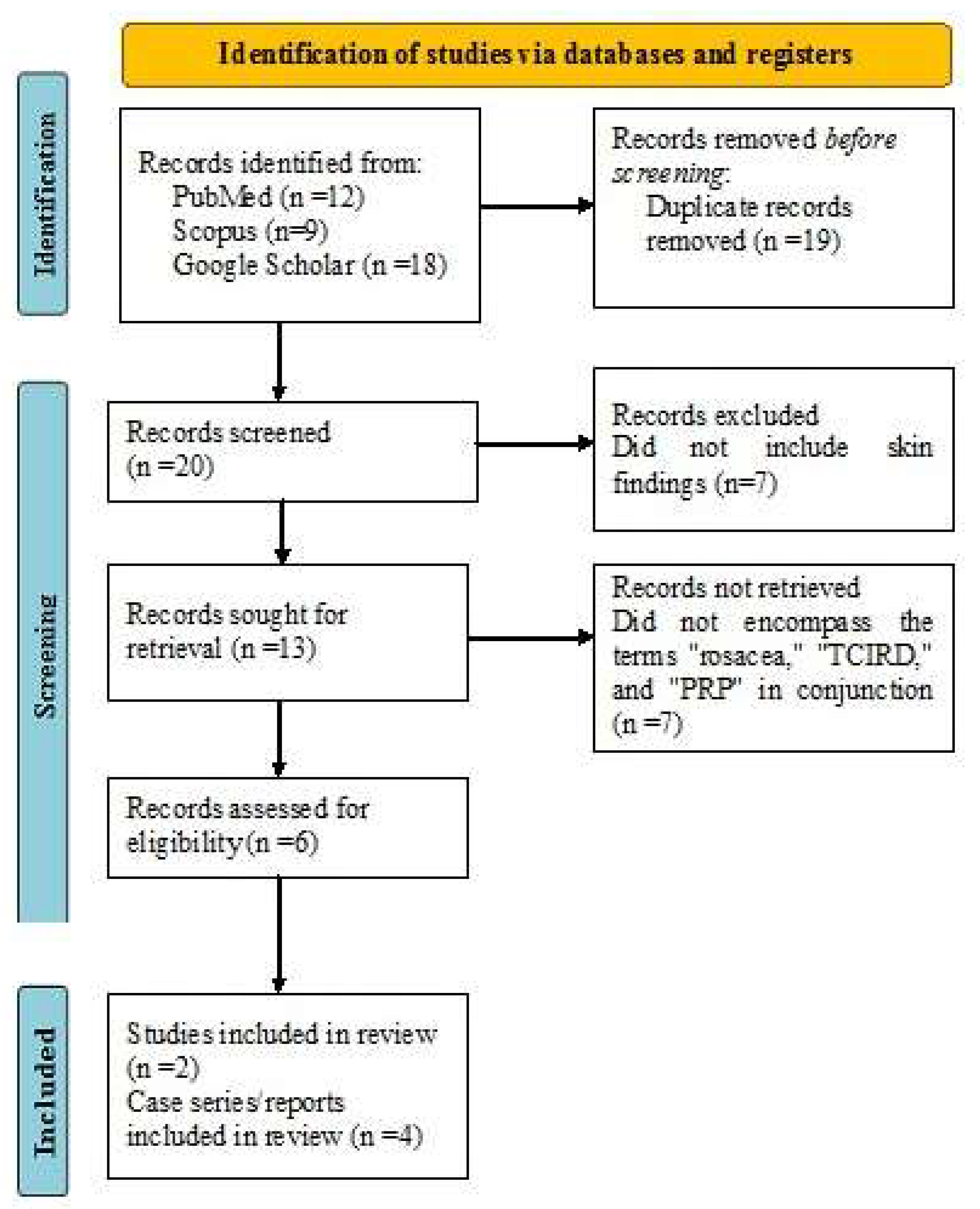
Figure 2.
Possible therapeutic benefits of platelet-rich plasma for rosacea. IL-1: interleukin-1; TNF-α: tumor necrosis factor alfa; IFN-γ: interferongamma; HGF: hepatocyte growth factor; NF-κβ: nuclear factor kappa beta; PDGF: platelet-derived growth factor; TGF-β: transforming growth factor beta; VEGF: vascular endothelial growth factor; FGF: fibroblast growth factor; EGF: epidermal growth factor; KGF: keratinocyte growth factor; MMP: matrix metalloproteinase.
Figure 2.
Possible therapeutic benefits of platelet-rich plasma for rosacea. IL-1: interleukin-1; TNF-α: tumor necrosis factor alfa; IFN-γ: interferongamma; HGF: hepatocyte growth factor; NF-κβ: nuclear factor kappa beta; PDGF: platelet-derived growth factor; TGF-β: transforming growth factor beta; VEGF: vascular endothelial growth factor; FGF: fibroblast growth factor; EGF: epidermal growth factor; KGF: keratinocyte growth factor; MMP: matrix metalloproteinase.
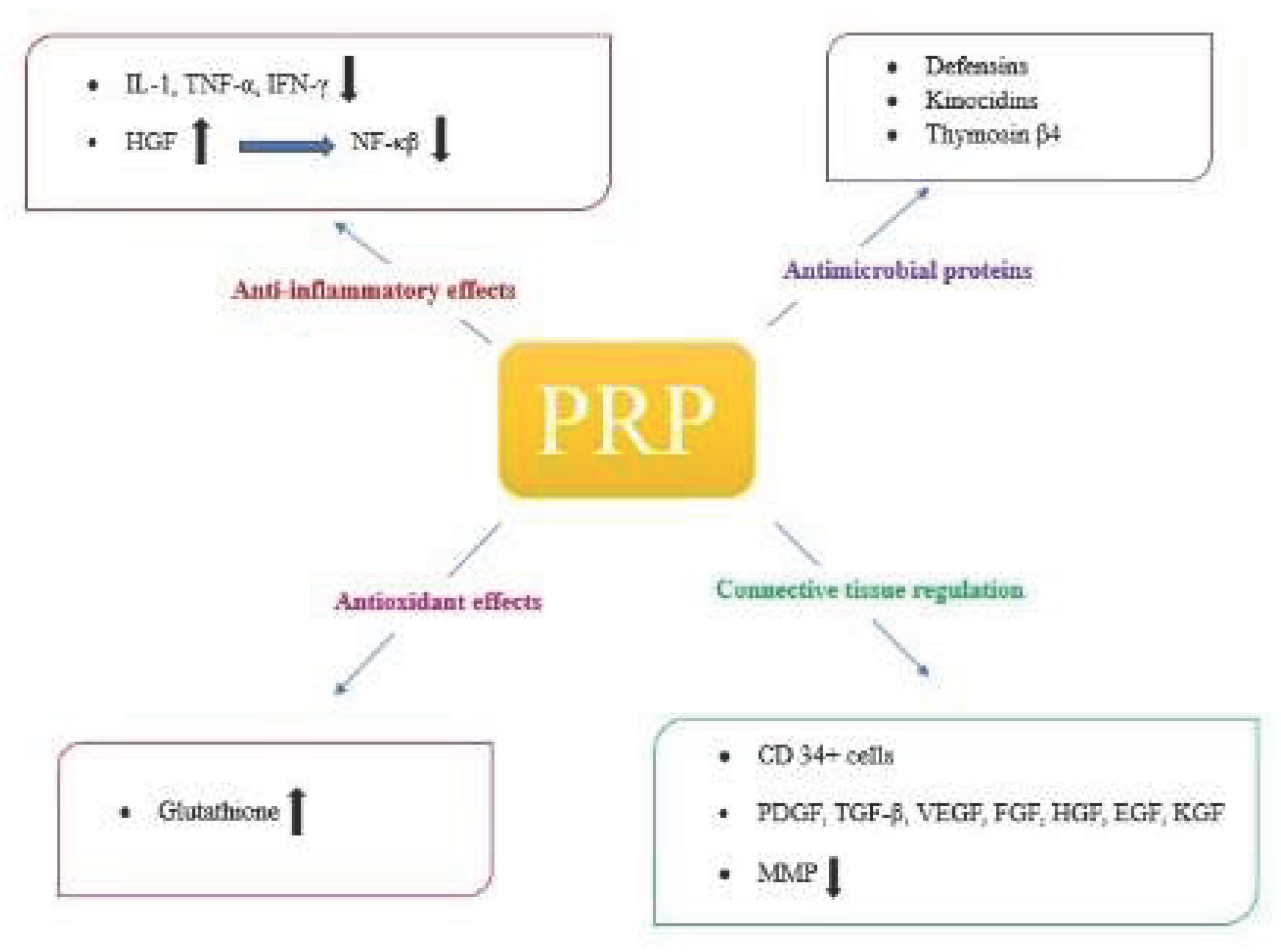

Table 1.
Platelet–rich plasma treatment for the management of rosacea and topical corticosteroid-induced rosacea-like dermatitis.
Table 1.
Platelet–rich plasma treatment for the management of rosacea and topical corticosteroid-induced rosacea-like dermatitis.
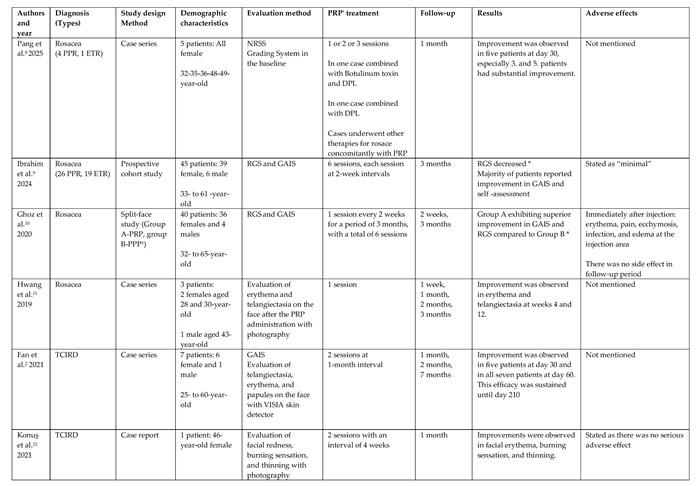 |
*= statistically significant ETR= Erythematelangiectatic rosacea, PPR=Papulopustular rosacea, PRP=Platelet-rich plasma, PPP=Platelet-poor plasma, RGS=Rosacea grading scale, ‡GAIS=Global Aesthetic Improvement Scale, §TCIRD=Topical corticosteroid-induced rosacea-like dermatitis. NRSS=National Rosacea Society Standard.
Disclaimer/Publisher’s Note: The statements, opinions and data contained in all publications are solely those of the individual author(s) and contributor(s) and not of MDPI and/or the editor(s). MDPI and/or the editor(s) disclaim responsibility for any injury to people or property resulting from any ideas, methods, instructions or products referred to in the content. |
© 2026 by the authors. Licensee MDPI, Basel, Switzerland. This article is an open access article distributed under the terms and conditions of the Creative Commons Attribution (CC BY) license (http://creativecommons.org/licenses/by/4.0/).
Copyright: This open access article is published under a Creative Commons CC BY 4.0 license, which permit the free download, distribution, and reuse, provided that the author and preprint are cited in any reuse.


