

Submitted:
04 June 2026
Posted:
08 June 2026
You are already at the latest version
Abstract
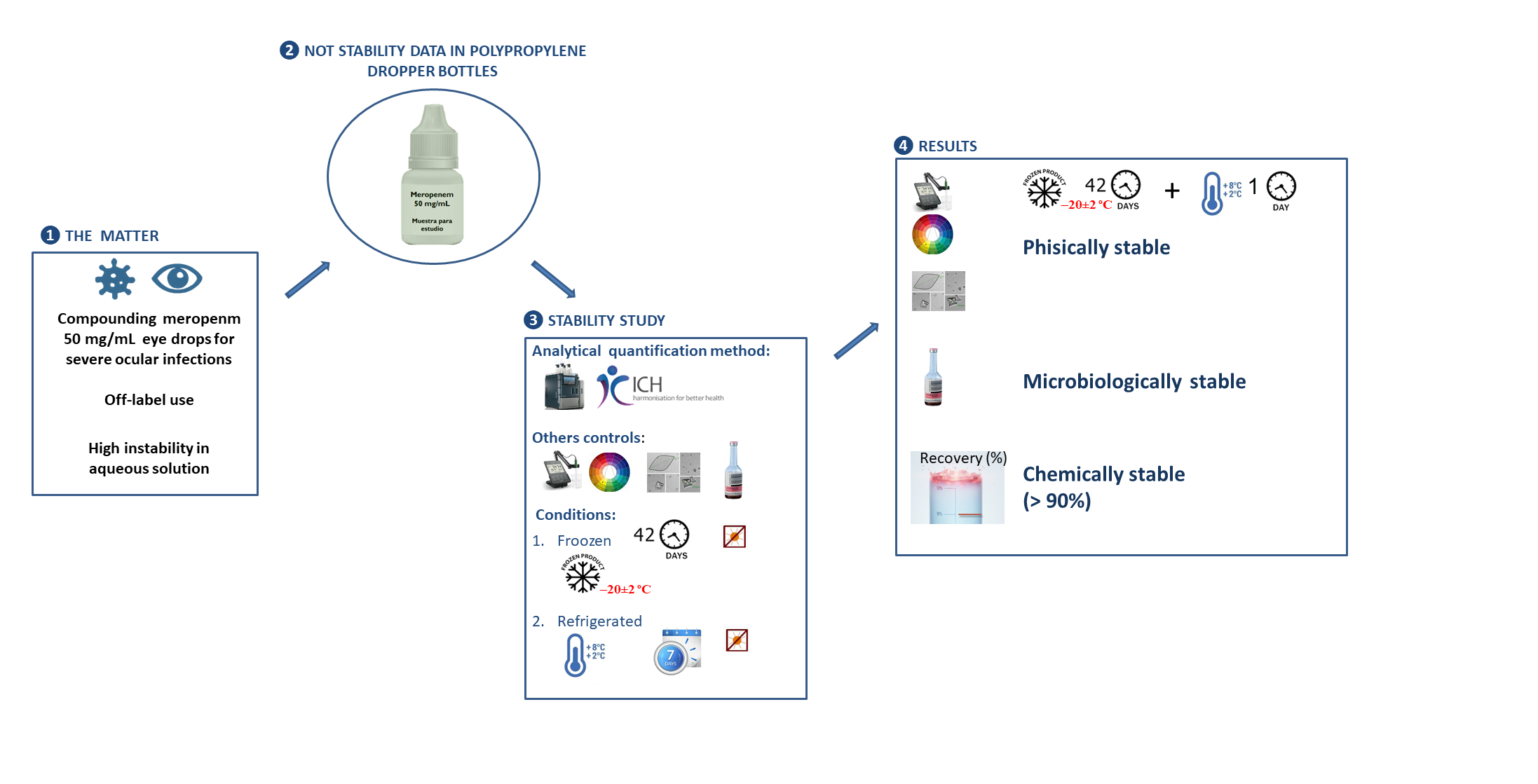
Background/ Objectives: Meropenem is a broad-spectrum carbapenem antibiotic with demonstrated efficacy against multidrug-resistant Gram-negative pathogens. Alt-hough its use as an ophthalmic formulation is off-label, growing clinical evidence sup-ports its application in severe ocular infections such as keratitis and endophthalmitis. However, the intrinsic instability of meropenem in aqueous solutions and the absence of standardized ophthalmic preparations limit its routine use. Furthermore, no stability studies are currently available for meropenem 50 mg/mL eye drops stored in polypro-pylene (PP) dropper bottles under freezing and subsequent refrigerated conditions. The aim of this study was to evaluate the physicochemical and microbiological stability of a 50 mg/mL meropenem ophthalmic solution prepared in hospital pharmacy and packaged in PP containers. Methods: Eye drops were aseptically prepared and stored at −20 ± 2 °C for up to 42 days, followed by refrigerated storage (5 ± 3 °C) after thawing for up to 7 days. Chemical stability was assessed using a validated stability-indicating HPLC method in accordance with ICH guidelines and was defined as 90–110% recovery of the initial concentration. Physical stability (appearance, pH, particulate matter) and micro-biological stability were also evaluated under simulated in-use conditions. Results: The HPLC method demonstrated excellent linearity, precision, and accuracy. Meropenem concentrations remained within the predefined acceptance limits throughout the 42-day study period under freezing conditions, with no significant changes in pH, color, or par-ticulate formation. After thawing, a progressive decrease in drug concentration was ob-served under refrigerated conditions, falling below 90% of the initial concentration within 24–48 hours. A concomitant color change from colorless to yellow was also detected, consistent with β-lactam ring hydrolysis. Despite this degradation, no significant changes in physical parameters other than color were observed, and microbiological testing con-firmed sterility for up to 7 days under refrigerated conditions. Conclusions: Meropenem drops 50 mg/mL in PP dropper bottles is physicochemically and microbiologically stable for 43 days (42 days under frozen conditions plus 1 day, in-use conditions, after opening and under refrigeration).
Keywords:
meropenem
; ophthalmic solution
; stability
; freezing
; polypropylene
; HPLC
; hospital compounding
1. Introduction
Meropenem trihydrate is (4R,5S,6S)-3-[(3S,5S)-5-(dimethylcarbamoyl)pyrrolidin-3 -yl]sulfanyl-6-[(1R)-1-hydroxyethyl]-4-methyl-7-oxo-1-azabicyclo [3.2.0]hept-2-ene-2-carboxylic acid trihydrate (Figure 1). It is a white or almost white (or light yellow) crystalline powder, slightly soluble in water and practically insoluble in ethanol and dichloromethane [1].
Meropenem is a carbapenem antibiotic that exerts bactericidal activity through inhibition of bacterial cell wall synthesis in both Gram-negative (G-) and Gram-positive (G+) organisms. Its antimicrobial spectrum encompasses a wide range of aerobic and anaerobic G- bacilli and G+ cocci. Notably, meropenem retains activity against aerobic G- bacilli that produce extended-spectrum β-lactamases (ESBLs) [2,3].
In Spain, Meropenem is marketed in the pharmaceutical form of vials, which contain 500 and 1000 mg of the active ingredient in powder form. For intravenous administration, it must be reconstituted with water for injection (WFI), in the case of administration as an intravenous bolus injection, or with 0.9% aqueous sodium chloride solution (NS) or 5% aqueous dextrose solution (D5W) prior to dilution in NS or D5W for administration by intravenous infusion [2].
Meropenem is indicated for the treatment of the following infections in adults and children over 3 months of age: severe pneumonia, including hospital-acquired pneumonia and ventilator-associated pneumonia, bronchopulmonary infections in cystic fibrosis, complicated urinary tract infections, complicated intra-abdominal infections, intra- and postpartum infections, complicated skin and soft tissue infections and acute bacterial meningitis [2]. Meropenem is not indicated for the treatment of ocular infections such as keratitis and endophthalmitis in its Summary of Product Characteristics; therefore, its use in these indications would be considered an off-label use, according to Spanish legislation [4]. However, the use of meropenem in ocular infections is supported by preclinical studies, animal models, clinical cases, and small case series, in which it has demonstrated efficacy and safety [5,6] for the treatment of severe keratitis caused by multidrug-resistant G- microorganisms [6,7,8,9,10,11], and in endophthalmitis due to resistant pathogens [12,13,14] , as well as a demonstrated feasibility and favorable pharmacokinetics [7], including adequate penetration into ocular tissues [7,14,15] and a low toxicity profile [5,7], when administered both systemically and as ophthalmic eye drops.
When considering the preparation of a meropenem eye drop with a concentration of 50 mg/mL, it is important to take into account should be kept in mind that the physicochemical and microbiological stability of an ophthalmic solution depends on a series of interrelated factors that affect both, the concentration of the active ingredient and the formulation medium, as well as the storage environment. For this reason, the stability of ophthalmic solutions is usually expressed as a specific shelf life (for example, X days at 2–8 °C, either closed or opened), and experimentally defined through stability studies in which concentration, pH, osmolality, organoleptic characteristics, and absence of microbial growth are monitored [16,17,18].
From a stability perspective, meropenem is highly susceptible to degradation both in aqueous solutions and in the solid state due to the significant intrinsic strain of its fused ring system [19]. Its degradation pathways involve multiple chemical interactions in which different structural moieties of the drug participate. The main degradation mechanisms are: β-lactam ring hydrolysis which is the principal degradation pathway of the drug in aqueous solutions and the primary mechanism by which enzymes such as β-lactamases inactivate the antibiotic [20,21] (the hydrolysis of this ring can be observed as a shift to a yellowish coloration [22,23]); Intermolecular aminolysis which is the fundamental cause of concentration-dependent degradation that occurs when the meropenem molecule degrades itself through a nucleophilic attack in which the side chain of one molecule attacks and cleaves the carbonyl of the β-lactam ring of a neighboring second meropenem molecule [20,24], thus also producing the aforementioned color change; Inactivation of meropenem by intramolecular cyclization of the molecule with formation of a β-lactone, which is mediated by certain enzymatic targets (such as class D serine β-lactamases or l,d-transpeptidases) [21]; Thermal degradation and decarboxylation of meropenem in the solid state when subjected to high temperatures, which is due to decarboxylation and aromatization of the pyrrolidine ring (concomitant with hydrolysis of the β-lactam ring), yielding a by-product named 4-methyl-3-(1H-pyrrol-3-ylsulfanil)-5H-pyrrol-2-carboxylic acid [19].
Another issue to consider is the type of container that will hold the preparation. In this study, a PP dropper bottle was chosen. PP is widely regarded as one of the most inert plastics, exhibiting a low tendency to adsorb drug substances. In practice, adsorption to PP is generally negligible; however, it may become significant for drugs at low concentrations or with protein/peptide-like characteristics, as well as for high-value agents such as certain radiopharmaceuticals or insulin. Several studies have demonstrated that the physicochemical stability of most drug formulations is preserved in PP packaging, with no appreciable degradation observed over storage periods ranging from several days to weeks, depending on the specific compound and storage conditions (e.g., refrigeration, protection from light). PP displays low permeability to water vapor and is relatively impermeable to oxygen, which contributes to reduced degradation by oxidation or hydrolysis. Nevertheless, its gas barrier properties are less hermetic than those of glass; therefore, in long-term storage scenarios, the shelf life of particularly sensitive solutions may be compromised. Pharmaceutical-grade PP packaging are specifically designed to minimize particulate contamination and the migration of additives, thereby supporting both product quality and patient safety [25,26,27].
Currently, there are no stability studies on a meropenem 50 mg/mL ophthalmic solution, packaged in PP dropper bottles, under freezing and refrigerated conditions. For this reason, the present study investigates the physicochemical and microbiological stability of such a preparation.
2. Materials and Methods
2.1. Preparation of Meropenem 50 mg/mL Ophthalmic Solution
The manufacturing process was carried out using 1000 mg meropenem vials (Aurovitas Spain, S.A.U., Madrid, Spain) that were reconstituted with 20 mL of WFI (Serra Pamies, S.A., Reus, Spain), in accordance with the specific recommendations for sterile preparations included in the Guide for good preparation practices of medicines in hospital pharmacy services (GPPMHPS) [28]. The contents of each reconstituted vial were transferred to a sterile, pyrogen-free vial (VacuflascTM, Grifols Movaco, S.A., Barcelona, Spain) until a total volume of 420 mL of the ophthalmic solution was obtained. 4 mL of that solution were dosed into 90 sterile white polypropylene dropper bottles of 10 mL of volume with photoprotective treatment (Oiarso S. Coop., Hernani, Spain) (Figure 2).
2.2. Chemical Stability
The eye drops were divided into two groups: frozen stability (FSG) and refrigerated stability after thawing (RSG), in which the eye drop bottles belonging to the FSG were thawed on the day of analysis and moved to the RSG, to be analyzed on the days established according to the analysis protocol. The freezing conditions were -20 ± 2 ºC and the refrigeration conditions 5 ± 3 ºC.
The chemical stability of meropenem 50 mg/mL ophthalmic solution in the FSG was studied over 42 days of storage; days: 0 (D0), 7 (W1), 14 (W2), 21 (W3), 28 (W4), 35 (W5) and 42 (W6), and over 7 days of storage in the RSG after thawing; days: 1 (WnD1) , 2 (WnD2), 3 (WnD3) and 7 (WnD7), where “n” is de number of weeks during which the eye drops remained frozen and, after thawing, were transferred to the refrigerated study (Figure 3).
2.3. Chromatographic Method
A Waters Breeze HPLC system (Waters Cromatografía, S.A., Barcelona, Spain) equipped with a XBridge 5 µm C18 reversed-phase column (130 Å pore size, 4.6 × 150 mm; Waters Cromatografía, S.A., Barcelona, Spain) was used for the study. Chromatographic separation was carried out under isocratic conditions using a mobile phase consisting of ultrapure water/acetonitrile/methanol (50/30/20, v/v), adjusting the pH to 7.5 with 10% v/v phosphoric acid. The flow rate was 1 mL/min, with detection at 300 nm, a column temperature of 25 °C, an injection volume of 20 µL, and a total run time of 2 min [32]. HPLC-grade acetonitrile, methanol and phosphoric acid were purchased from Panreac Química S.L.U. (Barcelona, Spain) and ultrapure water was obtained using the Milli-Q® Integral 3/5/10/15 system (Merck KGaA -Darmstadt, Alemania-). The meropenem reference standard was obtained from Merck Life Science, S.L., (Madrid, Spain).
Method validation: The HPLC method was validated for linearity, precision, and accuracy in accordance with the International Council for Harmonization of Technical Requirements for Pharmaceuticals for Human Use (ICH) Q2(R1) guidelines [33]. Linearity between the peak area and the meropenem concentration was assessed across six calibration levels from 0 to 150 µg/mL (0, 15, 30, 60, 90, 120, and 150 µg/mL). A calibration curve was constructed with linear regression analysis to determine the coefficient of determination (R²), slope (a), and y-intercept (b) [31]. Precision was evaluated through intra- and inter-day repeatability studies. The intra-day assessment involved six replicate analyses on the same day at 80%, 100%, and 120% of the target concentration (50 µg/mL), while the inter-day study comprised of three replicates over five different days at the same relative concentrations. Mean, standard deviation, and coefficient of variation were calculated, with acceptance criteria of <1% for intra-day and <2% for inter-day repeatability [31,32]. Accuracy was determined via recovery studies performed in triplicate at meropenem concentrations of 40, 50, and 60 µg/mL. Recovery percentages were calculated and compared to the theoretical value (100%) using Student’s t-test [31,32,34]. The limit of detection (LOD) and limit of quantification (LOQ) for meropenem were calculated using the y-intercept (b) and slope (a) from the calibration curve, applying the equations LOD = 3.3 × b/a and LOQ = 10 × b/a as per ICH recommendations [31,33,35].
This chromatographic method was previously validated in a published stability-indicating study, in which the meropenem samples underwent forced degradation under thermal, photolytic, acidic, alkaline, and oxidative conditions. The investigation confirmed that the degradation products did not interfere with the quantification of intact meropenem, demonstrating the specificity of the method [32].
2.4. Physical Stability
Physical stability assessments comprised of macroscopic visual inspection, pH measurements, and microscopic evaluation for crystallization. On designated evaluation days, 1 mL aliquots from each formulation were withdrawn and subjected to detailed visual examination for anomalies including particulate matter, crystalline precipitates, turbidity, sedimentation and color alterations throughout the storage period. The pH was quantified using a calibrated SevenMulti™ pH meter (Mettler Toledo, Cornellà de Llobregat, Spain). Particle and crystal detection was facilitated by a visual inspection station featuring black/white backgrounds under bright-field illumination, complemented by a SediMAX2™ phase-contrast microscope (77 Elektronika, Budapest, Hungary).
2.5. Microbiological Stability
Microbiological stability was assessed on the evaluation day (day 7 post-refrigerated storage following thawing), after simulating the use conditions of an opened eye drop in the RSG from day 1 to 7. The sample was inoculated into a culture medium for aerobic bacteria and fungi (BD BACTEC™ Peds Plus™/F, Becton Dickinson and Company, San Agustín de Guadalix, Spain), and a dedicated medium for anaerobic bacteria (BD BACTEC™ Lytic/10 Anaerobic/F, Becton Dickinson and Company, San Agustín de Guadalix, Spain).
3. Results
3.1. Validation of the Analytical Method
The HPLC method exhibited excellent linearity across the tested range, with a coefficient of determination of (R2) > 0.9997 and a regression equation of y = 29,661x + 8,019.9 (Supplementary materials Table ST1 and Figure SF1). Intra-day and inter-day precision for three meropenem quality control levels were highly satisfactory: intra-day relative standard deviation (RSD%) ranged from 0.114 to 0.150 (Table 1) and inter-day RSD% from 0.649 to 0.888 (Table 2), meeting the ICH criteria of ≤1% and ≤2% for repeatability and intermediate precision, respectively (Supplementary materials Tables ST2–ST3). Accuracy, determined by recovery rates at three concentration levels, ranged from 99.89% to 100.09%, falling within the accepted 98–102% interval (Supplementary materials Table ST4). The limit of detection (LOD) and limit of quantification (LOQ) were calculated as 0.81 µg·mL−1 and 2.70 µg·mL−1, respectively.
3.2. Stability Study
3.2.1. Freezing Conditions
The chemical stability assessment was performed by determining meropenem concentrations in the PP dropper bottle, on each scheduled sampling day, following the previously described procedure. Mean concentrations were calculated and reported as percentage recovery relative to the initial measurement (D0 = 100%), as shown in Table 3. Representative chromatograms from day 0 (D0) and the first day of the start of weeks 1, 3 and 6 (W1, W3 and W6) for the formulation under freezing conditions are shown in Figure 4. The results show that the concentration remained within the predefined acceptance limits throughout the six-week study period under freezing conditions (Table 3 and Figure 5). Detailed week-by-week concentration data are provided in the Supplementary Materials (Table ST5).
Throughout the study, visual appearance (color and turbidity), pH, visible particulates and crystallization remained unchanged to a statistically non-significant extent (Table 3).
Therefore, the 50 mg/mL meropenem ophthalmic solution in polypropylene bottles, under freezing conditions, was considered physically and chemically stable for up to 42 days.
3.2.2. Refrigerated Conditions
The stability data in Table 4 and the chromatograms in Figure 6 correspond with the results obtained from the eye drops that were stored under freezing conditions for up to 1, 2, 3, 4, 5 and 6 weeks and after thawing, kept under refrigeration for 7 days, simulating real-life use conditions. For illustrative purposes, only W1, W3, and W6 of freezing are presented, followed by the chromatograms corresponding to days 1 (D1), 2 (D2), 3 (D3), and 7 (D7), during which the eye drops were stored under refrigerated conditions. Detailed concentration data (week-by-week and day-by-day of each week) are provided in the Supplementary Materials (Table ST6). During this phase of the study, the concentration observed, decreased progressively from the first day of refrigeration (Table 4 and Figure 7). Between days 1 and 2 of refrigeration, the meropenem concentration reached the acceptance limit (45 mg/mL) relative to the nominal concentration of 50 mg/mL, i.e., it fell below 90% of the nominal value.
No significant changes were monitored in pH, visible particulates, turbidity and crystallization throughout the study, but a progressive change in solution color was observed, evolving from colorless in the freshly prepared solution to a very pale yellow in the thawed samples subsequently stored under refrigeration, with the yellow color intensifying to a deeper shade by the last day (D7) of the refrigeration phase (Figure 8). This color change was reflected by a progressive increase in the chromatographic peak observed at approximately 1 min.
On day 7, aerobic, anaerobic, and fungal cultures of the 50 mg/mL meropenem eye drops stored in refrigerated polypropylene bottles yielded negative results for all analyzed samples.
Thus, the meropenem eye drops 50 mg/ml in PP dropper bottles were regarded as physically and chemically stable for up to 24 hours and microbiologically stable for up to 7 days under refrigeration conditions.
4. Discussion
The HPLC method for meropenem determination was linear, precise, accurate, repeatable, and reproducible, and was validated in accordance with ICH guidelines. The method was demonstrated to be robust and to reliably determine the kinetics run of meropenem in the presence of its degradation products, being consistent with previously published studies [32,36,37,38,39].
Regarding chemical stability, currently, there are no stability studies of a meropenem eye drops at a concentration of 50 mg/mL frozen in a polypropylene dropper bottle for the treatment of keratitis and endophthalmitis caused by multidrug-resistant G- bacteria [40]. Only one published study has evaluated a 50 mg/mL meropenem solution prepared from an injectable formulation in WFI, NS and D5W, stored in glass vials under two conditions: room temperature (21–26 °C and 23–27 °C) and refrigerated storage (4 °C) protected from the light. The study concluded that meropenem 50 mg/mL remained stable in WFI and NS for up to 8 hours at 21–26 °C and up to 7 hours at 23–27 °C in WFI; in D5W the stability was 3 hours at 21–26 °C. Under refrigerated conditions, the stability was 48 hours in WFI and NS, and 24 hours in D5W [41]. This study was classified as level D evidence [42], with the following comments: “Stability indicating capability inadequately assessed, repeatability/reproducibility/standard range: results not provided or results outside specified values, no visual inspection, and no comments on degradation products” [40].
A total of five studies have been published that evaluate the stability of meropenem in polypropylene containers, specifically in polypropylene syringes. Of these, three assess the stability at a concentration near to that of the present study. Two of them evaluated the stability of a 40 mg/mL meropenem solution in NS at room temperature (25 °C); one was not protected from the light and the other did not specify this condition, concluding that the stability was 4 and 8 hours, respectively. The first study, in the order mentioned, was assigned a level of evidence D, with the comment: “Repeatability/reproducibility/standard range: results not provided or results outside specified values” [43]. The second study was classified as level B evidence [44]. The third study evaluated the stability of a 41.7 mg/mL meropenem solution in NS and D5W at room temperature (20–25 °C) without light protection, with a level of evidence C+, concluding that at the aforementioned concentration, the meropenem solution is stable for up to 8 hours in NS and 4 hours in D5W [45].
It is not possible to compare the results of the first phase of this study under freezing conditions, as to date there are no published studies evaluating the stability of a 50 mg/mL meropenem ophthalmic solution under those conditions. With regard to refrigerated storage, although the studies performed were carried out in glass vials, the results of the present study indicate that the stability of the eye drops is lower than that reported in the published studies to date. This may perhaps be influenced by the fact that the refrigerated eye drops were subjected to temperature changes in order to simulate real-life administration conditions, which would involve removing the eye drops from the refrigerator, allowing them to equilibrate to room temperature, administering the prescribed drops, and then storing them again under refrigeration until the next administration. In any case, the result obtained would be aligned with the previously discussed studies, in which a 50 mg/mL meropenem solution in WFI in glass vials was stable for 7 hours when stored at room temperature (23–27 °C) and for up to 48 hours under refrigeration (4 °C). For practical purposes, the present study considered stability under these conditions to be 24 h, although, as shown in Figure 7, the acceptance limit (a decrease in concentration below 90% of the nominal value) would lie between 24 and 48 hours.
With regard to the color change observed in the eye drops during refrigerated storage, this phenomenon is likely to be related to the hydrolytic cleavage of the beta-lactam ring. As previously mentioned in the introduction, this mechanism represents the primary degradation pathway of meropenem in aqueous solution. This ring-opening yields a more polar species with a shorter chromatographic retention time than intact meropenem. Consequently, an increase in peak area is observed at a retention time of 1 minute as refrigeration time progresses, which correlates with both the rising concentration of this degradation product and the intensification of the color.
Although performing X-ray diffraction analysis or differential scanning calorimetry to evaluate the crystalline state of the drug during storage would have strengthened the consistency of our results, these techniques were unavailable at the time of the study.
5. Conclusions
The findings of this study demonstrate that 50 mg/mL meropenem eye drops in polypropylene dropper bottles remain physicochemically stable for up to 42 days under freezing conditions, and for an additional 24 hours after thawing when stored under refrigeration (total stability period: 43 days), both protected from the light. Furthermore, the ophthalmic solution maintained microbiological stability throughout this entire period.
Supplementary Materials
The following supporting information can be downloaded at the website of this paper posted on Preprints.org, Table ST1: Peak area and the meropenem concentration for making the calibration curve; Table ST2: Data from intra-day repeatability of meropenem samples at 80, 100 and 120% of the target concentration of 50 µg/mL; Table ST3: Data from inter-day repeatability of meropenem samples at 80, 100 and 120% of the target concentration of 50 µg/mL; Table ST4: Data from accuracy of meropenem samples at 80, 100 and 120% of the target concentration of 50 µg/mL; Table ST5: Average Recovery% of three determinations on the day of the test and pH of meropenem 50 mg/mL eye drops in PP dropper bottles under freezing conditions; Table ST6: Average Recovery% of three determinations on the day of the test and pH of meropenem 50 mg/mL eye drops in PP dropper bottles under refrigerated conditions; Figure S1: Linearity between the peak area and the meropenem concentration for making the calibration curve.
Author Contributions
Conceptualization, J.C.R.R.; methodology: J.C.R.R., M.E.M.M. and A.G.S.; validation, J.C.R.R., J.M.A.H., A.C.V and M.P.A.R.; formal analysis: J.C.R.R., M.E.M.M. and A.G.S.; investigation: J.C.R.R., M.E.M.M., and A.G.S.; writing—original draft preparation, J.C.R.R., M.E.M.M. and A.G.S.; writing—review and editing, J.C.R.R., M.E.M.M., A.G.S., J.M.A.H., A.C.V. and M.P.A.R.; supervision, J.C.R.R., J.M.A.H., A.C.V. and M.P.A.R. All authors have read and agreed to the published version of the manuscript.
Funding
This research received no external funding.
Institutional Review Board Statement
Not applicable.
Informed Consent Statement
Not applicable.
Data Availability Statement
The data presented in this study are available on request from the corresponding author.
Conflicts of Interest
The authors declare no conflicts of interest.
Abbreviations
The following abbreviations are used in this manuscript:
| D5W | 5% aqueous dextrose solution |
| ESBLs | Extended spectrum β lactamases |
| FSG | Frozen stability group |
| G- | Gram-negative bacteria |
| G+ | Gram-positive bacteria |
| GPPMHPS | Guide to good preparation practices of medicines in hospital pharmacy services |
| ICH | International Council for Harmonisation of Technical Requirements for Pharmaceuticals for Human Use |
| LOD | Limit of detection |
| LOQ | Limit of quantification |
| NS | 0.9% aqueous sodium chloride solution |
| PP | Polypropylene |
| RSD% | Relative standard deviation |
| RSG | Refrigerated stability group |
| WFI | Water for Injection |
References
- European Pharmacopoeia Commission. Monograph: Meropenem trihydrate. In Eur Pharmacopoeia, 11th ed.; European Directorate for the Quality of Medicines & HealthCare: Strasbourg, 2024. [Google Scholar]
- Kern Pharma, S.L. Datasheet Meropenem Kern Pharma 1000 mg powde for inyectable solution EFG [Internet]; Kern Pharma, S.L.: Barcelona, 2012; Available online: https://cima.aemps.es/cima/dochtml/ft/76308/FT_76308.html (accessed on 15 Mar 2026).
- Goodman, L.; Gilman, A.; Brunton, L.; Hilal-Dandan, R.; Knollmann, B. Goodman & Gilman: Las bases farmacológicas de la terapéutica [Internet], 14th ed.; McGraw Hill Medical: Ciudad de México, 2023; Available online: https://accessmedicina.mhmedical.com/book.aspx?bookid=3218 (accessed on 8 Feb 2026).
- Ministerio de Sanidad y Política Social. Real Decreto 1015/2009, de 19 de junio, por el que se regula la disponibilidad de medicamentos en situaciones especiales [Internet]. Sect. 1, Real Decreto 1015/2009 July 20, 2009 p. 60904–13. Available online: https://www.boe.es/eli/es/rd/2009/06/19/1015 (accessed on 29 Apr 2026).
- Sanie-Jahromi, F.; Hoseini, S.S.; Nowroozzadeh, M.H. In-vitro safety assessment of meropenem on human retinal pigment epithelium (RPE). Heliyon 2024, 10, e33916. [Google Scholar] [CrossRef]
- Pande, R.; Bhailume, P. Use of topical meropenem in management of hospital acquired Pseudomonas ocular infections. J. Clin. Ophthalmol. Res. 2014, 2, 23. [Google Scholar] [CrossRef]
- Sueke, H.; Kaye, S.; Wilkinson, M.C.; Kennedy, S.; Kearns, V.; Zheng, Y.; Roberts, P.; Tuft, S.; Neal, T. Pharmacokinetics of Meropenem for Use in Bacterial Keratitis. Investig. Opthalmology Vis. Sci. 2015, 56, 5731. [Google Scholar] [CrossRef]
- Bozkurt, E.; Muhafiz, E.; Kepenek, H.S.; Bozlak, Ç.E.B.; Saltan, S.K.; Bingol, S.A. A New Treatment Experience in Pseudomonas Keratitis: Topical Meropenem and Cefepime. Eye Contact Lens Sci. Clin. Pr. 2020, 47, 174–179. [Google Scholar] [CrossRef]
- Elhardt, C.; Wolf, A.; Wertheimer, C.M. Successful treatment of multidrug-resistant Pseudomonas aeruginosa keratitis with meropenem eye drops — a case report. J. Ophthalmic Inflamm. Infect. 2023, 13, 1–6. [Google Scholar] [CrossRef] [PubMed]
- Sueke, H.; Kaye, S.; Neal, T.; Murphy, C.; Hall, A.; Whittaker, D.; Tuft, S.; Parry, C. Minimum Inhibitory Concentrations of Standard and Novel Antimicrobials for Isolates from Bacterial Keratitis. Investig. Opthalmology Vis. Sci. 2010, 51, 2519–2524. [Google Scholar] [CrossRef] [PubMed]
- Tavassoli, S.; Gunn, D.; Williams, O.; Darcy, K. The successful treatment of a multidrug-resistant Achromobacter xylosoxidans corneal ulcer with topical meropenem. BMJ Case Rep. 2018. [Google Scholar] [CrossRef]
- Manav, G.; Akhan, S.C.; Ertuk, S.; Aktas, E.S.; Ozkara, S.K.; Caglar, Y. Comparison of Intravitreal Ceftazidime and Meropenem in Treatment of Experimental Pseudomonal Posttraumatic Endophthalmitis in a Rabbit Model. J. Appl. Res. 2004, 4, 336–45. [Google Scholar]
- Ong, S.C.; Suparmaniam, S. Rare and in Your Chair: An Emerging Use of Meropenem in a Case of Klebsiella pneumoniae Endophthalmitis Following Cataract Surgery. Cureus 2025, 17, e81977. [Google Scholar] [CrossRef]
- Brockhaus, L.; Goldblum, D.; Eggenschwiler, L.; Zimmerli, S.; Marzolini, C. Revisiting systemic treatment of bacterial endophthalmitis: a review of intravitreal penetration of systemic antibiotics. Clin. Microbiol. Infect. 2019, 25, 1364–1369. [Google Scholar] [CrossRef] [PubMed]
- Schauersberger, J.; Amon, M.; Wedrich, A.; Nepp, J.; EL Menyawi, I.; Derbolav, A.; Graninger, W. Penetration and Decay of Meropenem into the Human Aqueous Humor and Vitreous. J. Ocul. Pharmacol. Ther. 1999, 15, 439–445. [Google Scholar] [CrossRef] [PubMed]
- Lafarga-Lapieza, V.; Meroño-Saura, M.A.; Colastra-Ugena, E.; Portela-Sotelo, A.; Díaz-Barreda, M.D.; Barreda-Hernández, D.; et al. Estabilidad fisicoquímica y microbiológica de un colirio de insulina 10 UI/mL. Rev OFIL. Organ. De Farm. Ibero-Latinoam. 2024, 34, 73–7. [Google Scholar] [CrossRef]
- Merino-Bohórquez, V.; Berisa-Prado, S.; Delgado-Valverde, M.; Tirado-Pérez, M.J.; García-Palomo, M.; Alonso-Herreros, J.M.; Cañete-Ramírez, C.; del Dávila-Pousa, M. Estudio de estabilidad fisicoquímica y microbiológica de dos nuevos colirios de metilprednisolona sin conservantes. Farm. Hosp. 2024, 48, 145–152. [Google Scholar] [CrossRef]
- Dávila Pousa, C.; Alonso Herreros, J.M.; Berisa Prado, S.; Cañete Ramírez, C.; Feal Cortizas, B.; Flox Benítez, M.; del, P.; et al. Manual de Farmacotecnia; SEFH. Sociedad Española de Farmacia Hospitalaria: Madrid, 2023. [Google Scholar]
- Cielecka-Piontek, J.; Paczkowska, M.; Lewandowska, K.; Barszcz, B.; Zalewski, P.; Garbacki, P. Solid-state stability study of meropenem – solutions based on spectrophotometric analysis. BMC Chem. 2013, 7, 98–98. [Google Scholar] [CrossRef]
- Jamieson, C.; Allwood, M.C.; Stonkute, D.; Wallace, A.; Wilkinson, A.-S.; Hills, T. Investigation of meropenem stability after reconstitution: the influence of buffering and challenges to meet the NHS Yellow Cover Document compliance for continuous infusions in an outpatient setting. Eur. J. Hosp. Pharm. 2019, 27, e53–e57. [Google Scholar] [CrossRef]
- Lohans, C.T.; Freeman, E.I.; van Groesen, E.; Tooke, C.L.; Hinchliffe, P.; Spencer, J.; Brem, J.; Schofield, C.J. Mechanistic Insights into β-Lactamase-Catalysed Carbapenem Degradation Through Product Characterisation. Sci. Rep. 2019, 9, 1–9. [Google Scholar] [CrossRef]
- Esteban-Cartelle, B.; Serrano, D.R.; Menéndez-Conde, C.P.; Vicente-Oliveros, N.; Álvarez-Díaz, A.; Abete, J.F.; Martín-Dávila, P. Stability of meropenem in portable elastomeric infusion devices: which protocol should be implemented in clinical practice? Microbiol. Spectr. 2024, 12, e0206423. [Google Scholar] [CrossRef]
- Fawaz, S.; Barton, S.; Whitney, L.; Swinden, J.; Nabhani-Gebara, S. Stability of Meropenem After Reconstitution for Administration by Prolonged Infusion. Hosp. Pharm. 2018, 54, 190–196. [Google Scholar] [CrossRef] [PubMed]
- Foy, F.; Luna, G.; Martinez, J.; Nizich, Z.; Seet, J.; Lie, K.; Sunderland, B.; Czarniak, P. An investigation of the stability of meropenem in elastomeric infusion devices. Drug Des. Dev. Ther. 2019, ume 13, 2655–2665. [Google Scholar] [CrossRef]
- Tuárez-Párraga, M.A.; Laz-Mero, M.; Córdova-Mosquera, A.; Panchana-Cedeño, R.; Gavilanes-López, P.; Zambrano, L.S. Permeabilidad al Oxígeno en Envases para Alimentos Fabricados con Polipropileno Mediante Moldeo por Inyección. 2024, 53, 27–36. [Google Scholar] [CrossRef]
- Raimundo Piñero, A.; Selva Otaolarruvchi, J. Interacción de fármacos y mezclas parenterales con productos sanitarios. Panor. Actual Medicam. 2020, 11, 587–92. [Google Scholar]
- Laboratorios Grifols, S.A. Estabilidad y compatibilidad de nedicamentos [Internet]. Laboratorios Grifols S.A. Available online: https://gruposdetrabajo.sefh.es/gps/images/stories/descargas/Compatibilidad_medicamentos_diluyentes.pdf.
- Ministry of Health. Guideline to good practices for preparing medications in hospital pharmacy services [Internet]. Ministerio de Sanidad: Martid, 1 Aug 2025; Available online: https://www.sanidad.gob.es/areas/farmacia/publicaciones/GuiaBPMedicamentosServFarmHosp/Docs/04GuiaMedicamentos2024Accesible.pdf (accessed on 1 Aug 2025).
- European Directorate for the Quality of Medicines; HealthCare. European Pharmacopoeia, 11th ed.; European Directorate for the Quality of Medicines & HealthCare: Estrasburgo, 2022. [Google Scholar]
- United States Pharmacopeial Convention. United States Pharmacopeia and National Formulary (USP-NF), 2022nd ed.; US Pharmacopeia Convention, Inc: Rockville, 2022. [Google Scholar]
- Castro, M.; Gascón, S.; Pujol, M.; Sans, J.; Vicente, L. Validation of Analytical Methods. In Monograph. Commission on Good Manufacturing Practice and Quality Control Standards.; Spanish Association of Industrial Pharmacists (AEFI): Barcelona, 1989. [Google Scholar]
- Negi, V.; Chander, V.; Sing, R.; Sharma, B.; Singh, P.; Upadhaya, K. Method development and validation of meropenem in pharmaceutical dosage form by RP-HPLC. Indian J. Chem. Tecnol. 2017, 24, 441–6. [Google Scholar]
- Abraham. [PubMed]
- Hoffman, F. Statistical validation: Quantitative determination (General Explanations); La Roche: Basle, 1987. [Google Scholar]
- James, N. Miller; Jane, C. Miller. Statistics and Chemometrics for Analytical Chemistry; Pearson Education Limited: Harlow, 2005; Volume 5a. [Google Scholar]
- Foy, F.; Luna, G.; Martinez, J.; Nizich, Z.; Seet, J.; Lie, K.; Sunderland, B.; Czarniak, P. An investigation of the stability of meropenem in elastomeric infusion devices. Drug Des. Dev. Ther. 2019, ume 13, 2655–2665. [Google Scholar] [CrossRef]
- Kameda, K.; Ikawa, K.; Ikeda, K.; Morikawa, N.; Nakashima, A.; Ohge, H.; Sueda, T. HPLC Method for Measuring Meropenem and Biapenem Concentrations in Human Peritoneal Fluid and Bile: Application to Comparative Pharmacokinetic Investigations. J. Chromatogr. Sci. 2010, 48, 406–411. [Google Scholar] [CrossRef] [PubMed]
- Mendez, A.S.; Steppe, M.; Schapoval, E.E. Validation of HPLC and UV spectrophotometric methods for the determination of meropenem in pharmaceutical dosage form. J. Pharm. Biomed. Anal. 2003, 33, 947–954. [Google Scholar] [CrossRef]
- Roth, T.; Fiedler, S.; Mihai, S.; Parsch, H. Determination of meropenem levels in human serum by high-performance liquid chromatography with ultraviolet detection. Biomed. Chromatogr. 2017, 31. [Google Scholar] [CrossRef]
- Monographie - Meropenem - Stabilis 4.0 [Internet]. 30 May 2026. Available online: https://www.stabilis.org/Monographie.php?IdMolecule=340 (accessed on 30 May 2026).
- Patel, P.R.; Cook, S.E. Stability of meropenem in intravenous solutions. Am. J. Heal. Pharm. 1997, 54, 412–421. [Google Scholar] [CrossRef] [PubMed]
- Stabilis 4.0. Level of evidence of the bibliographic references [Internet]. 2014. Available online: https://www.stabilis.org/voirFichierPDF.php?IdFichier=10793.
- Carlier, M.; Stove, V.; Verstraete, A.; De Waele, J.J. Stability of generic brands of meropenem reconstituted in isotonic saline. 2014, 81, 283–7. [Google Scholar]
- Curti, C.; Souab, K.H.; Lamy, E.; Mathias, F.; Bornet, C.; Guinard, B.; Fersing, C.; Primas, N.; Albanese, J.; Vanelle, P. Stability studies of antipyocyanic beta-lactam antibiotics used in continuous infusion. 2019, 74, 357–362. [Google Scholar] [CrossRef]
- Loeuille, G.; D’huart, E.; Vigneron, J.; Nisse, Y.-E.; Beiler, B.; Polo, C.; Ayari, G.; Sacrez, M.; Demoré, B.; Charmillon, A. Stability Studies of 16 Antibiotics for Continuous Infusion in Intensive Care Units and for Performing Outpatient Parenteral Antimicrobial Therapy. Antibiotics 2022, 11, 458. [Google Scholar] [CrossRef] [PubMed]
Figure 1.
Structure of meropenem trihydrate.
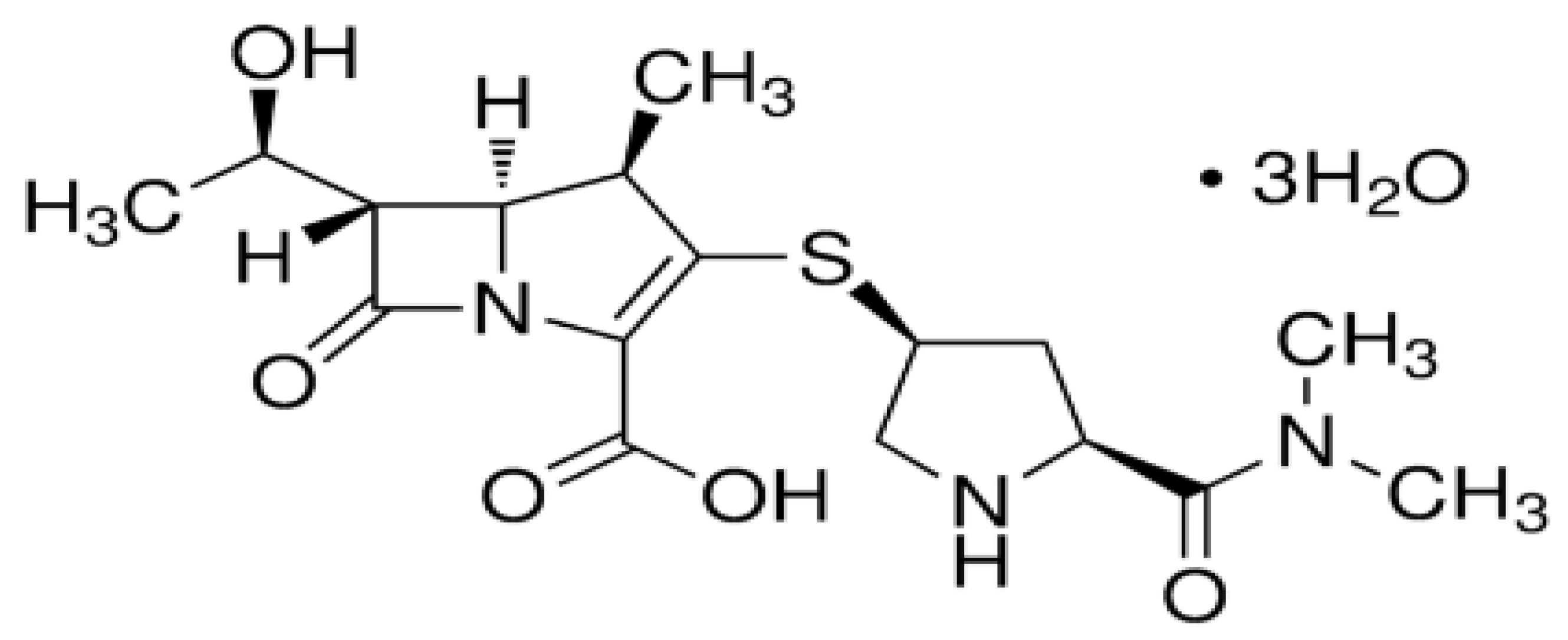
Figure 2.
Dropper bottle containing 4 mL of ophthalmic solution.
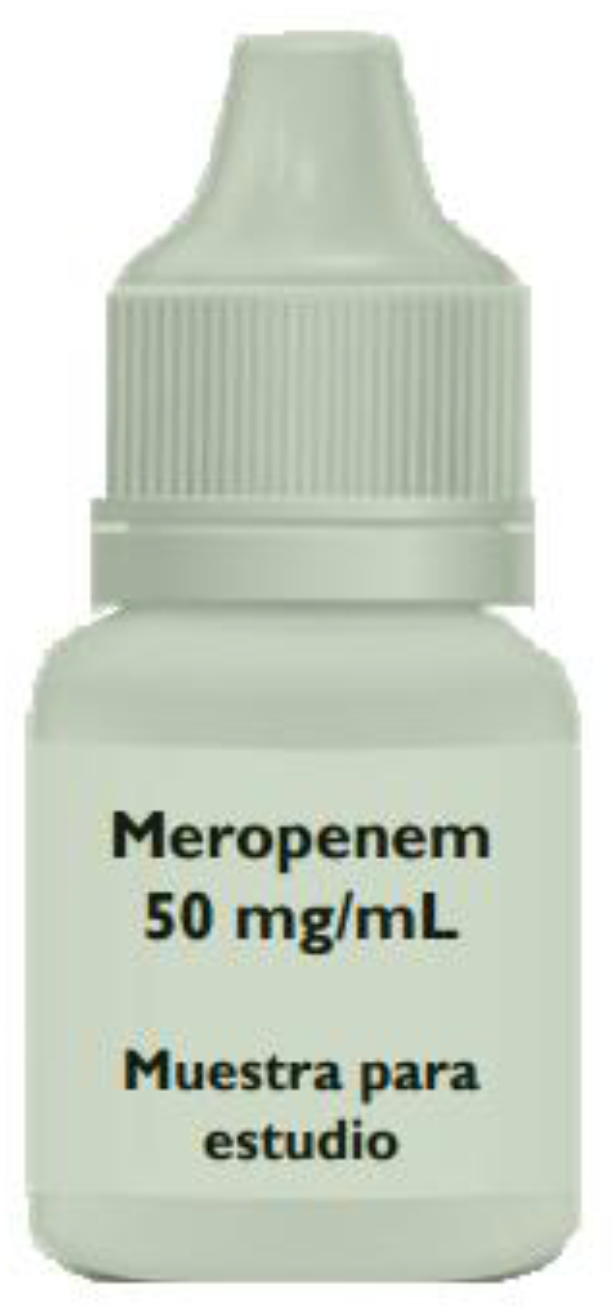
Figure 3.
Study design scheme.
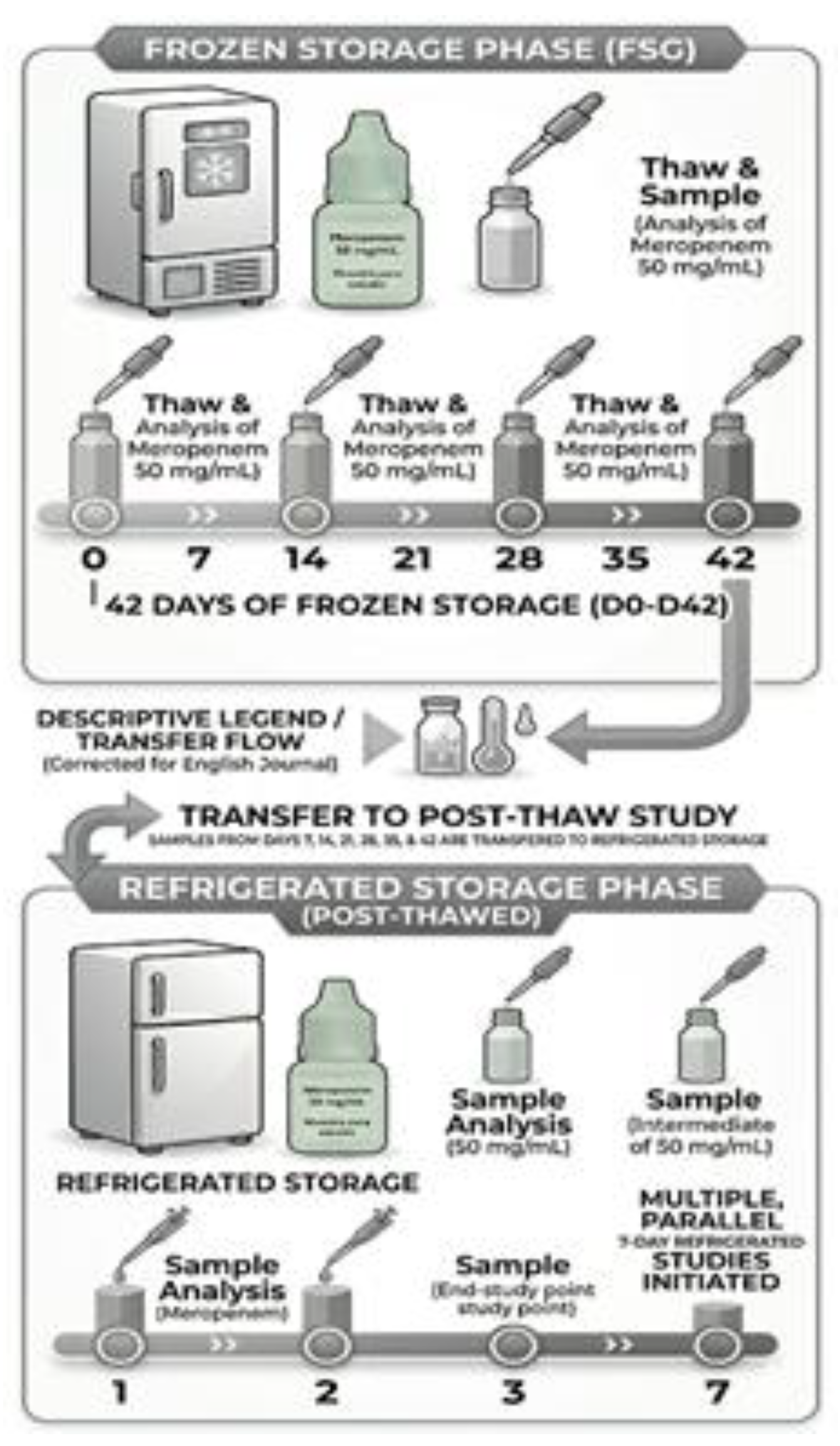
Figure 4.
Chromatograms of meropenem 50 mg/mL eye drops in polypropylene dropper bottles under freezing conditions.
Figure 4.
Chromatograms of meropenem 50 mg/mL eye drops in polypropylene dropper bottles under freezing conditions.
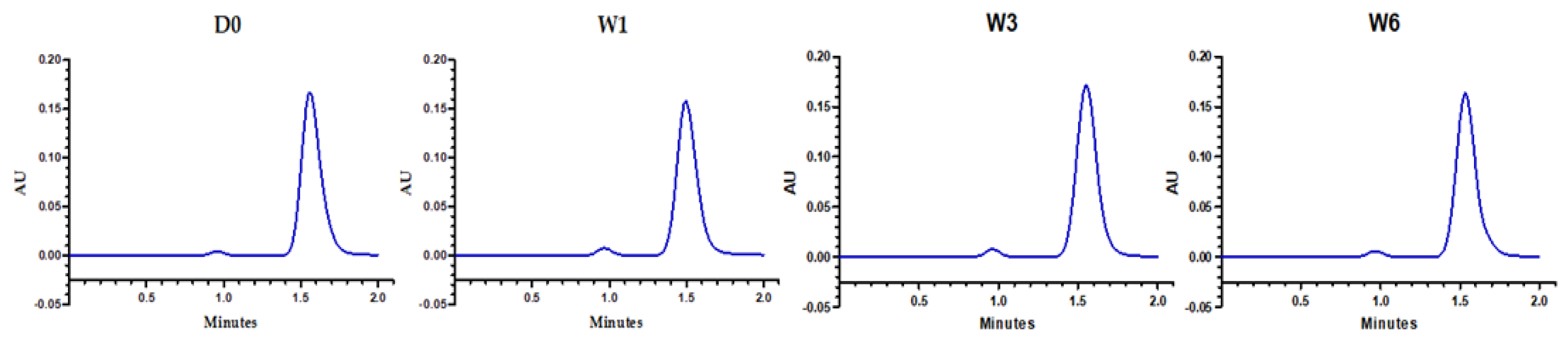
Figure 5.
Evolution of the meropenem eye drops concentration in polypropylene dropper bottles (nominal concentration 50 mg/mL).
Figure 5.
Evolution of the meropenem eye drops concentration in polypropylene dropper bottles (nominal concentration 50 mg/mL).
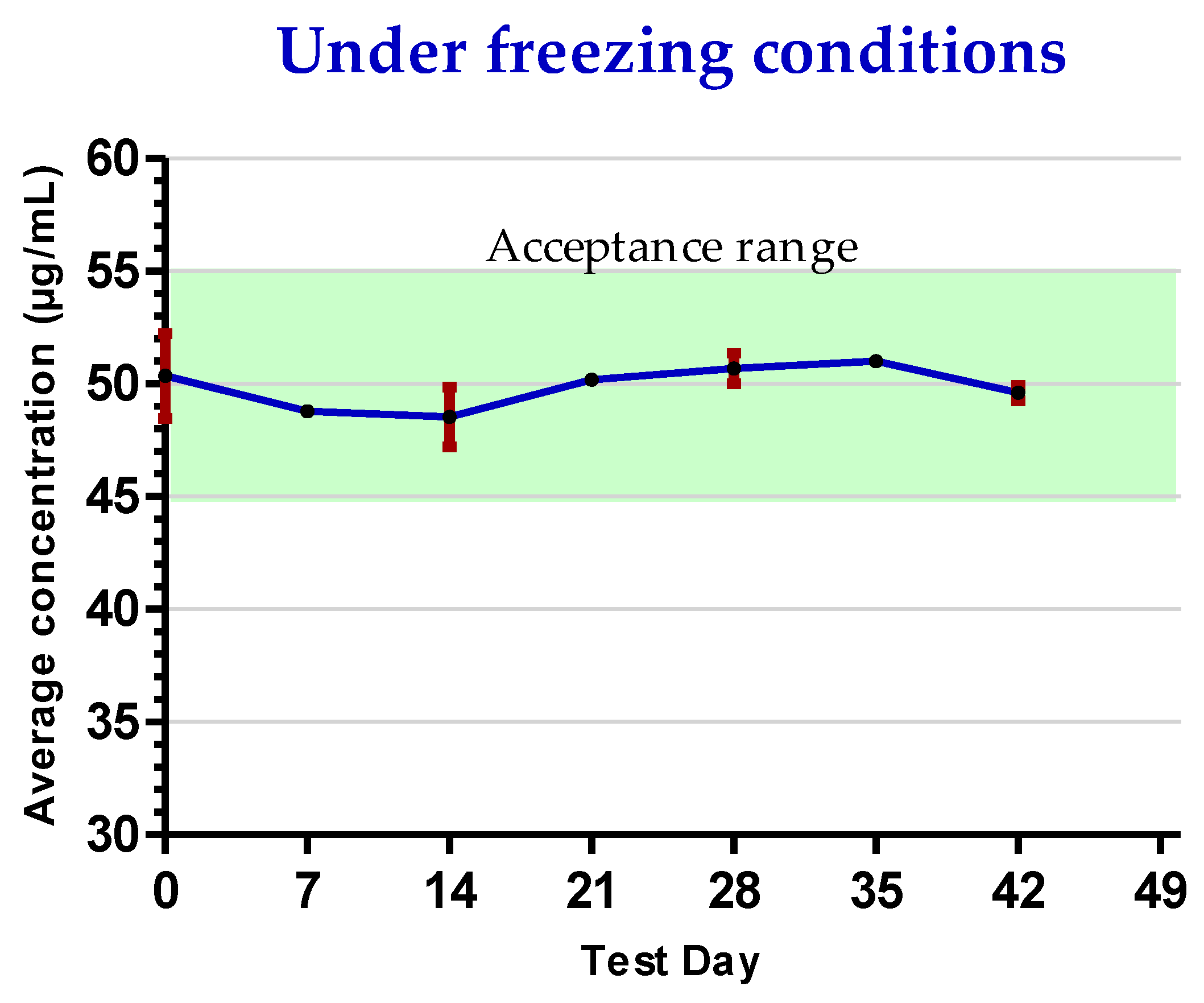
Figure 6.
Chromatograms of meropenem 50 mg/mL eye drops in polypropylene dropper bottles under refrigerated conditions (W = week; D = day).
Figure 6.
Chromatograms of meropenem 50 mg/mL eye drops in polypropylene dropper bottles under refrigerated conditions (W = week; D = day).
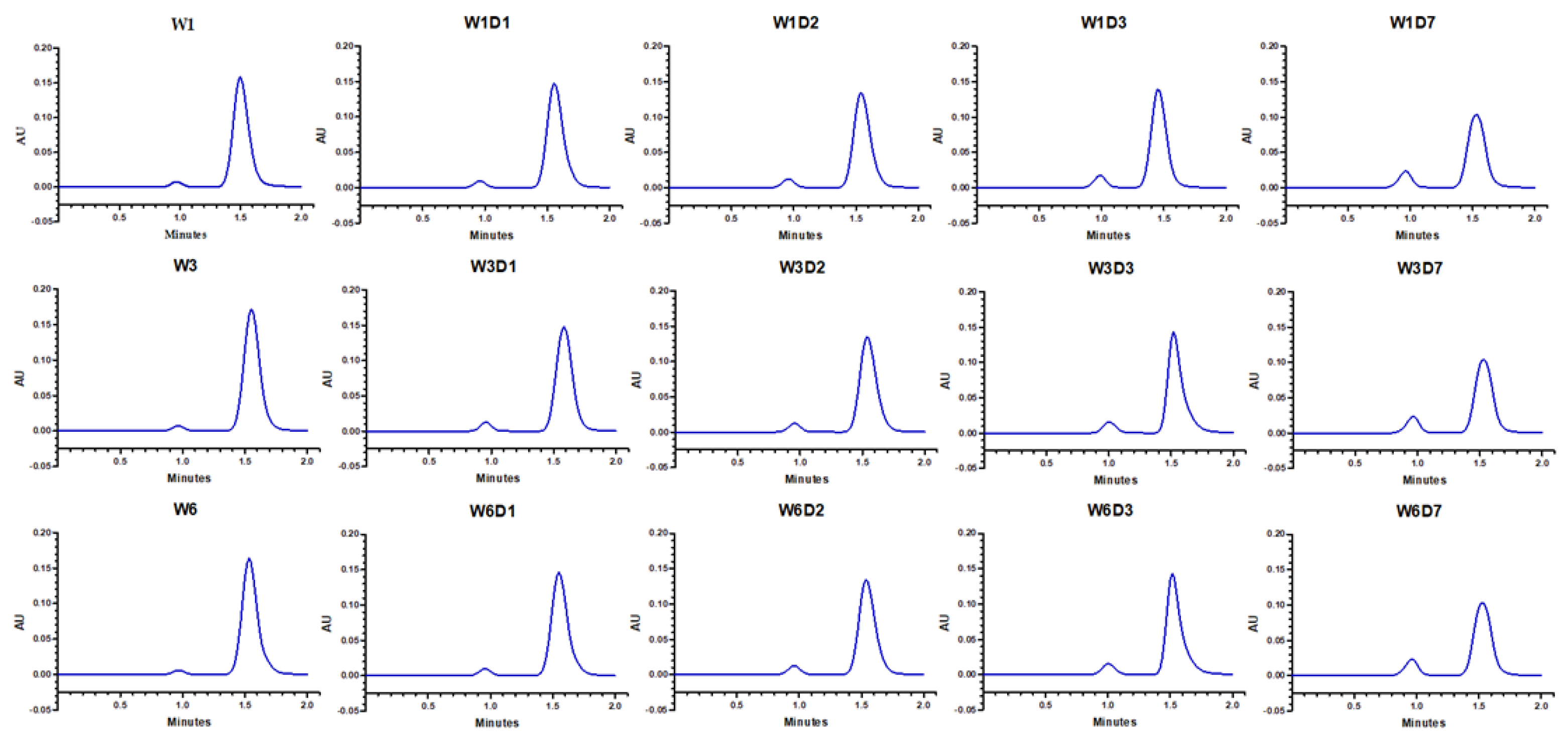
Figure 7.
Evolution of the meropenem eye drops concentration in polypropylene dropper bottles (nominal concentration 50 mg/mL).
Figure 7.
Evolution of the meropenem eye drops concentration in polypropylene dropper bottles (nominal concentration 50 mg/mL).
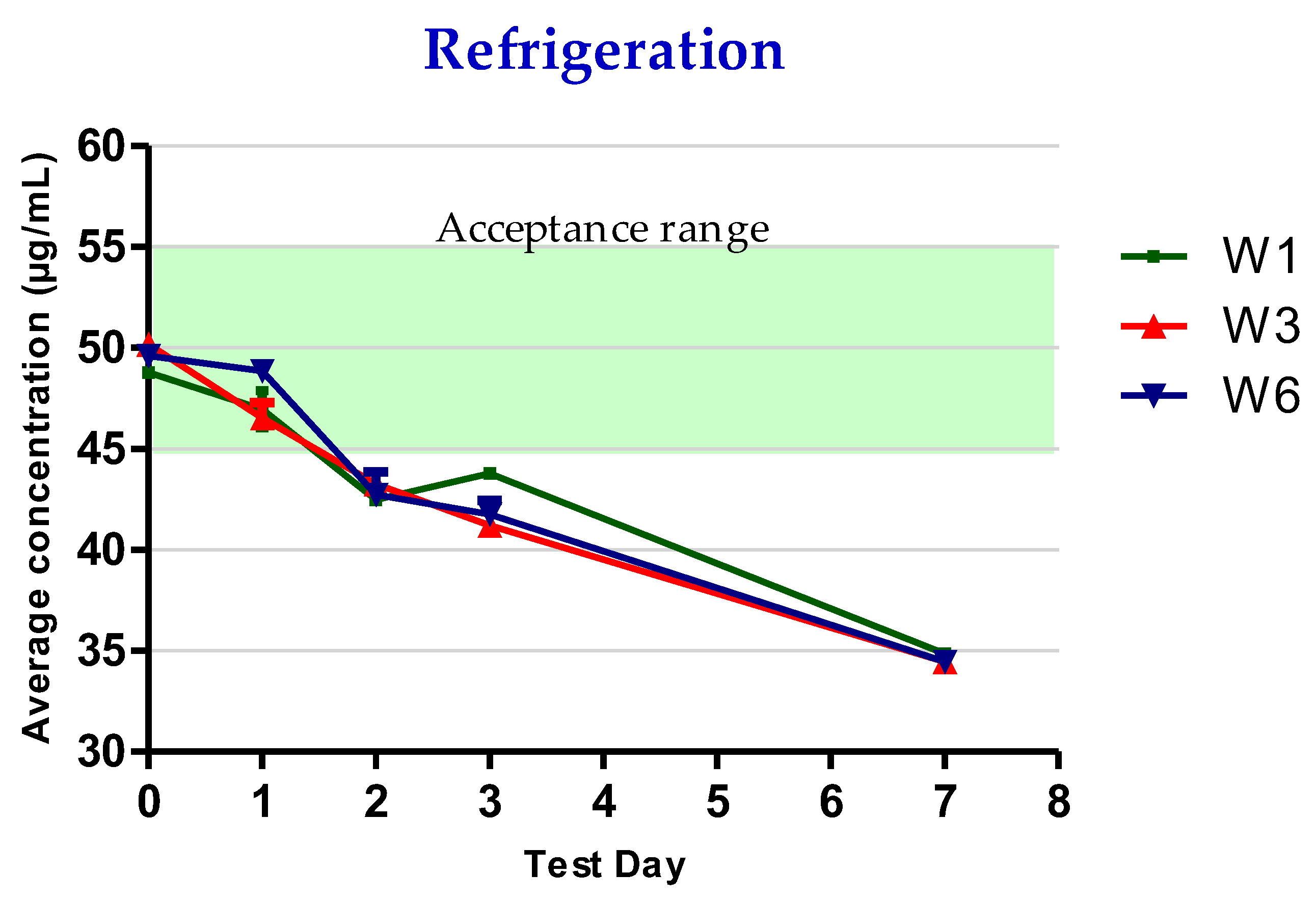
Figure 8.
Color evolution of meropenem 50 mg/mL eye drops in a polypropylene dropper bottles during storage.
Figure 8.
Color evolution of meropenem 50 mg/mL eye drops in a polypropylene dropper bottles during storage.
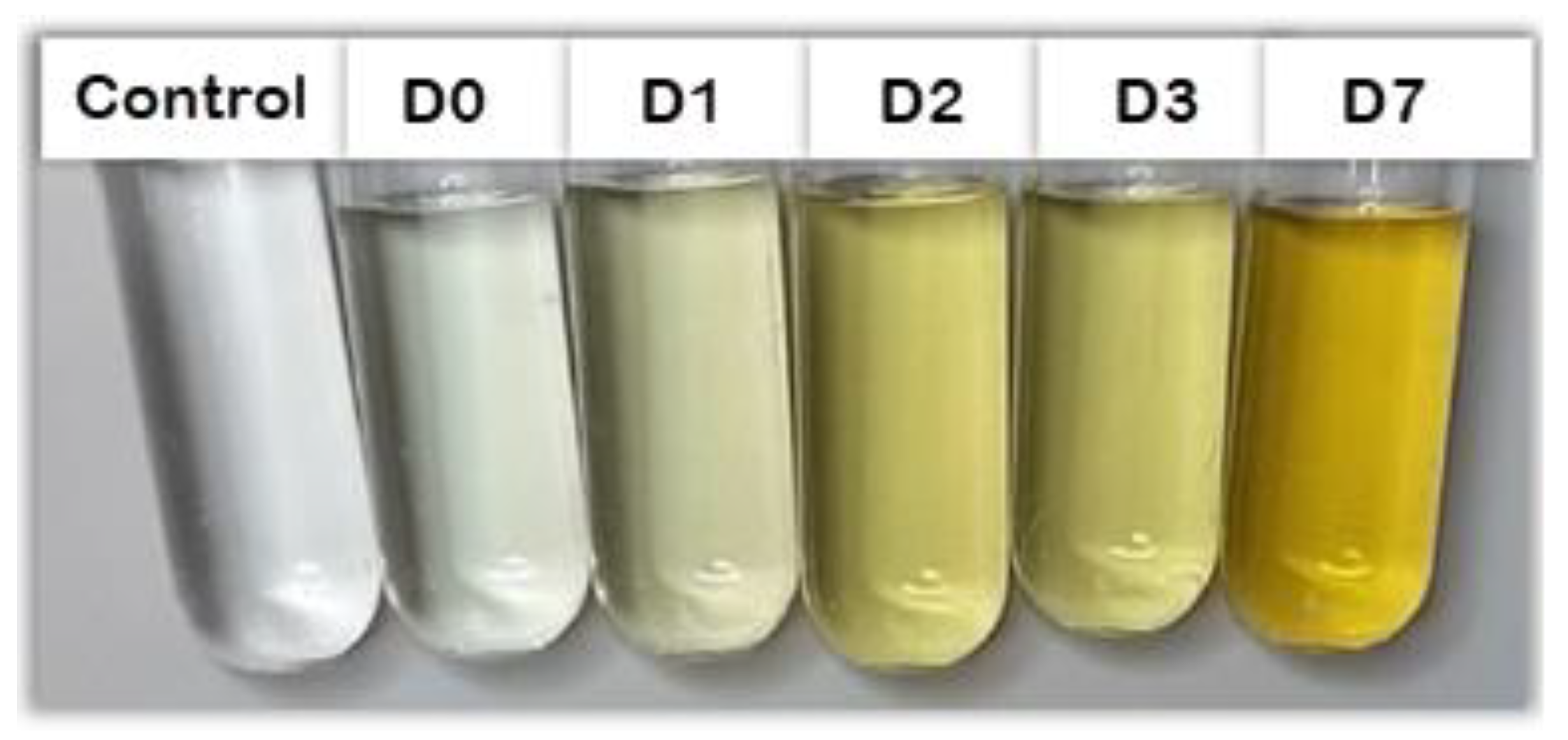

Table 1.
Intra-day repeatability of meropenem eye drop samples at 80, 100 and 120% of the target concentration of 50 µg/mL.
Table 1.
Intra-day repeatability of meropenem eye drop samples at 80, 100 and 120% of the target concentration of 50 µg/mL.
|
Theoretical Concentration (µg/mL) |
40 (80%) | 50 (100%) | 60 (120%) |
| Mean (µg/mL) | 39.903 | 49.892 | 59.940 |
| SD | 0.06 | 0.06 | 0.068 |
| RSD% | 0.150 | 0.120 | 0.114 |
| Accuracy% | 99.758 | 99.783 | 99.899 |
RSD%: Relative standard deviation; SD = Standard deviation.
Table 2.
Inter-day repeatability of meropenem eye drop samples at 80, 100 and 120% of the target concentration of 50 µg/mL.
Table 2.
Inter-day repeatability of meropenem eye drop samples at 80, 100 and 120% of the target concentration of 50 µg/mL.
|
Theoretical Concentration (µg/mL) |
40 (80%) | 50 (100%) | 60 (120%) |
| Mean (µg/mL) | 40.073 | 50.143 | 60.017 |
| SD | 0.356 | 0.337 | 0.389 |
| RSD% | 0.888 | 0.671 | 0.649 |
| Accuracy% | 100.182 | 100.285 | 100.029 |
RSD%: Relative standard deviation; SD = Standard deviation.
Table 3.
Physicochemical results of meropenem 50 mg/mL eye drops in polypropylene dropper bottles under freezing conditions.
Table 3.
Physicochemical results of meropenem 50 mg/mL eye drops in polypropylene dropper bottles under freezing conditions.
| Parameter | D0 | W1 | W3 | W6 |
| AVR% | 100 | 97.554 ± 0.068 | 100.367 ± 0.219 | 99.211 ± 0.266 |
| pH | 7.987 ± 0.078 | 7.991 ± 0.110 | 8.030 ± 0.030 | 8.003 ± 0.062 |
| Colour | Very pale yellow | Very pale yellow | Very pale yellow | Very pale yellow |
| Visible Particulates | Absence | Absence | Absence | Absence |
| Crystals ≥10 µm/mL | 0 | 0 | 0 | 0 |
Results expressed as mean ± SD (standard deviation) of triplicate determinations; AVR% = Average recovery percentage; D0 = Day 0 of the test; W1 = First week of the test; W3 = Third week of the test; W6 = Sixth week of the test.
Table 4.
Physicochemical results of meropenem 50 mg/mL eye drops in polypropylene drop bottles under refrigeration conditions, after thawing.
Table 4.
Physicochemical results of meropenem 50 mg/mL eye drops in polypropylene drop bottles under refrigeration conditions, after thawing.
| Code | Week | Test Day | SC | AVR% | pH | Color |
Visible Particulates |
Crystals ≥ 10 µm/mL |
| 0 | 100 | 7.987 ± 0.078 | Colorless | Absence | 0 | |||
| W1 | 1 | 7 | Frozen | 97.554 ± 0.068 | 7.957 ± 0.110 | Very pale yellow | Absence | 0 |
| W1D1 | 1 | 8 | Cooled | 93,945 ± 0.001 | 8.092 ± 0.021 | Light pale yellow | Absence | 0 |
| W1D2 | 1 | 9 | Cooled | 84,959 ± 0.001 | 8.085 ± 0.017 | Pale yellow | Absence | 0 |
| W1D3 | 1 | 10 | Cooled | 87,597 ± 0.001 | 7.942 ± 0.013 | Moderate yellow | Absence | 0 |
| W1D7 | 1 | 13 | Cooled | 69,723 ± 0.001 | 7.903 ± 0.042 | Intense yellow | Absence | 0 |
| W3 | 3 | 21 | Frozen | 100.367 ± 0.219 | 8.045 ± 0.030 | Very pale yellow | Absence | 0 |
| W3D1 | 3 | 22 | Cooled | 93,076 ± 0.006 | 8.129 ± 0.022 | Light pale yellow | Absence | 0 |
| W3D2 | 3 | 23 | Cooled | 86,533 ± 0.001 | 8.097 ± 0.026 | Pale yellow | Absence | 0 |
| W3D3 | 3 | 24 | Cooled | 82,426 ± 0.002 | 7.931 ± 0.033 | Moderate yellow | Absence | 0 |
| W3D7 | 3 | 27 | Cooled | 68,928 ± 0.004 | 7.861 ± 0.020 | Intense yellow | Absence | 0 |
| W6 | 6 | 42 | Frozen | 99.211 ± 0.266 | 8.202 ± 0.062 | Very pale yellow | Absence | 0 |
| W6D1 | 6 | 43 | Cooled | 97,744 ± 0.001 | 8.100 ± 0.012 | Light pale yellow | Absence | 0 |
| W6D2 | 6 | 44 | Cooled | 85,494 ± 0.009 | 8.078 ± 0.017 | Pale yellow | Absence | 0 |
| W6D3 | 6 | 45 | Cooled | 83,539 ± 0.006 | 7.971 ± 0.024 | Moderate yellow | Absence | 0 |
| W6D7 | 6 | 48 | Cooled | 68,900 ± 0.004 | 7.845 ± 0.044 | Intense yellow | Absence | 0 |
Results expressed as mean ± SD (standard deviation) of triplicate determinations; AVR% = Average recovery percentage; D0 = Day 0 of the test; W1 = First week of the test; W3 = Third week of the test; W6 = Sixth week of the test. D1, D2, D3 and D7 = Day 1,2,3 and 7 of the test under refrigeration.
Disclaimer/Publisher’s Note: The statements, opinions and data contained in all publications are solely those of the individual author(s) and contributor(s) and not of MDPI and/or the editor(s). MDPI and/or the editor(s) disclaim responsibility for any injury to people or property resulting from any ideas, methods, instructions or products referred to in the content. |
© 2026 by the authors. Licensee MDPI, Basel, Switzerland. This article is an open access article distributed under the terms and conditions of the Creative Commons Attribution (CC BY) license.
Copyright: This open access article is published under a Creative Commons CC BY 4.0 license, which permit the free download, distribution, and reuse, provided that the author and preprint are cited in any reuse.


