Preprint
Case Report

This version is not peer-reviewed.

Out of the Frying Pan into the Joint: Non-Typhoidal Salmonella Septic Arthritis in an Immunocompromised Host—A Case Report

Submitted:

04 June 2026

Posted:

04 June 2026

You are already at the latest version

Abstract

Septic arthritis due to non-typhoidal Salmonella (NTS) species is an exceptionally rare extraintestinal manifestation, accounting for less than 1% of invasive syndromes caused by this pathogen. It predominantly targets individuals with severe hematological malignancies or underlying osteoarticular vulnerabilities. A 69-year-old male with a history of primary myelofibrosis treated with chronic corticosteroids and Rituximab presented to the emergency department in septic shock secondary to acute monoarthritis of the left elbow. A diagnostic percutaneous joint aspiration was promptly performed, and cultures isolated Salmonella spp. The automated antimicrobial susceptibility report revealed a paradoxical phenotypic resistance profile (cefoxitin and amikacin resistance despite apparent third-generation cephalosporin susceptibility), suggesting plasmid-mediated AmpC production. Targeted antimicrobial therapy was successfully optimized with intravenous Meropenem to satisfy pharmacokinetic/pharmacodynamic (PK/PD) requirements within the inflamed synovial space, resulting in full clinical recovery and complete resolution of the infectious process.Primary myelofibrosis, compounded by targeted biological immunosuppression, induces a profound immunological breakdown that exponentially increases the risk of invasive NTS (iNTS) tissue seeding from transient gastrointestinal breaches. Clinicians operating in endemic areas of foodborne pathogens must maintain high suspicion for atypical focal infections. Furthermore, this case underscores the critical importance of diagnostic stewardship, demonstrating that looking beyond automated susceptibility labels is mandatory to prevent therapeutic failure in deep-seated, high-inoculum extraintestinal salmonellosis.

Keywords: 
;  ;  ;  ;  

Introduction

The history of the genus Salmonella dates back to 1880, when the pathogen was first observed during post-mortem examinations of patients who had succumbed to classic typhoid fever. At that time, the microorganism was descriptively labeled as the “Typhoid bacillus”. In 1885, the pioneering American microbiologist Theobald Smith, working alongside his supervisor Daniel Elmer Salmon, successfully isolated and meticulously characterized the structural features of the bacillus. However, it was not until the turn of the century, in 1900, that the French bacteriologist Joseph Léon Marcel Lignières formally established and designated the genus name Salmonella to honor the enduring scientific legacy of Dr. Salmon [1].
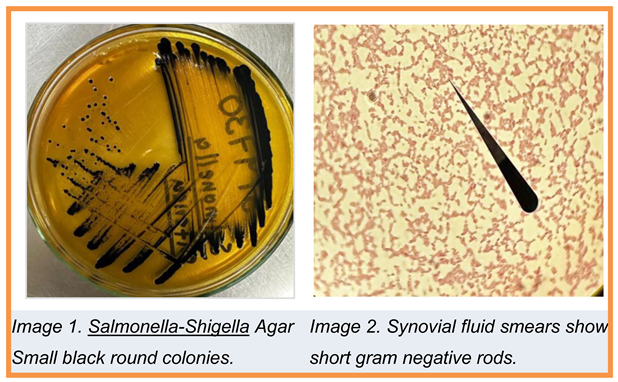
From a microbiological perspective, members of the genus Salmonella are structurally defined as straight, Gram-negative, rod-shaped bacilli measuring approximately 2–5 µm in length. They are characteristically non-spore-forming, facultative anaerobic, and facultative intracellular enterobacteria that exhibit remarkable motility powered by peritrichous flagella [1]. These organisms possess an extraordinary physiological resilience, allowing them to proliferate across a broad thermal range spanning from 7 °C to 48 °C, with an optimal biological growth configuration situated between 35 °C and 37 °C. Furthermore, their environmental survivability is enhanced by a wide pH tolerance extending from 4.0 to 8.0 [1,2]. A defining biochemical and metabolic hallmark of Salmonella is its capacity to reduce specific sulfur compounds—most notably thiosulfate, sulfide, and dimethyl sulfoxide—into hydrogen sulfide gas (H2S). When these microorganisms are cultivated on highly selective enteric formulations, such as Salmonella-Shigella (SS) agar, this specific H2S production reacts with iron indicators to generate distinctive, easily identifiable black-centered colonies [3,4].
Epidemiology
S. enterica infects approximately 200 million people annually with an estimated mortality rate of 0.08%. In Mexico, almost 67,000 new cases were reported in 2023, with 21.6% linked to typhoid fever, 9.7% paratyphoid, and 68.7% another salmonellosis type.
Geographic distribution and host range is incredibly important, finding an increasing variance among different regions mainly in latin america, being influenced by their microbiological fitness. Newport and Anatum species represent the most prevalent serotypes globally and in Mexico, showing an increased resistance to various antibiotics due to horizontal transfer of resistance genes from other source-related microorganisms.
Antibiotic susceptibility testing in Salmonella strains of Mexican beef and pork showed preserved spectrum of aminoglucosides such as amykacin (AMK), cefepime (FEP), ciprofloxacin (CIP) and meropenem (MEM), showing resistance only to 2 of the 77 isolates to azithromycin (AZM), other two showing resistance to trimethoprim-sulfametoxazol (SXT) and finally four isolates resistant to streptomycin (STR).
The distribution of phenotypic resistance of Salmonella Anatum, collected from ground pork in Mexico City, was resistant to eight antimicrobials: STR, AMP, AMC, CRO, CHL, SXT, TET, and AZM. Additionally, five strains of Salmonella Newport were resistant to seven antimicrobials, with four strains showing resistance to STR, AMP, AMC, CHL, SXT, TET, and AZM. These strains were identified in Aguascalientes, Mexico City, and Toluca, with three detected in ground beef and one in ground pork. Another strain from the state of Durango (also found in ground beef) exhibited resistance to STR, AMP, CRO, CHL, SXT, TET, and AZM. A typical combination of phenotypic resistance (STR, AMP, CHL, SXT, TET, and AZM) was observed in 12 Salmonella Newport strains (5 in ground beef and 7 in ground pork) across eight cities in Mexico, including Aguascalientes, Tepic, Puebla, Queretaro, Cuernavaca, Monterrey, Hermosillo, and Guanajuato, primarily in the central and northern regions. Another frequent resistance combination—AMP, CHL, SXT, TET, and AZM—was also recorded for 12 Salmonella Newport strains (3 in ground beef and 9 in ground pork) in five cities (Aguascalientes, Tuxtla Gutiérrez, Monterrey, Cuernavaca, and Guanajuato), spanning central, southern, and northern Mexico [5,6].
Pathophysiology
The molecular pathogenesis of iNTS disease relies on a sophisticated collection of virulence mechanisms designed to subvert host cellular immunity [7]. Following oral ingestion and survival through the gastric acid barrier, NTS translocates into the intestinal lumen where it targets the specialized follicle-associated epithelium. The bacilli utilize their Type III Secretion System 1 (T3SS-1), encoded within Salmonella Pathogenicity Island 1 (SPI-1), to inject effector proteins directly into host M cells and enterocytes. These effectors induce dramatic cytoskeletal rearrangements, forcing macropinocytosis and cellular internalization of the bacteria [8].
Upon crossing the epithelial barrier into the lamina propria, the bacilli are rapidly phagocytosed by resident macrophages and dendritic cells. Crucially, instead of undergoing intracellular destruction, NTS activates its Type III Secretion System 2 (T3SS-2), encoded within Salmonella Pathogenicity Island 2 (SPI-2). This system modifies the internal architecture of the host cell, allowing the bacilli to survive and actively replicate within specialized intracellular niches known as Salmonella-containing vacuoles (SCVs) [8]. By residing intracellularly within these vacuoles, NTS effectively evades humoral defenses, complements, and intracellular killing mechanisms. These infected phagocytes then serve as vehicles for hematogenous dissemination throughout the reticuloendothelial system [7,8]. This intracellular lifecycle complicates targeted antimicrobial eradication, particularly when compounded by emerging plasmid-mediated co-resistance mechanisms that render standard first-line therapies ineffective [8].
Septic arthritis due to Salmonella species represents an exceptionally rare extraintestinal manifestation of this systemic spread, accounting for less than 1% of all infectious joint syndromes in patients aged 5 years or older. While the sacroiliac and large weight-bearing joints are historically the most frequently affected—with S. Typhimurium and S. Enteritidis being the predominant serovars—the risk of atypical articular seeding escalates exponentially in the presence of overlapping immune defects or specific pediatric and structural bone vulnerabilities [9]. In patients with myeloproliferative neoplasms, such as primary myelofibrosis, structural bone marrow remodeling is compounded by functional hyposplenism, which severely impairs the reticuloendothelial system’s capacity to filter circulating intracellular pathogens. When this innate vulnerability is synergistically amplified by iatrogenic immunosuppression—specifically chronic corticosteroids that blunt macrophage activation, and Rituximab therapy that depletes mature B-cells and halts the production of opsonizing antibodies—the host’s ability to contain an initial gastrointestinal breach is entirely dismantled. This lethal intersection of disease- and drug-induced immunosuppression paves the way for unhindered bacteremia and subsequent localized articular infection [10].
Case Presentation
A 69-year-old male with a six-year history of primary myelofibrosis presented to the emergency department in septic shock, with clinical signs highly suggestive of an acute focal infection localized to the left elbow joint. His ongoing maintenance regimen consisted of chronic immunosuppressive therapy with prednisone (5 mg/day for the past five years) and a recent course of Rituximab completed six months prior to admission. Notably, the patient reported a transient prodrome of gastrointestinal symptoms five days before the onset of joint pain, characterized by diffuse abdominal pain and self-limiting hematochezia.
Upon initial physical examination, the patient was hemodynamically unstable, obtunded, hypotensive, and febrile. Joint inspection of the left elbow was remarkable for severe edema, diffuse erythema, exquisite tenderness to palpation, increased local temperature, and complete restriction of both active and passive ranges of motion. Initial laboratory diagnostics revealed severe anemia and a profound leukocytosis with a marked neutrophilic predominance. Fluid resuscitation and vasopressor support with norepinephrine were immediately initiated. To establish an accurate diagnosis, an urgent ultrasound-guided arthrocentesis of the left elbow was performed, yielding approximately 12 mL of macroscopically purulent and inflammatory synovial fluid. Cytological analysis verified an intense inflammatory pattern dominated by polymorphonuclear leukocytes. Microscopic evaluation via Gram staining revealed abundant intracellular and extracellular Gram-negative bacilli (Image 2). Empirical broad-spectrum antimicrobial therapy was initiated with intravenous carbapenems. Synovial fluid cultures successfully isolated Salmonella spp., confirming the diagnosis of non-typhoidal Salmonella septic arthritis. Subcultures on Salmonella-Shigella (SS) agar displayed characteristic small, round colonies with prominent black centers due to hydrogen sulfide (H2S) production (Image 1).
Preprints 216924 i001
Phenotypic antimicrobial susceptibility testing performed via the VITEK 2 automated system (Table 1) revealed an uncommon susceptibility profile. The isolate was flagged as resistant to both amikacin (MIC ≤ 2 µg/mL) and cefoxitin (MIC ≤ 4 µg/mL), despite demonstrating low minimal inhibitory concentrations within the susceptible range for third- and fourth-generation cephalosporins (ceftriaxone, ceftazidime, and cefepime MIC ≤ 1 µg/mL). Additionally, ciprofloxacin exhibited an intermediate susceptibility profile (MIC ≤ 0.25 µg/mL).
Due to the clinical severity of the septic shock and the expert rule interpretation of the automated antibiogram—which strongly suggested plasmid-mediated AmpC β-lactamase production masking potential in vivo cephalosporin failure—the patient was transitioned to definitive targeted monotherapy with intravenous Meropenem to optimize pharmacokinetic and pharmacodynamic (PK/PD) parameters within the highly inflamed synovial workspace. The patient experienced an excellent clinical and biochemical response, allowing for prompt vasopressor weaning and full functional recovery of the joint. Directed carbapenem therapy was successfully completed for a full two-week course, leading to hospital discharge. During outpatient follow-up, a Technetium−99m labeled ubiquicidin (99m Tc-UBI 29-41) scintigraphy was performed, confirming complete resolution of the infectious process and ruling out underlying osteomyelitis.

Discussion

Extra-intestinal manifestations of non-typhoidal Salmonella (NTS), with a specific localized focus such as acute septic arthritis, remain exceptionally rare in adult populations, clinically representing less than 1% of all documented invasive NTS syndromes globally [6]. This highly atypical and aggressive clinical presentation is directly and synergistically linked to our patient’s underlying, multifaceted severe immunosuppressive state. From a pathophysiological perspective, primary myelofibrosis induces a progressive, profound, and irreversible disruption of the normal bone marrow architecture, which is characteristically replaced by extensive collagen deposition and fibrotic remodeling [9]. This altered microenvironment is fundamentally accompanied by functional hyposplenism, a critical immune defect that severely impairs the reticuloendothelial system’s biological capacity to filter, trap, and clear circulating facultative intracellular pathogens, such as Salmonella species, from the systemic bloodstream [6,9]. Furthermore, this innate vulnerability was iatrogenically compounded by the patient’s recent therapeutic regimen of Rituximab; this anti-CD20 monoclonal antibody induces a prolonged, deep depletion of mature B-lymphocytes, which severely compromises adaptive humoral immunity and abruptly halts the production of specific opsonizing antibodies that are absolutely mandatory to facilitate effective macrophage-mediated phagocytosis and intracellular bacterial destruction [9]. Consequently, this cumulative, severe immunological breakdown completely dismantled the host’s primary defense barriers, allowing a transient, low-grade bacteremia—originally arising from the patient’s prior gastrointestinal mucosal disruption, clinically manifested as acute abdominal pain and self-limiting hematochezia—to comfortably evade systemic clearance, compromise the vascular compartment, and ultimately seed via hematogenous translocation into the highly vascularized synovial tissue of the left elbow joint [6,9].
The phenotypic resistance profile of the isolated Salmonella strain presents a compelling microbiological paradox that underscores the limitations of automated susceptibility testing. The VITEK 2 system identified the isolate as resistant to cefoxitin, while reporting apparent susceptibility to third- and fourth-generation cephalosporins. While wild-type Salmonella species lack a functional, inducible chromosomal ampC gene, this specific phenotype strongly suggests the acquisition of a plasmid-mediated AmpC β-lactamase (pAmpC) via horizontal gene transfer. Relying on standard third-generation cephalosporins—the historical gold standard for extraintestinal salmonellosis—posed an unacceptable therapeutic risk of in vivo failure under pAmpC expression. This clinical rationale justified our definitive therapy with Meropenem, ensuring stability against AmpC-mediated hydrolysis within the inflamed synovial environment [5,8].
Furthermore, the quinolone susceptibility profile in this isolate warrants critical analysis. The VITEK 2 system reported an intermediate susceptibility to ciprofloxacin with an MIC of ≤0.25 µg/mL. According to current Clinical and Laboratory Standards Institute (CLSI) guidelines, the true susceptibility threshold for fluoroquinolones in Salmonella species must be strictly set at an MIC ≤ 0.06 µg/mL to predict clinical success. Low-level resistance mutations occurring in the quinolone resistance-determining regions (QRDR) can elevate MICs to levels between 0.12 µg/mL and 0.5 µg/mL, which automated reports of ‘intermediate’ often mask. Utilizing fluoroquinolones as monotherapy in this setting frequently results in therapeutic failure and accelerates target-site mutations, reinforcing the decision to maintain carbapenem-based coverage [11].
From a strict clinical pharmacokinetic and pharmacodynamic (PK/PD) perspectives, successful therapeutic eradication of an invasive, high-inoculum pathogen sequestered within an anatomical closed space—such as an acutely inflamed synovial joint cavity—presents an intricate pharmacological challenge that mandates an advanced drug delivery profile [11]. Under standard conditions, the blood-joint barrier undergoes significant pathophysiological alterations driven by the intense local production of pro-inflammatory cytokines, which triggers massive tissue hyperemia, capillary hyperpermeability, and the rapid accumulation of a dense, protein-rich purulent exudate that significantly increases local interstitial pressure and establishes an environment characterized by low oxygen tension and reduced pH [11,12]. Carbapenems, most notably Meropenem, exhibit highly favorable physicochemical characteristics, including a relatively low molecular weight and optimized protein binding traits, which facilitate its robust passive diffusion across the hyperemic synovial membrane and allow the drug to consistently reach exceptional, bactericidal concentrations directly within the infected synovial fluid that substantially exceed the minimum inhibitory concentration (MIC) required for the target microorganism [11,12]. Furthermore, when administered via prolonged or extended intravenous infusions rather than traditional intermittent boluses, carbapenems maximize the critical pharmacodynamic parameter of time above the MIC (Ƭ > MIC), ensuring a continuous chemical pressure that effectively overcomes the high-bacterial-load inoculum effect and drives the aggressive elimination of both extracellular populations in the fluid and the challenging intracellular pools of Salmonella hiding inside host macrophages, thereby drastically minimizing the likelihood of chronic localized treatment failure, structural articular destruction, or progression toward deep-seated, contiguous bone tissue osteomyelitis [11,12].
In conclusion, this case serves as a quintessential reminder that the intersection of deep hematological immunosuppression and regional foodborne pathogen dynamics can drastically alter traditional infectious disease presentations. Non-typhoidal Salmonella must be firmly embedded in the differential diagnosis of acute monoarthritis in patients with myeloproliferative neoplasms under targeted biological therapies. Crucially, clinicians must look beyond automated susceptibility labels; an unexplained cephamycin resistance or a borderline ciprofloxacin MIC in Salmonella should trigger immediate suspicion of plasmid-mediated resistance determinants, rendering conventional first-line cephalosporins highly unreliable. Ultimately, this report underscores the imperative role of diagnostic stewardship, advocating for the integration of expert microbiological interpretation to guide successful, tailored carbapenem therapy in critical, deep-seated extraintestinal infections in immunocompromised patients among endemic areas of enterobacteraceae food borne diseases.

Author Contributions

Conceptualization, X.X. and Y.Y.; methodology, X.X.; software, X.X.; validation, X.X., Y.Y. and Z.Z.; formal analysis, X.X.; investigation, X.X.; resources, X.X.; data curation, X.X.; writing—original draft preparation, X.X.; writing—review and editing, X.X.; visualization, X.X.; supervision, X.X.; project administration, X.X.; funding acquisition, Y.Y. All authors have read and agreed to the published version of the manuscript.

Funding

This research received no external funding.

Institutional Review Board Statement

This manuscript is a clinical case report. In accordance with our institutional policies at the Hospital de Especialidades, Centro Médico Nacional Siglo XXI, Instituto Mexicano del Seguro Social, formal approval from an Institutional Review Board is not required for the publication of individual case reports. The clinical management was conducted in accordance with the principles outlined in the Declaration of Helsinki, and we have obtained written informed consent from the patient involved.

Data Availability Statement

The original contributions presented in this study are included in the article. Further inquiries can be directed to the corresponding author.

Conflicts of Interest

The authors declare no conflicts of interest.

References

  1. Oludairo, O.; Kwaga, J.; Kabir, J.; Abdu, P.; Gitanjali, A.; Perrets, A.; et al. Una revisión sobre las características, taxonomía y nomenclatura de Salmonella con especial referencia a la salmonelosis tifoidea y no tifoidea. Zagazig Vet. J. 2022, 50, 161–176. [Google Scholar] [CrossRef]
  2. Black, P.H.; Kunz, L.J.; Swartz, M.N. Salmonelosis: Una revisión de algunos aspectos inusuales. N. Engl. J. Med. 1960, 262, 811–817. [Google Scholar] [CrossRef]
  3. Uribe, C.; Suárez, M.C. Salmonelosis no tifoidea y su transmisión a través de alimentos de origen aviar. Colomb. Médica 2006, 37, 151–158. [Google Scholar] [CrossRef]
  4. Shaji, S.; Selvaraj, R.K.; Shanmugasundaram, R. Infección por Salmonella en aves de corral: Una revisión sobre el patógeno y las estrategias de control. Microorganisms 2023, 11, 2814. [Google Scholar] [CrossRef]
  5. Reynoso, E.C.; Delgado-Suárez, E.J.; Hernández-Pérez, C.F.; Chavarin-Pineda, Y.; Godoy-Lozano, E.E.; Fierros-Zárate, G.; et al. Geography, Antimicrobial Resistance, and Genomics of Salmonella enterica (Serotypes Newport and Anatum) from Meat in Mexico (2021–2023). Microorganisms 2024, 12, 2485. [Google Scholar] [CrossRef] [PubMed]
  6. Campos Granados, C.M.; Sierra Gómez Pedroso L del, C.; Hernández-Pérez, C.F.; Ballesteros-Nova, N.E.; Rubio-Lozano, M.S.; Sánchez-Zamorano, L.M.; et al. Strong antibiotic resistance profiles in Salmonella spp. isolated from ground meat in central Mexico. Vet. México OA 2023, 10. [Google Scholar] [CrossRef]
  7. Marchello, C.S.; Birkhold, M.; Crump, J.A. Vacc-iNTS Consortium collaborators. Complications and mortality of invasive non-typhoidal Salmonella disease: A global systematic review and meta-analysis. Lancet Infect. Dis. 2022, 22, 692–705. [Google Scholar] [CrossRef] [PubMed]
  8. Alenazy, R. Antibiotic resistance in Salmonella: How to deal with co-resistance to multiple drugs through knowledge of efflux pumps, regulators and inhibitors. J. King Saud. Univ. Sci. 2022, 34, 102275. [Google Scholar] [CrossRef]
  9. Razquin Olazarán, I.; Aguinaga Pérez, A.; Elía López, M.; Ezpeleta Baquedano, C. Artritis séptica aguda de cadera por Salmonella enterica subesp. enterica serotipo Coeln en una niña de 3 años. Rev. Esp. Quimioter. 2024, 37, 116–117. [Google Scholar] [CrossRef] [PubMed]
  10. Landtblom, A.R.; Andersson, T.M.; Dickman, P.W.; Smedby, K.E.; Eloranta, S.; Batyrbekova, N.; et al. Risk of infections in patients with myeloproliferative neoplasms: A population-based cohort study of 8363 patients. Leukemia 2021, 35, 476–484. [Google Scholar] [CrossRef]
  11. Ford, L.; Shah, H.J.; Eikmeier, D.; Hanna, S.; Chen, J.; Tagg, K.A.; et al. Infección por Salmonella no tifoidea resistente a los antimicrobianos después de un viaje internacional: Estados Unidos, 2018–2019. J. Infect. Dis. 2023, 228, 533–541. [Google Scholar] [CrossRef]
  12. Kahsay, A.G.; Dejene, T.A.; Kassaye, E. A systematic review on prevalence, serotypes, and antimicrobial resistance of Salmonella in Ethiopia, 2010–2022. Infect. Drug Resist. 2023, 16, 6703–6715. [Google Scholar] [CrossRef]

Table 1. Synovial fluid culture susceptibility profile (VITEK 2) Salmonella group.
Antibiotic MIC (µg/mL) Interpretation
Amikacin <=2 Resistant
Ampiciline/Sulbactam <=2 Susceptible
Cefepime <=1 Susceptible
Cefoxitin <=4 Resistant
Ceftazidime <=1 Susceptible
Ceftriaxone <=1 Susceptible
Ciprofloxacin <=0.25 Intermediate
Doripenem <=0.12 Susceptible
Ertapenem <=0.5 Susceptible
Gentamicine <=1 Susceptible
Imipenem <=0.25 Susceptible
Meropenem <=0.25 Susceptible
Piperacillin/Tazobactam <=4 Susceptible
Tigecycline <=0.5 Susceptible
Disclaimer/Publisher’s Note: The statements, opinions and data contained in all publications are solely those of the individual author(s) and contributor(s) and not of MDPI and/or the editor(s). MDPI and/or the editor(s) disclaim responsibility for any injury to people or property resulting from any ideas, methods, instructions or products referred to in the content.
Copyright: This open access article is published under a Creative Commons CC BY 4.0 license, which permit the free download, distribution, and reuse, provided that the author and preprint are cited in any reuse.
Prerpints.org logo

Preprints.org is a free preprint server supported by MDPI in Basel, Switzerland.

Subscribe

© 2026 MDPI (Basel, Switzerland) unless otherwise stated

Accessibility

Disclaimer

Terms of Use

Privacy Policy

Privacy Settings