
Submitted:
29 May 2026
Posted:
03 June 2026
You are already at the latest version
Abstract
Background: Enhancing the binding affinity of monoclonal antibodies (mAbs) has the potential to improve their therapeutic efficacy. In this study, we generated a novel mAb, PB-223, through affinity maturation of the parental antibody NEO-102.
NEO-102 (Ensituximab) is a chimeric human IgG1 mAb that targets a cancer-specific glycosylated variant of MUC5AC expressed on colorectal and pancreatic cancers, while sparing healthy tissues. In a Phase 2 clinical study, involving heavily pretreated patients with advanced, refractory colorectal cancer, NEO-102, as a monotherapy, exhibited modest efficacy.
Methods: We engineered the VH and VL regions of NEO-102 through affinity maturation to enhance antigen binding while preserving target specificity. The optimized clone, PB-223, was evaluated for improved binding by ELISA, flow cytometry, immunohistochemistry (IHC). Specific PB-223 target antigen was discovered using O-glycan array. Internalization assay evaluated the ability of PB-223 to internalize human cancer cell lines expressing its target antigen.
Results: PB-223 exhibits a 4.55-fold lower dissociation constant (KD) compared with NEO-102 by ELISA. PB-223 has enhanced binding to human cancer cell lines recognized by NEO-102 by flow cytometry. O-glycan array analysis identified core 2 O-glycans, expressed by human cancer cell lines reactive with PB-233 in flow cytometry, as the specific binding epitope of PB-223. IHC analysis of human tumor tissues showed that PB-223 does not bind to healthy tissues, displays superior binding to multiple malignant tissues previously recognized by NEO-102 and binds to tumor types not recognized by NEO-102. PB-223 internalizes human cancer cell lines expressing core 2 O-glycans.
Conclusions: PB-223 can potentially be used as a targeting moiety for antibody-based therapeutics, including antibody–drug conjugates (ADCs), bispecific antibodies, immune-engaging constructs, and radiopharmaceuticals, for the treatment of human cancers expressing core 2 O-glycans.
Keywords:
monoclonal antibody
; affinity maturation
; O-glycans
; internalization
; tumor specificity
; ADC
1. Introduction
Affinity maturation is a critical strategy in therapeutic antibody development, enabling optimization of antigen binding to improve clinical efficacy of chimeric, humanized, and fully human monoclonal antibodies (mAbs) [1,2]. Enhanced binding affinity of therapeutic antibodies for their targets can translate into meaningful clinical advantages, including lower effective dosing, improved target engagement, reduced off-target toxicity, and decreased treatment costs. As a result, affinity optimization has become a standard component of modern antibody engineering pipelines [1,2,3,4].
Physiologically, affinity maturation of antibodies occurs in germinal centers, where antigen-experienced B cells undergo multiple rounds of somatic hypermutation and selection, yielding antibodies with progressively improved affinity, avidity, and functional activity for their target antigen [5,6]. In vitro affinity maturation recapitulates this process to generate mAbs with superior target engagement. Main steps of in vitro affinity maturation include increasing the diversification of the antibody base sequence, followed by rigorous selection of higher affinity binders and by validation of individual clones for the affinity to the target antigen [1,5,7].
Multiple in vitro strategies have been successfully applied to perform affinity maturation of mAbs, including random or targeted mutagenesis, chain shuffling and in silico approaches. The first three methods involve the employment of display technologies (i.e. phage, bacterial, yeast, mammalian cell display) while in silico methodology requires computer-aided design [1,4,8]. Clinically effective therapeutic mAbs generally exhibit binding affinities in the low-nanomolar or sub-nanomolar range (≤1 nM), and many marketed mAbs have undergone multiple rounds of affinity maturation to reach this threshold, with reported improvements of up to 100-fold [7,8,9,10].
In the present study, we sought to improve the therapeutic potential of NEO-102 (Ensituximab) through affinity maturation. NEO-102 is a chimeric human IgG1 mAb that recognizes a cancer-specific glycosylated variant of MUC5AC selectively expressed in colorectal and pancreatic cancers, with minimal expression in normal tissues [11]. NEO-102 was originally derived from mice immunized with the Hollinshead allogeneic colorectal cancer vaccine platform, which contains immunogenic tumor-associated antigens (TAAs) isolated from membrane fractions derived from surgically resected human colorectal cancers [11,12,13]. Following immunization, murine mAbs were screened for their reactivity against TAAs contained in the vaccine and against several human colon and pancreatic cancer cell lines. One of the most reactive murine mAbs was purified and named NPC-1. Then, murine variable regions of NPC-1 were fused in-frame with human heavy chain (HC) and light chain (LC) IgG1 constant regions to create the chimeric antibody NPC-1C (NEO-102) [11]. Functionally, NEO-102 mediates tumor cell killing primarily through antibody-dependent cellular cytotoxicity (ADCC) [11].
In a phase II clinical trial involving patients with advanced, refractory colorectal cancer, NEO-102 demonstrated a favorable safety profile but only modest antitumor activity as a monotherapy, with stable disease observed in 21% of evaluable patients [14]. These clinical findings suggested that while target selection and safety were appropriate, further optimization of NEO-102’s functional properties might be required to enhance its therapeutic efficacy.
One plausible contributor to the limited clinical activity of NEO-102 is its moderate binding affinity for the target antigen. The dissociation constant (KD) of NEO-102 was measured at 5.60 × 10⁻⁹M [15], a value that, while within the nanomolar range, may be suboptimal for sustained target engagement in the tumor microenvironment (TME).
The primary objective of this study was to enhance the binding affinity of NEO-102 using Fast Screening for Expression, Biophysical Properties, and Affinity (FASEBA), with the goal of improving tumor targeting and downstream effector function.
FASEBA is a rapid, high-throughput platform that enables early-stage selection of antibody variants with improved affinity, expression, and biophysical stability. FASEBA uses an Escherichia coli–based system, without the need for protein purification. From a translational perspective, FASEBA allows efficient identification of lead candidates in a short amount of time, providing information on expression levels, biophysical properties, and affinities at early stage of protein engineering. This allows for a reduction of risk during downstream manufacturing and clinical development [16]. In this study, using FASEBA, we engineered the variable heavy-chain (VH) and light-chain (VL) domains of NEO-102 and identified a novel antibody clone, AHF18095 (PB-223), with enhanced binding to the target antigen.
We also reported comparative analyses of PB-223 and NEO-102 using flow cytometry and IHC across multiple tumor cell lines and human tumor tissues to assess improvements in antigen recognition. In addition, an O-glycan microarray was employed to define the O-glycan epitope recognized by PB 223, providing mechanistic insight into its tumor specificity. Finally, antibody internalization studies were performed in the human ovarian cancer cell line OV-90 expressing the PB-223 target antigen, supporting the translational relevance of PB-223 for potential therapeutic applications for the treatment of solid tumors expressing its target antigen.
2. Materials and Methods
2.1. Cell Lines and Culture
The following human carcinoma cell lines were obtained from the American Type Culture Collection (ATCC) (Manassas, VA, USA): OV-90 (ovarian cancer), SW-480, SW-403, LoVo, COLO 205 (colorectal cancer), ASPC-1 (pancreatic cancer), DU 145, PC-3 (prostate cancer), SK-BR-3 (breast cancer), HCC1937 (triple negative breast cancer). All human cancer cell lines were maintained in a culture medium (Corning Life Science, Manassas, VA, USA) designated by the provider for propagation and maintenance. The culture medium was supplemented with 10% USA- sourced and heat-inactivated HyClone fetal bovine serum, defined (GE Healthcare Life Sciences, Issaquah, WA, USA), 100 U/mL penicillin and 100 μg/mL streptomycin (Corning Life Science, Manassas, VA, USA).
2.2. Antibody Affinity Maturation
The chimeric IgG1 mAb NEO-102 was generated by Precision Biologics from Hollinsheadvaccine platform, as previously described [11].
The binding affinity of NEO-102 for its target antigen was enhanced using the FASEBA screening platform and was performed by ProBio [16].
The affinity maturation consisted of several steps:
- Construction and production of NEO-102 Fab FASEBA sample: the DNA sequences encoding the antibody heavy and light chains were synthesized and inserted into FESEBA vector to construct expression plasmids of Fab parental. Then the FESEBA vector was transferred into TG1 competent, and after selecting positive clones for culture, Isopropil-β-D-1-tiogalattopiranoside (IPTG) was used to induce Fab parental antibody expression.
- Enzyme-linked immunosorbent assay (ELISA) validation of NEO-102 Fab FASEBA sample: recombinant human Bovine Submaxillary Mucin (BSM) (Sigma Aldrich, USA) was used as target antigen for NEO-102 binding. 100 µL of microplate coating solution, containing BSM 10 µg/mL dissolved in 1x phosphate buffered saline (PBS) pH 7.2, was added to each well in 96 well plate and the plate was incubated at 4 ℃ overnight. Plate was then washed with 0.05% PBST (1x PBS + 0.05%Tween-20) and then incubated with FASEBA supernatant at 37℃ for 1 hour. Subsequently, the plate was incubated with MPBS (3% Nonfat-Dried Milk + 1x PBS) at 37 ℃ for 1 hour. Then BSM-biotin was added in two-fold serial dilution from 2 µg/mL to 0.0078 µg/mL) at room temperature (RT) for 2 hours. Then, the plate was incubated at RT for 45 minutes with 0.001 μg/mL Streptavidin-HRP, dissolved in 0.05% PBST, to detect the BSM-biotin. The plate was then washed with 0.05% PBST and the absorbance was measured at 450 nm following GenScript’s standard operating procedure (SOP). Antigens with an OD450 ranging from 0.5 to 0.8 were selected for subsequent FASEBA ELISA screening.
- Construction of precise mutagenesis library (PML): 57 residues in CDR regions were mutated into other 19 desired amino acids using optimal codons for E. coli. DNA oligonucleotide library synthesis was performed on a programmable microarray. The Saturation Scanning Mutagenesis library was synthesized through GenScript advanced oligonucleotide techniques, cloned into U6901GJ130-Fab-Parental-pFASEBA vector as a sub-pool. Each individual PML library was generated per residue based on the FASEBA platform with a theoretical diversity at 20. The library quality was ensured through next generation sequencing (NGS) with a minimal coverage of 90%. 44-48 clones were randomly selected from each PML for expression in E. coli.
- FASEBA screening and affinity ranking: individual 44-48 PML library clones were inoculated and induced for expression in 96-deep-well plates. The crude protein secreted in medium was analyzed by ELISA against BSA and BSM protein for the assessment of expression and binding affinity compared with parental FASEBA supernatant, NC (non-related FASEBA supernatant), blank (2YT medium), respectively. Clones with improved value were selected for sequencing. The “beneficial mutants” were confirmed by affinity ranking. Off-rate screening was performed on a Biacore T200. The selected clones Fab-SASA secreted to the culture medium was captured onto SASA capture biosensors. After equilibration, antigen was injected for 120 seconds (association phase) followed by the injection of running buffer (HBS-EP (10 mM HEPES, 500 mM NaCl, 3 mM EDTA, 0.05% Tween 20, pH 7.4) for 360 seconds (dissociation phase). The surface was regenerated before the injection of other selected clones. The process was repeated until all samples were analyzed. The off-rates of Fab-SASA clones were obtained from fitting the experimental data locally to 1:1 interaction model using the Biacore T200 evaluation software. The selected mutants were ranked by their dissociation rate constants (off-rates, KD).
- Construction and screening of combinatorial library: once the “beneficial mutants” were identified, a combinatorial library was constructed with random combinations of these mutations by Polymerase Chain Reaction (PCR). The combinatorial clones were analyzed by ELISA and selected for DNA sequencing and affinity ranking. The top combinations of “beneficial mutants” with the highest affinity increase, without compromising expression, were finally selected for antibody affinity measurement.
- IgG construction, expression and purification: the variable domains of heavy chain and light chain encoding affinity-matured antibody were synthesized and inserted into pCDNA3.4 vector to construct full length IgG expressing vectors, respectively. The heavy and light chain expressing plasmids were used for transfection. The recombinant IgGs secreted into the medium were purified using protein-A affinity chromatography. The concentration and purity of proteins were assessed by OD280 and SDS-PAGE, respectively.
- Affinity measurement of purified affinity-matured antibody: the affinity of purified antibodies binding to antigen was individually determined using Biacore T200. Antibodies were captured on the sensor chip. The target antigen was used as the analyte. The data of dissociation (KD) and association (KA) rate constants were obtained using Biacore evaluation software. The equilibrium KD was calculated from the ratio of KD over KA.
2.3. Identification of Binding Epitope of PB-223
To investigate if PB-223 recognizes O-glycans expressed on proteins from cancer cells, we tested the binding of PB-233 to an O-glycan array consisting of 94 O-glycans. O-glycan array was obtained from Creative Proteomic (Shirley, NY, USA).
The array structures of each of 94 O-glycans were already reported in a previous study [17].
The microarray was first treated with Glycan Array Blocking Buffer (GABB) at RT for 30 minutes. Subsequently, PB-223 was diluted in GAAB at various concentrations (20, 10, 2µg/mL) and then applied to the microarray, followed by incubation at RT for 1 hour. After the incubation period, the microarray was thoroughly washed, and anti-human IgG Fc (Cy3) was added to the microarray at concentration of 5µg/mL for 1 hour at RT. After incubation, the microarray was washed again and then subjected to scanning.
The microarray was scanned at 532 nm using an Innopsys InnoScan 710 Microarray Scanner with a high-power laser intensity (1 PMT). Microarray data were analyzed using Mapix software (Innopsys). The software was used to detect each spot on the array and calculate the relative fluorescence unit (RFU) intensity for each spot. Background RFU was subtracted from each spot’s RFU value. The details of this procedure are described in a previously published article [17].
2.4. Flow Cytometry
The binding affinity between the NEO-102 and the affinity maturation generated clone AHF18095 (PB-223) was evaluated by flow cytometry.
Human cancer cell lines were harvested, washed twice with 1 mL of 1x PBS no Ca++, no Mg++ (Thermo Fisher Scientific, Waltham, MA, USA) and then incubated with 1 µL per test of LIVE/DEAD Fixable Near-IR (Thermo Fisher Scientific, Waltham, MA, USA) in 1 mL 1x PBS for 20 minutes in the dark at RT to accomplish live-versus-dead-cell discrimination. After the incubation, cells were washed once with 1mL 1x PBS followed by a second wash with 1 mL of pre-chilled FACS Buffer (1x PBS+ 1% BSA). To evaluate the reactivity of cancer cells with NEO-102 and PB-223, the cells were then incubated for 30 minutes at 4 °C in 100 µL of FACS buffer containing 20µg/mL unconjugated NEO-102 or PB-223. After incubation, cells were washed twice with 2 mL of FACS Buffer and then incubated for 30 minutes at 4 °C in 100 µL of FACS buffer containing 20µg/mL of mouse anti-human IgG1 Fc secondary antibody, AF488 (Thermo Fisher Scientific, Waltham, MA, USA). After incubation, cells were washed twice with 2 mL of FACS Buffer and examined using the BD LSRFortessa flow cytometer (BD Biosciences, San Jose, CA, USA). The analysis of cellular fluorescence was performed using BD FACSDiva Software (BD Biosciences, San Jose, CA, USA). Positivity was determined by comparing unstained cells with cells stained with NEO-102 or PB-223. Percentage of PB-223 or NEO-102 positive cells was calculated with the following formula: % PB-223 or NEO-102 stained cells - % unstained cells. Cells with staining values > 10% were considered positive.
2.5. O-Glycan Profiling of Cell Lines Reactive with PB-223
OV-90, HCC1937 and LoVo cell lines were profiled for the expression of O-glycans.
O-glycan profile analysis was performed by Creative Proteomics (Shirley, NY, USA) using a procedure previously described [17]. The profiling procedure involved several steps, encompassing N-glycans removal, O-glycans preparation, permethylation and MS MALDI analysis.
2.6. IHC on Human Malignant Tumor Tissues and Normal Tissues Adjacent to the Tumor
IHC analysis of reactivity of PB-223 and NEO-102 against human malignant tumor tissues and normal tissues adjacent to the tumor was performed by Boster Bio (Pleasanton, CA, USA). OV-90 cells fixed in buffer for formalin fixed paraffin embedded (FFPE) and sectioning served as positive control. Human malignant tumor tissues and normal tissues adjacent to the tumor were derived from human tissue microarray (TMA) BCN601a (https://www.tissuearray.com/tissue-arrays/Multiple_Organ_Tumor/BCN601a), BCN721b (https://www.tissuearray.com/tissue-arrays/Multiple_Organ_Tumor/BCN721b) and BR1102 (https://www.tissuearray.com/tissue-arrays/Breast/BR1102).
BCN601a contains 8 cases of cancer for each of these organs: prostate, pancreas, colon, kidney, lung, uterus. BCN721b contains multiple cases of cancer with adjacent normal tissue to the tumor for each of these organs: esophagus, stomach, colon, rectum, liver, lung, kidney, breast, cervix, ovary, prostate and pancreas. BR1102 contains multiple cases of breast cancer, including triple negative breast cancer, with adjacent normal tissue to the tumor. Cancer tissues were run and analyzed using the Leica Bond Max Automated Immunohistochemical Staining Procedure (Leica Biosystems, Buffalo Grove, IL, USA). PB-223 and NEO-102 were used as primary antibodies at 1 µg/mL for 1 hour at RT. A Mouse anti-Digoxigenin Secondary antibody (BRR4055G; Biocare Medical, Pacheco, CA, USA) was used as secondary antibody for 30 minutes at RT. Percentage of tumor cells in cancer tissues and normal tissues adjacent to the tumor reactive with PB-223 and NEO-102 and the relative staining intensity (IHC score) were determined by a review of stained tissues from a pathologist.
Details about IHC staining procedure are reported in Supplementary Materials and methods.
2.7. IHC on Normal Human Tissues
Immunochemistry analysis was performed using normal human tissues and the positive control human cancer cell line OV-90 fixed in buffer for FFPE and sectioning. FFPE sectioning was performed by iHisto Inc, using Fisherbrands superfrost plus slide. These normal tissues encompassed a diverse type of normal tissues across multiple organs. Specifically, the samples included 1 case of normal human brain, 3 cases each of normal human liver, lung, colon, and lymph node. Rat tissue was used as control.
The FFPE slides were deparaffinized and rehydrated through the following steps: two 15-minute immersion in xylene, followed by two 5-minute immersion in 100% alcohol, and a 5-minute immersion in 70% alcohol. Then slides were removed from 70% alcohol and washed in water. Then an antigen retrieval buffer (citric acid based; pH 6) was added to slides and antigen retrieval was completed putting slides in a pressure cooker at 110 °C for 15 minutes. Slides were then allowed to cool down for 20 minutes and then they were brought to RT by slowing adding water to the retrieval container.
The slides were then washed two times for 5 minutes in TBS (Tris-buffer saline), followed by a final wash with TBST (Tris-buffer saline with Tween 20). Then, a peroxidase blocking solution was applied to the slides at RT for 10 minutes. Slides were then washed again with TBS and TBST as described above. Slides were then blocked with 2.5% normal horse serum and incubated at RT for 30 minutes. After blocking, slides were incubated overnight at 4o C with PB-223 (10 µg/mL) or isotype control antibody (10 µg/mL) diluted at a ratio of 1:150 in normal horse serum. The following morning, the slides were washed again with TBS and TBST as previously described. Then slides were incubated with the secondary antibody (horse anti-mouse HRP) for 1 hour at RT. The slides were washed again with TBS and TBST, then DAB was applied to each section, and the stain was allowed to develop for 10 minutes. Finally, the sections were counter stained with hematoxylin and coverslipped. Detection was carried out using a Pannoramic® 1000 Scanner for bright-field scanning.
2.8. Internalization Assay
A live cell image-based internalization assay (Incucyte assay) was employed to observe the internalization process of PB-223 within the OV-90 cell line. As a validation measure, the interaction between the mAb Herceptin and its target human breast cancer cell line SK-BR-3 was used as system control. The internalization assay was performed by ProBio.
For the internalization assay, cells were first digested with accutase cell digestion solution (natural enzyme mixture with proteolytic and collagenolytic enzyme activity), then harvested by centrifugation and then resuspended in assay buffer (complete culture medium). After adjusting the target cell density, the target cell suspension was transferred to the assay plate according to the map schemes. The assay plate was then incubated in a cell incubator (37 °C with 5% CO2) overnight. The following day, target cells were incubated with working solutions containing Herceptin (Roche, Basilea, Switzerland), PB-223 and Anti-HEL Human IgG1 isotype control (Abinvivo, Metuchen, NJ, USA) at 37 °C with 5% CO2 for 48h to allow binding and internalization. Herceptin was added in two-fold serial dilution from 30 nM to 0.23 nM; PB-223 and IgG1 negative control were added in two-fold serial dilution from 60 nM to 0.46 nM. After incubation, images depicting internalization were captured using Incucyte® Live-Cell Analysis System with an appropriate fluorescent module configured for the indicated time. Raw data and results were analyzed and exported with the Incucyte® Live-Cell Analysis System.
The Incucyte® Human Fabfluor-pH Red Antibody Labeling Dye (Sartorius, New Oxford, PA, USA) was used to perform in real-time the kinetic evaluation of Herceptin and PB-223 internalization into their target cells. This dye is tailored to rapidly label Fc-containing antibodies with Fab fragment-conjugated pH-sensitive fluorophore. The pH sensitive dye-based system capitalizes on the acidic environment of the lysosomes to quantify internalization of the labeled antibody. In this process, Fabfluor-labeled antibodies initially reside in the neutral extracellular solution (pH 7.4) where they interact with cell surface specific antigens and are undergo internalization. Upon entry into the lysosomes, characterized by an acidic environment (pH 4.5 to 5.5), there is a noticeable increase in fluorescence. In the absence of expression of the specific antigen, internalization does not occur, as determined by low fluorescence intensity of the labeled antibodies. The Incucyte integrated analysis software was used to minimize background fluorescence.
3. Results
3.1. Generation of PB-233 by Enhancing the Binding Affinity of NEO-102 for Its Target Antigen Through FASEBA Screening Platform
The binding affinity of NEO-102 for its target antigen was enhanced by engineering the VH and VL sequences of NEO-102, according to the strategy of PML saturation mutagenesis and FASEBA screening, with the aim to maintain the binding to target antigen while achieving a lower KD. As first step, the DNA sequences encoding NEO-102 heavy and light chains were synthesized and inserted into FESEBA vector to construct expression plasmids of Fab parental. Fab parental antibody expression was induced from FASEBA vector using IPTG, as described in materials and methods. Fab FASEBA samples were then validated by ELISA using recombinant BSM at different concentrations as target antigen. The concentration of 0.0078 µg/ml BSM-biotin protein was selected for further PML library screening. For the PML library construction, each individual PML library was generated per residue based on the FASEBA platform with a theoretical diversity at 20 (Table 1). Library quality was ensured through NGS with a minimal coverage of 90%.
From each PML library, more than 44 clones were randomly selected for sequencing. A total of 2624 individual clones were tested for binding activity by ELISA, compared with parental FASEBA supernatant, NC (non-related FASEBA supernatant), blank (2YT medium).
Out of 2624 clones tested, only 36 showed increased affinity compared to parental supernatant. These clones were sent for DNA sequencing. From the clones analyzed, 8 residues showed improved binding affinity. These residues were considered as “beneficial mutants”.
Once the “beneficial mutants” were identified, a combinatorial library was constructed with random combinations of these mutations by PCR. The design of combinatorial library is shown in Supplemental Table 1. From combinatorial library, 276 clones were randomly selected for binding with BSM in ELISA compared with parental and NC samples. The top 5 clones of each plate with increased affinity for BSM compared to parental samples were sent for DNA sequencing. A total of 15 clones were sequenced. The DNA sequences alignment results of these 15 clones are shown in Supplemental Table 2. The 15 clones were then sent for affinity ranking. The affinity of BSM in ELISA to selected clones supernatant is summarized in Table 2. The three clones (AHF18095, AHF18100, AHF18104) with the lowest KD and higher increase of KD ratio compared to wild type clone (NEO-102) were selected for antibody production and purification. As shown in Table 2, the clone AHF18095 exhibited the highest increase of KD ratio compared to NEO-102 (4.55-fold improvement in binding affinity). For this reason, the clone AHF18095 was then selected for further experiment and was named PB-223.
3.2. PB-223 Binds to Core 2 O-Glycans
We previously demonstrated that NEO-102 targets a glycosylated variant of MUC5AC specifically expressed by colorectal and pancreatic cancers but not by healthy tissues [11]. Glycosylation is a post-translational modification that occurs in mammalian cells and is often disrupted in cancer cells. One of the most disrupted glycosylation patterns during carcinogenesis is the synthesis of O-glycans attached to proteins of cancer cells. The presence of incomplete/truncated O-glycans attached to proteins of cancer cells is associated with tumor progression, metastasis and poor prognosis [18].
In a previous study, we demonstrated that one of our mAb, named NEO-201 (derived by immunizing mice with the Hollinshead allogeneic colorectal cancer vaccine platform as well as NEO-102), recognizes core 1 and/or extended core 1 O-glycans expressed specifically on the proteins of several human solid tumors, as well as neutrophils [17,19].
To evaluate if PB-223 can bind to O-glycans, in this study we performed an O-glycan array to test the binding activity of PB-223 to 94 different O-glycan structures.
As shown in Figure 1, microarray data were revealed that PB-223 selectively binds to O-glycans terminating with α (2,6) sialic acids in a dose dependent manner. These include both sTn antigens (O3 and O4) and core 2 O-glycan structures (O30, O53 and O83). It is important to note that PB-233 showed the strongest binding to core 2 O-glycan configurations containing a Neu5Ac(α2-6) Gal (β1-4) GlcNAc epitope in the β1-3 linkage (O30 in its free form and O53 whit β1-3 linked), while the epitope present in biantennary glycoform (O83) diminishes the ability of the antibody to recognize the antigen (Figure 1A). Array analysis disclosed that anti-human IgG Fc (Cy3) alone doesn’t interact with glycans on the O-glycan array (Figure 1D).
3.3. PB-223 Shows a Stronger Binding than NEO-102 to Human Cancer Cell Lines Expressing Core 2 O-Glycans
To further confirm that Core 2 O-glycans are the real target of PB-223 we profiled different human carcinoma cell lines for PB-223 binding by flow cytometry and we compared the percentage of cells reactive with PB-223 vs NEO-102 to further prove that the lower PB-223’s KD results in a stronger binding to cancer cell lines expressing its target antigen.
As reported in Table 3, SW-403, COLO 205, HCC1937, OV-90 cell lines were considered positive for the binding with PB-233 and showed a strong reactivity for PB-223, while LoVo, SW-480, DU 145 were negative. PC-3 cell line showed modest reactivity with PB-223. In addition, in all cell lines considered positive for the binding with PB-223, we observed more than 2-fold increase in percentage of positive cells compared with NEO-102 [SW-403 (2.22-fold increase), COLO 205 (3.96-fold increase), HCC1937 (2.69-fold increase), OV-90 (2.15-fold increase)] (Table 3).
To further prove that cell lines reactive with PB-223 express core 2 O-glycans, two cell lines strongly reactive with PB-223 (HCC1937 and OV-90) and one non-reactive cell line with PB-223 in flow cytometry (LoVo) were screened for the expression of core 2 O-glycans. As reported in Table 3, the most abundant core 2 O-glycan recognized by PB-233 expressed by HCC1937 and OV-90 cell lines is the Neu5Ac(α2-6) Gal (β1-4) GlcNAc epitope with the β1-3 linked (O53). The expression of this glycan on LoVo cell line was very limited (0.29%).
The profile of O-glycans expressed by these cell lines, including monoisotopic mass, proposed compositions, proposed structures, and the relative abundance are reported in Supplemental Figure 1. These data confirm that core 2 O-glycans containing a Neu5Ac(α2-6) Gal (β1-4) GlcNAc epitope in the β1-3 linkage are the epitopes recognized by PB-223.
3.4. PB-223 Demonstrates Superior Binding to Human Malignant Tumor Tissues than NEO-102 by IHC
To further confirm data obtained in flow cytometry using human cancer cell lines, PB-223 and NEO-102 reactivity against human malignant tumor tissues was evaluated by IHC.
Tumor tissues derived from TMAs containing prostate, pancreas, colon, rectum, kidney, lung, esophagus, stomach, liver, breast, uterus, cervix, ovary tissues.
As shown in Table 4, both PB-223 and NEO-102 showed similar reactivity against pancreas adenocarcinoma (9/10 tissues), rectum adenocarcinoma (3/3 tissues), lung adenocarcinoma (3/4 tissues), endometrioid adenocarcinoma (4/8 tissues), cervix squamous cell carcinoma (1/3 tissues), high grade serous carcinoma of the ovary (2/3 tissues).
PB-223 demonstrated a superior binding (increase of number of tissues recognized and of the IHC score) than NEO-102 in prostate adenocarcinoma (3/11 tissues vs 2/11 tissues) and colon adenocarcinoma (10/11 tissues vs 7/11 tissues). It is important to note that PB-233 was able to recognize one pancreas neuroendocrine carcinoma that was not reactive with NEO-102 (Figure 2, Table 4). Although we did not observe a difference in the number of tissues recognized by both PB-223 and NEO-102 in lung squamous cell carcinoma, HER2+ breast cancer and triple-negative breast cancer, tissues reactive with PB-223 showed a higher IHC score compared to tissues reactive with NEO-102 (Figure 2, Table 4). No reactivity with both PB-223 and NEO-102 was detected in kidney clear cell carcinoma, esophagus squamous cell carcinoma, stomach adenocarcinoma, hepatocellular carcinoma (Table 4).
3.5. PB-223 Does not React by IHC to Normal Human Tissues and to Most Normal Human Tissues Adjacent to Malignant Tumors
To evaluate if PB-223 retained the highly specificity of NEO-102 to bind only to malignant tumor tissues, we compared the reactivity of PB-233 and NEO-102 against normal human tissues and to normal human tissues adjacent to malignant tumors by IHC.
Normal human tissues adjacent to malignant tumors derived from the same TMAs containing malignant tumors described in the previous paragraph.
As shown in Figure 3A and 3B, immunoreactivity with both PB-223 and NEO-102 was completely absent from normal human tissues adjacent to prostate, pancreas, lung, breast, uterus, ovary, kidney, liver malignant tumors. We observed reactivity with PB-223 and NEO-102 in 3/3 normal human tissues adjacent to colon and rectum malignant tumors (reactivity with goblet cells) and in 1/3 normal human tissues adjacent to cervix malignant tumor (reactivity with endocervical glandular cells).
IHC staining of normal tissues demonstrated that PB-223 does not bind to normal human brain, liver, lung, colon, and lymph node tissues as compared to isotype control (Figure 3C).
Altogether, these data indicate that PB-223 can bind specifically to human malignant tumor tissues from a wide variety of carcinomas, to recognize additional human malignant tumor tissues compared to NEO-102 and not to bind to human normal tissues and to most normal human tissues adjacent to malignant tumors.
3.6. PB-223 Internalizes Human Cancer Cell Lines Expressing core 2 O-Glycans
The ability of mAbs to internalize cancer cells after the binding with their target antigen is a crucial feature to use mAbs as a tool to specifically deliver cytotoxic drugs into cancer cells. This is the case of ADCs, where mAbs are engineered to deliver potent anticancer drugs specifically into cancer cells after internalization [20].
To evaluate the ability of PB-223 to internalize human cancer cells expressing core 2 O-glycans we performed an internalization assay using OV-90 cancer cell line as target cell.
As positive control for the assay we used Herceptin as mAb and the human breast cancer cell line SK-BR-3 as target cells.
As shown in Figure 4A, Herceptin internalizes SK-BR-3 cells in a dose-dependent manner after 48 hours of incubation. When co-incubated with OV-90 cells, PB-223 showed internalization after 48 hours in a dose-dependent manner. No internalization was observed with the anti-HEL Human IgG1 mAb, used as negative control for the internalization assay (Figure 4B).
4. Discussion
Since the development of hybridoma technology, mAbs have been used as therapy for the treatment of different types of diseases, including solid and liquid cancers, infectious diseases, immune diseases and inflammation [20].
Although mAbs showed promising efficacy in some cancers, there are still some limitations in their use as cancer immunotherapy, including resistance of cancer cells (i.e. through modulation of expression of the antigen targeted by mAbs, immunosuppressive TME), modest affinity of mAbs for their target antigens and severe toxicities due to the fact that their target antigen is not expressed specifically by cancer cells but is also expressed by normal cells [20,21,22]. Current challenges to improve the efficacy and safety of mAbs include enhancing their affinity for their target antigen, developing mAbs with high specificity for targets expressed by cancer cells only, and engineering mAbs able to internalize specifically into cancer cells to build more potent cytotoxic cancer drugs, such as ADCs [4,9,22,23].
In this study we have addressed most of these challenges. One possible reason for modest NEO-102 antitumor activity in a phase II study, performed on subjects with advanced refractory colorectal cancers, may be the low affinity of NEO-102 for its target antigen (KD of NEO-102 is 5.60 × 10⁻⁹M) [15]. For this reason, we enhanced the affinity of NEO-102 for glycans attached to MUC5AC specifically expressed by human cancers but not by healthy tissues [11]. This enhancement was achieved through affinity maturation using FASEBA technology [16]. We engineered the variable domain of heavy chain (VH) and light chain (VL) sequences of NEO-102 through FASEBA, with the aim to create new clones with higher affinity (lower KD compared to NEO-102) for NEO-102 target antigen.
Out of 2624 clones tested, the clone with the lowest KD and higher increase of KD ratio compared to NEO-102 was AHF18095 (PB-223). PB-223 exhibits 4.55-fold improvement in binding affinity compared to NEO-102. Next, we evaluated which glycans are specifically recognized by PB-223 and demonstrated that PB-223 selectively binds to core 2 O-glycans containing a Neu5Ac(α2-6) Gal (β1-4) GlcNAc epitope in the β1-3 linkage. O-glycans are usually disrupted during carcinogenesis and the presence of incomplete/truncated O-glycans attached to proteins of cancer cells is associated with tumor progression, metastasis and poor prognosis [18]. Data obtained from this study showed that PB-223 has a stronger binding than NEO-102 towards human cancer cell lines expressing core 2 O-glycans (more than 2-fold increase in percentage of positive cells in flow cytometry) and that it does not bind to human cancer cell lines not expressing core 2 O-glycans (e.g. LOVO cell line). This phenomenon further proves that the lower PB-223’s KD results in a stronger binding to cancer cell lines expressing its target antigen. We also demonstrated by IHC that PB-223 not only maintained the same strong binding toward several human malignant tumor tissues, including pancreas adenocarcinoma, rectum adenocarcinoma, lung adenocarcinoma, endometrioid adenocarcinoma, cervix squamous cell carcinoma, high grade serous carcinoma of the ovary, but that PB-223 has a superior binding than NEO-102 towards prostate adenocarcinoma, colon adenocarcinoma, lung squamous cell carcinoma, HER2+ breast cancer and triple-negative breast cancer. In addition, we also observed that PB-223 can bind to other tumor tissues not recognized by NEO-102, such as pancreas neuroendocrine carcinoma.
Furthermore, we also demonstrated that PB-223 did not lose the specificity for cancer tissues after affinity maturation. Data obtained from IHC analysis showed that PB-223 does not react to normal human tissues (normal human brain, liver, lung, colon, and lymph node) and to most normal human tissues adjacent to malignant tumors tested, including normal human tissues adjacent to prostate, pancreas, lung, breast, uterus, ovary, kidney, liver malignant tumors. We observed that PB-223 reacted with goblet cells in normal human tissues adjacent to colon and rectum malignant tumors and with endocervical glandular cells in 1/3 normal human tissues adjacent to cervix malignant tumor. The reason why PB-223 does not react with normal colon but, instead, with goblet cells in the normal tissue adjacent to colon and rectum adenocarcinoma may be due to the fact that goblet cells increase the expression of heavily glycosylated mucins, such as MUC5AC, during carcinogenesis, leading to an overexpression of MUC5AC in a specific subtype of colorectal cancer named mucinous colorectal adenocarcinoma [24,25]. In addition, it has recently been demonstrated that expression of core 2 O-glycans on cancer cells and not in normal cells can differentiate colorectal cancer from healthy colon epithelium [26].
It is possible that goblet cells in the normal tissue adjacent to colon and rectum adenocarcinoma are transitioning to malignant cells with increased expression of core 2 O-glycans attached to MUC5AC. A similar phenomenon can explain the positivity of endocervical glandular cells in 1/3 of normal human tissues adjacent to cervix malignant tumor. Overexpression of heavily glycosylated MUC5AC is usually found in most cases of endocervical adenocarcinomas [27,28]. Even in this case, it is possible that endocervical glandular cells in the normal tissue adjacent to cervix malignant tumor are transitioning to malignant cells with increased the expression of core 2 O-glycans attached to MUC5AC. Additionally, this study demonstrated that PB-223 can be internalized in the human ovarian cancer cell line OV-90, which expresses its target core 2 O-glycans. The absence of internalization with the isotype control antibody confirms that uptake is target-driven rather than nonspecific. This suggests a potential application of PB-223 for targeted drug delivery.
The evidence that PB-223 has the ability to bind specifically to a wide variety of human carcinomas, but does not bind to healthy human tissues as well as most normal human tissues adjacent to malignant tumors, and that it can internalize in human cancer cell lines expressing its target antigen provide a strong rationale to use PB-223 as a mAb to build an ADC specifically targeting cancer cells.
A critical aspect of ADC development is identifying a target antigen expressed specifically by cancer cells with minimal or no expression in healthy tissues. It should also be present on the surface of tumor cells for optimal accessibility as well as capable of internalizing upon mAb binding to enable intracellular delivery of the payload [20,23]. Cancer-specific O-glycans recognized by PB-223 can be a valid target to improve tumor selectivity and reduce toxicity relative to protein antigens that may be expressed in normal tissues [18,29]. Furthermore, efficient internalization of ADC following antibody-antigen engagement is a critical requirement for the efficacy of ADCs and other payload-based antibody therapies [23,30,31]. The observed internalization kinetics of PB-223 also provide a rationale for selecting linker–payload combinations optimized for lysosomal processing, which will be important for maximizing therapeutic efficacy while minimizing systemic toxicity [23,31].
We are currently testing the in vitro and in vivo efficacy of a PB-223-based ADC against human carcinomas expressing truncated core 2 O-glycans. Preliminary data were presented at the Society for Immunotherapy of Cancer (SITC) Annual Meeting in 2025 [32]. Beyond ADC development, PB-223 could also be explored in alternative therapeutic formats, including bispecific antibodies and immune-engaging constructs [22,33]. In addition, the enhanced binding affinity and robust internalization properties observed for PB-223 highlight its translational promise as a candidate for radioimmunotherapy (RIT). Although radioligand therapies with mAbs can be effective even without mAb internalization into target cells, their internalization through mAbs can enhance their efficacy, since internalized antibodies can retain radionuclides intracellularly, thereby increasing radiation dose deposition within tumor cells and improving therapeutic efficacy [34,35].
One example is represented by targeting the prostate specific membrane antigen (PSMA) with radiopharmaceuticals for prostate cancer targeted therapy. In this context, an open-label, phase 3 trial performed in patients with metastatic castration-resistant prostate cancer showed that radioligand therapy with177Lu-PSMA-617 prolonged progression-free survival and overall survival when added to standard care [36].
Importantly, several studies have demonstrated that antibodies targeting tumor-associated carbohydrate or glycan epitopes can be successfully engineered for radionuclide conjugation, achieving favorable tumor uptake and prolonged retention [37,38,39].
Given these precedents, PB-223 could be further developed through conjugation with β- or α-emitting radionuclides (e.g., ^177Lu, ^90Y, or ^225Ac), enabling targeted radiotherapeutic strategies analogous to clinically approved radioligand therapies. Such an approach may be particularly advantageous in tumors with heterogeneous antigen expression, where crossfire radiation effects can compensate for incomplete target coverage.
5. Conclusions
Findings of this study support PB-223 as a promising tumor-selective mAb targeting a cancer-specific glycosylation epitope, with potential applicability across multiple solid tumor indications with the potential for optimal efficacy and minimal toxicity. These findings also highlight the potential use of glycan expression as a predictive biomarker for patient selection. Knowing the correct marker to choose the most effective treatment is becoming a crucial strategy in the era of precision oncology [40]. The heterogeneity of PB-223’s staining patterns observed across tumor types and individual samples are consistent with known variability in tumor glycosylation profiles [41,42]. Data presented in this study underscores the importance of biomarker-driven clinical development strategies and suggests that patient stratification based on glycan expression may be critical for maximizing PB-223 clinical benefit.
Future translational efforts should focus on validating the expression of core 2 O-glycans recognized by PB-223 in large patient cohorts, correlating glycan expression with clinical outcomes. These studies will be essential for informing patient selection strategies, and dose optimization during early-phase clinical trials.
Supplementary Materials
The following supporting information can be downloaded at the website of this paper posted on Preprints.org, Figure S1: Monoisotopic mass, proposed compositions, proposed structures, and relative abundance of the O-glycan expressed by each cell line tested. Table S1: Beneficial mutants identified by PML library screening.Theoretical diversity of the combinatorial library is 2×3×2×3×2×2=144. The real size of the constructed library is 1.45 × 10^8 cfu. Library in-frame rate and diversity were evaluated by DNA sequencing. Table S2: Characteristics of mutant clones with best affinity for BSM in ELISA. The table shows the OD ratio between mutant clones and parental clone in ELISA and results from DNA sequences alignment for each clone. .
Author Contributions
Conceptualization, K.Y.T. and M.F.; Methodology, M.F.; Validation, K.Y.T. and M.F.; Formal analysis and experiment execution, M.F.; Investigation, K.Y.T. and M.F.; Data curation, K.Y.T., A.Z., S.A.M., M.F.; Writing—original draft preparation, K.Y.T. and M.F.; Writing—review and editing, A.Z., S.A.M, P.M.A.; Supervision, K.Y.T and M.F.; Funding acquisition, P.M.A. All authors have read and agreed to the published version of the manuscript.
Funding
This research was funded by Precision Biologics, Inc.
Institutional Review Board Statement
Not applicable.
Informed Consent Statement
Not applicable.
Data Availability Statement
All data generated or analyzed during this study are included in this published article and its supplementary information files. Data are available from the corresponding author on reasonable request.
Acknowledgments
Not applicable.
Conflicts of Interest
All authors are employees of Precision Biologics, Inc. K.Y.T. and P.M.A. have an ownership interest in Precision Biologics, Inc. Precision Biologics, Inc. had no rule design of the study; in the collection, analyses, or interpretation of data; in the writing of the manuscript; or in the decision to publish the results.
Abbreviations
The following abbreviations are used in this manuscript:
ADC: Antibody–drug conjugate
ADCC: Antibody-dependent cellular cytotoxicity
ATCC: American Type Culture Collection
BSM: Bovine Submaxillary Mucin
ELISA: Enzyme-linked immunosorbent assay
FASEBA: Fast Screening for Expression, Biophysical Properties, and Affinity
FFPE: Formalin fixed paraffin embedded
GABB: Glycan Array Blocking Buffer
HC: Heavy chain
IHC: Immunohistochemistry
IPTG: Isopropil-β-D-1-tiogalattopiranoside
KA: Association constant
KD: Dissociation constant
LC: Light chain
mAb: Monoclonal antibody
NGS: Next generation sequencing
PBS: Phosphate buffered saline
PCR: Polymerase Chain Reaction
PML: Precise mutagenesis library
PSMA: Prostate specific membrane antigen
RFU: Relative fluorescence unit
RIT: Radioimmunotherapy
RT: Room temperature
SITC: Society for Immunotherapy of Cancer
SOP: Standard operating procedure
TAAs: Tumor-associated antigens
TBS: Tris-buffer saline
TBST: Tris-buffer saline with Tween 20
TMA: Tissue microarray
TME: Tumor microenvironment
VH: variable heavy-chain
VL: variable light-chain
References
- Chan, D.T.Y.; Groves, M.A.T. Affinity maturation: highlights in the application of in vitro strategies for the directed evolution of antibodies. Emerg. Top. Life Sci. 2021, 5, 601–608. [Google Scholar] [CrossRef]
- Ducancel, F.; Muller, B.H. Molecular engineering of antibodies for therapeutic and diagnostic purposes. MAbs 2012, 4, 445–457. [Google Scholar] [CrossRef] [PubMed]
- Hoogenboom, H.R. Selecting and screening recombinant antibody libraries. Nat. Biotechnol. 2005, 23, 1105–1116. [Google Scholar] [CrossRef] [PubMed]
- Wang, B.; Gallolu Kankanamalage, S.; Dong, J.; Liu, Y. Optimization of therapeutic antibodies. Antib. Ther. 2021, 4, 45–54. [Google Scholar] [CrossRef] [PubMed]
- Di Noia, J.M.; Neuberger, M.S. Molecular mechanisms of antibody somatic hypermutation. Annu. Rev. Biochem. 2007, 76, 1–22. [Google Scholar] [CrossRef]
- Teng, G.; Papavasiliou, F.N. Immunoglobulin somatic hypermutation. Annu. Rev. Genet. 2007, 41, 107–120. [Google Scholar] [CrossRef]
- Teixeira, A.A.R.; D’Angelo, S.; Erasmus, M.F.; Leal-Lopes, C.; Ferrara, F.; Spector, L.P.; Naranjo, L.; Molina, E.; Max, T.; DeAguero, A.; et al. Simultaneous affinity maturation and developability enhancement using natural liability-free CDRs. MAbs 2022, 14, 2115200. [Google Scholar] [CrossRef]
- Lim, C.C.; Choong, Y.S.; Lim, T.S. Cognizance of Molecular Methods for the Generation of Mutagenic Phage Display Antibody Libraries for Affinity Maturation. Int. J. Mol. Sci. 2019, 20, 1861. [Google Scholar] [CrossRef]
- Aboul-Ella, H.; Gohar, A.; Ali, A.A.; Ismail, L.M.; Mahmoud, A.E.E.; Elkhatib, W.F.; Aboul-Ella, H. Monoclonal antibodies: From magic bullet to precision weapon. Mol. Biomed. 2024, 5, 47. [Google Scholar] [CrossRef]
- Wang, Y.; Keck, Z.Y.; Saha, A.; Xia, J.; Conrad, F.; Lou, J.; Eckart, M.; Marks, J.D.; Foung, S.K.H. Affinity maturation to improve human monoclonal antibody neutralization potency and breadth against hepatitis C virus. J. Biol. Chem. 2011, 286, 44218–44233. [Google Scholar] [CrossRef]
- Patel, S.P.; Bristol, A.; Saric, O.; Wang, X.P.; Dubeykovskiy, A.; Arlen, P.M.; Morse, M.A. Anti-tumor activity of a novel monoclonal antibody, NPC-1C, optimized for recognition of tumor antigen MUC5AC variant in preclinical models. Cancer Immunol. Immunother. 2013, 62, 1011–1019. [Google Scholar] [CrossRef]
- Hollinshead, A.C.; McWright, C.G.; Alford, T.C.; GLEW, D.H.; Gold, P.; Herbeman, R.B. Separation of skin reactive intestinal cancer antigen from the carcinoembryonic antigen of Gold. Science 1972, 177, 887–889. [Google Scholar] [CrossRef]
- Hollinshead, A.; Elias, E.G.; Arlen, M.; Buda, B.; Mosley, M.; Scherrer, J. Specific active immunotherapy in patients with adenocarcinoma of the colon utilizing tumor-associated antigens (TAA). A phase I clinical trial. Cancer 1985, 56, 480–489. [Google Scholar] [CrossRef]
- Kim, R.D.; Azad, N.S.; Morse, M.A.; Poplin, E.; Mahipal, A.; Tan, B., Jr.; Mavroukakis, S.A.; Fantini, M.; Tsang, K.Y.; Zaki, A.; et al. Phase II Study of Ensituximab, a Novel Chimeric Monoclonal Antibody, in Adults with Unresectable, Metastatic Colorectal Cancer. Clin. Cancer. Res. 2020, 26, 3557–3564. [Google Scholar] [CrossRef]
- Tsang, K.Y.; Fantini, M.; Zaki, A.; Mavroukakis, S.; Arlen, P. 1101 Affinity maturation and characterization of a novel O-glycan epitope targeting anti-human carcinoma monoclonal antibody (mAb) PB-223. J. Immunother. Cancer. 2024, 12. [Google Scholar]
- https. Available online: https://www.probiocdmo.com/add-antibody-affinity-maturation.html.
- Tsang, K.Y.; Fantini, M.; Zaki, A.; Mavroukakis, S.A.; Morelli, M.P.; Annunziata, C.M.; Arlen, P.M. Identification of the O-Glycan Epitope Targeted by the Anti-Human Carcinoma Monoclonal Antibody (mAb) NEO-201. Cancers 2022, 14, 4999. [Google Scholar] [CrossRef] [PubMed]
- Pinho, S.S.; Reis, C.A. Glycosylation in cancer: mechanisms and clinical implications. Nat. Rev. Cancer. 2015, 15, 540–555. [Google Scholar] [CrossRef]
- Fantini, M.; Tsang, K.Y.; Arlen, P.M. Generation of the therapeutic monoclonal antibody NEO-201, derived from a cancer vaccine, which targets human malignancies and immune suppressor cells. Expert Rev. Vaccines. 2024, 23, 812–829. [Google Scholar] [CrossRef] [PubMed]
- Jin, S.; Sun, Y.; Liang, X.; Gu, X.; Ning, J.; Xu, Y.; Chen, S.; Pan, L. Emerging new therapeutic antibody derivatives for cancer treatment. Signal Transduct. Target Ther. 2022, 7, 39. [Google Scholar] [CrossRef]
- Fantini, M.; Arlen, P.M.; Tsang, K.Y. Potentiation of natural killer cells to overcome cancer resistance to NK cell-based therapy and to enhance antibody-based immunotherapy. Front. Immunol. 2023, 14, 1275904. [Google Scholar] [CrossRef] [PubMed]
- Bodmer, W.; Golubovskaya, V. Cancer Immunotherapy: Where Next? Cancers . 2023, 15, 2358. [Google Scholar] [CrossRef] [PubMed]
- Wang, R.; Hu, B.; Pan, Z.; Mo, C.; Zhao, X.; Liu, G.; Hou, P.; Cui, Q.; Xu, Z.; Wang, W.; et al. Antibody-Drug Conjugates (ADCs): current and future biopharmaceuticals. J. Hematol. Oncol. 2025, 18, 51. [Google Scholar] [CrossRef]
- Luo, C.; Cen, S.; Ding, G.; Wu, W. Mucinous colorectal adenocarcinoma: clinical pathology and treatment options. Cancer Commun. (Lond) . 2019, 39, 13. [Google Scholar] [CrossRef]
- Walsh, M.D.; Clendenning, M.; Williamson, E.; Pearson, S.A.; Walters, R.J.; Nagler, B.; Packenas, D.; Win, A.K.; Hopper, J.L.; Jenkins, M.A.; et al. Expression of MUC2, MUC5AC, MUC5B, and MUC6 mucins in colorectal cancers and their association with the CpG island methylator phenotype. Mod. Pathol. 2013, 26, 1642–1656. [Google Scholar] [CrossRef] [PubMed]
- Madunić, K.; Mayboroda, O.A.; Zhang, T.; Weber, J.; Boons, G.J.; Morreau, H.; van Vlierberghe, R.; van Wezel, T.; Lageveen-Kammeijer, G.S.M.; Wuhrer, M. Specific (sialyl-)Lewis core 2 O-glycans differentiate colorectal cancer from healthy colon epithelium. Theranostics 2022, 12, 4498–4512. [Google Scholar] [CrossRef]
- Baker, A.C.; Eltoum, I.; Curry, R.O.; Stockard, C.R.; Manne, U.; Grizzle, W.E.; Chhieng, D. Mucinous expression in benign and neoplastic glandular lesions of the uterine cervix. Arch. Pathol. Lab. Med. 2006, 130, 1510–1115. [Google Scholar] [CrossRef]
- Yang, S.T.; Liu, C.H.; Chao, W.T.; Liu, H.H.; Lee, W.L.; Wang, P.H. The role of sialylation in gynecologic cancers. Taiwan J. Obstet. Gynecol. 2023, 62, 651–654. [Google Scholar] [CrossRef] [PubMed]
- Häuselmann, I.; Borsig, L. Altered tumor-cell glycosylation promotes metastasis. Front. Oncol. 2014, 4, 28. [Google Scholar] [CrossRef]
- Lyon, R.P.; Bovee, T.D.; Doronina, S.O.; Burke, P.J.; Hunter, J.H.; Neff-LaFord, H.D.; Jonas, M.; Anderson, M.E.; Setter, J.R.; Senter, P.D. Reducing hydrophobicity of homogeneous antibody-drug conjugates improves pharmacokinetics and therapeutic index. Nat. Biotechnol. 2015, 33, 733–735. [Google Scholar] [CrossRef]
- Beck, A.; Goetsch, L.; Dumontet, C.; Corvaïa, N. Strategies and challenges for the next generation of antibody-drug conjugates. Nat. Rev. Drug Discov. 2017, 16, 315–337. [Google Scholar] [CrossRef]
- Tsang, K.Y.; Fantini, M.; Zaki, A.; Mavroukakis, S.; Arlen, P.M. 949 In vitro and in vivo efficacy of the antibody-drug-conjugate (ADC) PB-vcMMAE-5 against human carcinoma expressing truncated core 2 O-glycans. J. Immunother. Cancer. 2025, 13. [Google Scholar]
- Labrijn, A.F.; Janmaat, M.L.; Reichert, J.M.; Parren, P.W.H.I. Bispecific antibodies: a mechanistic review of the pipeline. Nat. Rev. Drug Discov. 2019, 18, 585–608. [Google Scholar] [CrossRef]
- Zhang, T.; Lei, H.; Chen, X.; Dou, Z.; Yu, B.; Su, W.; Wang, W.; Jin, X.; Katsube, T.; Wang, B.; et al. Carrier systems of radiopharmaceuticals and the application in cancer therapy. Cell Death Discov. 2024, 10, 16. [Google Scholar] [CrossRef] [PubMed]
- Abusalem, M.; Martiniova, L.; Soebianto, S.; DePalatis, L.; Ravizzini, G. Current Status of Radiolabeled Monoclonal Antibodies Targeting PSMA for Imaging and Therapy. Cancers . 2023, 15, 4537. [Google Scholar] [CrossRef] [PubMed]
- Sartor, O.; de Bono, J.; Chi, K.N.; Fizazi, K.; Herrmann, K.; Rahbar, K.; Tagawa, S.T.; Nordquist, L.T.; Vaishampayan, N.; El-Haddad, G.; et al. VISION Investigators. Lutetium-177-PSMA-617 for Metastatic Castration-Resistant Prostate Cancer. N. Engl. J. Med. 2021, 385, 1091–1103. [Google Scholar] [CrossRef]
- Berois, N.; Pittini, A.; Osinaga, E. Targeting Tumor Glycans for Cancer Therapy: Successes, Limitations, and Perspectives. Cancers 2022, 14, 645. [Google Scholar] [CrossRef]
- Thurin, M. Tumor-Associated Glycans as Targets for Immunotherapy: The Wistar Institute Experience/Legacy. Monoclon. Antib. Immunodiagn. Immunother. 2021, 40, 89–100. [Google Scholar]
- Meier, E.P.W.; Laustsen, A.H. Advances in antibody-based strategies for targeting cancer-associated glycopeptide antigens. Drug Discov. Today. 2025, 30, 104507. [Google Scholar] [CrossRef]
- Ribeiro, J.P.; Mahal, L.K. Dot by dot: analyzing the glycome using lectin microarrays. Curr. Opin. Chem. Biol. 2013, 17, 827–831. [Google Scholar] [CrossRef]
- Munkley, J.; Elliott, D.J. Hallmarks of glycosylation in cancer. Oncotarget 2016, 7, 35478–35489. [Google Scholar] [CrossRef]
- Peixoto, A.; Relvas-Santos, M.; Azevedo, R.; Santos, L.L.; Ferreira, J.A. Protein Glycosylation and Tumor Microenvironment Alterations Driving Cancer Hallmarks. Front Oncol. 2019, 9, 380. [Google Scholar] [CrossRef]
Figure 1.
Analysis of PB-223 binding to the O-glycan array. Analysis of PB-223 binding to the O-glycan array. A-C: PB-223 was used at a concentration of 20, 10 and 2µg/mL. D: anti-human IgG FcCy3 was used at 5µg/mL. The microarray was scanned at 532 nm using an Innopsys InnoScan 710 Microarray Scanner with a high-power laser intensity (1 PMT). Subsequently, Innopsys’s Mapix software was employed to further analyze the array scan. The software was used to detect each spot on the array and calculate the relative fluorescence unit (RFU) intensity for each spot. Background RFU was subtracted from each spot’s RFU value. RFU scale is presented in vertical axes. The binding signals were determined by subtracting background signals and signals from negative control spots.
Figure 1.
Analysis of PB-223 binding to the O-glycan array. Analysis of PB-223 binding to the O-glycan array. A-C: PB-223 was used at a concentration of 20, 10 and 2µg/mL. D: anti-human IgG FcCy3 was used at 5µg/mL. The microarray was scanned at 532 nm using an Innopsys InnoScan 710 Microarray Scanner with a high-power laser intensity (1 PMT). Subsequently, Innopsys’s Mapix software was employed to further analyze the array scan. The software was used to detect each spot on the array and calculate the relative fluorescence unit (RFU) intensity for each spot. Background RFU was subtracted from each spot’s RFU value. RFU scale is presented in vertical axes. The binding signals were determined by subtracting background signals and signals from negative control spots.
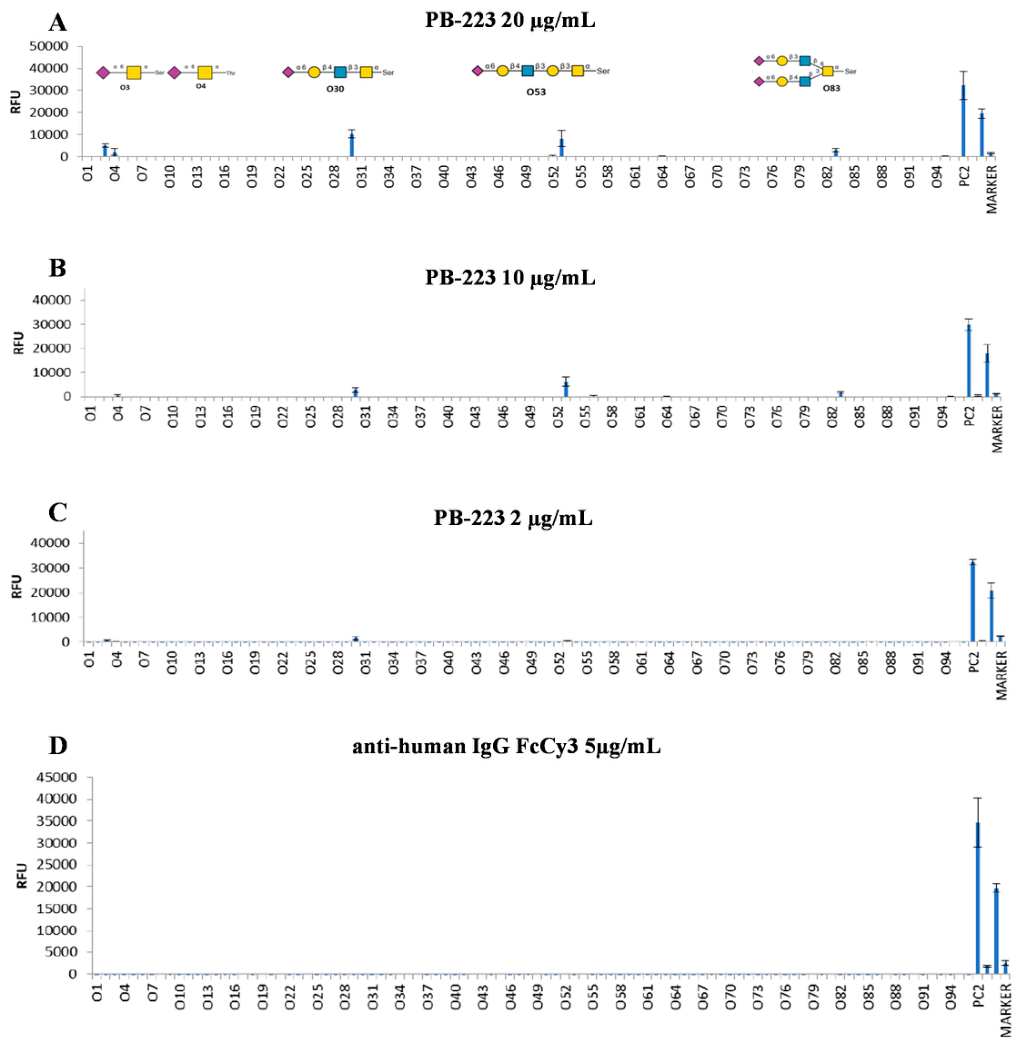
Figure 2.
IHC staining of human malignant tumor microarray tissues by PB-233 compared to NEO-102. The figure depicts representative human malignant tumor microarray tissues from prostate, pancreas, colon, lung and breast stained with PB-233 compared to NEO-102.
Figure 2.
IHC staining of human malignant tumor microarray tissues by PB-233 compared to NEO-102. The figure depicts representative human malignant tumor microarray tissues from prostate, pancreas, colon, lung and breast stained with PB-233 compared to NEO-102.
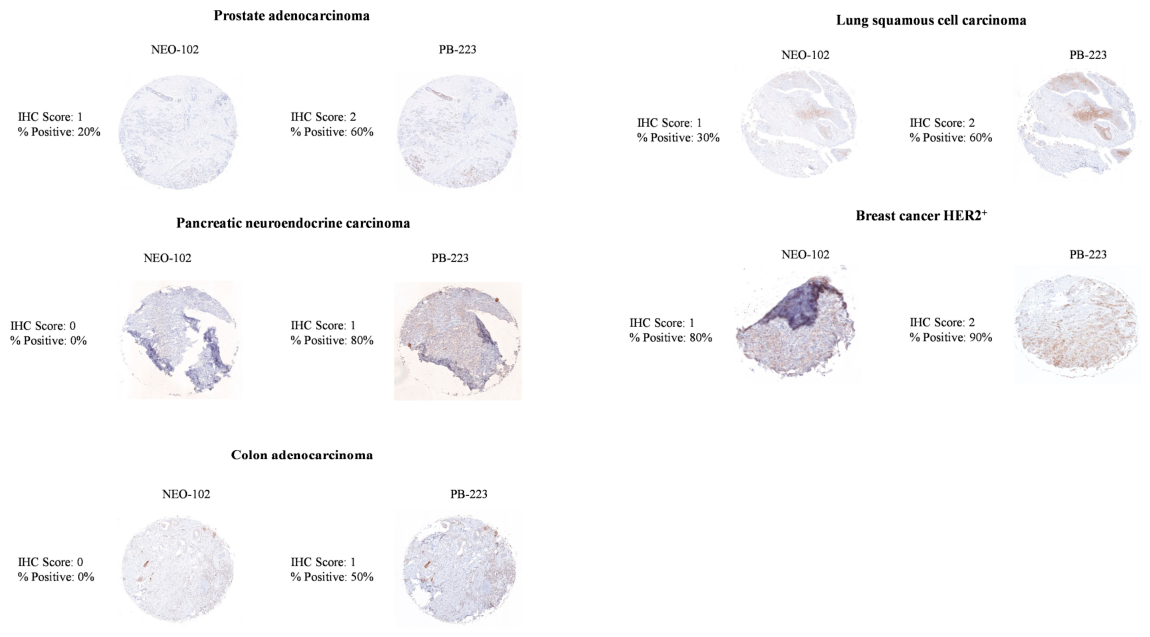
Figure 3.
IHC staining of human normal tissues and normal tissues adjacent to tumors by NEO-102 and PB-223. A. Quantification of PB-223 positive staining of normal human tissues adjacent to malignant tumors derived from TMA samples. B. Quantification of NEO-102 positive staining of normal human tissues adjacent to malignant tumors derived from TMA samples. C. Representative PB-223 staining of normal brain, liver, lung, colon, lymph node tissues compared to isotype control. n: number of samples.
Figure 3.
IHC staining of human normal tissues and normal tissues adjacent to tumors by NEO-102 and PB-223. A. Quantification of PB-223 positive staining of normal human tissues adjacent to malignant tumors derived from TMA samples. B. Quantification of NEO-102 positive staining of normal human tissues adjacent to malignant tumors derived from TMA samples. C. Representative PB-223 staining of normal brain, liver, lung, colon, lymph node tissues compared to isotype control. n: number of samples.
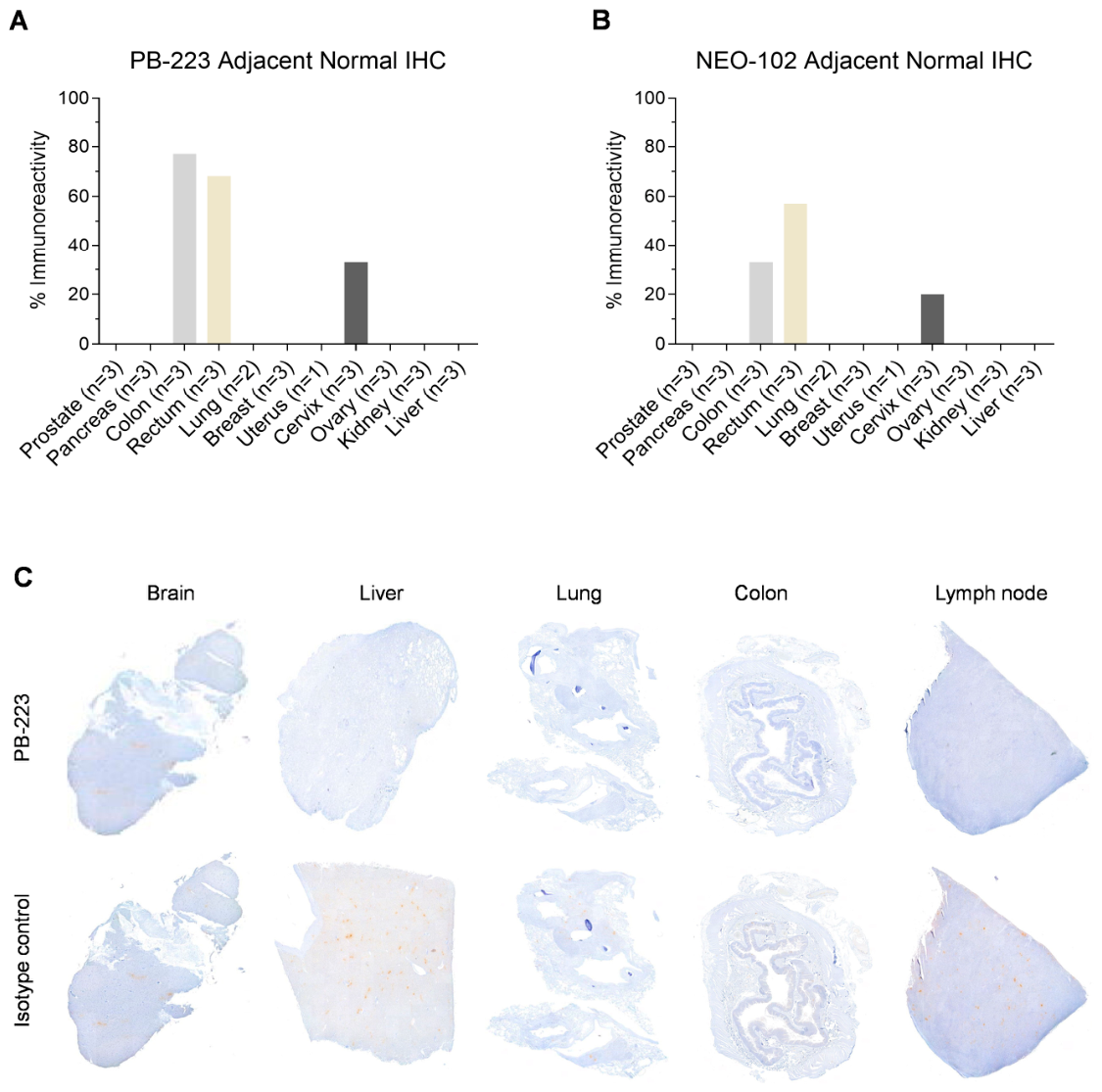
Figure 4.
In vitro internalization of PB-223 into OV-90 cancer cell line. The figure shows dose-dependent internalization of Herceptin and PB-223. A. SK-BR-3 cancer cell line was treated with the system control (Herceptin). Herceptin was added in two-fold serial dilution from 30 nM to 0.23 nM. B. OV-90 cancer cell line was treated with PB-223 and the anti-HEL Human IgG1 isotype control. Both mAbs were added in two-fold serial dilution from 60 nM to 0.46 nM. Data was recorded for 48 hours and then automatically analyzed by data processing software installed on Incucyte. Each data point represents the mean of total integrated intensity (RCU × μm2/Image) value ± SEM (n = 2).
Figure 4.
In vitro internalization of PB-223 into OV-90 cancer cell line. The figure shows dose-dependent internalization of Herceptin and PB-223. A. SK-BR-3 cancer cell line was treated with the system control (Herceptin). Herceptin was added in two-fold serial dilution from 30 nM to 0.23 nM. B. OV-90 cancer cell line was treated with PB-223 and the anti-HEL Human IgG1 isotype control. Both mAbs were added in two-fold serial dilution from 60 nM to 0.46 nM. Data was recorded for 48 hours and then automatically analyzed by data processing software installed on Incucyte. Each data point represents the mean of total integrated intensity (RCU × μm2/Image) value ± SEM (n = 2).
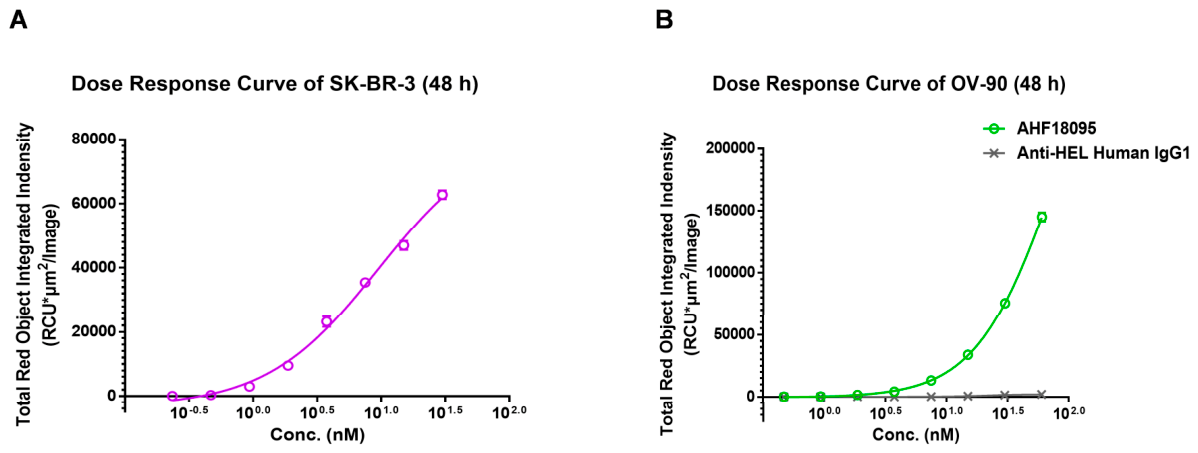

Table 1.
Residues selected for PML library construction.
| CDRs | VH-CDR1 | VH-CDR2 | VH-CDR3 | VL-CDR1 | VL-CDR2 | VL-CDR3 |
| Residue No. | 26-35 | 50-65 | 98-102 | 24-33 | 49-55 | 88-96 |
| Labeled name | AA1-10 | AA11-26 | AA27-31 | AA1-10 | AA11-17 | AA18-26 |
Table 2.
Binding kinetics to BSM of 15 clones sent for affinity rankings compared to NEO-102.
| NO. | Clone | ka (1/Ms) | kd (1/s) | KD (M) | Increase Ratio (KD ) |
| 1 | AHF18093 | 1.56 × 10⁵ | 2.19 × 10⁻⁴ | 1.40 x10⁻⁹ | 4.00 |
| 2 | AHF18094 | 1.55 × 10⁵ | 5.01 × 10⁻⁴ | 3.24 x10⁻⁹ | 1.73 |
| 3 | AHF18095 (PB-223) | 1.59 × 10⁵ | 1.95 × 10⁻⁴ | 1.23 x10⁻⁹ | 4.55 |
| 4 | AHF18096 | 1.57 × 10⁵ | 2.27 × 10⁻⁴ | 1.44 x10⁻⁹ | 3.89 |
| 5 | AHF18097 | 1.51 × 10⁵ | 3.54 × 10⁻⁴ | 2.34 x10⁻⁹ | 2.39 |
| 6 | AHF18098 | 1.13 × 10⁵ | 4.36 × 10⁻⁴ | 3.87 x10⁻⁹ | 1.45 |
| 7 | AHF18099 | 1.32 × 10⁵ | 2.64 × 10⁻⁴ | 2.00 x10⁻⁹ | 2.80 |
| 8 | AHF18100 | 1.48 × 10⁵ | 2.02 × 10⁻⁴ | 1.37 x10⁻⁹ | 4.09 |
| 9 | AHF18101 | 1.25 × 10⁵ | 3.10 × 10⁻⁴ | 2.47 x10⁻⁹ | 2.27 |
| 10 | AHF18102 | 1.38 × 10⁵ | 2.66 × 10⁻⁴ | 1.93 x10⁻⁹ | 2.90 |
| 11 | AHF18103 | 1.25 × 10⁵ | 3.95 × 10⁻⁴ | 3.15 x10⁻⁹ | 1.78 |
| 12 | AHF18104 | 1.32 × 10⁵ | 1.93 × 10⁻⁴ | 1.46 x10⁻⁹ | 3.84 |
| 13 | AHF18105 | 1.29 × 10⁵ | 2.85 × 10⁻⁴ | 2.21 x10⁻⁹ | 2.53 |
| 14 | AHF18106 | 1.28 × 10⁵ | 3.23 × 10⁻⁴ | 2.53 x10⁻⁹ | 2.21 |
| 15 | AHF18107 | 1.16 × 10⁵ | 3.21 × 10⁻⁴ | 2.78 x10⁻⁹ | 2.01 |
| U6901-WT1 (NEO-102) | 9.63 × 10⁴ | 5.40 × 10⁻⁴ | 5.60 x10⁻⁹ |
Antibodies were captured on the sensor chip. The target antigen BSM was used as the analyte. The data of dissociation (KD) and association (KA) rate constants were obtained using Biacore evaluation software. The equilibrium dissociation constants (KD) were calculated from the ratio of KD over KA. Clones depicted in bold were clone selected for antibody production. U6901-WT1 is the wild type mAb NEO-102. The clone AHF18095 was then selected for further experiment and was named PB-223. The increase ratio was calculated in the following manner: KD of U6901-WT1 (NE0-102)/KD of mutant clones.
Table 3.
Binding profile of PB-233 vs NEO-102 in different human cancer cell lines by flow cytometry.
Table 3.
Binding profile of PB-233 vs NEO-102 in different human cancer cell lines by flow cytometry.
| Cell line | Tumor Type | % NEO-102 positive cells (MFI) * |
% PB-223 positive cells (MFI) * |
Fold increase in % of positive cells (PB-223 vs NEO-102) | Most abundant Core 2 O-glycan recognized by PB-223 (% expression) |
| LoVo | Colorectal adenocarcinoma; Dukes’ type C, grade IV | 0.37% (224) | 0.60% (224) | 1.62 | O53 (0.29%) 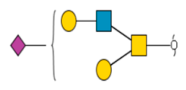
|
| SW-480 | Colorectal adenocarcinoma; Dukes’ type B | 0.29% (395) | 0.29% (393) | 1.00 | N.T. |
| SW-403 | Colorectal adenocarcinoma; Dukes’ type C, grade III | 26.09% (71) | 57.97% (133) | 2.22 | N.T. |
| COLO 205 | Colorectal adenocarcinoma; Dukes’ type D | 6.3% (47) | 24.94% (65) | 3.96 | N.T. |
| HCC1937 | Ductal Triple negative breast cancer; TNM Stage IIB, grade 3 | 19.38% (101) | 52.04% (162) | 2.69 | O53 (6.32%) 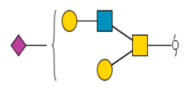
|
| OV-90 | Malignant Papillary Serous Adenocarcinoma of ovary | 18.68% (246) | 40.24% (307) | 2.15 | O53 (6.76%) 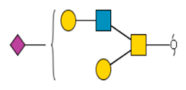
|
| DU 145 | Prostate adenocarcinoma; grade II | 2.63% (51) | 2.28% (50) | 0.87 | N.T. |
| PC-3 | Prostate adenocarcinoma; Grade IV | 5.50% (102) | 8.38% (111) | 1.52 | N.T. |
The table depicts the percentage of viable cells reactive with PB-233 compared to NEO-102 and the MFI (median fluorescence intensity) of PB-223 or NEO-102 positive cells. * For each cell line, results are presented as mean of two experiments. In each experiment, the percentage of PB-223 or NEO-102 positive cells was calculated with the following formula: % PB-223 or NEO-102 stained cells - % unstained cells. Cells with staining values > 10% were considered positive. PB-223 and NEO-102 positive cell lines appear in bold text. N.T.: not tested.
Table 4.
Comparison of reactivity of PB-233 vs NEO-102 in different human malignant tumor tissues by IHC.
Table 4.
Comparison of reactivity of PB-233 vs NEO-102 in different human malignant tumor tissues by IHC.
| Human cancer | mAb | Tissues positive |
IHC score 1 (% positive cells) |
IHC score 2 (% positive cells) |
IHC score 3 (% positive cells) |
| Prostate (adenocarcinoma) |
PB-223 | 3/11 (27%) | 1 (30%) | 1 (60%) | 1 (90%) |
| NEO-102 | 2/11 (18%) | 1 (20%) | 1 (90%) | ||
| Pancreas (adenocarcinoma) |
PB-223 | 9/10 (90%) | 1 (50%) | 8 (94%)* | |
| NEO-102 | 9/10 (90%) | 1 (30%) | 8 (94%)* | ||
| Pancreas (neuroendocrine carcinoma) |
PB-223 | 1/1(100%) | 1 (80%) | ||
| NEO-102 | 0/1 (0%) | ||||
| Colon (adenocarcinoma) |
PB-223 | 10/11 (91%) | 3 (27%)* | 1 (10%) | 6 (72%)* |
| NEO-102 | 7/11 (64%) | 1 (10%) | 6 (68%)* | ||
| Rectum (adenocarcinoma) |
PB-223 | 3/3 (100%) | 1 (20%) | 2 (100%)* | |
| NEO-102 | 3/3 (100%) | 1 (10%) | 2 (100%)* | ||
| Lung (squamous cell carcinoma) |
PB-223 | 2/7 (29%) | 1 (60%) | 1 (50%) | |
| NEO-102 | 2/7 (29%) | 1 (30%) | 1 (30%) | ||
| Lung (adenocarcinoma) |
PB-223 | 3/4 (75%) | 1 (15%) | 2 (100%)* | |
| NEO-102 | 3/4 (75%) | 1 (5%) | 2 (80%)* | ||
| Breast (invasive carcinoma HER2+) |
PB-223 | 13/54 (24%) | 3 (83%)* | 6 (82%)* | 4 (80%)* |
| NEO-102 | 13/54 (24%) | 6 (80%) | 2 (70%)* | 5 (82%)* | |
| Breast (invasive triple negative) |
PB-223 | 2/28 (7%) | 1 (15%) | 1 (100%) | |
| NEO-102 | 2/28 (7%) | 2 (53%)* | |||
| Uterus (endometrioid adenocarcinoma) |
PB-223 | 4/8 (50%) | 1 (10%) | 1 (30%) | 2 (75%)* |
| NEO-102 | 4/8 (50%) | 1 (5%) | 2 (30%)* | 1 (80%) | |
| Cervix (squamous cell carcinoma) |
PB-223 | 1/3 (33%) | 1 (25%) | ||
| NEO-102 | 1/3 (33%) | 1 (20%) | |||
| Ovary (high grade serous carcinoma) |
PB-223 | 2/3 (67%) | 2 (23%)* | ||
| NEO-102 | 2/3 (67%) | 2 (15%)* | |||
| Kidney (clear cell carcinoma) |
PB-223 | 0/11 (0%) | |||
| NEO-102 | 0/11 (0%) | ||||
| Esophagus (squamous cell carcinoma) |
PB-223 | 0/3 (0%) | |||
| NEO-102 | 0/3 (0%) | ||||
| Stomach (adenocarcinoma) |
PB-223 | 0/3 (0%) | |||
| NEO-102 | 0/3 (0%) | ||||
| Liver (hepatocellular carcinoma) |
PB-223 | 0/3 (0%) | |||
| NEO-102 | 0/3 (0%) | ||||
The table depicts the IHC profile of PB-233 compared to NEO-102 staining of human malignant tumor microarray tissues. For each tissue are reported the percentage cells reactive with PB-233 compared to NEO-102 and the IHC score of PB-223 or NEO-102 positive cells. IHC score was determined by a review of stained tissues from a pathologist. * Results are presented as mean of positive cells between several tissues microarrays with same histology.
Disclaimer/Publisher’s Note: The statements, opinions and data contained in all publications are solely those of the individual author(s) and contributor(s) and not of MDPI and/or the editor(s). MDPI and/or the editor(s) disclaim responsibility for any injury to people or property resulting from any ideas, methods, instructions or products referred to in the content. |
© 2026 by the authors. Licensee MDPI, Basel, Switzerland. This article is an open access article distributed under the terms and conditions of the Creative Commons Attribution (CC BY) license (http://creativecommons.org/licenses/by/4.0/).
Copyright: This open access article is published under a Creative Commons CC BY 4.0 license, which permit the free download, distribution, and reuse, provided that the author and preprint are cited in any reuse.


