
Submitted:
02 June 2026
Posted:
03 June 2026
You are already at the latest version
Abstract
Levetiracetam, a second-generation antiepileptic drug, is effective in therapy of various types of seizures. Its pharmacological properties are increasingly used in diversified clinical conditions such as anxiety and neuropathic pain. Levetiracetam has unique mechanism of action - it selectively binds to the synaptic vesicle protein 2A (SV2A), which stabilizes synaptic function and reduces neurotransmitter release, distinguishing it from traditional antiepileptics. The aim of the present paper was to investigate whether levetiracetam (31.25; 62.5 mg/kg, ip) may also be effective drug in reducing of symptoms in morphine dependence in mice. It was studied in three paradigms: 1) morphine tolerance to antinociceptive effect measured in the hot plate test; 2) naloxone-induced (2 mg/kg, ip) morphine withdrawal signs (manifested as jumpings); 3) morphine-induced behavioral sensitization to the locomotor activity of mice. Levetiracetam, at least in one of the doses used, was effective drug in reduction of all measured parameters. The study highlights the need for further research on levetiracetam properties, because it seems to be an innovative target in morphine dependence.
Keywords:
morphine dependence
; morphine tolerance
; levetiracetam
; behavioral sensitization
; hot plate test
; withdrawal signs
1. Introduction
Levetiracetam, a second-generation antiepileptic drug, was introduced into clinical practices in 2000 year. Chemically, it is classified as a pyrrolidone derivative and is S-enantiomer of α-ethyl-2-oxo-1-pyrrolidineacetamide. Levetiracetam is primarily utilized for the treatment of various types of seizures, including focal, myoclonic and generalized tonic-clonic seizures. Its broad therapeutic spectrum and favorable side effect profile make it a cornerstone in epilepsy management. Nowadays, levetiracetam is effective drug in therapy of epilepsy both in monotherapy and in adjunctive therapy [1]. Because levetiracetam has a broad spectrum of pleiotropic effects it is also increasingly used in the treatment of other diseases, such as, anxiety, depression or bipolar disorder. In some studies, its effectiveness was observed in management of neuropathic pain and in attenuation of symptoms of addictive substances [2,3]. It also showed the activity in experimental models of neuropathic pain [4] and inflammatory pain [5] in mice. There is data showing that levetiracetam-induced analgesia was effective in reduction of cancer pain which was maintained despite typical therapy [2]. Moreover, its beneficial activity was confirmed in model of alcohol dependence [6].
The mechanism of action of levetiracetam is a unique as compared to other antiepileptics. It selectively and reversibly binds the synaptic vesicle protein 2A (SV2A) mainly located on glutamatergic terminals [7]. SV2A protein is one of the three protein isoforms (SV2A, SV2B and SV2C). This protein is integral to synaptic vesicles presented in all synaptic terminals in brain, including glutamatergic neurons and neurons for γ-aminobutyric acid (GABA). It plays an important role in neurotransmitter exocytosis and synaptic transmission [8] and improves neurotransmission by increasing the number of synaptic vesicles [9]. It is believed that SV2 protein is an important factor in epileptogenesis [10]. Levetiracetam, via modulation SV2A protein, reduces neurotransmitter release, stabilizes synaptic function and enhances neural network stability [9,11,12]. Other mechanisms are also involved in the activity of levetiracetam. Levetiracetam reduced high-voltage activated calcium current, mainly L-type and N-type calcium channels and also, P/Q channels [13,14,15,16,17]. Levetiracetam also diminished the release of Ca2+ ions from the endoplasmic reticulum dependent on the ryanodine receptor and the inositol 1,4,5-trisphosphate (IP3) receptor modulating the intracellular signaling [18]. In in vitro studies, levetiracetam reduced the voltage-modulated potassium current and reduced the repetitive generation of action potentials in neurons [19]. To opposite, the effect of levetiracetam on voltage-dependent sodium channels and sodium ion (Na+) transport had not been confirmed. Thus, levetiracetam does not activate the classical mechanism of action of many antiepileptic drugs [15].
Morphine, widely used drug in clinical practices to reduction of acute and chronic pain, is also one of the strongest dependent drug [20]. The rewarding effect of morphine is associated with the stimulation of µ opioid receptors, especially those located on GABAergic terminals in the ventral tegmental area (VTA), which causes the inhibition of endogenous GABA secretion. It leads to the disinhibition of dopaminergic neurons, increased dopamine secretion in the nucleus accumbens and a feeling of euphoria, which promotes the development of addiction [21]. Morphine dependence is manifested as the appearance of characteristic, unpleasant symptoms, developed after cessation of chronic exposure to morphine, named as morphine withdrawal signs. The second parameter of morphine dependence is development of morphine tolerance. It is defined as the necessity to take increasing doses of morphine to achieve the same pharmacological effect [22]. The third parameter of the state of dependence is behavioral sensitization which is a consequence of sporadic administration of an addictive substance, including morphine, and is expressed as an intensification of pharmacological effect of addictive substance administered after a break period. It reflects drug-seeking behavior and often leads to relapse to drug use [23]. Nowadays, therapy of morphine dependence is not effective and, despite numerous studies, for many years any innovative drugs has not been introduced. Therefore, new, innovative ideas are extremely important to find pharmacological tool for therapy of opiod dependence.
Taking into account a unique mechanism of action of levetiracetam it may be hypothesized that levetiracetam can be effective drug in morphine dependence. The analysis of existing data shows that co-administration of levetiracetam with morphine is relatively safe and clinical interactions between them are not significant. The therapy of epileptic seizures with subcutaneous levetiracetam doses in a palliative patients co-treated with morphine does not produce significant changes in the antiseizure effect of levetiracetam and in its median dose, median osmolarity of the infusion solution and in infusion rate [24]. Levetiracetam does not effect on cytochrome P450 and it is poorly metabolized in the liver. It is manly excreted unchanged by kidney. On the other hand, morphine pharmacokinetic is associated with uridine 5’-diphosphoglucuronosyltransferases in the liver. Thus, there is relatively low risk of pharmacokinetic interaction between these drugs [25]. Levetiracetam, instead of phenobarbital, was effective in attenuation of neonatal abstinence syndrome [26] that support lack of pharmacokinetic interactions between these compound. The diversified mechanisms of action of both drugs suggest that pharmacodynamic interactions can occur. In fact, their combination at higher doses may increase neurological side effects, such as, dizziness, drowsiness or confusion, however, these adverse effects can be attenuate by reduction of doses. It shows that potential relationship between both drugs is worth to study.
In the present paper we present a series of behavioral experiments performed in mice showing the effectiveness of levetiracetam in some experimental models of morphine dependence, including model of morphine withdrawal observed as jumpings, morphine tolerance to antinociceptive effect and morphine sensitization to the locomotor activity. The obtained results support the hypothesis that levetiracetam can be considered as innovative target in morphine dependence.
2. Materials and Methods
2.1. Experimental Animals and General Conditions
The experiments were conducted on male Swiss white mice, weighing 20-25 g. The animals were kept 8-10 per cage at a room temperature of 22±1ºC and exposed to normal day/night cycle. A standard diet (Murigran, Motycz, Poland) and water were freely available. Prior to the start of the studies, the animals were acclimated to the environmental conditions for 7 days. The experimentes were performed in a lit and soundproofed room. Total number of animals was N=440.
All experiments were conducted according to the National Institute of Health Guidlines for the Care and Use of Laboratory Animals and to the European Community Council Directive for the Care and Use of Laboratory Animals, and were approved by the Local Ethics Committee - The Medical University of Lublin Committee on the Use and Care of Animals (No 20/2019, No 33/2019).
2.2. Drugs
The following drugs were used in the experiments: levetiracetam (Keppra, UCB Pharma, Belgium), morphine hydrochloride trihydrate (Cosmetic Pharma, Poland), naloxone hydrochloride (Sigma Aldrich, substance, USA). All used substances were delivered in a volume of 10ml/kg. Levetiracetam was triturated and suspended in 0.5% methylcellulose solution. Morphine hydrochloride and naloxone hydrochloride were dissolved in 0.9% saline solution. There were two control groups in preliminary study: 1) receiving 0.9% saline solution; 2) receiving 0.5% methylcellulose solution. The animals received the same volume of these solution at the respective time point before the test. There were no differences between these animals, therefore, in the figures only one control group is shown (methylcellulose group).
The substances were administered intraperitoneally (ip). The number of animals per group (N) was 8-10 individuals. The doses of substances and the times of administration were selected based on the authors' own research, experiments conducted at the Department of Pharmacology and Pharmacodynamics Medical University of Lublin, and relevant scientific literature [27].
2.3. Procedures of Behavioral Experiments
2.3.1. The Procedure of Morphine Tolerance to the Antinociceptive Effect in Mice
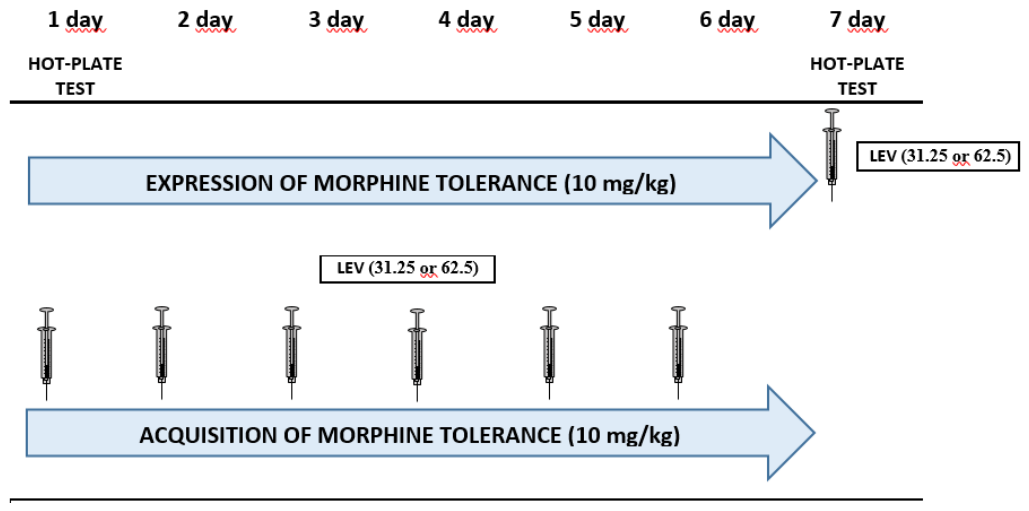
The tolerance to the antinociceptive effect of morphine was studied using the hot-plate test [27]. The apparatus consisted of a metal plate heated to a temperature of 55 ± 0.5°C. The plate was enclosed by a transparent Plexiglas cylinder with a diameter of 20 cm and a height of 18 cm. Each animal was placed individually on the hot plate. In the experiment the time (s) spent by each mouse on the plate was measured until the first reaction of mice to the thermal stimulus—either paw licking or jumping. The maximal measurement lasted 60 seconds. To induce morphine tolerance, mice received a dose of morphine (10 mg/kg) twice daily for 7 days and the hot-plate test was conducted on the 1st and 7th days of the experiment.
The effect of levetiracetam on morphine tolerance was studied in two experimental protocols: the expression and the acquisition of morphine tolerance. In the case of expression, levetiracetam was administered as a single dose on the 7th day of the experiment, 30 minutes before the morning morphine injection. Then, 30 minutes after the morphine injection, the hot-plate test was conducted. The reaction time of the animals to the nociceptive stimulus was measured in seconds. In the model of acquisition, levetiracetam was administered in mice once daily for 6 consecutive days (from day 1st to day 6th of the experiment), 30 minutes before the morning morphine injection. On the 7th day, only morphine was administered and 30 minutes later, the hot-plate test was conducted.
Scheme 1.
Graphical presentation of drug administration in procedure of morphine tolerance.
2.3.2. The Procedure of Naloxone-Induced Morphine Withdrawal Signs in Mice
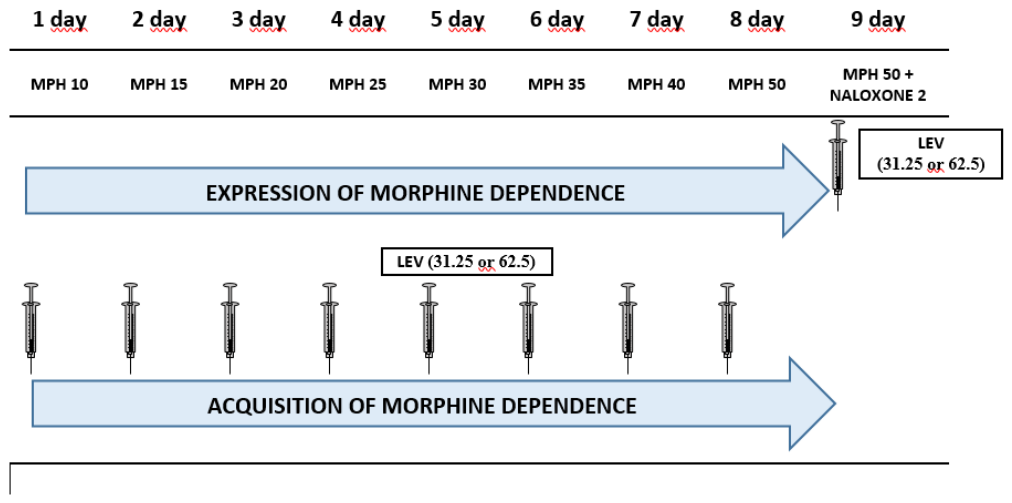
To induce physical dependence in mice, an experimental procedure developed at the Department of Pharmacology and Pharmacodynamics Medical University of Lublin was used [28,29]. Accordingly, morphine was administered at increasing doses (10, 15, 20, 25, 30, 35, 40, and 50 mg/kg) twice daily, for 8 consecutive days. On the morning of the 9th day, another dose of morphine (50 mg/kg) was administered, and an hour later, naloxone (2.0 mg/kg)—an opioid receptor antagonist—was given to induce an acute withdrawal syndrome. Immediately after naloxone administration, the mice were placed in glass cylinders (10 liters) for observation. The number of animal jumps was counted over a 30-minute period.
The effect of levetiracetam on morphine withdrawal signs was studied in two experimental protocols. The influence of levetiracetam on expression of morphine withdrawal signs was studied by administration of a single dose of levetiracetam on the 9th day of the experiment, 20 minutes before the morphine injection. Then, 60 minutes after the morphine injection, naloxone was administered and the animals were observed. In the second protocol the influence of levetiracetam on acquisition of morphine withdrawal signs was investigated, in which levetiracetam was administered chronically - once daily for 8 consecutive days, 20 minutes before the morphine injection. On the 9th day of the experiment, the animals received only the morphine injection and 60 minutes later, naloxone was administered, followed by the assessment.
Scheme 2.
Graphical presentation of drug administration in procedure of morphine dependence.
2.3.3. The Procedure of Morphine Sensitization to the Locomotor Effects of Morphine in Mice
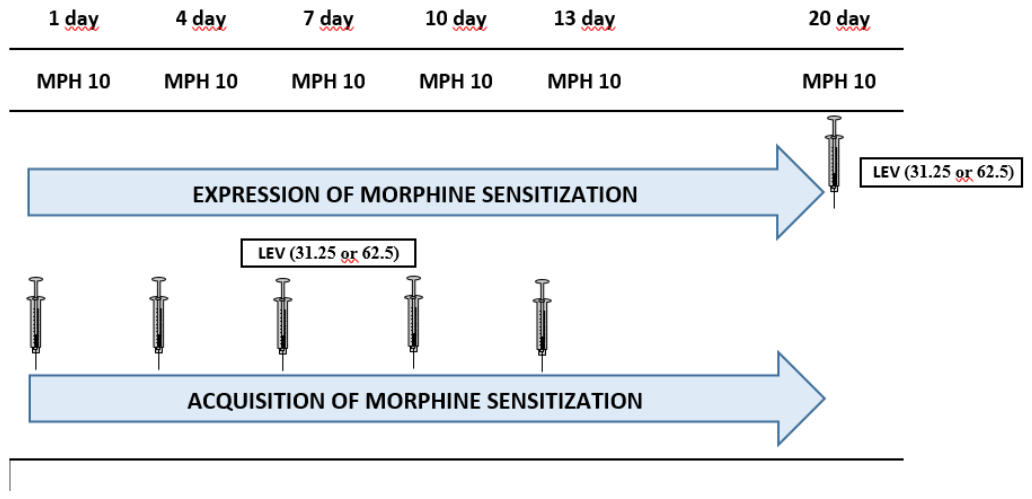
The sensitization to the locomotor effects of morphine in mice was studied using the method of Kuribara [30], as modified by Kotlińska and Bocheński [31]. The equipment used to measure locomotor activity was composed of activity meters (Multiserv, Lublin, Poland). The activity meters are round, metal cages with a diameter of 32 cm with photoresistors installed in the walls. Photoresistors are crossed by two perpendicular beams of light, set 1 cm above the floor. When a moving animal crosses a beam, the change in the photoresistor is recorded by the appropriate counter as one movement. The value read from the counter indicates the spontaneous locomotor activity of the animals [32]. Behavioral sensitization was achieved by administration of five sporadic (every 72 hours) injections of morphine at a dose of 10 mg/kg (on 1st, 4th, 7th, 10th, and 13th day of the experiment). Immediately after each morphine administration, the animals were placed in chambers for locomotor activity test to assess the animal motility for 60 minutes. Seven days after the last morphine injection (on 20th day of the test), the animals received a challenge dose of morphine (10 mg/kg), after which their locomotion was again assessed.
Analogically, the effect of levetiracetam on morphine sensitization was studied in two experimental protocols. The influence of levetiracetam on the expression of morphine sensitization was studied by single administeration of that compound on the 20th day of the experiment, 30 minutes before the morphine injection. Immediately after morphine administration, the animals were placed in chambers for locomotor test for 60 minutes to measure locomotion. In the second protocol, the influence of levetiracetam on the acquisition of morphine sensitization was investigated by sporadic morphine administration - there were five levetiracetam injections, 30 minutes before the morphine injection on 1st, 4th, 7th, 10th, and 13th day of the experiment. On the 20th day of the experiment, the animals received a challenge dose of morphine without levetiracetam. Subsequently, the mice were placed in activity meters for 60 minutes to measure locomotion.
Scheme 3.
Graphical presentation of drug administration in procedure of morphine sensitization.
2.4. The Statistical Analysis
Statistical analysis of the results was performed in GraphPad Prism 9.1.1 (GraphPad Software, USA). When our data follow normal distribution (Shapiro-Wilk test), ANOVA analysis was performed. Two-way ANOVA was used to assess morphine tolerance and morphine sensitization in mice (Section 2.7.). In analysis of morphine withdrawal signs one-way ANOVA was used. In all procedures the comparisons between groups were made using the Tukey test (post-hoc). The analysis of morphine tolerance was assessed in the hot plate test and, the mean time (s) ± standard error of measurement (SEM) was presented in figures. In the study assessing naloxone-induced morphine withdrawal symptoms, the number of animal jumps was counted for a period of 30 min. The arithmetic mean of the number of jumps ± SEM was presented in figures. The analysis of morphine sensitization was based on the locomotor activity of mice and the mean number of animal movements ± SEM for 60 min period was presented in figures. The results were considered statistically significant when the test probability coefficient (p) was less than 0.05 (p<0.05). The number of animals (N) in the studied groups was 8-10 mice.
3. Results
3.1. The Effect of Levetiracetam (31.25; 62.5 mg/kg, ip) on the Expression of Tolerance to the Antinociceptive Effect of Morphine (10 mg/kg, ip) Assessed in the Hot-Plate Test in Mice
Using a two-way ANOVA analysis statistically significant changes were demonstrated in mice which were treated both with single and chronic doses of morphine (on days 1 and 7 of the experiment), compared to control animals. A day effect (F(1,36)=6.297; p=0.0167), a substance effect (F(1,36)=25.06; p<0.0001), and an interaction effect (F(1,36)=5.791; p=0.0214) were observed. Additionally, one-way ANOVA analysis confirmed statistically significant differences in reaction time of the animals on the 7th day of the experiment (F(5,54)=16.17; p<0.0001).
In the post-hoc test, statistically significant prolongation of reaction time to the nociceptive stimulus was confirmed (p<0.0001) in mice treated with single morphine dose compared to the control group. Chronic administration of morphine (for 7 consecutive days) significantly shortened the reaction time of mice (p<0.01) compared to the reaction time recorded after a single morphine administration. Administration of levetiracetam at a dose of 31.25 mg/kg with morphine significantly prolonged the reaction time of animals (p<0.05) in comparison with the reaction time of animals receiving morphine chronically. However, administration of levetiracetam at a higher dose (62.5 mg/kg) did not significantly affect the reaction time. Administration of levetiracetam alone (31.25 and 62.5 mg/kg) did not significantly change the reaction time of mice as compared to control animals. Figure 1.
3.2. The Effect of Levetiracetam (31.25; 62.5 mg/kg, ip) on the Acquisition of Tolerance to the Antinociceptive Effect of Morphine (10 mg/kg, ip) Assessed in the Hot-Plate Test in Mice
Two-way ANOVA revealed statistically significant changes in reaction time of animals which were exposed to both single and chronic injections of morphine (on 1st and 7th of the experiment) in comparison with control animals. There were observed a day effect (F(1,36)=17.24; p=0.0002), a substance effect (F(1,36)=34.97; p<0.0001), and an interaction effect (F(1,36)=14.49; p=0.0005). Additionally, one-way ANOVA confirmed statistically significant changes in the animals' response on the 7th day of the experiment (F(5,54)=15.37; p<0.0001). In the post-hoc test, it was shown that a single administration of morphine significantly prolonged (p<0.0001) the time of animal response to the nociceptive stimulus as compared to control animals. In contrast, chronic administration of morphine significantly reduced (p<0.0001) the animals' response time to the nociceptive stimulus as compared to the response time observed after a single administration of morphine. Chronic administration of levetiracetam at both doses (31.25 and 62.5 mg/kg) significantly prolonged (p<0.05 and p<0.01, respectively) the rection time to the nociceptive stimulus in comparison with animals chronically received morphine. Chronic administration of levetiracetam alone (31.25 mg/kg and 62.5 mg/kg) had no effect on the animals' response timeas compared to the control group. Figure 2.
3.3. The Effect of Levetiracetam (31.25; 62.5 mg/kg, ip) on the Expression of Naloxone-Induced (2 mg/kg, ip) Morphine Withdrawal in Mice
One-way ANOVA confirmed the existence of statistically significant differences in response of morphine-dependent mice treated with a single dose of levetiracetam (F(6,59)=13.82; p<0.0001). The post-hoc test showed that naloxone injected to animals chronically treated with morphine significantly increased the number of jumpings (p<0.0001) as compared to the number of jumpings observed in mice not treated with morphine. Administration of levetiracetam at a dose of 62.5 mg/kg significantly reduced (p<0.05) the number of jumpings in morphine-dependent animals. Levetiracetam at both doses had no effect on behavior of mice that were not exposed to morphine. Figure 3.
3.4. The Effect of Levetiracetam (31.25; 62.5 mg/kg, ip) on the Acquisition of Naloxone-Induced (2 mg/kg, ip) Morphine Withdrawal Symptoms, in Mice
As one-way ANOVA has shown, the chronic administration of levetiracetam in morphine-dependent animals affects the severity of morphine withdrawal symptoms (F(6,61)=13.97; p<0.0001). In the Tukey's test was confirmed that the injection of naloxone in animals chronically received morphine significantly increased (p<0.0001) the number of jumpings in comparison with mice which were not received morphine. The administration of lower dose (31.25 mg/kg) of levetiracetam significantly reduced (p<0.05) the number of jumpings as compared to the effect recorded in morphine-exposed animals. Chronic administration of levetiracetam (31.25 and 62.5 mg/kg) had no effect on the behavior of mice which were no exposed to morphine. Figure 4.
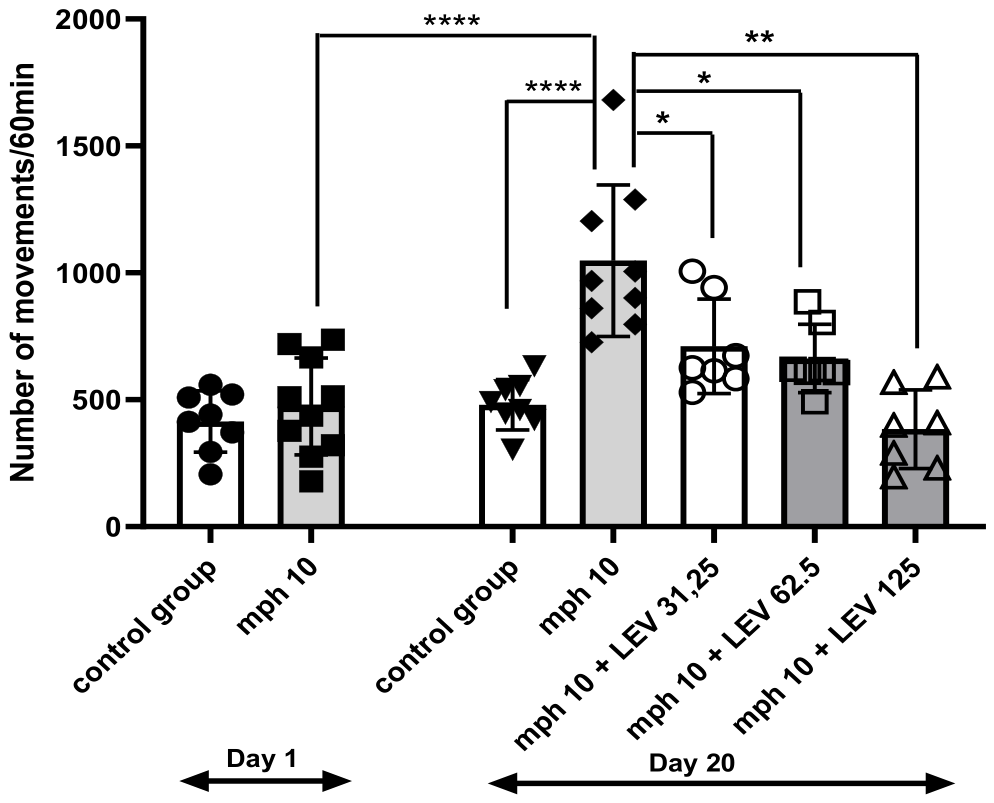
3.5. The Effect of Levetiracetam (31.25; 62.5; 125 mg/kg, ip) on The expression of Morphine (10 mg/kg, ip) Sensitization to the Locomotor Effects in Mice
On the based on one-way ANOVA, on the 20th day of the experiment, statistical differences in the locomotor activity of mice treated with intermittent doses of morphine (1st, 4th, 7th, 10th, 13th, and 20th day of the experiment) and a single dose of levetiracetam (20th day of the experiment) were demonstrated (F(4,41)=5.102; p=0.0020).
On the 20th day of the experiment, intermittent administration of morphine resulted in a statistically significant increase in the locomotor activity of mice in comparison with the control group (p<0.001). A single administration of levetiracetam at doses of 32.5, 62.5 and 125 mg/kg on the 20th day of the experiment in animals receiving intermittent injections of morphine significantly reduced their locomotory activity (p<0.05; p<0.05; p<0.01, respectively) as compared to the group receiving the challange dose of morphine (10 mg/kg). Figure 5.
3.6. The Effect of Levetiracetam (31.25; 62.5; 125 mg/kg, ip) on the Acquisition of Morphine (10 mg/kg, ip) Sensitization to the Locomotor Effects in Mice
On the based on the analysis of variance, it was shown that administration of a challenge dose of morphine on the 20th day of the experiment in animals receiving sporadic injections of both morphine and levetiracetam (on 1st, 4th, 7th, 10th, and 13th day of the experiment) caused statistically significant changes in their locomotor activity (F(4,39)=10.01; p<0.0001).
The post-hoc test demonstrated a statistically significant increase in locomotor activity in animals after the challenge dose of morphine compared to the control group (day 20th of the experiment) (p<0.0001). Administration of five sporadic injections (on 1st, 4th, 7th, 10th, and 13th day of the experiment) of levetiracetam at all doses (31.25, 62.5, and 125 mg/kg) with morphine, significantly reduced the animals' locomotor activity (p<0.05, p<0.01, and p<0.0001, respectively) on the last day of the study (20th) as compared to the locomotor activity observed in mice receiving morphine alone. Figure 6.
4. Discussion
The major result presented in that paper is that levetiracetam, a second-generation anticonvulsant, has an influence on morphine addiction in mice. It was shown that levetiracetam was able to inhibit morphine tolerance to the antinociceptive effects. Moreover, levetiracetam effectively reduced the intensity of morphine withdrawal symptoms and diminished the expression and acquisition of morphine-induced sensitization to the locomotor effects. In these studies levetiracetam weas used at doses 31.25; 62.5; or 125; mg/kg. These doses were selected on the based on previous experiments (results were not published) in which had been shown that levetiracetam had no effect on the locomotor activity of mice, on the motor coordination (the rota rod test) and did not influence on miorelaxation (the chimney test). Therefore, these doses were considered as ineffective and were used in subsequent experiments.
Another important issue in the study is a risk of interactions between levetiracetam and morphine. Although the mechanisms of action of both drugs are completely diversified, the pharmacodynamics interactions between them cannot be rule out because both drugs reduce the activity of central nervous system. Thus, their administration at higher doses may develop dizziness or sedation. In our preliminary study, however, there were not observed any significant effect on locomotor activity of mice when combination of two drugs was administered (data were not published). Moreover, levetiracetam does not induce or inhibit cytochrome P450 enzymes, which are often involved in drug-drug interactions. Morphine, is primarily metabolized by the liver enzymes CYP3A4 and CYP2B6, thus, interactions during metabolism are less probable. Levetiracetam is not a P-glikoprotein inducer which also exclude the interaction during absorption [33]. Thus, the lack of significant interactions makes levetiracetam a versatile option in polytherapy.
In the first part of the study the effect of levetiracetam on the expression and acquisition of morphine tolerance to the antinociceptive effects in the hot plate test was assessed. For this purpose, a typical experimental model was used [34,35]. The development of morphine tolerance was achieved by its repeated administration for 7 consecutive days at a constant dose (10 mg/kg), and the hot plate test was performed on the 1st and 7th day of morphine administration. As it was observed on the 7th day of morphine administration, the animals' response to the thermal stimulus was significantly shortened, which confirmed the development of morphine tolerance in studied mice. The administration of acute and chronic doses of levetiracetam inhibited morphine tolerance to the antinociceptive effects of morphine. In the case of acute exposure to levetiracetam (expression model) the morphine tolerance was inhibited only after application of lower dose of levetiracetam. Whereas, in the case of repeated levetiracetam exposure (acquisition model), the inhibition of morphine tolerance was observed after administration of both doses of levetiracetam. It should be emphasized that the present results are in agreement with previous study [36]. In that study significantly higher levetiracetam doses (60, 300 or 900 mg/kg; i.p.) were used and morphine was administered at a dose of 50 mg once a day for 3 days. The tolerance to antinociceptive effect was observed in anther test - the tail flick test. These authors documented that levetiracetam at the doses of 300 and 900 mg/kg effectively inhibited the development of tolerance while the expression of morphine tolerance was reduced when the highest levetiracetam dose was injected in mice. Thus, both present and previous showed that levetiracetam was able to attenuate morphine tolerance in animal models.
There is also study showing that exposure to higher dose of levetiracetam (564 mg/kg/day) in rats was effective in seizure control but this efficacy was reduced within a week, despite adequate levetiracetam level in serum and brain [37]. This suggests that chronic exposure to levetiracetam alone may develop pharmcodynamic tolerance. This effect was not observed in the present study because there were no changes in time reaction to nociceptive stimulus in mice chronically treated with both doses of levetiracetam (Figure 2).
Currently, it is believed that major mechanism underlying morphine tolerance is desensitization of µ-type opioid receptors. It is associated with increased adenylate cyclase activity and increased cAMP level in various brain areas, including periaquductal gray (PAG) [38]. Increased cAMP level in the PAG, a structure belonging to descending pain pathways, increases presynaptic GABA release and the expression of GABAA receptors [39]. Another mechanism which is responsible for desensitization process is attributed to NMDA glutamate receptors in postsynaptic structures [40]. These receptors co-occur with µ receptors in structures involved in pain transmission in the CNS, such as the dorsal horns of the spinal cord, the nucleus of the locus coeruleus and the PAG. It is believed that signals resulting from µ receptors cause an activation of NMDA receptors leading to increase the secretion of nitric oxide and to attenuation of µ receptor activity [41,42,43]. Moreover, desensitization of opioid receptors may be related to the presence of AMPA receptors in the descending pain pathway [44]. Neurons in the PAG send glutamatergic neurons to the RVM, where they influence AMPA receptors located on GABAergic terminals. It leads to inhibition of signals in the dorsal horns of the spinal cord [44]. Other intracellular mechanisms may also be responsible for morphine tolerance, such as endocytosis of opioid receptors [45], deregulation of β-arrestin 1 and β-arrestin 2 levels inside the cells [46,47,48], or changes in the activity of MAP kinases, e.g. ERK1/2 [49]. Considering the complex mechanisms of action of levetiracetam and its effect on the SV2A protein located, among others, on glutamatergic terminals, it can be suggested that these relationships may underlie the attenuation of morphine tolerance in the presented experiments.
In the second group of experiments the influence of acute and chronic administration of levetiracetam on the symptoms of morphine dependence was assessed. A typical model of physical dependence on morphine was used, in which mice received morphine at increasing doses (from 10 to 50 mg/kg) for 9 consecutive days. Then, to induce withdrawal symptoms, naloxone (2 mg/kg) was administered. The number of jumpings was recorded in the animals. It was shown that both single and repeated administration of levetiracetam reduced the number of jumpings in the studied animals. Up to now there is no literature data showing the effects of levetiracetam in morphine dependence.
It is known that morphine withdrawal symptoms develop as a consequence of a sudden decrease in dopamine level in the nucleus accumbens [50]. Other neurotransmitters and neuromodulators in brain are also involved in that phenomenon, such as, an increase in glutamate release [51], noradrenaline release [52], or a decrease in GABA secretion [53]. In addition, changes in intracellular transmission were observed, including a significant increase in cAMP level [54] or deregulation of the MAP kinase pathway (ERK 1/2) [55,56]. It can be assumed that, levetiracetam may abolished morphine withdrawal symptoms by intensifying GABA-ergic transmission [57]. Other mechanisms may also be involved in that process.
In the last part of that study the influence of levetiracetam on the development of morphine behavioral sensitization to the locomotor effects in mice was assessed. In these experiments, the behavioral sensitization was achieved by chronic, intermittent administration of an ineffective dose of morphine (10 mg/kg), and then, after a break, a challange dose of morphine (10 mg/kg) was administered. It was shown that intermittent administration of morphine for long period and application of challange dose of morphine significantly increased the locomotor activity of mice, which confirmed the development of behavioral sensitization in the studied animals. Both single and chronic exposure to levetiracetam significantly reduced the mobility of the studied animals. Thus, it was confirmed that levetiracetam seems to be an important pharmacological tool in suppressing of drug-seeking behavior and might be an effective compound in attenuating of relapse to drug use. These results are pioneering because there are not any scientific reports showing the influence of levetiracetam on behavioral sensitization.
The behavioral sensitization is primarily associated with an increase in dopamine secretion in the structures of the mesolimbic system [23,58,59] which is manifested, among others, as an increase in the locomotor activity of animals. Moreover, the adaptive changes develop in the dopaminergic and glutamatergic structures of the mesolimbic system [60,61,62,63], both in NMDA glutamate receptors [64] and in AMPA receptors [65]. Additionally, in behavioral sensitization an increase in GABA secretion in the hippocampus was also observed [66] while stimulation of GABA-ergic neurons reduced sensitization in rats [67]. It can by hypothesized that the inhibitory effect of levetiracetam on behavioral sensitization might be related to the indirect effect of levetiracetam on GABA-ergic transmission. This hypothesis, however, requires further studies to be confirmed.
The limitation of that study is that we did not perform analogical study in female mice. Some differences in efficacy of levetiracetam were observed in people between males in females [68]. Females generally show a decreased sensitivity to opioids, requiring higher doses to achieve the same analgesic effect compared to males due to variations in opioid receptor density and function influenced by sex hormones like estrogen and testosterone. Thus, more results are needed to fully recognize the significance of levetiracetam in attenuation of morphine tolerance.
5. Conclusions
The obtained research results clearly indicate that levetiracetam seems to be promising agent. It is valuable anticonvulsant drug used in various types of epilepsy. Its unique ability to modulate synaptic transmission and neurotransmitter release markedly extends potential therapeutic advantages. Further research is needed to fully elucidate levetiracetam benefits. The experiments presented in that paper encourage to undertaken further research on levetiracetam properties.
Author Contributions
Conceptualization, writing, project administration, and supervision, J.L. and J.K.; data curation, methodology, investigation and writing, A.M. and K.F.; funding acquisition, writing, P.L., statistical analysis and figure preparation M.B. and T.S. All authors have read and agreed to the published version of the manuscript.
Funding
This research was funded by the statutory budget of the Department of Pharmacology and Pharmacodynamics, Medical University in Lublin, Poland, grant numbers 20/2019 and 20/2020.
Institutional Review Board Statement
The animal study protocol was approved by the Local Ethics Committee - The Medical University of Lublin Committee on the Use and Care of Animals (protocol codes No. 20/2019 and No. 33/2019).
Informed Consent Statement
Not applicable.
Data Availability Statement
The raw data supporting the conclusions of this article will be made available by the authors on request.
Acknowledgments
Not applicable.
Declaration of Generative AI and AI-Assisted Technologies in the Writing Process
The authors declare that no generative AI tools were used in preparing this manuscript.
Conflicts of Interest
The authors declare no conflict of interest. The funders had no role in the design of the study; in the collection, analyses or interpretation of data; in the writing of the manuscript; or in the decision to publish the results.
References
- Contreras-García IJ, Cárdenas-Rodríguez N, Romo-Mancillas A, Bandala C, Zamudio SR, Gómez-Manzo S, Hernández-Ochoa B, Mendoza-Torreblanca JG, Pichardo-Macías LA. Levetiracetam mechanisms of action. from molecules to systems. Pharmaceuticals (Basel), 2022, 15, 475.
- Dunteman E. Levetiracetam as an adjunctive analgesic in neoplastic plexopathies. case series and commentary. J Pain Palliat Care Pharmacother. 2005, 19, 35-43.
- Mariani J, Levin F. Levetiracetam for the treatment of co-occurring alcohol dependence and anxiety. case series and review. Am J Drug Alcohol Abuse. 2008, 34, 683-691. [CrossRef]
- Micov A, Tomić M, Pecikoza U, Ugrešić N, Stepanović-Petrović R. Levetiracetam synergises with common analgesics in producing antinociception in a mouse model of painful diabetic neuropathy. Pharmacol Res. 2015, 97, 131-142. [CrossRef]
- Micov A, Tomić M, Popović B, Stepanović-Petrović R. The antihyperalgesic effect of levetiracetam in an inflammatory model of pain in rats. mechanism of action. Br J Pharmacol. 2010, 161, 384-392. [CrossRef]
- Robinson JE, Chen M, Stamatakis AM, Krouse MC, Howard EC, Faccidomo S, Hodge CW, Fish EW, Malanga CJ. Levetiracetam has opposite effects on alcohol- and cocaine-related behaviors in C57BL/6J mice. Neuropsychopharmacology. 2013, 38, 1322-1333. [CrossRef]
- Contreras-García IJ, Gómez-Lira G, Phillips-Farfán BV, Pichardo-Macías LA, García-Cruz ME, Chávez-Pacheco JL, Mendoza-Torreblanca JG. Synaptic vesicle protein 2A expression in glutamatergic terminals is associated with the response to levetiracetam treatment. Brain Sci, 2021, 11, 531. [CrossRef]
- Nowack A, Yao J, Custer KL, Bajjalieh SM. SV2 regulates neurotransmitter release via multiple mechanisms. Am J Physiol Cell Physiol, 2010, 299, C960–967. [CrossRef]
- Custer KL, Austin NS, Sullivan JM, Bajjalieh SM. Synaptic vesicle protein 2 enhances release probability at quiescent synapses. J Neurosci, 2006, 26, 1303-1313. [CrossRef]
- De Smedt T, Raedt R, Vonck K, Boon P. Levetiracetam: the profile of a novel anticonvulsant drug – part I: preclinical data. CNS Drug Rev, 2007, 13, 43-56. [CrossRef]
- Vogl C, Tanifuji S, Danis B, Daniels V, Foerch P, Wolff C, Whalley BJ, Mochida S, Stephens GJ. Synaptic vesicle glycoprotein 2A modulates vesicular release and calcium channel function at peripheral sympathetic synapses. Eur J Neurosci, 2015, 41, 398-409. [CrossRef]
- Xu T, Bajjalieh SM. SV2 modulates the size of the readily releasable pool of secretory vesicles. Nat Cell Biol, 2001, 3, 691-698. [CrossRef]
- Costa C, Martella G, Picconi B, Prosperetti C, Pisani A, Di Filippo M, Pisani F, Bernardi G, Calabresi P. Multiple mechanisms underlying the neuroprotective effects of antiepileptic drugs against in vitro ischemia. Stroke, 2006, 37, 1319-1326. [CrossRef]
- Lukyanetz EA, Shkryl VM, Kostyuk PG. Selective blockade of N-type calcium channels by levetiracetam. Epilepsia, 2002, 43, 9-18. [CrossRef]
- Zona C, Niespodziany I, Marchetti C, Klitgaard H, Bernardi G, Margineanu DG. Levetiracetam does not modulate neuronal voltage-gated Na+ and T-type Ca2+ currents. Seizure, 2001, 10, 279-286. [CrossRef]
- Pisani A, Bonsi P, Martella G, De Persis C, Costa C, Pisani F, Bernardi G, Calabresi P. Intracellular calcium increase in epileptiform activity: modulation by levetiracetam and lamotrigine. Epilepsia, 2004, 45, 719-728. [CrossRef]
- Yan HD, Ishihara K, Seki T, Hanaya R, Kurisu K, Arita K, Serikawa T, Sasa M. Inhibitory effects of levetiracetam on the high-voltage-activated L-type Ca2+ channels in hippocampal CA3 neurons of spontaneously epileptic rat (SER). Brain Res Bull, 2013, 90, 142-148. [CrossRef]
- Nagarkatti N, Deshpande LS, DeLorenzo RJ. Levetiracetam inhibits both ryanodine and IP3 receptor activated calcium induced calcium release in hippocampal neurons in culture. Neurosci Lett, 2008, 436, 289-293. [CrossRef]
- Madeja M, Margineanu DG, Gorji A, Siep E, Boerrigter P, Klitgaard H, Speckmann EJ. Reduction of voltage-operated potassium currents by levetiracetam: a novel antiepileptic mechanism of action? Neuropharmacology, 2003, 45, 661-671. [CrossRef]
- Nutt DJ, King LA, Phillips LD. Drug harms in the UK: a multicriteria decision analysis. Lancet, 2010, 376, 1558-1565. [CrossRef]
- Wise RA, Rompre PP. Brain dopamine and reward. Annu Rev Psychol, 1989, 40, 191-225. [CrossRef]
- Koob GF, Ahmed SH, Boutrel B, Chen SA, Kenny PJ, Markou A, O'Dell LE, Parsons LH, Sanna PP. Neurobiological mechanisms in the transition from drug use to drug dependence. Neurosci Biobehav Rev, 2004, 27, 739-749. [CrossRef]
- Robinson TE, Berridge KC. The psychology and neurobiology of addiction: an incentive-sensitization view. Addiction, 2000, 95, 91-117.
- Rémi C, Lorenzl S, Vyhnalek B, Rastorfer K, Feddersen B. Continuous subcutaneous use of levetiracetam. a retrospective review of tolerability and clinical effects. J Pain Palliat Care Pharmacother. 2014, 28, 371-377. [CrossRef]
- Zaccara G, Perucca E. Interactions between antiepileptic drugs, and between antiepileptic drugs and other drugs. Epileptic Disord. 2014, 16, 409-431.
- Jamali Z, Molaei-Farsangi MH, Ahmadipour H, Bahmanbijari B, Sabzevari F, Parizi ZD. Comparison of the effect of phenobarbital & levetiracetam in the treatment of neonatal abstinence syndrome (NAS) as adjuvant treatment in neonates admitted to the neonatal intensive care unit. a randomized clinical trial. BMC Pregnancy Childbirth. 2024, 24, 242. [CrossRef]
- Kotlińska J. Are glycineB sites involved in the development of morphine tolerance? Pol J Pharmacol. 2004, 56, 51-57.
- Listos J, Baranowska-Bosiacka I, Talarek S, Listos P, Orzelska J, Fidecka S, Gutowska I, Kolasa A, Rybicka M, Chlubek D. The effect of perinatal lead exposure on dopamine receptor D2 expression in morphine dependent rats. Toxicology, 2013, 310, 73-83. [CrossRef]
- Listos J, Baranowska-Bosiacka I, Wąsik A, Talarek S, Tarnowski M, Listos P, Łupina M, Antkiewicz-Michaluk L, Gutowska I, Tkacz M, Pilutin A, Orzelska-Górka J, Chlubek D, Fidecka S. The adenosinergic system is involved in sensitization to morphine withdrawal signs in rats-neurochemical and molecular basis in dopaminergic system. Psychopharmacology, 2016, 233, 2383-2397. [CrossRef]
- Kuribara H. Induction of sensitization to hyperactivity caused by morphine in mice: effects of post-drug environments. Pharmacol Biochem Behav, 1997, 57, 341-346. [CrossRef]
- Kotlińska J, Bocheński M. Comparison of the effects of mGluR1 and mGluR5 antagonists on the expression of behavioral sensitization to the locomotor effect of morphine and the orphanine withdrawal jumping in mice. Eur J Pharmacol, 2007, 558, 113-118. [CrossRef]
- Vogel GH, Vogel WH. Drug discovery and evaluation. Pharmacological Assays. Springer-Verlag Berlin Heideberg, 1997.
- Mathy FX, Dohin E, Bonfitto F, Pelgrims B. Drug-drug interaction between levetiracetam and non-vitamin K antagonist anticoagulants. Eur Heart J, 2019, 14, 1571. [CrossRef]
- Abdel-Zaher AO, Hamdy MM, Aly SA, Abdel-Hady RH, Abdel-Rahman S. Attenuation of morphine tolerance and dependence by aminoguanidine in mice. Eur J Pharmacol, 2006, 540, 60-66. [CrossRef]
- Kavaliers M, Ossenkopp KP. Tolerance to morphine-induced analgesia in mice: magnetic fields function as environmental specific cues and reduce tolerance development. Life Sci, 1985, 37, 1125-1135. [CrossRef]
- Vesali R, Saberi M, Hassantash MH, Tehrani SP. Effects of levetiracetam on the development and expression of tolerance to morphine-induced antinociception in mice. Eur. Psychiatry. 2012, 27, 1. [CrossRef]
- van Vliet EA, van Schaik R, Edelbroek PM, da Silva FH, Wadman WJ, Gorter JA. Develoment of tolerance to levetiracetam in rats with chronic epilepsy. Epilepsia. 2008, 49, 1151-1159. [CrossRef]
- Nestler, E.J. Reflections on. “A general role for adaptations in G-Proteins and the cyclic AMP system in mediating the chronic actions of morphine and cocaine on neuronal function”. Brain Res, 2016, 1645, 71–74. [CrossRef]
- Bobeck EN, Chen Q, Morgan MM, Ingram SL. Contribution of adenylyl cyclase modulation of pre- and postsynaptic GABA neurotransmission to morphine antinociception and tolerance. Neuropsychopharmacology, 2014, 39, 2142-2152. [CrossRef]
- Garzón J, Rodríguez-Muñoz M, Sánchez-Blázquez P. Direct association of Mu-opioid and NMDA glutamate receptors supports their cross-regulation: molecular implications for opioid tolerance. Curr Drug Abuse Rev, 2012, 5, 199-226. [CrossRef]
- Commons KG, van Bockstaele EJ, Pfaff DW. Frequent colocalization of mu opioid and NMDA-type glutamate receptors at postsynaptic sites in periaqueductal gray neurons. J Com Neurol, 1999, 408, 549-559. [CrossRef]
- Trujillo KA. The neurobiology of opiate tolerance, dependence and sensitization: mechanisms of NMDA receptor-dependent synaptic plasticity. Neurotoxicol Res, 2002, 4, 373-391. [CrossRef]
- Zhao M, Joo DT. Subpopulation of dorsal horn neurons displays enhanced N-methyl-d-aspartate receptor function after chronic morphine exposure. Anesthesiology, 2006, 104, 815-825. [CrossRef]
- Morgan MM, Whittier KL, Hegarty DM and Aicher SA. Periaqueductal gray neurons project to spinally projecting GABAergic neurons in the rostral ventromedial medulla. Pain, 2008, 140, 376-386. [CrossRef]
- Whistler JL, Chuang HH, Chu P, Jan LY, von Zastrow M. Functional dissociation of mu opioid receptor signaling and endocytosis: implications for the biology of opiate tolerance and addiction. Neuron, 1999, 23, 737-746.
- Bohn LM, Lefkowitz RJ, Gainetdinov RR, Peppel K, Caron MG, Lin FT. Enhanced morphine analgesia in mice lacking beta-arrestin 2. Science, 1999, 286, 2495-2498. [CrossRef]
- Bohn LM, Gainetdinov RR, Lin FT, Lefkowitz RJ, Caron MG. Mu-opioid receptor desensitization by betaarrestin-2 determines morphine tolerance but not dependence. Nature, 2000, 408, 720-723.
- Fan XL, Zhang JS, Zhang XQ, Yue W, Ma L. Differential regulation of beta-arrestin 1 and beta-arrestin 2 gene expression in rat brain by morphine. Neuroscience, 2003, 117, 383-389.
- Macey TA, Bobeck EN, Hegarty DM, Aicher SA, Ingram SL, Morgan MM. Extracellular signal-regulated kinase 1/2 activation counteracts morphine tolerance in the periaqueductal gray of the rat. J Pharmacol Exp Ther, 2009, 331, 412-418. [CrossRef]
- Koob GF, Stinus L, Le Moal M, Bloom FE. Opponent process theory of motivation. neurobiological evidence from studies of opiate dependence. Neurosci Biobehav Rev, 1989, 13, 135-140. [CrossRef]
- Sepulveda MJ, Hernandez L, Rada P, Tucci S, Contreras E. Effect of precipitated withdrawal on extracellular glutamate and aspartate in the nucleus accumbens of chronically morphine-treated rats: an in vivo microdialysis study. Pharmacol Biochem Behav, 1998, 60, 255-262. [CrossRef]
- Fox ME, Rodeberg NT, Wightman RM. Reciprocal catecholamine changes during opiate exposure and withdrawal. Neuropsychopharmacology, 2017, 42, 671-681. [CrossRef]
- Liu QF, Li L, Guo YQ, Li X, Mou ZD, Wang X, Du GZ. Injection of Toll-like receptor 4 siRNA into the ventrolateral periaqueductal gray attenuates withdrawal syndrome in morphine-dependent rats. Arch Ital Biol, 2016, 154, 133-142. [CrossRef]
- Meye FJ, van Zessen R, Smidt MP, Adan RA, Ramakers GM. Morphine withdrawal enhances constitutive μ-opioid receptor activity in the ventral tegmental area. J Neurosci, 2012, 32, 16120-16128. [CrossRef]
- Bilecki W, Zapart G, Ligeza A, Wawrzczak-Bargiela A, Urbański MJ, Przewłocki R. Regulation of the extracellular signal-regulated kinases following acute and chronic opioid treatment. Cell Mol Life Sci, 2005, 62, 2369-2375. [CrossRef]
- Cao JL, He JH, Ding HL, Zeng YM. Activation of the spinal ERK signaling pathway contributes naloxone-precipitated withdrawal in morphine-dependent rats. Pain, 2005, 118, 336-34. [CrossRef]
- Petroff OA, Hyder F, Rothman DL, Mattson RH. Topiramate rapidly raises brain GABA in epilepsy patients. Epilepsia, 2001, 42, 543-548. [CrossRef]
- Le Moal M, Simon H. Mesocorticolimbic dopaminergic network: functional and regulatory roles. Physiol Rev, 1991, 71, 155-234. [CrossRef]
- Robinson TE, Berridge KC. The neural basis of drug craving: an incentive-sensitization theory of addiction. Brain Res Rev, 1993, 18, 247-291. [CrossRef]
- Robinson TE, Berridge KC. Review. The incentive sensitization theory of addiction. some current issues. Philos Trans R Soc Lond B Biol Sci, 2008, 363, 3137-3146.
- Vanderschuren LJ, Kalivas PW. Alterations in dopaminergic and glutamatergic transmission in the induction and expression of behavioral sensitization: a critical review of preclinical studies. Psychopharmacology, 2000, 151, 99-120. [CrossRef]
- Vanderschuren LJ, Pierce RC. Sensitization processes in drug addiction. Curr Top Behav Neurosci, 2010, 3, 179-95.
- Wolf ME. LTP may trigger addiction. Mol Interv, 2003, 3, 248-252. [CrossRef]
- Jeziorski M, White FJ, Wolf ME. MK-801 prevents the development of behavioral sensitization during repeated morphine administration. Synapse, 1994, 16, 137-147. [CrossRef]
- Carlezon Jr WA, Rasmussen K, Nestler EJ. AMPA antagonist LY293558 blocks the development, without blocking the expression, of behavioral sensitization to morphine. Synapse, 1999, 31, 256-262.
- Farahmandfar M, Zarrindast MR, Kadivar M, Karimian SM, Naghdi N. The effect of morphine sensitization on extracellular concentrations of GABA in dorsal hippocampus of male rats. Eur J Pharmacol. 2011, 669, 66-70. [CrossRef]
- Bartoletti M, Ricci F, Gaiardi M. A GABA(B) agonist reverses the behavioral sensitization to morphine in rats. Psychopharmacology (Berl), 2007, 192, 79-85.
- Cepeda MS, Teneralli RE, Kern DM, Novak G. Differences between men and women in reponse to antiseizure medication use and the likelihood of developing treatment resistant epilepsy. Epilepsia Open. 2022, 7, 598-607. [CrossRef]
- Tomić M., Micov A., Stepanović-Petrović R. Levetiracetam interacts synergistically with nonsteroidal analgesics and caffeine to produce antihyperalgesia in rats J Pain. 2013, 14, 1371-1382. [CrossRef]
Figure 1.
Effect of levetiracetam (LEV) (31.25; 62.5 mg/kg, ip) on the expression of morphine (mph) tolerance (10 mg/kg, ip) to antinociceptive activity in the hot-plate test in male mice (Swiss). The tolerance was obtained by administration of morphine twice daily for 7 days. The hot-plate test was performed on the 1st and 7th day of the experiment. Levetiracetam was administered as a single dose on the 7th day of the experiment, before morphine injection. * p<0.05; ** p<0.01; **** p<0.0001 (Tukey's test), N=8-10.
Figure 1.
Effect of levetiracetam (LEV) (31.25; 62.5 mg/kg, ip) on the expression of morphine (mph) tolerance (10 mg/kg, ip) to antinociceptive activity in the hot-plate test in male mice (Swiss). The tolerance was obtained by administration of morphine twice daily for 7 days. The hot-plate test was performed on the 1st and 7th day of the experiment. Levetiracetam was administered as a single dose on the 7th day of the experiment, before morphine injection. * p<0.05; ** p<0.01; **** p<0.0001 (Tukey's test), N=8-10.
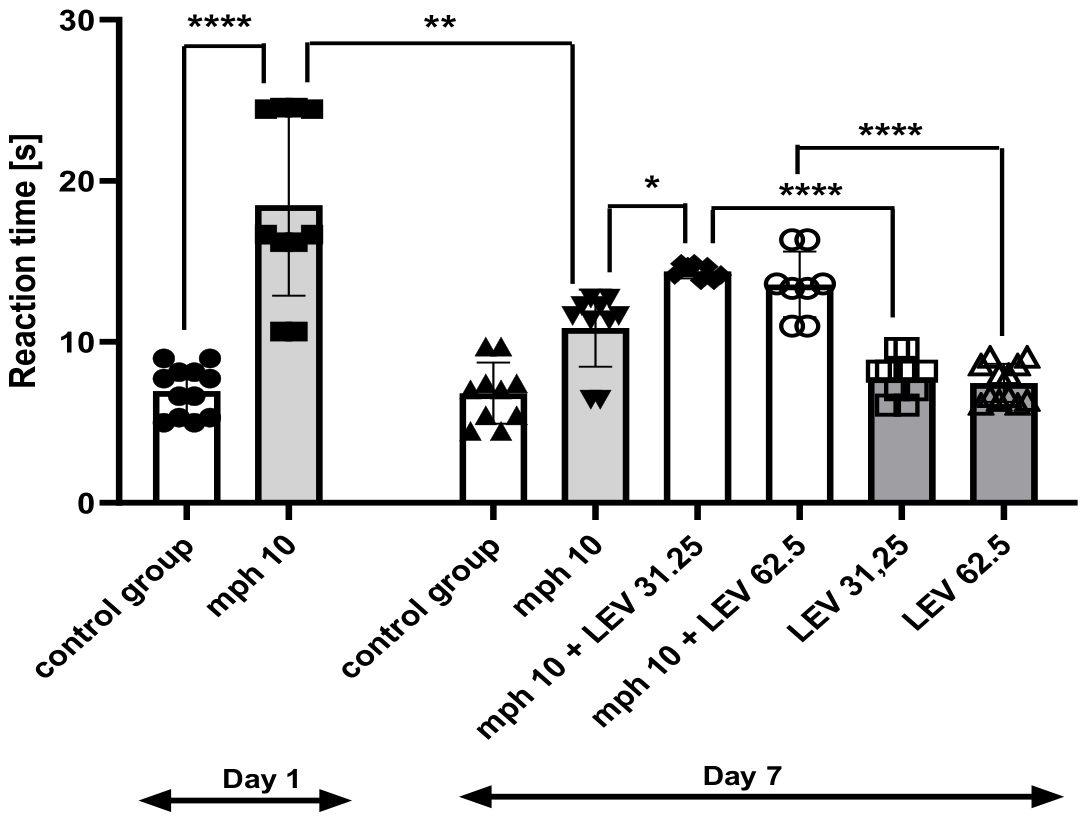
Figure 2.
Effect of levetiracetam (LEV) (31.25; 62.5 mg/kg, ip) on the acquisition of morphine (mph) tolerance (10 mg/kg, ip) to antinociceptive activity in the hot-plate test in male mice (Swiss). The tolerance was obtained by morphine administration twice daily for 7 days. The hot-plate test was performed on the 1st and 7th day of the experiment. Levetiracetam was administered for 6 consecutive days (from 1st to 6th day) in the morning. On the 7th day, only morphine was injected. 30 minutes later the hot-plate test was conducted. * p<0.05; ** p<0.01; ***p<0.001; **** p<0.0001 (Tukey's test), N=8-10.
Figure 2.
Effect of levetiracetam (LEV) (31.25; 62.5 mg/kg, ip) on the acquisition of morphine (mph) tolerance (10 mg/kg, ip) to antinociceptive activity in the hot-plate test in male mice (Swiss). The tolerance was obtained by morphine administration twice daily for 7 days. The hot-plate test was performed on the 1st and 7th day of the experiment. Levetiracetam was administered for 6 consecutive days (from 1st to 6th day) in the morning. On the 7th day, only morphine was injected. 30 minutes later the hot-plate test was conducted. * p<0.05; ** p<0.01; ***p<0.001; **** p<0.0001 (Tukey's test), N=8-10.
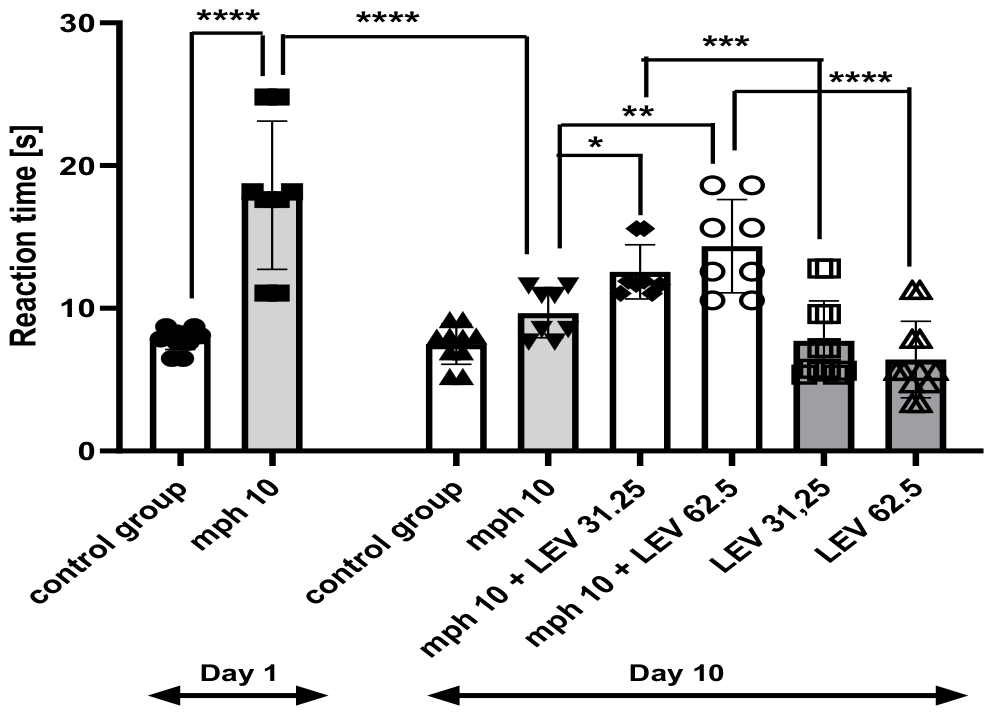
Figure 3.
Effect of levetiracetam (LEV) (31.25; 62.5 mg/kg, ip) on the expression of naloxone-induced (2 mg/kg, ip) morphine (mph) withdrawal in male mice (Swiss); Morphine was administered at increasing doses (10, 15, 20, 25, 30, 35, 40, and 50 mg/kg) twice daily, for 8 consecutive days. On the morning of the 9th day, another dose of morphine (50 mg/kg) was administered. Later, naloxone was given to induce an acute withdrawal signs. Levetiratcetam was administered at a single dose on the last day of the study. * p<0.05; **** p<0.0001 (Tukey's test), N=8-10.
Figure 3.
Effect of levetiracetam (LEV) (31.25; 62.5 mg/kg, ip) on the expression of naloxone-induced (2 mg/kg, ip) morphine (mph) withdrawal in male mice (Swiss); Morphine was administered at increasing doses (10, 15, 20, 25, 30, 35, 40, and 50 mg/kg) twice daily, for 8 consecutive days. On the morning of the 9th day, another dose of morphine (50 mg/kg) was administered. Later, naloxone was given to induce an acute withdrawal signs. Levetiratcetam was administered at a single dose on the last day of the study. * p<0.05; **** p<0.0001 (Tukey's test), N=8-10.
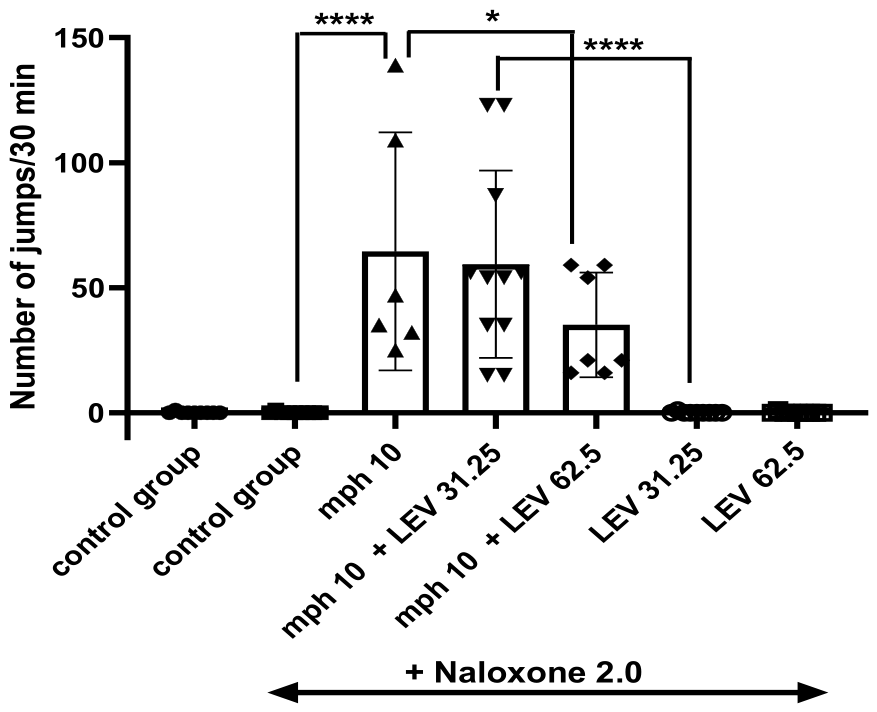
Figure 4.
Effect of levetiracetam (LEV) (31.25; 62.5 mg/kg, ip) on the acquisition of naloxone-induced (2 mg/kg, ip) morphine (mph) withdrawal symptoms in male mice (Swiss); Morphine was administered at increasing doses (10, 15, 20, 25, 30, 35, 40, and 50 mg/kg) twice daily, for 8 consecutive days. On the the 9th day, another dose of morphine (50 mg/kg) was administered. Later, naloxone was given to induce an acute withdrawal syndrome. Levetiratcetam was administered from the 1st to 8th day of the study. * p<0.05; ** p<0.01; **** p<0.0001 (Tukey's test), N=8-10.
Figure 4.
Effect of levetiracetam (LEV) (31.25; 62.5 mg/kg, ip) on the acquisition of naloxone-induced (2 mg/kg, ip) morphine (mph) withdrawal symptoms in male mice (Swiss); Morphine was administered at increasing doses (10, 15, 20, 25, 30, 35, 40, and 50 mg/kg) twice daily, for 8 consecutive days. On the the 9th day, another dose of morphine (50 mg/kg) was administered. Later, naloxone was given to induce an acute withdrawal syndrome. Levetiratcetam was administered from the 1st to 8th day of the study. * p<0.05; ** p<0.01; **** p<0.0001 (Tukey's test), N=8-10.
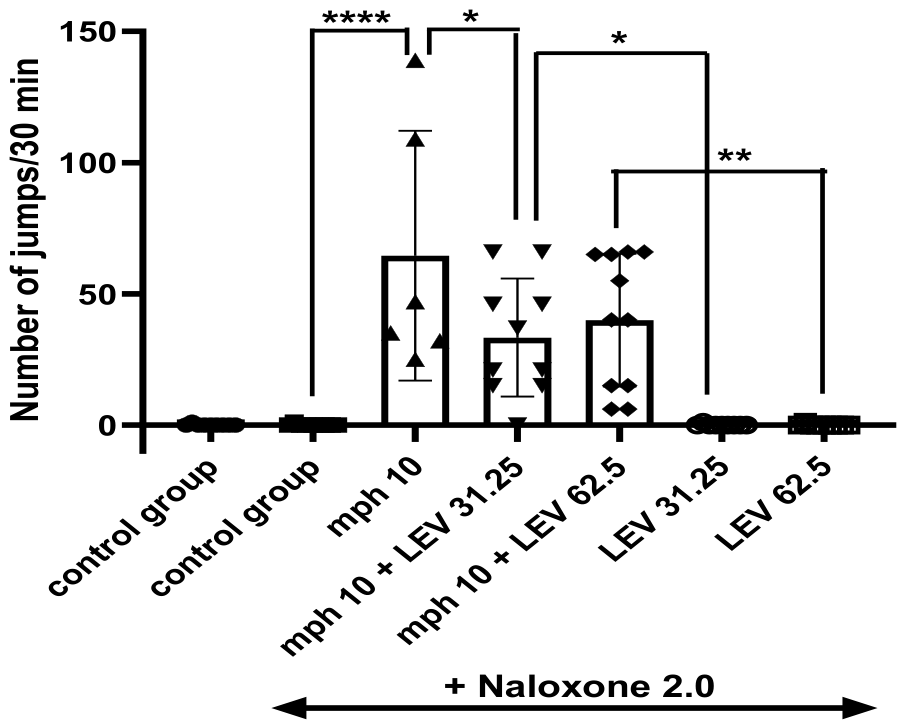
Figure 5.
Effect of levetiracetam (LEV) (31.25; 62.5; 125 mg/kg, ip) on the expression of morphine (mph) sensitization (10 mg/kg, ip) to the locomotor effect in male mice (Swiss). Behavioral sensitization was achieved by administration of five sporadic (every 72 hours) morphine injections (on 1st, 4th, 7th, 10th, and 13th day of the experiment). After each morphine administration, the animals were placed in chambers for locomotor activity test to assess the animal motility for a period - 60 minutes. Seven days after the last morphine injection (on 20th day of the test), the animals received a challenge dose of morphine (10 mg/kg) and locomotor activity was assessed again. Levetiracetam was used at a single dose given on 20th day of the study. * p<0.05; ** p<0.01; *** p<0.001; **** p<0.0001 (Tukey's test), N=8-10.
Figure 5.
Effect of levetiracetam (LEV) (31.25; 62.5; 125 mg/kg, ip) on the expression of morphine (mph) sensitization (10 mg/kg, ip) to the locomotor effect in male mice (Swiss). Behavioral sensitization was achieved by administration of five sporadic (every 72 hours) morphine injections (on 1st, 4th, 7th, 10th, and 13th day of the experiment). After each morphine administration, the animals were placed in chambers for locomotor activity test to assess the animal motility for a period - 60 minutes. Seven days after the last morphine injection (on 20th day of the test), the animals received a challenge dose of morphine (10 mg/kg) and locomotor activity was assessed again. Levetiracetam was used at a single dose given on 20th day of the study. * p<0.05; ** p<0.01; *** p<0.001; **** p<0.0001 (Tukey's test), N=8-10.
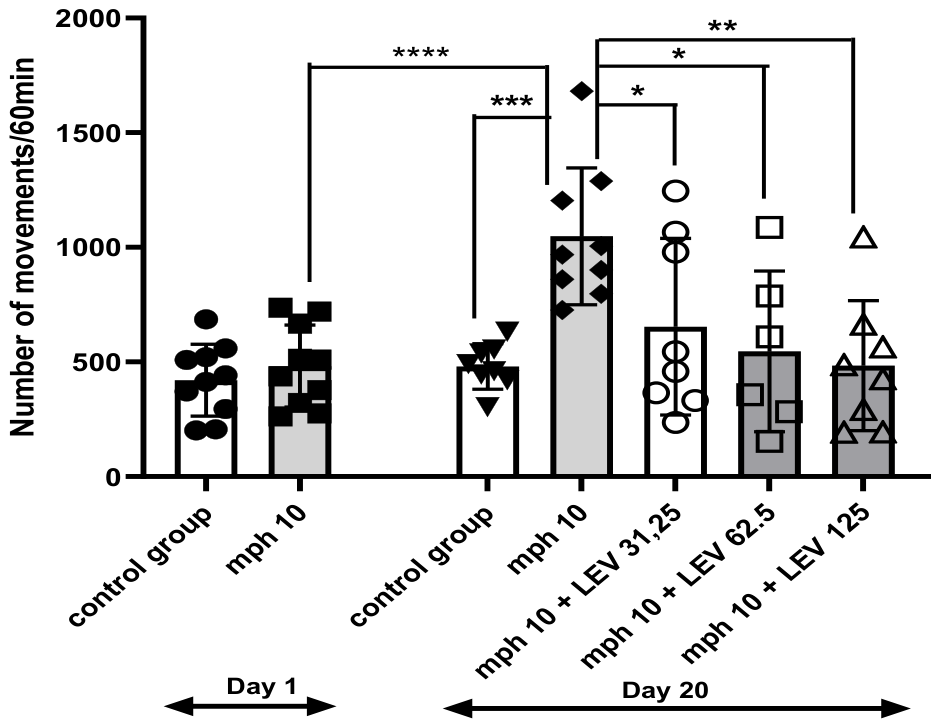
Figure 6.
Effect of levetiracetam (LEV) (31.25; 62.5; 125 mg/kg, ip) on the acquisition of morphine (mph) sensitization (10 mg/kg, ip) to the locomotor effects in male mice (Swiss). Behavioral sensitization was achieved by administration of five sporadic (every 72 hours) morphine injections (on 1st, 4th, 7th, 10th, and 13th day of the experiment). After each morphine administration, the animals were placed in chambers for locomotor activity test to assess the animal motility for a period - 60 minutes. Seven days after the last morphine injection (on 20th day of the test), the animals received a challenge dose of morphine (10 mg/kg), and the locomotor activity of mice was assessed again. Five injections of levetiracetam was administered on 1st, 4th, 7th, 10th, and 13th day of the experiment.* p<0.05; ** p<0.01; **** p<0.0001 (Tukey's test), N=8-10.
Figure 6.
Effect of levetiracetam (LEV) (31.25; 62.5; 125 mg/kg, ip) on the acquisition of morphine (mph) sensitization (10 mg/kg, ip) to the locomotor effects in male mice (Swiss). Behavioral sensitization was achieved by administration of five sporadic (every 72 hours) morphine injections (on 1st, 4th, 7th, 10th, and 13th day of the experiment). After each morphine administration, the animals were placed in chambers for locomotor activity test to assess the animal motility for a period - 60 minutes. Seven days after the last morphine injection (on 20th day of the test), the animals received a challenge dose of morphine (10 mg/kg), and the locomotor activity of mice was assessed again. Five injections of levetiracetam was administered on 1st, 4th, 7th, 10th, and 13th day of the experiment.* p<0.05; ** p<0.01; **** p<0.0001 (Tukey's test), N=8-10.
Disclaimer/Publisher’s Note: The statements, opinions and data contained in all publications are solely those of the individual author(s) and contributor(s) and not of MDPI and/or the editor(s). MDPI and/or the editor(s) disclaim responsibility for any injury to people or property resulting from any ideas, methods, instructions or products referred to in the content. |
© 2026 by the authors. Licensee MDPI, Basel, Switzerland. This article is an open access article distributed under the terms and conditions of the Creative Commons Attribution (CC BY) license (http://creativecommons.org/licenses/by/4.0/).
Copyright: This open access article is published under a Creative Commons CC BY 4.0 license, which permit the free download, distribution, and reuse, provided that the author and preprint are cited in any reuse.


