

Submitted:
31 May 2026
Posted:
01 June 2026
You are already at the latest version
Abstract
Andes virus (ANDV) is unique among hantaviruses because person-to-person transmission ispossible. This raises questions on the relevance of post-exposure prophylaxis (PEP), particularlyfollowing high-risk household, healthcare-associated, or laboratory exposures, considering itshigh case fatality rate. Ribavirin has demonstrated antiviral activity against hantaviruses in vitroand in animal models, although clinical evidence supporting its use as treatment or PEP forANDV remains extremely limited. The available evidence consists primarily of cell cultureexperiments, Syrian hamster studies, pharmacokinetic and pharmacodynamic extrapolationsfrom other virusses, limited clinical data, and indirect clinical experience with other viralhemorrhagic fevers. This viewpoint summarizes the currently available evidence regardingribavirin as PEP after potential ANDV exposure. We discuss the knowledge gaps that may limitthe applicability of ribavirin PEP, to make informed decisions on the use of ribavirin in thesetting of PEP. Potential dosing strategies are visualized by modeling and simulation, andpotential dose and duration are discussed. Although the biologic rationale for ribavirin PEPappears compelling, the absence of controlled human studies and the potential toxicityassociated with ribavirin currently limit its role to highly selected exposure scenarios and useshortly after exposure.
Keywords:
hantavirus cardiopulmonary syndrome
Introduction
Andes virus (ANDV) is one of the principal causes of hantavirus cardiopulmonary syndrome (HCPS) in South America, particularly in Chile and Argentina. It starts with a long incubation period, followed by a prodromal phase, finaly resulting in HCPS, which is characterized by rapidly progressive capillary leak syndrome, pulmonary edema, shock, and mortality rates frequently approaching 30–40% [1,2]. Unlike most hantaviruses, ANDV has demonstrated person-to-person transmission, particularly among close household contacts and during exposure in the prodromal phase of infection [3,4,5]. Household and healthcare-associated transmission in Argentina and Chile has been described [3,4]. These observations support consideration of PEP after high-risk exposure. Despite this, the secondary attack rate after exposure appears to be relatively low overall. Most close contacts do not develop symptomatic infection even after prolonged or nosocomial exposure, with a R0 2.12 (1.24-3.35) [5]. This complicates efforts to evaluate prophylactic efficacy. As a result, human studies to confirm either benefit or absence of benefit from PEP are difficult to conduct. The incubation period of ANDV infection is long, often ranging from two to four weeks, but up to six weeks has been described [6,7]. This long preclinical phase theoretically creates a window of opportunity for antiviral intervention before the onset of general symptoms, and finally progression to HCPS. In addition, considering the low risk of infection, the antiviral used for PEP must have a high tolerability and safety, or else predominantly be used in well-defined high risk categories.
Ribavirin, a guanosine analogue with broad-spectrum antiviral activity, has demonstrated activity against several RNA viruses, including arenaviruses and hantaviruses [8]. So far, ribavirin has not show therapeutic efficacy in advanced state of HCPS and therefore its role in established HCPS remains at least controversial [9]. Conversely, experimental animal models suggests that ribavirin may possess relevant antiviral activity during the asymptomatic and prodromal phase before the onset of HCPS. Favipiravir has shown efficacy in hamster models, preventing disease when given within four days of experimental infection, and has been proposed for use as PEP [10]. However, because no human dose recommendations have been established and global access to favipiravir remains limited, the potential use of ribavirin as PEP warrants consideration.
Our viewpoint aims to synthesize the currently fragmented evidence on ribavirin as PEP for Andes virus, integrating in vitro findings, animal model data, and pharmacokinetic –pharmacodynamic considerations into a coherent framework. By clarifying what is known, what remains uncertain, and which assumptions underlie proposed dosing strategies, it provides a transparent basis for evaluating ribavirin’s potential role in high-risk exposure scenarios. These insights can support clinicians, public health physicians, and policymakers in making more informed, evidence-aligned decisions when confronted with possible ANDV transmission events.
In-Vitro Evidence for Ribavirin Activity Against ANDV
Experimental evaluation of ribavirin against ANDV was performed by using a Vero E6 cell culture system. Ribavirin inhibited ANDV replication in vitro in a concentration-dependent manner, reducing viral RNA and nucleoprotein synthesis [11,12]. Inhibitory concentrations (IC50) ranged between 5–12.5 μg/mL (~20-50 μmol/L), and 50% effective concentrations (EC50) 30 μg/mL, depending on the experimental conditions [11,12]. Near-complete suppression of viral replication generally required higher concentrations, ranging from approximately 50–100 μg/mL.
Animal Studies Supporting Ribavirin PEP
The strongest evidence supporting ribavirin as PEP for ANDV derives from a Syrian hamster model, which remains the most widely accepted lethal animal model for HCPS [13]. Safronetz et al. demonstrated that intraperitoneal administration of ribavirin (5, 25, 50, and 100mg/kg/day for 10 days, 12 hamsters per dose group) administered 1 day after intraperitoneal inoculation of 100xLD50 ANDV (154 focus forming units) provided substantial protection against lethal disease [11]. All hamsters survived, whereas control animals (PBS alone) succumbed 8-10 days after infection, with only those in the 5mg/kg/day group showing minor symptoms. Additional studies using 50 mg/kg/day showed that a 3-day regimen initiated on day 1 post-inoculation was fully protective, as was treatment starting on day 3. In contrast, initiating therapy on day 7—approximately one day before disease onset—resulted in nearly 100% mortality. Outcomes after oral treatment with both 5 and 50mg/kg/day for 10 days starting one day post-inoculation were comparable to those with intravenous treatment, with only hamsters in the 5mg/kg/day group showing minor symptoms.
Ogg et al. performed animal experiments in Syrian hamsters using lethal intranasal inoculation, which better resembles human infection through respiratory exposure, with a mean time to death of 14-26 days. Challenge with ANDV (4000 plaque forming units) while introducing ribavirin intraperitoneally at dosages ranging from 50-200mg/kg/day from day 1 to 21 post inoculation was performed, to test for the capacity to prevent HCPS [12]. While the highest dose of ribavirin (200 mg/kg) was toxic, both 100 and 50 mg/kg prevented HCPS in hamsters without serious adverse effects, whereas 7 out of 8 control-treated animals developed lethal HCPS. Treatment with 50 mg/kg/day ribavirin starting on days 6, 8, 10, or 12 post-infection also resulted in protection against HCPS in all groups. Administration of ribavirin at 14 days post-infection also still provided 75% protection against lethal HCPS [12].
These hamster data provide a biological rationale for early ribavirin use as PEP in humans. Given that ANDV infection involves slow early viral replication and a long incubation period before clinical disease, a therapeutic window likely exists in the first days following high-risk exposure. As such, ribavirin PEP may prevent HCPS by suppressing viral replication before secondary immune-mediated endothelial injury develops [14], a pathogenic mechanism antiviral drugs cannot directly target.
The study by Ogg et al. (intranasal inoculation) indeed demonstrates a more prolonged effect of ribavirin as PEP compared with those by Safronetz et al. (intraperitoneal inoculation). This difference may be explained by the longer incubation period observed in the Ogg et al. model, which more closely resembles human infection and may allow more time for ribavirin to exert its prophylactic effect.
Compared with other viral hemorrhagic fevers, the available animal evidence supporting ribavirin PEP for ANDV is relatively strong. Nevertheless, important limitations remain, as animal models may not fully reproduce human pharmacokinetics, immune responses, or exposure dynamics (e.g. infectious dose), and the relationship between experimentally induced infection in animals and natural human exposure remains uncertain.
Evidence for Ribavirin Post-Exposure Prophylaxis in Humans
Human evidence supporting ribavirin as PEP after ANDV exposure is very limited. To date, no randomized controlled trials or prospective cohort studies have evaluated its efficacy in exposed individuals. Existing knowledge is therefore derived primarily from epidemiological investigations of person-to-person transmission and expert opinion (Supplementary Table S2). In a small study using a loading dose of 33 mg/kg, followed by 16 mg/kg, every 6 hours for 15 doses, and concluding with 8 mg/kg every 8 hours for 9 doses a positive effect on ANDV mortality was shown. Of seven patients treated with ribavirin during the prodromal phase, no fatalities were reported, compared to a historical case-fatality rate of 35%, and progression to the cardiopulmonary phase decreased from 84% to 57% [15].
Evidence for therapeutic efficacy of intravenous ribavirin in new world hanta virus (Sin Nombre Virus) HCPS could not be established in a small RCT [9]. The proportion of subjects who survived and who did not require ECMO was similar among the 10 ribavirin recipients and 13 placebo recipients (70% vs. 62%, respectively). Ribavirin recipients received treatment median 3.5 days (range 2–11) after onset of symptoms. Considering that ribavirin recipients progressed rapidly to either death or ECMO, median 4 h (range 3–15h) after initiation of treatment, it was postulated that antiviral treatment was not effective after the onset of the cardiopulmonary phase. In this study the ribavirin dose was similar to that in an RCT which found ribavirin to be effective in the treatment of HFRS [16], which has a lower mortalitiy than HCPS.
Pharmacology of Ribavirin
Ribavirin acts through several overlapping antiviral mechanisms, all occurring concurrently [17]. Ribavirin is a nucleoside analogue which is intracellularly converted to mono-, di-, and triphosphate. Ribavirine-monophosphate is a competitive inhibitor of human inosine monophosphate dehydrogenase (IMPDH), disrupting de novo guanosine triphosphate (GTP) synthesis. Depletion of intracellular GTP pools starves the virus of nucleotides needed for replication. Ribavirin-triphosphate acts as a competitive inhibitor of RdRp. Incorporation of ribavirin-triphosphate stalls further viral RNA elongation and may cause chain termination. In addition, incorporation of ribavirin-triphosphate causes hypermutations in the subsequent rounds of viral replication and pushes the viral error rate beyond a survivable threshold, causing the viral population to collapse through accumulation of non-viable genomes [18,19,20]. In parallel, ribavirin might exert immunomodulatory effects, by reducing ANDV-induced cytokine production [21].
Ribavirin is rapidly and extensively absorbed after oral administration, with an average absolute bioavailability of ~50-65% due to first-pass metabolism. Exposure increases linearly with dose for AUC across the 200–1200 mg range, while Cmax shows non-linearity, tending to plateau above 400–600 mg, reflecting saturable processes in peak concentration but not overall exposure. Ribavirin relies heavily on saturable nucleoside transporters (ENT1/ENT2) in the gut for absorption. Fractionated dosing (e.g., 600 mg TID instead of 1200 mg BID) may improve absorption efficiency by avoiding transporter saturation. Bioavailability of a single oral dose of ribavirin was increased by co-administration with a high-fat meal [22,23,24,25].
Ribavirin is minimally protein-bound (<10%), meaning that nearly the entire circulating drug exists in the unbound, pharmacologically available form. In vitro studies indicate that ribavirin is not a substrate of CYP450 enzymes [26,27].
Ribavirin pharmacokinetics are strongly affected by renal function because the drug is mainly eliminated by filtration and tubular excretion, while its intracellular metabolites have very long half-lives. Reduced kidney function decreases clearance, causing higher plasma and erythrocyte concentrations and increased trough levels, which are associated with toxicity, particularly hemolytic anemia. Impaired renal clearance also delays steady state and prolongs elimination after treatment stops, which could even be beneficial during PEP. Clinically, patients with moderate to severe renal impairment have higher exposure at the same dose and often require dose reduction or avoidance.
Toxicity and Monitoring
Because of the severity of side effects anticipated, a balance must be struck between safety and invasive diagnostics in infected individuals in home quarantine and limited access to routine lab tests. Baseline evaluation before initiation of therapy generally includes complete blood count, renal function, liver enzymes, and pregnancy testing when relevant. During treatment, repeat hematologic, hepatic, and renal monitoring is typically performed approximately five to seven days after initiation, with additional (e.g. weekly) follow-up testing based on first results and clinical symptoms even after discontinuation of ribavirin, given its long half-life. Because of substantial teratogenic risk, ribavirin should be avoided during pregnancy.
Ribavirin-related anemia is exposure-dependent. In chronic HCV, a quantitative relationship between red blood cell (RBC) RTP exposure, shortened RBC lifespan, and the time course and magnitude of hemoglobin decline has been demonstrated using population pharmacokinetic modeling. Simulations using this model indicate that reducing the standard 1,000/1,200 mg regimen to 600/800 mg can roughly halve the proportion of grade 2 anemia, directly supporting a dose-toxicity relationship. Clinical risk factors that effectively increase exposure -impaired renal function, high dose per body weight, older age, and female sex- also increase anemia risk, reinforcing the concentration-dependence of this toxicity [22,28]. High upfront loading is expected to increase the likelihood and accelerate the onset of anemia, even if the eventual nadir might be similar for a given total exposure [27,29].
Synthesis of Findings to Promote Informed Decision-Making in the Setting of PEP
No dosing regimen have been clinically evaluated for ribavirin PEP after ANDV exposure. Current regimens are extrapolated from other treatment protocols and expert-based protocols used for Lassa fever and Crimean-Congo hemorrhagic fever (Supplementary Tables S1 and S2), which both have shorter incubation times [30,31]. A PEP strategy using augmented dosages should be carefully balanced against the high likelihood of toxicity and the low risk of human-to-human transmission.
The following aspects require careful consideration before clinical decisions can be made andwill be discussed in the following paragraphs: 1. PK/PD considerations for ribavirin in relation to ANDV; 2. Dose of choice for PEP; and 3. Timing and duration of initiation of ribavirin therapy post contact.
Ribavirin PKPD Considerations for ANDV
Ribavirin does not have a single universally accepted PK/PD exposure target across viral pathogens, and for hantaviruses specifically, no definitive PK/PD exposure target has been established. Available studies focus on in vitro EC₅₀/EC₉₀ values and survival outcomes rather than formal PK/PD modeling. Ribavirin’s mechanism— depletion of intracellular GTP pools, inhibition of RdRp, lethal mutagenesis and immunomodulation—makes its antiviral effect correlate poorly with extracellular plasma concentrations, complicating classical PK/PD index determination.
IC50/EC50 values are based on Vero 6 cell lines, but may vary in other cell lines or different body tissues. Intracellular phosphorylation of ribavirin may be cell line dependent as has been observed for other nucleoside analogues [32]. Thus the intracellular concentration of ribavirin-triphosphate, and the degree of viral inhibition, may differ between cell types. This makes extrapolating the IC50/EC50 values found cell lines to the in vivo situation cumbersome.
If assumed that the Vero 6 cell line is best reflecting human conditions, the reported IC50 values for ANDV (5–12.5 μg/mL) can be reached by very aggressive dosing strategies with intravenous therapy. However, concentrations associated with near-complete suppression (50-100 μg/mL) of viral replication in vitro exceed concentrations that can be safely achieved in humans [11,33,34,35,36]. This raises uncertainty regarding the degree of antiviral suppression achievable in vivo. However, through extensive intracellular accumulation of phosphorylated ribavirin metabolites, intracellular concentrations substantially exceed plasma levels [37]. Because hantavirus replication occurs intracellularly, intracellular pharmacodynamics, especially in macrophages and vascular endothelial cells which are primarily targeted by the virus, may be considerably more important than serum pharmacokinetics [38]. This is further supported by the knowledge that IC50s of other viruses that are being treated with ribavirin have a comparable discrepancy between IC50 values and serum concentrations (Supplementary Table S3).
Directly translating intracellular accumulation from animal models to humans is not straightforward [39]. Ribavirin enters intracellularly through nucleoside transporters and becomes trapped after phosphorylation to ribavirin-monophosphate, a metabolite that cannot exit the cell. This trapping mechanism exists across species, yet the extent and kinetics of accumulation differ markedly because cells vary in lifespan, transporter density, metabolic capacity, and intracellular kinase activity [19,39,40]. These biological differences mean that while animal models can demonstrate the presence of intracellular trapping, they might not reliably predict the magnitude or time course of accumulation in humans. As a result, direct quantitative translation is not feasible [30,31].
Dose of Choice for PEP
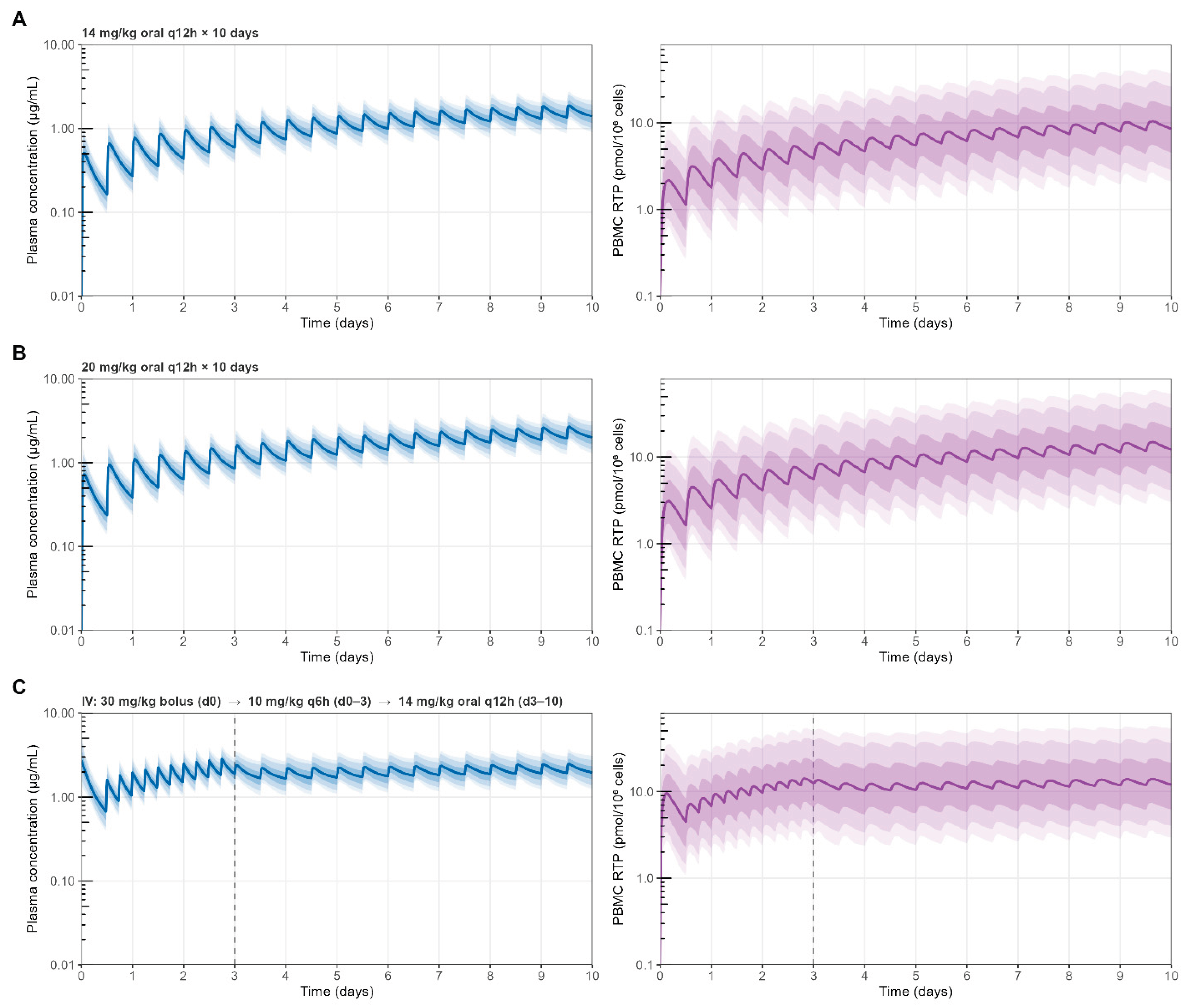
When defining a dose for the use of PEP against ANDV upfront intravenous loading is warranted (Figure 1) yet such an approach needs to be carefully balanced against the likelihood of treatment discontinuation due to severe adverse events [8,30,41,42,43].
The most standardized dosing regimens for ribavirin currently used are those for hepatitis C and E, ranging from 10-15mg/kg for several months to prevent chronic hepatitis (Supplementary Table S1). The difference with ANDV and other viral hemorrhagic fevers is that for hepatitis C/E no loading dose is required, as no instant effect is required, and stable blood concentrations can be achieved weeks later. In contrast, in ANDV and other viral hemorrhagic fevers, high upfront loading at dosages up to 35 mg/kg or 2.5 g/day have been advocated. Severe side effects are common at these dosages, although in the study of high dose intravenous ribavirin for 7 days in HFRS the drug-induced anemia was rapidly reversible in all subjects [16].
Timing and Duration of Ribavirin PEP
Timing of initiation is critically important. It is unknown if partial suppression of early viral replication before onset of symptoms provides a clinically meaningful benefit, as high plasma viral loads before onset of symptoms have been reported [7]. Partial suppression of early viral replication during the incubation phase could theoretically reduce viral dissemination, endothelial infection burden, and consequent cytokine production, contributing to an effect despite not attaining a specific IC50 target. Since severe HCPS most likely reflects immune-mediated injury, even modest attenuation of early viral amplification could beneficially affect the disease trajectory [14,44]. This was demonstrated in the hamster model with the lowest ribavirin dose that modestly reduced viral titers but did result in reduction of mortality once HCPS had started [11]. Because ribavirin is not driven by a single, direct, concentration-dependent mechanism, but instead emerges from several overlapping, time-dependent intracellular processes this may further support PEP. For many viruses, ribavirin’s effect is mutagenic rather than inhibitory. This means that the antiviral effect depends on cumulative incorporation over time, not instantaneous concentration and that viral extinction occurs only after sufficient replication cycles have accumulated lethal mutations.
As brought forward earlier in this manuscript, experimental data strongly suggest that earlier treatment initiation is associated with greater efficacy [11,12]. Ribavirin is therefore most likely to be beneficial when initiated within the first days after exposure, before viral dissemination and endothelial activation have occurred. Ogg et al. report that administration of ribavirin at 50 mg/kg/day starting on days 6, 8, 10, or 12 post-infection resulted in significant protection against HCPS in their hamster model with intranasal inoculation [12]. No maximum interval for initiation of PEP can be deduced from animal studies: ribavirin administration up to 14 days after intranasal inoculation provided some clinical benefit in one study [12], but treatment after 7 days after intraperitoneal inoculation was not effective in another study [11].
The optimal duration of prophylaxis remains unknown. Shorter courses may reduce cumulative toxicity and improve adherence, particularly if the primary therapeutic objective is attenuation of early viral replication. This is especially true, given ribavirin’s long half-life of ~150 hours. Animal studies demonstrating protection administred ribavirin for 3-21 days of ribavirin during the incubation phase [11,12]. Limited data have favored ribavirin PEP treatment durations of approximately seven to ten days in high risk Lassa fever virus exposures [31]. This may allow for development of adaptive immunity, which was not aborted in hamsters treated with ribavirin [44]. PEP for ANDV is expected to provide the greatest benefit when initiated very early after exposure, and this timing is likely more critical than the total duration of therapy.
Proposal for Ribavirin Dosing Schedule for ANDV PEP
Based on our assessment of current available preclinical and clinical evidence presented in this manuscript, we ideally propose a new dosing strategy, consisting of an intravenous loading dose of 30 mg/kg followed by 10 mg/kg IV bolus for 3 days, followed by 14 mg/kg oral up to day 10. This dosing schedule balances the need for high antiviral potency in the early phase with the risk of cumulative toxicity, with a finite 10-day course. An intensified early-phase strategy aims to achieve high systemic and intracellular ribavirin levels rapidly, thereby maximizing antiviral pressure during the period when viral replication is still limited and before endothelial activation begins. In contrast, extending treatment over a longer period without an initial high-exposure phase would likely yield lower early drug levels, potentially reducing efficacy during the most biologically relevant window while increasing the risk of prolonged, dose-dependent adverse effects. To evaluate this dosing schedule from a PK/PD perspective, population PK modeling and simulation based on a previous published model in HCV patients was performed [45]. This model describes both the plasma PK of ribavirin as well as its intracellular phosphorylated forms in peripheral blood mononuclear cells (PBMCs), wherein the ribavirin triphosphate has been reported to be most strongly associated with antiviral activity. Importantly, ANDV does accumulate in PBMCs, given that buffy coats have a better performance for ANDV PCR detection than plasma [46]. PK simulations were performed for both common oral dosing schedules of 14 and 20 mg/kg (Figure 1A/B), as well as the proposed new dosing strategy (Figure 1C). Our simulations illustrate how the proposed intensified intravenous treatment regimen can lead to a rapid achievement of intracellular RTP levels in comparison to a standard oral regimen.
Practical Considerations
Follow-up and management of side effects in individuals in quarantine can be challenging as it requires invasive diagnostic procedures on potentially infective samples. Sample management requires a laboratory that can deal with BSL3 pathogens. Routine follow-up of potentially exposed people includes at least weekly follow-up of PCR on whole blood as well as repeated serology testing [47]. At these timepoints routine follow-up blood tests can also be performed to assess ribavirin-related toxicity, including complete blood count, hepatic, and renal monitoring. Based on the laboratory results over these 6 weeks it should be decided whether longer monitoring is required. Plasma concentrations of ribavirin will have decreased significantly at that point; yet, intracellular metabolite concentrations have an even longer half life, potentially causing anemia after 6 weeks.
In theory ribavirin exposure, as represented at least by plasma levels, could be evaluated at these same time points as well. Whether plasma concentrations hold additional value, can be debated as there are no data on the correlation between plasma levels and intracellular concentrations of the active metabolites in the affected endothelial cells. Nor do plasma levels and IC50/EC50 values correlate well (Table 1 and Supplementary Table S3), which also holds true for other ribavirin treatment indications (Supplementary Tables S1 and S3). This suggests that plasma ribavirin levels are not a reliable correlate of treatment effect, so routine plasma concentration evaluations are not recommended. Although, to collect better data to answer these questions it should be considered to collect these data for research purposes. With this, emphasis of PK assessment should best focus on intracellular concentrations.
Putting Knowledge into Perspective to Guide Clinical Decision Making
The findings presented here highlight that ribavirin PEP for Andes virus exposure sits at the intersection of biologic plausibility, encouraging preclinical data, and substantial clinical uncertainty. Arguments in favor of initiating PEP stem from the consistent protection observed in Syrian hamster models [11,12,13], the long incubation period of ANDV that creates a window of opportunity, and the finding in animal models that partial reduction of viral replication by low doses of ribavirin still resulted in clinical benefit. Furthermore, the high mortality of HCPS could outweigh potential adverse events. Conversely, arguments against routine PEP include the absence of human efficacy data, the inability to safely achieve fully suppressive concentrations observed in vitro [11], and the well-recognized toxicity of ribavirin—particularly hemolytic anemia—which becomes harder to justify in low-probability exposure scenarios. Taken together, these considerations suggest that PEP should be reserved for clearly defined high-risk contacts, such as needle stick accidents, unprotected mucosal exposure, prolonged exposure as in household contacts, or documented breaches in laboratory or healthcare procedures. A case-by-case consideration should be made based on type of exposure, duration, and viral loads in the specific specimen. If PEP is to be initiated, this should happen as soon as possible after exposure, ideally within the first days when viral amplification is still limited, though we acknowledge that the precise outer boundary of effectiveness in humans remains unknown.
An important conceptual issue is that complete viral suppression may not be necessary for clinical benefit. Firstly, reduced and delayed viral replication allows for more time to mount an effective immune response to neutralize the virus. Secondly, since HCPS likely reflects secondary immune-mediated endothelial injury and partial attenuation of early viral amplification could theoretically reduce downstream inflammatory injury even in the absence of sterilizing antiviral activity, resulting in milder disease.
Taking all presented considerations into account and combining these with our simulation data we propose a PEP scheme of 10 days, which should be considered as an accelerated loading phase. Idealy this should be started with an intravenous loading phase before contuining oral loading of 14mg/kg devided over 2 doses and taken with food. However, given the issues of intravenous loading an all-oral loading phase with 20mg/kg devided over 2 doses can also be considered (Figure 1). In this way plasma levels of >1 μg/ml will be achieved directly or within a few days, by using a dose which is 1,5-2 times higher than those used in hepatitis C/E treatmen, hence optimizing the prophylactic effect and potential adverse drug effects.
This framework enables clinicians to make informed, transparent decisions that weigh biologic rationale, exposure risk, and patient safety in the absence of definitive human data. It is therefore essential that when PEP is started follow-up data should be carefully monitored and shared with the scientific community to further substantiate future decisions.
Supplementary Materials
The following supporting information can be downloaded at the website of this paper posted on Preprints.org.
Author Contributions
RJB and RJWA drafted the original manuscript, CVH performed the modelling, all others reviewed and improved the manscript.
Acknowledgments
The contribution of JGCvH was supported by the Dutch Organisation for Health Research and Development (ZonMw) through the Modelling for Pandemic Preparedness programme, grant number 10710062310003.
Conflicts of Interest
None for this manuscript.
References
- Jonsson, C.B.; Figueiredo, L.T.; Vapalahti, O. A global perspective on hantavirus ecology, epidemiology, and disease. Clin. Microbiol. Rev. 2010, 23(2), 412–41. [Google Scholar] [CrossRef]
- Mertz, G.J.; Hjelle, B.; Crowley, M.; Iwamoto, G.; Tomicic, V.; Vial, P.A. Diagnosis and treatment of new world hantavirus infections. Curr. Opin. Infect. Dis. 2006, 19(5), 437–42. [Google Scholar] [CrossRef] [PubMed]
- Martinez-Valdebenito, C.; Calvo, M.; Vial, C.; et al. Person-to-person household and nosocomial transmission of andes hantavirus, Southern Chile, 2011. Emerg. Infect. Dis. 2014, 20(10), 1629–36. [Google Scholar] [CrossRef]
- Padula, P.J.; Edelstein, A.; Miguel, S.D.; Lopez, N.M.; Rossi, C.M.; Rabinovich, R.D. Hantavirus pulmonary syndrome outbreak in Argentina: molecular evidence for person-to-person transmission of Andes virus. Virology 1998, 241(2), 323–30. [Google Scholar] [CrossRef]
- Martinez, V.P.; Di Paola, N.; Alonso, D.O.; et al. Super-Spreaders" and Person-to-Person Transmission of Andes Virus in Argentina. N Engl. J. Med. 2020, 383(23), 2230–41. [Google Scholar] [CrossRef]
- Vial, P.A.; Valdivieso, F.; Mertz, G.; et al. Incubation period of hantavirus cardiopulmonary syndrome. Emerg. Infect. Dis. 2006, 12(8), 1271–3. [Google Scholar] [CrossRef]
- Ferres, M.; Vial, P.; Marco, C.; et al. Prospective evaluation of household contacts of persons with hantavirus cardiopulmonary syndrome in chile. J. Infect. Dis. 2007, 195(11), 1563–71. [Google Scholar] [CrossRef]
- Huggins, J.W. Prospects for treatment of viral hemorrhagic fevers with ribavirin, a broad-spectrum antiviral drug. Rev. Infect. Dis. 1989, 11 4 Suppl, S750–61. [Google Scholar] [CrossRef] [PubMed]
- Mertz, G.J.; Miedzinski, L.; Goade, D.; et al. Placebo-controlled, double-blind trial of intravenous ribavirin for the treatment of hantavirus cardiopulmonary syndrome in North America. Clin. Infect. Dis. 2004, 39(9), 1307–13. [Google Scholar] [CrossRef] [PubMed]
- Safronetz, D.; Falzarano, D.; Scott, D.P.; Furuta, Y.; Feldmann, H.; Gowen, B.B. Antiviral efficacy of favipiravir against two prominent etiological agents of hantavirus pulmonary syndrome. Antimicrob. Agents Chemother. 2013, 57(10), 4673–80. [Google Scholar] [CrossRef]
- Safronetz, D.; Haddock, E.; Feldmann, F.; Ebihara, H.; Feldmann, H. In vitro and in vivo activity of ribavirin against Andes virus infection. PLoS ONE 2011, 6(8), e23560. [Google Scholar] [CrossRef] [PubMed]
- Ogg, M.; Jonsson, C.B.; Camp, J.V.; Hooper, J.W. Ribavirin protects Syrian hamsters against lethal hantavirus pulmonary syndrome--after intranasal exposure to Andes virus. Viruses 2013, 5(11), 2704–20. [Google Scholar] [CrossRef]
- Safronetz, D.; Ebihara, H.; Feldmann, H.; Hooper, J.W. The Syrian hamster model of hantavirus pulmonary syndrome. Antivir. Res. 2012, 95(3), 282–92. [Google Scholar] [CrossRef]
- Duchin, J.S.; Koster, F.T.; Peters, C.J.; et al. Hantavirus pulmonary syndrome: a clinical description of 17 patients with a newly recognized disease. The Hantavirus Study Group. N Engl. J. Med. 1994, 330(14), 949–55. [Google Scholar] [CrossRef]
- Strella, T.; Echazarreta, S.E.; Couto, E.M.; et al. [Controversies on Hantavirus]. Medicina (B Aires) 2025, 85(2), 363–75. [Google Scholar] [PubMed]
- Huggins, J.W.; Hsiang, C.M.; Cosgriff, T.M.; et al. Prospective, double-blind, concurrent, placebo-controlled clinical trial of intravenous ribavirin therapy of hemorrhagic fever with renal syndrome. J. Infect. Dis. 1991, 164(6), 1119–27. [Google Scholar] [CrossRef]
- Parker, W.B. Metabolism and antiviral activity of ribavirin. Virus Res. 2005, 107(2), 165–71. [Google Scholar] [CrossRef]
- Chung, D.H.; Sun, Y.; Parker, W.B.; Arterburn, J.B.; Bartolucci, A.; Jonsson, C.B. Ribavirin reveals a lethal threshold of allowable mutation frequency for Hantaan virus. J. Virol. 2007, 81(21), 11722–9. [Google Scholar] [CrossRef]
- Graci, J.D.; Cameron, C.E. Mechanisms of action of ribavirin against distinct viruses. Rev. Med. Virol. 2006, 16(1), 37–48. [Google Scholar] [CrossRef] [PubMed]
- Crotty, S.; Maag, D.; Arnold, J.J.; et al. The broad-spectrum antiviral ribonucleoside ribavirin is an RNA virus mutagen. Nat. Med. 2000, 6(12), 1375–9. [Google Scholar] [CrossRef]
- Khaiboullina, S.F.; Rizvanov, A.A.; Lombardi, V.C.; et al. Andes-virus-induced cytokine storm is partially suppressed by ribavirin. Antivir. Ther. 2013, 18(4), 575–84. [Google Scholar] [CrossRef]
- EPAR. Available online: https://www.ema.europa.eu/en/documents/product-information/ribavirin-teva-epar-product-information_en.pdf.
- FDA. Available online: https://www.accessdata.fda.gov/scripts/cder/daf/index.cfm?event=overview.process&ApplNo=020903.
- SmPC. Ribavirin 200 mg film-coated tablets.
- Preston, S.L.; Drusano, G.L.; Glue, P.; Nash, J.; Gupta, S.K.; McNamara, P. Pharmacokinetics and absolute bioavailability of ribavirin in healthy volunteers as determined by stable-isotope methodology. Antimicrob. Agents Chemother. 1999, 43(10), 2451–6. [Google Scholar] [CrossRef]
- WHO. 2025. Available online: https://extranet.who.int/prequal/sites/default/files/document_files/BE_Ribavirin_January2026.pdf.
- de Kanter, C.T.; Koning, L.; Berden, F.A.; et al. The ARRIBA concept: adequate resorption of ribavirin. Antivir. Ther. 2015, 20(5), 515–20. [Google Scholar] [CrossRef]
- FDA. 2010. Available online: https://www.accessdata.fda.gov/drugsatfda_docs/nda/2011/201917Orig1s000MedR.pdf.
- Russmann, S.; Grattagliano, I.; Portincasa, P.; Palmieri, V.O.; Palasciano, G. Ribavirin-induced anemia: mechanisms, risk factors and related targets for future research. Curr. Med. Chem. 2006, 13(27), 3351–7. [Google Scholar] [CrossRef]
- McKee, K.T., Jr.; Huggins, J.W.; Trahan, C.J.; Mahlandt, B.G. Ribavirin prophylaxis and therapy for experimental argentine hemorrhagic fever. Antimicrob. Agents Chemother. 1988, 32(9), 1304–9. [Google Scholar] [CrossRef]
- Bausch, D.G.; Hadi, C.M.; Khan, S.H.; Lertora, J.J. Review of the literature and proposed guidelines for the use of oral ribavirin as postexposure prophylaxis for Lassa fever. Clin. Infect. Dis. 2010, 51(12), 1435–41. [Google Scholar] [CrossRef]
- Mumtaz, N.; Jimmerson, L.C.; Bushman, L.R.; et al. Cell-line dependent antiviral activity of sofosbuvir against Zika virus. Antivir. Res. 2017, 146, 161–3. [Google Scholar] [CrossRef]
- Groger, M.; Akhideno, P.; Kleist, C.J.; et al. Pharmacokinetics of Ribavirin in the Treatment of Lassa Fever: An Observational Clinical Study at the Irrua Specialist Teaching Hospital, Edo State, Nigeria. Clin. Infect. Dis. 2023, 76(3), e841–e8. [Google Scholar] [CrossRef]
- Gupta, S.K.; Kantesaria, B.; Glue, P. Pharmacokinetics and safety of single-dose ribavirin in patients with chronic renal impairment. Drug Discov. Ther. 2013, 7(4), 158–63. [Google Scholar] [CrossRef]
- Gupta, S.K.; Kantesaria, B.; Glue, P. Exploring the influence of renal dysfunction on the pharmacokinetics of ribavirin after oral and intravenous dosing. Drug Discov. Ther. 2014, 8(2), 89–95. [Google Scholar] [CrossRef]
- Copegus. 2005. Available online: https://www.accessdata.fda.gov/drugsatfda_docs/label/2005/021511s012lbl.pdf.
- Kilgore, P.E.; Ksiazek, T.G.; Rollin, P.E.; et al. Treatment of Bolivian hemorrhagic fever with intravenous ribavirin. Clin. Infect. Dis. 1997, 24(4), 718–22. [Google Scholar] [CrossRef]
- Yanagihara, R.; Silverman, D.J. Experimental infection of human vascular endothelial cells by pathogenic and nonpathogenic hantaviruses. Arch. Virol. 1990, 111(3-4), 281–6. [Google Scholar] [CrossRef]
- Jarvis, S.M.; Thorn, J.A.; Glue, P. Ribavirin uptake by human erythrocytes and the involvement of nitrobenzylthioinosine-sensitive (es)-nucleoside transporters. Br. J. Pharmacol. 1998, 123(8), 1587–92. [Google Scholar] [CrossRef]
- Endres, C.J.; Moss, A.M.; Ke, B.; et al. The role of the equilibrative nucleoside transporter 1 (ENT1) in transport and metabolism of ribavirin by human and wild-type or Ent1-/- mouse erythrocytes. J. Pharmacol. Exp. Ther. 2009, 329(1), 387–98. [Google Scholar] [CrossRef]
- Jahrling, P.B.; Hesse, R.A.; Eddy, G.A.; Johnson, K.M.; Callis, R.T.; Stephen, E.L. Lassa virus infection of rhesus monkeys: pathogenesis and treatment with ribavirin. J. Infect. Dis. 1980, 141(5), 580–9. [Google Scholar] [CrossRef]
- Jahrling, P.B.; Peters, C.J. Passive antibody therapy of Lassa fever in cynomolgus monkeys: importance of neutralizing antibody and Lassa virus strain. Infect. Immun. 1984, 44(2), 528–33. [Google Scholar] [CrossRef]
- Jin, R.; Fossler, M.J.; McHutchison, J.G.; Howell, C.D.; Dowling, T.C. Population pharmacokinetics and pharmacodynamics of ribavirin in patients with chronic hepatitis C genotype 1 infection. AAPS J. 2012, 14(3), 571–80. [Google Scholar] [CrossRef]
- Safronetz, D.; Zivcec, M.; Lacasse, R.; et al. Pathogenesis and host response in Syrian hamsters following intranasal infection with Andes virus. PLoS Pathog. 2011, 7(12), e1002426. [Google Scholar] [CrossRef]
- Wu, L.S.; Rower, J.E.; Burton, J.R., Jr.; et al. Population pharmacokinetic modeling of plasma and intracellular ribavirin concentrations in patients with chronic hepatitis C virus infection. Antimicrob. Agents Chemother. 2015, 59(4), 2179–88. [Google Scholar] [CrossRef]
- Ferres, M.; Martinez-Valdebenito, C.; Henriquez, C.; et al. Viral shedding and viraemia of Andes virus during acute hantavirus infection: a prospective study. Lancet Infect. Dis. 2024, 24(7), 775–82. [Google Scholar] [CrossRef]
- ECDC. 2026. Available online: https://www.ecdc.europa.eu/sites/default/files/documents/Advice-laboratory-testing-Andes-virus-high-risk-contacts-Hondius-outbreak.pdf.
Figure 1.
Population pharmacokinetic simulation of ribavirin plasma concentrations and intracellular triphosphate accumulation in PBMCs under three dosing regimens. Simulated ribavirin concentration-time profiles are shown for (A) 14 mg/kg oral, (B) 20 mg/kg oral, and (C) an IV-based loading regimen consisting of a 30 mg/kg IV bolus at day 0, followed by 10 mg/kg IV every 6 hours from hour 12 through day 3, then switching to 14 mg/kg oral from day 3 to day 10. All regimens were simulated over a 10-day treatment course in a reference subject of 70 kg. Left panels show ribavirin plasma concentrations; right panels show intracellular ribavirin triphosphate (RTP) concentrations in peripheral blood mononuclear cells (PBMCs). The dashed vertical line in panel C indicates the transition from intravenous to oral administration. Simulations were performed using the population pharmacokinetic model reported by Wu et al. (2015) [45], comprising a two-compartment plasma model with first-order oral absorption (assuming bioavailability F = 0.52 for oral dosing) which incorporated conversion of ribavirin to its phosphorylated forms in PBMCs. Lines represent the median and shaded regions the 10th–90th (dark) and 5th–95th (light) percentile intervals derived from N = 500 Monte Carlo simulated subjects.
Figure 1.
Population pharmacokinetic simulation of ribavirin plasma concentrations and intracellular triphosphate accumulation in PBMCs under three dosing regimens. Simulated ribavirin concentration-time profiles are shown for (A) 14 mg/kg oral, (B) 20 mg/kg oral, and (C) an IV-based loading regimen consisting of a 30 mg/kg IV bolus at day 0, followed by 10 mg/kg IV every 6 hours from hour 12 through day 3, then switching to 14 mg/kg oral from day 3 to day 10. All regimens were simulated over a 10-day treatment course in a reference subject of 70 kg. Left panels show ribavirin plasma concentrations; right panels show intracellular ribavirin triphosphate (RTP) concentrations in peripheral blood mononuclear cells (PBMCs). The dashed vertical line in panel C indicates the transition from intravenous to oral administration. Simulations were performed using the population pharmacokinetic model reported by Wu et al. (2015) [45], comprising a two-compartment plasma model with first-order oral absorption (assuming bioavailability F = 0.52 for oral dosing) which incorporated conversion of ribavirin to its phosphorylated forms in PBMCs. Lines represent the median and shaded regions the 10th–90th (dark) and 5th–95th (light) percentile intervals derived from N = 500 Monte Carlo simulated subjects.
Disclaimer/Publisher’s Note: The statements, opinions and data contained in all publications are solely those of the individual author(s) and contributor(s) and not of MDPI and/or the editor(s). MDPI and/or the editor(s) disclaim responsibility for any injury to people or property resulting from any ideas, methods, instructions or products referred to in the content. |
© 2026 by the authors. Licensee MDPI, Basel, Switzerland. This article is an open access article distributed under the terms and conditions of the Creative Commons Attribution (CC BY) license (http://creativecommons.org/licenses/by/4.0/).
Copyright: This open access article is published under a Creative Commons CC BY 4.0 license, which permit the free download, distribution, and reuse, provided that the author and preprint are cited in any reuse.


