
Submitted:
30 May 2026
Posted:
01 June 2026
You are already at the latest version
Abstract
Obstructive sleep apnea (OSA) is a highly prevalent sleep-related breathing disorder characterized by recurrent upper airway collapse, intermittent hypoxemia, and increased cardiovascular risk. Obesity is the principal modifiable risk factor, and weight loss has been shown to improve OSA severity. Recently, glucagon-like peptide-1 receptor agonists (GLP-1 RAs) and the dual glucose-dependent insulinotropic polypeptide/GLP-1 receptor agonist tirzepatide have emerged as promising pharmacotherapies for obesity-related OSA. We conducted a systematic review in accordance with PRISMA 2020 guidelines to evaluate the impact of GLP-1 RAs (semaglutide, liraglutide) and tirzepatide on apnea-hypopnea index (AHI). Databases including PubMed, Google Scholar, and SciSpace were searched up to May 2026. Eligible studies involved adults with OSA receiving GLP-1–based therapies with quantitative AHI outcomes. A total of 40 studies were included. Tirzepatide demonstrated greater reductions in AHI (−25.3 to −29.3 events/h; 50.7%–58.7%) compared with liraglutide (−12.2 events/h; ~25%). Meta-analyses showed an overall AHI reduction of −16.57 events/h. These effects were largely mediated by weight loss, with additional evidence suggesting weight-independent mechanisms.GLP-1–based therapies, particularly tirzepatide, represent effective treatment options for obesity-related OSA, especially in patients with poor adherence to continuous positive airway pressure therapy.
Keywords:
obstructive sleep apnea
; GLP-1 receptor agonists
; tirzepatide
; apnea–hypopnea index
; obesity
; weight loss
; incretin-based therapy
; pharmacotherapy
; hypoxic burden
; continuous positive airway pressure
1. Introduction
1.1. Rationale
Obstructive sleep apnea (OSA) is a highly prevalent sleep-related breathing disorder affecting approximately 1 billion adults worldwide, with prevalence rates ranging from 9% to 38% in the general population and substantially higher rates among individuals with obesity [1,7,33]. OSA is characterized by recurrent episodes of complete or partial upper airway collapse during sleep, resulting in intermittent hypoxemia, sleep fragmentation, excessive daytime sleepiness, and neurocognitive impairment [23,35]. Beyond its impact on sleep quality and daytime function, OSA is independently associated with increased cardiovascular morbidity and mortality, including hypertension, coronary artery disease, heart failure, arrhythmias, and stroke [22,39].
Obesity represents the most significant modifiable risk factor for OSA, with approximately 60%–90% of adults with OSA having comorbid obesity [7,25]. The pathophysiological link between obesity and OSA is multifactorial, involving mechanical effects of excess adipose tissue on upper airway anatomy and collapsibility, increased pharyngeal fat deposition, reduced lung volumes, altered respiratory control, and systemic inflammation [1,7]. Epidemiological studies demonstrate a dose-response relationship between body mass index (BMI) and OSA severity, with each 10% increase in body weight associated with a six-fold increase in the odds of developing moderate-to-severe OSA [40].
Current treatment paradigms for OSA are dominated by continuous positive airway pressure (CPAP) therapy, which remains the gold standard first-line treatment [17,19]. CPAP effectively maintains upper airway patency through pneumatic splinting, reducing AHI and improving oxygenation and sleep quality [30]. However, CPAP therapy faces substantial challenges related to patient adherence, with long-term adherence rates ranging from 30% to 60% [19,23]. Common barriers to CPAP adherence include mask discomfort, claustrophobia, nasal congestion, air leaks, noise, and lifestyle inconvenience [17,30]. Alternative treatments such as oral appliances, positional therapy, and upper airway surgery have limited efficacy or applicability [19,38]. Consequently, there exists a critical unmet need for effective pharmacological interventions for OSA.
Weight loss interventions, including lifestyle modification, bariatric surgery, and pharmacotherapy, have demonstrated efficacy in reducing OSA severity [25,40]. Intensive lifestyle interventions can achieve AHI reductions of 7.7–9.7 events/h over 4 years, with OSA remission rates of 20.7% compared to 3.6% with standard care [40]. Bariatric surgery produces more substantial AHI reductions (−15 to −30 events/h) with corresponding weight loss of 20%–30% [25]. However, lifestyle interventions face challenges with long-term weight maintenance and adherence, while bariatric surgery carries surgical risks and is not suitable for all patients [25,37].
The emergence of incretin-based therapies, particularly GLP-1 receptor agonists (GLP-1 RAs) and the dual glucose-dependent insulinotropic polypeptide (GIP)/GLP-1 receptor agonist tirzepatide, has revolutionized obesity pharmacotherapy [11,12]. These agents were initially developed for type 2 diabetes management but have demonstrated remarkable efficacy for weight loss, with tirzepatide achieving up to 20% body weight reduction in clinical trials [6,12]. GLP-1 RAs such as liraglutide and semaglutide, and tirzepatide, exert their effects through multiple mechanisms including appetite suppression, delayed gastric emptying, enhanced satiety, and improved glucose homeostasis [11,35].
Recent landmark clinical trials have established the efficacy of incretin-based therapies for OSA treatment. The SCALE Sleep Apnea trial demonstrated that liraglutide 3.0 mg reduced AHI by 12.2 events/h with 5.7% weight loss in adults with obesity and moderate-to-severe OSA [2]. More recently, the SURMOUNT-OSA program, comprising two phase 3 randomized controlled trials, showed that tirzepatide achieved AHI reductions of 25.3–29.3 events/h (50.7%–58.7% reduction) with corresponding body weight reductions of 17.7%–19.6% [3,6]. These findings have prompted regulatory approvals, with tirzepatide receiving FDA approval for OSA treatment in 2024 [13,27].
Despite these promising results, several critical questions remain regarding the use of GLP-1 RAs and tirzepatide for OSA. First, the relative efficacy of different agents (liraglutide, semaglutide, tirzepatide) requires systematic comparison [1,8]. Second, the mechanisms underlying OSA improvement—specifically the relative contributions of weight loss-mediated effects versus direct pharmacological effects on upper airway function, respiratory control, or inflammation—remain incompletely understood [7,23]. Third, the quality and level of evidence across clinical trials, including study design, sample sizes, and outcome measures, requires comprehensive evaluation [19]. Fourth, the clinical applicability of these findings, including patient selection, treatment duration, and integration with existing OSA therapies, needs clarification [17,36].
1.2. Objectives
This systematic literature review aims to comprehensively evaluate the effect of GLP-1 receptor agonists (semaglutide, liraglutide) and tirzepatide on obstructive sleep apnea severity. The specific objectives are:
1. To quantify the effect of GLP-1 RAs and tirzepatide on apnea-hypopnea index (AHI) and OSA severity compared to placebo or standard care in adults with OSA.
2. To elucidate the mechanisms of action underlying OSA improvement with incretin-based therapies, distinguishing between weight loss-mediated effects and direct pharmacological effects on upper airway function, respiratory control, inflammation, and metabolic pathways.
3. To compare the relative efficacy of different GLP-1 RAs (semaglutide, liraglutide) and tirzepatide in reducing AHI and improving OSA severity.
4. To assess the quality and level of evidence from clinical trials evaluating incretin-based therapies for OSA, including study design, sample sizes, outcome measures, and risk of bias.
5. To identify clinical implications, practice recommendations, and future research directions for the use of GLP-1 RAs and tirzepatide in OSA management.
2. Materials and Methods
2.1. Search Strategy
A systematic literature search was conducted in accordance with PRISMA 2020 guidelines to identify studies evaluating the effects of glucagon-like peptide-1 receptor agonists (GLP-1 RAs) and tirzepatide on obstructive sleep apnea (OSA) severity. Searches were performed in PubMed, Google Scholar, and SciSpace from database inception to May 2026, without date restrictions.
The search strategy combined relevant keywords and Medical Subject Headings (MeSH), including “GLP-1 receptor agonist”, “semaglutide”, “liraglutide”, “tirzepatide”, “obstructive sleep apnea”, “OSA”, and “apnea–hypopnea index (AHI)”, using Boolean operators to optimize retrieval.
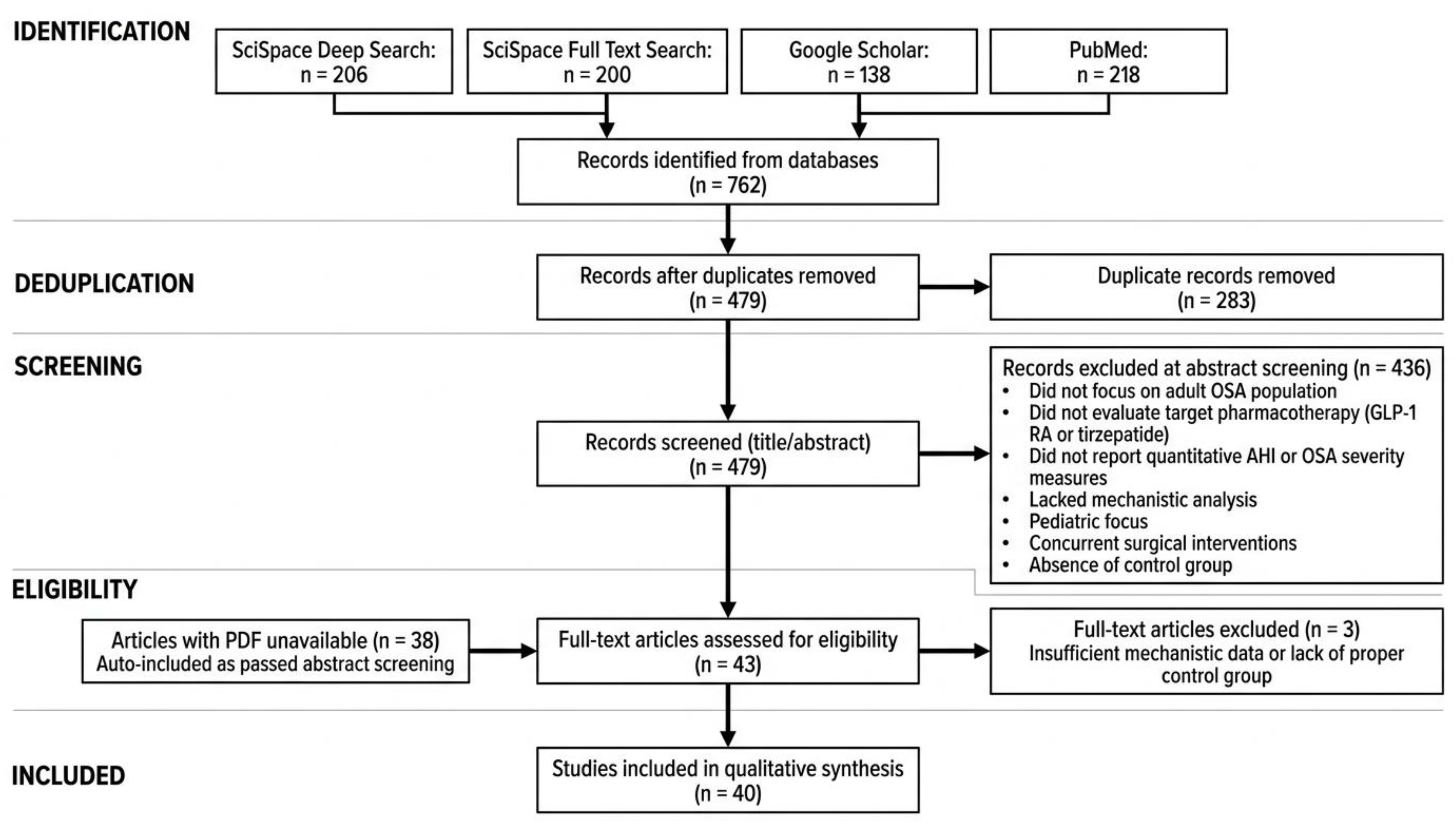
A total of 762 records were identified across all databases.
2.2. Eligibility Criteria
Studies were included if they met the following criteria:
- Involved adult participants (≥18 years) with a confirmed diagnosis of OSA
- Evaluated GLP-1 receptor agonists (e.g., liraglutide, semaglutide) or tirzepatide
- Reported quantitative outcomes related to OSA severity (e.g., AHI, ODI)
Studies were excluded if they:
- Included pediatric populations
- Involved concurrent surgical interventions (e.g., bariatric or upper airway surgery)
- Lacked a comparator group (except for systematic reviews and meta-analyses)
2.3. Screening Process
The study selection process was conducted in accordance with PRISMA 2020 guidelines. After removal of duplicate records, all remaining studies underwent a two-stage screening process.
In the first stage, titles and abstracts were screened against predefined eligibility criteria. Studies that did not meet inclusion criteria were excluded.
In the second stage, full-text articles of potentially eligible studies were assessed for final inclusion. Discrepancies during the screening process were resolved through discussion and consensus.
A total of 762 records were initially identified. After removal of duplicates, 479 records were screened, of which 43 underwent full-text review. Forty studies met the inclusion criteria and were included in the final qualitative synthesis.
2.4. Data Extraction
Structured data extraction was performed for all included studies using a standardized template. Extracted data included study characteristics (design, sample size, and population), intervention details (type of GLP-1 RA or tirzepatide, dose, and duration), and comparator where applicable.
Primary outcomes included changes in apnea–hypopnea index (AHI) and other measures of OSA severity, such as oxygen desaturation index (ODI) and hypoxic burden. Secondary outcomes included body weight or body mass index (BMI) changes, metabolic parameters, and patient-reported outcomes.
Additional data on proposed mechanisms of action, including weight loss–mediated and weight-independent effects, as well as key clinical findings and study limitations, were also extracted.
Data extraction was performed using full-text articles where available and supplemented by abstract data when necessary.
3. Results
3.1. Study Selection
A total of 762 records were identified through database searching. After removal of duplicates, 479 records were screened by title and abstract. Of these, 43 studies underwent full-text review, and 40 studies met the inclusion criteria for qualitative synthesis. The systematic search and screening process is summarized in the PRISMA 2020 flow diagram below.
Figure 1.
PRISMA 2020 flow diagram illustrating the study selection process.
3.2. Study Characteristics
The included studies comprised randomized controlled trials (RCTs), systematic reviews, meta-analyses, and observational studies. Most involved adults with obesity (BMI ≥30 kg/m²) and moderate-to-severe OSA.
Interventions included liraglutide, semaglutide, and tirzepatide, with treatment durations ranging up to 52 weeks. Primary outcomes were consistently reported as apnea–hypopnea index (AHI), with secondary outcomes including weight loss, oxygen desaturation index (ODI), hypoxic burden, and quality of life measures.
3.3. Synthesis of Evidence
3.3.1. Effects on AHI and OSA Severity
GLP-1–based therapies demonstrated significant reductions in AHI across studies.
The SCALE Sleep Apnea trial showed that liraglutide reduced AHI by −12.2 events/h (~25%) [2]. In contrast, the SURMOUNT-OSA trials demonstrated substantially greater reductions with tirzepatide (−25.3 to −29.3 events/h; 50.7%–58.7%) [3,6].
3.3.2. Mechanisms of Action
The reduction in OSA severity is predominantly mediated by weight loss.
3.3.3. Comparative Efficacy Between Agents
3.3.4. Weight Loss Correlation with OSA Improvement
A strong proportional relationship exists between weight loss and reduction in AHI, with greater weight loss associated with greater improvement in OSA severity [7,40].
While some studies suggest partial weight-independent effects, weight loss remains the primary driver of OSA improvement.

Table 1.
Summary of Included Studies Evaluating GLP-1–Based Therapies in OSA.
| Study | Study Design | Population | Intervention | Duration | AHI Reduction (events/h) | Weight Loss (%) | Key Findings |
| SCALE Sleep Apnea [2] | RCT | Obesity + moderate–severe OSA | Liraglutide 3.0 mg daily | 32 weeks | −12.2 (~25%) | 5.7% | Significant AHI reduction; effect mainly weight-mediated |
| SURMOUNT-OSA Trial 1 [3] | RCT | Obesity + OSA (CPAP users) | Tirzepatide 10–15 mg weekly | 52 weeks | −25.3 (50.7%) | 17.7% | Marked reduction in AHI with significant weight loss |
| SURMOUNT-OSA Trial 2 [6] | RCT | Obesity + OSA (non-CPAP users) | Tirzepatide 10–15 mg weekly | 52 weeks | −29.3 (58.7%) | 19.6% | Greater efficacy in non-CPAP group |
| Bardóczi et al. [7] | Meta-analysis | Obesity-related OSA | GLP-1 RAs / Tirzepatide | Variable | Significant reduction | Variable | Tirzepatide superior to liraglutide |
| Li et al. [14] | Meta-analysis | OSA | GLP-1 RAs | Variable | −16.57 (pooled) | Variable | Confirms overall efficacy of GLP-1 therapies |
| Dandamudi et al. [8] | Systematic review & meta-analysis | OSA + metabolic disease | GLP-1 RAs | Variable | Significant reduction | Variable | Improved AHI and cardiometabolic outcomes |
| Kuna et al. [40] | RCT (lifestyle) | Obesity + OSA | Intensive lifestyle intervention | 4 years | −7.7 to −9.7 | ~10% (initial) | Strong correlation between weight loss and AHI reduction |
| Jiang et al. [16] | RCT | T2DM + severe OSA | Liraglutide | Variable | Significant reduction | Variable | Effective in diabetic population |
| Wolsing et al. [24] | RCT | Obesity + COPD + OSA | Liraglutide | Variable | Improvement observed | Variable | Improved QoL and OSA severity |
4. Discussion
4.1. Summary of Findings
This systematic review demonstrates that GLP-1 receptor agonists and tirzepatide significantly reduce OSA severity, as reflected by consistent reductions in AHI across multiple studies. The magnitude of effect is clinically meaningful, with tirzepatide achieving reductions of up to −29.3 events/h (50.7%–58.7%), compared to more modest reductions with liraglutide (−12.2 events/h) [2,3,6]. Meta-analyses further support these findings, showing an overall pooled AHI reduction of −16.57 events/h and consistent superiority of tirzepatide over GLP-1 receptor agonists [1,7,14].
4.2. Mechanistic Considerations
The therapeutic effects of incretin-based therapies on OSA appear to be predominantly mediated by weight loss. Reduction in adiposity improves upper airway patency through decreased pharyngeal fat deposition, reduced neck circumference, and improved lung volumes [7,25]. A strong correlation between weight loss and AHI reduction has been consistently demonstrated across studies [3,40].
However, emerging evidence suggests that additional weight-independent mechanisms may contribute. These include anti-inflammatory effects, reduction in hypoxic burden, and potential modulation of respiratory control and upper airway neuromuscular function [1,23]. Despite these observations, the relative contribution of these mechanisms remains incompletely understood, and current evidence suggests they play a secondary role compared to weight reduction.
4.3. Clinical Implications
The findings of this review have important implications for the management of OSA, particularly in patients with obesity.
First, incretin-based therapies, especially tirzepatide, represent a promising pharmacological approach for reducing OSA severity. The magnitude of AHI reduction observed in clinical trials approaches that seen with established non-invasive therapies and may be clinically meaningful in reducing disease burden [3,6].
Second, these therapies may be particularly valuable in patients who are intolerant of or non-adherent to CPAP, a well-recognized limitation in current OSA management [17,19]. In such patients, pharmacological weight loss offers a viable alternative or adjunct strategy.
Third, GLP-1–based therapies may also be used in combination with CPAP or other interventions to achieve additive benefits, particularly in patients with severe disease or significant metabolic comorbidities [25,30].
From a treatment selection perspective, tirzepatide appears to offer superior efficacy compared to liraglutide, likely due to its dual GIP/GLP-1 receptor activity and greater weight loss effects [1,7,12]. However, considerations such as cost, tolerability, and patient-specific factors remain important in clinical decision-making.
4.4. Limitations
Several limitations should be considered when interpreting the findings of this review.
First, most included studies had relatively short follow-up durations (typically 32–52 weeks), limiting assessment of long-term efficacy, durability of weight loss, and sustained improvement in OSA severity [3,6].
Second, there is a lack of direct head-to-head randomized controlled trials comparing different GLP-1 receptor agonists and tirzepatide, making comparative efficacy largely dependent on indirect evidence [1,19]. In particular data on semaglutide specifically for OSA remain limited [1,11].
Third, the majority of studies focused on populations with obesity-related OSA, which may limit generalizability to patients with non-obesity-related OSA or differing pathophysiological phenotypes [23,35].
Fourth, although weight loss appears to be the primary mechanism underlying OSA improvement, the relative contribution of weight-independent effects remains incompletely characterized due to limited mechanistic data [1,7,23].
Finally, many studies were industry-sponsored, which may introduce potential bias, although the overall methodological quality of major trials remains high [3,6].
These limitations highlight the need for long-term studies, direct comparative trials, and mechanistic research to better define the role of incretin-based therapies in OSA management.
5. Conclusions
This systematic review demonstrates that glucagon-like peptide-1 receptor agonists (GLP-1 RAs) and tirzepatide are effective pharmacological interventions for obesity-related obstructive sleep apnea (OSA), with consistent reductions in apnea–hypopnea index (AHI) across studies . Among these agents, tirzepatide showed superior efficacy, achieving AHI reductions of −25.3 to −29.3 events/h (50.7%–58.7%) in the SURMOUNT-OSA trials, compared with −12.2 events/h (~25%) with liraglutide in the SCALE Sleep Apnea trial. These findings represent the largest reductions reported for pharmacological therapy in OSA.
The therapeutic effects are primarily mediated through substantial weight loss, with strong correlations between weight reduction and AHI improvement. Tirzepatide’s superior efficacy is likely attributable to its greater weight loss effects as a dual GIP/GLP-1 receptor agonist. However, emerging evidence suggests additional mechanisms, including anti-inflammatory effects and reductions in hypoxic burden, although their relative contribution remains uncertain.
These findings have important clinical implications. Incretin-based therapies offer a potential alternative or adjunct to continuous positive airway pressure (CPAP), particularly in patients with obesity-related OSA who are intolerant or non-adherent to CPAP. In addition, the cardiometabolic benefits of these agents may further enhance their clinical value in this population.
Despite high-quality evidence from randomized controlled trials and meta-analyses, important limitations remain, including limited long-term data, lack of head-to-head comparisons, and incomplete understanding of weight-independent mechanisms.
Future research should focus on long-term outcomes, comparative efficacy between agents, and identification of patient subgroups most likely to benefit. Overall, incretin-based therapies, particularly tirzepatide, represent a promising advancement in the management of obesity-related OSA.
Author Contributions
Conceptualization, U.N.D. and T.A.A.; methodology, U.N.D.; validation, U.N.D. and T.A.A.; formal analysis, U.N.D.; investigation, U.N.D.; data curation, U.N.D.; writing—original draft preparation, U.N.D.; writing—review and editing, U.N.D. and T.A.A.; visualization, U.N.D.; supervision, U.N.D.; project administration, U.N.D. All authors have read and agreed to the published version of the manuscript.
Funding
This research received no external funding, and the APC was funded by the authors.
Institutional Review Board Statement
Not applicable.
Informed Consent Statement
Not applicable.
Data Availability Statement
No new data were created or analyzed in this study. Data sharing is not applicable to this article.
Acknowledgments
During the preparation of this manuscript, the authors used ChatGPT (OpenAI, GPT-5.3) for language editing and formatting assistance. The authors have reviewed and edited the output and take full responsibility for the content of this publication.
Conflicts of Interest
The authors declare no conflicts of interest. The funders had no role in the design of the study; in the collection, analyses, or interpretation of data; in the writing of the manuscript; or in the decision to publish the results.
Abbreviations
The following abbreviations are used in this manuscript:
| OSA | Obstructive sleep apnea |
| AHI | Apnea–hypopnea index |
| GLP-1 RA | Glucagon-like peptide-1 receptor agonist |
| GIP | Glucose-dependent insulinotropic polypeptide |
| CPAP | Continuous positive airway pressure |
| BMI | Body mass index |
| ODI | Oxygen desaturation index |
| RCT | Randomized controlled trial |
| PRISMA | Preferred Reporting Items for Systematic Reviews and Meta-Analyses |
| CRP | C-reactive protein |
References
- Alina, Z.; Taw, C. Ryan Chin; P. Kenny P.; Brian, R. GLP-1 Receptor Agonists for Obstructive Sleep Apnea: An Otolaryngologist’s Prescription? Laryngoscope 2025. [Google Scholar] [CrossRef]
- B. A.; et al. Effect of liraglutide 3.0 mg in individuals with obesity and moderate or severe obstructive sleep apnea: the SCALE Sleep Apnea randomized clinical trial. Int. J. Obes. 2016. [Google Scholar] [CrossRef]
- Atul, M. Tirzepatide for sleep-disordered breathing in SURMOUNT-OSA: Time course and association with body weight. Sleep Med. vol. 136, 2025. [CrossRef]
- C. Lawrence, J.; Selvi, R. In adults with moderate-to-severe OSA and obesity, tirzepatide reduced apnea–hypopnea events vs. placebo. Ann. Intern. Med. 2024. [Google Scholar] [CrossRef]
- G. Ronald, R.; et al. O064 Tirzepatide reduced sleep apnea severity in adults with obstructive sleep apnea and obesity: results from the SURMOUNT-OSA trial. Sleep Adv. 2024, vol. 5, no. Supplement_1. [Google Scholar] [CrossRef]
- Malhotra. Tirzepatide for the Treatment of Obstructive Sleep Apnea and Obesity. N. Engl. J. Med. 2024. [Google Scholar] [CrossRef]
- Anna, B.; et al. Efficacy of incretin-based therapies in obesity-related obstructive sleep apnea: a systematic review and meta-analysis of randomized controlled trials. Sleep Med. Rev. 2025. [Google Scholar] [CrossRef]
- Dandamudi, et al. Efficacy of GLP-1 Receptor agonists in treating Obstructive sleep apnea: A systematic review and meta-analysis of cardiometabolic and respiratory outcomes. In Sleep & breathing = Schlaf & Atmung; 2026. [Google Scholar] [CrossRef]
- Wu. Clinical Impact of Tirzepatide on Patients With OSA and Obesity. Chest 2025. [Google Scholar] [CrossRef]
- Scheen. [SURMOUNT-OSA study : tirzepatide improves obstructive sleep apnoea in patients with obesity]. Revue medicale de Liege. 2025. Available online: https://pubmed.ncbi.nlm.nih.gov/40243250.
- Livia, R.; Beatriz, A.; Lucas, B.; J. Rajendra, K.; Porto Silva, J. Carolina Castro. GLP-1 receptor agonists for the treatment of obstructive sleep apnea and obesity. Eur. J. Intern. Med. 2024. [Google Scholar] [CrossRef]
- Gursimran, S. Tirzepatide: A Breakthrough Therapy for Obstructive Sleep Apnea and Metabolic Dysfunction. Curr. Hypertens. Rev. vol. 21, 2025. [CrossRef]
- Muhammad Bilal, A.; Dania, N. Zepbound: A novel pharmacological approach to Obstructive Sleep Apnea management. J. Pak. Med. Assoc. vol. 75(no. 11), 2025. [CrossRef] [PubMed]
- Mingxia, L.; et al. Glucagon-like Peptide 1 Receptor Agonists for the Treatment of Obstructive Sleep Apnea:a meta-analysis. Sleep 2024. [Google Scholar] [CrossRef]
- Cheskin; Rajagopal. In adults with moderate-to-severe OSA and obesity, tirzepatide reduced apnea-hypopnea events vs. placebo. Ann. Intern. Med. 2024. [Google Scholar] [CrossRef] [PubMed]
- wenlong, J.; Weiguo, L.; Jing, C.; Wen, L.; Fang-Yuan, C. Efficacy and safety of liraglutide in patients with type 2 diabetes mellitus and severe obstructive sleep apnea. In Sleep and Breathing; 2022. [Google Scholar] [CrossRef]
- Jason, M.; Noah, S. F. William H., Medications for Obstructive Sleep Apnea. In Cardiology in Review; 2025. [Google Scholar] [CrossRef]
- M, L.; et al. “Glucagon-like peptide-1 receptor agonists for the treatment of obstructive sleep apnea: a meta-analysis”. Available online: https://academic.oup.com/sleep/article-abstract/48/4/zsae280/7913979.
- Steven, L.; David, C.; M. Nathaniel, S.; P. Craig, L.; G. Ronald, R.; Y. Brendon, J. Pharmacotherapy for obstructive sleep apnea: a critical review of randomized placebo-controlled trials. 2025. [Google Scholar] [CrossRef]
- Wang; Xiao. [Progress on tirzepatide, a GIP/GLP-1 receptor agonist, for the treatment of obesity-related obstructive sleep apnea]. Zhonghua jie he he hu xi za zhi = Zhonghua jiehe he huxi zazhi = Chinese journal of tuberculosis and respiratory diseases 2025. [Google Scholar] [CrossRef]
- E. M.N.; NN, E.; RM, A. “Indications, efficacy, and safety of glucagon-like peptide-1 receptor agonists in respiratory diseases: A systematic review”. Available online: https://journals.lww.com/jfmpc/fulltext/2026/03000/indications,_efficacy,_and_safety_of_glucagon_like.22.aspx?context=latestarticles.
- Guglielmo, B.; et al. Estimating Cardiovascular Benefits of Tirzepatide in Sleep Apnea and Obesity: Insight from the SURMOUNT-OSA Trials. Curr. Obes. Rep. 2024. [Google Scholar] [CrossRef]
- D. Danielle, A.; M. Mizuho, S.; M. Karen, C.; Atul, M. Glucagon-like peptide-1 receptor agonists for the treatment of obstructive sleep apnea. Curr. Opin. Pulm. Med. 2025. [Google Scholar] [CrossRef]
- Wolsing, et al. Exploratory Analysis of Liraglutide Effects on Obstructive Sleep Apnea and Health-Related Quality of Life in Individuals With Obesity and COPD: A Secondary Analysis of a Randomised Controlled Trial. Clin. Obes. 2026. [Google Scholar] [CrossRef]
- Amr, A.; Yashashwi, S.; Adil N, A.; Awais, A.; Saleem, N. Mohamed. Bariatric surgery and GLP-1/GIP medications for the treatment of obstructive sleep apnoea: a comprehensive review. In Current obesity reports; 2025. [Google Scholar] [CrossRef]
- SK, W.; ADA, D.; J. C.B.; S, H. “Exploratory Analysis of Liraglutide Effects on Obstructive Sleep Apnea and Health-Related Quality of Life in Individuals With Obesity and COPD: A Secondary …”. Available online: https://onlinelibrary.wiley.com/doi/abs/10.1111/cob.70079.
- Zain, A.; Kanza, F.; Fnu, F.; K. Malik, W.Z.; Izere, S. Tirzepatide: a dual-action solution for obstructive sleep apnea and obesity. Ann. Med. Surg. 2024. [Google Scholar] [CrossRef]
- Y, Y.; X, H.; X, Z.; Z, Z. “Comparative effectiveness and safety of novel antidiabetic agents in the management of obstructive sleep apnea: a systematic review, meta-analysis, and network …”. Available online: https://www.resmedjournal.com/article/S0954-6111(26)00039-9/abstract.
- C, C. S.; O. A. “Continuous positive airway pressure but not GLP1-mediated weight loss improves early cardiovascular disease in obstructive sleep apnea: a randomized proof-of …”. Available online: https://academic.oup.com/annalsats/article-abstract/21/3/464/8382142.
- Chiappa, et al. Comparative effectiveness of continuous positive airway pressure and glucagon-like peptide-1 receptor agonists in obstructive sleep apnea: A network meta-analysis of randomised trials. Diabetes Obes. Metab. 2026. [Google Scholar] [CrossRef]
- AE, H.; R. D.R.; M, A. “Comparative efficacy of tirzepatide, liraglutide, and semaglutide in reduction of risk of major adverse cardiovascular events in patients with obstructive sleep apnea …”. Available online: https://academic.oup.com/annalsats/article-abstract/22/7/1042/8381937.
- Khaim, C. Devya; Khaim, C. Harshika; Saad, K. Muhammad; Zahra, H. Syeda Fadak; Aminath, W.; Aminath, W. Metabolic miracle or misguided shift? tirzepatide in the era of Obstructive Sleep Apnea (OSA). Ann. Med. Surg. 2025. [Google Scholar] [CrossRef]
- M. Caroline S.; et al. The impact of GLP-1 agonists on sleep disorders: spotlight on sleep apnea. Expert Opin. Pharmacother. 2025. [Google Scholar] [CrossRef]
- Viviana, E. Molecular Biomarkers and Therapeutic Approach of Patients with Diabetes and Obstructive Sleep Apnea. Int. J. Mol. Sci. vol. 26(no. 20), 2025. [CrossRef]
- Akhil, A. Amruth; et al. Exploring the therapeutic potential of GLP-1 receptor agonists in the management of obstructive sleep apnea: a comprehensive review. J. Basic Clin. Physiol. Pharmacol. 2025. [Google Scholar] [CrossRef]
- Xinxin, H.; Brendon, Y.; Craig, P.; C. Julia, G. R. Incretins for management of obesity and obstructive sleep apnea. Expert Rev. Respir. Med. 2025. [Google Scholar] [CrossRef] [PubMed]
- Beyza, S.; et al. Evaluating the potential of metabolic drugs in obstructive sleep apnea and obesity: a narrative review. 2025. [Google Scholar] [CrossRef]
- Kyoung, P. Soo; Ho, C. Ji; Kyoung, P. Soo; Ho, C. Ji. Advancing Obstructive Sleep Apnea Management: Recent Trends from Conventional to Innovative Therapies. Stomatology vol. 14(no. 21), 2025. [CrossRef]
- Paschalis, K.; et al. Mitigating Increased Cardiovascular Risk in Patients with Obstructive Sleep Apnea Using GLP-1 Receptor Agonists and SGLT2 Inhibitors: Hype or Hope? Adv. Cardiovasc. Dis. 2024, vol. 12(no. 11). [Google Scholar] [CrossRef]
- K. Samuel, T.; et al. Long-Term Effect of Weight Loss on Obstructive Sleep Apnea Severity in Obese Patients with Type 2 Diabetes. Sleep 2013, vol. 36(no. 5). [Google Scholar] [CrossRef]
Disclaimer/Publisher’s Note: The statements, opinions and data contained in all publications are solely those of the individual author(s) and contributor(s) and not of MDPI and/or the editor(s). MDPI and/or the editor(s) disclaim responsibility for any injury to people or property resulting from any ideas, methods, instructions or products referred to in the content. |
© 2026 by the authors. Licensee MDPI, Basel, Switzerland. This article is an open access article distributed under the terms and conditions of the Creative Commons Attribution (CC BY) license (http://creativecommons.org/licenses/by/4.0/).
Copyright: This open access article is published under a Creative Commons CC BY 4.0 license, which permit the free download, distribution, and reuse, provided that the author and preprint are cited in any reuse.


