

Submitted:
28 May 2026
Posted:
29 May 2026
You are already at the latest version
Abstract
The gastrointestinal and respiratory tracts are closely connected through a bidirectional network known as the gut–lung axis, in which microbiota serve as key mediators of inter-organ communication. This axis involves both the extensively studied gut microbiota and the low-biomass lung microbiota, once considered to be sterile. Through regulation of in-nate and adaptive immune responses and production of bioactive metabolites, microbiota contribute to local and systemic immune homeostasis. Disruption of microbial composi-tion or function, known as dysbiosis, may contribute to disease initiation and progression. However, the mechanisms underlying gut-to-lung and, particularly, lung-to-gut commu-nication remain incompletely defined. This review summarizes existing evidence on the composition and physiological roles of gut and lung microbiota, including their effects on epithelial barrier integrity, immune maturation, pathogen resistance, and microbi-al-derived metabolite production. It further discusses how gut microbiota, their derived metabolites, and immune-cell regulation support pulmonary defense and modulate air-way inflammation. Conversely, it examines how pulmonary conditions may disrupt in-testinal barrier function, alter gut microbial communities, and promote intestinal inflam-mation. Overall, this review highlights the importance of bidirectional microbial and im-munological crosstalk in maintaining local and systemic health and influencing disease susceptibility across both organ systems.
Keywords:
gut-lung axis
; immune response
; lung-gut axis
; microbiota
; respiratory infections
1. Introduction
Historically, the gastrointestinal and respiratory tracts were often viewed as anatomically distinct and independent systems, but emerging evidence indicates that microbiota are essential in maintaining normal physiological functions of the human organs whereas dysbiosis of these microbial communities in both the gut and lungs is intimately linked to the pathogenesis of various pulmonary and systemic diseases[1]. The interactions between these two mucosal sites form a network known as the gut-lung axis, which emerged as an important concept explaining how intestinal microbial communities influence respiratory immunity, inflammation, and disease susceptibility[2]. There are multiple underlying mechanisms involved in these relationships including the gut microbial themselves, their metabolites, immune modulatory effects, and other direct physical interaction[3]. Unlike the well-known gut-brain or gut-liver axis, data regarding gut-lung axis is still relatively unclear. Therefore, this review was written to analyze existing research findings and clarify the basis mechanisms of gut–lung communication with additional attention to the less well-characterized lung–gut axis, in order to clarify how bidirectional mucosal crosstalk contributes to respiratory and gastrointestinal health and disease.
2. Microbiota
Microbiota refers to the community of living microorganisms including bacteria, yeasts, and viruses that inhabit a specific environment, such as the oral cavity or the gastrointestinal tract. In contrast, the microbiome not only referred to the living organisms themselves, but also the collective genetic material of these microorganisms, along with their structural components, metabolic products, and the surrounding environmental context[3]. The first descriptions of the human microbiota were recorded between 1670 and 1680 by Antonie van Leeuwenhoek. Using a handcrafted microscope, he discovered five different types of small living organisms in specimens taken from his own mouth, as well as from the oral and fecal samples of others. He referred to these organisms as animalcules, which are now known as bacteria. He also noted that different body sites and varying health conditions were associated with distinct bacterial populations[4].
Human microbiota varies across different organs. The gut is the most well-established organ in terms of microbiota composition. However, other organs also contain microbiota, but in smaller amounts. The oral cavity represents the second largest microbial community in humans. It can be further divided into several sub-sites, including saliva, the tongue, tooth surfaces, gums, buccal mucosa, palate, and subgingival and supragingival plaque. The major bacterial phyla present in the oral cavity are Firmicutes, Proteobacteria, Bacteroidetes, Actinobacteria, and Fusobacteria. Other organs, including the lungs, skin, and vagina, also contain distinct microbiota[3].
2.1. Gut Microbiota
Approximate 104 species of bacterial flora and up to 14 bacterial genera inhabit the human gastrointestinal tract with more than 1011 - 1012 of microorganisms per gram of intestinal tissue[2,3,5,6]. Colonization of these bacterial begins early in life, starting soon after birth. The composition of these gut microbiota changes over time since infants[5]. They become similar as in adulthood after more than one to three years of age as solid foods are introduced[3,5]. The main children’s microbiota is Akkermansia muciniphilia, Bacteroides, Veillonella, Clostridium coccoides spp., and Clostridium botulinum spp. The amount of microbiota increases with age[7]. In healthy individuals, approximately 90% of the normal gut flora are anaerobes while facultative anaerobes and aerobes are the comprise the remaining portion[6]. The predominant gut microbiota identified in order of numerical importance are Firmicutes, Bacteroidetes, and Actinobacteria. The lesser in number of bacterial genera are Verrucomicrobia, Fusobacteria, and Spirochaetes, Proteobacteria, and Verrucomicrobia[8]. The number of the gut microbiota decrease after more than 70 years of age. There is a decrease in Bifidobacterium and increase in Clostridium and Proteobacteria. The attenuation of the inflammatory status is related to the decrease in Bifidobaerium, an anaerobic specie, which plays a role in enhancing human immune system[9]. Rather than bacteria, other organisms are also found in the intestine including fungi such as Candida, Saccharomyces, Malassezia, and Cladosporium; viruses; phages; and archaea[10,11].
Variation in physiochemical factors such as intestinal motility, pH, host secretion including gastric acid, bile, digestive enzyme, and mucus, and presence of intact ileocecal valve lead to distinctive bacterial distributions along different segments of the gut. Consequently, only a few bacterial species are present in the upper gastrointestinal tract due to its harsh environment characterized by low pH and its phasic propulsive motor activity[12,13]. In contrast to the lower gastrointestinal tract, particularly the colon, contains a large number of viable bacteria[13]. Small intestine has shorter transit time and higher bile concentration, while colon has slower flow rates, more space, and more nutrient, which is more suitable for microbial communities[12]. Furthermore, several factors can influence bacterial colonization including antibiotics use, pre- or probiotic use, illness, stress, aging, diet, living environment, and lifestyle[14].
Normal gut flora perform various essential functions in maintaining physiologic hemostasis[15]. These include generation of some metabolites by the microbiota that could not be found in diet or produced by human cells[16]. One of these metabolites are short-chain fatty acids (SCFAs) such as acetic, propionic, and butyric acids through fermentation of non-digestible dietary fibers including undigested complex carbohydrates[17]. This process mainly occurs in the ileum and proximal region of the cecum and colon. The products, especially for butyrate, not only become energy source for the colonic mucosa and peripheral tissue, but also play role in protective factors for the intestinal barrier[18]. Further benefits of the gut microbiota are vitamin K synthesis especially in patients with low vitamin K intake; and deconjugation of bile acids for enterohepatic circulation[15]. Bile acids are secreted into the intestinal lumen in conjugated forms, which is increase its solubility, but are poorly absorbed by the intestinal mucosa. Therefore, gut microbial enzymes help deconjugate these compounds, facilitating further modification and passive reabsorption[19].
Moreover, they play a crucial role in promoting barrier integrity and protecting against pathogenic or exogenous microorganisms’ invasion of the mucosa[15]. The normal gut barrier integrity consists of two main barriers which are the mechanical and immune barrier. The mechanical barrier includes a single layer of intestinal epithelial cells, enterocytes and mucus. The gut immune barrier functions consist of secreted immunoglobulin A (IgA) and gut-associated lymphoid tissue (GALT) including intraepithelial lymphocytes, Peyer’s plaques, lamina propria, and mesenteric lymph node[5].
Gut microbiota enhances the mechanical barrier of the gut by various mechanisms. They stimulate the intestinal epithelial proliferation and differentiation as well as regulate human intestinal epithelial tight-junction proteins resulting in strengthen of the epithelial barrier which prevent the pathogenic bacterial invasion[15,20]. The gut microbiota acts directly by competition for nutrients and mucosal binding sites in the colon resulting in preventing the foreign bacteria. Regarding the SCFAs produced by these microbials, these acids decrease the intestinal and fecal pH by influencing the colonic water absorption which resulting in inhibiting the growth of the invasive bacteria[5]. The gut microbiota also produces toxic metabolites from proteolytic fermentation in the distal colon and carcinogenic metabolites such as bacteriocins, ammonia, and phenols that also inhibit the pathogenic bacterial growth[21].
Regarding the immune barrier, gut microbiota influent the mucosal immune system both pro-inflammatory and regulatory effect. Since gut microbiota contains lipopolysaccharides (LPSs) and peptidoglycan (PGN), the components of the bacteria cell wall. They have the ability to modulate gut immunity[22]. These microbe-associated molecular patterns (MAMPs) are recognized by human cells which express pattern-recognition receptors (PRRs) such as Toll-like receptors (TLRs) or NOD-like receptors (NLRs) and resulted in modulating host immune response[16]. These MAMPs individually or synergistically stimulate the nuclear factor-kB (NF-kB) effector production resulting in generation of inflammatory cytokines including tumor necrosis factor-α (TNF-α), interleukin-1β (IL-1β), and antimicrobial peptides which acts as the defense against exogenous pathogens in response to the acute and excessive stimulation. Furthermore, chronic stimulation of the PRRs by PGN is able to prime the antigen-presenting cells or dendritic cells leading to increase function of active regulatory T cells (CD4+CD26L+) (Treg). These result in inhibitory cytokine production including transforming growth factor β (TGF-β) and IL-10, which helps minimized excessive tissue injury from inflammation[22].
Again, the production of SCFAs, especially butyrate, has the immunomodulatory effect on by interacting with G protein-coupled receptor 109A (GPR109A) or hydroxycarboxylic acid receptor 2 (HCAR2) and enhancing differentiation of the naïve T cells into Tregs resulting in immunosuppressive state[23,24]. Furthermore, it acts directly through acetylation of key gene sites such as Foxp3 by inhibiting histone deacetylase (HDAC) activity in which promote the differentiation and function of Tregs, resulting in suppression of the proinflammatory cytokine production[23]. Acetate signals through G protein-coupled receptor 43 (GPR43) or free fatty acid receptor 2 (FFAR2) to regulate neutrophil and innate lymphoid cells 3 (ILC3)–mediated defense against extracellular bacteria and fungi[25]. These gut microbiota, not only bacteria, but fungi including fumigatus are also able to generate SCFAs[26].
There are some other gut-derived microbial metabolites that are documented to have immunomodulatory effects including indole derivatives produced from dietary tryptophan metabolism, niacin, polyamines (PAs) produced from L-arginine metabolism, urolithin A, and organic acids such as pyruvate and lactate[16]. Administration of lactate or pyruvate stimulates CX3CR1⁺ monocytes with intact GPR31, to protrude their dendrites into the intestinal lumen to sample for luminal antigen, thereby enhancing immune responses and resistance to Salmonella infection[27].
Segmented filamentous bacteria (SFB) including members of Bifidobacterium and Bacteroides genus produce antimicrobial peptides, secretory IgA, and pro-inflammatory cytokines resulting in supporting the immunity of the gut barrier. Apart from bacteria, fungi also have potential benefit in the aspect of intestinal infection. Previous animal models study showed that C. albicans increased the level of IL-17A which resulted in protective effect against C. difficile infection[28]. Saccharomyces boulardii also has protective defense again C. difficile infection by its secreted protease digestion of the toxin A and B[29].
Any interventions that alter the balance of the normal flora may result in the overgrowth of endogenous flora or infection of exogenous pathogens. This abnormality can interfere with the circulating lymphocytes leading to systemic immune dysregulation. Persistent dysbiosis may progress from local to systemic inflammation and outgrowth of opportunistic pathogens[15].
2.2. Lung Microbiota
The lungs were once considered a sterile organ, however, advances in novel detection technologies have revealed that they harbor low-biomass bacterial communities[30]. As the lungs have the largest surface area of 50-100 m2, they expose to more than 7000 liters of microbial-filled air daily[30,31]. The gut and lung are the main organs which expose to the external environment most[23]. Eventually, respiratory tract composes of 103 – 105 CFU per gram of lung tissue[32] and more than 600 bacterial species[33]. Lung microbiota begin colonization in the airway since childbirth[34].
The main genera of lung microbiota includes Prevotella, Veillonella, and Streptococcus, based on the study investigated by the 16s rRNA gene sequencing, which is the same in both childhood since 7 weeks of age and adult[33,34]. Mode of delivery may influence lung microbiota composition, with cesarean section favoring skin-associated taxa such as Staphylococcus spp., whereas vaginal delivery is more commonly associated with vaginal microbes, including Ureaplasma spp[34]. In the view of the fungi, most common species detected in the lung microbial community include Aspergillus, Penicillium, Cryptococcus, Eurotium, and Candida, with Candida species predominating[35].
Lung microbiota exhibits significant compositional similarity to oral bacterial communities but with lower concentration, while differing considerably from nasal microbiota, supporting the concept of a continuous microbial axis extending from the mouth to the lungs and gut[36]. The composition and diversity of lung microbiota change dynamically through microbial immigration, replication, and elimination process. Microbial immigration is the result of micro-aspiration of saliva in which contain sufficient amount of bacteria or dispersion from the oropharynx or nasopharynx into the respiratory tract[30]. Although unproven, physiological micro-aspiration is thought to occur predominantly during sleep, when supine posture and reduced laryngeal and cough reflex activity favor aspiration[37]. Active replication of the microbiota occurs despite varies pulmonary environmental factors including high surfactant levels, oxygen tension, redox status, and mucosal pH, etc. Elimination by coughing, mucociliary clearance, and immune defense is also an important process for keeping balance amount of microbial biomass to maintain gas exchange in the lung. Also, these microbiota usually transiently colonization rather than resident in healthy individual. The number of microbials presented in the lung is determined by the previous three factors. However, in healthy lung, the microbial composition is mostly determined by the immigration and elimination[33]. If there is a dramatically increase in immigration or decrease in elimination, it may lead to dysregulation of airway immunity, progressive lung injury, and inflammation[30,33]. In contrast to the chronic lung disease, the structure of the pulmonary microbiome becomes increasingly shaped by local environmental conditions and species-specific growth advantages rather than the immigration and elimination processes. Multiple changes such as anoxia from excessive mucous production, increased vascular permeability, and increased inflammatory cells and its inflammatory by-product including cytokines, catecholamines, and temperature of the airway and alveoli during lung diseases might be selective for growth of some bacterial species e.g. Pseudomonas aeruginosa, Streptococcus pneumoniae, Staphylococcus aureus, Burkholderia cepacian complex. In summary the persistent bacterial colonization is the bacterial species that have adapted to the altered injured pulmonary environment[33].
In long term effect, in normal homeostasis, the microbial colonization delivers essential factors that drive the maturation of local immune cells involving both innate and adaptive immunity[11,38]. The absence of lung-specific microbial communities has been associated with increased Th17- and neutrophil-dominant mucosal immune profiles and reduced innate immune activity, indicating that the lung microbiota may exert important immunomodulatory effects[39].
3. Gut-Lung Axis
3.1. Gut-Lung Axis
The first model of gut-lung axis was introduced in 1990, describing the development of acute respiratory distress syndrome (ARDS) following septic shock. In this model, bacterial products translocate from the intestinal lumen into the bloodstream due to increase intestinal mucosal barrier permeability. The substances pass through the liver and activate Kupffer cells leading to stimulation of inflammatory mediators such as TNF-α, IL-1, and IL-6 that trigger the neutrophil degranulation in the lung, leading to ARDS[40].
Emerging evidence indicates that dysbiosis of microbial communities in both the gut and lungs is linked to the pathogenesis of acute and chronic pulmonary diseases[30,41]. This interaction is bidirectional, however, the gut–lung axis generally exerts a stronger influence than the lung–gut axis[41]. The lung and gut share a common endodermal origin and are composed of columnar epithelial cells equipped with microvilli in the gut or cilia in the respiratory tract. These specialized cells serve as both mechanical and immune barriers, acting in concert with associated lymphoid tissues to preserve mucosal immune homeostasis. Both the gut and lungs secrete mucus via goblet cells and release secretory IgA; however, IgA production is less abundant in the pulmonary tract than in the intestine[2]. The gut-lung axis interaction is demonstrated in Figure 1.
The oral cavity serves as a common anatomical gateway for both the gastrointestinal and respiratory tracts. Lung microbiota exhibits significant compositional similarity to oral bacterial communities but with lower concentration, while differing considerably from nasal microbiota, supporting the concept of a continuous microbial axis extending from the mouth to the lungs and gut[36,41]. This phenomenon can be explained by the migration of microorganisms from the oral cavity to the gastrointestinal tract through swallowing followed by some micro-aspiration[36]. This event allows some bacteria to also be inhaled into the lungs. Other mechanisms for example, in cases of gastroesophageal reflux (GERD), gastric contents can regurgitate into the mouth and subsequently be aspirated into the lungs[41].
Gut-derived metabolites including SCFAs and amino acid derivatives are absorbed by enterocytes and enter the portal circulation. After the first pass metabolism by the liver, they enter the systemic circulation and distribute to all organ including lungs. With large surface area of the blood-gas interface of the lungs, it highly effective in receiving circulating signals[23]. Another pathway of transferring immunomodulatory molecules, lipids, and immune cells is the mesenteric-thoracic duct pathway. The intestine is drained by the mesenteric system, unlike the portal vein, mesenteric lymph nodes drain into the cisterna chyli, subsequently into the thoracic duct, and finally mixing into the left subclavian vein bypassing the liver entirely. Lastly the venous is pumped into the pulmonary circulation and enters the lungs[42]. In some cases, pathogenic intestinal bacteria can translocate across the gut barrier into the systemic circulation via the mesenteric pathway and subsequently trigger pulmonary inflammation upon reaching the lungs by this lymphatic pathway[43]. Furthermore, inflammatory gastrointestinal disease increases systemic inflammatory mediators that may disseminate to the lungs, thereby shaping immune response magnitude and plasticity[16].
There are other various pathways of gut-lung axis communication in the view of regulating immune cell migration between these sites[43]. Gut microbiota and their metabolites promote B- and T-cell expansion within Peyer’s patches and mesenteric lymph nodes and may be critical for directing immune cell trafficking from the intestine to the lungs[25]. Gut microbiota modulates immune function via local and systemic mechanisms that engage CD8+ T cells, Th17 cells, multiple ILs, and NF-kB–dependent signaling pathways[43]. A balanced gut microbial community enhances host resistance to respiratory bacterial and viral infections[41]. Additionally, dysbiosis of these microbiota leads to inflammatory response resulting in lung injury, pulmonary fibrosis, and carcinogenesis[43].
Direct effect of the gut microbiota to modulation of lung immunity for example the presence of the microbial components is transported to the lung while the circulation. Regarding experiment in animal models, intraperitoneal injection of LPS in antibiotic-treatment mice revealed restoration of effective immune response to influenza lung infection by increased expression of mRNA for pro–IL-1β and pro–IL-18 at steady state[44].
Not only microbial components that could cause impact to the pulmonary immunity transferred via the systemic circulation but microbiota-related metabolites also have similar modulatory effect. Unmetabolized SCFAs that have not been used by the gastrointestinal tract are reported to transport to the systemic circulation and involved in the process of peripheral organs immune modulation including bone marrow[16]. Regarding influenza pulmonary infection in animal model, administration of diet-derived SCFAs, especially butyrate, modifies bone marrow hematopoiesis leading to enhanced Ly6c- patrolling monocytes generation. This results in decrease CXCL1 production in the airway which eventually attenuates neutrophil recruitment[45]. Beyond localized effects as mentioned, gut-derived Tregs via inhibition of HDAC transit through systemic circulation to the lungs, where they attenuate inflammation[23]. They also stimulate CD8+ T cells response, simultaneously. This balance the effect both innate and adaptive immunities resulting in promotion of influenza infection resolution with less immune-mediated pathology[45]. Acetate had shown to augment both number and function of the Tregs via epigenetic effect resulting in suppression of allergic airways disease[46]. Oral administration of propionate modulated bone marrow hematopoiesis through GPR41/FFAR3 on the macrophage and dendritic cell progenitors leading to increased numbers of these cells and enhanced pulmonary phagocytic activity while suppressing T helper type 2 (Th2) responses, resulting to preventing allergic inflammation and subsequent asthma[47] SCFAs also regulate the alveolar macrophages via GPR41 and GPR43 by enhancing the IL-10 secretion while inhibiting the pro-inflammatory cytokines including TNF-α, IL-1β, and IL-6[23]. SCFAs treatment mice showed lower fewer IL4-producing CD4+ T cells and circulating immunoglobulin E (IgE), the underlying mechanism of allergic response and inflammation[48]. Moreover, in germ free mice, more lymphocyte and eosinophil infiltration, Th2-associated cytokines, and IgE level leading to allergic airway inflammation are documented[49]. In general, SCFAs strengthen the pulmonary epithelial barrier integrity through the phosphorylation of the tight junction protein including occluding and claudin[50].
Indole derivatives once they enter the systemic circulation and reach the lungs, these substances act as the ligand for the aryl hydrocarbon receptor (AhR), a ligand-activated transcription factor expressed by immune cells and epithelial cells. Upon ligand binding, AhR is translocated to the nucleus and drives the expression immunosuppressive transcriptional process by modulating functions of dendritic cells, macrophages, T cells, and B cells, resulting in immunosuppressive state to attenuate lung inflammation[51].
PAs are substances converted from arginine by multiple gut microbiota for example E. coli[52]. Their functions are stimulation of the phagocytic activity of the alveolar macrophages; attenuation of inflammatory cytokine including TNF-α, IL-1β, and IL-6; and antioxidation of pulmonary free radical as from smoking[23].
Desaminotyrosine (DAT) is a by-product from flavonoids produced by gut microbiota, especially Clostridium orbiscindens, which enhances the type I interferon (IFN) signaling and results in influenza defense[53].
The presence of SFB in the gut, either through natural colonization or probiotic supplementation had been shown to induce higher levels of IL-22, larger numbers of IL-22(+) TCRβ(+) cells, Th17 cells via CD4+ T-cell polarization with lower infection severity of Staphylococcus aureus pulmonary infection, bacterial burdens in the lungs, lung inflammation, and mortality[54]. Th17 cells also stimulate antimicrobial peptides such as β-defensin 2 to enhances the mucosal immunity[43]. However, higher Th2 and Th17 cells were found in asthma[55]. Administration of herbal agents that modulate gut microbiota composition increases circulating propionate and butyrate levels, suppresses TLR4/MyD88/NF-κB signaling in both lungs and intestinal tissues, and inhibits Th2 and Th17 cell migration[56]. In autoimmune contexts, SFB drive robust Th17 differentiation, with systemic expansion and preferential lung homing mediated by pulmonary chemokines such as CCL20[57]. Pathogenic dual TCR–expressing Th17 cells capable of recognizing both SFB-derived peptides and self-antigens further amplify autoimmune inflammation, particularly in the lung[57].
There are also evidences of direct migration of immune cells between organ including the intestine and lungs. ILC are T cell lymphocytes found in intestinal lamina propria involved in host defense, tissue repair, metabolic regulation, and inflammation[58]. During parasitic infection, IL-33 and IL-25 mediate ILC2 expansion, and proliferating ILC2 secrete IL-5 and IL-13 to support host resistance[25,59]. Lung ILC2 may originate from local pulmonary proliferation or from peripheral circulation, including populations derived from the intestine[60]. Intraperitoneal injection of IL-25 induced the circulation of ILC2 cell from the intestine to the lung tissue[58]. Lung-migrating ILC2 secrete cytokines essential for host defense and immune-mediated tissue damage control. However, ILC2 presentation was associated in many allergic disorders and eosinophilic inflammation including allergic rhinitis, asthma, atopic dermatitis, and food allergies[59]. Butyrate, but not acetate or propionate, suppressed IL-5 and IL-13 production by murine ILC2s, and both systemic and local butyrate administration markedly reduced ILC2-driven airway hyperresponsiveness and inflammation[61]. IL-1β and IL-23–activated ILC3 produces IL-17 and IL-22, contributing to immunity against extracellular bacteria and fungi. Pulmonary ILC3 accumulation reflects cellular trafficking rather than local proliferation[25]. Detection of the commensal bacterial colonization or the present of butyrate is the stimulant for the migration of IL-22-producing ILC3 into the lungs which has essential role for pneumonia prevention[62].
3.2. Lung-Gut Axis
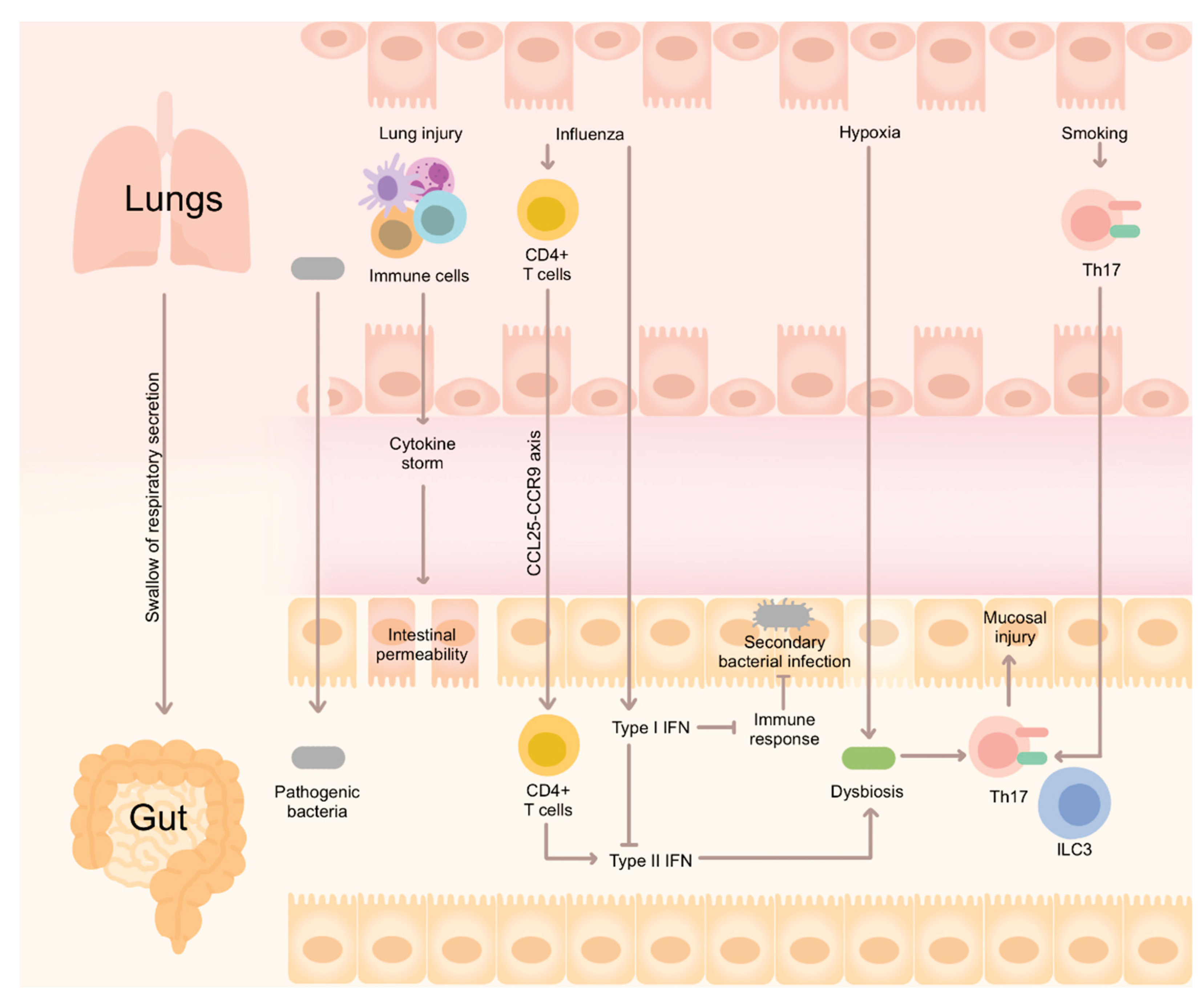
The lung-gut axis demonstrates a bidirectional relationship where respiratory conditions might also result in changes in gut homeostasis and gut microbiota communities which is also known as the lung-gut axis. Compared with gut-to-lung communication, the reverse lung–gut axis remains less clearly defined with sparse information limited to lung injury and infection. The lung-gut axis actions through multiple mechanisms including direct physical interaction, bacterial translocation, systemic inflammation, and immune cell trafficking. The main pathway of lung-gut axis communication is demonstrated in Figure 2.
Regarding this lung–gut axis, one proposed mechanism involves the most direct physical transmitting of secretion of substances, pathogens, and inflammatory cytokines from the lungs that are cleared through mucociliary transport. This process moves mucus from the lower respiratory tract toward the pharynx, and subsequently swallowed or expectorated[41].
Another pathway involves the translocation of pulmonary bacteria into the systemic circulation following severe lung injury, with subsequent dissemination to the intestine. In an animal study, acute pulmonary LPS instillation rapidly altered lung microbiota communities and induced neutrophil recruitment. While lung bacterial communities slight nonsignificant reduced from 4 to 48 hours followed by recovered at 72 hours, increased bacterial loads with similar communities as the bronchoalveolar lavage were also detected in the blood. Furthermore, the cecum showed a significant rise in total bacterial load but without changes in diversity. Together these support the concept of bacterial translocation from the injured lung into the bloodstream and consequently reach the distance organ including intestine[63].
Indirect mechanism occurs through severe lung inflammation, which triggers a systemic cytokine storm that damages the intestinal barrier. In conditions such as ARDS or other forms of lung injury, pulmonary capillary damage occurs, leading to the migration of immune cells into the lungs and the subsequent release of large amounts of pro-inflammatory cytokines, including TNF-α, IL-1β, IL-6, and IL-8, into the systemic circulation. When these cytokines reach the gut, they induce functional alterations in tight junction proteins, such as claudins and occludin, and activate myosin light chain kinase, resulting in marked intestinal hyperpermeability. Furthermore, pro-inflammatory cytokines, including TNF-α, can bind to TNF receptors on intestinal epithelial cells and promote local inflammation through the NF-κB pathway, further exacerbating intestinal barrier disruption[64].
Another indirect mechanism linking lung injury to intestinal inflammation involves lung-derived immune cell migration, gut microbiota alteration, and subsequent immune activation. In an animal model of influenza lung infection, intestinal injury was not caused by direct viral infection of the gut[65,66]. Instead, lung injury activated CCR9+CD4+ T cells in the lungs, which then migrated to the intestine through the CCL25–CCR9 axis. CCL25 is highly expressed by intestinal epithelial cells, but not by non-mucosal organs such as the liver and kidney, and specifically guides CCR9-expressing effector lymphocytes to the small intestine[65]. Once in the intestine, these lung-derived CD4+ T cells secrete IFN-γ, a type II IFN, thereby disrupting microbial homeostasis[65]. This dysbiosis is characterized by reduced SFB and Lactobacillus, along with increased Enterobacteriaceae including E. coli[65,66]. SFB are Clostridia-related bacteria that closely adhere to the intestinal epithelium and support host defense through antimicrobial production and enhanced colonization resistance against intestinal pathogens[66]. E. coli, in contrast, stimulates IL-15 expression in intestinal epithelial cells, which promotes Th17 polarization, and contributes to intestinal immune injury[65]. The enrichment of these Proteobacteria, has been observed in various human intestinal inflammatory disorders such as Crohn’s disease and enteropathy in individuals infected with human immunodeficiency virus (HIV). Influenza-induced type I IFN also contribute to this process by promoting gut dysbiosis and increasing susceptibility to secondary enteric bacterial infection, particularly by Enterobacteriaceae. This occurs through suppression of protective intestinal immune responses, including reduced IFN-γ antibacterial activity, decreased IL-6 and CXCL2, impaired macrophage activation and neutrophil recruitment, and increased IL-10, ultimately weakening intestinal immunity and promoting bacterial dissemination[66].
Smoking has also been shown to have similar pathway of inflammatory response through increase Th17 cells in not only the lungs, but also in the circulation and intestine. These cells produce IL-17A, which promotes neutrophil recruitment and local inflammation. This response is accompanied by increased IL-1β and reduced anti-inflammatory IL-10 levels. In the gut, increased ILC3s also produces IL-17A, further amplifying intestinal inflammation, immune cell infiltration, and histopathological colitis scores[67].
Clinical studies further support the presence of gut dysbiosis during respiratory viral infections. Using 16S rDNA sequencing of fecal samples, altered intestinal bacterial richness and diversity have been observed in patients with COVID-19 and influenza A/H1N1 pulmonary infection compared with healthy controls[68]. Patients with COVID-19 showed reduced intestinal bacterial diversity, increased relative abundance of opportunistic pathogens such as Streptococcus, Rothia, Veillonella, Actinomyces, Clostridium, and Bacteroides, and decreased abundance of beneficial symbionts[68,69]. In contrast, patients with H1N1 infection showed reduced abundance of anaerobic butyrate-producing bacteria, including Lachnospiraceae and Ruminococcaceae, along with increased opportunistic pathogens such as Enterococcus, Prevotella, Finegoldia, and Peptoniphilus. The relative abundance of Streptococcus and Escherichia/Shigella is also significantly higher in COVID-19 and H1N1 patients, respectively[68].
A further consequence of gut dysbiosis caused by viral respiratory infections is a significant reduction in SCFAs, the well-known energy source for the intestinal cells. This metabolic disturbance may affect the production of alpha-galactosylceramides, lipid ligands recognized by invariant natural killer T cells, which then potentially impairing these cells immune regulation[70]. Moreover, changes in intestinal oxygen availability, together with systemic hypoxia caused by respiratory failure, may shift the gut environment toward the expansion of facultative anaerobes and opportunistic pathogens[64,70].
4. Conclusions
In conclusion, the gut–lung axis represents an integrated bidirectional network through which microbial communities, microbial-derived metabolites, mucosal barrier function, and immune-cell trafficking coordinate responses between the gastrointestinal and respiratory systems. This review summarizes how gut microbiota and their derived metabolites, particularly short-chain fatty acids, influence immune cells trafficking and exert profound immunomodulatory effects on the lungs via systemic and lymphatic pathways, thereby reinforcing pulmonary defenses against infections and attenuating airway inflammation. Conversely, in term of the lung-gut axis, the review elucidates those severe pulmonary insults, such as acute respiratory distress syndrome or viral infections, can trigger systemic cytokine storms and immune cell migration that profoundly disrupt the intestinal mechanical barrier and microbial homeostasis resulting in gut inflammation. Although these lung-to-gut mechanisms still remain less clearly characterized than gut-to-lung signaling. Together, these findings suggest that lung–gut interactions are not mediated by a single mechanism, but by multiple interconnected and bidirectional pathways. Disruption of any part of this network may alter microbiota and mucosal immune homeostasis, thereby influencing respiratory and intestinal health and disease development.
Despite recent advances in understanding the complex bidirectional crosstalk between the respiratory and gastrointestinal tracts, significant knowledge gaps remain, particularly regarding the less-characterized lung-to-gut pathway. The precise mechanisms, temporal sequence, and clinical relevance of this communication require further investigation. Future research should prioritize elucidating the specific molecular mechanisms by which alterations in the lung microbiota affect intestinal barrier integrity and regulation. Longitudinal studies together with advanced experimental interventions, will be important for defining the temporal dynamics of these microbiota changes their immunomodulatory effects during the progression of respiratory and gastrointestinal diseases. Further human studies are also needed to confirm whether pathways identified in experimental models are clinically relevant, to identify reliable biomarkers, and to assess the potential of microbiota-targeted screening and therapeutic strategies for diseases involving both the gut–lung and lung–gut axes.
Author Contributions
Writing—original draft preparation, S.V.; Writing—review and editing, D.W.
Funding
This research received no external funding.
Institutional Review Board Statement
Not applicable.
Informed Consent Statement
Not applicable.
Abbreviations
The following abbreviations are used in this manuscript:
| AhR | aryl hydrocarbon receptor |
| ARDS | acute respiratory distress syndrome |
| DAT | desaminotyrosine |
| FFAR | free fatty acid receptor |
| GALT | gut-associated lymphoid tissue |
| GPR | G protein-coupled receptor |
| HCAR | hydroxycarboxylic acid receptor |
| HDAC | histone deacetylase |
| IgA | immunoglobulin A |
| IgE | immunoglobulin E |
| IL | interleukin |
| ILC | innate lymphoid cells |
| LPS | lipopolysaccharide |
| MAMP | microbe-associated molecular pattern |
| NF-kB | nuclear factor-kB |
| NLR | NOD-like receptor |
| PA | polyamine |
| PGN | peptidoglycan |
| PRR | pattern-recognition receptor |
| SCFA | short-chain fatty acid |
| SFB | segmented filamentous bacteria |
| spp. | species |
| TGF-β | transforming growth factor β |
| Th | T helper |
| TLR | toll-like receptor |
| TNF-α | tumor necrosis factor-α |
| Treg | regulatory T cells |
References
- Bäckhed, F.; Ley, R.E.; Sonnenburg, J.L.; Peterson, D.A.; Gordon, J.I. Host-Bacterial Mutualism in the Human Intestine. Science 2005, 307, 1915–1920. [Google Scholar] [CrossRef]
- Budden, K.F.; Gellatly, S.L.; Wood, D.L.; Cooper, M.A.; Morrison, M.; Hugenholtz, P.; Hansbro, P.M. Emerging pathogenic links between microbiota and the gut-lung axis. Nat. Rev. Microbiol. 2017, 15, 55–63. [Google Scholar] [CrossRef] [PubMed]
- Hou, K.; Wu, Z.X.; Chen, X.Y.; Wang, J.Q.; Zhang, D.; Xiao, C.; Zhu, D.; Koya, J.B.; Wei, L.; Li, J.; et al. Microbiota in health and diseases. Signal Transduct. Target Ther. 2022, 7, 135. [Google Scholar] [CrossRef]
- Portfolio, N. A field is born. Nature 2019, S3–S4. [Google Scholar]
- Zhang, Y.J.; Li, S.; Gan, R.Y.; Zhou, T.; Xu, D.P.; Li, H.B. Impacts of gut bacteria on human health and diseases. Int. J. Mol. Sci. 2015, 16, 7493–7519. [Google Scholar] [CrossRef]
- Guarner, F.; Malagelada, J. Gut flora in health and disease. LANCET 2003, 360, 512–519. [Google Scholar] [CrossRef]
- Yatsunenko, T.; Rey, F.E.; Manary, M.J.; Trehan, I.; Dominguez-Bello, M.G.; Contreras, M.; Magris, M.; Hidalgo, G.; Baldassano, R.N.; Anokhin, A.P.; et al. Human gut microbiome viewed across age and geography. Nature 2012, 486, 222–227. [Google Scholar] [CrossRef]
- Wymore Brand, M.; Wannemuehler, M.; Phillips, G.; Proctor, A.; Overstreet, A.; Jergens, A.; Orcutt, R.; Fox, J. The Altered Schaedler Flora: Continued Applications of a Defined Murine Microbial Community. ILAR J. 2015, 56, 169–178. [Google Scholar] [CrossRef] [PubMed]
- Rinninella, E.; Raoul, P.; Cintoni, M.; Franceschi, F.; Miggiano, G.A.D.; Gasbarrini, A.; Mele, M.C. What is the Healthy Gut Microbiota Composition? A Changing Ecosystem across Age, Environment, Diet, and Diseases. Microorganisms 2019, 7. [Google Scholar] [CrossRef]
- Al-Asmakh, M.; Zadjali, F. Use of germ-free animal models in microbiota-related research. J. Microbiol. Biotechnol. 2015, 25, 1583–1588. [Google Scholar] [CrossRef]
- Enaud, R.; Prevel, R.; Ciarlo, E.; Beaufils, F.; Wieers, G.; Guery, B.; Delhaes, L. The Gut-Lung Axis in Health and Respiratory Diseases: A Place for Inter-Organ and Inter-Kingdom Crosstalks. Front Cell Infect. Microbiol. 2020, 10, 9. [Google Scholar] [CrossRef]
- Gerritsen, J.; Smidt, H.; Rijkers, G.T.; de Vos, W.M. Intestinal microbiota in human health and disease: the impact of probiotics. Genes Nutr. 2011, 6, 209–240. [Google Scholar] [CrossRef]
- Dieterich, W.; Schink, M.; Zopf, Y. Microbiota in the Gastrointestinal Tract. Med. Sci. 2018, 6. [Google Scholar] [CrossRef]
- Allaband, C.; McDonald, D.; Vazquez-Baeza, Y.; Minich, J.J.; Tripathi, A.; Brenner, D.A.; Loomba, R.; Smarr, L.; Sandborn, W.J.; Schnabl, B.; et al. Microbiome 101: Studying, Analyzing, and Interpreting Gut Microbiome Data for Clinicians. Clin. Gastroenterol. Hepatol. 2019, 17, 218–230. [Google Scholar] [CrossRef]
- Gorbach, S. Microbiology of the Gastrointestinal Tract. In Medical Microbiology, 4 ed.; Baron, S., Ed.; University of Texas Medical Branch: Galveston, 1996. [Google Scholar]
- Wypych, T.P.; Wickramasinghe, L.C.; Marsland, B.J. The influence of the microbiome on respiratory health. Nat. Immunol. 2019, 20, 1279–1290. [Google Scholar] [CrossRef] [PubMed]
- Portincasa, P.; Bonfrate, L.; Vacca, M.; De Angelis, M.; Farella, I.; Lanza, E.; Khalil, M.; Wang, D.Q.; Sperandio, M.; Di Ciaula, A. Gut Microbiota and Short Chain Fatty Acids: Implications in Glucose Homeostasis. Int. J. Mol. Sci. 2022, 23. [Google Scholar] [CrossRef]
- den Besten, G.; van Eunen, K.; Groen, A.; Venema, K.; Reijngoud, D.; Bakker, B. The role of short-chain fatty acids in the interplay between diet, gut microbiota, and host energy metabolism. J. Lipid Res. 2013, 54, 2325–2340. [Google Scholar] [CrossRef] [PubMed]
- Staley, C.; Weingarden, A.R.; Khoruts, A.; Sadowsky, M.J. Interaction of gut microbiota with bile acid metabolism and its influence on disease states. Appl. Microbiol. Biotechnol. 2017, 101, 47–64. [Google Scholar] [CrossRef]
- Ulluwishewa, D.; Anderson, R.; McNabb, W.; Moughan, P.; Wells, J.; Roy, N. Regulation of tight junction permeability by intestinal bacteria and dietary components. J. Nutr. 2011, 141, 769–776. [Google Scholar] [CrossRef]
- Beaud, D.; Tailliez, P.; Anba-Mondoloni, J. Genetic characterization of the beta-glucuronidase enzyme from a human intestinal bacterium, Ruminococcus gnavus. Microbiology 2005, 151, 2323–2330. [Google Scholar] [CrossRef] [PubMed]
- Fung, Q.M.; Szilagyi, A. Carbohydrate Elimination or Adaptation Diet for Symptoms of Intestinal Discomfort in IBD: Rationales for "Gibsons' Conundrum. Int. J. Inflam. 2012, 2012, 493717. [Google Scholar] [CrossRef]
- Liu, J.; Hong, W.; Sun, Z.; Zhang, S.; Xue, C.; Dong, N. The gut-lung axis: effects and mechanisms of gut microbiota on pulmonary diseases. Front Immunol. 2026, 16, 1693964. [Google Scholar] [CrossRef] [PubMed]
- Verma, A.; Bhagchandani, T.; Rai, A.; Nikita; Sardarni, U.K.; Bhavesh, N.S.; Gulati, S.; Malik, R.; Tandon, R. Short-Chain Fatty Acid (SCFA) as a Connecting Link between Microbiota and Gut-Lung Axis-A Potential Therapeutic Intervention to Improve Lung Health. ACS Omega 2024, 9, 14648–14671. [Google Scholar] [CrossRef]
- Ni, S.; Yuan, X.; Cao, Q.; Chen, Y.; Peng, X.; Lin, J.; Li, Y.; Ma, W.; Gao, S.; Chen, D. Gut microbiota regulate migration of lymphocytes from gut to lung. Microb. Pathog. 2023, 183, 106311. [Google Scholar] [CrossRef] [PubMed]
- Baltierra-Trejo, E.; Sánchez-Yáñez, J.; Buenrostro-Delgado, O.; Márquez-Benavides, L. Production of short-chain fatty acids from the biodegradation of wheat straw lignin by Aspergillus fumigatus. Bioresour. Technol. 2015, 196, 418–425. [Google Scholar] [CrossRef] [PubMed]
- Morita, N.; Umemoto, E.; Fujita, S.; Hayashi, A.; Kikuta, J.; Kimura, I.; Haneda, T. GPR31-dependent dendrite protrusion of intestinal CX3CR1+ cells by bacterial metabolites. Nature 2019, 566, 110–114. [Google Scholar] [CrossRef]
- Markey, L.; Shaban, L.; Green, E.; Lemon, K.; Mecsas, J.; CA., K. Pre-colonization with the commensal fungus Candida albicans reduces murine susceptibility to Clostridium difficile infection. Gut Microbes 2018, 9, 497–509. [Google Scholar] [CrossRef]
- Castagliuolo, I.; Riegler, M.; Valenick, L.; LaMont, J.; Pothoulakis, C. Saccharomyces boulardii protease inhibits the effects of Clostridium difficile toxins A and B in human colonic mucosa. Infect. Immun. 1999, 67, 302–307. [Google Scholar] [CrossRef]
- Lipinksi, J.H.; Ranjan, P.; Dickson, R.P.; O'Dwyer, D.N. The Lung Microbiome. J. Immunol. 2024, 212, 1269–1275. [Google Scholar] [CrossRef]
- West, J.; Luks, A. STRUCTURE AND FUNCTION. In West's Respiratory Physiology; Taylor, C., Ed.; Wolters Kluwer: United States of America, 2016. [Google Scholar]
- Remot, A.; Descamps, D.; Noordine, M.; Boukadiri, A.; Mathieu, E.; Robert, V. Bacteria isolated from lung modulate asthma susceptibility in mice. ISME J. 2017, 11, 2017. [Google Scholar] [CrossRef]
- Dickson, R.; Erb-Downward, J.; Martinez, F.; Huffnagle, G. The microbiome and the respiratory tract. Annu. Rev. Physiol. 2016, 78, 481–504. [Google Scholar] [CrossRef]
- Pattaroni, C.; Watzenboeck, M.; Schneidegger, S.; Kieser, S.; Wong, N.; Bernasconi, E.; Pernot, J.; Mercier, L. Early-Life Formation of the Microbial and Immunological Environment of the Human Airways. Cell Host Microbe 2018, 24, 857–865. [Google Scholar] [CrossRef]
- Nguyen, L.D.N.; Viscogliosi, E.; Delhaes, L. The lung mycobiome: an emerging field of the human respiratory microbiome. Front. Microbiol. 2015, 6–2015. [Google Scholar] [CrossRef]
- Bassis, C.; Erb-Downward, J.; Dickson, R.; Freeman, C.; Schmidt, T.; Young, V.; Beck, J.; Curtis, J.; Huffnagle, G. Analysis of the upper respiratory tract microbiotas as the source of the lung and gastric microbiotas in healthy individuals. mBio 2015, 6, e00037. [Google Scholar] [CrossRef] [PubMed]
- Gleeson, K.; Eggli, D.; Maxwell, S. Quantitative aspiration during sleep in normal subjects. Chest 1997, 111, 1266–1272. [Google Scholar] [CrossRef] [PubMed]
- Li, R.; Li, J.; Zhou, X. Lung microbiome: new insights into the pathogenesis of respiratory diseases. Signal Transduct. Target Ther. 2024, 9, 19. [Google Scholar] [CrossRef]
- Segal, L.N.; Clemente, J.C.; Tsay, J.-C.J.; Koralov, S.B.; Keller, B.C.; Wu, B.G.; Li, Y.; Shen, N.; Ghedin, E.; Morris, A.; et al. Enrichment of the lung microbiome with oral taxa is associated with lung inflammation of a Th17 phenotype. Nat. Microbiol. 2016, 1, 16031. [Google Scholar] [CrossRef]
- Pugin, J.; Chevrolet, J.C. The intestine-liver-lung axis in septic states. In Proceedings of the Schweizerische Medizinische Wochenschrift, 1991; pp. 1538–1544. [Google Scholar]
- Saint-Criq, V.; Lugo-Villarino, G.; Thomas, M. Dysbiosis, malnutrition and enhanced gut-lung axis contribute to age-related respiratory diseases. Ageing Res. Rev. 2021, 66, 101235. [Google Scholar] [CrossRef]
- Ma, Y.; Yang, X.; Chatterjee, V.; Wu, M.H.; Yuan, S.Y. The Gut-Lung Axis in Systemic Inflammation. Role of Mesenteric Lymph as a Conduit. Am. J. Respir. Cell Mol. Biol. 2021, 64, 19–28. [Google Scholar] [CrossRef]
- Ma, P.J.; Wang, M.M.; Wang, Y. Gut microbiota: A new insight into lung diseases. BioMed Pharmacother. 2022, 155, 113810. [Google Scholar] [CrossRef] [PubMed]
- Ichinohe, T.; Pang, I.; Kumamoto, Y.; Peaper, D.; Ho, J.; Murray, T.; Iwasaki, A. Microbiota regulates immune defense against respiratory tract influenza A virus infection. Proc. Natl. Acad. Sci. U.S.A. 2011, 108, 5354–5359. [Google Scholar] [CrossRef]
- Trompette, A.; Gollwitzer, E.S.; Pattaroni, C.; Lopez-Mejia, I.C.; Riva, E.; Pernot, J.; Ubags, N.; Fajas, L.; Nicod, L.P.; Marsland, B.J. Dietary Fiber Confers Protection against Flu by Shaping Ly6c− Patrolling Monocyte Hematopoiesis and CD8+ T Cell Metabolism. Immunity 2018, 48, 992–1005.e1008. [Google Scholar] [CrossRef]
- Thorburn, A.; McKenzie, C.; Shen, S.; Stanley, D.; Macia, L.; Mason, L.; Roberts, L. Evidence that asthma is a developmental origin disease influenced by maternal diet and bacterial metabolites. Nat. Commun. 2015, 6. [Google Scholar] [CrossRef]
- Trompette, A.; Gollwitzer, E.; Yadava, K.; Sichelstiel, A.; Sprenger, N.; Ngom-Bru, C.; Blanchard, C.; Junt, T.; Nicod, L.; Harris, N.; et al. Gut microbiota metabolism of dietary fiber influences allergic airway disease and hematopoiesis. Nat. Med. 2014, 20, 159–166. [Google Scholar] [CrossRef]
- Cait, A.; Hughes, M.R.; Antignano, F.; Cait, J.; Dimitriu, P.A.; Maas, K.R.; Reynolds, L.A.; Hacker, L.; Mohr, J.; Finlay, B.B.; et al. Microbiome-driven allergic lung inflammation is ameliorated by short-chain fatty acids. Mucosal Immunol. 2018, 11, 785–795. [Google Scholar] [CrossRef] [PubMed]
- Herbst, T.; Sichelstiel, A.; Schär, C.; Yadava, K.; Bürki, K.; Cahenzli, J.; McCoy, K.; Marsland, B.; Harris, N. Dysregulation of allergic airway inflammation in the absence of microbial colonization. Am. J. Respir. Crit. Care Med. 2011, 184, 198–205. [Google Scholar] [CrossRef] [PubMed]
- Singh, N.; Gurav, A.; Sivaprakasam, S.; Brady, E.; Padia, R.; Shi, H.; Thangaraju, M.; Prasad, P.D.; Manicassamy, S.; Munn, D.H.; et al. Activation of Gpr109a, receptor for niacin and the commensal metabolite butyrate, suppresses colonic inflammation and carcinogenesis. Immunity 2014, 40, 128–139. [Google Scholar] [CrossRef]
- Aoki, R.; Aoki-Yoshida, A.; Suzuki, C.; Takayama, Y. Indole-3-Pyruvic Acid, an Aryl Hydrocarbon Receptor Activator, Suppresses Experimental Colitis in Mice. J. Immunol. 2018, 201, 3683–3693. [Google Scholar] [CrossRef]
- Sagar, N.A.; Tarafdar, S.; Agarwal, S.; Tarafdar, A.; Sharma, S. Polyamines: Functions, Metabolism, and Role in Human Disease Management. Med. Sci. 2021, 9. [Google Scholar] [CrossRef]
- Saura-Calixto, F.; Pérez-Jiménez, J.; Touriño, S.; Serrano, J.; Fuguet, E.; Torres, J.; Goñi, I. Proanthocyanidin metabolites associated with dietary fibre from in vitro colonic fermentation and proanthocyanidin metabolites in human plasma. Mol. Nutr. Food Res. 2010, 54, 939–946. [Google Scholar] [CrossRef] [PubMed]
- Gauguet, S.; D'Ortona, S.; Ahnger-Pier, K.; Duan, B.; Surana, N.; Lu, R.; Cywes-Bentley, C.; Gadjeva, M.; Shan, Q.; Priebe, G.; et al. Intestinal Microbiota of Mice Influences Resistance to Staphylococcus aureus Pneumonia. Infect. Immun. 2015, 83, 4003–4014. [Google Scholar] [CrossRef] [PubMed]
- Jiang, H.; Wu, X.; Zhu, H.; Xie, Y.; Tang, S.; Jiang, Y. FOXP3(+)Treg/Th17 cell imbalance in lung tissues of mice with asthma. Int. J. Clin. Exp. Med. 2015, 8, 4158–4163. [Google Scholar]
- Pu, Z.; Liu, Y.; Chen, X.; Ma, Y.; Peng, Y.; Li, X. Siraitiae Fructus ameliorates allergic asthma via "gut-lung axis" modulation: Th17/Treg ratio rebalancing, TLR4/MyD88/NF-κB pathway suppression, and T lymphocytes migration inhibition. Int. Immunopharmacol. 2026, 171, 116–120. [Google Scholar] [CrossRef]
- Bradley, C.; Teng, F.; Felix, K.; Sano, T.; Naskar, D.; Block, K.; Huang, H.; Knox, K.; Littman, D.; Wu, H. Segmented Filamentous Bacteria Provoke Lung Autoimmunity by Inducing Gut-Lung Axis Th17 Cells Expressing Dual TCRs. Cell Host Microbe 2017, 22, 697–704. [Google Scholar] [CrossRef] [PubMed]
- Huang, Y.; Mao, K.; Chen, X.; Sun, M.; Kawabe, T.; Li, W.; Usher, N.; Zhu, J.; Urban, J.J.; Paul, W.; et al. S1P-dependent interorgan trafficking of group 2 innate lymphoid cells supports host defense. Science 2018, 359, 114–119. [Google Scholar] [CrossRef]
- Pasha, M.; Patel, G.; Hopp, R.; Yang, Q. Role of innate lymphoid cells in allergic diseases. Allergy Asthma Proc. 2019, 40, 138–145. [Google Scholar] [CrossRef] [PubMed]
- Puttur, F.; Denney, L.; Gregory, L.; Vuononvirta, J.; Oliver, R.; Entwistle, L.; Walker, S.; Headley, M.; McGhee, E.; Pease, J.; et al. Pulmonary environmental cues drive group 2 innate lymphoid cell dynamics in mice and humans. Sci. Immunol. 2019, 4, eaav7638. [Google Scholar] [CrossRef]
- Thio, C.; Chi, P.; Lai, A.; Chang, Y. Regulation of type 2 innate lymphoid cell-dependent airway hyperreactivity by butyrate. Allergy Clin. Immunol. 2018, 142, 1867–1883. [Google Scholar] [CrossRef]
- Gray, J.; Oehrle, K.; Worthen, G.; Alenghat, T.; Whitsett, J.; Deshmukh, H. Intestinal commensal bacteria mediate lung mucosal immunity and promote resistance of newborn mice to infection. Sci. Transl. Med. 2017, 9, eaaf9412. [Google Scholar] [CrossRef]
- Sze, M.A.; Tsuruta, M.; Yang, S.-W.J.; Oh, Y.; Man, S.F.P.; Hogg, J.C.; Sin, D.D. Changes in the Bacterial Microbiota in Gut, Blood, and Lungs following Acute LPS Instillation into Mice Lungs. PLoS ONE 2014, 9, e111228. [Google Scholar] [CrossRef]
- Ziaka, M.; Exadaktylos, A. Exploring the lung-gut direction of the gut-lung axis in patients with ARDS. Crit. Care 2024, 28, 179. [Google Scholar] [CrossRef] [PubMed]
- Wang, J.; Li, F.; Wei, H.; Lian, Z.X.; Sun, R.; Tian, Z. Respiratory influenza virus infection induces intestinal immune injury via microbiota-mediated Th17 cell-dependent inflammation. J. Exp. Med. 2014, 211, 2397–2410. [Google Scholar] [CrossRef]
- Deriu, E.; Boxx, G.M.; He, X.; Pan, C.; Benavidez, S.D.; Cen, L.; Rozengurt, N.; Shi, W.; Cheng, G. Influenza Virus Affects Intestinal Microbiota and Secondary Salmonella Infection in the Gut through Type I Interferons. PLoS Pathog. 2016, 12, e1005572. [Google Scholar] [CrossRef]
- Kim, M.; Gu, B.; Madison, M.C.; Song, H.W.; Norwood, K.; Hill, A.A.; Wu, W.J.; Corry, D.; Kheradmand, F.; Diehl, G.E. Cigarette Smoke Induces Intestinal Inflammation via a Th17 Cell-Neutrophil Axis. Front Immunol. 2019, 10, 75. [Google Scholar] [CrossRef] [PubMed]
- Gu, S.; Chen, Y.; Wu, Z.; Chen, Y.; Gao, H.; Lv, L.; Guo, F.; Zhang, X.; Luo, R.; Huang, C.; et al. Alterations of the Gut Microbiota in Patients With Coronavirus Disease 2019 or H1N1 Influenza. Clin. Infect. Dis. 2020, 71, 2669–2678. [Google Scholar] [CrossRef]
- Zuo, T.; Zhang, F.; Lui, G.C.Y.; Yeoh, Y.K.; Li, A.Y.L.; Zhan, H.; Wan, Y.; Chung, A.C.K.; Cheung, C.P.; Chen, N.; et al. Alterations in Gut Microbiota of Patients With COVID-19 During Time of Hospitalization. Gastroenterology 2020, 159, 944–955.e948. [Google Scholar] [CrossRef] [PubMed]
- Sencio, V.; Machado, M.G.; Trottein, F. The lung-gut axis during viral respiratory infections: the impact of gut dysbiosis on secondary disease outcomes. Mucosal Immunol. 2021, 14, 296–304. [Google Scholar] [CrossRef]
Figure 1.
The gut-lung axis. Direct communication between respiratory and gastrointestinal tract occurs by micro-aspiration and GERD. Indirect communication includes bacterial translocation from the intestinal tract into the circulation and targeting the lung along with the immunomodulatory effect by gut microbiota. The LPS from gut microbiota components and gut microbiota-derived unmetabolized SCFAs enters the circulation and bone marrow, resulting in priming of immune cells which leads to pulmonary infection defense and anti-inflammation. Other gut microbiota-derived substances such as indole derivatives, PA, and DAT also play important roles in anti-inflammatory response and lung protection. Multiple immune cells migration including Th17, ILC2, and ILC3 cells from gut to the lung affects the pulmonary immunity in various ways. DAT, desaminotyrosine; GERD, gastroesophageal reflux; ILC, innate lymphoid cells; LPS, lipopolysaccharide; PA, polyamine; SCFA, short-chain fatty acid; Th17, T helper type 17.
Figure 1.
The gut-lung axis. Direct communication between respiratory and gastrointestinal tract occurs by micro-aspiration and GERD. Indirect communication includes bacterial translocation from the intestinal tract into the circulation and targeting the lung along with the immunomodulatory effect by gut microbiota. The LPS from gut microbiota components and gut microbiota-derived unmetabolized SCFAs enters the circulation and bone marrow, resulting in priming of immune cells which leads to pulmonary infection defense and anti-inflammation. Other gut microbiota-derived substances such as indole derivatives, PA, and DAT also play important roles in anti-inflammatory response and lung protection. Multiple immune cells migration including Th17, ILC2, and ILC3 cells from gut to the lung affects the pulmonary immunity in various ways. DAT, desaminotyrosine; GERD, gastroesophageal reflux; ILC, innate lymphoid cells; LPS, lipopolysaccharide; PA, polyamine; SCFA, short-chain fatty acid; Th17, T helper type 17.
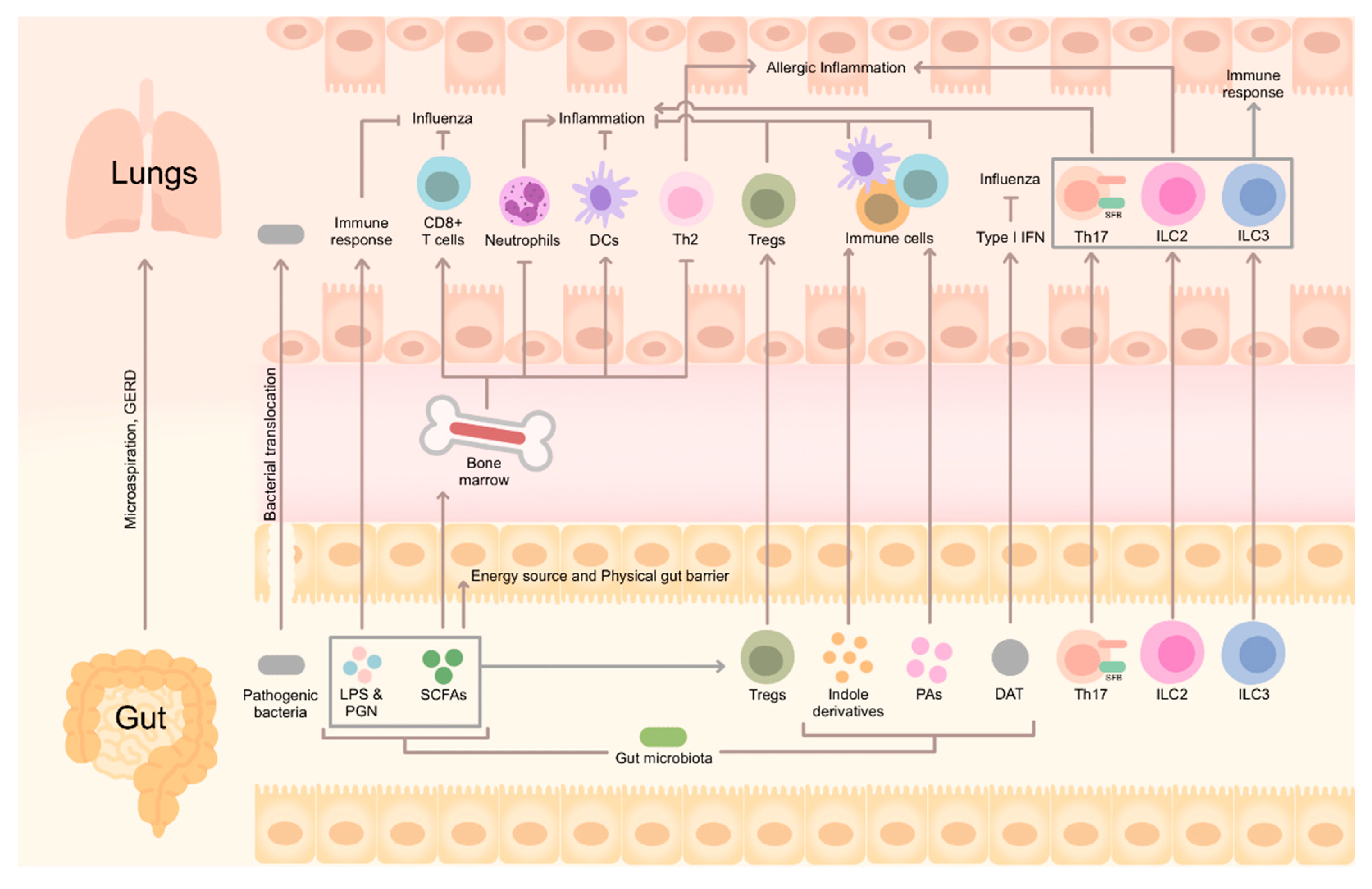
Figure 2.
The lung-gut axis. The interaction between respiratory and gastrointestinal tract occurs directly by swallowing of respiratory secretion cleared through mucociliary transportation. During lung insult translocation of pulmonary pathogens can enter the systemic circulation with the same mechanism as in the injured gastrointestinal tract but in the opposite way. Severe lung injury triggers a massive release of pro-inflammatory cytokines into the bloodstream. Upon reaching the gut, these cytokines alter tight junction proteins, increasing intestinal permeability. Influenza infection and other form of lung injury are involved in immune cells migration from lung to the gut. Influenza lung infection leads to the immune cell migration via the CCL25–CCR9 chemokine axis. Once in the gut, these cells secrete type II IFN, driving intestinal dysbiosis. Furthermore, influenza-induced type I IFN production suppresses local gut immune responses, leaving the host highly susceptible to secondary enteric bacterial infections. Systemic hypoxia also directly shifts the microbiome toward dysbiosis. IFN, interferon.
Figure 2.
The lung-gut axis. The interaction between respiratory and gastrointestinal tract occurs directly by swallowing of respiratory secretion cleared through mucociliary transportation. During lung insult translocation of pulmonary pathogens can enter the systemic circulation with the same mechanism as in the injured gastrointestinal tract but in the opposite way. Severe lung injury triggers a massive release of pro-inflammatory cytokines into the bloodstream. Upon reaching the gut, these cytokines alter tight junction proteins, increasing intestinal permeability. Influenza infection and other form of lung injury are involved in immune cells migration from lung to the gut. Influenza lung infection leads to the immune cell migration via the CCL25–CCR9 chemokine axis. Once in the gut, these cells secrete type II IFN, driving intestinal dysbiosis. Furthermore, influenza-induced type I IFN production suppresses local gut immune responses, leaving the host highly susceptible to secondary enteric bacterial infections. Systemic hypoxia also directly shifts the microbiome toward dysbiosis. IFN, interferon.
Disclaimer/Publisher’s Note: The statements, opinions and data contained in all publications are solely those of the individual author(s) and contributor(s) and not of MDPI and/or the editor(s). MDPI and/or the editor(s) disclaim responsibility for any injury to people or property resulting from any ideas, methods, instructions or products referred to in the content. |
© 2026 by the authors. Licensee MDPI, Basel, Switzerland. This article is an open access article distributed under the terms and conditions of the Creative Commons Attribution (CC BY) license (http://creativecommons.org/licenses/by/4.0/).
Copyright: This open access article is published under a Creative Commons CC BY 4.0 license, which permit the free download, distribution, and reuse, provided that the author and preprint are cited in any reuse.


