

Submitted:
26 May 2026
Posted:
28 May 2026
You are already at the latest version
Abstract
Combined intrastromal corneal ring segment implantation with corneal collagen cross-linking (CXL) aims to improve optical regularity and biomechanical stability in keratoconus. In this retrospective single-center longitudinal case series based on cases treated at OCULENS Ophthalmology Clinic between 2019 and 2022, 58 eyes of 40 patients with complete baseline and 6-, 12-, 24-, and 36-month follow-up after combined KeraRing implantation and conventional epithelium-off CXL were analyzed. Outcomes included uncorrected distance visual acuity (UDVA), corrected distance visual acuity (CDVA), thinnest pachymetry, maximum keratometry (Kmax), the Belin/Ambrosio enhanced ectasia total deviation index (BAD-D), the C and D components of the ABCD classification, and Corvis ST parameters. Longitudinal continuous outcomes were analyzed with repeated-measures analysis of variance and Holm-adjusted paired comparisons, and stage distributions with the Friedman test. At 36 months, UDVA improved from 0.560 ± 0.151 to 0.469 ± 0.136 logMAR and CDVA from 0.350 ± 0.109 to 0.287 ± 0.092 (both p < 0.001); Kmax decreased from 56.11 ± 3.17 D to 54.87 ± 2.86 D; BAD-D improved from 5.62 ± 1.89 to 4.70 ± 1.75; and thinnest pachymetry measured 440.7 ± 21.9 µm at 36 months, corresponding to 97.0% of baseline thickness. Corvis ST findings were consistent with greater postoperative stiffness, including lower deformation amplitude and higher SP-A1 at 36 months (both p < 0.001). Two clinically significant complications were recorded (2/58 eyes, 3.4%): one eye developed a sterile corneal infiltrate requiring ring explantation, and one eye developed corneal melting requiring ring explantation and referral for keratoplasty. Overall, the findings suggest that combined KeraRing implantation and CXL can provide sustained functional, tomographic, and biomechanical benefit, although interpretation is limited by the retrospective design, eye-level analysis, absence of a control group, and the relatively small number of adverse events.
Keywords:
keratoconus
; intracorneal ring segments
; KeraRing
; corneal cross-linking
; Pentacam
; Corvis ST
; corneal biomechanics
1. Introduction
Keratoconus is a progressive ectatic corneal disorder characterized by stromal thinning, protrusion, irregular astigmatism, and gradual visual decline [1,2]. Once the disease substantially impairs optical quality, treatment goals become twofold: to improve functional vision and to reduce the likelihood of further biomechanical decompensation.
Intrastromal corneal ring segments (ICRS) were introduced as a minimally invasive means of flattening and regularizing the cornea, thereby reducing irregular astigmatism and improving visual performance in selected eyes [3,4]. Their principal effect is geometric remodeling rather than direct arrest of ectatic progression. By contrast, epithelium-off corneal collagen cross-linking (CXL) is intended to stabilize the cornea by increasing stromal resistance through photo-induced collagen cross-links, and long-term series have demonstrated durable ectasia control in progressive disease [5,6,7].
Contemporary keratoconus assessment extends beyond topography alone. Scheimpflug tomography, BAD-D, and Corvis ST dynamic deformation imaging help distinguish changes in corneal shape from changes in tissue behavior [8,9,10,11,12]. This distinction is particularly relevant after combined procedures, in which ring-induced geometric redistribution and CXL-induced biomechanical stiffening occur simultaneously.
Published studies of combined ICRS and CXL have generally reported favorable visual and topographic outcomes, but most have emphasized short- to medium-term refractive or tomographic endpoints rather than longitudinal biomechanics [13,14,15,16,17,18,19,20]. The present study therefore evaluated the 3-year visual, tomographic, BAD-D, and Corvis ST course after combined KeraRing implantation and CXL, with particular emphasis on the relationship between tomographic regularization and biomechanical remodeling over time.
2. Materials and Methods
2.1. Study Design
This retrospective, single-center, longitudinal case series was based on a cohort of eyes treated at OCULENS Ophthalmology Clinic between 2019 and 2022 and reviewed from the institutional clinical database. The database contained standardized preoperative and postoperative measurements for eyes treated with combined KeraRing implantation and corneal collagen cross-linking. Clinical, tomographic, biomechanical, procedural, and adverse-event data were reviewed retrospectively. All analyses were based on anonymized records extracted from the institutional database.
2.2. Participants and Study Cohort
The longitudinal analysis included 58 eyes from 40 patients with complete records at baseline and at 6, 12, 24, and 36 months. Mean age at treatment was 27.2 ± 7.0 years (range, 15–43 years), and 42 eyes (72.4%) belonged to male patients. Twenty-two patients contributed one eye and 18 contributed both eyes. Forty-three eyes (74.1%) received one ring segment and 15 eyes (25.9%) received two segments. Mean ring thickness was 0.24 ± 0.07 mm (range, 0.15–0.35 mm).
2.3. Inclusion Criteria
Eyes were considered eligible for combined intracorneal ring segment implantation and corneal collagen cross-linking when a clinical and tomographic diagnosis of keratoconus was present together with visually significant irregular astigmatism and/or contact lens intolerance. Additional inclusion requirements were sufficient corneal thickness to permit both stromal tunnel creation and subsequent conventional epithelium-off CXL, a clear central cornea or only minimal paracentral haze, absence of previous corneal surgery in the study eye, and availability of complete baseline and postoperative examinations at 6, 12, 24, and 36 months. Eyes scheduled for cross-linking also had to satisfy the usual intraoperative safety threshold for conventional treatment after epithelial removal and riboflavin saturation.
2.4. Exclusion Criteria
Eyes were excluded when advanced corneal scarring involved the visual axis, when previous hydrops had occurred, or when active ocular surface disease, ocular inflammation, clinically relevant endothelial compromise, or severe dry eye could interfere with postoperative healing or data reliability. Additional exclusion criteria were prior corneal surgical procedures, stromal thickness inadequate for safe conventional CXL, pregnancy or breastfeeding at the time of treatment, autoimmune or collagen vascular disease, and any other local or systemic condition considered capable of adversely affecting epithelial recovery, stromal remodeling, or long-term follow-up.
2.5. Clinical, Tomographic, and Biomechanical Assessment
All eyes underwent a standardized preoperative and follow-up ophthalmic examination that included uncorrected distance visual acuity (UDVA) and corrected distance visual acuity (CDVA) expressed in logMAR units, manifest refraction, keratometry, slit-lamp biomicroscopy, intraocular pressure assessment, corneal imaging, and specular microscopy. Scheimpflug tomography with Pentacam (Oculus, Wetzlar, Germany) was used to evaluate anterior and posterior corneal elevation, keratometric parameters, pachymetric distribution, thinnest corneal thickness, cone morphology, and the Belin/Ambrosio enhanced ectasia total deviation index (BAD-D). Dynamic biomechanical assessment was performed with Corvis ST (Oculus, Wetzlar, Germany), which records corneal deformation during a calibrated air puff using ultra-high-speed Scheimpflug imaging. Parameters retained for longitudinal analysis were first applanation time (A1T), first applanation velocity (A1V), deformation amplitude (DA), peak distance (PD), highest concavity radius (HCR), second applanation time (A2T), second applanation velocity (A2V), and stiffness parameter at first applanation (SP-A1). Only technically reliable measurements were accepted for analysis. Biomechanical findings were interpreted together with tomographic data for surgical planning and postoperative assessment.
The ABCD classification was also reviewed when sufficient data were available. Because the anterior and posterior curvature variables required for complete A and B staging were not consistently recorded in all eyes, the present analysis focused on the C and D components. Within this framework, the C value reflects corneal thickness behavior, whereas the D value reflects corrected distance visual acuity [21,22].
2.6. Surgical Planning and Procedure
All implanted segments were KeraRing devices (Mediphacos). Preoperative planning was based on corneal tomography, manifest refraction, corrected distance visual acuity, cone location, corneal asymmetry, and pachymetry at the intended channel site, in accordance with the KeraRing nomogram supplied by the manufacturer and published nomogram-based planning principles [23,24,25]. In practical terms, the Pentacam sagittal and axial curvature maps were reviewed to classify the ectatic morphology according to cone centralization, the symmetry of the astigmatic lobes, and the relationship between the refractive, topographic, and coma axes. Pattern-oriented classifications used in the current KeraRing literature describe phenotypes such as croissant, duck, snowman, nipple, and bow-tie [23]. Central or relatively symmetric cones were generally considered more suitable for symmetric segment implantation, frequently with two segments to obtain a more homogeneous flattening effect, whereas inferior, decentered, or markedly asymmetric cones were more often managed with a single segment or an asymmetric configuration targeted to the steeper hemicornea [23,24].
Within this framework, croissant and bow-tie patterns usually favor symmetric segments, snowman phenotypes may require either symmetric long-arc or asymmetric correction depending on subtype and cone centration, and duck-type ectasia more commonly requires an asymmetric implant strategy aligned with the inferior or paracentral cone [23]. The final choice of the number of segments, arc length, thickness, and implantation meridian was individualized according to mean and steep keratometry, refractive cylinder, spherical equivalent, cone eccentricity, and stromal safety. In asymmetric cones, the treatment was directed toward the steeper hemicornea and principal axis of ectasia, whereas in more central cones the goal was to distribute flattening more evenly across the optical zone [23,24,25]. Published nomogram literature supports the concept that greater flattening is obtained with thicker segments and smaller implantation diameters, which is consistent with the 5- to 6-mm channel geometry adopted in the present series [25,26]. Recent analyses of asymmetric ring-segment geometry and epithelial remodeling further support individualized planning in markedly asymmetric cones [27].
The stromal tunnel was created with a Zeiss VisuMax 500 femtosecond laser (Carl Zeiss Meditec, Jena, Germany) at approximately 75% to 80% of the local corneal thickness. In all eyes, the inner portion of the ring channel corresponded to the 5 mm corneal diameter and the outer portion to the 6 mm corneal diameter. After tunnel creation, one or two ring segments were implanted and centered within the prepared intrastromal channel according to the planned meridian. Conventional epithelium-off CXL was subsequently performed in the same eye after ring implantation. Following topical anesthesia, the central corneal epithelium was removed over an area of approximately 9 mm, after which standard riboflavin 0.1% with 20% dextran (Peschke D) was instilled every 3 minutes for 30 minutes. Ultraviolet-A irradiation was then delivered using a Peschke D UVA lamp at 3 mW/cm² for 30 minutes, corresponding to a total fluence of 5.4 J/cm², with repeated riboflavin application at regular intervals throughout exposure. At the end of the procedure, antibiotic and corticosteroid drops were administered, and a bandage contact lens was placed until complete epithelial healing was achieved [5].
2.7. Statistical Analysis
Continuous variables are presented as mean ± standard deviation. Longitudinal change across the five study visits was analyzed at the eye level with repeated-measures analysis of variance. To define the timing of postoperative change relative to baseline, paired t tests were performed for each postoperative visit with Holm adjustment for multiple comparisons. The C- and D-stage distributions were evaluated with the Friedman test. Exploratory Pearson correlation analyses were used to assess the relationships between 36-month change in Kmax and 36-month change in SP-A1, between 36-month change in CDVA and 36-month change in DA, and between 36-month change in BAD-D and 36-month change in Kmax. A p value < 0.05 was considered statistically significant.
Because some patients contributed both eyes, the eye was retained as the unit of analysis and inter-eye correlation was not modeled. The statistical results should therefore be interpreted as eye-level longitudinal estimates from this clinical cohort, a limitation that is addressed explicitly in the Discussion.
2.8. Ethics
The study adhered to the tenets of the Declaration of Helsinki and to institutional regulations governing research involving human participants. Ethical approval was obtained from the Ethics Committee of OCULENS Ophthalmology Clinic (approval No. 5, dated 02.04.2026). Written informed consent had been obtained before treatment and for anonymized use of clinical, tomographic, and biomechanical data for research purposes; for patients younger than 18 years, consent was obtained from a parent or legal guardian, with patient assent when applicable.
3. Results
3.1. Cohort Profile
The final study cohort comprised 58 eyes from 40 patients with complete scheduled follow-up through 36 months. Twenty-two patients contributed one eye and 18 contributed both eyes. Forty-three eyes (74.1%) received one ring segment and 15 eyes (25.9%) received two segments. Mean ring thickness was 0.24 ± 0.07 mm (range, 0.15–0.35 mm). Baseline and procedural characteristics are summarized in Table 1.
3.2. Visual, Tomographic, and BAD-D Outcomes
Both visual acuity measures improved significantly over time (Table 2; Figure 1 and Figure 2). Mean UDVA improved from 0.560 ± 0.151 logMAR at baseline to 0.454 ± 0.128 at 24 months and remained better than baseline at 0.469 ± 0.136 at 36 months (overall F(4, 228)=125.01, p < 0.001). Mean CDVA improved from 0.350 ± 0.109 to 0.275 ± 0.098 at 24 months and was 0.287 ± 0.092 at 36 months (overall F(4, 228)=116.02, p < 0.001). All postoperative comparisons versus baseline remained significant after Holm correction for both UDVA and CDVA (Table A1).
Tomographically, the greatest flattening was observed during the first two postoperative years, while pachymetric change followed a separate remodeling pattern. Mean Kmax decreased from 56.11 ± 3.17 D at baseline to 54.62 ± 2.89 D at 24 months and remained lower than baseline at 54.87 ± 2.86 D at 36 months (overall F(4, 228)=96.29, p < 0.001). Thinnest pachymetry showed an early postoperative decrease from 454.4 ± 22.6 µm at baseline to 448.2 ± 22.8 µm at 6 months, followed by partial recovery to 455.5 ± 23.1 µm at 24 months and a final decrease to 440.7 ± 21.9 µm at 36 months. The final 36-month value represented 97.0% of the baseline mean pachymetry (440.7/454.4 × 100 = 97.0%), corresponding to a mean reduction of 13.6 µm. After Holm correction, the 6-, 12-, and 36-month pachymetry values were significantly different from baseline, whereas the 24-month value was not significantly different from baseline (Table A1).
BAD-D improved steadily throughout follow-up, decreasing from 5.62 ± 1.89 at baseline to 4.56 ± 1.77 at 24 months and 4.70 ± 1.75 at 36 months (overall F(4, 228)=260.72, p < 0.001). All postoperative BAD-D comparisons remained significant after Holm correction.
3.3. Corvis ST Biomechanical Outcomes
The Corvis ST profile changed coherently in the direction of greater postoperative corneal stiffness (Table 3; Figure 3 and Figure 4). Mean DA decreased from 1.127 ± 0.065 mm at baseline to 1.091 ± 0.057 mm at 36 months, whereas mean SP-A1 increased from 58.67 ± 6.10 to 63.63 ± 5.10 (both p < 0.001). A1T and A2T increased over time, A1V decreased, A2V became more negative, PD decreased, and HCR increased. Every postoperative comparison versus baseline remained significant after Holm adjustment for all Corvis ST variables included in the analysis (Table A2).
3.4. C and D Stage Distribution
C- and D-stage distributions are summarized in Table 4 and Table 5 and illustrated in Figure 5 and Figure 6. The C-stage profile showed a modest but significant longitudinal shift (Friedman χ²=11.45, p=0.022). C2 eyes accounted for 41.4% of the cohort at baseline, increased to 51.7% at 6 months, returned to 41.4% at 24 months, and measured 44.8% at 36 months, with one eye classified as C3 at the final visit. This pattern was consistent with early postoperative thinning, partial 24-month recovery, and a final 36-month pachymetric decrease. The D-stage profile improved more clearly over time (Friedman χ²=43.47, p < 0.001): D1 eyes increased from 39.7% at baseline to 65.5% at 12 months and remained at 65.5% at 36 months.
3.5. Structure-Function Correlations
At the eye level, 36-month flattening in Kmax correlated with 36-month increase in SP-A1 (r=-0.539, p < 0.001), indicating that greater tomographic flattening tended to accompany greater biomechanical stiffening. Improvement in CDVA also correlated with reduction in DA (r=0.423, p < 0.001). In addition, improvement in BAD-D correlated with flattening in Kmax (r=0.372, p=0.004). These exploratory findings are summarized in Table 6 and Figure 7.
3.6. Representative Pentacam Case Examples
Representative serial Pentacam examinations from eyes included in the study cohort further illustrated the individual tomographic pattern behind the group-level outcomes (Figure 8, Figure 9, Figure 10, Figure 11, Figure 12, Figure 13, Figure 14 and Figure 15). The first example was a unilateral left-eye treatment documented at baseline and at approximately 36 months (Figure 8, Figure 9, Figure 10 and Figure 11). Baseline imaging showed inferior paracentral steepening with irregular astigmatism, whereas the late postoperative maps demonstrated a flatter, more regular anterior curvature profile with the astigmatic pattern redistributed toward the central cornea. In this eye, anterior corneal astigmatism decreased from 2.4 D preoperatively to 0.9 D at follow-up, Kmax decreased from 64.8 D to 57.7 D, and thinnest pachymetry changed only slightly from 432 µm to 428 µm, remaining within clinically acceptable follow-up safety parameters.
A second representative patient who underwent bilateral treatment is shown in Figure 12, Figure 13, Figure 14 and Figure 15. In the right eye, the anterior curvature map changed from a markedly asymmetric, high-astigmatism pattern to a more regular and centrally distributed curvature profile; anterior corneal astigmatism decreased from 5.9 D to 0.1 D, Kmax decreased from 54.8 D to 49.2 D, and thinnest pachymetry remained stable, changing from 421 µm at baseline to 429 µm at late follow-up. The fellow left eye demonstrated greater residual irregularity and a lower thinnest pachymetry at follow-up, illustrating inter-eye variability in long-term remodeling within the same patient. Overall, the representative images support the cohort-level observation that combined KeraRing implantation and CXL generally regularized the anterior curvature, reduced and centralized the astigmatic pattern, and maintained pachymetry within a range compatible with postoperative safety monitoring.
3.7. Complications
Two eyes experienced clinically significant postoperative complications. One eye developed a sterile corneal infiltrate that required ring explantation. A second eye developed corneal melting that required ring explantation and was referred for keratoplasty. These events are reported descriptively as part of the safety profile of the series and were not used to infer population-level complication rates beyond this cohort.
4. Discussion
This retrospective single-center longitudinal case series shows that combined KeraRing implantation and CXL was associated with sustained visual improvement, tomographic regularization, BAD-D reduction, and a Corvis ST profile compatible with greater postoperative corneal stiffness over 36 months. Clinically, the value of the combined approach lies in addressing two different but related problems in keratoconus. The intracorneal ring segment reshapes the ectatic cornea and can reduce the optical penalty of irregular astigmatism, while CXL is intended to reinforce the stromal tissue and reduce the risk of further biomechanical decompensation. The present findings therefore support the concept that visual rehabilitation and ectasia stabilization can be pursued together in carefully selected eyes, provided that the expectations of the patient are realistic and that the procedure is planned individually.
The combined procedure of intracorneal ring implantation and corneal collagen cross-linking appears generally safe in appropriately selected eyes, but it should not be presented as exempt from complications. In this series, two of 58 eyes (3.4%) developed clinically significant adverse events requiring ring explantation: one eye developed a sterile corneal infiltrate and one eye developed corneal melting and was referred for keratoplasty. These events fall within the recognized complication spectrum of ICRS surgery. In a systematic review, Bautista-Llamas et al. reported that explantation rates in larger ICRS series were generally between 0% and 1.4%, although the wider literature was heterogeneous [28]. Nguyen et al. reported explantation in 35 of 572 eyes (6.1%), with 2.6% removed for medical complications, and identified infiltration around the segment as the most frequent medical complication [29]. The rate observed in the present series is therefore numerically higher than the range summarized in larger studies, but the type of events is consistent with recognized ring-related complications. These findings should be interpreted as a reminder that a procedure can be effective and still demand close postoperative surveillance, particularly in eyes with thin corneas, steep cones, ocular surface instability, or higher mechanical stress around the channel.
The visual and tomographic results are broadly consistent with previous combined-procedure studies [13,14,15,16,17,18,19,20]. Mean Kmax decreased by 1.24 D from baseline to 36 months, with the largest flattening observed by 24 months. UDVA and CDVA also improved significantly, with the best mean values at 24 months and only mild attenuation by 36 months. A recent long-term comparative study of simultaneous accelerated CXL combined with intracorneal ring segments or topography-guided photorefractive keratectomy also supports the clinical relevance of combined strategies in selected keratoconus eyes, while emphasizing that the optimal approach depends on corneal thickness, refractive target, scar status, and the dominant source of visual limitation [30]. In practical terms, the goal after KeraRing implantation is not merely to flatten the steepest point, but to make the corneal surface more regular and more optically usable.
This distinction is important when interpreting the representative Pentacam cases included in this manuscript. In the unilateral example, the reduction of anterior corneal astigmatism from 2.4 D to 0.9 D, together with Kmax reduction from 64.8 D to 57.7 D, illustrates meaningful regularization rather than simple numeric flattening. In the bilateral example, the right eye showed a pronounced reduction of astigmatism from 5.9 D to 0.1 D and a more centralized curvature pattern. The fellow eye retained more residual irregularity, underscoring the biological and geometric variability that is often encountered in keratoconus. Systematic reviews and long-term ICRS studies similarly show that ring implantation may provide stable visual and keratometric benefit, but the magnitude of response is influenced by cone location, ring design, implantation depth, corneal thickness, and preoperative asymmetry [31,32].
The pachymetric course deserves careful interpretation. The mean thinnest pachymetry decreased early, partially recovered by 24 months, and then measured 440.7 ± 21.9 µm at 36 months, corresponding to 97.0% of the baseline mean. This finding is clinically relevant because it suggests that the overall cohort did not undergo uncontrolled thinning during follow-up. Nevertheless, pachymetry should not be interpreted in isolation. In a cornea treated with both ring implantation and CXL, local epithelial remodeling, stromal compaction, wound healing, and measurement repeatability may all influence the thinnest-point value. Therefore, stable or slightly reduced pachymetry is reassuring only when it is accompanied by improved or stable curvature, absence of progressive posterior elevation, and preserved clinical transparency.
The BAD-D findings strengthen this interpretation because BAD-D improved significantly throughout follow-up. Since BAD-D integrates anterior elevation, posterior elevation, pachymetric progression, and relational thickness behavior, its improvement suggests that postoperative change was not limited to the anterior Kmax value. At the same time, the absence of complete anterior and posterior radius variables in all study records limited stage-based analysis to the C and D components of the ABCD classification [21,22]. This is a relevant limitation, but the available C and D stage data still add useful clinical context: visual-function staging improved more clearly than thickness staging, which mirrors the everyday clinical impression that optical regularization may be perceived by the patient even when pachymetric indices continue to fluctuate during remodeling.
The Corvis ST findings provided a biomechanical counterpart to the tomographic response. DA and PD decreased, HCR increased, A1T and A2T lengthened, A1V decreased, A2V became more negative, and SP-A1 increased. Considered together, these changes indicate reduced deformation under the standardized air puff and are compatible with increased postoperative corneal stiffness after combined treatment. This interpretation is consistent with the broader Corvis literature in keratoconus and after cross-linking, where dynamic deformation metrics have been shown to capture meaningful differences in tissue behavior and to shift measurably after biomechanical intervention [9,10,11,12]. In this context, Corvis ST does not replace tomography, but it adds a tissue-response dimension that is particularly valuable after a combined geometric and biomechanical procedure.
The role of CXL in the combined procedure is also supported by the broader evidence base for epithelium-off cross-linking. Systematic reviews have concluded that CXL can slow or halt keratoconus progression under appropriate treatment conditions, although the strength of evidence varies across study designs and follow-up durations [33,34]. Randomized controlled trials have also shown stabilization or improvement after CXL compared with untreated control eyes, including evidence maintained at multi-year follow-up [35,36]. The present study was not designed to isolate the independent effect of CXL from the ring effect, but the sustained 36-month stability is clinically compatible with the expected contribution of cross-linking to long-term ectasia control.
The stage analysis adds further nuance to the tomographic findings. The C-stage distribution worsened slightly early after treatment, mirroring the early postoperative decrease in pachymetry, improved partially by 24 months, and then again reflected a thinner pachymetric profile at 36 months. By contrast, the D-stage profile improved more clearly and paralleled the CDVA trajectory. This separation is clinically intuitive. Thickness-related indices may fluctuate during stromal remodeling, whereas visual acuity may improve earlier once corneal shape becomes more regular and the optical zone becomes less distorted.
The exploratory correlation analyses supported this integrated interpretation. Greater 36-month flattening in Kmax was associated with a greater increase in SP-A1, and better CDVA was associated with lower DA. These relationships do not prove causality, but they suggest that geometric regularization and biomechanical stiffening evolved together rather than as entirely separate responses in this cohort. From a clinical standpoint, this is encouraging because it indicates that the eyes showing more favorable shape changes also tended to show a more favorable biomechanical signal.
The main clinical message of the study is therefore deliberately balanced. Combined KeraRing implantation and CXL can be useful in patients in whom keratoconus causes both optical irregularity and concern for progression, especially when spectacles or contact lenses no longer provide satisfactory functional vision. At the same time, this is not a purely refractive procedure and should not be presented to patients as risk-free. Surgical planning should integrate manifest refraction, CDVA, cone morphology, anterior and posterior elevation, thinnest pachymetry, intended channel depth, ocular surface status, and patient expectations. Long-term follow-up remains necessary because visual improvement, pachymetric remodeling, and biomechanical stabilization do not always evolve at the same pace.
Several limitations should be acknowledged. First, this was a retrospective eye-based analysis, and some patients contributed both eyes; inter-eye correlation therefore could not be fully modeled. Second, the study was uncontrolled and cannot establish superiority over CXL alone, ICRS alone, or alternative sequencing strategies. Third, the sample size, although clinically meaningful for a single center, remains modest for subgroup and safety analyses, and only a small number of clinically significant complications were observed. Fourth, complete A and B ABCD variables were not consistently available in all records, which limited stage-based analysis to the C and D components. Fifth, the representative Pentacam cases are illustrative and should not be interpreted as replacing cohort-level statistics. Finally, because follow-up was based on routine clinical records, the study could not fully standardize all potential confounders relevant to long-term remodeling and complication risk. Future prospective studies with mixed-effects statistical models, one-eye sensitivity analyses, and comparison groups would help clarify how much of the observed benefit is attributable to ring-induced reshaping, CXL-induced stiffening, or their interaction.
5. Conclusions
Combined KeraRing implantation and corneal collagen cross-linking was associated with meaningful 36-month improvement in UDVA, CDVA, Kmax, BAD-D, and multiple Corvis ST stiffness-related parameters in this retrospective single-center longitudinal case series. The D-stage profile improved in parallel with corrected visual acuity, whereas the C-stage profile reflected early thinning, partial 24-month recovery, and a final 36-month pachymetry decrease to approximately 97.0% of baseline. These findings support the use of combined treatment as a strategy for achieving both corneal regularization and biomechanical stabilization in selected eyes with keratoconus, while recognizing that rare but clinically significant complications may necessitate ring explantation and, in isolated cases, referral for keratoplasty.
Author Contributions
Conceptualization, R.-N.P., P.N. and C.N.; methodology, R.-N.P., P.N., C.N., D.N. and B.P.; formal analysis, R.-N.P. and B.P.; investigation, R.-N.P., P.N., C.N. and D.N.; data curation, R.-N.P. and B.P.; writing—original draft preparation, R.-N.P. and B.P.; writing—review and editing, P.N., C.N. and D.N.; supervision, C.N.; project administration, R.-N.P. All authors have read and agreed to the published version of the manuscript.
Funding
This research received no external funding.
Institutional Review Board Statement
The study was conducted in accordance with the Declaration of Helsinki and approved by the Ethics Committee of OCULENS Ophthalmology Clinic (approval No. 5, dated 02.04.2026).
Informed Consent Statement
Written informed consent was obtained from all adult patients before treatment and for the anonymized use of clinical, tomographic, and biomechanical data for research purposes. For patients younger than 18 years, consent was obtained from a parent or legal guardian, with patient assent when applicable.
Data Availability Statement
The anonymized data supporting the findings of this study are available from the corresponding author upon reasonable request, subject to institutional and legal restrictions protecting patient confidentiality.
Acknowledgments
The authors thank the clinical and technical staff of OCULENS Ophthalmology Clinic for assistance with patient examination, imaging, and follow-up documentation.
Conflicts of Interest
The authors declare no conflicts of interest.
Appendix A

Table A1.
Holm-adjusted baseline-versus-follow-up p values for clinical variables.
| Variable | BL vs 6 mo | BL vs 12 mo | BL vs 24 mo | BL vs 36 mo |
|---|---|---|---|---|
| UDVA | <0.001 | <0.001 | <0.001 | <0.001 |
| CDVA | <0.001 | <0.001 | <0.001 | <0.001 |
| Thinnest pachymetry | <0.001 | <0.001 | 0.105 | <0.001 |
| Kmax | <0.001 | <0.001 | <0.001 | <0.001 |
| BAD-D | <0.001 | <0.001 | <0.001 | <0.001 |
Holm-adjusted paired t-test p values are shown.
Table A2.
Holm-adjusted baseline-versus-follow-up p values for Corvis ST variables.
| Variable | BL vs 6 mo | BL vs 12 mo | BL vs 24 mo | BL vs 36 mo |
|---|---|---|---|---|
| A1T | <0.001 | <0.001 | <0.001 | <0.001 |
| A1V | <0.001 | <0.001 | <0.001 | <0.001 |
| DA | <0.001 | <0.001 | <0.001 | <0.001 |
| PD | <0.001 | <0.001 | <0.001 | <0.001 |
| HCR | <0.001 | <0.001 | <0.001 | <0.001 |
| A2T | <0.001 | <0.001 | <0.001 | <0.001 |
| A2V | <0.001 | <0.001 | <0.001 | <0.001 |
| SP-A1 | <0.001 | <0.001 | <0.001 | <0.001 |
Holm-adjusted paired t-test p values are shown.
References
- Rabinowitz, Y.S. Keratoconus. Surv. Ophthalmol. 1998, 42, 297–319. [Google Scholar] [CrossRef]
- Gomes, J.A.P.; Tan, D.; Rapuano, C.J.; Belin, M.W.; Ambrosio, R., Jr.; Guell, J.L.; et al. Global consensus on keratoconus and ectatic diseases. Cornea 2015, 34, 359–369. [Google Scholar] [CrossRef] [PubMed]
- Colin, J.; Cochener, B.; Savary, G.; Malet, F. Correcting keratoconus with intracorneal rings. J. Cataract Refract Surg. 2000, 26, 1117–1122. [Google Scholar] [CrossRef] [PubMed]
- Sakellaris, D.; Balidis, M.; Gorou, O.; Szentmary, N.; Alexoudis, A.; Grieshaber, M.C.; Sagri, D.; Scholl, H.; Gatzioufas, Z. Intracorneal Ring Segment Implantation in the Management of Keratoconus: An Evidence-Based Approach. Ophthalmol. Ther. 2019, 8 (Suppl 1), 5–14. [Google Scholar] [CrossRef]
- Wollensak, G.; Spoerl, E.; Seiler, T. Riboflavin/ultraviolet-A-induced collagen crosslinking for the treatment of keratoconus. Am. J. Ophthalmol. 2003, 135, 620–627. [Google Scholar] [CrossRef]
- Caporossi, A.; Mazzotta, C.; Baiocchi, S.; Caporossi, T. Long-term results of riboflavin ultraviolet A corneal collagen cross-linking for keratoconus in Italy: the Siena Eye Cross Study. Am. J. Ophthalmol. 2010, 149, 585–593. [Google Scholar] [CrossRef]
- Raiskup, F.; Theuring, A.; Pillunat, L.E.; Spoerl, E. Corneal collagen crosslinking with riboflavin and ultraviolet-A light in progressive keratoconus: ten-year results. J. Cataract Refract Surg. 2015, 41, 41–46. [Google Scholar] [CrossRef]
- Heidari, Z.; Hashemi, H.; Mohammadpour, M.; Amanzadeh, K.; Fotouhi, A. Evaluation of corneal topographic, tomographic and biomechanical indices for detecting clinical and subclinical keratoconus: a comprehensive three-device study. Int. J. Ophthalmol. 2021, 14, 228–239. [Google Scholar] [CrossRef]
- Tian, L.; Huang, Y.F.; Wang, L.Q.; Bai, H.; Wang, Q.; Shen, Y.; et al. Corneal biomechanical assessment using corneal visualization Scheimpflug technology in keratoconic and normal eyes. J. Ophthalmol. 2014, 2014, 147516. [Google Scholar] [CrossRef]
- Steinberg, J.; Katz, T.; Mousli, A.; Frings, A.; Druchkiv, V.; Richard, G.; et al. Corneal biomechanical changes after crosslinking for progressive keratoconus with the corneal visualization Scheimpflug technology. J. Ophthalmol. 2014, 2014, 579190. [Google Scholar] [CrossRef] [PubMed]
- Steinberg, J.; Siebert, M.; Katz, T.; Frings, A.; Mehlan, J.; Druchkiv, V.; et al. Tomographic and biomechanical Scheimpflug imaging for keratoconus characterization: a validation of current indices. J. Refract Surg. 2018, 34, 840–847. [Google Scholar] [CrossRef]
- Xanthopoulou, K.; Seitz, B.; Belin, M.W.; Flockerzi, E. Reliability analysis of successive Corvis ST measurements in keratoconus 2 years after accelerated corneal crosslinking compared to untreated keratoconus corneas. Graefes Arch. Clin. Exp. Ophthalmol. 2023, 261, 1055–1061. [Google Scholar] [CrossRef]
- Coskunseven, E.; Jankov, I.I.; Hafezi, F.; Atun, S.; Arslan, E.; Kymionis, G.D. Effect of treatment sequence in combined intrastromal corneal rings and corneal collagen crosslinking for keratoconus. J. Cataract Refract Surg. 2009, 35, 2084–2091. [Google Scholar] [CrossRef]
- El-Raggal, T.M. Sequential versus concurrent KERARINGS insertion and corneal collagen cross-linking for keratoconus. Br. J. Ophthalmol. 2011, 95, 37–41. [Google Scholar] [CrossRef]
- Kılıç, A.; Kamburoğlu, G.; Akıncı, A. Riboflavin injection into the corneal channel for combined collagen crosslinking and intrastromal corneal ring segment implantation. J. Cataract Refract Surg. 2012, 38, 878–883. [Google Scholar] [CrossRef]
- Yeung, S.N.; Ku, J.Y.F.; Lichtinger, A.; Low, S.A.W.; Kim, P.; Rootman, D.S. Efficacy of single or paired intrastromal corneal ring segment implantation combined with collagen crosslinking in keratoconus. J. Cataract Refract Surg. 2013, 39, 1146–1151. [Google Scholar] [CrossRef] [PubMed]
- Liu, X.L.; Li, P.H.; Fournie, P.; Malecaze, F. Investigation of the efficiency of intrastromal ring segments with cross-linking using different sequence and timing for keratoconus. Int. J. Ophthalmol. 2015, 8, 703–708. [Google Scholar] [CrossRef]
- Hersh, P.S.; Issa, R.; Greenstein, S.A. Corneal crosslinking and intracorneal ring segments for keratoconus: a randomized study of concurrent versus sequential surgery. J. Cataract Refract Surg. 2019, 45, 830–839. [Google Scholar] [CrossRef] [PubMed]
- Zaky, A.G.; KhalafAllah, M.T.; Sarhan, A.E. Combined corneal cross-linking and 320° intrastromal corneal ring segments in progressive keratoconus: one-year results. Graefes Arch. Clin. Exp. Ophthalmol. 2020, 258, 2441–2447. [Google Scholar] [CrossRef] [PubMed]
- El-Massry, A.; Rashid, K.; Saad, S.; Osman, I. One-Year outcomes of intracorneal ring-segment insertion assisted by femtosecond laser simultaneously performed with corneal collagen cross-linking for treatment of keratoconus. Clin. Ophthalmol. 2021, 15, 4447–4453. [Google Scholar] [CrossRef]
- Belin, M.W.; Kundu, G.; Shetty, N.; Gupta, K.; Mullick, R.; Thakur, P. ABCD: A new classification for keratoconus. Indian J. Ophthalmol. 2020, 68, 2831–2834. [Google Scholar] [CrossRef] [PubMed]
- Flockerzi, E.; Xanthopoulou, K.; Goebels, S.C.; Zemova, E.; Razafimino, S.; Hamon, L.; et al. Keratoconus staging by decades: a baseline ABCD classification of 1000 patients in the Homburg Keratoconus Center. Br. J. Ophthalmol. 2021, 105, 1069–1075. [Google Scholar] [CrossRef]
- de Sanctis, U.; Caselgrandi, P.; Gennaro, C.; Tosi, C.; Borrelli, E.; Marolo, P.; Reibaldi, M. Topographic Pattern-Based Nomogram to Guide Keraring Implantation in Eyes with Mild to Moderate Keratoconus: Visual and Refractive Outcome. J. Clin. Med. 2025, 14, 870. [Google Scholar] [CrossRef]
- Utine, C.A.; Özizmirliler, D.; Kayabaşı, M.; Günenç, Ü. The number of intracorneal ring segments in asymmetric and central cones. Eye Vis. (Lond) 2021, 8, 10. [Google Scholar] [CrossRef]
- Shetty, R.; D’Souza, S.; Ramachandran, S.; Kurian, M.; Nuijts, R.M.M.A. Decision making nomogram for intrastromal corneal ring segments in keratoconus. Indian J. Ophthalmol. 2014, 62, 23–28. [Google Scholar] [CrossRef] [PubMed]
- Vega-Estrada, A.; Alio, J.L. The use of intracorneal ring segments in keratoconus. Eye Vis. (Lond) 2016, 3, 8. [Google Scholar] [CrossRef]
- Benlarbi, A.; Kallel, S.; David, C.; Barugel, R.; Hays, Q.; Goemaere, I.; et al. Asymmetric Intrastromal Corneal Ring Segments with Progressive Base Width and Thickness for Keratoconus: Evaluation of Efficacy and Analysis of Epithelial Remodeling. J. Clin. Med. 2023, 12, 1673. [Google Scholar] [CrossRef] [PubMed]
- Bautista-Llamas, M.J.; Sánchez-González, M.C.; López-Izquierdo, I.; López-Muñoz, A.; Gargallo-Martínez, B.; De-Hita-Cantalejo, C.; et al. Complications and Explantation Reasons in Intracorneal Ring Segments (ICRS) Implantation: A Systematic Review. J. Refract Surg. 2019, 35, 740–747. [Google Scholar] [CrossRef]
- Nguyen, N.; Gelles, J.D.; Greenstein, S.A.; Hersh, P.S. Incidence and associations of intracorneal ring segment explantation. J. Cataract Refract Surg. 2019, 45, 153–158. [Google Scholar] [CrossRef]
- Cohen, E.; Ong Tone, S.; Mimouni, M.; Stein, R.; Chan, C.C.; Chew, H.F.; Rabinovitch, T.; Rootman, D.S.; Slomovic, A.R.; Hatch, W.V.; Singal, N. Comparison of long-term outcomes of simultaneous accelerated corneal crosslinking combined with intracorneal ring segment or topography-guided PRK. J. Cataract Refract Surg. 2024, 50, 378–384. [Google Scholar] [CrossRef]
- Benoist d’Azy, C.; Pereira, B.; Chiambaretta, F.; Dutheil, F. Efficacy of Different Procedures of Intra-Corneal Ring Segment Implantation in Keratoconus: A Systematic Review and Meta-Analysis. Transl. Vis. Sci. Technol. 2019, 8, 38. [Google Scholar] [CrossRef]
- Costa, J.V.; Monteiro, T.; Franqueira, N.; Faria-Correia, F.; Alfonso, J.F.; Vaz, F. Five-year long-term outcomes of intrastromal corneal ring segment implantation using the manual technique for keratoconus management. J. Cataract Refract Surg. 2021, 47, 713–721. [Google Scholar] [CrossRef] [PubMed]
- Sykakis, E.; Karim, R.; Evans, J.R.; Bunce, C.; Amissah-Arthur, K.N.; Patwary, S.; McDonnell, P.J.; Hamada, S. Corneal collagen cross-linking for treating keratoconus. Cochrane Database Syst. Rev. 2015, 3, CD010621. [Google Scholar] [CrossRef] [PubMed]
- Craig, J.A.; Mahon, J.; Yellowlees, A.; Barata, T.; Glanville, J.; Arber, M.; Mandava, L.; Powell, J.; Figueiredo, F. Epithelium-off photochemical corneal collagen cross-linkage using riboflavin and ultraviolet A for keratoconus and keratectasia: a systematic review and meta-analysis. Ocul. Surf. 2014, 12, 202–214. [Google Scholar] [CrossRef]
- O’Brart, D.P.S.; Chan, E.; Samaras, K.; Patel, P.; Shah, S.P. A randomised, prospective study to investigate the efficacy of riboflavin/ultraviolet A (370 nm) corneal collagen cross-linkage to halt the progression of keratoconus. Br. J. Ophthalmol. 2011, 95, 1519–1524. [Google Scholar] [CrossRef] [PubMed]
- Wittig-Silva, C.; Chan, E.; Islam, F.M.A.; Wu, T.; Whiting, M.; Snibson, G.R. A randomized, controlled trial of corneal collagen cross-linking in progressive keratoconus: three-year results. Ophthalmology 2014, 121, 812–821. [Google Scholar] [CrossRef]
Figure 1.
UDVA and CDVA over 36 months. Points represent means and error bars indicate standard errors of the mean.
Figure 1.
UDVA and CDVA over 36 months. Points represent means and error bars indicate standard errors of the mean.
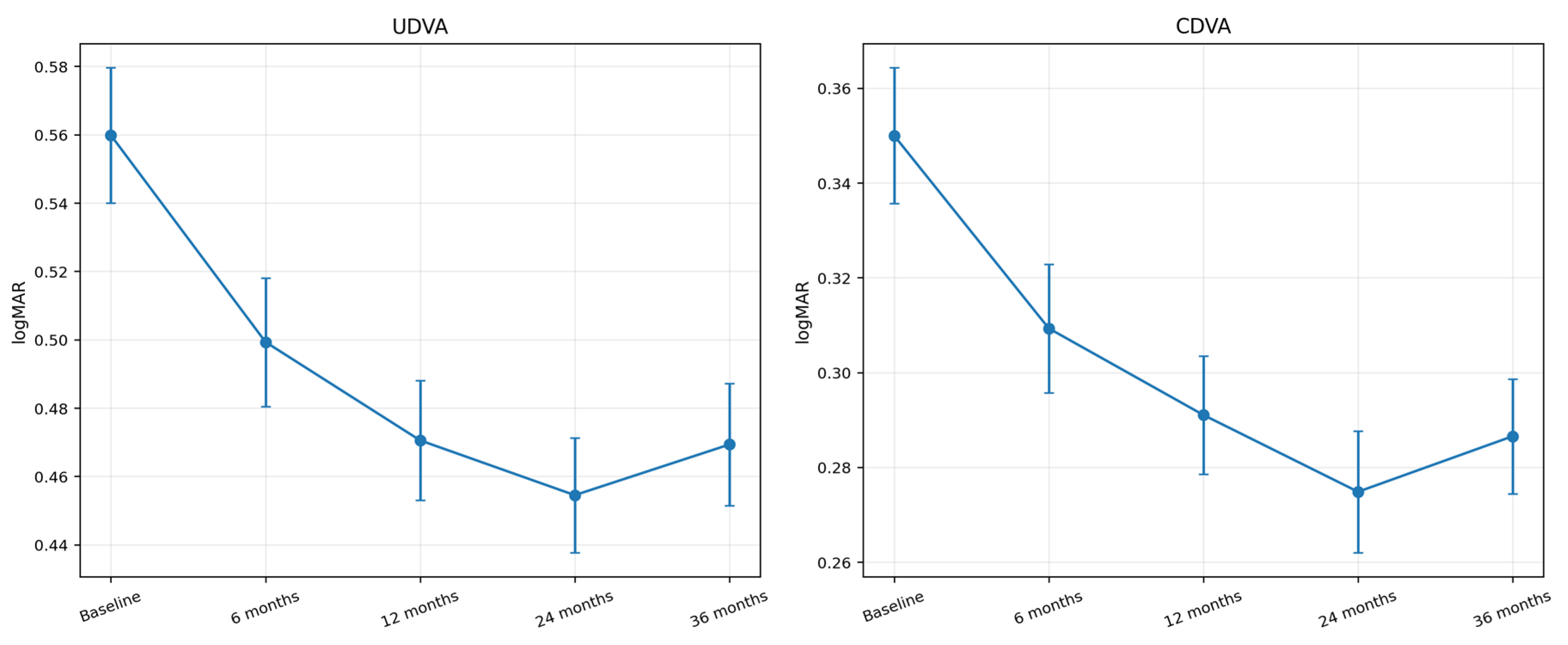
Figure 2.
Kmax, thinnest pachymetry, and BAD-D over 36 months. Points represent means and error bars indicate standard errors of the mean.
Figure 2.
Kmax, thinnest pachymetry, and BAD-D over 36 months. Points represent means and error bars indicate standard errors of the mean.
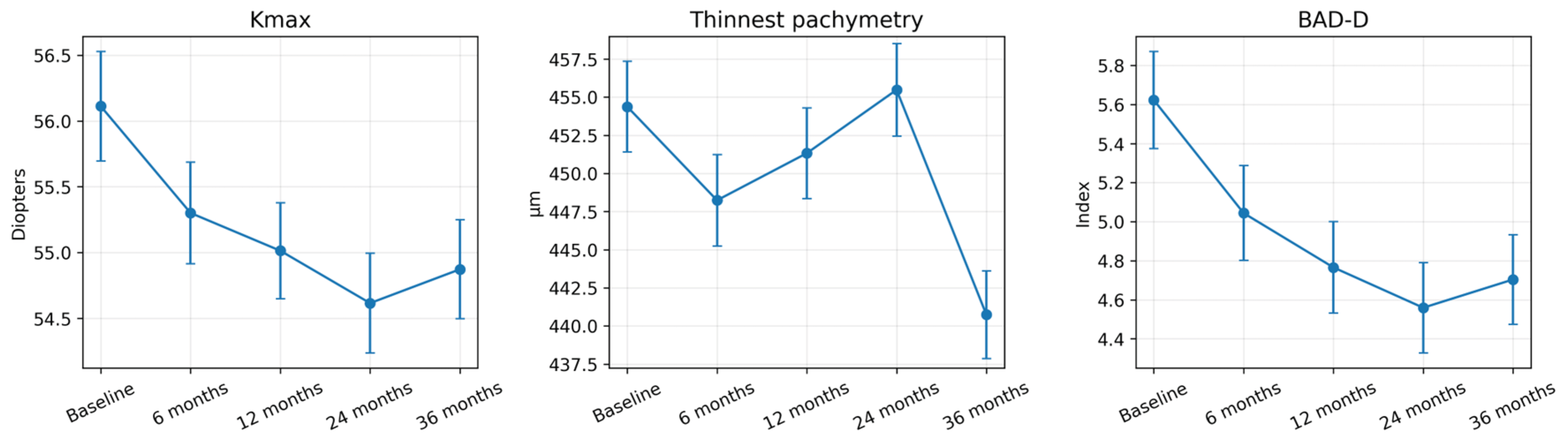
Figure 3.
Key Corvis ST biomechanical outcomes over 36 months: deformation amplitude, SP-A1, A1T, and highest concavity radius. Points represent means and error bars indicate standard errors of the mean.
Figure 3.
Key Corvis ST biomechanical outcomes over 36 months: deformation amplitude, SP-A1, A1T, and highest concavity radius. Points represent means and error bars indicate standard errors of the mean.
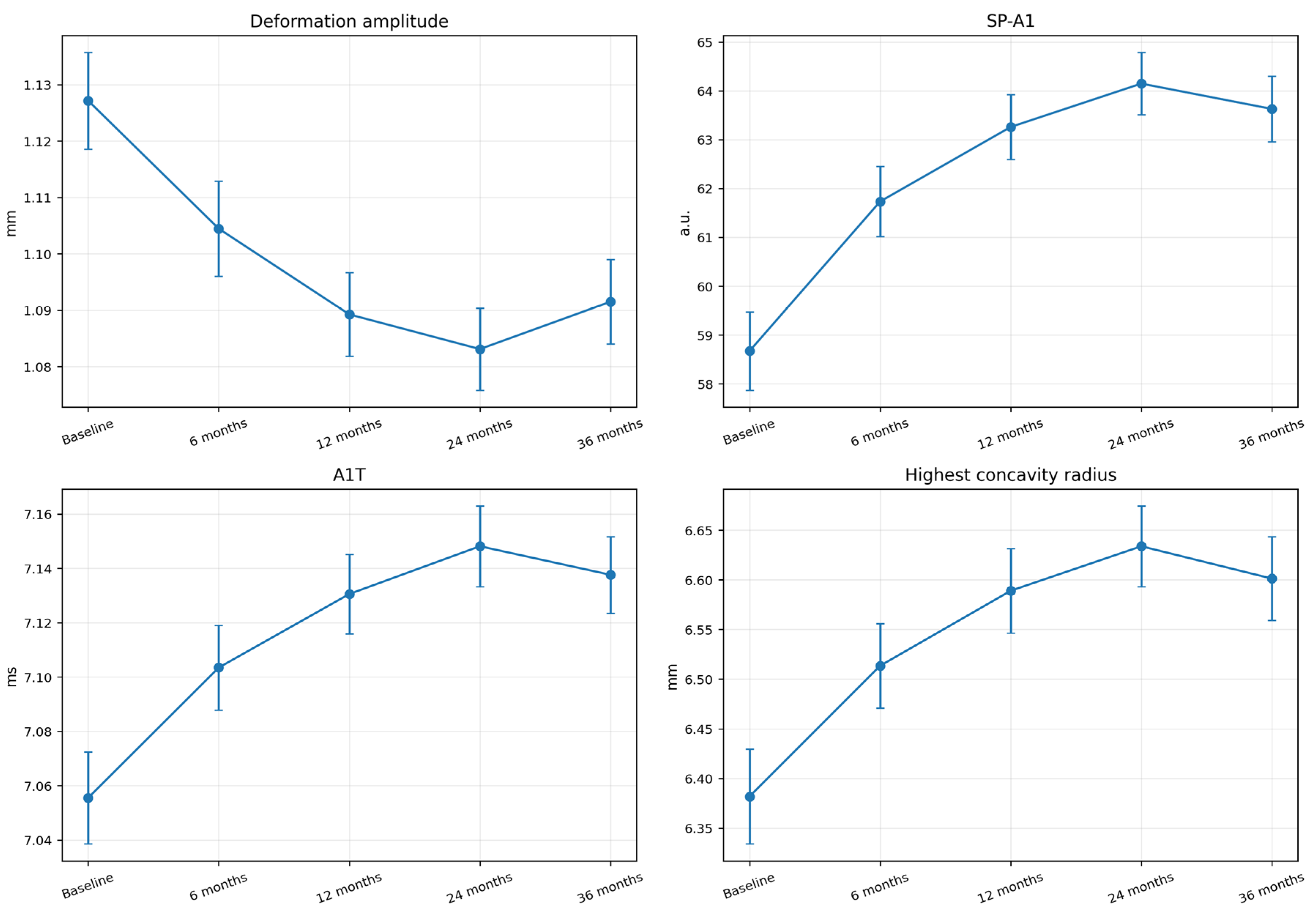
Figure 4.
Additional Corvis ST outcomes over 36 months: A1V, peak distance, A2T, and A2V. Points represent means and error bars indicate standard errors of the mean.
Figure 4.
Additional Corvis ST outcomes over 36 months: A1V, peak distance, A2T, and A2V. Points represent means and error bars indicate standard errors of the mean.
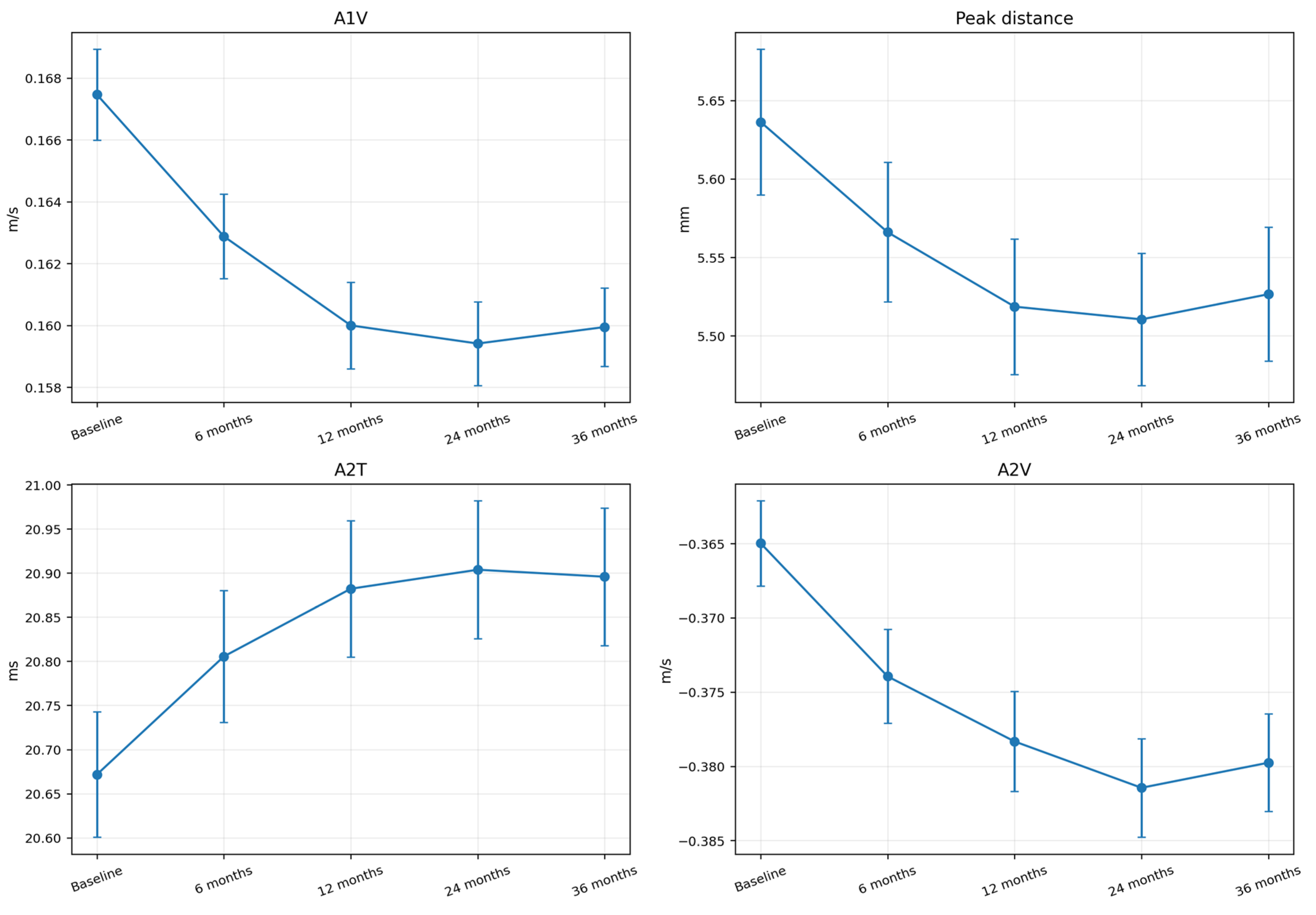
Figure 5.
C-stage distribution over time. Bars show the percentage of eyes in each C stage at each visit.
Figure 5.
C-stage distribution over time. Bars show the percentage of eyes in each C stage at each visit.
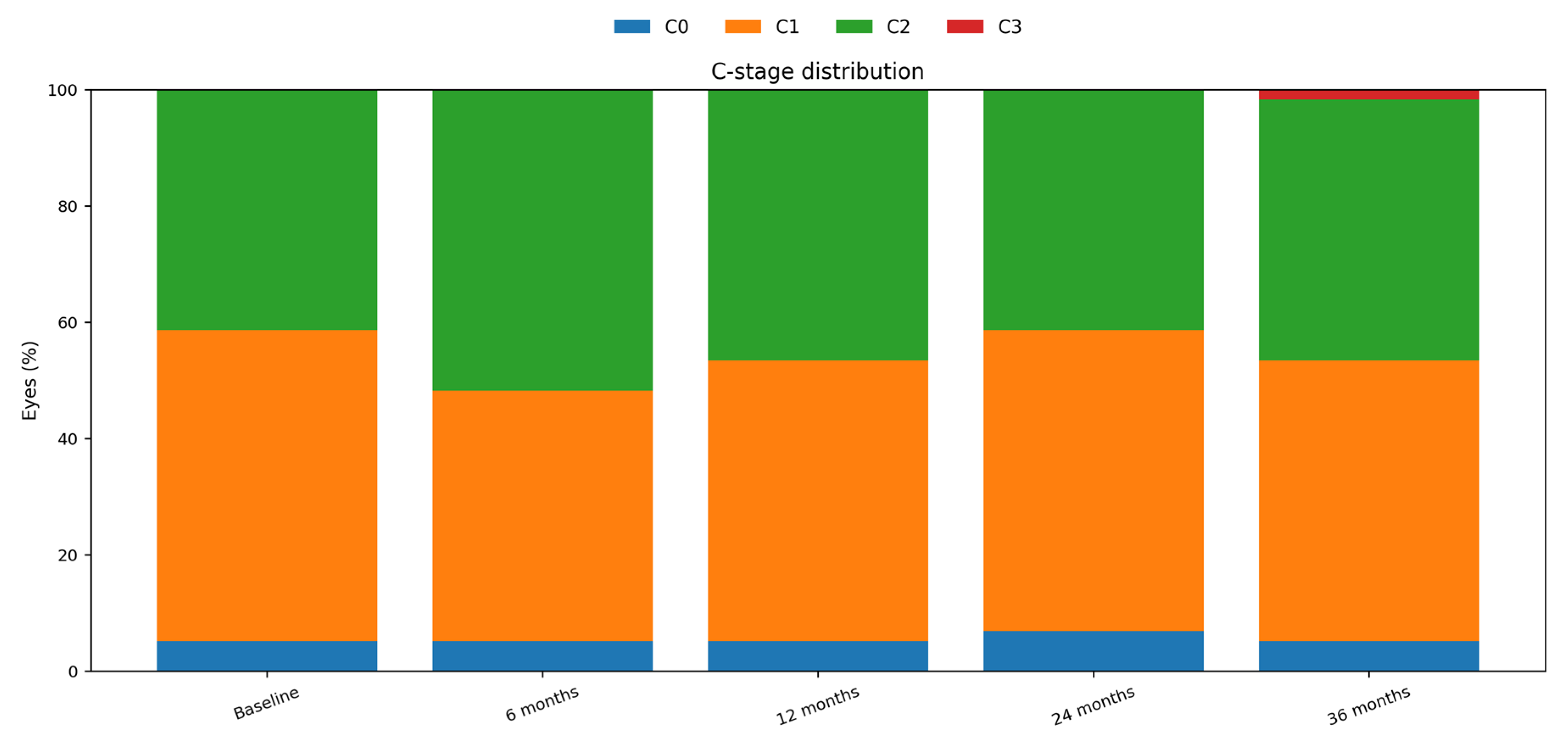
Figure 6.
D-stage distribution over time. Bars show the percentage of eyes in each D stage at each visit.
Figure 6.
D-stage distribution over time. Bars show the percentage of eyes in each D stage at each visit.
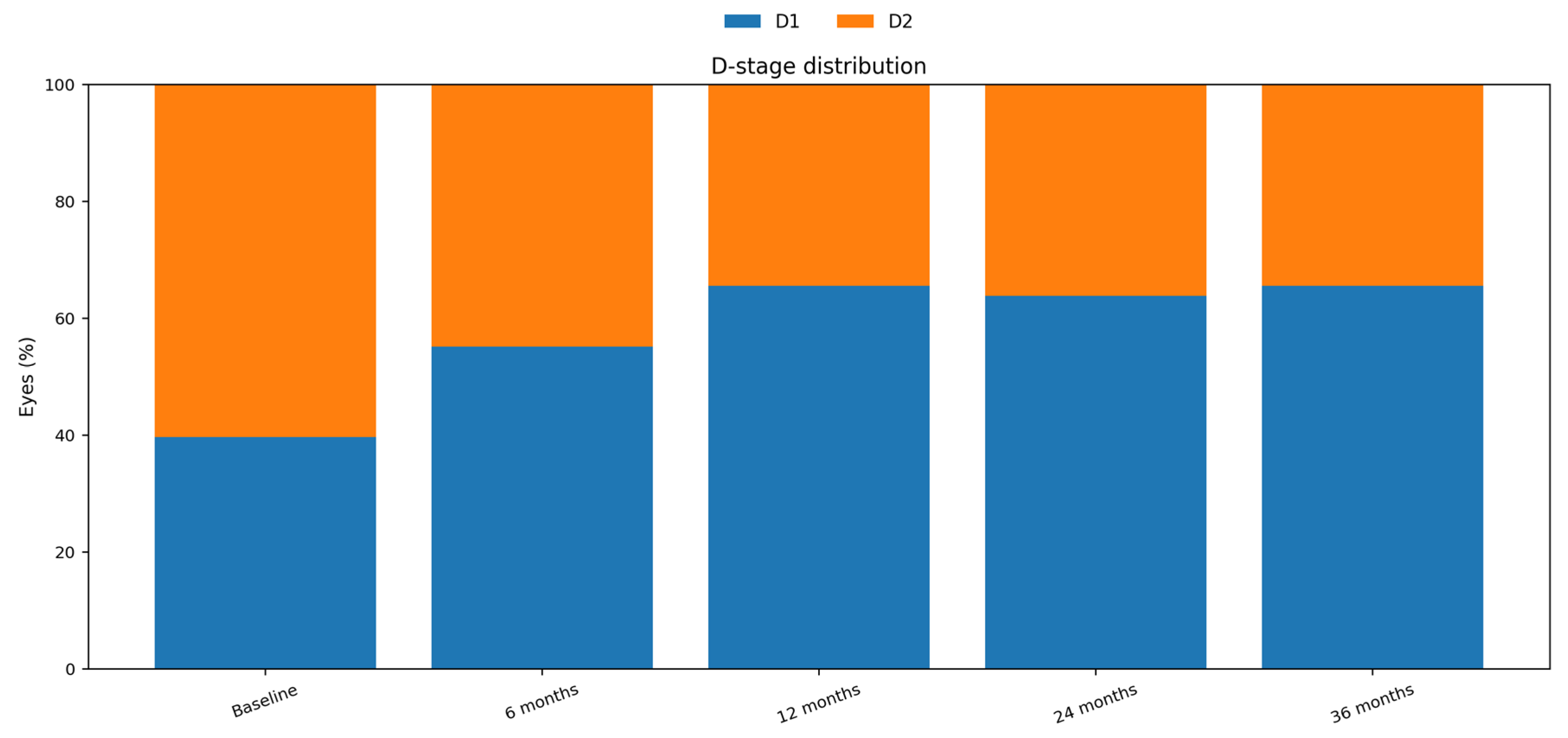
Figure 7.
Exploratory 36-month correlation analyses for ΔKmax vs ΔSP-A1, ΔCDVA vs ΔDA, and ΔBAD-D vs ΔKmax.
Figure 7.
Exploratory 36-month correlation analyses for ΔKmax vs ΔSP-A1, ΔCDVA vs ΔDA, and ΔBAD-D vs ΔKmax.
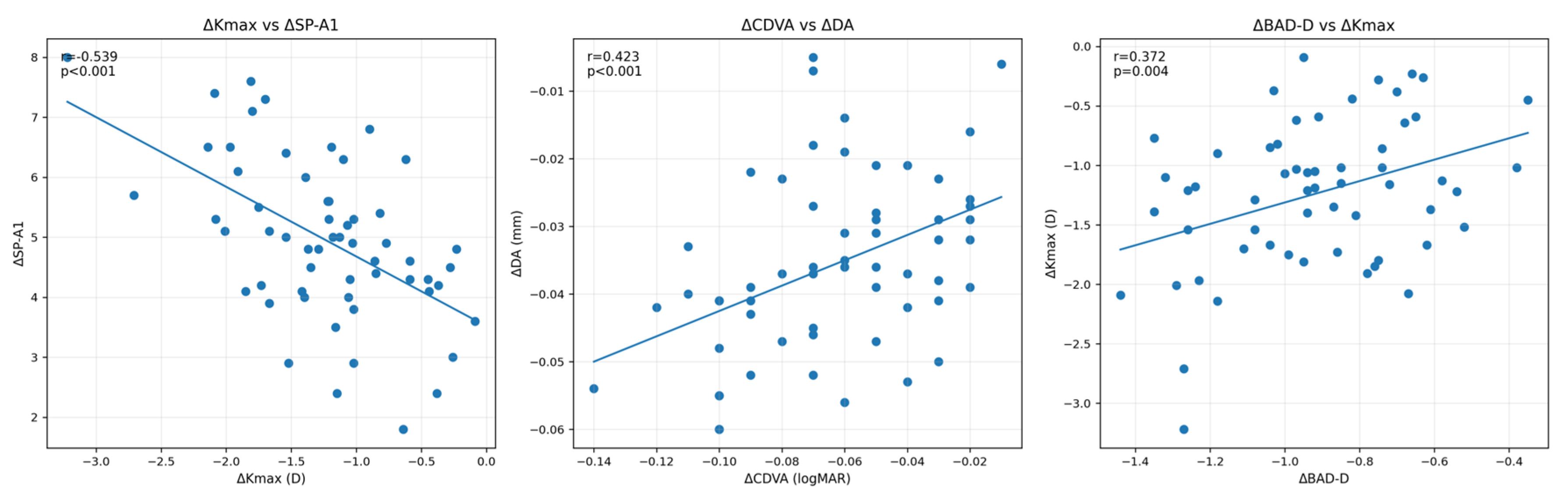
Figure 8.
Representative unilateral case, left eye: baseline Pentacam Topometric/KC-Staging display obtained on 01 December 2021. Patient-identifying data were removed/anonymized before inclusion in the manuscript.
Figure 8.
Representative unilateral case, left eye: baseline Pentacam Topometric/KC-Staging display obtained on 01 December 2021. Patient-identifying data were removed/anonymized before inclusion in the manuscript.
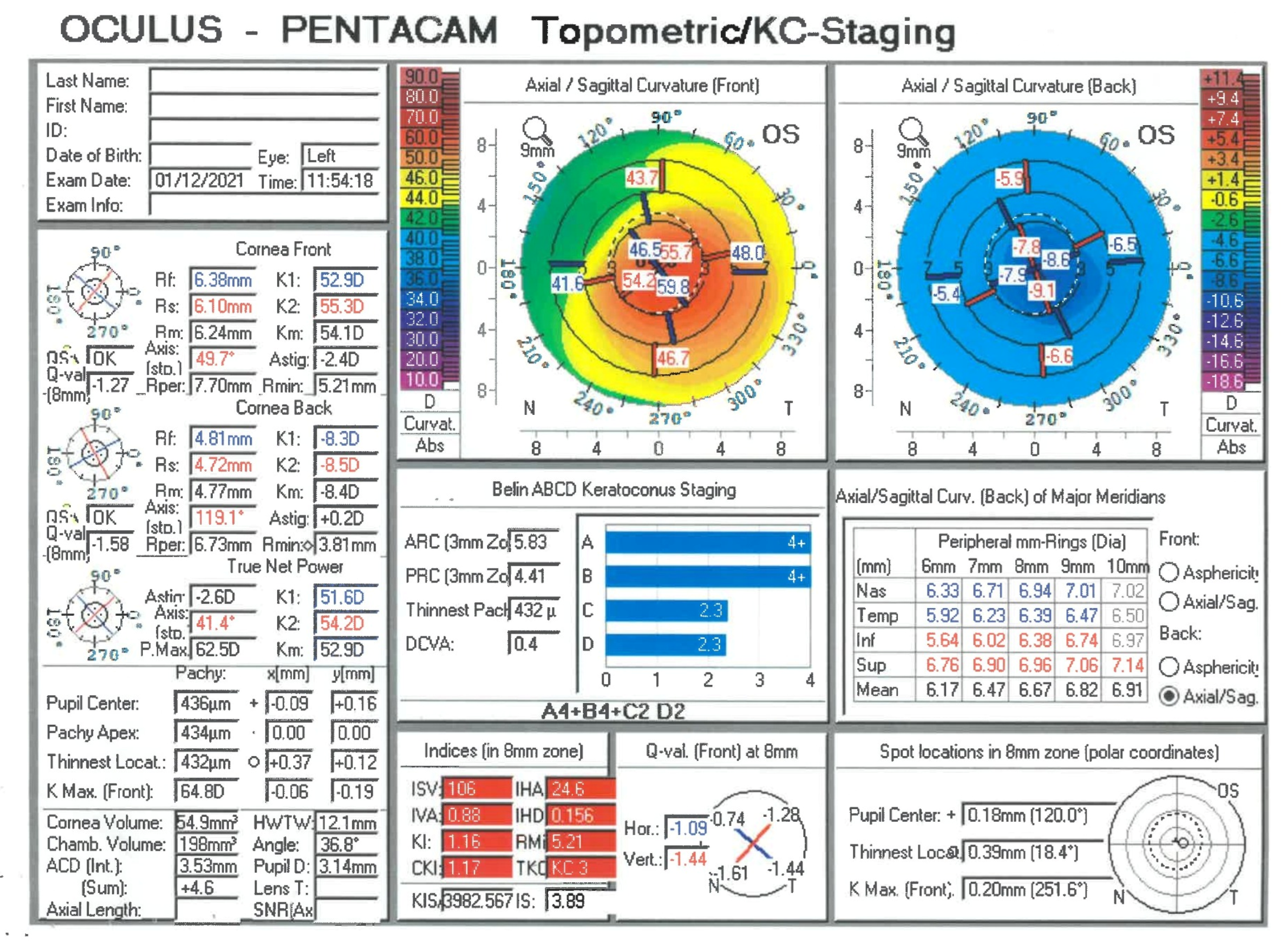
Figure 9.
Same eye: baseline Pentacam 4 Maps Refractive display showing inferior paracentral steepening and irregular astigmatism before combined KeraRing implantation and CXL. Patient-identifying data were removed/anonymized before inclusion in the manuscript.
Figure 9.
Same eye: baseline Pentacam 4 Maps Refractive display showing inferior paracentral steepening and irregular astigmatism before combined KeraRing implantation and CXL. Patient-identifying data were removed/anonymized before inclusion in the manuscript.
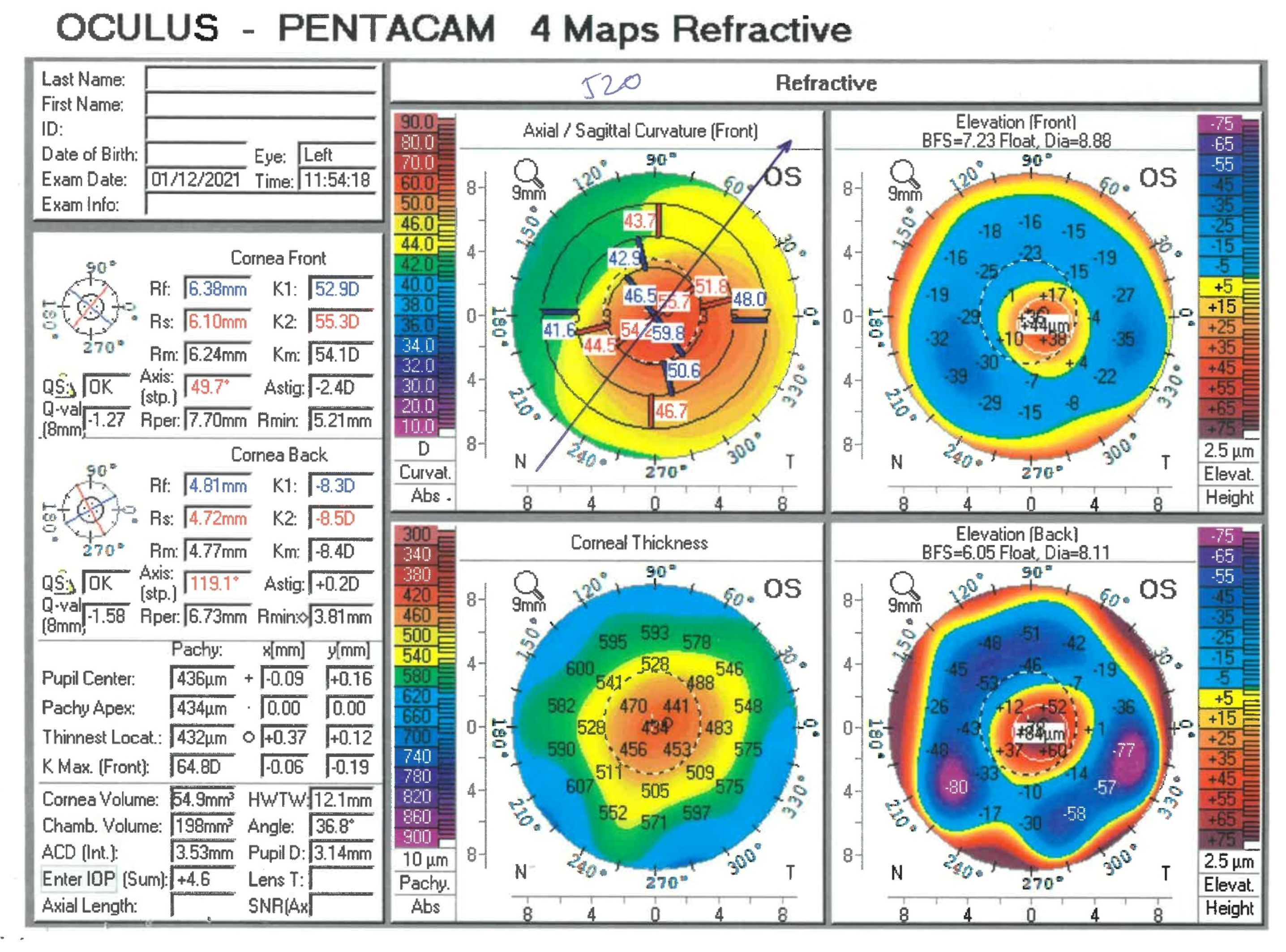
Figure 10.
Same eye: approximately 36-month postoperative Pentacam 4 Maps Refractive display showing corneal flattening, central regularization of anterior astigmatism, reduced Kmax, and preservation of thinnest pachymetry close to baseline. Patient-identifying data were removed/anonymized before inclusion in the manuscript.
Figure 10.
Same eye: approximately 36-month postoperative Pentacam 4 Maps Refractive display showing corneal flattening, central regularization of anterior astigmatism, reduced Kmax, and preservation of thinnest pachymetry close to baseline. Patient-identifying data were removed/anonymized before inclusion in the manuscript.
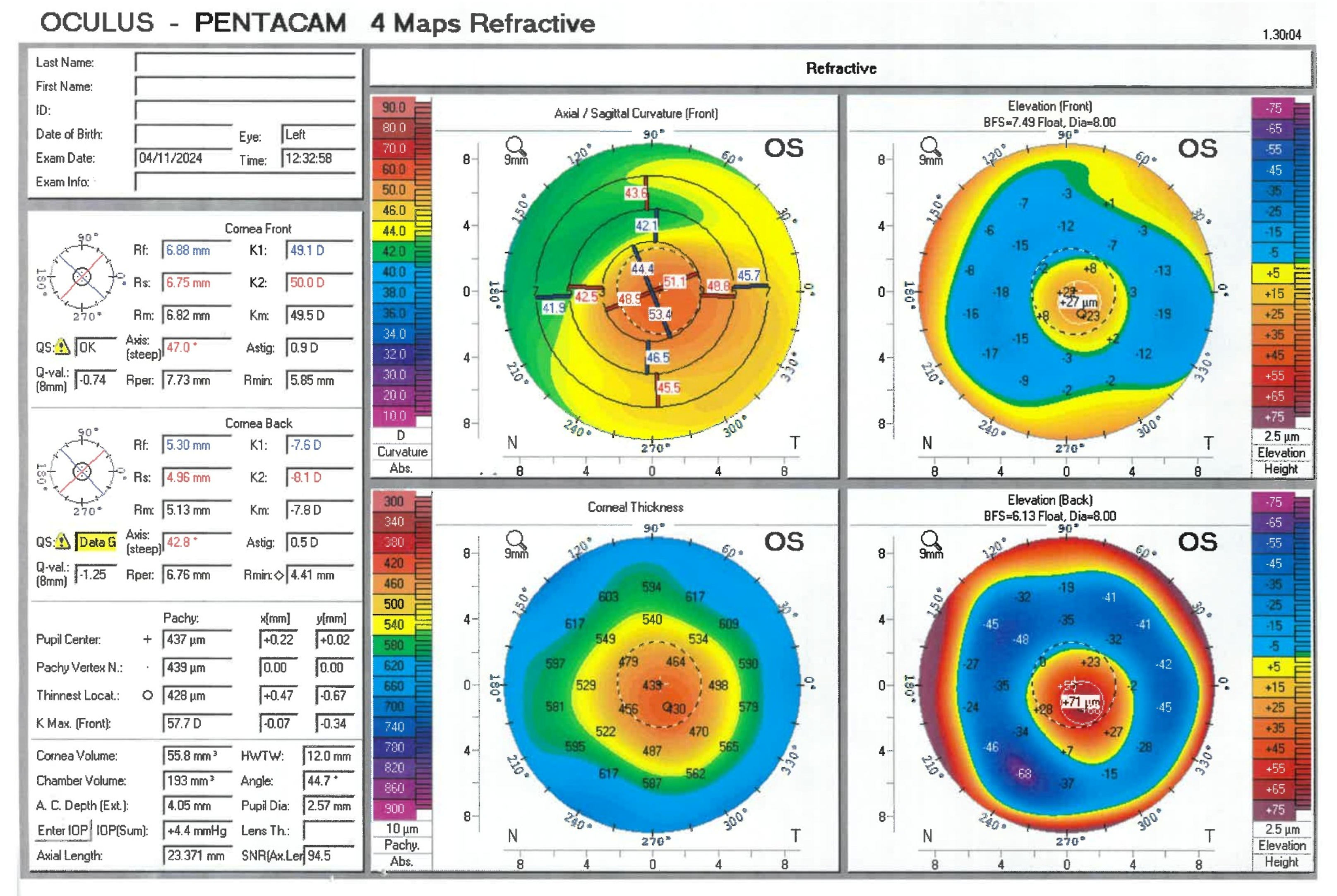
Figure 11.
Same eye: approximately 36-month postoperative Pentacam Topometric/KC-Staging display confirming a more regular anterior curvature profile. Patient-identifying data were removed/anonymized before inclusion in the manuscript.
Figure 11.
Same eye: approximately 36-month postoperative Pentacam Topometric/KC-Staging display confirming a more regular anterior curvature profile. Patient-identifying data were removed/anonymized before inclusion in the manuscript.
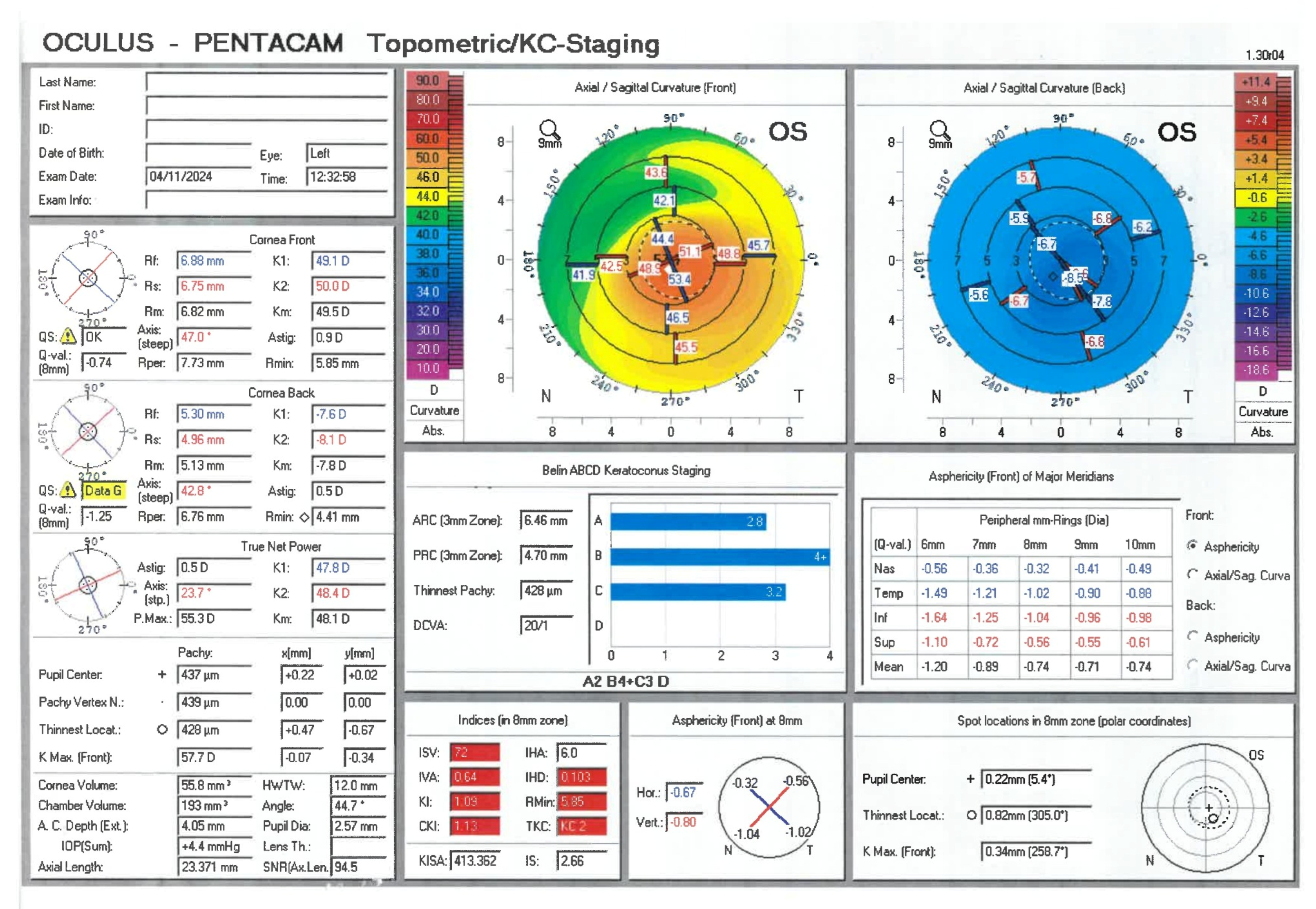
Figure 12.
Representative bilateral case, right eye: baseline Pentacam 4 Maps Refractive display obtained on 04 November 2019. Patient-identifying data were removed/anonymized before inclusion in the manuscript.
Figure 12.
Representative bilateral case, right eye: baseline Pentacam 4 Maps Refractive display obtained on 04 November 2019. Patient-identifying data were removed/anonymized before inclusion in the manuscript.
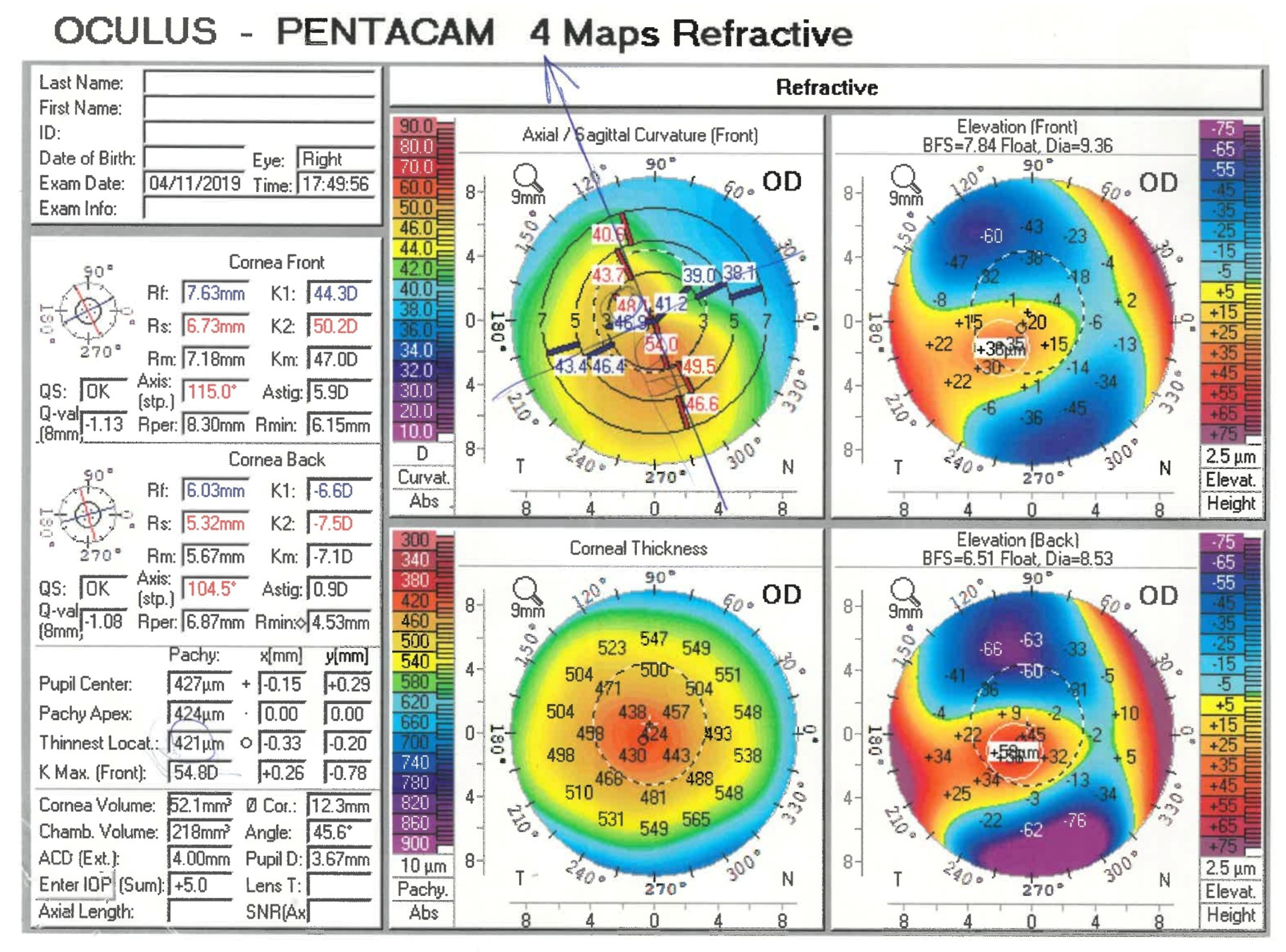
Figure 13.
Same patient, left eye: baseline Pentacam 4 Maps Refractive display obtained on 04 November 2019. Patient-identifying data were removed/anonymized before inclusion in the manuscript.
Figure 13.
Same patient, left eye: baseline Pentacam 4 Maps Refractive display obtained on 04 November 2019. Patient-identifying data were removed/anonymized before inclusion in the manuscript.
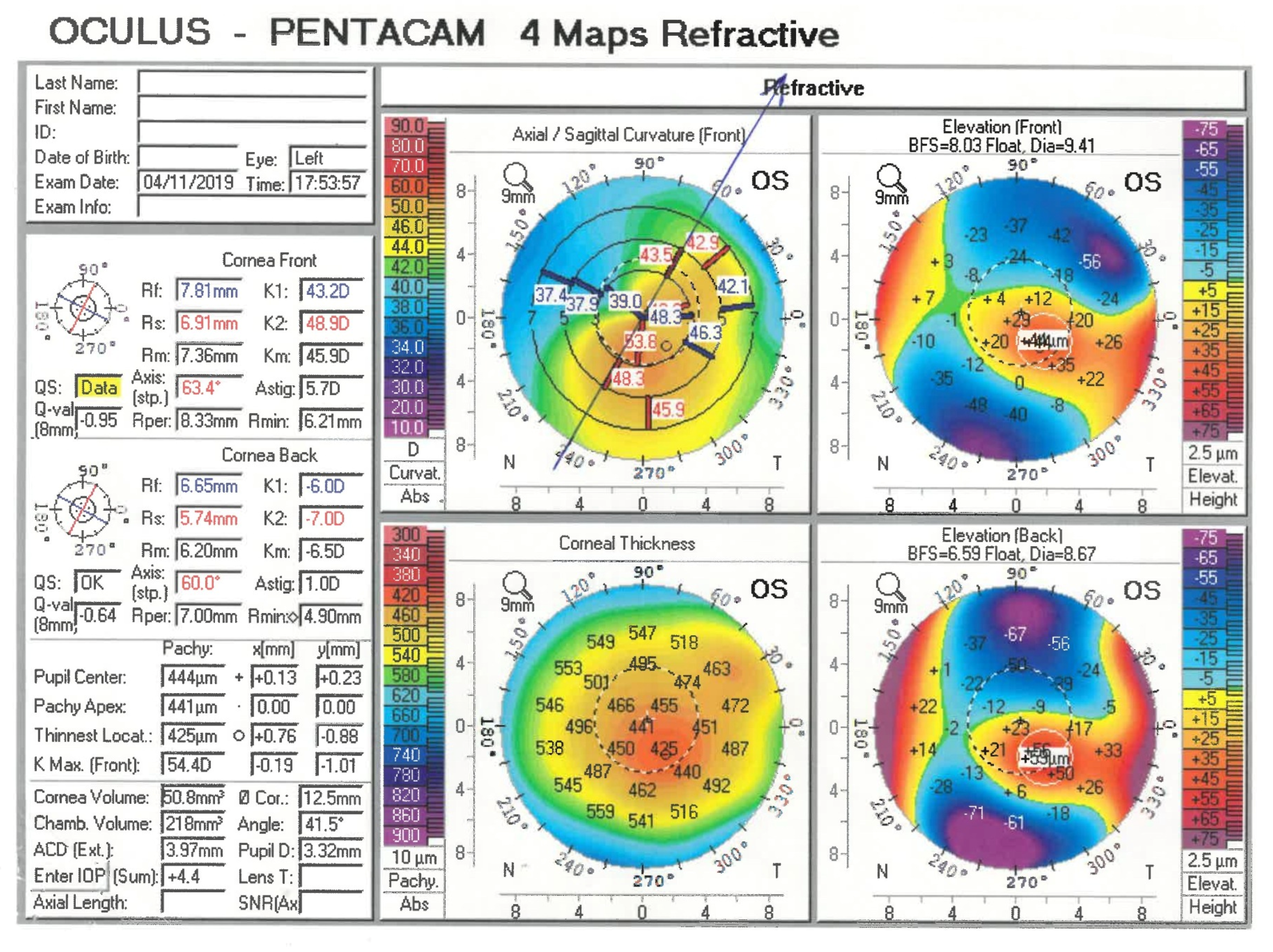
Figure 14.
Same patient, right eye: approximately 3-year postoperative Pentacam 4 Maps Refractive display obtained on 18 May 2023, showing marked reduction of anterior corneal astigmatism and a more regular central curvature pattern. Patient-identifying data were removed/anonymized before inclusion in the manuscript.
Figure 14.
Same patient, right eye: approximately 3-year postoperative Pentacam 4 Maps Refractive display obtained on 18 May 2023, showing marked reduction of anterior corneal astigmatism and a more regular central curvature pattern. Patient-identifying data were removed/anonymized before inclusion in the manuscript.
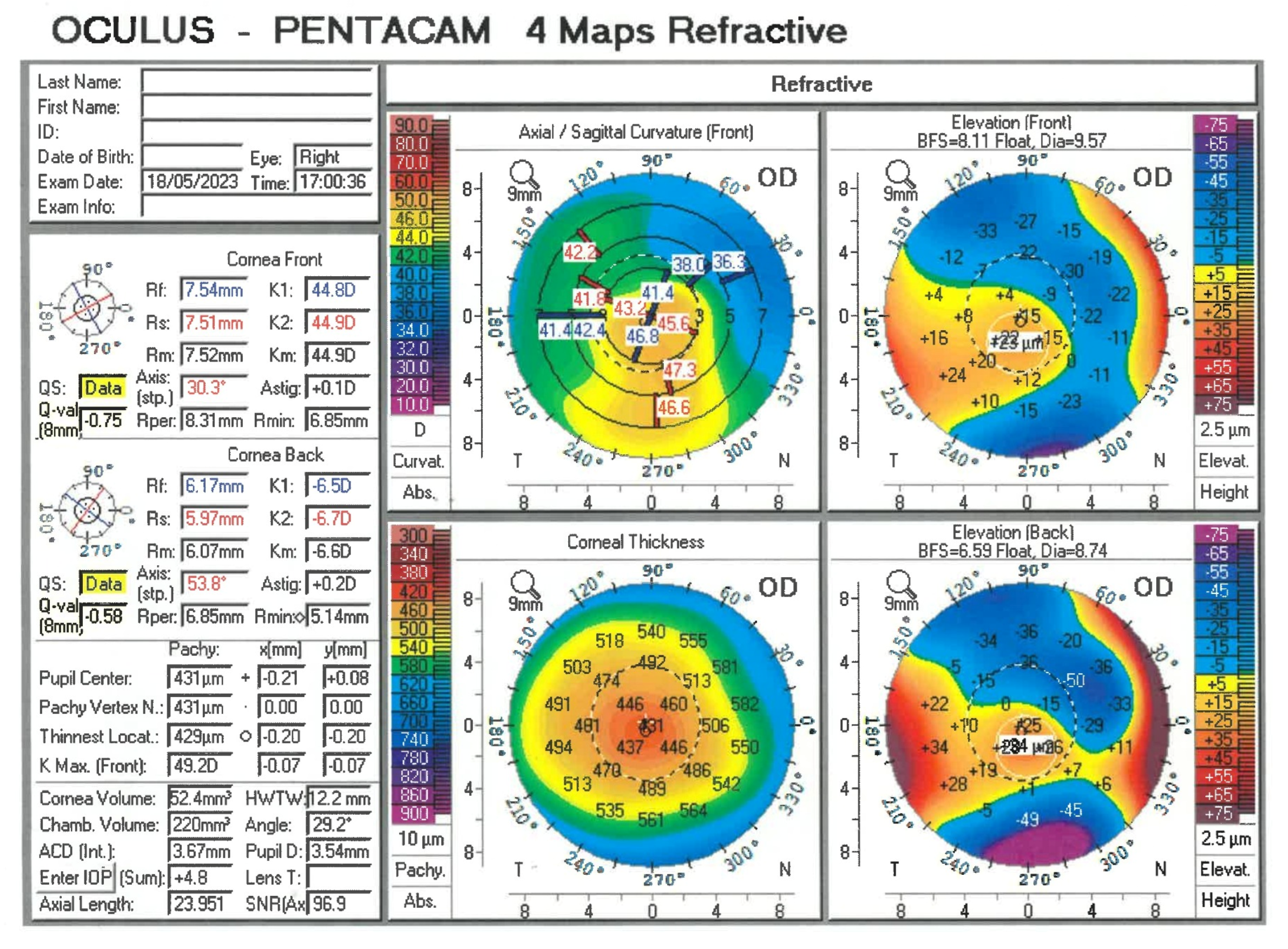
Figure 15.
Same patient, left eye: approximately 3-year postoperative Pentacam 4 Maps Refractive display obtained on 18 May 2023, illustrating residual inter-eye variability despite redistribution of the corneal curvature pattern. Patient-identifying data were removed/anonymized before inclusion in the manuscript.
Figure 15.
Same patient, left eye: approximately 3-year postoperative Pentacam 4 Maps Refractive display obtained on 18 May 2023, illustrating residual inter-eye variability despite redistribution of the corneal curvature pattern. Patient-identifying data were removed/anonymized before inclusion in the manuscript.
Table 1.
Cohort and procedural characteristics.
| Characteristic | Value |
|---|---|
| Final study cohort, n | 58 |
| Age at treatment, years | 27.2 ± 7.0 |
| Age range, years | 15-43 |
| Eyes from male patients, n (%) | 42 (72.4) |
| Eyes from female patients, n (%) | 16 (27.6) |
| Study years | 2019-2022 |
| Source patients, n | 40 |
| Unilateral patients, n | 22 |
| Bilateral patients, n | 18 |
| One ring implanted, n (%) | 43 (74.1) |
| Two rings implanted, n (%) | 15 (25.9) |
| Ring thickness, mm | 0.24 ± 0.07 |
| Ring thickness range, mm | 0.15-0.35 |
Note: all clinical, tomographic, biomechanical, and procedural descriptors were derived from the same 58-eye cohort.
Table 2.
Longitudinal visual, tomographic, and BAD-D outcomes.
| Variable | Baseline | 6 Months | 12 Months | 24 Months | 36 Months | RM-ANOVA |
|---|---|---|---|---|---|---|
| UDVA (logMAR) | 0.560 ± 0.151 | 0.499 ± 0.143 | 0.471 ± 0.134 | 0.454 ± 0.128 | 0.469 ± 0.136 | F(4, 228)=125.01; p <0.001; ηp²=0.687 |
| CDVA (logMAR) | 0.350 ± 0.109 | 0.309 ± 0.103 | 0.291 ± 0.095 | 0.275 ± 0.098 | 0.287 ± 0.092 | F(4, 228)=116.02; p <0.001; ηp²=0.671 |
| Thinnest pachymetry (µm) | 454.4 ± 22.6 | 448.2 ± 22.8 | 451.3 ± 22.6 | 455.5 ± 23.1 | 440.7 ± 21.9 | F(4, 228)=208.90; p <0.001; ηp²=0.786 |
| Kmax (D) | 56.11 ± 3.17 | 55.30 ± 2.94 | 55.01 ± 2.78 | 54.62 ± 2.89 | 54.87 ± 2.86 | F(4, 228)=96.29; p <0.001; ηp²=0.628 |
| BAD-D | 5.62 ± 1.89 | 5.04 ± 1.85 | 4.77 ± 1.79 | 4.56 ± 1.77 | 4.70 ± 1.75 | F(4, 228)=260.72; p <0.001; ηp²=0.821 |
Values are mean ± standard deviation. RM-ANOVA = repeated-measures analysis of variance; ηp² = partial eta squared.
Table 3.
Longitudinal Corvis ST outcomes.
| Variable | Baseline | 6 Months | 12 Months | 24 Months | 36 Months | RM-ANOVA |
|---|---|---|---|---|---|---|
| A1T (ms) | 7.056 ± 0.129 | 7.103 ± 0.119 | 7.131 ± 0.111 | 7.148 ± 0.113 | 7.138 ± 0.108 | F(4, 228)=191.61; p <0.001; ηp²=0.771 |
| A1V (m/s) | 0.167 ± 0.011 | 0.163 ± 0.010 | 0.160 ± 0.011 | 0.159 ± 0.010 | 0.160 ± 0.010 | F(4, 228)=86.21; p <0.001; ηp²=0.602 |
| DA (mm) | 1.127 ± 0.065 | 1.104 ± 0.064 | 1.089 ± 0.056 | 1.083 ± 0.055 | 1.091 ± 0.057 | F(4, 228)=119.26; p <0.001; ηp²=0.677 |
| PD (mm) | 5.636 ± 0.354 | 5.566 ± 0.339 | 5.519 ± 0.329 | 5.511 ± 0.320 | 5.527 ± 0.325 | F(4, 228)=71.97; p <0.001; ηp²=0.558 |
| HCR (mm) | 6.382 ± 0.363 | 6.513 ± 0.323 | 6.589 ± 0.323 | 6.634 ± 0.309 | 6.601 ± 0.320 | F(4, 228)=219.37; p <0.001; ηp²=0.794 |
| A2T (ms) | 20.672 ± 0.541 | 20.806 ± 0.569 | 20.882 ± 0.588 | 20.904 ± 0.595 | 20.896 ± 0.595 | F(4, 228)=159.87; p <0.001; ηp²=0.737 |
| A2V (m/s) | -0.365 ± 0.022 | -0.374 ± 0.024 | -0.378 ± 0.026 | -0.381 ± 0.025 | -0.380 ± 0.025 | F(4, 228)=251.32; p <0.001; ηp²=0.815 |
| SP-A1 (a.u.) | 58.67 ± 6.10 | 61.73 ± 5.48 | 63.26 ± 5.03 | 64.15 ± 4.87 | 63.63 ± 5.10 | F(4, 228)=497.11; p <0.001; ηp²=0.897 |
Values are mean ± standard deviation. All overall time effects were significant at p < 0.001.
Table 4.
C-stage distribution over time.
| Stage | Baseline | 6 Months | 12 Months | 24 Months | 36 Months |
|---|---|---|---|---|---|
| C0 | 3 (5.2%) | 3 (5.2%) | 3 (5.2%) | 4 (6.9%) | 3 (5.2%) |
| C1 | 31 (53.4%) | 25 (43.1%) | 28 (48.3%) | 30 (51.7%) | 28 (48.3%) |
| C2 | 24 (41.4%) | 30 (51.7%) | 27 (46.6%) | 24 (41.4%) | 26 (44.8%) |
| C3 | 0 (0.0%) | 0 (0.0%) | 0 (0.0%) | 0 (0.0%) | 1 (1.7%) |
Friedman test: χ²=11.45, p=0.022.
Table 5.
D-stage distribution over time.
| Stage | Baseline | 6 Months | 12 Months | 24 Months | 36 Months |
|---|---|---|---|---|---|
| D1 | 23 (39.7%) | 32 (55.2%) | 38 (65.5%) | 37 (63.8%) | 38 (65.5%) |
| D2 | 35 (60.3%) | 26 (44.8%) | 20 (34.5%) | 21 (36.2%) | 20 (34.5%) |
Friedman test: χ²=43.47, p < 0.001.
Table 6.
Exploratory 36-month correlation analyses.
| Comparison | Pearson r | p Value |
|---|---|---|
| ΔKmax vs ΔSP-A1 | -0.539 | <0.001 |
| ΔCDVA vs ΔDA | 0.423 | <0.001 |
| ΔBAD-D vs ΔKmax | 0.372 | 0.004 |
Δ indicates 36-month minus baseline change.
Disclaimer/Publisher’s Note: The statements, opinions and data contained in all publications are solely those of the individual author(s) and contributor(s) and not of MDPI and/or the editor(s). MDPI and/or the editor(s) disclaim responsibility for any injury to people or property resulting from any ideas, methods, instructions or products referred to in the content. |
© 2026 by the authors. Licensee MDPI, Basel, Switzerland. This article is an open access article distributed under the terms and conditions of the Creative Commons Attribution (CC BY) license (http://creativecommons.org/licenses/by/4.0/).
Copyright: This open access article is published under a Creative Commons CC BY 4.0 license, which permit the free download, distribution, and reuse, provided that the author and preprint are cited in any reuse.


