

Submitted:
22 May 2026
Posted:
26 May 2026
You are already at the latest version
Abstract
This study examines the transformation of human capital mobility in the digital era under the accelerating pace of socio-technological change and analyzes the resulting challenges for sustainable development. It identifies the key characteristics and drivers of contemporary human capital mobility and considers their broader implications for social development and governance. The research is based on a structured review, systematization, and critical comparison of academic literature and analytical reports from international organizations. The findings show that contemporary mobility is characterized by pace of change, pervasiveness, and globality and is driven by digital transparency, remote work, AI, automation, and state support. Contemporary human capital mobility leads to the rapid redistribution of human capital, the reorganization of social space, and shifts in social values, while the pace of socio-technological change intensifies these effects and makes adaptation more difficult. The main challenge for sustainable development lies in the growing mismatch between the pace of socio-technological change and the capacity of governance institutions, infrastructure, and social institutions to adapt.
Keywords:
human capital mobility
; digital transformation
; pace of change
; remote work
; digital nomads
; artificial intelligence and automation
; sustainable development
1. Introduction
The contemporary world has entered an era of rapid socio-technological transformation driven by the unprecedented development of digital technologies and artificial intelligence [1]. These changes are creating a new environment in which work, communication, ideas of home, and ways of life are undergoing profound change. In this shifting reality, mobility is no longer merely a means of economic survival or a response to external circumstances. It has become one of the defining characteristics of contemporary society. Movement across physical and digital space is becoming a normal part of everyday life and increasingly determines how people participate in the global socio-economic sphere. People can now choose where to live and how to work and live without being rigidly tied to a particular place or time, which greatly expands the possibilities of human capital mobility. Mobility is increasingly not only the result of individual choice but also a routine part of social life, where the boundaries between work and personal time, center and periphery, and the local and the global are becoming blurred. At the same time, it is playing an increasingly visible role in social development and in the pursuit of sustainable development goals.
A central feature of this transformation is the pace of change, understood as the radical acceleration of socio-economic and technological change, so that what once unfolded over decades now takes place within a few years, and sometimes within just a few months [1]. Acceleration has become an integral characteristic of contemporary social reality and influences how individuals and communities adapt.
Human capital mobility has a long research tradition. Mobility has accompanied human society throughout its history. The movement of people in search of resources, safety, or a better life [6,11] largely determined the settlement of humanity across the planet. As people moved into new territories, they built roads, cities, and trade routes, which encouraged the spread of cultural and economic ties and contributed to the emergence of the anthroposphere.
Historically, mobility was closely tied to survival [2] and served as a response to external pressures such as resource scarcity, natural disasters, and wars [18], which pushed people to seek safer territories. Such factors remained dominant until the twentieth century [14]. Against this background, the age of industrialization brought a shift toward economic and social drivers of movement. Urbanization, transport development, and expanding labor markets made mobility increasingly associated with the search for work [13,14], education and professional advancement [15,17], as well as the pursuit of social self-realization [16,17]. It was during this period that mobility began to be viewed as an independent social phenomenon, which stimulated the development of research devoted to its analysis.
The concept of mobility itself entered academic discourse in the first half of the twentieth century, above all through the work of Pitirim Sorokin, who developed the concept of social mobility as vertical and horizontal movement within the social structure of society [16]. Over time, scholarly attention increasingly shifted toward geographical mobility associated with migration and the redistribution of population [3,13]. With the development of human capital theory, this approach was expanded through the concept of “brain drain” and the study of how inflows and outflows of human capital affect different regions [14,15].
Later, these strands of thought were brought together in the so-called “mobility turn,” within which mobility came to be understood much more broadly than the physical movement of people alone. It also includes the movement of knowledge, skills, and professional experience [3,4,9]. This means that mobility is understood not only as physical movement through space [10,11], but also as a means of engaging with different kinds of communities and building social ties.
Globalization also had a major impact on the study of mobility. Manuel Castells emphasizes the role of information technologies in creating mobility flows [22], while Saskia Sassen shows how contemporary technologies are used to sustain transnational ties, allowing people to live in global cities while preserving their identity and connection to their homeland [9]. Ulrich Beck, in turn, argues that mobility contributes to the cosmopolitanization of everyday life by breaking down traditional boundaries and transforming identity [10].
However, the transition to the digital age has radically changed the nature of mobility. Today, movement takes place not only in physical space but also in virtual space, where knowledge, skills, data, and labor also move [1,2,3,4]. The expansion of remote work and the development of digital communication have made growing numbers of people less tied to a specific workplace and given them greater freedom to choose where they live. This trend is changing not only how people move, but also how they participate in the global economy, where geographical mobility is becoming part of everyday life. This is especially visible in the phenomenon of digital nomads, who combine professional activity with a mobile way of life [23,24]. For them, mobility is not a temporary choice but a normal way of living and working.
Despite these large-scale changes, most recent research still deals primarily with forced migration [60], especially refugee issues, and labor flows, while also considering new opportunities created by digital and hybrid forms of employment [24,25,26]. Institutional sources, including analytical reports by international organizations such as the World Bank, IOM, UN DESA, OECD, and the World Economic Forum [5,6,7,8], show a similar pattern. Most of them continue to address migration issues linked to poverty, armed conflict, and natural disasters. In addition, a growing body of research points to increasing inequality in access to digital resources and opportunities [25,26,27]. One reason is the limited access of some population groups to digital technologies and services [29], even though available statistics show steady growth in the number of mobile device users [31], wider mobile subscription coverage [30], and the expansion of areas with Internet access [32]. At the same time, new opportunities are emerging for people to engage in global economic and social networks. In recent years, researchers have paid particular attention to digital nomads [24,33] and other contemporary ways of combining work with a mobile lifestyle, which are especially relevant to the purposes of this study.
Interest in mobility has therefore grown among both academic researchers and international organizations. Yet most recent studies still deal mainly with traditional migration flows and the socio-economic aspects of movement, while the effect of the radically accelerating pace of socio-technological change on the nature of mobility remains insufficiently understood. An open question is how the digital environment, with its inherently rapid pace of change [28,34], reshapes human capital mobility, its drivers, and its defining features, and what consequences these changes may have for sustainable development. This concerns not only changes in employment, movement into new territories, and professional development, but also how these changes in human capital mobility affect the possibilities for long-term planning.
Sustainable development requires stability and long-term planning, whereas in the digital age the rising pace of mobility is outstripping the ability of social institutions to preserve stability in a rapidly changing environment. Ignoring this essential characteristic of mobility limits our understanding of the challenges facing governance systems and strategic planning.
This article examines human capital mobility through the lens of the pace of change as one of the defining characteristics of the digital age. The study identifies the key characteristics and new drivers of human capital mobility under conditions of critically accelerating socio-technological change in the digital age and examines their significance and the challenges they create for sustainable development, given the growing mismatch between the speed of change and the adaptive capacity of social institutions.
The study is guided by the following questions:
1. How is human capital mobility being transformed in the digital age under conditions of accelerating socio-technological change?
2. What key characteristics and drivers define contemporary human capital mobility in this context?
3. What challenges does this transformation create for sustainable development and governance, given the growing mismatch between the pace of change and the adaptive capacity of social institutions?
Unlike dominant traditional approaches that treat mobility primarily as a spatial and economic phenomenon, this article considers it within the broader context of technologically driven social change associated with the emergence and development of the digital environment, and especially with the accelerating pace of these changes, which has a significant impact on the character of human capital mobility.
The novelty of the study lies in highlighting the pace-of-change dimension of mobility, which makes it possible to show that as socio-technological change accelerates, its drivers, characteristics, and consequences also change, creating new challenges for sustainable development.
The theoretical contribution and practical significance of the study lie in rethinking human capital mobility through the lens of the pace of change as one of the defining characteristics of the digital age. The study shows that accelerating change is becoming a defining feature of contemporary socio-technological development, against which mobility appears not as an episodic response to external circumstances but as a persistent characteristic of social reality. Attention to the pace of change makes it possible to reassess the limits of long-term planning and the ability of social institutions to adapt to rapid change. The practical significance of the study lies in the need to take accelerating human capital mobility into account when developing adaptive governance mechanisms and territorial development strategies aimed at ensuring sustainable development at the national and regional levels.
The article is structured as follows. The first section reviews the literature on mobility and human capital. The second section outlines the study’s methodological approach. The Results section presents the defining characteristics and main drivers of contemporary human capital mobility. The Discussion section examines the territorial, social, and governance consequences of pervasive mobility under the accelerating pace of change in the digital age, as well as the related challenges for the achievement of sustainable development goals. The Conclusion summarizes the main findings and outlines directions for further theoretical research.
2. Materials and Methods
This study examines the qualitative changes in contemporary human capital mobility under the unprecedented acceleration of socio-technological transformations in the digital age and analyzes their significance for sustainable development. Particular attention is given to the current pace of infrastructural and socio-economic change, which, for the first time in human history, now unfolds repeatedly within a single human lifetime [1] and provides the basis for analyzing the characteristics, drivers, consequences, and sustainability challenges of contemporary mobility identified in the study.
2.1. Research Stages
The study proceeded through several consecutive stages of selecting and analyzing scholarly sources, followed by a theoretical assessment of the findings.
At the first stage, academic publications on human capital mobility, digital transformation, the future of work, and accelerating socio-technological change were selected and analyzed. The literature search was conducted in the international bibliographic databases Scopus and Web of Science Core Collection. Google Scholar was used as an additional source, which made it possible to identify relevant publications not indexed in the main databases. The main body of contemporary literature covered the past 10–15 years, with particular attention to the period 2020–2025. Alongside contemporary research on digital transformation, automation, remote work, and the development of artificial intelligence, the analysis also included foundational theories. Earlier classical works that laid the theoretical foundations for the study of mobility were therefore included, among them Pitirim Sorokin’s concept of social mobility, the economic theories of human capital developed by Theodore Schultz and Gary Becker, and research associated with the “mobility turn” in the work of John Urry and Mimi Sheller.
The search was conducted primarily in English using the following keywords and combinations: “human capital mobility”, “remote work” and migration, “digital nomadism”, “future of work” and mobility, “artificial intelligence” and labour mobility, “automation” and human capital, “mobility” and “sustainable development”, and “pace of change” and digital society. Additional search combinations were also used in relation to state regulation of mobility, digital visas, remote employment, and the redistribution of human capital. At the first stage, 144 publications and analytical materials that were potentially relevant to the topic were identified. After duplicate and irrelevant sources had been excluded through an initial screening of titles, abstracts, and keywords, 78 academic publications were selected for full-text analysis. An additional 21 analytical reports by international organizations were included in the research corpus.
Publications were included if they addressed at least one of the following thematic areas: human capital mobility; digital transformation and its impact on employment and ways of life; remote work, digital nomadism, and hybrid forms of work; automation, artificial intelligence, and the transformation of labour markets; the spatial and social consequences of mobility and the challenges it creates for governance and planning institutions; and the relationship between mobility and sustainable development. Priority was given to publications with theoretical significance, conceptual relevance, and particular value for the analysis of the digital age. The following were excluded from the analysis: publications not directly related to the transformation of mobility in the digital age; studies devoted exclusively to traditional migration without any connection to the digital environment, remote work, automation, or the transformation of human capital; publications with a predominantly narrow technical focus; and duplicate or substantively redundant sources.
At the second stage, contemporary global trends were examined by comparing academic research with official analytical materials and reports from international organizations, including the World Bank, the International Organization for Migration (IOM), UN DESA, OECD, ILO, and the World Economic Forum. This made it possible to consider human capital mobility not only from the theoretical perspective presented in academic literature, but also through the lens of current global trends reflected in international statistics and analytical reports. Such comparison allowed for a more precise assessment of how contemporary human capital mobility is developing and made it possible to identify significant changes associated with digitalization, the spread of remote work, the development of automation and artificial intelligence, and changes in state policy in the field of mobility regulation.
At the third stage, existing theoretical approaches to human capital mobility were compared in order to identify their limitations in the study of mobility under accelerating socio-technological change. Particular attention was paid to the fact that most studies still examine mobility primarily through economic and spatial parameters, while the impact of accelerating social and technological change remains insufficiently explored. This made it possible to consider the pace of change as one of the central characteristics of the contemporary socio-technological environment and to use it in analyzing the characteristics, drivers, and consequences of contemporary human capital mobility in relation to the challenges of sustainable development.
2.2. Methodological Limitations
The study is theoretical and conceptual in nature and does not involve quantitative empirical testing. Its limitations stem from the interpretation and generalization of existing approaches to human capital mobility, as well as from the predominant use of English-language academic sources and international analytical reports. At the same time, the proposed approach makes it possible to identify significant changes in the character of contemporary mobility and to examine them in the context of accelerating socio-technological transformations in the digital age.
3. Results
This section presents the results of the conceptual analysis aimed at identifying and systematizing the characteristics and drivers of contemporary human capital mobility in the digital age.
3.1. Defining Characteristics of Contemporary Mobility
The findings show that contemporary human capital mobility is developing in a new technological environment created by the rapid spread of digital technologies and artificial intelligence. In this environment, qualitatively different opportunities for movement and settlement are emerging, significantly changing the scale and character of mobility. This creates the conditions for subsequent social and spatial change.
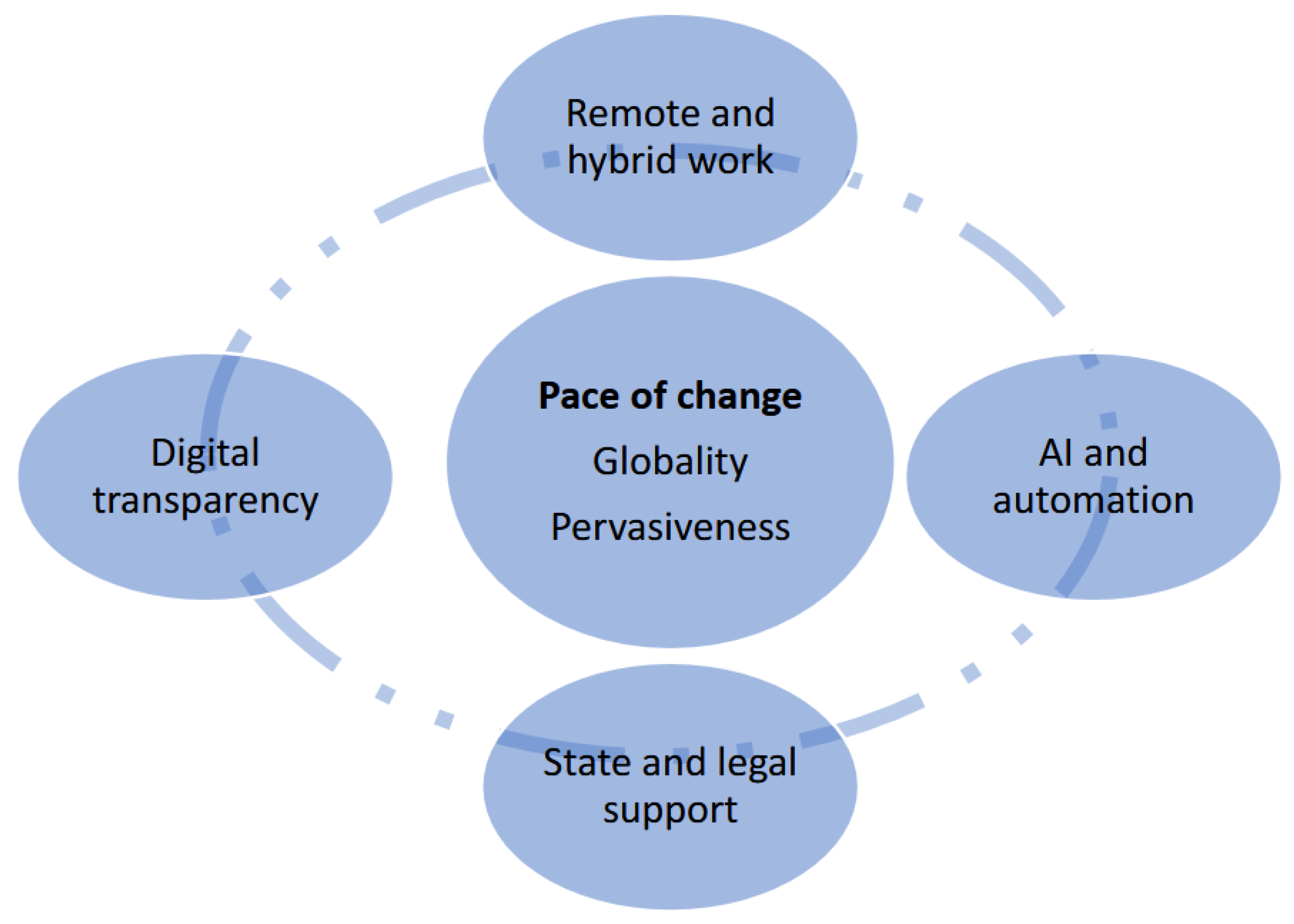
Pace of change. A primary characteristic of contemporary mobility is the radical acceleration of change. What once took decades now unfolds within a few years, and sometimes within just a few months. Decisions about relocation are made more quickly, and mobility itself is becoming a natural part of everyday life. This affects choices about where to live, where to work, and how to live overall.
Pervasiveness. Mobility is no longer the privilege of particular professional or social groups and is becoming a universal norm. It is spreading across different age, social, and professional categories, including groups that had not previously considered a mobile way of life possible for themselves. As a result, mobility is no longer perceived as an exception.
Globality. Contemporary mobility extends beyond individual countries and cultural traditions and takes on a global scale. Movement is becoming planetary in scope, involving countries and regions across different continents, while new centers of attraction are emerging throughout the world.
These characteristics reflect the specificity of the digital age and describe the environment in which contemporary mobility is developing. This environment also gives rise to new forces that influence its further development.
3.2. Contemporary Drivers of Mobility
The analysis identified four main groups of forces that significantly influence the character of contemporary human capital mobility. They are discussed below.
3.2.1. Digital Transparency and the Globalization of Education
One of the new conditions behind contemporary mobility is digital transparency, which allows people to compare different territories and the quality of life they offer. Modern information technologies and digital content, including satellite maps, online reviews, blogs and video materials, automatic translation tools, and global platforms, allow individuals to assess the attractiveness of different places in advance and compare various dimensions of quality of life [35].
Closely connected to this is the globalization of education and professional qualifications. The mass expansion of higher education and the standardization of curricula have increased the comparability of competencies across countries [36]. This is especially evident in professions that are less dependent on national linguistic or cultural specificity, including information technology, science, design, consulting, and a wide range of mass professions [5]. As a result, individuals increasingly view their knowledge and experience not as local capital confined within national borders, but as a resource that is internationally transferable and in demand beyond the national context.
Particular importance is attached to the assessment of one’s own competencies in relation to international professional demand. Individuals increasingly compare their capabilities with global requirements, while employers are expanding their search for workers beyond national labour markets through digital platforms and transnational recruitment channels [37,38]. This trend reflects the global and pervasive character of mobility, spanning different regions of the world and social groups, as confirmed by statistics on international flows [39,41].
Taken together, these changes expand the horizon of choice and increase the comparability of living and working conditions across countries. Decisions about movement depend less and less on local circumstances and increasingly on the ability to compare alternatives and evaluate opportunities on a global scale.
3.2.2. Technological Possibility of Remote Activity
Another important factor in contemporary mobility is the technological possibility of participating remotely in work, education, and social life. In the digital age, labor is becoming less tied to a specific place, while professional activity increasingly takes place in virtual space. A major catalyst in this shift was the COVID-19 pandemic [40], which accelerated the spread of remote work and remote learning.
Research shows that a substantial share of jobs can be moved into a remote format, including highly skilled and intellectual forms of work [42,43]. For many workers, geographical location no longer determines participation in the economy. More and more people are building ways of life in which work, education, entrepreneurship, and social ties are realized in the digital environment [40,44].
These changes weaken the distinctions between labor migration, tourism, educational mobility, and remote employment [45]. The phenomenon of digital nomads is becoming increasingly visible, along with a wide range of ways in which people choose where and how to settle. Some adopt a mobile way of life that combines work and movement [46], while others gain the opportunity to live in small towns or remote regions while remaining part of the global economic, educational, and cultural sphere [47]. In this sense, mobility is increasingly viewed as a matter of choice, linked to the growing capacity to decide where and how to live, rather than solely as a matter of necessity.
3.2.3. Liberation from Labor and Guaranteed Income in the Age of Automation and AI
The rapid emergence and development of artificial intelligence and automation, while remaining a matter of debate, has already had a major impact on the changing character of mobility. Contemporary machines and algorithms are capable of performing not only routine physical tasks, but also tasks that require data processing, forecasting, and decision-making [47,48,49]. According to the ILO [50], around 14% of jobs are at high risk of automation, while another 32% are partially automatable. McKinsey estimates that the spread of AI and automation could affect up to 400 million workers by 2030 [51].
These changes are leading to a reconsideration of the relationship between labor, employment, and spatial mobility. In the industrial era, movement was largely tied to the search for work and the concentration of production. With the development of automation, part of economic activity is now carried out with less human involvement, while some occupations face declining demand as a result of technological change.
Two possible scenarios can be distinguished. The first involves a reduced dependence on mandatory employment, in which guaranteed income mechanisms are considered as a tool for ensuring basic economic security [52]. The second is linked to the forced displacement of workers, when some employed people may lose their positions in the labor market as a result of technological change, while support through social programs may soften the consequences of job loss [5,53].
In both cases, mobility becomes less dependent on the labor market. Discussions of universal basic income suggest that such mechanisms expand individual choice, as people may choose to work or not to work [54,55], and to remain in place or move elsewhere. As a result, mobility is increasingly determined by quality of life and personal preferences rather than solely by economic necessity.
Thus, conditions are emerging for a form of post-labor mobility in which movement no longer depends directly on employment. Mobility becomes linked to individual preferences and life choices [56], rather than being reduced to the demands of labor contracts. Weaker dependence on a fixed place of work expands the degree of spatial autonomy available to the individual. Mobility can therefore be understood not only as a response to economic or political threats, but also as an expression of expanding opportunities for territorial choice.
3.2.4. State and Legal Support for Mobility
Alongside technological and economic factors, changes in state policy and legal regulation play an important role in the transformation of mobility. In recent years, mobility has come to be seen not as a side effect of globalization, but as a strategic resource for development linked to the attraction of human capital.
A clear expression of these changes is the spread of special digital visas, simplified procedures for obtaining residence permits, and new paths to tax residency [57,58,59]. By 2024, in particular, more than 50 countries had introduced programs for digital nomads [58,60]. Such measures show that states seek to attract not only highly qualified specialists, but also a broader range of mobile and economically active people, viewing them as a source of demographic, financial, and social development [61,62,63].
Mobility is gradually being incorporated into national and regional development strategies [64,65]. Territories are beginning to compete for skilled workers, entrepreneurs, and representatives of the creative industries, which leads to the emergence of new centers of attraction. This makes movement easier for both individuals and companies, increasing the accessibility of mobility. As a result, mobility is no longer perceived as an exception and is increasingly seen as a norm.
At the same time, unequal access to mobility opportunities remains. Despite the significant expansion of digital infrastructure in recent years, levels of Internet connectivity still vary greatly. In Africa, for example, around 37% of the population has Internet access, whereas in Europe the figure is close to 90% [32]. This points to the persistence of the digital divide, which limits the participation of some regions in global mobility flows.
Even so, the overall trend is a shift from fragmented initiatives toward more systematic measures to support movement and attract human capital [5,61,62]. Greater access to digital services, healthcare, basic security, and legal protection expands the geography of attractive territories and lowers barriers to changing place of residence [63,32,66]. Thus, state and legal support strengthens the global and pervasive character of mobility, turning it into a familiar phenomenon.
Taken together, these characteristics and drivers show the changing character of human capital mobility in the digital age (Figure 1).
4. Discussion
The findings show that contemporary mobility is no longer limited to a quantitative increase in movement, but is acquiring a qualitatively different character. It is ceasing to be an episodic phenomenon and is becoming a stable characteristic of contemporary social reality. More and more people regularly change their place of residence, treating this as part of their way of life.
The expansion of the geography and scale of mobility is linked to the combined influence of technological and socio-legal factors, including the digital transparency of global space, the spread of remote employment, the development of artificial intelligence, and changes in state policy in the areas of migration and labor markets. As a result, mobility is gradually losing its status as an exceptional event and is becoming a norm of everyday life for an expanding range of social groups.
A distinctive feature of contemporary mobility is its accelerating pace. Movement and the changes associated with it are unfolding so rapidly that planning and governance systems do not always manage to adapt. This creates a new tension between growing mobility and the need for the long-term sustainability of territories, social ties, and economic systems.
For this reason, the analysis of contemporary mobility must take into account not only its spatial and economic effects, but also changes in values, social ties, and governance. The most significant consequences of these changes and their importance for sustainable development are discussed below.
4.1. Spatial and Economic Consequences
One of the most visible consequences of pervasive mobility is the radical redistribution of population, the transformation of the spatial organization of society, and the emergence of a new population map. Importantly, this is happening rapidly, and the very character of the anthroposphere is changing within a single generation. Such a pace of spatial change directly affects the sustainability of territorial development. Sustainable development requires long-term coordination of decisions, whereas population redistribution is taking place faster than infrastructure, social services, and governance mechanisms can be updated.
Human capital is central to the transformation of the anthroposphere. Its concentration in particular places determines not only current conditions but also the future development prospects of those territories. People influence the educational, cultural [71], economic [88], and political environment [72], as well as infrastructure, creating a dynamic ecosystem that supports innovation, productivity growth [84,89], and investment attraction [73]. Since the spatial distribution of human capital is a decisive factor in regional development and sustainability, its uneven redistribution intensifies differences between territories and affects the prospects for achieving balanced development in the long term.
In addition, the geography of residential choice is changing. In the past, it was largely determined by industrial centers and places of employment [14,20,37,74], whereas today increasing importance is attached to climatic comfort and environmental sustainability [6], the quality of the urban environment, access to healthcare and transport [38], safety, and cultural diversity [75]. Seasonal mobility is becoming increasingly established. People are organizing their lives across several regions, moving according to the season and climatic comfort [86,87]. This behavior goes beyond tourism and becomes part of a long-term life strategy, changing the very understanding of permanent residence [61]. New centers of attraction are emerging not so much around traditional metropolitan areas as in regions that until recently were considered peripheral. Territories with mild climates and favorable natural environments are becoming places where life and work are concentrated. For residents of Europe and North America, countries in Southeast Asia are becoming increasingly attractive, with rising numbers of long-term residents and digital nomads [62], as are countries in Latin America, which are gradually shifting from tourist destinations to places of long-term residence and professional activity [58]. According to World Bank estimates, these regions have shown the highest recent growth rates in attracting human capital outside traditional centers [5].
At the same time, the contrast is growing between regions experiencing demographic growth and territories facing population outflows. Some places are becoming centers of attraction for people, investment, and infrastructure, while others are gradually losing population. As a result, an uneven spatial pattern is emerging, in which territories under growing pressure coexist with regions of demographic decline, as confirmed by international demographic surveys [38]. This transformation calls earlier ideas of balanced development into question and intensifies territorial disparities. Such asymmetry makes sustainable development strategies more difficult to implement, since it requires the simultaneous management of overburdened territories and support for regions undergoing demographic decline.
The observed pattern is not a set of separate migration flows, but a profound restructuring of the anthroposphere that is changing the planet’s demographic map and influencing future trajectories of economic, cultural, and environmental development.
However, such rapid change is associated with a number of challenges. For some territories, it means pressure on infrastructure and ecological systems or, conversely, depopulation and economic stagnation. For infrastructure as a whole, it creates a mismatch, since cities and regions do not adapt quickly enough to new population flows, while long-term development plans rapidly lose relevance [1]. As mobility accelerates, sustainable development requires more flexible approaches to territorial planning and a reconsideration of development horizons.
4.2. Socio-Value Consequences
At the present stage, human capital mobility is accompanied by a reassessment of life priorities and changing ideas of quality of life. If stable employment, rootedness in a particular environment, and material accumulation were once seen as the main indicators of well-being, today greater importance is attached to freedom of movement, the possibility of choosing one’s place and way of life, and the ecological [77] and social richness of space. For a significant part of the population, a mobile way of life is becoming a new indicator of quality of life [6,24,44]. Such a shift means a change in the very criteria of social sustainability. Quality of life is becoming less and less associated with long-term territorial rootedness and increasingly with individual adaptability and the possibility of free movement.
New ways of life are being built around the ideas of simplicity and minimalism. “Life with a backpack” is becoming a symbol of rejection of excessive consumption and of an orientation toward accumulation, while mobility itself is increasingly perceived as an independent value. For the new digital class, the possibility of moving freely and choosing where to live occupies an important place among life priorities [24,44,45].
However, access to this way of life is often determined by the level of digital and professional competencies [25,26,27]. Social stratification is undergoing qualitative change, in which the ability to work remotely [90] and to become part of transnational networks plays a decisive role. Those who do not possess such skills find themselves in a more vulnerable position, which intensifies social inequality [39,63,69]. In the context of sustainable development, this creates a risk of a deepening social divide, since access to mobility is obtained primarily by groups with high levels of human and digital capital, while less mobile groups remain limited in their access to new opportunities.
Pervasive mobility also affects the cultural foundations of social life. Language, traditions, everyday norms, and cultural codes [85], which previously held individuals within a particular social and territorial environment, begin to play a less decisive role in identity [10,78]. Traditional communities are being replaced by associations based on shared values, interests, and ways of life that extend beyond national [77] and territorial boundaries [79]. This gradually changes the character of national identity and may have long-term consequences for social sustainability, since traditional mechanisms of integration are losing their force.
At the same time, traditional foundations and disciplinary practices that in the past kept individuals within particular social and cultural coordinates are being eroded. The role of traditions, rituals, and local communities, which once provided stability and structured everyday life, is weakening. New places of residence are often perceived as spaces where familiar constraints disappear, while the feeling of comfort and ease of being becomes part of everyday experience.
Thus, the changes under way affect different levels of social organization. At the individual level, the space of personal choice expands, but stable reference points weaken at the same time, habits of self-discipline are lost [2], and intergenerational ties, already fragile, become even less stable. At the societal level, national foundations and value orientations become blurred and, as a result, the consolidation of collective self-determination [6,10,79] and stable public reference points [6,10,79] becomes more difficult. At the state level, reliance on established forms of collective identity is weakening, which makes mobility harder to regulate and undermines mechanisms of social control [7,67], while the importance of territorial attachment is declining. Taken together, these changes show that mobility affects not only the distribution of population and economic activity, but also people’s values and the character of social ties. When mobility is high, maintaining sustainable development requires new approaches capable of taking growing individual freedom of choice into account.
4.3. Consequences for Sustainable Development
Contemporary mobility is expressed not only in changing directions and scales of movement, but above all in its pace. Acceleration is beginning to determine the character of many of the socio-technological transformations now under way. The spatial distribution of population, value orientations, and the infrastructural environment are now changing much faster than in previous historical periods. All of this is taking place within a single human lifetime. At the same time, a gap is emerging between the speed of change and the capacity of governance and planning systems. State structures, infrastructure projects [82,83], and social institutions developed in an era of relatively stable settlement patterns and predictable demographic trends [37,74]. However, mobility in the digital age makes spatial and social processes far less predictable [2,81]. As a result, decisions designed for the long term are confronted with a rapidly changing reality. Changes in the distribution of population and economic activity are unfolding faster than governance and planning systems can adapt. It is this temporal gap that becomes one of the key challenges for sustainable development, since long-term strategies are confronted with a reality that changes too quickly.
The main consequences of this gap for public policy, infrastructure planning, and social institutions, as well as their significance for sustainable development, are considered below.
4.3.1. State Regulation and Policy
In the current context, national institutions increasingly find themselves in a reactive position. Traditional mechanisms for controlling migration and regulating population distribution cease to work when governments lose the capacity to regulate human capital mobility in the global economy [80,82]. In addition, people and human capital are moving ever more globally, while governance systems remain organized primarily on a national basis.
What should be emphasized, however, is that this crisis is linked not only to the growth of transnational flows of capital and labor, but also to the gap between the speed of ongoing change and the ability of states to respond. The acceleration of mobility intensifies this problem, since changes become visible within a single human lifetime [28]. As a result, mobility alters reality faster than states can adapt their systems of governance. This erodes established forms of national self-determination and creates new challenges for public policy in the area of mobility and migration.
4.3.2. Planning and Infrastructure
The sphere of planning is also facing serious difficulties. Urbanization, transport projects, and investment initiatives are becoming vulnerable [75,76], since the speed at which the spatial preferences of the population change does not coincide with the timeframes of infrastructure projects, which are often designed for decades.
Cities and regions developing long-term strategic plans are forced to respond to rapidly changing population flows. Changes in population distribution, ways of life, and spatial preferences are taking place so quickly that long-term plans are increasingly losing relevance. Sustainable development is complicated not only by the fact that institutions do not adapt quickly enough, but also by the growing difficulty of understanding in advance which decisions will actually work in the future. In some cases, this leads to pressure on territories where such significant population growth had not been anticipated [32,63]. In other cases, by contrast, places where inflows had been expected and large-scale projects had been developed are experiencing population outflows, while already committed resources prove extremely difficult to reallocate.
Such a mismatch in the pace of change reduces the effectiveness of strategic planning and makes infrastructure increasingly vulnerable to the unpredictability of mobility, creating additional risks for the sustainable development of territories.
4.3.3. Social Institutions
Social institutions emerged during a period of relatively stable spatial organization of society, whereas contemporary mobility is changing so rapidly that processes of socialization and intergenerational transmission do not adapt quickly enough to new conditions. Rapid mobility makes it more difficult to plan for people’s long-term needs and for systems that cannot be reorganized quickly. This applies to infrastructure, transport, and social services. It is becoming harder to anticipate where schools, transport, healthcare, and other services will be needed, and at what scale. Public services and infrastructure cannot be reorganized as quickly as people change their place of residence. Therefore, the greater the scale and pace of mobility, the more difficult it becomes to allocate resources properly, maintain the quality of services, and preserve a balance between population and infrastructure.
The education system, local communities, and cultural life continue to perform their functions, but doing so becomes more difficult under conditions of extremely rapid human capital mobility [80,81]. These institutions have a high degree of inertia and change much more slowly than patterns of employment, communication, and identity. This complicates intergenerational continuity, the long-term planning of education systems, and the preparation of professionals for a rapidly changing economy. A gap emerges between the speed of social change and the capacity of society to adapt, which weakens social stability [34]. The acceleration of mobility intensifies existing challenges for sustainable development, since social institutions do not always adapt to new conditions quickly enough [2,29].
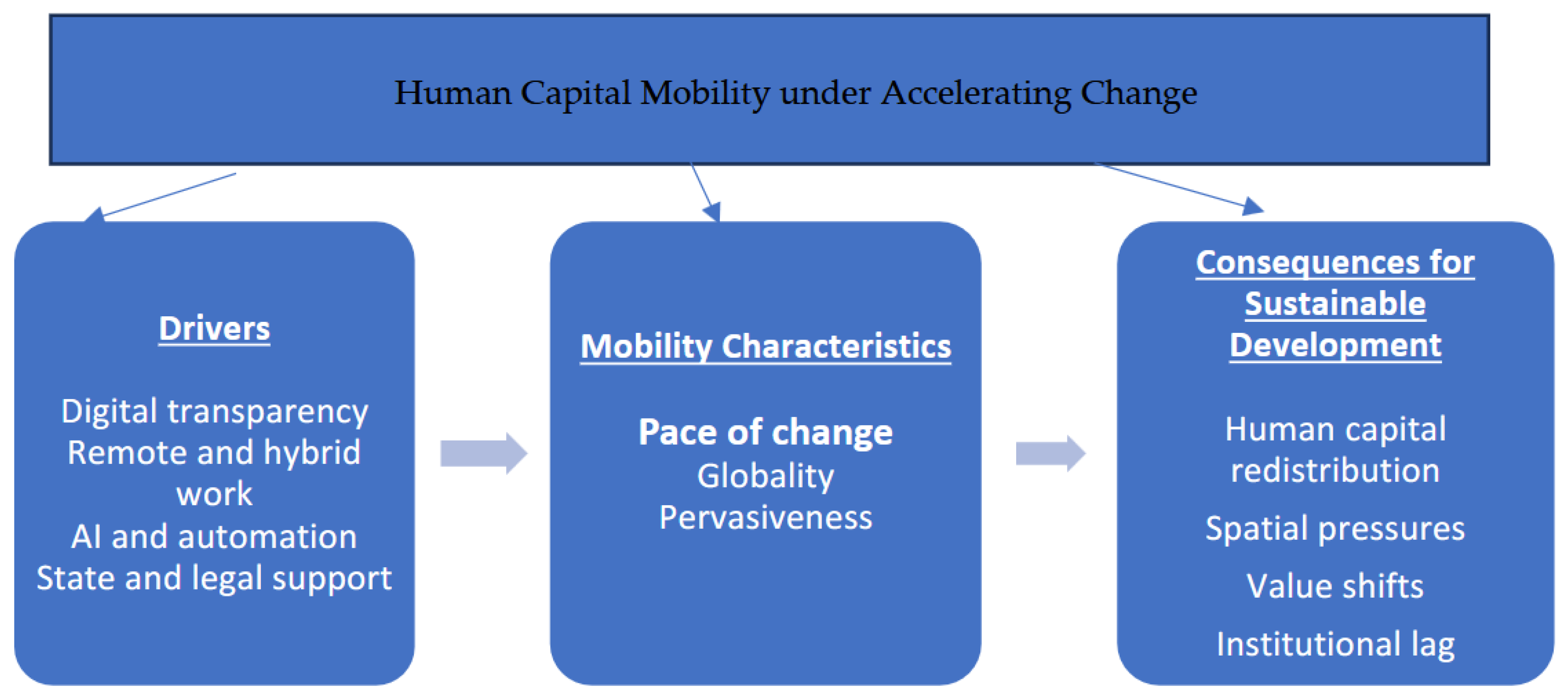
Overall, contemporary human capital mobility means not simply an increase in the scale of movement, but a radical transformation of the spatial organization of society. Against the background of accelerating digital transformation, human capital is being redistributed and the human map of the world is changing. At the same time, people’s values, plans, and behavior are changing, while governance systems and infrastructure are facing serious difficulties of adaptation.
Figure 2.
Human capital mobility under accelerating change: sustainability challenges.
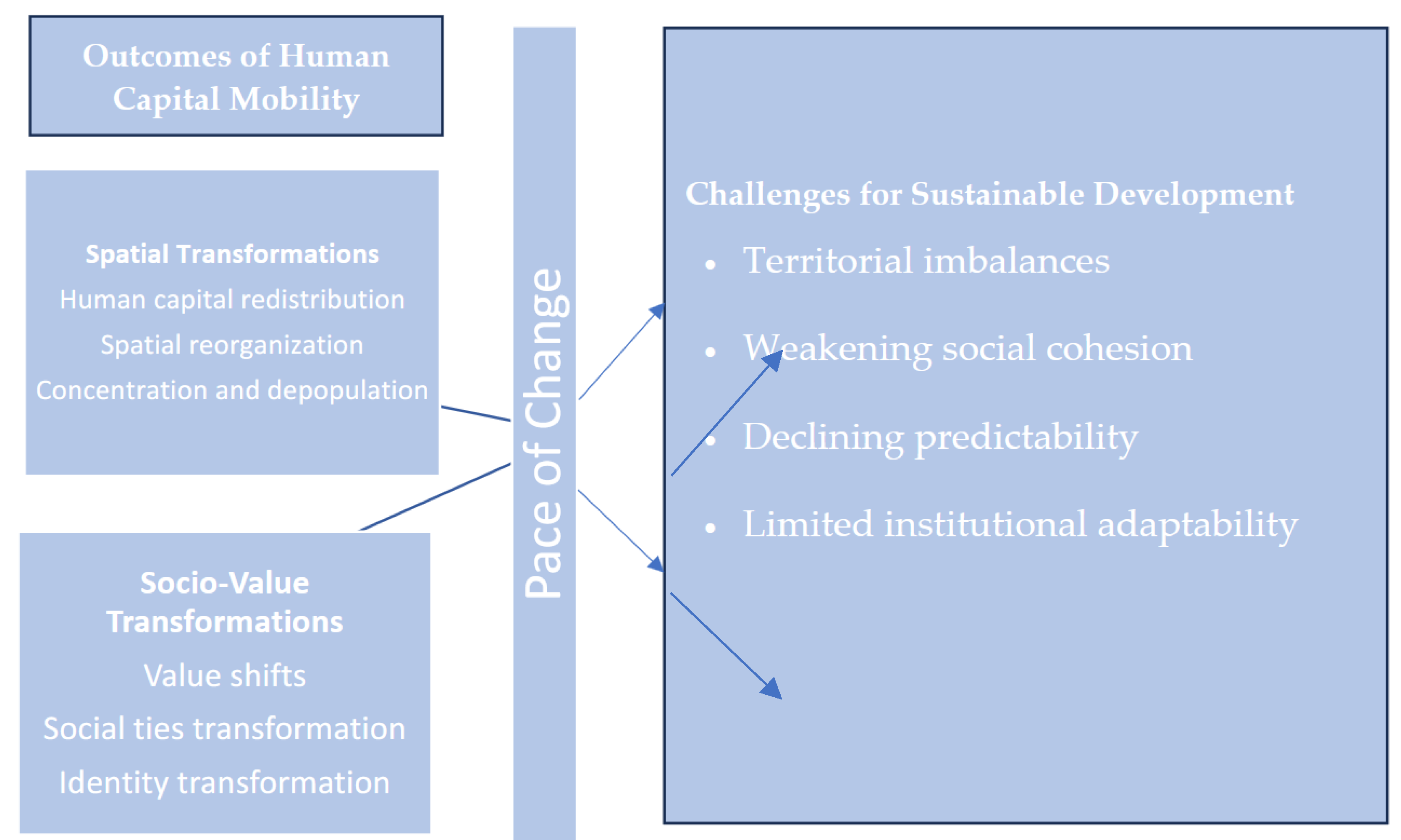
The main problem lies not in the spatial and social transformations themselves, which arise as a consequence of contemporary mobility, but in the fact that they unfold at an unprecedented pace, causing systems of governance and planning to fall behind in adaptation. As mobility accelerates, it becomes increasingly difficult to anticipate how territories, employment, and social life will develop. These changes are taking place faster than society and states can find ways to regulate them. The temporal gap between the speed of socio-technological change and the capacity to govern it is becoming one of the key challenges for sustainable development. Since sustainable development requires a more or less understandable and predictable future in order to build strategies, plan infrastructure, and determine where and what resources will be needed, declining predictability significantly complicates its implementation.
5. Conclusions
Contemporary human capital mobility is developing in a digital age characterized by the radical acceleration of socio-technological transformations. In this environment, its scale, motivations, and consequences are changing, creating new challenges for sustainable development and the adaptation of social institutions. On this basis, human capital mobility can be considered one of the significant phenomena of the current period. Unlike earlier historical periods, when mobility was largely determined by economic and demographic factors, its current development is influenced by a new set of driving forces that have emerged as a result of the digitalization of global space.
The study identified the main characteristics of contemporary human capital mobility, namely pace of change, pervasiveness, and globality, as well as new driving forces, including the digital transparency of the environment, the spread of remote employment, automation and the development of artificial intelligence, and changes in state policy and legal regulation aimed at supporting mobility. These driving forces change the motivation, speed, and geography of movement.
The transformation of mobility is accompanied by the emergence of new centers of attraction for human capital, changes in the geographical distribution of population, and shifts in social value orientations and ways of life. The unprecedented speed of socio-technological change is becoming a serious challenge for adaptation not only for individuals, but also for social institutions and states, whose traditional regulatory mechanisms are increasingly less adequate to the new pace. Under accelerating change, traditional systems of governance, infrastructure planning, and social institutions face growing difficulties in adaptation, since they remain oriented toward more stable models of settlement and socio-economic development.
This article proposes a theoretical approach to interpreting human capital mobility based on the pace of socio-technological change as a key characteristic of the digital age. This approach makes it possible to consider mobility not only as a spatial and economic phenomenon, but also as a new condition of social reality associated with accelerated digital transition.
In this context, human capital mobility is becoming one of the factors influencing the prospects for sustainable development. The growing pace and scale of mobility intensify the mismatch between the speed of social change and the ability of governance and planning institutions to adapt. Ensuring sustainable development requires more flexible and adaptive approaches to territorial development, social policy, and long-term planning. The pace dimension of mobility should therefore be taken into account when developing sustainable development strategies.
Limitations and Suggestions for Further Development of This Study
The study is limited by the absence of empirical testing of the identified characteristics and concentrates on their theoretical interpretation. The analysis relies primarily on academic publications and analytical reports by international organizations, including the World Bank, IOM, OECD, and UN DESA. This makes it possible to identify global trends in human capital mobility, although some regional and national specificities may remain outside the scope of the study.
At the same time, the analysis makes it possible to systematize the main directions of change in human capital mobility under accelerating socio-technological transformation in the era of digital transition and to outline its consequences for the global redistribution of population, value orientations, and governance institutions. These results may serve as a basis for further empirical research and comparative analysis of human capital mobility in the fields of the digital economy, social policy, and sustainable development.
Funding
This research received no external funding.
Institutional Review Board Statement
Not applicable.
Informed Consent Statement
Not applicable.
Data Availability Statement
Data are contained within the article.
Conflicts of Interest
The author declares no conflicts of interest.
References
- Shestakova, I.G. The Era of Digital Transition in the Prism of the Existential Threat of Job Loss: Corporate Social Responsibility. Sustainability 2024, 16(18), 8019. [Google Scholar] [CrossRef]
- Shestakova, I. G. Self-realization in the Era of Digital Transition: To Be or Not to Be? Vestnik of Saint Petersburg University. Philos. Confl. Stud. 2025, vol. 41(issue 1), 78–91. [Google Scholar] [CrossRef]
- Urry, J. Sociology Beyond Societies: Mobilities for the Twenty-First Century; Routledge: London, UK, 2000. [Google Scholar]
- Sheller, M.; Urry, J. The New Mobilities Paradigm. Environ. Plan. A 2006, 38(2), 207–226. [Google Scholar] [CrossRef]
- World Bank. World Development Report 2023: Migrants, Refugees, and Societies; World Bank: Washington, DC, USA, 2023; Available online: https://www.worldbank.org/en/publication/wdr2023 (accessed on 12 November 2025).
- International Organization for Migration (IOM). World Migration Report 2022 . IOM: Geneva, Switzerland, 2022; Available online: https://publications.iom.int/books/world-migration-report-2022 (accessed on 12 November 2025).
- United Nations; Department of Economic and Social Affairs; Population Division (UN DESA). World Population Prospects 2024: Summary of Results; United Nations: New York, NY, USA, 2024; Available online: https://population.un.org/wpp/ (accessed on 12 November 2025).
- OECD. OECD Indicators of Talent Attractiveness 2023; OECD Publishing: Paris, France, 2023; Available online: https://www.oecd.org/en/data/tools/talent-attractiveness-2023.html (accessed on 12 November 2025).
- Sassen, S. Territory, Authority, Rights: From Medieval to Global Assemblages; Princeton University Press: Princeton, NJ, USA, 2006. [Google Scholar] [CrossRef]
- Beck, U. The Cosmopolitan Vision; Polity Press: Cambridge, UK, 2006. [Google Scholar]
- Huinink, J.; Vidal, S.; Kley, S. Individuals’ Openness to Migrate and Job Mobility. Soc. Sci. Res. 2014, 44, 1–14. [Google Scholar] [CrossRef]
- Ravenstein, E.G. The Laws of Migration. J. Stat. Soc. Lond. 1885, 48(2), 167–235. [Google Scholar] [CrossRef]
- Lewis, W.A. Economic Development with Unlimited Supplies of Labour. Manch. Sch. 1954, 22(2), 139–191. [Google Scholar] [CrossRef]
- Schultz, T.W. Investment in Human Capital. Am. Econ. Rev. 1961, 51(1), 1–17. [Google Scholar]
- Becker, G.S. Human Capital: A Theoretical and Empirical Analysis, with Special Reference to Education; University of Chicago Press: Chicago, IL, USA, 1964. [Google Scholar]
- Sorokin, P.A. Social Mobility; Harper & Brothers: New York, NY, USA, 1927. [Google Scholar]
- Blau, P.M.; Duncan, O.D. The American Occupational Structure; Wiley: New York, NY, USA, 1967. [Google Scholar]
- Schivelbusch, W. The Railway Journey: The Industrialization of Time and Space in the 19th Century; University of California Press: Berkeley, CA, USA, 1986. [Google Scholar]
- Bairoch, P. Cities and Economic Development: From the Dawn of History to the Present; University of Chicago Press: Chicago, IL, USA, 1988. [Google Scholar]
- Lyman, S. M.; Scott, M. B. Territoriality: A Neglected Sociological Dimension. Soc. Probl. 1967, 15, 236–249. [Google Scholar] [CrossRef]
- Gregory, D.; Urry, J. Social Relations and Spatial Structures; Macmillan: London, UK, 1985; p. 440 pp. [Google Scholar] [CrossRef]
- Castells, M. The Rise of the Network Society, 2nd ed.; Wiley-Blackwell: Malden, MA, USA, 2010. [Google Scholar]
- Reuschke, D.; Felstead, A. Changing Workplace Geographies in the COVID-19 Crisis. Dialogues Hum. Geogr. 2020, 10(2), 208–212. [Google Scholar] [CrossRef]
- Nash, C.; Jarrahi, M.H.; Sutherland, W.; Phillips, G. Digital Nomads Beyond the Buzzword: Defining Digital Nomadic Work and Use of Digital Technologies. In Transforming Digital Worlds. iConference 2018; Lecture Notes in Computer Science; Chowdhury, G., McLeod, J., Gillet, V., Willett, P., Eds.; Springer: Cham, Switzerland, 2018; Volume 10766, pp. 207–217. [Google Scholar] [CrossRef]
- Cohen, S.A.; Gössling, S. A Darker Side of Hypermobility. Environ. Plan. A 2015, 47(8), 1661–1679. [Google Scholar] [CrossRef]
- Graham, M.; Hjorth, I.; Lehdonvirta, V. Digital Labour and Development: Impacts of Global Digital Labour Platforms and the Gig Economy on Worker Livelihoods. Transf. Eur. Rev. Labour Res. 2017, 23(2), 135–162. [Google Scholar] [CrossRef]
- Wood, A.J.; Graham, M.; Lehdonvirta, V.; Hjorth, I. Good Gig, Bad Gig: Autonomy and Algorithmic Control in the Global Gig Economy. Work Employ. Soc. 2019, 33(1), 56–75. [Google Scholar] [CrossRef] [PubMed]
- Shestakova, I. G. The new role of the technological component in the social reality of the digital transition era. Vestn. St. Petersburg Univ. Philos. Confl. Stud. 2022, vol. 38(issue 2), 242–253. [Google Scholar] [CrossRef]
- Rosa, H. Social Acceleration: A New Theory of Modernity; Columbia University Press: New York, NY, USA, 2013. [Google Scholar]
- DataReportal; Social, We Are; Meltwater. Digital 2025: Global Overview Report; DataReportal: London, UK, 2025; Available online: https://datareportal.com/reports/digital-2025-global-overview-report (accessed on 12 November 2025).
- World Bank. Mobile Cellular Subscriptions (per 100 People) (IT.CEL.SETS.P2); World Bank: Washington, DC, USA, 2025; Available online: https://data.worldbank.org/indicator/IT.CEL.SETS.P2 (accessed on 12 November 2025).
- International Telecommunication Union (ITU). Measuring Digital Development: Facts and Figures 2024; ITU: Geneva, Switzerland, 2024; Available online: https://www.itu.int/itu-d/reports/statistics/facts-figures-2024/ (accessed on 12 November 2025).
- Global Citizen Solutions. Global Digital Nomad Report 2025 . Global Citizen Solutions: Lisbon, Portugal, 2025. Available online: https://www.globalcitizensolutions.com/report/global-digital-nomad-report-2025/ (accessed on 12 November 2025).
- Shestakova, I. G. Progressophobia in the New Temporality of the Digital World. Vopr. Filos. 2021, Vol. 7, 61–71. [Google Scholar] [CrossRef]
- OECD. Education at a Glance 2024: OECD Indicators; OECD Publishing: Paris, France, 2024. [Google Scholar] [CrossRef]
- Khamis, A. Smart Mobility Education and Capacity Building for Sustainable Development: A Review and Case Study . Sustainability 2025, 17(17), 7999. [Google Scholar] [CrossRef]
- de Haas, H.; Castles, S.; Miller, M.J. The Age of Migration: International Population Movements in the Modern World, 6th ed.; Guilford Press: New York, NY, USA, 2020. [Google Scholar]
- UN DESA. International Migration and Sustainable Development; United Nations Department of Economic and Social Affairs: New York, NY, USA, 2024. [Google Scholar]
- ILO. Global Employment Trends for Youth: Investing in Transforming Futures for Young People; International Labour Organization: Geneva, Switzerland, 2022. [Google Scholar] [CrossRef]
- Shestakova, I.; Morgunov, V. Structuring the Post-COVID-19 Process of Digital Transformation of Engineering Education in the Russian Federation. Educ. Sci. 2023, 13, 135. [Google Scholar] [CrossRef]
- Ríos Villacorta, M.A.; Ramos Farroñán, E.V.; Alarcón García, R.E.; Castro Ijiri, G.L.; Bravo-Jaico, J.L.; Minchola Vásquez, A.M.; Ganoza-Ubillús, L.M.; Escobedo Gálvez, J.F.; Ríos Yovera, V.R.; Durand Gonzales, E.J. Telework for a Sustainable Future: Systematic Review of Its Contribution to Global Corporate Sustainability (2020–2024). Sustainability 2025, 17(13), 5737. [Google Scholar] [CrossRef]
- Waldrep, C.E.; Fritz, M.; Glass, J. Preferences for Remote and Hybrid Work: Evidence from the COVID-19 Pandemic. Soc. Sci. 2024, 13, 303. [Google Scholar] [CrossRef]
- Chalabi, G.; Dia, H. The Impacts of Remote Work and Attitudinal Shifts on Commuting Reductions in Post-COVID Melbourne, Australia. Sustainability 2024, 16, 7289. [Google Scholar] [CrossRef]
- Başaran, A. Digital Nomads, the New Frontier of Work in the Digital Age: A Bibliometric Analysis. Sustainability 2025, 17, 1906. [Google Scholar] [CrossRef]
- Bozzi, A. Digital Nomadism from the Perspective of Places and Mobilities: A Literature Review. Eur. Transp. Res. Rev. 2024, 16, 50. [Google Scholar] [CrossRef]
- Cangià, F. ‘South-Working’: Return Mobilities and Remote Work during COVID-19. Crit. Anthropol. 2024, 44(4), 420–438. [Google Scholar] [CrossRef] [PubMed]
- World Economic Forum. The Future of Jobs Report 2023; World Economic Forum: Geneva, Switzerland, 2023. [Google Scholar]
- Gmyrek, P.; Berg, J.; Bescond, D. Generative AI and Jobs: A Global Analysis of Potential Effects on Job Quantity and Quality; ILO Working Paper 96; International Labour Office: Geneva, Switzerland, 2023. [Google Scholar]
- OECD. Future of Work.; OECD: Paris, France, 2023; Available online: https://www.oecd.org/en/topics/future-of-work.html.
- Gmyrek, P.; Berg, J.; Bescond, D. Generative AI and Jobs: A Global Analysis of Potential Effects on Job Quantity and Quality; ILO Working Paper 96; International Labour Office: Geneva, Switzerland, 2023. [Google Scholar]
- Manyika, J.; Lund, S.; Chui, M.; Bughin, J.; Woetzel, J.; Batra, P.; Ko, R.; Sanghvi, S. Jobs Lost, Jobs Gained: What the Future of Work Will Mean for Jobs, Skills, and Wages; McKinsey Global Institute: New York, NY, USA, 2017. [Google Scholar]
- Ellingrud, K.; Sanghvi, S.; Dandona, G.S.; Madgavkar, A.; Chui, M.; White, O.; Hasebe, P. Generative AI and the Future of Work in America; McKinsey Global Institute: New York, NY, USA, 2023. [Google Scholar]
- Moore, P.V. Data Subjects, Digital Surveillance, AI and the Future of Work; European Parliamentary Research Service: Brussels, Belgium, 2020; Available online: https://data.europa.eu/doi/10.2861/879078.
- Standing, G. The Precariat: The New Dangerous Class; Bloomsbury Academic: London, UK, 2021. [Google Scholar]
- van Parijs, P.; Vanderborght, Y. Basic Income: A Radical Proposal for a Free Society and a Sane Economy; Harvard University Press: Cambridge, MA, USA, 2017. [Google Scholar] [CrossRef]
- Miraftabzadeh, S.M.; Longo, M.; Foiadelli, F. Mobility and Future Trends. In Emerging Battery Technologies to Boost the Clean Energy Transition: Cost, Sustainability, and Performance Analysis; Springer Nature: Cham, Switzerland, 2024; pp. 3–12. [Google Scholar] [CrossRef]
- OECD. Should OECD Countries Develop New Digital Nomad Visas? . In OECD Policy Brief; OECD Publishing: Paris, France, 2022; Volume No. 27, Available online: https://www.oecd.org/en/publications/should-oecd-countries-develop-new-digital-nomad-visas_4d425e15-en.html<monospace>.</monospace>.
- UNWTO. Digital Nomad Visas; World Tourism Organization: Madrid, Spain, 2023. [Google Scholar] [CrossRef]
- KC, H.; Triandafyllidou, A. Digital Nomadism and the Emergence of Digital Nomad Visas: What Policy Objectives Do States Aim to Achieve? Int. Migr. Rev. 2025. [Google Scholar] [CrossRef]
- Morffe Peraza, M. Á.; Moreno Cruz, S.; Andrade Espinosa, G. Unemployment Factors Among Venezuelan Immigrants in Colombia. Societies 2026, 16(1), 15. [Google Scholar] [CrossRef]
- International Organization for Migration (IOM). World Migration Report 2024; IOM: Geneva, Switzerland, 2024; Available online: https://publications.iom.int/books/world-migration-report-2024.
- OECD. International Migration Outlook 2024; OECD Publishing: Paris, France, 2024. [Google Scholar]
- OECD. Rethinking Regional Attractiveness in the New Global Environment; OECD Publishing: Paris, France, 2023. [Google Scholar] [CrossRef]
- Franco Granovel, M.; Adger, W. N.; Safra de Campos, R.; Boyd, E.; Carr, E. R.; Fábos, A.; Fransen, S.; Jolivet, D.; Zickgraf, C.; Codjoe, S. N.A.; Abu, M.; Siddiqui, T. The migration-sustainability paradox: transformations in mobile worlds. Curr. Opin. Environ. Sustain. 2021, 49, 98–109. [Google Scholar] [CrossRef]
- Triandafyllidou, A. Migration governance in a globalising and digitalising world. CMS 2025, 13, 40. [Google Scholar] [CrossRef]
- World Bank. Global Digitalization in 10 Charts. World Bank Blogs: Washington, DC, USA, 2024; Available online: https://www.worldbank.org/en/news/immersive-story/2024/03/05/global-digitalization-in-10-charts (accessed on 19 September 2025).
- Farías, P. Leveraging a Systems Approach for Immigrant Integration: Fostering Agile, Resilient, and Sustainable Organizational Governance. Systems 2025, 13, 467. [Google Scholar] [CrossRef]
- United Nations. Sustainable Development Goals. Available online: https://sdgs.un.org/goals (accessed on 19 September 2025).
- Samuk, Ş.; Ince-Beqo, G.; Hennebry, J.L. Strategies to Exclude: Temporariness and Return/Readmission Policies of the EU. Soc. Sci. 2024, 13, 448. [Google Scholar] [CrossRef]
- Vega-Muñoz, A.; González-Gómez-del-Miño, P.; Contreras-Barraza, N. The Determinants of Brain Drain and the Role of Citizenship in Skilled Migration. Soc. Sci. 2025, 14, 132. [Google Scholar] [CrossRef]
- Desmet, K.; Nagy, D.K.; Rossi-Hansberg, E. Human Capital Accumulation Across Space. J. Polit. Econ. 2025, forthcoming. Available online: https://rossihansberg.economics.uchicago.edu/HCAAS.pdf (accessed on 21 November 2025).
- Yang, Z. Human Capital Space: A Spatial Perspective of the Dynamics of People and Economic Relationships. Humanit. Soc. Sci. Commun. 2023, 10, 145. [Google Scholar] [CrossRef]
- Ma, Y.; Shang, M.; Yang, F.; Li, C. Exploration of the Role of Human Capital in China’s High-Quality Economic Development and Analysis of Its Spatial Characteristics. Sustainability 2023, 15, 3900. [Google Scholar] [CrossRef]
- UN-Habitat. State of the World’s Cities 2010/2011: Bridging the Urban Divide; UN-Habitat: Nairobi, Kenya, 2010. [Google Scholar]
- Clement, V.; Rigaud, K.K.; de Sherbinin, A.; Jones, B.; Adamo, S.; Schewe, J.; Sadiq, N.; Shabahat, E. Groundswell Part 2: Acting on Internal Climate Migration; World Bank: Washington, DC, USA, 2021. [Google Scholar] [CrossRef]
- Gerber, A. Building a New World in the Shell of the Old: Co-Designing Post-Capitalist Visions . Societies 2025, 15(10), 283. [Google Scholar] [CrossRef]
- Sheller, M. Mobility Justice: The Politics of Movement in an Age of Extremes; Verso: London, UK, 2018. [Google Scholar]
- Urry, J. Mobilities; Polity Press: Cambridge, UK, 2007. [Google Scholar]
- Glick Schiller, N.; Basch, L.; Szanton Blanc, C. From Immigrant to Transmigrant: Theorizing Transnational Migration. Anthropol. Q. 1995, 68, 48–63. [Google Scholar] [CrossRef]
- Du, Y.; Aoki, T.; Fujiwara, N. A Review of Human Mobility: Linking Data, Models, and Real-World Applications. J. Comput. Soc. Sci. 2025, 8, 1–62. [Google Scholar] [CrossRef]
- Hajlasz, M.; Pei, S. Predictability of Human Mobility during the COVID-19 Pandemic in the United States. PNAS Nexus 2024, 3, pgae308. [Google Scholar] [CrossRef]
- Hollifield, J.F.; Martin, P.L.; Orrenius, P.M.; Heran, F. Controlling Immigration: A Comparative Perspective, 4th ed.; Stanford University Press: Stanford, CA, USA, 2022. [Google Scholar]
- Koser, K. International Migration: A Very Short Introduction, 2nd ed.; Oxford University Press: Oxford, UK, 2016. [Google Scholar]
- Marinina, O.A.; Ilyushin, Y.V.; Kildyushov, E.V. Comprehensive Analysis and Forecasting of Indicators of Sustainable Development of Nuclear Industry Enterprises. IJE 2025, 38(11), 2527–2536. [Google Scholar] [CrossRef]
- Teneva, E.V. Emotionalization of the 2021–2022 Global Energy Crisis Coverage: Analyzing the Rhetorical Appeals as Manipulation Means in the Mainstream Media. Journal. Mass. Media 2025, 6(1), 14–14. [Google Scholar] [CrossRef]
- Shojaee Barjoee, S.; Rodionov, V.; Rezaei, N. Occupational Injuries Associated with Safety Climate among Ceramic Industry Workers in Iran. Sci. Rep. 2025, 15(1), 24585. [Google Scholar] [CrossRef]
- Barjoee, S.S.; Gendler, S. Sustainable Illumination: Experimental and Simulation Analysis of Illumination for Workers’ Wellbeing in the Workplace. Heliyon 2024, 10(24), e40745. [Google Scholar] [CrossRef]
- Bazhin, O.N.; Masko, H.H.; Nguyen, N. Increasing the Speed of Information Transfer and Operational Decision-Making in Metallurgical Industry through an Industrial Bot. Non-Ferr. Met. 2023, 54(1), 62–67. [Google Scholar] [CrossRef]
- Fedorova, E.; Morgunov, V.; Lobko, K.; Pupysheva, E. Review: Axial Motion of Material in Rotary Kilns. Eng 2025, 6, 106. [Google Scholar] [CrossRef]
- Dorofeev, A. V.; Yakovleva, A. A.; Mansurova, S. E. Features of the use of digital technologies in organizing the symbolic activity for students of a technical university. Perspect. Sci. Educ. 2025, 4, 492–504. [Google Scholar] [CrossRef]
- Martini, E.; Sgambato, M. C. Digital Inequalities and Access to Technology: Analyzing How Digital Tools Exacerbate or Mitigate Social Inequalities . Societies 2025, 15(11), 318. [Google Scholar] [CrossRef]
Figure 1.
Key drivers and defining characteristics of human capital mobility in the digital age.
Disclaimer/Publisher’s Note: The statements, opinions and data contained in all publications are solely those of the individual author(s) and contributor(s) and not of MDPI and/or the editor(s). MDPI and/or the editor(s) disclaim responsibility for any injury to people or property resulting from any ideas, methods, instructions or products referred to in the content. |
© 2026 by the authors. Licensee MDPI, Basel, Switzerland. This article is an open access article distributed under the terms and conditions of the Creative Commons Attribution (CC BY) license (http://creativecommons.org/licenses/by/4.0/).
Copyright: This open access article is published under a Creative Commons CC BY 4.0 license, which permit the free download, distribution, and reuse, provided that the author and preprint are cited in any reuse.


