

Submitted:
07 May 2026
Posted:
08 May 2026
You are already at the latest version
Abstract
Objective: To describe a rare case of subglottic foreign body (FB) impaction in an adult, leading to subglottic stenosis, and to evaluate the effectiveness of Suspension Microlaryn-goscopy (SML) as a minimally invasive technique for its management. Methods: A single case of subglottic FB in an adult was managed using endotracheal intubation and SML. This approach allowed for precise visualization and extraction of the FB. When granula-tion tissue or mucosal overgrowth was encountered, targeted resection and controlled cauterization were performed. Results: The SML technique provided excellent exposure to the subglottic region, enabling safe removal of the FB while minimizing trauma to the surrounding tissues. Postoperative follow-up demonstrated successful resolution of sub-glottic stenosis without complications, confirming the efficacy and safety of this approach. Conclusions: Subglottic FB impaction is an exceptionally rare occurrence in adults, posing diagnostic and therapeutic challenges. SML is a valuable tool for managing such cases, offering precise visualization, safe FB extraction, and effective management of complica-tions such as granulation tissue, ensuring optimal patient outcomes.
Keywords:
foreign body
; subglottic
; suspension microlaryngoscopy
; case report
1. Introduction
Subglottic foreign body (FB) impaction leading to subglottic stenosis is a well-documented occurrence in young children, particularly those with a history of aspiration [1]. In contrast, this presentation is exceptionally rare in adults, with only a few cases reported in the literature [2,3]. The rarity of such cases in adults makes their diagnosis and management particularly challenging, often requiring a high degree of clinical suspicion and careful planning. In this report, we present a rare instance of a FB lodged in the subglottic region, which manifested with symptoms of subglottic stenosis. This case was successfully managed using endotracheal intubation in combination with the Suspension Microlaryngoscopy (SML) technique. The SML approach has proven to be an invaluable tool in managing subglottic FB, offering a precise and minimally invasive method for both visualization and extraction. SML not only provides excellent exposure to the subglottic space but also allows for the careful removal of the FB while minimizing trauma to surrounding tissues. In cases where granulation tissue or mucosal overgrowth complicates the procedure, this technique facilitates the targeted resection or controlled cauterization of such tissue, ensuring a safe and effective outcome.
2. Case Report
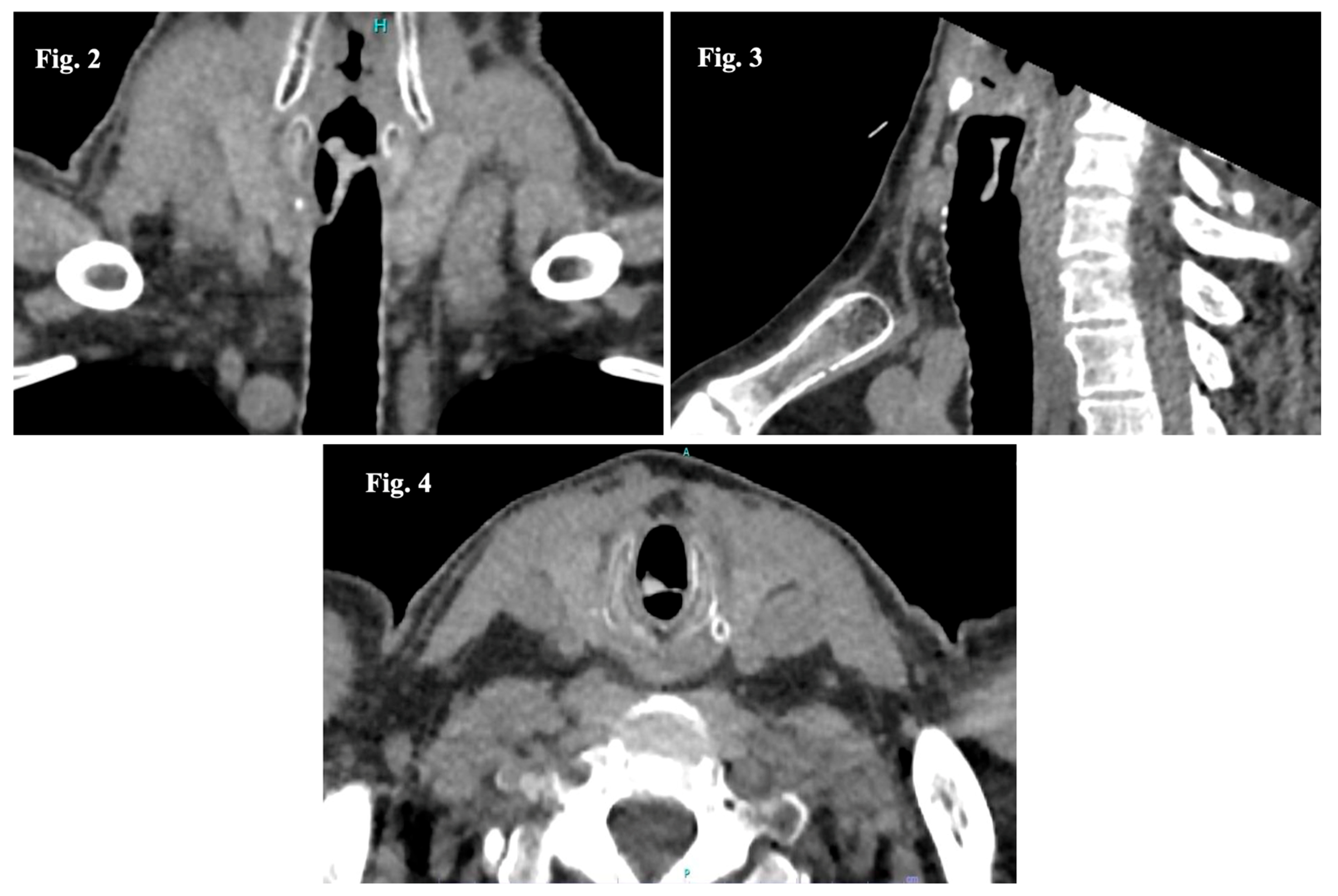
A 48-year-old Italian male presented to the emergency department with progressive dyspnea, biphasic stridor, and a four-day history of mild hoarseness. In the emergency room, the patient was treated with racemic epinephrine aerosol, steroids, and oxygen therapy, leading to immediate improvement of dyspnea, although hoarseness persisted. Oxygen was delivered via a face mask with gentle, positive pressure, maintaining an oxygen saturation of 96%, as measured by pulse oximetry. Biphasic stridor remained evident on mild exertion but was not associated with either intercostal/subcostal recession or the use of accessory muscles for respiration. The patient had a history of narcotic substance use (cannabis and cocaine) but no other significant health issues. Lab investigations showed leukocytosis (18.29 x 10³/µL) and a high neutrophil percentage (93.1%). Cocaine use was confirmed through blood tests. Fibreoptic laryngeal examination showed granulation tissue in both nasal passages, nasal septum perforation, and subglottic granulation tissue and a visible portion of a foreign body partially obstructing the tracheal lumen [Figure 1]. The findings included laryngeal hyperemia and normal vocal fold motility. The subglottic airway was reduced by approximately 40 percent. The patient was admitted for further treatment, including oxygen therapy, injectable antibiotics, corticosteroids, and a computed tomography (CT) scan of the neck and thorax. The neck CT revealed: “a linear structure located immediately below the true vocal cord plane, dividing the tracheal lumen into anterior and posterior sections, extending approximately 22 mm craniocaudally and 15 mm laterally, suggestive of a FB or septum.” [Figures 2–4].
Figure 2.
3,4: Coronal, Sagittal and Axial CT scan showing a foreign body located in the subglottic region.
Figure 2.
3,4: Coronal, Sagittal and Axial CT scan showing a foreign body located in the subglottic region.
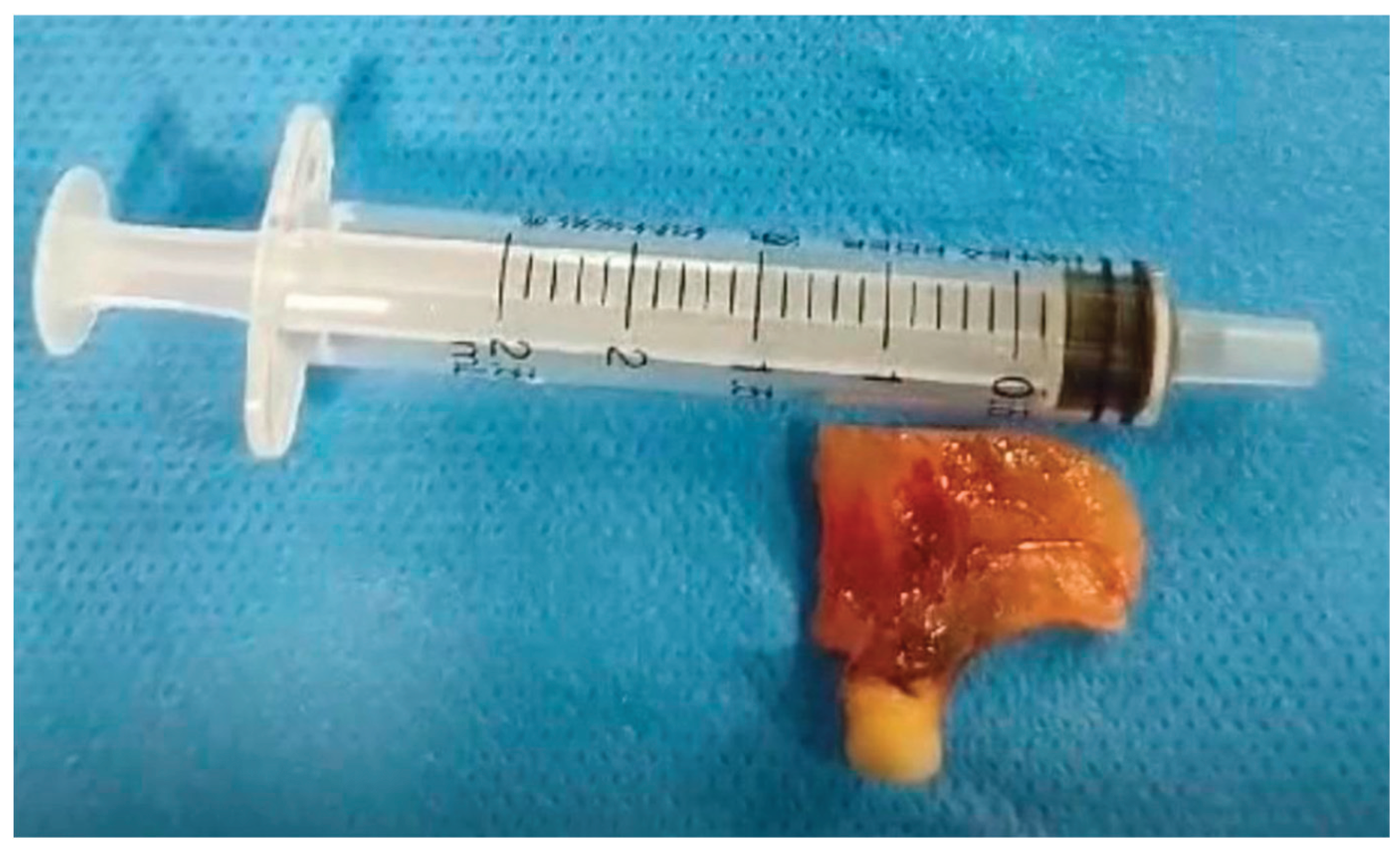
A preoperative evaluation was completed, and monitoring for pulse oximetry, arterial blood pressure, and EtCO2 was established. An emergency airway cart was prepared, including a Cook’s airway catheter, laryngeal masks of various sizes, a track light, a fiberoptic flexible bronchoscope, and equipment for needle cricothyroidotomy, percutaneous tracheostomy, and surgical tracheostomy. Intubation of the trachea was performed using a 6 mm endotracheal tube carefully positioned past the FB and surrounding tissue. A Kleinsasser laryngoscope was positioned providing a clear view of the subglottic region. Under microscopic guidance, the larynx and subglottic area were examined, revealing a fragment of an acrylic denture plate coated with mucin and significant granulation tissue, lodged in the subglottic space and attached to the cricoid cartilage. The FB [Figure 5] was carefully extracted using SML Jackson Grasping Forceps. Granulation tissue adhering to the subglottic area was gently removed or cauterized with micro-laryngeal bipolar forceps. Fragments of tissue were sent for histological examination, which revealed it to be inflammatory. During retrieval, mucosal abrasions and minor injuries were noted. The patient was observed overnight in the Intensive Care Unit with endotracheal intubation to prevent postoperative dyspnea. Extubation was performed the following day, and the patient was transferred to the ENT ward. Vital signs remained stable, and there were no signs of respiratory distress. The patient was discharged three days after surgery with prescriptions for antibiotics, steroids, and a proton pump inhibitor. At the two-week follow-up, the patient reported significant improvement in hoarseness, and laryngoscopy findings confirmed reduced inflammation. Leukocytosis had also resolved. The patient later recalled losing a denture fragment about a month earlier, which he had been unable to locate.
3. Discussion
FB aspiration predominantly occurs in children, whereas only isolated cases have been documented in adults [4]. FB within the laryngotracheal region is rare and poses life-threatening emergencies when encountered. Subglottic FB in adults is exceedingly rare, and its incidence remains unknown [5]. The aspiration of objects large enough to obstruct the supraglottis or glottis is typically life-threatening and straightforward to diagnose. In contrast, the diagnosis becomes more challenging when the object passes through the glottis and lodges in the subglottis. While airway obstruction of varying severity is usually apparent at presentation, determining the cause can be difficult if the aspiration event is not observed. Our case report confirms what was asserted in the study of Halvorson et Al. [6], where patients with significant granulation tissue formation in the subglottis demonstrated to have the greatest delays in diagnosis. Continued mucosal reaction around the FB, along with granulation tissue formation and inflammatory polyps, can progressively narrow the airway, presenting as stridor, particularly during upper respiratory infections, and voice changes [7]. Protracted episodes of stridor, croup, or hoarseness should raise the possibility of a subglottic foreign body. Several factors can predispose adults to FBs aspiration into the tracheobronchial tree, including neurological disorders, dental or medical procedures, trauma, loss of consciousness, alcohol intoxication, and the use of sedatives [8]. Airway protection against FB relies on the rapid flow of air during a cough, which generates pressure over the object’s surface. The presence of small foreign bodies lodged in the subglottic region can be partly attributed to this protective reflex and the unique anatomical structure of the subglottis. After aspiration, the object may enter the trachea or lower respiratory tract. During a cough, the forceful column of air may lift the object, propelling it against the undersurface of the true vocal cords within the area defined by the conus elasticus [9].Radiological evaluation, including chest X-rays, is invaluable in diagnosis, though X-rays performed immediately may yield false negatives. Radiopaque FB bodies are more easily identified, whereas radiolucent ones may be missed, complicating diagnosis [10]. In literature, various sedation techniques are counted, including conscious sedation with spontaneous ventilation, general anesthesia with a laryngeal mask airway or endotracheal intubation with positive pressure ventilation, or rigid bronchoscopy with jet ventilation [11,12]. Removing an impacted FB body often necessitates the resection of surrounding granulation tissue, which can be accomplished using laser techniques or piecemeal removal with forceps [13]. Flexible bronchoscopy has largely replaced rigid bronchoscopy as the first-line approach for evaluating and managing FB aspiration, offering a 90% success rate and a comprehensive airway survey [14,15]. In the case report by Kim et Al., the endotracheal tube was used as a conduit for the insertion of a flexible bronchoscope, and grasping forceps were introduced via the side channel of the bronchoscope to remove the FB [16]. However, rigid bronchoscopy remains the standard for pediatric patients due to its ability to maintain ventilation and reduce the risk of airway obstruction [17]. Rigid bronchoscopy is also preferred for removing sharp FBs to prevent damage to the vocal cords and for managing complications like significant bleeding. It is recommended for cases of acute respiratory distress or when flexible bronchoscopy fails, and should always be available as a backup option. In our case, where the presence of granulation tissue was significant, using the SML technique we obtained an excellent exposure of the subglottic region which allowed us to dominate the granulation tissue covering the foreign body and the foreign body itself, obtaining an excellent result.
4. Conclusions
FBs lodged in the subglottic area for an extended period are exceedingly rare, particularly in adults. Our case report confirms that a subglottic foreign body is a diagnostic challenge, requiring meticulous attention to detail, and the majority of patients had a delay in diagnosis. The available literature asserts that the vast majority of FBs can be safely extracted using flexible or rigid bronchoscopy, combined with tools such as forceps and retrieval baskets. In cases of subglottic FBs, especially those presenting with granulation tissue or mucosal overgrowth, advanced tools and techniques may be required to ensure safe and complete extraction. In our case report SML demonstrated to be particularly well-suited for managing subglottic FB. This approach not only allows for precise visualization of the lesion but also enables the controlled removal of granulation tissue and foreign objects, minimizing damage to surrounding structures. Despite the advancements in techniques and tools, there is a pressing need to expand the body of evidence regarding the management of long-standing subglottic FBs in adults. Accumulating a broader case history through well-documented clinical reports and studies will help validate current observations and refine treatment protocols. Future research should focus on identifying optimal strategies for safe and effective FBs extraction while minimizing complications and preserving airway function.
Supplementary Materials
The following supporting information can be downloaded at the website of this paper posted on Preprints.org.
Author Contributions
GC: DC, ML, GAL: conceptualization; GC, DC, CG: data curation; GC: writing – original draft; GC, ML, GD, GL, DC: writing – review & editing.
Funding
This research received no external funding.
Institutional Review Board Statement
Not applicable.
Informed Consent Statement
Written informed consent has been obtained from the patient to publish this paper.
Conflicts of Interest
The authors declare no conflicts of interest.
References
- Gu, H.; Vinturache, A.; Ding, G. Subglottic airway foreign body in an 18-month-old girl. CMAJ 2022, 194(39), E1351. [Google Scholar] [CrossRef] [PubMed]
- D’Souza, A.R.; Fenton, J.E.; Russell, J.D. Unusual cause of subglottic stenosis in an adult. J. Laryngol. Otol. 2000, 114(7), 543–544. [Google Scholar] [CrossRef] [PubMed]
- Philip, A.; Rajan Sundaresan, V.; George, P.; et al. A reclusive foreign body in the airway: a case report and a literature review. Case Rep. Otolaryngol. 2013, 2013, 347325. [Google Scholar] [CrossRef] [PubMed]
- Tanaka, S.; Yoshida, K.; Muramatsu, K.; Yamagishi, S.; Obara, S.; Watanabe, K. An experience of subglottic airway foreign body removal in a patient under tracheal intubation: a case report. JA Clin. Rep. 2020, 6(1), 76. [Google Scholar] [CrossRef] [PubMed] [PubMed Central]
- Kim, H.C.; Sung, C.M.; Yang, H.C. A subglottic foreign body mimicking croup: A case report. Medicine 2021, 100(28), e26609. [Google Scholar] [CrossRef] [PubMed]
- Kim, M.; Park, H.; Kwon, S.K. Case of impacted subglottic metallic foreign body removal without tracheostomy through an endotracheal tube. Clin. Case Rep. 2022, 10(5), e05770. [Google Scholar] [CrossRef] [PubMed]
- Halvorson, D.J.; Merritt, R.M.; Mann, C.; Porubsky, E.S. Management of subglottic foreign bodies. Ann. Otol. Rhinol. Laryngol. 1996, 105(7), 541–544. [Google Scholar] [CrossRef] [PubMed]
- Schumann, C.; Kropf, C.; Rüdiger, S.; Wibmer, T.; Stoiber, K.M.; Lepper, P.M. Removal of an aspirated foreign body with a flexible cryoprobe. Respir. Care 2010, 55(8), 1097–1099. [Google Scholar] [CrossRef] [PubMed]
- Hewlett, J.C.; Rickman, O.B.; Lentz, R.J.; Prakash, U.B.; Maldonado, F. Foreign body aspiration in adult airways: therapeutic approach. J. Thorac. Dis. 2017, 9(9), 3398–3409. [Google Scholar] [CrossRef] [PubMed]
- Sehgal, I.S.; Dhooria, S.; Ram, B.; et al. Foreign Body Inhalation in the Adult Population: Experience of 25,998 Bronchoscopies and Systematic Review of the Literature. Respir. Care 2015, 60(10), 1438–1448. [Google Scholar] [CrossRef] [PubMed]
- White, J.J.; Cambron, J.D.; Gottlieb, M.; Long, B. Evaluation and Management of Airway Foreign Bodies in the Emergency Department Setting. J. Emerg. Med. 2023, 64(2), 145–155. [Google Scholar] [CrossRef] [PubMed]
- Fidkowski, C.W.; Zheng, H.; Firth, P.G. The anesthetic considerations of tracheobronchial foreign bodies in children: a literature review of 12,979 cases. Anesth. Analg. 2010, 111(4), 1016–1025. [Google Scholar] [CrossRef] [PubMed]
- Kendigelen, P. The anaesthetic consideration of tracheobronchial foreign body aspiration in children. J. Thorac. Dis. 2016, 8(12), 3803–3807. [Google Scholar] [CrossRef] [PubMed] [PubMed Central]
- Agarwall, S.; Das, S.; Balakrishnan, M.C.; et al. Challenges and Considerations in Managing Subglottic Foreign Bodies. Indian J. Otolaryngol. Head. Neck Surg. 2025, 77, 2206–2210. [Google Scholar] [CrossRef] [PubMed]
- Dong, Y.C.; Zhou, G.W.; Bai, C.; et al. Removal of tracheobronchial foreign bodies in adults using a flexible bronchoscope: experience with 200 cases in China. Intern Med. 2012, 51(18), 2515–2519. [Google Scholar] [CrossRef] [PubMed]
- Mise, K.; Jurcev Savicevic, A.; Pavlov, N.; Jankovic, S. Removal of tracheobronchial foreign bodies in adults using flexible bronchoscopy: experience 1995-2006. Surg. Endosc. 2009, 23(6), 1360–1364. [Google Scholar] [CrossRef] [PubMed]
- Kim, M.; Park, H.; Kwon, S.K. Case of impacted subglottic metallic foreign body removal without tracheostomy through an endotracheal tube. Clin. Case Rep. 2022, 10(5), e05770. [Google Scholar] [CrossRef] [PubMed]
- Swanson, K.L. Airway foreign bodies: what’s new? Semin Respir. Crit. Care Med. 2004, 25(4), 405–411. [Google Scholar] [CrossRef] [PubMed]
Figure 1.
Subglottic granulation tissue and a portion of a foreign body visualized during laryngoscopy, highlighting the presence of both inflammatory response and retained foreign material.
Figure 1.
Subglottic granulation tissue and a portion of a foreign body visualized during laryngoscopy, highlighting the presence of both inflammatory response and retained foreign material.
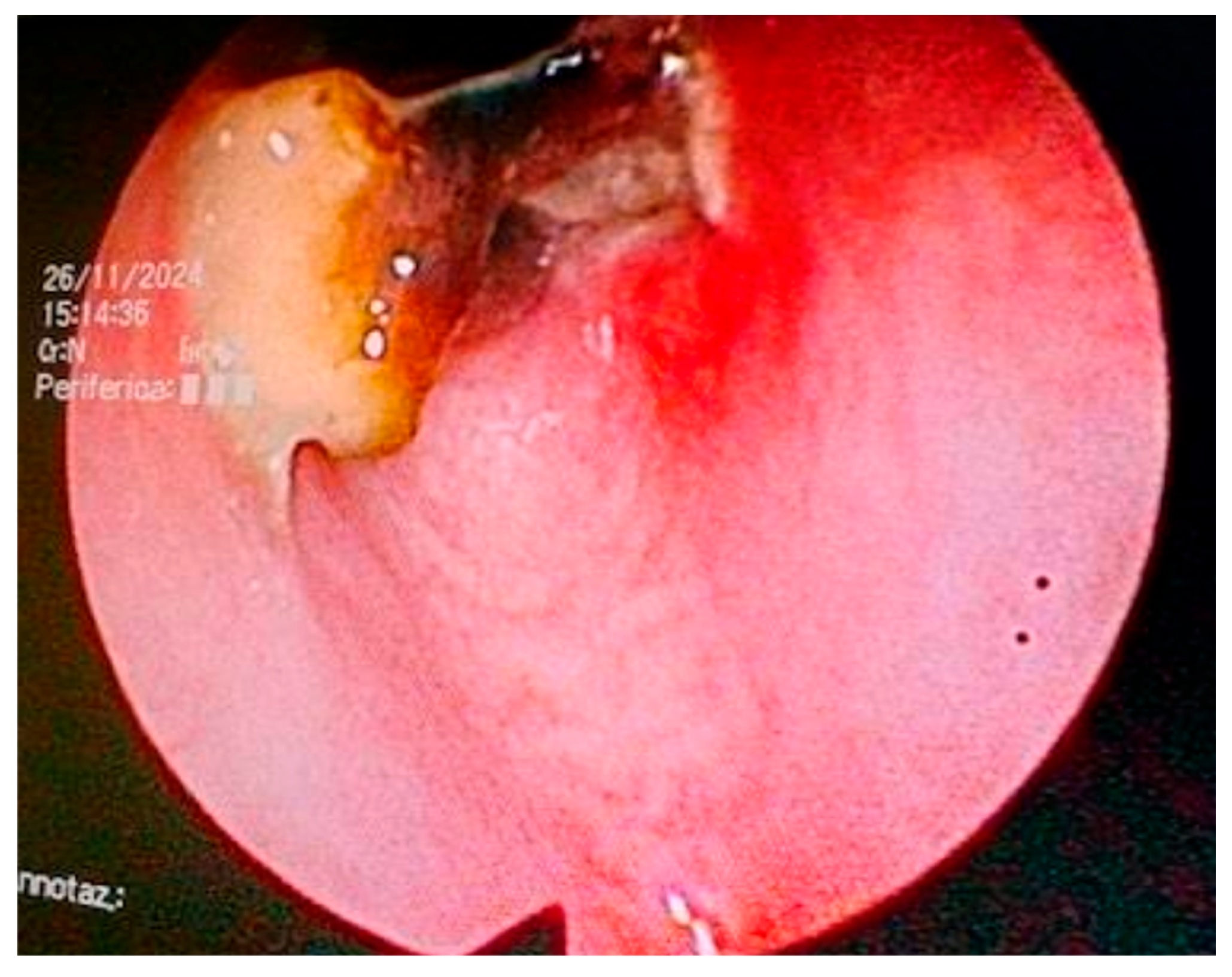
Figure 5.
Denture fragment found in the subglottic region.
Disclaimer/Publisher’s Note: The statements, opinions and data contained in all publications are solely those of the individual author(s) and contributor(s) and not of MDPI and/or the editor(s). MDPI and/or the editor(s) disclaim responsibility for any injury to people or property resulting from any ideas, methods, instructions or products referred to in the content. |
© 2026 by the authors. Licensee MDPI, Basel, Switzerland. This article is an open access article distributed under the terms and conditions of the Creative Commons Attribution (CC BY) license.
Copyright: This open access article is published under a Creative Commons CC BY 4.0 license, which permit the free download, distribution, and reuse, provided that the author and preprint are cited in any reuse.