

Submitted:
07 May 2026
Posted:
07 May 2026
You are already at the latest version
Preprints on COVID-19 and SARS-CoV-2
Abstract
Background/Objectives: Recent trends show a rising incidence of venous thromboembolism (VTE) that does not correlate with increased mortality; however, population aging and the proliferation of comorbidities are fundamentally reshaping the VTE patient landscape. The aim of this study is to evaluate potential differences in clinical characteristics, comorbidities, and survival rates between patients diagnosed with pulmonary embolism (PE) during the pre-pandemic period (2018−2019) and those diagnosed during the pandemic era (2020−2022). Additionally, as a secondary objective, we analyze the clinical profiles, risk factors, and survival outcomes of patients with and without COVID-19 infection during the 2020−2022 period. Methods: A retrospective observational study was conducted to analyse survival and comorbidities in patients admitted for PE at the Hospital Central de la Defensa ‘Gómez Ulla’ between 2018 and 2022, comparing two periods (2018−2019 and 2020−2022). In addition, a sub-analysis was performed within the second period group comparing patients with and without COVID-19. Results: It was observed that the majority of patients in the first period were men, while in the second period, 55% were women. With regard to comorbidity and risk factors, thrombophilia and dementia were more prevalent in the first period, while immobilization, a history of asthma, autoimmune diseases and infections were more prevalent in the second period. No differences were found with regard to mortality. Conclusions: Significant differences were observed between the two periods of the study with regard to age, gender, and some comorbidities. Patients with COVID-19 showed a greater tendency toward immobilization and a higher prescription of thromboprophylaxis during hospitalisation.
Keywords:
pulmonary embolism
; COVID-19
; SARS-CoV-2
; comorbidity
; mortality
1. Introduction
In recent years, the incidence of venous thromboembolism (VTE) has increased significantly in Spain [1,2]. Concurrently, there has been a notable rise in the prevalence of comorbidities among these patients, including severe conditions such as malignancy and cardiovascular disease [3,4]. These factors contribute to a heightened risk of complications and, consequently, a poorer clinical prognosis.
While several studies indicate that the rising incidence of VTE has not been matched by a corresponding increase in mortality [5], a strong association between mortality rates and the burden of comorbidities remains evident [6−8]. Recently, the emergence of the COVID-19 pandemic, an ageing population, immigration, and other factors may be leading to a change in the profile of patients with VTE.
The aim of this study is to evaluate potential differences in clinical characteristics, comorbidities, and survival rates between patients diagnosed with pulmonary embolism (PE) during the pre-pandemic period (2018−2019) and those diagnosed during the pandemic era (2020−2022). Additionally, as a secondary objective, we analyze the clinical profiles, risk factors, and survival outcomes of patients with and without COVID-19 infection during the 2020−2022 period.
2. Materials and Methods
A retrospective observational study was conducted to analyze survival and comorbidities in patients hospitalized for PE at the Hospital Central de la Defensa “Gómez Ulla” between January 1st, 2018, and December 31st, 2022. Diagnosis was confirmed via computed tomography pulmonary angiography (CTPA) and/or ventilation-perfusion lung scintigraphy, in accordance with the 2019 European Society of Cardiology (ESC) guidelines [9,10].
Data were extracted from inpatient clinical records, including sociodemographic variables, risk factors, and comorbidities. Thirty-day mortality risk was stratified using the Pulmonary Embolism Severity Index (PESI) and its simplified version (sPESI) [10]. Clinical symptoms presented during admission were also recorded.
COVID-19 diagnosis was defined by compatible clinical symptoms confirmed by a positive nasopharyngeal RT-PCR test. Severe infection was classified according to the “Sociedad Española de Enfermedades Infecciosas y Microbiología Clínica” (SEIMC) criterio [11]. Immobilization was defined as bed rest or inability to ambulate for more than four days. Postoperative PE was defined as occurring within two months of surgery, and long-distance travel was defined as a journey exceeding six hours within the three weeks preceding the thrombotic event.
Quantitative variables are expressed as mean ± standard deviation (SD), while qualitative variables are presented as absolute frequencies and percentages. Associations between variables were assessed using the Chi-square test. Precision was estimated using 95% confidence intervals (95% CI). Survival analysis was performed using the Kaplan-Meier method, with survival curve comparisons conducted via the Log-rank test and Cox regression models. Statistical significance was set at p < 0.05. All analyses were performed using SPSS® version 24.
The study was conducted in accordance with the ethical principles for medical research involving human subjects outlined in the Declaration of Helsinki. The protocol was approved by the Institutional Review Board (Medicines Research Ethics Committee of the General Health Inspectorate of Defense). All data were anonymized to ensure strict confidentiality, and access to protected health information was restricted in compliance with current data protection legislation.
3. Results
3.1. Study Population
A total of 321 patients were diagnosed with PE between January 1st, 2018, and December 31st, 2022. Of these, 35.2% were diagnosed during the 2018−2019 period, while 64.8% were diagnosed between 2020 and 2022.
The trend in diagnoses over this period is illustrated in Figure 1. Notably, a peak in the number of diagnoses occurred in 2020, coinciding with the COVID-19 pandemic, surpassing the figures recorded in the remaining years of the study.
Table 1 outlines the sociodemographic and epidemiological characteristics of the study patients. When comparing the two periods, significant differences were observed in the distribution by sex, with a predominance of females during 2020−2022 (55%), compared with a higher proportion of males in the 2018 - 2019 period.
Similarly, a history of thrombophilia and cancer, as well as treatments resulting from this diagnosis, and a history of recent surgery were more common in the first period, whilst immobilization was more common in the second.
With regard to clinical characteristics, a higher incidence of chest pain, decompensated heart failure, haemodynamic instability and dyspnoea was observed during the first period of the study. Furthermore, the proportion of patients receiving thromboprophylaxis was higher during the second period. No statistically significant differences were identified between the two periods for the remaining clinical variables.

Table 2.
Table 2. Clinical characteristics for the periods 2018−2019 and 2020−2022.
|
2018−2019 n (%) 113 (35,2) |
2020−2022 n (%) 208 (64,8) |
Total 321 |
p | ||
| Syncope, n (%) | 19 (16,8) | 24 (11,6) | 43 (13,4) | 0,1 | |
| Chest pain, n (%) | 43 (38,1) | 52 (25,1) | 95 (29,7) | 0,01* | |
| Hemoptysis, n (%) | 3 (2,7) | 2 (1) | 5 (1,6) | 0,2 | |
| Acute heart failure, n (%) | 14 (12,4) | 10 (4,9) | 24 (7,5) | 0,01* | |
| Hemodynamic instability, n (%) | 17 (15) | 18 (8,7) | 35 (10,9) | 0,07 | |
| Dyspnoea (mMRC≥3), n (%) | 83 (73,2) | 135 (65,2) | 218 (67,9) | 0,2 | |
| Incidental PE, n (%) | 15 (13,4) | 15 (7,2) | 30 (9,4) | 0,07 | |
| Concomitant DVT, n (%) | 55 (49,1) | 87 (42) | 142 (44,5) | 0,2 | |
| Recurrent PE, n (%) | 14 (12,4) | 19 (9,2) | 33 (10,3) | 0,4 | |
| Thromboprophylaxis, n (%) | 3 (2,7) | 35 (16,9) | 38 (11,9) | <0,001* | |
| Bleeding, n (%) | |||||
| Gastrointestinal | 4 (3,5) | 4 (1,9) | 8 (2,5) | 0,1 | |
| Urological | 1 (2,7) | 1 (0,5) | 4 (1,3) | ||
| Intracranial | 4 (3,5) | 3 (1,4) | 7 (2,2) | ||
| Hematoma | 7 (6,2) | 4 (1,9) | 11 (3,4) | ||
| PESI, n (%) | |||||
| 1 | 5 (4,5) | 21 (10,1) | 25 (8,1) | 0,3 | |
| 2 | 15 (13,4) | 33 (15,9) | 48 (15) | ||
| 3 | 24 (21,4) | 48 (23,1) | 72 (22,5) | ||
| 4 | 26 (23,2) | 37 (17,8) | 63 (19,7) | ||
| 5 | 42 (37,5) | 68 (32,7) | 110 (34,4) | ||
| sPESI | |||||
| 0 | 7 (6,2) | 20 (9,6) | 24 (8,4) | 0,003* | |
| 1 | 20 (17,7) | 68 (32,7) | 88 (27,4) | ||
| 2 | 52 (46) | 58 (27,9) | 110 (34,3) | ||
| 3 | 28 (23) | 40 (19,2) | 66 (20,6) | ||
| 4 | 6 (5,3) | 21 (10,1) | 27 (8,4) | ||
| 5 | 2 (1,8) | 1 (0,5) | 3 (0,9) | ||
*Pearson’s chi-square test, **Fisher’s exact test.
Risk stratification was performed using the PESI score, with significant differences observed between the two study periods. A higher proportion of patients was classified as PESI 1 during the 2020 - 2022 period, whereas a higher percentage was classified as PESI 2 during 2018 - 2019. When categorizing these groups as low (PESI = 0) and high risk (PESI ≥ 1), the prevalence of low-risk patients (PESI 0) was 6.2% in the first period compared to 9.6% in the second.
3.2. Comorbidities and Survival
As for comorbidities, statistically significant differences between periods were only identified for dementia, which was more prevalent in the first period, as well as for asthma, autoinflammatory and systemic diseases, and infections (including COVID-19 and other etiologies), all of which were more frequent in the second period.
Table 3.
Comorbidities in the periods 2018−2019 and 2020−2022.
| 2018−2019 n (%) 113 (35,2) |
2020−2022 n (%) 208 (64,8) |
Total 321 |
p | ||
| COVID-19 pneumonia, n (%) | 0 | 42 (20,3) | 42 (13,1) | <0,001* | |
| COPD, n (%) | 15 (13,3) | 29 (14) | 44 (13,8) | 0,8 | |
| Asthma, n (%) | 1 (0,9) | 15 (7,2) | 16 (5) | 0,01* | |
| Pulmonary fibrosis, n (%) | 2 (1,8) | 4 (1,9) | 6 (1,9) | 0,9 | |
| OSA, n (%) | 15 (13,3) | 31 (15) | 46 (14,4) | 0,6 | |
| Gastroesophageal Reflux Disease, n (%) | 9 (8) | 13 (22) | 22 (6,9) | 0,5 | |
| Peripheral artery disease, n (%) | 4 (3,9) | 5 (2,4) | 9 (2,8) | 0,5 | |
| Pulmonary hypertension, n (%) | 18 (15,9) | 31 (15) | 49 (15,3) | 0,8 | |
| Dyslipidemia, n (%) | 46 (40,7) | 88 (42,5) | 134 (41,9) | 0,7 | |
| Hypertension, n (%) | 72 (63,7) | 127 (61,4) | 199 (62,2) | 0,6 | |
| DM, n (%) | 27 (23,9) | 50 (24,2) | 77 (24,1) | 0,9 | |
| DM with TOD, n (%) | 2 (1,8) | 4 (1,9) | 6 (1,9) | 0,9 | |
| Hemiplejia, n (%) | 3 (2,7) | 3 (1,4) | 6 (1,9) | 0,4 | |
| Ischemic heart disease, n (%) | 10 (8,8) | 15 (7,2) | 25 (7,8) | 0,6 | |
| SAD, n (%) | 0 | 8 (3,9) | 8 (2,5) | 0,03* | |
| Peptic ulcer disease, n (%) | 2 (1,8) | 6 (2,9) | 8 (2,5) | 0,5 | |
| Dementia, n (%) | 21 (18,6) | 22 (10,6) | 43 (13,4) | 0,04* | |
| Stroke, n (%) | 6 (5,3) | 12 85,8) | 18 (5,6) | 0,8 | |
| Mod–to–sev CKD, n (%) | 7 (6,2) | 18 (8,7) | 25 (7,8) | 0,4 | |
| Mild liver disease, n (%) | 5 (4,4) | 6 (2,9) | 11 (3,4) | 0,4 | |
| Mod–to–sev liver disease, n (%) | 2 (1,8) | 6 (2,9) | 8 (2,5) | 0,5 | |
| Obesity, n (%) | 23 (20,4) | 33 (15,9) | 56 (17,5) | 0,3 | |
| Severe mental illness | 5 (4,4) | 18 (8,7) | 23 (7,2) | 0,1 | |
| Schizophrenia, n (%) | 2 (1,8) | 1 (0,5) | 3 (0,9) | 0,8 | |
| Bipolar disorder, n (%) | 2 (1,8) | 4 (1,9) | 6 (1,9) | ||
| Major depression, n (%) | 1 (0,9) | 9 (4,3) | 10 (3,1) | ||
| Intellectual disability, n (%) | 0 | 4 (1,9) | 4 (1,3) | ||
| Active infection, n (%) | 13 (11,5) | 48 (23,2) | 61 (19,1) | 0,01* | |
*Pearson’s chi-square test, **Fisher’s exact test.
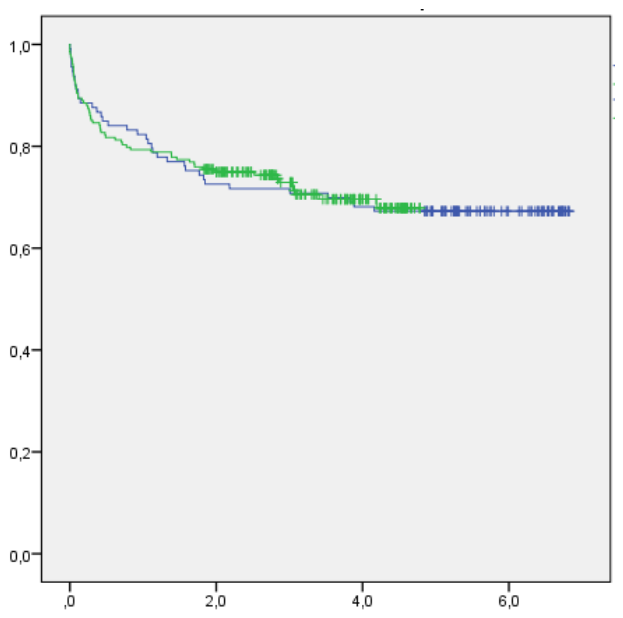
Regarding survival, no statistically significant differences were observed between the two periods.
Figure 2.
Kaplan–Meier curves for overall survival (years) by study period (2018–2019 (green) vs. 2020–2022 (blue)).
Figure 2.
Kaplan–Meier curves for overall survival (years) by study period (2018–2019 (green) vs. 2020–2022 (blue)).
3.3. Sociodemographic, Clinical Characteristics, Risk Factors, Comorbidities and Survival During de 2020−2022 Period
As a secondary objective, we evaluated differences in sociodemographic and clinical characteristics, risk factors, comorbidities, and survival among patients diagnosed with PE during the 2020−2022 period, stratified by the presence or absence of COVID-19 infection.
This cohort included 207 patients, of whom 42 (20.3%) had COVID-19 infection, while 165 did not. The mean age was similar between both groups. In the COVID-19 group, 52.4% were male, whereas the non-COVID-19 group showed a female predominance (57.6%). Furthermore, a higher proportion of patients under 70 years of age was observed in the COVID-19 group (50% vs. 33.9%, p = 0.05).
Regarding risk factors, the COVID-19 group exhibited a lower prevalence of cancer (4.8% vs. 34.5%, p < 0.001) and less frequent exposure to chemotherapy (2.4% vs. 16.4%, p = 0.01). Conversely, a higher prevalence of immobilization was observed in this group (76.2% vs. 18.2%, p < 0.001). No significant differences were found for the remaining variables
Table 4.
Epidemiological and sociodemographic characteristics of patients with and without COVID-19 infection, 2020−2022.
Table 4.
Epidemiological and sociodemographic characteristics of patients with and without COVID-19 infection, 2020−2022.
|
COVID-19 n (%) 42 (20,3) |
No COVID-19 n (%) 165 (79,7) |
p | ||
| Age (years), mean (SD) | 71,3 (±16,1) | 72,4 (±15,7) | 0,3 | |
| Sex, n (%) | ||||
| Male | 22 (52,4) | 70 (42,4) | 0,2 | |
| Female | 20 (47,6) | 95 (57,6) | ||
| Age < 70 years | 21 (50) | 56 (33,9) | 0,05* | |
| Smoking status, n (%) | ||||
| Never smoker | 32 (76,2) | 107 (64,8) | 0,3 | |
| Former smoker | 6 (14,3) | 34 (20,6) | ||
| Current smoker | 3 (9,5) | 24 (14,5) | ||
| Oral contraceptive use, n (%) | 0 | 5 (3) | 0,3 | |
| Sedentary occupation, n (%) | 5 (11,9) | 15 (9,1) | 0,5 | |
| Cancer history, n (%) | 2 (4,8) | 57 (34,5) | <0,001* | |
| In remission | 1 (50) | 17 (31,5) | 0,7 | |
| Localized | 0 | 9 (16,1) | ||
| Advanced | 1 (50) | 28 (51,9) | ||
| Hormone therapy, n (%) | 0 | 8 (4,8) | 0,1 | |
| Tumor surgery, n (%) | 2 (4,8) | 25 (15,2) | 0,07 | |
| Chemotherapy, n (%) | 1 (2,4) | 27 (16,4) | 0,01* | |
| Radiotherapy, n (%) | 0 | 12 (7,3) | 0,07 | |
| Inmunotherapy, n (%) | 0 | 3 (1,8) | 0,5 | |
| Thrombophilia, n (%) | 1 (2,4) | 11 (6,7) | 0,4 | |
| Recent surgery, n (%) | 0 | 18 (10,9) | 0,1 | |
| Major orthopedic surgery | 0 | 9 (5,5) | 0,1 | |
| Abdominal surgery | 0 | 8 (3,9) | ||
| Thoracic surgery | 0 | 0 | ||
| Intracranial surgery | 0 | 1 (0,5) | ||
| Other | 0 | 0 | ||
| Long - distance travel, n (%) | 0 | 2 (1,2) | 0,9 | |
| Family history of PE, n (%) | 1 (2,4) | 8 (4,8) | 0,6 | |
| Previous VTE, n (%) | 3 (7,1) | 28 (17,1) | 0,1 | |
| Prolonged immobility, n (%) | 32 (76,2) | 30 (18,2) | <0,001* | |
*Pearson’s chi-square test, **Fisher’s exact test.
Dyspnea was the most prevalent symptom in both groups, although it was significantly more frequent in the COVID-19 cohort (83.4% vs. 60.6%, p < 0.05). No significant differences were identified among the remaining symptoms.
Regarding thromboembolic complications, concomitant deep vein thrombosis (DVT) was significantly less frequent in the COVID-19 group (19% vs. 48.3%). Furthermore, a trend toward a lower rate of recurrent PE was observed in this group, although statistical significance was not reached.
Additionally, within our sample, a vast majority of patients with COVID-19 received thromboprophylaxis (73.8%) compared to only 2.4% of patients without COVID-19 infection (p = 0.001).
Concerning hemorrhagic events, the incidence was low in both groups, including major gastrointestinal, urological, and intracranial bleeding, as well as hematomas, with no significant differences observed.
Concerning risk stratification using the PESI score, a trend toward a higher percentage of high-risk patients was noted in the COVID-19 group, although these differences did not reach statistical significance.
Table 5.
Clinical characteristics of patients with and without COVID-19 infection, 2020−2022.
|
COVID-19 n (%) 42 (20,3) |
No COVID-19 n (%) 165 (79,7) |
p | ||||
| Syncope, n (%) | 2 (4,8) | 22 (13,3) | 0,1 | |||
| Chest pain, n (%) | 7 (16,7) | 45 (27,3) | 1 | |||
| Hemoptysis, n (%) | 0 | 2 (1,2) | 0,6 | |||
| Acute heart failure, n (%) | 1 (2,4) | 9 (5,5) | 0,6 | |||
| Hemodynamic instability, n (%) | 5 (11,9) | 13 (7,9) | 0,3 | |||
| Dyspnoea (mMRC≥3), n (%) | 35 (83,4) | 100 (60,6) | 0,004* | |||
| Incidental PE, n (%) | 2 (4,8) | 13 (7,9) | 0.7 | |||
| Concomitant DVT, n (%) | 8 (19) | 79 (48,3) | 0,001* | |||
| Recurrent PE, n (%) | 1 (2,4) | 18 (10,9) | 0,1 | |||
| Thromboprophylaxis, n (%) | 31 (73,8) | 4 (2,4) | 0,001* | |||
| Bleeding, n (%) | ||||||
| Gastrointestinal | 1 (2,4) | 3 (1,8) | 0,6 | |||
| Urological | 0 | 1 (0,6) | ||||
| Intracranial | 1 (2,4) | 2 (1,2) | ||||
| Hematoma | 2 (2,8) | 2 (1,2) | ||||
| sPESI | ||||||
| Low risk (sPESI=0) | 1 (2,4) | 19 (11,5) | 0,07 | |||
| High risk (sPESI≥1) | 41 (97,6) | 146 (88,5) | ||||
*Pearson’s chi-square test, **Fisher’s exact test.
The only comorbidity that showed significant differences between groups was non-COVID-19 infection, which was more prevalent in the COVID-19 cohort.
Table 6.
Comorbidities of patients with and without COVID-19 infection, 2020−2022.
|
COVID-19 n (%) 42 (20,3) |
No COVID-19 n (%) 165 (79,7) |
p | ||
| COVID-19 pneumonia, n (%) | 6 (14,3) | 23 (13,9) | 0,9 | |
| COPD, n (%) | 3 (7,1) | 12 (7,3) | 0,9 | |
| Asthma, n (%) | 2 (4,8) | 2 (1,2) | 0,1 | |
| Pulmonary fibrosis, n (%) | 1 (2,4) | 12 (7,3) | 0,4 | |
| OSA, n (%) | 0 | 5 (3) | 0,2 | |
| Gastroesophageal Reflux Disease, n (%) | 3 (7,1) | 28 (17) | 0,1 | |
| Peripheral artery disease, n (%) | 20 (47,6) | 68 (41,2) | 0,4 | |
| Pulmonary hypertension, n (%) | 23 (54,8) | 104 (63) | 0,3 | |
| Dyslipidemia, n (%) | 14 (33,3) | 36 (21,8) | 0,1 | |
| Hypertension, n (%) | 0 | 4 (2,4) | 0,5 | |
| DM, n (%) | 0 | 3 (1,8) | 0,9 | |
| DM with TOD, n (%) | 5 (11,9) | 10 (6,1) | 0,1 | |
| Hemiplejia, n (%) | 6 (14,3) | 19 (11,5) | 0,6 | |
| Ischemic heart disease, n (%) | 2 (4,8) | 6 (3,6) | 0,6 | |
| SAD, n (%) | 1 (2,4) | 5 (3) | 0,6 | |
| Peptic ulcer disease, n (%) | 3 (7,1) | 19 (11,5) | 0,4 | |
| Dementia, n (%) | 0 | 12 (7,3) | 0,1 | |
| Stroke, n (%) | 3 (7,1) | 15 (9,1) | 0,4 | |
| Mod−to−sev CKD, n (%) | 1 (2,4) | 5 (3) | 0,6 | |
| Mild liver disease, n (%) | 0 | 6 (3,6) | 0,3 | |
| Mod−to−sev liver disease, n (%) | 7 (16,7) | 26 (15,8) | 0,8 | |
| Obesity, n (%) | 3 (7,1) | 15 (9,1) | 0,6 | |
| Schizophrenia, n (%) | 0 | 1 (0,6) | 0,6 | |
| Bipolar disorder, n (%) | 0 | 4 (2,4) | ||
| Major depression, n (%) | 2 (4,8) | 7 (4,2) | ||
| Intellectual disability, n (%) | 1 (2,4) | 3 (1,8) | ||
| Active infection, n (%) | 30 (71,4) | 18 (10,9) | <0.001** | |
*Pearson’s chi-square test, **Fisher’s exact test.
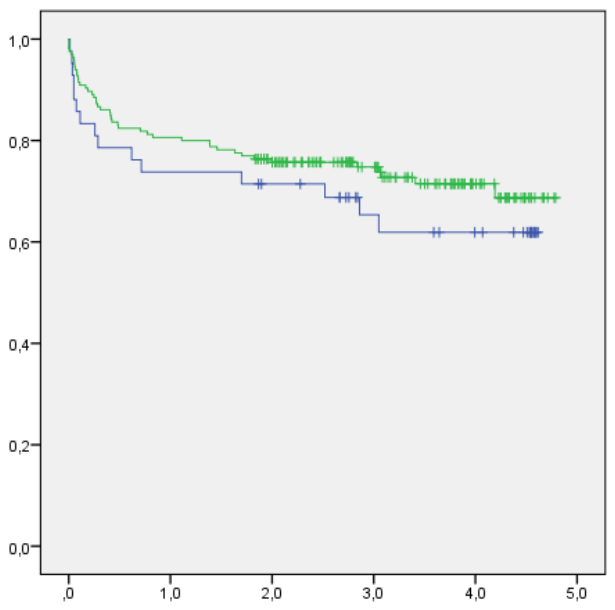
Regarding survival, no significant differences were found between both groups, neither in the first 30 days nor in the long term (p = 0.3).
Figure 3.
Kaplan–Meier survival curves for patients with (blue) and without (green) COVID-19 infection.
Figure 3.
Kaplan–Meier survival curves for patients with (blue) and without (green) COVID-19 infection.
4. Discussion
COVID-19 infection is associated with an increased risk of VTE, particularly in hospitalized patients or those with severe disease [12,13]. Multiple mechanisms promote the hypercoagulable state described in these patients, including endothelial dysfunction, platelet activation, and alterations in coagulation and fibrinolysis [14,15].
In this single-center study, which analyzed 321 patients diagnosed with acute PE between 2018 and 2022, patients were stratified into two groups: 2018−2019 and 2020−2022. Both study groups were homogeneous, with a similar mean age; however, differences were found in sex distribution, with a higher proportion of males in the first period and females in the second.
Numerous studies have shown that patients with VTE in the context of COVID-19 infection exhibit a different profile compared to those without the infection [16,17]. However, these differences were not evident in our analysis, which may be explained by the inclusion of non-infected patients in the 2020−2022 group, representing nearly 80% of that cohort.
Regarding other sociodemographic characteristics and risk factors, thrombophilia, history of radiotherapy, sedentary occupation, and recent surgery were more frequent in the first group. In terms of comorbidities, differences were only found for asthma, systemic autoimmune diseases, and active infection (excluding SARS-CoV-2), which were more prevalent in the second period, whereas dementia was more frequent in the first. Furthermore, patients in the second period received thromboprophylaxis more frequently. No statistically significant differences were observed for the remaining variables studied.
When analyzing exclusively the patients included between 2020 and 2022 and stratifying them according to the presence or absence of SARS-CoV-2 infection, no significant differences were observed regarding sex or mean age. However, a higher proportion of patients under 70 years of age was noted in the COVID-19 group (50% vs. 33.9%). Most published studies have described a higher proportion of males among patients with SARS-CoV-2 infection [16,18]. In this group, the distribution of comorbidities was consistent with what has been reported in the literature [18,19].
However, significant differences were observed regarding the prevalence of cancer, with the proportion of patients with tumors being substantially higher among those without COVID-19 infection (34.5% vs. 4.8%), as was the case for chemotherapy exposure. The only risk factor that was more prevalent in the COVID-19 group was immobilization (76.1% vs. 18.2%). This finding contrasts with other studies, such as that by Alonso-Beato et al. [16], who analyzed VTE episodes in patients with and without COVID-19. They observed differences between both groups, particularly regarding risk factors and comorbidities; specifically, smoking, ischemic heart disease, and consistent with our study, immobilization were more frequent in the COVID-19 group. Nevertheless, unlike our findings, they reported no differences in cancer prevalence between the two groups. Similarly, a meta-analysis published in 2021 reported that traditional risk factors typically associated with VTE are often absent in VTE cases associated with COVID-19 infection [17].
Regarding clinical presentation, patients with COVID-19 infection exhibited a higher frequency of dyspnea. A meta-analysis by Suh et al. [20] reported that the rate of DVT in patients with COVID-19 could reach 50%. However, the DVT rate in our study was considerably lower, which might be attributed to underdiagnosis during the pandemic period.
Although some studies report higher short-term mortality associated with SARS-CoV-2 infection, no significant differences were observed in our sample for either short- or long-term mortality. For instance, Alonso-Beato et al. observed that mortality at 30 days and one year was higher in the COVID-19 group [16]. Similarly, a European cohort study involving a large population found that mortality was higher among patients aged 65 years or older with COVID-19 infection, in both inpatient and outpatient settings [13].
Furthermore, no increased risk of acute bleeding was observed in patients with COVID-19 infection, contrary to findings reported in other studies [19,21].
Our study has several limitations. First, its observational and retrospective design precludes the establishment of causal relationships, allowing only for the identification of associations. Second, the small sample size, particularly within the COVID-19 subgroup, limits the statistical power of our findings.
5. Conclusions
In our study population, an increase in the number of PE diagnoses was observed during 2020, coinciding with the onset of the COVID-19 pandemic. However, in subsequent years, diagnostic rates returned to levels similar to those recorded in 2018 and 2019.
When comparing the 2018−2019 and 2020−2022 periods, significant differences were identified in certain patient characteristics, particularly regarding age, sex, and specific comorbidities. Specifically, conditions such as asthma, systemic autoimmune diseases, and infectious diseases were more frequent during the second analyzed period.
Additionally, patients with COVID-19 infection exhibited a greater tendency toward immobilization during hospitalization and received thromboprophylaxis more frequently. Conversely, our study found no statistically significant differences between the two periods in terms of survival, PE recurrence, or bleeding risk, findings that contrast with certain results reported in previous literature. Finally, prognostic stratification using the PESI score allowed for the identification of specific differences in the distribution of low- and high-risk PE patients between the two analyzed periods; however, these differences did not reach statistical significance.
Funding
This research received no external funding.
Institutional Review Board Statement
The study was conducted in accordance with the Declaration of Helsinki and approved by Institutional Review Board (Medicines Research Ethics Committee of the General Health Inspectorate of Defense) (protocol code 21/22; date of approval 07/20/2022).
Informed Consent Statement
Patient consent was waived due to its retrospective observational design and lack of intervention. All data were handled with strict confidentiality.
Data Availability Statement
The original contributions presented in this study are included in the article. Further inquiries can be directed to the corresponding author.
Acknowledgments
The authors would like to express their sincere gratitude to the Internal Medicine Department of the ‘Gómez Ulla’ Central Defense Hospital for their invaluable support. Special thanks are extended to Dr. Jareño Esteban, Dr. Fernandez Bermejo, Dr. Gutierrez Ortega, and Dr. de Miguel Diez for their exceptional professional guidance and dedication during this study.”.
Conflicts of Interest
The authors declare no conflicts of interest.
Abbreviations
The following abbreviations are used in this manuscript:
| VTE | venous thromboembolism |
| PE | pulomonary embolism |
| DVT | deep vein thrombosis |
| CTPA | computed tomography pulmonary angiography |
| ESC | European Society of Cardiology |
| PESI | Pulmonary Embolism Severity Index |
| sPESI | simplified Pulmonary Embolism Severity Index |
| SEIMC | Sociedad Española de Enfermedades Infecciosas y Microbiología Clínica (Spanish Society of Infectious Diseases and Clinical Microbiology) |
| RT-PCR | Reverse Transcription Polymerase Chain Reaction |
| SD | standard derivation |
| CI | confidence intervals |
| COPD | chronic obstructive pulmonary disease |
| OSA | obstructive sleep apnea |
| DM | diabetes mellitus |
| TOD | target organ damage |
| SAD | systemic autoimmune disease |
| CKD | chronic kidney disease |
References
- de Miguel-Diez J, Albaladejo-vicente R, Lopez-de-andres A, Hernández-barrera V, Jiménez D, Monreal M, et al. Changing trends in hospital admissions for pulmonary embolism in spain from 2001 to 2018. J Clin Med. MDPI; 2020;9(10):1–15. [CrossRef]
- Jiménez D, De Miguel-Díez J, Guijarro R, Trujillo-Santos J, Otero R, Barba R, et al. Trends in the Management and Outcomes of Acute Pulmonary Embolism Analysis from the RIETE Registry. J Am Coll Cardiol. Elsevier USA; 2016;67(2):162–70. [CrossRef]
- Chwan Ng AC, Chung T, Yong ASC, Wong HSP, Celermajer DS, Kritharides L. Long-term cardiovascular and noncardiovascular mortality of 1023 patients with confirmed acute pulmonary embolism. Circ Cardiovasc Qual Outcomes. 2011;4(1):122–8. [CrossRef]
- Lee JW, Cha SI, Jung CY, Choi W Il, Jeon KN, Yoo SS, et al. Clinical course of pulmonary embolism in lung cancer patients. 2009;78(1):42–8. [CrossRef]
- Stein PD, Matta F, Alrifai A, Rahman A. Trends in case fatality rate in pulmonary embolism according to stability and treatment. Thromb Res. 2012;130(6):841–6. [CrossRef]
- Ng ACC, Chow V, Yong ASC, Chung T, Kritharides L. Prognostic impact of the charlson comorbidity index on mortality following acute pulmonary embolism. S. Karger AG; 2013;85(5):408–16. [CrossRef]
- Golpe R, Pérez-De-Llano LA, Castro-Añón O. Prognostic value of the charlson comorbidity index in pulmonary embolism. Vol. 85, Respiration S. Karger AG; 2013. p. 438.
- Polo Friz H, Orenti A, Gelfi E, Motto E, Primitz L, Cavalieri d’Oro L, et al. Predictors of medium- and long-term mortality in elderly patients with acute pulmonary embolism. Heliyon. Elsevier Ltd.; 2020;6(9). [CrossRef]
- Konstantinides S V., Meyer G, Galié N, Simon R Gibbs J, Aboyans V, Ageno W, et al. 2019 ESC Guidelines for the diagnosis and management of acute pulmonary embolism developed in collaboration with the European Respiratory Society (ERS). Vol. 54, European Respiratory Journal European Respiratory Society; 2019.
- Uresandi F, Monreal M, García-Bragado F, Domenech P, Lecumberri R, Escribano P, et al. National consensus on the diagnosis, risk stratification and treatment of patients with pulmonary embolism. Arch Bronconeumol. Elsevier Doyma; 2013;49(12):534–47. [CrossRef]
- Berenguer J, Borobia AM, Ryan P, Rodríguez-Baño J, Bellón JM, Jarrín I, et al. Development and validation of a prediction model for 30-day mortality in hospitalised patients with COVID-19: The COVID-19 SEIMC score. Thorax. BMJ Publishing Group; 2021;76(9):920–9. [CrossRef]
- Jiménez D, García-Sanchez A, Rali P, Muriel A, Bikdeli B, Ruiz-Artacho P, et al. Incidence of VTE and Bleeding Among Hospitalized Patients With Coronavirus Disease 2019: A Systematic Review and Meta-analysis. Chest. Elsevier Inc.; 2021;159(3):1182–96. [CrossRef]
- Burn E, Duarte-Salles T, Fernandez-Bertolin S, Reyes C, Kostka K, Delmestri A, et al. Venous or arterial thrombosis and deaths among COVID-19 cases: a European network cohort study. Lancet Infect Dis. Elsevier Ltd.; 2022;22(8):1142–52. [CrossRef]
- Tudoran C, Velimirovici DE, Berceanu-Vaduva DM, Rada M, Voiţă-Mekeres F, Tudoran M. Increased Susceptibility for Thromboembolic Events versus High Bleeding Risk Associated with COVID-19. Vol. 10, Microorganisms Multidisciplinary Digital Publishing Institute (MDPI); 2022.
- Connors JM, Levy JH. COVID-19 and its implications for thrombosis and anticoagulation. 2020.
- Alonso-Beato R, Demelo-Rodríguez P, Ordieres-Ortega L, López-Rubio M, Lago-Rodríguez MO, Oblitas CM, et al. Short and long-term outcomes of COVID-19–associated venous thromboembolism: a propensity score–matched cohort study. Intern Emerg Med. Springer Science and Business Media Deutschland GmbH; 2025;. [CrossRef]
- Cui L yan, Cheng W wen, Mou Z wei, Xiao D, Li Y yi, Li Y jie, et al. Risk factors for pulmonary embolism in patients with COVID-19: a systemic review and meta-analysis. Vol. 111, International Journal of Infectious Diseases Elsevier B.V.; 2021. p. 154–63.
- Martos Pérez F, Luque Del Pino J, Jiménez García N, Mora Ruiz E, Asencio Méndez C, García Jiménez JM, et al. Revista Clínica Española Comorbidity and prognostic factors on admission in a COVID-19 cohort of a general hospital PALABRAS CLAVE [Internet]. Vol. 221, Revista Clínica Española 2021 [cited. Available from: www.elsevier.es/rce.
- Richardson S, Hirsch JS, Narasimhan M, Crawford JM, McGinn T, Davidson KW, et al. Presenting Characteristics, Comorbidities, and Outcomes among 5700 Patients Hospitalized with COVID-19 in the New York City Area. JAMA - Journal of the American Medical Association. American Medical Association; 2020;323(20):2052–9. [CrossRef]
- Suh YJ, Hong H, Ohana M, Bompard F, Revel MP, Valle C, et al. Pulmonary Embolism and Deep Vein Thrombosis in COVID-19: A Systematic Review and Meta-Analysis. Vol. 298, Radiology Radiological Society of North America Inc.; 2021. p. E70–80.
- Demelo-Rodriguez P, Farfán-Sedano AI, Pedrajas JM, Llamas P, Sigüenza P, Jaras MJ, et al. Bleeding risk in hospitalized patients with COVID-19 receiving intermediate- or therapeutic doses of thromboprophylaxis. Journal of Thrombosis and Haemostasis. Elsevier B.V.; 2021;19(8):1981–9. [CrossRef]
Figure 1.
Bar chart illustrating the number of PE diagnoses from 2018 to 2022 at the Hospital Central de la Defensa “Gómez Ulla”.
Figure 1.
Bar chart illustrating the number of PE diagnoses from 2018 to 2022 at the Hospital Central de la Defensa “Gómez Ulla”.
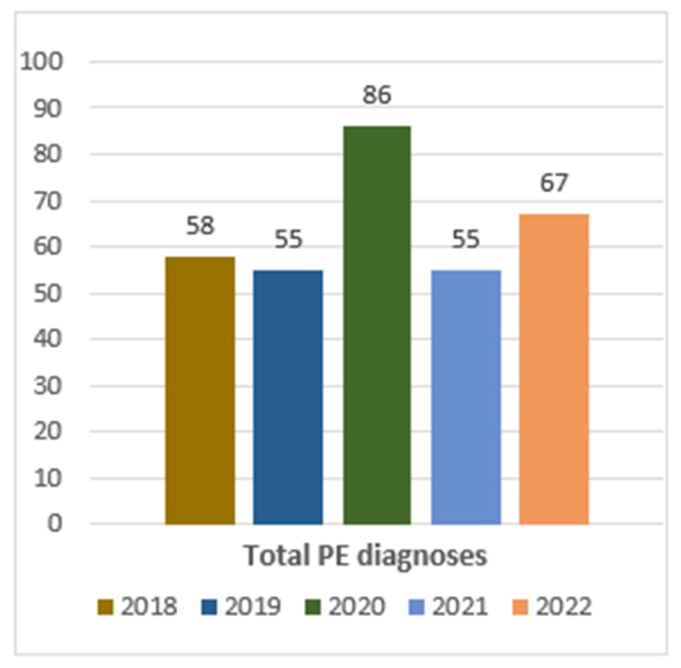
Table 1.
Sociodemographic and epidemiological characteristics and risk factors for the periods 2018−2019 and 2020−2022.
Table 1.
Sociodemographic and epidemiological characteristics and risk factors for the periods 2018−2019 and 2020−2022.
|
2018−2019 n (%) 113 (35,2) |
2020−2022 n (%) 208 (64,8) |
Total n=321 |
p | ||
| Age (years), mean (SD) | 73,8 (±13,4) | 72,3 (±15,8) | 76 (±15,8) | 0,3 | |
| Sex, n (%) | |||||
| Male | 65 (57,5) | 93 (44,7) | 158 (49,2) | 0,02* | |
| Female | 48 (42,5) | 115 (55,3) | 163 (50,8) | ||
| Age < 70 years | 32 (28,3) | 77 (37) | 109 (34) | 0,1 | |
| Smoking status, n (%) | |||||
| Never smoker | 71 (63,4) | 139 (67,1) | 210 (65,8) | 0,4 | |
| Former smoker | 28 (25) | 40 (19,3) | 68 (21,3) | ||
| Current smoker | 13 (12,9) | 28 (13,5) | 41 (12,9) | ||
| Oral contraceptive use, n (%) | 3 (2,7) | 5 (2,4) | 8 (2,5) | 1** | |
| Sedentary occupation, n (%) | 20 (17,8) | 21 (10,1) | 41 (12,8) | 0,05* | |
| Cancer history, n (%) | 39 (34,5) | 59 (28,5) | 98 (30,6) | 0,3 | |
| In remission | 11 (32,4) | 18 (32,1) | 29 (32,2) | 0,4 | |
| Localized | 9 (26,5) | 9 (16,1) | 18 (20) | ||
| Advanced | 14 (41,2) | 29 (51,8) | 43 (47,8) | ||
| Hormone therapy, n (%) | 7 (6,2) | 8 (3,9) | 15 (4,7) | 0,3 | |
| Tumor surgery, n (%) | 17 (15) | 27 (13) | 44 (13,8) | 0,6 | |
| Chemotherapy, n (%) | 21 (18,6) | 28 (13,5) | 49 (15,3) | 0,2 | |
| Radiotherapy, n (%) | 18 (15,9) | 12 (5,8) | 30 (9,4) | 0,003* | |
| Inmunotherapy, n (%) | 3 (1,7) | 3 (1,4) | 6 (1,9) | 0,6 | |
| Thrombophilia, n (%) | 16 (14,5) | 12 (5,8) | 28 (8,8) | 0,009* | |
| Recent surgery, n (%) | 20 (17,9) | 18 (8,6) | 38 (11,8) | 0,02** | |
| Major orthopedic surgery | 2 (1,8) | 9 (4,3) | 11 (3,4) | ||
| Abdominal surgery | 13 (11,6) | 8 (3,8) | 21 (6,6) | ||
| Thoracic surgery | 2 (1,8) | 0 | 2 (0,6) | ||
| Intracranial surgery | 0 | 1 (0,5) | 1 (0,3) | ||
| Other | 3 (2,7) | 0 | 3 (0,9) | ||
| Long-distance travel, n (%) | 3 (2,7) | 2 (1) | 5 (1,6) | 0,3** | |
| Family history of PE, n (%) | 1 (4,4) | 9 (4,3) | 14 (4,4) | 1 | |
| Previous VTE, n (%) | 22 (19,5) | 31 (15) | 53 (16,6) | 0,3 | |
| Prolonged immobility, n (%) | 17 (15,2) | 62 (30) | 79 (24,8) | 0,004* | |
*Pearson’s chi-square test, **Fisher’s exact test.
Disclaimer/Publisher’s Note: The statements, opinions and data contained in all publications are solely those of the individual author(s) and contributor(s) and not of MDPI and/or the editor(s). MDPI and/or the editor(s) disclaim responsibility for any injury to people or property resulting from any ideas, methods, instructions or products referred to in the content. |
© 2026 by the authors. Licensee MDPI, Basel, Switzerland. This article is an open access article distributed under the terms and conditions of the Creative Commons Attribution (CC BY) license.
Copyright: This open access article is published under a Creative Commons CC BY 4.0 license, which permit the free download, distribution, and reuse, provided that the author and preprint are cited in any reuse.


