

Submitted:
05 May 2026
Posted:
06 May 2026
You are already at the latest version
Abstract
Self-check-in via digital technology is becoming increasingly prevalent to streamline workflows and improve primary care efficiency, including kiosks, eCheck-in via portals, mobile check-in apps, and pre-appointment questionnaires. This scoping review examines the value-creation potential of digital self-check-in tools by assessing the quality of intake data generated with these tools and their reuse. Following the Joanna Briggs Institute guidelines for conducting scoping reviews and the PRISMA-ScR reporting criteria, searches were conducted across the CINAHL, PubMed, and Google Scholar databases to identify English-language peer-reviewed studies published between 2021 and 2026. In total, 488 studies were identified; 361 were assessed based on titles and abstracts after duplicate removal, 65 were reviewed in full text, and 15 studies were included in the final review and graded using the Johns Hopkins Nursing Evidence-Based Practice (JHEBP) levels and quality ratings. Most of the evidence was level III with a B quality rating. Findings showed that the portal and pre-visit questionnaire approaches provided the most reliable support for data structuring, visit preparation, and communication between the patient and the clinician. In turn, improvements in workflow efficiency, reduced patient congestion, increased throughput, and minimized front-desk burden could be achieved primarily through studies focused on kiosks and registration processes. Across the study, the strongest evidence supports operational and informational value rather than return on investment (ROI). The main barriers to the effective implementation of the interventions included access inequity, workflow integration, staff training, and bad data quality. Overall, digital self-check-in tools create value in primary care when patient-generated intake data are timely, complete, structured, and reusable across downstream clinical and administrative workflows. However, stronger evidence is still needed regarding measurable economic return.
Keywords:
digital technology
; workflow
; primary care
; questionnaires
; communication
; data quality
; digital tools
; evidence-based practice
; data accuracy
Introduction
The central informatics issue in digital self-check-in is not the kiosk, portal, or questionnaire itself. The central issue is the value of the data intake these tools generate. In primary care, check-in produces a packet of patient-generated, time-stamped, and increasingly structured data: demographic verification, insurance confirmation, presenting concerns, pre-visit goals, screening responses, and visit readiness indicators. Once captured, that data moves downstream into documentation, coding, billing, scheduling, care coordination, and clinical decision-making. From this perspective, the intake of data, not the hardware interface, is the unit of value. In contrast, manual check-in results in fragmented, inconsistent, incomplete, and sometimes untimely information, which creates delays and workarounds in documenting check-in in busy primary care settings (Bhandari et al., 2024, p. 2; Shucard et al., 2022, p. 1). The objective of digital self-check-in tools, such as kiosks, portal eCheck-in, mobile intake, and pre-visit questionnaires, is to improve the timeliness, completeness, structure, and reuse of intake data (Maramba et al., 2022, pp. 1–2; Rauhut, 2025, p. 1). This paper argues that the value of digital tools in primary care depends primarily on the quality of the intake data they capture. Drawing on the 15 included studies, it examines data value, measurement, return on investment (ROI), healthcare delivery implications, and evidence-based risks and their mitigation strategies.
Methods
The scoping review adopted the Joanna Briggs Institute (JBI) process for scoping reviews, as outlined by Peters et al. (2020, pp. 2119–2121). The JBI methodology is appropriate for reviews focused on mapping the extent and characteristics of the evidence, clarifying concepts, and identifying knowledge gaps rather than synthesizing pooled effect sizes.
Search Strategy
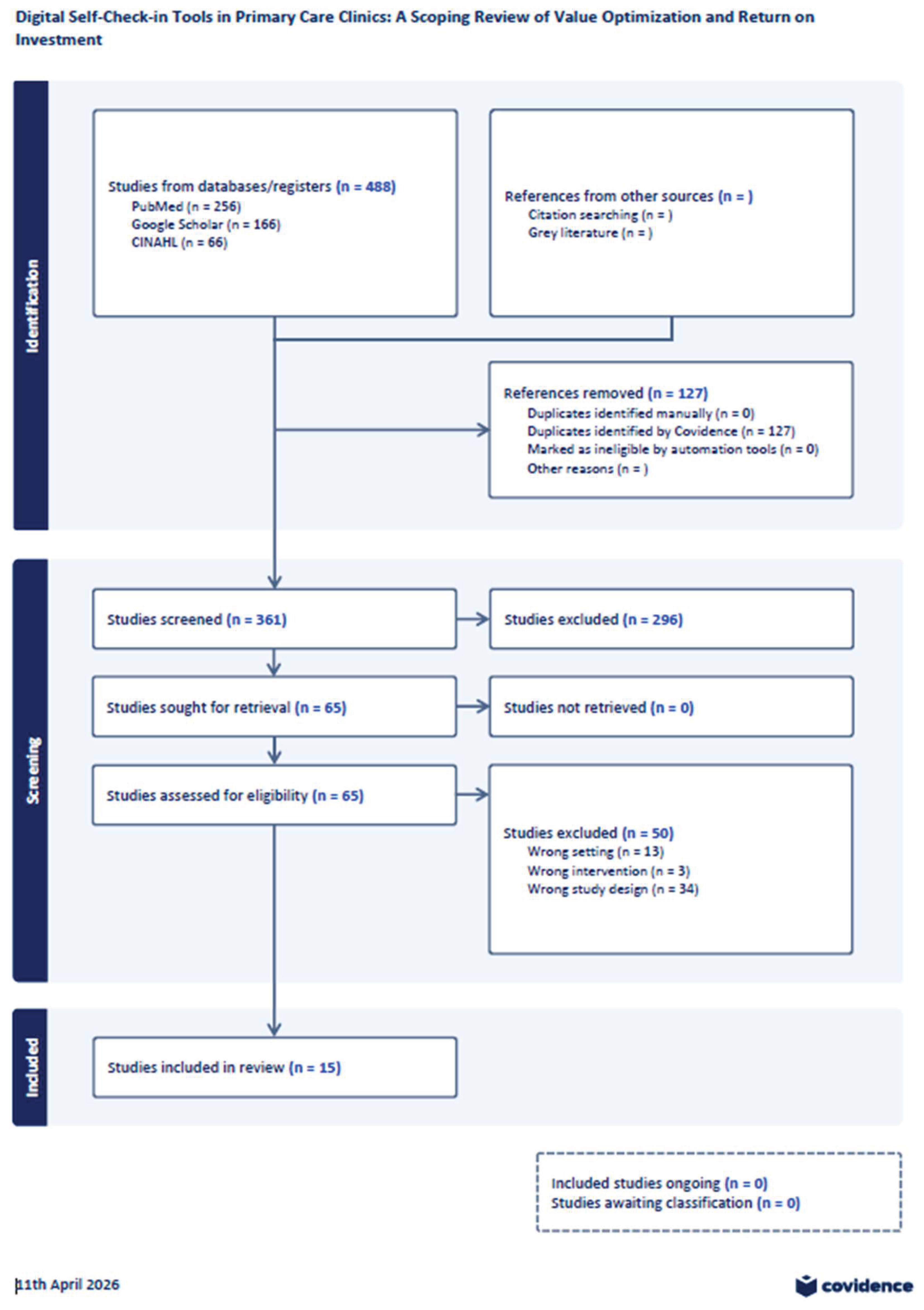
A structured scoping review process was used to map the literature on digital self-check-in tools in primary care, with a focus on value optimization and ROI. Searches in CINAHL, PubMed, and Google Scholar from 2021 to 2026 identified 488 records: 66 from CINAHL, 256 from PubMed, and 166 from Google Scholar. The final search strings for each database are shown in Appendix B, Table 1.
Eligibility Criteria
Studies were included if they examined digital self-check-in tools, electronic intake forms, pre-visit questionnaires, portal-based intake, or kiosks in primary care or adjacent outpatient settings. Eligible studies reported findings are linked to value optimization, such as workflow efficiency, wait times, completion rates, usability, patient experience, documentation quality, workload, operational gains, or ROI. Empirical studies were prioritized, though selected reviews and adjacent outpatient studies were retained for relevant conceptual or implementation insight. Only English-language, full-text studies published within the selected date range were included. Studies that focus on non-primary care settings, lacked outcomes, were duplicates, inaccessible, non-English, outside the date range, or were editorials, protocols, or opinion pieces were excluded from the review.
Study Selection and Data Extraction
The study selection followed sequential screening and eligibility stages. After duplicates were removed, 361 studies underwent title and abstract screening, of which 296 were excluded. A total of 65 full-text articles were assessed for eligibility; 50 were excluded, leaving 15 for inclusion. The selection process followed the PRISMA Extension for Scoping Reviews (PRISMA-ScR) framework (Tricco et al., 2018, pp. 467–468), with Covidence® used to support citation management and screening. The PRISMA summary is presented in Appendix A. Data extraction was conducted for all included studies using a structured approach, capturing author and year, DOI or source link, study type, setting, inclusion criteria, and relevance to the review. These extracted data are presented in Appendix C, Table 2, which shows a summary table to support the narrative synthesis.
Data Synthesis
Because the included studies differ in design, setting, interventions, and outcomes, statistical pooling was not suitable. Instead, findings were synthesized narratively, focusing on recurring themes such as workflow improvement, patient engagement, structured documentation, usability, operational efficiency, and overall value optimization. This approach aligned with the scoping review objective of mapping the characteristics and scope of the available evidence.
Results
The 15 included studies represented a diverse evidence base, including implementation studies, quality improvement projects, mixed-methods evaluations, qualitative studies, simulation analyses, and selected reviews conducted across primary care, community pediatric, general practice, outpatient specialty, and broader portal- and kiosk-based settings. From the evidence review, there is a consistent pattern of results across tool types and desired outcomes. Portal-based and pre-visit questionnaire interventions most consistently supported structured data capture, visit preparation, and patient communication, whereas kiosk and registration-flow studies more often demonstrated operational benefits such as improved workflow efficiency, reduced congestion, greater throughput, and lower front-desk burden. Across study designs and settings, the most frequently reported outcomes were workflow efficiency, completion rates, usability, acceptability, patient experience, and operational improvement. On the other hand, direct measures of formal economic return on investment (ROI) were uncommon. Overall, the evidence suggests that digital self-check-in intake tools can improve workflow, reduce administrative burden, increase questionnaire completion, and better organize patient-entered information before visits, with stronger support for operational and informational value than for direct financial return.
Evidence Grading
Using the Johns Hopkins Nursing Evidence-Based Practice (JHNEBP) hierarchy, the 15 included studies were graded by level and quality of evidence. Most were Level III or Level V, with few Level II studies and none at Level I. Most received a B quality rating, indicating generally useful findings with methodological limitations (JHNEBP, 2017, pp.1-2). The evidence most strongly supports improvements in workflow efficiency, structured data capture, questionnaire completion, and visit preparation (Hanmer et al., 2021, pp. 310–311; Shucard et al., 2022, p. 1; Naimark et al., 2024, pp. 1–2). Evidence for reduced congestion and administrative burden is favorable but context-dependent (Bhandari et al., 2024, p. 2; Hosseini et al., 2024, pp. 171–172). By contrast, evidence for direct financial ROI remains limited because few studies measured economic outcomes directly (Gentili et al., 2022, p. 1). Overall, the literature supports moderate confidence in the operational and informational value of digital self-check-in, but weaker confidence in broad cost-effectiveness claims.
Discussion
Introduction to the Informatics Problem
The primary informatics problem in digital self-check-in is not simply replacing manual registration with digital tools, but ensuring that intake data are timely, complete, interoperable, and usable in downstream care. A common finding across all reviewed studies is that digital intake tools generate the most value when integrated into clinical workflows and produce structured data that could be reused for documentation, communication, and operational decision-making. Studies of integrated questionnaires and electronic intake forms generally showed improvements in completion rates, documentation quality, and data capture (AlQudah et al., 2021, pp. 1–2; Hanmer et al., 2021, pp. 310–311; Cho et al., 2024, p. 1). At the same time, workflow-focused implementation and quality improvement studies showed that these benefits depended heavily on redesigning staff processes, making patient-entered information visible to clinicians, and preventing duplicate work (Chandler et al., 2025, p. 72; Gamston et al., 2021, pp. 1–2; Vedmurthy et al., 2022, pp. 1–2). Taken together, the literature suggests that digital intake creates value and strengthens the health data ecosystem not merely by collecting information electronically, but by embedding structured patient-entered data into routine clinical and administrative workflows.
The Significance of the Problem
Digital self-check-in is significant because intake is an upstream data event with downstream effects on documentation, coding, billing, scheduling, care coordination, and patient experience. In primary care, poor intake can lead to missing data, repeated questioning, incomplete records, billing corrections, and inefficient visits. Therefore, intake data should be understood as part of the healthcare data ecosystem rather than simply an administrative process, because they influence how information is captured, shared, reused, and applied across clinical, operational, and financial workflows. In both primary care questionnaire studies and portal-based interventions, a common theme appears: intake data create value when they are reusable for care planning, documentation, and visit preparation. For example, portal-based questionnaires identified caregiving responsibilities relevant to care planning, while pre-visit questionnaires helped patients communicate priorities and improved clinical preparation before visits (DesRoches et al., 2025, pp. 1–3; Naimark et al., 2024, pp. 1–2; Shucard et al., 2022, p. 1). The significance also extends to value realization and equity, because effective digital intake can reduce rework and administrative burden, whereas inaccessible tools may create or worsen inequities across patient groups (Bhandari et al., 2024, p. 2; Kim et al., 2022, p. 1).
Informatics Intersection of the Topic and Relation to Value
Informatics intersects with digital self-check-in through the capture, structuring, integration, and reuse of patient-generated intake data across clinical and administrative systems. Intake data are valuable because they are patient-generated, time-stamped, and potentially structured for reuse across clinical and administrative systems. Across the reviewed studies, the value of these data differed somewhat by tool type. Portal-based and pre-visit questionnaire interventions most consistently supported informational and clinical value by helping patients communicate priorities, improving visit preparation, and capturing contextual information before the encounter (DesRoches et al., 2025, pp. 1–3; Naimark et al., 2024, pp. 1–2; Fukunaga et al., 2025, pp. 1–2). Meanwhile, kiosk and electronic intake studies more often emphasized operational and usability value, such as acceptability, workflow support, and front-end data collection, while also showing that value depended on sustainable workflows and support for patients who needed assistance (McKenzie et al., 2022, pp. 212–213; Segall et al., 2024, pp. 1–2).
Broader review-level evidence reinforces that patient-reported data collection is now a core element of digital care delivery rather than a minor administrative task (Gleason et al., 2023, pp. 1–2). Across settings, however, intake data create value only when they are meaningfully integrated into the workflow and reused in care delivery. In primary care, value is realized when patient-entered information improves documentation, reduces duplication, anticipates patient needs, supports coding and billing, and informs clinical decisions before and during the visit (Liu et al., 2025, p. 1; Rauhut, 2025, p. 1).
Defining Data, Value, and Measurement
If data intake is treated as the unit of value, then measurement should focus on data quality, workflow performance, and downstream usability. Relevant metrics include completion rates, missing data, correction frequency, structured field capture, timestamp intervals, rooming time, queue length, rework, and whether patient-entered information is visible and useful during visits. Across the reviewed studies, the most consistently reported outcomes were completion, timing, workflow efficiency, usability, and adoption, suggesting that the current literature measures operational and informational value more often than direct economic return. For example, the integration of questionnaires and the use of electronic intake forms have been extensively reported to enhance completion, timing, identification, and documentation accuracy (Hanmer et al., 2021, pp. 310–311; AlQudah et al., 2021, pp. 1–2), while kiosk and registration-flow studies focus more on adoption, patient acceptance, congestion, and throughput as markers of operational value (Bhandari et al., 2024, p. 2; Hosseini et al., 2024, pp. 171–172). A strong measurement strategy should therefore combine EHR and portal logs with front-desk operational data and patient experience measures. However, because formal economic evidence remains limited across study types and settings, ROI is best treated as a clinic-level estimation model. In practice, this can be done by comparing implementation and maintenance costs with measurable operational benefits, such as reduced labor time, less rework, fewer corrections, reduced congestion, and improved throughput, using transparent assumptions and clearly defined cost and benefit categories (Gentili et al., 2022, p. 1; Bhandari et al., 2024, p. 2).
Impact on Healthcare Delivery
In U.S. primary care, intake data affect nearly every downstream workflow. In a case of incomplete or delayed information, clinicians may begin encounters without current patient information, staff may repeat tasks, documentation quality may decline, and billing accuracy may be compromised. When intake data are structured, timely, and reusable, they can support more efficient and patient-centered care (Shucard et al., 2022, p. 1; Ahn et al., 2024, p. 1; DesRoches et al., 2025, pp. 1–3). Electronic pre-visit questionnaires have been shown to improve clinical preparation, strengthen patient-centered communication, and make relevant information available before the encounter (Naimark et al., 2024, pp. 1–2; Chandler et al., 2025, p. 72).
Across primary-care-relevant studies, the most common benefits were improved visit preparation, communication, and workflow efficiency. In turn, evidence for cost savings and system-level financial return remained limited and indirect. Value also depends on equitable implementation. Digital barriers related to usability, access, or digital confidence may reduce both outcomes and ROI, especially for some patient groups (Kim et al., 2022, p. 1). For that reason, decision makers should define ROI carefully, including whether the focus is the clinic or health-system level and which costs and benefits are included, since these choices shape whether an intervention appears financially favorable (Gentili et al., 2022, p. 1).
Systems-Based Description Using the Sittig and Singh Sociotechnical Model
Digital self-check-in tools in primary care are best understood through the Sittig and Singh sociotechnical model, which conceptualizes health information technology as part of a complex adaptive system rather than a stand-alone technical intervention. Within this framework, value emerges from the interaction among technology, clinical content, people, workflow, organizational conditions, external rules, and ongoing monitoring (Sittig & Singh, 2010, pp. i68–i70). In the context of digital self-check-in, the technology dimension includes kiosks, patient portals, mobile intake applications, and the EHR, while the clinical content dimension includes demographic updates, insurance information, visit goals, and interim history entered by patients before the encounter (Naimark et al., 2024, p. 1; Shucard et al., 2022, p. 1).
The people, workflow, and communication dimensions encompass patients, front-desk staff, clinicians, and the sequence of intake completion, exception handling, EHR integration, and clinician review of patient-reported information (Rauhut, 2025, p. 1; Shucard et al., 2022, p. 1). This model also considers internal organizational factors, such as staff training and implementation preparedness, as well as external requirements, including privacy and documentation standards (Sittig & Singh, 2010, pp. i69–i70). Measurement and monitoring provide the feedback mechanisms needed to assess completion rates, data quality, usability, and patient and staff experience over time (Sittig & Singh, 2010, p. i70). From this perspective, return on investment depends not only on the technology itself, but on the degree of fit among the tool, users, workflow, and organizational context.
Evidence-Based Risk Assessment and Mitigation Strategies
The three main risks for digital self-check-in are inequitable access, workflow disruption, and poor data quality. First, inequitable access is a high-severity and moderate-to-high likelihood risk because patients with limited digital literacy, language barriers, disabilities, or low portal access may be less likely to complete digital intake. Kiosk and portal studies show that usability and engagement vary across patient groups, especially among older adults and patients who need staff assistance. Mitigation strategies include accessible design, multilingual options, intuitive navigation, and non-digital alternatives (Kim et al., 2022, p. 1; McKenzie et al., 2022, pp. 212–213). Metrics should include completion rates by age, language, portal status, and staff-assisted check-ins.
Second, workflow disruption is a high-severity and moderate-likelihood risk because poorly integrated digital tools may create duplicate work, delays, or staff burden. Digital intake creates value only when patient-entered information flows into the EHR and is visible to staff and clinicians at the right time. Mitigation requires workflow mapping, staff training, pilot testing, clear exception handling, and EHR integration. Metrics should include check-in time, rooming time, incomplete check-ins, staff interventions, and duplicate documentation (McKenzie et al., 2022, pp. 212–213; Chandler et al., 2025, p. 72). Third, poor data quality is a high-severity and moderate-likelihood risk because value depends on accurate, complete, structured, and reusable intake data. Electronic questionnaire and portal studies suggest this can be mitigated through clearer wording, built-in validation, stronger design, and ongoing data governance (Segall et al., 2024, pp. 1–2; Cho et al., 2024, p. 1). Related metrics include missing data rate, correction rate, completion rates of structured fields, duplicate entries, and data usage rates among clinicians. Overall, effective implementation requires continuous monitoring of equity, usability, workflow performance, and data quality.
Limitations
There are several limitations associated with this review. First, few studies have examined digital self-check-in in routine primary care, underscoring the need to include evidence from closely related outpatient settings to capture relevant implementation, workflow, and patient engagement insights. Although this was a reasonable approach given the limited primary care literature, findings should be generalized cautiously across primary care settings. Second, the included studies varied in design, setting, intervention type, and outcome measures. Third, the evidence base was stronger for workflow, usability, and implementation outcomes than for direct measures of return on investment. Finally, because scoping reviews are designed to map the breadth and characteristics of available literature, the findings should be interpreted as a synthesis of existing evidence rather than a definitive assessment of effectiveness. These limitations underscore the need for more rigorous primary care research on workflow, costs, patient experience, and measurable return on investment.
Conclusion
The value of digital self-check-in in primary care does not lie primarily in the kiosk, portal, or questionnaire, but in the intake data these tools capture. These data become valuable when they are patient-generated, time-stamped, structured, and reused downstream for documentation, billing, workflow coordination, and clinical decision-making. Across the included studies, digital self-check-in and related pre-visit intake tools improved completion rates, supported structured documentation, strengthened visit preparation, and reduced administrative burden. However, the literature does not yet demonstrate a robust financial ROI. Current confidence is strongest for the operational and informational value of data intake and is more limited for the potential economic return. Future research should therefore focus on how complete, reusable, equitable, and valuable data captured by these tools are across the broader health data ecosystem.
Institutional Review Board Statement
Not applicable.
Informed Consent Statement
Not applicable.
Conflicts of Interest
The author declares no conflict of interest.
Appendix A
Appendix B
Table 1. Digital Self-Check-in Tools in Primary Care Clinics: A Scoping Review of Value Optimization and Return on Investment.
- CINAHL Plus with Full Text (EBSCOhost)
| Search ID | Purpose | Search Strategy | Results |
| Search A | Main intervention search | ("digital check-in" OR "self-check-in" OR "self check-in" OR "online check-in" OR "online check in" OR echeck-in OR "e-check-in" OR "electronic check-in" OR kiosk* OR "self-service kiosk*" OR "digital intake" OR "electronic intake" OR "pre-visit questionnaire*" OR "pre-visit questionnaire*" OR "electronic questionnaire*") AND ("primary care" OR "primary health care" OR "family practice" OR "family medicine" OR "general practice" OR "ambulatory care" OR outpatient*) | 46 |
| Search B | Workflow/ usability/ patient experience |
("digital check-in" OR "self-check-in" OR "self check-in" OR "online check-in" OR "online check in" OR echeck-in OR "e-check-in" OR "electronic check-in" OR kiosk* OR "self-service kiosk*" OR "digital intake" OR "electronic intake" OR "pre-visit questionnaire*" OR "pre-visit questionnaire*" OR "electronic questionnaire*") AND ("primary care" OR "primary health care" OR "family practice" OR "family medicine" OR "general practice" OR "ambulatory care" OR outpatient*) AND ("patient satisfaction" OR usability OR adoption OR workflow OR efficiency OR "waiting time" OR "wait time" OR "time savings") | 11 |
| Search C | Value-of-data / documentation/workflow | ("digital intake" OR "electronic intake" OR "self-check-in" OR "online check-in" OR "pre-visit questionnaire*" OR "electronic questionnaire*" OR kiosk*) AND (documentation OR "clinical documentation" OR workflow OR interoperability OR "data quality" OR completeness OR "decision support" OR billing OR coding) AND ("primary care" OR "ambulatory care" OR outpatient* OR "family practice" OR "family medicine") | 7 |
| Search D | Formal economic / ROI | ("digital intake" OR "electronic intake" OR "self-check-in" OR "online check-in" OR "pre-visit questionnaire*" OR kiosk*) AND ("return on investment" OR ROI OR "cost-benefit" OR "cost effectiveness" OR "cost-effectiveness" OR "economic evaluation" OR "financial impact" OR productivity OR efficiency OR "time savings" OR "wait time") AND ("primary care" OR "ambulatory care" OR outpatient* OR "family practice" OR "family medicine") | 2 |
- 2.
- PubMed
| Search ID | Purpose | Search Strategy | Results |
| Search A | Main intervention search | ("digital check-in"[tiab] OR "self-check-in"[tiab] OR "self check-in"[tiab] OR "online check-in"[tiab] OR "online check in"[tiab] OR echeck-in[tiab] OR "e-check-in"[tiab] OR "electronic check-in"[tiab] OR kiosk*[tiab] OR "self-service kiosk*"[tiab] OR "digital intake"[tiab] OR "electronic intake"[tiab] OR "pre-visit questionnaire*"[tiab] OR "pre-visit questionnaire*"[tiab] OR "electronic questionnaire*"[tiab]) AND ("Primary Health Care"[Mesh] OR "Ambulatory Care"[Mesh] OR "primary care"[tiab] OR "primary health care"[tiab] OR "family practice"[tiab] OR "family medicine"[tiab] OR "general practice"[tiab] OR "ambulatory care"[tiab] OR outpatient*[tiab]) | 190 |
| Search B | Workflow/ usability/ patient experience |
("digital check-in"[tiab] OR "self-check-in"[tiab] OR "self check-in"[tiab] OR "online check-in"[tiab] OR "online check in"[tiab] OR echeck-in[tiab] OR "e-check-in"[tiab] OR "electronic check-in"[tiab] OR kiosk*[tiab] OR "self-service kiosk*"[tiab] OR "digital intake"[tiab] OR "electronic intake"[tiab] OR "pre-visit questionnaire*"[tiab] OR "pre-visit questionnaire*"[tiab] OR "electronic questionnaire*"[tiab]) AND ("Primary Health Care"[Mesh] OR "Ambulatory Care"[Mesh] OR "primary care"[tiab] OR "primary health care"[tiab] OR "family practice"[tiab] OR "family medicine"[tiab] OR "general practice"[tiab] OR "ambulatory care"[tiab] OR outpatient*[tiab]) AND ("patient satisfaction"[tiab] OR usability[tiab] OR adoption[tiab] OR workflow[tiab] OR efficiency[tiab] OR "waiting time"[tiab] OR "wait time"[tiab] OR "time savings"[tiab]) | 40 |
| Search C | Value-of-data / documentation/workflow | ("digital intake"[tiab] OR "electronic intake"[tiab] OR "self-check-in"[tiab] OR "online check-in"[tiab] OR "pre-visit questionnaire*"[tiab] OR "electronic questionnaire*"[tiab] OR kiosk*[tiab]) AND (documentation[tiab] OR "clinical documentation"[tiab] OR workflow[tiab] OR interoperability[tiab] OR "data quality"[tiab] OR completeness[tiab] OR "decision support"[tiab] OR billing[tiab] OR coding[tiab]) AND ("Primary Health Care"[Mesh] OR "Ambulatory Care"[Mesh] OR "primary care"[tiab] OR "ambulatory care"[tiab] OR outpatient*[tiab] OR "family practice"[tiab] OR "family medicine"[tiab]) | 18 |
| Search D | Formal economic / ROI | ("digital intake"[tiab] OR "electronic intake"[tiab] OR "self-check-in"[tiab] OR "online check-in"[tiab] OR "pre-visit questionnaire*"[tiab] OR kiosk*[tiab]) AND ("return on investment"[tiab] OR ROI[tiab] OR "cost-benefit"[tiab] OR "cost effectiveness"[tiab] OR "cost-effectiveness"[tiab] OR "economic evaluation"[tiab] OR "financial impact"[tiab] OR productivity[tiab] OR efficiency[tiab] OR "time savings"[tiab] OR "wait time"[tiab]) AND ("Primary Health Care"[Mesh] OR "Ambulatory Care"[Mesh] OR "primary care"[tiab] OR "ambulatory care"[tiab] OR outpatient*[tiab] OR "family practice"[tiab] OR "family medicine"[tiab]) | 8 |
- 3.
- Google Scholar (supplementary source)
| Search Type | Purpose | Search Strategy | Results |
| Shorter Search | Main intervention, value, and ROI | ("self check-in" OR "self-check-in" OR "digital check-in" OR eCheck-in OR eCheckin OR kiosk OR "pre-visit" OR previsit OR "digital intake" OR "online check-in") ("primary care" OR ambulatory OR outpatient OR clinic) (workflow OR efficiency OR "patient flow" OR wait time OR throughput OR "return on investment") |
166 |
Appendix C

Table 2.
Summary of Included Studies.
| Authors & Year | DOI/Link | Study Type | Setting | Inclusion Criteria | Relevance (Why include it) |
|---|---|---|---|---|---|
| AlQudah et al. (2021). | https://doi.org/10.1371/journal.pone.0262067 | Intervention study with simulation/controlled comparison | United Arab Emirates Healthcare Outpatient Clinic | Outpatients with booked appointments and valid Emirates ID; comparison of routine identification vs patient self-check-in workflow. | Directly studies self-check-in integrated with digital identity and electronic medical record/health level 7(HL7) workflow, showing reduced patient journey time, identification time, and waiting, making it highly relevant to value optimization and operational efficiency. |
| Bhandari et al. (2024). | https://doi.org/10.69554/OEKO1039 | Retrospective observational implementation study | Community-based clinic and urgent care site (Mayo Clinic Health System–Eastridge Clinic & Urgent Care) | Patients presenting to the clinic/urgent care site during the implementation period; deceased or error records were excluded. | Examines self-check-in kiosk uptake, patient experience, and operational use in a real outpatient clinic, with practical lessons about kiosk placement and staff support. |
| Chandler et al. (2025). | https://ieeexplore.ieee.org/abstract/document/11021143 | Quality improvement / mixed-methods practice improvement project | Primary care clinic (UVA Health) | Primary care patients and staff are involved in the eCheck-In and annual wellness visit questionnaire workflow. | Evaluates eCheck-In and pre-appointment engagement in primary care and reports improvement in questionnaire completion, plus workflow barriers and solutions. |
| Cho et al. (2024). | https://doi.org/10.2196/54415 | Development and evaluation study | Pediatric headache specialty clinic | Pediatric headache patients/families using an electronic questionnaire system before visits. | Shows how a streamlined electronic questionnaire improves structured history capture and pre-visit data quality, supporting the intake and value argument even outside primary care. |
| DesRoches et al. (2025). | https://doi.org/10.1186/s12875-025-03059-7 | Multi-site evaluation/implementation study | 5 primary care clinics at two healthcare organizations | Adult patients with upcoming visits who received a portal pre-visit questionnaire. | Included because it evaluates a portal-based pre-visit questionnaire in routine primary care, reporting reach, response rates, digital engagement, and minimal workflow disruption. |
| Fukunaga et al. (2025). | https://doi.org/10.2196/69044 | Sequential quasi-experimental pilot study | Six primary care clinics within a large academic health system | Adults eligible for lung cancer screening with upcoming primary care visits; English-speaking and text-capable | Tests pre-visit digital engagement using automated text messaging and decision support in primary care, with outcomes on knowledge, decisional conflict, and screening uptake. |
| Gamston et al. (2021). | https://doi.org/10.1016/j.rcsop.2021.100068 | Comparative intervention study with retrospective control review | Pharmacist-led ambulatory care clinic | Adult patients with scheduled clinic appointments who completed virtual intake paperwork via a CDSS-enhanced mobile application; vaccine- or medication-administration-only visits were not included. | Evaluates CDSS-enhanced digital intake forms and shows increased identification of intervention opportunities, supporting the value of structured patient-entered intake data. |
| Gleason et al. (2023). | https://doi.org/10.1093/jamiaopen/ooad077 | Scoping review | Patient portal interventions across primary care, specialty outpatient, inpatient, and system-wide settings | Quantitative and mixed-methods articles examining outcomes of patient portal interventions beyond routine portal functions | Useful background because it maps how portal interventions collect patient-reported information and support education and preventive care, helping frame the broader digital intake landscape. |
| Hanmer et al. (2021). | https://doi.org/10.1055/s-0041-1727198 | Pre-post implementation evaluation | 45 community pediatric primary care practices | Well-child visits in community pediatric practices using Epic; screening questionnaires integrated electronically | Demonstrates that an integrated electronic questionnaire system improved completion rates and reduced staff and patient time, directly supporting workflow and efficiency claims. |
| Hosseini et al. (2024). | https://doi.org/10.1177/19375867241237504 | Design-led simulation optimization study | Free-standing multispecialty outpatient clinic / medical office building | Simulated patient flows under different preregistration rates, digital kiosk options, and check-in station configurations | Quantifies how centralized hybrid registration with kiosks can reduce wait times, seating demand, and congestion, strengthening the operational value case for digital check-in models. |
| Maramba et al. (2022). | https://doi.org/10.2196/26511 | Scoping review | Kiosk use across secondary care, community, primary care, and pharmacies | Publications from 2009–2020 describing actual kiosk implementations | Useful foundational review because it documents kiosk roles, including patient self-check-in, patient registration, screening, and telehealth, and shows kiosks remain relevant across health systems. |
| McKenzie et al. (2022). | https://doi.org/10.1016/j.cvdhj.2022.07.073 | Prospective qualitative implementation study | General practice waiting rooms in Australia | General practice staff and patients aged 65+ were eligible to use the kiosk station for atrial fibrillation self-screening. | Evaluates self-screening kiosk usability, staff acceptability, workflow impact, and sustainability in a primary care waiting-room setting. |
| Naimark et al. (2024). | https://doi.org/10.2196/56332 | Mixed-methods pilot evaluation | Two family medicine practices | Portal-registered patients aged 65+ testing website and Epic pre-visit questionnaire tools | Evaluates an Epic pre-visit questionnaire in family medicine, including completion rates, completion time, patient perceptions, and clinician feedback. |
| Segall et al. (2024). | https://doi.org/10.1177/27536130241280181 | Qualitative interview study | Two outpatient integrative health clinics in a large academic health system | Adult outpatients can read, write, and speak English with at least one clinic visit. | Explores feasibility, acceptability, and patient perceptions of electronic intake forms and PROs, supporting the argument about patient-entered data quality and usability. |
| Vedmurthy et al. (2022). | https://doi.org/10.3389/fresc.2022.934558 | Quality improvement study | Outpatient neurologic and developmental specialty clinics | Guardians of pediatric patients in 10 clinics who received a pandemic intake questionnaire | Shows that a pre-visit questionnaire can identify care disruptions and improve targeted outpatient care planning and efficiency. |
Appendix D
Table 3.
Evidence Grading for Included Studies Using Johns Hopkins Nursing Evidence-Based Practice (2017).
Table 3.
Evidence Grading for Included Studies Using Johns Hopkins Nursing Evidence-Based Practice (2017).
| Authors & Year | DOI/Link | Evidence Level | Quality Rating | Strength of the evidence |
|---|---|---|---|---|
| AlQudah et al. (2021). | https://doi.org/10.1371/journal.pone.0262067 | Level III | B (Good quality) | Provides useful non-experimental evidence for integrating queue management and EMR systems in outpatient identification and check-in workflows. Its main contribution is showing that HL7-based integration can improve patient flow efficiency and support safer, more coordinated intake processes. |
| Bhandari et al. (2024). | https://doi.org/10.69554/OEKO1039 | Level III | B (Good quality) | Strong practice-based evidence for implementing self-check-in kiosks in a community clinic. Its main strength is showing that kiosk uptake can be increased through intentional workflow and placement strategies without reducing patient satisfaction. |
| Chandler et al. (2025). | https://ieeexplore.ieee.org/abstract/document/11021143 | Level III | B (Good quality) | This is useful non-experimental evidence on digital pre-appointment check-in in primary care. Its main contribution is demonstrating that patient adoption and workflow integration are central to realizing value from eCheck-In and pre-visit questionnaires. |
| Cho et al. (2024). | https://doi.org/10.2196/54415 | Level III | B (Good quality) | Provides good non-experimental evidence for the value of streamlined electronic questionnaires in specialty outpatient care. Its key contribution is showing that structured pre-visit electronic intake can improve completeness and usability of clinically relevant patient-entered data. |
| DesRoches et al. (2025). | https://doi.org/10.1186/s12875-025-03059-7 | Level III | B (Good quality) | Provides good implementation evidence from a multisite primary care evaluation of a portal-based pre-visit questionnaire. Its key contribution is demonstrating that routine digital pre-visit outreach can achieve meaningful patient engagement with minimal disruption to workflow. |
| Fukunaga et al. (2025). | https://doi.org/10.2196/69044 | Level II | B (Good quality) | This source is reasonably strong quasi-experimental evidence for pre-visit digital preparation in primary care. Its main value is showing that automated text messaging and decision support can improve patient knowledge and reduce decisional conflict before the visit. |
| Gamston et al. (2021). | https://doi.org/10.1016/j.rcsop.2021.100068 | Level II | B (Good quality) | Good quasi-experimental evidence that emphasizes that CDSS-enhanced digital intake forms can increase identification of intervention opportunities in ambulatory care. Its main contribution is showing the clinical value of structured patient-entered intake data beyond simple administrative use. |
| Gleason et al. (2023). | https://doi.org/10.1093/jamiaopen/ooad077 | Level V | A (High quality) | Provides strong, useful evidence that patient portal interventions commonly support the collection of patient-reported information and the provision of education. Its main contribution is to offer a broad conceptual map of how portal tools are used in care delivery, including pre-visit functions relevant to intake workflows. |
| Hanmer et al. (2021). | https://doi.org/10.1055/s-0041-1727198 | Level III | B (Good quality) | Provides good non-experimental evidence that an integrated electronic questionnaire system can improve completion rates while reducing staff and patient time in pediatric primary care. Its key contribution is demonstrating operational and workflow value from EHR-integrated intake tools. |
| Hosseini et al. (2024). | https://doi.org/10.1177/19375867241237504 | Level V | B (Good quality) | The main strength of this study is showing how preregistration and kiosk-supported intake may reduce congestion, seating demand, and waiting pressures in outpatient environments. It provides good operational and program-level evidence through simulation modeling of centralized registration and hybrid check-in workflows. |
| Maramba et al. (2022). | https://doi.org/10.2196/26511 | Level V | A (High quality) | Shows strong and important scoping-level evidence on the range of functions performed by health kiosks across care settings. Its main contribution is establishing that kiosks continue to play relevant roles in patient registration, self-check-in, screening, and telehealth. |
| McKenzie et al. (2022). | https://doi.org/10.1016/j.cvdhj.2022.07.073 |
Level III |
B (Good quality) | This study provides strong qualitative evidence on staff acceptance and patient use of self-screening kiosks in general practice waiting rooms. Its primary strength is identifying workflow, support, and sustainability challenges that influence the real-world implementation of kiosks in primary care. |
| Naimark et al. (2024). | https://doi.org/10.2196/56332 |
Level III |
B (Good quality) | This is strong mixed-methods evidence for the use of an Epic-based pre-visit questionnaire in family medicine. Its main strength is showing that portal-based pre-visit tools can support patient priority-setting and improve visit preparedness, although uptake remains uneven. |
| Segall et al. (2024). | https://doi.org/10.1177/27536130241280181 | Level III | B (Good quality) | Provides high-quality evidence on patient experience with electronic intake and patient-reported outcome measures in an outpatient setting. Its key strength is demonstrating that patients generally find electronic intake acceptable and useful, while also identifying practical design improvements. |
| Vedmurthy et al. (2022). | https://doi.org/10.3389/fresc.2022.934558 | Level V | B (Good quality) | This high-quality evidence indicates that a pre-visit intake questionnaire can help identify care disruptions and improve targeted outpatient planning during service disruptions. Its main strength is that it demonstrates the practical value of pre-visit questionnaires in supporting care coordination and responsiveness. |
Note: Overall, the evidence base provides moderate confidence in conclusions about workflow efficiency, structured data capture, questionnaire completion, usability, and visit preparation. Most included studies were Level III or Level V, with fewer Level II studies and none at Level I. Therefore, the findings support the operational and informational value of digital self-check-in tools, but conclusions about the direct financial return on investment should be interpreted cautiously, as economic outcomes were limited and inconsistently measured across studies.
References
- Ahn, S.; Lee, C.-J.; Bae, I. Patients’ use of electronic health records facilitates patient-centered communication: Findings from the 2017 Health Information National Trends Survey. Journal of Medical Internet Research 2024, 26, e50476. [Google Scholar] [CrossRef]
- AlQudah, A. A.; Al-Emran, M.; Shaalan, K.; El Rahman, C. Medical data integration using HL7 standards for patient’s early identification. PLOS ONE 2021, 16(12), e0262067. [Google Scholar] [CrossRef]
- Bhandari, P.; Doolhoff, A. A.; Landwer, L. E.; Culhane, P. S.; Garvin, L. K.; Johnson, R. R. Effectiveness of self-check-in kiosk use in a community-based clinic setting. Management in Healthcare 2024, 8(4), 377–386. [Google Scholar] [CrossRef]
- Chandler, K.; Chouffani, J.; Girerd, A.; James, M.; Kemmerer, L.; Spillane, M.; Dowdell, K.; Riggs, R. J. Check-in check-up: Analyzing and improving pre-appointment engagement in a primary care clinic at UVA Health System. In 2025 Systems and Information Engineering Design Symposium (SIEDS); IEEE, 2025; pp. 72–77. Available online: https://ieeexplore.ieee.org/abstract/document/11021143.
- Cho, J.; Kim, H.; Lee, J.; Kim, S.; Park, J. Enhancing clinical history taking through the implementation of a streamlined electronic questionnaire system at a pediatric headache clinic: Development and evaluation study. JMIR Medical Informatics 2024, 12, e54415. [Google Scholar] [CrossRef] [PubMed]
- DesRoches, C. M.; Wachenheim, D.; Ameling, J.; Cibildak, A.; Cibotti, N.; Dong, Z.; Drane, A.; Henderson, J.; Hurwitz, I.; Meddings, J.; Naimark, J.; O’Donnell, K.; Winger, C.; Winnay, S. S.; Young, J.; Wolff, J. L. Identifying, engaging, and supporting care partners in primary care settings: A portal-based intervention. BMC Primary Care 2025, 26, 356. [Google Scholar] [CrossRef]
- Fukunaga, M. I.; Wiener, R. S.; Toomey, S.; Wagner, J.; Shi, Q.; Balakrishnan, K.; Nguyen, A.; Nguyen, D.; McKee, M. D.; Bankier, A. A.; Sadasivam, R. S.; Crawford, S. L.; Han, P. K.; Houston, T. K.; Mazor, K. M. Pre-visit preparation for shared decision-making in lung cancer screening in primary care using a paper decision aid and an automated text messaging program: Quasi-experimental pilot study. JMIR Formative Research 2025, 9, e69044. [Google Scholar] [CrossRef]
- Gamston, C. E.; Hollingsworth, J. C.; Fox, B. I.; Rogers, S.; O’Barr, M. E.; Lloyd, K. B. Evaluation of the impact of enhanced virtual forms and gamification on intervention identification in a pharmacist-led ambulatory care clinic. Exploratory Research in Clinical and Social Pharmacy 2021, 4, 100068. [Google Scholar] [CrossRef]
- Gentili, A.; Failla, G.; Melnyk, A.; Puleo, V.; Tanna, G. L.; Ricciardi, W.; Boccia, S. The cost-effectiveness of digital health interventions: A systematic review of the literature. Frontiers in Public Health 2022, 10, 787135. [Google Scholar] [CrossRef]
- Gleason, K. T.; Powell, D. S.; Wec, A.; Zou, X.; Gamper, M. J.; Peereboom, D.; Wolff, J. L. Patient portal interventions: A scoping review of functionality, automation used, and therapeutic elements of patient portal interventions. JAMIA Open 2023, 6(3), ooad077. [Google Scholar] [CrossRef] [PubMed]
- Hanmer, J.; Ray, K. N.; McCracken, P.; Ferrante, L.; Wardlaw, S.; Fleischman, L.; Wolfson, D. Uptake of an integrated electronic questionnaire system in community pediatric clinics. Applied Clinical Informatics 2021, 12(2), 310–319. [Google Scholar] [CrossRef] [PubMed]
- Hosseini, M.; Gittler, A. M.; Hoak, M.; Cogswell, J.; Khasawneh, M. T. Innovate and validate: Design-led simulation optimization to test centralized registration feasibility in a multispecialty clinic. Health Environments Research & Design Journal 2024, 17(3), 171–188. [Google Scholar] [CrossRef]
- Johns Hopkins Nursing Evidence-Based Practice. Appendix D: Evidence level and quality guide; Johns Hopkins University School of Nursing, 2017. [Google Scholar]
- Kim, U.; Chung, T.; Park, E. Quality characteristics and acceptance intention for healthcare kiosks: Perceptions of older adults based on an extended technology acceptance model. International Journal of Environmental Research and Public Health 2022, 19(24), 16485. [Google Scholar] [CrossRef]
- Liu, J.; Baker, T. B.; Chen, J.; Smock, N.; Griffith, N. B.; Govindan, R.; Goldberg, P.; Thole, J.; Daly, K.; Reddy, J.; Ramsey, A. T.; Bierut, L. J.; James, A.; Schnoll, R. A.; Brownson, R. C.; Chen, L.-S. Patient-generated health data: Impact on promoting patient-centered point of care tobacco treatment in patients with cancer. Journal of Clinical and Translational Science 2025, 9(1), e114. [Google Scholar] [CrossRef]
- Maramba, I. D.; Jones, R.; Austin, D.; Edwards, K.; Meinert, E.; Chatterjee, A. The role of health kiosks: Scoping review. JMIR Medical Informatics 2022, 10(3), e26511. [Google Scholar] [CrossRef]
- McKenzie, K.; Lowres, N.; Orchard, J.; Hespe, C.; Freedman, B.; Giskes, K. Staff acceptability and patient usability of a self-screening kiosk for atrial fibrillation in general practice waiting rooms. Cardiovascular Digital Health Journal 2022, 3, 212–219. [Google Scholar] [CrossRef]
- Naimark, J.; Tinetti, M. E.; Delbanco, T.; Dong, Z.; Harcourt, K.; Esterson, J.; Charpentier, P.; Walker, J. Leveraging an electronic health record patient portal to help patients formulate their health care goals: Mixed methods evaluation of pilot interventions. JMIR Formative Research 2024, 8, e56332. [Google Scholar] [CrossRef] [PubMed]
- Peters, M. D. J.; Marnie, C.; Tricco, A. C.; Pollock, D.; Munn, Z.; Alexander, L.; McInerney, P.; Godfrey, C. M.; Khalil, H. Updated methodological guidance for the conduct of scoping reviews. JBI Evidence Synthesis 2020, 18(10), 2119–2126. [Google Scholar] [CrossRef]
- Rauhut, M. A. Digital engagement and the efficacy of patient portal-based preventive care interventions. Digital Health 2025, 11, 20552076251356013. [Google Scholar] [CrossRef]
- Segall, T. L.; Rodgers-Melnick, S. N.; Surdam, J.; Srinivasan, R.; Dusek, J. A. Patient experience and attitudes toward electronic intake and patient-reported outcomes within an outpatient whole health center. Global Advances in Integrative Medicine and Health 2024, 13, 1–7. [Google Scholar] [CrossRef] [PubMed]
- Shucard, H.; Müller, E.; Johnson, J.; Walker, J.; Elmore, J. G.; Delbanco, T.; Payne, T. H. Clinical use of an electronic pre-visit questionnaire soliciting patient visit goals and interim history: A retrospective comparison between safety-net and non-safety-net clinics. Health Services Research and Managerial Epidemiology 2022, 9, 23333928221080336. [Google Scholar] [CrossRef] [PubMed]
- Sittig, D. F.; Singh, H. A new sociotechnical model for studying health information technology in complex adaptive healthcare systems. BMJ Quality & Safety 2010, 19 (Suppl 3), i68–i74. [Google Scholar] [CrossRef]
- Tricco, A. C.; Lillie, E.; Zarin, W.; O’Brien, K. K.; Colquhoun, H.; Levac, D.; Moher, D.; Peters, M. D. J.; Horsley, T.; Weeks, L.; Hempel, S.; Akl, E. A.; Chang, C.; McGowan, J.; Stewart, L.; Hartling, L.; Aldcroft, A.; Wilson, M. G.; Garritty, C.; Lewin, S.; Godfrey, C. M.; Macdonald, M. T.; Langlois, E. V.; Soares-Weiser, K.; Moriarty, J.; Clifford, T.; Tunçalp, Ö.; Straus, S. E. PRISMA extension for scoping reviews (PRISMA-ScR): Checklist and explanation. Annals of Internal Medicine 2018, 169(7), 467–473. [Google Scholar] [CrossRef] [PubMed]
- Vedmurthy, P.; Murray, C.; Chen, B.; Asiedu, A.; Baranano, K.; Bay, M.; Belcher, H.; Burton, V.; Conlon, C.; Fine, A.; Gill, R.; Harris, J.; Hart, K.; Inches, S.; Johnson, J.; Lance, E.; Lipkin, P. H.; Menon, D. U.; McIntyre, T.; Rajaprakash, M.; Recio, A.; Singer, H. S.; Smegal, L.; Smith-Hicks, C. L.; Vernon, H.; Wilms Floet, A. M.; Wong, J.; Yelin, K.; O’Connor Leppert, M. L.; Zabel, T. A.; Comi, A. M. Pandemic intake questionnaire to improve the quality, effectiveness, and efficiency of outpatient neurologic and developmental care at the Kennedy Krieger Institute during the COVID-19 pandemic. Frontiers in Rehabilitation Sciences 2022, 3, 934558. [Google Scholar] [CrossRef] [PubMed]
Disclaimer/Publisher’s Note: The statements, opinions and data contained in all publications are solely those of the individual author(s) and contributor(s) and not of MDPI and/or the editor(s). MDPI and/or the editor(s) disclaim responsibility for any injury to people or property resulting from any ideas, methods, instructions or products referred to in the content. |
© 2026 by the authors. Licensee MDPI, Basel, Switzerland. This article is an open access article distributed under the terms and conditions of the Creative Commons Attribution (CC BY) license (http://creativecommons.org/licenses/by/4.0/).
Copyright: This open access article is published under a Creative Commons CC BY 4.0 license, which permit the free download, distribution, and reuse, provided that the author and preprint are cited in any reuse.