

Submitted:
30 April 2026
Posted:
05 May 2026
You are already at the latest version
Abstract
Feline gingivostomatitis is an inflammatory syndrome of the oral mucosa characterized by chronic pain. Its multifactorial etiology and debilitating consequences are associated with difficult clinical management and high relapse rates even after invasive interventions, potentially severely compromising the animals’ quality of life. Cannabidiol (CBD) has been investigated for its anti-inflammatory, antioxidant, analgesic, and immunomodulatory effects and is considered a potential therapeutic alternative for chronic inflammatory diseases. The present report aims to describe a significant clinical improvement in a 5-year-old mixed-breed male cat affected by feline gingivostomatitis, presenting with hyporexia and sialorrhea. A broad-spectrum Cannabis oil rich in CBD was prescribed at doses ranging from 0.5 to 1.0 mg/kg, administered twice daily for two months. Early clinical improvement was observed from the first day of administration, with a dose-dependent response, ultimately resulting in an overall satisfactory clinical outcome. Therefore, it can be concluded that the clinical application of a broad-spectrum Cannabis oil rich in CBD may represent a promising therapeutic alternative for cats affected by feline gingivostomatitis, especially in refractory cases or those with limitations to conventional therapies.
Keywords:
analgesia
; anti-inflammatory
; CBD
; FIV
; FeLV
; gingivostomatitis
; healing
Introduction
Feline chronic gingivostomatitis (FCGS) is a severe inflammatory syndrome involving the immune system that affects the oral mucosa, manifesting as erythema, ulceration, and tissue proliferation. This debilitating condition is primarily characterized by bilateral inflammation of the caudal oral mucosa, associated with clinical signs such as dysphagia, anorexia, halitosis, sialorrhea, reduced grooming, and weight loss as a consequence of intense pain. It is a multifactorial disease with challenging therapeutic management; therefore, in some cases, euthanasia is considered (Lee, Verstraete, and Arzi, 2020; Lommer, 2013; Rolim et al., 2017). Diagnosis is generally based on clinical presentation (Lobprise et al., 2025). In addition to its multifactorial etiology and complex treatment, this disease has also proven resistant to numerous attempts at establishing experimental models (Reubel, Hoffman, and Pedersen, 1992).
Its multifactorial etiology, combined with the failure to reproduce the disease experimentally, hinders the standardization of therapeutic protocols and the conduct of controlled clinical studies, thereby limiting the advancement of evidence-based approaches. Although partial or full-mouth tooth extraction is considered the primary therapeutic approach for FCGS, clinical response is variable, and a significant proportion of cats continue to exhibit persistent inflammation following the procedure. The therapeutic goal in FCGS is to reduce or eliminate antigenic stimulation and modulate the exacerbated immune response. In such cases, prolonged medical management becomes necessary, including systemic anti-inflammatory drugs—particularly corticosteroids—as well as immunomodulators such as cyclosporine. However, chronic use of these therapies may be associated with relevant adverse effects and does not always result in sustained remission, highlighting the challenges in disease control and the need for safer and more effective therapeutic alternatives (Soltero-Rivera et al., 2024).
Considering the role of the endocannabinoid system in regulating immune and inflammatory responses in oral tissues, Cannabis sativa emerges as a potential therapeutic strategy for chronic inflammatory conditions. The synergistic interaction among its various bioactive constituents, described as the entourage effect, may enhance anti-inflammatory, analgesic, immunomodulatory, anxiolytic, and antimicrobial effects—features that are particularly relevant in diseases such as feline chronic gingivostomatitis (Lowe et al., 2021).
This report aims to describe a macroscopic clinical improvement in a feline affected by FCGS, with a consequent enhancement in quality of life, observed from the first day of initiation of cannabinoid-based therapy, particularly associated with CBD.
Case Description
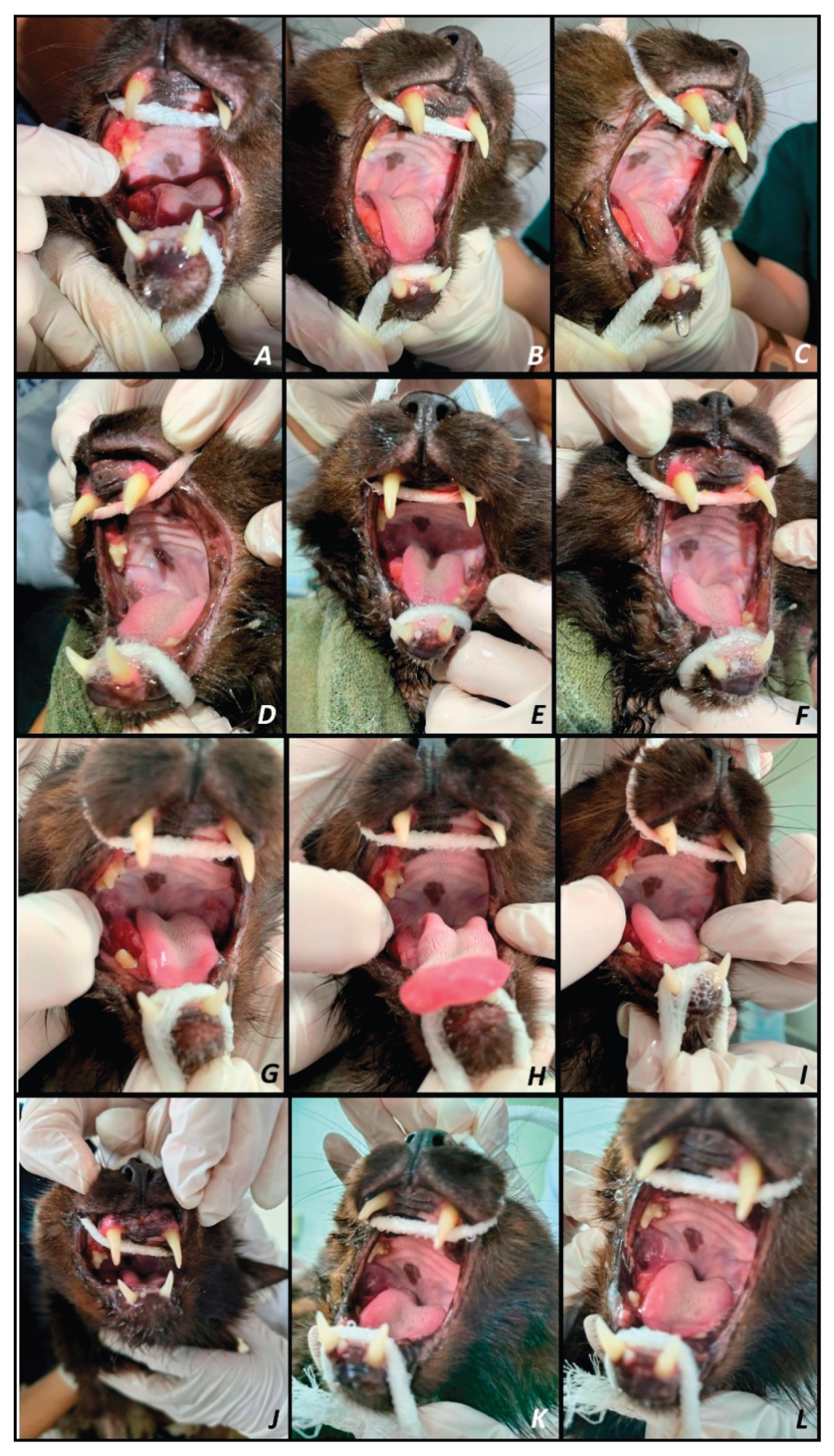
A 5-year-old neutered male domestic shorthair cat, weighing 3.6 kg, was presented to the Veterinary Teaching Hospital with a history of hyporexia and sialorrhea. The animal tested positive on a rapid test for FIV/FeLV and had a prior diagnosis of feline chronic gingivostomatitis, having undergone partial tooth extraction and dental scaling approximately one month before the current evaluation. For oral assessment (Figure 1 – a, b, and c), outpatient sedation was performed using intramuscular buprenorphine at a dose of 0.04 mg/kg. On physical examination, halitosis and generalized erythematous oral mucosa were observed, along with the presence of ulcers in multiple regions of the oral cavity. Additional diagnostic tests confirmed positivity for FIV and FeLV by qPCR. A complete blood count was not performed at this initial visit due to issues with the submitted sample.
For the treatment of feline gingivostomatitis, oral administration of a broad-spectrum Cannabis oil rich in cannabidiol (CBD) (500 mg/30 mL), manufactured by Hippie Hounds® Treats, was prescribed. Authorization for the importation of controlled substances and medications (AI/151/2023) was approved by the National Health Surveillance Agency (ANVISA/MS). The oil had undergone laboratory analysis by F.A.S.T. Laboratories/Research (Sample ID: S128929), including quantification of phytocannabinoids and terpenes, and was certified free of contaminants (available as supplementary material). An initial regimen of 3.7 mg of CBD (1 mg/kg) administered twice daily for 7 days was recommended.
At the 7-day follow-up, the owner reported that the cat had resumed eating very well from the first day of treatment, maintaining this appetite during the initial two days, with a gradual decrease over the course of the week, although still sustaining adequate intake. However, marked somnolence was also reported during this period. Outpatient sedation (0.04 mg/kg buprenorphine, IM) was performed for a new oral evaluation (Figure 1 – d, e, and f), which revealed improvement in the oral condition, with reduced inflammation and fewer ulcers. At this visit, the cat weighed 3.5 kg, and blood was recollected for a complete blood count. The only abnormality observed was leukopenia (4,400/mm³; reference range: 5,500–19,500/mm³) due to lymphopenia (1,144/mm³; reference range: 1,500–7,000/mm³). Due to the presence of somnolence, an adverse effect associated with CBD, the dose was reduced to 1.85 mg of CBD (0.5 mg/kg) administered twice daily, with a follow-up scheduled in 3 weeks.
After one month of cannabinoid-based treatment, the patient returned for a follow-up oral evaluation (Figure 1 – g, h, and i) and blood testing. At this visit, the cat weighed 3.9 kg (a gain of 400 g over three weeks). The leukogram was within reference ranges, except for persistent lymphopenia (832/mm³; reference range: 1,500–7,000/mm³). Serum biochemistry revealed no abnormalities outside the reference values. The owner reported no adverse effects at the adjusted dose, and that the cat’s appetite remained stable and satisfactory, with only a noticeable decrease in food intake during the three days before the visit. During oral examination under sedation (0.04 mg/kg buprenorphine, IM), the animal showed improvement in lesion appearance compared to the pre-treatment condition (Figure 1 – a, b, and c), but not when compared to the response observed at the initial dose of 1 mg/kg (Figure 1 – d, e, and f). Therefore, resumption of the 1 mg/kg dose administered twice daily was recommended. After an additional three weeks of treatment, the patient returned weighing 3.1 kg (a loss of 800 g since the previous visit). The owner reported episodes of pasty to watery diarrhea occurring two to three times during the previous week; however, the cat remained active and exhibited an increased appetite during this period. Oral evaluation (Figure 1 – j, k, and l) demonstrated a marked improvement in the overall appearance of the oral cavity. Although no formal sedation scale was applied, a progressively greater sedative effect was observed throughout the treatment period. For this reason, the anesthesiologists elected to reduce the sedation dose, which still allowed adequate handling. Blood tests revealed no abnormalities outside the reference ranges. A probiotic was prescribed, and a change to a balanced (1:1) oil formulation was recommended, along with additional imaging studies. However, prior to the implementation of the new oil regimen, the animal unfortunately died due to complications associated with a mediastinal mass.
Discussion
Feline chronic gingivostomatitis (FCGS) is an inflammatory disease affecting the oral mucosa that is highly painful and debilitating. The clinical signs of this condition primarily include chronic pain, as well as ptyalism, halitosis, weight loss, irritability, and decreased activity (Bellei et al., 2008; Lommer, 2013). The reported animal was presented for clinical evaluation due to hyporexia and sialorrhea, and physical examination also revealed the presence of halitosis.
The multifactorial etiology of this disease further complicates treatment and disease control, particularly in recurrent cases (Jennings et al., 2015). Currently, clinical management remains controversial, as evidence suggests that dental plaque may be a less critical etiological factor than previously believed, given the lack of significant differences in overall treatment response between cats undergoing partial molar extractions and those receiving full-mouth extractions (Soltero-Rivera et al., 2024). In many cases, invasive approaches such as full-mouth extraction can lead to significant clinical improvement; however, a substantial proportion of cats (33–50%) still require long-term management for pain and inflammation (Jennings et al., 2015). The patient described in the present report had also undergone dental extraction slightly over one month prior to the clinical evaluation and initiation of cannabinoid-based therapy. Additionally, the animal was seropositive for FIV and FeLV, viruses associated with greater difficulty in controlling FCGS and with variable responses to dental extractions, particularly FeLV (Jirasek et al., 2022).
Cannabidiol (CBD) has emerged as the primary phytocannabinoid currently under investigation, with demonstrated anti-inflammatory, analgesic, immunomodulatory, and anxiolytic effects (Brutlag and Hommerding, 2018). CBD acts as an immunomodulator via CB2/PI3K and PPARγ pathways, interfering with the transcription of pro-inflammatory cytokines and the regulation of tissue redox balance—mechanisms that are potentially relevant to the inflammatory pathophysiology of feline gingivostomatitis and the modulation of the periodontal immune response (Jirasek et al., 2022). Additionally, CBD exerts direct analgesic effects through modulation of nociceptive transmission via CB1 and CB2 receptors and other associated pathways, as well as indirect effects by reducing local inflammation through the immunomodulatory mechanisms described above (Coelho et al., 2023; Campana et al., 2025). Furthermore, CBD has been associated with multiple mechanisms involved in bone regeneration, including the stimulation of mesenchymal stem cells that differentiate into osteoblasts, thereby enhancing bone formation during fracture healing (Raphael-Mizrahi et al., 2020; Idris and Ralston, 2012).
Topical application provides a faster local analgesic effect and is associated with fewer adverse effects (Campana et al., 2025). Most studies primarily report the effects of CBD; however, THC also exhibits anti-inflammatory, osteoprotective, and analgesic properties (Lowe et al., 2021), in addition to its adverse effect—potentially desirable in cases of FCGS—of appetite stimulation (orexigenic effect) (Parker et al., 2011).
Despite the heterogeneity of studies investigating oral administration and its local and systemic effects—particularly with respect to isolated CBD—it is important to consider that most available pharmacokinetic evaluations have been conducted under conditions of intact mucosa (Millar et al., 2018; Tabboon et al., 2022; Johnson et al., 2024), unlike the reported case, in which the mucosa was markedly inflamed and structurally compromised due to FCGS. In this context, the presence of ulcers, loss of epithelial stratification, and increased inflammatory vascularization may alter the diffusion of lipophilic compounds, such as cannabinoids, across the mucosa (Filipiuc et al., 2023). Therefore, it is plausible that the inflammatory state of the oral mucosa in the reported animal influenced both local exposure and systemic absorption, thereby impacting the pharmacokinetic profile and the observed clinical response. The pharmacokinetic principles discussed may be partially extrapolated to broad-spectrum extracts.
However, the therapeutic effect is not solely attributable to CBD. Based on the analysis of the oil used (available as supplementary material), the presence of multiple bioactive constituents can also be identified. The phytocannabinoids tetrahydrocannabinol (THC) and cannabichromene (CBC) exhibit anti-inflammatory, antioxidant, analgesic, and antimicrobial properties. In addition, terpenes such as humulene and caryophyllene also demonstrate anti-inflammatory, antioxidant, antibacterial, and analgesic effects, further supporting the entourage effect among the different bioactive molecules present in the Cannabis oil used in this report (Lowe et al., 2021).
Furthermore, additional effects may be involved, such as antimicrobial activity (Lowe et al., 2021), with potential implications for controlling dysbiosis associated with the perpetuation of chronic inflammation (Tolentino et al., 2025). Although direct evidence regarding the effects of Cannabis-derived compounds on the oral microbiota remains limited, recent studies have shown that cannabinoids can modulate alpha diversity in the intestinal microbiome, highlighting the need to investigate their effects not only on microbial composition but also on bacterial metabolic activity (Vitetta et al., 2024). It is also noteworthy that microorganisms can modulate the endocannabinoid system through mechanisms dependent on virulence factors such as lipopolysaccharides (LPS), underscoring the complex interaction between the microbiome and the host immune response. These findings support the hypothesis that oral microbiome dysbiosis may act as one of the triggers for the development of FCGS, not only by promoting an environment conducive to pathogen colonization but also by modulating the local immune response, thereby contributing to disease progression and persistence. In this context, the potential to restore microbial balance and appropriately modulate the immune response—such as the proposed actions of cannabinoids—may contribute to controlling disease progression (Sánchez-Vallejo, 2025; Thu et al., 2025; Garzón et al., 2024). This study supports the extrapolation of the multimodal therapeutic potential of Cannabis in FCGS, encompassing up to four key effects: anti-inflammatory, analgesic, immunomodulatory, and microbiome-modulating properties.
Coelho et al. (2023) conducted a placebo-controlled clinical study evaluating the use of CBD (4 mg/animal, twice daily for 15 days) as an adjuvant in the postoperative period following dental extraction in cats with chronic gingivostomatitis. The authors reported that treated animals, compared to placebo, showed improved well-being and reduced inflammation without adverse effects, with a significant reduction in lesion severity. The present report corroborates these findings, demonstrating a satisfactory clinical response associated with a similar dose (3.7 mg of CBD).
The authors further explained that the anti-inflammatory and analgesic effects of CBD are mediated by decreased cellular reuptake and reduced FAAH-mediated catabolism, leading to increased levels of anandamide (AEA), thereby suggesting the benefits of CBD in the treatment of periodontitis. Endocannabinoids, such as AEA, are released by postsynaptic neurons and act on CB1 and CB2 receptors expressed in the postsynaptic neuron—a mechanism known as retrograde signaling—which rapidly inhibits neurotransmitter release, modulating pain, inflammation, immunity, bone growth, and anxiety (Mackie, 2006).
Coelho et al. (2023) reported greater clinical and systemic stability in animals treated with CBD 15 days after dental extraction, including lower heart rate and blood pressure compared to the placebo group, as well as less pronounced weight loss. Similarly, during the clinical follow-up of the present case, greater overall stability was observed, with a slight weight gain throughout the treatment period, except when soft stools were reported. It is possible that, at that stage, the animal was already developing a paraneoplastic syndrome secondary to the mediastinal mass later identified, which may explain both the weight loss and the intestinal alterations observed.
Although cats exhibit lower peak plasma concentrations and reduced overall absorption of CBD compared to dogs, this species tends to present a higher frequency of adverse effects, which are generally mild in nature (Deabold et al., 2019). In the present report, the animal exhibited somnolence as an adverse event associated with CBD following acute administration at a dose of 1 mg/kg, as described in the literature (Brutlag, 2018). Compared to dogs, cats show a lower frequency of adverse effects such as soft stools or diarrhea (Deabold et al., 2019); however, in this case, some episodes were observed. This discrepancy may be related to individual variability, the formulation used, or species-specific metabolic characteristics. Furthermore, as the animal was positive for FIV and FeLV, it cannot be ruled out that underlying systemic alterations may have influenced the occurrence and persistence of these episodes.
In the only study published to date involving cats with gingivostomatitis treated with CBD (Coelho et al., 2023), no systemic adverse effects were observed following CBD administration, with only transient manifestations reported at the time of administration. In contrast, in the present case, the patient developed episodes of diarrhea that did not coincide with the initiation of therapy, occurring only after more than one month of continuous treatment. In the available literature (Coelho et al., 2023), there is only a single isolated report of diarrhea as a possible adverse effect associated with CBD use in cats, described sporadically. Considering the delayed onset of clinical signs and the subsequent diagnosis of a mediastinal mass, the gastrointestinal alterations observed in this patient appear more likely to be related to a paraneoplastic syndrome or to systemic effects of the neoplastic process rather than to CBD administration. Similarly, laboratory findings (complete blood count and biochemical profile) in the present report, as well as in the study by Coelho et al. (2023), did not reveal alterations attributable to the treatment. Therefore, the occurrence of diarrhea in this case appears to be more closely related to the patient’s systemic condition than to CBD use, reinforcing the safety profile previously described in the literature (Deabold et al., 2019).
The association between FCGS and seropositivity for certain viruses, such as feline calicivirus, feline herpesvirus type 1, FIV, and FeLV, has been consistently reported (Sánchez-Vallejo et al., 2025). The present report describes a case involving an animal seropositive for FIV and FeLV, corroborating findings by Silva et al. (2019), who reported a 16% prevalence of FIV/FeLV coinfection in shelter cats with oral lesions. In contrast, Coelho et al. (2023) did not identify any FeLV-positive animals (0/22), but reported three (13.6%) FIV-positive cases. The same authors emphasized that FeLV-positive animals were not included, as these patients are associated with variable clinical responses to dental extraction. Thus, the present study reinforces the occurrence of coinfection in a patient with a history of partial dental extraction and recurrence of FCGS within slightly more than one month. Considering that CBD exhibits a biphasic immunomodulatory effect, its use in immunocompromised patients should be interpreted with caution (Jirasek et al., 2022). In this context, the present report supports the statement by Coelho et al. (2023) that “CBD is a potentially interesting substance to be included in the multimodal management of this disease, particularly as a long-term supportive therapy.” Diagnostic testing for the other aforementioned viruses was not performed in the present case.
In feline gingivostomatitis, the analgesic, anti-inflammatory, and immunomodulatory effects of CBD, together with its potential role in bone healing (Coelho et al., 2023; Raphael-Mizrahi et al., 2020; Idris and Ralston, 2012) and the consequent improvement in appetite, encompass five therapeutic responses within a single treatment modality, thereby facilitating clinical management in a species in which handling and drug administration can be challenging. Thus, Cannabis emerges as a treatment option both for early-stage cases, aiming to control the inflammatory process and associated discomfort (Campana et al., 2025), and for more advanced cases requiring partial or full-mouth dental extraction, whether in the pre- or postoperative setting (Coelho et al., 2023).
Considering that studies conducted in the same geographic region as the present report have identified a frequency of approximately 34.8% of FCGS among shelter cats with oral lesions (Silva et al., 2019), this highlights a substantial prevalence in the feline population that may benefit from cannabinoid-based therapy.
As previously described, the entourage effect refers to the synergistic interaction among bioactive molecules present in Cannabis, capable of enhancing therapeutic outcomes. In this context, studies using formulations with low THC concentrations (<0.3%), in accordance with Collegiate Board Resolution (RDC) nº 1.015/2026 (Brasil, 2026) and Drugs Law nº 11.343/2006 (Brasil, 2006), may limit conclusions regarding the true clinical impact of Cannabis oil in cases of feline gingivostomatitis. Further studies involving cats affected by FCGS and treated with Cannabis oils of different profiles are recommended to better evaluate their clinical efficacy as well as long-term safety.
This case report supports the potential prescription of CBD-rich Cannabis oil as a therapeutic option for a highly prevalent syndrome often associated with debilitating conditions and limited experimental reproducibility. In this context, the theoretical rationale, combined with the observable clinical improvement described herein, may offer a treatment approach that improves animals’ quality of life, potentially delaying or even avoiding invasive surgical procedures and, in some cases, euthanasia. It should also be emphasized that Cannabis should be considered as a therapeutic option even in early-stage cases.
Conclusion
Thus, it can be concluded that CBD-rich Cannabis oil administered at a dose of 1 mg/kg in cats affected by FCGS exhibits multiple therapeutic effects with satisfactory clinical responses, and may become a valuable adjunct in continuous management, as well as in pre- and post-exodontia settings.
Supplementary Materials
The following supporting information can be downloaded at the website of this paper posted on Preprints.org.
Author Contributions
CM conducted the case and wrote this manuscript. TSA, CESF, and MBS performed the sedation for the procedure. BGWDF and BAD assisted during the procedures. STLPF coordinated the case and reviewed this manuscript.
Acknowledgments
We would like to thank Hippie Hounds® Treats for their partnership. We also extend our gratitude to the Coordination for the Improvement of Higher Education Personnel (CAPES) and the National Council for Scientific and Technological Development (CNPq) for funding this study.
Conflicts of Interest
The company Hippie Hounds® Treats donated the cannabis oil and also funded its importation. There was no financial support beyond this donation.
Ethics committee
As this is a case report arising from routine clinical practice, it did not undergo approval by the institution’s ethics committee.
References
- Bellei E, Dalla F, Masetti L, Pisoni L, Joechler M. Surgical therapy in chronic feline gingivostomatitis (FCGS). Vet Res Commun. 2008;32(Suppl 1):S231–S234. [CrossRef]
- BRASIL. Agência Nacional de Vigilância Sanitária. Resolução da Diretoria Colegiada — RDC nº 1.015, de 02 de fevereiro de 2026. Diário Oficial da União, Brasília, DF, 03 fev. 2026.
- BRASIL. Lei nº 11.343, de 23 de agosto de 2006. Institui o Sistema Nacional de Políticas Públicas sobre Drogas — Sisnad. Diário Oficial da União, Brasília, DF, 24 ago. 2006.
- Brutlag A, Hommerding H. Toxicology of marijuana, synthetic cannabinoids, and cannabidiol in dogs and cats. Vet Clin North Am Small Anim Pract. 2018;48(6):1087–1102. [CrossRef]
- Campana MD, De Paolis G, Sammartino G, Bucci P, Aliberti A, Gasparro R. Cannabinoids: Therapeutic perspectives for management of orofacial pain, oral inflammation and bone healing—A systematic review. International Journal of Molecular Sciences. 2025, v. 26, p. 3766. [CrossRef]
- Coelho JC, Duarte N, Da Silva AB, Bronze MDR, Mestrinho LA. Placebo-controlled trial of daily oral cannabidiol as adjunctive treatment for cats with chronic gingivostomatitis. Animals. 2023, v. 13, n. 17, p. 2716. [CrossRef]
- Deabold KA, Schwark WS, Wolf L, Wakshlag JJ. Single-dose pharmacokinetics and preliminary safety assessment with use of CBD-rich hemp nutraceutical in healthy dogs and cats. Animals. 2019, v. 9, n. 10, p. 832. [CrossRef]
- Filipiuc A, Ramos M, Silva L, Pires D, Gonçalves A. Topical and Transdermal Delivery of Cannabis Derivatives: Skin Physiology, Mechanisms and Drug Delivery Systems. J Drug Target. 2023;31(7):723–741.
- Garzón HS, Loaiza-Oliva M, Martínez-Pabón MC, Puerta-Suárez J, Corral MAT, Bueno-Silva B, Suárez DR, Díaz-Báez D, Suárez LJ. Antibiofilm and immune-modulatory activity of cannabidiol and cannabigerol in oral environments—in vitro study. Antibiotics (Basel). 2024;13(4):342. [CrossRef]
- Idris AI, Ralston SH. Role of cannabinoids in the regulation of bone remodeling. Frontiers in Endocrinology. 2012, v. 3, p. 136. [CrossRef]
- Jennings MW, Lewis JR, Soltero-Rivera MM, Brown DC, Reiter AM. Effect of tooth extraction on stomatitis in cats: 95 cases (2000–2013). J Am Vet Med Assoc. 2015;246(6):654–660. [CrossRef]
- Johnson DA, Funnell MP, Heaney LM, Cable TG, Wheeler PC, Bailey SJ, Clifford T, James LJ. Cannabidiol oil ingested as sublingual drops or within gelatin capsules shows similar pharmacokinetic profiles in healthy males. Cannabis Cannabinoid Res. 2024 Oct;9(5):e1423–e1432. [CrossRef]
- Jirasek P, Jusku A, Simanek V, Frankova J, Storch J, Vacek J. Cannabidiol and periodontal inflammatory disease: A critical assessment. Biomed Pap Med Fac Univ Palacky Olomouc Czech Repub. 2022;166(2):155–160. [CrossRef]
- Lee DB, Vestraete FJ, Arzi B. An update on feline chronic gingivostomatitis. Vet Clin North Am Small Anim Pract. 2020;50(5):973–982. [CrossRef]
- Lobprise H, St Denis K, Anderson JG, Hoyer N, Fiani N, Yaroslav J. 2025 Feline VMA feline oral health and dental care guidelines. J Feline Med Surg. 2025;27:1–29. [CrossRef]
- Lommer MJ. Efficacy of cyclosporine for chronic, refractory stomatitis in cats: A randomized, placebo-controlled, double-blinded clinical study. J Vet Dent. 2013;30(1):8–17. [CrossRef]
- Lowe H, Toyang N, Steele B, Bryant J, Ngwa W, Nedamat K. The current and potential application of medicinal cannabis products in dentistry. Dent J. 2021;9(9):106. [CrossRef]
- Mackie K. Cannabinoid receptors as therapeutic targets. Annual Review of Pharmacology and Toxicology. 2006, v. 46, p. 101-122. [CrossRef]
- Millar SA, Stone NL, Yates AS, O’Sullivan SE. A systematic review on the pharmacokinetics of cannabidiol in humans. Front Pharmacolo. 2018 Nov 26;9:1365. [CrossRef]
- Parker LA, Rock EM, Limebeer CL. Regulation of nausea and vomiting by cannabinoids. British Journal of Pharmacology, 2011, 163(7), 1411–1422. [CrossRef]
- Raphael-Mizrahi B, Gaber Y. The cannabinoids effect on bone formation and bone healing. Current Osteoporosis Reports. 2020, v. 18, n. 4, p. 433-438. [CrossRef]
- Reubel GH, Hoffman DE, Pedersen NC. Acute and chronic faucitis of domestic cats: a feline calicivirus-induced disease. Vet Clin North Am Small Anim Pract. 1992;22(6):1347–1360. [CrossRef]
- Rolim VM, Pavarini SP, Campos FS, Pignone V, Faraco C, Muccillo MS, Roehe PM, Da Costa FVA, Driemeier D. Clinical, pathological, immunohistochemical and molecular characterization of feline chronic gingivostomatitis. J Feline Med Surg. 2017;19(4):403–409. [CrossRef]
- Sánchez-Vallejo M, Vélez-Velásquez P, Correa-Valencia NM. Feline chronic gingivostomatitis: a thorough systematic review of associated factors. J Feline Med Surg. 2025;1–8. [CrossRef]
- Silva AP, Flores M, Mazaro R, Luz F, Silva M, Fighera RA. Oral lesions and retroviruses in shelter cats. Pesq Vet Bras. 2019;39(7):516–522. [CrossRef]
- Soltero-Rivera MM, Brown DC, Reiter AM. Advances in the understanding and management of feline chronic gingivostomatitis. J Feline Med Surg. 2024;26(1).
- Tabboon P, Zapata N, De Meester I, Cuppok Y, De Clercq L, Dupont-Gillain C, Van Camp G, Van Den Mooter G, Usták-Erkec Ö, Préat V, Brewster ME, Arien A. Transmucosal Delivery of Cannabidiol: Influence of Vehicles and Permeation Enhancers Across Porcine Buccal Mucosa. Eur J Pharm Biopharm. 2022; 176:167–177.
- Thu MS, Campbell BJ, Hirankarn N, Nopsopon T, Ondee T, Hall SR, Jagota A, Fothergill J, Pongpirul K. Cannabis and cannabinoid-microbiome interactions in varied clinical contexts: a comprehensive systematic review. Biomed Pharmacother. 2025; 182:117764. [CrossRef]
- Tolentino PHMP, Dinelli RG, Garzón HS, Suárez DR, Corral MAT, Christoff EP, Bueno MR, Sandi UM, Suárez LJ, Bueno-Silva B. Evaluation of the antimicrobial effect of cannabidiol (CBD) in a multispecies subgingival biofilm model. J Oral Microbiol. 2025;18(1):2603706 . [CrossRef]
- Vitetta L, Nation T, Oldfield D, Thomsen M. Medicinal cannabis and the intestinal microbiome. Pharmaceuticals (Basel). 2024;17(12):1702. [CrossRef]
Figure 1.
Sequential clinical evaluation of the oral cavity of a 5-year-old male domestic shorthair cat, seropositive for FIV and FeLV, diagnosed with feline chronic gingivostomatitis. A, B, and C: correspond to the pre-treatment period, showing marked inflammation of the oral mucosa, diffuse hyperemia, ulcerative lesions in the gingival and oropharyngeal regions, and significant involvement of the oral soft tissues. D, E, and F: obtained 7 days after initiation of treatment with CBD-rich Cannabis oil, demonstrating an initial reduction in hyperemia and edema, as well as a slight improvement in the inflammatory appearance of the oral mucosa. G, H, and I: correspond to 1 month of treatment, with an increase in gingival inflammatory changes and a more heterogeneous appearance of the oral mucosa, particularly in the sublingual region. J, K, and L: represent 1 month and 3 weeks after treatment initiation, showing marked clinical improvement, with significant regression of inflammatory lesions, reduction in gingival hyperemia, and overall improvement in oral cavity condition.
Figure 1.
Sequential clinical evaluation of the oral cavity of a 5-year-old male domestic shorthair cat, seropositive for FIV and FeLV, diagnosed with feline chronic gingivostomatitis. A, B, and C: correspond to the pre-treatment period, showing marked inflammation of the oral mucosa, diffuse hyperemia, ulcerative lesions in the gingival and oropharyngeal regions, and significant involvement of the oral soft tissues. D, E, and F: obtained 7 days after initiation of treatment with CBD-rich Cannabis oil, demonstrating an initial reduction in hyperemia and edema, as well as a slight improvement in the inflammatory appearance of the oral mucosa. G, H, and I: correspond to 1 month of treatment, with an increase in gingival inflammatory changes and a more heterogeneous appearance of the oral mucosa, particularly in the sublingual region. J, K, and L: represent 1 month and 3 weeks after treatment initiation, showing marked clinical improvement, with significant regression of inflammatory lesions, reduction in gingival hyperemia, and overall improvement in oral cavity condition.
Disclaimer/Publisher’s Note: The statements, opinions and data contained in all publications are solely those of the individual author(s) and contributor(s) and not of MDPI and/or the editor(s). MDPI and/or the editor(s) disclaim responsibility for any injury to people or property resulting from any ideas, methods, instructions or products referred to in the content. |
© 2026 by the authors. Licensee MDPI, Basel, Switzerland. This article is an open access article distributed under the terms and conditions of the Creative Commons Attribution (CC BY) license (http://creativecommons.org/licenses/by/4.0/).
Copyright: This open access article is published under a Creative Commons CC BY 4.0 license, which permit the free download, distribution, and reuse, provided that the author and preprint are cited in any reuse.


