

Submitted:
16 April 2026
Posted:
17 April 2026
You are already at the latest version
Abstract
(1) Background: Retinol has consistently demonstrated efficacy in improving signs of skin aging. However, recent European Union regulations have limited its cosmetic concentration to 0.3%, creating the need for new formulations to be capable of maintaining high efficacy, safety, and tolerance. (2) Material and Methods: This clinical study aimed to evaluate and compare the rejuvenating effects and tolerance of a 0.5% retinol serum with a new equivalent technology, Retinduo®, which previously showed promising preclinical results. A single-center, prospective, randomized, controlled, double-blind, two-arm parallel study was conducted in 40 Caucasian women aged 38–60 years with moderate photoaging (Glogau II). 20 participants applied Retinduo® serum and 20 applied retinol 0.5%, following a progressive ap-plication protocol. Clinical and instrumental assessments measured hydration, firmness, elasticity, tone homogeneity, melanin levels, skin roughness, wrinkle parameters, and stratum corneum thickness. (3) Results: Both formulations signifi-cantly improved hydration, firmness, and elasticity from day 28 onward. Retinduo® showed a significant increase in viscoelasticity (R8) from day 56, while retinol 0.5% did not demonstrate significant changes in this parameter. Melanin reduction was observed with Retinduo® at days 28 and 56 and with retinol 0.5% just at day 28. Although a reduction in melanin was observed with both ingredients, the reduction was more significant with Retinduo® at 56 days. Both treatments reduced the thickness of the stratum corneum; however, with Retinduo®, a significant and more pronounced reduction was achieved after 3 months of treatment (30% (p=0.0001) vs. 12% (p=0.033). Retinduo® demonstrated significant wrinkle depth reduction at day 28 and in wrinkle amplitude (width and length of wrinkles) at the end of treatment, while 0.5% retinol showed a positive trend in this parameter. Both products exhibited excellent tolerance. (4) Conclusions: Overall, Retinduo® achieved comparable or slightly superior anti-aging effects while aligning with current European regulatory limits.
Keywords:
retinol
; concentration
; efficacy
; tolerance
; antiaging
; wrinkles
; texture
1. Introduction
Retinol, a vitamin A derivative, is extensively acknowledged in dermatological and cosmetic research for its significant anti-aging and skin-renewing effects [1.2]. At the cutaneous level, it has been shown to induce an increase in collagen biosynthesis, accelerate epidermal turnover, and facilitate dermal regeneration [3]. In addition, it can also reduce tyrosinase expression and melanosome transfer thereby contributing to notable improvements in skin texture, skin tone, and overall appearance [4,5]. Retinol has proven efficacy in diminishing fine lines, wrinkles, and pigmentation irregularities, which explains its frequent inclusion in formulations aimed at anti-aging and acne management [1,2,6].
Nevertheless, despite its advantageous properties, retinol application requires careful consideration. Depending on formulation and concentration, it may elicit adverse effects such as erythema, desquamation, or dryness, particularly in individuals with sensitive skin or those initiating retinoid therapy, which is known as retinoid dermatitis. Hence, selecting the optimal concentration and delivery system is essential to achieve maximum therapeutic benefit while minimizing undesirable effects.
Particularly, a change in legislation has been implemented regarding topical retinol concentration. In April 2024, the European Commission adopted Regulation (EU) 2024/996, revising Annex III of Regulation (EC) No 1223/2009 to introduce updated limitations on the permitted concentrations of retinol and its ester derivatives, including retinyl acetate and retinyl palmitate, in cosmetic formulations. According to the revised framework, body care lotions are now restricted to a maximum concentration of 0.05% retinol equivalent (RE), whereas all other topical preparations, whether leave-on or rinse-off, must not exceed a limit of 0.3% [7].
Within this context, comparative investigations of products containing varying retinol concentrations are essential to elucidate differences in efficacy, safety, and tolerability, thereby informing appropriate clinical and cosmetic use.
This study evaluated the new cosmetic technology Retinduo®, based on a retinoid combination of retinol 0.3% + retinal 0.05%, and two natural ingredients with a potential boosting effect, to complement the retinoid activity. In the case of the retinol, a progressive release delivery system was utilized as a vehicle to enhance stabilization and achieve long-lasting effects. The 0.05% retinal was incorporated encapsulated in exclusive human-mimetic vegan nanovesicles (AOX®), maximizing the protection of the active ingredient and its penetration through the epidermal layers. Lastly, aiming to boost the retinoid activity, Retinduo® includes 2 different ingredients from natural origin. As retinoic acid is an endogenous cellular signal, cells possess control mechanisms that modulate its bioavailability and effects, thereby influencing the efficacy of exogenous retinoids. For instance, cells can modulate the levels of RAR/RXR receptors, which are necessary for retinoic acid intracellular signal transduction [8]. Moreover, under exogenous application, the cell can activate retinoic acid degradation by hydroxylation [9,10]. Thus, to maximize the retinoid signal, Retinduo® includes on one hand phytol, with reported activity increasing RXR levels, and on the other hand apigenin (in the form of Chamomilla recutita flower extract), which has been reported to prevent retinoic acid hydroxylation [11,12].
Previous preclinical analyses have been performed aiming to demonstrate that the anti-ageing effects of 0.5% retinol are maintained in the new technology, including just the permitted concentration of 0.3% retinol. The results in ex vivo models support similar efficacy of Retinduo® and 0.5% retinol in terms of increasing collagen and elastin production, restoring epidermal thickness, and improving tissue structure, as analyzed by histology (data on file).
In here, we report the first results addressing Retinduo® efficacy and tolerance in a clinical study, compared to 0.5% retinol.
2. Material and Methods
The aim of the study was to evaluate and compare the efficacy and tolerance of retinol 0.5% with the new retinoid combination, Retinduo® (0.5% retinol equivalent).
Study design: We performed a single-center, proof-of-concept, prospective, 2-arm parallel, randomized, controlled, double-blind study. The study protocol was approved by the appropriate Scientific Committee. 40 Caucasian female patients, aged between 36 and 60 years, with a moderate degree of photoaging (Glogau II scale) were included. The skin phototypes ranged from I to IV.
The duration of the study was 3 months. The products assigned by randomization were applied at night on clean and dry skin.
20 subjects were assigned to the new retinoid combination (Retinduo®) and 20 subjects used the retinol that had been previously commercialized (retinol 0.5%). They all followed a retinization protocol which consisted of the use of the products three nights a week for the first and second week, alternate nights during the third and fourth week, and once every night during the second and third month. During the entire study, the individuals applied sunscreen SPF 50+ in the morning.
Evaluation visits were scheduled on T0 (basal) – T14 (call) – T28 – T56 – T84. (Table 1)
Evaluation assessments included clinical examination by dermatologist, Photographs with VISIA CR (front, face and profiles), assessment of tolerance by both the dermatologist (erythema, edema, dryness, desquamation, roughness, classified from none, very mild, mild, moderate or severe) and the patient (edema, dryness, desquamation, roughness, tightness, stinging, burning sensation) and registration of any adverse events. In addition, instrumental evaluations were analyzed:
- -
- Depth and roughness of fine lines and wrinkles were assessed in the crow’s feet area using C-Cube®. Results are expressed as Skin Developed Interfacial Area Ratio (Sdr, %), which represents the additional surface area due to skin texture compared to the baseline area.
- -
- Hydration measurements using Corneometer®.Values represent moisture levels in the stratum corneum, using capacitance in Arbitrary Units (A.U.), typically ranging from 0 to 120. (<30 A.U.: very dry skin; 31-50 A.U.: dry to normal skin; >51: sufficiently hydrated to well-moisturized skin).
- -
- Skin firmness and elasticity were assessed using the Cutometer®, a non-invasive suction-based device that measures the mechanical properties of the skin by quantifying its deformation and recovery under controlled negative pressure. Particularly, we analyzed the following parameters: R0 (skin distensibility, inversely related to firmness, with lower values indicating higher firmness), R1 (residual deformation, reflecting recovery capacity), and R8 (immediate elastic recovery, indicative of skin elasticity).
- -
- Tone homogeneity efficacy using the Mexameter®. The effect of the product on tone homogeneity was assessed by comparing the skin colour on the dark spot chosen, before and after treatment (DO, D28, D56, and D84), compared with the skin colour of the adjacent area.
- -
- Collection of epidermic material using the D-Squam® to measure the reduction of the stratum corneum.
Inclusion criteria included women aged 35-60 years old, with skin phototypes I-IV and all skin types (dry, normal, combination, and oily skin), with a moderate degree of photoaging (Glogau II scale), hyperpigmented spots on the face, non-homogeneous skin, and presence of crow’s feet with a score of between 2 and 3. All subjects provided informed consent after demonstrating understanding of the study procedures. Exclusion criteria included: subjects with sensitive/reactive skin panel or with cutaneous pathology on the study zone; those at risk of pregnancy for at least 3 months before the beginning of the study; and under treatment, prior to the study, able to interfere with the interpretation of the study results (particularly, systemic retinoids within the 6 months, other systemic anti-acne medication within the 3 months, topical retinoids within the 3 months, other topical anti-acne medication within the month, anti-acne cosmetic products within the 2 weeks, topical or systemic medication with anti-inflammatory, antibiotic or antihistamine products within the 2 weeks or those under hormonal treatment).
Statistical analysis: For statistical analysis, all data collected on treatment were first tested for normality using the Shapiro-Wilk method. Parametric variables were analysed using paired t-tests, while non-parametric variables were assessed with the paired Wilcoxon test. Normalized data were reported in the text as percentage changes relative to baseline. A p-value ≤ 0.05 proved statistical significance.
To evaluate the significance of the answers to the subjective evaluation questionnaire, the 95% confidence interval was determined according to the Wilson method and compared to the theoretical proportion of 50%. If the p-value was ≤ 0.05, the conclusion is that the proportion of positive answers is significantly superior to 50%. The software used were EXCEL and STATGRAPHICS.
3. Results
45 volunteers were included, and 40 volunteers finished the study. The five patients who withdrew from the study did so for reasons unrelated to the study.
3.1. Moisturization
Based on the results, both formulations demonstrated a statistically significant moisturization increase since D28. However, no statistically significant differences were observed between the two formulations throughout the study period.
Both groups, Retinduo® and retinol 0.5%, showed a significant increase in the hydration level, p<0.05.
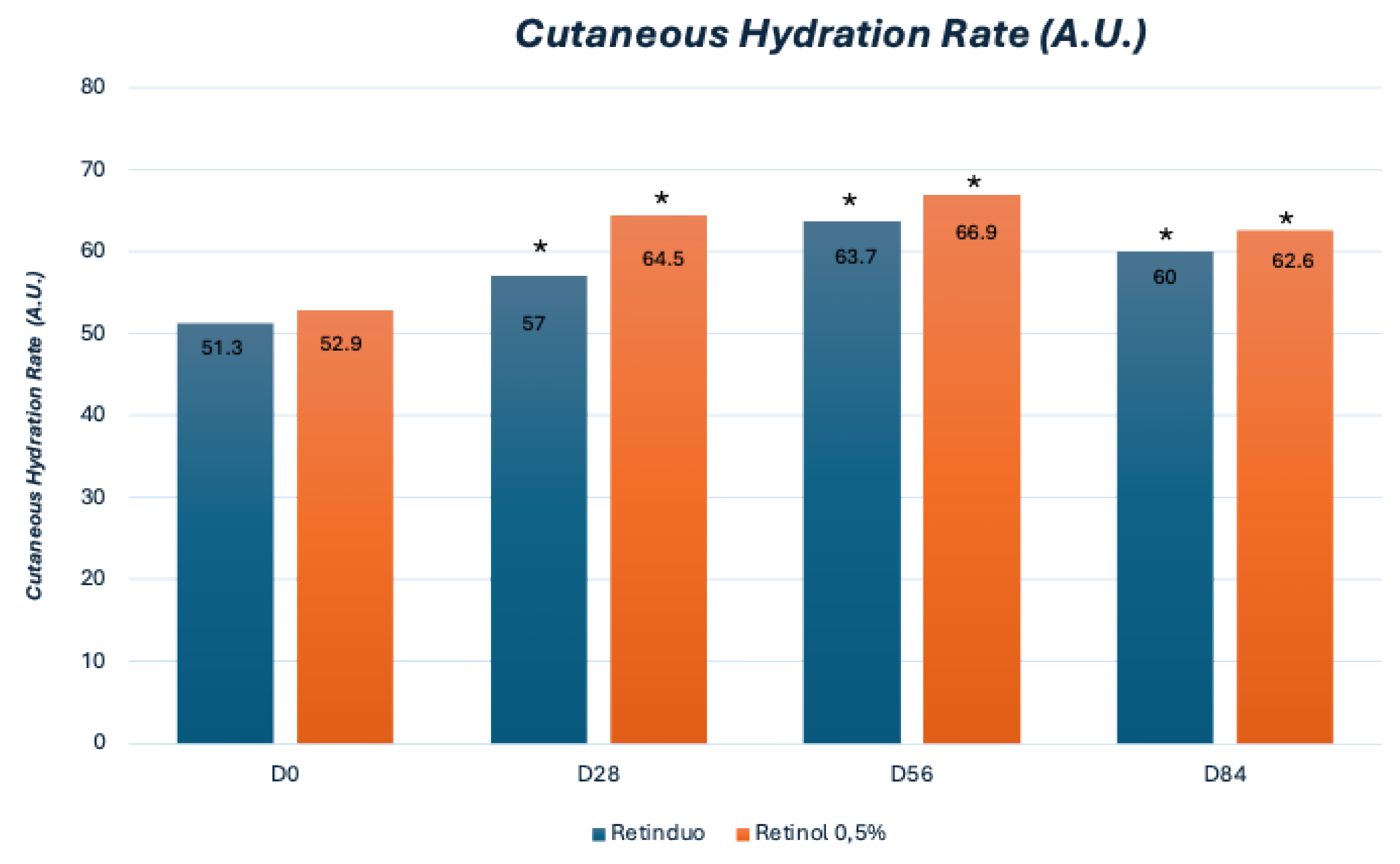
Figure 1.
A similar and significant hydration increase was observed with Retinduo® and retinol 0.5% from T28, *(p<0.001).
Figure 1.
A similar and significant hydration increase was observed with Retinduo® and retinol 0.5% from T28, *(p<0.001).
Retinduo® regimen showed a statistically significant increase in the hydration level of 11% (p<0.05), 24% (p<0.001), and 17% (p<0.01), after 28, 56, and 84 days of use, respectively.
Retinol 0.5% regimen showed a statistically significant increase of the hydration level of 22% (p<0.05), 26% (p<0.001), and 18% (p<0.05), after 28,56 and 84 days of use, respectively.
3.2. Skin Firmness (R0)
A significant increase in skin firmness was achieved with both formulations from D28. This increase was close to 30% at the end of treatment for both formulations. No significant differences between groups were achieved.
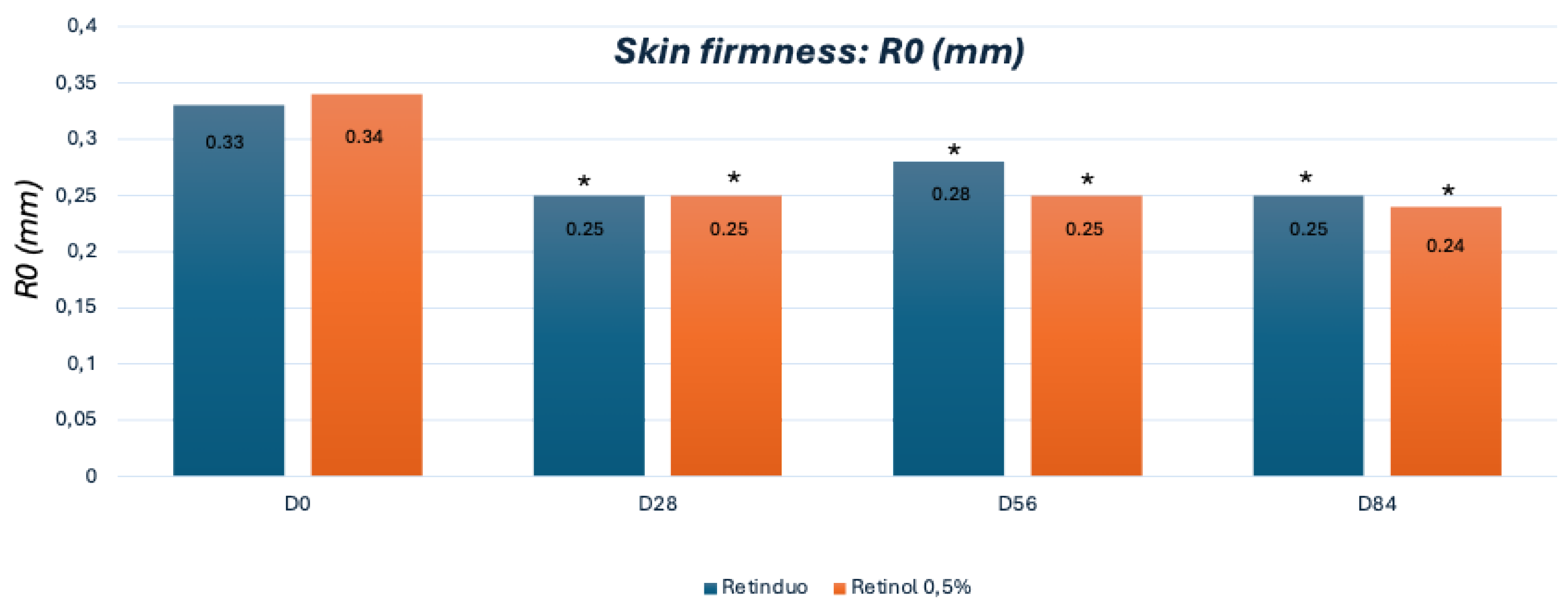
Figure 2.
A significant improvement (decrease in R0 value compared to basal) was detected since D28, *(p<0.001).
Figure 2.
A significant improvement (decrease in R0 value compared to basal) was detected since D28, *(p<0.001).
Retinduo® and 0.5% retinol significantly improved (p < 0.001) skin firmness at each treatment point and at the end of the treatment, by 26% and 30%, respectively.
3.3. Skin Elasticity (R1)
Both formulations demonstrated a statistically significant improvement in elasticity after 28, 56, and 84 days of use. No significant differences were observed between the two formulations throughout the study period.
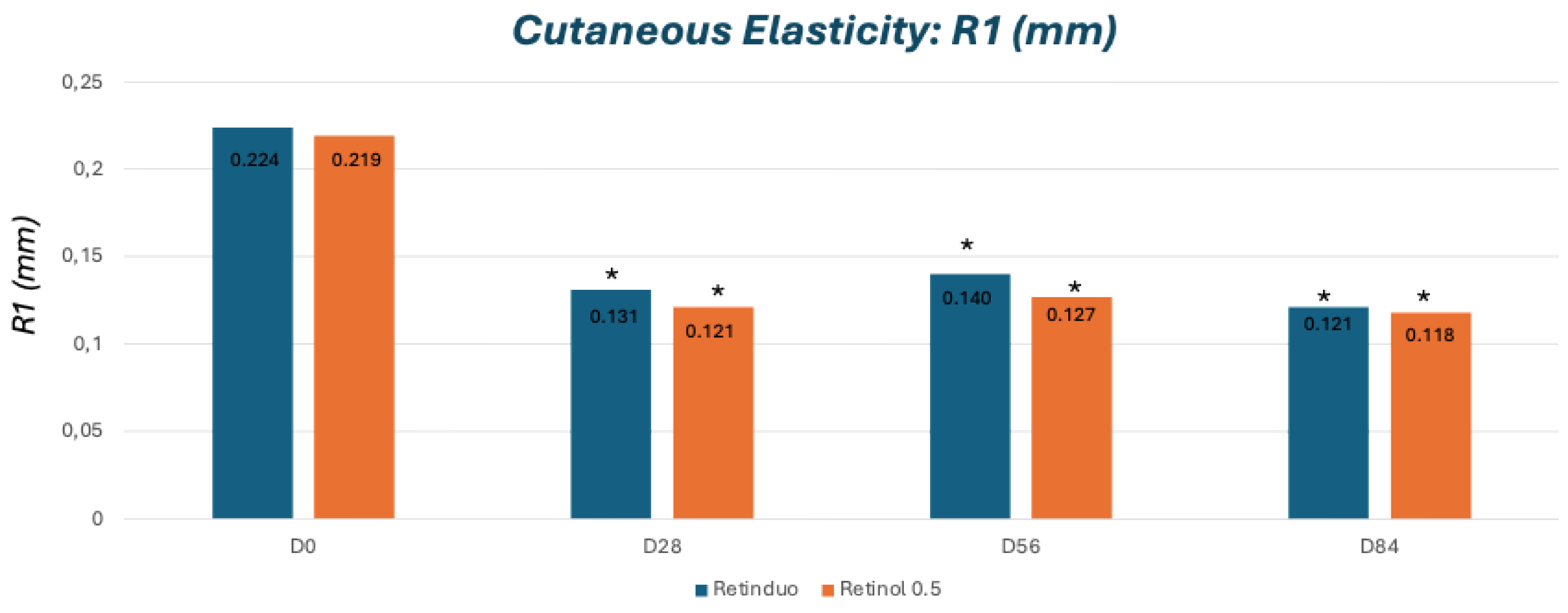
Figure 3.
A significant improvement of elasticity (decrease in R1 value compared to basal) was detected since D28, *(p<0.001), without significant differences between groups, p>0.05.
Figure 3.
A significant improvement of elasticity (decrease in R1 value compared to basal) was detected since D28, *(p<0.001), without significant differences between groups, p>0.05.
Retinduo® and 0,5% retinol significantly improved the skin elasticity (R1) by 46% at the end of the study (p<0.001).
Skin viscoelasticity (R8): Although both formulations improved skin viscoelasticity (R8) at all measurement time points, a statistically significant difference was observed at Day 56 in favour of Retinduo® regimen (p<0.05).
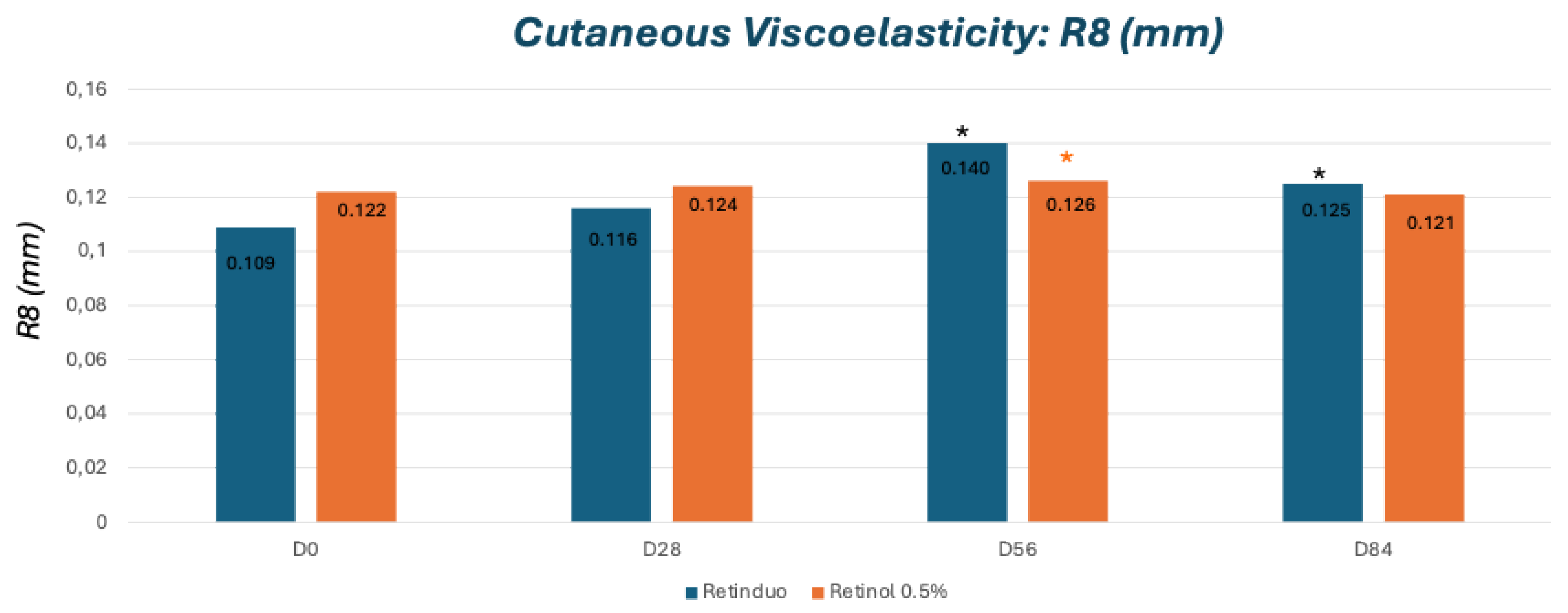
Figure 4.
An increase in R8 parameter reflects an increase in viscoelasticity. A significant improvement in D56 and D84 was observed with Retinduo® (* p<0.05). In addition, a significantly higher increase was shown by Retinduo® regimen in D56 compared to retinol 0.5% (* p<0.05).
Figure 4.
An increase in R8 parameter reflects an increase in viscoelasticity. A significant improvement in D56 and D84 was observed with Retinduo® (* p<0.05). In addition, a significantly higher increase was shown by Retinduo® regimen in D56 compared to retinol 0.5% (* p<0.05).
Retinduo® regimen significantly improved the viscoelasticity of the skin (R8) by 29% at D56 (p<0.05) and by 15% at D84 (p<0.001). Retinol 0.5% improved skin viscoelasticity; however, the observed effect was not statistically significant.
3.4. Melanin Rate
Based on the results, both formulations act on the melanin present in localized hyperpigmented spots without significant differences between the two formulations. Retinduo® regimen significantly decreased the melanin rate of skin (at the spot) by 4% at D28 (p<0.001) and by 5% at D56 (p<0.001). In contrast, the retinol 0.5% treatment results in decreasing the melanin rate of skin (at the spot) were significant just at D28, yielding a reduction of 6% (p<0.001). Although further reductions were observed at D56 and D84, these changes were not statistically significant.
3.5. Skin Tone Evenness
Although the contrast between a specific spot and the adjacent area decreased over the study (increasing skin tone evenness), no statistically significant differences were found between the two formulations.
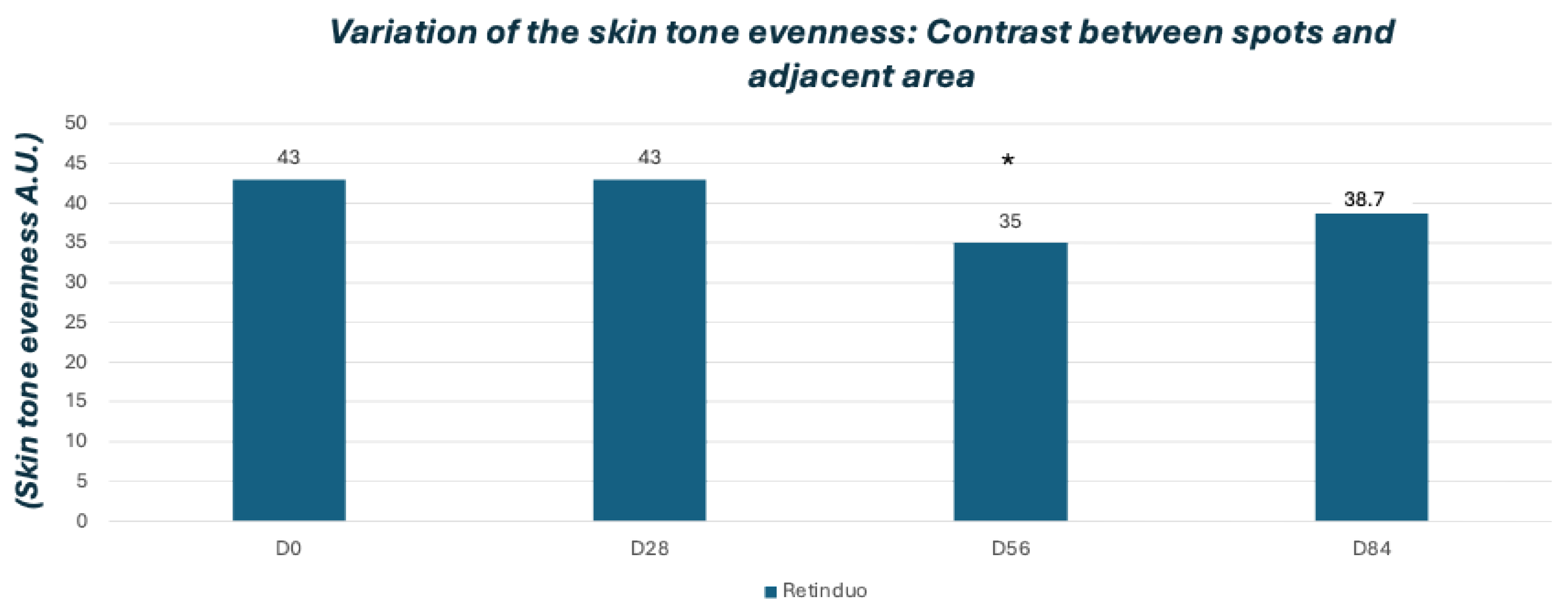
Figure 5.
A significant decrease of contrast between a spot and the adjacent area, reflecting an increase of skin tone evenness, was detected with Retinduo® 0,5% regimen at D56 (* p<0.05).
Figure 5.
A significant decrease of contrast between a spot and the adjacent area, reflecting an increase of skin tone evenness, was detected with Retinduo® 0,5% regimen at D56 (* p<0.05).
At D56 the Retinduo® regimen increased significantly (p<0.05) the skin tone evenness +18% on average. With the retinol 0.5% an improvement in skin tone uniformity was observed throughout the treatment period; however, the change was not statistically significant.
3.6. Skin Roughness
Both formulations were effective in reducing skin roughness. While the formulation with retinol 0.5% showed an earlier onset of action (from day 28), no statistically significant differences were observed between the two formulations throughout the study period.
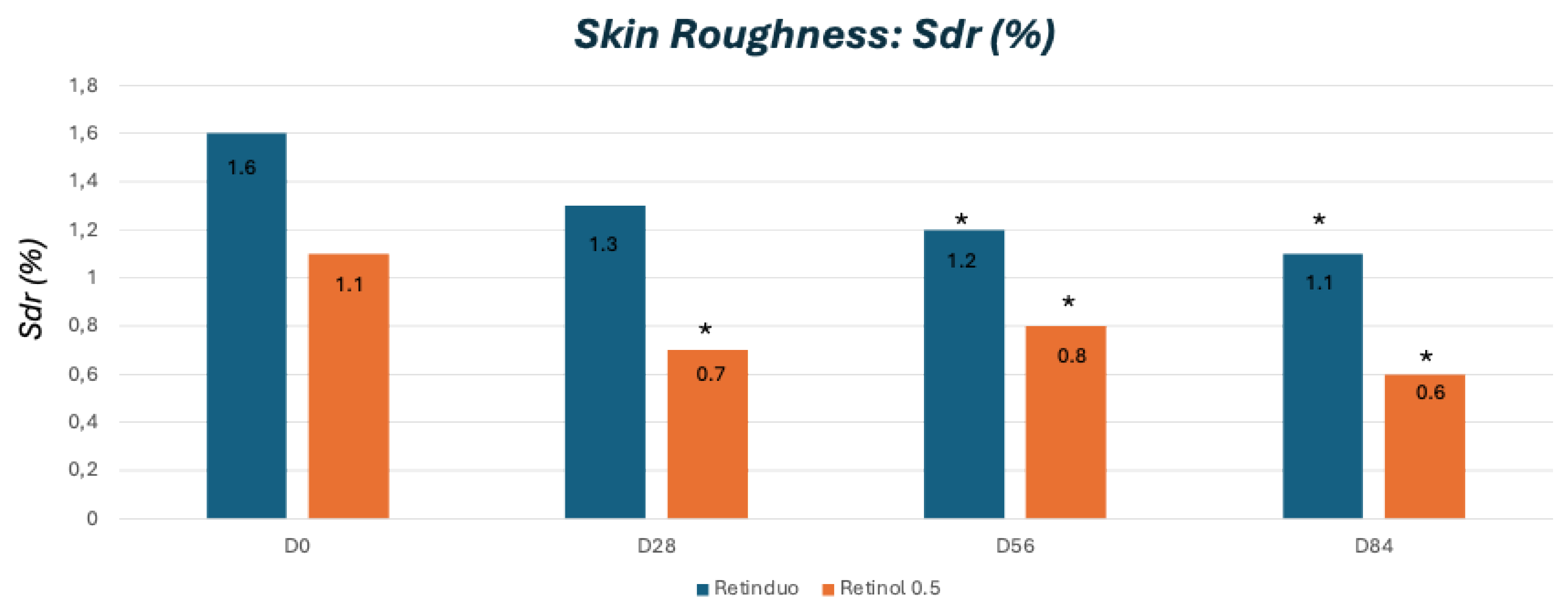
Figure 6.
Significant decrease (* p<0.05) in skin roughness was obtained with both formulations at the end of treatment. Results are expressed as Skin Developed Interfacial Area Ratio (Sdr, %), which represents the additional surface area due to the increment in roughness compared to the baseline area.
Figure 6.
Significant decrease (* p<0.05) in skin roughness was obtained with both formulations at the end of treatment. Results are expressed as Skin Developed Interfacial Area Ratio (Sdr, %), which represents the additional surface area due to the increment in roughness compared to the baseline area.
3.7. Reduction of the Stratum Corneum
The evaluation of the desquamation index revealed a decrease in the stratum corneum (SC) thickness over 84 days of retinol treatment without statistically significant differences between the two groups.
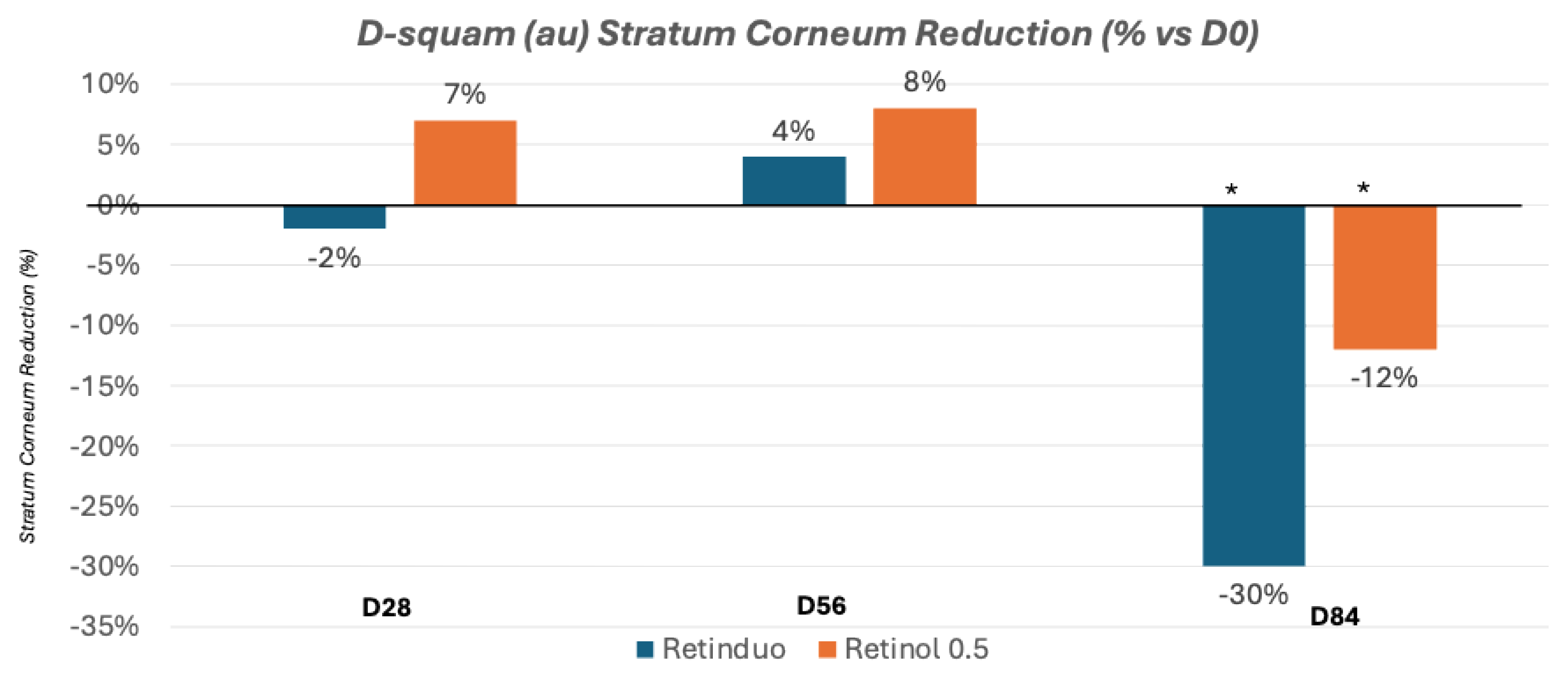
Figure 7.
The reduction of the stratum corneum on the skin was evaluated by comparison of the index of desquamation obtained before, during, and after treatment (D0, D28, D56, and D84). The higher the index of desquamation, the higher the reduction of the stratum corneum. A significant decrease in Stratum Corneum was observed with both treatments, with a higher decrease at D84 (p<0.001) under Retinduo® treatment.
Figure 7.
The reduction of the stratum corneum on the skin was evaluated by comparison of the index of desquamation obtained before, during, and after treatment (D0, D28, D56, and D84). The higher the index of desquamation, the higher the reduction of the stratum corneum. A significant decrease in Stratum Corneum was observed with both treatments, with a higher decrease at D84 (p<0.001) under Retinduo® treatment.
At D28, the Retinduo® group showed a slight, non-significant SC reduction (-2%). At day 56 a transient SC increase (+4%) and by the end of the study (D84), a marked, statistically significant SC reduction (-30%) was detected, (p < 0.001).
The retinol 0.5% showed an initial SC increase (+7%) that may represent barrier disruption–induced compensatory hyperkeratosis. Continued SC thickening (+8%) at D56. By the end of the study (D84) a statistically significant SC reduction (-12%) was detected, indicating onset of epidermal normalization with improved turnover and desquamation (p < 0.05).
3.8. Wrinkles Evaluation
Wrinkle Depth: Reduction in wrinkle depth and amplitude were detected in both groups without statistically significant differences between the two formulations.
However, the Retinduo® treatment showed a reduction in wrinkle depth, which became statistically significant at D28 (early effect on wrinkle depth reduction). The average reductions observed were: -5% (D28, p < 0.05), -7% (D56, non- significant reduction p=0.26) and -11% (D84, p=0.12). Throughout the study period, retinol 0.5% showed a non-significant reduction in wrinkle depth, although the observed changes suggest a positive effect.
For wrinkle amplitude (width and length), the Retinduo® regimen also demonstrated a consistent reduction. Although the downward trend was observed across all time points, it reached statistical significance at D28 (-7%) and D84 (-13%), p < 0.02 and p<0.03, respectively. The retinol 0.5% reduced wrinkle amplitude throughout the study period (non-significant).
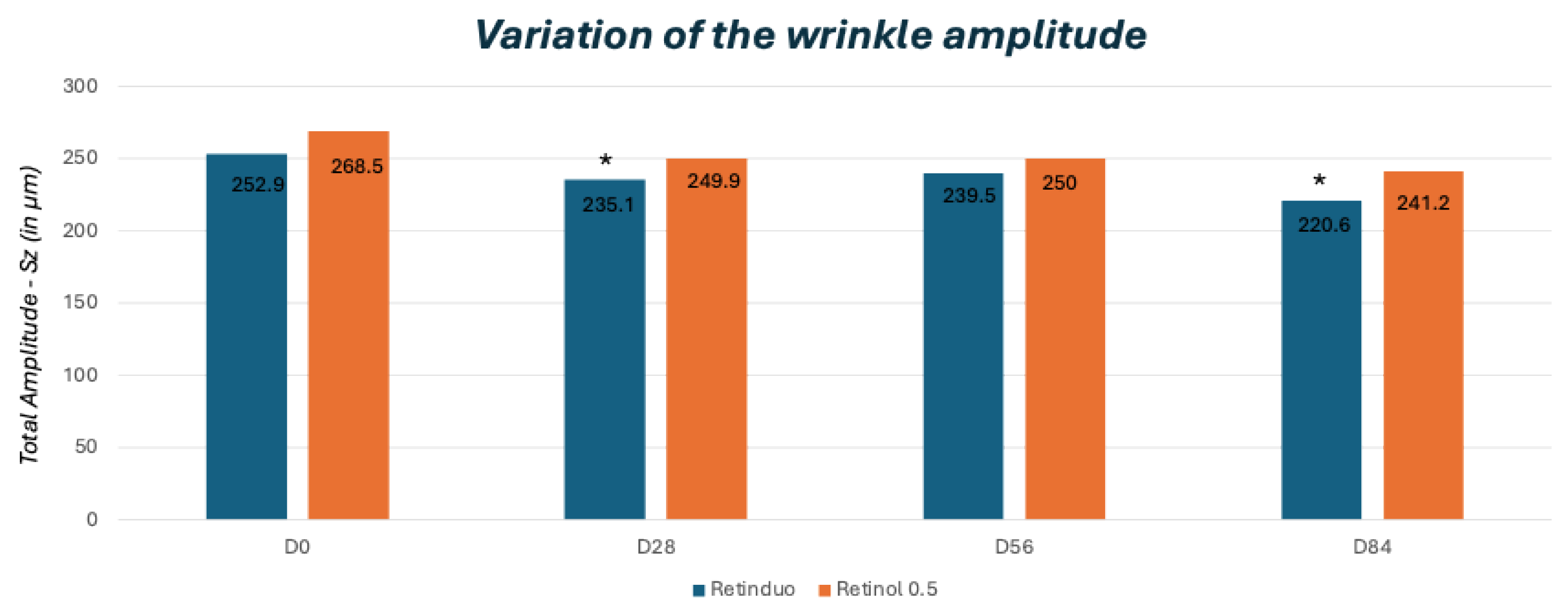
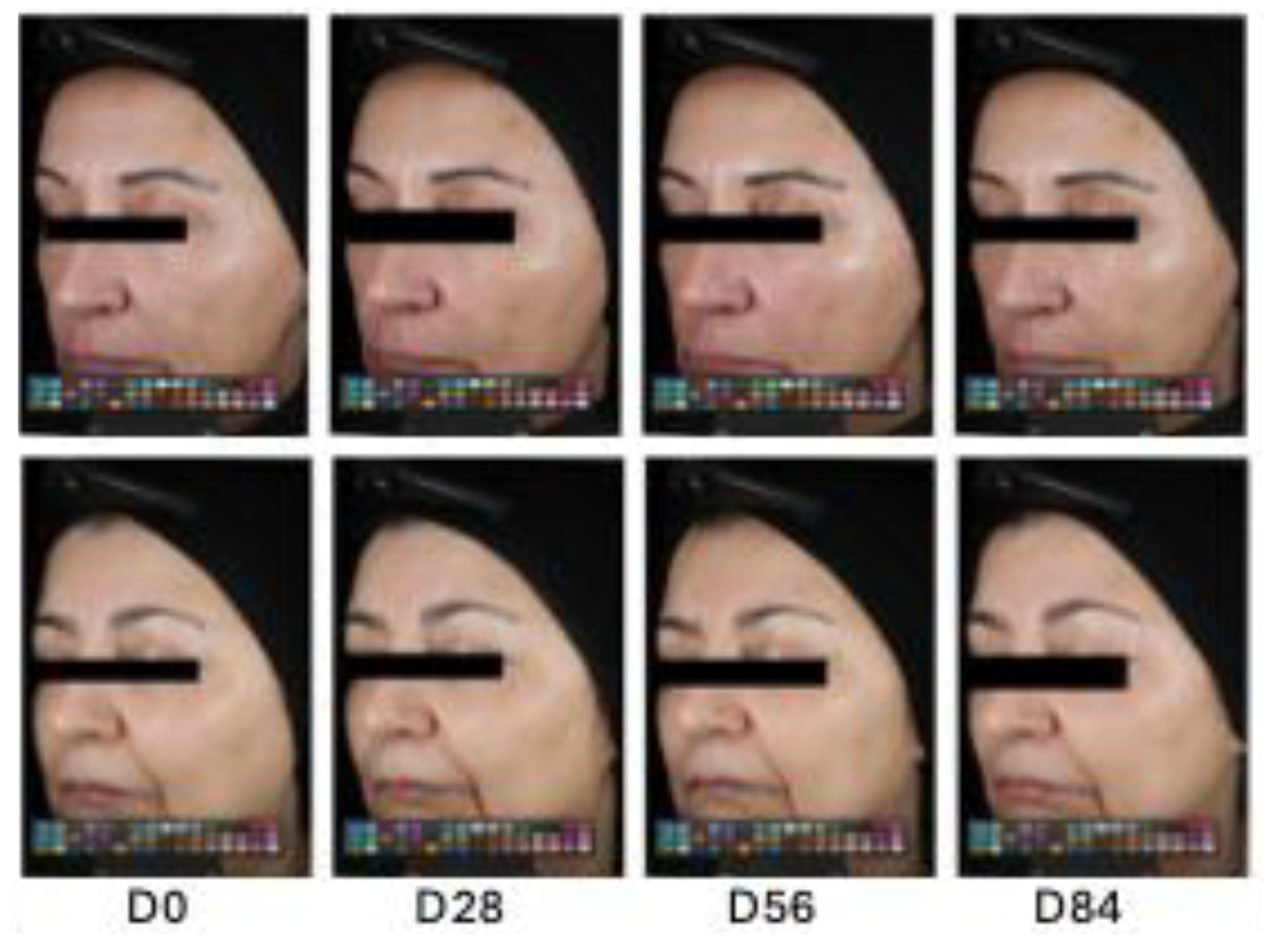
Figure 8.
The reduction in wrinkle amplitude was significant in the Retinduo® group at D28 and D84 (*), p < 0.02 and p<0.03, respectively.
Figure 8.
The reduction in wrinkle amplitude was significant in the Retinduo® group at D28 and D84 (*), p < 0.02 and p<0.03, respectively.
Figure 9.
Visia photographs retinol 0.5% #31 (above) compared to Retinduo® 0,5% #8 (below). Improvement in skin quality evaluation was found for both treatments.
Figure 9.
Visia photographs retinol 0.5% #31 (above) compared to Retinduo® 0,5% #8 (below). Improvement in skin quality evaluation was found for both treatments.
3.9. Tolerance
Only 4 patients (two under the Retinduo® 0,5% regimen and the other two under the retinol 0.5% regimen) reported adverse events, consisting of pruritus/erythema or stinging on eyelids, mild in most of the cases. In addition, one patient described moderate erythema on the neck area. No discontinuations occurred because of product intolerance.
No statistically significant differences were observed between the two products in terms of skin tolerance. The adverse effects observed with both treatments were very similar and included those that usually occur during treatment with retinoids (itching, flaking, redness, stinging). No relevant clinical signs reported by the dermatologist or by the subjects were reported at any visits with Retinduo®, supporting that the product was very well tolerated. Similar results were observed with retinol 0.5%.
3.10. Subjective Evaluation Questionnaire
The percentage of satisfied patients was very high (above 90% in almost all the items evaluated) and without statistical differences between groups.
4. Discussion
Despite the well-established efficacy of retinol, its dose-dependent adverse effects and the recent restrictions imposed by Regulation (EU) 2024/996 highlight the need for innovative strategies that maintain clinical benefits while improving tolerability and compliance. Among retinoids, tretinoin is considered the most effective agent with proven anti-aging effects, while retinol shows greater skin acceptance despite requiring longer application periods [2,13]. Retinol and retinoic acid derivatives have demonstrated significant efficacy in anti-aging treatments through their ability to stimulate cellular renewal, reduce wrinkles, and promote collagen formation [14,15]. Dra. Draelos et al. published a double-blinded, controlled, clinical study to compare the efficacy, tolerability, and consumer acceptance of retinol serums to tretinoin. They concluded that retinol serums were safe and effective with equivalent/or better performance and tolerability than tretinoin creams [16].
Clinical studies indicate that topical retinol application effectively modulates skin molecular biology with fewer side effects compared to more potent retinoids. However, common adverse effects include irritation, scaling, allergies, and erythema, particularly at high concentrations [14,17].
Novel delivery systems, encapsulation, and combinations with other substances like niacinamide show promising results in improving effectiveness while reducing irritation [18]. Specifically, the product under study combines a new sustained-release retinol system designed to improve molecular stability and prolong biological activity with retinal encapsulated in vegan nanovesicles (AOX®), which enhances the protection of the active ingredient and facilitates its effective penetration through the epidermis [14,17]. To enhance retinoid activity, Retinduo® incorporates two naturally derived ingredients. It is noteworthy that the new formulation combining retinoids and boosters has demonstrated excellent tolerability as no relevant clinical signs were reported by either the investigator or the volunteers.
The study also reflected similar results in terms of efficacy of the different skin aging parameters for both formulations. The clinical and functional improvements induced by retinol regimens, which were endorsed by all the evaluated measurements in our study, are in accordance with previous studies that provided evidence of retinol’s effects on molecular markers (increased glycosaminoglycan expression and procollagen I compared to vehicle) related to skin structure and function, supporting the clinical findings [19]. Following absorption, retinoids interact with distinct nucleic acid-binding and cytoplasmic receptors at the molecular scale, triggering mechanisms that modulate immune activity, inflammatory pathways, and various cellular processes, including differentiation and proliferation, thereby contributing to epidermal thickening [6,19,20].
Retinol influences the process of keratinization of the epidermis, which improves stratum corneum structure and reduces transepidermal water loss (TEWL) [20]. The reduction of TEWL was reflected in our study by the significant increase in skin moisturization. Furthermore, changes in the epidermis revealed that Retinduo® technology showed a tendency toward greater efficacy than 0.5% retinol in inducing epidermal differentiation, with an 18% difference between the two treatments in stratum corneum reduction at the end of treatment, observed as early as the first month of treatment, suggesting a more rapid improvement in skin texture. By the end of the study (D84), the Retinduo® group showed a marked, statistically significant SC reduction (-30%) indicating a sustained normalization of keratinocyte differentiation and desquamation, leading to enhanced epidermal renewal and reduced corneocyte retention (p < 0.001).
The structural changes induced by retinol include improvement of the fine lines and wrinkles associated with photoaging [6]. An early effect on wrinkle depth reduction was assessed with Retinduo®, whereas no significant changes were achieved with retinol 0.5% serum (p<0.05 at D28). Similar results were found for wrinkle amplitude (width and length), where the Retinduo® regimen demonstrated a significant reduction at D28 and D84, whereas no significant results were achieved with retinol 0.5% serum. In accordance with this, Retinduo® regimen showed a significantly higher efficacy than the previous retinol 0.5% in improving viscoelasticity (R8) at D56.
In addition, reduction of hyperpigmentation and increase in the evenness of the skin has also been associated to retinol use [21]. These pigmentation changes were also found in our study for both formulations, with significant improvement for the melanin content as fast as D28 for the Retinduo® technology.
Limitations of the study included the small sample size and that the volunteers were all females.
5. Conclusions
This study demonstrated that both Retinduo® and retinol 0.5% treatments are effective in reducing clinical signs of skin aging, showing comparable outcomes in terms of efficacy. Throughout the trial, both formulations exhibited very good cutaneous tolerability, with participants showing very good adherence and minimal irritation during the retinization process. The newly developed technology achieved equivalent and even better anti-aging results while utilizing a lower concentration of retinol, thereby minimizing potential adverse effects. Moreover, this formulation complies with current European regulatory standards governing the safe use of retinoids in cosmetic applications.
The benefits achieved with Retinduo® are based on the smart formulation that enhances the stability, improves the penetration of the ingredients, and maximize their activity, achieving similar and even better and faster results in some aging parameters.
Author Contributions
All authors have read and agreed to the published version of the manuscript.
Funding
This research was funded by Industrial Farmacéutica Cantabria SA.
Informed Consent Statement
Informed consent was obtained from all subjects involved in the study.
Data Availability Statement
The original contributions presented in this study are included in the article/supplementary material. Further inquiries can be directed to the corresponding author(s).
Conflicts of Interest
Dra Truchuelo Dr. Truchuelo occasionally collaborates as an external ad-visor for Cantabria Labs. Ana López-Sánchez and Luisa Haya declare that they work in the R&D department of Cantabrialabs. Juan Jose Andrés y María Vitale declare that they work in the Medical Affairs department of Cantabrialabs.
References
- Bellemère, G.; Stamatas, G.N.; Bruère, V.; Bertin, C.; Issachar, N.; Oddos, T. Antiaging action of retinol: from molecular to clinical. Skin Pharmacol Physiol. 2009, 22(4), 200–9. [Google Scholar] [CrossRef] [PubMed]
- Milosheska, D.; Roškar, R. Use of Retinoids in Topical Antiaging Treatments: A Focused Review of Clinical Evidence for Conventional and Nanoformulations. Adv Ther 2022, 39(12), 5351–5375. [Google Scholar] [CrossRef] [PubMed] [PubMed Central]
- Sun, M.; Wang, P.; Sachs, D.; Xu, Y.; Xu, Y.; Voorhees, J.J.; Fisher, G.J.; Li, Y. Topical Retinol Restores Type I Collagen Production in Photoaged Forearm Skin within Four Weeks. Cosmetics 2016, 3(4), 35. [Google Scholar] [CrossRef]
- Sato, K.; Morita, M.; Ichikawa, C.; Takahashi, H.; Toriyama, M. Depigmenting mechanisms of all-trans retinoic acid and retinol on B16 melanoma cells. Biosci Biotechnol Biochem. 2008, 72(10), 2589–97. [Google Scholar] [CrossRef] [PubMed]
- Ortonne, J.P. Retinoid therapy of pigmentary disorders. Dermatol Ther 2006, 19(5), 280–8. [Google Scholar] [CrossRef] [PubMed]
- Mukherjee, S.; Date, A.; Patravale, V.; Korting, H.C.; Roeder, A.; Weindl, G. Retinoids in the treatment of skin aging: an overview of clinical efficacy and safety. Clin Interv Aging 2006, 1(4), 327–48. [Google Scholar] [CrossRef] [PubMed] [PubMed Central]
- European Commission. Commission Regulation (EU) 2024/996 of 3 April 2024 amending Regulation (EC) No 1223/2009 as regards the use of Vitamin A, Alpha-Arbutin and Arbutin and certain substances with potential endocrine disrupting properties in cosmetic products. Official Journal of the European Union 2024. [Google Scholar]
- Xiao, J.H.; Durand, B.; Chambon, P.; Voorhees, J.J. Endogenous retinoic acid receptor (RAR)-retinoid X receptor (RXR) heterodimers are the major functional forms regulating retinoid-responsive elements in adult human keratinocytes. Binding of ligands to RAR only is sufficient for RAR-RXR heterodimers to confer ligand-dependent activation of hRAR beta 2/RARE (DR5). J Biol Chem. 1995, 270(7), 3001–11. [Google Scholar] [CrossRef] [PubMed]
- Kedishvili, N.Y. Retinoic Acid Synthesis and Degradation. Subcell Biochem. 2016, 81, 127–161. [Google Scholar] [CrossRef] [PubMed] [PubMed Central]
- Wang, F.; Kwak, H.S.; Elbuluk, N.; Kaczmarek, A.L.; Hamilton, T.; Voorhees, J.J.; Fisher, G.J.; Kang, S. Retinoic acid 4-hydroxylase inducibility and clinical response to isotretinoin in patients with acne. J Am Acad Dermatol. 2009, 61(2), 252–8. [Google Scholar] [CrossRef] [PubMed] [PubMed Central]
- Dieamant, G.; Pereda Mdel, C.; Nogueira, C.; Eberlin, S.; Facchini, G.; Checon, J.T.; Cesar, C.K.; Mussi, L.; Polezel, M.A.; Martins-Oliveira, D., Jr.; Di Stasi, L.C. Antiageing Mechanisms of a Standardized Supercritical CO 2 Preparation of Black Jack (Bidens pilosa L.) in Human Fibroblasts and Skin Fragments. Evid Based Complement Alternat Med. 2015, 2015, 280529. [Google Scholar] [CrossRef] [PubMed] [PubMed Central]
- Kang, S.; Lee, H.; Jun, S.H.; Park, S.G.; Kang, N.G. Enhancement of Efficacy of Retinoids through Enhancing Retinoid-Induced RAR Activity and Inhibiting Hydroxylation of Retinoic Acid, and Its Clinical Efficacy on Photo-Aging. Pharmaceutics 2022, 14(11), 2412. [Google Scholar] [CrossRef] [PubMed] [PubMed Central]
- Siddiqui, Z.; Zufall, A.; Nash, M.; Rao, D.; Hirani, R.; Russo, M. Comparing Tretinoin to Other Topical Therapies in the Treatment of Skin Photoaging: A Systematic Review. Am J Clin Dermatol 2024, 25(6), 873–890. [Google Scholar] [CrossRef] [PubMed]
- de Menezes, A. E. Lima; Gomes, G. Cacau; Brito, M. C.; Rebelo, M. C.; Carvalho, A. B. Uso do retinol no tratamento do envelhecimento. Revista FT, Ciências da Saúde 2024, Vol. 29, Edição 140. [Google Scholar] [CrossRef]
- Cook, B.; Riggs, M.; Holley, K.C.; Knaggs, H.; Diwakar, G.; Lephart, E.D. Effects of Retinol, Natural Pea Peptide and Antioxidant Blend in a Topical Formulation: In Vitro and Clinical Evidence. Dermatol Ther (Heidelb) 2025, 15(1), 189–200. [Google Scholar] [CrossRef] [PubMed] [PubMed Central]
- Draelos, Z.D.; Peterson, R.S. A Double-Blind, Comparative Clinical Study of Newly Formulated Retinol Serums vs Tretinoin Cream in Escalating Doses: A Method for Rapid Retinization With Minimized Irritation. J Drugs Dermatol. 2020, 19(6), 625–631. [Google Scholar] [CrossRef] [PubMed]
- Chan, L.K.W.; Lee, K.W.A.; Lee, C.H.; Lam, K.W.P.; Lee, K.F.V.; Wu, R.; Wan, J.; Shivananjappa, S.; Sky, W.T.H.; Choi, H.; Yi, K.H. Cosmeceuticals in photoaging: A review. Skin Res Technol. 2024, 30(9), e13730. [Google Scholar] [CrossRef] [PubMed] [PubMed Central]
- Zhong, J.; Liang, L.; Zhao, N.; Wang, J.; Shu, P. Synergistic effects of retinol and retinyl palmitate in alleviating UVB-induced DNA damage and promoting the homologous recombination repair in keratinocytes. Front Pharmacol 2025, 16, 1562244. [Google Scholar] [CrossRef] [PubMed] [PubMed Central]
- Kafi, Reza; Kwak, H. S. R.; Schumacher, W.; Cho, Soyun; Hanft, V. N. Improvement of naturally aged skin with vitamin A (retinol). Archives of Dermatology 2007. [Google Scholar] [CrossRef] [PubMed]
- Zasada, M.; Budzisz, E. Retinoids: active molecules influencing skin structure formation in cosmetic and dermatological treatments. Postepy Dermatol Alergol 2019, 36(4), 392–7. [Google Scholar] [CrossRef]
- Farris, P.; Zeichner, J.; Berson, D. Efficacy and tolerability of a skin brightening/anti-aging cosmeceutical containing retinol 0.5%, niacinamide, hexylresorcinol, and resveratrol. J Drugs Dermatol. 2016, 15(7), 863–8. [Google Scholar] [PubMed]

Table 1.
Study Schedule Table.
| Procedure | Measurement zone | D0 | From D0 to D27 | D14 | D28 | From D28 to D55 | D56 | From D56 to D83 | D84 |
| Product weighing | — | ● | ● | ||||||
| Acclimation 15 minutes | — | ● | ● | ● | ● | ||||
| Information of the subject about study conditions and collection of her informed consent | — | ● | |||||||
| Verification of inclusion and non-inclusion criteria | — | ● | ● | ● | ● | ||||
| Clinical examination by the dermatologist | Whole face | ● | ● | ● | ● | ||||
| Application of the product by the subject at home, as a daily cream | ● | ● | ● | ||||||
| Wrinkle depth by analysis and photography with C-Cube | Crow’s feet area (zone chosen by the technician) | ● | ● | ● | ● | ||||
| Hydration with Corneometer® | Face (cheekbone, chosen at random) | ● | ● | ● | ● | ||||
| Biomechanical properties of the skin with Cutometer® (firmness and elasticity parameters) | Face (cheekbone, chosen at random) | ● | ● | ● | ● | ||||
| Tone homogeneity with Mexameter® | Spot on face + adjacent area | ● | ● | ● | ● | ||||
| Evaluation of the reduction of the stratum corneum with D-Squame | Face (forehead) | ● | ● | ● | ● | ||||
| Follow-up call to subjects (report of any discomfort or signs and especially self-assessment of peeling) | — | ● | |||||||
| VISIA photographs | Frontal + 2 profiles | ● | ● | ● | ● | ||||
| Subjective evaluation questionnaire | — | ● | |||||||
| Potential adverse events collection | — | ● | |||||||
Disclaimer/Publisher’s Note: The statements, opinions and data contained in all publications are solely those of the individual author(s) and contributor(s) and not of MDPI and/or the editor(s). MDPI and/or the editor(s) disclaim responsibility for any injury to people or property resulting from any ideas, methods, instructions or products referred to in the content. |
© 2026 by the authors. Licensee MDPI, Basel, Switzerland. This article is an open access article distributed under the terms and conditions of the Creative Commons Attribution (CC BY) license (http://creativecommons.org/licenses/by/4.0/).
Copyright: This open access article is published under a Creative Commons CC BY 4.0 license, which permit the free download, distribution, and reuse, provided that the author and preprint are cited in any reuse.