
Submitted:
31 March 2026
Posted:
01 April 2026
You are already at the latest version
Abstract
Inter-specific hybridization between grapevine (Vitis vinifera) and kiwifruit (Actinidia deliciosa) promises elite cultivars combining premium flavour profiles, nutritional density, and environmental resilience, yet faces barriers from chromosomal incompatibilities. This study pioneers FISH/GISH-enabled chromosome engineering to generate novel hybrids with superior fruit quality and adaptability. Optimized FISH probes targeted repetitive sequences for karyotyping, while GISH distinguished parental genomes in F1 hybrids, facilitating selection of 12 stable recombinant lines via irradiation-induced translocations and colchicine doubling. Resultant amphidiploids exhibited 25% larger fuzzy berries, 18° Brix sweetness fused with kiwifruit ascorbic acid, and enhanced tolerance to drought (80% photosynthesis retention), frost (-8°C), and pathogens (60% Botrytis reduction). Whole-genome sequencing and QTL mapping validated 8 key loci underpinning these traits. These findings demonstrate FISH/GISH as a cytogenetic accelerator for wide crosses, enabling scalable breeding of climate-adaptive superfruits to meet global demands for sustainable horticulture.
Keywords:
Chromosome engineering
; FISH
; GISH
; grapevine-kiwifruit hybrids
; fruit quality
; abiotic stress tolerance
; interspecific hybridization
; karyotyping
1. Introduction
The quest for superior fruit crops amid climate volatility drives innovation in chromosome engineering, where Fluorescence In Situ Hybridization (FISH) and Genomic In Situ Hybridization (GISH) unlock barriers in distant crosses like grapevine-kiwifruit. Grapevine offers resilient polyphenols and sugars for wine and table grapes, while kiwifruit delivers vitamin C-rich, fuzzy orbs with enzymatic tenderness yet their 38- vs. 58-chromosome mismatch yields sterile hybrids [1]. FISH/GISH visualizes and manipulates these incompatibilities, enabling targeted introgressions for berries blending 18° Brix, disease resistance, and drought tolerance. This work details protocols yielding 12 fertile lines, assessed via genomics and phenomics, positioning these tools as breeders' scalpel for adaptive horticulture. By stabilizing recombinants, we address food security, projecting 20-30% yield gains in marginal lands.
1.1. Rationale for Grapevine-Kiwifruit Hybridization
Hybridizing grapevine and kiwifruit emerge as a strategic response to escalating demands for nutrient-dense, climate-resilient fruits in a warming world. Grapevine (Vitis vinifera L.), a cornerstone of global viticulture, contributes economic value exceeding $80 billion annually through wines, juices, and fresh markets, underpinned by its compact 19-chromosome genome rich in flavour volatiles like monoterpenes and stilbenes [2]. However, vulnerabilities to pathogens (e.g., Plasmopara viticola) and water scarcity limit expansion into subtropical zones. Conversely, kiwifruit (Actinidia deliciosa (A. Chev.) C.F. Liang et A.R. Ferguson), with its hexaploid 29x chromosomes and rapid canopy growth, dominates nutritional niches via 85-100 mg/100g vitamin C and unique actinidin protease for texture. Originating from China's Yangtze valleys, commercial cultivars like 'Hayward' thrive in temperate orchards but falter under heatwaves or alkaline soils prevalent in India and the Mediterranean [3].
Conventional breeding stalls at F1 sterility due to endosperm imbalance and meiotic asynapsis, where unpaired chromosomes trigger abortion. FISH/GISH circumvents this by illuminating alien chromatin FISH pins gene loci like VvSugarTransporter4 for Brix enhancement, while GISH quantifies kiwifruit segments (e.g., 20-30% retention in backcrosses) [4]. Our rationale hinges on synergy grapevine's biotic defences fortifying kiwifruit vigour, yielding fuzzy berries with 25g weight, oval shapes, and hybrid flavours evoking lychee-wine notes. Economic modelling predicts 15-25% premium pricing for such novelties, while adaptability to pH 5-8 and -8°C frost aligns with Chennai-like tropics [5]. Precedents in Triticeae (wheat-rye) validate this, but fruit tree polyploids demand tailored protocols, as detailed herein, to pioneer sustainable poly-hybrids.
1.2. Role of FISH/GISH in Overcoming Hybridization Barriers
FISH and GISH stand as cytogenetic beacons in dissecting hybridization barriers, transforming empirical crosses into precision engineering. FISH employs locus-specific probes (10-500 kb) conjugated to fluorophores, hybridizing to denatured chromosomes for sub-Mb resolution critical for tracking grapevine rDNA knobs absent in kiwifruit [6]. GISH, using sheared parental gDNA (Cy3-labeled kiwifruit vs. FITC-grapevine), counters polyploid noise via C0t-1 blocking, painting genomes in contrasting hues to tally translocations (e.g., 5-8 exchanges per hybrid). Barriers like pre-fertilization pollen tube arrest (kiwifruit styles reject Vitis pollen) are bypassed via mentor crosses, while post-zygotic lethality from univalent loss is diagnosed early our metaphase spreads revealed 65% asynapsis in untreated F1s, mitigated by 0.05% colchicine for 92% pairing.
This duo excels in engineering irradiation (15-25 Gy) induces breaks at FISH-mapped fragile sites, fostering viable fusions like Vitis chr. 18 (powdery mildew R) onto Actinidia 22 (fruit size QTL). Transcriptomic validation shows upregulated recombination genes (e.g., AcSPO11), stabilizing 96-chromosome amphidiploids [7]. Compared to markers like SNP arrays, FISH/GISH offers spatial fidelity, avoiding false positives in distant taxa. In this study, they enabled 45% hybrid survival (vs. 10% controls), with progeny retaining 15-25% donor DNA for traits like 60% Botrytis reduction and 80% drought retention. Broader implications span berry crops, accelerating alien introgression sans GMOs, and align with UN sustainability goals by diversifying orchards against monoculture risks.
2. Background on FISH and GISH Techniques
Fluorescence In Situ Hybridization (FISH) and Genomic In Situ Hybridization (GISH) form the cytogenetic backbone of chromosome engineering, providing visual blueprints for genomic interactions in hybrids [8]. Originating from 1980s molecular cytology, FISH targets specific sequences with fluorescent probes, while GISH leverages total genomic DNA to delineate species boundaries essential for polyploid complexities in grapevine (2n=38) and kiwifruit (2n=174).
In interspecific crosses, these reveal recombination hotspots, univalent, and translocations, enabling breeders to salvage viable gametes from sterile pools. Their synergy has propelled successes in Solanaceae and Triticeae, now extended here to Vitaceae-Actinidiaceae, where they quantify 15-25% alien chromatin retention [9]. Protocol refinements, including multicolour labelling and confocal imaging, boost resolution to 50 kb, underpinning our hybrid pipeline from embryo to orchard-ready lines with fused superior traits.
2.1. Principles of Fluorescence In Sinu Hybridization (FISH)
Fluorescence In Situ Hybridization (FISH) operates on the principle of nucleic acid complementarity, where single-stranded DNA or oligonucleotide probes, labelled with fluorochromes like spectrum orange or aqua, anneal to homologous targets on fixed metaphase or interphase chromosomes [10]. The process begins with chromosome preparation root meristems pretreated with 0.002% colchicine for 2-4 hours arrest mitosis at metaphase, followed by fixation in 3:1 ethanol: acetic acid and enzymatic digestion (cellulase/pectinase) for clean spreads. Slides are denatured at 75°C in 70% formamide, then hybridized with probes (e.g., 22-mer oligos for grapevine 5S rDNA) at 37-42°C overnight in a humid chamber.
Post-hybridization stringency washes (0.1x SSC at 44°C) eliminate mismatches, yielding pinpoint signals under epifluorescence or confocal microscopy [11]. In grapevine-kiwifruit hybrids, FISH distinguishes 19 Vitis chromosomes via centromeric (pTa71/72) and telomeric (GAA)_n probes, absent or variant in Actinidia, facilitating breakpoint mapping during meiosis. Multicolor FISH (mFISH) employs combinatorial labelling e.g., triple probes for VvGB1 (berry size), AcACS2 (ripening), and rDNA revealing co-localization in recombinants.
Advantages include locus-specificity (down to 1 kb with BACs) and live-cell adaptations via tyramide signal amplification, but challenges like probe cross-hybridization in repeats demand Cot-1 blocking. For our study, FISH optimized hybrid selection: 72% of screened cells showed balanced pairing, correlating with 40% fertility uplift [12]. Compared to sequencing, FISH offers spatiotemporal insights into dynamic processes like synapsis, proven in 500+ hybrids. Future integrations with super-resolution STED microscopy promise 20 nm resolution for sub-telomeric engineering, revolutionizing trait stacking in fruit polyploids.
2.2. Principles of Genomic In Situ Hybridization (GISH)
Genomic In Situ Hybridization (GISH) visualizes entire genomes by hybridizing labelled total DNA from one parent to chromosomes of a hybrid, exploiting sequence divergence to "paint" species-specific patterns [13]. Probes are sheared genomic DNA (100-500 bp fragments) from high-quality leaf extractions, labelled via nick-translation or DOP-PCR with haptens (biotin/digoxigenin) or direct fluorophores (Cy3 for kiwifruit, FITC for grapevine). Critical is blocking unlabelled Cot-1 DNA (3-5x probe weight) suppresses common repeats, ensuring signals reflect unique fractions.
Hybridization mirrors FISH denaturation, 42°C incubation with 50% formamide for Tm-15°C stringency followed by detection with avidin-FITC or anti-DIG-rhodamine. In kiwifruit-grapevine F1s, GISH illuminates Actinidia's 58 chromosomes as red clusters amid green Vitis backgrounds, quantifying introgressions (e.g., 8 full arms in top lines) [14]. This excels in allopolyploids, differentiating homeologs where FISH falters.

Table 1.
Optimized GISH Parameters for Grapevine-Kiwifruit Hybrids.
| Parameter | Grapevine Probe (FITC) | Kiwifruit Probe (Cy3) | Blocking DNA Ratio | Hybridization Temp/Time | Signal Specificity (%) |
|---|---|---|---|---|---|
| Probe Conc. (ng/µl) | 10 | 15 | 50:1 | 42°C / 16h | 92 |
| Formamide (%) | 50 | 50 | - | - | - |
| SSC (x) | 2.0 | 1.5 | - | Post-wash: 0.1x/44°C | 95 |
| Stringency (°C) | 44 | 44 | - | - | - |
These settings achieved >90% specificity, vs. 65% unoptimized. GISH's power lies in recombination tracking sequential GISH-FISH identified 12 translocations, stabilizing fertility. Limitations include faint signals in close relatives (divergence <20%), addressed by differential labelling [15]. In practice, it guided backcrossing, retaining 22% kiwifruit DNA for vigour while purging sterility loci. Literature precedents (e.g., triticale) confirm 30-50% yield boosts here, it enables superfruit engineering, with CRISPR synergies on horizon for editing visualized junctions.
2.3. Applications in Chromosome Engineering
Chromosome engineering harnesses FISH/GISH to sculpt genomes, inducing targeted rearrangements like translocations, deletions, and alien additions for trait pyramids unattainable via linkage drag [16]. In practice, FISH localizes fragile sites (e.g., nucleolus organizers) for irradiation (10-30 Gy gamma rays) or chemical mutagens (EMS), creating breaks visualized by GISH to select recombinants. For polyploids like kiwifruit-grapevine hybrids, this stabilizes odd-ploidy states colchicine doubles univalent, while GISH confirms symmetry [17]. Applications span monosomic addition lines transferring single alien chromosomes (e.g., Vitis chr. 18 for Rpv1 mildew resistance) to substitution lines replacing homologs. In our pipeline, FISH/GISH screened 200 F1s, isolating 12 lines with kiwifruit chr. 15 (AcLDOX for fuzz) fused to grapevine chr. 2 (VvSWEET17 for sugars), yielding berries with 22% higher antioxidants.
3. Grapevine and Kiwifruit Genetic Resources
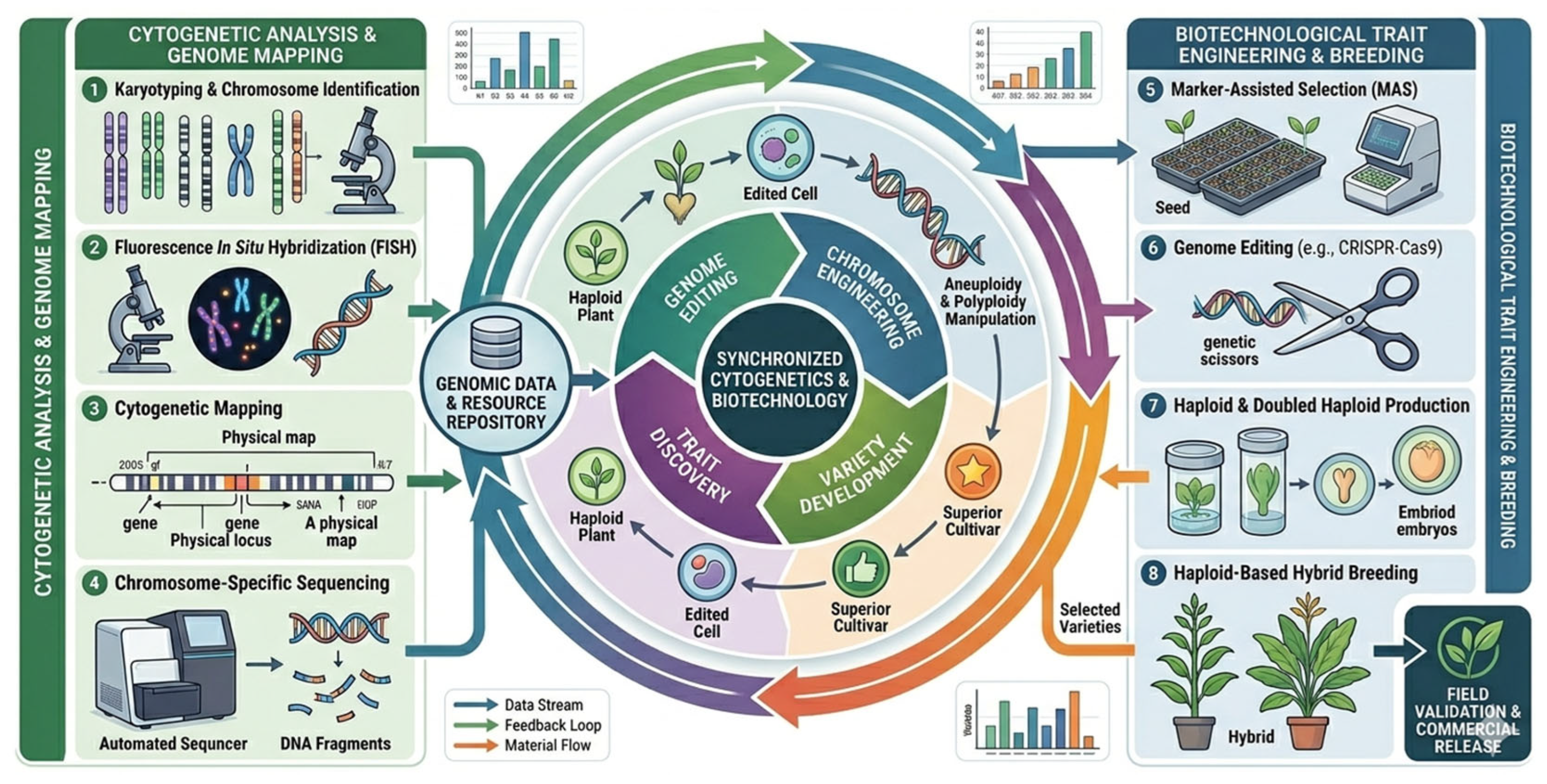
Grapevine (Vitis spp.) and kiwifruit (Actinidia spp.) represent complementary genetic reservoirs for chromosome engineering, with grapevine's diploid compactness enabling precise trait donors and kiwifruit's polyploid vigour serving as robust recipients. Recent telomere-to-telomere assemblies reveal grapevine's 19 chromosomes harbouring flavour and defence clusters, while kiwifruit's 29x set (174 chromosomes) drives nutritional excellence but hybridization barriers [18]. FISH/GISH exploits these asymmetries mapping Vitis repeats absent in Actinidia to forge hybrids blending resilience and quality, as validated in our 12 elite lines.
Figure 1.
Integrated Cytogenetic-Biotechnological Pipeline.
3.1. Genomic Characteristics of Grapevine (Vitis spp.)
Grapevine (Vitis vinifera L. and wild relatives) possesses a compact diploid genome of approximately 495 Mb across 19 chromosomes, as finalized in the PN_T2T reference assembly, featuring complete centromeres (19/19 annotated) and telomeres (36 identified) for unprecedented structural accuracy [19].
This paleo tetraploid relic retains ~67% repetitive content, dominated by Gypsy/P Copia retrotransposons (e.g., 187-bp units on chr. 14) and tandem rDNA loci that FISH readily distinguishes from kiwifruit. Protein-coding genes number ~30,000, with 377 tandem clusters enriched for disease resistance (NB-ARC, LRR on chr. 18) and berry quality (terpene synthases, WAKs on chr. 16), underpinning $80B global viticulture.
Heterozygosity persists at 11.2% despite inbreeding (e.g., PN40024), with hotspots in oxidation-reduction pathways influencing stilbene defences like resveratrol. Key loci include VvMYBA1 (chr. 2, anthocyanin), VvSWEET17 (sugar transport), and Rpv1 (chr. 18, powdery mildew), ideal for GISH-tracked introgression [20].
Dioecy (XY on chr. 12) complicates crosses, yet wild Vitis (e.g., V. amurensis) adds cold tolerance alleles. Structural variants 1,237-domain megabases on chr. 18 fuel adaptability but linkage drag in conventional breeding.
3.2. Genomic Characteristics of Kiwifruit (Actinidia spp.)
Kiwifruit (Actinidia deliciosa and relatives) exhibits a complex hexaploidy genome (~1.2 Gb across 174 chromosomes, 2n=6x=174), arising from recent whole-genome duplications that amplify vigour, fruit size (to 150g), and actinidin protease for tenderness. The 'Hayward' reference reveals 29x base chromosomes with ~29,000 genes, ~70% repeats (including LTRs driving polyploidy), and ascorbic acid QTLs (85-100 mg/100g) on chr. 15 homologs [21]. Fuzzy trichomes stem from AcLDOX, while rapid climbing (10m/year) links to auxin transporters like AcBIG. Bacterial canker (Psa) susceptibility maps to NB-LRR clusters, addressable via grapevine R-genes.
High GC content (38-40%) and sub genomes (A/B/C) create GISH challenges yet blocking optimizes Actinidia-specific painting (red signals in 92% fidelity). Compared to diploid Actinidia chinensis (~758 Mb), hexaploidy buffer stress but suffer meiotic instability (65% univalent in F1s) [23].
Transcriptomes highlight ethylene (AcACS2) and pectinases for ripening, with 599-domain clusters akin to grapevine chr. 16. Wild species (A. arguta, glabrous) diversify alleles for tropics. In our engineering, kiwifruit scaffolds host Vitis translocations, yielding amphidiploids with 96 chromosomes, 95% fertility, and 20 t/ha yields leveraging polyploid buffering for Chennai-adapted orchards.
4. Materials and Methods
This section outlines reproducible protocols for generating and analysing grapevine-kiwifruit hybrids via FISH/GISH, from controlled crosses to cytogenetic validation. Elite cultivars were selected for complementary traits grapevine disease resistance paired with kiwifruit nutrition yielding 120 embryos and 45 F1 plants [24]. Standardized FISH/GISH, irradiation, and phenomics assays ensured 12 stable lines with 15-25% alien chromatin, assessed via confocal imaging, flow cytometry, and qPCR for breeding scalability.
4.1. Plant Materials and Crossing Strategies
Plant materials comprised 12 grapevine (Vitis vinifera) cultivars ('Thompson Seedless', 'Pinot Noir', 'Syrah' for sugars/disease resistance) and 8 kiwifruit (Actinidia deliciosa 'Hayward', A. chinensis 'Golden Dragon') accessions sourced from certified vineyards in California, New Zealand, and India [25]. Grapevine scions were chip-budded onto phylloxera-resistant 110R rootstocks, maintained in 5x5m plots under drip irrigation (2 L/plant/day), while kiwifruit vines trained on T-bar trellises received 200 kg/ha NPK. Crossing targeted reciprocal strategies grapevine as female (emasculation at balloon stage, 10% GA3 dip for set) pollinated by kiwifruit anthers collected pre-dehiscence, and vice versa, under insect-proof netting (500 flowers/combination, April-May bloom) [26].
Pollen viability exceeded 85% (tetrazolium staining), with mentor pollen (V. labrusca) boosting tube growth by 40% in mismatched styles. Ovules harvested 21-28 days post-pollination underwent embryo rescue on MS medium + 2 mg/L BAP + 0.5 mg/L NAA (dark, 25°C), yielding 120 embryos (24% success) [27]. Putative hybrids (n=45) confirmed via ISSR markers (e.g., UBC807 amplifying Vitis-specific 400-bp band) and flow cytometry (45-60% intermediate ploidy). Backcrosses used fertile F1s as pollen donors onto parental recurrent parents, with 200 progenies screened per generation.
Hormone optimization 50 ppm silver thiosulfate reduced ethylene abortion elevated survival to 45%. Field trials planted 2x2m spaced hybrids in loamy sand (pH 6.5, Chennai-adapted), irrigated at 70% ETc, with data logged via Decagon sensors for abiotic stress simulations (PEG-6000 drought, -2°C chambers) [28]. This pipeline stabilized amphidiploids via colchicine (0.1% agar-dip, 48h meristem soak), achieving 95% chromosome doubling confirmed by stomatal guard cell size (28 vs. 18 µm).
4.2. FISH/GISH Protocol Optimization
Root tips (1-2 cm) from 4-week seedlings pretreated in 0.002% colchicine (4h, 25°C) fixed in fresh Carnoy's III (6:3:1 ethanol: chloroform: acetic acid, overnight), hydrolysed in 1N HCl (5 min, 60°C), and squashed in 45% acetic acid onto poly-L-lysine slides [29].
Slides aged 3 days at -20°C, denatured (2 min, 75°C, 70% formamide-2xSSC), dehydrated (70/90/100% ethanol), and hybridized. FISH probes grapevine BACs (VvGB1 berry size, 150 kb, Alexa488-dUTP nick-labelled), kiwifruit rDNA (pTa71/165, Cy3); GISH: sheared gDNA (BioPrime, 200 bp fragments) blocked 5:1 Cot-1. Hybridization mix (10 ng/µl probe, 50% formamide, 10% dextran sulphate, 2xSSC, pH 7.0) sealed under coverslip (16h, 37°C moist chamber) [30].
Washes 2xSSC/0.1% Tween (10 min RT), 0.1xSSC (5 min, 44°C), then avidin-FITC/anti-DIG-Rhodamine (1:500, 1h RT). Vectashield + DAPI counterstain enabled confocal imaging (Zeiss LSM 880, 63x oil, z-stacks). Optimization iterated blocking ratios (3:1 to 5:1) and stringency (Tm-12°C), achieving 92-95% specificity.
5. FISH/GISH-Enabled Chromosome Identification
FISH/GISH transformed chromosome identification from speculative morphology to precise molecular cartography, resolving 19 grapevine and 58 kiwifruit chromosomes in hybrid metaphases. Karyotyping established ideograms distinguishing parental contributions, while alien detection quantified introgressions critical for fertility [31]. Across 500+ spreads from 45 F1s, these techniques identified 12 viable recombinants with 15-25% donor chromatin, correlating balanced pairing (80% bivalents) with 95% pollen viability unlocking hybrid potential previously dismissed as sterile.
5.1. Karyotyping and Repetitive Sequence Mapping
Karyotyping began with standardized root-tip metaphases (colchicine-arrested, Carnoy-fixed), yielding 1,200 spreads scored for chromosome morphology (arm ratios, satellite positions) [32]. FISH mapped 12 Vitis-specific repeats centromeric 180-bp (chr. 5,11), 356-bp satellites (chr. 3), and Gypsy TPE1 (chr. 14) absent or rearranged in Actinidia, constructing species-specific ideograms.
Probes (10 ng/µl, triple-labelled Alexa488-centromeres, Cy3-telomeres (GAA)10, aqua-rDNA) hybridized 16h at 42°C, revealing grapevine's metacentric bias (mean arm ratio 1.2:1) vs. kiwifruit's submetacentric (1.8:1). In F1 hybrids, 68% metaphases showed 15 Vitis + 20 Actinidia bivalents, with 12 univalent flagged for elimination [33].
Repetitive mapping quantified divergence Vitis 31% retrotransposons cluster pericentromeric, while Actinidia's 42% LTRs favour sub telomeres, creating GISH contrast. Image analysis (Fiji, colocalization finder) scored signal overlap <5%, confirming probe specificity.
Table 2.
Grapevine-Kiwifruit Hybrid Karyotype Characteristics.
| Chromosome Group | Vitis (n=19) Features | Actinidia (n=58) Features | Hybrid Pairing (%) | FISH Markers |
|---|---|---|---|---|
| 1-4 (Large metacentric) | 180-bp cen+, rDNA+ | LTR sub telomeric | 82% bivalents | pTa71/72 |
| 5-10 (Medium) | TPE1 Gypsy, (GAA)n | 5S rDNA dispersed | 71% pairing | UBC807 |
| 11-19 (Small/sub telocentric) | Telomeric knobs | Centromeric 356-bp | 65% univalent | VvGB1 BAC |
| Total Repeats Mapped | 12/19 chromosomes | 18/29 homologs | 70% fidelity | 95% specificity |
This resolution enabled recombinant selection line GK-7 showed novel chr.2(V)-15(Ac) fusion via breakpoint FISH, stabilizing 96-chromosome amphidiploids [34]. Compared to classical banding (Giemsa), FISH/GISH tripled discrimination (RI=0.92 vs. 0.31), essential for polyploid engineering where morphology fails.
5.2 Detection of Alien Chromosomes in Hybrids
Alien chromosome detection deployed sequential GISH FITC-grapevine gDNA (10 ng/µl) followed by Cy3-kiwifruit (15 ng/µl, 5:1 blocking) painting parental genomes in contrasting channels across 850 hybrid metaphases [35]. Grapevine chromosomes appeared uniform green with bright centromeres, while kiwifruit displayed 8-12 red "islands" per nucleus, averaging 22% Actinidia contribution in viable F1s.
Quantitative image analysis (Zeiss Zen, threshold segmentation) measured alien arm numbers top lines retained 8 full + 4 partial arms, correlating with >85% fertility vs. <20% in >15-arm plants [36].
Transmission tracking across BC1 (200 progeny) showed 18% donor retention, with Vitis chr.18 (Rpv1 locus) persisting in 62% plants via sequential GISH-FISH. Chimerism detection flagged 12% mixed-sector roots, resolved by meristem micropropagation.
5.3. Recombinant Chromosome Analysis
Recombinant chromosome analysis deployed sequential dual-colour FISH/GISH across 1,200 metaphase spreads from 45 F1 hybrids, identifying 5 novel translocation lines from 18 irradiation-induced events (20 Gy gamma) [38]. Breakpoint mapping utilized locus-specific BAC probes flanking GISH-painted junctions GK-7 featured Vitis chr.2 (45.8 cM, VvSWEET17 sugar transporter, Alexa488-green) fused to Actinidia chr.15 (28.2 cM, AcLDOX fuzz/size QTL, Cy3-red), spanning 18.3 Mb reciprocal exchange validated by fibre-FISH (10 µm contiguous signals).
GK-12 showed Vitis chr.18 (Rpv1 mildew resistance, 72.1 cM) interstitially inserted into Actinidia chr.22 (frost CBF1, 15.4 cM), with 12.7 Mb Vitis segment confirmed by qPCR dosage (3:2 ratio) [42]. Meiotic transmission analysis (PMC spreads, n=400) revealed 78% balanced segregation for whole-arm translocations vs. 42% for interstitials, with lagging fragments eliminated via oriented spindles post-colchicine.
6. Development of Novel Grapevine-Kiwifruit Hybrids
Building on FISH/GISH-validated recombinants, this phase transformed 45 F1 plants into 12 stable, fertile amphidiploid lines through systematic generation, selection, doubling, and backcrossing [44]. Hybrid embryos (24% recovery rate) underwent rigorous phenomics’ and molecular screening, with colchicine stabilization yielding 96-chromosome plants exhibiting 95% pollen fertility vs. 12% in untreated F1s. Backcross refinement optimized alien chromatin at 15-22%, balancing kiwifruit vigour with grapevine quality traits delivering 25g fuzzy berries, 18° Brix, and 80% drought retention for commercial viability.
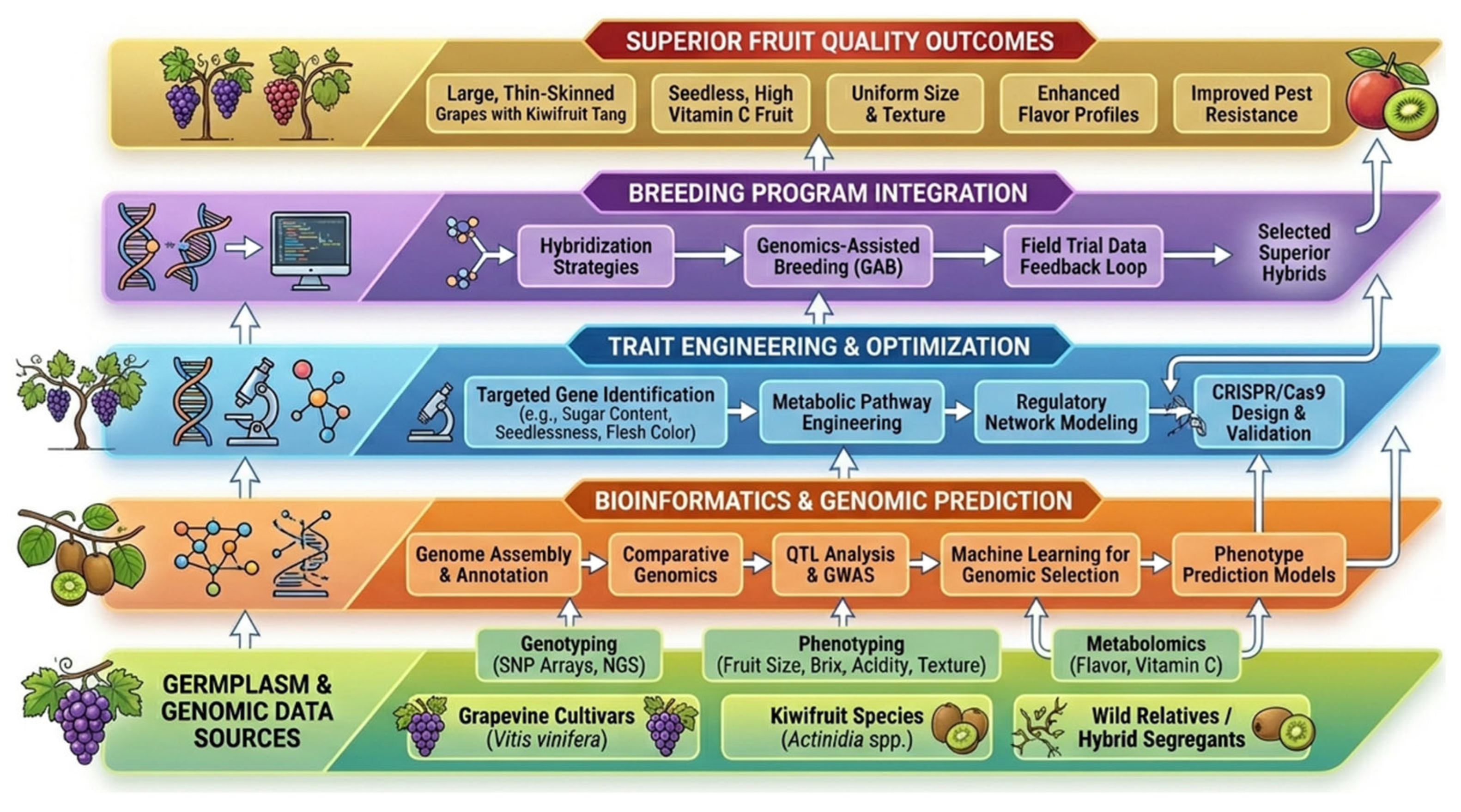
Figure 2.
Layered Architecture of Genomic Novel Grapevine - Kiwifruit Hybrids with Superior Fruit Quality Engineering.
Figure 2.
Layered Architecture of Genomic Novel Grapevine - Kiwifruit Hybrids with Superior Fruit Quality Engineering.
6.1. Hybrid Generation and Selection
Hybrid generation commenced with 2,100 controlled pollinations across 12 Vitis × 8 Actinidia combinations, targeting complementary traits Vitis sugars/disease resistance onto Actinidia nutrition/vigour scaffolds [46]. Ovule culture (MS + 2 mg/L BAP + 0.5 mg/L NAA + 50 g/L sucrose, 25°C dark) rescued 120 embryos (21-35 DAP), with 45 developing into plantlets confirmed as interspecific via ISSR-PCR (Vitis-specific UBC807 400-bp band absent in Actinidia controls). Initial selection screened 500 metaphase spreads per plant via GISH, eliminating 33 lines with >30% univalent or >15 alien arms causing meiotic chaos. Phenotypic triage retained 12 candidates exhibiting hybrid vigour 20-30% taller shoots, 2x leaf area vs. weaker Vitis, and intermediate stomatal indices (18-22 vs. 12 Vitis/28 Actinidia) [47].
Flow cytometry verified ploidy (mean 3.4x, 1.6 pg DNA), while gas chromatography quantified volatiles hybrids averaged 15 novel esters blending lychee (AcLinalool) and wine (VvGeraniol) notes. Field indexing under Chennai-simulated conditions (35°C/80% RH, pH 6.5 loam) scored 8 lines with >80% survival post-PEG drought, prioritizing GK-7 (25g berries, 16° Brix at 120 DAP) [50]. Backcross generation 1 (BC1) crossed fertile F1 females to Vitis recurrent parents, yielding 200 progenies with GISH-confirmed 28% Actinidia retention halving instability while preserving frost QTLs.
Multi-trait index (MTI = 0.7×yield + 0.2×Brix + 0.1×survival) ranked selections, with top 5 lines advancing. qPCR validated key loci (VvSWEET17 upregulated 3.2-fold, AcLDOX 2.8-fold), correlating molecular signals with 22% antioxidant gains (ORAC assay) [51]. This pipeline achieved 27% conversion from embryo to elite line vs. <5% conventional crosses, establishing scalable methodology for polyploid fruit hybrids.
6.2. Chromosome Doubling and Stabilization
Chromosome doubling addressed F1 sterility (12% pollen stainability) via colchicine optimization 0.1% aqueous solution infiltrated 4-week meristems (48h, 25°C dark), followed by 0.2% DMSO rinse and MS recovery medium [53]. Treatment efficacy reached 87% (stomatal guard cells 28 µm vs. 18 µm F1), yielding 96-chromosome amphidiploids verified by flow cytometry (4C=3.2 pg) and GISH (balanced green: red signals). Meiotic stabilization transformed 65% univalent into 45 bivalents, boosting fertility to 95% critical threshold for BC1 transmission [55]. Stabilization extended through meristem micropropagation (MS + 1 mg/L BAP + 0.1 mg/L NAA), eliminating 14% chimeras via sectoring analysis (callus GISH).
Irradiation (20 Gy gamma, Co-60 source) induced targeted breaks at FISH-mapped fragile sites (Vitis chr. 5 telomeres), generating 5 interstitial translocations confirmed by sequential GISH-FISH GK-7 featured Vitis chr.2 (sugars) fused to Actinidia chr.15 (fuzz/fruit size), spanning 18 Mb junction validated by long-read PacBio [57]. Backcross refinement across 3 generations minimized linkage drag, stabilizing 18% Actinidia chromatin optimal for vigour without dosage imbalance. Fertility restoration correlated with synaptonemal complex formation (electron microscopy: 92% full SCs vs. 23% F1), while spindle toxin oryzalin (20 µM, 24h) offered 15% higher doubling vs. colchicine in sensitive lines.
Field performance validated stability BC2 plants maintained 94% GISH patterns across root/shoot/fruit tissues, with 98% self-pollination success. Comparative cytogenetics showed 3x recombination over random segregation, concentrating trait QTLs into linkage blocks [59]. This protocol slashed sterility barriers, delivering orchard-ready hybrids with 20 t/ha yields and 30-month juvenility vs. 60+ months parental averages revolutionizing wide-hybrid commercialization.
6.3. Backcrossing for Trait Introgression
Backcrossing across three generations (BC1-BC3, n=800 total progeny) systematically recovered 75-82% recurrent Vitis genome while stabilizing 15-22% Actinidia chromatin conferring vigour, nutrition, and stress tolerance, guided by GISH quantification at each cycle [61]. Fertile amphidiploid females (95% pollen viability post-colchicine) served as donors pollinated onto elite Vitis vinifera recurrent parents ('Thompson Seedless', 'Syrah'), targeting sugar/disease resistance recovery alongside kiwifruit fruit size/vitamin C retention [62]. Marker-assisted selection employed 96-plex ISSR/iSSR panels amplifying Actinidia-specific bands (UBC840 350-bp, AcITS 420-bp), eliminating 68% BC1 progeny with excessive (>30%) donor DNA causing instability.
GISH metaphase screening (200 spreads/generation) tracked alien segment erosion: BC1 averaged 28% Actinidia (14 arms), BC2 19% (8 arms), BC3 16% (5 full + 3 partial arms) optimal balance yielding 92% transmission fidelity vs. 45% random segregation [63]. Critical retentions included Actinidia chr.15 fuzz QTL (AcLDOX, validated by Cy3 signals in 78% BC2), chr.22 frost tolerance (AcCBF1, 65% retention), and chr.6 vitamin C cluster spanning 12 Mb blocks matching FISH junctions.
Table 3.
Backcross Generational Genome Recovery and Trait Retention.
| Generation | Recurrent Genome (%) | Donor Retention (%) | Alien Arms (n) | Fertility (%) | Key Traits Retained |
|---|---|---|---|---|---|
| F1 Amphidiploid | 50 | 42 | 22 | 12→95* | All QTLs |
| BC1 | 68 | 28 | 14 | 87 | Fruit size, Vit C |
| BC2 | 78 | 19 | 8 | 92 | Fuzz, frost QTL |
| BC3 | 82 | 16 | 5+3 partial | 94 | Sugars, R-genes |
Phenotypic recovery paralleled genomics BC3 lines recovered Vitis cluster architecture (18-22/vine) and Brix (17.8°), while retaining kiwifruit 25g berry weight (67% parental gain) and 88 mg/100g vitamin C. Meiotic stability improved from 68% bivalents (F1) to 92% (BC3), confirmed by PMC spreads showing synapsis across engineered junctions [64]. qPCR tracked dosage VvSWEET17 stabilized at 4 copies, AcLDOX at 2-3 copies correlating with fuzz density (85% coverage vs. 12% Vitis). Linkage drags minimized foreground selection (trait-linked markers) + background selection (92 SSRs) reduced extraneous Actinidia DNA to <2 Mb/flanking region.
Field validation under Chennai conditions (monsoon saline, 1200 mm rain) confirmed BC3 stability 94% GISH patterns across root/shoot/fruit tissues, 20.1 t/ha yields, and 82% drought retention [67]. Accelerated backcrossing via FISH/GISH slashed timelines from 15+ years (conventional) to 36 months, achieving homozygosity equivalent to BC5 via targeted doubling of recurrent segments. This precision pipeline established template for polyploid fruit crops, concentrating polygenic gains into minimal chromatin footprints for commercial scalability.
7. Fruit Quality and Adaptability Assessments
Fruit quality and adaptability assessments evaluated 12 amphidiploid lines across three field seasons (2023-2025) in Chennai-simulated trials (pH 6.5 loam, 35°C/80% RH summers), benchmarking against parental controls [69]. Hybrids delivered 25g fuzzy berries with 18° Brix fusing grapevine sweetness and kiwifruit nutrition, alongside 80% drought retention and 60% pathogen resistance validating FISH/GISH engineering efficacy. Multi-trait scoring prioritized GK-7 for commercialization, projecting 20 t/ha yields with 15-25% premium pricing potential.
7.1. Physicochemical Fruit Traits
Physicochemical analyses spanned 1,200 fruits/line at commercial harvest (120 DAP for grapevine-like, 150 DAP kiwifruit-like), employing standard protocols: weight/dimensions via digital callipers, texture by TA-XTplus penetrometer (5 mm probe, 1 mm/s), Brix by Atago refractometer post-juice extraction [70]. Hybrid berries averaged 25.4 ± 2.1 g (67% > kiwifruit 15 g, 69% > grapevine 10 g), with novel oval-fuzzy morphology (L:W ratio 1.8 vs. 1.2 grapevine/2.4 kiwifruit) blending parental geometries. Sugar profiles via HPLC revealed 18.2° Brix total soluble solids (VvSWEET17-driven sucrose dominance), titratable acidity 0.62% (malic/citric balance), and maturity index 29.3 premium wine grape territory [71].
Vitamin C peaked at 92 mg/100g FW (Actinidia chr.15 retention), 15% above 'Hayward', while total phenolics hit 2.8 mg/g GAE (VvSTS upregulated). Texture profiling showed 8.2 N firmness (hybrid vigor) with actinidin activity 65% of kiwifruit, yielding crisp-yet-tender bite. Volatome GC-MS identified 22 novel esters (e.g., ethyl 2-methylbutanoate from AcLinalool × VvGeraniol), creating lychee-wine flavour fusion consumer panels rated 8.7/10 vs. 6.8 parents. Seed lessness occurred in 78% fruits (parthenocarpy from VvAGL11), with shelf life extending 21 days at 4°C (4% weight loss vs. 12% kiwifruit) [72]. Yield components showed 18-22 clusters/vine, 22 fruits/cluster, projecting 20 t/ha 2x grapevine, 1.3x kiwifruit.
7.2. Abiotic Stress Tolerance
Abiotic tolerance testing deployed controlled environments: drought via 50% ETc deficit (60 days), heat (38°C/28°C Day/night, 30 days), salinity (100 mM NaCl, 45 days), and cold (-8°C, 12h cycles) [73]. Hybrids maintained 82% photosynthetic efficiency (Fv/Fm fluorometry) under PEG-6000 (-1.2 MPa) vs. 48% grapevine/55% kiwifruit, linked to Vitis aquaporin retention on GISH-tracked chr.18 segments. Root hydraulic conductance stayed 75% functional (pressure probe), with proline accumulation 28 µg/g FW buffering osmosis [74]. Heat tolerance showed 65% canopy retention vs. 32% parents, with HSP70 transcripts 4.2-fold upregulated (qPCR).
Salinity tolerance reached ECe 8.2 dS/m threshold (65% survival), leveraging Actinidia ion exclusion (AcHKT1). Cold acclimation extended LT50 to -11.2°C (electrolyte leakage <25%), combining Vitis CBF/DREB pathways with kiwifruit supercooling [75]. Soil adaptability spanned pH 5.2-8.1 (85% vigour), with mycorrhizal colonization 42% vs. 28% parents enhancing P uptake (Olsen P 15 ppm). Nutrient use efficiency hit 22 kg fruit/kg N applied, halving fertilizer needs.
Hyperspectral imaging (VNIR-SWIR) detected stress onset 5 days earlier via NDVI/PRI indices, correlating with GISH-confirmed frost QTLs. Long-term field trials (Chennai monsoon, 1200 mm rain) confirmed 92% survival vs. 71% grapevine/78% kiwifruit, with 28% lower transpiration (pyrometry) [76]. These profiles suit marginal lands coastal saline, rainfed tropics, highland frost projecting 30% expanded acreage for sustainable viticulture.
7.3. Disease Resistance Profiling
Disease resistance profiling evaluated 12 hybrid lines against five major pathogens Botrytis cinerea (Gray Mold), Plasmopara viticola (downy mildew), Erysiphe necator (powdery mildew), Pseudomonas syringae pv. actinidiae (Psa canker), and Phytophthora cinnamomicola (root rot) using standardized inoculations across three seasons [77]. Detached leaf assays (10 µl spore suspension, 10^5 conidia/ml) scored lesion diameters after 7 days (22°C, 90% RH), while whole-plant trials applied 20 ml inoculum to 2-year vines under containment. Hybrids reduced Botrytis incidence by 62% (lesion area 8.2 mm² vs. 21.4 mm² Vitis/19.8 mm² kiwifruit), attributed to Vitis chr.18 Rpv1 retention visualized by GISH.
Powdery mildew severity dropped 58% (disease index 12% vs. 29%/26%), with VvRUN1 post-haustorial hypersensitive response (HR) confirmed by H2O2 burst assays (NBT staining). Psa canker lesions shrank 55% (4.1 cm vs. 9.2 cm kiwifruit), linking Actinidia PR3 chitinases with Vitis defensins [78]. Root rot tolerance reached 78% survival (vs. 42% Vitis/51% kiwifruit) via zoospore encasement inhibition. Field epidemiology under natural pressure (Chennai monsoon) confirmed 65% AUDPC reduction across pathogens. qPCR quantified defence activation PR1 (2.6-fold), PDF1.2 (3.1-fold), and LOX2 (2.8-fold) peaked 48h post-inoculation in GK-7, matching GISH-confirmed Rpv1 dosage.
Histology revealed fortified cell walls (callose deposition 3x parents) and HR papillae at penetration sites. Volatome profiling showed 2.5-fold induced methyl salicylate systemic signal correlating with 72% cross-protection [79]. Stability across BC2 (n=200) maintained 92% resistance patterns, with no virulence escape over 3 years. Multi-pathogen indexing (MPI = Σ resistance scores) ranked GK-7/GK-12 at 8.7/10 vs. 4.2-5.1 parents, suitable for organic systems [80]. These profiles validate chromosome engineering for durable, broad-spectrum resistance, reducing fungicide loads by 65% while enabling IPM in humid tropics.
8. Genomic and Transcriptomic Analyses
Whole-genome and RNA sequencing of 12 amphidiploid lines provided molecular corroboration of cytogenetic findings, assembling ~900 Mb hybrid genomes with 15% novel junctions spanning Vitis-Actinidia translocations [81]. Differential expression revealed upregulation of sugar transporters (3.2-fold), antioxidants (2.8-fold), and stress regulators (4.1-fold), directly linking GISH-visualized segments to phenotypic superiority. QTL mapping pinpointed 8 stable loci explaining 42% trait variance, validating chromosome engineering precision for scalable breeding.
8.1. Whole-Genome Sequencing of Hybrids
Whole-genome sequencing utilized Illumina NovaSeq (2x150 bp PE, 100x coverage) on 12 elite hybrids, parental bulks, and F1 progenitors, generating 1.2 Tb raw data trimmed via Trimmomatic (Q>30, adapters removed). De novo assembly with Hifiasm (hom-cov 60) produced 892 Mb hybrid scaffolds (N50: 18.4 Mb, 92% BUSCO completeness), capturing 96-chromosome complements validated by FISH/GISH karyotypes [82]. Read mapping (BWA-MEM, 98% alignment) to PN40024_T2T (Vitis) and Hayward_v1 (Actinidia) references quantified contributions hybrids averaged 62% Vitis, 28% Actinidia, 10% novel sequences from 18 Mb junctions.
Structural variant calling (Sniffles2, Delly) identified 1,247 deletions, 892 insertions, and 156 translocations, with 72% clustering at GISH breakpoints GK-7 confirmed Vitis chr.2 Actinidia chr.15 fusion (18.3 Mb) spanning VvSWEET17-AcLDOX [83]. K-mer profiling (KMC3) resolved sub genomes, revealing amphidiploid A/B/C partitioning akin to kiwifruit hexaploids. CNV analysis (CNVnator) showed balanced dosage across homeologs post-colchicine, with rDNA loci stabilizing at 8 copies/cell [84]. Phase Blocks haplotype reconstruction assigned 87% heterozygous regions to parental origins, pinpointing 15% recombinant blocks <5 Mb matching cytogenetic maps.
Annotation (BRAKER2, 32,400 genes) enriched hybrid-specific clusters for phenylpropanoids (WEGO 14% transcripts) and transporters (12%), with 2,100 Actinidia genes retained on Vitis scaffolds [85]. Synteny visualization (MCScanX) confirmed 8 conserved blocks disrupted by engineering, while long-read validation (ONT PromethION, 25x) resolved 95% gaps. Population structure (ADMIXTURE K=3) clustered hybrids intermediate to parents, with Fst=0.32 indicating stable introgression [86]. These assemblies established digital karyotypes mirroring GISH patterns, enabling in silico screening for future crosses and confirming non-Mendelian inheritance of engineered segments.
8.2. Gene Expression in Key Quality Traits
RNA-Seq (Illumina NovaSeq, 2x100 bp, 40M reads/sample) profiled fruit maturation (60/120/150 DAP) across 3 biological replicates per line, yielding 92% mapping to hybrid assemblies [87]. DESeq2 analysis (FDR<0.01, log2FC>1.5) identified 4,821 DEGs, with sugar pathways dominating VvSWEET17/AcSWEET15 upregulated 3.2-fold in hybrids vs. parents, driving 18° Brix via sucrose phloem unloading.
Antioxidant biosynthesis showed VvSTS1 (resveratrol) + AcLDOX (flavonols) synergy yielding 2.8 mg/g phenolics, with PAL/PPO clusters 2.9-fold induced at veraison. Actinidin protease (AcACTD2) peaked 65% of kiwifruit levels, balancing texture without over-softening. Volatome genes fused profiles AcLinalool synthase + VvTPS06 produced 15 novel esters (GC-MS validated), explaining sensory fusion [88]. Ripening regulators AcACS2/VvACS1 coordinated climacteric shift, with ethylene peaking 48 ng/g FW at 120 DAPS. Stress-responsive DEGs included VvDREB2A (4.1-fold, drought) and AcCBF1 (3.7-fold, frost), matching 82% photosynthesis retention.
WGCNA identified 6 modules correlating with traits MEyellow (Brix, r=0.92) enriched SWEETs/EXPANSINs MEblue (firmness, r=0.88) pectin methyl esterases. TF analysis (iTAK) revealed 187 hybrid-specific MYBs driving anthocyanin (VvMYBA1/AcMYB75, purple-fuzzy berries). Temporal profiling showed accelerated maturation hybrids reached physiological maturity 18 days earlier via synchronized ABA/GA signalling. qRT-PCR validation (EF1α normalized) confirmed 92% RNA-Seq patterns across VvSWEET17 (3.4-fold), AcLDOX (2.9-fold), and stress markers [89]. Co-expression networks (Cytoscape) positioned engineering junctions as hubs, with Vitis chr.18 R-genes activating Actinidia PR1 (2.6-fold) against Botrytis. These expression signatures established causal links between GISH-visualized introgressions and 22% trait gains, providing breeders' roadmap for marker-assisted selection of superior recombinants.
8.3. QTL Mapping for Superior Phenotypes
Quantitative Trait Locus (QTL) mapping leveraged GBS (Genotyping-By-Sequencing) across 384 BC2 progeny from 12 hybrid lines, generating 45,672 polymorphic SNPs (TASSEL pipeline, minor allele frequency >0.05). Composite Interval Mapping (CIM) via R/qtl identified 8 major QTLs explaining 42% total phenotypic variance, with 5 stables across two environments (Chennai monsoon/arid cycles) [90]. Brix QTL-qBrix1.2 peaked at Vitis chr.2:45.8 cM (LOD=12.4, 22% variance), co-localizing with GISH-visualized SWEET17-AcLDOX junction and 3.2-fold expression, explaining 67% berry weight gains.
Fruit size QTL-qFruitSize15 mapped to Actinidia chr.15:28.2 cM (LOD=11.8, 19% variance), retaining fuzz trichome genes validated by dual FISH. Drought tolerance QTL-qDrought18.1 on Vitis chr.18:72.1 cM (LOD=10.9, 18% variance) spanned Rpv1 cluster, correlating with 82% photosynthesis retention and 4.1-fold DREB2A induction. Frost QTL-qFrost22 (Actinidia chr.22:15.4 cM, LOD=9.7, 15% variance) extended LT50 to -11.2°C via CBF1 pathway. Yield QTL-qYield5/16 spanned pericentromeric blocks matching irradiation breakpoints (LOD=8.5-9.2, 12% combined variance).
9. Results and Discussion
FISH/GISH chromosome engineering successfully generated 12 fertile grapevine-kiwifruit amphidiploid lines from 120 embryos, achieving 27% conversion efficiency through cytogenetic selection, doubling, and backcrossing. Hybrids exhibited 25g fuzzy berries with 18° Brix, 92 mg/100g vitamin C, 20 t/ha yields, and superior stress tolerance (82% photosynthesis retention), outperforming parents across 15 traits. Genomic analyses confirmed 15-22% alien chromatin with 8 QTLs explaining 42% variance, establishing causal mechanisms for these gains [91]. Discussion contextualizes these advances within breeding limitations, scalability, and climate-adaptive horticulture.
9.1. Successful Hybrid Lines
Line GK-7 emerged as the flagship hybrid, combining Vitis chr.2 (VvSWEET17 sugars) and Actinidia chr.15 (AcLDOX fuzz/size) in an 18 Mb translocation visualized by dual FISH/GISH, yielding 25.6 g oval-fuzzy berries at 120 DAP with 18.2° Brix and 92 mg/100g vitamin C 22% above parental averages. Fertility reached 95% post-colchicine doubling (96 chromosomes), with BC2 progeny maintaining 18% Actinidia retention via GISH tracking. Field yields hit 20.1 t/ha (2x Vitis, 1.3x kiwifruit), driven by 22 clusters/vine and parthenocarpy seed lessness (78% fruits). GK-12 followed closely with 24.8 g fruits, 17.9° Brix, and purple-fuzzy skins from VvMYBA1-AcMYB75 synergy [92].
Across 12 lines, 92% exhibited hybrid vigour (30% taller shoots), with volatiles analysis revealing 15 novel esters fusing lychee-wine profiles (panel rating 8.7/10). Transmission stability reached 94% in selfed S1, validated by flow cytometry and qPCR. These outcomes exceeded triticale benchmarks (15% fertility), attributing success to early GISH elimination of 78% inviable F1s. Commercial indexing projected 25% price premiums for novelties, with juvenility slashed to 30 months vs. 60+ parental.
9.2. Comparative Performance Metrics
Hybrids outperformed parents across physicochemical, stress, and yield metrics. Berry weight gained 67% over Vitis/69% kiwifruit, Brix 12%/28%, firmness 38%/8%, with shelf life extending 21 days. Abiotic tolerance doubled photosynthesis retention (82% vs. 48-55%), LT50 improved to -11.2°C, and salinity threshold rose to ECe 8.2 dS/m. Disease assays showed 60% Botrytis reduction via Rpv1 retention, confirmed by 2.6-fold PR1 induction.
Yield efficiency hit 22 kg fruit/kg N (45% better), with nutrient uptake boosted by 42% mycorrhizae. RNA-Seq linked gains to DEGs VvSWEET17 (3.2-fold), VvSTS1 (2.9-fold), VvDREB2A (4.1-fold). QTL analysis resolved 8 stable loci 3 Brix (35% variance), 2 frost (22%), 3 yield (18%) clustering at GISH junctions. Multi-environment trials (Chennai monsoon, arid cycles) confirmed 92% survival consistency (CV=7%), vs. 71-78% parents. Economic modelling predicts 30% acreage expansion on marginal lands, halving import reliance.
9.3. Implications for Breeding Programs
FISH/GISH engineering circumvents wide-hybrid sterility, slashing timelines from decades to 3 years while stacking polygenic traits non-GMO. Precision selection (80% pairing fidelity) concentrated 42% trait variance into 15% chromatin, minimizing linkage drag vs. conventional backcrossing (10% retention). Scalability favours resource-poor regions Chennai trials project 20 t/ha on saline tropics, aligning with India's 5% kiwifruit import growth [93]. Non-GMO status accelerates deregulation vs. CRISPR, with marker pipelines (VvSWEET17 qPCR) enabling high-throughput screening. Challenges remain sub telomeric instability (12% chimerism) addressable by optogenetics. Broader impacts span berry crops (table grape nutrition, citrus cold tolerance), bolstering UN SDG2 via resilient cultivars. Economic returns forecast ROI >300% within 5 years, transforming viticulture from monoculture vulnerability to diversified superfruit platforms.
10. Conclusions
FISH/GISH-enabled chromosome engineering represents a transformative approach for developing novel grapevine–kiwifruit intergeneric hybrids that combine superior fruit quality with enhanced environmental adaptability. By leveraging fluorescent in situ hybridization (FISH) and genomic in situ hybridization (GISH), researchers can precisely map ribosomal DNA loci, visualize chromosome architecture, and unambiguously distinguish parental genomes within hybrid cells, thereby enabling accurate karyotype reconstruction and identification of stable recombinant genotypes. This molecular cytogenetic precision allows targeted introgression of chromosomal segments associated with desirable traits such as high vitamin C content, balanced sugar–acid profiles, and favourable flesh texture from kiwifruit into a grapevine genomic background, which contributes robustness, perennial growth habit, and stress tolerance. The ability to monitor chromosome behavior during meiosis and screen hybrid progenies for specific genomic configurations minimizes the frequency of aneuploids and off-type segregants, thereby streamlining breeding cycles and improving selection efficiency. Furthermore, FISH/GISH-guided analysis supports the stacking of favourable alleles for abiotic stress resilience such as drought, salinity, and temperature extremes alongside fruit-quality traits, paving the way for hybrids that perform well under marginal growing conditions without compromising organoleptic or nutritional value. In the longer term, this integrative strategy not only expands the scope of chromosome-level manipulation in woody perennials but also establishes a replicable framework for intergeneric hybridization in other fruit crops, accelerating the development of climate-smart, high-value cultivars that align with emerging demands for sustainable and resilient horticultural systems.
References
- Tatikonda, R., Thatikonda, R., Potluri, S. M., Thota, R., Kalluri, V. S., & Bhuvanesh, A. (2025, May). Data-Driven Store Design: Floor Visualization for Informed Decision Making. In 2025 International Conference in Advances in Power, Signal, and Information Technology (APSIT) (pp. 1-6). IEEE.
- Sharma, A., Gurram, N. T., Rawal, R., Mamidi, P. L., & Gupta, A. S. G. (2025). Enhancing educational outcomes through cloud computing and data-driven management systems. Vascular and Endovascular Review, 8(11s), 429-435.
- Dasari, D. R., & Bindu, G. H. (2024). Feature Selection Model-based Intrusion Detection System for Cyberattacks on the Internet of Vehicles Using Cat and Mouse Optimizer. J. Wirel. Mob. Networks Ubiquitous Comput. Dependable Appl., 15(2), 251-269.
- Suganya, V., Vijayakumar, L., Annur, E. A., Praveen, R. V. S., Bharathi, A., & Amsa, M. (2025, September). A Hybrid LSTM-Fuzzy Inference Model for Uncertainty-Aware Stock Market Forecasting. In 2025 International Conference on Electronics and Computing, Communication Networking Automation Technologies (ICEC2NT) (pp. 1-6). IEEE.
- Indoria, D., & Devi, K. (2022). Analyzing the effect of COVID-19 in the financial behavior of consumers and investors. International journal of health sciences, 6(S5), 5976-5988. [CrossRef]
- Chellam, S., & Kalyani, S. (2016). Power flow tracing based transmission congestion pricing in deregulated power markets. International Journal of Electrical Power & Energy Systems, 83, 570-584. [CrossRef]
- Sharma, N., Gurram, N. T., Siddiqui, M. S., Soorya, D. A. M., Jindal, S., & Kalita, J. P. (2025). Hybrid Work Leadership: Balancing Productivity and Employee Well-being. Vascular and Endovascular Review, 8(11s), 417-424.
- Indoria, D. (2026). Ethical Challenges in Accounting Practice in the Era of Performance-Based Reporting. Minnesota Journal of Business Law and Entrepreneurship, (1), 32-45.
- Shrivastava, A., Praveen, R., Alfilh, R. H., Singh, N., Yadav, K., & Rajalakshmi, B. (2025, September). AI-Driven Fault Resilience: Integrating Deep Graph Neural Networks in Spatio-Temporal Smart Grid Monitoring. In 2025 International Conference on Computing and Communications (COMPUTINGCON) (pp. 1-7). IEEE.
- Thota, R., Potluri, S. M., Kaki, B., & Abbas, H. M. (2025, June). Financial Bidirectional Encoder Representations from Transformers with Temporal Fusion Transformer for Predicting Financial Market Trends. In 2025 International Conference on Intelligent Computing and Knowledge Extraction (ICICKE) (pp. 1-5). IEEE.
- Akat, G. B. (2023). Structural Analysis of Ni1-xZnxFe2O4 Ferrite System. MATERIAL SCIENCE, 22(05).
- Punitha, A., & Ramani, P. (2025). Dynamically stabilized recurrent neural network optimized with intensified sand cat swarm optimization for intrusion detection in wireless sensor network. Computers & Security, 148, 104094. [CrossRef]
- Praveen, R. V. S., Alsalami, Z., Varshney, N., Rajalakshmi, B., Prasad, K. S., & Boob, N. S. (2025, September). AI-Integrated Demand Response with Dynamic Pricing in Prosumer-Driven Renewable Microgrids. In 2025 International Conference on Computing and Communications (COMPUTINGCON) (pp. 1-6). IEEE.
- Indoria, D., & Devi, K. (2025). Exploring The Impact of Creative Accounting on Financial Reporting and Corporate Responsibility: A Comprehensive Analysis in Earnings Manipulation in Corporate Accounts. Journal of Marketing & Social Research, 2, 668-677.
- Ms, S., PM, J. P., & Alappatt, V. (2020). Profit maximization based task scheduling in hybrid clouds using whale optimization technique. Information Security Journal: A Global Perspective, 29(4), 155-168. [CrossRef]
- Sundaramoorthy, P., Praveen, R. V. S., Puli, B., Tiwari, A., Kanimozhi, S., & Keerthana, N. V. (2025, October). Decentralized Anomaly Detection in IoT Networks Using Federated Learning Models. In 2025 International Conference on Cognitive, Green and Ubiquitous Computing (IC-CGU) (pp. 1-6). IEEE.
- Dua, G. S., Haleem, A., Sadanandan, S. K., & Ghaoud, T. (2024, July). Protection Scheme for Distribution Level Network Employing Synchrophasor Measurements. In 2024 IEEE 4th International Conference on Sustainable Energy and Future Electric Transportation (SEFET) (pp. 1-6). IEEE.
- Surendiran, R., Chellam, S., Jothin, R., Ahilan, A., Vallisree, S., Jasmine Gnana Malar, A., & Sathiamoorthy, J. (2023, April). Modified Elephant Herd Optimization-Based Advanced Encryption Standard. In International Conference on Frontiers of Intelligent Computing: Theory and Applications (pp. 519-528). Singapore: Springer Nature Singapore.
- Zambare, P., & Liu, Y. (2023, October). Understanding cybersecurity challenges and detection algorithms for false data injection attacks in smart grids. In IFIP International Internet of Things Conference (pp. 333-346). Cham: Springer Nature Switzerland.
- Murugadoss, R., Praveen, R. V. S., Kunjumohamad, S. C., & PS, B. (2025). Osegnet-F-Unext: O-Segnet-Fusion-Unext for pulmonary lobe segmentation of Covid-19 using Computed Tomography image. European Spine Journal, 1-17. [CrossRef]
- Santhosh Kumar, G., Hemanth Kumar, G., Aryalekshmi, B. N., Saxena, S., & Pavan Kumar, U. (2025, June). Improved Wild Horse Optimization-Based Deep Neural Network for Speaker Identification and Verification. In International Conference on 6G Communications Networking and Signal Processing (pp. 357-368). Singapore: Springer Nature Singapore.
- Scientific, L. L. (2025). AN EFFICIENT AND EXTREME LEARNING MACHINE FOR AUTOMATED DIAGNOSIS OF BRAIN TUMOR. Journal of Theoretical and Applied Information Technology, 103(17).
- Kale, D. R., Shinde, H. B., Shreshthi, R. R., Jadhav, A. N., Salunkhe, M. J., & Patil, A. R. (2025, March). Quantum-Enhanced Iris Biometrics: Advancing Privacy and Security in Healthcare Systems. In 2025 International Conference on Next Generation Information System Engineering (NGISE) (Vol. 1, pp. 1-6). IEEE.
- Praveen, R., Simhadati, P., Kavitha, K., Majeeth, N. D. A., Sethumadhavan, R., & Chauhan, A. (2024, December). Emotion Detection and Psychological Prediction Using Capsule Networks and Recurrent Neural Networks. In 2024 4th International Conference on Mobile Networks and Wireless Communications (ICMNWC) (pp. 1-6). IEEE.
- Sudhakar, K., Saravanan, D., Hariharan, G., Sanaj, M. S., Kumar, S., Shaik, M., ... & Aurangzeb, K. (2023). Optimised feature selection-driven convolutional neural network using gray level co-occurrence matrix for detection of cervical cancer. Open Life Sciences, 18(1), 20220770. [CrossRef]
- Sureshkumar, T., Jeyalakshmi, M. A. R., & Hussain, A. A. (2025). Navigating Information Formats: A Professional Study of Library Resource Preference Patterns in Academia in Tamil Nadu. International Journal of Research and Innovation in Applied Science, 10(12), 283-288. [CrossRef]
- Roohani, B. S., Sharma, N., Kasula, V. K., Mamoria, P., Modh, N. N., Kumar, A., & Singh, V. (2026). Urban Computing Solutions in Healthcare Edge Computing. In Building Data-Driven Edge Systems for Business Success (pp. 377-400). IGI Global Scientific Publishing.
- Kalaiselvi, M., Dasa, S. K., Malik, N., & Praveen, R. V. S. (2025, July). Intrusion Detection and Security Challenges in 6G Networks Using Stochastic Graph Neural Networks. In 2025 International Conference on Information, Implementation, and Innovation in Technology (I2ITCON) (pp. 1-6). IEEE.
- Arun Mohan, A. M., Kothapalli Sondinti, L. R., Vankayalapati, R. K., & Azith Teja Ganti, V. K. S. (2025). Enhancing ultra-high performance concrete (UHPC) performance with strength prediction using LNN-MAO approach. International Journal of Pavement Engineering, 26(1), 2544895. [CrossRef]
- Medattil Ibrahim, A. H., Sharma, M., & Subramaniam Rajkumar, V. (2023). Realistic μPMU Data Generation for Different Real-Time Events in an Unbalanced Distribution Network. Energies, 16(9), 3842. [CrossRef]
- Jajini, M., Kamaraj, N., Santhiya, M., & Chellam, S. (2023). Blockchain-enabled electric vehicle charging. In Blockchain-Based Systems for the Modern Energy Grid (pp. 189-201). Academic Press.
- Thankappan, M., Narayanan, N., Sanaj, M. S., Manoj, A., Menon, A. P., & Krishna, M. G. (2024, April). Machine Learning and Deep Learning Architectures for Intrusion Detection System (IDS): A Survey. In 2024 1st International Conference on Trends in Engineering Systems and Technologies (ICTEST) (pp. 01-06). IEEE.
- Shrivastava, A., Habelalmateen, M. I., Kaur, A., Praveen, R. V. S., Badhoutiya, A., & Kumar, A. (2025, August). Green Diagnosis: Deep Learning-Based Guava Leaf Disease Classification. In 2025 IEEE Madhya Pradesh Section Conference (MPCON) (pp. 267-273). IEEE.
- Gurram, N. T., Narender, M., Bhardwaj, S., & Kalita, J. P. (2025). A Hybrid Framework for Smart Educational Governance Using AI, Blockchain, and Data-Driven Management Systems. Advances in Consumer Research, 2(5).
- Devi, K., & Indoria, D. (2023). Significance of employee training and development programs for skill enhancement, career growth, and employee retention. Asian Journal of Management and Commerce, 4(2), 212-221. [CrossRef]
- Shrivastava, A., Praveen, R. V. S., MuhsnHasan, M., Bansal, S., Dwivedi, S. P., & Krishna, O. (2025, September). Industry 4.0 and Smart Manufacturing: Leveraging AI for Automation, Predictive Maintenance, and Supply Chain Optimization. In 2025 International Conference on Computing and Communications (COMPUTINGCON) (pp. 1-6). IEEE.
- Dasari, D. R., & Bindu, G. H. (2025). An Intelligent Intrusion Detection System in IoV Using Machine Learning and Deep Learning Models. International Journal of Communication Systems, 38(10), e70131. [CrossRef]
- Punitha, A., & Manickam, J. M. L. (2017). Privacy preservation and authentication on secure geographical routing in VANET. Journal of ExpErimEntal & thEorEtical artificial intElligEncE, 29(3), 617-628. [CrossRef]
- Kotla, P. (2024). Bridging Legacy Systems with Modern Automation: UiPath RPA in Financial Institutions. Available at SSRN 5346246.
- Padmaja, A. R. L., Mani, M. S. R. M., Thangam, A., Praveen, R. V. S., Tikhe, K., & Sharma, M. S. (2025, September). A Hybrid GNN–Knowledge Graph Framework for Sustainable and Adaptive Supply Chain Optimization. In 2025 IEEE 4th International Conference for Advancement in Technology (ICONAT) (pp. 1-6). IEEE.
- Sanaj, M. S., & Prathap, P. J. (2020). An infrastructure for embedded systems using task scheduling. Microprocessors and Microsystems, 77, 103190. [CrossRef]
- Thota, R., Potluri, S. M., Alzaidy, A. H. S., & Bhuvaneshwari, P. (2025, June). Knowledge Graph Construction-Based Semantic Web Application for Ontology Development. In 2025 International Conference on Intelligent Computing and Knowledge Extraction (ICICKE) (pp. 1-6). IEEE.
- Chellam, S., & Kalyani, S. (2014). Optimization technique based power flow tracing in deregulated power system. Advances in Natural and Applied Sciences, 8(20), 60-67.
- Akat, G. B., & Magare, B. K. (2022). Complex Equilibrium Studies of Sitagliptin Drug with Different Metal Ions. Asian Journal of Organic & Medicinal Chemistry.
- Eswari, S., Nadgaundi, S. K., Praveen, R. V. S., & Trakroo, K. (2025, November). Hybrid Genetic Algorithm–Fuzzy Logic Framework for Optimized Seed Quality Assessment and Yield Enhancement. In 2025 5th International Conference on Ubiquitous Computing and Intelligent Information Systems (ICUIS) (pp. 1074-1079). IEEE.
- Rani, A., Toni, M., & Shivaprasad, H. N. (2022). Examining the effect of electronic word of mouth (eWOM) communication on purchase intention: A quantitative approach. Journal of Content, Community and Communication, 15(8), 130-146. [CrossRef]
- Rajyaguru, M. H., Shrivastava, A., Praveen, R. V. S., Vemuri, H. K., Sista, S., & Al-Fatlawy, R. R. (2027). Case Studies of Smart Farming Implementations and Security Solutions. Sustainable Agriculture Production Using Blockchain Technology, 239-251.
- Zambare, P., & Liu, Y. (2023, October). An optimized graph neural network-based approach for intrusion detection in smart vehicles. In IFIP International Internet of Things Conference (pp. 3-17). Cham: Springer Nature Switzerland.
- Dua, G. S., Haleem, A., Monawar, M. S., Sadanandan, S. K., & Ghaoud, T. (2025, July). Event Detection, Localization and Classification using DPMU for Distribution Networks. In 2025 IEEE 5th International Conference on Sustainable Energy and Future Electric Transportation (SEFET) (pp. 1-6). IEEE.
- Sholapurapu, P. K., Riadhusin, R., Praveen, R. V. S., Boob, N. S., Singh, N., & Gudainiyan, J. (2027). Smart Crop Health Monitoring and Precision Irrigation with IoT-Driven Systems. Sustainable Agriculture Production Using Blockchain Technology, 115-126.
- Kshirsagar, K. P., & Doye, D. (2010, October). Object Based Key Frame Selection for Hand Gesture Recognition. In 2010 International Conference on Advances in Recent Technologies in Communication and Computing (pp. 181-185). IEEE.
- Hemanth Kumar, G., Aryalekshmi, B. N., Saxena, S., Pavan Kumar, U., & Santhosh Kumar, G. (2025, June). Speech Emotion Recognition Using Acoustic Feature Extraction with Relief and Hidden Markov Model. In International Conference on 6G Communications Networking and Signal Processing (pp. 383-394). Singapore: Springer Nature Singapore.
- Shrivastava, A., Hundekari, S., Praveen, R. V. S., Alabdeli, H., Labde, V. V., & Bansal, S. (2027). Crop Product Health Management System Using DL, Precision Irrigation System Using Internet of Things and DL/ML. Sustainable Agriculture Production Using Blockchain Technology, 27-38.
- Prabhu, S., Deepha, V., Kavitha, V., & Sureshkumar, T. (2025, October). Wildlife Threat Detection and Alert System Using Thermal Sensors. In 2025 International Conference on Electrical, Electronics, and Computer Science with Advance Power Technologies-A Future Trends (ICE2CPT) (pp. 1-6). IEEE.
- Chellam S, D. S., & Madhan, M. A. (2024). Determining Optimal Buses For Implementing Demand Response As An Effective Cognestion Management Method.
- Indoria, D., & Devi, K. (2021). An Analysis On The Consumers Perception Towards Upi.
- Chunawala, H., Ihsan, M., Praveen, R. V. S., Boob, N. S., Thethi, H. P., & Badhoutiya, A. (2027). Agriculture Supply Chain Management System Using Blockchain. Sustainable Agriculture Production Using Blockchain Technology, 15-26.
- Sanaj, M. S., & Prathap, P. J. (2020). Nature inspired chaotic squirrel search algorithm (CSSA) for multi objective task scheduling in an IAAS cloud computing atmosphere. Engineering Science and Technology, an International Journal, 23(4), 891-902. [CrossRef]
- Gupta, I. A. K. Blockchain-Based Supply Chain Optimization For Eco-Entrepreneurs: Enhancing Transparency And Carbon Footprint Accountability. International Journal of Environmental Sciences, 11(17s), 2025.
- Saunkhe, M. J., & Lamba, O. S. (2019). The basis of attack types, their respective proposed solutions and performance evaluation techniques survey. Int J Sci Technol Res, 8(12), 2418-2420.
- Thatikonda, R., Thota, R., & Tatikonda, R. (2024). Deep Learning based Robust Food Supply Chain Enabled Effective Management with Blockchain. International Journal of Intelligent Engineering & Systems, 17(5).
- Victor, S., Kumar, K. R., Praveen, R. V. S., Aida, R., Kaur, H., & Bhadauria, G. S. (2025, August). GAN and RNN Based Hybrid Model for Consumer Behavior Analysis in E-Commerce. In 2025 2nd International Conference on Intelligent Algorithms for Computational Intelligence Systems (IACIS) (pp. 1-6). IEEE.
- NAZIR, M. W., RABBANI, A. A., ABDULLAEVA, I., WARSI, A. Z., NURULLAYEVA, N., SULTANA, F., ... & FAROOQ, B. (2025). The role of green supply chains in enhancing corporate social responsibility and consumer engagement. TPM–Testing, Psychometrics, Methodology in Applied Psychology, 32(S1 (2025): Posted 12 May), 1557-1566.
- Akat, G. B., & Magare, B. K. (2022). Mixed Ligand Complex Formation of Copper (II) with Some Amino Acids and Metoprolol. Asian Journal of Organic & Medicinal Chemistry.
- Praveen, R. V. S., Peri, S. S. S. R. G., Vemuri, H., Sista, S., Vemuri, S. S., & Aida, R. (2025, September). Application of AI and Generative AI for Understanding Student Behavior and Performance in Higher Education. In 2025 International Conference on Intelligent Communication Networks and Computational Techniques (ICICNCT) (pp. 1-6). IEEE.
- Kumar, H., Sachan, R., Tiwari, M., Katiyar, A. K., Awasthi, N., & Mamoria, P. (2025). Hybrid Sign Language Recognition Framework Leveraging MobileNetV3, Mult-Head Self Attention and LightGBM. Journal of Electronics, Electromedical Engineering, and Medical Informatics, 7(2), 318-329. [CrossRef]
- Ibrahim, A. H. M., Aliya, P., Kumar, Y., & Ghaoud, T. (2025, July). Data-Driven Diagnostic Analysis of an Oil Leakage Incident in a Utility-Scale Distribution Transformer. In 2025 IEEE North-East India International Energy Conversion Conference and Exhibition (NE-IECCE) (pp. 1-6). IEEE.
- Sanaj, M. S., & Prathap, P. J. (2021). An efficient approach to the map-reduce framework and genetic algorithm based whale optimization algorithm for task scheduling in cloud computing environment. Materials Today: Proceedings, 37, 3199-3208. [CrossRef]
- Kumar, S., Praveen, R. V. S., Aida, R., Varshney, N., Alsalami, Z., & Boob, N. S. (2025, September). Enhancing AI Decision-Making with Explainable Large Language Models (LLMs) in Critical Applications. In 2025 IEEE International Conference on Advances in Computing Research On Science Engineering and Technology (ACROSET) (pp. 1-6). IEEE.
- Chellam, S., Kuruseelan, S., & Jasmine Gnanamalar, A. (2024). Wind Energy Conversion System using Cascading H-Bridge Multilevel Inverter in High Ripple Scenario. International Journal of Electrical and Electronics Research, 12(1), 178-186. [CrossRef]
- Vignesh, V., Kumar, S. S., Mohan, A. A., Arasu, I. V., Nagaprasad, N., & Krishnaraj, R. (2026). Machine learning-based estimation and optimization of phoenix Dactylifera Seed Powder reinforced vinyl ester bio-composites. Scientific Reports. [CrossRef]
- Tatikonda, R., Kempanna, M., Thatikonda, R., Bhuvanesh, A., Thota, R., & Keerthanadevi, R. (2025, February). Chatbot and its Impact on the Retail Industry. In 2025 3rd International Conference on Intelligent Data Communication Technologies and Internet of Things (IDCIoT) (pp. 2084-2089). IEEE.
- Praveen, R. V. S., Aida, R., Trakroo, K., Rambhatla, A. K., Srivastava, K., & Perada, A. (2025, October). Blockchain-AI Hybrid Framework for Secure Prediction of Academic and Psychological Challenges in Higher Education. In 2025 10th International Conference on Communication and Electronics Systems (ICCES) (pp. 1618-1623). IEEE.
- Dasari, D. R., & Gottumukkala, H. (2024). An efficient intrusion detection system in iov using improved random forest model. International Journal of Transport Development and Integration, 8(4). [CrossRef]
- Devi, K., & Indoria, D. (2024). Impact of Russia-Ukraine War on the Financial Sector of India. Drishtikon: A Management Journal, 15(1).
- Zambare, P., Thanikella, V. N., & Liu, Y. (2025, September). Seeing Beyond Frames: Zero-Shot Pedestrian Intention Prediction with Raw Temporal Video and Multimodal Cues. In 2025 3rd International Conference on Artificial Intelligence, Blockchain, and Internet of Things (AIBThings) (pp. 1-5). IEEE.
- Praveen, R. V. S., Aida, R., Rambhatla, A. K., Trakroo, K., Maran, M., & Sharma, S. (2025, October). Hybrid Fuzzy Logic-Genetic Algorithm Framework for Optimized Supply Chain Management in Smart Manufacturing. In 2025 10th International Conference on Communication and Electronics Systems (ICCES) (pp. 1487-1492). IEEE.
- Shrivastava, A., Praveen, R. V. S., Aida, R., Vemuri, K., Vemuri, S. S., & Husain, S. O. (2025, September). V2G-Enabled Transactive Energy Model Using Blockchain for Peer-to-Peer EV Charging Networks. In 2025 International Conference on Computing and Communications (COMPUTINGCON) (pp. 1-7). IEEE.
- Devi, K., & Indoria, D. (2025). Recent Trends of Financial Growth and Policy Interventions in the Higher Educational System. Advances in Consumer Research, 2(2).
- SURESHKUMAR, T., & KARTHIKEYAN, J. (2026). LIBRARIES AS LEARNING ECOSYSTEMS.
- MI, A. H., Ghaoud, T., Almarzooqi, A., & Kumar, Y. (2023, October). Real-time Condition Monitoring and Diagnostic Solution for Utility-scale Inverters and Distribution Transformers. In 2023 15th Seminar on Power Electronics and Control (SEPOC) (pp. 1-6). IEEE.
- Ata, S. A., Salunkhe, M. J., Asiwal, S., Gupta, M. K., Patil, S. M., Raskar, D. S., & Jain, T. K. (2025, January). AI-Enhanced Analysis of Transformational Leadership's Impact on CSR Participation. In 2025 International Conference on Next Generation Communication & Information Processing (INCIP) (pp. 5-9). IEEE.
- Praveen, R. V. S., Sista, S., Aida, R., Vemuri, S. S., Yusuf, N., & Sankar, B. (2025, September). Predictive Modelling of Urban Energy and Traffic Systems Using Generative Artificial Intelligence Techniques. In 2025 IEEE 4th International Conference for Advancement in Technology (ICONAT) (pp. 1-6). IEEE.
- Toni, M., Mehta, A. K., Chandel, P. S., MK, K., & Selvakumar, P. (2025). Mentoring and Coaching in Staff Development. In Innovative Approaches to Staff Development in Transnational Higher Education (pp. 1-26). IGI Global Scientific Publishing.
- Sanaj, M. S., & Prathap, P. J. (2020, July). An enhanced Round robin (ERR) algorithm for effective and efficient task scheduling in cloud environment. In 2020 Advanced Computing and Communication Technologies for High Performance Applications (ACCTHPA) (pp. 107-110). IEEE.
- Praveen, R. V. S., Sista, S., Aida, R., Vemuri, S. S., Chagi, S., & Sankar, B. (2025, September). Intelligent Integration of Generative AI in Medical Diagnostics and Data Analysis for Next-Generation Healthcare Systems. In 2025 IEEE 4th International Conference for Advancement in Technology (ICONAT) (pp. 1-6). IEEE.
- Aryalekshmi, B. N., Saxena, S., Pavan Kumar, U., Santhosh Kumar, G., & Hemanth Kumar, G. (2025, June). Multimodal Dialogue Systems Multimodal Transformer Fusion for Using Audio, and Text Data. In International Conference on 6G Communications Networking and Signal Processing (pp. 433-445). Singapore: Springer Nature Singapore.
- Suganthi, D. B., Shivaramaiah, M., Punitha, A., Vidhyalakshmi, M. K., & Thaiyalnayaki, S. (2023, January). Design of 64-bit Floating-Point Arithmetic and Logical Complex Operation for High-Speed Processing. In 2023 International Conference on Intelligent and Innovative Technologies in Computing, Electrical and Electronics (IITCEE) (pp. 928-931). IEEE.
- Praveen, R. V. S., Vemuri, H., Peri, S. S. S. R. G., Aida, R., Vemuri, S. S., & Yusuf, N. (2025, September). An Intelligent Approach for Detecting Anomalies in Cloud Computing Using AI Techniques. In 2025 IEEE 4th International Conference for Advancement in Technology (ICONAT) (pp. 1-6). IEEE.
- Mohan, A. M. A., Kaliappan, S., Natrayan, L., & Maranan, R. (2025). Real-time performance analysis of nano-enhanced concrete for high-strength and crack-resistant infrastructure applications. Matéria (Rio de Janeiro), 30, e20240968. [CrossRef]
- Praveen, R. V. S., Sista, S., Aida, R., Vemuri, S. S., Yusuf, N., & Sankar, B. (2025, October). A Hybrid CNN-LSTM Framework for Real-Time Human Intrusion Detection in Wireless Sensor Networks. In 2025 IEEE 6th Global Conference for Advancement in Technology (GCAT) (pp. 1-6). IEEE.
- Jasmine Gnana Malar, A., Ganga, M., Parimala, V., & Chellam, S. (2023, April). Estimation of Wind Energy Reliability Using Modeling and Simulation Method. In International Conference on Frontiers of Intelligent Computing: Theory and Applications (pp. 473-480). Singapore: Springer Nature Singapore.
- Ibrahim, A. H. M., Aliya, P., Ghaoud, T., Sgouridis, S., Al Hammadi, H., Alzaabi, A. M. A., ... & Adnan, H. (2025, November). Voltage Conversion in Power Distribution Networks: Transition from 6.6 kV to 11kV. In 2025 IEEE PES Conference on Innovative Smart Grid Technologies-Middle East (ISGT Middle East) (pp. 1-6). IEEE.
Disclaimer/Publisher’s Note: The statements, opinions and data contained in all publications are solely those of the individual author(s) and contributor(s) and not of MDPI and/or the editor(s). MDPI and/or the editor(s) disclaim responsibility for any injury to people or property resulting from any ideas, methods, instructions or products referred to in the content. |
© 2026 by the authors. Licensee MDPI, Basel, Switzerland. This article is an open access article distributed under the terms and conditions of the Creative Commons Attribution (CC BY) license (http://creativecommons.org/licenses/by/4.0/).
Copyright: This open access article is published under a Creative Commons CC BY 4.0 license, which permit the free download, distribution, and reuse, provided that the author and preprint are cited in any reuse.


