

Submitted:
26 March 2026
Posted:
27 March 2026
You are already at the latest version
Abstract
Background. Loneliness is prevalent among university students and may be influenced by social eating behaviours. This study explored associations between loneliness and social eating habits and examined whether loneliness varies by demographic characteristics and mealtime behaviours. Methods. A cross-sectional online survey was con-ducted among 255 undergraduate and postgraduate students at a UK campus-based university. Loneliness was measured using the UCLA Loneliness Scale (ULS-8). Self-reported social eating habits, emotional experiences during mealtimes, and technology use while eating were assessed. Results. The mean loneliness score was 18.27 (SD = 4.90), with 16.1% of participants experiencing severe loneliness. Loneliness did not differ across most demographic groups, except by year of study, with first-year under-graduates reporting higher loneliness than PhD students. Higher loneliness was re-ported by students who felt embarrassed or lonely when eating alone, were apprehensive about eating with others, or lacked someone to eat with. Greater use of electronic devices or television during meals was also associated with higher loneliness. Conclusions. Loneliness is common among university students and is associated with social eating behaviours and emotional experiences during mealtimes. Interventions promoting social eating could address discomfort and anxiety related to eating alone or with others.
Keywords:
loneliness
; university students
; social eating
; student wellbeing
; digital technology
1. Introduction
Loneliness is a distressing feeling associated with having fewer or lower-quality social relationships than desired [1]. It can be triggered and maintained by both fixed (e.g., demographic) and modifiable (e.g. socioenvironmental) factors [2]. The transition to university often involves separation from close relationships, adapting to new environments, and establishing new social networks and support systems. Building new friendships is a key challenge during this period [3], and university can trigger both short- and long-term loneliness [2], with nearly one-in-four university students feeling lonely ‘all’ or ‘most’ of the time [4]. Loneliness is particularly pronounced amongst disabled students, those from minoritised ethnic or gender groups, students living at home or with caring responsibilities [[5[], and international students [6]. The COVID-19 pandemic intensified this issue, with strict social distancing measures doubling loneliness prevalence amongst those aged 18-25 across the EU [7]. The pandemic also magnified the associated risks of depression, anxiety, stress, suicidal ideation [8,9,10], and harmful behaviours, such as alcohol, drug misuse or internet addiction [11]. Loneliness amongst university students is therefore a significant public health concern and more research should explore factors that can intensify or alleviate feelings of loneliness in this population group.
Given the impact of loneliness on student wellbeing, exploring everyday practices that foster social connections, such as shared meals, may offer promising avenues to alleviate loneliness. Commensality is defined as the practice of eating with others at the same table [12]. Sharing meals symbolises community and provides opportunities for social interaction, information exchange, and the development of supportive relationships [13,14]. Through these interactions, commensality can support social bonding by creating a sense of belonging, validating cultural identity and strengthening wellbeing [15,16]. Research has demonstrated that individuals who regularly engage in communal eating report greater happiness, higher life satisfaction, increased social engagement, and more dependable friendships [13,15]. However, commensality can also present disadvantages such as conflicts during mealtime conversations or discomfort in shared eating settings [17].
Opposite to commensality is eating alone or solo dining. Eating alone, especially in public, has been associated with negative feelings such as loneliness, unhappiness and depression in countries such as the UK and Thailand [18,19,20], often perceived as a sign of social isolation. Women, in particular, report higher levels of loneliness when eating alone and are at increased risk of disordered eating behaviours in the absence of commensal dining [21,22]. Although solo dining amongst adult populations can be associated with loneliness, higher depression and poorer nutrition [23,24], it can be viewed more positively, such as being associated with freedom, self-discipline, efficiency or independence, depending on cultural contexts and perspectives [25,26]. The findings from cross-cultural studies suggest that the meaning of eating alone is culturally embedded, reflecting differing social norms around independence, emotions, and everyday routines.
At university, developing new commensal circles, i.e., networks of people who eat together [27], is particularly important for students adjusting to a new social environment [19]. Academic demands, busy schedules, and conflicting timetables often disrupt social eating, which can lead to meal skipping or eating alone [28]. Although solo eating and reliance on fast food is often convenient, many students express a preference for communal meals, valuing the social interaction and the opportunity to eat more varied and often healthier foods [28,29]. Such practices are associated with greater perceived social support, which is strongly linked to health, wellbeing, and academic success [21], and could, in turn, help alleviate loneliness.
Most studies on the relationship between social eating habits and mental health have focused on elderly or paediatric populations [30,31], with relatively little research examining the impact of eating alone or commensality amongst young adult populations. In the UK, a qualitative study examined changes in university students’ eating practices, commensality, and loneliness before and during the COVID-19 lockdown [19]. However, quantitative research examining the relationship between students’ social eating habits and loneliness in UK university settings remains limited, particularly during transitional stages like starting university when supportive social eating networks are being established [32]. As part of a wider intervention development project linked to loneliness and social eating practices amongst university students, this study addresses this gap by examining how social eating relates to loneliness amongst UK university students.
1.1. Aims and Research Questions
This study explored levels of loneliness amongst UK university students and examined the relationship with social eating habits. The research questions for this study were:
- What are the levels of loneliness reported by university students in this study?
- Which demographic groups of university students report higher levels of loneliness in this study?
- What is the relationship between social eating habits and reported loneliness amongst university students in this study?
2. Materials and Methods
2.1. Study Design
The study consisted of a cross-sectional survey which was administered online via Qualtrics software. Ethical approval for the study was granted by the Biomedical and Scientific Research Ethics Committee (BSREC) at the University of Warwick, UK (REF: BSREC 79/23-24 AM01).
2.2. Participants
University students, both undergraduate and postgraduate, enrolled at a single university in the West Midlands, UK, were eligible to participate in the study. There were no other specific inclusion or exclusion criteria. Participants were recruited using convenience sampling. No predetermined sample size was set. Instead, all available and willing participants during the recruitment period were included.
2.3. Procedure
An email invite and poster, which included both a link and QR code to the survey on Qualtrics, were disseminated across the university via several channels. These included departmental communications, wellbeing services, the student union, campus eating venues and university social media pages. The survey was open for participation between November 2024 and February 2025.
On accessing the survey, participants were presented with an online participant information sheet, which outlined details of the study, contact details for the research team and information on relevant support services. Participants were then asked to complete an online consent form before proceeding with the survey. Once consent was provided, participants completed the survey, which took approximately 10-15 minutes. Following completion of the survey, participants had the option to enter a prize draw for a chance to win a £50 shopping voucher. A link was provided at the end of the survey which redirected participants to a separate Qualtrics page where they could enter their email address for the purpose of the prize draw.
2.4. Measures
Participants were asked about their demographic characteristics including age, gender, ethnicity, country of origin, length living in the UK, religion, current living situation, number of people in household, year of study and university faculty.
2.4.1. Loneliness
Loneliness was measured using the UCLA loneliness scale (ULS-8; [33]). The measure consists of eight statements (6 negatively worded, 2 positively worded), related to feelings of loneliness and social connections with others. Responses are on a scale from ‘Never’ (1) to ‘Always’ (4). The total score ranges from 8 to 32, where higher scores indicate higher levels of loneliness. The measure has a high level of validity and reliability in university student samples [34,35].
2.4.2. Social Eating Habits
Participants were asked several questions about their social eating habits. Questions asked participants to think about their social eating habits during the current term and on a typical day. Questions included asking which mealtimes participants ate and skipped, and which of these meals they ate alone or ate with others. Participants were also asked where they typically ate and in which of these places they ate alone or with others. Participants were then asked the main reason they ate alone, and where they would eat and what they would choose to have when meeting new acquaintances. Participants were also asked about feelings they experience when eating alone and when eating with other students (but not close friends) at a university venue. Finally, participants were asked about technology use during mealtimes including how often they use small electronic devices and watch TV (Never - Always), whether they like using digital technologies to connect with others (Yes / No), which platforms they use during mealtimes, and their awareness of any apps available aimed at supporting socialising during mealtimes. All of the questions related to social eating habits, response options and scoring methods can be found in Supplementary Information.
2.5. Data Analysis
Participant characteristics were summarised through descriptive statistics to gather an overall picture of the sample, with numbers and percentages reported for each of the demographic characteristics. Descriptive statistics were also performed to gauge the levels of loneliness (RQ1) from the total score on the ULS-8.
Loneliness levels of different demographic groups were then explored (RQ2), using Independent t-tests (for binary variables) or one-way ANOVAs (for variables with three or more categories) to examine the difference in reported loneliness between different demographic groups.
Exploratory analyses using Independent t-tests or one-way ANOVAs were then performed to examine the differences between social eating habits and reported loneliness of university students (RQ3). Specific analyses included examining the difference in loneliness between participants who selected they eat alone for certain meals, as well as alone at certain venues, compared to those who did not select they eat alone. Analyses also examined differences in loneliness in participants’ reported reasons for eating alone, differences in feelings experienced when eating alone and feelings experienced when eating with others. Differences in participants’ loneliness on their digital technology use during mealtimes was also examined.
Where significant differences were found from ANOVAs performed to answer RQ2 and RQ3, Tukey HSD post-hoc tests were performed to identify differences between specific groups.
Participants were not required to answer every question, resulting in item-level missing data. Consequently, sample sizes vary across demographic variables and reported social eating habits descriptive statistics. The exact numbers for each variable are reported in Table 1 and Table 3. For inferential analyses involving loneliness, listwise deletion was used (complete-case analysis): only participants who completed the loneliness questionnaire and the relevant demographic or social eating habits variable were included. As a result, all analyses including loneliness are based on the same subset of participants (n = 255).
Data analysis was performed in SPSS Version 29 [36].
3. Results
3.1. Participant Characteristics
A total of 524 individuals accessed the survey on Qualtrics. There were 193 respondents who did not proceed after the information sheet and consent form. An additional 73 participants started but did not complete the survey, with a total of 258 participants completing the survey. Three of these participants did not meet the eligibility criteria for the study and were subsequently removed. A total of 255 participants were included in the analyses (see Figure 1).
The majority of participants were in the 18-20 years age group (49.8%), identified as female (75.8%), of White ethnicity (61.8%), and were from the UK (52.7%). Most participants reported having no religion (56.4%), were living with other students in private accommodation (39.9%), were undergraduate 1st year students (27.1%) and from the Faculty of Science, Engineering and Medicine (55.0%). See Table 1 for further details.

Table 1.
Demographic characteristics of survey respondents.
| Participant Characteristic | N (%)a |
| Age1 | |
| < 18 years | 1 (0.4%) |
| 18-20 years | 127 (49.8%) |
| 21-23 years | 67 (26.3%) |
| 24-26 years | 20 (7.8%) |
| 27-29 years | 20 (7.8%) |
| 30 years | 20 (7.8%) |
| Gender2 | |
| Male | 52 (20.6%) |
| Female | 191 (75.8%) |
| Other | 9 (3.6%) |
| Ethnicity3 | |
| White | 154 (61.8%) |
| Mixed / Multiple ethnic groups | 8 (3.2%) |
| Asian / Asian British | 76 (30.5%) |
| Black / African / Caribbean / Black British | 6 (2.4%) |
| Any other ethnic group | 5 (2.0%) |
| Country of origin4 | |
| UK | 173 (52.7%) |
| Outside of the UK | 71 (29.1%) |
| Length living in the UK5 | |
| Less than one year | 30 (42.9%) |
| Between 1-3 years | 15 (21.4%) |
| Between 4-5 years | 5 (7.1%) |
| Over five years | 20 (28.6%) |
| Religion6 | |
| Christian | 63 (26.1%) |
| Buddhist | 6 (2.5%) |
| Hindu | 18 (7.5%) |
| Muslim | 15 (6.2%) |
| Sikh | 2 (0.8%) |
| No religion | 136 (56.4%) |
| Other | 1 (0.4%) |
| Current living situation7 | |
| Living at home with parents or guardian | 16 (6.3%) |
| Living in student halls of residence | 88 (34.8%) |
| Living with other students in private accommodation | 101 (39.9%) |
| Living alone in private accommodation | 23 (9.1%) |
| Living with partner | 18 (7.1%) |
| Living with partner and children | 2 (0.8%) |
| Other | 5 (2.0%) |
| Number of people living in the household8 | |
| 2 | 16 (7.7%) |
| 3 | 22 (10.6%) |
| 4 | 40 (19.3%) |
| 5 | 19 (9.2%) |
| > 5 people | 110 (53.1%) |
| Year of study9 | |
| Undergraduate 1st year | 68 (27.1%) |
| Undergraduate 2nd year | 49 (19.5%) |
| Undergraduate 3rd year | 45 (17.9%) |
| Undergraduate 4th year | 10 (4.0%) |
| Postgraduate Masters (any year) | 35 (13.9%) |
| Postgraduate PhD (any year) | 35 (13.9%) |
| Other | 9 (3.6%) |
| University Faculty10 | |
| Faculty of Arts | 51 (21.3%) |
| Faculty of Science, Engineering and Medicine | 132 (55.0%) |
| Faculty of Social Sciences | 57 (23.8%) |
1N = 255, 2N = 252, 3N = 249, 4N = 244, 5N = 70, 6N = 241, 7N = 253, 8N = 207, 9N = 251, 10N = 240.
3.2. Loneliness Amongst University Students
3.2.1. Levels of Loneliness
The average loneliness score for participants on the ULS-8 was 18.27 (SD = 4.897), indicating that participants were experiencing some degree of loneliness (Table 2). Although there is no standard cut-off score for the ULS-8, previous research has highlighted that a score of 24 could be a potential cut-off for considering severe loneliness [37]. In this study, 16.1% of participants scored above the cut-off, indicating severe levels of loneliness (Table 2).
3.2.2. Differences in Loneliness of Different Demographic Groups
Independent t-tests and one-way ANOVAs indicated that there were no significant differences in loneliness within the demographic variables of age (F (5, 248) = 1.121, p = .350, η² = 0.022, CI: 0.00, 0.05), gender (F (2, 248) = .892, p = .411, η² = 0.007, CI: 0.00, 0.04), ethnicity (F (4, 243) = .845, p = .498, η² = 0.014, CI: 0.00, 0.04), country of origin (t (241) = 1.938, p = .054, d = 0.275, CI: -0.00, 0.55), length living in the UK (F (3, 65) = 2.210, p = .095, η² = 0.093, CI: 0.00, 0.21), religion (F (6, 233) = 1.149, p = .335, η² = 0.029, CI: 0.00, 0.06) or university faculty (F (2, 237) = 0.446, p = .641, η² = 0.004, CI: 0.00, 0.03).
There was a significant difference in students’ living situation (F (6, 245) = 3.163, p = .005, η² = 0.072, CI: 0.01, 0.12) however post-hoc tests via Tukey HSD did not identify any significant difference between specific groups (p = > .05). The number of people living in a household was not significant (F (4, 201) = 1.971, p = .100, η² = 0.038, CI: 0.00, 0.08).
A significant difference was found in participants’ year of study (F (6, 243) = 2.786, p = .012, η² = 0.064, CI: 0.00, 0.11). Post-hoc tests via Tukey HSD identified significant differences between undergraduate 1st year students and postgraduate PhD students (of any year of PhD study) (p = .018, CI: 0.34, 6.29), with undergraduate 1st year students reporting significantly higher loneliness levels than Postgraduate PhD students (mean diff. = 3.313, SE = 1.001).
3.2.3. Differences in Loneliness Between Social Eating Habits of University Students
Meals eaten alone. Independent t-tests indicated that there were no significant differences in loneliness between participants who selected they ate breakfast alone compared to those who did not select this (t (235) = 1.445, p = .150, d = 0.20, CI: -0.07, 0.47). There were significant differences in loneliness between participants who selected they ate their morning snack alone (t (253) = 2.232, p = .026, d = 0.28, CI: 0.03, 0.53), lunch alone (t (253) = 2.899, p = .004, d = 0.37, CI: 0.12, 0.61), afternoon snack alone (t (253) = 3.288, p = .001, d = 0.41, CI: 0.16, 0.66), and dinner alone (t (253) = 4.416, p < .001, d = 0.55, CI: 0.30, 0.81), compared to those who did not select these. Participants who selected that they ate alone during these meals were experiencing significantly higher levels of loneliness than those who did not select they ate alone (Table 3).
Table 3.
Types of meals and venues associated with eating alone.
| Variables |
N Selected M (SD) |
N Did not select M (SD) |
| Meals eaten alone | ||
| Breakfast | N = 183 18.55 (4.744) |
N = 72 17.57 (5.235) |
| Morning snack | N = 122 18.98 (4.831) |
N = 133 17.62 (4.884) |
| Lunch | N = 142 19.06 (4.827) |
N = 113 17.29 (4.827) |
| Afternoon snack | N = 135 19.21 (4.692) |
N = 120 17.23 (4.929) |
| Dinner | N = 119 19.67 (4.728) |
N = 136 17.05 (4.727) |
| Venues eaten at alone | ||
| A university owned or other café on campus | N = 108 19.01 (5.127) |
N = 147 17.73 (4.665) |
| Outside on-campus | N = 116 18.91 (4.814) |
N = 139 17.74 (4.919) |
| At home | N = 184 18.91 (4.755) |
N = 71 16.63 (4.911) |
| An eating venue off-campus | N = 40 20.18 (4.236) |
N = 215 17.92 (4.939) |
Venues eaten alone at. There were significant differences in reported loneliness between participants who selected they tend to eat alone at a university owned or other café on campus (t (253) = 2.067, p = .040, d = 0.26, CI: 0.01, 0.51), at home (t (253) = 3.392, p < .001, d = 0.47, CI: 0.20, 0.75), and at an eating venue off-campus (t (253) = 2.706, p = .007, d = 0.47, CI: 0.13, 0.81), compared to those who did not select these. Participants who selected eating alone at these locations were experiencing significantly higher levels of loneliness compared to those who did not select that they ate alone (Table 3). There were no significant differences in reported loneliness between participants who selected they tend to eat alone outside on-campus (e.g., in green space or going to a pop-up truck; t (253) = 1.914, p = .057, d = 0.24, CI: -0.00, 0.48) and those who did not select this.
Reasons for eating alone. There were significant differences in loneliness between students’ reported reason for eating alone (F (10, 242) = 3.019, p = .001, η² = 0.11, CI: 0.02, 0.15). Post-hoc tests via Tukey HSD identified significant differences in loneliness between students who reported they don’t eat alone compared to students who reported being apprehensive about reaching out to connect with others (p = .022, CI: -12.85, -0.50), students who reported being apprehensive about eating with others (p = .007, CI: -11.21, -0.94), and students who reported they don’t have anyone to eat with during mealtimes (p = .008, CI: -9.35, -0.73). Loneliness scores were significantly higher for students who were apprehensive about reaching out to connect with others (mean diff. = 6.675, SE = 1.901), apprehensive about eating with others (mean diff. = 6.075, SE = 1.581), and who reported they don’t have anyone to eat with during mealtimes (mean diff. = 5.042, SE = 1.327), compared to students who reported they don’t eat alone.
Feelings experienced eating alone at a university venue. There were significant differences in loneliness between different feelings students experienced when eating alone at a university venue (F (7, 246) = 4.834, p < .001, η² = 0.12, CI: 0.04, 0.18). Post-hoc tests via Tukey HSD identified significant differences in loneliness between students who reported being ‘happy / enjoying myself’ compared to those who reported being ‘embarrassed / ashamed’ (p = .042, CI: -7.78, -0.08). Loneliness scores were significantly lower for students who reported being ‘happy / enjoying myself’ (mean diff. = -3.927, SE = 1.259).
Significant differences in loneliness were also identified between students who reported being ‘carefree / relaxed’ compared to those who reported being ‘lonely’ (p = .002, CI: -6.29, -0.83) and being ‘embarrassed / ashamed’ (p = .002, CI: -7.38, -0.97). Loneliness scores were significantly lower for students who reported being ‘carefree / relaxed’ compared to ‘lonely’ (mean diff. = -3.562, SE = .893) or ‘embarrassed / ashamed’ (mean diff. = -4.173 SE 1.049).
Feelings experienced eating with others (not close friends) at a university venue. There were significant differences in loneliness between different feelings students experienced when eating with other students (not close friends) at a university venue (F (6, 245) = 6.320, p < .001, η² = 0.13, CI: 0.05, 0.20). Post-hoc tests via Tukey HSD identified significant differences in loneliness between students who reported being ‘happy / enjoying myself’ compared to ‘uncomfortable / disturbed’ (p = .021, CI: -4.96, -0.23), or ‘embarrassed / ashamed’ (p = .002, CI: -10.25, -1.48). Loneliness scores were significantly lower for students who reported being ‘happy / enjoying myself’ compared to ‘uncomfortable / disturbed’ (mean diff = -2.596, SE = .796), or ‘embarrassed / ashamed’ (mean diff. = -5.868, SE = 1.475).
Significant differences in loneliness were also identified between students who reported being ‘carefree / relaxed’ compared to ‘uncomfortable / disturbed’ (p = .002, CI: -5.82, -0.78), ‘embarrassed / ashamed’ (p < .001, CI: -11.05, -2.11), or ‘none of the options’ (p =.038, CI: -6.76, -0.11). Loneliness scores were significantly lower for students who reported being ‘carefree / relaxed’ compared to ‘uncomfortable / disturbed’ (mean diff. = -3.303, SE = .847), ‘embarrassed / ashamed’ (mean diff. = -6.576, SE = 1.503), or ‘none of the options’ (mean diff. = -3.433, SE = 1.118).
Finally, significant differences in loneliness were also identified between students who reported being ‘embarrassed / ashamed’ compared to experiencing ‘other’ feelings (p = .018, CI: 0.78, 14.05). Loneliness scores were significantly higher for students who reported being ‘embarrassed / ashamed’ compared to experiencing ‘other’ feelings (mean diff. = 7.416, SE = 2.232). Of the seven participants who reported ‘other’ feelings, four reported that these would be related to feelings of comfort when eating with other students. The remaining participants reported that they would feel ‘neutral’ (n = 2) or ‘bored’ (n = 1).
Use of digital technology during mealtimes. There were significant differences in loneliness between students’ use of small electronic devices during mealtimes (F (4, 250) = 3.955, p = .004, η² = 0.06, CI: 0.01, 0.11). Post-hoc tests via Tukey HSD identified significant differences in loneliness between students who always used devices compared to students who often (p = .034, CI: 0.11, 4.23), sometimes (p = .026, CI: 0.21, 5.04) and rarely (p = .041, CI: 0.10, 7.47) used devices. Loneliness scores were significantly higher for students who reported always using small electronics devices compared to students who used them often (mean diff. = 2.167, SE = .750), sometimes (mean diff. = 2.623, SE = .879) and rarely (mean diff. = 3.784, SE = 1.340).
There were significant differences in loneliness between students’ frequency of watching TV during mealtimes (F (4, 249) = 3.040, p = .018, η² = 0.05, CI: 0.00, 0.09). Post-hoc tests via Tukey HSD identified significant differences in loneliness between students who always watched TV compared to students who sometimes watched TV (p = .010, CI: 0.72, 8.07), with loneliness scores being significantly higher for students who reported always watching TV (mean diff. = 4.395, SE = 1.336).
There were no significant differences in loneliness between platforms used during mealtimes (F (5, 241) = .275, p = .927, η² = 0.01, CI: 0.00, 0.01) or whether students reported they liked the use of digital technologies or not to connect with others during mealtimes (t (240) = -0.359, p = .720, d = -0.05, CI: -0.30, 0.21).
4. Discussion
4.1. Summary of Key Findings
This study explored loneliness levels amongst university students and examined associations between loneliness and social eating habits. The sample indicated some degree of loneliness on average, with 16.1% experiencing severe loneliness. Demographics were generally not associated with differences in loneliness, except for year of study.
Loneliness was significantly associated with various social eating patterns. Students who reported eating alone during snack times, lunch, and dinner experienced significantly higher loneliness than those who did not report eating alone. More students ate alone than with others at lunch and afternoon snack, which are times when students are typically on campus. Students who felt apprehensive about reaching out to others or lacked eating companions had significantly higher loneliness levels.
Furthermore, students who experienced negative emotions when eating alone or with other students at university (but not close friends), such as being embarrassed, ashamed, or lonely, reported significantly higher loneliness levels compared to those who felt happy, relaxed, or carefree. Finally, frequent use of digital technologies during mealtimes, including small electronic devices or watching TV, was associated with higher loneliness.
4.1.1. Loneliness Varies by Year of Study
The findings related to loneliness align with previous research highlighting high levels of loneliness amongst students, including post-COVID increases [38,39], and impacts on wellbeing [40,41]. Loneliness levels appear to have remained elevated compared to pre-pandemic levels, when only 3.2% reported severe loneliness [42]. First-year undergraduate students had significantly higher loneliness scores than PhD students, suggesting the transition to university is a particularly vulnerable period [43]. Unlike postgraduate students, who typically have established social networks including partners and long-term friendships [40,44], many undergraduate students experience the move to university as their first time leaving home and separating from school friends. This transition, coupled with the pressure to make new friends, may contribute to loneliness and isolation [43].
4.1.2. Timing and Setting of Mealtimes Matter
Although most students reported eating breakfast alone, this was not associated with loneliness. This may reflect the social norm in the UK and elsewhere, such as the US, of eating breakfast alone [45,46,47]. Young adults in these and other European countries typically socialise over meals later in the day rather than breakfast [48]. The setting in which students ate alone also influenced loneliness. Eating alone at home (student accommodation), on-campus in university-owned venues or cafés, or in off-campus locations, was consistently linked with increased loneliness. For students, eating alone on campus, especially while surrounded by groups of other students eating together may intensify feelings of isolation [49]. Similarly, eating alone at home can feel particularly isolating for those living in shared accommodation, where physical proximity does not necessarily translate into social connection, and the absence of shared mealtimes may heighten awareness of being alone [50]. In contrast, eating with family members at home in the evenings provides emotional support, social bonding, and routine that protects against loneliness and improves psychological health [51]. These contrasting experiences may amplify awareness of eating alone and contribute to increased loneliness, particularly amongst new students.
Some students struggle to connect with others and subsequently lack company at mealtimes. Not having the resources or ability to connect with others during meals may lead to isolation, loneliness, and reduced wellbeing [52]. Although under-researched, available studies suggest that eating alone in shared spaces is often interpreted as social isolation and can be stigmatised in some university communities [19]. While some individuals value solitary dining, loneliness is often heightened when eating alone but surrounded by friendship groups [21], and unwilling solo dining is associated with stress and depressive symptoms [22]. Furthermore, students without companions may avoid canteens or cafeterias altogether, opting to snack in isolation instead [28,29].
Previous research has shown that students who eat alone and feel lonely use digital technologies, including mobile phones, TV, and streaming services, to find comfort [19]. Eye-tracking studies indicate that very lonely young adults develop practiced avoidance of socially threatening stimuli [53,54]. Digital technologies may therefore facilitate this avoidance by distracting individuals from uncomfortable feelings of loneliness. While digital technologies can be used to connect with others during mealtimes [19], they may also prevent in-person interactions, reinforcing solitary eating behaviours.
4.2. Limitations
While the study provides valuable insights into the loneliness and social eating habits of university students, several limitations are noted. First, due to the cross-sectional design of the survey, the study cannot determine causality between social eating habits and loneliness. Although associations were identified, the direction of effects remains unclear. Students who are already lonely may simply be more likely to eat alone, yet loneliness may also lead to heightened discomfort in social situations over time, including shared mealtimes. Second, recruitment was via convenience sampling. Students with a pre-existing interest in loneliness, social habits of students or general student wellbeing, may have been more likely to participate, possibly increasing the risk of self-selection bias. However, convenience sampling may still provide relatively unbiased estimates of the association between social eating habits and loneliness, if the relationship between these variables is not systematically distorted by who chose to participate [55]. It should be noted, however, that the sample may not accurately reflect levels of loneliness in the wider student population. Additionally, due to the sample of participants being from a single university, as well as the sample consisting of predominately female participants and participants of White ethnicity, the findings are limited in their generalisability. Institutional differences as well as differences across various demographic backgrounds may impact both loneliness experienced and social eating behaviours. Further, compared to the number of students enrolled at the university, the sample size of students who completed the survey was small, which may further limit the generalisability of the findings. Although the sample sizes differed across groups, the assumptions of ANOVA (normality & homogeneity of variances) were met. Therefore, the unequal group sizes are unlikely to have influenced the results, however, future studies could aim for more balanced sample sizes to further strengthen statistical power. Finally, although the loneliness measure used is a validated tool, the use of self-report measures increases the risk of social desirability bias.
4.3. Implications for Future Research and Practice
Reducing loneliness amongst university students has been identified as a key intervention target [56], to address rising levels of student loneliness and poor mental health while university wellbeing services remain over-stretched [57]. Facilitating shared mealtimes represents a promising strategy, given the association between eating alone and loneliness, especially in public spaces. Targeted initiatives promoting commensality may support students experiencing higher loneliness levels, particularly first year undergraduate students who appear at increased risk. Features that reduce the stigma of eating alone and promote positive social interactions may increase uptake and effectiveness.
Digital commensality tools have emerged following the COVID-19 pandemic as innovative approaches to reducing social isolation and loneliness [58]. However, given the association between digital technology use during meals and loneliness, such tools should be developed cautiously to ensure they integrate positively with existing habits without reinforcing solitary eating behaviours.
Further research should examine social eating habits of students and loneliness longitudinally to identify causal relationships over time. Future research should also recruit larger, more representative samples, potentially through extended data collection, varied recruitment strategies, or multi-site collaboration, to strengthen the reliability and generalisability of the findings to a wider student population. Additionally, qualitative studies could explore students’ lived experiences of loneliness and social eating to gather more nuanced insights often missed by quantitative surveys.
5. Conclusions
This study found high levels of loneliness in the university student sample and identified significant associations with social eating habits. While loneliness did not differ across most demographic groups, first-year undergraduate students reported significantly higher levels, suggesting the transition to university is a vulnerable period. Students who ate meals alone, including lunch, dinner, and snacks, reported significantly higher loneliness. Furthermore, students who lacked mealtime companions or felt embarrassment when eating alone experienced greater loneliness. These findings support the development of targeted initiatives to facilitate social interactions around shared mealtimes at university. Future research should examine the long-term relationship between social eating habits and loneliness and explore these dynamics across more diverse student populations to inform scalable and effective interventions.
Supplementary Materials
The following supporting information can be downloaded at the website of this paper posted on Preprints.org, social eating habits questions and response options, coding and scoring of social eating habits questions.
Author Contributions
Conceptualization, LC, YL, DA, JA, JCM, DG, SJ, DM, IS, CT, HT; methodology, LC, YL, DA, JA, JCM, DG, SJ, DM, IS, CT, HT formal analysis, LC; data curation, LC; writing—original draft preparation, LC, YL; writing—review and editing, LC, YL, DA, JA, JCM, DG, SJ, DM, IS, CT, HT; supervision, HT; funding acquisition, DG, HT. All authors have read and agreed to the published version of the manuscript.
Funding
This research was funded by the Medical Research Council [grant number MR/Z503587/1], and the National Institute for Health and Care Research (NIHR) Applied Research Collaboration (ARC) West Midlands. The views expressed are those of the authors and not necessarily those of the UK Research and Innovation, the NIHR or the Department of Health and Social Care.
Institutional Review Board Statement
The study was conducted in accordance with the Declaration of Helsinki, and approved by the Biomedical and Scientific Research Ethics Committee (BSREC) at the University of Warwick, UK (REF: BSREC 79/23-24 AM01).
Informed Consent Statement
Informed consent was obtained from all subjects involved in the study.
Data Availability Statement
The data presented in this study are available on request from the corresponding author due to privacy restrictions.
Conflicts of Interest
The authors declare no conflicts of interest. The funders had no role in the design of the study; in the collection, analyses, or interpretation of data; in the writing of the manuscript; or in the decision to publish the results.
References
- Cacioppo, S; Grippo, AJ; London, S; Goossens, L; Cacioppo, JT. Loneliness: Clinical import and interventions. Perspect Psychol Sci. 2015, 10(2), 238–49. [Google Scholar] [CrossRef] [PubMed]
- Lim, MH; Eres, R; Vasan, S. Understanding loneliness in the twenty-first century: an update on correlates, risk factors, and potential solutions. Soc Psychiatry Psychiatr Epidemiol. 2020, 55(7), 793–810. [Google Scholar] [CrossRef]
- Klaiber, P; Whillans, AV; Chen, FS. Long-term health implications of students’ friendship formation during the transition to university. Appl Psychol Health Well Being 2018, 10(2), 290–308. [Google Scholar] [CrossRef] [PubMed]
- Neves, J; Stephenson, R. Student Academic Experience Survey 2023 [Internet]. Available online: https://www.hepi.ac.uk/wp-content/uploads/2023/06/Student-Academic-Experience-Survey-2023.pdf (accessed on 1 December 2025).
- Trendence, UK. Only the lonely: Loneliness, student activities and mental wellbeing at university 2019. Available online: https://wonkhe.com/wp-content/wonkhe-uploads/2019/03/Only-the-lonely-8-Page_v2-003.pdf (accessed on 1 December 2025).
- Bilecen, B; Diekmann, I; Faist, T. The puzzle of loneliness: A sociostructural and transnational analysis of International Chinese Students' networks in Germany. Int Migr. 2025, 63(2), e13298. [Google Scholar] [CrossRef]
- Barjaková, M; Garnero, A; d’Hombres, B. Risk factors for loneliness: A literature review. Soc Sci Med. 2023, 334, 116163. [Google Scholar] [CrossRef]
- Krendl, AC. Changes in stress predict worse mental health outcomes for college students than does loneliness: evidence from the COVID-19 pandemic. J Am Coll Health. 2023, 71(1), 40–43. [Google Scholar] [CrossRef]
- Macalli, M; Kinouani, S; Texier, N; Schück, S; Tzourio, C. Contribution of perceived loneliness to suicidal thoughts among French university students during the COVID-19 pandemic. Sci Rep. 2022, 12(1), 16833. [Google Scholar] [CrossRef]
- Yang, M; Wei, W; Ren, L; Pu, Z; Zhang, Y; Li, Y; et al. How loneliness linked to anxiety and depression: a network analysis based on Chinese university students. BMC Public Health. 2023, 23(1), 2499. [Google Scholar] [CrossRef]
- Zhang, S; Tian, Y; Sui, Y; Zhang, D; Shi, J; Wang, P; et al. Relationships between social support, loneliness, and internet addiction in Chinese postsecondary students: a longitudinal cross-lagged analysis. Front Psychol. 2018, 9, 1707. [Google Scholar] [CrossRef]
- Jönsson, H; Michaud, M; Neuman, N. What is commensality? A critical discussion of an expanding research field. Int J Environ Res Public Health. 2021, 18(12), 6235. [Google Scholar] [CrossRef]
- Julier, AP. Eating together: Food, friendship and inequality.; University of Illinois Press: Champaign (IL), 2013. [Google Scholar] [CrossRef]
- Commensality: From everyday food to feast.; Kerner, S, Chou, C, Warmind, M, Eds.; Bloomsbury Academic: London, 2015. [Google Scholar]
- Dunbar, RIM. Breaking bread: The functions of social eating. Adapt Hum Behav Physiol. 2017, 3(3), 198–211. [Google Scholar] [CrossRef]
- Hanna, K; Cross, J; Nicholls, A; Gallegos, D. The association between loneliness or social isolation and food and eating behaviours: A scoping review. Appetite. 2023, 191, 107051. [Google Scholar] [CrossRef]
- Neely, E; Walton, M; Stephens, C. Young people's food practices and social relationships: A thematic synthesis. Appetite. 2014, 82, 50–60. [Google Scholar] [CrossRef]
- Herle, M; Smith, AD; Bu, F; Steptoe, A; Fancourt, D. Trajectories of eating behavior during COVID-19 lockdown: Longitudinal analyses of 22,374 adults. Clin Nutr ESPEN 2021, 42, 158–65. [Google Scholar] [CrossRef]
- Mensah, DO; Tuomainen, H. Eating alone or together: Exploring university students’ eating patterns before and during the COVID-19 pandemic. Food Foodways. 2024, 32(2), 163–85. [Google Scholar] [CrossRef]
- Yiengprugsawan, V; Banwell, C; Takeda, W; Dixon, J; Seubsman, SA; Sleigh, AC. Health, happiness and eating together: what can a large Thai cohort study tell us? Glob J Health Sci. 2015, 7(4), 270. [Google Scholar] [CrossRef]
- Bauer, A. The effects of communal eating on perceived social support and academic success in first-year college students [dissertation]; Kansas State University: Manhattan (KS), 2012. [Google Scholar]
- Cho, MK; Kim, MY; Shin, G. Factors affecting the eating behavior disorders of Korean college students. Open Nurs J. 2021, 15. [Google Scholar] [CrossRef]
- Lee, SA; Park, EC; Ju, YJ; Nam, JY; Kim, TH. Is one’s usual dinner companion associated with greater odds of depression? Using data from the 2014 Korean National Health and Nutrition Examination Survey. Int J Soc Psychiatry. 2016, 62(6), 560–8. [Google Scholar] [CrossRef]
- Song, EG; Yoon, YS; Yang, YJ; Lee, ES; Lee, JH; Lee, JY; et al. Factors associated with eating alone in Korean adults: findings from the sixth Korea National Health and Nutrition Examination Survey, 2014. Korean J Fam Pract. 2017, 7(5), 698–706. [Google Scholar] [CrossRef]
- Cho, W; Takeda, W; Oh, Y; Aiba, N; Lee, Y. Perceptions and practices of commensality and solo-eating among Korean and Japanese university students: A cross-cultural analysis. Nutr Res Pract. 2015, 9(5), 523–9. [Google Scholar] [CrossRef]
- Takeda, W; Melby, MK. Spatial, temporal, and health associations of eating alone: A cross-cultural analysis of young adults in urban Australia and Japan. Appetite. 2017, 118, 149–160. [Google Scholar] [CrossRef] [PubMed]
- Sobal, J; Bove, CF; Rauschenbach, BS. Commensal careers at entry into marriage: Establishing commensal units and managing commensal circles. Sociol Rev. 2002, 50(3), 378–97. [Google Scholar] [CrossRef]
- Faria, NU; Rinaldi, AEM; Abdala, MC. Eating habits and sociability at university students' lunch time. Demetra 2015, 10(3), 539–55. [Google Scholar]
- Lee, Y; Cho, W; Oh, Y. Comparison of eating behavior between commensality and solo-eating of university students by BMI. Korean J Community Nutr. 2012, 17(3), 280–9. [Google Scholar] [CrossRef]
- Kuroda, A; Tanaka, T; Hirano, H; Ohara, Y; Kikutani, T; Furuya, H; et al. Eating alone as social disengagement is strongly associated with depressive symptoms in Japanese community-dwelling older adults. J Am Med Dir Assoc. 2015, 16(7), 578–85. [Google Scholar] [CrossRef]
- Wang, X; Shen, W; Wang, C; Zhang, X; Xiao, Y; He, F; et al. Association between eating alone and depressive symptom in elders: a cross-sectional study. BMC Geriatr. 2016, 16(1), 19. [Google Scholar] [CrossRef]
- Smith, JL; Comeau, ME; Hess, JM. The social, behavioral, and psychological predictors of young women’s food choices: A scoping review. Nutrients 2025, 17(6), 932. [Google Scholar] [CrossRef]
- Hays, RD; DiMatteo, MR. A short-form measure of loneliness. J Pers Assess. 1987, 51(1), 69–81. [Google Scholar] [CrossRef]
- Doğan, T; Çotök, NA; Tekin, EG. Reliability and validity of the Turkish version of the UCLA Loneliness Scale (ULS-8) among university students. Procedia Soc Behav Sci. 2011, 15, 2058–62. [Google Scholar] [CrossRef]
- Wu, CH; Yao, G. Psychometric analysis of the short-form UCLA Loneliness Scale (ULS-8) in Taiwanese undergraduate students. Pers Individ Dif. 2008, 44(8), 1762–71. [Google Scholar] [CrossRef]
- IBM Corp. IBM SPSS Statistics for Windows, Version 29.0 [software]; IBM Corp: Armonk (NY), 2022. [Google Scholar]
- Wang, J; Lloyd-Evans, B; Marston, L; Ma, R; Mann, F; Solmi, F; et al. Epidemiology of loneliness in a cohort of UK mental health community crisis service users. Soc Psychiatry Psychiatr Epidemiol. 2020, 55(7), 811–22. [Google Scholar] [CrossRef]
- Knight, H; Carlisle, S; O’Connor, M; Briggs, L; Fothergill, L; Al Oraibi, A; et al. Impacts of the COVID-19 pandemic and self-isolation on students and staff in higher education: A qualitative study. Int J Environ Res Public Health. 2021, 18(20), 10675. [Google Scholar] [CrossRef]
- Leal Filho, W; Wall, T; Rayman Bacchus, L; Mifsud, MC; Pritchard, DJ; Orlovic Lovren, V; et al. Impacts of COVID-19 and social isolation on academic staff and students at universities: A cross-sectional study. BMC Public Health 2021, 21. [Google Scholar] [CrossRef]
- Brett, CE; Mathieson, ML; Rowley, AM. Determinants of wellbeing in university students: the role of residential status, stress, loneliness, resilience, and sense of coherence. Curr Psychol. 2023, 42. [Google Scholar] [CrossRef]
- Stock, C; Helmer, SM; Heinrichs, K. COVID-19 related disruption in higher education students’ health and wellbeing: Implications for university action. Front Public Health 2022, 10, 1015352. [Google Scholar] [CrossRef] [PubMed]
- Diehl, K; Jansen, C; Ishchanova, K; Hilger-Kolb, J. Loneliness at universities: determinants of emotional and social loneliness among students. Int J Environ Res Public Health. 2018, 15(9), 1865. [Google Scholar] [CrossRef]
- Jaud, J; Görig, T; Konkel, T; Diehl, K. Loneliness in university students during two transitions: a mixed methods approach including biographical mapping. Int J Environ Res Public Health. 2023, 20(4), 3334. [Google Scholar] [CrossRef]
- Levecque, K; Anseel, F; De Beuckelaer, A; Van der Heyden, J; Gisle, L. Work organization and mental health problems in PhD students. Res Policy. 2017, 46(4), 868–79. [Google Scholar] [CrossRef]
- Sobal, J; Nelson, MK. Commensal eating patterns: a community study. Appetite 2003, 41(2), 181–90. [Google Scholar] [CrossRef] [PubMed]
- Weetabix. The great British breakfast survey; Weetabix: Burton Latimer (UK), 17 Jun 2025; Available online: https://weetabix.co.uk/bix-fix/great-british-breakfast/ (accessed on accessed October 2025).
- Yates, L; Warde, A. Eating together and eating alone: meal arrangements in British households. Br J Sociol. 2017, 68(1), 97–118. [Google Scholar] [CrossRef] [PubMed]
- Danesi, G. A cross-cultural approach to eating together: practices of commensality among French, German and Spanish young adults. Soc Sci Inf. 2017, 57(1), 99–120. [Google Scholar] [CrossRef]
- Kelly, MM; Coffey, A; MacDonald, J. Social isolation, loneliness, and college student well-being: a longitudinal study. J Am Coll Health 2018, 66(7), 567–74. [Google Scholar] [CrossRef]
- Murray, C; Crimmins, E; Gaughan, K. Living arrangements and loneliness among university students: the role of shared accommodation. J Youth Stud. 2022, 25(8), 1023–38. [Google Scholar] [CrossRef]
- Neumark-Sztainer, D; Eisenberg, ME; Fulkerson, JA; Story, M. Family meals and adolescent well-being: associations with eating behavior, weight, and psychological health. J Adolesc Health. 2010, 39(3), 337–44. [Google Scholar] [CrossRef]
- Jang, S; Lee, H; Choi, S. Associations among solo dining, self-determined solitude, and depression in South Korean university students: a cross-sectional study. Int J Environ Res Public Health. 2021, 18(14), 7392. [Google Scholar] [CrossRef] [PubMed]
- Bangee, M; Harris, RA; Bridges, N; Rotenberg, KJ; Qualter, P. Loneliness and attention to social threat in adults: findings from an eye-tracker study. Pers Individ Dif. 2014, 63, 16–23. [Google Scholar] [CrossRef]
- Qualter, P; Brown, SL; Rotenberg, KJ; Vanhalst, J; Harris, RA; Goossens, L; et al. Trajectories of loneliness during childhood and adolescence: predictors and health outcomes. J Adolesc. 2013, 36, 1283–93. [Google Scholar] [CrossRef]
- Rothman, KJ; Greenland, S; Lash, TL. Modern epidemiology, 3rd ed.; Wolters Kluwer Health/Lippincott Williams & Wilkins: Philadelphia, 2008. [Google Scholar]
- Ellard, OB; Dennison, C; Tuomainen, H. Interventions addressing loneliness amongst university students: a systematic review. Child Adolesc Ment Health. 2023, 28(4), 512–23. [Google Scholar] [CrossRef]
- Hensel, DJ. Digital interventions to improve college and university student mental health. J Adolesc Health. 2022, 71(2), 141–2. [Google Scholar] [CrossRef] [PubMed]
- Pereira-Castro, MR; Pinto, AG; Caixeta, TR; Monteiro, RA; Bermúdez, XPD; Mendonça, AVM. Digital forms of commensality in the 21st century: a scoping review. Int J Environ Res Public Health 2022, 19(24), 16734. [Google Scholar] [CrossRef]
Figure 1.
Participant flow through the survey.
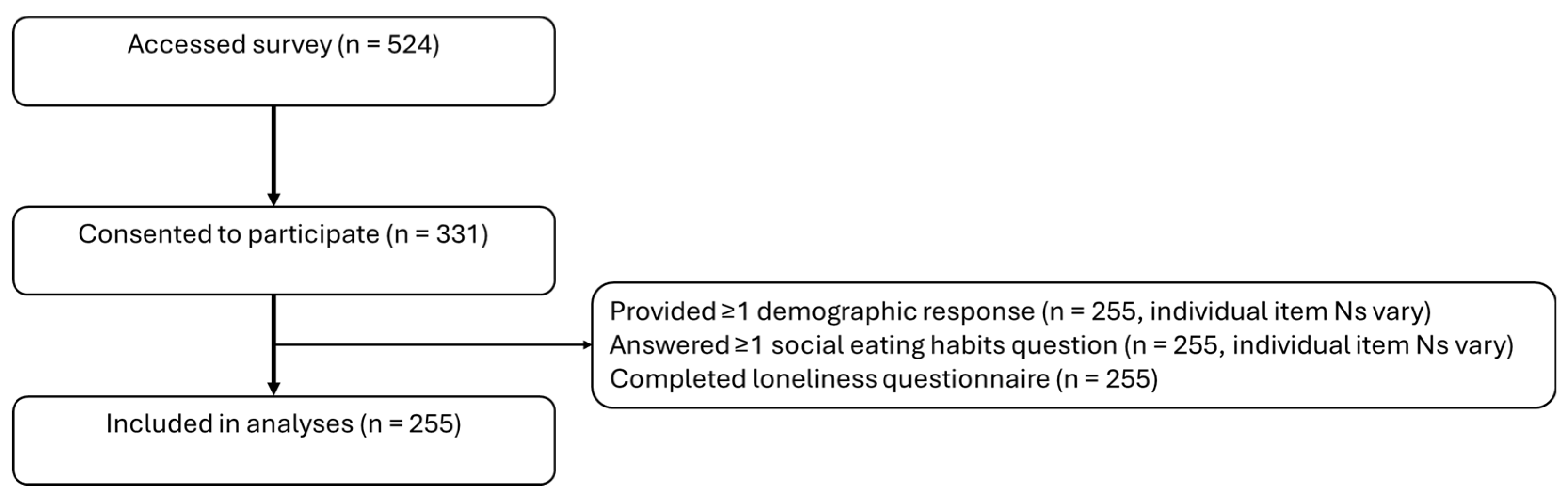
Table 2.
Levels of loneliness amongst participants.
| Variable | Mean (SD) / N (%) |
| Loneliness (ULS-8) total score | 18.27 (4.897) |
| Loneliness (Categories) | |
| No severe loneliness indicated | 214 (83.9%) |
| Severe loneliness indicated | 41 (16.1%) |
* N = 255.
Disclaimer/Publisher’s Note: The statements, opinions and data contained in all publications are solely those of the individual author(s) and contributor(s) and not of MDPI and/or the editor(s). MDPI and/or the editor(s) disclaim responsibility for any injury to people or property resulting from any ideas, methods, instructions or products referred to in the content. |
© 2026 by the authors. Licensee MDPI, Basel, Switzerland. This article is an open access article distributed under the terms and conditions of the Creative Commons Attribution (CC BY) license (http://creativecommons.org/licenses/by/4.0/).
Copyright: This open access article is published under a Creative Commons CC BY 4.0 license, which permit the free download, distribution, and reuse, provided that the author and preprint are cited in any reuse.


