

Submitted:
25 March 2026
Posted:
26 March 2026
You are already at the latest version
Abstract
Combination of antiparasitic drugs with different mechanisms of action has been suggested as an effective strategy to delay the development of parasite resistance. Upon the need to understand the pharmacological basis of drug combinations, the current study evaluated the potential pharmacokinetic (PK) interactions and the clinical efficacy (pharmacodynamic response) occurring after the subcutaneous administration of ivermectin (IVM) and levamisole (LEV) given both separately and co-administered to parasitized calves on three commercial farms (A, B and C). Sixty (60) male calves naturally infected with gastrointestinal nematodes were randomly allocated into three groups (n= 15): IVM: treated with IVM by subcutaneous injection (0.2 mg/kg); LEV: treated subcutaneously with LEV (8 mg/kg); IVM+LEV: simultaneously treated with IVM and LEV (2 subcutaneous injections at the same dose rates). Seven (7) animals from each treated group (farm C) were randomly selected to perform the PK study. Drug concentrations were measured by HPLC. The therapeutic response (efficacy) was determined at 14 days after treatment by the fecal eggs reduction test (FECRT). The mean IVM area under the concentration vs time curve (AUC) obtained after administration of IVM alone (274 ng.d/mL) was similar to that obtained when IVM was co-administered with LEV (295 ng.d/mL). Likewise, mean LEV AUC values were similar after LEV administration alone (8.90 µg.h/mL) or combined with IVM (9.11 µg.h/mL). No adverse PK interactions were observed after the combined treatment, with similar PK parameters (P>0.05) obtained between the single-drug and the combination-based strategies. On farm A, the overall therapeutic responses (clinical efficacy) were 38% (IVM), 99% (LEV) and 100% (IVM+LEV). While the gastrointestinal nematode species Cooperia spp. and Haemonchus spp. survived the IVM treatment, Haemonchus spp. survived the LEV treatment. Similarly, total efficacies were 42% (IVM), 99% (LEV) and 100% (IVM+LEV) on farm B, and 54% (IVM), 99% (LEV) and 100% (IVM+LEV) on farm C. On those farms, IVM was ineffective against Cooperia spp. and/or Haemonchus spp., while LEV failed to control Ostertagia spp. Remarkably, the combination of both molecules was the only treatment that achieved 100% efficacy against all nematode genera (Cooperia, Ostertagia, Haemonchus and Oesophagostomum spp.). Based on the described PK-pharmacodynamic (PK-PD) assessment, the IVM+LEV combination appears to be a promising pharmacological option for controlling resistant gastrointestinal nematodes in cattle, with the additional potential to delay the progression of nematode anthelmintic resistance. Overall, the work described here contributes with sound and original pharmacology data useful to optimize parasite control in livestock. This drug combination strategy may enhance treatment efficacy while promoting more sustainable parasite management practices in cattle production systems.
Keywords:
ivermectin
; levamisole
; anthelmintic combination
; pharmacokinetic
; pharmacodynamic assessment
; resistant nematodes
1. Introduction
Drug resistance in gastrointestinal (GI) nematodes of livestock has escalated globally and is now considered one of the major sanitary and productivity constraints in ruminant production systems [1,2]. Despite the urgent need for new antiparasitic chemical classes with novel molecular targets, drug discovery and development have progressed slowly [3]. Consequently, optimizing the pharmacological use of existing compounds has become a research priority and a central strategy to mitigate resistance development. In this scenario, the integration of drug pharmacokinetic (PK) and pharmacodynamic (PD) knowledge is critical to design rational parasite control programs for livestock animals [4,5].
The reduced therapeutic response of single-drug treatments has accelerated the search of combination therapies as a resistance-management strategy. Combining anthelmintic drugs from different chemical classes can delay resistance development by reducing the survival of worms resistant to one compound [6,7]. The theoretical basis for drug combinations is grounded in population genetics principles: when two actives with independent modes of action are administered simultaneously at fully effective doses, parasites resistant to one compound are expected to be removed by the second. Consequently, only worms carrying resistance alleles to both drugs would survive, and these multi-resistant genotypes are predicted to occur at lower frequencies and often carry fitness costs [8].
Ivermectin (IVM) and levamisole (LEV) are two anthelmintics that differ markedly both on their pharmacological properties and on their mechanisms of action (see Figure 1). IVM is a potent broad-spectrum antiparasitic drug, extensively used in veterinary medicine. It is a highly lipophilic compound belonging to the avermectin´s macrocyclic lactone family and is one of the most widely used endectocides (active against endo and ectoparasites) in livestock animals. It is highly effective against adults as well as developing and hypobiotic larvae of most GI nematodes, lungworms [9] and many arthropods ectoparasites in cattle [10]. After subcutaneous (SC) administration in cattle, its low aqueous solubility results in slow absorption from the injection site, which contributes to prolonged systemic availability [11]. IVM is extensively distributed to peripheral tissues, including gastrointestinal mucosa, lungs, and skin [12], where concentrations may exceed in plasma and persist for extended periods, supporting sustained antiparasitic activity. From a mechanistic standpoint IVM binds with high affinity to glutamate-gated chloride channels in nerve and muscle cells, increasing membrane permeability to chloride ions and inducing flaccid paralysis and death [10,13].
Conversely, LEV is the main imidazothiazole anthelmintic used in veterinary medicine. It is a narrow spectrum nematodicidal drug approved for use in several animal species, being active against GI and pulmonary nematode parasites, but it has no efficacy against cestodes or trematodes [14]. In comparison with IVM, LEV is rapidly absorbed after parenteral administration, reaching peak plasma concentrations within 0.5–2 hours in cattle, is widely distributed, and is rapidly eliminated, with short elimination half-lives (approximately 4–6 hours) [15,16]. With regard to its mechanism of action, and in clear contrast to IVM, LEV induces spastic paralysis by selectively activating nicotinic acetylcholine receptor ion channels located on nematode nerve and muscle cells [17]. Overall, LEV is characterized by a rapid neuromuscular action, short systemic persistence, and broad efficacy against adult nematodes. The independence of the molecular targets of IVM and LEV supports the rationale behind the proposed combined administration in cattle under assessment in the current work.
However, when two molecules are co-administered in vivo, potential PK interactions (e.g., interferences on absorption, systemic exposure, tissue distribution, elimination rates) or PD interactions (additive, synergistic, or antagonistic effects) must be considered. Given that systemic exposure is a key determinant of drug efficacy against target parasites, especially in cattle where formulation and route of administration influence drug disposition [4], integrated PK/PD evaluations under field conditions are essential before recommending the practical use of combined treatments. Therefore, pharmaco-parasitological studies assessing both drug exposure and clinical responses are required to determine whether the IVM+LEV combination provides optimized efficacy while contributing to resistance mitigation in cattle. The current study evaluated the therapeutic response (anthelmintic efficacy) and the potential PK interactions occurring after the SC administration of IVM and LEV given both separately and co-administered to calves naturally infected with resistant GI nematodes on three commercial cattle farms.
2. Materials and Methods
2.1. Field Trial and Animals
The study was conducted on three commercial cattle farms located in the Humid Pampean Region, Argentina. In these farms, as in most farms of Argentina, beef production was based on a grazing system. The resistance status of nematode populations on each farm was previously determined by the faecal egg count reduction test (FECRT) [18]. All the farms included in the study (farms A, B and C) have a predominance of IVM-resistant nematode population.
Forty-five (45) male Aberdeen Angus calves, aged 9–12 months old, naturally infected with GI nematodes resistant to ML, were recruited in this trial. On day -1, all the animals were checked for worm egg per gram (EPG) counts, ear-tagged, and the individual body weights were recorded. Animals with at least 100 EPG on day -1 were selected for inclusion in the study. Experimental animals had an average of 697 EPG counts ranging from 280 to 1400 on farm A, 537 EPG counts ranging from 100 to 1820 on farm B, and 337 EPG counts ranging from 200 to 1140 on farm C. The mean EPG were similar (P> 0.05) across all groups on each farm at the beginning of the trial.
Animal procedures and management protocols were approved by the Ethics Committee (act 11/2020) of the Facultad de Cs. Veterinarias, Universidad Nacional del Centro de la Provincia de Buenos Aires (UNCPBA), Tandil, Argentina.
2.2. Experimental Design and Treatments
Selected animals were blocked by pre-treatment EPG counts and randomly assigned into groups of 15 animals each. The experimental groups were:; IVM: animals were treated with IVM (Ivomec®, a propylene glycol 60%/glycerol formal 40% (v/v) 1% solution, Boehringer Ingelheim, Argentina) by the SC route at 0.2 mg/kg; LEV: animals were treated with LEV (Ripercol®, a 18.8% solution od LEV phosphate, , Zoetis, Argentina) by the SC route at 8 mg/kg; and IVM+LEV: animals were treated with both IVM (Ivomec®) and LEV (Ripercol®) (separate injections) administered at 0.2 and 8 mg/kg, respectively. Adverse events were assessed based on clinical observations throughout the 24 hours after each anthelmintic treatment.
2.3. PK Trial
The PK trial was carried out on farm C. Seven randomly selected animals from each treated group were used in the PK trial. Blood samples (10 mL) were taken from the jugular vein in heparinised Vacutainer® tubes (Becton Dickinson, NJ, USA) as follows: IVM and IVM+LEV groups: before treatment and at 2, 4, 6, 8 and 12 h and 1, 3, 5, 7, 15, 20 and 30 days post-treatment; LEV and IVM+LEV: before treatment and at 1, 2, 4, 6, 8, 10, 12, 16, 20, 24 and 28 h post-treatment. Plasma was separated by centrifugation at 3000 g for 15 min, placed into plastic tubes and frozen at -20°C until analysis by High Performance Liquid Chromatography (HPLC).
2.4. Analytical Procedures
2.4.1. IVM Analysis
The extraction of IVM from spiked and experimental plasma samples was carried out following an adaptation of the technique described by Lifschitz [19]. An aliquot of 0.25 mL of plasma sample was combined with doramectin (DRM) (used as internal standard) and then 1 mL of acetonitrile was added to each sample. After mixing for 20 min, samples were sonicated in an ultrasonic bath for 10 min (Transonic 570/H, Laboratory Line Instruments Inc., Melrose Park, IL, USA). The solvent-sample mixture was centrifuged at 2000 g during 15 min and the supernatant was manually transferred into a tube and concentrated to dryness under a stream of nitrogen. The resuspension was carried out with a solution of N-methylimidazole (Sigma Chemical, St. Louis, MO, USA) in acetonitrile (1:1) [20]. Derivatization was initiated by adding trifluoroacetic anhydride (Sigma Chemical, St Louis, MO, USA) solution in acetonitrile (1:2). Finally, an aliquot of this solution was injected directly into the chromatographic system. IVM concentrations were determined by HPLC using a Shimadzu 10 A-HPLC system with a fluorescence detector (Shimadzu, RF-10 Spectrofluorometric detector, Kyoto, Japan). Calibration curves were prepared in the range between 0.2 and 100 ng/mL. The linear regression lines for IVM showed correlation coefficients ≥0.99. The LOQ was established at 0.2 ng/mL. The mean recovery percentages for concentrations ranging between 0.2 and 100 ng/mL (n = 6) was 88% with CV of 10.5%.
2.4.2. LEV Analysis
The extraction of LEV from spiked and experimental plasma samples was carried out following an adaptation of the technique described by Canton [15]. Plasma samples (1000 µL) were placed into C18 SPE cartridges (Strata®, 100 mg, Phenomenex, CA, USA) previously conditioned. They were sequentially washed with 1 mL of water, eluted with 1.5 mL of HPLC grade methanol and, concentrated to dryness under a stream of nitrogen at 56°C in a water bath. The dried residue was reconstituted with 250 µL of mobile phase. Finally, 100 µL of this solution was injected into the chromatographic system. LEV concentrations were determined by HPLC using a Shimadzu HPLC system with autosampler (Shimadzu Corporation, Kyoto, Japan). HPLC analysis was undertaken using a C18 column (Phenomenex, 5 µm, 4.6 mm x 250 mm) and a phosphoric acid 85% in triethylamine/methanol/acetonitrile/ water (0.32⁄0.5⁄15.5/83.36) mobile phase at a flow rate of 1.2 mL⁄min. There was no interference of endogenous compounds in the chromatographic determinations. Calibration curve was prepared in the range between 0.10 and 2 µg⁄mL. The linear regression lines for LEV analyzed showed correlation coefficients of 0.999. The mean recovery percentage for concentrations ranging between 0.10 and 2 µg/mL (n= 6) was 80% with CV of 10.3%. The LOQ was established at 0.10 µg/mL.
2.5. Pharmacokinetic Analysis of the Data
Data concentration profiles for each analyte obtained after the treatment of each individual animal were analyzed using a non-compartmental approach with version 2.0 of the PkSolutions software (Summit Research Service, CO, US). The peak concentration (Cmax) and time to peak concentration (Tmax) were recorded directly from the measured concentration data. Pharmacokinetic parameters were determined. The elimination half-life (T½el) was calculated as ln2/λel, where λel is the elimination rate constant. The rates were calculated by performing regression analysis using data points belonging to the terminal phase concentration-time plot. The area under the plasma concentration-time curve from zero up to the quantification limit (AUC0-t) was calculated using the trapezoidal rule [21] and further extrapolated to infinity (AUC0-∞) by dividing the last experimental concentration by the terminal elimination rate constant (λel). Statistical moment theory was applied to calculate the mean residence time (MRT) according to Perrier [22]. PK analysis of the experimental data was performed using a non-compartmental model method.
2.6. Anthelmintic Efficacy Trial: Faecal Egg Count Reduction Test and Coprocultures
Faecal samples were individually collected directly from the rectum of each calf during pre-treatment (day -1) and again on day 14 post-treatment. EPG counts were performed by a modified McMaster technique with a sensitivity of 10 EPG [23]. Additionally, 10 g of faeces (obtained from an individual animal and/or from a pool of each experimental group) was used to prepare coprocultures on each sampling day. The nematode genera were identified through the third-stage larvae (L3) recovered from these coprocultures [24]. L3 were collected by the Baermann technique and approximately 100 L3 were differentiated from each sample. Thus, the relative participation of each genus per experimental group was determined.
The anthelmintic efficacy of the different treatments was assessed by the FECRT, according to the recommendations of the last WAAVP guidelines [25]. The data analysis was conducted using the FECRT web-based platform (www.fecrt.com), applying the delta method as described by Levecke [26].
In addition, efficacy against different genera was calculated by partitioning the mean faecal egg count of each treatment group pre and post treatment, by the proportion of L3 of each genus in the corresponding coproculture [27].
2.7. Statistical Analysis of the Data
The PK parameters and concentration data are reported as arithmetic mean ± Standard Deviation (SD). PK parameters for IVM and LEV calculated after the single or combined administration of IVM and LEV were statistically compared using Student t-test or ANOVA+Tukey. Faecal egg counts (reported as arithmetic mean ± SD) were compared by non-parametric Kruskal-Wallis test. A value of P<0.05 was considered statistically significant. The statistical analysis was performed using the Instat 3.0 software (Graph Pad Software, CA, USA).
3. Results
3.1. Pharmacokinetic Trial
IVM was the main analyte recovered in plasma after SC administration of IVM to beef cattle. The mean (± SD) plasma concentrations profiles of IVM after its administration both alone and co-administered with LEV are shown in Figure 2. IVM plasma levels were measured up to 30 days post-treatment. Table 1 summarizes the main PK parameters for IVM obtained after the administration of IVM to beef cattle either alone or co-administered with LEV. No statistical differences between single and combined based-treatments were observed (P>0.05) for all experimental groups. Therefore, the presence of LEV did not affect the plasma disposition kinetics of IVM after the combined treatment.
LEV was the main analyte recovered in plasma after SC administration of LEV. Figure 3 shows the mean (± SD) plasma concentrations profiles of LEV after its SC administration both alone and co-administered with IVM. This compound was detected in plasma between 1 h and 28 h post-treatment. No statistical differences between both treatments were observed (P>0.05). Therefore, the plasma disposition kinetics for LEV did not show differences between the single-drug and the combined-based treatment. Table 2 summarizes the plasma PK parameters for LEV both alone and co-administered with IVM.
3.2. Anthelmintic Efficacy Trial
All anthelmintic treatments were well tolerated as no adverse events were observed in treated animals. Table 3 presents the overall faecal egg counts recorded across all farms at day 14 post-treatment, along with the lower and upper 90% confidence intervals (CI) and the corresponding nematode population status. The analysis of the 90% CI confirmed the presence of IVM-resistant nematodes on all the farms included in the study. In fact, the 90% CI ranged from 3.3% to 83% across all farms. In contrast, regarding LEV, the 90% CI ranged between 96.8% and 100%, indicating that the nematode population on the three farms were susceptible to this anthelmintic. The mean EPG counts were not statistically different between the treatment groups on Day -1 (P>0.05) but differed on Day 14 (P<0.05) on all farms. In this context, the EPG counts after LEV alone and co-administered with IVM were significantly (P<0.05) lower than the egg counts after IVM. Although no significant differences in post-treatment EPG counts were found between LEV alone and IVM+LEV, the combined treatment was the only one that reached 100% anthelmintic efficacy.
The anthelmintic efficacies against Cooperia spp., Haemonchus spp., Ostertagia spp. and Oesophagostomum spp. for the different treatments are shown in Table 4. On farms A and B IVM failed to control Haemonchus spp. and Cooperia spp., showing efficacies ranging from 8.7% to 87%. On farm C, Cooperia spp. was the only genus resistant to IVM (FECR 40.9%). While on farm A some Haemonchus spp. survived after LEV treatment, on farms B and C LEV failed to control Ostertagia spp. (93% and 90% FECR, respectively). Remarkably, the use of IVM in combination with LEV achieved a 100% efficacy against all GI genera.
4. Discussion
The simultaneous pharmaco-parasitological approach followed in the work presented here is disciplinarily innovative and constitutes a tool of relevant scientific value for the characterization of the relationship among pharmaceutical aspects, pharmacokinetic behaviour and therapeutic response, necessary to optimize parasite control in livestock animals. The main goal of the current work was to assess the pharmacokinetic and pharmacodynamic (drug effect) interactions after the combined use of IVM and LEV in cattle under kept natural field conditions. Such integrated PK/PD assessments are essential to support the rational use and recommendation of drug combination to improve anthelmintic treatments.
Drug resistance in GI nematodes of livestock is a worldwide inconvenient now considered one of the major constraints in animal production. In Argentina, resistance to IVM was detected in 93% of cattle farms included in a nationwide survey [28]. Accordingly, the analysis of the 90% confidence intervals on the three farms included in the current study confirmed the presence of IVM-resistant nematode populations, which creates an ideal scenario for the pharmacological evaluation of drug combinations as a challenge of scientific value. Notably, LEV was the only anthelmintic for which no resistance was reported in that study [28], highlighting its preserved therapeutic efficacy under field conditions. Consistent with this report, the nematode populations on farms A, B and C were susceptible to LEV. In this context, nematodicidal combinations may represent a valuable strategy to delay the development of anthelmintic resistance and to control IVM-resistant parasite populations [4]. Indeed, modelling studies [29,30,31] indicate that the effectiveness of anthelmintic combinations largely depends on their use before resistance emerges to one or more of the active components. Considering these aspects, the combined use of IVM and LEV to improve the treatment against GI helminth was investigated here.
When different anthelmintics are administered simultaneously, it is necessary to determine their disposition kinetics to understand any potential PK adverse interaction. Mean plasma concentration-time profiles obtained in the current study were similar to those reported for both IVM [11,32] and LEV [15] in previous trials in cattle. It is well established that the persistence of the broad-spectrum antiparasitic activity of IVM and other macrocyclic lactone endectocides, relies on their slow disposition kinetics and pattern of plasma/tissues exchange in the host. The time of parasite exposure to active drug concentrations determines the efficacy and/or persistence of activity in ruminants [33,34]. As previously shown, IVM prepared in a non-aqueous formulation for SC injection is slowly absorbed to reach its plasma Cmax (30-36 ng/ml) at 3 days after administration, showing an extensive systemic exposure with a mean residence time of approximately 8 days (see Table 1). This pharmacokinetic behaviour characterized for a good and slow absorption, extensive plasma/tissues exchange, low metabolism rate, large entero-hepatic recycling and long persistence in the bloodstream (measured up to 30 days post-treatment) is well in agreement with its high lipophilicity. These kinetic features were not affected after its co-administration with LEV in the current study, which is relevant for the purpose of their combined use in cattle.
It is very scarce the information available on LEV PK in cattle. Consistently, with those earlier PK descriptions, SC administration of LEV (8 mg/kg) yielded a Cmax of 2.17 ± 0.76 µg/mL and an AUC∞ of 9.20 ± 2.77 µg·h/mL. Although the relatively short persistence of LEV (T½el 6.22±1.08 hours) would not mitigate the selective pressure exerted by the longer-acting component during the terminal phase of the IVM elimination curve (T½el 4.62±0.95 days), this scenario does not differ from that observed when IVM is administered as a single active compound [6]. Therefore, the initial overlap between the time-to-kill profiles of IVM and LEV (at the early stages post-treatment) following their co-administration is critical to achieve simultaneous “lethal” systemic exposure, thereby maximizing the pharmacodynamic effect and overall therapeutic efficacy.
The concurrent administration of two drug compounds may lead to PK interactions affecting systemic exposure of one or both compounds. Therefore, evaluation of potential PK interferences is essential when combination therapies are considered. In the current study, no adverse PK interactions were observed after the combined SC administration of IVM and LEV in calves. In fact, comparative analysis revealed no statistically significant differences in any of the assessed PK parameters between the single-drug and combination treatments (Table 1). Additionally, the plasma concentration-time curves were essentially overlapping under both treatment conditions (Figure 2 and Figure 3), indicating the absence of clinically relevant PK interactions.
PK interactions have been more widely characterized in sheep. Alvarez [35] demonstrated a PK interaction between albendazole (ABZ) and IVM following co-administration in lambs. Likewise, Suarez [36] reported drug-drug PK interactions after the combined administration of IVM, ABZ, and LEV. Those findings suggest that the simultaneous administration of anthelmintic agents may modify the systemic exposure and the disposition profiles of one or more compounds. Although PK interactions among nematodicidal drugs have been less extensively investigated in cattle, Leathwick [37] observed a significantly greater systemic availability of abamectin when administered orally in combination with LEV compared to its single-active oral administration. In contrast, no differences were detected in LEV plasma profiles between single and combined treatments in the same study. Consistent with those findings, the current work did not reveal significant PK alterations either for IVM or LEV following their subcutaneous co-administration in cattle. Similarly, Cromie [38] reported no differences in the plasma PK profiles of IVM and closantel administered subcutaneously to cattle, either alone or as a combined formulation. Moreover, no PK interactions were observed after the combined subcutaneous administration of LEV and RBZ in calves [15]. Overall, the PK outcomes obtained in the current study are in agreement with previously published data on other anthelmintic combinations in cattle, supporting the conclusion that the PK of each active compound are not significantly influenced by the presence of the co-administered drug.
The independence of the molecular targets of IVM and LEV (different modes of antiparasitic action) supports the rationale behind the proposed combined administration in cattle under assessment in the current work. GI parasitism in cattle commonly involves multiple parasite genera with varying susceptibility profiles. The co-administration of distinct drugs with different mechanism of action may improve overall efficacy by ensuring that parasites surviving exposure to one compound are effectively targeted by the other, thereby optimizing systemic exposure and enhancing the pharmacodynamic response of the combination. An IVM failure to control the GI nematodes Cooperia spp. and Haemonchus spp. was observed, which is consistent with previous reports [2,28,32,39]. Since Cooperia spp. is a dose limiting species for IVM, this is the nematode genus in which IVM resistance would be first expected [40]. Although LEV alone achieved high overall therapeutic activities, it did not show effective control against all the GI nematodes present in the calves on farms B and C. Indeed, on these farms, LEV offered only a limited control in Ostertagia spp. (93% and 90% FECR, respectively). These findings are also consistent with those from a field trial in the United States, in which the overall efficacy of LEV, against all stages of Ostertagia ostertagi, was consistently low [41]. A similar reduced efficacy of LEV has been reported in other countries (i.e New Zealand) against different GI nematodes [42]. Remarkably, the experimental use of IVM in combination with LEV in the current trial achieved a 100% efficacy, with a maximum therapeutic activity (pharmacodynamic assessment) against all GI parasite genera, supporting the rationale of using this nematodicidal combination. Notably, the assayed combination was the only treatment that achieved a full therapeutic response (100% clinical efficacy) on all the farms. This outcome aligns with the expected additive synergic activity between the two molecules [7], whereby the combined effect corresponds to the sum of the individual drug effects [43].
The detrimental effects of inadequate control of resistant GI nematodes on cattle productivity have been well established [44,45,46]. This negative impact was observed on farm 1 in the trial described here, where the mean weight gain after 44 days was 0.6 kg (IVM alone), 5.9 (LEV alone) and reaching up to 8.4 kg for the combined IVM+LEV treatment, reflecting the better performance in parasite control and weight gain after administration of the concurrent treatment. If LEV still retaining high efficacy, their combined use may serve as a valuable pharmacological strategy to delay the development of resistance. Ideally, when an anthelmintic treatment achieves 100% efficacy (as observed in the present study) selection for resistant parasites is effectively prevented [47]. Based on the described PK-PD assessment, the combination of a long-acting drug (IVM) with a short acting compound (LEV), appears to be a promising pharmacological option for controlling resistant GI nematodes in cattle, with the additional potential to delay the progression of nematode anthelmintic resistance. Overall, the work presented here contributes with sound pharmacology data highly useful to optimize parasite control in livestock. The described drug combination supported with original scientific data, may contribute to enhance the antiparasite therapeutic outcome, while promoting more sustainable parasite management practices in cattle production systems.
Author Contributions
Conceptualization, C.C., C.L. and L.A.; Methodology, C.C., L.A., L.C. L.C. M.P.M.; Validation, C.C, L.M., L.C. and L.C.; Formal Analysis, C.C., L.M., L.C.; Data Curation, C.C, L.C., M.P.M; Writing – Original Draft Preparation, C.C., C.L., L.A.; Writing – Review & Editing, C.C., C.L., L.A, L.M., L.C., L.C. M.P.M; Project Administration, C.C; Funding Acquisition, C.C, C.L.
Funding
This study was funded by Consejo Nacional de Investigaciones Científicas y Técnicas (CONICET) (PIBAA 1286) from Argentina. The authors would like to thank the farmers for collaborating with this study.
Conflicts of Interest Statement
There are no potential conflicts of interest associated with this study.
References
- Kaplan, R. Biology, Epidemiology, Diagnosis, and Management of Anthelmintic Resistance in Gastrointestinal Nematodes of Livestock. Vet. Clin. North Am.- Food Anim. Pract. 2020, 36, 17-30. [CrossRef]
- Borges, F. de A., Do Amarante, A.F.T., Lopes, W.D.Z., Canton, C., Alvarez, L., Lifschitz, A. Anthelmintic resistance of gastrointestinal nematodes in cattle in Brazil and Argentina-current status and global perspectives. Rev. Bras. Parasitol. Vet. 2024, 33, e010524. [CrossRef]
- Nixon, S.A., Welz, C., Woods, D.J., Costa-Junior, L., Zamanian, M., Martin, R.J. Where are all the anthelmintics? Challenges and opportunities on the path to new anthelmintics. Int. J. Parasitol. Drugs Drug Resist. 2020, 14, 8–16. [CrossRef]
- Lanusse, C., Canton, C., Virkel, G., Alvarez, L., Costa-Junior, L., Lifschitz, A. Strategies to Optimize the Efficacy of Anthelmintic Drugs in Ruminants. Trends Parasitol. 2018, 34, 664–682. [CrossRef]
- Gilleard, J.S., Kotze, A.C., Leathwick, D., Nisbet, A.J., McNeilly, T.N., Besier, B. A journey through 50 years of research relevant to the control of gastrointestinal nematodes in ruminant livestock and thoughts on future directions. Int. J. Parasitol. 2021, 51, 1133-1151. [CrossRef]
- Geary, T.G., Hosking, B.C., Skuce, P.J., von Samson-Himmelstjerna, G., Maeder, S., Holdsworth, P., Pomroy, W., Vercruysse, J. World Association for the Advancement of Veterinary Parasitology (W.A.A.V.P.) Guideline: Anthelmintic combination products targeting nematode infections of ruminants and horses. Vet. Parasitol. 2012, 190, 306–316. [CrossRef]
- Bartram, D.J., Leathwick, D.M., Taylor, M.A., Geurden, T., Maeder, S.J. The role of combination anthelmintic formulations in the sustainable control of sheep nematodes. Vet. Parasitol. 2012, 186, 151–158. [CrossRef]
- Leathwick, D.M. Managing anthelmintic resistance – Parasite fitness, drug use strategy and the potential for reversion towards susceptibility. Vet. Parasitol. 2013, 198, 145–153. [CrossRef]
- Egerton, J., Eary, C., Suhayda, D. The anthelmintic efficacy of ivermectin in experimentally infected cattle. Vet. Parasitol. 1981, 8, 59–70. [CrossRef]
- Campbell, W., Fisher, M.H., Stapley, E.O., Albers-Schoenberg, G., Jacob, T.A. Ivermectin: a potent new antiparasitic agent. Science. 1983, 221, 823–828. [CrossRef]
- Lanusse, C., Lifschitz, a, Virkel, G., Alvarez, L., Sánchez, S., Sutra, J.F., Galtier, P., Alvinerie, M. Comparative plasma disposition kinetics of ivermectin, moxidectin and doramectin in cattle. J. Vet. Pharmacol. Ther. 1997, 20, 91–99. [CrossRef]
- Lifschitz, A., Virkel, G., Sallovitz, J., Sutra, J.F., Galtier, P., Alvinerie, M., Lanusse, C. Comparative distribution of ivermectin and doramectin to parasite location tissues in cattle. Vet. Parasitol. 2000, 87, 327–338. [CrossRef]
- Shoop, W.L., Mrozik, H., Fisher, M.H. Structure and activity of avermectins and milbemycins in animal health. Vet. Parasitol.1995, 59, 139–156. [CrossRef]
- Courtney, C. H., & Roberson, E. Antinematodal drugs. In Adams R. (Ed.), Veterinary Pharmacology and Therapeutics. Iowa, USA: Iowa State University Press. 1995.
- Canton, C., Ceballos, L., Domínguez, M.P., Moreno, L., Fiel, C., Bernat, G., Farías, C., Lanusse, C., Alvarez, L. Pharmaco-parasitological evaluation of the ricobendazole plus levamisole nematodicidal combination in cattle. J. Vet. Pharmacol. Ther. 2018, 41, 83–91. [CrossRef]
- Lanusse, C.; Imperiale, F.; Lifschitz, A. Macrocyclic Lactones: Endectocide Compounds, in: Riviere et al. (Eds), Veterinary Pharmacology and Therapeutics. 10th ed. Ed. Wiley. 2017.
- Robertson, S., Martin, R. Levamisole-activated single-channel currents from muscle of the nematode parasite Ascaris suum. Br. J. Pharmacol. 1993, 108, 170–178. [CrossRef]
- Canton, C. Combinación de principios activos: evaluación farmacológica de su impacto en el control parasitario en bovinos (PhD Thesis). Facultad de Ciencias Veterinarias, Universidad Nacional del Centro de la Provincia de Buenos Aires, Argentina. 2018.
- Lifschitz, A., Virkel, G., Pis, A., Imperiale, F., Sanchez, S., Alvarez, L., Kujanek, R., Lanusse, C. Ivermectin disposition kinetics after subcutaneous and intramuscular administration of an oil-based formulation to cattle. Vet. Parasitol. 1999, 86,203–215. [CrossRef]
- De Montigny, P., Shim, J., Pivinichny, J. Liquid chromatographic determination of ivermectin with trifluoro-acetic anhydride and N-methylimidazole as the derivatization reagent. J. Pharm. Biomed. Anal. 1990, 8,507-511.
- Gibaldi, M., Perrier, D. Pharmacokinetics. 2nd ed, Revised and Expanded. Marcel Dekker, New York, USA. 1982.
- Perrier, D., Mayersohn, M. Non-compartmental determination of the steady-state volume of distribution for any mode of administration. J. Pharm. Sci. 1982, 71,372–373. [CrossRef]
- Roberts, F., O’sullivan, P. Methods for egg counts and larval cultures for strongyles infesting the gastrointestinal tract of cattle. Crop Pasture Sci. 1950, 1, 99–102. [CrossRef]
- MAFF (Ministry of Agriculture, Fisheries and Food). Manual of Veterinary Parasitological Laboratory Techniques. Her Majesty’s Stationery Office, London. 1986.
- Kaplan, R.M., Denwood, M.J., Nielsen, M.K., Thamsborg, S.M., Torgerson, P.R., Gilleard, J.S., Dobson, R.J., Levecke, B. World Association for the Advancement of Veterinary Parasitology (W.A.A.V.P.) guideline for diagnosing anthelmintic resistance using the faecal egg count reduction test in ruminants, horses and swine. Vet. Parasitol. 2023, 109936. [CrossRef]
- Levecke, B., Kaplan, R.M., Thamsborg, S.M., Torgerson, P.R., Vercruysse, J., Dobson, R.J. How to improve the standardization and the diagnostic performance of the fecal egg count reduction test? Vet. Parasitol. 2018, 253, 71–78. [CrossRef]
- McKenna, P. The detection of anthelmintic resistance by the faecal egg count reduction test: An examination of some of the factors affecting performance and interpretation. N. Z. Vet. J. 1990, 38, 142–147. [CrossRef]
- Cristel, S., Fiel, C., Anziani, O., Descarga, C., Cetrá, B., Romero, J., Fernández, S., Entrocasso, C., Lloberas, M., Medus, D., Steffan, P. Anthelmintic resistance in grazing beef cattle in central and northeastern areas of Argentina — An update. Vet. Parasitol. Reg. Stud. Reports 2017, 9, 25–28. [CrossRef]
- Dobson, R., Hosking, B.C., Besier, R.B., Love, S., Larsen, J.W.A., Rolfe, P.F., Bailey, J.N. Minimising the development of anthelmintic resistance, and optimising the use of the novel anthelmintic monepantel, for the sustainable control of nematode parasites in Australian sheep grazing systems. Aust. Vet. J. 2011, 89, 160–166. [CrossRef]
- Leathwick, D. Modelling the benefits of a new class of anthelmintic in combination. Vet. Parasitol. 2012, 186, 93–100. [CrossRef]
- Leathwick, D., Waghorn, T.S., Miller, C., Candy, P., Oliver, A.-M. Managing anthelmintic resistance – Use of a combination anthelmintic and leaving some lambs untreated to slow the development of resistance to ivermectin. Vet. Parasitol. 2012, 187, 285–294. [CrossRef]
- Canton, C., Canton, L., Domínguez, P., Moreno, L., Lanusse, C., Alvarez, L., Ceballos, L. Field trial assessment of ivermectin pharmacokinetics and efficacy against susceptible and resistant nematode populations in cattle. Vet. Parasitol. 2018, 256, 43–49. [CrossRef]
- Lanusse, C., Prichard, R. Relationship between pharmacological properties and clinical efficacy of ruminant anthelmintics. Vet. Parasitol. 1993, 49, 123–158. [CrossRef]
- Lifschitz, A., Lanusse, C., Alvarez, L. Host pharmacokinetics and drug accumulation of anthelmintics within target helminth parasites of ruminants. N. Z. Vet. J. 2017, 65, 176–184. [CrossRef]
- Alvarez, L., Lifschitz, A., Entrocasso, C., Manazza, J., Mottier, L., Borda, B., Virkel, G., Lanusse, C. Evaluation of the interaction between ivermectin and albendazole following their combined use in lambs. J. Vet. Pharmacol. Ther. 2008, 31, 230–239. [CrossRef]
- Suarez, G., Alvarez, L., Castells, D., Moreno, L., Fagiolino, P., Lanusse, C. Evaluation of interactions after administration of a levamisole, albendazole and ivermectin triple combination in lambs. Vet. Parasitol. 2014, 201, 110–119. [CrossRef]
- Leathwick, D.M., Miller, C.M., Sauermann, C.S., Candy, P.M., Ganesh, S., Fraser, K., Waghorn, T.S. The efficacy and plasma profiles of abamectin plus levamisole combination anthelmintics administered as oral and pour-on formulations to cattle. Vet. Parasitol. 2016, 227, 85-92. [CrossRef]
- Cromie, L., Ferry, M., Couper, A., Fields, C., Taylor, S.M. Pharmacokinetics of a novel closantel/ivermectin injection in cattle. J. Vet. Pharmacol. Ther. 2006, 29, 205–211. [CrossRef]
- Ramos, F., Portella, L., Rodrigues, F. de S., Reginato, C., Pötter, L., Cezar, A., Sangioni, L., Vogel, F. Anthelmintic resistance in gastrointestinal nematodes of beef cattle in the state of Rio Grande do Sul, Brazil. Int. J. Parasitol. Drugs Drug Resist. 2016, 6, 93–101. [CrossRef]
- Benz, G., Roncalli, R., Gross., S. Use of ivermectin in cattle, sheep, goats, and swine. In: W.C. Campbell (Ed.), Ivermectin and Abamectin. Springer, Berlin. 1989.
- Williams, J. Efficacy of albendazole, levamisole and fenbendazole against gastrointestinal nematodes of cattle, with emphasis on inhibited early fourth stage Ostertagia ostertagi larvae. Vet. Parasitol. 1991, 40, 59–71. [CrossRef]
- Sauermann, C., Waghorn, T., Miller, C., Leathwick, D. Simultaneous resistance to multiple anthelmintic classes in nematode parasites of cattle in New Zeland. Vet. Parasitol. 2014, 325, 110079. [CrossRef]
- Prescott, J. F. Antimicrobial drug action and interaction: an introduction. In J. F. Prescott, J. D. Baggot, & R. D. Walker (Eds.), Antimicrobial Therapy in Veterinary Medicine. Iowa: Iowa State Press. 2000.
- Candy, P.M., Waghorn, T.S., Miller, C.M., Ganesh, S., Leathwick, D.M. The effect on liveweight gain of using anthelmintics with incomplete efficacy against resistant Cooperia oncophora in cattle. Vet. Parasitol. 2018, 251, 56–62. [CrossRef]
- Canton, C., Ceballos, L., Domínguez, M.P., Fiel, C., Lirón, J.P., Moreno, L., Canton, L., Bernat, G., Lanusse, C., Alvarez, L.I. Impact on beef cattle productivity of infection with anthelmintic-resistant nematodes. N. Z. Vet. J. 2020, 68, 187–192. [CrossRef]
- Fazzio, L.E., Streitenberger, N., Galvan, W.R., Sánchez, R.O., Gimeno, E.J., Sanabria, R.E.F. Efficacy and productive performance of moxidectin in feedlot calves infected with nematodes resistant to ivermectin. Vet. Parasitol. 2016, 223, 26–29. [CrossRef]
- Lanusse, C., Alvarez, L., Lifschitz, A. Pharmacological knowledge and sustainable anthelmintic therapy in ruminants. Vet. Parasitol. 2014, 204, 18–33. [CrossRef]
Figure 1.
Chemical structures and main pharmacological features of the two (2) active principles used as a combination to improve parasite control: ivermectin (a potent broad spectrum 16-membered macrocyclic lactone ecto-endo antiparasitic drug) and levamisole (a narrow spectrum antinematodal drug from the imidazothiazoles family).
Figure 1.
Chemical structures and main pharmacological features of the two (2) active principles used as a combination to improve parasite control: ivermectin (a potent broad spectrum 16-membered macrocyclic lactone ecto-endo antiparasitic drug) and levamisole (a narrow spectrum antinematodal drug from the imidazothiazoles family).
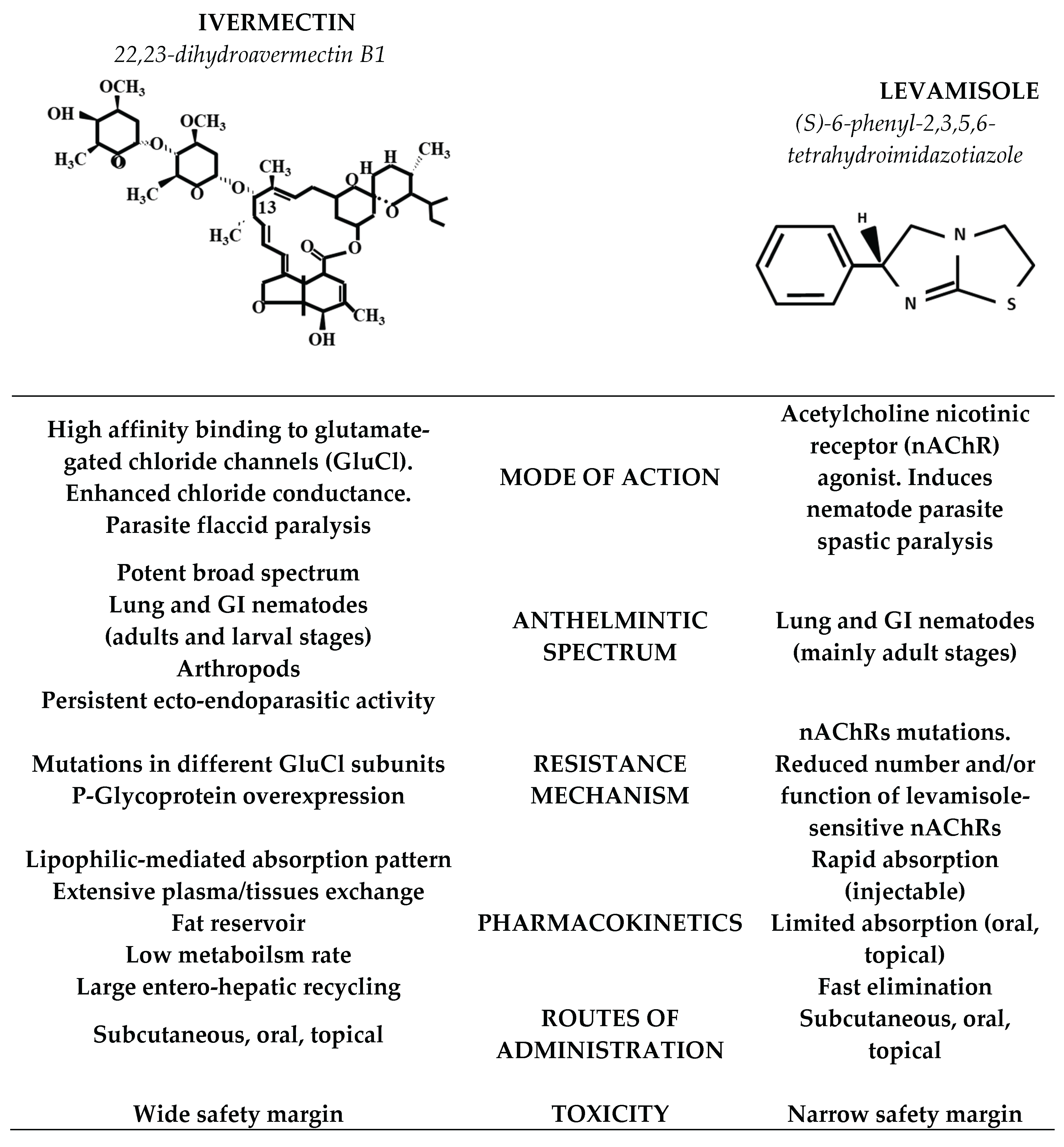
Figure 2.
Comparative mean (± SD) ivermectin (IVM) plasma concentration profiles obtained after its subcutaneous administration either alone (0.2 mg/kg) or co-administered with levamisole (LEV) (8 mg/kg) to parasitized calves (n=7).
Figure 2.
Comparative mean (± SD) ivermectin (IVM) plasma concentration profiles obtained after its subcutaneous administration either alone (0.2 mg/kg) or co-administered with levamisole (LEV) (8 mg/kg) to parasitized calves (n=7).
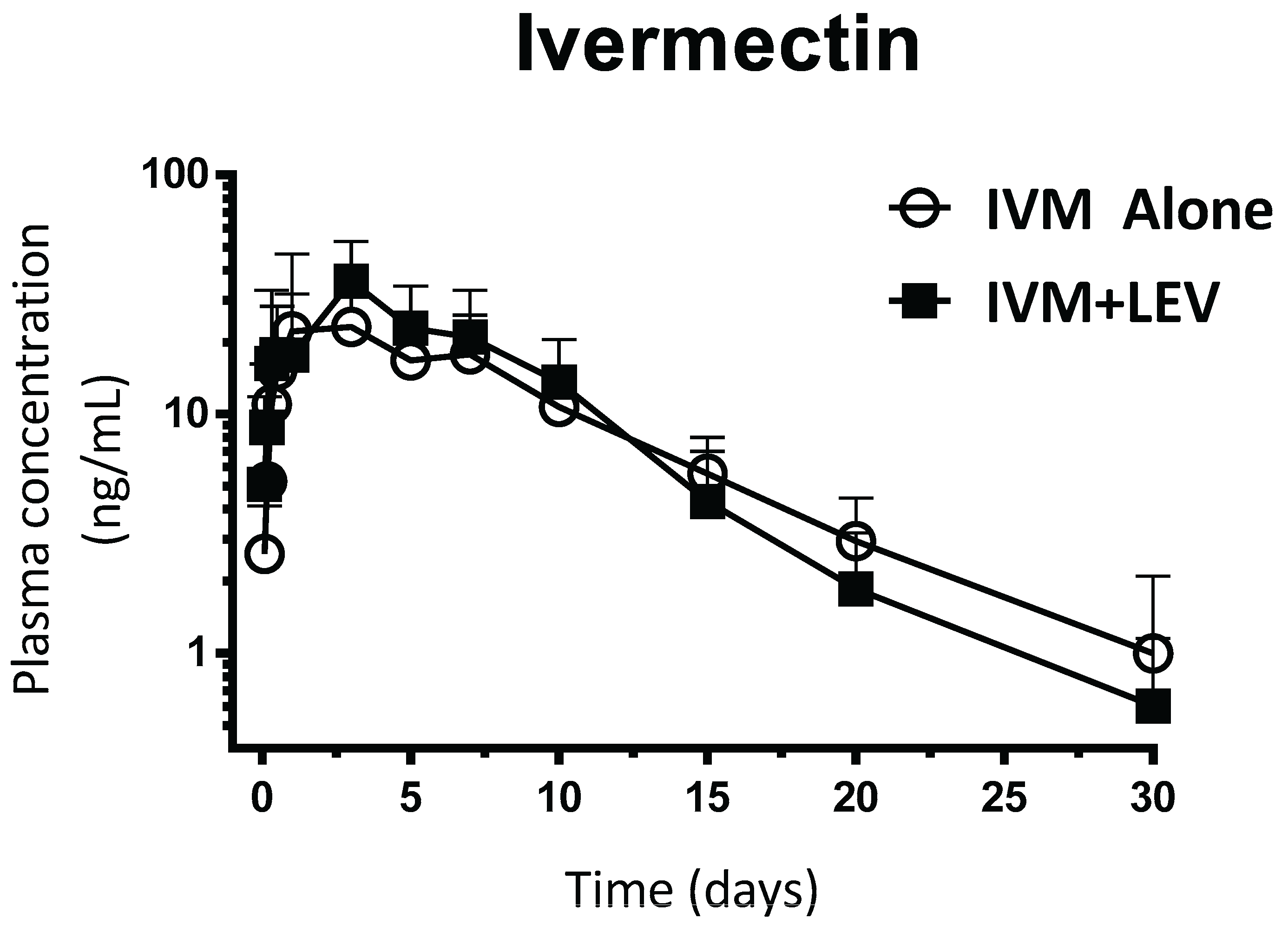
Figure 3.
Comparative mean (± SD) levamisole (LEV) plasma concentration profiles obtained after its subcutaneous administration either alone (8 mg/kg) or co-administered with ivermectin (IVM) (0.2 mg/kg) to parasitized calves (n=7).
Figure 3.
Comparative mean (± SD) levamisole (LEV) plasma concentration profiles obtained after its subcutaneous administration either alone (8 mg/kg) or co-administered with ivermectin (IVM) (0.2 mg/kg) to parasitized calves (n=7).
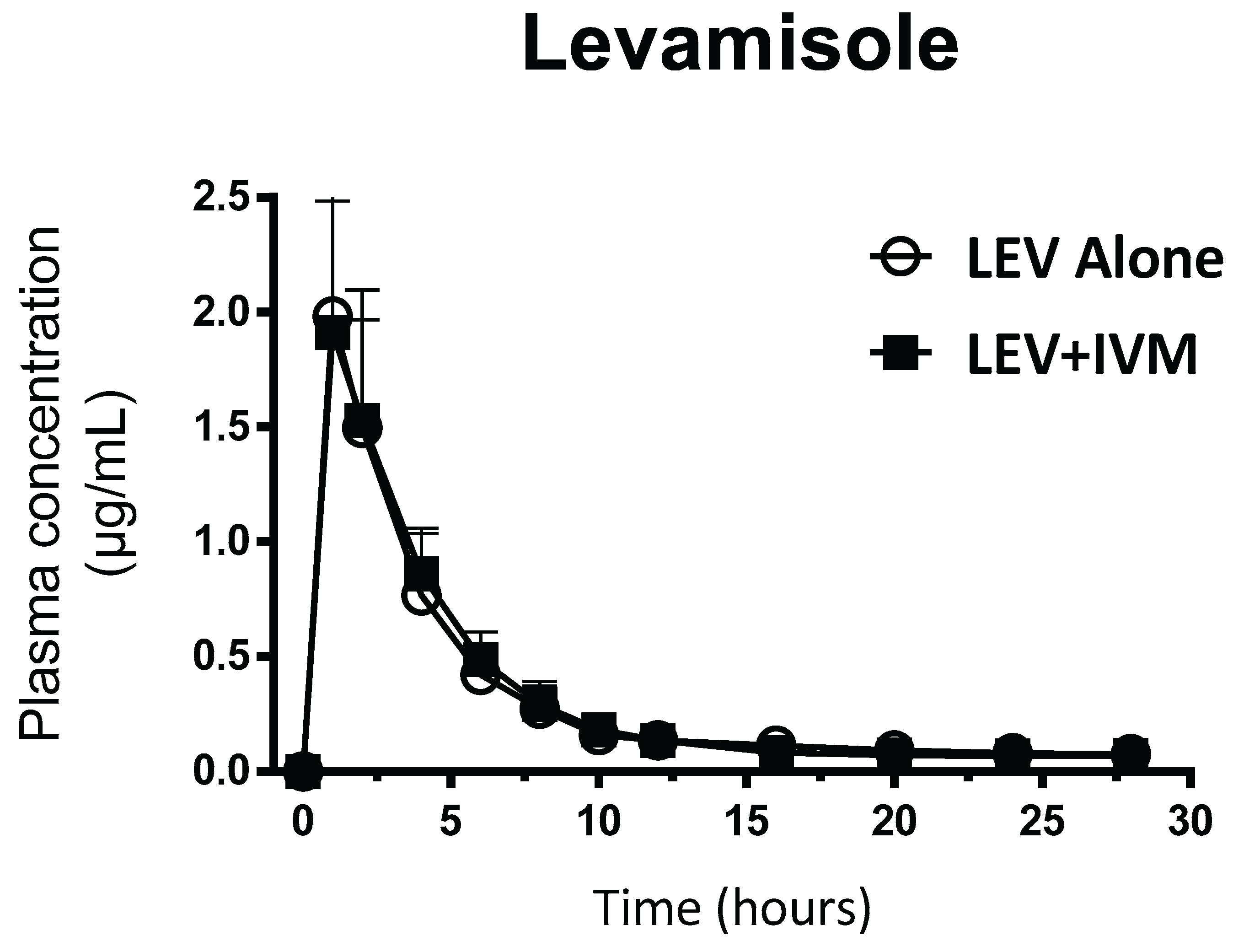

Table 1.
Plasma pharmacokinetic parameters (mean ± SD) for ivermectin (IVM) obtained after its subcutaneous administration (0.2 mg/kg) both alone and co-administered with levamisole (LEV) (8 mg/kg) to naturally parasitized calves.
Table 1.
Plasma pharmacokinetic parameters (mean ± SD) for ivermectin (IVM) obtained after its subcutaneous administration (0.2 mg/kg) both alone and co-administered with levamisole (LEV) (8 mg/kg) to naturally parasitized calves.
| IVERMECTIN | ||
|---|---|---|
| Pharmacokinetic parameters |
IVM Alone |
IVM+LEV |
| Tmax (d) | 3.40 ± 2.19 | 3.00 ± 0.00 |
| Cmax (ng/mL) | 32.9 ± 21.7 | 36.0 ± 16.7 |
| AUC0-LOQ (ng.d/mL) | 274 ± 65.1 | 295 ± 111 |
| AUC0-∞ (ng.d/mL) | 278 ± 64.5 | 300 ± 110 |
| MRT (d) | 8.08 ± 1.95 | 7.96 ± 2.54 |
| T½el (d) | 4.62 ± 0.95 | 4.35 ± 2.21 |
Tmax: time to peak plasma concentration; Cmax: peak plasma concentration; AUC0-LOQ: area under the plasma concentration vs. time curve from 0 to the quantification time; AUC0-∞: area under the concentration-time curve extrapolated to infinity; MRT: mean residence time; T½el: elimination half-life. For all pharmacokinetic parameters, P>0.05.
Table 2.
Plasma pharmacokinetic parameters (mean ± SD) for levamisole (LEV) obtained after its subcutaneous administration (8 mg/kg) both alone and co-administered with ivermectin (IVM) (0.2 mg/kg) to naturally parasitized calves.
Table 2.
Plasma pharmacokinetic parameters (mean ± SD) for levamisole (LEV) obtained after its subcutaneous administration (8 mg/kg) both alone and co-administered with ivermectin (IVM) (0.2 mg/kg) to naturally parasitized calves.
| LEVAMISOLE | ||
|---|---|---|
| Pharmacokinetic parameters |
LEV Alone |
LEV+IVM |
| Tmax (h) | 1.14 ± 0.38 | 1.00 ± 0.00 |
| Cmax (µg/mL) | 2.17 ± 0.76 | 1.91 ± 0.57 |
| AUC0-LOQ (µg.h/mL) | 8.90 ± 2.69 | 9.11 ± 1.82 |
| AUC0-∞ (µg.h/mL) | 9.20 ± 2.77 | 9.40 ± 1.97 |
| MRT (h) | 6.50 ± 1.59 | 6.10 ± 0.99 |
| T½el (h) | 6.22 ± 1.08 | 5.41 ± 0.48 |
Tmax: time to peak plasma concentration; Cmax: peak plasma concentration; AUC0-LOQ: area under the plasma concentration vs. time curve from 0 to the quantification time; AUC0-∞: area under the concentration-time curve extrapolated to infinity; MRT: mean residence time; T½el: elimination half-life. For all pharmacokinetic parameters, P>0.05.
Table 3.
Nematode egg per gram counts (EPG, arithmetic mean, range), therapeutic response (pharmacodynamic assessment) expressed as the reduction percentages of the faecal egg counts (FECR) (undifferentiated), lower and upper confidence intervals 90%, and nematode population status after the subcutaneous administration of ivermectin (IVM, 0.2 mg/kg) and levamisole (LEV, 8 mg/kg) given both separately and co-administered to naturally parasitized calves.
Table 3.
Nematode egg per gram counts (EPG, arithmetic mean, range), therapeutic response (pharmacodynamic assessment) expressed as the reduction percentages of the faecal egg counts (FECR) (undifferentiated), lower and upper confidence intervals 90%, and nematode population status after the subcutaneous administration of ivermectin (IVM, 0.2 mg/kg) and levamisole (LEV, 8 mg/kg) given both separately and co-administered to naturally parasitized calves.
| Farm ID | Experimental Group | EPG Counts (range) |
Therapeutic response FECRT1 |
90% CI2 | Nematode population Status |
|
|---|---|---|---|---|---|---|
| Day 0 | Day 14 | |||||
| FARM A |
IVM Alone |
657a (340-1400) |
403a (40-1120) |
38.7% | 13.8 - 60.0% | Resistant |
|
LEV Alone |
637a (280-1300) |
1.30b (0-20) |
99.6% | 99.4 - 100% | Susceptible | |
|
Combination IVM+LEV |
796a (320-1280) |
0.00b (0-0) |
100% | - | Susceptible | |
|
IVM Alone |
469a (100-1460) |
269a (0-1060) |
42.6% | 3.30 - 72.8% | Resistant | |
| FARM B |
LEV Alone |
559a (180-1260) |
2.20b (0-20) |
99.6% | 99.1 - 99.9% | Susceptible |
|
Combination IVM+LEV |
569b (100-1820) |
0.00b (0-0) |
100% | - | Susceptible | |
| FARM C |
IVM Alone |
437a (200-980) |
217a (0-580) |
54% | 3.70 - 83.0% | Resistant |
|
LEV Alone |
309a (260-1140) |
2.90b (0-20) |
99.1% | 96.8 - 100% | Susceptible | |
|
Combination IVM+LEV |
266a (240-760) |
0.00b (0-0) |
100% | - | Susceptible | |
1 FECRT estimated according to McKenna (1990). 290% CI: lower and upper confidence intervals estimated according to Kaplan et al., 2023. EPG counts with different superscript letters are statistically different (P<0.05).
Table 4.
Therapeutic response measured as the reduction percentages of faecal egg counts (FECRT) for Cooperia, Haemonchus, Ostertagia and Oesophagostomum spp. (based on egg counts partitioned to genera using the proportion of each genus recovered as larvae from faecal larval cultures) after the subcutaneous administration of ivermectin (IVM, 0.2 mg/kg) and levamisole (LEV, 8 mg/kg) given both separately and co-administered to naturally parasitized calves.
Table 4.
Therapeutic response measured as the reduction percentages of faecal egg counts (FECRT) for Cooperia, Haemonchus, Ostertagia and Oesophagostomum spp. (based on egg counts partitioned to genera using the proportion of each genus recovered as larvae from faecal larval cultures) after the subcutaneous administration of ivermectin (IVM, 0.2 mg/kg) and levamisole (LEV, 8 mg/kg) given both separately and co-administered to naturally parasitized calves.
| Farm ID | Experimental Group | FECRT Day 141 | |||
|---|---|---|---|---|---|
| Cooperia | Haemonchus | Ostertagia | Oesophagostomum | ||
| FARM A | IVM Alone | 35.1% | 34.7% | 100% | 100% |
| LEV Alone | 100% | 99.6% | 100% | 100% | |
|
Combination IVM+LEV |
100% | 100% | 100% | 100% | |
| IVM Alone | 87.2% | 8.60% | 100% | 100% | |
| FARM B | LEV Alone | 100% | 100% | 93.4% | 100% |
|
Combination IVM+LEV |
100% | 100% | 100% | 100% | |
| FARM C | IVM Alone | 40.9% | 100% | 100% | 100% |
| LEV Alone | 100% | 100% | 90.7% | 100% | |
|
Combination IVM+LEV |
100% | 100% | 100% | 100% | |
1FECR estimated according to McKenna (1990).
Disclaimer/Publisher’s Note: The statements, opinions and data contained in all publications are solely those of the individual author(s) and contributor(s) and not of MDPI and/or the editor(s). MDPI and/or the editor(s) disclaim responsibility for any injury to people or property resulting from any ideas, methods, instructions or products referred to in the content. |
© 2026 by the authors. Licensee MDPI, Basel, Switzerland. This article is an open access article distributed under the terms and conditions of the Creative Commons Attribution (CC BY) license (http://creativecommons.org/licenses/by/4.0/).
Copyright: This open access article is published under a Creative Commons CC BY 4.0 license, which permit the free download, distribution, and reuse, provided that the author and preprint are cited in any reuse.


