

Submitted:
21 March 2026
Posted:
23 March 2026
You are already at the latest version
Abstract
Multiple sclerosis (MS) is a chronic autoimmune disease of the central nervous system that culminates in inflammation, neuronal degeneration and loss of nerve functioning. While there is no specific cause of MS, there are factors that can influence disease progression, in particular tobacco smoke exposure (smoking). Smoking has been shown to increase inflammation, disease activity, and disability progression – herein we aim to connect this to both early inflammation and late-stage neurodegeneration. We propose that smoking enhances immune cell aging (immunosenescence) and examine evidence showing that this induces immune cell phenotypes that mirror physiological aging, specifically the depletion of naïve T-cell pools and the expansion of terminally differentiated, senescent CD8+ populations. We also review literature that suggests potential mechanism(s), including oxidative stress, cholenergic signaling, and epigenetic remodeling. By integrating clinical and mechanistic studies, we provide a framework that suggests smoking-associated immune aging shifts the MS profile from acute relapses toward sustained, treatment-resistant disability – and that smoking cigarettes is an active driver of disease, not just an environmental risk factor.
Keywords:
immunosenecence
; multiple sclerosis
; inflammaging
; smoking
; aging
1. Introduction
Multiple sclerosis (MS) is a chronic immune-mediated disorder of the central nervous system characterized by inflammatory demyelination, neuroaxonal injury, and progressive neurological disability. While the etiology of MS is multifactorial, involving both genetic susceptibility and environmental exposures, cigarette smoking has consistently emerged as one of the most robust and modifiable environmental risk factors. Smoking has been associated with increased MS susceptibility, higher disease activity, accelerated disability accumulation, and earlier conversion to secondary progressive MS in longitudinal cohort studies (Hernán et al., 2005; Hedström et al., 2009; Di Pauli et al., 2008; Manouchehrinia et al., 2013).
The biological mechanisms through which smoking influences MS remain incompletely understood. Proposed pathways include enhanced systemic inflammation, oxidative stress, epigenetic modification, and altered immune cell function (Marabita et al., 2017). However, these mechanisms are often considered in isolation, without a unifying framework explaining how smoking contributes to both inflammatory disease activity and later neurodegenerative progression. Notably, many of the immunologic effects attributed to smoking parallel changes observed in immune aging, suggesting that smoking may accelerate age-associated immune dysfunction.
Immunosenescence refers to the gradual remodeling of the immune system that occurs with aging, characterized by reduced immune diversity, impaired adaptive immune responses, accumulation of terminally differentiated or senescent lymphocytes, and a state of chronic low-grade inflammation (Ferrucci et al., 2005; Kritchevsky et al., 2005). These changes affect both adaptive and innate immunity and are increasingly recognized as contributors to age-related susceptibility to chronic inflammatory and neurodegenerative diseases. Several studies suggest that people with MS exhibit features consistent with premature immune aging, including reduced naïve T-cell pools and accumulation of exhausted or senescent T-cell phenotypes (Thewissen et al., 2005; Duszczyszyn et al., 2010; Haegert et al., 2011; Haegele et al., 2007).
Emerging evidence suggests that cigarette smoking may promote immune phenotypes that resemble or accelerate immunosenescence. Studies examining immune cell composition in smokers have demonstrated shifts toward differentiated and senescent T-cell subsets, including reductions in naïve T cells and expansion of terminally differentiated CD8⁺ populations, patterns that mirror those observed in physiological aging (Martos et al., 2020; Fernandes et al., 2022). These smoking-associated immune alterations may be particularly relevant in MS, where adaptive immune dysregulation plays a central role in disease initiation and propagation.
Beyond changes in lymphocyte differentiation, smoking and nicotine exposure may also influence immune regulation through modulation of cholinergic-related signaling pathways. Experimental studies have demonstrated that cholinergic activity and choline transporter function in T lymphocytes influence cytokine production and immune activation states (Cherian et al., 2017; Fujii et al., 2017; Rossi et al., 2017). Dysregulation of these pathways through chronic exposure to cigarette smoke or nicotine may further contribute to immune imbalance and sustained inflammatory signaling.
The intersection of smoking, immunosenescence, and MS may be particularly relevant to understanding disease progression. Long-term cohort studies show that, with increasing age and disease duration, MS often transitions from predominantly relapsing inflammatory activity toward a progressive phase characterized by accumulating disability (Scalfari et al., 2014; Cree et al., 2016). During this phase, relapse frequency often declines, while disability continues to accumulate. Immunosenescence provides a conceptual framework that may help reconcile this paradox, as aging immune systems may exhibit reduced acute inflammatory responses while sustaining chronic, tissue-damaging immune activity (Ferrucci et al., 2005).
In this review, we examine the evidence linking cigarette smoking to immune aging and discuss how smoking-associated immunosenescence may influence MS susceptibility, disease activity, and progression. By integrating epidemiologic data, immunologic studies, and mechanistic insights, we propose that smoking acts as an accelerator of immune aging in MS, contributing to earlier immune exhaustion, altered treatment responsiveness, and worse long-term outcomes. Understanding this relationship has important clinical implications, particularly as the MS population ages and cumulative exposure to both disease-modifying therapies and environmental risk factors increases.
2. Immunosenescence: Definitions and Mechanisms
Immunosenescence refers to gradual remodeling of the immune system characterized by loss of naïve lymphocytes, expansion of highly differentiated or senescent T-cell subsets, and reduced capacity to respond to new antigens (Naylor et al., 2005). Rather than simply reflecting immune failure, immunosenescence encompasses coordinated changes across adaptive and innate immunity, including persistent low-grade inflammation and impaired capacity to respond to physiological stressors. Longitudinal population studies demonstrate that inflammatory markers such as IL-6 and C-reactive protein (CRP) predict frailty, disability, and mortality with aging, providing clinical support for the concept of inflammaging (Ferrucci et al., 2005; Kritchevsky et al., 2005). At the molecular level, multi-omic analyses reveal that smoking-induced molecular changes — including gene expression shifts and age-associated DNA methylation patterns — significantly overlap with aging signatures across multiple tissue types, suggesting that smoking may directly accelerate biological aging mechanisms (Ramirez et al., 2025).
A central feature of immunosenescence is the decline in naïve T-cell production as thymic involution progresses with age. Repeated antigen exposure and chronic low-grade inflammation further drive expansion of terminally differentiated immune cells and contribute to a persistent pro-inflammatory environment often termed inflammatory aging (inflammaging). Longitudinal cohort studies show that elevated inflammatory markers such as IL-6 and CRP predict physical decline and mortality in aging populations, supporting the role of sustained inflammation in immune aging (Ferrucci et al., 2005; Kritchevsky et al., 2005). Comparable age-related alterations occur within the B-cell compartment, including reductions in naïve B cells, accumulation of more differentiated subsets, and narrowing of antibody diversity, reflecting impaired humoral immune adaptability with aging (Frasca et al., 2008; Keren et al., 2010).
Innate immune cells also undergo age-associated functional changes. Microglia and macrophages show altered activation thresholds, impaired debris clearance, and dysregulated cytokine production, changes that become increasingly pronounced in aging brain tissue (Streit et al., 2004; Hickman et al., 2013; Dilger & Johnson, 2008). These alterations may promote inefficient repair and gradual neurodegeneration. The resulting immune profile is paradoxical: acute responses may be attenuated, yet persistent, tissue-damaging inflammatory activity is sustained.
Importantly, immunosenescence is influenced not only by chronological age but also by chronic inflammation, antigenic stimulation, and environmental exposures. People with MS demonstrate reductions in naïve T-cell pools and accumulation of exhausted or senescent T-cell subsets — features typically seen in older adults — even early in disease (Thewissen et al., 2005; Duszczyszyn et al., 2010; Haegert et al., 2011; Haegele et al., 2007). These observations support the concept that immune aging may actively shape disease evolution.
This framework is particularly relevant for understanding changes in MS biology over the lifespan. Early in the disease, peripheral adaptive immune activation drives relapsing inflammatory activity. With advancing age and disease duration, MS increasingly shifts toward a phenotype dominated by compartmentalized CNS inflammation, microglial activation, and neurodegeneration, while overt relapses become less frequent (Scalfari et al., 2014; Cree et al., 2016; Kutzelnigg et al., 2005; Lucchinetti et al., 2011). Immunosenescence offers a plausible biologic explanation for this transition, helping reconcile declining relapse rates with ongoing disability accumulation.
Taken together, these insights suggest that factors capable of accelerating or amplifying immunosenescence may meaningfully influence MS susceptibility and progression. Cigarette smoking is one such exposure, as emerging data indicate that smoking induces immune alterations that closely resemble age-associated immune remodeling (see Table 1 for key immunosenescence features in MS).
3. Smoking as an Accelerator of Immunosenescence
Cigarette smoking exerts widespread effects on the immune system that extend beyond classical inflammation and oxidative injury. Increasing evidence indicates that chronic smoking promotes immune changes that closely resemble, and may accelerate, the processes associated with immunosenescence. These mechanistic links between smoking-related immune alterations and immunosenescence features are summarized in Table 2. These alterations include shifts in lymphocyte composition, cellular aging phenotypes, and dysregulated immune signaling, all of which have potential relevance to MS pathophysiology (Martos et al., 2020; Fernandes et al., 2022). Similar patterns have been reported across broader cohorts, where smokers demonstrate T-cell distributions that closely resemble those of significantly older nonsmokers, further supporting the hypothesis that smoking accelerates immune aging trajectories (Xie et al., 2022).
At the cellular level, smoking has been associated with reductions in naïve T-cell populations and expansion of highly differentiated or senescent T-cell subsets. Single-cell profiling studies demonstrate that smokers exhibit increased proportions of terminally differentiated CD8⁺ T cells displaying features of replicative exhaustion and altered cytotoxic function, alongside diminished representation of naïve cells (Martos et al., 2020). Similar immune profiles are characteristic of physiologic aging, suggesting that tobacco exposure may induce an “aged” T-cell phenotype independent of chronological age (Fernandes et al., 2022). These findings parallel hallmark features of immunosenescence, including reduced immune diversity and accumulation of senescent lymphocytes.
Smoking also influences immune regulation at a molecular signaling level. Components of the cholinergic system — including choline transporters and acetylcholine receptors — are expressed on immune cells and contribute to regulation of inflammatory responses (Wessler et al., 2003; Tracey, 2002). Experimental work has shown that choline transporter activity in T lymphocytes affects cytokine production and immune activation states (Cherian et al., 2017), and complementary studies demonstrate that choline-transporter–related pathways more broadly regulate T-cell effector function (Rossi et al., 2017). Systems-level immunologic analyses further demonstrate that smoking reshapes immune responses across both innate and adaptive pathways. In a large cohort study of healthy individuals, smoking emerged as a major determinant of cytokine response variability, with effects comparable in magnitude to age and genetic factors. Notably, while smoking-associated alterations in innate immune responses largely resolved after cessation, adaptive immune changes persisted long after individuals quit smoking, consistent with epigenetic reprogramming of immune cells (Saint-André et al., 2024). Similarly, large immunologic datasets in otherwise healthy adults identify smoking as a major determinant of immune variability alongside age and socioeconomic exposures, reinforcing the concept that smoking shapes immune function at a systemic level (Bertrand et al., 2024). Dysregulation of these pathways through chronic exposure to cigarette smoke or nicotine may therefore impair immune homeostasis and promote persistent inflammatory signaling, further contributing to immunosenescence-like patterns in people with MS.
Beyond cellular composition and signaling, smoking is linked with systemic inflammatory activation and oxidative stress, both recognized accelerants of immune aging. Multi-omic analyses across multiple human tissues demonstrate that smoking induces transcriptional and epigenetic alterations that significantly overlap with aging-associated molecular signatures, suggesting that tobacco exposure may accelerate biological aging mechanisms (Ramirez et al., 2025). Persistent exposure to smoke-related inflammatory stimuli can drive repeated immune activation and antigenic load, conditions known to hasten the transition from functional memory responses toward senescent immune phenotypes (Martos et al., 2020). This cumulative burden may intersect with MS-related immune dysregulation, amplifying immune-aging processes already present in the disease.
Together, these observations suggest that smoking may not simply act as a pro-inflammatory trigger, but rather as a driver of premature immune aging. The proposed biological pathway linking smoking exposure, immunosenescence features, and MS pathophysiology is summarized in Table 2. By inducing senescent-like immune profiles, reducing naïve lymphocyte pools, and altering regulatory signaling pathways, smoking creates an immune environment characterized by diminished adaptability and persistent, low-grade inflammation (Fernandes et al., 2022; Cherian et al., 2017). Within the context of MS, such changes could promote both heightened early inflammatory activity and impaired capacity for long-term immune regulation and repair. These biological insights provide a mechanistic foundation for clinical observations linking smoking to worse MS outcomes and set the stage for understanding how smoking-driven immune aging may shape disease course. These mechanistic interactions are summarized in Table 2, which outlines how smoking-driven immune changes parallel key features of immunosenescence and may influence MS biology.
4. Integrating Smoking-Driven Immunosenescence with MS Course and Progression
The relationships among cigarette smoking, immunosenescence, and multiple sclerosis (MS) appear to converge on a common biological theme: a progressive shift from flexible, well-regulated immune responses toward chronically activated, less adaptable immune states. This shift is consistent with both age-related immune remodeling and with the immune alterations observed in people who smoke. When layered on top of the immune dysregulation intrinsic to MS, smoking-induced immune aging may amplify disease susceptibility, accelerate progression, and diminish the capacity for tissue repair. Figure 1 illustrates this conceptual pathway, outlining how smoking-related immune aging may interact with MS disease mechanisms across the lifespan.
Epidemiologic studies demonstrate that smoking increases both the risk of developing MS and the likelihood of a more aggressive disease course, including earlier disability accumulation and conversion to secondary progressive MS (Hedström et al., 2016; Healy et al., 2009). Representative epidemiologic studies supporting these observations are summarized in Table 3. These clinical observations align with biological evidence showing that smoking fosters expansion of senescent or terminally differentiated T-cell subsets and reduction of naïve lymphocyte pools (Martos et al., 2020; Fernandes et al., 2022). Senescent lymphocytes exhibit diminished proliferative capacity and skewed cytokine production, fostering a milieu of chronic, low-grade inflammation. Within the CNS, such persistent inflammatory signaling may contribute to microglial activation, impaired debris clearance, and progressive neuroaxonal injury, processes that are already central to MS pathology (Frischer et al., 2009; Trapp et al., 1998).

Table 4.
Key studies examining smoking, immune aging, and multiple sclerosis.
| Study Population/Model | Study Design | Study Timing | Center Type | Key Findings | Key References |
|---|---|---|---|---|---|
| UCSF EPIC cohort (MS patients) | Prospective clinical cohort | Longitudinal | Multicenter (U.S.) | Disability progression occurs independently of relapse activity (PIRA), demonstrating that neurodegenerative processes contribute to irreversible disability accumulation early in MS, even in patients meeting traditional measures of disease stability (e.g., NEDA). | Cree et al., 2019 |
| Human MS Tissue Samples | Neuropathologic analysis | Cross-sectional | Multicenter | Progressive MS is characterized by compartmentalized CNS inflammation, including microglial activation and oxidative injury, indicating that chronic innate immune activation within the CNS drives ongoing neurodegeneration independent of peripheral immune activity. | Kuhlmann et al., 2017 |
| Human MS brain tissue | Histopathologic study | Cross-sectional | Multicenter | Extensive cortical demyelination and diffuse neuroaxonal injury are major contributors to disability, highlighting that gray matter pathology plays a central role in progression and is not adequately captured by conventional inflammatory markers. Human |
Kutzelnigg et al., 2005 |
| Human MS lesions |
Pathologic analysis | Cross-sectional |
Multicenter | Cortical inflammatory demyelination is present even in early MS, suggesting that neurodegenerative processes are initiated early in the disease course rather than being confined to later progressive stages. | Lucchinetti et al., 2011 |
| Human and experimental data | Translational pathology review | Conceptual | Multicenter | MS progression reflects a shift from acute peripheral inflammation to chronic, compartmentalized CNS immune activity, supporting a model in which inflammation and neurodegeneration coexist but become increasingly uncoupled over time. | Lassmann, 2018 |
This table summarizes major epidemiologic, immunologic, and mechanistic studies informing the conceptual framework of this review, including sample size, design, timing, center type, and primary conclusions relevant to smoking-related immune aging and MS outcomes.
Smoking-associated alterations in immune regulation may further influence the balance between relapse-driven inflammation and progressive, compartmentalized CNS damage. Immunosenescence has been proposed as one explanation for the paradox in MS whereby relapse activity declines with age even as disability continues to worsen. As immune diversity contracts and regulatory networks weaken, inflammatory responses may become less acutely aggressive yet chronically sustained, favoring neurodegenerative mechanisms over overt relapses (Scalfari et al., 2014; Tremlett et al., 2008; Naylor et al., 2005; Wertheimer et al., 2014). Because smoking appears to accelerate similar aging-like immune trajectories, individuals with MS who smoke may reach this transition point earlier than nonsmokers.
Cholinergic signaling represents one potential mechanistic bridge between smoking exposure and immune dysregulation. Immune cells possess a functional cholinergic system that influences cytokine production and inflammatory tone (Wessler et al., 2003). Experimental evidence indicates that choline transporter function in T lymphocytes shapes activation thresholds and downstream effector responses (Cherian et al., 2017). Chronic nicotine exposure may perturb these pathways, altering the capacity of immune cells to resolve inflammation and maintain homeostasis. In the setting of MS, where inflammatory circuits are already sensitized, such alterations could further impair regulation and promote smoldering CNS inflammation.
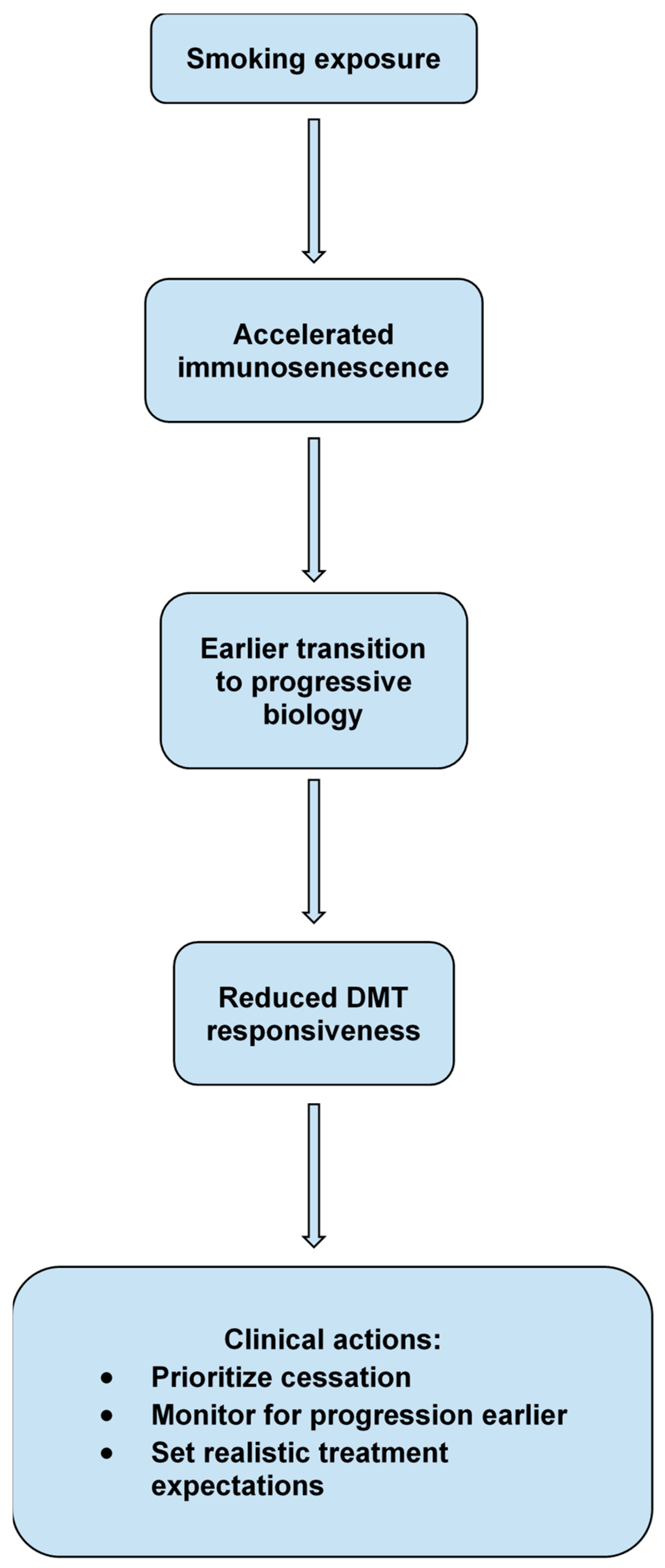
Smoking-related immune aging may also have implications for therapeutic responsiveness. Many disease-modifying therapies (DMTs) primarily target adaptive immune activation. If smoking accelerates contraction of naïve lymphocyte pools and expansion of exhausted or senescent populations, the biological substrate on which these therapies act may be altered. Although data are still emerging, observational studies suggest that smokers may derive less benefit from some DMTs and may experience more rapid disability accumulation despite treatment, consistent with a shift toward mechanisms less dependent on peripheral immune activation (Healy et al., 2009; Zivadinov et al., 2009; Manouchehrinia et al., 2013). These patterns underscore the importance of considering smoking status when interpreting treatment outcomes and planning long-term management.
Taken together, current evidence supports a conceptual model in which smoking amplifies immunosenescence-related processes relevant to MS. By promoting premature immune aging, smoking may increase initial susceptibility to disease, accelerate the transition from inflammatory relapsing activity to progressive neurodegeneration, and potentially attenuate therapeutic efficacy. Although causality cannot yet be fully established, the convergence of epidemiologic, immunologic, and mechanistic findings provides a compelling rationale for viewing smoking not only as a risk factor, but as a biologic modifier of MS trajectory. Continued research that integrates biomarkers of immune aging, longitudinal clinical outcomes, and intervention studies — including smoking cessation — will be essential to clarify these relationships and identify modifiable targets along the disease course. As illustrated in Figure 2, smoking may shift immune-aging trajectories leftward, meaning that biological aging processes relevant to MS occur earlier in individuals who smoked.
5. Clinical and Therapeutic Implications
The intersection of smoking, immunosenescence, and MS has important implications for clinical care, patient counseling, and therapeutic decision-making. Recognizing smoking as a biologic modifier of immune aging reframes it not only as a lifestyle risk factor, but also as a potentially actionable contributor to disease progression and treatment response.
From a risk-reduction perspective, smoking cessation remains one of the most powerful modifiable behaviors available to people with MS. Epidemiologic evidence links active smoking to increased MS risk, accelerated disability accumulation, and earlier transition to secondary progressive disease (Hedström et al., 2016; Healy et al., 2009; Manouchehrinia et al., 2013). Framing smoking in the context of premature immune aging may enhance counseling messages, helping patients understand why even relatively brief smoking exposure can have long-term immunologic consequences. Given the strong parallels between smoking-related immune remodeling and age-associated immunosenescence (Martos et al., 2020; Fernandes et al., 2022), cessation efforts may help prevent or slow the emergence of senescent immune phenotypes that contribute to progressive disease biology. Table 3 summarizes key clinical outcomes associated with smoking in MS and highlights how these findings inform patient counseling and treatment planning.
Table 5.
Clinical outcomes associated with smoking in multiple sclerosis.
| Outcome domain | Summary of evidence | Clinical interpretation | Key references |
|---|---|---|---|
| MS susceptibility | Current and past smokers have higher risk of developing MS, with dose–response effects and risk reduction after cessation. | Smoking likely contributes to MS onset through immune and molecular pathways. | Hedström et al., 2009; Hernán et al., 2005 |
| Early inflammatory activity | Smoking is associated with increased relapse risk and greater inflammatory activity early in disease. | Smoking may amplify early adaptive immune activation. | Di Pauli et al., 2008; Hedström et al., 2016 |
| Disability progression | Smokers show faster disability accumulation compared with nonsmokers in longitudinal cohorts. | Smoking may promote neurodegeneration and chronic inflammation. | Manouchehrinia et al., 2013; Hernán et al., 2005 |
| Conversion to Secondary Progressive MS (SPMS) | Smoking is linked to earlier transition to SPMS. | Consistent with accelerated immune aging and loss of repair capacity. | Di Pauli et al., 2008; Scalfari et al., 2011 |
| Response to disease-modifying therapy (DMT) | Smokers may derive less benefit from some DMTs and progress despite treatment. | Immune aging and smoldering pathology may limit treatment responsiveness. | Healy et al., 2009; Zivadinov et al., 2009 |
Evidence from observational studies indicates that cigarette smoking is associated with increased MS risk, greater early-disease activity, faster disability accumulation, and earlier transition to secondary progressive MS.
Smoking status may also be clinically relevant when selecting and monitoring disease-modifying therapies (DMTs). Observational data suggest that smokers may have poorer clinical outcomes despite treatment, including higher disability progression rates (Healy et al., 2009; Zivadinov et al., 2009; Manouchehrinia et al., 2013). Although causality has not been conclusively established, incorporating smoking status into therapeutic discussions and shared decision-making may help set realistic expectations regarding treatment response and emphasize the additional benefits of cessation.
Figure 3.
Clinical implications of smoking-related immune aging in MS. This figure summarizes potential clinical consequences of smoking-associated immunosenescence, including earlier progression, reduced responsiveness to disease-modifying therapies, and increased overall disease burden. It highlights key clinical actions such as prioritizing smoking cessation counseling, monitoring earlier for signs of progression, and setting realistic expectations regarding treatment outcomes.
Figure 3.
Clinical implications of smoking-related immune aging in MS. This figure summarizes potential clinical consequences of smoking-associated immunosenescence, including earlier progression, reduced responsiveness to disease-modifying therapies, and increased overall disease burden. It highlights key clinical actions such as prioritizing smoking cessation counseling, monitoring earlier for signs of progression, and setting realistic expectations regarding treatment outcomes.
Mechanistically, smoking may also interfere with endogenous immune-regulatory pathways. The presence of a functional cholinergic system within immune cells (Fujii et al., 2017) and the role of choline transporters in shaping T-cell activation thresholds (Cherian et al., 2017) suggest that chronic nicotine exposure could alter inflammatory tone and immune resilience. These insights point to the possibility that smoking cessation may not only remove an inflammatory trigger but also help restore regulatory signaling pathways that are critical for maintaining immune balance in MS.
An additional implication involves aging itself. Because MS progression increasingly reflects neurodegenerative and compartmentalized inflammatory processes with advancing age (Scalfari et al., 2014; Tremlett et al., 2008; Frischer et al., 2009; Kuhlmann et al., 2017), individuals who smoke may reach age-related transition points earlier as a result of smoking-accelerated immunosenescence. Clinicians may therefore need to adjust long-term disease monitoring strategies for smokers, with heightened vigilance for early markers of progression and more proactive timing of therapeutic escalation.
Finally, these relationships have relevance for multidisciplinary care. Integration of smoking cessation programs into MS clinics, collaboration with behavioral health services, and reinforcement of cessation counseling by neurologists, nurses, and rehabilitation professionals may leverage the full spectrum of patient contact to reduce smoking-related disease burden. Importantly, patients should be reassured that cessation remains beneficial even after disease onset and at all stages of MS.
In summary, viewing smoking through the lens of immunosenescence underscores its role as both a risk factor and a biologic modifier of MS. This perspective strengthens the rationale for aggressive smoking cessation counseling, supports consideration of smoking status in therapeutic planning, and highlights the need to better understand how immune aging influences treatment response and disease evolution across the lifespan.
6. Future Directions and Research Priorities
Although growing evidence links smoking, immunosenescence, and MS, many aspects of this relationship remain incompletely defined. Future work will benefit from moving beyond association studies toward mechanistic and longitudinal research that can clarify causality, identify biomarkers of immune aging, and evaluate the effects of targeted interventions.
One priority is the development and validation of standardized biomarkers of immunosenescence that are feasible for use in MS cohorts. Current measures — such as shifts in naïve-to-memory T-cell ratios, accumulation of senescent or “exhausted” T-cell subsets, epigenetic aging signatures, and markers of chronic microglial activation — have been studied individually, but few have been systematically applied to MS populations across disease stages. Integrating these markers into longitudinal studies would allow investigators to determine whether smoking accelerates immune aging trajectories in patients, and whether such changes predict clinical outcomes including relapse frequency, disability progression, and neurodegeneration.
A second area of need involves disentangling the temporal sequence of smoking exposure, immune remodeling, and disease evolution. Most existing studies assess smoking status at a single time point. Prospective studies that repeatedly measure smoking behavior, pulmonary exposures, and immune-aging markers — including after cessation — could clarify whether immunosenescence mediates the harmful effects of smoking and whether these processes can be slowed or reversed. These studies will also need to account for interactions among smoking, biological aging, sex, genetics, and comorbidities that influence immune trajectories.
Interventional research is equally important. If smoking accelerates immune aging in MS, then smoking cessation may represent not only a lifestyle recommendation, but a biologically targeted therapy. Trials or pragmatic observational studies that embed structured cessation programs within MS care, while concurrently tracking immunologic and radiologic outcomes, could determine whether cessation modifies immune aging pathways or alters disease progression. Such approaches may also clarify the time window during which cessation confers the greatest benefit.
Finally, the concept of immunosenescence raises broader questions about treatment optimization across the MS lifespan. As the disease increasingly reflects neurodegenerative and compartmentalized inflammatory processes with advancing age, it will be essential to understand how smoking-related immune aging intersects with therapeutic mechanisms of action. Future work should explore whether specific disease-modifying therapies differentially benefit individuals with accelerated immune aging, and whether markers of immunosenescence can guide personalized therapy selection.
In sum, advancing the field will require a coordinated effort that integrates immunology, epidemiology, neuroimaging, and clinical trial methodology. By clarifying how smoking shapes immune aging and MS biology, future research has the potential to identify novel targets for intervention and reinforce smoking cessation as a central component of comprehensive MS care.
7. Conclusions
The convergence of evidence across epidemiologic, immunologic, and mechanistic studies suggests that cigarette smoking influences MS not only as an environmental risk factor, but also as a biologic modifier of disease biology. By promoting immune remodeling that mirrors and potentially accelerates immunosenescence, smoking may shape susceptibility to MS, hasten the transition from relapsing inflammatory activity to progressive neurodegeneration, and reduce the effectiveness of existing therapies. These relationships highlight immune aging as a useful framework for interpreting the diverse effects of smoking on MS.
Understanding smoking within this context shifts the clinical conversation. Rather than focusing solely on relapse prevention or short-term outcomes, counseling can emphasize the long-term consequences of smoking on immune resilience, brain health, and aging trajectories. At the same time, continued research is needed to define biomarkers of immune aging, determine whether smoking cessation can modify these pathways, and clarify how immunosenescence should inform therapeutic planning across the lifespan.
Altogether, viewing smoking through the lens of immune aging strengthens the rationale for aggressive cessation efforts, supports more personalized treatment strategies, and opens avenues for investigating novel therapeutic targets. Integrating smoking, immunosenescence, and MS within a single conceptual model may ultimately help clinicians and researchers better understand disease heterogeneity — and improve long-term outcomes for people living with MS.
References
- Bertrand, A., Sugrue, J., Lou, T., Bourke, N. M., Quintana-Murci, L., Saint-André, V., O’Farrelly, C., & Duffy, D. (2024). Impact of socioeconomic status on healthy immune responses in humans. Immunology & Cell Biology, 102(7), 618–629. [CrossRef]
- Cherian, A. K., Parikh, V., Wu, Q., Mao-Draayer, Y., Wang, Q., Blakely, R. D., & Sarter, M. (2017). Hemicholinium-3 sensitive choline transport in human T lymphocytes: Evidence for use as a proxy for brain choline transporter (CHT) capacity. Neurochemistry International, 108, 410–416. [CrossRef]
- Cree, B. A. C., Hollenbach, J. A., Bove, R., Kirkish, G., Sacco, S., Caverzasi, E., Bischof, A., Gundel, T., Zhu, A. H., Papinutto, N., Stern, W. A., Bevan, C., Romeo, A., Goodin, D. S., Gelfand, J. M., Graves, J., Green, A. J., Wilson, M. R., Zamvil, S. S., … Hauser, S. L. (2019). Silent progression in disease activity-free relapsing multiple sclerosis. Annals of neurology, 85(5), 653–666. [CrossRef]
- Di Pauli, F., Reindl, M., Ehling, R., Schautzer, F., Gneiss, C., Lutterotti, A., O’Reilly, E., Munger, K., Deisenhammer, F., Ascherio, A., & Berger, T. (2008). Smoking is a risk factor for early conversion to clinically definite multiple sclerosis. Multiple sclerosis (Houndmills, Basingstoke, England), 14(8), 1026–1030. [CrossRef]
- Dilger, R. N., & Johnson, R. W. (2008). Aging, microglial cell priming, and the discordant central inflammatory response to signals from the peripheral immune system. Journal of leukocyte biology, 84(4), 932–939. [CrossRef]
- Duszczyszyn, D. A., Williams, J. L., Mason, H., Lapierre, Y., Antel, J., & Haegert, D. G. (2010). Thymic involution and proliferative T-cell responses in multiple sclerosis. Journal of neuroimmunology, 221(1-2), 73–80. [CrossRef]
- Fernandes, J. R., Pinto, T. N. C., Arruda, L. B., da Silva, C. C. B. M., de Carvalho, C. R. F., Pinto, R. M. C., da Silva Duarte, A. J., & Benard, G. (2022). Age-associated phenotypic imbalance in TCD4 and TCD8 cell subsets: comparison between healthy aged, smokers, COPD patients and young adults. Immunity & ageing : I & A, 19(1), 9. [CrossRef]
- Ferrucci, L., Corsi, A., Lauretani, F., Bandinelli, S., Bartali, B., Taub, D. D., Guralnik, J. M., & Longo, D. L. (2005). The origins of age-related proinflammatory state. Blood, 105(6), 2294–2299. [CrossRef]
- Frasca, D., Landin, A. M., Lechner, S. C., Ryan, J. G., Schwartz, R., Riley, R. L., & Blomberg, B. B. (2008). Aging down-regulates the transcription factor E2A, activation-induced cytidine deaminase, and Ig class switch in human B cells. Journal of immunology (Baltimore, Md. : 1950), 180(8), 5283–5290. [CrossRef]
- Fujii, T., Mashimo, M., Moriwaki, Y., Misawa, H., Ono, S., Horiguchi, K., & Kawashima, K. (2017). Physiological functions of the cholinergic system in immune cells. Journal of pharmacological sciences, 134(1), 1–21. [CrossRef]
- Haegele, K. F., Stueckle, C. A., Malin, J. P., & Sindern, E. (2007). Increase of CD8+ T-effector memory cells in peripheral blood of patients with relapsing-remitting multiple sclerosis compared to healthy controls. Journal of neuroimmunology, 183(1-2), 168–174. [CrossRef]
- Haegert, D. G., Hackenbroch, J. D., Duszczyszyn, D., Fitz-Gerald, L., Zastepa, E., Mason, H., Lapierre, Y., Antel, J., & Bar-Or, A. (2011). Reduced thymic output and peripheral naïve CD4 T-cell alterations in primary progressive multiple sclerosis (PPMS). Journal of neuroimmunology, 233(1-2), 233–239. [CrossRef]
- Hedström, A. K., Bäärnhielm, M., Olsson, T., & Alfredsson, L. (2009). Tobacco smoking, but not Swedish snuff use, increases the risk of multiple sclerosis. Neurology, 73(9), 696–701. [CrossRef]
- Hernán, M. A., Jick, S. S., Logroscino, G., Olek, M. J., Ascherio, A., & Jick, H. (2005). Cigarette smoking and the progression of multiple sclerosis. Brain: a journal of neurology, 128(Pt 6), 1461–1465. [CrossRef]
- Hickman, S. E., Kingery, N. D., Ohsumi, T. K., Borowsky, M. L., Wang, L. C., Means, T. K., & El Khoury, J. (2013). The microglial sensome revealed by direct RNA sequencing. Nature neuroscience, 16(12), 1896–1905. [CrossRef]
- Kritchevsky, S. B., Cesari, M., & Pahor, M. (2005). Inflammatory markers and cardiovascular health in older adults. Cardiovascular research, 66(2), 265–275. [CrossRef]
- Kutzelnigg, A., Lucchinetti, C. F., Stadelmann, C., Brück, W., Rauschka, H., Bergmann, M., Schmidbauer, M., Parisi, J. E., & Lassmann, H. (2005). Cortical demyelination and diffuse white matter injury in multiple sclerosis. Brain : a journal of neurology, 128(Pt 11), 2705–2712. [CrossRef]
- Lassmann, H. (2018). Multiple sclerosis pathology. Cold Spring Harbor Perspectives in Medicine, 8(3), a028936. [CrossRef]
- Lucchinetti, C. F., Popescu, B. F., Bunyan, R. F., Moll, N. M., Roemer, S. F., Lassmann, H., Brück, W., Parisi, J. E., Scheithauer, B. W., Giannini, C., Weigand, S. D., Mandrekar, J., & Ransohoff, R. M. (2011). Inflammatory cortical demyelination in early multiple sclerosis. The New England journal of medicine, 365(23), 2188–2197. [CrossRef]
- Manouchehrinia, A., Tench, C. R., Maxted, J., Bibani, R. H., Britton, J., & Constantinescu, C. S. (2013). Tobacco smoking and disability progression in multiple sclerosis: United Kingdom cohort study. Brain : a journal of neurology, 136(Pt 7), 2298–2304. [CrossRef]
- Marabita, F., Almgren, M., Sjöholm, L. K., Kular, L., Liu, Y., James, T., Kiss, N. B., Feinberg, A. P., Olsson, T., Kockum, I., Alfredsson, L., Ekström, T. J., & Jagodic, M. (2017). Smoking induces DNA methylation changes in Multiple Sclerosis patients with exposure-response relationship. Scientific reports, 7(1), 14589. [CrossRef]
- Martos, S. N., Campbell, M. R., Lozoya, O. A., Wang, X., Bennett, B. D., Thompson, I. J. B., Wan, M., Pittman, G. S., & Bell, D. A. (2020). Single-cell analyses identify dysfunctional CD16+ CD8 T cells in smokers. Cell reports. Medicine, 1(4), 100054. [CrossRef]
- Naylor, K., Li, G., Vallejo, A. N., Lee, W. W., Koetz, K., Bryl, E., Witkowski, J., Fulbright, J., Weyand, C. M., & Goronzy, J. J. (2005). The influence of age on T cell generation and TCR diversity. Journal of immunology (Baltimore, Md. : 1950), 174(11), 7446–7452. [CrossRef]
- Ramirez, J. M., et al. (2025). The molecular impact of cigarette smoking resembles aging signatures across human tissues: A multi-omics analysis. Journal Name (in press). https://pubmed.ncbi.nlm.nih.gov/40457411/.
- Rossi, S., et al. (2017). Choline transporter-like proteins regulate T-cell function and immune responses. Journal of Immunology, 198(9), 3567–3576. [CrossRef]
- Saeed, R. W., & O’Neill, L. A. (2017). The cholinergic system and inflammation: Emerging role in immunity. Trends in Immunology, 38(9), 667–679. [CrossRef]
- Saint-André, V., Charbit, B., Biton, A., Rouilly, V., Possémé, C., Bertrand, A., Rotival, M., Bergstedt, J., Patin, E., Albert, M. L., Quintana-Murci, L., & Duffy, D. (2024). Smoking changes adaptive immunity with persistent effects. Nature, 626, 827–835. [CrossRef]
- Saule, P., Trauet, J., Dutriez, V., Lekeux, V., Dessaint, J. P., & Labalette, M. (2006). Accumulation of memory T cells from childhood to old age: central and effector memory cells in CD4(+) versus effector memory and terminally differentiated memory cells in CD8(+) compartment. Mechanisms of ageing and development, 127(3), 274–281. [CrossRef]
- Scalfari, A., Neuhaus, A., Daumer, M., Ebers, G. C., & Muraro, P. A. (2011). Age and disability accumulation in multiple sclerosis. Neurology, 77(13), 1246–1252. [CrossRef]
- Streit, W. J., Sammons, N. W., Kuhns, A. J., & Sparks, D. L. (2004). Dystrophic microglia in the aging human brain. Glia, 45(2), 208–212. [CrossRef]
- Tracey K. J. (2002). The inflammatory reflex. Nature, 420(6917), 853–859. [CrossRef]
- Wessler, I., Kilbinger, H., Bittinger, F., Unger, R., & Kirkpatrick, C. J. (2003). The non-neuronal cholinergic system in humans: expression, function and pathophysiology. Life sciences, 72(18-19), 2055–2061. [CrossRef]
- Xie, G., et al. (2022). Age-associated changes in T-cell subsets among smokers resemble immune aging phenotypes. Aging Cell, 21(3), e13567. [CrossRef]
- Yadav, S. K., Chen, C., Dhib-Jalbut, S., & Ito, K. (2025). The mechanism of disease progression by aging and age-related gut dysbiosis in multiple sclerosis. Neurobiology of disease, 212, 106956. [CrossRef]
Figure 1.
How smoking accelerates immune aging and MS. This figure illustrates the proposed pathway through which cigarette smoking may promote immunosenescence, leading to reduced immune diversity, persistent low-grade inflammation, and impaired immune regulation. These immune-aging processes may, in turn, contribute to increased MS susceptibility, more aggressive early disease activity, and earlier transition to progressive neurodegeneration.
Figure 1.
How smoking accelerates immune aging and MS. This figure illustrates the proposed pathway through which cigarette smoking may promote immunosenescence, leading to reduced immune diversity, persistent low-grade inflammation, and impaired immune regulation. These immune-aging processes may, in turn, contribute to increased MS susceptibility, more aggressive early disease activity, and earlier transition to progressive neurodegeneration.

Figure 2.
Conceptual trajectory of immune aging in MS. The diagram depicts a conceptual comparison between normal immune aging and smoking-accelerated immune aging. In individuals who smoke, immune function may decline more rapidly, potentially shifting the onset of progressive MS biology earlier in the disease course. The threshold shown is conceptual and intended to illustrate trajectory differences rather than exact clinical timing.
Figure 2.
Conceptual trajectory of immune aging in MS. The diagram depicts a conceptual comparison between normal immune aging and smoking-accelerated immune aging. In individuals who smoke, immune function may decline more rapidly, potentially shifting the onset of progressive MS biology earlier in the disease course. The threshold shown is conceptual and intended to illustrate trajectory differences rather than exact clinical timing.
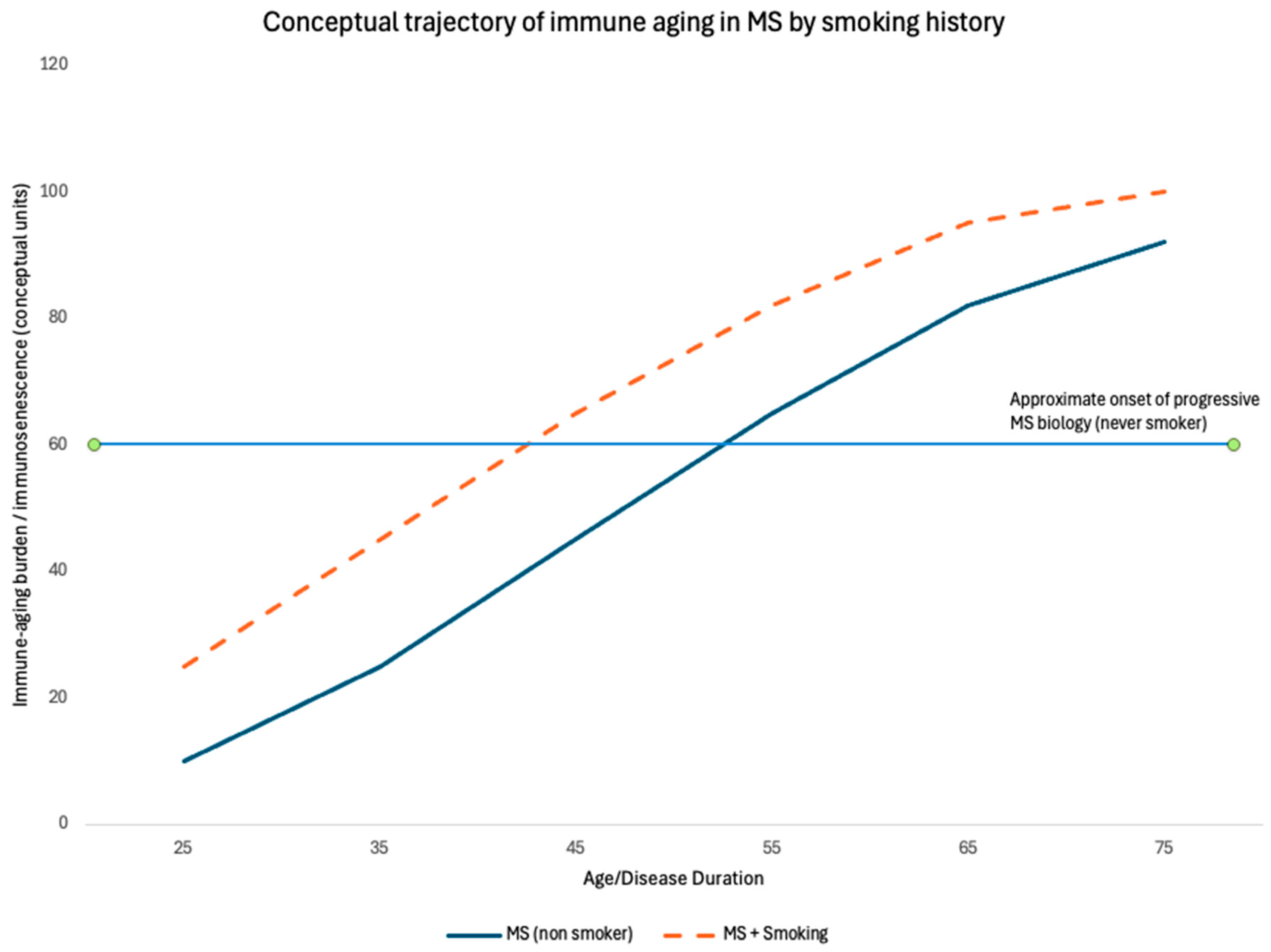
Table 1.
.
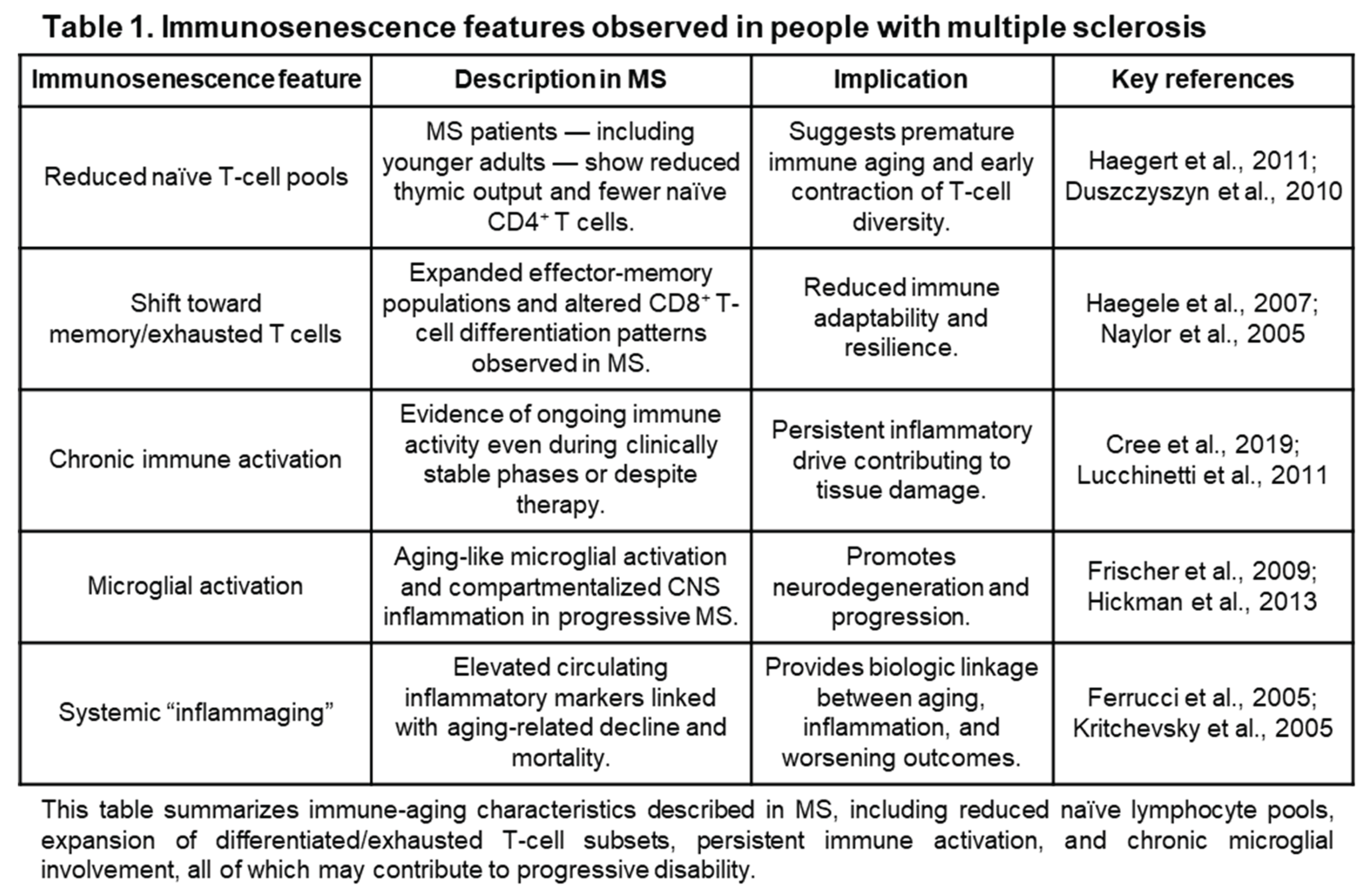
Table 2.
Proposed pathway linking smoking, immunosenescence, and multiple sclerosis.
| Smoking-related exposure/effect | Immunosenescence feature | Biological implication | Relevance to MS | Key references |
|---|---|---|---|---|
| Chronic tobacco exposure and sustained antigenic load | Reduction in naïve T-cell pools | Chronic antigen exposure drives depletion of naïve T-cell reserves and contraction of T-cell receptor diversity, limiting the ability of the immune system to respond to novel antigens and maintain adaptive flexibility. | Reduced immune adaptability may impair CNS repair mechanisms and promote earlier immune exhaustion in MS. | Martos et al., 2020; Fernandes et al., 2022 |
| Repeated inflammatory activation | Expansion of senescent and terminally differentiated T-cells | Persistent immune stimulation promotes accumulation of senescent T cells characterized by reduced proliferative capacity and pro-inflammatory cytokine secretion, contributing to a chronic low-grade inflammatory state (“inflammaging”). | Sustained inflammatory signaling may contribute to microglial activation, impaired debris clearance, and ongoing neuroaxonal injury in MS. | Ferrucci et al., 2005; Kritchevsky et al., 2005 |
| Nicotine-mediated disruption of cholinergic signaling | Impaired cholinergic anti-inflammatory signaling | Nicotine exposure alters cholinergic signaling pathways in immune cells, disrupting regulatory mechanisms that normally suppress excessive cytokine production and maintain immune homeostasis. | Impaired resolution of inflammation may lead to persistent immune activation and exacerbate CNS inflammation in MS. | Tracey, 2002; Wessler et al., 2003 |
| Oxidative stress, epigenetic remodeling, and transcriptional reprogramming | Acceleration of immune-aging trajectory | Cigarette smoke induces oxidative stress and widespread epigenetic modifications, including DNA methylation and transcriptional reprogramming. These molecular alterations overlap with aging-associated signatures and may result in long-term immune dysregulation. | Accelerated biological aging may promote earlier onset of progressive MS features and reduced capacity for immune regulation and repair. | Ramirez et al., 2025; Xie et al., 2022; Marabita et al., 2017 |
| Altered T-cell transporter function and activation thresholds | Dysregulated effector T-cell responses | Changes in choline transporter activity influence T-cell activation thresholds and downstream signaling, potentially leading to exaggerated or improperly regulated immune responses. | Dysregulated immune activation may contribute to ongoing CNS injury and reduced responsiveness to immunomodulatory therapies. | Cherian et al., 2017; Rossi et al., 2017 |
| Smoking-associated immune remodeling | Expansion of senescent CD8⁺ T-cell subsets | Single-cell transcriptomic analyses demonstrate enrichment of dysfunctional CD16⁺ CD8 T cells with transcriptional profiles consistent with cellular senescence, altered cytotoxicity, and impaired immune regulation in smokers. | Increased prevalence of senescent immune cells may sustain chronic inflammation and contribute to progressive disease mechanisms in MS. | Martos et al., 2020 |
| Smoking-associated shifts in T-cell phenotype | Age-associated imbalance in CD4⁺ and CD8⁺ T-cell subsets | Immunophenotyping studies show that smokers exhibit T-cell distributions resembling those of older individuals, including increased effector and memory populations and reduced naïve subsets. | Premature immune aging may shift MS biology toward progressive, less inflammatory but more degenerative disease processes. | Fernandes et al., 2022 |
| Persistent remodeling of adaptive immunity | Long-lasting alterations in immune function | Systems immunology studies demonstrate that smoking induces durable changes in adaptive immune responses, with some alterations persisting even after smoking cessation. | Persistent immune dysregulation may influence long-term disease trajectory and limit recovery of immune balance in MS. | Saint-André et al., 2024 |
This table summarizes mechanistic links between smoking-related immune alterations, features of immunosenescence, and potential consequences for MS pathophysiology. Experimental, immunologic, and systems-level studies indicate that cigarette smoking promotes immune phenotypes resembling accelerated aging, including contraction of naïve lymphocyte pools, expansion of senescent T-cell populations, disruption of regulatory signaling pathways, and persistent remodeling of adaptive immunity.
Table 3.
Epidemiologic studies of cigarette smoking and multiple sclerosis risk and disease course.
| Disease | Study Design | No. cases/controls (or sample size) | Smoking exposure evaluated | Study duration/region | Impact of smoking on disease or immune aging | Key reference |
|---|---|---|---|---|---|---|
| MS susceptibility | Prospective cohort | 902 cases; 1,855 controls | Ever vs never smoking | Sweden, 1991–2008 | Smoking was associated with a significantly increased risk of developing MS, with evidence of a dose–response relationship indicating that cumulative tobacco exposure contributes to disease susceptibility. | Hedström et al., 2009 |
| MS conversion (CIS → MS) | Case–control | 129 participants | Current and former smoking | Austria, 2003–2007 | Smokers demonstrated faster conversion from clinically isolated syndrome (CIS) to clinically definite MS compared with nonsmokers, suggesting that smoking accelerates early disease development. | Di Pauli et al., 2008 |
| Disability progression | Longitudinal cohort | 895 MS patients | Current vs former vs never smoking | United Kingdom; median follow-up 8 years | Smoking was associated with more rapid disability accumulation and faster progression along the EDSS, indicating a negative effect on long-term neurologic outcomes. | Manouchehrinia et al., 2013 |
| Disease progression (SPMS transition) | Prospective cohort | 52 MS cases; 30 controls | Pack-years and current smoking | United States | Greater cumulative smoking exposure was associated with earlier transition to secondary progressive MS (SPMS), supporting a role for smoking in accelerating disease progression. | Hernán et al., 2005 |
This table summarizes key studies describing the biological and pathological mechanisms underlying multiple sclerosis progression, including compartmentalized inflammation, cortical demyelination, and neurodegeneration. These findings provide a framework for understanding how immune aging processes may contribute to disease evolution and support the proposed interaction between smoking, immunosenescence, and MS.
Disclaimer/Publisher’s Note: The statements, opinions and data contained in all publications are solely those of the individual author(s) and contributor(s) and not of MDPI and/or the editor(s). MDPI and/or the editor(s) disclaim responsibility for any injury to people or property resulting from any ideas, methods, instructions or products referred to in the content. |
© 2026 by the authors. Licensee MDPI, Basel, Switzerland. This article is an open access article distributed under the terms and conditions of the Creative Commons Attribution (CC BY) license (http://creativecommons.org/licenses/by/4.0/).
Copyright: This open access article is published under a Creative Commons CC BY 4.0 license, which permit the free download, distribution, and reuse, provided that the author and preprint are cited in any reuse.


