

Submitted:
20 March 2026
Posted:
23 March 2026
You are already at the latest version
Abstract
Background:
Outcomes in chronic myeloid leukemia (CML) remain heterogeneous despite effective BCR::ABL1 tyrosine kinase inhibitors (TKIs). Somatic mutations in epigenetic regulators, particularly additional sex combs like 1 (ASXL1), have been implicated in adverse prognosis, but their clinical impact in CML has not been systematically defined.
Methods:
A systematic review was conducted using CINAHL, EMBASE, MEDLINE Ultimate, and PubMed from inception through August 2025. A total of 1,339 records were identified; after duplicate removal and screening, 11 studies met inclusion criteria and were included in qualitative synthesis and meta-analysis. Eligible studies included adult and pediatric patients with chronic and advanced phase (accelerated or blast) CML with ASXL1 mutation status assessed using validated molecular methods. Outcomes included molecular response, cytogenetic response, survival, and treatment resistance. Random-effects models were used to calculate pooled odds ratios (ORs) with 95% confidence intervals (CI). Statistical heterogeneity was assessed using the I² statistic.
Results:
Across included studies, ASXL1 mutations were detected in approximately 16% of patients. At 12 months, ASXL1-mutated patients had significantly lower odds of achieving major molecular response (MMR) compared with ASXL1–wildtype patients (OR 0.29; 95% CI 0.16–0.51; p< 0.0001; I²=30%). No statistically significant difference was observed in complete cytogenetic response (CCyR) (OR 0.30; 95% CI 0.02–5.31; p=0.41; I²=68%). Compared with patients harbouring other non-ASXL1 somatic mutations, ASXL1 mutation was not associated with a significant difference in MMR (OR 0.49; 95% CI 0.23–1.05; p=0.067; I²=0%).
Conclusions:
ASXL1 mutations are associated with inferior molecular response to TKI therapy in CML, supporting their role as an adverse prognostic biomarker. These findings highlight the potential value of incorporating myeloid mutation profiling into future CML risk-stratification strategies.
Keywords:
chronic myeloid leukemia
; CML
; ASXL1 mutation
; TKIs
Introduction
Chronic myeloid leukemia (CML) is a myeloproliferative neoplasm defined by the Philadelphia (Ph) chromosome and the BCR::ABL1 fusion gene, which encodes a constitutively active tyrosine kinase [1,2]. The introduction of tyrosine kinase inhibitors (TKIs), beginning with imatinib and subsequently second- and third-generation agents, has transformed CML into a largely chronic condition for many patients, with high rates of durable molecular responses and long-term survival [1,2,3,4]. Nevertheless, treatment outcomes remain heterogeneous: up to 10–15% of patients are resistant or intolerant to one or more TKIs, and progression to blast phase (BP) still occurs in approximately 5% of patients in the contemporary era [2,3,4].
Historically, the best-characterized mechanism of acquired TKI resistance has been BCR::ABL1 kinase domain point mutations, which directly impair drug binding and guide the choice of subsequent TKIs [2,3,4]. However, such mutations account for only about half of resistance events, are rarely detectable at diagnosis in chronic phase (CP) CML, and therefore do not explain primary resistance [2,3,4]. A substantial fraction of resistance and disease progression appears to be BCR::ABL1-independent, driven by broader genomic instability, accumulation of additional cancer-related gene variants, and complex structural rearrangements. Integrative genomic analyses have shown that patients who later progress to BP or have poor outcomes often harbor a higher burden of pathogenic or likely pathogenic variants in cancer-related genes already at diagnosis than patients who achieve optimal molecular responses [5,6,7,8]. In addition, novel Ph-associated rearrangements, complex structural variants formed at the time of the Ph translocation and characterized by fragmentation, non-contiguous deletions, inversions and imperfect reassembly, have been described and linked to adverse outcomes and accelerated leukemic evolution [5,7,8].
Among non-ABL1 lesions, mutations in genes recurrently mutated in myeloid malignancies, particularly additional sex combs like 1 (ASXL1), but also DNMT3A, TET2, RUNX1, TP53 and others, have emerged as important contributors to the genomic landscape of CML [4,9,10,11]. In BP-CML, the mutational profile appears to correlate with blast phenotype: ASXL1, BCORL1, RUNX1 and TP53 mutations are more frequently associated with a myeloid blast phenotype, whereas CDKN2A/B and IKZF1 alterations are enriched in lymphoid blast phase [4,9,10]. In chronic phase, ASXL1 mutations have been reported in roughly 10–30% of patients across different cohorts, often co-occurring with other myeloid-leukemia–associated mutations, but their clinical significance has only recently begun to be clarified [9,10,11,12,13]. Retrospective studies, discovery cohorts and more recent prospective or registry-based analyses suggest that ASXL1 and other epigenetic regulator mutations are associated with slower or suboptimal molecular responses, higher rates of treatment failure, increased acquisition of BCR::ABL1 kinase domain mutations, and poorer survival on TKI therapy [4,11,12,13,14,15]. However, the magnitude and independence of this adverse impact, particularly at diagnosis in unselected CP-CML populations, remains incompletely defined [2,4,11,15].
Despite accumulating genomic data, there are currently no universally adopted clinical guidelines for when and how to test for ASXL1 and other non-ABL1 mutations in CML, how to interpret such findings at diagnosis or in the setting of TKI resistance, and whether they should influence frontline TKI selection, monitoring intensity, or decisions regarding allogeneic transplantation. Recent expert recommendations and reviews have highlighted ASXL1 as a potential high-risk marker and suggested that its presence at diagnosis may not be fully mitigated by second-generation TKIs or asciminib-based strategies, although combination approaches are under investigation [2,14,15,16]. However, study designs, sequencing platforms, mutation calling thresholds, and treatment eras differ substantially between reports, making it challenging to draw firm, generalizable conclusions from individual studies and to translate them into routine clinical practice.
Given these uncertainties, there is a clear need for a systematic synthesis of the available evidence. The aim of this systematic review and meta-analysis is to study the prevalence and spectrum of ASXL1 mutations in chronic- and advanced-phase CML; evaluate the association between ASXL1 mutations and disease outcomes, including molecular response rates, progression to blast phase, and overall survival. By integrating data across studies and treatment eras, we seek to clarify the clinical impact of ASXL1 mutations in CML and to inform future diagnostic and therapeutic strategies, including the potential role of routine myeloid gene profiling at diagnosis and during the disease course.
Methods
Study Design
This systematic review and meta-analysis was conducted in accordance with the Preferred Reporting Items for Systematic Reviews and Meta-Analyses (PRISMA) guidelines [17]. The objective was to evaluate the prevalence and prognostic impact of ASXL1 somatic mutations in patients with chronic myeloid leukemia (CML) across disease phases and treatment eras.
Search Strategy
A comprehensive literature search was performed by a medical librarian across CINAHL, EMBASE, MEDLINE Ultimate, and PubMed from database inception through August 2025. Detailed search strategies for each database are provided in the Supplementary Appendix. The search was restricted to English-language publications. Reference lists of eligible studies were manually screened to identify additional relevant reports.
Eligibility Criteria
Studies were eligible if they met the following criteria:
- Included adult or pediatric patients diagnosed with Philadelphia chromosome–positive CML according to World Health Organization or European LeukemiaNet criteria.
- Reported ASXL1 mutation status assessed using validated molecular techniques, including next-generation sequencing or polymerase chain reaction–based assays.
- Evaluated either the prevalence of ASXL1 mutations or their association with clinical outcomes, including molecular response, cytogenetic response, progression, treatment resistance, or survival.
- Included patients in chronic, accelerated, or blast phase CML.
We excluded review articles, editorials, commentaries, guidelines, case reports, small case series, and preclinical or basic science studies. Studies that included diseases other than CML without separate CML-specific outcome reporting were also excluded.
Study Selection
All records were imported into a citation management system and duplicates were removed. Titles and abstracts were independently screened by two reviewers (RA and MA). Full-text review was subsequently performed for potentially eligible studies. Discrepancies were resolved by consensus.
Data Extraction
Data extraction was performed independently by five investigators (RA, MA, AD, MR and AAM) using a standardized, predesigned extraction form. Extracted variables included study characteristics (design, country, sample size), patient demographics, disease phase distribution, ASXL1 detection method, treatment exposure, and reported outcomes. Clinical endpoints included major molecular response (MMR), complete cytogenetic response (CCyR), progression, resistance, and survival outcomes where available. Disagreements were resolved through discussion with senior reviewers.
Risk of Bias Assessment
Risk of bias/quality assessment was performed independently by two reviewers using the Newcastle–Ottawa Scale (NOS) (modified as applicable for observational studies). The NOS evaluates studies across three domains: selection (maximum 4 stars), comparability (maximum 2 stars), and outcome (maximum 3 stars), with a maximum total score of 9 stars [18]. Any discrepancies between the two reviewers were resolved through discussion and consensus (with senior reviewer adjudication if needed). Based on total NOS score, studies were categorized as good quality (7–9 stars), fair quality (4–6 stars), or poor quality (0–3 stars). The detailed study-level ratings are presented in Table 1 below.
Statistical Analysis
This is a study-level meta-analysis. The odds ratio (OR) with their respective 95% confidence intervals (95% CI) were computed. The minimum number which was considered to perform the quantitative analysis was two. A random-effects model was opted to account for the anticipated heterogeneity between the studies. The inconsistency factor (I2) was used to assess heterogeneity between the studies with values greater than 50% to represent high heterogeneity. The funnel plots to visually inspect the publication bias were not included and Egger’s test was not conducted because the number of the studies from which the clinical outcomes were pooled was less than 10 studies. A single proportion meta-analysis was performed to pool the prevalence data. A p-value of <0.05 was set as the statistical significance. The statistical program R software (RStudio 2023.06.0+421 "Mountain Hydrangea" Release for windows) was utilized to conduct the analysis.
Results
Study Selection
Following PRISMA guidelines, 1,339 records were identified through database searching. After the removal of 330 duplicates, 1,019 records were screened by title and abstract, and 50 full-text articles were assessed for eligibility. Eleven observational studies met the inclusion criteria and were included in the qualitative synthesis and quantitative meta-analysis [9,19,20,21,22,23,24,25,26,27,28] (Figure 1).
Study Characteristics
The included studies encompassed adult patients (38 – 64 years old) with CML diagnosis according to the World Health Organization (WHO) [29] or European LeukemiaNet (ELN) criteria [2] and included patients across chronic, accelerated, and blast phases with CP predominance. ASXL1 mutation status was assessed using next-generation sequencing, polymerase chain reaction (PCR)-based assays, or other validated molecular techniques. Most studies evaluated outcomes in patients treated with first- or later-generation tyrosine kinase inhibitors, with variability in treatment era, sequencing depth, and timing of mutation assessment. The included cohorts varied in size (22 – 515 patients), ranging from small single-center studies to larger multicenter or registry-based analyses, and included both newly diagnosed and previously treated patients.
Prevalence of ASXL1 Mutations
Across the ten studies contributing to prevalence pooling (n = 991) [9,19,20,21,22,23,24,25,26,27], the pooled prevalence of ASXL1 mutations was 16% (95% CI, 12–22%), with substantial heterogeneity between studies (I2 = 69%, p < 0.01) (Figure 2). Individual study prevalence estimates ranged from approximately 9% to 41%, reflecting heterogeneity in patient populations, disease phase distribution, age, and sequencing methodologies. Despite this variability, ASXL1 mutations were consistently identified across all included cohorts.
Impact of ASXL1 Mutations on Treatment Response
Among the reported clinical outcomes, only major molecular response (MMR) and complete cytogenetic response (CCyR) were mutually reported and could be pooled. ASXL1 mutation status was associated with inferior molecular response to TKI therapy. In pooled analysis comparing ASXL1-mutated versus ASXL1–wildtype patients (i.e., no mutation), the odds of achieving MMR at 12 months significantly lower among ASXL1-mutated patients (OR 0.29, 95% CI 0.16–0.51, p < 0.0001), corresponding to a 71% reduction in the likelihood of achieving MMR. Between-study heterogeneity for this outcome was low to moderate (I2 = 30%), indicating consistent findings across studies (Figure 3). When ASXL1-mutated patients were compared with patients harboring other non-ASXL1 somatic mutations, there was no statistically significant difference in 12-month MMR rates (OR 0.49, 95% CI 0.23–1.05, p = 0.067), with no observed heterogeneity (I2 = 0%) (Figure 4).
In contrast, CCyR did not differ significantly by ASXL1 mutation status (OR 0.30, 95% CI 0.02–5.31, p = 0.41), although heterogeneity was substantial (I2 = 68%) (Figure 5), suggesting variability in study design, patient characteristics, and CCyR assessment.
Additional Non-Pooled Outcomes: Treatment Resistance, Failure, Progression, and Survival
Only MMR and CCyR were sufficiently and consistently reported for meta-analysis. Other clinically important outcomes - TKI resistance/kinase-domain mutations, treatment failure composites, progression, and survival endpoints - were reported inconsistently across studies and were therefore summarized narratively.
For resistance / kinase-domain mutations, Shanmuganathan et al. [28] reported a higher frequency of TKI-resistant BCR::ABL1 kinase-domain mutations at 2 years in ASXL1-mutated patients (35%) compared with patients with other mutations (2%) or no mutations (1%) (p<0.001). The same study reported lower 2-year event-free survival (EFS) in ASXL1-mutated versus no-mutation patients (61% vs 91%, p<0.001). Rafiq Mohammed et al. [20] reported imatinib resistance in 9/9 (100%) ASXL1-mutated patients compared with 26/71 (36.6%) ASXL1–wildtype patients (p=0.01), and nilotinib resistance in 4/9 (44.4%) ASXL1-mutated patients.
Treatment failure endpoints. Kim et al. [25] reported that a composite endpoint of treatment failure or failure to achieve/maintain CCyR at 12 months occurred in 5/9 (55.6%) ASXL1-mutated patients versus 7/63 (11.1%) patients without mutations (p=0.015). Branford et al. [9] reported poor outcome/TKI failure in 7/9 (78%) ASXL1-mutated patients in an imatinib-era cohort.
Progression outcomes were mainly reported by Ochi et al. [26] with significantly shorter time to blast phase progression among ASXL1-mutated patients (HR 4.66, 95% CI 1.99–10.89; p<0.001). additionally, Branford et al. [9] reported progression to blast crisis in 6/9 ASXL1-mutated patients.
Moreover, survival and time-to-event outcomes as demonstrated by Bidikian et al. [19] reporting phase-dependent outcomes in ASXL1-mutated patients, with overall survival (OS) of 7.2 months in BP-ASXL1 and 25.7 months in AP-ASXL1; 5-year progression-free survival (PFS) was 88% in CP-ASXL1 compared with 0% in BP-ASXL1 and 24% in AP-ASXL1. Romzova et al. [22] reported no statistically significant association between ASXL1 at diagnosis and poorer molecular response or higher treatment failure in their cohort.

Table 2.
Non-pooled outcomes reported in included studies (resistance, failure, progression, survival).
Table 2.
Non-pooled outcomes reported in included studies (resistance, failure, progression, survival).
| Study | Country / Design | N (Phase) | ASXL1 n (%) | TKI Context | Molecular Response | TKI Resistance | Progression | Survival |
|---|---|---|---|---|---|---|---|---|
| Shanmuganathan 2025 | Australia, NZ Retrospective |
515 (CP) | 40 (8%) | Mixed TKIs | MMR 12m 55% vs 83%, P=0.033 | TKI-resistant mutations 2y 35% vs 1%, P<0.001 | - | 2y EFS 61% vs 91%, P<0.001 |
| Mohammed 2023 | Iraq, Iran Retrospective |
80 (CP/AP/BP) | 9 (11.3%) | Mixed TKIs | MMR 12-24m 0% | Imatinib 100% vs 36.6%, P=0.01 Nilotinib 44.4% |
- | - |
| Bidikian 2022 | USA Multicenter retrospective |
115 (CP/AP/BP) | 21 (18.3%) | 1st and later gen TKIs | CCyR CP 89%, AP 33%, BP 20% MMR CP 78% median 17.5m |
45-50% failed MMR | - | OS BP 7.2m OS AP 25.7m 5y PFS CP 88%, AP 24%, BP 0% |
| Schönfeld 2022 | Germany Prospective |
222 (CP) | 20 (9%) | Frontline imatinib | MMR 12m 55% vs 85% 18m 60% vs 89% 24m 65% vs 89%, P<0.008 |
- | - | - |
| Hu 2022 | China Retrospective |
22 (CP) | 9 (40.9%) | Mixed TKIs | No MMR difference at 12m MR4.0 inferior at 36m |
- | - | - |
| Romzova 2021 | Czech Republic Prospective |
49 (CP) | 6 (12.2%) | Mixed TKIs | No significant molecular response difference | - | - | - |
| Ochi 2021 | Japan Multicenter cohort |
216 (CP/BC) | 33 (15.3%) | Mixed TKIs | - | - | Time to blast phase HR 4.66 (95% CI 1.99-10.89), P<0.001 | - |
| Awad 2020 | Finland, Egypt Retrospective |
59 (CP/AP) | 11 (18.6%) | Mixed TKIs | Poor outcomes in co-mutated cases, exact rates not reported | - | - | - |
| Wu 2020 | China Cross-sectional genomic cohort |
63 (CP/AP resistant) | 15 (23.8%) | Resistant or intolerant | No CCyR/MMR data | Resistance-enriched cohort | No independent PFS impact | No independent PFS impact |
| Branford 2018 | Australia, Germany, UK, Korea Retrospective |
65 (CP/BC) | 9 (13.8%) | Frontline imatinib | MMR3 2/9 | 7/9 TKI failure | 6/9 progressed to BC | - |
| Kim 2017 | South Korea Retrospective |
100 (CP/AP/BP) | 9 (9%) | Imatinib-based | 12m CCyR failure 55.6% vs 11.1%, P=0.015 24m MMR 44.4% vs 88.9% |
Treatment failure 55.6% | - | - |
Abbreviations: CP; chronic phase, AP; accelerated phase, BC; blast crisis, BP; blast phase, CCyR; complete cytogenetic response, EFS; event free survival, KD; kinase domain, MMR; major molecular response, OS; overall survival, PFS; progression free survival, TKI; tyrosine kinase inhibitor.
Discussion
CML is the prototypical success story of targeted therapy, yet clinically meaningful heterogeneity persists in the depth, speed, and durability of molecular response despite effective BCR::ABL1 inhibition. Contemporary practice is milestone-driven because early BCR::ABL1 kinetics and attainment of MMR strongly predict long-term outcomes, including progression-free and overall survival, and shape downstream treatment decisions. ELN recommendations emphasize early molecular thresholds (e.g., BCR::ABL1 >10% at 3 months) as an “alert/failure” signal that should trigger reassessment and potential therapeutic change, and they increasingly position durable deep molecular response (DMR) as a prerequisite for pursuing treatment-free remission (TFR) [1,2,3]. These principles are supported by landmark outcome studies demonstrating that transcript levels at 3, 6, and 12 months predict the probability of achieving CCyR and MMR and are strongly associated with long-term survival endpoints [4]. Beyond survival, early molecular response functions as a “gateway” to DMR, an essential step for TFR eligibility, because patients who do not reach timely MMR are substantially less likely to achieve and sustain MR4/MR4.5, which are used in most discontinuation frameworks [1,2,3,5,6,7].Accordingly, identifying biologic factors that impair early MMR is clinically relevant not only for preventing progression and resistance, but also for maximizing the modern goal of durable TFR in appropriate patients [6,7].
Within this response-milestone paradigm, the genomic landscape of CML beyond BCR::ABL1 has become increasingly important. Multiple sequencing studies have shown that a subset of patients harbor additional somatic variants at diagnosis in cancer-related or myeloid genes, and that these variants enrich for poor-outcome trajectories, including higher rates of failure and resistance evolution [8,9,10,11,12]. This has driven a conceptual shift from viewing CML as a “single-driver” disease to an evolutionary model in which BCR::ABL1 initiates the phenotype but cooperating lesions can influence stem-cell persistence, adaptability under TKI selective pressure, and treatment durability [9,10,11,12]. Expert commentaries have further highlighted that “non-Ph variants” may be biologically relevant drivers rather than incidental findings, motivating systematic evaluation of specific recurrent lesions [13].
ASXL1 mutations represent a modern molecular challenge of the poor-prognosis clonal evolution long recognized in CML. Cytogenetic clonal evolution (CE) was established as an independent poor prognostic factor in imatinib-treated patients, with inferior 2-year survival (77% vs 92%, p=0.002) even when CE occurred as the sole accelerated-phase criterion [30]. ASXL1 mutations function as the molecular equivalent of this CE phenomenon detectable by next-generation sequencing, occurring in 7–14% of chronic-phase patients at diagnosis [14,19,21,28] and rising dramatically to approximately 40% in accelerated phase [19]. Unlike other clonal hematopoiesis-associated variants that remain relatively indolent, ASXL1 hotspot mutations, predominantly frameshift and nonsense variants clustered around codon G646, are disproportionately enriched in myeloid diseases compared with clonal hematopoiesis of indeterminate potential (CHIP), suggesting that they are inherently pathogenic and confer a high risk of disease progression [31].
The mechanism by which ASXL1 mutations drive this BCR::ABL1-independent resistance involves dual pathways. ASXL1 truncation mutations alter polycomb repressive deubiquitinase (PR-DUB) complex function through gain-of-function effects on BAP1 deubiquitinase activity [31,32], leading to aberrant histone H2A ubiquitination, phosphorylated AKT stabilization, and impaired DNA damage response [32]. In parallel, recent evidence demonstrates that CML cells with mutant ASXL1 upregulate the ALOX5–BLT receptor signalling pathway, creating a BCR::ABL1-independent survival mechanism that sustains leukemic cells despite effective TKI-mediated BCR::ABL1 inhibition [33].
ASXL1 is particularly salient in this co-mutation landscape because it is both one of the most frequently observed lesions across myeloid neoplasia and one of the most recurrently implicated genes in CML sequencing cohorts. In broader hematology, ASXL1 is classically associated with adverse phenotypes in several myeloid disorders, consistent with its role in epigenetic regulation and stem/progenitor cell programs [14,15]. However, the interpretation of ASXL1 variants requires additional nuance because ASXL1 is also a canonical driver of age-related CHIP. Large population studies have demonstrated that DNMT3A, TET2, and ASXL1 mutations accumulate with age in otherwise healthy individuals, with CHIP prevalence rising substantially in older populations and being linked to nonmalignant risks such as cardiovascular disease [25,34,35]. This overlap creates a critical interpretive issue in CML: an ASXL1 variant may be (i) a cooperating lesion in the Ph-positive leukemic clone, (ii) a parallel Ph-negative CHIP clone, or (iii) a mixture of both, each with different implications for response, toxicity, survivorship, and the biology of treatment discontinuation [13,25].
In CML specifically, ASXL1 has repeatedly emerged as one of the most frequent non-BCR::ABL1 lesions detected at diagnosis and has been associated with inferior response kinetics and adverse failure-related endpoints. In an integrative genomic analysis of newly diagnosed patients, cancer-associated mutations at diagnosis including ASXL1 were enriched among patients with poor outcomes [9]. Additional diagnostic studies confirmed that mutated cancer-related genes at diagnosis have measurable clinical impact, reinforcing the notion that early genomics may capture underlying evolutionary risk [10,11]. In a large clinical cohort focused on CP-CML, Bidikian and colleagues reported ASXL1 as the most frequent mutation and demonstrated significantly worse event-free and failure-free survival in ASXL1-mutated CP-CML, with ASXL1 remaining an independent adverse predictor in multivariable analysis [19]. Prospective trial-adjacent evidence also supports a response-kinetics signal: in the prospective German TIGER study (CML-V; NCT01657604) of cohort treated with nilotinib-based therapy, ASXL1 was the most frequent mutation and predicted inferior molecular response across multiple time points [21]. Importantly, pediatric and adolescent/young adult (AYA) CML data argue that ASXL1 cannot be dismissed as merely age-related CHIP: Ernst and colleagues identified frequent ASXL1 mutations in children and young adults, and subsequent pediatric profiling studies confirmed recurrent somatic variants including ASXL1 at diagnosis in younger patients where CHIP prevalence is low [16,36]. Together, these data suggest that at least a meaningful subset of ASXL1 variants detected in CML reflect CML-relevant biology rather than incidental aging-related clones, though clonal context likely differs across ages and cohorts [16,25,36].
Against this backdrop, our systematic review and meta-analysis provides a quantitative synthesis of two clinically central questions: how common ASXL1 mutations are across CML cohorts, and whether ASXL1 status predicts early molecular outcomes under TKI therapy. We found ASXL1 mutations were not rare, but prevalence estimates were heterogeneous across studies, consistent with differences in age structure, disease phase inclusion, testing indications (diagnosis vs resistance evaluation), and sequencing platforms/thresholds. Importantly, our pooled analysis demonstrates a strong association between ASXL1 and reduced likelihood of achieving MMR at 12 months, an endpoint with high clinical and translational relevance because it is tightly linked to downstream DMR attainment, long-term failure risk, and the feasibility of TFR [1,2,3,4,5,6,7]. In contemporary management, failure to reach MR3/MMR by 12 months is not simply a “late responder” phenotype; it often signals the need for intensified evaluation (adherence, drug interactions, mutation testing) and potentially early therapeutic optimization, and it materially reduces the probability of later achieving the sustained DMR required for safe discontinuation attempts [1,2,3,5,6,7].
Furthermore, ASXL1 mutations were associated with adverse outcomes beyond molecular response. Across several cohorts, ASXL1 was enriched in TKI resistance and BCR::ABL1 kinase-domain mutations, and studies using composite clinical endpoints reported higher rates of treatment failure in ASXL1-mutated patients. Multiple datasets also linked ASXL1 to disease evolution, including a shorter time to blast phase progression, and phase-stratified analyses showed markedly inferior survival once ASXL1-mutated disease entered accelerated/blast phase. However, not all cohorts reproduced these associations, underscoring heterogeneity in patient populations, sequencing indications, TKI exposure, and endpoint definitions [9,26]. Collectively, these findings support the potential integration of ASXL1 status into risk stratification and highlight the need for standardized outcome reporting in future studies.
One of the most clinically intriguing developments in the modern literature, and an important lens for interpreting our findings, is evidence that ASXL1 at diagnosis may enrich for future resistance evolution, particularly BCR::ABL1 kinase domain (KD) mutation acquisition. In a frontline “potent TKI” study using nilotinib, dasatinib, or asciminib, ASXL1 variants at diagnosis were associated with significantly lower 12-month MMR and worse failure-free survival, and were strikingly enriched for subsequent KD mutations, suggesting an evolution-prone state that is not fully mitigated by upfront potent BCR::ABL1 inhibition [28]. This observation provides a plausible mechanistic explanation for why early MMR is impaired in ASXL1-positive disease: ASXL1 may mark a leukemic system with greater stem cell persistence and/or genomic adaptability, increasing the probability of resistant subclones that slow transcript decline or trigger loss of response [9,10,11,12,19,28]. In addition, laboratory and clinical recommendations highlight that careful interpretation of molecular kinetics is essential for risk stratification and for rational use of KD testing, reinforcing the clinical importance of integrating early response patterns with biologic context [3].
An apparent discrepancy that often arises in synthesis work, also reflected in pooled CCyR signal, is that cytogenetic endpoints can appear less consistent than molecular endpoints. This is best understood as a measurement and era effect rather than a true biologic contradiction. In modern care, serial PCR monitoring has largely supplanted routine cytogenetics, CCyR timing can vary, and missingness can be informative; thus, CCyR is often less uniformly captured than MMR, particularly in retrospective and multi-institutional datasets [1,2,3]. Moreover, CCyR may be less sensitive than MMR for detecting biologically meaningful differences among patients receiving second- or third-generation TKIs, where cytogenetic responses are high and achieved early, compressing between-group differences and inflating heterogeneity. In contrast, early molecular milestones (including 3-month EMR and 12-month MMR) have repeatedly shown durable prognostic value for survival endpoints and for deeper molecular response, supporting the primacy of molecular outcomes when evaluating genomic risk factors such as ASXL1 [1,2,3,4,21,28].
Several biologically plausible hypotheses can be advanced to explain why ASXL1 associates with inferior early MMR and higher failure-related risk. First, ASXL1 may tag a stem-cell-biased disease state with increased persistence of leukemic progenitors under TKI pressure, leading to slower clearance of BCR::ABL1 transcripts and delayed achievement of molecular milestones [9,10,11,13,14,15]. Second, ASXL1 may reflect a higher-evolutionary-capacity state, either through broader genomic complexity or altered chromatin programs that facilitate selection of resistant clones, consistent with integrative genomic studies linking additional mutations at diagnosis to poor outcome and with modern data linking ASXL1 to KD mutation acquisition [9,10,11,12,28].Third, CHIP overlap likely contributes to heterogeneity: in older adults, a low-VAF ASXL1 clone may be Ph-negative and persist even when BCR::ABL1 is deeply suppressed, complicating binary “mutation-positive” interpretation and raising questions about long-term implications for survivorship and TFR. This concern is supported by studies describing persistent or dynamic non-BCR::ABL1 somatic variants during TKI therapy and deep molecular response, underscoring that clonal context matters and that not all ASXL1 detections are equivalent [25].
These findings have several implications for generalization and future research. First, our data support ASXL1 as a clinically meaningful biomarker for impaired early molecular response, which is itself a cornerstone predictor of long-term outcomes and a practical prerequisite for DMR and TFR attempts [1,2,3,4,5,6,7]. Second, standardization is needed: sequencing panels, VAF thresholds, timing of testing, and endpoint definitions vary widely and likely drive prevalence heterogeneity, emphasizing the importance of harmonized reporting and careful subgroup analyses by phase, age, and testing indication [1,2,3,9,10,11,12]. Third, prospective studies should evaluate whether integrating myeloid mutation profiling at diagnosis improves risk stratification beyond clinical scores, and whether ASXL1-positive patients benefit from intensified molecular monitoring, earlier KD testing, earlier switching strategies, or rational combination approaches (e.g., asciminib plus ATP-competitive TKIs) in genomically high-risk subgroups [1,2,3,28,37]. Finally, clonal-tracking studies are essential to disentangle disease-related ASXL1 from CHIP-related ASXL1, to map how variant allele fractions evolve under TKI therapy, and to determine whether persistent Ph-negative ASXL1 clones influence the safety and durability of TFR in patients who otherwise meet molecular eligibility criteria [6,7,25].
In summary, our meta-analysis strengthens the evidence that ASXL1 is a clinically relevant risk marker in CML, primarily through its association with inferior early MMR, a milestone with proven relevance for long-term outcome prediction and for the likelihood of achieving the durable DMR required to attempt TFR [1,2,3,4,5,6,7]. The totality of contemporary evidence suggests that ASXL1-positive CML may represent an evolution-prone state enriched for treatment failure and, in modern frontline datasets, KD mutation acquisition, motivating prospective risk-adapted monitoring and intervention strategies [9,10,11,12,19,28].
Conclusion
ASXL1 mutations are recurrent in chronic myeloid leukemia and are associated with significantly inferior molecular response to tyrosine kinase inhibitor therapy, particularly reduced rates of major molecular response at 12 months. While the impact on cytogenetic response appears less consistent, these findings support ASXL1 as a clinically relevant adverse prognostic biomarker in CML. Prospective studies are warranted to determine whether mutation-informed risk stratification and tailored therapeutic strategies can improve outcomes in ASXL1-mutated disease.
Supplementary Materials
The following supporting information can be downloaded at the website of this paper posted on Preprints.org.
Author Contributions
Conceptualization, Shehab F. Mohamed; Methodology, Rita Ahmad, Motaz Almahmood, Rasha Kaddoura and Sara Westall; Software, Motaz Almahmood and Sara Westall; Validation, Shehab F. Mohamed; Formal analysis, Rasha Kaddoura; Investigation, Motaz Almahmood; Resources, Rita Ahmad and Sara Westall; Data curation, Rita Ahmad, Marrita Rabadi, Aadhila Abbas Manthiri, Hatem Ahmed, Ayah Qaryoute and Shehab F. Mohamed; Writing – original draft, Rita Ahmad, Motaz Almahmood and Ayman Abdullah Dalol; Writing – review & editing, Rita Ahmad, Motaz Almahmood, Ayman Abdullah Dalol and Shehab F. Mohamed; Visualization, Rita Ahmad, Abdulrahman F. Al-Mashdali and Mohammed Abdulgayoom; Supervision, Fadi Haddad and Shehab F. Mohamed; Project administration, Shehab F. Mohamed; Funding acquisition, Muhammad Ali Tariq. All authors have read and agreed to the published version of the manuscript.
Funding
This research received no external funding.
Data Availability Statement
The original contributions presented in this study are included in the article/supplementary material. Further inquiries can be directed to the corresponding author(s).
Conflicts of Interest Statement: All authors declared no conflict of interest regarding this work.
References
- Jabbour, E.; Kantarjian, H. Chronic myeloid leukemia: 2025 update on diagnosis, therapy, and monitoring. Am. J. Hematol. 2024, 99, 2191–2212. [Google Scholar] [CrossRef] [PubMed]
- Apperley, J.F.; Milojkovic, D.; Cross, N.C.P.; Hjorth-Hansen, H.; Hochhaus, A.; Kantarjian, H.; Lipton, J.H.; Malhotra, H.; Niederwieser, D.; Radich, J.; et al. 2025 European LeukemiaNet recommendations for the management of chronic myeloid leukemia. Leukemia 2025, 39, 1–17. [Google Scholar] [CrossRef] [PubMed]
- Cross, N.C.P.; Ernst, T.; Branford, S.; Cayuela, J.-M.; Deininger, M.; Fabarius, A.; Kim, D.D.H.; Polakova, K.M.; Radich, J.P.; Hehlmann, R.; et al. European LeukemiaNet laboratory recommendations for the diagnosis and management of chronic myeloid leukemia. Leukemia 2023, 37, 2150–2167. [Google Scholar] [CrossRef]
- Marin, D.; Ibrahim, A.R.; Lucas, C.; Gerrard, G.; Wang, L.; Szydlo, R.M.; Clark, R.E.; Apperley, J.F.; Milojkovic, D.; Bua, M.; et al. Assessment of BCR-ABL1 Transcript Levels at 3 Months Is the Only Requirement for Predicting Outcome for Patients With Chronic Myeloid Leukemia Treated With Tyrosine Kinase Inhibitors. J. Clin. Oncol. 2012, 30, 232–238. [Google Scholar] [CrossRef]
- Hochhaus, A.; Baccarani, M.; Silver, R.T.; Schiffer, C.; Apperley, J.F.; Cervantes, F.; Clark, R.E.; Cortes, J.E.; Deininger, M.W.; Guilhot, F.; et al. European LeukemiaNet 2020 recommendations for treating chronic myeloid leukemia. Leukemia 2020, 34, 966–984. [Google Scholar] [CrossRef]
- Bourne, G.; Bhatia, R.; Jamy, O. Treatment-Free Remission in Chronic Myeloid Leukemia. J. Clin. Med. 2024, 13, 2567. [Google Scholar] [CrossRef]
- Mahon, F.-X.; Pfirrmann, M.; Dulucq, S.; Hochhaus, A.; Panayiotidis, P.; Almeida, A.; Mayer, J.; Hjorth-Hansen, H.; Janssen, J.J.; Mustjoki, S.; et al. European Stop Tyrosine Kinase Inhibitor Trial (EURO-SKI) in Chronic Myeloid Leukemia: Final Analysis and Novel Prognostic Factors for Treatment-Free Remission. J. Clin. Oncol. 2024, 42, 1875–1880. [Google Scholar] [CrossRef] [PubMed]
- Adnan-Awad, S.; Kankainen, M.; Mustjoki, S. Mutational landscape of chronic myeloid leukemia: more than a single oncogene leukemia. Leuk. Lymphoma 2021, 62, 2064–2078. [Google Scholar] [CrossRef] [PubMed]
- Branford, S.; Wang, P.; Yeung, D.T.; Thomson, D.; Purins, A.; Wadham, C.; Shahrin, N.H.; Marum, J.E.; Nataren, N.; Parker, W.T.; et al. Integrative genomic analysis reveals cancer-associated mutations at diagnosis of CML in patients with high-risk disease. Blood 2018, 132, 948–961. [Google Scholar] [CrossRef]
- Shanmuganathan, N.; Wadham, C.; Shahrin, N.H.; Thomson, D.; Feng, J.; A Saunders, V.; Lin, M.; Kenyon, R.; King, R.; Wang, P.; et al. Mutated Cancer-Related Genes Detected at Diagnosis of CML and a Novel Class of Variant Associated with the Philadelphia Translocation Are Both Independent Predictors of Inferior Outcomes. Blood 2020, 136, 46–47. [Google Scholar] [CrossRef]
- Togasaki, E.; Takeda, J.; Yoshida, K.; Shiozawa, Y.; Takeuchi, M.; Oshima, M.; Saraya, A.; Iwama, A.; Yokote, K.; Sakaida, E.; et al. Frequent somatic mutations in epigenetic regulators in newly diagnosed chronic myeloid leukemia. Blood Cancer J. 2017, 7, e559–e559. [Google Scholar] [CrossRef]
- Mustjoki, S. Non-Ph variants in CML: guilty drivers? Blood 2018, 132, 880–881. [Google Scholar] [CrossRef]
- Kim, D.D.H. Are we ready to use precision medicine in chronic myeloid leukemia practice? Haematologica 2019, 104, 2327–2329. [Google Scholar] [CrossRef] [PubMed]
- Shanmuganathan, N.; Wadham, C.; Shahrin, N.; Feng, J.; Thomson, D.; Wang, P.; Saunders, V.; Kok, C.H.; King, R.M.; Kenyon, R.R.; et al. Impact of additional genetic abnormalities at diagnosis of chronic myeloid leukemia for first-line imatinib-treated patients receiving proactive treatment intervention. Haematologica 2023, 108, 2380–2395. [Google Scholar] [CrossRef] [PubMed]
- Jain, A.G.; Dalgetty, M.; Cortes, J.E. Is there a best frontline therapy in chronic myeloid leukemia? Haematologica 2025. [Google Scholar] [CrossRef]
- Behrens, Y.L.; Gaschler, L.; Nienhold, R.; Reinkens, T.; Schirmer, E.; Knöß, S.; Strasser, R.; Sembill, S.; Wotschofsky, Z.; Suttorp, M.; et al. Somatic variant profiling in chronic phase pediatric chronic myeloid leukemia. Haematologica 2023, 109, 942–947. [Google Scholar] [CrossRef] [PubMed]
- Page, M.J.; McKenzie, J.E.; Bossuyt, P.M.; Boutron, I.; Hoffmann, T.C.; Mulrow, C.D.; Shamseer, L.; Tetzlaff, J.M.; Akl, E.A.; Brennan, S.E.; et al. The PRISMA 2020 statement: an updated guideline for reporting systematic reviews. BMJ 2021, 372, 71. [Google Scholar] [CrossRef]
- Gualdi-Russo, E.; Zaccagni, L. The Newcastle–Ottawa Scale for Assessing the Quality of Studies in Systematic Reviews. Publications 2026, 14, 4. [Google Scholar] [CrossRef]
- Bidikian, A.; Kantarjian, H.; Jabbour, E.; Short, N.J.; Patel, K.; Ravandi, F.; Sasaki, K.; Issa, G.C. Prognostic impact of ASXL1 mutations in chronic phase chronic myeloid leukemia. Blood Cancer J. 2022, 12, 1–7. [Google Scholar] [CrossRef]
- Mohammed, A.R.; Assad, D.; Rostami, G.; Hamid, M. Frequency and prognostic influence of ASXL1 mutations and its potential association with BCR-ABL1 transcript type and smoke in chronic myeloid leukemia patients. Gene 2023, 886, 147776. [Google Scholar] [CrossRef]
- Schönfeld, L.; Rinke, J.; Hinze, A.; Nagel, S.N.; Schäfer, V.; Schenk, T.; Fabisch, C.; Brümmendorf, T.H.; Burchert, A.; le Coutre, P.; et al. ASXL1 mutations predict inferior molecular response to nilotinib treatment in chronic myeloid leukemia. Leukemia 2022, 36, 2242–2249. [Google Scholar] [CrossRef]
- Romzova, M.; Smitalova, D.; Hynst, J.; Tom, N.; Loja, T.; Herudkova, Z.; Jurcek, T.; Stejskal, L.; Zackova, D.; Mayer, J.; et al. Hierarchical distribution of somatic variants in newly diagnosed chronic myeloid leukaemia at diagnosis and early follow-up. Br. J. Haematol. 2021, 194, 604–612. [Google Scholar] [CrossRef] [PubMed]
- Awad, S.A.; Kankainen, M.; Ojala, T.; Koskenvesa, P.; Eldfors, S.; Ghimire, B.; Kumar, A.; Kytölä, S.; Kamel, M.M.; Heckman, C.A.; et al. Mutation accumulation in cancer genes relates to nonoptimal outcome in chronic myeloid leukemia. Blood Adv. 2020, 4, 546–559. [Google Scholar] [CrossRef] [PubMed]
- Hu, S.; Chen, D.; Xu, X.; Zhang, L.; Wang, S.; Jin, K.; Zheng, Y.; Zhu, X.; Jin, J.; Huang, J. Targeted Next-Generation Sequencing Identifies Additional Mutations Other than BCR∷ABL in Chronic Myeloid Leukemia Patients: A Chinese Monocentric Retrospective Study. 64th Annual Meeting and Exposition of the American-Society-of-Hematology (ASH). LOCATION OF CONFERENCE, COUNTRYDATE OF CONFERENCE; p. 5752.
- Kim, T.; Tyndel, M.S.; Kim, H.J.; Ahn, J.-S.; Choi, S.H.; Park, H.J.; Kim, Y.-K.; Kim, S.Y.; Lipton, J.H.; Zhang, Z.; et al. Spectrum of somatic mutation dynamics in chronic myeloid leukemia following tyrosine kinase inhibitor therapy. Blood 2017, 129, 38–47. [Google Scholar] [CrossRef]
- Ochi, Y.; Yoshida, K.; Huang, Y.-J.; Kuo, M.-C.; Nannya, Y.; Sasaki, K.; Mitani, K.; Hosoya, N.; Hiramoto, N.; Ishikawa, T.; et al. Clonal evolution and clinical implications of genetic abnormalities in blastic transformation of chronic myeloid leukaemia. Nat. Commun. 2021, 12, 1–13. [Google Scholar] [CrossRef]
- Wu, W.; Xu, N.; Zhou, X.; Liu, L.; Tan, Y.; Luo, J.; Huang, J.; Qin, J.; Wang, J.; Li, Z.; et al. Integrative Genomic Analysis Reveals Cancer-Associated Gene Mutations in Chronic Myeloid Leukemia Patients with Resistance or Intolerance to Tyrosine Kinase Inhibitor. OncoTargets Ther. 2020, ume 13, 8581–8591. [Google Scholar] [CrossRef] [PubMed]
- Shanmuganathan, N.; Yeung, D.T.; Wadham, C.; Fernandes, A.; Maqsood, M.; Shahrin, N.; Saunders, V.; Kenyon, R.R.; Lin, M.; Toubia, J.; et al. Impact of ASXL1 at diagnosis in patients with CML receiving frontline potent TKIs: high risk of kinase domain mutations. Blood 2025, 146, 2821–2832. [Google Scholar] [CrossRef]
- Haznedaroğlu, İ.C.; Kuzu, I.; İlHan, O. Who 2016 Definition of Chronic Myeloid Leukemia and Tyrosine Kinase Inhibitors. Turk. J. Hematol. 2019, 37, 42–47. [Google Scholar] [CrossRef]
- Cortes, J.E.; Talpaz, M.; Giles, F.; O'BRien, S.; Rios, M.B.; Shan, J.; Garcia-Manero, G.; Faderl, S.; Thomas, D.A.; Wierda, W.; et al. Prognostic significance of cytogenetic clonal evolution in patients with chronic myelogenous leukemia on imatinib mesylate therapy. Blood 2003, 101, 3794–3800. [Google Scholar] [CrossRef]
- Gao, X.; You, X.; Droin, N.; Banaszak, L.G.; Churpek, J.; Padron, E.; Geissler, K.; Solary, E.; Patnaik, M.M.; Zhang, J. Role of ASXL1 in hematopoiesis and myeloid diseases. Exp. Hematol. 2022, 115, 14–19. [Google Scholar] [CrossRef]
- Alves, R.; Gonçalves, A.C.; Rutella, S.; Almeida, A.M.; Rivas, J.D.L.; Trougakos, I.P.; Ribeiro, A.B.S. Resistance to Tyrosine Kinase Inhibitors in Chronic Myeloid Leukemia—From Molecular Mechanisms to Clinical Relevance. Cancers 2021, 13, 4820. [Google Scholar] [CrossRef]
- Miyashita, N.; Onozawa, M.; Kasahara, K.; Matsukawa, T.; Onodera, Y.; Suzuki, K.; Takaku, T.; Teshima, T.; Kondo, T. CML With Mutant ASXL1 Showed Decreased Sensitivity to TKI Treatment via Upregulation of the ALOX5-BLTR Signaling Pathway. Cancer Sci. 2025, 116, 1115–1125. [Google Scholar] [CrossRef] [PubMed]
- Jaiswal, S.; Natarajan, P.; Silver, A.J.; Gibson, C.J.; Bick, A.G.; Shvartz, E.; McConkey, M.; Gupta, N.; Gabriel, S.; Ardissino, D.; et al. Clonal Hematopoiesis and Risk of Atherosclerotic Cardiovascular Disease. N. Engl. J. Med. 2017, 377, 111–121. [Google Scholar] [CrossRef] [PubMed]
- Busque, L. Clonal Events in Normal Aging Hematopoiesis. Blood 2015, 126, SCI-10–10. [Google Scholar] [CrossRef]
- Ernst, T.; Busch, M.; Rinke, J.; Ernst, J.; Haferlach, C.; Beck, J.F.; Hochhaus, A.; Gruhn, B. Frequent ASXL1 mutations in children and young adults with chronic myeloid leukemia. Leukemia 2018, 32, 2046–2049. [Google Scholar] [CrossRef]
- Ernst, T.; Rinke, J.; le Coutre, P.; Crysandt, M.; Brummendorf, T.H.H.; Burchert, A.; Lang, F.; Saussele, S.; Pfirrmann, M.; Lang, T.; et al. The Combination of Asciminib with ATP Competing Tyrosine Kinase Inhibitors Might Overcome the Negative Impact of ASXL1 Mutations on Molecular Response in Newly Diagnosed CML Patients. Blood 2024, 144, 1774–1774. [Google Scholar] [CrossRef]
Figure 1.
Flow diagram of study selection.
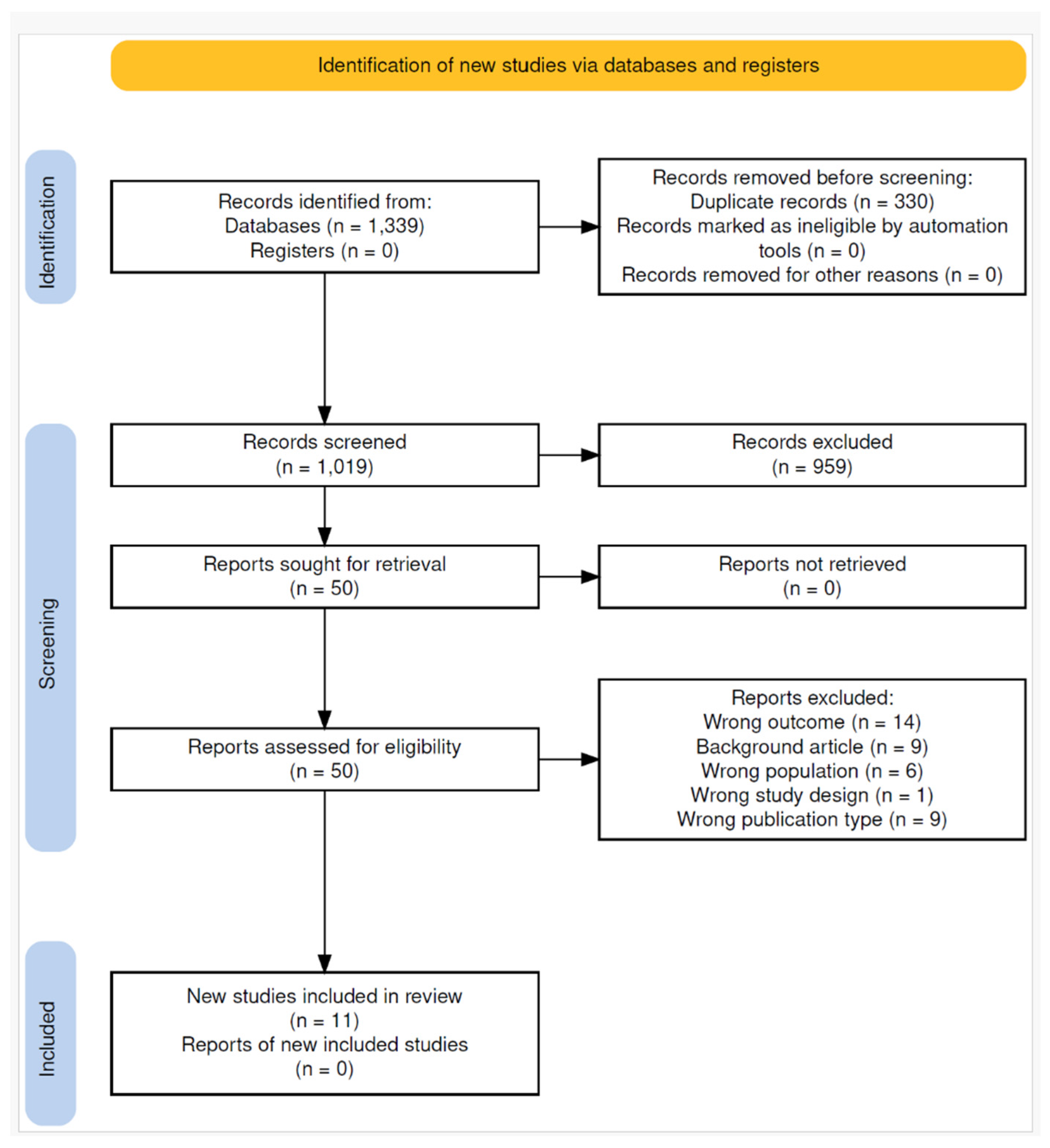
Figure 2.
Prevalence of ASXL1 mutation.
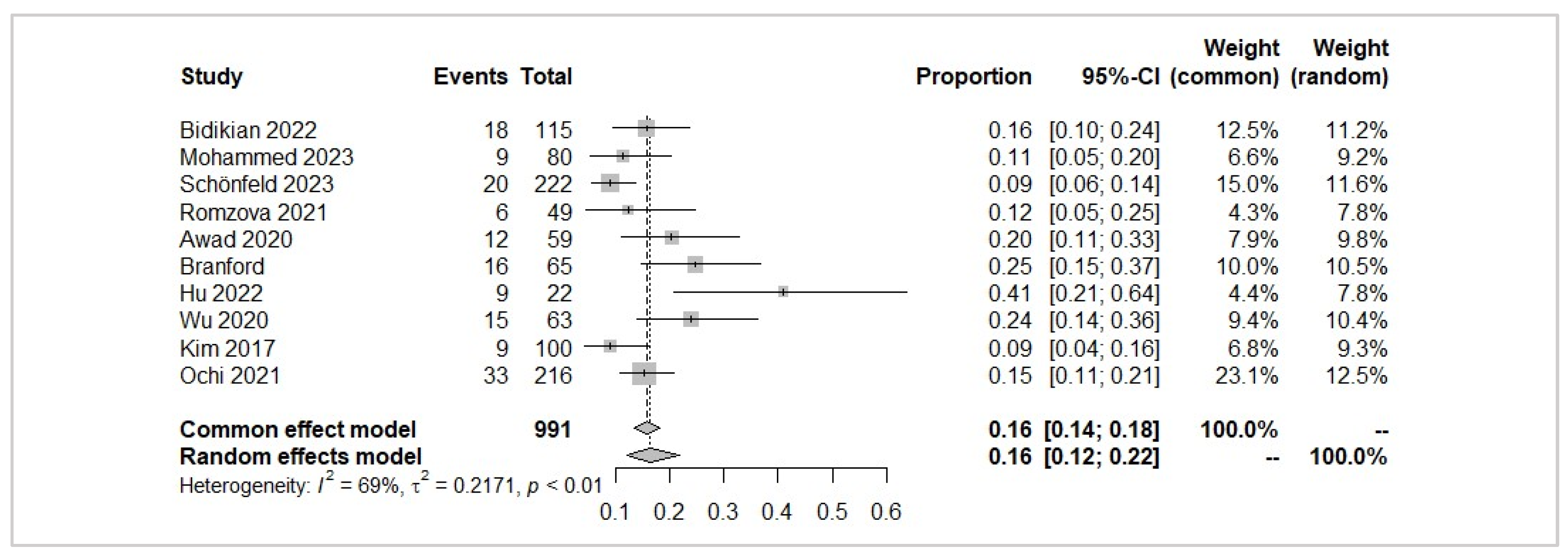
Figure 3.
Forest plot for major molecular response at 12 months (ASXL1 mutation versus no mutation).
Figure 3.
Forest plot for major molecular response at 12 months (ASXL1 mutation versus no mutation).
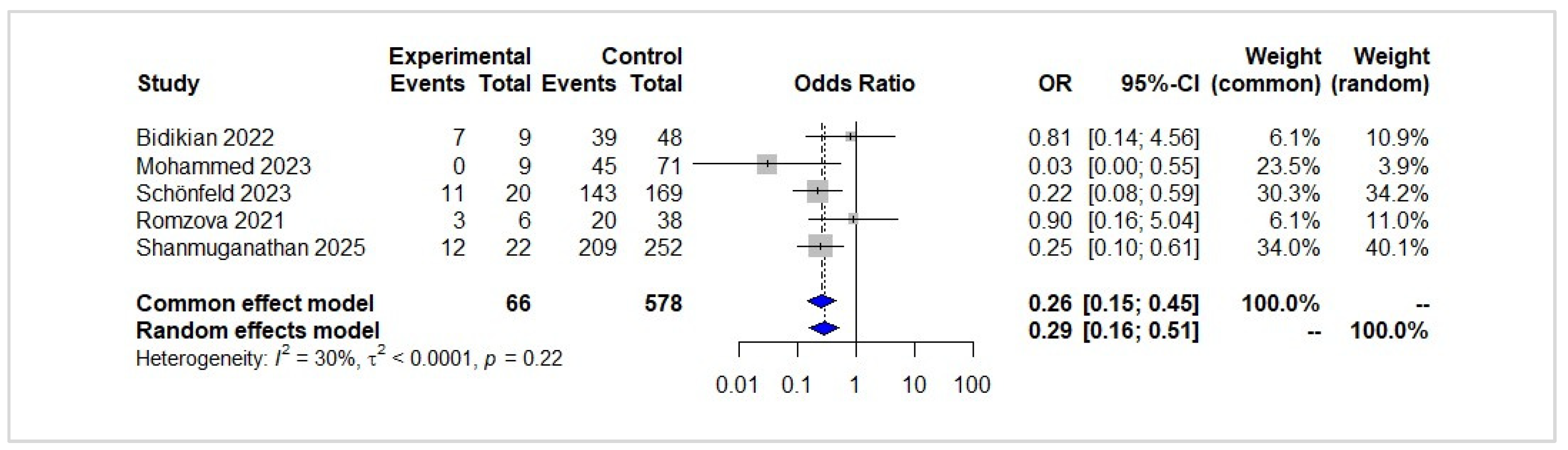
Figure 4.
Forest plot for major molecular response at 12 months (ASXL1 mutation versus other mutations).
Figure 4.
Forest plot for major molecular response at 12 months (ASXL1 mutation versus other mutations).
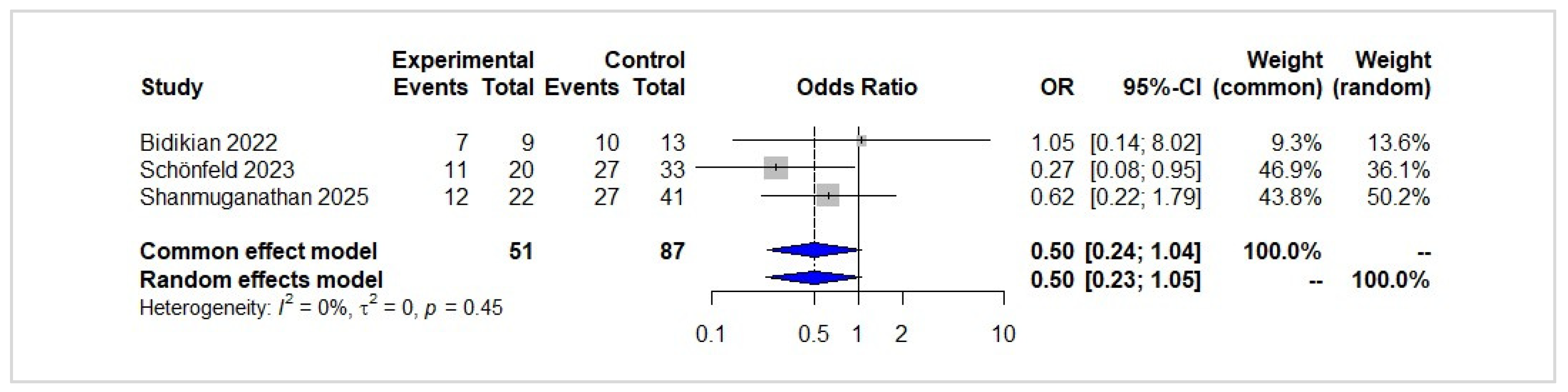
Figure 5.
Forest plot for complete cytogenetic response (ASXL1 mutation versus no mutation).
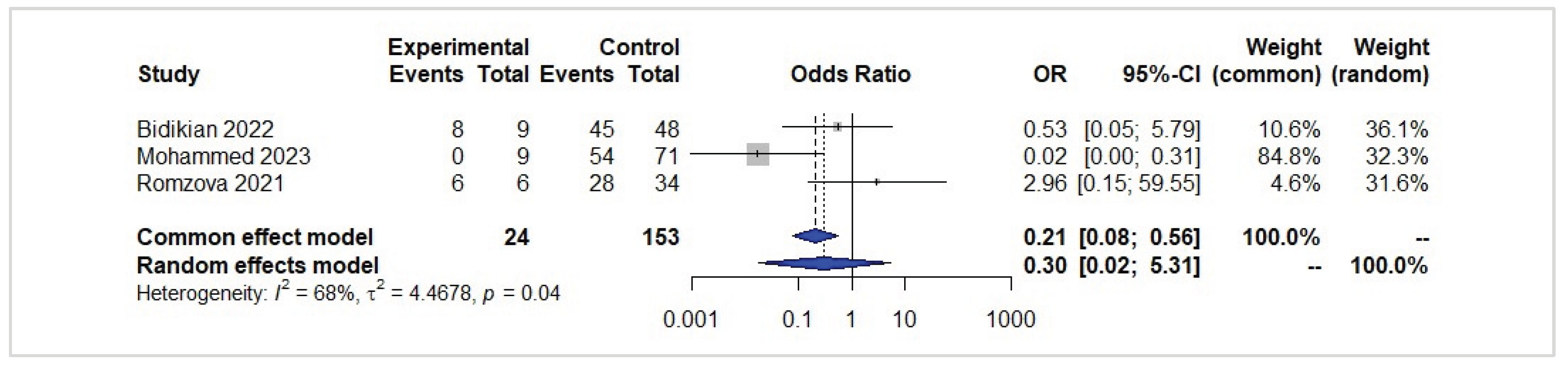
Table 1.
study-level ratings.
| Study (Year) | Selection (Max 4★) | Comparability (Max 2★) | Outcome (Max 3★) | Total Score | Quality Level |
|---|---|---|---|---|---|
| Bidikian et al. (2022) | ★★★★ | ★★ | ★★★ | 9 | Good |
| Schönfeld et al. (2022) | ★★★★ | ★★ | ★★★ | 9 | Good |
| Adnan Awad et al. (2020) | ★★★★ | ★★ | ★★★ | 9 | Good |
| Branford et al. (2018) | ★★★★ | ★★ | ★★★ | 9 | Good |
| Ochi et al. (2021) | ★★★★ | ★★ | ★★★ | 9 | Good |
| Shanmuganathan et al. (2025) | ★★★★ | ★★ | ★★★ | 9 | Good |
| Rafiq Mohammed et al. (2023) | ★★★ | ★ | ★★ | 6 | Fair |
| Hu et al. (2022) | ★★★ | ★ | ★★ | 6 | Fair |
| Romzova et al. (2021) | ★★★ | ★ | ★★ | 6 | Fair |
| Wu et al. (2020) | ★★★ | ★ | ★★ | 6 | Fair |
| Kim et al. (2017) | ★★★ | ★ | ★★ | 6 | Fair |
Disclaimer/Publisher’s Note: The statements, opinions and data contained in all publications are solely those of the individual author(s) and contributor(s) and not of MDPI and/or the editor(s). MDPI and/or the editor(s) disclaim responsibility for any injury to people or property resulting from any ideas, methods, instructions or products referred to in the content. |
© 2026 by the authors. Licensee MDPI, Basel, Switzerland. This article is an open access article distributed under the terms and conditions of the Creative Commons Attribution (CC BY) license.
Copyright: This open access article is published under a Creative Commons CC BY 4.0 license, which permit the free download, distribution, and reuse, provided that the author and preprint are cited in any reuse.