

Submitted:
19 March 2026
Posted:
23 March 2026
You are already at the latest version
Abstract
Drug repurposing provides a rational strategy to expand therapeutic applications of compounds with established toxicological and pharmacological backgrounds. Cutaneous injury and inflammatory dermatoses are driven by interconnected oxidative stress, inflammatory signaling, and cellular repair pathways rather than single-target dysregulation. The present review evaluates the potential repositioning of the sulphur-mustard countermeasure candidate DRDE-07 using a structure-guided comparative framework against established cytoprotective agents such as aminothiol radioprotectants and endogenous polyamines.A narrative literature-based analysis was performed integrating published mechanistic information for reference cytoprotective molecules with physicochemical descriptors and in-silico drug-likeness parameters of DRDE-07. Comparative assessment focused on structural backbone similarity, translational feasibility, and compatibility with biological stress-response pathways relevant to skin injury.The evaluation indicates that DRDE-07 retains functional chemical features associated with indirect cytoprotection while exhibiting physicochemical characteristics more consistent with conventional small-molecule therapeutics, including balanced lipophilicity and predicted bioavailability. Mechanistic comparison suggests potential compatibility with pathways involved in oxidative stress adaptation and inflammatory regulation rather than high-affinity single-target inhibition.The analysis supports a hypothesis-generating framework in which DRDE-07 may represent a structurally suitable candidate for repurposing in cutaneous protection research. Rather than asserting therapeutic activity, the comparison suggests compatibility with biological pathways implicated in tissue stress adaptation and barrier homeostasis. Accordingly, DRDE-07 is proposed as a candidate for further experimental evaluation in dermatological contexts. This review therefore outlines a hypothesis-generating framework based on structural analogy and pathway convergence, highlighting how countermeasure molecules may be systematically assessed for repurposing into cutaneous protective strategies.
Keywords:
drug repurposing
; radioprotectant analogs
; DRDE-07
; cytoprotective mechanisms
; oxidative stress modulation
; inflammatory signaling
; structural similarity
Introduction
The development of an effective drug for a medical condition generally takes a very long time due to the need for multiple studies across many assay models. The final cost until the drug is marketed is very high and may be as high as 1 to 5 billion USD [1]. Due to the time and cost, many drugs during the middle or the final stage of development are discontinued. Because of this factor, many pharmaceutical companies do not attempt drug discovery and development [2]. Only developed countries and multinational companies allocate large budgets to new drug development. Despite these challenges, biomedical databases collectively list more than 20,000 drugs-related compounds, including approved drugs, investigational and discontinued agents [3].
With advances in technical knowledge, machine learning, data mining and analysis, and artificial intelligence, a variety of existing and approved drugs are being reconsidered for new medical conditions and illnesses, and are known as drug repositioning [4]. Repurposing offers substantial advantages by leveraging existing safety, toxicity, and pharmacokinetics data, thereby reducing development time and cost. Drugs for different diseases, failed drugs, and combination therapies are being attempted for areas like cancer, neurodegenerative disorders, and infectious diseases, and also provide options for pandemics and medical conditions where there are no approved drugs exist [5]. The regulatory requirements for introducing a different medical condition or disease are generally simple. There are several examples of repurposed drugs viz., sildenafil, originally developed for angina and hypertension is repurposed for erectile dysfunction and pulmonary arterial hypertension [6], thalidomide a sedative discontinued due to severe birth defects is repurposed for leprosy and multiple myeloma [7] minoxidil used for high blood pressure is repurposed for hair loss [8], remdesivir an antiviral repurposed for COVID-19 [9], aspirin a potent analgesic is repurposed as antiplatelet therapy to prevent cardiovascular events and also being studied for colorectal cancer prevention [10], methotrexate used in cancer is repurposed in autoimmune diseases [11].
Similar to drug repurposing, several therapeutically useful molecules were accidentally discovered to treat medical conditions, known as serendipitous drugs. The classic example is the discovery of penicillin for the treatment of infectious diseases and drugs like cisplatin, warfarin, lithium and chlorpromazine [12]. Many of the repurposed drugs are, in a way, serendipitously identified for alternative medical conditions. In modern drug development, unexpected side effects or secondary pharmacological actions of effective drugs can be systematically explored for new therapeutic indications using contemporary technologies such as machine learning, data mining, and computational modelling.
When drugs and chemicals are administered to laboratory animals, toxicity or lethality is highest with intravenous administration, followed by intraperitoneal, intramuscular, subcutaneous, oral, and the least with percutaneous or dermal application. The effect depends upon the speed of absorption, entry into systemic circulation, and the rate of metabolism to an active intermediate [13]. The alkylating agent, sulphur mustard, a known chemical warfare agent, causes serious blisters upon contact with the human skin and lesions and systemic toxicity in laboratory animal models [14,15]. Interestingly, the toxicity of sulphur mustard was greater through the percutaneous route than through the subcutaneous or oral routes in laboratory animals (mice, rats or rabbits) [16]. Not only sulphur mustard, but also in the nitrogen mustards, the toxicity is more through the percutaneous route [17]. This is possible due to the formation of reactive molecules by the rapidly dividing cells of the skin (stratum basale), which causes oxidative stress leading to lethality [14]. Among the various antidotes evaluated for protection against the toxic effects of sulphur and nitrogen mustards, amifostine and the DRDE series of compounds (code for the laboratory) showed good efficacy. Orally administered DRDE series of compounds (DRDE-07, DRDE-30 and DRDE-35) showed strong protective effects in experimental models [18]. Polyamines, viz., putrescine, spermidine and spermine, are used for psoriasis, skin cancers, melasma, urticaria, hyperpigmentation and other reactive skin conditions [19,20,21]. Since amifostine and the DRDE series of compounds share a structure similar to that of the polyamines, the present study aimed to investigate their possible use in skin diseases using machine learning tools.
Rationale for Repurposing and In Silico Pharmacokinetic Assessment
The present study employed in silico drug repurposing and comparative pharmacokinetic feasibility assessments to evaluate the potential of selected Defence Research and Development Establishment (DRDE) compounds DRDE-07, DRDE-30, and DRDE-35 for dermatological and skin-protective applications. The study design aligned with the stepwise, risk-based nonclinical development principles outlined in ICH M3(R2) and relevant OECD guidance, which use computational approaches to prioritize early candidates before experimental pharmacology or toxicology testing [22,23].
The DRDE compounds were compared with reference agents possessing established radioprotective or skin-related relevance, including amifostine and representative polyamines (putrescine, spermidine, and spermine). The assessment integrated computational ADME prediction, qualitative physicochemical profiling, regulatory document review, and published literature analysis to compare properties relevant to cutaneous exposure, dermal penetration, and topical feasibility [24].
Importantly, this approach was not intended to directly predict in silico efficacy; instead, it was designed to determine whether the selected DRDE compounds possess drug-like and dermal-compatible attributes comparable to or more favourable than those of reference molecules, thereby justifying further experimental investigation. Such feasibility-focused evaluations are consistent with regulatory expectations for early-stage repurposing efforts and avoid premature pharmacodynamic overinterpretation [25].
Selection of Compounds:
Test Compounds- DRDE-07, DRDE-30, DRDE-35; Reference Compounds- Amifostine, Polyamines: putrescine, spermidine, and spermine. The DRDE compounds were selected based on previous experimental reports demonstrating protective efficacy against sulphur and nitrogen mustard-induced toxicity, including skin injury, following oral or systemic administration in animal models [16,18]. These findings suggest a cytoprotective and tissue-protective pharmacological profile, making them rational candidates for repurposing toward dermatological indications. Amifostine [26,27] and polyamines [28] serve as primary reference benchmarks in this study because of their well-established efficacy in providing cryoprotection and radioprotection, their potent antioxidant activity, and their critical regulatory roles in skin homeostasis and cellular stress response mechanisms.
Establishment of Structural and Functional Relevance: Structural similarity between DRDE compounds and reference agents was not defined by strict molecular identity, but rather by shared functional and physicochemical features, including the presence of amine or polyamine-like functional groups, comparable cationic or polar characteristics, known or hypothesized roles in cellular protection and redox balance, and tissue recovery. Such functional similarity-based comparison is widely accepted in early drug-repurposing research, particularly when mechanisms are multifactorial and not target-specific [29,30]. This approach enables contextual comparison without implying identical mechanisms of action.
In-Silico ADME and Physicochemical Property Prediction: Pharmacokinetic and physicochemical properties of all selected compounds were predicted using SwissADME, a freely accessible and widely used computational platform for evaluating pharmacokinetic and drug-likeness profiles (Swiss Institute of Bioinformatics; http://www.swissadme.ch) [24]. SwissADME enables the prediction of key physicochemical and biological parameters relevant to drug discovery using validated cheminformatics algorithms.
The chemical structures of all DRDE compounds were first drawn and converted to SMILES (Simplified Molecular Input Line Entry System) notation based on their reported structures. These SMILES strings were then uploaded individually into the SwissADME interface for analysis. Natural/reference compounds were taken from the PubChem database https://pubchem.ncbi.nlm.nih.gov/. In addition, the Bioavailability Radar tool within SwissADME was employed to visually summarize six key physicochemical features: lipophilicity, size, polarity, solubility, flexibility, and saturation to evaluate the overall oral drug-likeness of each compound. Compounds falling within the optimal radar space were considered to possess favourable pharmacokinetic characteristics.
The evaluation focused on qualitative parameters relevant to dermal and topical drug development, including predicted bioavailability class, lipophilicity classification, topological polar surface area (TPSA), hydrogen-bond donor and acceptor capacity, drug-likeness based on Lipinski and related medicinal chemistry rules, and predicted skin permeability (log Kp category). These parameters were selected for their established roles in regulating cutaneous exposure and membrane transport. Lipophilicity influences partitioning into the stratum corneum and governs initial skin penetration [31,32], while TPSA reflects molecular polarity and is a critical determinant of passive diffusion across biological membranes, including skin [32]. Drug-likeness criteria provide an integrated assessment of molecular suitability for pharmaceutical development and formulation feasibility [30]. Predicted skin permeability (log Kp) offers an early indication of whether a compound may achieve sufficient local exposure following topical or dermal application [25,33]. Although bioavailability classification is primarily relevant to systemic delivery, it supports interpretation of absorption tendencies and molecular behaviour at biological interfaces. Collectively, these parameters do not establish pharmacodynamic efficacy but provide evidence of exposure feasibility, which is a prerequisite for any dermal pharmacological effect. SwissADME outputs were interpreted using qualitative classifications rather than absolute numerical thresholds, minimizing model-specific bias and ensuring consistency across compounds [24].
Comparative Skin Permeability Assessment: Predicted skin permeability classifications generated by SwissADME were comparatively evaluated across DRDE compounds and reference agents. Particular emphasis was placed on lipophilicity TPSA balance, as these properties are well recognized as major determinants of transdermal and percutaneous absorption [31,32]. Compounds were categorized into qualitative permeability classes (e.g., negligible, low, or potential permeability) based on integrated predictions and established pharmacokinetic principles governing skin-barrier function.
This classification indicates whether a substance can reach viable skin layers, which is an essential prerequisite for local pharmacological activity, but it does not predict therapeutic efficacy. Permeability classification thus serves as a screening and prioritization method to accelerate progress toward experimental assessments [34].
Literature Review and Regulatory Document Analysis: A structured literature review was conducted using peer-reviewed scientific databases to collate information on: The role of polyamines (including spermidine) in skin physiology and disorders such as psoriasis, hyperpigmentation, inflammatory dermatoses, and skin cancers [35]. Experimental evidence supporting the protective effects of DRDE compounds against vesicant-induced skin injury was reviewed by Vijayaraghavan and Sharma 2025 [18] and pharmacological and safety characteristics of amifostine and related agents by King et al., 2020 [36]. Additionally, publicly available regulatory documents, including FDA drug labels and assessment reports, were reviewed to understand approved routes of administration, known pharmacokinetic limitations, and clinical constraints associated with reference compounds [37]. These data were used solely for qualitative contextual interpretation and to support comparative reasoning; no numerical extrapolation or regulatory claims were derived.
Data Interpretation and Comparative Analysis: All findings were interpreted using a comparative and trend-based approach, emphasizing relative similarities and differences between DRDE compounds and reference agents rather than absolute predictive values. This strategy aligns with accepted practices in early-stage computational repurposing research and supports developmental decision-making without overinterpretation [38].
Ethical Considerations: This study was based exclusively on computational modelling, published literature, and publicly accessible regulatory information. No new in vivo, in vitro, or clinical experiments were conducted. Therefore, ethical committee approval was not required. Collectively, this SwissADME-based in-silico evaluation supports the prioritization of selected DRDE compounds as feasible candidates for dermal repurposing and provides a rational, hypothesis-generating basis for subsequent experimental validation, consistent with ICH M3(R2) guidance for overall reduction, refinement, and replacement of animal tests (3Rs) and OECD Integrated Approaches to Testing and Assessment (IATA) principles for early nonclinical development [22,23].
Physicochemical and ADME Considerations Supporting Repurposing of DRDE Compounds
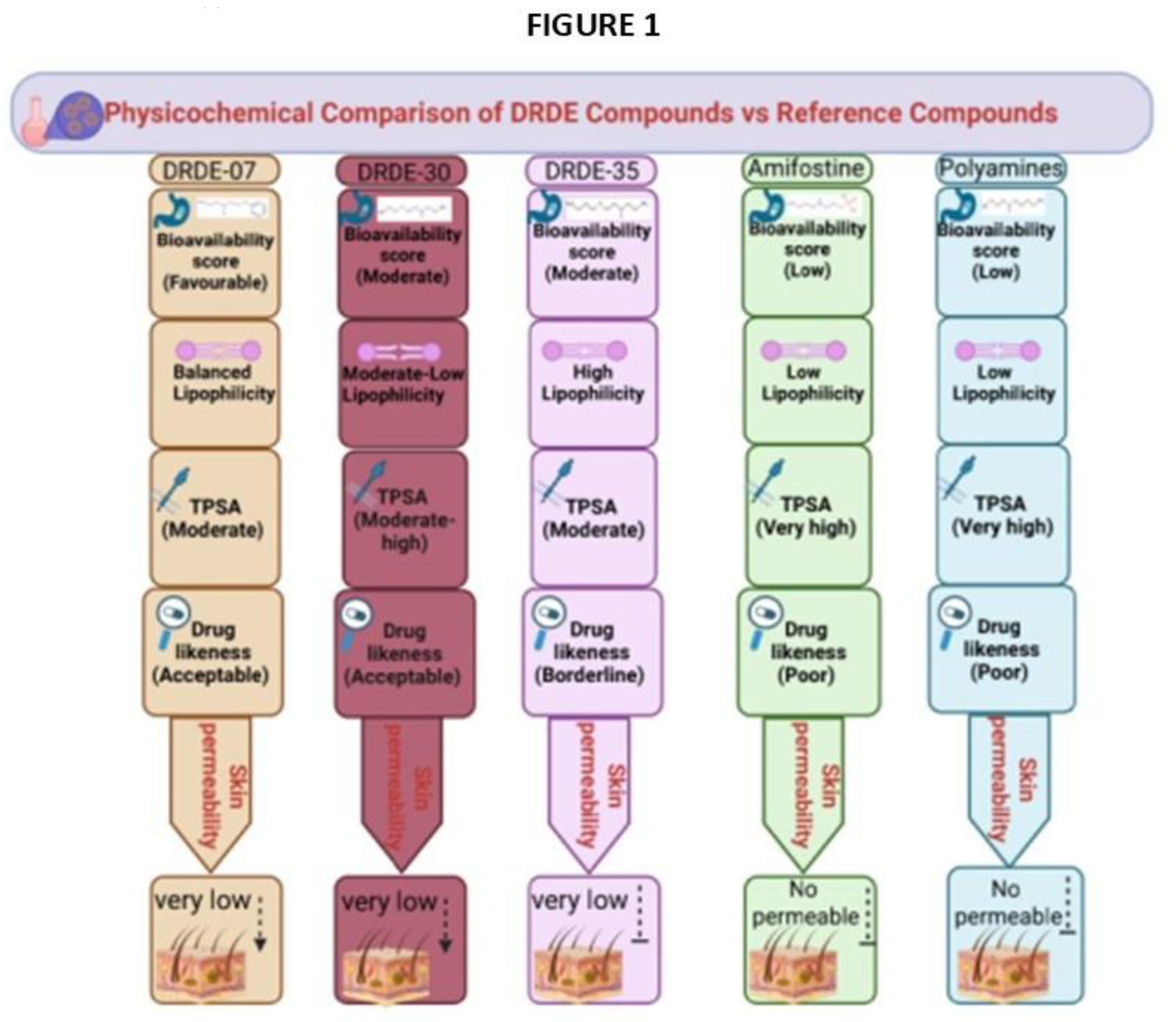
Figure 1 Summarizes the comparative in silico dermal suitability profiles of DRDE compounds and reference agents. The graphical representation highlights qualitative differences in bioavailability classification, Lipophilicity, TPSA, drug-likeness and predicted skin permeability. The graphical abstract was generated by using Biorender (Available at: https://biorender.com Accessed: 19 February 2026) to support hypothesis generation and conceptual clarity, reinforcing the feasibility-focused nature of the study rather than implying pharmacodynamic superiority or efficacy.
Comparative ADME profiling highlights marked physicochemical differences between DRDE compounds and reference molecules commonly associated with skin protection, inflammation control, and cytoprotection. Reference compounds such as amifostine [26] and polyamines viz. putrescine, spermidine, and spermine despite their well-established biological relevance in oxidative stress mitigation and cellular homeostasis, exhibit poor drug-likeness characteristics [39,40]. Their high polarity, very large topological polar surface area, and limited predicted skin permeability explain their dependence on indirect pathway modulation, endogenous transport systems, or formulation-assisted delivery rather than classical small-molecule drug behavior.
Among the evaluated DRDE molecules, DRDE-07 demonstrates the most favorable balance of bioavailability, lipophilicity, and polarity, aligning more closely with physicochemical parameters typically associated with small-molecule therapeutics [39,41]. While predicted skin permeability remains low, this limitation is comparable to or less restrictive than that observed for reference compounds and may be addressed through formulation strategies rather than intrinsic chemical modification [42]. Importantly, the relevance of DRDE-07 is not positioned against biological indispensability of polyamines or antioxidant agents, but rather as a drug-like surrogate capable of engaging overlapping inflammatory, oxidative stress, and autophagy-related pathways with improved translational feasibility [24,39]. This distinction supports the concept that pharmacological mimetics with optimized physicochemical space may achieve functional pathway modulation while overcoming the pharmacokinetic limitations of endogenous or highly polar protective molecules.
Amifostine (WR-2721) is an FDA-approved cytoprotective and radioprotective agent that exerts its activity through its active metabolite WR-106537 [37]. This metabolite functions as a potent free-radical scavenger, neutralizing reactive oxygen species (ROS) and protecting against DNA damage, thereby reducing oxidative stress-induced injury in skin and mucosa [26]. By modulating redox-sensitive signaling pathways such as NF-κB and activating the cytoprotective transcription factor Nrf2 via interaction with Keap1, it attenuates inflammatory and oxidative pathways implicated in cutaneous injury and radiodermatitis [43]. Similarly, endogenous polyamines such as spermidine demonstrate anti-inflammatory and cytoprotective effects through induction of autophagy and modulation of NF-κB signaling [39]. These mechanisms are directly relevant to chronic inflammatory skin disorders, aging-related skin damage, and barrier dysfunctions associated with oxidative and inflammatory stress [44]. Pathological skin conditions are largely driven by dysregulation of the Keap1–Nrf2 axis governing oxidative stress responses, NF-κB signaling controlling inflammatory cascades, and EP300-dependent regulation of autophagy [45,46,47]. Targeting these molecular checkpoints therefore provides a plausible mechanistic basis for mitigating cellular damage and inflammation characteristic of acute and chronic skin injury [44].
Based on the pharmacological characteristics of established protective agents such as amifostine and spermidine, several DRDE analogs display comparable mechanistic features suggesting potential suitability for repurposing in dermatological therapy. These analogs are predicted to interact with the Keap1–Nrf2 signaling pathway and may enhance endogenous antioxidant defense systems, including enzymes such as superoxide dismutase (SOD) and glutathione peroxidase, which are known to protect against ROS-mediated skin damage.
Furthermore, DRDE compounds have demonstrated broad cytoprotective and anti-injury effects in experimental toxicant exposure models, which may secondarily attenuate inflammatory signaling associated with tissue damage [18]. Rather than acting as direct cytokine inhibitors, these effects likely arise from upstream mitigation of oxidative and cellular stress. Through preservation of cellular integrity and damage-response pathways mechanistically analogous to polyamine mediated cytoprotection DRDE analogs represent a plausible therapeutic strategy for supporting skin barrier restoration and reducing oxidative injury in cutaneous pathology.
Feasibility of Repurposing DRDE-07 for Skin Disorders
From a repurposing perspective, feasibility is determined not solely by biological activity but by the convergence of physicochemical suitability, pathway relevance, and translational potential [19], [41]. DRDE-07 satisfies these criteria at a prima facie level by demonstrating favorable bioavailability, acceptable drug-likeness, and balanced lipophilicity relative to reference compounds utilized for skin protection through indirect cytoprotective mechanisms.
The therapeutic relevance of targeting inflammation, oxidative stress, and autophagy in skin disorders is well established [44,45,46]. Reference molecules such as amifostine and polyamines exert beneficial effects predominantly through modulation of cellular stress-response pathways rather than high-affinity interaction with a single molecular target [39]. DRDE-07, by exhibiting improved drug-like properties while retaining compatibility with these biological axes, therefore represents a plausible repurposing candidate warranting further experimental exploration.
Conclusion
This review highlights the emerging potential of DRDE compounds, particularly DRDE-07, as candidates for repurposing in the management of inflammatory and oxidative stress–related skin disorders. Comparative ADME profiling underscores a distinct physicochemical advantage of DRDE-07 over established reference molecules such as amifostine and polyamines, which, despite proven biological relevance, exhibit limited drug-like characteristics.
By integrating pathway relevance with drug-likeness considerations, the present analysis supports the conceptual feasibility of repositioning DRDE-07 as a small-molecule modulator of key skin disease mechanisms, including inflammation, oxidative stress, and autophagy. Future in vitro, formulation-based, and in vivo investigations will be required to substantiate these observations and translate them into therapeutic strategies.
Figure 2.
Key molecular pathways implicated in inflammatory and oxidative stress–related skin disorders and their modulation by reference compounds and proposed DRDE candidates.
Figure 2.
Key molecular pathways implicated in inflammatory and oxidative stress–related skin disorders and their modulation by reference compounds and proposed DRDE candidates.
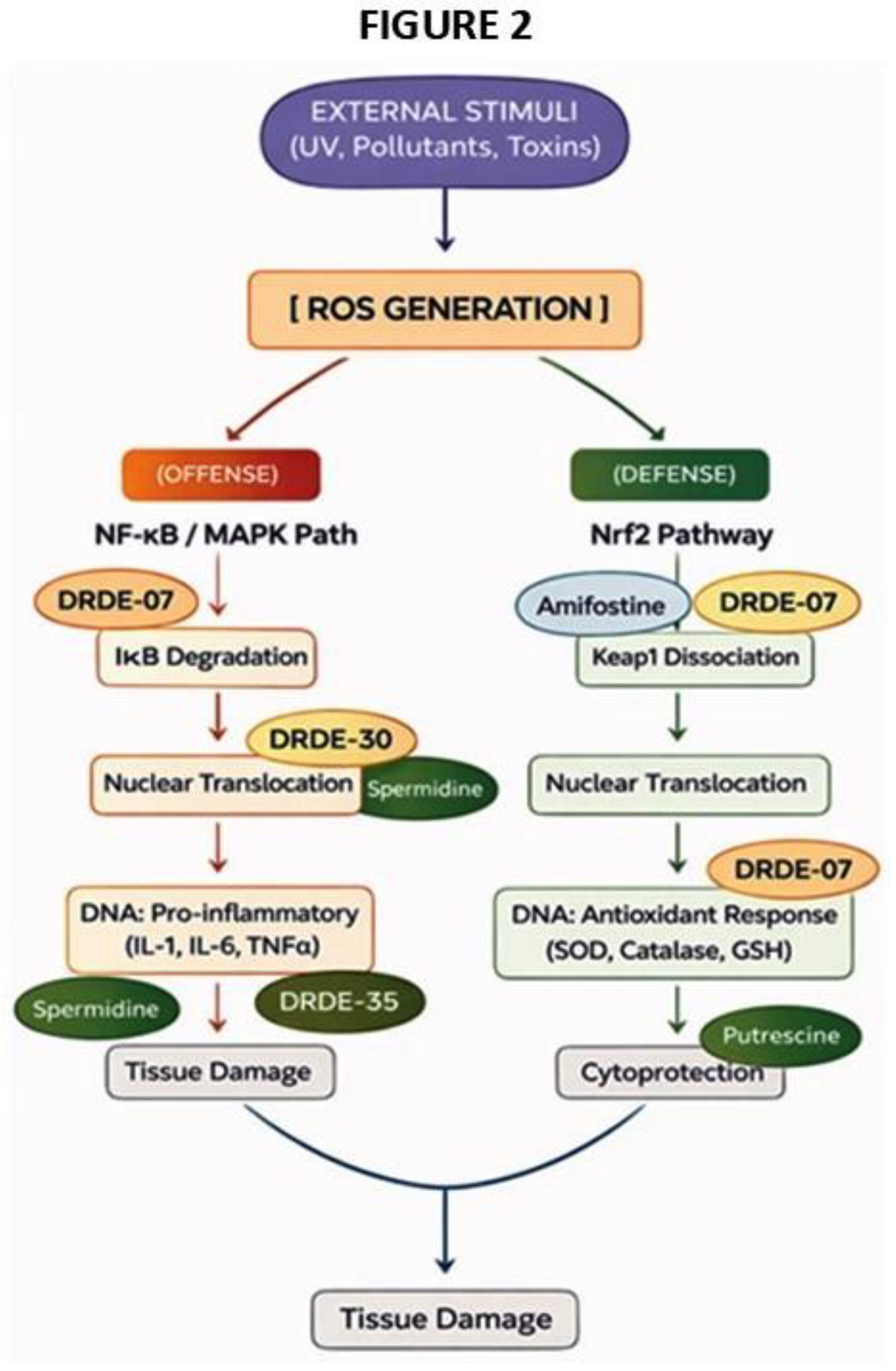
Figure 3.
Bioavailability Radar and Predicted Pharmacokinetic Profiles of DRDE Compounds Compared with Reference Agents Comparative qualitative ADME profiling of DRDE compounds and reference molecules highlighting bioavailability, lipophilicity, polarity, and drug-likeness attributes relevant to skin disease repurposing.
Figure 3.
Bioavailability Radar and Predicted Pharmacokinetic Profiles of DRDE Compounds Compared with Reference Agents Comparative qualitative ADME profiling of DRDE compounds and reference molecules highlighting bioavailability, lipophilicity, polarity, and drug-likeness attributes relevant to skin disease repurposing.
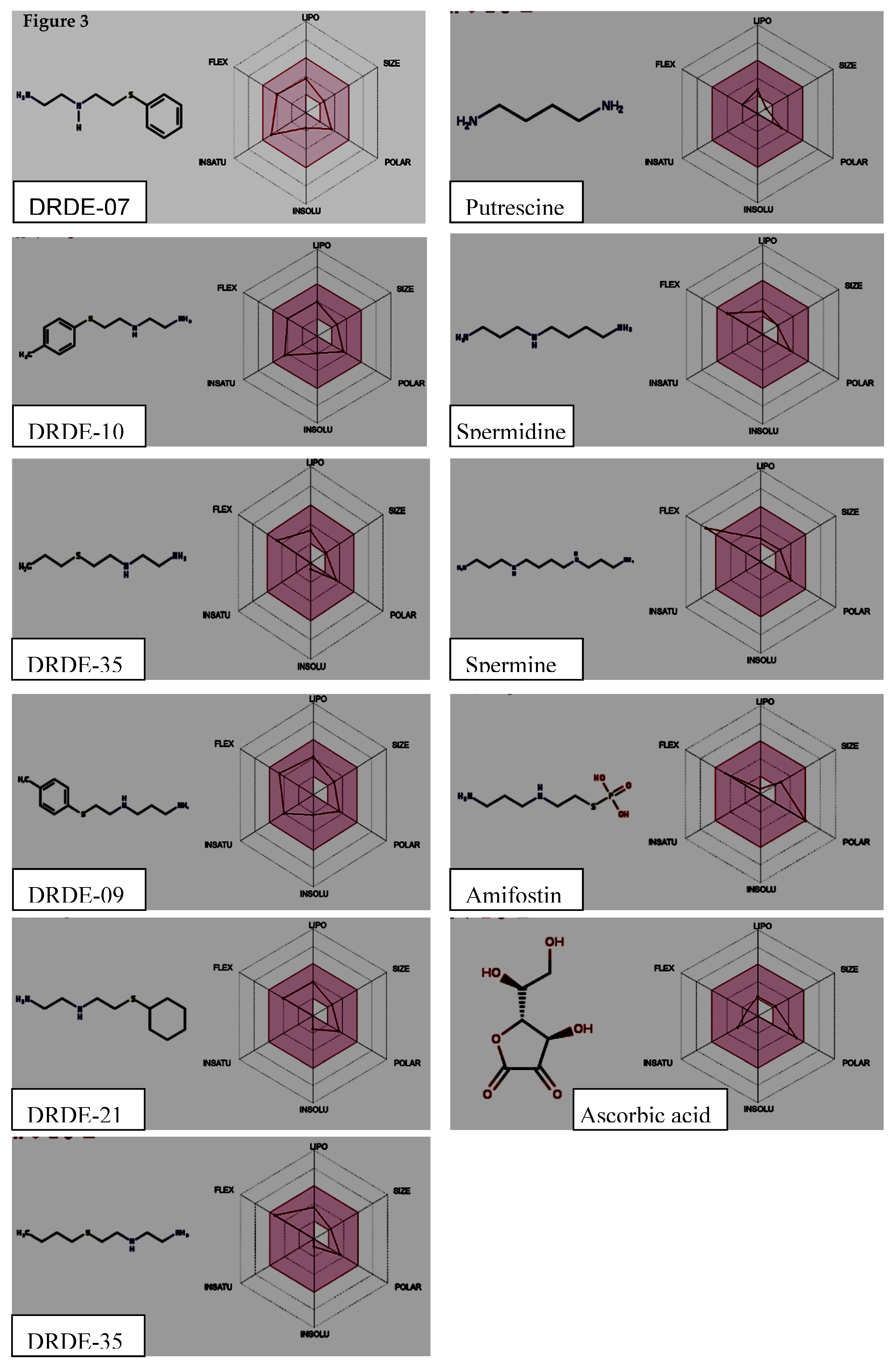

Table 1.
Chemical Structures and Molecular Formulas of DRDE Compounds and Reference Agents.
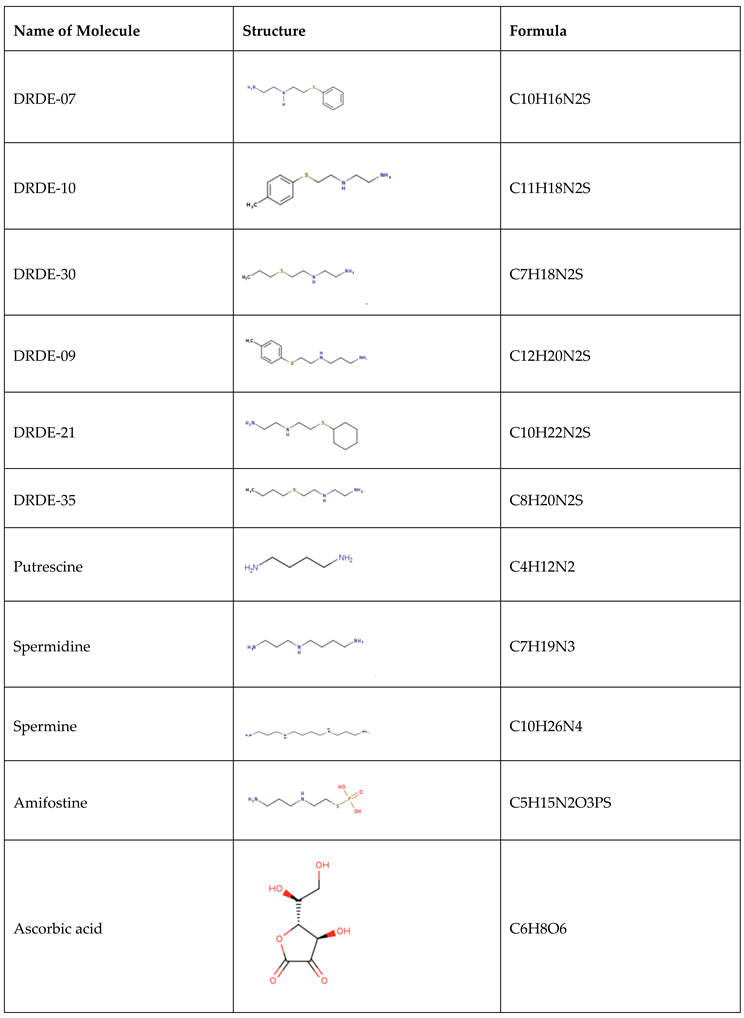 |
Table 2.
Comparative Physicochemical Properties, Pharmacokinetic Predictions, and Drug-Likeness Profiles of DRDE Compounds and Reference Molecules.
Table 2.
Comparative Physicochemical Properties, Pharmacokinetic Predictions, and Drug-Likeness Profiles of DRDE Compounds and Reference Molecules.
| Parameter | Name of Compound | ||||||||||
|---|---|---|---|---|---|---|---|---|---|---|---|
| DRDE-07 | DRDE-10 | DRDE-30 | DRDE-09 | DRDE-21 | DRDE-35 | Putrescine | Spermidine | Spermine | Amifostine | Ascorbic acid | |
| Physicochemical Properties | |||||||||||
| Molecular Weight | 196.31 g/mol | 210.34 g/mol | 162.30 g/mol | 224.37 g/mol | 202.36 g/mol | 176.32 g/mol | 88.15 g/mol | 145.25 g/mol | 202.34 g/mol | 214.22 g/mol | 176.12 g/mol |
| TPSA | 63.35 Å [2] | 63.35 Å [2] | 63.35 Å [2] | 63.35 Å [2] | 63.35 Å [2] | 63.35 Å [2] | 52.04 Å [2] | 64.07 Å [2] | 76.10 Å [2] | 130.69 Å [2] | 104.06 Å [2] |
| Lipophilicity | |||||||||||
| Consensus Log Po/w | 1.64 | 2.00 | 1.06 | 2.31 | 1.79 | 1.40 | -0.10 | 0.12 | 0.33 | -1.40 | -1.73 |
| Water Solubility | |||||||||||
| Class | Soluble | Moderately Soluble | Soluble | Moderately Soluble | Soluble | Soluble | Soluble | Soluble | Soluble | Soluble | Soluble |
| Pharmacokinetics | |||||||||||
| GI absorption | High | High | High | High | High | High | High | High | High | High | High |
| Log Kp (Skin permeation) | -6.74 cm/s | -6.57 Cm/s | -7.01 Cm/s | -6.40 Cm/s | -6.60 Cm/s | -6.84 Cm/s | -7.33 Cm/s | -7.90 Cm/s | -8.31 Cm/s | -10.77 Cm/s | -8.46 Cm/s |
| Drug likeness | |||||||||||
| Lipinski | Yes; 0 Violation | Yes; 0 Violation | Yes; 0 Violation | Yes; 0 Violation | Yes; 0 Violation | Yes; 0 Violation | Yes; 0 Violation | Yes; 0 Violation | Yes; 0 Violation | Yes; 0 Violation | Yes; 0 Violation |
| Bioavaliability Score | 0.55 | 0.55 | 0.55 | 0.55 | 0.55 | 0.55 | 0.55 | 0.55 | 0.55 | 0.55 | 0.55 |
Data Sharing not Applicable
– no new data generated
Declaration on the Use of Generative AI
The authors confirm that they have read and agree to comply with the Taylor & Francis AI Policy. In accordance with this policy, Generative AI tools were used solely for language editing and improvement of clarity. Specifically, ChatGPT (OpenAI, version 5.2) and Perplexity Pro were used to enhance grammatical accuracy, improve sentence structure, and refine overall readability of the manuscript.
Acknowledgement
Not applicable
Conflict of Interest
The author(s) declared no potential conflicts of interest with respect to the research, authorship, and/or publication of this article.
References
- Schlander, M.; Hernandez-Villafuerte, K.; Cheng, C.Y.; Mestre-Ferrandiz, J.; Baumann, M. ‘How much does it cost to research and develop a new drug? A systematic review and assessment’. Pharmacoeconomics 2021, 39(11), 1243–1269. [Google Scholar] [CrossRef]
- Sun, D.; Gao, W.; Hu, H.; Zhou, S. ‘Why 90% of clinical drug development fails and how to improve it?’. Acta Pharmaceutica Sinica B 2022, 12(7), 3049–3062. [Google Scholar] [CrossRef]
- Álvarez Vogrinc, D.; Kunej, T. ‘Drug repositioning: computational approaches and research examples classified according to the evidence level’. Discoveries (Craiova) 2017, 5(2), e75. [Google Scholar] [CrossRef]
- Álvarez-Pérez, A.; Prieto-Santamaría, L.; Casas, A.I.; Loscalzo, J.; Rodríguez-González, A. ‘Navigating the computational landscape for drug repurposing’. Annual Review of Pharmacology and Toxicology 2026, 66(1), 149–170. [Google Scholar] [CrossRef] [PubMed]
- Hussain, M.S.; Mir, P.A.; Kumar, N.; Mohi-ud-din, R.; Wali, A.F.; Mir, R.H.; Talath, S.; Sridhar, S.B.; Shareef, J.; Goud, M.; Rangraze, I.; El-Tanani, M.; Oo, D.J. ‘From lab to clinic: success stories of repurposed drugs in treating major diseases’. Advances in Pharmacology and Pharmaceutical Sciences 2025, 2025, 1070716. [Google Scholar] [CrossRef]
- Ghofrani, H.A.; Osterloh, I.H.; Grimminger, F. ‘Sildenafil: from angina to erectile dysfunction to pulmonary hypertension and beyond’. Nature Reviews Drug Discovery 2006, 5(8), 689–702. [Google Scholar] [CrossRef]
- Teo, S.K.; Stirling, D.I.; Zeldis, J.B. ‘Thalidomide as a novel therapeutic agent: new uses for an old product’. Drug Discovery Today 2005, 10(2), 107–114. [Google Scholar] [CrossRef] [PubMed]
- Olsen, E.A.; Dunlap, F.E.; Funicella, T.; Koperski, J.A.; Swinehart, J.M.; Tschen, E.H.; Trancik, R.J. ‘A randomized clinical trial of 5% topical minoxidil versus 2% topical minoxidil and placebo in the treatment of androgenetic alopecia in men’. Journal of the American Academy of Dermatology 2002, 47(3), 377–385. [Google Scholar] [CrossRef] [PubMed]
- Zarenezhad, E.; Behrouz, S.; Farjam, M.; Rad, M.N.S. ‘A mini review on discovery and synthesis of Remdesivir as an effective and promising drug against COVID-19’. Russian Journal of Bioorganic Chemistry 2021, 47(3), 609–621. [Google Scholar] [CrossRef]
- Werz, O.; Stettler, H.; Theurer, C.; Seibel, J. ‘The 125th anniversary of aspirin – The story continues’. Pharmaceuticals (Basel) 2024, 17(4), 437. [Google Scholar] [CrossRef]
- Bedoui, Y.; Guillot, X.; Sélambarom, J.; Guiraud, P.; Giry, C.; Jaffar-Bandjee, M.C.; Ralandison, S.; Gasque, P. ‘Methotrexate an old drug with new tricks’. International Journal of Molecular Sciences 2019, 20(20), 5023. [Google Scholar] [CrossRef]
- Ban, T.A. ‘The role of serendipity in drug discovery’. Dialogues in Clinical Neuroscience 2006, 8(3), 335–344. [Google Scholar] [CrossRef]
- Currie, G.M. ‘Pharmacology, Part 2: Introduction to pharmacokinetics’. Journal of Nuclear Medicine Technology 2018, 46(3), 221–230. [Google Scholar] [CrossRef]
- Shakarjian, M.P.; Heck, D.E.; Gray, J.P.; Sinko, P.J.; Gordon, M.K.; Casillas, R.P.; Heindel, N.D.; Gerecke, D.R.; Laskin, D.L.; Laskin, J.D. ‘Mechanisms mediating the vesicant actions of sulfur mustard after cutaneous exposure’. Toxicological Sciences 2009, 114(1), 5–19. [Google Scholar] [CrossRef]
- Lomash, V.; Jadhav, S.E.; Ahmed, F.; Vijayaraghavan, R.; Pant, S.C. ‘Evaluation of wound-healing formulation against sulphur mustard-induced skin injury in mice’. Human & Experimental Toxicology 2012, 31(6), 588–605. [Google Scholar] [CrossRef]
- Vijayaraghavan, R.; Kulkarni, A.; Pant, S.C.; Kumar, P.; Rao, P.V.L.; Gupta, N.; Gautam; Ganesan, K. ‘Differential toxicity of sulfur mustard administered through percutaneous, subcutaneous, and oral routes’. Toxicology and Applied Pharmacology 2005, 202(2), 180–188. [Google Scholar] [CrossRef] [PubMed]
- Sharma, M.; Vijayaraghavan, R.; Agrawal, O.P. ‘Comparative toxic effect of nitrogen mustards (HN-1, HN-2, and HN-3) and sulfur mustard on hematological and biochemical variables and their protection by DRDE-07 and its analogues’. International Journal of Toxicology 2010, 29(4), 391–401. [Google Scholar] [CrossRef]
- Vijayaraghavan, R.; Sharma, M. ‘Amino alkyl-alkyl/aryl sulphides (DRDE-07 and analogues) as promising cytoprotectants for sulphur and nitrogen mustards – A review’. Toxicology Reports 2025, 15, 102175. [Google Scholar] [CrossRef] [PubMed]
- Pushpakom, S.; Iorio, F.; Eyers, P.; Escott, K.J.; Hopper, S.; Wells, A.; Doig, A.; Guilliams, T.; Latimer, J.; McNamee, C.; Norris, A.; Sanseau, P.; Cavalla, D.; Pirmohamed, M. ‘Drug repurposing: progress, challenges and recommendations’. Nature Reviews Drug Discovery 2019, 18, 41–58. [Google Scholar] [CrossRef]
- Sridharan, A.; Shi, M.; Leo, V.I.; Subramaniam, N.; Lim, T.C.; Uemura, T.; Igarashi, K.; Guan, S.T.T.; Tan, N.S.; Vardy, L.A. ‘The polyamine putrescine promotes human epidermal melanogenesis’. Journal of Investigative Dermatology 2020, 140(10), 2032–2040.e1. [Google Scholar] [CrossRef]
- Sagar, N.A.; Tarafdar, S.; Agarwal, S.; Tarafdar, A.; Sharma, S. ‘Polyamines: Functions, metabolism, and role in human disease management’. Med Sci (Basel) 2021, 9(2), 44. [Google Scholar] [CrossRef]
- Jouyban, K.; Jafari, M.R.; Charkhpour, M.; Rezaei, H.; Seyfinejad, B.; Manavi, M.A.; Tavangar, S.M.; Dehpour, A.R. ‘Spermidine exerts protective effects in random-pattern skin flap survival in rats: possible involvement of inflammatory cytokines, nitric oxide, and VEGF’. Aesthetic Plastic Surgery 2024, 48, 3500–3509. [Google Scholar] [CrossRef]
- ICH. M3(R2) Guideline: Nonclinical Safety Studies for the Conduct of Human Clinical Trials and Marketing Authorization for Pharmaceuticals. 2009. [Google Scholar]
- OECD (2020) Overview of Concepts and Available Guidance related to Integrated Approaches to Testing and Assessment (IATA), OECD Series on Testing and Assessment, No. 329, Environment, Health and Safety, Environment Directorate, OECD.
- Daina, A.; Michielin, O.; Zoete, V. ‘SwissADME: a free web tool to evaluate pharmacokinetics, drug-likeness and medicinal chemistry friendliness of small molecules’. Scientific Reports 2017, 7(1), 42717. [Google Scholar] [CrossRef] [PubMed]
- Narita, I.; Todo, H.; Fujiwara, C.; Teramae, H.; Oshizaka, T.; Itakura, S.; Komatsu, S.; Takayama, K.; Sugibayashi, K. ‘In silico model to predict dermal absorption of chemicals in finite dose conditions’. Journal of Toxicological Sciences 2025, 50(4), 171–186. [Google Scholar] [CrossRef]
- Ji, L.; Cui, P.; Zhou, S.; Qiu, L.; Huang, H.; Wang, C.; Wang, J. ‘Advances of amifostine in radiation protection: administration and delivery’. Molecular Pharmaceutics 2023, 20(11), 5383–5395. [Google Scholar] [CrossRef]
- Boccia, R.; Anné, P.R.; Bourhis, J.; Brizel, D.; Daly, C.; Holloway, N., III; Hymes, S.; Koukourakis, M.; Kozloff, M.; Turner, M.; Wasserman, T. ‘Assessment and management of cutaneous reactions with amifostine administration: findings of the ethyol (amifostine) cutaneous treatment advisory panel (ECTAP)’. International Journal of Radiation Oncology, Biology, Physics 2004, 60(1), 302–309. [Google Scholar] [CrossRef]
- Xavier, J.R.; Chauhan, O.P.; Sharma, R.K. ‘Natural plant products as promising radioprotectors’. Bulletin of Environment, Pharmacology and Life Sciences, Spl 2022, 4, 261–276. [Google Scholar]
- Pegg, A.E. ‘Functions of polyamines in mammals’. Journal of Biological Chemistry 2016, 291(29), 14904–14912. [Google Scholar] [CrossRef]
- Ntie-Kang, F. ‘An in silico evaluation of the ADMET profile of the StreptomeDB database’; SpringerPlus, 2013; Volume 2, p. 353. [Google Scholar] [CrossRef]
- Potts, R.O.; Guy, R.H. ‘Predicting skin permeability’. Pharmaceutical Research 1992, 9(5), 663–669. [Google Scholar] [CrossRef]
- Bos, J.D.; Meinardi, M.M.H.M. The 500 Dalton rule for the skin penetration of chemical compounds and drugs. Experimental Dermatology 2000, 9(3), 165–169. [Google Scholar] [CrossRef] [PubMed]
- Hatanaka, T.; Yoshida, S.; Kadhum, W.R.; Todo, H.; Sugibayashi, K. ‘In silico estimation of skin concentration following the dermal exposure to chemicals’. Pharmaceutical Research 2015, 32(12), 3965–3974. [Google Scholar] [CrossRef]
- Abdallah, R.M.; Hasan, H.E.; Hammad, A. ‘Predictive modeling of skin permeability for molecules: investigating FDA-approved drug permeability with various AI algorithms’. PLOS Digital Health 2024, 3(4), e0000483. [Google Scholar] [CrossRef]
- Jänne, J.; Alhonen, L.; Leinonen, P. ‘Polyamines: from molecular biology to clinical applications’. Annals of Medicine 1991, 23(3), 241–259. [Google Scholar] [CrossRef]
- King, M.; Joseph, S.; Albert, A.; Thomas, T.V.; Nittala, M.R.; Woods, W.C.; Vijayakumar, S.; Packianathan, S. ‘Use of amifostine for cytoprotection during radiation therapy: a review’. Oncology 2020, 98(2), 61–80. [Google Scholar] [CrossRef] [PubMed]
- Stogniew, M.; Bourhis, J. ‘Topical administration of amifostine and related compounds’. US Patent 7,151,094 B2, 2006. [Google Scholar]
- U.S. Food and Drug Administration. Ethyol (amifostine) prescribing information —cytoprotective/radioprotective indication. Reference ID: 4467684. 2017. Available online: https://www.accessdata.fda.gov/drugsatfda_docs/label/2017/020221s033lbl.pdf.
- Tanoli, Z.; Fernández-Torras, A.; Özcan, U.O.; Kushnir, A.; Nader, K.M.; Gadiya, Y.; Fiorenza, L.; Ianevski, A.; Vähä-Koskela, M.; Miihkinen, M.; Seemab, U. ‘Computational drug repurposing: approaches, evaluation of in silico resources and case studies’. Nature Reviews Drug Discovery 2025, 2025, 1–22. [Google Scholar] [CrossRef] [PubMed]
- Rossi, M.N.; Cervelli, M. ‘Polyamine metabolism and functions: key roles in cellular health and disease’. Biomolecules 2024, 14(12), 1570. [Google Scholar] [CrossRef]
- Che, H.; Ma, C.; Li, H.; Yu, F.; Wei, Y.; Chen, H.; Wu, J.; Ren, Y. ‘Rebalance of the polyamine metabolism suppresses oxidative stress and delays senescence in nucleus pulposus cells’. Oxidative Medicine and Cellular Longevity 2022, 8033353. [Google Scholar] [CrossRef]
- Lipinski, C.A.; Lombardo, F.; Dominy, B.W.; Feeney, P.J. ‘Experimental and computational approaches to estimate solubility and permeability in drug discovery and development settings’. Advanced Drug Delivery Reviews 2012, 64, 4–17. [Google Scholar] [CrossRef]
- Ita, K.B. ‘Transdermal drug delivery: progress and challenges’. Journal of Drug Delivery Science and Technology 2014, 24(3), 245–250. [Google Scholar] [CrossRef]
- Kataoka, Y.; Murley, J.S.; Khodarev, N.N.; Weichselbaum, R.R.; Grdina, D.J. ‘Activation of the nuclear transcription factor κB (NFκB) and differential gene expression in U87 glioma cells after exposure to the cytoprotector amifostine’. International Journal of Radiation Oncology, Biology, Physics 2002, 53(1), 180–189. [Google Scholar] [CrossRef] [PubMed]
- Schäfer, M.; Werner, S. ‘Oxidative stress in normal and impaired wound repair’. Pharmacological Research 2008, 58(2), 165–171. [Google Scholar] [CrossRef] [PubMed]
- Kensler, T.W.; Wakabayashi, N.; Biswal, S. ‘Cell survival responses to environmental stresses via the Keap1-Nrf2-ARE pathway’. Annual Review of Pharmacology and Toxicology 2007, 47(1), 89–116. [Google Scholar] [CrossRef] [PubMed]
- Hayden, M.S.; Ghosh, S. ‘NF-κB in immunobiology’. Cell Research 2011, 21(2), 223–244. [Google Scholar] [CrossRef]
- Zhang, Y.; Shen, X.; Shen, Y.; Wang, C.; Yu, C.; Han, J.; Cao, S.; Qian, L.; Ma, M.; Huang, S.; Wen, W. ‘Cytosolic acetyl-coenzyme A is a signalling metabolite to control mitophagy’. Nature 2025, 1–10. [Google Scholar] [CrossRef]
Figure 1.
Comparative qualitative ADME and drug-likeness profiles of DRDE compounds and reference molecules relevant to skin disorders
Figure 1.
Comparative qualitative ADME and drug-likeness profiles of DRDE compounds and reference molecules relevant to skin disorders
Disclaimer/Publisher’s Note: The statements, opinions and data contained in all publications are solely those of the individual author(s) and contributor(s) and not of MDPI and/or the editor(s). MDPI and/or the editor(s) disclaim responsibility for any injury to people or property resulting from any ideas, methods, instructions or products referred to in the content. |
© 2026 by the authors. Licensee MDPI, Basel, Switzerland. This article is an open access article distributed under the terms and conditions of the Creative Commons Attribution (CC BY) license (http://creativecommons.org/licenses/by/4.0/).
Copyright: This open access article is published under a Creative Commons CC BY 4.0 license, which permit the free download, distribution, and reuse, provided that the author and preprint are cited in any reuse.