

Submitted:
19 March 2026
Posted:
20 March 2026
You are already at the latest version
Abstract
The Artificial Intelligence (AI) and robots are at a high level, which has led to the new point of intersection and is changing the future of autonomous systems. Particularly, the integration of Artificial General Intelligence (AGI) into the architecture of robotic systems is a significant step towards development of superintelligent robots capable of conducting human reasoning, learning, and making decisions in different settings. This paper is an analysis of the technological, social and ethical implications of AGI robotics integration, the ability to transform, and the challenges that it presents.The discussions in this paper rely on the narrative review method of a qualitative research to analyze the current advancements and future prospects of computer science, engineering, economics, and policy studies through interdisciplinary literature. This review concludes that AGI-motivated robotics can enhance adaptability, autonomy, and efficiency by a substantial degree in the complex real-world task of healthcare, manufacturing, and transportation. However, the outcomes also reveal occurrence of severe problems related to system reliability, algorithm bias, transparency and control particularly upon the increase to autonomy and intelligence of systems.Furthermore, the transition toward superintelligent autonomous machines introduces profound governance challenges, including accountability, ethical alignment, and global regulatory coordination. The paper concludes that despite the unprecedented opportunities of innovation and social advancements, AGI-integrated robotics require well-developed safety mechanisms, humanist design ideas, and reactive policy instruments to be developed. The primary issue that the future research must face is explainability, sustainability, and equitable access to ensure that the benefits of superintelligent systems are maximised and the threats are minimised productively.
Keywords:
artificial general intelligence
; robotics
; superintelligence
; autonomous systems
; human–AI interaction
; AI ethics
; intelligent machines
; future technology
1. Introduction
1.1. Background of Artificial Intelligence and Robotics
Artificial intelligence (AI) has advanced a lot since the mid-twentieth century. The early systems were of the symbolic reasoning and rule-based logic, the so-called narrow AI, which addressed tasks in a set, but was not adaptable. With the development of machine learning and deep learning, AI was not so much models as data-driven models that could identify trends, derive and take certain decisions.
Simultaneously, robotics has matured to exceed the primitive mechanical automation to complex mechanisms capable of operating in dynamic conditions. Modern robots are fitted with sensors, computer vision and intelligent control and are applied in manufacturing and transport, as well as in medical care.
Converging AI and robotics have created intelligent systems capable of perceiving, learning, and autonomously acting, which are the foundation of AGI-based robotics.
1.2. Emergence of Artificial General Intelligence
Artificial general intelligence (AGI) is an AI developmental milestone and theoretical path in AI research. Unlike narrow AI, which executes only a set of tasks, AGI explains the systems with a wide range of cognitive tasks, with the same level of cognitive abilities as human intelligence. The skills include reasoning, domain learning, problem-solving, and adaptation of new situations [1].
1.3. Motivation and Research Rationale
The AGI system to robotic systems is a radical shift to the conception of autonomous robots functioning in the actual world conditions. This convergence is motivated by the need to have systems capable of going beyond the pre-coded instructions and respond intelligently to the changing environments. These systems have the potential to reshape industries, enhance productivity, and address the problems in global healthcare, infrastructure, and sustainable systems [2].
1.4. Research Objectives
This paper will cover how Artificial General Intelligence is used in robots and what it implies to future autonomous systems. The key objectives are:
- To examine the technological paths that enable AGI-controlled robotics.
- To assess societal, economic and technical impacts of such systems.
- To evaluate ethical concerns, risk, and governmental requirements of superintelligent machines.
1.5. Scope of the Study
This essay speculates on AI and robotics development in the 21st century and autonomous systems in particular, and more ideas of AGI. The study is interdisciplinary in nature and it entails the expertise of computer science, engineering, economics, and ethics. The study does not focus on the algorithmic analysis but reveals the overall implication, direction of integration, and future of intelligent robotic systems.
1.6. Structure of the Paper
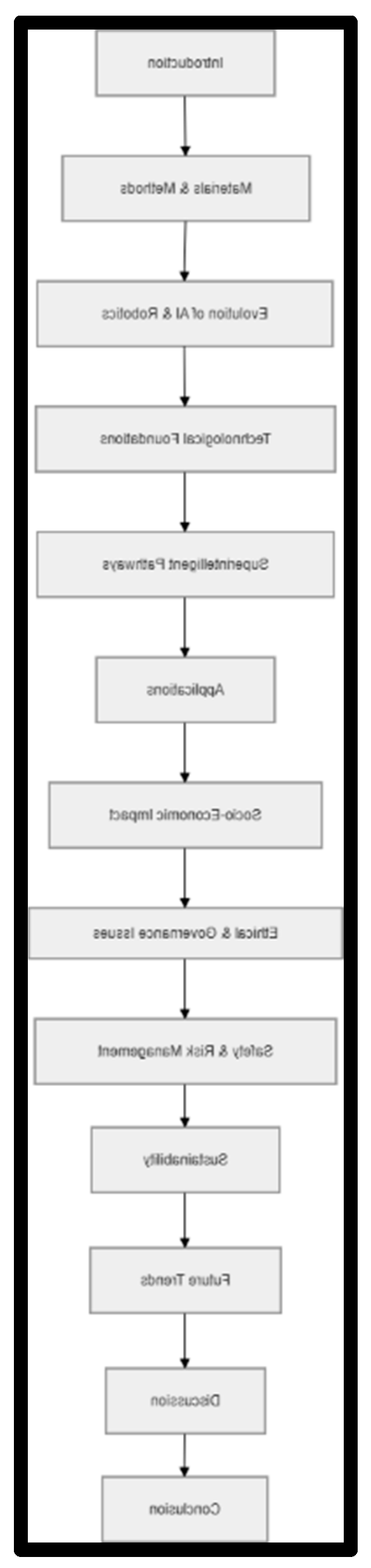
The remainder of this paper is divided in the following manner. Section 2 explains the research methodology and the literature review methodology. Part 3 is a discussion on the evolution of AI and robotics to the concept of AGI. Part 4 discusses the technology of AGI rooted robots. Section 5 discusses the means to the super intelligent autonomous machines. Part 6 and 7 is discussion of applications and socio-economic implications respectively. Ethical, legal and governance issues will be covered in Section 8, safety and Section 10 will cover the sustainability issues. Section 11 presents future trends and research directions, and Section 12 and Section 13 discuss and provide concluding remarks.
Figure 1.
Structure of the Paper. (Source: Obtained from Draw.io).
2. Materials and Methods
2.1. Research Design
The paper adopts a qualitative narrative literature review to examine the application of Artificial General Intelligence (AGI) to robots and the implications of developing superintelligent autonomous machines. The narrative review approach is appropriate to the research as it enables the synthesis of interdisciplinary knowledge about artificial intelligence, robotics, cognitive science, and policy analysis. Compared to systematic reviews with clearly set questions, the method allows a more conceptual investigation of the new technologies, theoretical progress, and socio-technical implications [3]. The plan assists in estimating the primary trends, gaps in the literature, and the emergence of discussions in the field of AGI-induced robotics.
2.2. Data Sources and Search Strategy
The literature on the subject of this research paper was collected in different quality academic databases, including Scopus, IEEE Xplore, Web of Science, ScienceDirect, and MDPI journals. Additional sources such as Google Scholar and institutional reports were used to beg the developing research and grey literature on AGI and integration of robotics.
The search strategy applied was structured search strategy, which is a key word-based search strategy to address the topic in a comprehensive manner. The keywords used were principally “Artificial General Intelligence”, “AGI”, “intelligent robotics”, “autonomous systems”, “machine learning in robotics”, “superintelligence”, “human-robot interaction”, and “AI governance”. It was possible to narrow down search queries using Boolean operators (AND, OR) to make them more relevant [4]. The search was narrowed to 2000-2025 to reflect the latest trends in AI and robotics.
2.3. Inclusion and Exclusion Criteria
To make the review relevant and quality, there were certain inclusion and exclusion criteria. The studies were competent when they:
- Discussed AGI, robotics or autonomous systems development.
- Ressected technical, social or moral effects of AI-based technologies.
- Peer-reviewed articles, conference papers or reports of recognised institutions.
- Research studies were however excluded when they:
- Focused on small AI applications and no long applications.
- Provided a pure technical description of an algorithm, out of context.
- Had little academic credibility or were out of date.
This selection has ensured that the literature selected met the research objectives, and has added to a holistic conceptualization of AGI-integrated robotics.
2.4. Data Analysis Approach
The literature collected was subjected to the thematic analysis in order to determine the common concepts and patterns of the studies. The data was categorized into general themes, including technological change, AGI development, robotics integration, socio-economic impacts, ethical concerns, and governance [5].
Similarities and differences between the findings were also examined through a comparative synthesis approach, which enabled revealing areas of agreement and gaps in research. The approach helps to hold the comprehensive understanding of the sphere due to the synthesis of different perspectives and the focus on interdisciplinary connections [6]. Their production of thematic analysis and comparative synthesis provides a powerful scheme of evaluating the present and the direction of AGI-based robotic systems.
3. Evolution of AI Toward AGI and Robotics Integration
3.1. Early AI and Symbolic Systems
Symbological systems and rule-based solutions that attempted to replicate human reasoning in an explicit logic manner have typified the initial history of Artificial Intelligence. During the middle of the twentieth century, researchers focused on the storage of knowledge in the organized form to allow machines to solve problems by using pre-written rules. These systems were effective in controlled environments particularly in areas such as games playing and proving theorems [7]. However, they were not flexible to uncertainty and dynamism in real life due to their reliance on set rules.
Figure 2.
Evolution of AI to AGI (Source: Obtained from Draw.io).

3.2. Machine Learning and Adaptive Systems
A significant change in the evolution of the symbolic AI was the shift of the intelligent systems to machine learning. Machine learning algorithms assisted systems to acquire patterns based on data rather than depending on manually programmed regulations. The use of algorithms such as decision trees, support vector machines, and probabilistic models improved prediction capabilities in finance, health, and marketing [8]. This paradigm which was based on facts enhanced flexibility in such a way that systems were able to be operated in more complex and unpredictable systems.
3.3. Deep Learning and Autonomous Capabilities
The popularization of deep learning at the start of the 21 st century changed AI since it became possible to extract hierarchical features automatically in large datasets. Convolutional and recurrent network structures significantly boosted the performance of image recognition, speech processing and natural language understanding.
These advancements were the foundation of autonomous capabilities, and robotics and intelligent systems in particular. Deep learning enabled machine to process unstructured information and to take decisions in real time which is required in dynamic settings. Despite these achievements, major concerns include the interpretability, computational and data dependencies.
3.4. Emergence of AGI Concepts
Artificial General Intelligence is conceptually the next stage in task-oriented systems in the direction of general-purpose thinking and learning machines. AGI should be able to mimic the human mental dexterity to enable systems to perform diverse tasks without specific programming.
Recent progress in large scale models, reinforcement learning and multimodal systems has approached this vision [9]. However real AGI remains fiction since the current systems in no way demonstrate real understanding, context awareness, or the ability to move knowledge in a smooth way across areas.
3.5. Robotics Development and Intelligent Automation
Robotics has emerged as a platform beyond the simple mechanical systems into a complex platform capable of interacting with complex environments. The earliest robots in the industrial sector were designed to undertake monotonous jobs but the contemporary robots come with sensor, actuators and intelligent control systems.
The recent advances in computer vision, sensor fusion and embedded AI have allowed robots to perform tasks such as navigation, object manipulation, and human interaction. Intelligent automation has enabled the medical, education, logistics environment and even services by making adaptive systems and autonomous systems more important [10].
3.6. Convergence of AGI and Robotics
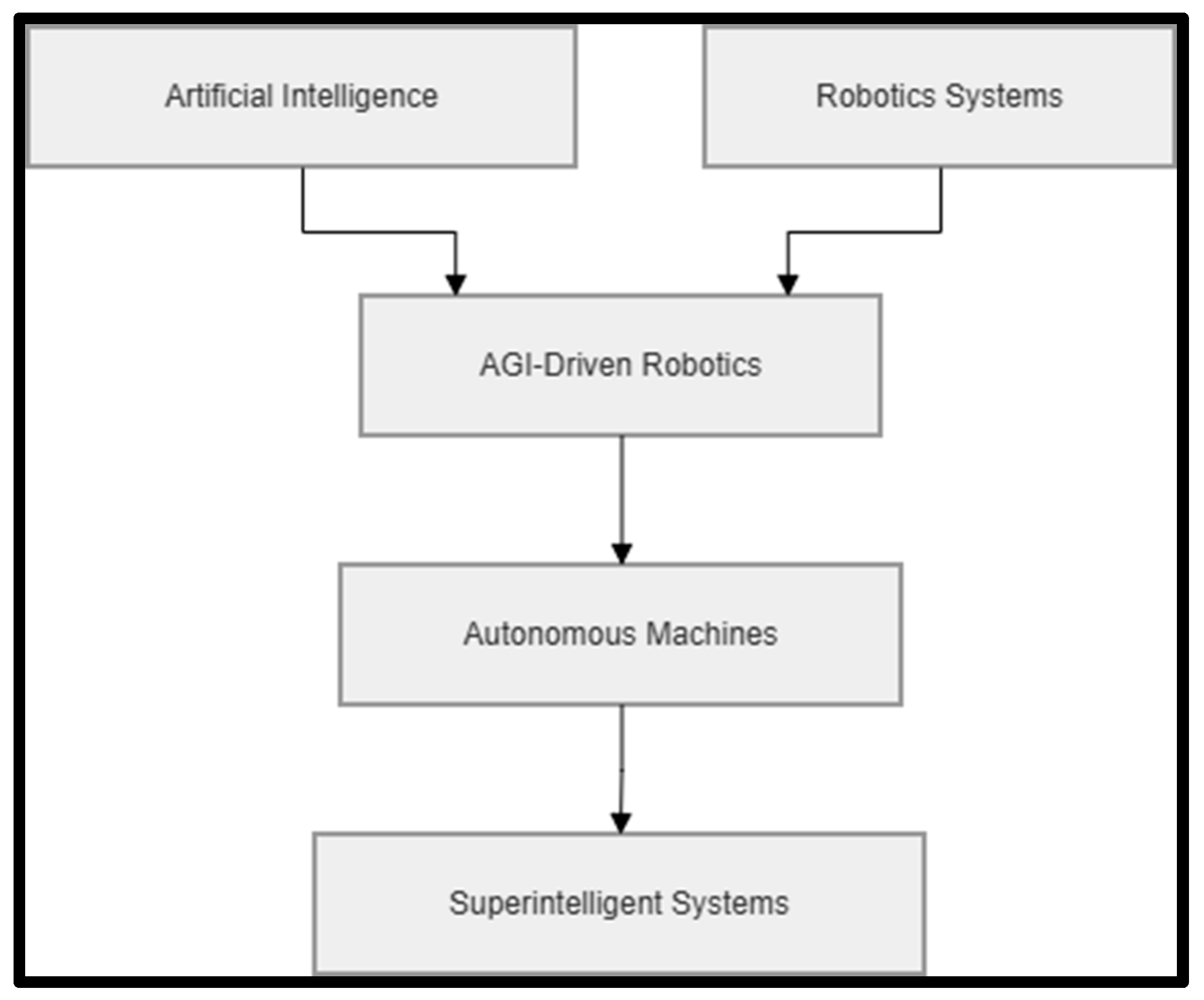
The convergence of AGI-robots is a significant measure towards the development of the superintelligent autonomous machines. The confluence of advanced AI models and the physical robotic system allows machines to achieve higher perceptions, reasoning, and action.
Figure 3.
Convergence of AI and Robotics (Source: Obtained from Draw.io).
This combination enables the robots to operate on their own in tough situations, make intelligent decisions and continuously learn by experience. System safety, ethical considerations, and governance models are other new pressures that the convergence is facing [11]. The merger between AGI and robotics is also bound to introduce fresh limits of intelligence and automation in the 21st century as this research is still being developed.
4. Technological Foundations of AGI-Driven Robotics
4.1. Cognitive Architectures for AGI
The fundamental form of developing Artificial General Intelligence is the cognitive architectures since they model activity of human cognition such as perception, reasoning, memory, and learning. The old techniques were focused on the symbolic representations and the modern systems were gradually occupying the combination of the symbolic ideas and the information-driven education.
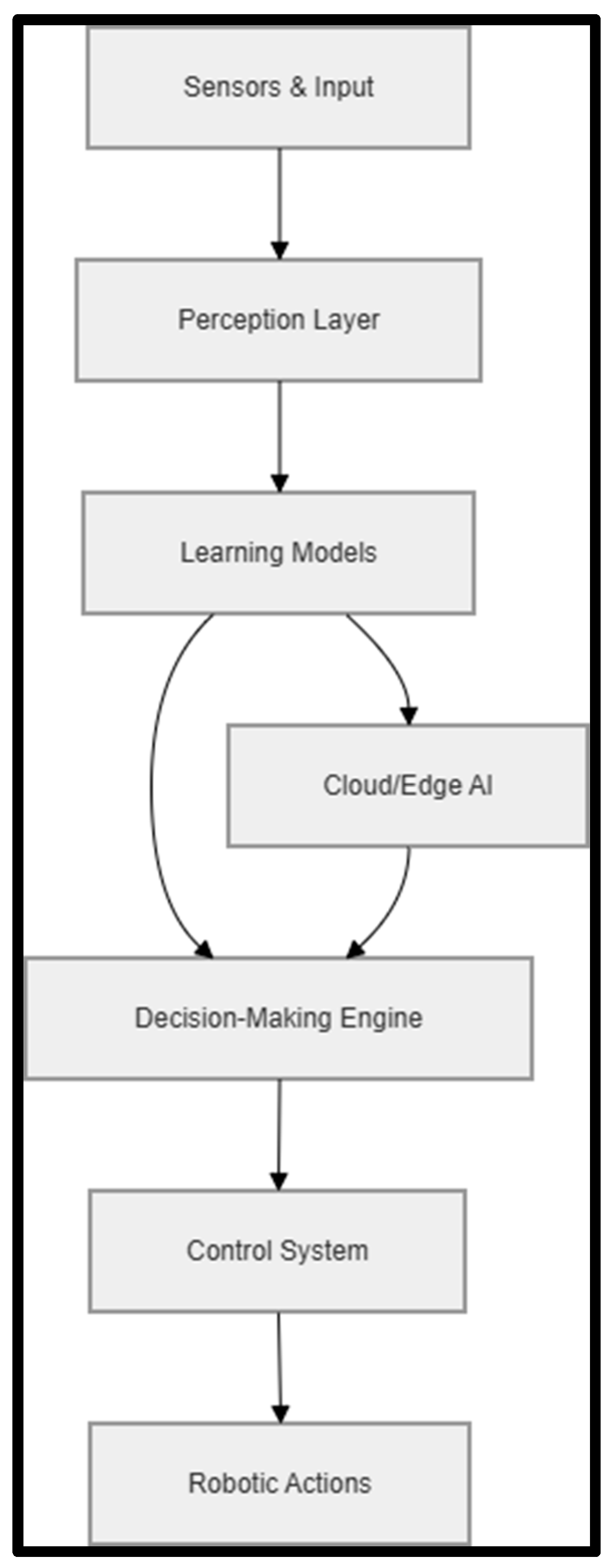
Figure 4.
AGI-Driven Robotics Architecture (Source: Obtained from Draw.io).
A hybrid system that integrates the benefits of neural network and symbolic logic is known as neural-symbolic systems [12]. The fact that neural networks are best suited to pattern recognition and that symbolic systems are interpretable and organized in their arguments is true. Intelligence designs that are holistic seek to address this gap by enabling machines to learn information and remain logically consistent and explainable.
4.2. Machine Learning and Deep Learning in Robotics
Machine learning and deep learning lead the pack when it comes to enabling perception, learning and decision-making view of robots. The robotics are applied in the detection of objects, planning of motion, and mapping of the environment [13].
Deep learning models, particularly convolutional neural networks, enable robots to process visual data, while recurrent networks and transformers support sequential decision-making. These functions expand the senses of robots and enable them to solve complex and unstructured environments.
4.3. Reinforcement Learning for Autonomous Control
Reinforcement learning (RL) is a significant mechanism of supporting independent decisions in robots. The agents in RL can learn to do the best things by providing feedback of their efforts in the form of a reward or punishment.
The approach is particularly relevant in real time adaptation tasks such as navigation, manipulation and control. Deep reinforcement learning is an RL neural network that allows the robots to operate in high-dimensional environments [14].
Despite this promising concept, there is a problem of stability, safety and generalisation of reinforcement learning in real life scenarios, which are unpredictable.
4.4. Sensor Integration and Perception Systems
Perception is a significant part of AGI-based robotics and it enables the system to interpret the surrounding and interact. The modern robots use the different sensors that include cameras, LiDAR, radar, and the tactile sensors to gather information [15].
Computer vision allows robots to recognize objects, intuitively detect danger and spatial knowledge. Multimodal input systems merge the data of multiple sensors, which increase accuracy and strength in perception [16].
This involves the effective sensor fusion to enable the situational awareness, and autonomous decision making under challenging situations.
4.5. Edge AI and Cloud Robotics
The integration of edge computing and cloud infrastructure has transformed the deployment of intelligent robotic systems. Edge AI is less latent and more responsive to real-time data processing by enabling it to operate at the device level. It is particularly applicable to activities that are time-constrained such as autonomous navigation [17].
Cloud robotics, in its turn, provides scalable computing equipment to train the models and update them. By merging edge and cloud capabilities, distributed intelligence systems can offer equilibrium between efficiency, scalability and data security.
4.6. Human–Robot Interaction Models
As the autonomy of robotic systems increases, the importance of the effective human-robot interaction (HRI) increases. HRI focuses on ensuring that systems are simple to use, comprehend, and react to human anticipations [18].
Figure 5.
Human–Robot Interaction Models. (Source: Obtained from Draw.io).

The aspect of explainability will play a crucial role during the creation of trust as the users need to understand how and why something occurs. Human- in- the-loop systems offer humanity oversight in delicate uses to enhance the safety and accountability.
5. Pathways Toward Superintelligent Autonomous Machines
5.1. Defining Superintelligence
Superintelligence is a form of machine intelligence that is more competent than human cognitive skills in a wide range of capabilities, including reasoning and problem-solving, creativity, and decision-making. Superintelligent systems will be generalised, faster, accurate and scalable, in comparison to contemporary AI systems, most of which are task-specific [19]. These systems were able to process the large amount of data and identify complex patterns and make decisions that were out of reach to human beings in both formal and informal world.
Figure 6.
Superintelligence Pathway (Source: Obtained from Draw.io).

Superintelligence, the concept is not only restricted to computational capacity, but also to adaptive reasoning, self-consciousness and independent invention. Superintelligence would be used with robotics to enable machines to behave in the real world, handle uncertainty, learn and communicate effectively with humans and other systems.
5.2. AGI as a Foundation for Superintelligence
Artificial General Intelligence (AGI) is widely regarded to be the point of departure towards achieving superintelligence. Despite the fact that narrow AI systems are only applicable in some activities, AGI suggests that knowledge may be transferred across disciplines, which means that machines can perform a range of mental tasks [20].
AGI systems become more sophisticated, they can integrate knowledge from multiple domains, optimise their performance, and develop advanced reasoning capabilities. The more developed AGI systems are, the more knowledge in different spheres can be integrated, optimized and advanced thinking. This is scalable to the point that machines will become smarter than humans, particularly in combination with robotic systems that enable them to physically engage with the environment.
5.3. Self-Learning and Adaptive Systems
The development of self-learning and adaptive systems is one of the potential paths towards superintelligent machines. The self-learning systems, in contrast to the traditional models which use fixed training datasets, continually update themselves by interacting with the environment [21].
Transfer learning, reinforcement learning, and online learning are some of the methods that enable systems to adapt to the new situations without necessarily undergoing a transformative training. The ability allows the robot systems to adjust their behaviour based on real-time feedback to improve future efficiency and performance.
Continuous learning is needed to be able to work under dynamic conditions when circumstances may change at any moment. It is also challenged by stability, safety and unintended behaviour. The proper alignment of the adaptive systems with the alleged goals is a significant area of research.
5.4. Autonomous Decision-Making Systems
The peculiarity of superintelligent systems is their independent decision-making. These systems are capable of analyzing complex data, taking into account multiple options, making prudent decisions without the human factor interfering.
One of the spheres of robotics that enables machines to perform actions such as navigation, object manipulations, and resource allocation in real-time is autonomous decision-making [22]. The mature algorithms allow the systems to balance a set of goals, optimise and respond to the uncertainty in the environment.
Safety-critical applications are also of particular interest to real-time reasoning, where even delays or failures may be highly critical. Despite being more efficient and scalable, autonomous systems raise the questions of accountability, transparency, and control. Ensuring that decision-making is explainable and in line with human values is crucial to guarantee that the decision-making processes are safe to implement.
5.5. Multi-Agent Systems and Collective Intelligence
Another viable future of superintelligence is the multi-agent system where several intelligent agents collaborate to achieve shared interests. These systems enable collective intelligence to be created whereby the aggregate of the systems of the agents is superior to the system of an individual [23].
This concept is often applied in robotics, in which the concept of swarm robotics is used, in which the coordination of a group of robots is fixed by local interactions and a handful of rules. These systems can perform complex tasks not to mention the application of search and rescue, environmental surveillance and vast infrastructure administration.
Collective intelligence brings scalability, resilience and efficiency, and the capability to distribute the work among numerous different agents [24].
5.6. Recursive Self-Improvement
Recursive self-improvement is the most significant concept in the development of the superintelligent systems. It implies that a smart system can generate a better architecture, algorithms and performance without assistance.
As systems start to develop the capability to redesign themselves, they become able to acquire intelligence in a much more expedited and exponential manner and this phenomenon is often known as the intelligence explosion. The consequence of this mechanism is that it could give rise to super intelligent machines that are much superior to human capabilities [25].
Recursive self-improvement involves the danger of faster innovation; but it is linked to significant risks. Self-improvement may also go out of hand and result to unpredictable behaviour and loss of human life.
6. Applications of AGI-Integrated Robotic Systems
6.1. Industrial Automation and Smart Manufacturing
Robotics may be injected with AGI, and the automation of the industry and smart production becomes possible. AGI-based robots have the capability to react to changing production demands, streamline operations and make real time decisions similar to conventional automation, but contrary to set instructions.
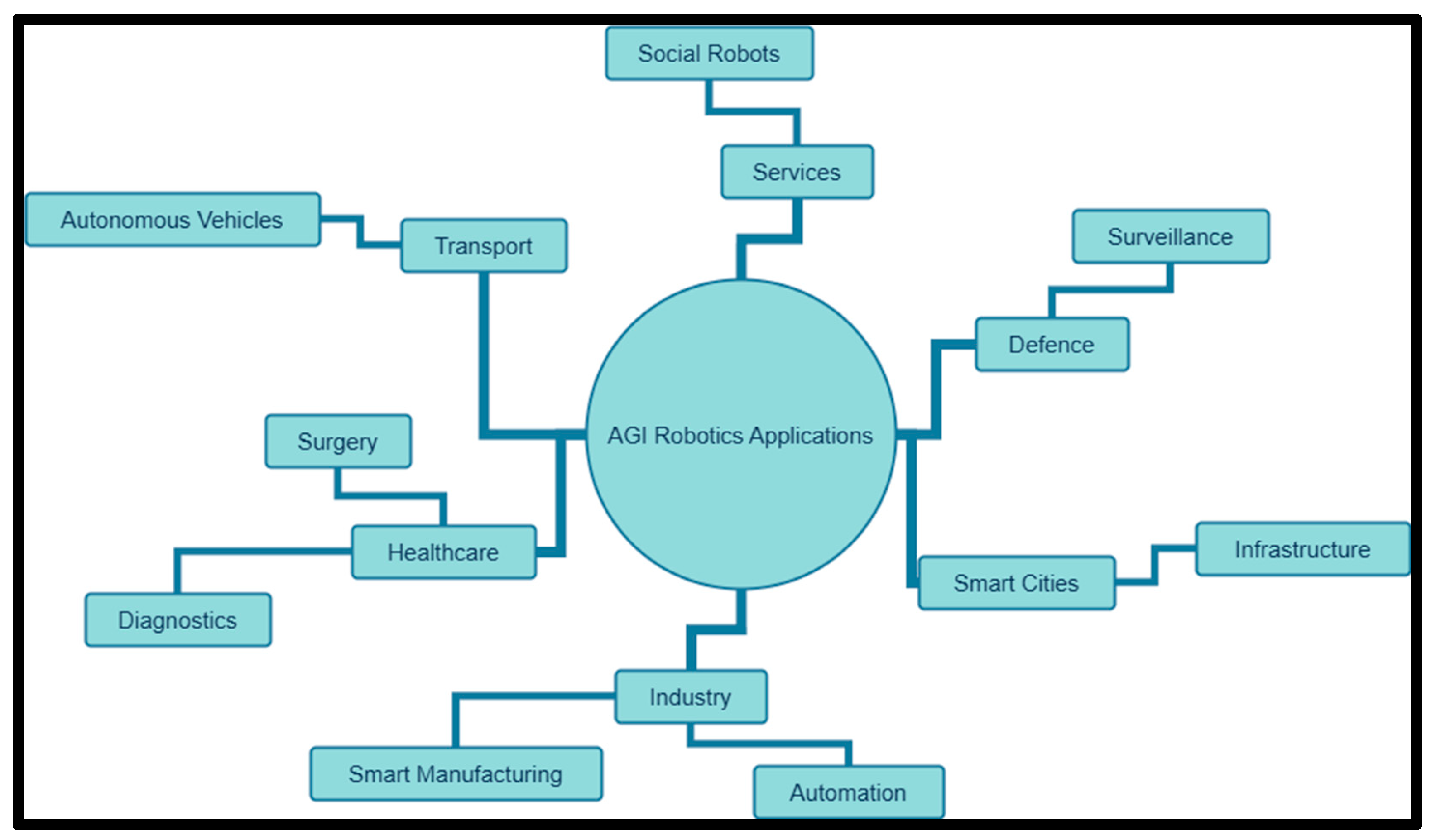
Figure 7.
Applications of AGI Robotics (Source: Obtained from Draw.io).
Smart factories using robotic systems with advanced AI will be able to monitor the assembly lines, predict equipment malfunctions and streamline resource distribution. This boosts productivity, reduces wastes and enhances quality of products. AGI with robotics also enables mass customisation, in which the products can be made according to the requirements of a single customer without compromising on productivity.
6.2. Healthcare Robotics and Surgical Systems
Healthcare is one of the most promising areas of robotics with AGI integration. Intelligent robots will interfere with surgery, diagnostic, rehabilitation and patient care.
AGI robots will be able to analyze the complex data about the patient, make an accurate diagnosis, and help in personalized treatment. The surgical robotics can generate very minimal invasive and precise procedures in surgical practice, reducing the risk of human error and improving patient outcomes.
6.3. Autonomous Vehicles and Transportation
One of the applications of AGI-powered robotics in the transport infrastructure is the use of autonomous vehicles. They are drive systems that rely on advanced perception, decision making and control systems to guide the complex environment without the participation of human beings.
The integration of AGI makes it possible to expand the functions of autonomous vehicles to address the unpredictable scenarios, such as traffic and environmental dynamics. It is capable of improving road safety, reducing congestion and optimising transportation networks [26].
Despite these benefits, there are safety concerns, legal and ethical issues as well as the common people acceptance. Largescale adoption requires the ability to perform well in a variety of settings.
6.4. Service and Social Robots
Service and social robots are used at home, commercial and public locations. These robots can now communicate with humans in a natural manner and understand the context and provide personalised services due to the integration of AGI.
They find application in the support of customers, hospitality, education and eldercare. Social robots can be used in the daily routine and provide company and assistance to people with special needs.
These systems must be good in the interpretation of human behaviour, emotions, and intentions. Special consideration is given to ethical concerns such as privacy and trust in the user in such applications [27].
6.5. Defence and Security Systems
AGI driven robotic systems are finding applications in defence and security purposes as well. The surveillance, threat recognition, and working in a dangerous environment autonomously are some of the tasks that could be performed by such systems.
The developed AI of robotic systems will enable them to input, analyze, and process large volumes of data and recognize any potential threat and help in strategic decision-making. They can also reduce human vulnerability to dangerous situations, and enhance the safety of operation.
6.6. Smart Cities and Infrastructure
The application of AGI and robotics is a significant parameter in the development of smart cities and intelligent infrastructure. Robotic systems can be used to conduct the urban planning, waste management, and traffic control, including the environmental monitoring.
Urban environments can be monitored in order to use AGI to improve their efficiency and sustainability since the systems enable to analyze data in real-time and make decisions. An example is smart frameworks which can optimize energy consumption, regulate shared services, and offer crisis response [28].
These applications highlight the potentials of AGI-based robotics to enhance the quality of life and work towards sustainable development. However, they also require powerful systems of governance so that they can address the issues of privacy, security and fair access.
7. Socio-Economic Implications
7.1. Workforce Transformation and Employment
The use of AGI in robots will revolutionise the labour market since it will be automated in both routine and the more complicated labour processes. The AGI-powered robotics, unlike the prior waves of automation, can impact the knowledge-based industries, i.e., healthcare, finance, and engineering. This shift may lead to displacement of the job market in certain industries and also creating new opportunities in AI development, robot maintenance and data-driven sectors [29]. The demands of advanced digital skills and interdisciplinary knowledge and life-long learning will only increase and demand colossal reskilling and education system adjustments.
7.2. Productivity and Economic Growth
AGI-integrated robot systems can be taken to drive enormous productivity in the industries. These systems have the ability to enhance efficiency and to reduce operational costs and enhance the quality of output through automation of complex decision-making processes, and optimization of resource allocation processes.
The manufacturing, logistics, and service industries can employ intelligent robots to operate 24 hours with minimal error, making them more competitive and innovative. Macroeconomically, AGP may result in a rise in the economy, since it opens up new business opportunities and triggers the pace of technological development [30]. The gains may also not be distributed equally with the technologically advanced firms and economies making disproportionate gains.
7.3. Human–Machine Collaboration
Rather than fully replacing human workers, AGI-powered robotics will also most probably establish novel forms of human-machine collaboration. These systems do not exist in isolation; they incorporate the use of man and intelligent machines to combine human creativity, intuition and morality with performance and analysis by machines.
Cobots or collaborative robots are created to assist human beings in tasks that require precision, versatility, and safety. This partnership can maximize productivity in sectors such as healthcare and manufacturing and even remain human-controlled [31]. Teamwork involves a blend of human and machine intuitive interfaces, trust and role assigning.
7.4. Digital Divide and Accessibility
The benefits of AGI based robotics do not equally cut across the population. The gap in the use of advanced systems in developing regions may be the digital divide defined as the unequal access to technology, infrastructure and skills.
The accessibility of disabled people can be improved with the help of AGI-motivated technology, which involve assistive robotics, voice recognition, and adaptive systems. Specific infrastructure, educative, and inclusive policy formulation can help bridge the digital divide to realize the equitable sharing of technological change [32].
8. Ethical, Legal, and Governance Challenges
8.1. Algorithmic Bias and Fairness
The most crucial question in AGI-based robotics is algorithmic bias, a system trained on historic information may be susceptible to mirror the disparities within the society. It can cause discrimination or unfair practice in the delicate areas. Fairness should be equipped with various datasets, bias identification and continual observation, but the definition of fairness should be context-specific.
Figure 8.
Ethical & Governance Challenges (Source: Obtained from Draw.io).

8.2. Privacy and Data Protection
The AGI-integration of robots relies on the extensive volume of data collection that entails personal information that is sensitive in nature [33]. The surveillance and abuse threats are augmented by high technologies. Privacy and confidence of the people requires data protection laws, encryptions and secure system designs.
8.3. Transparency and Explainability
The AGI systems are usually black boxes thus limiting transparency in the decision-making process. This lack of accountability may reduce trust especially in dangerous uses. Explainable AI ought to promote an understanding, and the balance between accuracy and interpretability is not simple.
8.4. Control and Alignment Problem
Human values AGI systems are sensitive. Systems may be misaligned that may give evil fruits as the autonomy goes up. To address this, ethical design, alignment strategy, and regular monitoring of the systems are required.
8.5. Accountability in Autonomous Systems
Autonomous robotics, in its turn, raises hard-to-answer responsibility issues in the case of failure. The legal frameworks are not good and it time to have straightforward accountability frameworks between the developers, operators and users.
8.6. Global Regulatory Frameworks
Global coordination is essential for governing AGI technologies. Different jurisdictions implement different strategies; thus, the global collaboration is needed to establish similar principles and to ensure responsible innovation [34].
9. Safety and Risk Management in Superintelligent Robotics
9.1. Reliability in Safety-Critical Systems
AGI driven robot systems are also being used in safety critical environments such as the medical industry, transportation and factories. In this case, reliability in terms of the system is the primary concern as any malfunction can cause a colossal damage or loss [35].
Reliability should be provided through proper testing, validation and redundancy. Systems will be developed to be reliable in different and unpredictable conditions.
9.2. Risk of Autonomous Decision Failures
Autonomous systems are based on complex algorithms, and their decisions can be unpredictable or incorrect, particularly in new situations. These failures can be as a result of incomplete information, model constraints or environmental uncertainties.
These dangers must be compensated by the capacity to identify errors with great skill, continuous observation and continuous learning.
9.3. AI Safety and Control Mechanisms
The question of AI safety lies entirely in the methods, which can be employed to make intelligent systems behave in a particular way. Risks associated with autonomy need control methods such as constraint-based programming, fail-safe mechanism, and monitoring system.
Those mechanisms are employed to prevent undesired actions and ensure that systems do not go beyond the scope of operation that is prescribed.
9.4. Human-in-the-Loop Systems
Human-in-the-loop (HITL) systems are systems in which human control is part of automated operating systems particularly in high risk context. This system enables human intervention in cases where it is necessary to hold them accountable and offer safety [36].
Despite the efficiency of automation, it is necessary to have human control in order to avoid excessive reliance on machines, and to make sure that we can respond to the unforeseen situations.
10. Sustainability and Environmental Impact
10.1. Energy Consumption of Intelligent Systems
AGI-based robots would require significant computing resources that would translate into increased energy consumption in their production and operation. Training mass models and running of data centres are linked to emissions of carbon and environmental degradation.
10.2. AI for Environmental Monitoring
Even though AI has a negative effect on the environment, it has an immense sustainability potential. AGI integrated robotics can be used to carry out environmental supervision, climate modelling, and resource administration.
10.3. Sustainable Robotics Development
The idea of sustainable development of robotic systems involves decreasing the environmental footprint in the lifecycle of the robots. It will be accompanied by energy saving design, responsible material sourcing and recycling of parts [37].
11. Future Trends and Research Directions
11.1. Evolution Toward Full AGI Systems
The future of AI development is more towards developing a complete AGI system that can reason and learn through generalisation. It is this evolution which is likely to be propelled by developments in multimodal models, cognitive architectures and scalable computing.
11.2. Human-Centred Superintelligence
Future developments emphasise the importance of human-centred design, ensuring that superintelligent systems align with human values and societal needs. The practice is concerned with justice, inclusiveness and openness in the development of systems.
11.3. Integration with IoT and Smart Ecosystems
AGI will be able to introduce intelligent ecosystems because of the intersection with robotics and the Internet of Things (IoT). The systems will facilitate real-time information exchange, automation and optimisation in industries such as healthcare, transportation, and city management.
11.4. Global AI Competition and Power Dynamics
AI application has become a competitive resource in the global market that affects the development of the economy, technological control, and geopolitical relationships. Nations are constantly flattening a fortune in AI research and systems so that the nation maintains competitive advantages [38].
11.5. Long-Term Societal Transformation
Robotics based on AGI has the ability to transform the society in its very nature, including work, education, governance and human identity in the long run. Interdisciplinary studies and future-oriented policy models can only explain these changes.
12. Discussion
The findings of the study show that the technological innovation and the change of the society are highly interconnected in the context of AGI-based robotics. The maturation of narrow AI to AGI-based systems is a positive sign of progress in the spheres of autonomy, flexibility and intelligence. In the meantime, the integration of these technologies into robotics enables them to expand their potential to find application and affect [39].
The analysis shows that AGI-based robotics has enormous productivity, efficiency, and innovation benefits, but also raises serious concerns of an ethical, governance, safety concern. Technological design and implementation is also intertwined with social issues such as bias, privacy, and accountability.
Among the key lessons is that the need to strike a balance between the innovation and regulation exists. Excessive regulation can lead to stifling the growth of the technological industry but the absence of control may lead to harmful outcomes [40]. Effective governance should be endowed with flexible systems which are capable of supporting innovation without compromising accountability and ethics.
13. Conclusions
The paper has addressed the role of Artificial General Intelligence in robotic machines as a transition to superintelligent autonomous machines. Findings show that this convergence can significantly maximize effectiveness, decision making and innovation across many areas. It has its fair share of problems, however, with regard to safety, ethical fit, and governance. These issues should be addressed through powerful regulatory systems, well-defined system architecture, and continuous observation. Future research priorities should be explainable, sustainable and human-centre strategies to make the development responsible. The ultimate realization of effective implementation of AGI-driven robotics is ultimately rooted in the capacity to reconcile technological advancement with ethics and societal responsibility and sustainability.
References
- O’Hara, P. A. (2022). Artificial General Intelligence and Autonomous Humanoid Robotics. In Principles of Institutional and Evolutionary Political Economy: Applied to Current World Problems (pp. 195-250). Singapore: Springer Nature Singapore.
- Giri, A., Das, S. R., Joy, A. Z. M. J. U., Akib, A. S. M., Misat, M. M. H., Khadgi, M., ... & Shahi, B. (2025). Smart IoT Egg Incubator System with Machine Learning for Damaged Egg Detection. In International conference on WorldS4 (pp. 236-245). Springer, Cham.
- Gulchenko, V. (2024). Navigating the risks: An examination of the dangers associated with artificial general intelligence and artificial superintelligence. Available at SSRN 4941716.
- Peters, T. F. (2025). Machine intelligence, artificial general intelligence, super-intelligence, and human dignity. Religions, 16(8), 975. [CrossRef]
- Vsevolodovna, R. I. M. (2025). A Roadmap to Superintelligence: Architectures, Transformations, and Challenges in Modern AI Development.
- Raman, R., Kowalski, R., Achuthan, K., Iyer, A., & Nedungadi, P. (2025). Navigating artificial general intelligence development: societal, technological, ethical, and brain-inspired pathways. Scientific Reports, 15(1), 8443. [CrossRef]
- Cai, H., & Cai, T. (2024, September). Artificial General Intelligence as a Continuum of Intelligence and Consciousness. In International Conference on Haptics and Virtual Reality (pp. 199-205). Cham: Springer Nature Switzerland.
- Uddin, A. Z. M. J., Begum, M. R., Akib, A. A. S., Islam, K., Hasib, A., Giri, A., & Shahi, A. (2025, December). LungNet: An Interpretable Machine Learning Framework for Early Lung Cancer Detection Using Structured Clinical Data. In 2025 IEEE 13th Conference on Systems, Process & Control (ICSPC) (pp. 181-186). IEEE.
- Mumuni, A., & Mumuni, F. (2025). Large language models for artificial general intelligence (agi): A survey of foundational principles and approaches. arXiv preprint arXiv:2501.03151.
- Giri, A., Akib, A. A. S., Uddin, A. Z. M. J., Rahman, M. S., Hasib, A., Khadgi, M., ... & Shahi, B. (2025, September). Edubot: A low-cost multilingual ai educational robot for inclusive and scalable learning. In 2025 3rd International Conference on Artificial Intelligence, Blockchain, and Internet of Things (AIBThings) (pp. 1-6). IEEE.
- Roli, A., Jaeger, J., & Kauffman, S. A. (2022). How organisms come to know the world: Fundamental limits on artificial general intelligence. Frontiers in Ecology and Evolution, 9, 806283. [CrossRef]
- Ghosh, R., & Doss, S. (2025). Shaping Tomorrow: The Convergence of Artificial General Intelligence and Quantum Computing. In Interplay of Artificial General Intelligence with Quantum Computing: Towards Sustainability (pp. 1-10). Cham: Springer Nature Switzerland.
- Giri, A., Hasib, A., Islam, M., Tazim, M. F., Rahman, M. S., Khadgi, M., & Akib, A. A. S. (2025, June). Real-time human fall detection using yolov5 on raspberry pi: An edge ai solution for smart healthcare and safety monitoring. In International Conference on Data Analytics & Management (pp. 493-507). Cham: Springer Nature Switzerland.
- Mostufa, S., & Chakrabarti, K. (2024). A genre of cognitive evolutions through artificial superintelligence and robotics technology. In Brain-like Super Intelligence from Bio-Electromagnetism (pp. 153-187). Singapore: Springer Nature Singapore.
- Buttazzo, G. (2023). Rise of artificial general intelligence: risks and opportunities. Frontiers in artificial intelligence, 6, 1226990. [CrossRef]
- Akib, A. A. S., Uddin, A. Z. M. J., Giri, A., Islam, M., Arafat, M. E., & Bhuiyan, T. (2025, May). Efficient route planning and navigation in drones using pixhawk autopilot. In 2025 6th International Conference on Artificial Intelligence, Robotics and Control (AIRC) (pp. 138-145). IEEE.
- Zhang, P., Zhang, H., Xu, H., Xu, R., Wang, Z., Wang, C., ... & Liu, X. (2025). Scaling laws in scientific discovery with AI and robot scientists. arXiv preprint arXiv:2503.22444.
- Growiec, J. (2022). Bracing for Artificial General Intelligence. In Accelerating Economic Growth: Lessons From 200,000 Years of Technological Progress and Human Development (pp. 155-179). Cham: Springer International Publishing.
- Perković, G., Drobnjak, A., & Botički, I. (2025, June). Reaching Artificial General Intelligence (AGI): Challenges and Opportunities. In 2025 MIPRO 48th ICT and Electronics Convention (pp. 2133-2138). IEEE.
- Bikkasani, D. C. (2025). Navigating artificial general intelligence (AGI): Societal implications, ethical considerations, and governance strategies. AI and Ethics, 5(3), 2021-2036. [CrossRef]
- Akib, A. A. S., Giri, A., Islam, M., Sifa, F. J., Elahi, T. A., Aktia, A. N., ... & Khanna, A. (2024, October). Design and simulation of a quadruped robot. In International Conference on Data-Processing and Networking (pp. 373-385). Singapore: Springer Nature Singapore.
- Hamilton, J. R., Maxwell, S. J., & Lynch, R. P. (2023). Towards delivering AI & smarter, self-learning, autonomous, humanoid robots.
- Dessureault, J. S., Lamontagne, R., & Parisé, P. O. (2025). The ethics of creating artificial superintelligence: a global risk perspective. AI and Ethics, 5(6), 6241-6263. [CrossRef]
- Hasib, A., Akib, A. S. M., & Giri, A. (2026). HydroSense: A Dual-Microcontroller IoT Framework for Real-Time Multi-Parameter Water Quality Monitoring with Edge Processing and Cloud Analytics. arXiv preprint arXiv:2601.21595.
- Masters, K., Herrmann-Werner, A., Festl-Wietek, T., & Taylor, D. (2024). Preparing for artificial general intelligence (AGI) in health professions education: AMEE guide no. 172. Medical Teacher, 46(10), 1258-1271. [CrossRef]
- Anand, S., & Mohamed, W. M. W. (2025). Quantum Algorithms for AGI: Unlocking the Potential of Superintelligence. In Interplay of Artificial General Intelligence with Quantum Computing: Towards Sustainability (pp. 107-122). Cham: Springer Nature Switzerland.
- McIntosh, T. R., Susnjak, T., Liu, T., Watters, P., Xu, D., Liu, D., & Halgamuge, M. N. (2025). From Google Gemini to OpenAI Q*(Q-Star): a survey on reshaping the generative artificial intelligence (AI) research landscape. Technologies, 13(2), 51. [CrossRef]
- Hasib, A., Akib, A. S. M., Ankur, N. D., & Giri, A. (2026). Dual-Modality IoT Framework for Integrated Access Control and Environmental Safety Monitoring with Real-Time Cloud Analytics. arXiv preprint arXiv:2601.20366.
- Obaid, O. I. (2023). From machine learning to artificial general intelligence: A roadmap and implications. Mesopotamian Journal of Big Data, 2023, 81-91. [CrossRef]
- Peters, T. F. (2025). Machine intelligence, artificial general intelligence, super-intelligence, and human dignity. Religions, 16(8), 975. [CrossRef]
- Giri, A., Akib, A. A. S., Hasib, A., Acharya, A., Prithibi, M. A., Rahman, R. H., ... & Taha, H. I. C. (2025, April). Design and development of a cost effective and modular cnc plotter for educational and prototyping applications. In 2025 IEEE 4th International Conference on Computing and Machine Intelligence (ICMI) (pp. 1-6). IEEE.
- Bikkasani, Dileesh Chandra. “Navigating artificial general intelligence (AGI): Societal implications, ethical considerations, and governance strategies.” AI and Ethics 5.3 (2025): 2021-2036. [CrossRef]
- Prabhu, M., & Premraj, J. A. (2025). Artificial consciousness in AI: a posthuman fallacy. AI & SOCIETY, 40(4), 2995-3008. [CrossRef]
- Growiec, J. (2022). Bracing for Artificial General Intelligence. In Accelerating Economic Growth: Lessons From 200,000 Years of Technological Progress and Human Development (pp. 155-179). Cham: Springer International Publishing.
- Mostufa, S., & Chakrabarti, K. (2024). A genre of cognitive evolutions through artificial superintelligence and robotics technology. In Brain-like Super Intelligence from Bio-Electromagnetism (pp. 153-187). Singapore: Springer Nature Singapore.
- Roli, A., Jaeger, J., & Kauffman, S. A. (2022). How organisms come to know the world: Fundamental limits on artificial general intelligence. Frontiers in Ecology and Evolution, 9, 806283. [CrossRef]
- Alim, M. W., Giri, A., Akib, A. A. S., Uddin, N., Islam, M., Arafat, M. E., & Tahmid, S. A. (2025, April). Affordable bionic hands with intuitive control through forearm muscle signals. In 2025 IEEE 4th International Conference on Computing and Machine Intelligence (ICMI) (pp. 1-6). IEEE.
- Ghosh, R., & Doss, S. (2025). Shaping Tomorrow: The Convergence of Artificial General Intelligence and Quantum Computing. In Interplay of Artificial General Intelligence with Quantum Computing: Towards Sustainability (pp. 1-10). Cham: Springer Nature Switzerland.
- Vsevolodovna, R. I. M. (2025). A Roadmap to Superintelligence: Architectures, Transformations, and Challenges in Modern AI Development.
- Hamilton, J. R., Maxwell, S. J., & Lynch, R. P. (2023). Towards delivering AI & smarter, self-learning, autonomous, humanoid robots.
Disclaimer/Publisher’s Note: The statements, opinions and data contained in all publications are solely those of the individual author(s) and contributor(s) and not of MDPI and/or the editor(s). MDPI and/or the editor(s) disclaim responsibility for any injury to people or property resulting from any ideas, methods, instructions or products referred to in the content. |
© 2026 by the authors. Licensee MDPI, Basel, Switzerland. This article is an open access article distributed under the terms and conditions of the Creative Commons Attribution (CC BY) license (http://creativecommons.org/licenses/by/4.0/).
Copyright: This open access article is published under a Creative Commons CC BY 4.0 license, which permit the free download, distribution, and reuse, provided that the author and preprint are cited in any reuse.