

Submitted:
25 January 2026
Posted:
26 January 2026
You are already at the latest version
Abstract
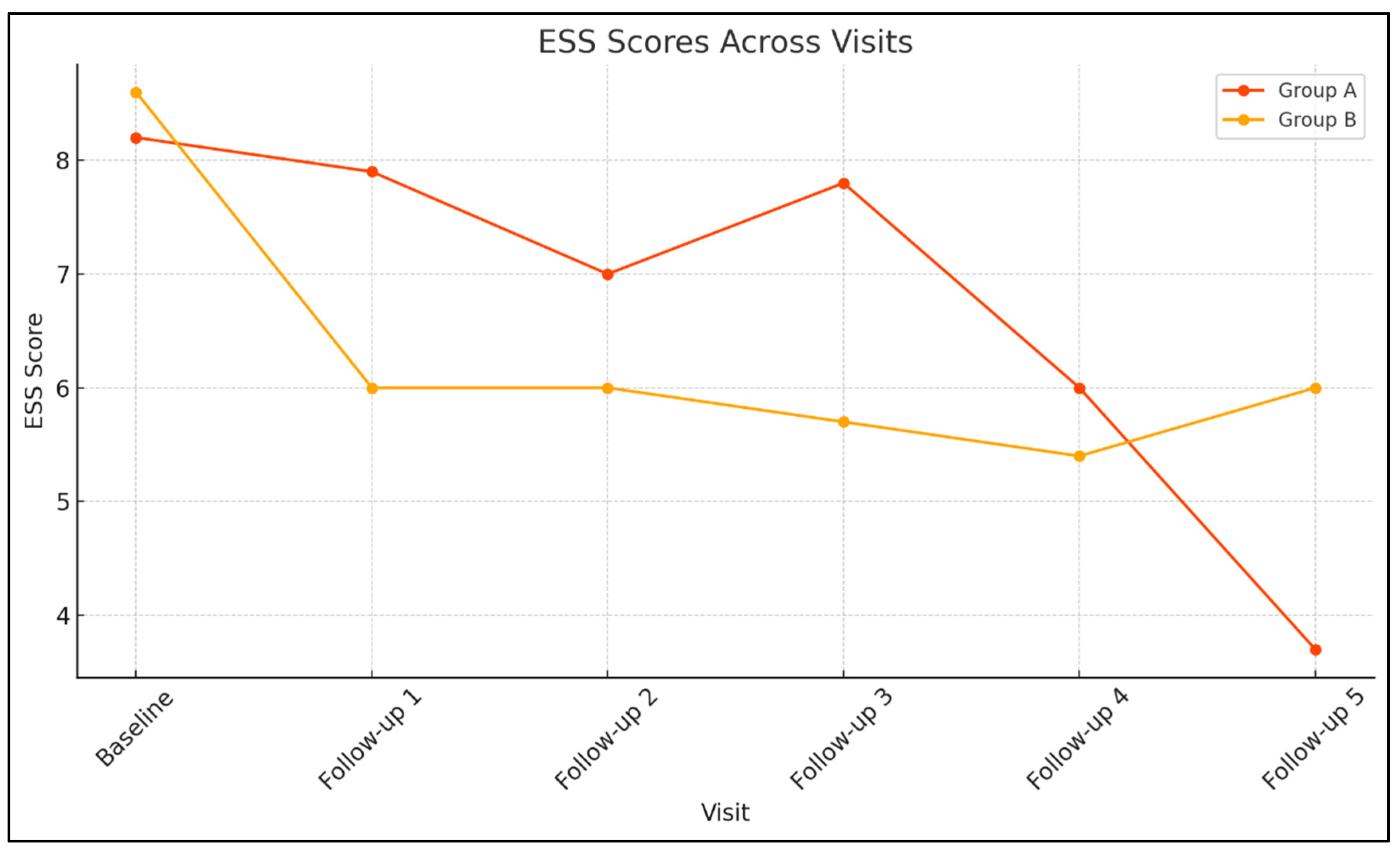
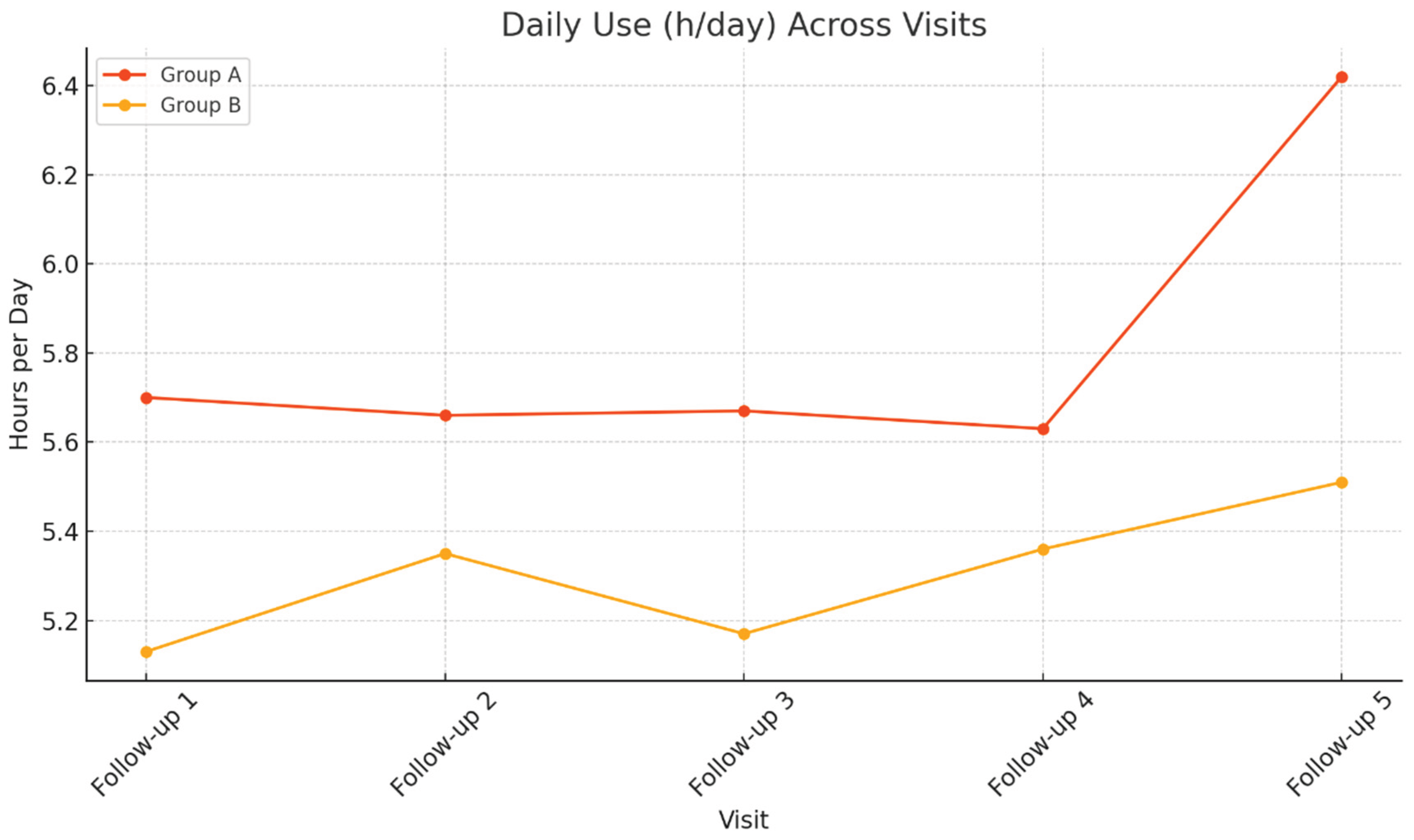
Objectives: Obstructive sleep apnea (OSA) is a common and serious disorder associated with significant health risks. Individuals with mental disorders exhibit a higher prevalence of OSA and may encounter unique challenges in adhering to positive airway pressure (PAP) therapy. However, evidence on long-term adherence and treatment outcomes in this population remain limited. This study aimed to evaluate PAP therapy adherence and effectiveness in adults with moderate to severe OSA, comparing individuals with comorbid mental disorders to those without psychiatric diagnoses over a three-year follow-up period. Methods: A prospective observational cohort study was conducted at a tertiary academic center, enrolling 1,672 adults newly diagnosed with moderate-to-severe OSA. Participants were grouped into those with (n=221) and without (n=1,451) comorbid mental disorders. Clinical, anthropometric, and sleep parameters, including Epworth Sleepiness Scale (ESS) scores and PAP usage, were assessed at baseline and at five follow-up visits over three years. Adherence was defined as average nightly PAP use, and effectiveness was evaluated by changes in ESS, BMI, blood pressure, and heart rate. Longitudinal trends were analyzed using linear mixed-effects models. Results: Patients with mental disorders demonstrated comparable or slightly higher PAP adherence throughout the follow-up, with numerically greater average nightly usage at each time point. Although between-group differences were not statistically significant, linear mixed effects modeling confirmed stable PAP adherence over time in both groups (Group A: F (4, 12.79) = 0.184, p = 0.942; Group B: F (4, 150.11) = 1.102, p = 0.358). Daytime sleepiness, measured by ESS, improved significantly over time in both groups (Group A: F (5, 14.29) = 4.619, p = 0.010; Group B: F (5, 60.39) = 29.52, p < 0.001). Notably, by the final follow-up, patients with mental disorders reported lower ESS scores than those without (3.67 vs. 6.00), indicating meaningful clinical improvement. Conclusions: PAP therapy is both feasible and effective in patients with stable mental disorders. The presence of psychiatric comorbidity does not impede adherence and may even enhance long-term engagement when supported by integrated, multidisciplinary care.
Keywords:
1. Introduction
2. Materials and Methods
Study Design
Study Population
Inclusion and Exclusion Criteria
Procedures and Follow-Up
Outcome Measures
Statistical Analysis
3. Results
4. Discussion
5. Conclusions
Author Contributions
Funding
Institutional Review Board Statement
Informed Consent Statement
Data Availability Statement
Acknowledgments
Conflicts of Interest
Abbreviations
| AHI | Apnea–Hypopnea Index |
| APAP | Auto-Adjusting Positive Airway Pressure |
| BMI | Body Mass Index |
| BP | Blood Pressure |
| CPAP | Continuous Positive Airway Pressure |
| ESS | Epworth Sleepiness Scale |
| FEV1 | Forced Expiratory Volume in One Second |
| FVC | Forced Vital Capacity |
| ODI | Oxygen Desaturation Index |
| OSA | Obstructive Sleep Apnea |
| PAP | Positive Airway Pressure |
| PG | Polygraphy |
| PSG | Polysomnography |
| REM | Rapid Eye Movement |
| REML | Restricted Maximum Likelihood |
| SaO2 | Arterial Oxygen Saturation |
| SD | Standard Deviation |
References
- Slowik, J.M.; Sankari, A.; Collen, J.F. Obstructive sleep apnea. In StatPearls [Internet]; StatPearls Publishing: Treasure Island, FL, USA, 2025; Available online: https://www.ncbi.nlm.nih.gov/books/NBK459252/ (accessed on 4 July 2025).
- Athar, W.; Card, M.E.; Charokopos, A.; et al. Obstructive sleep apnea and pain intensity in young adults. Ann. Am. Thorac. Soc. 2020, 17, 1273–1278. [Google Scholar] [CrossRef] [PubMed]
- Knechtle, B.; Economou, N.T.; Nikolaidis, P.T.; et al. Clinical characteristics of obstructive sleep apnea in psychiatric disease. J. Clin. Med. 2019, 8, 534. [Google Scholar] [CrossRef] [PubMed]
- Stubbs, B.; Vancampfort, D.; Veronese, N.; et al. The prevalence and predictors of obstructive sleep apnea in major depressive disorder, bipolar disorder and schizophrenia: A systematic review and meta-analysis. J. Affect. Disord. 2016, 197, 259–267. [Google Scholar] [CrossRef] [PubMed]
- Su, C.S.; Liu, K.T.; Panjapornpon, K.; Andrews, N.; Foldvary-Schaefer, N. Functional outcomes in patients with REM-related obstructive sleep apnea treated with positive airway pressure therapy. J. Clin. Sleep Med. 2012, 8, 243–247. [Google Scholar] [CrossRef] [PubMed]
- Patil, S.P.; Ayappa, I.A.; Caples, S.M.; Kimoff, R.J.; Patel, S.R.; Harrod, C.G. Treatment of adult obstructive sleep apnea with positive airway pressure: An American Academy of Sleep Medicine systematic review, meta-analysis, and GRADE assessment. J. Clin. Sleep Med. 2019, 15, 301–334. [Google Scholar] [CrossRef] [PubMed]
- DeVettori, G.; Troxel, W.M.; Duff, K.; Baron, K.G. Positive airway pressure adherence among patients with obstructive sleep apnea and cognitive impairment: A narrative review. Sleep Med. 2023, 111, 28–35. [Google Scholar] [CrossRef] [PubMed]
- Gabryelska, A.; Turkiewicz, S.; Białasiewicz, P.; et al. Evaluation of daytime sleepiness and insomnia symptoms in OSA patients with characterization of symptom-defined phenotypes and their involvement in depression comorbidity: A cross-sectional clinical study. Front. Psychiatry 2024, 15, 1303778. [Google Scholar] [CrossRef] [PubMed]
- Trakada, G.; Velentza, L.; Konsta, A.; Pataka, A.; Zarogoulidis, P.; Dikeos, D. Complications of anesthesia during electroconvulsive therapy due to undiagnosed obstructive sleep apnea: A case study. Respir. Med. Case Rep. 2017, 20, 145–149. [Google Scholar] [CrossRef] [PubMed]
- Vanek, J.; Prasko, J.; Genzor, S.; et al. Obstructive sleep apnea, depression and cognitive impairment. Sleep Med. 2020, 72, 50–58. [Google Scholar] [CrossRef] [PubMed]
- Krakow, B.; Lowry, C.; Germain, A.; et al. A retrospective study on improvements in nightmares and post-traumatic stress disorder following treatment for co-morbid sleep-disordered breathing. J. Psychosom. Res. 2000, 49, 291–298. [Google Scholar] [CrossRef] [PubMed]
- Benca, R.M.; Krystal, A.; Chepke, C.; Doghramji, K. Recognition and management of obstructive sleep apnea in psychiatric practice. J. Clin. Psychiatry 2023, 84, 22r14521. [Google Scholar] [CrossRef] [PubMed]
- Heck, T.; Zolezzi, M. Obstructive sleep apnea: Management considerations in psychiatric patients. Neuropsychiatr. Dis. Treat. 2015, 11, 2691–2698. [Google Scholar] [CrossRef] [PubMed]
- Alam, A.; Chengappa, K.N.; Ghinassi, F. Screening for obstructive sleep apnea among individuals with severe mental illness at a primary care clinic. Gen. Hosp. Psychiatry 2012, 34, 660–664. [Google Scholar] [CrossRef] [PubMed]
- Gupta, M.A.; Simpson, F.C. Obstructive sleep apnea and psychiatric disorders: A systematic review. J. Clin. Sleep Med. 2015, 11, 165–175. [Google Scholar] [CrossRef] [PubMed]
- Vanek, J.; Prasko, J.; Genzor, S.; et al. Cognitive functions, depressive and anxiety symptoms after one year of CPAP treatment in obstructive sleep apnea. Psychol. Res. Behav. Manag. 2023, 16, 2253–2266. [Google Scholar] [CrossRef] [PubMed]

| Parameter | Group A (Mean ± SD) | Group B (Mean ± SD) | P-value |
|---|---|---|---|
| Gender (Female) | 115 (52.0%) | 533 (36.7%) | 0.000 |
| Age (years) | 55.08 ± 12.32 | 57.59 ± 13.42 | 0.006 |
| BMI (kg/m2) | 32.85 ± 6.44 | 32.03 ± 6.60 | 0.087 |
| Waist (cm) | 102.82 ± 35.94 | 100.57 ± 38.26 | 0.420 |
| Hip (cm) | 101.80 ± 34.62 | 100.56 ± 37.42 | 0.648 |
| Neck (cm) | 36.76 ± 12.43 | 35.60 ± 13.35 | 0.232 |
| Systolic BP | 102.43 ± 47.77 | 102.93 ± 49.15 | 0.886 |
| Diastolic BP | 65.58 ± 30.55 | 64.37 ± 30.98 | 0.588 |
| Heart Rate (bpm) | 81.13 ± 20.40 | 75.10 ± 16.13 | 0.013 |
| ESS | 8.14 ± 4.99 | 8.57 ± 5.08 | 0.269 |
| FVC Predicted (%) | 91.41 ± 17.57 | 91.48 ± 18.86 | 0.955 |
| FEV1 Predicted (%) | 90.94 ± 18.70 | 90.29 ± 20.12 | 0.645 |
| Parameter | Group A (Mean ± SD) | Group B (Mean ± SD) | P-value |
|---|---|---|---|
| Total Sleep Time (min) | 277.35 ± 97.83 | 247.71 ± 103.43 | 0.000 |
| Sleep Efficiency | 76.44 ± 18.23 | 78.95 ± 18.03 | 0.092 |
| Sleep Stage 1 (%) | 10.89 ± 16.56 | 14.20 ± 17.77 | 0.017 |
| Sleep Stage 2 (%) | 63.83 ± 23.05 | 57.26 ± 22.99 | 0.001 |
| Sleep Stage 3 (%) | 17.38 ± 16.27 | 20.39 ± 20.24 | 0.040 |
| REM (%) | 8.56 ± 11.05 | 9.57 ± 8.93 | 0.272 |
| AHI | 35.01 ± 30.54 | 38.36 ± 27.94 | 0.13 |
| Mean SaO2 | 92.02 ± 3.01 | 92.26 ± 3.10 | 0.293 |
| Lowest SaO2 | 81.82 ± 8.84 | 80.04 ± 9.69 | 0.007 |
| ODI | 36.77 ± 32.07 | 31.96 ± 26.97 | 0.199 |
Disclaimer/Publisher’s Note: The statements, opinions and data contained in all publications are solely those of the individual author(s) and contributor(s) and not of MDPI and/or the editor(s). MDPI and/or the editor(s) disclaim responsibility for any injury to people or property resulting from any ideas, methods, instructions or products referred to in the content. |
© 2026 by the authors. Licensee MDPI, Basel, Switzerland. This article is an open access article distributed under the terms and conditions of the Creative Commons Attribution (CC BY) license (http://creativecommons.org/licenses/by/4.0/).