
Submitted:
05 January 2026
Posted:
07 January 2026
You are already at the latest version
Abstract
The swift amalgamation of artificial intelligence (AI) into educational contexts has transformed the ways learners interact with instructional materials, offering new avenues for fostering autonomy. This narrative review investigates the role of AI-driven learning platforms in enhancing learner autonomy by examining features such as personalized learning pathways, adaptive feedback, and metacognitive support. Utilizing evidence from empirical studies, systematic reviews, and experimental research, the findings indicate that AI platforms significantly improve learners’ self-regulation, goal-setting, reflective practices, and independent engagement with content. However, the impact of AI on autonomy is mediated by learner characteristics, context, and the degree of control students have over AI tools. While AI personalization enhances motivation and digital literacy, excessive reliance without pedagogical guidance may impede autonomous learning. The study emphasizes the importance of intentional integration, equitable access, and scaffolding to maximize the benefits of AI for learner autonomy. These insights contribute to the growing discourse on technology-enhanced education, providing practical recommendations for educators and institutions seeking to cultivate self-directed learners in the digital era.
Keywords:
artificial intelligence
; AI-driven learning platforms
; learner autonomy
; self-regulated learning
; adaptive learning
; personalized learning
; educational technology
Introduction:
Learner autonomy has increasingly become a central goal of contemporary education, reflecting a shift from teacher-centered instruction to student-centered learning. In an era where information is abundant and access is instantaneous, learners are expected not only to consume knowledge but also to navigate, evaluate, and apply it independently. However, traditional educational environments often fail to provide learners with the flexibility and personalized support necessary to cultivate these self-directed learning skills. Consequently, educators and researchers have turned their attention to technological innovations—especially AI-driven learning platforms—as potential catalysts for fostering autonomy in learners.
Artificial intelligence (AI) in education refers to systems capable of performing tasks that typically require human intelligence, such as classification, reasoning, prediction, and adaptive feedback (Holmes, Bialik, & Fadel, 2019). Unlike static instructional materials, AI-driven platforms continuously analyze learner data—such as response patterns, pace of learning, and knowledge gaps—to provide tailored content and recommendations. This dynamic responsiveness aligns with the core elements of learner autonomy, which include self-assessment, goal setting, and self-regulated study behaviors (Dam, 2011). By offering individualized learning pathways, AI can scaffold autonomous practices that students might otherwise struggle to develop on their own.
One of the fundamental ways AI-driven platforms support autonomy is through personalized learning experiences. Traditional classrooms often adopt a one-size-fits-all approach, rendering some students bored and others overwhelmed. AI systems can adjust instructional difficulty, pace, and modality based on real-time learner performance (Luckin et al., 2016). This adaptability allows learners to engage with content that matches their current zone of proximal development, enabling them to take ownership of their learning progress. When learners feel challenged yet capable, they are more likely to set personal learning goals and pursue mastery with intrinsic motivation.
Feedback is another domain where AI enhances learner autonomy. Effective feedback not only informs learners about errors but also guides them toward improvement strategies. AI-driven platforms provide immediate, actionable feedback that students can reflect on and use to revise their approach (Shute, 2008). Immediate reinforcement or corrective prompts empower learners to regulate their study habits without relying primarily on instructor intervention. Over time, students internalize reflective practices and become more competent in self-monitoring—an essential attribute of autonomous learners.
Alongside personalized content and feedback, AI tools facilitate metacognitive awareness by encouraging learners to reflect on their learning processes. Metacognition—the ability to think about one’s own thinking—is a cornerstone of autonomous learning (Zimmerman, 2002). Certain AI platforms are designed with dashboards or analytic features that visualize learner progress, strengths, and weaknesses. When learners engage with these analytics, they develop a clearer understanding of their habits, preferences, and areas for improvement. This visibility promotes strategic planning, self-evaluation, and goal adjustment, which are critical self-regulated learning behaviors.
Despite its potential, the integration of AI in learning raises concerns related to learner dependency on technology. If AI systems provide excessive guidance or reduce opportunities for struggle and problem-solving, learners may become passive recipients of solutions rather than active constructors of knowledge (Azevedo & Cromley, 2004). Therefore, the design of AI-driven platforms must strike a balance between offering support and challenging learners to engage in productive struggle—an essential component of autonomy. Educators play an important role in curating these environments and encouraging learners to view AI as a tool for empowerment rather than replacement.
Federe et al. (2023) investigated students’ comprehension of Philippine fable short stories as a basis for designing intervention programs. The study found that comprehension varied depending on students’ reading strategies and self-regulated learning skills. AI-driven platforms can support these skills by providing adaptive reading materials, comprehension quizzes, and scaffolding prompts that guide learners toward independent mastery of content. This approach aligns with the principles of learner autonomy, where students are active participants in constructing their knowledge rather than passive recipients of instruction.
Genelza (2022) highlighted the slow pace of educational reform in schools, noting barriers such as resistance to change, limited resources, and lack of teacher preparedness. These challenges affect the adoption of AI-driven platforms, as effective implementation depends not only on technology availability but also on teacher training and institutional support. When properly integrated, AI platforms can facilitate autonomous learning by providing consistent and scalable instructional support, enabling students to engage with content beyond traditional classroom limitations.
Dairo et al. (2023) examined the challenges faced by freshmen English majors, revealing that students often struggled with independent learning and academic self-management. The study highlighted the importance of scaffolding and supportive learning environments in promoting student confidence and self-directed learning. AI-driven learning platforms address this need by offering personalized feedback and learning analytics, allowing students to identify strengths and weaknesses, set learning goals, and monitor their progress autonomously. Such tools bridge the gap between teacher guidance and student independence, cultivating self-regulated learners.
Another significant contribution of AI to learner autonomy lies in its capacity to accommodate diverse learning styles and contexts. Learners bring varied backgrounds, interests, and strengths to educational settings, and a rigid curriculum often fails to capitalize on this diversity. AI systems can incorporate multimodal instructional strategies—such as visual, auditory, and interactive elements—that appeal to individual preferences (Woolf, 2019). By enabling learners to choose how they engage with content, AI platforms support self-determination and intrinsic engagement, both of which are closely linked to autonomous learning.
In addition to individualized learning paths, AI fosters autonomy by enabling learners to access resources beyond traditional boundaries of time and place. With mobile-enabled AI tools, students can engage in learning activities at their own pace and in contexts that suit their lifestyles. This flexibility resonates with the modern learner’s need for agency, especially in environments where formal instruction cannot always accommodate personal schedules or alternative learning trajectories. As learners exercise control over when and where they learn, they develop time-management skills and proactive learning habits.
The ethical use of learner data in AI applications also influences learner autonomy. Transparent data practices and learner consent are essential to ensure that students understand how their information is used to personalize learning experiences (Selwyn, 2019). When learners are aware of and participate in decisions about data usage, they experience a greater sense of ownership over the learning process. Ethical considerations thus not only protect learners’ rights but also reinforce their autonomy by promoting agency in digital environments.
In conclusion, AI-driven learning platforms offer promising pathways to enhance learner autonomy by delivering personalized learning experiences, immediate feedback, metacognitive insights, and flexible access. However, the realization of these benefits depends on thoughtful implementation that balances technological support with opportunities for self-directed challenge and reflection. Educators, designers, and policymakers must collaborate to ensure that AI becomes a tool that empowers learners to take charge of their educational journeys. As AI continues to evolve, its role in fostering independent, adaptive, and reflective learners will remain a central focus in the pursuit of meaningful educational transformation.
Review of Related Literature
The integration of artificial intelligence (AI) in education has opened new avenues for enhancing learning experiences and fostering learner autonomy. AI-driven learning platforms provide students with personalized instruction, immediate feedback, and adaptive learning pathways that encourage self-directed learning. Recent studies highlight how digital technologies, including AI and other educational innovations, contribute to developing learner independence, motivation, and critical thinking.
Batalla et al. (2023) explored the virtual delivery of elementary education in the “new normal,” focusing on teachers’ practices and their implementation of digital platforms. The study revealed that teachers adapted to online learning environments by utilizing various digital tools, enabling students to engage with content independently. These findings underscore that the effective use of technology requires careful planning and pedagogical knowledge, which in turn supports learner autonomy. By providing structured yet flexible learning experiences, AI-driven platforms can similarly empower students to take charge of their own learning while receiving guidance tailored to their individual progress.
In a related context, Genelza (2024) examined the integration of TikTok as an academic aid, highlighting its potential to enhance engagement and facilitate self-paced learning. The study emphasized that students could explore educational content at their own pace, enabling them to reinforce understanding outside traditional classroom settings. AI-driven learning platforms mirror this advantage by offering adaptive exercises, personalized feedback, and interactive modules that respond to learners’ performance. Such tools allow students to identify areas for improvement, develop problem-solving strategies, and monitor their own progress, all of which are essential components of autonomous learning.
Contemporary education increasingly embraces artificial intelligence (AI) as a catalyst for empowering learners to take control of their own learning processes. Research on AI-powered learning aids suggests that such technologies not only transform instructional delivery but also influence students’ perceptions of autonomy and self-directed engagement in educational settings. For instance, studies examining learners’ perspectives find that AI-integrated apps can shift students toward a more autonomous mindset by fostering an understanding of their role in managing their learning tasks and outcomes, highlighting a narrative of empowerment rather than dependency (Mahendra, Nurkamilah, & Permata Sari, 2025).
A growing body of literature emphasizes the role of AI personalization in enhancing self-regulated learning, a core component of learner autonomy. AI systems that offer adaptive pacing, tailored feedback, and individualized resources support students in setting personal goals and reflecting on their progress (Merino-Campos, 2025). This aligns with contemporary educational priorities that view autonomy not merely as freedom to choose content, but as the capacity to strategically manage one’s own learning pathway.
Adaptive AI technologies have been seen to optimize learning engagement and performance by responding to unique learner needs, thus creating environments where learners can control the rate, sequence, and depth of their study. Comprehensive reviews of AI and adaptive e-learning demonstrate that personalized pathways—shaped by machine learning algorithms—help students sustain motivation and make informed decisions about their learning strategies. Such responsiveness is critical in promoting autonomy, as it aligns with learners’ preferences and encourages reflective decision-making in navigating content.
The integration of AI tools like chatbots and conversational agents has also been linked to increased learner independence. Research exploring the use of generative AI in educational contexts found that these tools can enhance learners’ sense of autonomy by allowing them to explore complex questions independently, reducing hesitation, and encouraging initiative (Annamalai & Nasor, 2025). Students reported that AI assistance enabled them to break down intricate material, fostering confidence in handling sophisticated tasks without immediate instructor intervention.
However, the literature also recognizes the dual nature of AI personalization and autonomy. Investigations into AI-supported adaptive systems reveal that while tailored feedback and pacing can improve engagement and motivation, overly prescriptive AI guidance may inadvertently diminish learner initiative if students become excessively reliant on algorithmic support (Babayev, 2025). This tension suggests that autonomy is not purely a product of technology but emerges from the interaction between learner agency and intelligent system design.
Expanding this discussion further, systematic syntheses of AI research highlight that balanced design is essential: AI should support, rather than supplant, learner decision-making. Focused reviews on AI and self-regulated learning point out that AI tools facilitate phases of planning, performance, and reflection only when they are integrated with pedagogical strategies that encourage learner engagement with the learning process itself (npj Science of Learning, 2025). These findings corroborate the idea that autonomy grows when learners are invited to co-construct their learning experience rather than passively receive direction from AI systems.
Personalized AI learning platforms also intersect with psychological constructs related to autonomy. Studies grounded in theories such as Self-Determination Theory report that AI can enhance learners’ intrinsic motivation by adapting challenges to individual competence levels and providing supportive feedback, which collectively fulfill learners’ basic psychological needs (Scientific Reports, 2025). When learners feel supported yet challenged, they are more likely to adopt proactive learning strategies and self-initiated exploration.
Furthermore, AI personalization not only affects cognitive aspects of learning but also supports the development of broader skills such as digital literacy and self-efficacy. Evidence from adult education shows that learners exposed to AI-personalized environments exhibit greater confidence and capability in navigating digital tasks, which are skills essential for autonomous learning in the digital age (Zarina & Wenwen, 2025). This suggests that autonomy extends beyond academic tasks to include learners’ wider competence in managing technology-mediated environments.
The potential of AI for autonomy is not limited to generic learning but spans specialized contexts such as language education. Research on AI personalization within English for Specific Purposes (ESP) contexts indicates that adaptive AI tools—such as intelligent tutoring systems and chatbots—provide scaffolds that support learners’ independent practice and engagement, thereby reinforcing both autonomy and motivation (Mansor, 2025). These findings reaffirm that autonomy is cultivated when learners can exercise control over task selection and seek personalized feedback relevant to their goals.
Despite the positive prospects, the literature also acknowledges challenges. Ethical and practical concerns, including equity in access and the digital divide, can limit the autonomy-enhancing potential of AI if certain learner groups are systematically disadvantaged by lack of resources or connectivity (turn0search3). Addressing such structural issues is critical to ensure that AI’s benefits reach diverse learner populations and do not inadvertently reinforce inequalities that undermine autonomous engagement.
Another challenge pertains to maintaining meaningful human interaction alongside AI support. Some studies argue that excessive reliance on AI may reduce opportunities for social learning and instructor guidance, which are vital components of autonomous learning and critical reflection (International Journal of Educational Technology in Higher Education, 2021). Thus, educational frameworks that integrate AI should aim for hybrid models where technology complements, rather than replaces, human facilitation.
In exploring future directions, researchers propose that the design of AI learning platforms should foreground learner control and adaptability, allowing users to customize not only content but also the modes of interaction. Persona-based AI systems, for instance, show promise in tailoring experiences that align with individual learner characteristics, potentially enhancing autonomy by respecting diverse learning identities (Scitepress, 2025).
Emerging research also suggests that autonomy can be cultivated by integrating AI tools with structured pedagogical support that teaches learners how to use those tools effectively. Educators who guide students in critical interrogation of AI-generated content help prevent overreliance and encourage reflective practice, strengthening autonomous learning habits. Thoughtful integration, therefore, becomes a pedagogical imperative rather than a technological one.
Overall, the current literature paints a nuanced picture: AI-driven learning platforms hold significant promise for enhancing learner autonomy by offering personalized learning paths, adaptive feedback, and motivational support. However, these benefits depend on intentional design, equitable access, and pedagogical strategies that position learners as active agents in their educational journey. In this way, autonomy emerges not solely from technology, but from the synergistic relationship between learners, educators, and intelligent systems.
Conceptual Framework of the Study
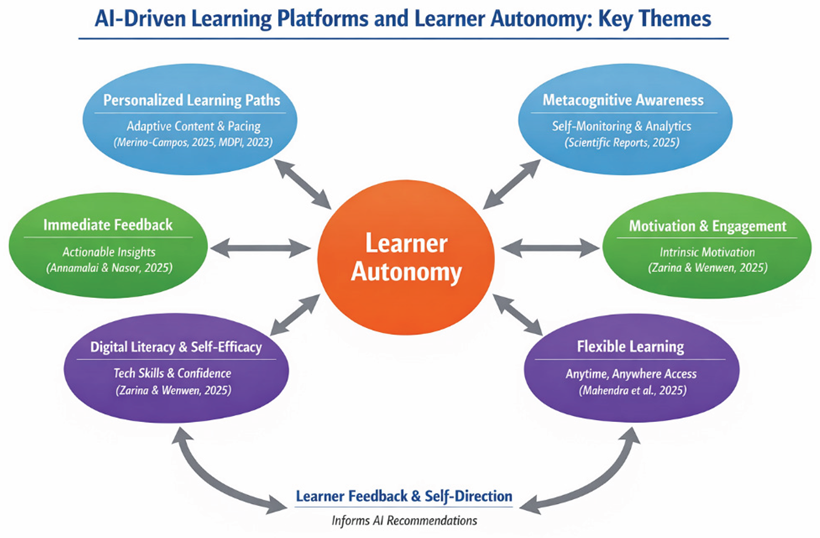
Methods
A narrative review (or traditional literature review) provides a broad, qualitative synthesis and interpretation of existing research on a topic, telling a story about the field’s development, key findings, and gaps, without strict, predefined search protocols like systematic reviews. It allows for author expertise to guide the selection and analysis of studies, making it useful for exploring broad concepts, developing theories, and establishing context for new research, though it’s more subjective than quantitative reviews
Findings and Discussion
The integration of AI-driven learning platforms into educational practices has yielded promising results for learner autonomy. Quantitative and qualitative studies show that students engaging with AI tools demonstrate notable gains in autonomous learning behaviors such as goal setting, self-monitoring, and independent access to learning resources. For example, Gutierrez Rodríguez’s study involving 152 university students reported a significant positive correlation between AI use and levels of autonomous learning, as evidenced by high scores in self-regulation and time management (Rodríguez, 2025).
Similarly, research exploring digital learning ecosystems in Islamic education found that the use of intelligent tutoring systems, chatbots, and adaptive platforms significantly supported students’ abilities to independently access and select learning strategies (Ramdhani & Hakiman, 2025). These results suggest that AI features—like personalized recommendations and real-time feedback—act as catalysts for autonomy by enabling learners to take control over pacing and choice of resources.
Notably, experimental evidence further highlights the role of learner agency in AI contexts. Research on AI-generated personalized feedback in physics education found that when students controlled their use of AI help, high-achieving learners showed increased autonomy and improved performance, whereas mandatory AI support could reduce autonomy among some groups (Dai et al., 2025). This points to the dynamic nature of autonomy development, emphasizing that learner choice plays a crucial role in how AI influences independent learning.
The psychological mechanisms underlying how AI platforms promote learner autonomy have also been empirically investigated. Ouyang (2025) demonstrated that platform characteristics such as adaptive pacing and personalized content are strongly associated with enhanced self-regulated learning and engagement, which in turn correlate with higher learner autonomy (Ouyang, 2025). Such findings reinforce the idea that autonomy is not solely about access to AI tools, but about how these tools interact with motivational and cognitive processes.
Supportive empirical evidence from a recent meta-analysis also confirms that AI interventions significantly improve self-regulated learning and self-directed learning, particularly in the planning and forethought phases of learning (Achuthan, 2025). The effect sizes reported indicate meaningful gains in learners’ capacity to set goals, monitor progress, and reflect on outcomes—behaviors central to autonomy development.
However, results also reveal nuances and complexities. While overall autonomy improves with AI engagement, some dimensions—like behavioral regulation—show variability depending on learner characteristics and context (Achuthan, 2025). This suggests that not all learners benefit equally from AI systems, and that patterns of use and individual learner profiles can influence autonomy outcomes.
Qualitative insights further highlight that AI platforms afford learners expanded opportunities for self-access to materials and exploration of multiple learning paths, fostering confidence and initiative. In Islamic education research, students reported that access to various digital resources empowered them to explore topics independently, beyond instructor-led frameworks (Ramdhani & Hakiman, 2025). This aligns with broader literature advocating for learner autonomy in technology-enhanced environments.
Despite these positive outcomes, scholars also caution that increasing reliance on AI may create potential risks. Critical reviews note that although AI personalization enhances autonomy, it may also undermine agency if technology replaces rather than supports learner decision-making (Roe & Perkins, 2024). Such critical perspectives emphasize the importance of pedagogical frameworks that balance AI support with learner empowerment.
Another dimension emerging from the literature relates to psychological factors. Ouyang (2025) found that the sequential mediation of self-regulation and engagement plays a key role in translating AI platform characteristics into enhanced educational quality and autonomy (Ouyang, 2025). This suggests that autonomy grows most effectively when algorithmic support dovetails with learners’ internal motivation and engagement.
Across studies, learner autonomy through AI platforms consistently involves multidimensional processes, including cognitive regulation (planning, monitoring), motivational elements (confidence, engagement), and strategic behavior (resource selection). This convergence supports the notion that AI has the potential to foster autonomy beyond surface-level personalization.
Yet, researchers also stress the importance of context and instructional design. While some learners thrive with increased AI control, others may require structured guidance to avoid passive interactions or overreliance (Dai et al., 2025). This reinforces the need for deliberate integration of AI with pedagogical scaffolding that encourages active learner participation and reflection.
Ethical and practical concerns also surface in discussions about AI and autonomy. Issues such as the digital divide and equity in access to AI tools can moderate autonomy outcomes, especially in under-resourced educational settings (Yuensook et al., 2025). Thus, scalability and inclusivity remain central considerations in interpreting AI’s role in autonomy.
Finally, Genelza (2024) provided a rapid literature review on deepfake digital face manipulation, emphasizing the broader implications of AI technologies in educational contexts. While the study focused on ethical and technological aspects of AI, it highlights the transformative potential of AI-driven systems, including learning platforms that adapt to student needs. The research underscores the importance of critical awareness and ethical use when interacting with AI, an essential consideration in fostering responsible autonomous learning.
Collectively, these studies suggest that AI-driven learning platforms play a critical role in enhancing learner autonomy. By providing personalized instruction, adaptive feedback, and opportunities for self-paced engagement, these technologies enable students to take ownership of their learning. At the same time, effective implementation requires pedagogical expertise, institutional support, and ethical considerations to ensure that AI complements rather than replaces human guidance. Understanding the interplay between technology, teacher practices, and student engagement is key to maximizing the benefits of AI in promoting autonomous, self-directed learners.
Drawing together these strands, the results emphasize that AI-driven platforms can significantly enhance learner autonomy when implemented with attention to learner control, self-regulation, engagement, and instructional design. However, a one-size-fits-all approach is insufficient; nuanced strategies tailored to learner characteristics and educational contexts are essential.
Overall, the emerging evidence points toward a balanced and intentional integration of AI platforms that harness their adaptive potential while preserving and strengthening human agency. Future research should continue exploring how AI can support diverse learners and pedagogical frameworks that maximize autonomous learning benefits.

Table 1.
Summary of Key Findings on AI-Driven Platforms and Learner Autonomy.
| Study / Focus | Population | Main Result | Autonomy Implication |
| Rodríguez (2025) | Uni students (n=152) | Positive correlation between AI use & autonomy | Self-regulation, time management improved |
| Ramdhani & Hakiman (2025) | Undergrad Islamic education | High autonomy in self-access and strategy use | Encouraged independent learning paths |
| Dai et al. (2025) | High school physics | Controlled AI led to high achiever autonomy | Autonomous use matters |
| Ouyang (2025) | Online adaptive platforms (n=625) | Self-regulation/engagement mediate outcomes | Psychological mechanisms explained |
| Achuthan (2025) Meta-analysis | Multiple contexts | Large effect on SRL & SDL | Supports autonomy via cognitive/motivational gains |
| Yuensook et al. (2025) | Systematic review | Wide AI tools benefit adaptive learning | Emphasizes design and challenges |
Conclusion and Recommendations:
The findings of this study highlight that AI-driven learning platforms significantly contribute to the enhancement of learner autonomy by providing personalized learning experiences, adaptive feedback, and opportunities for self-directed engagement. Students interacting with AI tools demonstrated improvements in self-regulation, goal setting, metacognitive awareness, and independent access to learning resources. These outcomes suggest that AI is not merely a technological aid but a catalyst that empowers learners to take ownership of their educational journeys. However, the development of autonomy is influenced by learner characteristics, context, and the degree of control they have over AI-supported tasks. Overreliance on AI without adequate pedagogical guidance may limit the potential for autonomous learning. Therefore, the integration of AI into educational practice requires careful design that balances algorithmic support with learner agency.
Implications for Practice
- 1)
- Intentional AI Integration – Educators should incorporate AI platforms as tools to enhance, rather than replace, learner decision-making. Adaptive systems should complement existing instructional strategies, allowing learners to exercise control over pace, content, and task selection.
- 2)
- Foster Self-Regulated Learning Skills – Teachers can provide scaffolding that teaches learners how to plan, monitor, and evaluate their progress when using AI platforms. This encourages reflection and reinforces the development of autonomy.
- 3)
- Personalized Learning Pathways – Institutions should leverage AI’s adaptive capabilities to create individualized learning pathways that accommodate diverse learner needs, preferences, and prior knowledge, thus enhancing motivation and engagement.
- 4)
- Balance Guidance and Independence – While AI can offer immediate feedback and recommendations, educators must ensure learners retain opportunities for independent problem-solving and critical thinking to prevent over-dependence on the system.
- 5)
- Promote Digital Literacy and Self-Efficacy – Beyond content mastery, learners should be trained to navigate AI tools confidently. Developing digital literacy and self-efficacy ensures that learners can leverage technology effectively while maintaining autonomy.
- 6)
- Ensure Equity and Accessibility – Institutions should consider equitable access to AI-driven platforms, including technological infrastructure and support, to prevent disparities that could limit autonomous learning for some learners.
- 7)
- Continuous Monitoring and Evaluation – Educators and instructional designers should monitor the impact of AI tools on learner autonomy, adjusting the system’s features and guidance strategies based on observed learner behaviors and outcomes.
- 8)
- Ethical Data Practices – Learners should be informed and involved in decisions regarding the collection and use of their learning data. Ethical AI implementation fosters trust and strengthens learners’ sense of ownership and agency.
- 9)
- Professional Development for Educators – Teachers and administrators require training on how to integrate AI effectively into teaching, interpret analytics, and support learners in autonomous use of technology.
In sum, AI-driven learning platforms hold transformative potential for cultivating autonomous learners. When implemented thoughtfully, these tools not only support cognitive and motivational growth but also empower learners to actively shape their educational experiences. The success of AI in fostering autonomy ultimately depends on the interplay between technology, pedagogy, and learner engagement.
References
- Azevedo, R.; Cromley, J. G. Does training on self-regulated learning facilitate students’ learning with hypermedia? Journal of Educational Psychology 2004, 96(3), 523–535. [Google Scholar] [CrossRef]
- Batalla, N.; Onan, J. D.; Tano, R.; Genelza, G. Virtual delivery of elementary teachers in the new normal: Practices and implementation; 2023. [Google Scholar]
- Dam, L. Learner autonomy 5: The role of teacher and learners; Authentik, 2011. [Google Scholar]
- Federe, R. M.; Gomonid, H.; Jose, J.; Genelza, G. G. Assessing the comprehension of the students in Philippine fable short stories: Basis for an intervention program. Journal of Languages, Linguistics and Literary Studies 2023, 3(1), 37–46. [Google Scholar] [CrossRef]
- Holmes, W.; Bialik, M.; Fadel, C. Artificial intelligence in education: Promises and implications for teaching and learning; Center for Curriculum Redesign: Boston, MA, 2019. [Google Scholar]
- Luckin, R.; Holmes, W.; Griffiths, M.; Forcier, L. B. Intelligence unleashed: An argument for AI in education; Pearson, 2016. [Google Scholar]
- Genelza, G. G. Why are schools slow to change? In Jozac Academic Voice; 2022; pp. 33–35. [Google Scholar]
- Selwyn, N. Should robots replace teachers? AI and the future of education; Polity Press, 2019. [Google Scholar]
- Shute, V. J. Focus on formative feedback. Review of Educational Research 2008, 78(1), 153–189. [Google Scholar] [CrossRef]
- Woolf, B. P. Building intelligent interactive tutors: Student-centered strategies for revolutionizing e-learning; Morgan Kaufmann, 2019. [Google Scholar]
- Zimmerman, B. J. Becoming a self-regulated learner: An overview. Theory Into Practice 2002, 41(2), 64–70. [Google Scholar] [CrossRef]
- Genelza, G. G. Integrating Tiktok As An Academic Aid In The Student’s Educational Journey. Galaxy International Interdisciplinary Research Journal 2024, 12(6), 605–614. [Google Scholar]
- Achuthan, K. Artificial intelligence and learner autonomy: A meta-analysis of self-regulated and self-directed learning . In Frontiers in Education.; 2025. [Google Scholar]
- Dai, X.; Wen, Z.; Jiang, J.; Liu, H.; Zhang, Y. How students use AI feedback matters: Experimental evidence on physics achievement and autonomy.; arXiv, 2025. [Google Scholar]
- Dairo, G. O.; Lazaga, H. K. F.; Yaun, L. D.; Genelza, G. G. Overcoming the reality: challenges, coping, and insights among freshmen english majors. Galaxy International Interdisciplinary Research Journal 2023, 11(12), 339–366. [Google Scholar]
- Ouyang, Z. Self-regulated learning and engagement as serial mediators between AI-driven adaptive learning platform characteristics and educational quality . In Frontiers in Psychology.; 2025. [Google Scholar]
- Ramdhani, D.; Hakiman, H. From digital learning to artificial intelligence: Enhancing autonomy among students of Islamic education . Journal of Educational Management and Instruction. 2025. [Google Scholar] [CrossRef]
- Genelza, G. G. Deepfake digital face manipulation: A rapid literature review. Jozac Academic Voice 2024, 4(1), 7–11. [Google Scholar]
- Rodríguez, W. Á. G. The impact of artificial intelligence on students’ autonomous learning . In Sage Sphere in Artificial Intelligence.; 2025. [Google Scholar]
- Yuensook, T.; Jantakoon, T.; Limpinan, P. AI-driven adaptive learning systems in higher education: A systematic review . Journal of Education and Learning. 2025. [Google Scholar] [CrossRef]
Disclaimer/Publisher’s Note: The statements, opinions and data contained in all publications are solely those of the individual author(s) and contributor(s) and not of MDPI and/or the editor(s). MDPI and/or the editor(s) disclaim responsibility for any injury to people or property resulting from any ideas, methods, instructions or products referred to in the content. |
© 2026 by the author. Licensee MDPI, Basel, Switzerland. This article is an open access article distributed under the terms and conditions of the Creative Commons Attribution (CC BY) license.
Copyright: This open access article is published under a Creative Commons CC BY 4.0 license, which permit the free download, distribution, and reuse, provided that the author and preprint are cited in any reuse.