

Submitted:
16 November 2025
Posted:
17 November 2025
You are already at the latest version
Abstract
A major global public health concern, road traffic accidents continue to be common due to a combination of human behavior, inadequate infrastructure, and environmental factors. This study explores how cutting-edge technologies from a range of industries, including machine learning, unmanned aerial vehicles, and smart sensors can be integrated with the IoT to reduce RTAs. Behavioral science models are assessed for their efficacy in addressing driving-related hazards, while IoT-enabled devices demonstrate potential in real-time monitoring and accident prevention. The study also shows how IoT may be used to address human-related concerns such as substance abuse, drowsiness, and psychological distress, as well as infrastructure-related issues like pavement surface defects and poor horizontal alignment. By combining behavioral insights with IoT-driven innovations, the study presents a comprehensive approach to improving road traffic safety.
Keywords:
road traffic accidents
; internet of things
; behavioral models
; smart infrastructure
; accident prevention technologies
1. Introduction
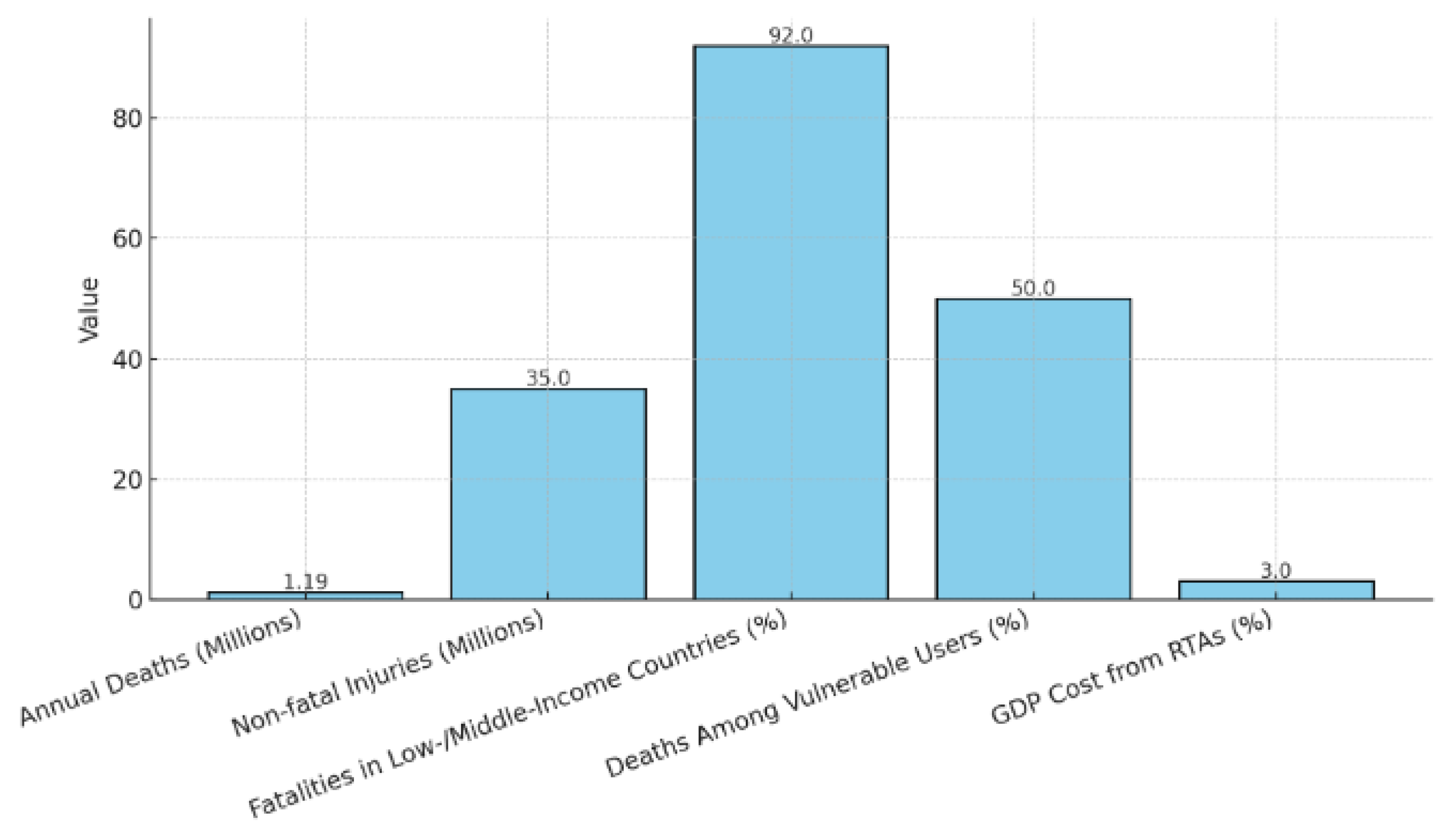
Every year, road traffic accidents cause millions of deaths and injuries, making them a major global public health concern. According to the WHO, traffic accidents claim the lives of about 1.3 million people annually, while millions more suffer serious injuries. Figure 1 summarizes key global statistics on road traffic accidents based on the latest WHO data. Beyond the human toll, RTAs also impose significant financial burdens on communities [20]. Most of these fatalities occur in low- and middle-income countries, where the issue is particularly severe.
RTAs result from multiple factors. Human behaviors such as speeding, driving under the influence of drugs or alcohol, fatigue, and distractions are major contributors. Environmental and systemic factors, including poor road conditions, ineffective traffic management, and adverse weather, also play crucial roles [21].
While public awareness campaigns, better road design, and stricter legislation have been helpful, they have not been sufficient to resolve the problem[22]. However, emerging technologies, particularly those under the IoT offer new opportunities for proactive accident prevention [23].
The IoT consists of interconnected devices that can collect, analyze, and transmit data in real time. Smart sensors can monitor traffic flow and road surface conditions, while UAVs assist in incident detection and management[24,25,26]. Connected vehicles equipped with IoT capabilities can communicate with one another to avoid collisions, and machine learning algorithms can analyze traffic data to predict and prevent accidents [27].
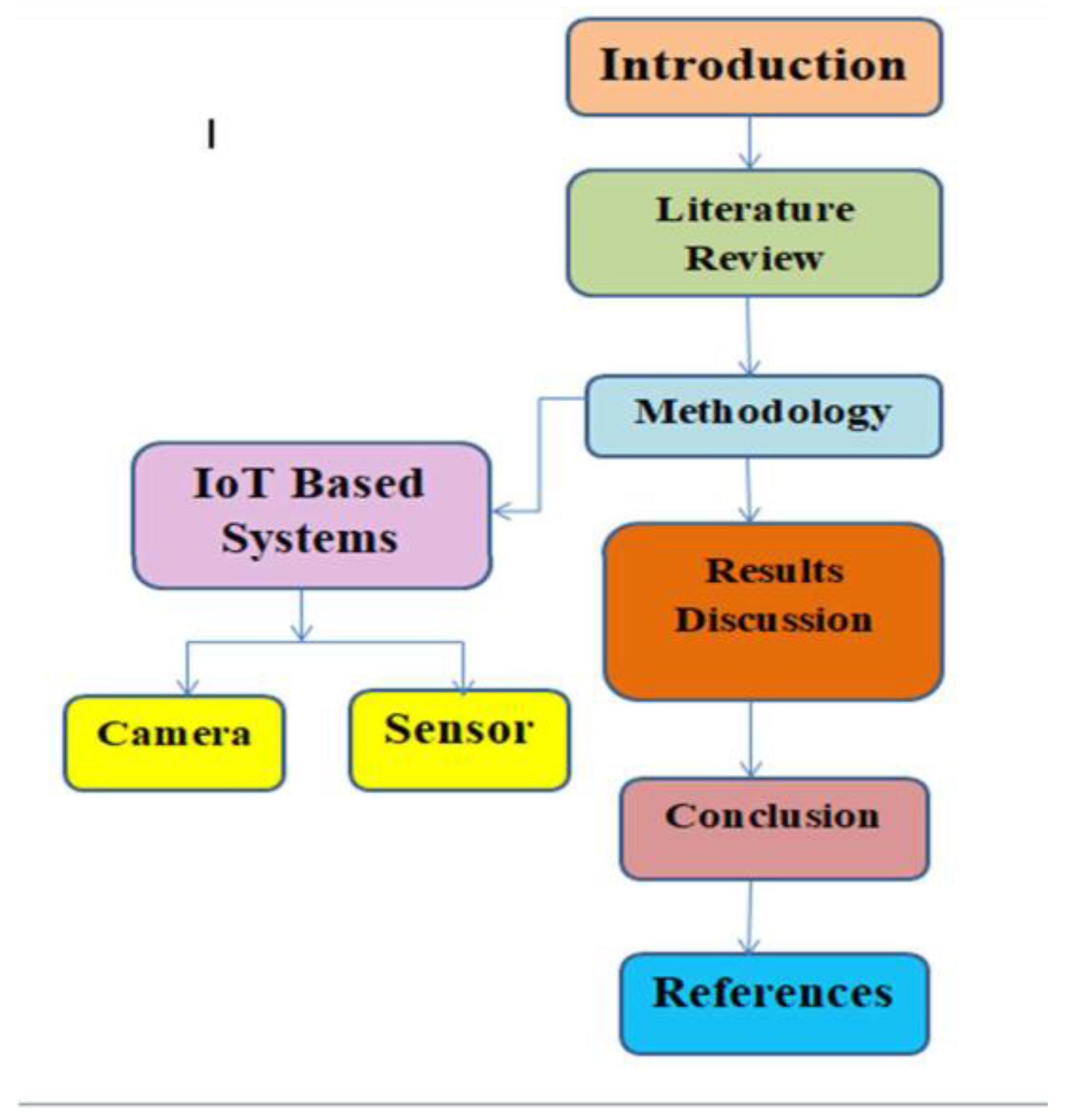
These technologies allow for faster, more efficient responses to potential hazards, significantly enhancing road safety[28]. Despite advances in traditional safety measures such as road design and enforcement[29,30,31], the overall impact remains limited. The integration of IoT, through connected vehicles, intelligent sensors, and real-time analytics, presents a transformative approach to road safety management [32]. Figure 1 shows the workflow of conducting research.
Figure 2.
Research Workflow.
2. Literature Review
As to research, human behaviors that include speeding, drug use, and exhaustion are the primary causes of crashes involving cars, which are a major threat to global health. This reveals how little is understood about how behavioral science theories are really applied in practice, especially in low-income areas. The authors reviewed international data to demonstrate that risky driving behavior can be successfully managed using behavioral models such as the Health Belief Model. The results suggest an urgent need for targeted interventions to reduce avoidable crashes, consistent with previous research findings that 71–85% of RTAs are attributable to human factors [1].
In order to predict the severity of traffic accidents and identify the factors that lead to an increase in injuries, the article "Road Traffic Accidents Injury Data Analytics" uses data from the United Kingdom from 2005 to 2019. According to Ma et al. (2019), the study highlights the importance of victim type and vehicle parameters as variables, confirming the resilience of decision tree-based methods. It also demonstrates how scalable and successful XGBoost is for unbalanced datasets as compared to other studies that rely on statistical models and struggle with skewed data [2].
The paper "Drones for Road Accident Management: A Systematic Review" by Adel Gohari et al. discusses the shortcomings of the manual approaches used in current Road Accident Management (RAM). In particular, their assessment highlights a research need in RAM applications for UAVs in large-scale and real-world contexts. They evaluate 26 papers using the PRISMA technique, highlighting the benefits of UAVs like precision and real-time data collecting while pointing out drawbacks such as data processing and flight constraints. This work independently investigates UAV integration across all RAM components, providing full implementation options, in contrast to previous research that concentrated on traffic monitoring [3].
In order to address the dearth of research on comprehensive features such as victims, drivers, and accidents together, this paper analyzes the startlingly high prevalence of traffic accidents in Dhaka, Bangladesh. The study examines victim demographics, vehicle types, and accident locations using six years of data from Dhaka Metropolitan Police Headquarters. It finds that buses are a major cause of accidents and that young people, particularly pedestrians, are disproportionately affected [4].
The study [5] uses descriptive statistics and dispersion analysis to determine important factors affecting Yelabuga damage while confirming the severity of the accident. Their results show that road infrastructure, especially railway width, is important in accidents and object collisions. Significantly, the report also shows how successful policies targeted at reducing drunk driving and enhancing street lighting are. Because it focuses on Russian data and provides useful insights for creating focused safety interventions, this study stands out.
The impact of road conditions on accident severity on federal highways in Malaysia is analyzed. The model includes nine road elements, such as horizontal lines, to determine their relationship with accident severity. The analysis showed a significant correlation between poor horizontal alignment and an increased likelihood of a serious accident, meaning that the likelihood of a serious accident was reduced by 0.4 times compared to good horizontal alignment. This study specifically investigated the impact of horizontal alignment on accident rates, adding to the existing literature by expanding understanding of this key aspect of road safety [6].
Between 2011 and 2020, the incidence of alcohol and drugs in a traffic accident in Norway provided a comprehensive overview of Norwegian road safety work. The study emphasizes the success of the "Vision Zero" strategy aimed at serious damage, zero death, and road accidents. It describes the various preventive measures introduced by the Norwegian government, including legal boundaries on alcohol and drugs, random road tests, and improved education for law enforcement authorities [7].
As regards a surface failure review on the road surface on road traffic accidents, this article investigates the impact of surface failure on road accidents. The author believes that although previous studies often consider other factors (such as speed and wet sidewalks) as the main accident factor, the independence of the sidewalks is ignored [8].
The study [9] shows that the incidence of RI around the world has increased, but the number of deaths and the number of people injured in the last 30 years have decreased and emphasized the main cause across different ages and socio-economic areas. This study provides a broader perspective on the global burden of RI compared to previous studies, which often focus on specific locations or regions, and makes a novel contribution by examining the relationship between socioeconomic indices and RI trends.
The fall and drowning detection system in this paper, which uses smartphone sensors, solves the main problem of using off-the-shelf smartphone sensors for fall and drowning detection. While existing research has mainly focused on indoor fall detection using wearable sensors, this paper proposes a comprehensive system, FaDD, that addresses the fall and drowning detection problems in a discrete and more accurate manner [10].
In their study Blink Detection for Supported Two-Factor Authentication, Chuah, Chong, and Chong address the need for more secure authentication techniques. The study emphasizes how vulnerable current authentication techniques are to spoofing and being duped by phony facial photos, including passwords and multi-factor authentication (passwords plus facial recognition, for example). This article proposes a two-factor authentication system that combines blinking detection and the password. The device briefly detects using 68 facial features and eyes. The author carried out a functional test to confirm the application's primary functionality, paying particular attention to the eye blinking and user receiving tests to gauge user input. The findings indicate that users think this dual identity verification approach is more practical and safer [11].
The purpose of the article is to resolve drivers' drowsiness by developing a comprehensive and effective detection system, which is an important cause of road accidents. The study recognized the limitations of existing systems that focus on the driver's behavior, including closed eyes, yawning, and movements. This multi-faceted method may have high accuracy in several sets of data that exceed existing methods and provides evidence that it is effective in determining drowsiness under different conditions. The study emphasizes that this method can significantly increase the safety potential of drivers [12].
The article is against the use of machine learning analysis to prevent accidents in the analysis of the accident report. Shayboun focuses on business accidents in the construction industry. The research focuses on testing the use of machine learning methods to analyze accident reports and determine potential methods. Shayboun uses CRISP-DM techniques to bridge the gap between ML technical analysis and the safety environment of construction companies. Research shows that machine learning can be an effective tool for accident prevention, but also highlights the challenges associated with standardization, implementation, and evaluation [13].
This article introduces the problem of depression among drivers, which is a factor that leads to road accidents. This article emphasizes the current research gap in the prevention of accidents, where the focus is mainly on driver fatigue, ignoring the significant impact of depression. The authors used facial expression recognition and transfer learning, specifically the VGG-16 model, to close this gap and offer an instant driver depression monitoring system that exhibits high precision, recall, and F1 score. This study's focus on instantaneous facial expression analysis to track driver depression was more accurate and efficient than previous approaches [14].
This article [15] tested the use of action recognition in the smart city transport system to detect accidents. The author notes a clear lack of research on extensive commentary on the topic, especially on action recognition technology that focuses on independent transport systems. They carry out a systematic review of literature to analyze key methods, taxonomies, and data sets and conclude that deep learning methods, especially sophisticated neural networks, have proven to be effective in detecting accidents. The article compares the results of different researchers, which emphasizes the importance of different data sets that reflect different traffic conditions. Further studies should focus on developing hybrid taxonomies and more research on algorithms to improve the accuracy and reliability of accident detection systems in smart urban environments.
3. Proposed Merhodology
We used high-level machine learning models such as KNN, Naive Bayesian, decision tree, random forest, and packaging. Information on important items, such as traffic conditions, weather, vehicle speed and incidents, are collected using smart cameras, Internet (IoT) sensors and open data sets open[33,34].
To build a robust framework for the application of advanced technologies in traffic systems through the Internet of Things (IoT), it is essential to focus on three interconnected pillars: Infrastructure Development, Behavioral Modeling, and Global Trends.
Behavioral Modeling plays a central role by employing data-driven techniques to understand and predict driver behavior. This is crucial for designing effective and proactive safety interventions[35,36].
Infrastructure Development involves integrating IoT-based smart technologies such as vehicle-to-infrastructure (V2I) communication, adaptive traffic control systems, and real-time hazard detection mechanisms. These innovations enhance traffic safety and efficiency by enabling more responsive and intelligent traffic environments.
Global Trends emphasize the importance of aligning technological advancements with policy updates, international standards, and best practices. This ensures regulatory compliance, scalability, and interoperability across regions and systems. This conceptual framework aligns with the systemic model of crash causation and risk (as shown in Figure 3), which illustrates the complex interactions between travel behavior, road users, vehicles, infrastructure, and the resulting exposure and risks that lead to crashes and injuries.
4. Results
The evaluation of various machine learning algorithms for traffic accident prediction reveals the distinct strengths and weaknesses of each approach. The final results and model performance workflow are visualized in Figure 4 and Figure 5, respectively. Table 1 shows the model performance results.
The Naive Bayes algorithm achieved the highest accuracy at 77.8%, attributed to its assumption of feature independence, which works particularly well with clearly defined patterns in the dataset.
The Bagging method, an ensemble technique, followed with an accuracy of 67.7%, benefiting from reduced variance and increased model stability by averaging the predictions of multiple base learners.
SVM obtained a moderate accuracy of 59.7%. While it can handle high-dimensional data effectively, its sensitivity to noisy data and poor class separation may hinder performance.
The Decision Tree model achieved an accuracy of 55.9%. Although interpretable and fast, the model is prone to overfitting if not pruned appropriately.
The KNN model had the lowest accuracy at 50.35%, primarily due to its reliance on distance metrics, which are susceptible to outliers and noise in the dataset. Table 2 shows the performance metrics summary.
These metrics reinforce that Naive Bayes not only delivers the highest overall accuracy but also demonstrates balanced precision and recall, making it a favorable choice for this classification task. KNN, with its 50.5% accuracy, shows limited predictive power, likely influenced by noisy data and feature scaling issues.
5. Conclusion
This study elaborated how cutting-edge technology from a range of industries, including machine learning, unmanned aerial vehicles, and smart sensors, might be combined with the Internet of Things (IoT) to reduce RTAs. The study also demonstrates how IoT may be used to improve infrastructure safety by addressing issues like pavement surface defects and horizontal alignment, as well as by addressing human problems like substance abuse, sleepiness, and depression.
References
- Chandar, Reddy, Mansoor, and Jamadagni(2020). Graph Neural Networks forecast traffic accidents based on time, weather, and location. Preprint; arXiv:2010.12953.
- Umer, M. , Sadiq S., Ishaq A., Ullah S., Saher N., and Madni H. A. (2020). A comparison of tree-based and ensembled regression techniques for estimating traffic accident severity.arXiv preprint 2010.14921.
- Behboudi, N. , Moosavi, S., and Ramnath, R. (2024). Recent Advances in Traffic Accident Analysis and Prediction: A Comprehensive Review of Machine Learning Methods. arXiv preprint: 2406.13968.
- Waymo (2024). Waymo compiles the 'largest ever' dataset of pedestrian and cyclist injuries. The Verge. Retrieved from https://www.theverge.com/2024/11/11/24290338/waymo-vru- pedestrian-cyclist-injury-database.
- Health.com (2025). This health condition could make you a riskier driver. Health. Retrieved from https://www.health.com/older-adults- depression-riskier-drivers-study/8769911.
- The Scottish Sun. (2025). Health Condition Millions Suffer from 'Linked to Dangerous Driving', Warn Scientists. The Scottish Sun. Retrieved from https://www.thescottishsun.co.uk/health/14094523/health- condition-millions-suffer-linked-dangerous-driving/.
- Frontiers in Public Health. (2022). The Epidemiology of Road Traffic Accidents and Associated Factors. Frontiers in Public Health. Retrieved from https://www.frontiersin.org/journals/public- health/articles/10.3389/fpubh.2022.1007308/full.
- ResearchGate. (2023). A Study on Road Accident Prediction and Contributing Factors Using Explainable Machine Learning Models: Analysis and Performance. ResearchGate. Retrieved from https://www.researchgate.net/publication/370288284_A_study_on_roa d_accident_prediction_and_contributing_factors_using_explainable_m achine_learning_models_analysis_and_performance.
- Frontiers in Built Environment. (2024). Perception of Drivers Toward Road Safety and Factors That Cause Road Traffic Accidents. Frontiers in Built Environment. Retrieved fromhttps://www.frontiersin.org/journals/built- environment/articles/10.3389/fbuil.2024.1367553/full.
- Vital Strategies. (2025). Road Safety. Vital Strategies. Retrievedfrom https://www.vitalstrategies.org/programs/road-safety/.
- Traffic Injury Prevention. (2025). Traffic Injury Prevention. Taylor & Francis Online. Retrieved from https://www.tandfonline.com/journals/gcpi20.
- Population Reference Bureau. (2025). Road Traffic Accidents Increase Dramatically Worldwide. PRB. Retrieved from https://www.prb.org/resources/road-traffic-accidents-increase- dramatically-worldwide/.
- PubMed Central. (2025). Time Series Based Road Traffic Accidents Forecasting via SARIMA and. PMC. Retrieved from https://pmc.ncbi.nlm.nih.gov/articles/PMC10709357/.
- Transportation Safety Research. (2025). Fatalities in Value Chains—An Attempt to Classify Road Traffic Crashes. TSR International. Retrieved from https://tsr.international/TSR/article/view/25001.
- Frontiers in Public Health. (2022). The Epidemiology of Road Traffic Accidents and Associated Factors. Frontiers in Public Health. Retrieved from https://www.frontiersin.org/journals/public- health/articles/10.3389/fpubh.2022.1007308/full.
- A. U. Rehman et al., “A Machine Learning-Based Framework for Accurate and Early Diagnosis of Liver Diseases: A Comprehensive Study on Feature Selection, Data Imbalance, and Algorithmic Performance,” International Journal of Intelligent Systems, vol. 2024, no. 1, Jan. 2024. [CrossRef]
- T. M. Ali et al., “A Sequential Machine Learning-cum-Attention Mechanism for Effective Segmentation of Brain Tumor,” Frontiers in Oncology, vol. 12, Jun. 2022. [CrossRef]
- A. Mir et al., “A novel approach for the effective prediction of cardiovascular disease using applied artificial intelligence techniques,” ESC heart failure, Jul. 2024. [CrossRef]
- Almulhim, M. , Islam, N., & Zaman, N. (2019). A lightweight and secure authentication scheme for IoT based e-health applications. International Journal of Computer Science and Network Security, 19(1), 107-120.
- Zaman, N. , Low, T. J., & Alghamdi, T. (2014, February). Energy efficient routing protocol for wireless sensor network. In 16th international conference on advanced communication technology (pp. 808-814). IEEE.
- Azeem, M. , Ullah, A., Ashraf, H., Jhanjhi, N. Z., Humayun, M., Aljahdali, S., & Tabbakh, T. A. (2021). Fog-oriented secure and lightweight data aggregation in iomt. IEEE Access, 9, 111072-111082.
- Ahmed, Q. W. , Garg, S., Rai, A., Ramachandran, M., Jhanjhi, N. Z., Masud, M., & Baz, M. (2022). Ai-based resource allocation techniques in wireless sensor internet of things networks in energy efficiency with data optimization. Electronics, 11(13), 2071.
- Khan, N. A. , Jhanjhi, N. Z., Brohi, S. N., Almazroi, A. A., & Almazroi, A. A. (2022). A secure communication protocol for unmanned aerial vehicles. CMC-Computers Materials & Continua, 70(1), 601-618.
- Muzafar, S. , & Jhanjhi, N. Z. (2020). Success stories of ICT implementation in Saudi Arabia. In Employing Recent Technologies for Improved Digital Governance (pp. 151-163). IGI Global Scientific Publishing.
- Jabeen, T., Jabeen, I., Ashraf, H., Jhanjhi, N. Z., Yassine, A., & Hossain, M. S. (2023). An intelligent healthcare system using IoT in wireless sensor network. Sensors, 23(11), 5055.
- Setyowati, D. L. , Setyaningsih, Y., Suryawati, C., Lestantyo, D., Denny, H. M., Kurniawan, B.,... & Siddiqui, M. A. (2025). Global Disparities in Road Safety: Trends, Knowledge Gaps, and Strategic Interventions. The Indonesian Journal of Occupational Safety and Health, 14(1), 119-132.
- Mmakwena, M. (2025). Advancement of Technology in Road Safety. OIDA International Journal of Sustainable Development, 18(09), 173-182.
- Shah, I. A. , Jhanjhi, N. Z., & Laraib, A. (2023). Cybersecurity and blockchain usage in contemporary business. In Handbook of Research on Cybersecurity Issues and Challenges for Business and FinTech Applications (pp. 49-64). IGI Global.
- Hanif, M. , Ashraf, H., Jalil, Z., Jhanjhi, N. Z., Humayun, M., Saeed, S., & Almuhaideb, A. M. (2022). AI-based wormhole attack detection techniques in wireless sensor networks. Electronics, 11(15), 2324.
- Shah, I. A. , Jhanjhi, N. Z., Amsaad, F., & Razaque, A. (2022). The role of cutting-edge technologies in industry 4.0. In Cyber Security Applications for Industry 4.0 (pp. 97-109). Chapman and Hall/CRC.
- Humayun, M., Almufareh, M. F., & Jhanjhi, N. Z. (2022). Autonomous traffic system for emergency vehicles. Electronics, 11(4), 510.
- Mohammed, O. (2025). Understanding the Impact of Driver Behavior on Traffic Safety: A Comprehensive Review of Behavioral, Technological, and Environmental Factors. Al-Rafidain Journal of Engineering Sciences, 626-642.
- Muzammal, S. M. , Murugesan, R. K., Jhanjhi, N. Z., & Jung, L. T. (2020, October). SMTrust: Proposing trust-based secure routing protocol for RPL attacks for IoT applications. In 2020 International Conference on Computational Intelligence (ICCI) (pp. 305-310). IEEE.
- Visconti, P., Rausa, G., Del-Valle-Soto, C., Velázquez, R., Cafagna, D., & De Fazio, R. (2025). Innovative driver monitoring systems and on-board-vehicle devices in a smart-road scenario based on the internet of vehicle paradigm: A literature and commercial solutions overview. Sensors, 25(2), 562.
- Gheorghe, C., & Soica, A. (2025). Revolutionizing Urban Mobility: A Systematic Review of AI, IoT, and Predictive Analytics in Adaptive Traffic Control Systems for Road Networks. Electronics (2079-9292), 14(4).
- Ahmad Jan, M., Adil, M., Brik, B., Harous, S., & Abbas, S. (2025). Making Sense of Big Data in Intelligent Transportation Systems: Current Trends, Challenges and Future Directions. ACM Computing Surveys, 57(8), 1-43.
Figure 3.
Systemic model linking needs, behavior, infrastructure, exposure, and crash outcomes.
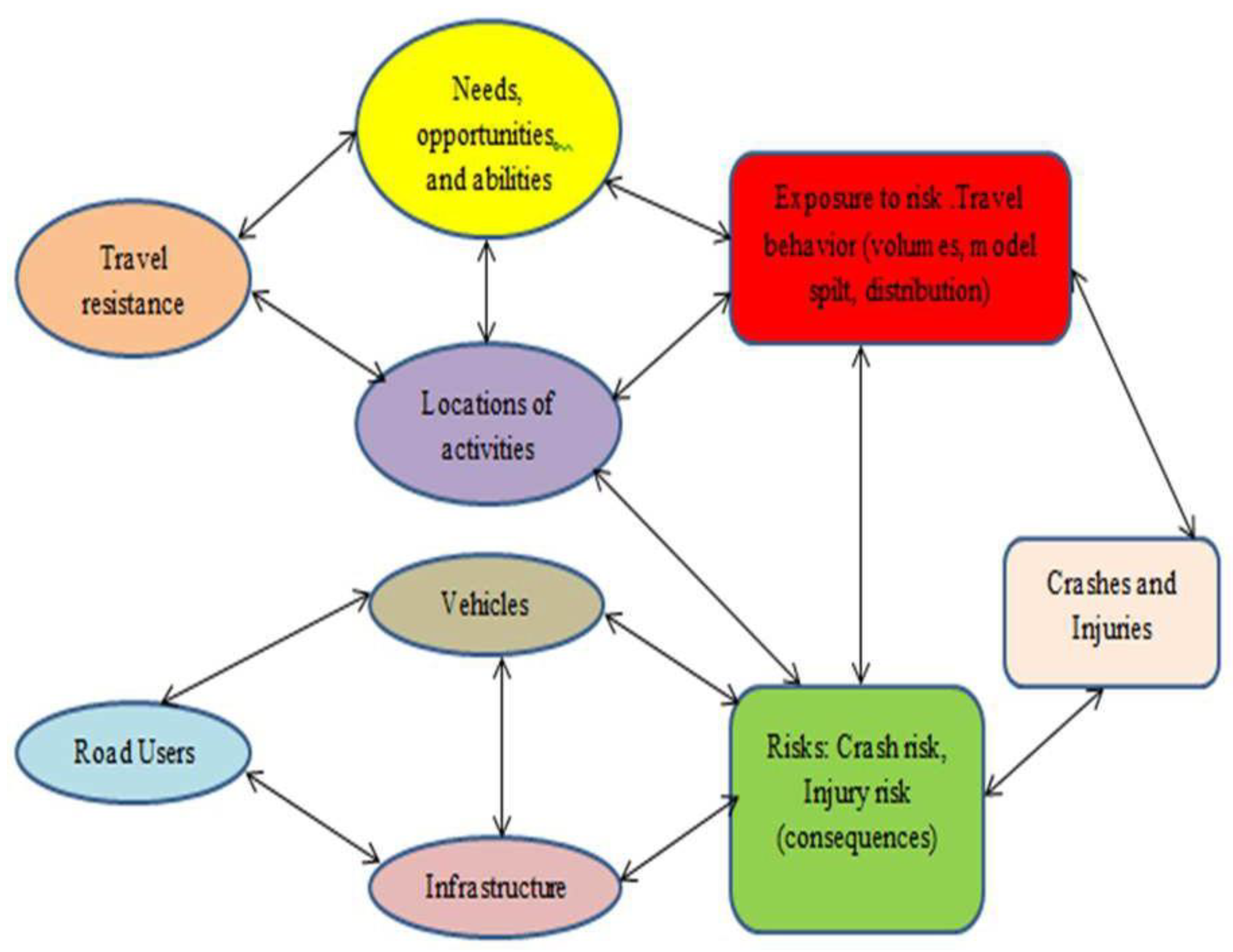
Figure 4.
Model Accuracy Comparison.
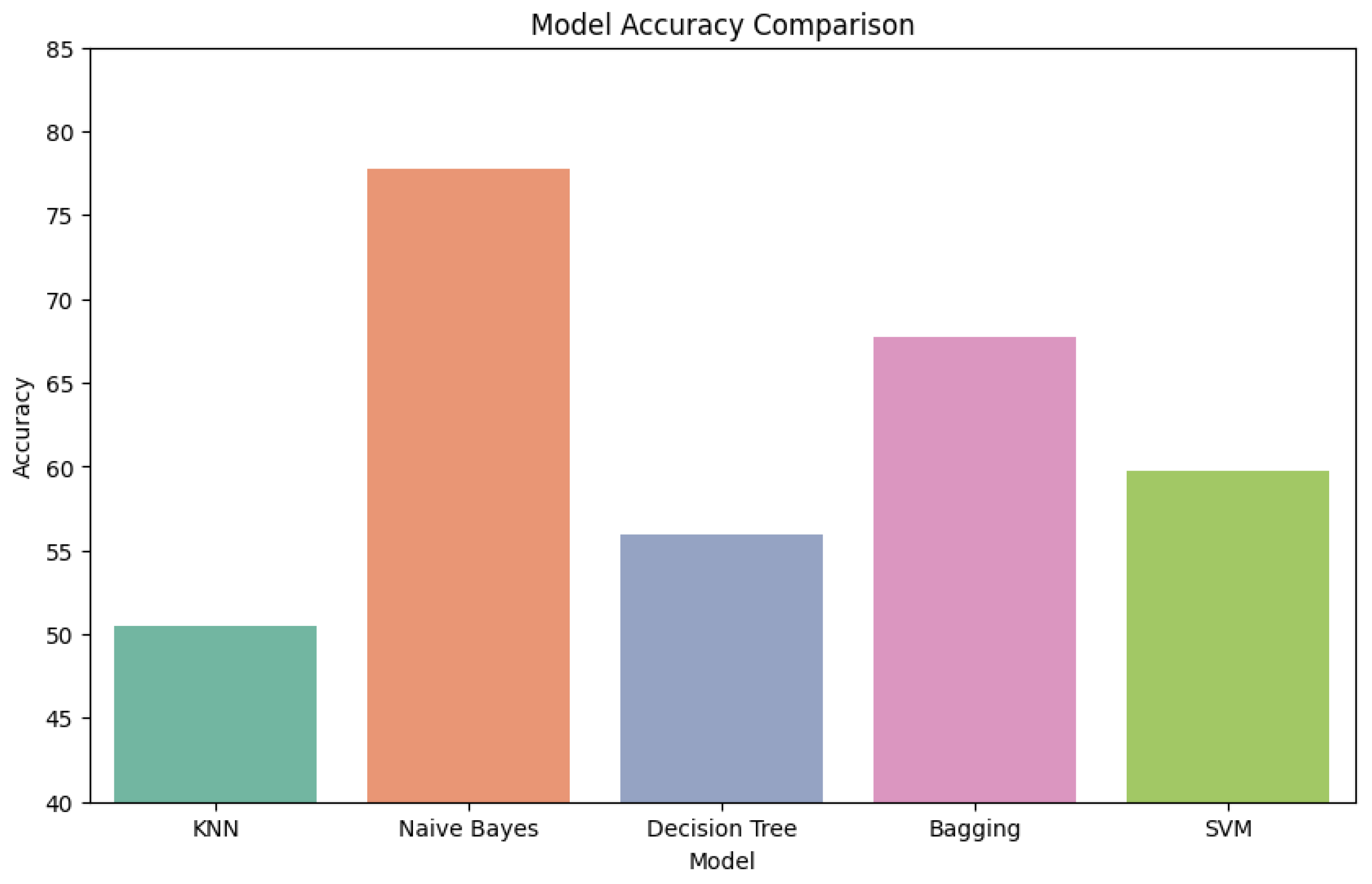
Figure 5.
Models in Rapid Miner.
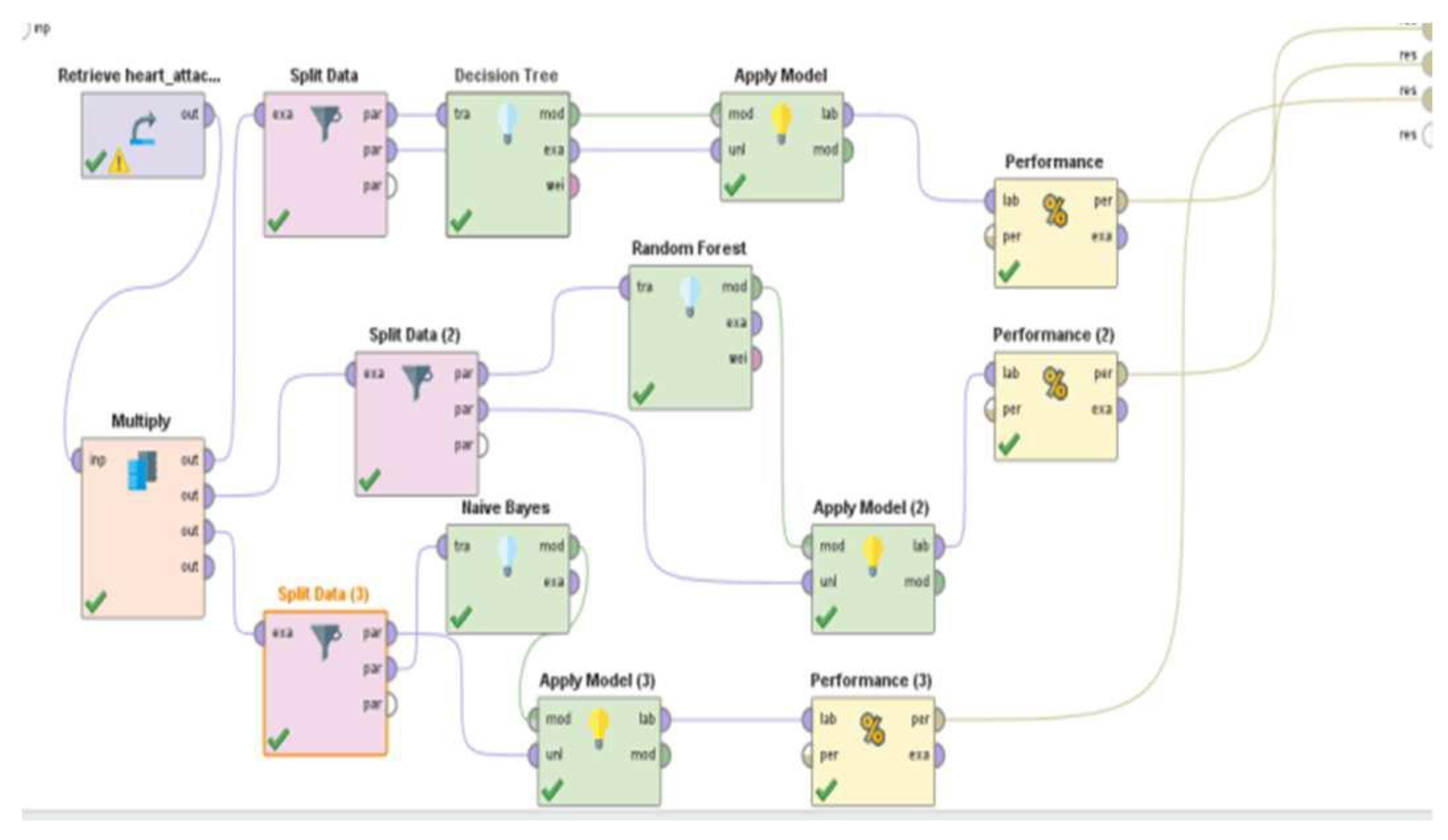

Table 1.
Model Performance Overview.
| Algorithm | Accuracy (%) |
| KNN | 50.35 |
| Naive Bayes | 77.80 |
| Decision Tree | 55.90 |
| Bagging | 67.70 |
| SVM | 59.70 |
Table 2.
Performance Metrics Summary.
| Algorithm | Accuracy (%) | TP | FP | FN | TN |
| KNN | 50.5 | 255 | 247 | 247 | 251 |
| Naive Bayes | 77.8 | 389 | 111 | 111 | 389 |
| Decision Tree | 55.9 | 279 | 220 | 221 | 280 |
| Bagging | 67.7 | 338 | 161 | 162 | 338 |
| SVM | 59.7 | 298 | 201 | 202 | 298 |
Disclaimer/Publisher’s Note: The statements, opinions and data contained in all publications are solely those of the individual author(s) and contributor(s) and not of MDPI and/or the editor(s). MDPI and/or the editor(s) disclaim responsibility for any injury to people or property resulting from any ideas, methods, instructions or products referred to in the content. |
© 2025 by the authors. Licensee MDPI, Basel, Switzerland. This article is an open access article distributed under the terms and conditions of the Creative Commons Attribution (CC BY) license (http://creativecommons.org/licenses/by/4.0/).
Copyright: This open access article is published under a Creative Commons CC BY 4.0 license, which permit the free download, distribution, and reuse, provided that the author and preprint are cited in any reuse.


