

Submitted:
14 October 2025
Posted:
15 October 2025
You are already at the latest version
Abstract
Background: Data on the interplay between muscle, bone, and adipose tissue metabolism in normal-weight children with Prader–Willi syndrome (PWS) undergoing growth hormone (GH) therapy and dietary interventions are limited. This study aimed to assess the myokine profile and explore the associations between myokines, bone markers, adipokines, and body composition in these patients. Methods: The study included 26 children with PWS and 26 age-matched healthy controls. Serum levels of irisin, myostatin (MSTN), fibroblast growth factor-2, insulin-like growth factor-I (IGF-I), IGF-binding protein-2, bone alkaline phosphatase (BALP), osteocalcin (OC), carboxylated OC (Gla-OC), periostin, soluble receptor activator of nuclear factor kappa-B ligand, tartrate-resistant acid phosphatase 5b, leptin/soluble leptin receptor, adiponectin, and proinsulin were measured using immunoenzymatic assays. Results: Children with PWS had significantly lower lean mass (p = 0.047) and a higher fat mass/lean mass ratio (p < 0.001) than controls. Irisin levels were lower in the PWS group (p = 0.031), while MSTN levels were similar between the groups. In patients, irisin positively correlated with BALP (p = 0.025) and negatively correlated with Gla-OC (p = 0.041) and periostin (p = 0.005). MSTN was positively associated with proinsulin (p = 0.001) and negatively associated with lean mass (p = 0.015). OC concentration was lower in the PWS group and correlated positively with lean mass (p = 0.052). Conclusions: Children with PWS exhibit altered myokine, osteokine, and adipokine profiles, as well as differences in body composition. Reduced irisin and osteocalcin levels, along with the negative association between MSTN and lean mass, may impair muscle development and bone metabolism. These imbalances could also contribute to future metabolic disorders in patients with PWS.
Keywords:
Prader-Willi syndrome
; irisin
; myostatin
; osteocalcin
; insulin-like growth factor-I
; IGF-binding protein-2
; body composition
1. Introduction
Prader-Willi syndrome (PWS) is a complex genetic disorder characterized by distinct phenotypic and metabolic features, including endocrine disorders, growth hormone (GH) deficiency, short stature, hyperphagia, morbid obesity, bone impairment, hypotonia, and muscle weakness [1]. Patients with PWS showed reduced total bone mineral density (BMD), bone mineral content (BMC), osteoporosis, and other orthopedic complications [2]. Changes in body composition with increased fat mass, decreased lean mass, and impaired muscle function have also been observed in these patients [3,4].
It is known that musculoskeletal system is mutually coordinated by osteokines and myokines, which are factors secreted by bone cells and skeletal muscle, respectively [5]. Myokines act not only on the skeletal muscle itself and bone metabolism but also mediate the relationships between muscles and other organs and tissues, such as the liver, heart, and adipose tissue, contributing to the pathophysiology of obesity [6]. Many myokines, including irisin, myostatin (MSTN), fibroblast growth factor-2 (FGF-2), insulin growth factor-I (IGF-I), and IGF-binding protein-2 (IGFBP2), play important roles in the interactions between muscle, bone and adipose tissue [7].
Irisin is a multifunctional fragment of fibronectin type III domain-containing protein 5 (FNDC5) that promotes the proliferation and differentiation of osteoblasts and inhibits osteoclast differentiation by reducing receptor activator for nuclear factor kappa-B (RANK) expression [8]. In addition, irisin may play a role as an adipocytokine that induces browning of white adipose tissue, but as a myokine, it stimulates myogenic differentiation and inhibits the gene expression of MSTN via the extracellular signal-regulated kinase (ERK) pathway [9,10,11]. MSTN, growth differentiation factor 8 (GDF-8), is a negative regulator of muscle mass that inhibits skeletal muscle proliferation by binding to receptors on the surface of muscle cells [12]. In addition, MSTN leads to a reduction in bone mass due to increased osteoclast formation and intensification of the bone resorption process [13]. Due to the positive association between MSTN and obesity, insulin resistance indices, and metabolic syndrome, this myokine may also be an important factor in the regulation of energy metabolism [14,15].
IGF-I and FGF-2, growth factors produced by skeletal muscle, are positive regulators of bone formation. FGF-2 induces proliferation and differentiation of osteoblasts and enhances the deposition of greater amounts of mineralized matrix [16]. Muscle-derived IGF-I regulates muscle growth and stimulates bone formation, promoting osteoblast proliferation and improving mature osteoblast function [17]. IGFBP2 may have an adverse effect on bone metabolism because of the inverse relationships observed between this protein and bone mineral density and appendicular skeletal muscle mass in adults [18].
Previous studies have indicated not only the regulation of bone metabolism by muscle- derived factors, but also the regulation of muscle metabolism by different factors derived from bone, such as osteocalcin (OC) and IGF-I [17,18]. OC secreted by bones affects muscle function and energy metabolism in an endocrine fashion during sedentary activities and exercise [19]. Bone-derived IGF-I regulates the development and regeneration of bone and extra-skeletal organs, including skeletal muscle growth and differentiation [20].
Adipose tissue is an active endocrine organ that secretes various adipokines, such as leptin and adiponectin, which regulate energy metabolism, insulin sensitivity, and inflammation. These adipokines may also influence both bone and muscle metabolism through their endocrine and paracrine actions [6].
Some authors have analyzed myokine levels in patients with Prader-Willi syndrome due to muscle weakness, motor problems, and changes in body composition related to the loss of muscle tissue and excess fat tissue [21,22]. However, the obtained results were ambiguous. Circulating irisin was unchanged or lower in individuals with PWS than in controls, but these levels can be influenced by genetic variations, adiposity, and/or vitamin D plasma levels in these patients [22,23,24]. The concentrations of MSTN were studied in obese adults with PWS and similar levels of this myokine were found as compared with healthy individuals [22]. There are limited data on the interplay between muscle, bone, and adipose tissue metabolism in normal-weight children with PWS treated with GH and during low-energy dietary intervention. In our previous study, we observed differences between children with PWS and healthy individuals in the serum concentrations of peptides that regulate appetite [25]. We also showed lower values of total body less head-BMD (TBLH-BMD) and TBLH-BMD Z-scores in these patients together with changes in the profile of biochemical bone turnover markers [26]. Because myokines exert a significant influence on muscle, bone and adipose tissue metabolism, the present study aimed to investigate: a) the concentrations of selected myokines in patients with PWS during GH treatment and dietary intervention in comparison with healthy normal-weight children following an unrestricted age-appropriate diet; b) the relationships between the studied myokines, bone turnover markers and adipokines in patients with PWS; and c) the relationships between the studied biochemical parameters and body composition in these patients.
2. Results
Our results showed similar values of weight, height, and body mass index (BMI) Z-score in both studied groups of children at the same age, but BMI was slightly lower by 7% (p = 0.033) in children with PWS than in controls (Table 1).
By analyzing myokines concentrations, we found significantly lower values of irisin by about 20% (p = 0.031) in patients with PWS than in controls, but similar values of MSTN in both the studied groups (Table 1). Mean z-scores for children with PWS based on the healthy group were -0.58 for irisin and -0.24 for MSTN (Figure 1A).
Higher levels of IGF-I by approximately 40% (p = 0.035) were found in patients with PWS than in healthy children. The median value of FGF-2 was also higher in patients with PWS as compared with healthy children, but this difference was not statistically significant (p = 0.459). The IGFBP-2 concentrations were lower in children with PWS by approximately 30% (p < 0.001) compared with the controls. Mean z-scores for children with PWS based on the healthy group were 0.70 for IGF-1, 1.26 for FGF-2, and -1.32 for IGFBP-2 (Figure 1A).
Among the studied bone formation markers, we observed significantly lower concentrations of OC (p < 0.001), but significantly higher concentrations of periostin (p < 0.001) and a tendency to higher values of carboxylated-OC (Gla-OC) (p = 0.068) in children with PWS than in healthy subjects. Mean z-scores for PWS children based on the healthy group were -0.84 for OC, 1.85 for periostin, and 0.77 for Gla-OC (Figure 1B). In both study groups, similar levels of bone formation marker—bone alkaline phosphatase (BALP)—and bone resorption markers—soluble receptor activator of nuclear factor kappa-B ligand (sRANKL) and tartrate-resistant acid phosphatase 5b (TRAcP 5b)—were found. Mean z-scores for PWS children based on the healthy group were 0.06 for BALP, -0.01 for sRANKL, and -0.47 for TRAcP 5b.
By analyzing the adipokines used, we observed significantly higher values of leptin/soluble leptin receptor (sOB-R) (FLI) (p = 0.008) and high molecular weight- adiponectin (HMW-adiponectin) concentrations (p = 0.009) between patients and the control group, but a lack of differences in the total adiponectin concentrations. Mean z-scores for PWS children based on the healthy group were 0.56 for FLI, 0.49 for HMW-adiponectin and -0.17 for total adiponectin. (Figure 1C). Proinsulin levels (p = 0.025) were higher in patients with PWS than in healthy subjects and mean z-score for PWS children based on the healthy group was 1.15.
Daily energy intake was significantly lower in children with PWS than in healthy children and mean z-score for the PWS children based on the healthy group was -1.30 (Figure 2).
Total protein and animal protein intakes were similar in both studied groups (mean z-scores for the PWS children based on the healthy group were -0.28 and -0.10, respectively), but plant protein intake was significantly lower in children with PWS than in the control group (mean z-score for the PWS children based on the healthy group was -0.65). Daily intake of fat and carbohydrates was significantly lower in children with PWS than in the control group (mean z-scores for the PWS children based on the healthy group were -1.20 and -1.05, respectively).
Table 2 shows the associations between the studied myokines and anthropometric parameters as well as bone markers in children with PWS. In the partial correlation analysis, we assessed the associations between anthropometric and biochemical parameters in these patients after adjusting for age.
In patients with PWS, positive correlations were observed between irisin concentration and BALP activity (ppartial = 0.025), and negative correlations between irisin and Gla-OC (ppartial = 0.041) as well as periostin concentrations (ppartial = 0.005). FGF-2 concentrations were positively correlated with Gla-OC values (ppartial = 0.049). Positive correlations were also found between IGF-I and OC concentrations (ppartial = 0.020), as well as between IGF-I and Gla-OC concentrations (ppartial = 0.030). IGFBP-2 concentrations were negatively correlated with the height of patients with PWS (ppartial = 0.002).
In healthy children, positive correlations were observed in the partial analysis between irisin and OC concentrations (rSpartial = 0.448, ppartial = 0.013), as well as between IGF-I concentration and BALP activity (rpartial = 0.526, ppartial = 0.007) (data not shown).
The associations between the studied myokines and adipokines, as well as proinsulin levels in patients with PWS, are shown in Table 3.
In patients with PWS, we observed negative correlations between concentrations of irisin and total adiponectin (ppartial = 0.005), and between irisin and HMW-adiponectin concentrations (ppartial = 0.014). Positive associations were found between MSTN and HMW-adiponectin (ppartial = 0.038), and between MSTN and proinsulin concentrations (ppartial = 0.001). IGFBP-2 was positively correlated with HMW-adiponectin levels (ppartial = 0.043). In healthy children, positive correlations in the partial analysis were observed between irisin and proinsulin concentrations (rpartial = 0.421, ppartial = 0.036), and negative correlations between IGFBP-2 and BMI values (rpartial = -0.426, ppartial = 0.034) (data not shown).
We analyzed body composition in 18 patients with PWS (girls/boys: 10/8) and in 18 healthy children (girls/boys: 11/7) with similar values of BMI (15.2 ± 1.6 vs 15.6 ± 1.3 kg/m2, respectively; p = 0.189) and BMI Z-score (-0.57 ± 0.60 vs -0.40 ± 0.36, respectively; p = 0.229). In children with PWS, lean mass was significantly lower by 16% (p = 0.047) than in the controls (Table 4).
In addition, we found approximately 10% higher mean fat mass in patients with PWS than in controls, but this difference was not statistically significant (p = 0.092). However, the fat mass/lean mass ratio (p < 0.001) was significantly higher in patients than in healthy children. Lower values of the TBLH-BMD Z-score (p = 0.040) were found in the patient group than in the controls.
We assessed the relationships between myokines and body composition in patients with PWS (Table 5).
We found negative correlations between MSTN and lean mass (ppartial = 0.015), but positive correlations between IGF-I and TBLH-BMD Z-score (ppartial = 0.010) in children with PWS. In healthy children, negative correlations in partial analysis were observed between FGF-2 as well as IGFBP-2 concentrations and lean mass (r = -0.898, ppartial < 0.001; r = -1.000, ppartial < 0.001, respectively). Negative correlations between IGFBP-2 and BMC values was also found in the controls (r = -0.631, ppartial = 0.007).
In addition, we analyzed relationships between bone metabolism markers, adipokines, and body composition in the patient group. Positive correlations were found between HMW-adiponectin and lean mass (r = 0.586, ppartial = 0.013), and between OC and lean mass (r = 0.478, ppartial = 0.052) (at the borderline). We observed positive correlations between OC (r = 0.651, ppartial = 0.005), Gla-OC (r = 0.576, ppartial = 0.016), and periostin (r = 0.786, ppartial < 0.001) concentrations and TBLH-BMC values in children with PWS. Positive associations were found between OC and the TBLH-BMD Z-score (r = 0.860, ppartial < 0.001), and between FLI and the fat mass/lean mass ratio (r = 0.615, ppartial = 0.009) in these subjects.
In healthy individuals, we observed positive correlation between OC and lean mass (r = 0.651, ppartial = 0.005), and negative correlation between TRAcP 5b values and TBLH-BMC (r = -0.632, ppartial = 0.007).
3. Discussion
In non-obese children with PWS undergoing growth hormone therapy and dietary intervention, we observed differences in myokine profile and changes in body composition compared with healthy children. The pro-myogenic factor irisin stimulates genes related to muscle growth in humans and mediates beneficial effects on glucose and lipid metabolism, ensuring the maintenance of musculoskeletal homeostasis [23,27]. We obtained similar results to those of other authors who have shown abnormal body composition, typically lower lean mass and impaired muscle function in children and adults with PWS [24,28,29]. We found lower lean mass as well as lower serum concentrations of irisin in the studied children with PWS than in healthy individuals. Literature data concerning irisin concentrations and their relations with body composition in these patients are still unclear. Some authors observed a positive or negative correlations between irisin and fat-free mass in patients with PWS [23,24], but similar to Mai et al. [28], we did not find such associations. Patients with PWS had similar values of irisin compared with healthy individuals according to Mai et al. [28] and Hirsch et al. [30]. Faienza et al. [24] observed lower concentrations of this myokine, suggesting that this may be related to the genetic background and the lack of vitamin D supplementation in these patients. The children with PWS in our previous and presented studies received vitamin D supplementation and the serum level of 25-hydroxyvitamin D was significantly higher than in healthy children (34.8 ± 9.8 vs 26.5 ± 8.0 ng/ml) [26]. It cannot be ruled out that genetic factors are responsible for the lower blood concentrations of irisin in these patients.
Myostatin is a myokine that inhibits the growth of skeletal muscles by binding to the activin type IIB myostatin receptor, thereby inhibiting the pathways, that mediate differentiation in myoblasts and hypertrophy in myotubes [12,31]. Similar to previous studies concerning MSTN in patients with PWS [22,32], we did not find a difference in the levels of this myokine between children with PWS and healthy individuals. However, we observed a negative relationship between MSTN and lean mass in these patients. Due to the central role of MSTN in controlling muscle growth, this myokine has been associated with the loss of muscle mass in sarcopenia, muscular dystrophy, and cachexia and is currently being investigated as a possible therapeutic target in these pathological conditions [33,34]. It seems that the lower levels of irisin and negative association of MSTN with lean mass affect muscle growth processes and consequently be one of the reasons for the lower lean mass observed in the studied children with PWS.
It is known that myokines and osteokines form a network of endocrine-like signals that mediate communication between muscles and bones [35]. Among the osteokines that play an important role in lean muscle metabolism is the bone formation marker – osteocalcin (vitamin K-dependent protein, VKDP) [36]. Osteocalcin affects muscle function and the energy metabolism required for exercise adaptation. This bone marker acts directly on muscle myofibers to increase IL-6 expression, and IL-6 then stimulates a multistep pathway involving gene expression in bone cells, releasing bioactive osteocalcin [37]. In fact, we observed a positive correlation between OC and lean mass in children with PWS, and a much stronger correlation in healthy children. However, we found lower concentrations of total osteocalcin together with abnormal profiles of the osteocalcin forms – Gla- and Glu-OC in children with PWS than in healthy subjects [26]. In the present study, we also observed negative associations between VKDPs and irisin in children with PWS.
Irisin functions as a myokine but might be considered as one of the bone formation markers during childhood [5]. Authors found positive correlations between irisin and osteocalcin, indicating that this myokine forms the bridge between muscle and bone in healthy children. In our study, we also found a relation between irisin and osteocalcin in healthy individuals, but not in children with PWS. Moreover, Colaianni et al. [5] found that irisin was a greater determinant of bone mineral status than BALP. In our patients with PWS, a positive association was observed between irisin and the bone formation marker – BALP. Irisin regulates bone metabolism by increasing the expression of activating transcription factor 4 (ATF4), runt-related transcription factor 2 (RUNX2), and alkaline phosphatase (ALP) indicating that this myokine may promote osteoblast proliferation and differentiation through the p38/ERK signaling pathways [17,38]. According to Zerlotin et al. [39], changes in irisin levels may participate in processes related to secondary osteoporosis in humans. We suggest that lower concentrations of irisin and osteocalcin may predispose children with PWS to disturbances in the musculoskeletal system.
FGF-1 and FGF-2 are key factors for maintaining muscle mass and bone density [40]. During GH therapy, we observed higher concentrations of IGF-I and lower IGFBP-2 concentrations, but none of these parameters correlated with lean mass in patients with PWS. We found positive relations between IGF-I and bone formation markers (OC, Gla-OC), and TBLH-BMD Z-scores. In a previous study, we suggested that more intensive carboxylation processes of VKDPs may occur in children with PWS causing higher concentrations of Gla-OC and periostin in these patients [26]. According to Fang et al. [41], IGF-I deficiency or IGF-I excess may influence bone metabolism and affect bone mass as well as skeletal development. Therefore, the relations between the GH/IGF-I axis, FGF-2, and VKDPs observed in children with PWS may be related to bone metabolism disorders in these patients.
Adipose tissue contributes to the endocrine control of bone-skeletal muscle crosstalk by releasing adipokines, which may affect both secretory organs [6]. Despite normal weight and BMI observed in our children with PWS, we found a higher fat/lean mass ratio and a tendency toward higher fat mass in these patients as compared with healthy individuals. In addition, we observed a positive association between FLI and fat mass/lean mass ratio in our non-obese children with PWS. An increased fat mass/lean mass ratio may occur even when normal body weight was achieved in patients with PWS [42]. In our study, we found unchanged total adiponectin concentrations, but higher concentrations of HMW adiponectin in children with PWS. Higher adiponectin concentrations were reported in children [43,44] and adults with PWS [30,45,46] compared with controls. We obtained positive associations between MSTN and HMW-adiponectin as well as proinsulin in children with PWS. The concentration of this myokine increases in obesity and metabolic disorders, such as insulin resistance, diabetes, and is implicated in visceral fat accumulation [47,48]. Therefore, it seems that MSTN may play a role as a biomarker for a combination of sarcopenia, obesity and obesity-related disorders [49]. In addition, we also observed negative associations between irisin and total adiponectin, and HMW-adiponectin. The reverse relationship between adiponectin and irisin was found in obese children by Karampatsou et al. [50] and Nigro et al. [51]. Irisin is expressed primarily in skeletal muscle and adipose tissue, where it plays a role in insulin sensitivity, increases glucose metabolism, and in browning white adipocytes contributes to energy expenditure and metabolic regulation [52]. The reduction in irisin concentrations with increased adiponectin in children with PWS may suggest a feedback mechanism to decrease energy expenditure in these patients during lifestyle interventions.
Some limitations of the present study should be acknowledged. First, the associations between myokines, bone markers, and adipokines in children with PWS were assessed in a small group of patients due to the rarity of this syndrome in the population. However, all children with PWS during GH therapy and lifestyle intervention were non-obese and similar to the control group in terms of age, sex and BMI Z-score. Second, body composition analyses using the densitometric method were performed on smaller subgroups of the study population compared to biochemical analyses. However, both subgroups were representative of the overall groups in terms of age and BMI-related measurements. Third, the cross-sectional nature of the study does not allow for causal inferences or assessment of longitudinal changes in biochemical markers or body composition in response to growth hormone therapy and dietary intervention. Long-term follow-up studies are needed to better understand the progression of musculoskeletal and metabolic changes in PWS over time. Finally, we did not assess the influence of nutritional factors, particularly protein and micronutrient intake, on lean mass and bone metabolism in patients with PWS. Further research should consider these issues in both children and adults with Prader-Willi syndrome during dietary interventions.
4. Materials and Methods
4.1. Patients
The study involved 52 children aged 2 – 14 years, among them 26 patients with PWS and 26 healthy children, recruited between 2023 and 2025 during dietary counseling at the Institute of Mother and Child in Warsaw. As we described in a previous study, the included patients had a genetically confirmed diagnosis of PWS and were during GH treatment for at least one year [25]. All patients were on a low-energy diet with a balanced distribution of carbohydrates, proteins, and lipids, according to the dietary guidelines described previously [25]. Nutritional analysis software Dieta 5®(extended version Dieta 5.0, National Food and Nutrition Institute, Warsaw, Poland) was used to calculate average daily food rations and their nutritional value [53]. The exclusion criteria from the study for both patients and controls were: (a) a body mass index (BMI) Z-score > 1; (b) the use of vitamin and mineral supplements, except vitamin D; (c) the presence of a chronic secondary illness such as diabetes mellitus, liver or kidney diseases, and other chronic diseases with a possible impact on bone metabolism; and (d) not signing the informed consent form.
All patients underwent a general clinical examination and anthropometric measurements. The BMI value of each child was converted to a BMI Z-score according to the Polish reference tables [54]. Of the studied patients, 36 children aged 2 – 14 years underwent densitometric examinations (18 patients with PWS and 18 healthy children). Body composition was measured using dual-energy X-ray absorptiometry (DXA) using Lunar Prodigy with pediatric software version 9.30.044 (General Electric Healthcare, Madison, WI, USA). Written informed consent was obtained from the parents of all the examined children. The study was performed in accordance with the Helsinki Declaration for Human Research, and the study protocol was approved (protocol code: 17/2022; date of approval: May 5, 2022) by the Ethics Committee of the Institute of Mother and Child in Warsaw, Poland.
4.2. Biochemical Methods
Venous blood samples were drawn under fasting conditions between 8:00 and 10:00 AM, centrifuged at 1000 × g for 10 min at 4 °C, and stored at -70 °C until required. All studied biochemical parameters were determined using immunoenzymatic methods. The level of MSTN was determined using Quantikine GDF-8/Myostatin Immunoassay ELISA (R&D systems, Minneapolis, MN, USA). The intra- and inter–assay CVs were less than 5.4% and 6.0%, respectively. The mean minimum detectable dose of MSTN was 2.25 pg/mL. ELISA kit from BioVendor (Brno, Czech Republic) was used to measure irisin concentration. The intra- and inter–assay CVs were less than 8.2% and 9.7% and the detection limit was 1.0 ng/mL. The concentration of FGF-2 was measured using Human bFGF/FGF2 ELISA Kit from Elabscience Biotechnology (Houston, TX, USA). The intra- and inter–assay CVs were less than 5.4% and 5.7%, respectively, and the sensitivity detection limit was 18.75 pg/mL. Commercially available ELISA kits from Mediagnost (Reutlingen, Germany) were used to determine concentrations of IGF-I and IGFBP-2. The intra- and inter-assay coefficients of variation were less than 6.7% and 6.6% for IGF-I, and below 10% for IGFBP-2, respectively. The analytical sensitivity for IGF-1 was 0.091 ng/mL, and for IGFBP-2 was 0.2 ng/mL.
BALP activity was estimated using the BAP EIA kit from Quidel (Athens, OH, USA) with a within-assay variability of less than 5.8% and a between-assay variability of less than 7.6%. OC concentrations were measured with the N-MID Osteocalcin ELISA kit (IDS, Bolton, UK). The intra-and inter-assay coefficients of variation were less than 2.2% and 5.1% for OC, respectively. The lowest levels of BALP and OC that can be detected by these assays were 0.7 U/L and 0.5 ng/mL, respectively. Gla-OC serum levels were measured using kit from Takara Bio Inc. (Shiga, Japan), which had intra- and inter-assay CVs of less than 4.8% and 2.4%, respectively. For Gla-OC, the detection limit was 0.25 ng/mL. Periostin levels were determined using the ELISA kit from AdipoGen Life Science (Liestal, Switzerland). Intra- and inter-assay variations were less than 8.6% and 9.9%, respectively, and the detection limit was 15 pg/mL. sRANKL was analyzed using Human sRANKL kits from SunRed Biotechnology (Shanghai, China), with a limit of detection of 1.56 pg/mL. The intra-assay and inter-assay CVs were less than 9% and 11%, respectively. TRAcP 5b was measured using Bone TRAP ELISA kit (Immunodiagnostic systems, The Boldons, UK) with the intra-assay and inter-assay CVs less than 9.6% and 9.2%, respectively. The limit of quantitation was less than 0.5 U/L.
ELISA kits from DRG Diagnostics (Marburg, Germany) were used to determine leptin and sOB-R concentrations. The intra- and inter-assay CVs were less than 9.6% and 9.1% for leptin, and 7.2% and 9.8% for sOB-R, respectively. The detection limits were 0.7 ng/mL for leptin. The free leptin index (FLI), calculated as the ratio of leptin to sOB-R concentrations, has been proposed as a marker of free leptin in the circulation [55,56]. Serum levels of total adiponectin and HMW-adiponectin were determined using an ELISA kit (ALPCO Diagnostics, Salem, NH, USA). The intra- and inter-assay variations for total adiponectin were less than 5.4% and 5.0%, respectively. The intra- and inter-assay variations for HMW- adiponectin were less than 5.0% and 5.7%, respectively. The limit of quantitation was 0.019 ng/mL. The concentrations of proinsulin were measured using a kit from TECO Medical (Sissach, Switzerland). The intra- and inter-assay variations were less than 2.2% and 4.0%, respectively. The limit of quantitation was 0.3 pmol/L.
4.3. Statistical Analyses
The Kolmogorov-Smirnov test was used to evaluate the distribution for normality. The obtained results are presented as means ± standard deviation (SD) for normally distributed data or medians and interquartile range (25th – 75th percentiles) for non-normally distributed variables. Differences in anthropometric characteristics, dietary intake, myokines, bone turnover markers, and adipokines between children with PWS and healthy children were assessed using the exact Mann-Whitney test.
Bivariate relationships were assessed using Pearson’s correlation for normally distributed variables and Spearman’s correlation for non-normally distributed variables. To adjust for age, partial correlations (Pearson’s or Spearman’s) were estimated. A p-value of < 0.05 was considered to be statistically significant. Statistical analysis was performed using IBM SPSS v.29.0 software (SPSS Inc., Chicago, IL, USA) and R.
5. Conclusions
In this study of non-obese children with Prader-Willi syndrome undergoing growth hormone therapy and dietary intervention, we observed significant differences in myokine, osteokine, and adipokine profiles, as well as in body composition, compared with healthy peers. Lower circulating levels of irisin and osteocalcin (along with an altered OC form profile), and a negative correlation between MSTN and lean mass, suggest an impaired muscle-bone signaling axis in PWS. These alterations may contribute to deficits in muscle growth and bone metabolism, potentially predisposing children with PWS to future musculoskeletal complications despite GH therapy. Furthermore, disturbances in irisin, MSTN, and adiponectin levels—factors involved in muscle-adipose tissue crosstalk—may indicate an increased risk for the development of metabolic disorders in patients with PWS later in life.
Author Contributions
Conceptualization: J.G.; methodology and biochemical analyses: J.G, J.A, and MC; software and statistical analysis: K.S.; qualification of children into the study groups and analysis of diets and anthropometric parameters: W.K.; calculation of basic nutrient values in average daily food proportions: M.S.; writing—original draft preparation: J.G..; review and editing: J.G., M.C., K.S., M.S., and J.A. All authors have read and accepted to the published version of the manuscript.
Funding
This research received no external funding.
Institutional Review Board Statement
The study was conducted according to the guidelines of the Declaration of Helsinki, and approved by the Ethics Committee of Institute of Mother and Child (protocol code: 17/2022; date of approval: May 5, 2022).
Informed Consent Statement
Informed consent was obtained from all subjects involved in the study.
Data Availability Statement
The data presented in this study are available upon reasonable request to the corresponding author.
Conflicts of Interest
The authors declare no conflicts of interest.
References
- Butler, M.G.; Miller, J.L.; Forster, J.L. Prader-Willi syndrome - clinical genetics, diagnosis and teatment approaches: an update. Curr. Pediatr. Rev. 2019, 15, 207–244. [Google Scholar] [CrossRef]
- van Abswoude, D.H.; Pellikaan, K.; Rosenberg, A.G.W.; Davidse, K.; Coupaye, M.; Høybye, C.; Markovic, T.P.; Grugni, G.; Crinò, A.; Caixàs, A.; Poitou, C.; Mosbah, H.; Weir, T.; van Vlimmeren, L.A.; Rutges, J.P.H.J.; De Klerk, L.W.L.; Zillikens, M.C.; van der Lely, A.J.; de Graaff, L.C.G. Bone health in adults with Prader-Willi syndrome: clinical recommendations based on a multicenter cohort study. J. Clin. Endocrinol. Metab. 2022, 108, 59–84, Correction in J. Clin. Endocrinol. Metab. 2023,108,e30. [Google Scholar] [CrossRef] [PubMed]
- Reus, L.; Zwarts, M.; van Vlimmeren, L.A.; Willemsen, M.A.; Otten, B.J.; Nijhuis-van der Sanden, M.W. Motor problems in Prader-Willi syndrome: a systematic review on body composition and neuromuscular functioning. Neurosci. Biobehav. Rev. 2011, 35, 956–969. [Google Scholar] [CrossRef] [PubMed]
- Heksch, R.; Kamboj, M.; Anglin, K.; Obrynba, K. Review of Prader-Willi syndrome: the endocrine approach. Transl. Pediatr. 2017, 6, 274–285. [Google Scholar] [CrossRef] [PubMed]
- Colaianni, G.; Storlino, G.; Sanesi, L.; Colucci, S.; Grano, M. Myokines and osteokines in the pathogenesis of muscle and bone diseases. Curr. Osteoporos. Rep. 2020, 18, 401–407. [Google Scholar] [CrossRef]
- Kirk, B.; Feehan, J.; Lombardi, G.; Duque, G. Muscle, bone, and fat crosstalk: the biological role of myokines, osteokines, and adipokines. Curr. Osteoporos. Rep. 2020, 18, 388–400. [Google Scholar] [CrossRef]
- Gries, K.J.; Zysik, V.S.; Jobe, T.K.; Griffin, N.; Leeds, B.P.; Lowery, J.W. Muscle-derived factors influencing bone metabolism. Semin. Cell Dev. Biol. 2022, 123, 57–63. [Google Scholar] [CrossRef]
- Zhang, J.; Valverde, P.; Zhu, X.; Murray, D.; Wu, Y.; Yu, L.; Jiang, H.; Dard, M.M.; Huang, J.; Xu, Z.; Tu, Q.; Chen, J. Exercise-induced irisin in bone and systemic irisin administration reveal new regulatory mechanisms of bone metabolism. J. Bone Res. 2017, 5, 16056. [Google Scholar] [CrossRef]
- Boström, P.; Wu, J.; Jedrychowski, M.P.; Korde, A.; Ye, L.; Lo, J.C.; Rasbach, K.A.; Boström, E.A.; Choi, J.H.; Long, J.Z.; Kajimura, S.; Zingaretti, M.C.; Vind, B.F.; Tu, H.; Cinti, S.; Højlund, K.; Gygi, S.P.; Spiegelman, B.M.A. PGC1-α-dependent myokine that drives brown-fat-like development of white fat and thermogenesis. Nature. 2012, 481, 463–468. [Google Scholar] [CrossRef]
- Huh, J.Y.; Dincer, F.; Mesfum, E. ; Mantzoros,.CS. Irisin stimulates muscle growth-related genes and regulates adipocyte differentiation and metabolism in humans. Int. J. Obes. (Lond) 2014, 38, 1538–1544. [Google Scholar] [CrossRef]
- Roca-Rivada, A.; Castelao, C.; Senin, L.L.; Landrove, M.O.; Baltar, J.; Belén Crujeiras, A.; Seoane, L.M.; Casanueva, F.F.; Pardo, M. FNDC5/irisin is not only a myokine but also an adipokine. PLoS One. 2013, 8, e60563. [Google Scholar] [CrossRef] [PubMed]
- Lee, S.J. Targeting the myostatin signalling pathway to treat muscle loss and metabolic dysfunction. J. Clin. Invest. 2021, 131, e148372. [Google Scholar] [CrossRef] [PubMed]
- Qin, Y.; Peng, Y.; Zhao, W.; Pan, J.; Ksiezak-Reding, H.; Cardozo, C.; Wu, Y.; Divieti Pajevic, P.; Bonewald, L.F.; Bauman, W.A.; Qin, W. Myostatin inhibits osteoblastic differentiation by suppressing osteocyte-derived exosomal microRNA-218: A novel mechanism in muscle-bone communication. J. Biol. Chem. 2017, 292, 11021–11033. [Google Scholar] [CrossRef] [PubMed]
- Amor, M.; Itariu, B.K.; Moreno-Viedma, V.; Keindl, M.; Jürets, A.; Prager, G.; Langer, F.; Grablowitz, V.; Zeyda, M.; Stulnig, T.M. Serum myostatin is upregulated in obesity and correlates with insulin resistance in humans. Exp. Clin. Endocrinol. Diabetes. 2019, 127, 550–556. [Google Scholar] [CrossRef]
- Carvalho, L.P.; Basso-Vanelli, R.P.; Di Thommazo-Luporini, L.; Mendes, R.G.; Oliveira-Junior, M.C.; Vieira, R.P.; Bonjorno-Junior, J.C.; Oliveira, C.R.; Luporini, R.; Borghi-Silva, A. Myostatin and adipokines: The role of the metabolically unhealthy obese phenotype in muscle function and aerobic capacity in young adults. Cytokine. 2018, 107, 118–124. [Google Scholar] [CrossRef]
- Coffin, J.D.; Homer-Bouthiette, C.; Hurley, M.M. Fibroblast growth factor 2 and its receptors in bone biology and disease. J. Endocr. Soc. 2018, 2, 657–671. [Google Scholar] [CrossRef]
- Shao, M.; Wang, Q.; Lv, Q.; Zhang, Y.; Gao, G.; Lu, S. Advances in the research on myokine-driven regulation of bone metabolism. Heliyon. 2023, 10, e22547. [Google Scholar] [CrossRef]
- Lebrasseur, N.; Achenbach, S.J.; Melton, L.J. 3rd; Amin, S.; Khosla, S. Skeletal muscle mass is associated with bone geometry and microstructure and serum insulin-like growth factor binding protein-2 levels in adult women and men. J. Bone Miner. Res. 2012, 27, 2159–69. [Google Scholar] [CrossRef]
- Determe, W.; Hauge, S.C.; Demeuse, J.; Massonnet, P.; Grifnée, E.; Huyghebaert, L.; Dubrowski, T.; Schoumacher, M; Peeters, S.; Le Goff, C.; Evenepoel, P.; Hansen, D.; Cavalier, E. Osteocalcin: A bone protein with multiple endocrine functions. Clin. Chim. Acta. 2025, 567, 120067. [Google Scholar] [CrossRef]
- Zhao, Z.; Yan, K.; Guan, Q.; Guo, Q.; Zhao, C. Mechanism and physical activities in bone-skeletal muscle crosstalk. Front. Endocrinol. (Lausanne). 2024, 14, 1287972. [Google Scholar] [CrossRef]
- Chiu, V.J.; Tsai, L.P.; Wei, J.T.; Tzeng, I.S.; Wu, H.C. Motor performance in Prader-Willi syndrome patients and its potential influence on caregiver’s quality of life. Peer J. 2017, 5, e4097. [Google Scholar] [CrossRef] [PubMed]
- Casamitjana, L.; Blanco-Hinojo, L.; Giménez-Palop, O.; Pujol, J.; Martínez-Vilavella, G.; Esteba-Castillo, S.; Pareja, R.; Freijo, V.; Vigil, L.; Deus, J.; Caixàs, A. One year of recombinant human growth hormone treatment in adults with Prader-Willi syndrome improves body composition, motor skills and brain functional activity in the cerebellum. J. Clin. Med. 2022, 11, 1831. [Google Scholar] [CrossRef] [PubMed]
- Mai, S.; Grugni, G.; Mele, C.; Vietti, R.; Vigna, L.; Sartorio, A.; Aimaretti, G.; Scacchi, M.; Marzullo, P. Irisin levels in genetic and essential obesity: clues for a potential dual role. Sci. Rep. 2020, 10, 1020. [Google Scholar] [CrossRef] [PubMed]
- Faienza, M.F.; Brunetti, G.; Grugni, G.; Fintini, D.; Convertino, A.; Pignataro, P.; Crinò, A.; Colucci, S.; Grano, M. The genetic background and vitamin D supplementation can affect irisin levels in Prader-Willi syndrome. J. Endocrinol. Invest. 2021, 44, 2261–2271. [Google Scholar] [CrossRef]
- Gajewska, J.; Szamotulska, K.; Klemarczyk, W.; Chełchowska, M.; Strucińska, M.; Ambroszkiewicz, J. Circulating levels of nesfatin-1 and spexin in children with Prader-Willi Syndrome during growth hormone treatment and dietary intervention. Nutrients. 2023, 15, 1240. [Google Scholar] [CrossRef]
- Gajewska, J.; Chełchowska, M.; Szamotulska, K.; Klemarczyk, W.; Strucińska, M.; Ambroszkiewicz, J. Differences in bone metabolism between children with Prader-Willi syndrome during growth hormone treatment and healthy subjects: a pilot study. Int. J. Mol. Sci. 2024, 25, 9159. [Google Scholar] [CrossRef]
- Reza, M.M.; Subramaniyam, N.; Sim, C.M.; Ge, X.; Sathiakumar, D.; McFarlane, C.; Sharma, M.; Kambadur, R. Irisin is a pro-myogenic factor that induces skeletal muscle hypertrophy and rescues denervation-induced atrophy. Nat. Commun. 2017, 8, 1104. [Google Scholar] [CrossRef]
- Mai, S.; Fintini, D.; Mele, C.; Convertino, A.; Bocchini, S.; Grugni, G.; Aimaretti, G.; Vietti, R.; Scacchi, M.; Crinò, A. Marzullo, P. Circulating irisin in children and adolescents with Prader-Willi syndrome: relation with glucose metabolism. Front. Endocrinol. (Lausanne). 2022, 13, 918467.
- Irizarry, K.A.; Miller, M.; Freemark, M.; Haqq, A.M. Prader Willi syndrome: genetics, metabolomics, hormonal function, and new approaches to therapy. Adv. Pediatr. 2016, 63, 47–77. [Google Scholar] [CrossRef]
- Hirsch, H.J.; Gross, I.; Pollak, Y.; Eldar-Geva, T.; Gross-Tsur, V. Irisin and the metabolic phenotype of adults with Prader-Willi syndrome. PLoS One. 2015, 10, e0136864. [Google Scholar] [CrossRef]
- Goodman, C.A.; McNally, R.M.; Hoffmann, F.M.; Hornberger, T.A. Smad3 induces atrogin-1, inhibits mTOR and protein synthesis, and promotes muscle atrophy in vivo. Mol. Endocrinol. 2013, 27, 1946–1957. [Google Scholar] [CrossRef]
- Castro-Gago, M.; Gómez-Lado, C.; Eiris-Puñal, J.; Carneiro, I.; Arce, V.M.; Devesa, J. Muscle myostatin expression in children with muscle diseases. J Child Neurol. 2007, 22, 38–40. [Google Scholar] [CrossRef]
- Bergen, H.R. 3rd; Farr, J.N.; Vanderboom, P.M.; Atkinson, E.J.; White, T.A.; Singh, R.J.; Khosla, S.; LeBrasseur, N.K. Myostatin as a mediator of sarcopenia versus homeostatic regulator of muscle mass: insights using a new mass spectrometry-based assay. Skelet. Muscle. 2015, 5, 21. [Google Scholar] [CrossRef]
- Tanaka, M.; Masuda, S.; Yamakage, H.; Inoue, T.; Ohue-Kitano, R.; Yokota, S.; Kusakabe, T.; Wada, H.; Sanada, K.; Ishii, K.; Hasegawa, K.; Shimatsu, A.; Satoh-Asahara, N. Role of serum myostatin in the association between hyperinsulinemia and muscle atrophy in Japanese obese patients. Diabetes Res. Clin. Pract. 2018, 142, 195–202. [Google Scholar] [CrossRef] [PubMed]
- Malvandi, A.M.; Gerosa, L.; Banfi, G.; Lombardi, G. The bone-muscle unit: from mechanical coupling to soluble factors-mediated signaling. Mol. Aspects Med. 2025, 103, 101367. [Google Scholar] [CrossRef] [PubMed]
- Zhang, M.; Zhang, Q.; Du, P.; Chen, X.; Zhang, Y. Roles of vitamin K-dependent protein in biomineralization (Review). Int. J. Mol. Med. 2024, 53, 6. [Google Scholar] [CrossRef] [PubMed]
- Chowdhury, S.; Schulz, L.; Palmisano, B.; Singh, P.; Berger, J.M.; Yadav, V.K.; Mera, P.; Ellingsgaard, H.; Hidalgo, J.; Brüning, J.; Karsenty, G. Muscle-derived interleukin 6 increases exercise capacity by signaling in osteoblasts. J. Clin. Invest. 2020, 130, 2888–2902. [Google Scholar] [CrossRef]
- Qiao, X.; Nie, Y.; Ma, Y.; Chen, Y.; Cheng, R.; Yin, W.; Hu, Y.; Xu, W.; Xu, L. Irisin promotes osteoblast proliferation and differentiation via activating the MAP kinase signaling pathways. Sci. Rep. 2016,6,18732; Correction in Sci. Rep. 2016, 6, 21053. [Google Scholar]
- Zerlotin, R.; Oranger, A.; Pignataro, P.; Dicarlo, M.; Maselli, F.; Mori, G.; Colucci, S.C.; Grano, M.; Colaianni, G. Irisin and secondary osteoporosis in humans. Int. J. Mol. Sci. 2022, 23, 690. [Google Scholar] [CrossRef]
- Young, J.A.; Zhu, S.; List, E.O.; Duran-Ortiz, S.; Slama, Y.; Berryman, D.E. Musculoskeletal effects of altered GH action. Front. Physiol. 2022, 13, 867921. [Google Scholar] [CrossRef]
- Fang, J.; Zhang, X.; Chen, X.; Wang, Z.; Zheng, S.; Cheng, Y.; Liu, S.; Hao, L. The role of insulin-like growth factor-1 in bone remodeling: A review. Int. J. Biol. Macromol. 2023, 238, 124125. [Google Scholar] [CrossRef]
- Talebizadeh, Z.; Butler, M.G. Insulin resistance and obesity-related factors in Prader-Willi syndrome: comparison with obese subjects. Clin. Genet. 2005, 67, 230–239. [Google Scholar] [CrossRef]
- Irizarry, K.A.; Bain, J.; Butler, M.G.; Ilkayeva, O.; Muehlbauer, M.; Haqq, A.M.; Freemark, M. Metabolic profiling in Prader-Willi syndrome and nonsyndromic obesity: sex differences and the role of growth hormone. Clin. Endocrinol. (Oxf). 2015, 83, 797–805. [Google Scholar] [CrossRef]
- McAlister, K.L.; Fisher, K.L.; Dumont-Driscoll, M.C.; Rubin, D.A. The relationship between metabolic syndrome, cytokines and physical activity in obese youth with and without Prader-Willi syndrome. J. Pediatr. Endocrino.l Metab. 2018, 31, 837–845. [Google Scholar] [CrossRef]
- Lacroix, D.; Moutel, S.; Coupaye, M.; Huvenne, H.; Faucher, P.; Pelloux, V.; Rouault, C.; Bastard, J.P.; Cagnard, N.; Dubern, B.; Clément, K.; Poitou, C. Metabolic and adipose tissue signatures in adults with Prader-Willi syndrome: a model of extreme adiposity. J. Clin. Endocrinol. Metab. 2015, 100, 850–859. [Google Scholar] [CrossRef]
- Kennedy, L.; Bittel, D.C.; Kibiryeva, N.; Kalra, S.P.; Torto, R.; Butler, M.G. Circulating adiponectin levels, body composition and obesity-related variables in Prader-Willi syndrome: comparison with obese subjects. Int. J. Obes. (Lond). 2006, 30, 382–387. [Google Scholar] [CrossRef]
- Rodríguez, A.; Becerril, S.; Ezquerro, S.; Méndez-Giménez, L.; Frühbeck, G. Crosstalk between adipokines and myokines in fat browning. Acta Physiol. (Oxf). 2017, 219, 362–381. [Google Scholar] [CrossRef]
- Assyov, Y.S.; Velikova, T.V.; Kamenov, Z.A. Myostatin and carbohydrate disturbances. Endocr. Res. 2017, 42, 102–109. [Google Scholar] [CrossRef] [PubMed]
- Ishibashi, C.; Nakanishi, K.; Nishida, M. ; Shinomiya, H,; Shinzawa, M,; Kanayama, D.; Yamamoto, R.; Kudo, T.; Nagatomo, I.; Yamauchi-Takihara, K. Myostatin as a plausible biomarker for early stage of sarcopenic obesity. Sci. Rep 2024, 14, 28629. [Google Scholar] [CrossRef] [PubMed]
- Karampatsou, S.I.; Genitsaridi, S.M.; Michos, A.; Kourkouni, E.; Kourlaba, G.; Kassari, P.; Manios, Y.; Charmandari, E. The effect of a life-style intervention program of diet and exercise on irisin and FGF-21 concentrations in children and adolescents with overweight and obesity. Nutrients. 2021, 13, 1274. [Google Scholar] [CrossRef] [PubMed]
- Nigro, E.; Scudiero, O.; Ludovica Monaco, M.; Polito, R.; Schettino, P.; Grandone, A.; Perrone, L.; Miraglia Del Giudice, E.; Daniele, A. Adiponectin profile and Irisin expression in Italian obese children: Association with insulin-resistance. Cytokine. 2017, 94, 8–13. [Google Scholar] [CrossRef]
- Polyzos, S.A.; Anastasilakis, A.D.; Efstathiadou, Z.A.; Makras, P.; Perakakis, N.; Kountouras, J.; Mantzoros, C.S. Irisin in metabolic diseases. Endocrine. 2018, 59, 260–274. [Google Scholar] [CrossRef]
- Wajszczyk, B.; Chwojnowska, Z.; Nasiadko, D.; Rybaczuk, M. Dieta 5.0 Software for Individual and Group Nutrition Assessment and Diet Planning; National Food and Nutrition Institute: Warsaw, Poland, 2015. [Google Scholar]
- Kułaga, Z.; Różdżyńska-Świątkowska, A.; Grajda, A.; Gurzkowska, B.; Wojtyło, M.; Góźdź, M.; Światek-Leśniak, A.; Litwin, M. Percentile charts for growth and nutritional status assessment in Polish children and adolescents from birth to 18 year of age. Standardy Medyczne. 2015, 12, 119–135. [Google Scholar]
- Catli, G.; Anik, A.; Tuhan, H.Ü.; Kume, T.; Bober, E.; Abaci, A. The relation of leptin and soluble leptin receptor levels with metabolic and clinical parameters in obese and healthy children. Peptides. 2014, 56, 72–76. [Google Scholar] [CrossRef]
- Pratapwar, M.P.; Sheth, H.J.; Ravi, A.K.; Block, M.L.; Korber, K.A.; Kepsel, A.; Leimanis-Laurens, M.; Comstock, S.S. Use of biomarkers in nutrition intervention studies of children: a scoping review. Nutrients. 2024, 16, 3584. [Google Scholar] [CrossRef]
Figure 1.
Mean z-scores for the children with PWS based on the healthy group: (A) myokines, (B) bone metabolism markers, and (C) adipokines and proinsulin. MSTN – myostatin; FGF-2 – fibroblast growth factor-2; IGF-I – insulin-like growth factor-I; IGFBP-2 – IGF-binding protein-2; BALP – bone alkaline phosphatase; OC – osteocalcin; Gla-OC – carboxylated-osteocalcin; TRAcP 5b – tartrate-resistant acid phosphatase 5b; sRANKL – soluble receptor activator of nuclear factor kappa-B ligand; FLI – free leptin index; HMW-adiponectin – high molecular weight-adiponectin.
Figure 1.
Mean z-scores for the children with PWS based on the healthy group: (A) myokines, (B) bone metabolism markers, and (C) adipokines and proinsulin. MSTN – myostatin; FGF-2 – fibroblast growth factor-2; IGF-I – insulin-like growth factor-I; IGFBP-2 – IGF-binding protein-2; BALP – bone alkaline phosphatase; OC – osteocalcin; Gla-OC – carboxylated-osteocalcin; TRAcP 5b – tartrate-resistant acid phosphatase 5b; sRANKL – soluble receptor activator of nuclear factor kappa-B ligand; FLI – free leptin index; HMW-adiponectin – high molecular weight-adiponectin.
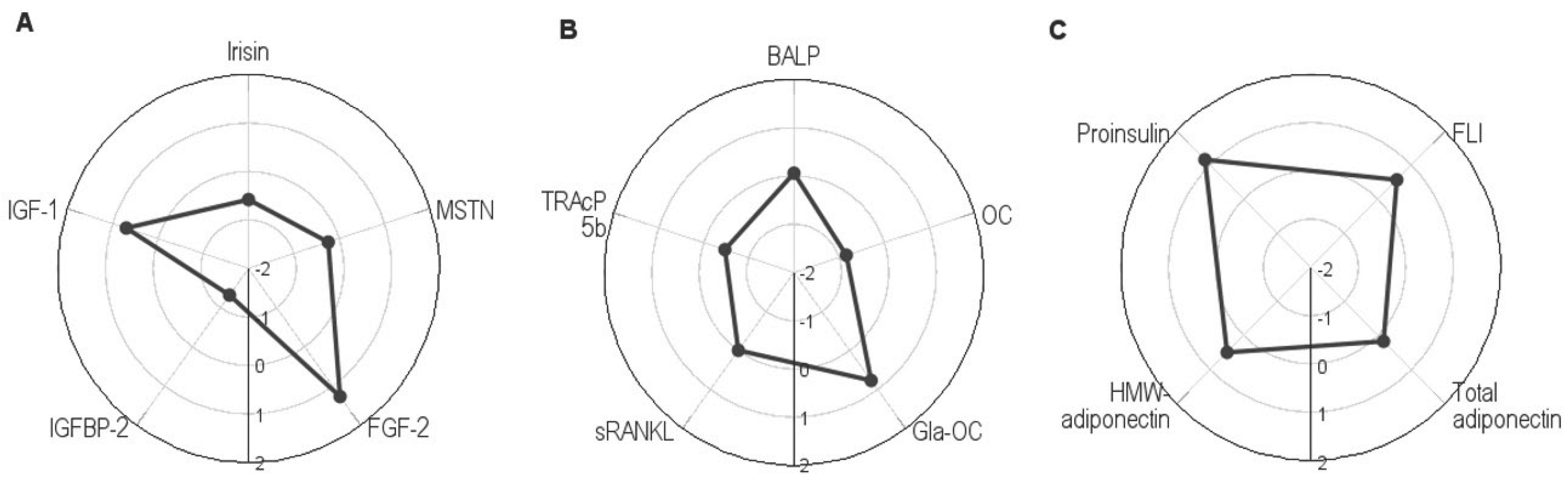
Figure 2.
Daily energy and nutrient intake in children with PWS (mean z-scores for the children with PWS based on the healthy group).
Figure 2.
Daily energy and nutrient intake in children with PWS (mean z-scores for the children with PWS based on the healthy group).
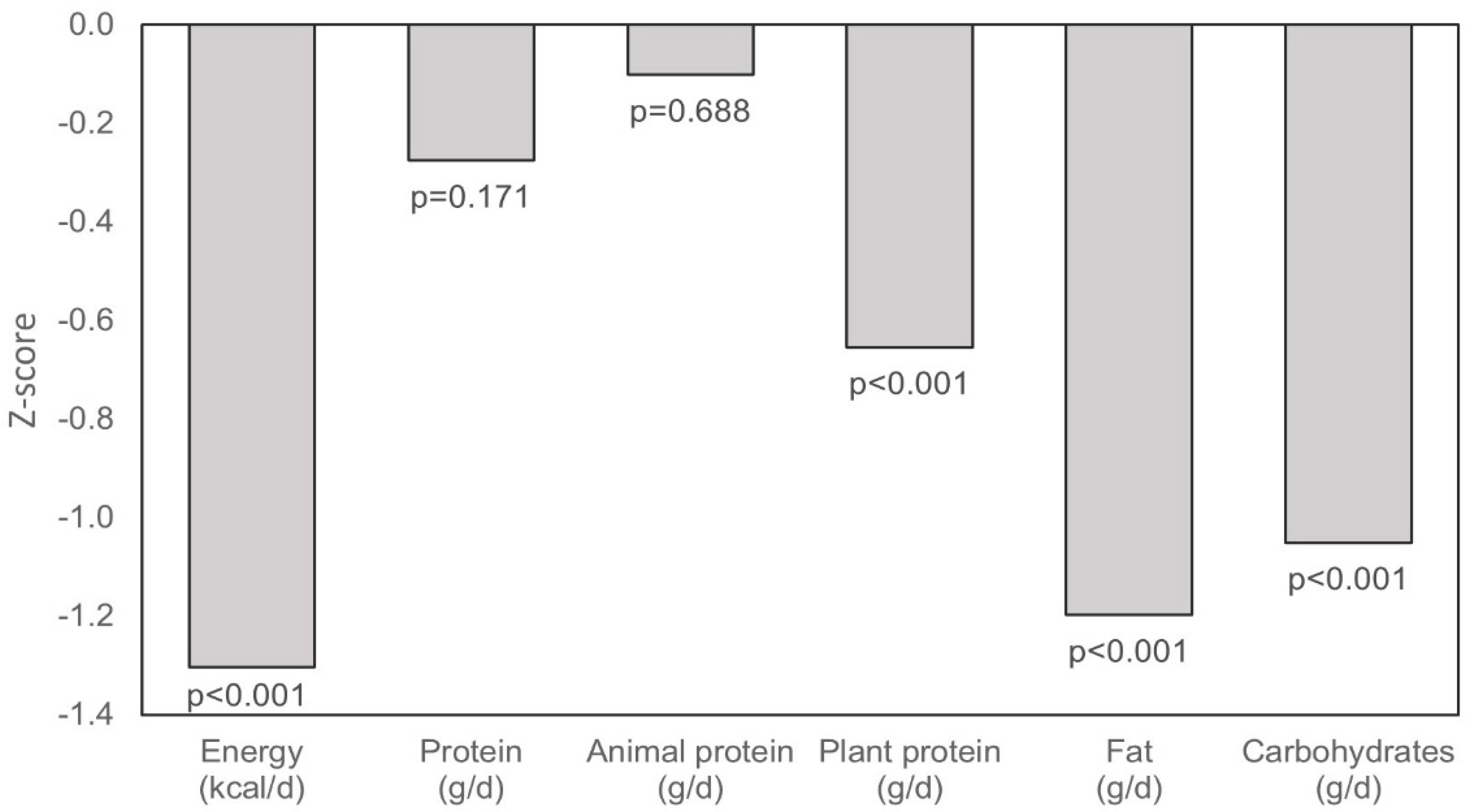

Table 1.
Anthropometric parameters and biochemical measurements in children with PWS and healthy children.
Table 1.
Anthropometric parameters and biochemical measurements in children with PWS and healthy children.
|
Children with PWS n=26 |
Healthy children n=26 |
p- values |
|
| Age (years) | 6.6 ± 3.3 | 7.6 ± 3.3 | 0.190 |
| Girls/boys | 15/11 | 15/11 | |
| Height (cm) | 116.1 ± 23.6 | 125.0 ± 19.1 | 0.131 |
| Weight (kg) | 21.5 ± 9.5 | 25.7 ± 8.7 | 0.072 |
| BMI (kg/m2) | 15.0 (14.2 –15.9) | 16.1 (15.0 – 6.8) | 0.033 |
| BMI Z-score | -0.56 ± 0.68 | -0.35±0.38 | 0.126 |
| Irisin (µg/mL) | 3.24 ± 1.46 | 4.06 ± 1.42 | 0.031 |
| MSTN (ng/mL) | 1.74 (1.42 – 2.09) | 2.07 (1.57 – 2.48) | 0.115 |
| FGF-2 (pg/mL) | 44.4 (9.3 – 125.3) | 26.8 (17.3 – 49.5) | 0.459 |
| IGFBP-2 (ng/mL) | 254.7 ± 132.4 | 358.8 ± 78.8 | <0.001 |
| IGF-I (ng/mL) | 297.7 ± 150.6 | 217.5 ± 115.3 | 0.035 |
| BALP (U/L) | 125.5 (97.9 –148.1) | 120.3 (95.1 – 143.5) | 0.519 |
| OC (ng/mL) | 56.5 ± 22.6 | 87.8 ± 37.3 | <0.001 |
| Gla-OC (ng/mL) | 37.7 ± 16.8 | 29.0 ± 11.3 | 0.068 |
| Periostin (ng/mL) | 93.9 ± 38.3 | 60.6 ± 17.9 | <0.001 |
| sRANKL (ng/mL) | 825 (324 – 1695) | 926 (582 – 1478) | 0.778 |
| TRAcP 5b (U/L) | 10.3±2.8 | 11.6±2.8 | 0.106 |
| FLI | 0.10 (0.05 – 0.17) | 0.03 (0.02 – 0.09) | 0.008 |
| Total adiponectin (µg/mL) | 11.6 (9.5 – 13.8) | 9.9 (8.3 – 12.4) | 0.263 |
| HMW-adiponectin (µg/mL) | 6.13 (4.52 – 7.05) | 3.97 (3.53 – 5.34) | 0.009 |
| Proinsulin (pmol/L) | 1.95 (1.56 – 2.90) | 1.35 (0.91 – 2.24) | 0.025 |
Data are presented as mean ± SD or median values (25th–75th percentiles). BMI – body mass index; MSTN – myostatin; FGF-2 – fibroblast growth factor-2; IGF-I – insulin-like growth factor-I; IGFBP-2 – IGF-binding protein-2; BALP – bone alkaline phosphatase; OC – osteocalcin; Gla-OC – carboxylated osteocalcin; TRAcP 5b – tartrate-resistant acid phosphatase 5b; sRANKL – soluble receptor activator of nuclear factor kappa-B ligand; FLI – free leptin index; HMW-adiponectin – high molecular weight-adiponectin.
Table 2.
Relationships between myokines, anthropometric parameters, and bone turnover markers in the studied children with PWS.
Table 2.
Relationships between myokines, anthropometric parameters, and bone turnover markers in the studied children with PWS.
| Correlation coefficient | Irisin | MSTN | FGF-2 | IGF-I | IGFBP-2 | |
|
Height |
bivariate (p) partial* (p) |
-0.043 (0.835) 0.064 (0.759) |
0.282 (0.162) -0.230 (0.268) |
0.485 (0.012) 0.289 (0.161) |
0.810 (<0.001) 0.169 (0.418) |
-0.731 (<0.001) -0.590 (0.002) |
|
Weight |
bivariate (p) partial* (p) |
-0.011 (0.956) 0.129 (0.539) |
0.297 (0.141) -0.088 (0.675) |
0.400 (0.043) -0.010 (0.962) |
0.770 (<0.001) 0.060 (0.775) |
-0.645 (<0.001) -0.195 (0.350) |
|
BMI |
bivariate (p) partial* (p) |
0.160 (0.436) 0.182 (0.384) |
0.079S (0.701) 0.031S (0.883) |
-0.192S (0.348) -0.299S (0.147) |
0.127S (0.535) 0.013S (0.952) |
-0.083S (0.685) -0.195S (0.350) |
|
BMI Z-score |
bivariate (p) partial* (p) |
0.136 (0.507) 0.137 (0.515) |
0.007 (0.973) 0.006 (0.976) |
-0.216 (0.289) -0.241 (0.245) |
-0.124 (0.547) -0.217 (0.298) |
0.077 (0.707) 0.103 (0.624) |
|
BALP |
bivariate (p) partial* (p) |
0.427 (0.029) 0.447 (0.025) |
0.006 (0.978) -0.064 (0.763) |
-0.020 (0.923) -0.112 (0.595) |
0.270 (0.183) 0.211 (0.312) | 0.001 (0.994) 0.155 (0.461) |
|
OC |
bivariate (p) partial* (p) |
-0.157 (0.444) -0.145 (0.490) |
0.049 (0.812) -0.075 (0.721) |
0.041 (0.841) -0.118 (0.573) |
0.521 (0.006) 0.461 (0.020) |
-0.075 (0.715) 0.183 (0.382) |
|
Gla-OC |
bivariate (p) partial* (p) |
-0.414 (0.035) -0.411 (0.041) |
0.088 (0.669) 0.013 (0.951) |
0.444 (0.023) 0.398 (0.049) |
0.424 (0.031) 0.436 (0.030) |
-0.092 (0.657) 0.061 (0.771) |
|
Periostin |
bivariate (p) partial* (p) |
-0.529 (0.005) -0.541 (0.005) |
0.007 (0.971) 0.052 (0.805) |
0.239 (0.239) 0.324 (0.114) |
-0.083 (0.685) 0.020 (0.923) |
0.352 (0.078) 0.362 (0.076) |
|
sRANKL |
bivariate (p) partial* (p) |
0.308 (0.126) -0.349 (0.088) |
-0.020S (0.925) 0.196S (0.349) |
-0.380 (0.324) -0.150 (0.473) |
-0.521 (0.006) -0.007 (0.973) |
0.516 (0.007) 0.189 (0.366) |
|
TRAcP 5b |
bivariate (p) partial* (p) |
0.038 (0.852) 0.057 (0.787) |
0.410 (0.038) 0.351 (0.085) |
0.201 (0.324) 0.101 (0.632) |
0.277 (0.170) 0.113 (0.591) |
-0.092 (0.656) 0.101 (0.631) |
*) age- adjusted, S) Spearman correlation coefficient, otherwise Pearson correlation coefficient.BMI – body mass index; MSTN – myostatin; FGF-2 – fibroblast growth factor-2; IGF-I – insulin-like growth factor-I; IGFBP-2 – IGF-binding protein-2; BALP – bone alkaline phosphatase; OC – osteocalcin; Gla-OC – carboxylated osteocalcin; TRAcP 5b – tartrate-resistant acid phosphatase 5b; sRANKL – soluble receptor activator of nuclear factor kappa-B ligand.
Table 3.
Relationships between myokines and adipokines, and proinsulin levels in children with PWS.
| Correlation coefficient | Irisin | MSTN | FGF-2 | IGF-I | IGFBP-2 | |
|
FLI |
bivariate (p) partial* (p) |
-0.062 (0.762) -0.033 (0.877) |
0.403 (0.041) 0.261 (0.207) |
0.001 (0.998) -0.344 (0.093) |
0.418S (0.034) -0.205S (0.327) |
-0.521S (0.006) -0.124S (0.555) |
|
Total adiponectin |
bivariate (p) partial* (p) |
-0.540S(0.004) -0.539S(0.005) |
0.309 (0.125) 0.295 (0.152) |
0.116 (0.572) 0.083 (0.692) |
0.140 (0.496) 0.107 (0.610) |
0.170 (0.408) 0.299 (0.147) |
|
HMW- adiponectin |
bivariate (p) partial* (p) |
-0.482S(0.013) -0.484S(0.014) |
0.392S(0.048) 0.417S(0.038) |
0.258S (0.203) 0.296S (0.150) |
0.140S (0.496) 0.223S (0.285) |
0.352 (0.078) 0.407 (0.043) |
|
Proinsulin |
bivariate (p) partial* (p) |
0.169S (0.409) 0.196S (0.347) |
0.677S(<0.001) 0.638S(0.001) |
0.401S (0.042) 0.292S (0.156) |
0.504 (0.009) 0.350 (0.086) |
-0.225 (0.269) 0.030 (0.888) |
*) age- adjusted, S) Spearman correlation coefficient, otherwise Pearson correlation coefficient. MSTN – myostatin; FGF-2 – fibroblast growth factor-2; IGF-I – insulin-like growth factor-I; IGFBP-2 – IGF-binding protein-2; FLI – free leptin index; HMW-adiponectin – high molecular weight-adiponectin.
Table 4.
Densitometric parameters in patients with PWS and healthy children.
|
Children with PWS n=18 |
Healthy children n=18 |
p-values | |
| Fat mass (kg) | 4.93 (4.17 – 6.61) | 4.39 (2.6 – 4.98) | 0.092 |
| Lean mass (kg) | 17.7 ± 5.6 | 21.0 ± 4.7 | 0.047 |
| Fat mass/lean mass | 0.31 (0.25 – 0.41) | 0.18 (0.15 – 0.22) | <0.001 |
| TBLH-BMC (kg) | 0.51 ± 0.15 | 0.49 ± 0.13 | 0.932 |
| TBLH-BMD Z-score | -0.71 ± 0.70 | -0.24 ± 0.52 | 0.040 |
Data are presented as mean ± SD. TBLH – total body less head; BMC – bone mineral content; BMD – bone mineral density.
Table 5.
Relationships between myokines and densitometric parameters in children with PWS.
|
Correlation coefficient |
Irisin | MSTN | FGF-2 | IGF-I | IGFBP-2 | |
|
Fat mass |
bivariate (p) partial* (p) |
-0.100 (0.693) -0.079 (0.764) |
0.029 (0.910) -0.241 (0.351) |
0.215S (0.392) -0.230S (0.374) |
0.560S (0.016) 0.113S (0.666) |
-0.485 (0.042) -0.170 (0.513) |
|
Lean mass |
bivariate (p) partial* (p) |
-0.206 (0.413) -0.373 (0.141) |
0.105 (0.678) -0.576 (0.015) |
0.454 (0.058) 0.161 (0.536) |
0.762 (<0.001) 0.076 (0.771) |
-0.559 (0.016) 0.072 (0.784) |
| Fat / lean mass | bivariate (p) partial* (p) |
-0.003 (0.990) 0.005 (0.985) |
-0.004 (0.989) -0.054 (0.837) |
-0.160 (0.527) -0.243 (0.348) |
0.021 (0.933) -0.149 (0.568) |
-0.213 (0.396) -0.168 (0.519) |
|
TBLH-BMC |
bivariate (p) partial* (p) |
-0.300 (0.226) -0.456 (0.066) |
0.071S (0.779) -0.212S (0.413) |
0.397S (0.102) 0.032S (0.902) |
0.741 (<0.001) 0.189 (0.467) |
-0.627 (0.005) -0.227 (0.381) |
| TBLH-BMD Z-score | bivariate (p) partial* (p) |
-0.130 (0.607) -0.121 (0.645) |
0.202 (0.421) 0.147 (0.573) |
0.230 (0.358) 0.166 (0.523) |
0.503 (0.033) 0.607 (0.010) |
-0.011 (0.964) 0.145 (0.579) |
*) age- adjusted, S) Spearman correlation coefficient, otherwise Pearson correlation coefficient. MSTN – myostatin; FGF-2 – fibroblast growth factor-2; IGF-I – insulin-like growth factor-I; IGFBP-2 – IGF-binding protein-2; TBLH – total body less head; BMC – bone mineral content; BMD – bone mineral density.
Disclaimer/Publisher’s Note: The statements, opinions and data contained in all publications are solely those of the individual author(s) and contributor(s) and not of MDPI and/or the editor(s). MDPI and/or the editor(s) disclaim responsibility for any injury to people or property resulting from any ideas, methods, instructions or products referred to in the content. |
© 2025 by the authors. Licensee MDPI, Basel, Switzerland. This article is an open access article distributed under the terms and conditions of the Creative Commons Attribution (CC BY) license (http://creativecommons.org/licenses/by/4.0/).
Copyright: This open access article is published under a Creative Commons CC BY 4.0 license, which permit the free download, distribution, and reuse, provided that the author and preprint are cited in any reuse.


