

Submitted:
22 August 2025
Posted:
25 August 2025
You are already at the latest version
Abstract
Microbial electrosynthesis (MES) has emerged as a promising bio-electrochemical technology for sustainable CO₂ conversion into valuable organic compounds. This review synthesizes ad-vancements in MES from 2010 to 2025, focusing on electrode materials, microbial communities, reactor engineering, performance trends, techno-economic evaluations, and future challenges, especially on the results reported between 2020 and 2025. Recent innovations in electrode mate-rials, such as conductive polymers and metal–organic frameworks, have enhanced electron transfer efficiency and microbial attachment, leading to improved MES performance. The de-velopment of diverse microbial consortia has expanded the range of products achievable through MES, with studies highlighting the importance of microbial interactions and metabolic pathways in product formation. Advancements in reactor design, including continuous-flow systems and membrane-less configurations, have addressed scalability issues, enhancing mass transfer and system stability. Performance metrics, such as current densities and product yields, have signifi-cantly improved, demonstrating the potential of MES for industrial applications. Techno-economic analyses indicate that while MES offers promising economic prospects, challenges related to cost-effective electrode materials and system integration remain. Future research should focus on optimizing microbial communities, developing advanced electrode materials, and designing scalable reactors to overcome existing limitations. Addressing these challenges will be crucial for the commercialization of MES as a viable technology for sustainable chemical production.
Keywords:
microbial electrosynthesis
; CO₂ conversion
; electrode materials
; microbial communities
; reactor engineering
; performance trends
; techno-economics
; sustainability
; bio-electrochemical systems
; renewable energy
1. Introduction
The Microbial electrosynthesis (MES) is a bio-electrochemical approach that uses microorganisms as biocatalysts to convert CO₂ and electrons (from a cathode) into multi-carbon organic compounds such as acetate, ethanol, butyrate and medium-chain fatty acids. The process was introduced and demonstrated by Nevin et al. in 2010, who showed Sporomusa ovata converting CO₂ to acetate on a cathode with high coulombic efficiency, thereby establishing the core MES paradigm: a polarized cathode supplies electrons, electro-trophic microbes fix CO₂ (commonly via the Wood–Ljungdahl pathway), and products are excreted to the bulk medium [1].
Between 2010 and about 2019 MES developed gradually —moving from a proof-of-concept toward improved electrode designs and mixed-culture demonstrations (notable step increases in productivity were already reported around 2015) — but the field’s expansion accelerated markedly after 2020 as innovations in electrode materials, sequencing-enabled microbiome analyses, reactor engineering, and early techno-economic modelling converged. The period 2020–2025 therefore represents an intensely productive window for MES research and is the focus of the sections below [2,3].
At its core, MES relies on three interlinked elements:
- Electrode–microbe electron transfer. Electrons originate at a cathode (driven by an external power source, preferably renewables). Electron transfer mechanisms include (a) direct extracellular electron transfer (EET) via conductive biofilms or redox proteins, and (b) indirect hydrogen-mediated transfer, wherein electrochemically produced H₂ is consumed by hydrogenotrophic acetogens. Distinguishing between these pathways remains a major experimental and conceptual theme across 2010–2025 studies [1,4].
- Electro-trophic metabolism. Many acetogens (e.g., Sporomusa, Acetobacterium, Clostridium) deploy the Wood–Ljungdahl pathway to fix CO₂ to acetyl-CoA and then excrete acetate or reduce further to ethanol/butanol under specified conditions. Advances in metabolic understanding and synthetic biology approaches to expand product scope have intensified after 2020 [5,6].
- System design. Reactor architecture, cathode material and geometry, operational potential, pH, mass transfer and anode chemistry jointly determine rates, titers and selectivity. From the initial graphite electrodes (2010) to engineered 3-D printed cathodes, materials and reactor choices have been central to MES progress [1,7].
Figure 1 is showing a schematic image of MES fundamentals which includes: cathode, microbes (biofilm), CO₂ feed, products, anode, and possible electron pathways
There are several complementary drivers which produced an acceleration of MES research, production and performance gains post-2020 such as: materials and manufacturing advancements for the electrodes (graphene, 3-D printing, composites): Carbon nanomaterials, conductive polymers and additive manufacturing enabled cathodes with higher surface area, better mass transfer and improved microbial colonization. Researches undergone mainly in 2023–2024 consolidated these developments and highlighted reproducible productivity increases tied to advanced cathode materials [7,8], microbiome and sequencing: paper [9] is a meta-analysis which synthesized 22 MES studies and revealed a conserved cathodic core microbiome (e.g., Desulfovibrio, Acetobacterium, Methanobacterium), showing that operational levers (inoculum pre-treatment, potential, pH) systematically shape community outcomes and product selectivity. This enabled a new focus on community steering and bioaugmentation strategies [9], systems and TEA: as electrode and microbiome science matured, investigators began publishing more techno-economic and modelling work — mapping cost drivers, scale-up bottlenecks and niche markets (e.g., specialty chemicals, point-source CO₂ valorization), making MES of greater interest to engineering and policy communities [10,11].
Figure 2 is showing the growth in published papers on MES subject while highlighting the key milestone years
Electrode design has advanced from plain graphite and carbon felts to sophisticated, engineered cathodes from early era (2010–2016) when was mostly graphite plates, carbon felt, and reticulated vitreous carbon were common supports; micro- and macro-porosity, and simple conductive coatings were used to increase biofilm formation and reduce internal resistances [1,2], towards transitional improvements 2017–2019 by incorporating carbon nanotubes and hierarchical porous coatings improved areal productivity and biofilm development (benchmarks established prior to the 2020 surge) [12] and finally reaching rapid innovation 2020–2025 by achieving complex architecture like graphene / rGO and carbon-based 3-D architectures. Multiple reports [7,13] but especially [7] detail how graphene derivatives and 3-D printed carbon aerogels increase interface conductivity and biofilm compatibility (improving both startup and steady-state rates).
Metal oxide coatings emerged when catalyst layering was introduced (including Ni, MoS₂, CoP, and oxide coatings) to tailor hydrogen evolution and lower overpotentials, balancing microbe-friendly H₂ production with direct electron transfer. Recent catalyst-assisted studies [14,15] evaluate Ni- and transition metal-based modifications for higher acetate yields.
Nowadays there are biocompatible bimetallic oxide coatings such as MnFe₂O₄ coatings that substantially increased acetate areal productivity and supported Acetobacterium enrichment — one of the most significant material-driven performance jumps in the 2020s and additive manufacturing / 3-D printed electrodes which enabled bespoke lattice structures that optimize mass transfer, conductivity and biofilm penetration, showing dramatic performance improvements in scaled lab reactors [17].
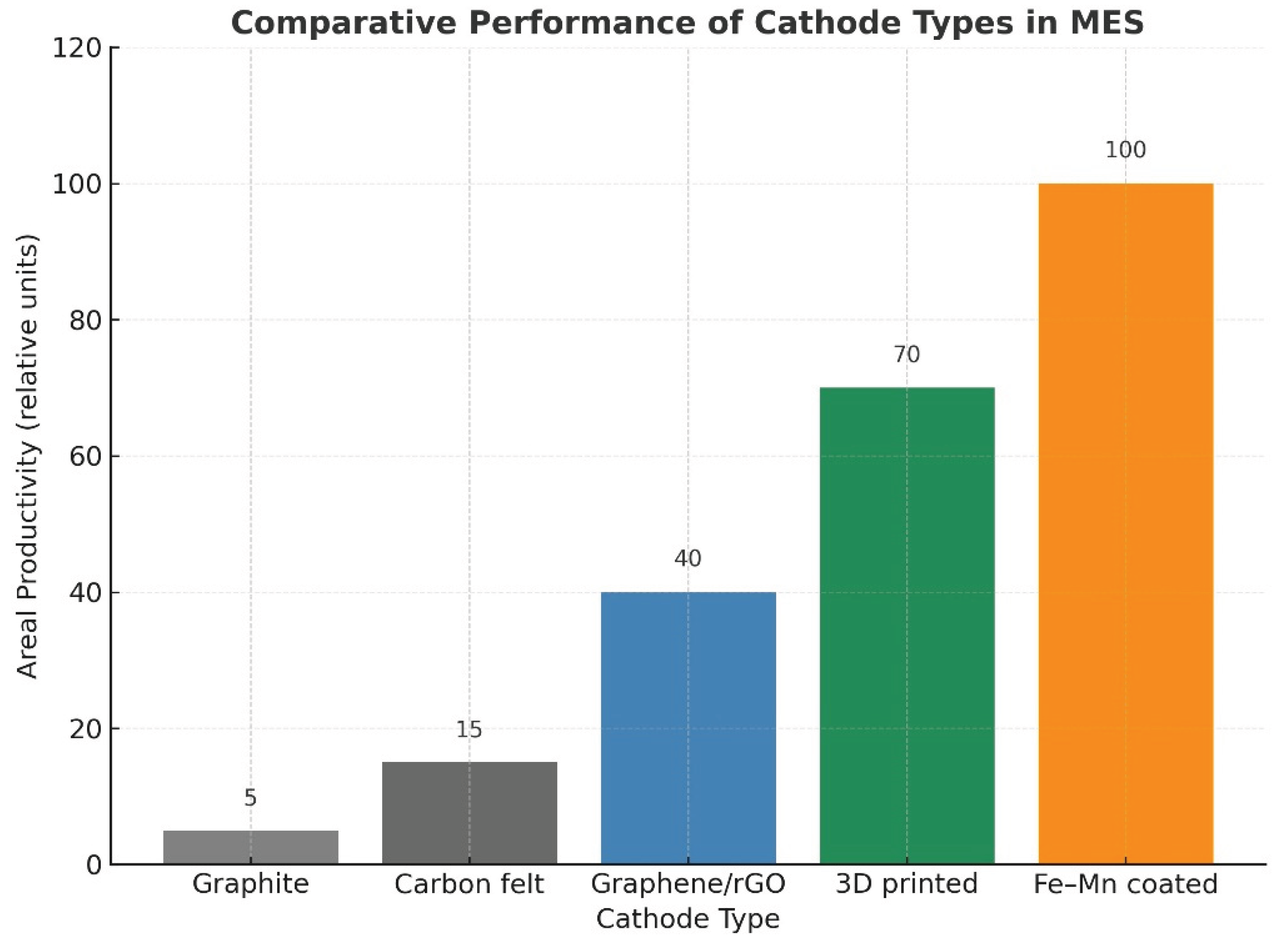
Figure 3 is showing a comparative chart between different cathode types, from graphite to Fe-Mn coated one.
Moreover, intensive researches have been made towards understanding and engineering the cathodic microbiome which is central for selectivity and stability. Thus, [22] synthesized several studies and found an ~80% overlap in a cathodic core community across acetogenic and methanogenic systems — an observation that provided a predictable foundation for community manipulation (bioaugmentation, pretreatment, potential control) [9]. Since 2020, multiple groups reported that seeding with acetogens (e.g., Acetobacterium, Clostridium spp.) or using selective pre-treatments (heat, chemical inhibitors) can bias communities toward acetogenesis and reduce methane formation. Operational variables (pH, potential, H₂ partial pressure) remain powerful levers to maintain acetogen dominance. [3,4] and recent perspectives advocate and begin to demonstrate the use of engineered pure cultures and edited pathways to expand products beyond acetate (toward butyrate, caproate, alcohols), while improving EET capabilities and tolerance to electrochemical conditions [5,6].
Another important aspect related to MES is reactor engineering & system configurations because it sums system-level engineering mass transfer, electrode spacing, gas handling, and product separation. There are several critical aspects that must be taken into consideration when designing a MES reactor: flow electrodes and stacked reactors demonstrated higher titers (e.g., reports of several g L⁻¹ acetate in flow systems), suggesting scale-friendly concepts that improve gas and liquid mass transfer [18]. Alternative cell designs that improve CO₂ availability to biofilms (gas diffusion cathodes) or use salinity gradients for driving current have been explored, showing system gains in productivity and coulombic efficiency. [8] mathematical models and control strategies developed between 2021–2025 now allow optimization of potential, flow, and H₂ evolution rates to predict productivity and scale behavior, illuminating pathways for pilot reactors [19].
2. Evolution of Electrode Materials for Microbial Electrosynthesis
2.1. Carbonaceous Materials and Graphene-Based Electrodes
From 2010–2015, MES cathodes were dominated by graphite plates, carbon felt, reticulated vitreous carbon, and carbon papers because they were inexpensive, chemically stable, and biocompatible for acetogenic biofilms. Performance increases in this period mainly came from enlarging surface area and improving roughness to favor biofilm attachment and reduce ohmic losses. Subsequent reviews and historical perspectives document this early reliance on porous carbons and the pivotal role of surface morphology in accelerating start-up and boosting electron transfer to acetogens [20,21].
From ~2016 onward, graphene and graphene-derivative cathodes—reduced graphene oxide (rGO), graphene aerogels, and graphene-polymer blends—rapidly entered MES. Graphene’s high conductivity, tunable surface chemistry, and ability to form hierarchical 3-D networks improved both direct extracellular electron transfer and controlled H₂-mediated routes by enhancing local electron density and biofilm density. Dedicated reviews synthesize dozens of reports showing that graphene coatings and graphene-based composites systematically increase current density, coulombic efficiency, and acetate/MCFA productivities, compared with unmodified felt or plate electrodes [22].
A parallel trend in the 2020s is circular-carbon electrodes—biochar and waste-derived carbons (including algal-derived frameworks)—which deliver high porosity, wettability, and microbe-compatible functionalities at low cost. Recent studies show that tailoring pore architecture and oxygen-containing groups in such carbons improves colonization and durability, while maintaining performance near that of engineered graphene—an attractive direction for scale-up [7,23].
2.1.1. Advantages and Disadvantages on Using Carbonaceous and Graphene-Based Electrodes in MES
Advantages
- Carbonaceous electrodes (graphite, felt, RVC, paper): Low cost, scalable, chemically stable, and relatively easy to modify.
- Graphene-based electrodes: Outstanding conductivity, hierarchical porosity, tunable surface chemistry, and superior performance in terms of electron transfer and product selectivity.
- Circular-carbon electrodes: Sustainable, low-cost, derived from biomass or waste; high porosity and surface functionalization enable strong microbial adhesion and long-term durability.
Disadvantages
- Plain carbon electrodes: Limited conductivity compared to advanced materials; poor catalytic activity toward hydrogen evolution, requiring high applied potentials.
- Graphene-based: High cost of synthesis, difficulties in large-scale and reproducible fabrication, and potential instability under prolonged operation.
- Circular carbons: High variability in structure and performance depending on feedstock and processing conditions; often lower conductivity than engineered graphene-based.
2.1.2. Gaps and Challenges on Using Carbonaceous and Graphene-Based Electrodes in MES
Despite clear advances, several challenges remain: i) Scalability: Transitioning from lab-scale felts and coatings to industrial-scale electrodes remains uncertain, particularly for graphene-based systems, ii) Durability: Long-term stability under continuous operation (biofilm detachment, surface fouling, or structural collapse) remains poorly understood, iii) Mechanistic understanding: The interplay between electrode surface chemistry, electron transfer pathways, and microbial community dynamics is not fully resolved, iv) Circular carbon standardization: Lack of standardized processing and characterization methods makes cross-comparison between studies difficult.
2.1.3. Future Perspectives on Using Carbonaceous and Graphene-Based Electrodes in MES
- Hybrid electrodes: Combining biochar/circular carbons with thin graphene or catalytic skins may achieve both cost-effectiveness and high performance.
- Scalable manufacturing: Techniques such as 3D printing and roll-to-roll coating can bridge lab innovation with industrial feasibility.
- Functionalized surfaces: Rational tuning of oxygen groups, nitrogen doping, or heteroatom functionalization could steer microbial adhesion and selectivity.
- Integration with techno-economics: Future studies should assess not only performance metrics (current density, coulombic efficiency) but also life-cycle impacts and cost per unit product.
Table 1 is showing the above-mentioned aspects in an easier to read way.
| Electrode Type | Advantages | Disadvantages | Gaps/Challenges | Future Perspectives |
| Carbonaceous (graphite, felt, paper, RVC) | - Low cost, abundant, scalable- Chemically stable- High surface roughness → good biofilm attachment- Easy to modify with catalysts | - Limited conductivity- Low intrinsic catalytic activity (HER)- Require high applied potentials | - Need improved catalytic function- Limited long-term durability data- Scaling issues for high productivity | - Surface functionalization (doping, coatings)- Integration with conductive polymers- Engineering 3D structured carbons |
| Graphene-based (rGO, aerogels, composites) | - Exceptional conductivity- Hierarchical porosity improves mass transfer- Tunable chemistry (functional groups)- Enhanced electron transfer & product selectivity | - High synthesis cost- Scale-up remains difficult- Potential instability during long-term runs | - Lack of standardized fabrication methods- Limited understanding of graphene–microbe interactions- Reproducibility concerns across labs | - Hybrid electrodes (graphene + biochar)- Roll-to-roll or scalable coating methods- Use in advanced 3D printed cathodes |
| Circular carbons (biochar, waste-derived) | - Sustainable & low-cost- Derived from biomass or waste (circular economy)- High porosity & wettability- Comparable biofilm colonization to graphene | - Variability in properties (feedstock dependent)- Often lower conductivity than graphene- Inconsistent performance across studies | - Lack of standardization in feedstock processing- Limited comparative benchmarks with engineered electrodes | - Standardized production methods- Hybridization with conductive nanomaterials- Scalable sustainable electrodes for industrial MES |
2.2. Composite Electrodes (Carbon + Polymers/Metals/Catalysts)
As the field matured, researchers shifted from “plain carbon” to composite cathodes that combine a conductive carbon backbone with electrocatalysts or conductive polymers to manage interfacial kinetics and in-situ H₂ evolution. Since ~2020, three families have stood out: i) 3-D printed carbon lattices (often Ni/Mo-modified) that fine-tune H₂ delivery and mass transfer. Carefully engineered lattice topologies (cubic, diamond, Schwarz, etc.) and catalytic skins improve local H₂ availability to acetogens and dramatically raise volumetric production rates in bio-electrochemical CO₂-to-organics systems [17,24], ii) Conductive polymer composites—for example, commercially available conductive ABS/PLA lattices or poly-pyrrole/polyaniline coatings—used either as the whole scaffold or as surface modifiers. Studies with electrically conductive polymer lattices (sometimes further Ni-functionalized) report stable acetate and methane production while offering low-cost, manufacturable structures; they also reveal trade-offs between polymer conductivity, mechanical integrity, and long-term biocompatibility [25]. iii) Catalyst-assisted carbon cathodes (Ni, Cu, Fe, Co, Mo, perovskites). These composites lower overpotentials for HER, enabling a microbe-friendly H₂ flux without damaging local pH, and improve coulombic efficiencies to acetogenesis when the potential is carefully regulated. Newer work evaluates Fe, Cu, Ni surfaces in side-by-side tests for CO₂-to-acetate MES, clarifying how catalyst identity steers selectivity and biofilm composition [26,27].
2.2.1. Advantages and Disadvantages on Using Composite Electrodes
Advantages
- 3D printed carbon lattices (Ni/Mo-modified): Their engineered porosity and topology provide enhanced mass transfer and fine-tuned H₂ delivery to microbial biofilms. Studies show significantly increased volumetric productivities, particularly for acetate, due to the localized control of hydrogen flux near acetogens [Jourdin et al., 2021; Hou et al., 2024].
- Conductive polymer composites (poly-pyrrole, polyaniline, conductive PLA/ABS): These materials are low-cost, easily manufacturable, and mechanically flexible, enabling scalable electrode designs. Polymers also offer a tunable surface chemistry that supports microbial adhesion. Hybrid polymer-metal composites have reported stable long-term operation for acetate and methane production [19,21,25].
- Catalyst-assisted cathodes (Ni, Cu, Fe, Co, Mo, perovskites): The incorporation of catalytic coatings lowers HER (hydrogen evolution reaction) overpotentials and provides a controlled, microbe-friendly H₂ flux, avoiding damaging local alkalinization. This leads to higher coulombic efficiencies and improved selectivity toward acetate and other reduced compounds [14,19,20,21].
Disadvantages
- 3D printed lattices require specialized manufacturing and may suffer from structural brittleness after prolonged use.
- Conductive polymers often face trade-offs between electrical conductivity and mechanical stability; their long-term bio-compatibility in harsh electrochemical environments is still under debate.
- Metal catalysts risk ion leaching, which can be toxic to microbial communities, and can increase system costs.
2.2.2. Gaps and Challenges on Using Composite Electrodes
Several unresolved issues persist in the development of composite electrodes: i) Standardization: Results vary widely due to differences in synthesis methods, surface treatments, and testing protocols, ii) Durability: Few studies evaluate electrode performance over thousands of operational hours, a requirement for industrial adoption, iii) Biofilm–electrode interactions: The impact of catalyst type or polymer chemistry on microbial community assembly and metabolic activity remains underexplored, iv) Economic scaling: While high-performing in the lab, composites often involve costly metals or polymers that raise questions of economic feasibility.
2.2.3. Future Perspectives on Using Composite Electrodes
To move MES closer to commercialization, future research should prioritize:
- Hybrid electrodes: Combining biochar or other circular carbons with thin catalytic coatings (Ni, Fe, Co) to balance performance and cost.
- Advanced manufacturing: Adoption of 3D printing, laser etching, and roll-to-roll coating for scalable, reproducible electrodes.
- Eco-friendly catalysts: Replacement of noble or heavy metals with earth-abundant, biodegradable alternatives (e.g., Fe- or Mn-based composites).
- Integrated techno-economic analysis: Studies should pair electrode innovations with LCA (life-cycle assessment) and cost modeling to assess true scalability.
Table 2 is showing the above-mentioned aspects in an easier to read way.
| Composite Electrode Type | Advantages | Disadvantages | Gaps/Challenges | Future Perspectives |
| 3D Printed Carbon Lattices (Ni/Mo, doped carbons) | - Tailored 3D geometry for high surface area & mass transfer- Enhanced localized H₂ delivery to biofilms- High productivities for acetate & other products | - Requires specialized equipment- Mechanical brittleness under long-term use- Fabrication costs still high | - Limited durability testing (>1000 h)- Lack of standard print protocols- Scale-up feasibility unproven | - Scale-up via industrial 3D printing- Hybridization with low-cost biochars- Integration into modular reactor stacks |
| Conductive Polymers (poly-pyrrole, polyaniline, PLA/ABS blends) | - Low-cost & lightweight- Flexible, scalable manufacturing- Tunable chemistry enhances microbial adhesion- Good long-term stability in some studies | - Moderate conductivity compared to metals- Mechanical degradation in harsh electrochemical environments- Potential bio-compatibility concerns | - Limited reproducibility between labs- Unknown long-term chemical resistance- Need more data on polymer–biofilm interactions | - Polymer-metal or polymer-carbon hybrids- Development of biodegradable conductive polymers- Use in flexible/portable MES reactors |
| Catalyst-Coated Cathodes (Ni, Fe, Cu, Co, Mo, perovskites) | - Lower HER overpotentials- Controlled H₂ flux prevents pH shocks- Increased coulombic efficiency and selectivity | - Risk of metal ion leaching (microbial toxicity)- Added costs (especially noble/perovskite catalysts)- Complex synthesis routes | - Few studies on biofilm community shifts under catalysts- Insufficient life-cycle & cost analyses- Variability in coating adhesion & durability | - Earth-abundant catalysts (Fe, Mn)- Thin catalytic coatings over low-cost supports- Techno-economic integration with renewable energy systems |
2.3. Bimetallic Oxide Cathodes
The latest wave (2023–2025) introduces bimetallic oxides on carbon supports to couple high conductivity with redox-active, microbe-compatible surfaces. A notable example is Fe–Mn spinel-type oxides (e.g., MnFe₂O₄) deposited onto carbon felt: reports in 2024 describe substantially higher acetate areal productivities, faster start-up, and an enrichment of acetogenic taxa (e.g., Acetobacterium), compared with uncoated controls—attributed to balanced HER kinetics, improved charge transfer, and favorable surface chemistry for biofilm nucleation [28].
These oxide coatings are attractive because they stabilize interfacial pH and buffer redox conditions, mitigating local extremes that can detach biofilms. Their modularity also allows tuning oxygen vacancies and metal ratios to match desired HER rates for acetogen uptake. Early demonstrations rely on lab-scale felts, but the chemistry is compatible with roll-to-roll coating—suggesting a path to durable, scalable cathodes if adhesion and fouling can be controlled over thousands of hours [16].
2.3.1. Advantages and Disadvantages on Using Bimetallic Oxide Cathodes
Advantages
- Synergistic catalysis: Combining two or more metals enhances electron transfer kinetics and lowers overpotentials compared to monometallic oxides.
- Abundance and sustainability: Many BMOs (Fe, Mn, Ni-based) are earth-abundant, low-cost, and environmentally benign compared to noble metals.
- Enhanced biofilm performance: Oxide surfaces offer hydrophilicity, tunable porosity, and surface oxygen groups that promote microbial adhesion and stable electro-trophic growth.
- Selectivity: BMOs can regulate H₂ evolution to match microbial uptake rates, avoiding accumulation and energy losses.
Disadvantages
- Conductivity issues: Many oxides have lower intrinsic conductivity compared to carbon or graphene, requiring support materials or dopants.
- Metal leaching: Prolonged use may release ions (e.g., Ni²⁺, Co²⁺), potentially toxic to microbial communities.
- Complex synthesis: Hydrothermal, sol-gel, or electrodeposition methods can be costly and difficult to scale.
- Variability: Performance is highly dependent on metal ratios, synthesis conditions, and electrode architecture.
2.3.2. Gaps and Challenges on Using Bimetallic Oxide Cathodes
Despite clear advances over the previous two types, several challenges remain: i) Mechanistic clarity: The precise role of BMOs in balancing direct electron transfer vs. H₂-mediated pathways remains underexplored, ii) Durability: Long-term stability (>3000 h) under continuous operation is rarely demonstrated, iii) Standardization: Few comparative studies exist across different BMO compositions under identical MES conditions, iv) Integration: Limited techno-economic assessments exist for industrial application of BMOs.
2.3.3. Future Perspectives on Using Bimetallic Oxide Cathodes
- Low-cost synthesis: Emphasis on scalable, eco-friendly methods (e.g., electrodeposition on felts, waste-derived metal oxides).
- Hybrid electrodes: Combination of BMOs with graphene or biochar supports to overcome conductivity limitations.
- Mechanistic studies: In situ spectroscopy and omics approaches could resolve how BMOs interact with electro-trophic consortia.
- Circular economy approaches: Utilizing waste streams (steel slag, mine tailings) as oxide precursors to reduce costs.
Table 3 is showing the above-mentioned aspects in an easier to read way.
| Electrode Type | Advantages | Disadvantages | Gaps/Challenges | Future Perspectives |
| Biometallic Oxides (Fe–Mn, Ni–Co, Cu–Fe, perovskites) | - Synergistic catalytic activity- Earth-abundant, low-cost metals- Hydrophilic, biofilm-friendly surfaces- Tunable HER selectivity | - Low intrinsic conductivity- Risk of metal ion leaching (toxicity)- Complex & costly synthesis- Performance highly condition-dependent | - Limited long-term stability data- Lack of standardized testing- Poor understanding of electron transfer mechanisms- Few techno-economic studies | - Hybrid electrodes with carbon/graphene supports- Scalable electrodeposition or waste-derived oxides- Mechanistic in situ studies- Integration with circular economy feedstocks |
2.4. Cross-Cutting Insights on the Development of MES Electrodes as Resulting from 2010–2025 Literature
Across these families, two principles recur. First, hierarchical porosity + high conductivity (graphene, aerogels, printed lattices) correlate with faster colonization and higher steady-state currents. Second, catalytic moderation of HER (metals/oxides) is essential to couple electrochemistry with microbial uptake: too little H₂ limits rates; too much shifts communities toward methanogenesis or causes pH spikes. Recent studies formalize this by voltage/H₂-flux control, stabilizing acetate production over long runs [4].
Looking ahead, the most promising cathodes combine sustainable carbons (biochar/graphene hybrids) with thin catalytic skins (Ni, Fe–Mn spinel, perovskite) on engineered 3-D architectures. Such designs aim to deliver low cost, high durability, and field-scale manufacturability while preserving the microenvironments mesophilic acetogens require [7,17].
3. Evolution of Microbial Communities and Biofilm Engineering
Microbial electrosynthesis (MES) relies on cathodic biofilms that reduce CO₂ to organics using electrons supplied by a solid electrode, either directly (DET) or indirectly via H₂/format (MET). Since 2010, cathode material design and operating strategies have progressively shifted from inert carbons toward graphene-modified carbons, composites, and bi-metallic oxides, each reshaping biofilm structure, community assembly, and electron-transfer modes. Early MES studies on graphite felt/paper and carbon cloth consistently enriched acetogenic biofilms (e.g., Acetobacterium, Sporomusa) and co-occurring hydrogenogenic partners such as Desulfovibrio, establishing the canonical view that H₂-mediated CO₂ reduction dominates under most operating regimes. Recent meta-analyses quantify this picture, showing that acetogenic and methanogenic MES share ~80% of a “cathodic core microbiome,” with inoculum pre-treatments and set potentials steering community outcomes and the (re)emergence of methanogens over time. These data also implicate Desulfovibrio as an early H₂ initiator that supports Acetobacterium or Methanobacterium depending on conditions [9,28].
3.1. Carbonaceous Materials & Graphene
Unmodified carbon felts/RVC remain workhorses because of their biocompatibility, roughness, and cost; they reliably host thick acetogenic biofilms and tolerate the alkaline microenvironments associated with vigorous HER. Yet their limited intrinsic catalytic activity means higher overpotentials and slower start-up when H₂ supply is rate-limiting. Surface engineering with graphene and reduced graphene oxide (rGO) has therefore become a central biofilm-engineering strategy. Graphene coatings/aerogels raise conductivity, provide hierarchical porosity for CO₂ delivery, and present functional groups that improve attachment, collectively boosting electron transfer, coulombic efficiency, and product selectivity (e.g., acetate) compared with bare carbon felts. Recent focused reviews emphasize that graphene-modified cathodes increase bacterial loading and biofilm continuity, while also noting scale-up and cost challenges (agglomeration, reproducibility, fabrication). Multiple bench studies show rGO-modified felts producing denser, more electroactive biofilms and better selectivity [22,29].
3.2. Composite Electrodes
From ~2020 onward, composites—carbon scaffolds integrated with metals, alloys, or conductive polymers—have accelerated progress by engineering the H₂ micro-niche at the biofilm–electrode interface. 3D-printed carbon aerogels plated with Ni–Mo exemplify this shift: by distributing large currents over high surface area at low local current density, they stabilize start-up, minimize bubble disruption, and sustain near-quantitative conversion in electro-methanogenesis models; analogous principles are now applied for acetogenic MES. These electrodes effectively tune H₂ generation to match microbial uptake, which promotes stable acetogenic or methanogenic biofilms with high coulombic efficiency. Parallel work with conductive polymer composites and nickel-foam-decorated felts similarly reports higher titers via improved in situ H₂ delivery and durable biofilm architectures [24].
Community-wise, composites tend to narrow the functional guilds near the cathode by providing steadier electron donors (H₂) and more uniform shear/porosity, enriching Acetobacterium in acetogenic cells or Methanococcus/Methanobacterium in electro-methanogenesis, while maintaining supportive fermenters and sulfur cycle shuttles (e.g., Desulfovibrio). Reviews of cathode materials underscore that such material-driven biogeography is as decisive as inoculum choice for steering communities away from parasitic methanogenesis when acetate or longer-chain acids are targeted [30].
3.3. Bi-Metallic Oxides (BMOs)
Bi-metallic oxides (e.g., Fe–Mn, Co–Ni, spinel/perovskites) emerged strongly after 2020 as earth-abundant HER catalysts that are biofilm-friendly. Recent studies show Fe–Mn oxide–modified cathodes are biocompatible and electroactive, enabling efficient CO₂-to-acetate conversion while supporting stable acetogenic biofilms; Co–Ni on carbon felt has achieved high faradaic efficiencies to acetate/ethanol with robust biofilm formation. Mechanistically, BMOs lower HER overpotentials, moderate local pH, and present hydrophilic oxide surfaces that can boost extracellular polymeric substance (EPS) formation and cell adhesion, thereby balancing DET/MET pathways in mixed cultures. Earlier work with Fe₃O₄/GAC 3D cathodes already highlighted the benefit of magnetite nanoparticles for acetate productivity and biofilm enrichment [16,31,32].
3.4. Gaps and Challenges on Co-Shape Communities
Across materials, set potential, CO₂ supply, and current distribution remain dominant levers: more negative potentials accelerate HER but can favor methanogens, whereas milder potentials and periodic interventions (e.g., headspace flushing, selective inhibitors) help maintain acetogenic dominance. Flow-through architectures and “zero-gap” designs that retain H₂ or distribute it evenly reduce competitive losses and select for target guilds; recent reports demonstrate leaps in areal productivity via improved gas retention and tailored flow paths [28,33].
3.5. Future Perspectives on Biofilm Engineering
The field is converging on material–microbiome co-design: (i) hierarchical carbons/graphene to maximize attachment and electron access; (ii) composites that meter H₂ to biofilms with printable, scalable architectures; and (iii) BMOs to deliver low-overpotential, bio-compatible HER on earth-abundant chemistries. Meta-analysis suggests that sustained suppression of methanogenesis will require repeated operational nudges alongside material design, because community assembly trends stochastically back toward methanogens over time. Future priorities include standardized comparative testing, omics-resolved mechanism mapping of DET vs MET across surfaces, and scale-up studies that couple biofilm durability (≥1000–3000 h) with techno-economics [9].
4. Evolution of Reactor Configurations and Process Engineering
The 2010s began with simple H-cell or dual-chamber reactors (anion/cation exchange membranes, carbon-felt cathodes), later accompanied by membrane-less designs to reduce ohmic losses and parts count. Proof-of-concept studies showed acetate production in membrane-less cells but also highlighted cross-over, oxygen intrusion, and biofilm instability at scale [34]. As the field matured, engineering priorities shifted toward gas management, mass transfer, and current distribution. Since 2022 it was clear that single-chamber membrane-less reactors are generally unsuitable for high-rate MES unless gas separation and pH control are carefully addressed, steering research to flat-plate, directed-flow, and compartmentalized stacks [35].
A notable step was the emergence of directed flow-through/plate reactors that spread current over large, thin electrodes and orchestrate CO₂ delivery across the biofilm. Recent plate-reactor studies report productivities competitive with established biotechnologies, clarifying hydrodynamics, pressure drop, and flow-path design as primary levers [36]. In parallel, zero-gap configurations with extended flow paths have been introduced to retain and consume in-situ H₂ before it escapes, markedly improving conversion to biomethane and offering design lessons that translate to acetogenic MES [33].
4.1. Carbonaceous & Graphene Cathodes: Surface Area, Gas Handling, and GDEs
Reactor advances with carbon felt/paper focused on increasing specific area, lowering ohmic losses, and improving CO₂ supply to thick biofilms. Gas-management features—gas diffusion layers (GDL), microporous layers (MPL), and macroporous substrates (MPS)—migrated from electrochemical CO₂-RR into MES, enabling stable gas–liquid–solid contact while limiting electrolyte flooding [3]. Incorporating graphene/rGO coatings on felt and papers increased conductivity and wettability, enabling denser, more continuous biofilms that tolerate higher areal currents in flow-through plates or stacked cells; comprehensive reactor-design reviews since 2022 capture these material–hydrodynamic interactions [37]. As a bridge to scale, GDE-assisted MES has been repeatedly highlighted for raising areal productivity by reducing boundary-layer limitations and improving CO₂ transfer into the cathode [38].
4.2. Composite Electrodes: Engineering the H₂ Micro-Niche
From ~2020, composite cathodes—carbon scaffolds integrated with metals/alloys or conductive polymers—have been paired with 3D flow architectures to manage where and how fast H₂ is generated. Custom 3D-printed carbon aerogels plated with Ni–Mo demonstrated unprecedented volumetric rates in electro-methanogenesis by tuning H₂ flux via topology and current distribution, an approach now informing acetogenic MES stack design (low local j to prevent bubble detachment; high total j for throughput) [24]. Beyond printing, flow-electrode MES—pumping conductive carbon slurries through the cathode compartment—improves electrode wetting and mass transfer while maintaining reasonable energy efficiency, illustrating a different scale-up route [18]. New biocathode constructs that combine 3D frameworks with catalytic skins report >90% total Faradaic efficiency to C₂ products (acetate/ethanol) by enhancing electron availability and minimizing diffusional dead zones [32].
4.3. Bimetallic Oxides: Low-Overpotential HER and Biofilm Compatibility
A major post-2020 trend is coating carbon scaffolds with earth-abundant bimetallic oxides (BMOs) (e.g., Fe–Mn, Co–Ni) to lower HER overpotentials and stabilize local pH near the biofilm. This process-electrode co-design lets reactors run at milder potentials/voltages while sustaining high areal currents without stripping biofilms via violent gas evolution. Recent studies with Fe–Mn oxides show higher acetate productivities and robust community assembly on flat-plate and felt cathodes; Co–Ni on felt likewise improves conversion and Faradaic efficiency to C₂ products [16]. Reactor reviews now treat catalyst selection and placement as integral to configuration—e.g., thin catalytic skins on flow-through plates vs zero-gap cells—because H₂ residence time and bubble size strongly influence selectivity and coulombic efficiency [37].
4.4. Scale-Up Lessons: Hydrodynamics, Compartmentalization, and Control
Systems-level analyses show that scaling MES demands predictable flow regimes, gas retention, and robust compartments that prevent cross-over while minimizing resistances. Pilot-scale BES literature identifies module-based stacks, short ionic paths, and balanced gas management as universal success factors, aligning with new MES plate and zero-gap designs [39,40]. Finally, process control—regulating potential/voltage and H₂ availability—has emerged as a decisive tool to stabilize acetate synthesis and suppress methanogenesis over long runs, tying operation tightly to reactor hardware [4].
4.5. Gaps & Limitations on Reactor Configurations and Process Engineering
Despite creative designs (H-cell, membrane-separated flow cells, trickle beds, tubular/plate stacks), insufficient delivery of CO₂ and reducing equivalents to deep biofilm layers caps space–time yields. Even recent productivity gains with compact plate/tubular designs still report gradients of pH, H₂ and CO₂ within porous cathodes that sustain unwanted methanogenesis or limit carboxylate formation, indicating persistent transport non-uniformity at scale [35,41]. Most reactors rely on in situ H₂ as the actual electron carrier; however, H₂ slip to the headspace, short residence times, and poor retention across electrode channels depress coulombic efficiency and selectivity. Zero-gap cells improve ohmic losses but still struggle with H₂ retention and flow distribution unless specifically engineered (extended flow paths, porous flow fields), and sensitivity to membrane hydration/ohmic rise remains [33,42]. Traditional centimeter-scale gaps inflate cell voltages. Zero-gap/BPM configurations lower resistance but introduce new constraints—water management, carbonate crossover, and mechanical compression tolerances—making stable long-term operation nontrivial, especially with real waste streams [42]. Gas-diffusion electrodes (GDEs) and hierarchical carbons enable high interfacial areas, yet they are susceptible to flooding, biofouling, and loss of three-phase contact over time; conducting-polymer retrofits remain promising but not field-proven in long campaigns [38]. Aside from a few studies on stacked/flow-electrode MES and recent plate/tubular prototypes, the literature still lacks month-scale (>1,000 h) runs with stable product slates, full energy balances, and validated cleaning/maintenance cycles. Most techno-economic inferences rest on short-run lab data [18,36]. pH control can suppress methanogenesis, but micro-gradients inside thick felts maintain hydrogenotrophic methanogens; bioaugmentation often fails to persist without matching hydrodynamics and selective pressures [41].
4.6. Future Perspectives on Reactor Configurations and Process Engineering
Plate-type and tubular “zero-dead-volume” reactors with engineered flow fields should be prioritized, since they minimize diffusion distances and enable precise residence-time control. New channel topologies (serpentine, interdigitated) designed by CFD specifically for H₂ retention and uniform shear show clear promise for stabilizing selectivity and raising current density [36]. Treat H₂ as a managed intermediate: (i) design extended/porous flow paths for in-plane retention; (ii) implement headspace recirculation and controlled pressurization; and (iii) integrate micro-sparging or catalytic “H₂ polishing” zones to keep H₂ near the biofilm. Early zero-gap demonstrations indicate that such tactics can sharply improve methane or acetate productivities when coupled to proper flow distribution [33,42]. Pair GDEs with anti-flooding microstructures and breathable binders; explore binder-less, mechanically robust GDEs and conducting-polymer interlayers to maintain three-phase contact and reduce start-up times. Materials advances must be co-designed with cleaning strategies (back-pulsing, periodic polarity tweaks) to extend runtime [38]. Slurry/flow electrodes (e.g., PAC-amended) increase effective surface area and homogenize current distribution in stacks, doubling acetate productivities and improving energy efficiency; translating this into hygienic, low-shedding industrial modules is a near-term engineering task [18]. The highest reported throughputs increasingly pair MES with gas fermentation or chain-elongation steps and employ intensified separation (e.g., electrodialysis) to avoid end-product inhibition. Designing reactors for in-line product extraction and modular coupling will be key to reproducible >g·L⁻¹ titers and to reach TRL 4–5 [43]. Community shifts, foulants, and inorganic scaling in real matrices require reactors that accommodate online cleaning, membrane re-wetting in zero-gap stacks, and replaceable cathode cassettes. Long-horizon field trials with water/waste CO₂ are urgently needed [6]. Pair continuous sensors (pH, redox, gas composition) with digital twins that couple biofilm growth, electrochemistry, and hydrodynamics; optimize for cost per kg product rather than current density alone. Reviews emphasize the importance of moving beyond H-cells toward controlled, instrumented pilots [7,35].
5. Performance Trends and Techno-Economic Signals
5.1. Performance Trends
Early 2010s—proof-of-concept. Dual-chamber “H-cell” and membrane-less systems with carbon felt/paper cathodes achieved low areal productivities and modest coulombic efficiencies (CEs), limited by mass-transfer, ohmic losses, and uncontrolled H₂ evolution. Reviews through 2023–2024 such as [3] summarize that these reactors established feasibility but rarely exceeded tens of g·m⁻²·d⁻¹ acetate productivities [3].
Between 2016–2020—materials & gas management emerged on the scene of MES. Graphene-modified/porous carbons and early gas-diffusion approaches pushed current density and CE upward by improving CO₂ supply and biofilm continuity. Empirical thresholds for economic relevance began to appear in TEAs, indicating MES would likely require 50–100 mA·cm⁻² class cathode current densities to pay off at realistic electricity prices [44].
In early 2020 until 2023—flow-electrode MES with PAC slurries roughly doubled acetate production rates versus static packed felts while keeping energy consumption near 0.02 kWh·g⁻¹ (acetate), a meaningful step toward process intensification [8]. Nickel-foam-decorated felts showcased the value of in-situ H₂ delivery, achieving high acetate titers with mixed communities [45].
In last years (2023–2025) —plate/zero-gap reactors and catalytic skins, a new generation of thin plate MES reactors, reported productivities competitive with established biotechnologies, signaling a break from the H-cell era [36]. In parallel, zero-gap cells with extended flow paths improved H₂ retention and markedly enhanced biomethane conversion, highlighting the centrality of hydrogen management to CE and energy efficiency [33]. Bimetallic-oxide or low-cost metal catalysts integrated on carbon scaffolds sustained higher rates by lowering HER overpotential without resorting to precious metals, improving stability in long runs [46].
Record and representative metrics: A synthesis of MES cathode materials collates best-in-class numbers—including |j| ≈ 200 A·m⁻² and acetate ≈ 1,330 g·m⁻²·d⁻¹ on advanced biocathodes under optimized conditions—while also noting that these are not yet routine at pilot scale [30]. Single-strain platforms (e.g., Clostridium ljungdahlii) demonstrated controllable, high-rate acetate production in well-managed reactors, informing how operation can narrow product variance [5]. Catalyst-assisted MES further tied current density → productivity scaling to controlled H₂ flux and community shifts [26].
Stability via operational control: Voltage/H₂-flux regulation strategies published in 2024–2025 show stabilization of acetate synthesis and suppression of methanogenesis by matching electron delivery with microbial uptake—an operational complement to hardware gains [4].
State of play (2024–2025 perspectives): Field overviews position CO₂-to-carboxylate MES around TRL 3 with throughputs approaching those in syngas/gas-fermentation trains in the best lab-scale plate/zero-gap systems, especially when integrated with downstream bioprocessing [43].
5.2. Techno-Economic Signals
Foundational TEAs indicate MES viability hinges on low carbon-intensity power and high areal current density (≈50–100 mA·cm⁻²), with stack voltage and CE as dominant levers; these targets have guided reactor/material design since 2020 [44]. Recent plate and zero-gap demonstrations report lower ohmic losses and better H₂ utilization, which directly reduce specific energy consumption and capex per m² of electrode—improving modeled cost per kg product [33,36]. Long-term operation with non-precious HER catalysts in zero-gap cells suggests a path to durable performance without noble metals, improving capex/opex assumptions and de-risking supply chains [46]. TEAs for electro-microbial production (EMP)—though not MES-only—show that coupling DAC/CO₂ capture + electrobiology can approach competitiveness for energy-dense fuels (e.g., n-butanol), if renewable power is cheap and conversion steps are intensified; the same cost drivers (electricity price, current density, productivity) map onto MES [10]. Reviews and perspectives [31,43] emphasize movement toward modular stacks and process intensification (gas-diffusion layers, integrated separations) as prerequisites for bankable pilots; key risks remain flooding/biofouling, H₂ slip, and operational durability beyond 1,000 h.
6. Conclusions
- Microbial electrosynthesis (MES) has progressed remarkably since its inception, moving from proof-of-concept studies in H-type reactors toward increasingly sophisticated systems that integrate novel electrode materials, microbial community engineering, and process optimization. The literature consistently highlights that electrode design and material innovation—ranging from carbonaceous substrates and graphene-based coatings to composite cathodes and biometallic oxides—are central drivers of improved performance, as they directly impact electron transfer efficiency, biofilm formation, and hydrogen evolution dynamics.
- Parallel to these advances, microbial community engineering has transitioned from reliance on mixed consortia to more controlled and, in some cases, genetically optimized strains, offering opportunities to fine-tune product selectivity and stability. Similarly, reactor configurations have evolved from simple two-chamber setups to plate, tubular, and zero-gap flow designs, significantly reducing ohmic losses and improving mass transfer.
- Despite these advances, several challenges remain. MES still faces critical barriers to scale-up, including insufficient long-term stability, hydrogen management inefficiencies, incomplete understanding of microbe–electrode interactions, and economic constraints tied to electricity demand and reactor capital costs. Current techno-economic assessments emphasize the need for higher current densities, improved Faradaic efficiencies, and durable low-cost materials to render MES competitive with conventional biotechnologies and power-to-X alternatives.
- Looking forward, the field is poised to benefit from integrative approaches—combining advanced material science, systems biology, and process engineering with data-driven modeling and techno-economic analysis. In particular, hybrid electrode architectures (graphene–oxide composites, catalytic coatings), biofilm engineering strategies, and intensified flow-through reactor designs hold promise for achieving the productivity thresholds required for industrial relevance. Furthermore, the alignment of MES research with renewable electricity integration and CO₂ circular economy initiatives underscores its potential role in decarbonization strategies.
- In conclusion, while MES is not yet a mature industrial technology, the trajectory of scientific progress between 2010 and 2025 signals a growing momentum toward practical application. Success will depend on bridging laboratory innovations with scalable, robust, and economically viable process configurations.
Author Contributions
Conceptualization, RM. and TZ.; methodology, RM.; formal analysis, EP; investigation, EP and TZ; resources, RM; data curation, RM, TZ and EP.; writing—original draft preparation, RM and EP; writing—review and editing, RM. All authors have read and agreed to the published version of the manuscript.”
Funding
This research received no external funding
Data Availability Statement
No new data were created or analyzed in this study.
Acknowledgments
The paper received technical support from the Romanian Research and Development Institute for Gas Turbines-COMOTI.
Conflicts of Interest
The authors declare no conflict of interest.
References
- K.P. Nevin, T.L. Woodward, A.E. Franks, Z.M. Summers, D.R. Lovley “Microbial Electrosynthesis: Feeding Microbes Electricity To Convert Carbon Dioxide and Water to Multicarbon Extracellular Organic Compounds”, ASM Journals, 2010, vol. 1, no. 2. [CrossRef]
- Jourdin, L.; Grieger, T.; Monetti, J.; Flexer, V.; Freguia, S.; Lu, Y.; Chen, J.; Romano, M.; Wallace, G.G.; Keller, J. High Acetic Acid Production Rate Obtained by Microbial Electrosynthesis from Carbon Dioxide. Environ. Sci. Technol. 2015, 49, 13566–13574. [Google Scholar] [CrossRef]
- Ibrahim, I.; Salehmin, M.N.I.; Balachandran, K.; Me, M.F.H.; Loh, K.S.; Abu Bakar, M.H.; Jong, B.C.; Lim, S.S. Role of microbial electrosynthesis system in CO2 capture and conversion: a recent advancement toward cathode development. Front. Microbiol. 2023, 14, 1192187. [Google Scholar] [CrossRef] [PubMed]
- Zhang, C.; Cao, Q.; Zhang, J.; Fu, B.; Zhang, Y.; Zhang, J.; Liu, H. Regulatory Mechanisms of Electron Supply Modes for Acetate Production in Microbial Electrosynthesis System. ACS Sustain. Chem. Eng. 2025, 13, 4406–4417. [Google Scholar] [CrossRef]
- Harnisch, F.; Deutzmann, J.S.; Boto, S.T.; Rosenbaum, M.A. Microbial electrosynthesis: opportunities for microbial pure cultures. Trends Biotechnol. 2024, 42, 1035–1047. [Google Scholar] [CrossRef] [PubMed]
- Zhang, D.; Foo, J.L.; Chang, M.W. Microbial electrosynthesis meets synthetic biology: Bioproduction from waste feedstocks. Biotechnol. Notes 2025, 6, 157–163. [Google Scholar] [CrossRef]
- Lekshmi, G.S.; Bazaka, K.; Ramakrishna, S.; Kumaravel, V. Microbial electrosynthesis: carbonaceous electrode materials for CO2 conversion. Mater. Horizons 2022, 10, 292–312. [Google Scholar] [CrossRef]
- Al-Mamun, A.; Ahmed, W.; Jafary, T.; Nayak, J.K.; Al-Nuaimi, A.; Sana, A. Recent advances in microbial electrosynthesis system: Metabolic investigation and process optimization. Biochem. Eng. J. 2023, 196. [Google Scholar] [CrossRef]
- Mills, S.; Dessì, P.; Pant, D.; Farràs, P.; Sloan, W.T.; Collins, G.; Ijaz, U.Z. A meta-analysis of acetogenic and methanogenic microbiomes in microbial electrosynthesis. npj Biofilms Microbiomes 2022, 8, 1–11. [Google Scholar] [CrossRef]
- Adams, J.D.; Clark, D.S. Techno-Economic Assessment of Electromicrobial Production of n-Butanol from Air-Captured CO2. Environ. Sci. Technol. 2024, 58, 7302–7313. [Google Scholar] [CrossRef]
- Chu, Y.-H.; Lee, Y.R.; Kim, H.S.; Lee, J.; Moon, M.; Park, G.W.; Lee, S.; Lee, S.Y. Evaluation of economic feasibility for the microbial electrosynthesis-based β-farnesene production technology: Process modeling and techno-economic assessment. J. CO2 Util. 2025, 97. [Google Scholar] [CrossRef]
- Jourdin, L.; Freguia, S.; Flexer, V.; Keller, J. Bringing High-Rate, CO2-Based Microbial Electrosynthesis Closer to Practical Implementation through Improved Electrode Design and Operating Conditions. Environ. Sci. Technol. 2016, 50, 1982–1989. [Google Scholar] [CrossRef] [PubMed]
- Xu, M.; Cobo, M.F.-A.; Zeng, D.; Zhang, Y. Leveraging 3D printing in microbial electrochemistry research: current progress and future opportunities. Front. Environ. Sci. Eng. 2024, 19, 1–22. [Google Scholar] [CrossRef]
- Liu, H.; Zeng, Y.; Chen, W.; Liu, C.; Sun, D.; Hu, Z.; Li, P.; Xu, H.; Wu, H.; Qiu, B.; et al. Effect of different hydrogen evolution rates at cathode on bioelectrochemical reduction of CO2 to acetate. Sci. Total. Environ. 2024, 913, 169744. [Google Scholar] [CrossRef]
- Lin, R.; Zheng, X.; Zhang, H.; He, Y.; Liu, M.; Xie, L. Cathode catalyst-assisted microbial electrosynthesis of acetate from carbon dioxide: promising material selection. J. Environ. Sci. 2025. [Google Scholar] [CrossRef]
- Du, J.; Liang, H.; Zou, Y.; Li, B.; Li, X.-Y.; Lin, L. Boosting Microbial CO2 Electroreduction by the Biocompatible and Electroactive Bimetallic Fe–Mn Oxide Cathode for Acetate Production. ACS Sustain. Chem. Eng. 2024, 12, 15659–15670. [Google Scholar] [CrossRef]
- Chung, T.H.; Rahman, A.; Chakrabarty, A.A.; Zakaria, B.S.; Khondoker, M.A.H.; Dhar, B.R. 3D printed cathodes for microbial electrolysis cell-assisted anaerobic digester: Evaluation of performance, resilience, and fluid dynamics. J. Power Sources 2024, 623. [Google Scholar] [CrossRef]
- Chu, N.; Wang, D.; Wang, H.; Liang, Q.; Chang, J.; Gao, Y.; Jiang, Y.; Zeng, R.J. Flow-Electrode Microbial Electrosynthesis for Increasing Production Rates and Lowering Energy Consumption. Engineering 2023, 25, 157–167. [Google Scholar] [CrossRef]
- Gharbi, R.; Vidales, A.G.; Omanovic, S.; Tartakovsky, B. Mathematical model of a microbial electrosynthesis cell for the conversion of carbon dioxide into methane and acetate. J. CO2 Util. 2022, 59. [Google Scholar] [CrossRef]
- Marshall, C.W.; Ross, D.E.; Fichot, E.B.; Norman, R.S.; May, H.D. Long-term Operation of Microbial Electrosynthesis Systems Improves Acetate Production by Autotrophic Microbiomes. Environ. Sci. Technol. 2013, 47, 6023–6029. [Google Scholar] [CrossRef]
- Hengsbach, J.-N.; Sabel-Becker, B.; Ulber, R.; Holtmann, D. Microbial electrosynthesis of methane and acetate—comparison of pure and mixed cultures. Appl. Microbiol. Biotechnol. 2022, 106, 4427–4443. [Google Scholar] [CrossRef]
- Chen, L.F.; Yu, H.; Zhang, J.; Qin, H.Y. A short review of graphene in the microbial electrosynthesis of biochemicals from carbon dioxide. RSC Adv. 2022, 12, 22770–22782. [Google Scholar] [CrossRef]
- Cao, Q.; Zhang, C.; Zhang, J.; Zhang, J.; Zheng, Z.; Liu, H. Enhanced microbial electrosynthesis performance with 3-D algal electrodes under high CO2 sparging: Superior biofilm stability and biocathode-plankton interactions. Bioresour. Technol. 2024, 412, 131381. [Google Scholar] [CrossRef]
- Kracke, F.; Deutzmann, J.S.; Jayathilake, B.S.; Pang, S.H.; Chandrasekaran, S.; Baker, S.E.; Spormann, A.M. Efficient Hydrogen Delivery for Microbial Electrosynthesis via 3D-Printed Cathodes. Front. Microbiol. 2021, 12, 696473. [Google Scholar] [CrossRef]
- Nwanebu, E.; Omanovic, S.; Hrapovic, S.; Vidales, A.G.; Tartakovsky, B. Carbon dioxide conversion to acetate and methane in a microbial electrosynthesis cell employing an electrically-conductive polymer cathode modified by nickel-based coatings. Int. J. Hydrogen Energy 2022, 47, 203–215. [Google Scholar] [CrossRef]
- Lin, R.; Zheng, X.; Zhang, H.; He, Y.; Liu, M.; Xie, L. Cathode catalyst-assisted microbial electrosynthesis of acetate from carbon dioxide: promising material selection. J. Environ. Sci. 2025. [Google Scholar] [CrossRef]
- Tian, S.; He, J.; Huang, H.; Song, T.-S.; Wu, X.; Xie, J.; Zhou, W. Perovskite-Based Multifunctional Cathode with Simultaneous Supplementation of Substrates and Electrons for Enhanced Microbial Electrosynthesis of Organics. ACS Appl. Mater. Interfaces 2020, 12, 30449–30456. [Google Scholar] [CrossRef] [PubMed]
- Izadi, P.; Fontmorin, J.-M.; Godain, A.; Yu, E.H.; Head, I.M. Parameters influencing the development of highly conductive and efficient biofilm during microbial electrosynthesis: the importance of applied potential and inorganic carbon source. npj Biofilms Microbiomes 2020, 6, 1–15. [Google Scholar] [CrossRef]
- Carrillo-Peña, D.; Mateos, R.; Morán, A.; Escapa, A. Reduced graphene oxide improves the performance of a methanogenic biocathode. Fuel 2022, 321. [Google Scholar] [CrossRef]
- Hui, S.; Jiang, Y.; Jiang, Y.; Lyu, Z.; Ding, S.; Song, B.; Zhu, W.; Zhu, J.-J. Cathode materials in microbial electrosynthesis systems for carbon dioxide reduction: recent progress and perspectives. Energy Mater. 2023, 3. [Google Scholar] [CrossRef]
- Zhu, H.; Dong, Z.; Huang, Q.; Song, T.-S.; Xie, J. Fe3O4/granular activated carbon as an efficient three-dimensional electrode to enhance the microbial electrosynthesis of acetate from CO2. RSC Adv. 2019, 9, 34095–34101. [Google Scholar] [CrossRef]
- Ning, X.; Liu, L.; Lin, R.; O’sHea, R.; Deng, C.; Xuan, X.; Xia, R.; Wall, D.M.; Murphy, J.D. Microbe-electrode interactions on biocathodes are facilitated through tip-enhanced electric fields during CO2-fed microbial electrosynthesis. Cell Rep. Phys. Sci. 2024, 5. [Google Scholar] [CrossRef]
- Bian, B.; Yu, N.; Yun, N.; Li, S.; Zhou, X.; Xie, C.; Rossi, R.; Logan, B.E. Substantially Improved Microbial Electrosynthesis of Methane Achieved by Improving Hydrogen Retention and Flow Distribution through Porous Electrodes. Environ. Sci. Technol. 2025, 59, 13719–13729. [Google Scholar] [CrossRef] [PubMed]
- Giddings, C.G.S.; Nevin, K.P.; Woodward, T. Simplifying microbial electrosynthesis reactor design. Front. Microbiol. 2015, 6, 468. [Google Scholar] [CrossRef] [PubMed]
- Liu, Z.; Xue, X.; Cai, W.; Cui, K.; Patil, S.A.; Guo, K. Recent progress on microbial electrosynthesis reactor designs and strategies to enhance the reactor performance. Biochem. Eng. J. 2022, 190. [Google Scholar] [CrossRef]
- Deutzmann, J.S.; Callander, G.; Spormann, A.M. Improved reactor design enables productivity of microbial electrosynthesis on par with classical biotechnology. Bioresour. Technol. 2024, 416, 131733. [Google Scholar] [CrossRef]
- Bajracharya, S.; Krige, A.; Matsakas, L.; Rova, U.; Christakopoulos, P. Advances in cathode designs and reactor configurations of microbial electrosynthesis systems to facilitate gas electro-fermentation. Bioresour. Technol. 2022, 354, 127178. [Google Scholar] [CrossRef]
- Stöckl, M.; Lange, T.; Izadi, P.; Bolat, S.; Teetz, N.; Harnisch, F.; Holtmann, D. Application of gas diffusion electrodes in bioeconomy: An update. Biotechnol. Bioeng. 2023, 120, 1465–1477. [Google Scholar] [CrossRef]
- Corona-Martínez, D.A.; Martínez-Amador, S.Y.; la Garza, J.A.R.-D.; Laredo-Alcalá, E.I.; Pérez-Rodríguez, P. Recent Advances in Scaling up Bioelectrochemical Systems: A Review. BioTech 2025, 14, 8. [Google Scholar] [CrossRef]
- Fathima, A.; Ilankoon, I.; Zhang, Y.; Chong, M.N. Scaling up of dual-chamber microbial electrochemical systems – An appraisal using systems design approach. Sci. Total. Environ. 2023, 912, 169186. [Google Scholar] [CrossRef]
- Nwanebu, E.; Jezernik, M.; Lawson, C.; Bruant, G.; Tartakovsky, B. Impact of cathodic pH and bioaugmentation on acetate and CH4 production in a microbial electrosynthesis cell. RSC Adv. 2024, 14, 22962–22973. [Google Scholar] [CrossRef] [PubMed]
- Rohbohm, N.; Angenent, L.T. A development study for liquid- and vapor-fed anode zero-gap bioelectrolysis cells. iScience 2025, 28, 112959. [Google Scholar] [CrossRef]
- Cabau-Peinado, O.; Winkelhorst, M.; Stroek, R.; Angelino, R.d.K.; Straathof, A.J.; Masania, K.; Daran, J.M.; Jourdin, L. Microbial electrosynthesis from CO2 reaches productivity of syngas and chain elongation fermentations. Trends Biotechnol. 2024, 42, 1503–1522. [Google Scholar] [CrossRef]
- Jourdin, L.; Sousa, J.; van Stralen, N.; Strik, D.P. Techno-economic assessment of microbial electrosynthesis from CO2 and/or organics: An interdisciplinary roadmap towards future research and application. Appl. Energy 2020, 279. [Google Scholar] [CrossRef]
- Bian, Y.; Leininger, A.; May, H.D.; Ren, Z.J. H2 mediated mixed culture microbial electrosynthesis for high titer acetate production from CO2. Environ. Sci. Ecotechnology 2023, 19, 100324. [Google Scholar] [CrossRef]
- Bian, B.; Yu, N.; Akbari, A.; Shi, L.; Zhou, X.; Xie, C.; Saikaly, P.E.; Logan, B.E. Using a non-precious metal catalyst for long-term enhancement of methane production in a zero-gap microbial electrosynthesis cell. Water Res. 2024, 259, 121815. [Google Scholar] [CrossRef] [PubMed]
Figure 1.
MES fundamentals.
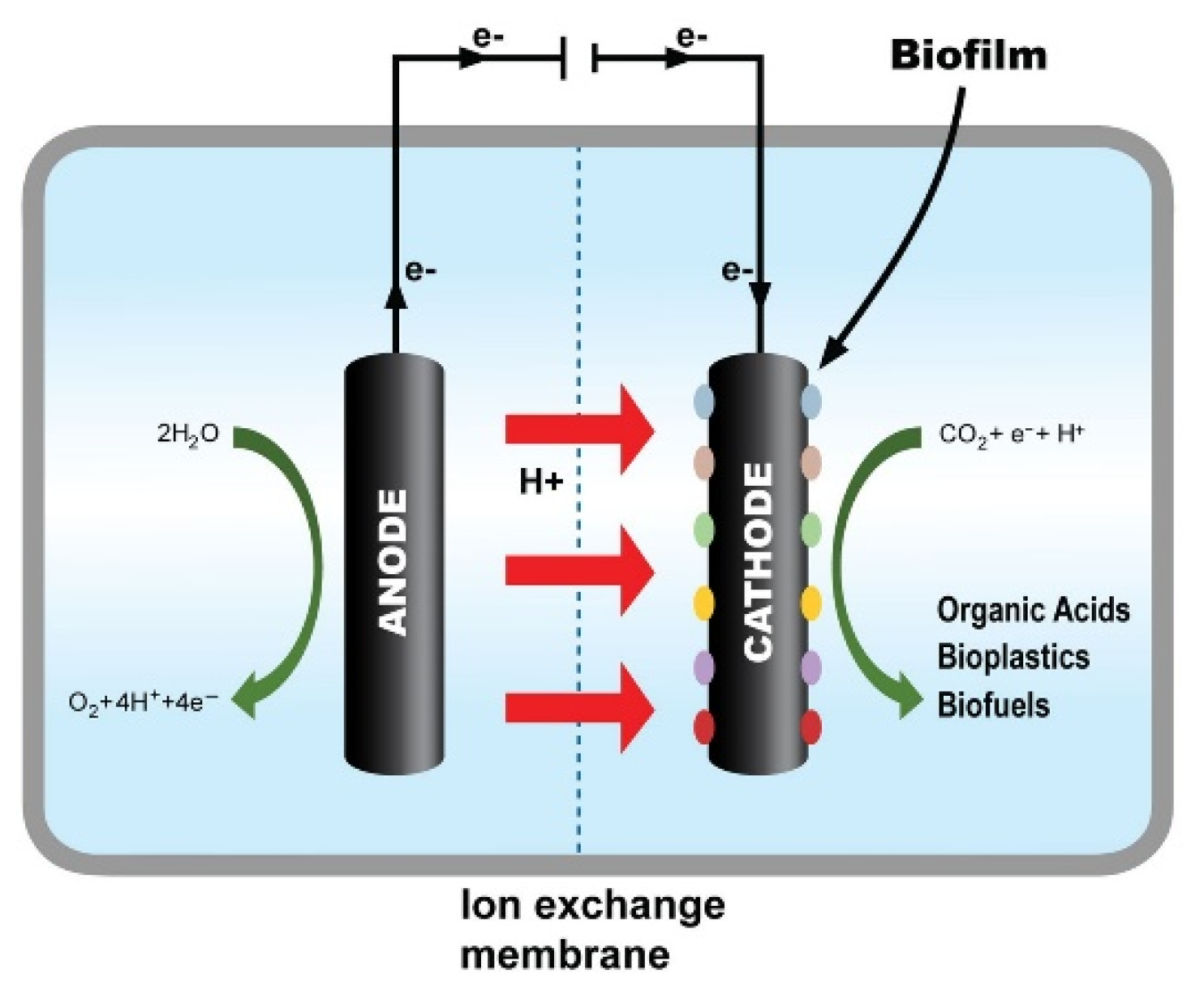
Figure 2.
Publication timeline (2010–2025) showing growth in number of MES publications and key milestone years.
Figure 2.
Publication timeline (2010–2025) showing growth in number of MES publications and key milestone years.
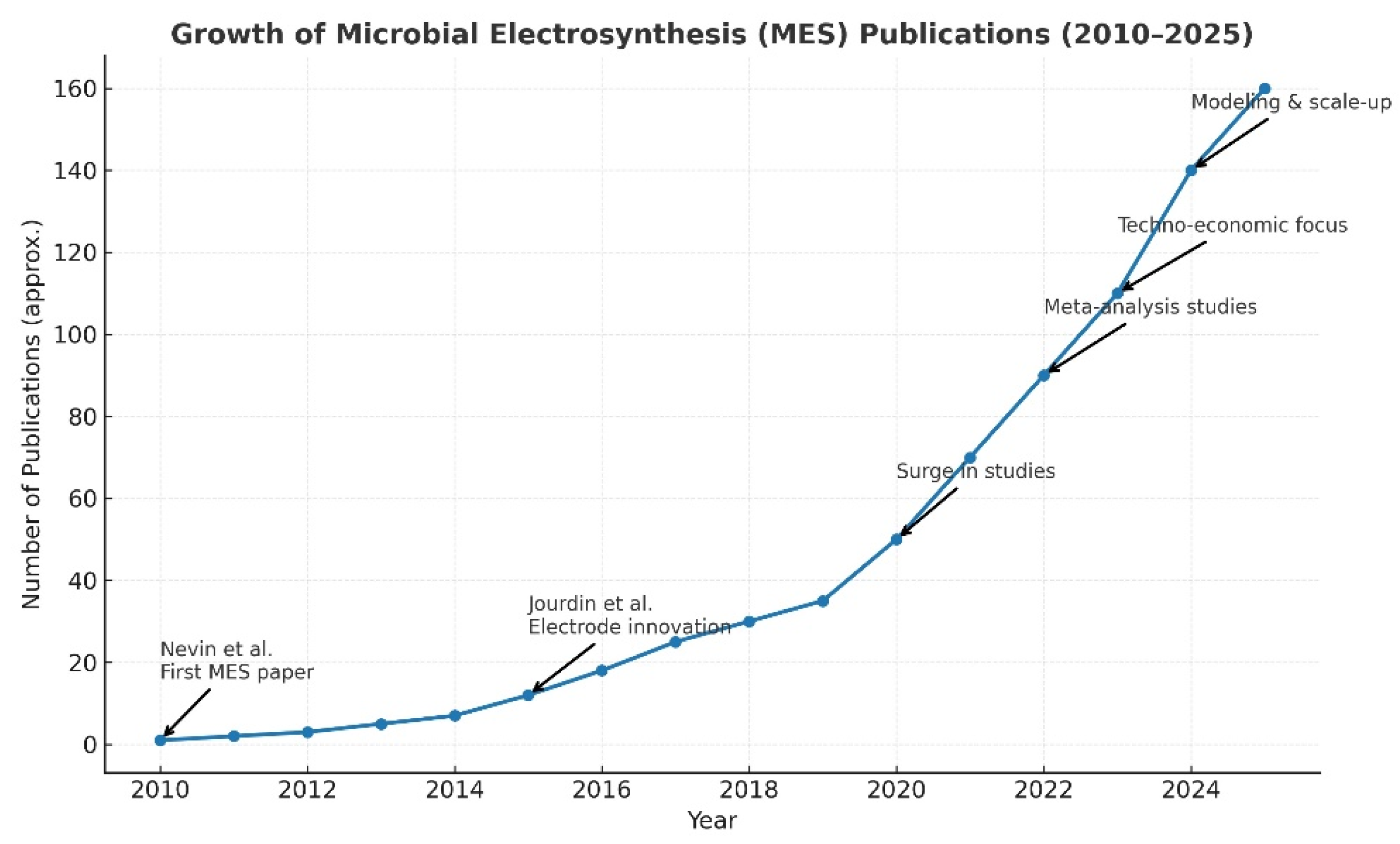
Figure 3.
Comparative performance chart of cathode types (graphite, carbon felt, rGO/graphene, 3-D printed, Fe–Mn coated.
Figure 3.
Comparative performance chart of cathode types (graphite, carbon felt, rGO/graphene, 3-D printed, Fe–Mn coated.
Disclaimer/Publisher’s Note: The statements, opinions and data contained in all publications are solely those of the individual author(s) and contributor(s) and not of MDPI and/or the editor(s). MDPI and/or the editor(s) disclaim responsibility for any injury to people or property resulting from any ideas, methods, instructions or products referred to in the content. |
© 2025 by the authors. Licensee MDPI, Basel, Switzerland. This article is an open access article distributed under the terms and conditions of the Creative Commons Attribution (CC BY) license (http://creativecommons.org/licenses/by/4.0/).
Copyright: This open access article is published under a Creative Commons CC BY 4.0 license, which permit the free download, distribution, and reuse, provided that the author and preprint are cited in any reuse.