Preprint
Article

This version is not peer-reviewed.

Homeless HIV-Seropositive Queer People’s Experiences at Healthcare Facilities in Sub-Saharan Africa

Senzelokuhle.M. Nkabini  *

Submitted:

20 August 2025

Posted:

21 August 2025

You are already at the latest version

Abstract

Background: The ratio of homeless HIV-seropositive queer people has escalated drastically in the 21st century, within the 49 countries located in the sub-Saharan African region. Homeless people in the African continent amount to 38.7%, and the reasons regarding the cause of homelessness range from poverty, climate change, political wars and inhumane governmental legislations (1,2). However, the quantity is proportionately higher for homeless HIV-seropositive queer people compared to their heterosexual counterparts, because of the numerous anti-queer legislations that are adopted by governments that lead countries located in sub-Saharan Africa (3). Numerous homeless HIV-seropositive queer people have been forced into destitution, due to family rejection because of their queer identity, communal bullying, harassment & discrimination (4). This is regardless of evidence which states that tolerance for queer individuals in this region has increased (25%), because younger members of these sub-Saharan African urban communities are more open to learning about queer identities unlike the older ultra-religious members of society (5). Even though there is marginal progress regarding the patience, leniency and open-mindedness afforded to queer individuals by sub-Saharan Africa’s future leaders, the region still remains as the most hostile territory for any individual that does not align with heteronormative ideals. Regionally, miniscule improvements have been implemented regarding equality, inclusion, access and the protection of queer individuals within all facets of society (social, political, economic etc.) (6). The discrimination is even more merciless when queer people are both homeless and HIV-seropositive at the same time. Objective: To systematically map and synthesise the scientific evidence regarding Homeless HIV-seropositive Queer People’s Experiences at Healthcare Facilities in Sub-Saharan Africa. Methods: The primary aim of this systematic review is to map out and synthesise evidence of homeless HIV-seropositive queer people’s experiences at healthcare facilities in sub-Saharan Africa from existing literature. All forms of studies, grey literature and peer-reviewed journal articles focusing on homelessness, and HIV-seropositive queer people’s experiences at healthcare facilities in sub-Saharan Africa will be sourced. The primary research question that will guide this review is: What are the experiences of homeless HIV-seropositive queer people at healthcare facilities in sub-Saharan Africa? The secondary research questions are: What is known about the factors (service delivery, support, and policies) that contribute to homeless HIV-seropositive queer people’s experiences at health care facilities in sub-Saharan Africa? What is known about the consequences of homeless HIV-seropositive queer people’s experiences at health care facilities in sub-Saharan Africa? The eligibility of the research question was adequately addressed by the PCC (population, context, concept) framework. All searches will be conducted by SMN (author), LN and FZ (database search and records screening assistants) for studies and study designs published in peer-reviewed journals, grey literature, published and unpublished dissertations, case studies, reviews, essays, theses and symposium abstracts. The following databases will be utilized to search for studies: PubMed, PsycINFO, ProQuest, ERIC (Education Resources Information Center), Cochrane Reviews, UNAIDS, UNESCO (United Nations Educational, Scientific and Cultural Organization), ACHPR, UN-Habitat, Sociology Database and Scopus. The Preferred Reporting Items for Systematic and Meta Analyses (PRISMA) ScR flow chart/diagram presented in figure 1 will be utilized to summarize the study selection process (24,25). Results: The present protocol is registered on the PROSPERO platform. The results of this study will be disseminated through publication in peer-reviewed scientific journals. The data will also be made available to humanitarian organisations such as WHO, UNESCO, UNAIDS, ACHPR, UN-Habitat and ILGA. The findings from this study will inform the future research projects that these organisations embark on. Conclusion: The proposed review will generate findings that identify and describe the experiences of homeless HIV-seropositive queer people while accessing, or when they attempt to access services at health care facilities in sub-Saharan Africa. The systematic review will also identify knowledge gaps that can assist humanitarian organisations such as WHO, UNAIDS, UNESCO, PEPFAR, ACHPR, ILGA and UN-Habitat. The results of this study will be disseminated through publication in peer-reviewed scientific journals, and also be made available to the humanitarian organisations. Moreover, the findings from this study will inform the future research projects that these organisations embark on which includes homelessness, HIV/STIs, gender and sexual diversity, health and education.

Keywords: 
;  ;  ;  ;  

1. Introduction

The ratio of homeless HIV-seropositive queer people has escalated drastically in the 21st century, within the 49 countries located in the sub-Saharan African region. Homeless people in the African continent amount to 38.7%, and the reasons regarding the cause of homelessness range from poverty, climate change, political wars and inhumane governmental legislations [1,2]. However, the quantity is proportionately higher for homeless HIV-seropositive queer people compared to their heterosexual counterparts, because of the numerous anti-queer legislations that are adopted by governments that lead countries located in sub-Saharan Africa [3]. Numerous homeless HIV-seropositive queer people have been forced into destitution, due to family rejection because of their queer identity, communal bullying, harassment & discrimination [4]. This is regardless of evidence which states that tolerance for queer individuals in this region has increased (25%), because younger members of these sub-Saharan African urban communities are more open to learning about queer identities unlike the older ultra-religious members of society [5]. Even though there is marginal progress regarding the patience, leniency and open-mindedness afforded to queer individuals by sub-Saharan Africa’s future leaders, the region still remains as the most hostile territory for any individual that does not align with heteronormative ideals.
Regionally, miniscule improvements have been implemented regarding equality, inclusion, access and the protection of queer individuals within all facets of society (social, political, economic etc.) [6]. The discrimination is even more merciless when queer people are both homeless and HIV-seropositive at the same time. Firstly, they are marginalized by society, they experience prejudice which prevents them from accessing healthcare facilities because of queerphobia and the stigma associated with homelessness, secondly in some regions of sub-Saharan Africa they encounter criminalization due to their queer identity [7,8]. Furthermore, homeless HIV-seropositive queer people form part of the key populations (KP’s) that have a high risk of contracting the disease, transmitting the infection, and also due to them being unhoused they do not have easy access in obtaining their Antiretroviral Therapy (ART) medication. This can result in them being more susceptible to opportunistic health-related illnesses, and also contribute to the increase in new HIV and sexually transmitted infections due to a high viral load [7,8]. The Joint United Nations Programme on HIV/AIDS-UNAIDS [7,8] states that 65% of sub-Saharan African citizens are HIV-seropositive. The region has reported a 50% increase in new HIV infections despite the numerous HIV prevention programmes, and regardless of the increase in the number of adolescents (Female 55%, Male 62%) that have basic comprehensive HIV knowledge [7,8,9]. These new HIV infections are due to a plethora of reasons such as: hindered access to HIV testing, lack of HIV treatment & prevention at healthcare facilities; people partaking in unsafe sex work (increased to 2.7%) as a source of income; and the sharing of injectable drugs (increased to 7.1%) [7,8]. Moreover, a portion (16.1%) of queer people contributed to these new HIV infections in sub-Saharan Africa [7,8]. The lack of safe-sex-education for homeless HIV-seropositive queer people is a result of not being able to gain access into sub-Saharan African healthcare facilities because of the stigma associated with: being homeless, being HIV-seropositive, the microaggressions that they encounter because of their queer identity, and a deplorable lack in implementation of HIV prevention programmes that solely cater for homeless queer people in sub-Saharan Africa.
Programs that are implemented by the World Health Organization (WHO) such as Global HIV, Hepatitis and STIs Programmes 2022-2030, assist in raising awareness about the escalating HIV epidemic within the queer community [10]. These programmes have advocated for the abolishment of queerphobic violence and discrimination perpetrated against this marginalized group [10,11,12]. However, the human rights of queer people still continue to get violated, through the refusal of medical care despite the sustainable development goals (SDG’s) that were set by the United Nations in 2016 [1]. The 17 SDGs were formed to address the numerous social, economic, and health-related global issues that are experienced by citizens in developed, developing and under developed countries [13,14]. Furthermore, the escalating rates of: homelessness, HIV infections and intolerance towards queer people in sub-Saharan African societies and healthcare facilities, are considered global challenges by the United Nations. Hence, these challenges are included in SDGs such as SDG 3: Good Health and Well-being, SDG 5: Gender Equality, SDG 10: Reduced Inequality, and SDG 16: Peace and Justice Strong Institutions [13,14]. These SDGs are relevant because they promote equality, patient-centred care, justice, communal unity and HIV/STI awareness.
In order to avoid the duplication of previous reviews and studies conducted on this topic, the research team conducted a preliminary database electronic search on PubMed and Cochrane Reviews database of systematic reviews and several other databases. This was done in order to ensure that a systematic review, on homeless HIV-seropositive queer people’s experiences at healthcare facilities in sub-Saharan Africa has not been conducted in the last decade or the previous five years before 2025. In spite of the current existing stigma associated with being homeless, being HIV-seropositive and the queerphobia that has been documented about the sub-Saharan African region [15]. Thus, the importance and relevance of this review. The results from this review will expose the existing literature gap/s that can be explored in the future, and also be utilized to inform current research regarding homeless HIV-seropositive queer people’s experiences at healthcare facilities in sub-Saharan Africa. Moreover, the results from this systematic review can also apprise upcoming research of global humanitarian organisations such as WHO, UNAIDS, the United States Presidents Emergency Plan for Aids Relief (PEPFAR), the African Commission on Human and People’s Rights (ACHPR), United Nations Human Settlements Programme (UN-Habitat), and International Lesbian, Gay, Bisexual, Trans and Intersex Association (ILGA). These humanitarian organisations operate synchronously with the United Nations (UN) SDGs, through ensuring that all citizens of our multifaceted global communities enjoy the benefits of living in a developed and cohesive society without fear of prejudice or discrimination.

2. Methods

The primary aim of this systematic review is to map out and synthesise evidence of homeless HIV-seropositive queer people’s experiences at healthcare facilities in sub-Saharan Africa from existing literature. All forms of studies, grey literature and peer-reviewed journal articles focusing on homelessness, and HIV-seropositive queer people’s experiences at healthcare facilities in sub-Saharan Africa will be sourced. The primary research question that will guide this review is: What are the experiences of homeless HIV-seropositive queer people at healthcare facilities in sub-Saharan Africa? The secondary research questions are: What is known about the factors (service delivery, support, and policies) that contribute to homeless HIV-seropositive queer people’s experiences at health care facilities in sub-Saharan Africa? What is known about the consequences of homeless HIV-seropositive queer people’s experiences at health care facilities in sub-Saharan Africa? The eligibility of the research question was adequately addressed by the PCC (population, context, concept) framework. This framework was selected for its appropriateness because it charts the extensiveness of the evidence through identifying key concepts.
  • PCC (Population, Context, Concept) framework
Population: Homeless HIV-seropositive queer people that are either same-sex attracted, non-binary, transgender, intersex or asexual [16].
Age: 13 to 80+ years old is the age range that will be used to filter the literature from the databases, because the process of physical and sexual maturation starts at 13 for girls and 14 for boys. These are the ages that have an average HIV prevalence [9,17].
Concept: Experiences at healthcare facilities in this review, utilizes The Beryl Institute’s definition of “patient experiences” and includes the summation of all interactions, created by an establishment’s culture, that influence patients’ perceptions [18].
Context: sub-Saharan Africa comprises of 49 countries out of 54 African nations, excluding Algeria, Djibouti, Egypt, Libya, Morocco, Somalia, Sudan and Tunisia [19].
Sources of evidence: All studies, grey and empirical literature containing evidence on homeless HIV-seropositive queer people’s experiences at healthcare facilities in sub-Saharan Africa.
Publication Year Range: 01/01/2016-19/08/2025 Language: English.

2.1. Information Sources and Search Strategy

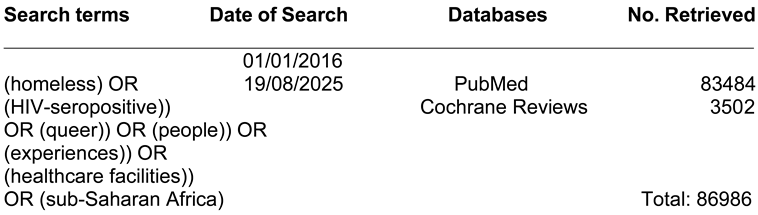
All searches will be conducted by SMN (author), LN and FZ (database search and records screening assistants) for studies and study designs published in peer-reviewed journals, grey literature, published and unpublished dissertations, case studies, reviews, essays, theses and symposium abstracts. The following databases will be utilized to search for studies: PubMed, PsycINFO, ProQuest, ERIC (Education Resources Information Center), Cochrane Reviews, UNAIDS, UNESCO (United Nations Educational, Scientific and Cultural Organization), ACHPR, UN-Habitat, Sociology Database and Scopus. The search strategy will use the Boolean term ‘OR’ to separate words or search terms. The following search terms will be utilised: homeless OR HIV-seropositive OR queer OR people OR experiences OR healthcare facilities OR sub-Saharan Africa. A preliminary data base search was conducted by the research team using the search terms, and the results are presented in Table 1. The preliminary search produced all studies, qualitative and quantitative full-text grey literature and peer-reviewed literature written in English, and published within the search time-line from 01January 2016 till 19 August 2025.

2.2. Inclusion and Exclusion Criteria

The selection of eligible studies will be based on the title (homeless, homelessness, destitute, unhoused, unsheltered), abstract, setting (sub-Saharan Africa), study population (HIV-seropositive, HIV positive, HIV infected; HIV-seropositive queer people, HIV positive LGBTQI+ people) and the findings in full-text studies, books, grey literature and journal articles relating to homeless HIV-seropositive queer people’s experiences at healthcare facilities in sub-Saharan Africa. All database searches will be conducted on a weekly basis by SMN, LN and FZ to ensure new literature is included. Studies that do not exclusively focus on: Homeless HIV-seropositive queer people’s experiences at healthcare facilities in sub-Saharan Africa as a whole will be disregarded. Only studies that adhere to the following criteria will be included: (i) homeless HIV-seropositive queer people’s experiences at healthcare facilities in sub-Saharan Africa, (ii) qualitative and quantitative study designs iii) only studies written or translated in the English language, (iv) studies and articles published from 2016 to 2025 and, (v) only studies, books, grey literature or journal articles that are restricted to human ages 13 to 80+ years old, full-text, have references/citations and have been peer-reviewed. Studies that are: (i) written in other languages, (II) published before 2016, will be excluded.

2.3. Data Management and Study Selection

Arksey and O’Malley’s framework [20], the enhancements by Levac et al. [21], Daudt et al. [22], and Johanna Briggs [23] Institute’s guidelines, will guide this review. The Preferred Reporting Items for Systematic and Meta Analyses (PRISMA) ScR flow chart/diagram presented in Figure 1 will be utilized to summarize the study selection process [24,25]. The author and the two research assistants will ensure that all retrieved literature will be exported and saved to an Endnote 21.3 library folder, in order to enable the study to be reproduced for a second time at a later stage. Moreover, this process will allow SMN, LN and FZ to create separate libraries for each database, in order to import references, remove duplicates, and organize the findings.

2.4. Data Extraction

A data charting form will be prepared in order to document the extracted data. Studies that meet the inclusion criteria will be included on the charting form. The data charting form will include: author names and date of publication, title of study, aim of study, study design, study population, and significant findings. The use of the NVivo data analysis software and Braun and Clarke’s [26] thematic framework will guide the qualitative analysis. The data extraction form will be updated on a weekly basis to guarantee accurateness, especially since a preliminary data base search was conducted by the research team, and there was confusion on whether studies that generalize the experiences of sheltered/housed HIV-seropositive queer people in sub-Saharan African healthcare facilities should be included or not. The research team decided against this because the initial plan was to solely focus on mapping existing literature, and identifying key concepts and literature gaps that only focus on homeless HIV-seropositive queer people’s experiences at healthcare facilities in sub-Saharan Africa. Discrepancies of this manner will be resolved through consensus between SMN, LN and FZ.

2.5. Risk of Bias Assessment

Studies or articles that only feature few countries that are located in the sub-Saharan African region will not be included, because the research results from these studies do not represent a portion of sub-Saharan Africa. In order to avoid biasness the review will utilise the mixed-method appraisal tool (MMAT) version 2018 to appraise the quality of all included evidence [27]. SMN, LN & FZ will be responsible for assigning ratings of 100% for high average sources, 50% average and 25% for low-quality articles.

2.6. Discrepancies Between the Protocol and the Scoping Review

Discrepancies between the protocol, the actual review and the reasons and consequences thereof will be reported in the final report.

3. Results

The present protocol is registered on the PROSPERO platform. The results of this study will be disseminated through publication in peer-reviewed scientific journals. The data will also be made available to humanitarian organisations such as WHO, UNAIDS, ACHPR, UN-Habitat and ILGA. The findings from this study will inform the future research projects that these organisations embark on.

4. Discussion

The proposed systematic review will generate findings that identify and describe the experiences of homeless HIV-seropositive queer people while accessing, or when they attempt to access services at health care facilities in sub-Saharan Africa. The review will also identify knowledge gaps that can assist humanitarian organisations such as WHO, UNAIDS, UNESCO, PEPFAR, ACHPR, ILGA and UN-Habitat. The results of this study will be disseminated through publication in peer-reviewed scientific journals, and also be made available to the humanitarian organisations. Moreover, the findings from this study will inform the future research projects that these organisations embark on which includes homelessness, HIV/STIs, gender and sexual diversity, health and education. The strengths of conducting this systematic review are mapping and synthesising evidence of an under-researched topic in sub-Saharan Africa. Hence, the results emanating from this review could possibly emphasise the relationships between homelessness, an HIV diagnosis, mental health disorders such as anxiety disorder, depression, bipolar disorder, post-traumatic stress disorder, schizophrenia, disruptive behaviour and dissocial disorders, neurodevelopmental disorders, and the need for further investigation and attention.

Authors Contributions

SMN conducted the preliminary database search for the protocol, conducted searches on the 11 databases that are included in this manuscript, conducted the record screening process, conceptualised, drafted, edited, reviewed, sent out the draft manuscript for constructive feedback, and approved the final manuscript. LN and FZ only assisted with the preliminary database search for the protocol, conducted searches on the 11 databases that are included in this manuscript, and assisted with the record screening process.

Data Availability Statement

The data sets that were generated during this study are available from the corresponding author on reasonable request.

Acknowledgments

The author expresses his gratitude to: the Faculty of Humanities at the University of Pretoria, as well as Ms Lindiwe Nkabini and Ms. Fezile Zuma for the preliminary database search.

Conflict of Interest

No potential conflict of interest was reported by the author.

Abbreviations

STI Sexually Transmitted Infection

References

  1. OHCHR. Born Free and Equal: Sexual Orientation, Gender Identity and Sex Characteristics in International Human Rights Law. 2019. Available online: https://www.ohchr.org/sites/default/files/Documents/Publications/Born_Free_and_Equal_WEB.pdf.
  2. Olaogun, O.J.; Adekunle, A.S. The Impact of Poverty and Homelessness on Child Welfare in Developing Societies: A Social Worker’s Perspective. IRSG Journal of Arts, Humanities and Social Sciences 2024, 2, 199–207. [Google Scholar] [CrossRef]
  3. Hagopian, A.; Rao, D.; Katz, A.; Sanford, S.; Barnhart, S. Anti-homosexual legislation and HIV-related stigma in African nations: What has been the role of PEPFAR? Global health action 2017, 10, 1306391. [Google Scholar] [CrossRef] [PubMed]
  4. HRW-Human Rights Watch. The right to housing of LGBT youth: An urgent task in the SDG agenda setting. 2015. Available online: https://www.ohchr.org/sites/default/files/Documents/Issues/Housing/Homelessness/CSOs/28102015-HRW_LGBT_US.pdf.
  5. Van Heerden, G. LGBTQ rights in sub-Saharan Africa; Perspectives of the region from the region. South African Institute of Race Relations. [Internet]. 2019. Available online: https://irr.org.za/reports/occasional-reports/files/lgbtq-rights-in-sub-saharan-africa.pdf.
  6. Badgett, M.L.; Waaldijk, K.; van der Meulen Rodgers, Y. The relationship between LGBT inclusion and economic development: Macro-level evidence. World Development 2019, 120, 1–14. [Google Scholar] [CrossRef]
  7. UNAIDS. UNAIDS Data 2024. 2024. Available online: https://www.unaids.org/sites/default/files/media_asset/2024-unaids-global-aids-update_en.pdf.
  8. UNAIDS report. AIDS, Crisis and The Power to Transform. 2025. Available online: https://www.unaids.org/sites/default/files/2025-07/2025-global-aids-update-JC3153_en.pdf.
  9. UNESCO. Comprehensive Sexuality Education: Education for a healthy future. 2018. Available online: https://unesdoc.unesco.org/ark:/48223/pf0000376721.
  10. WHO. Global HIV, Hepatitis and STI Programmes. 2022. Available online: https://www.who.int/teams/global-hiv-hepatitis-and-stis-programmes/overview.
  11. UNAIDS-AIDS and SDG’s. The AIDS response in the 2030 AGENDA for sustainable development: Joint work, shared gains. 2016. Available online: https://www.unaids.org./en/AIDS_SDGS.
  12. UNAIDS. UNAIDS calls on countries to remove discriminatory laws and enact laws that protect people from discrimination. 2019. Available online: https://www.unaids.org/en/resources/presscentre/pressreleaseandstatementarchive/2019/may/20190516_IDAHOT.
  13. UN. The sustainable development agenda. 2019. Available online: https:// www.un.org/sustainabledevelopment/development-agenda/.
  14. UN. The Sustainable Development Goals Report 2025. 2025. Available online: https://unstats.un.org/sdgs/report/2025/The-Sustainable-Development-Goals-Report-2025.pdf.
  15. Beckham, S.W.; Glick, J.; Malone, J.; Rich, A.J.; Wirtz, A.; Baral, S. HIV/AIDS among sexual and gender minority communities globally. In Global LGBTQ Health: Research, Policy, Practice, and Pathways; Springer International Publishing: Cham, 2024; pp. 183–220. [Google Scholar]
  16. Mehrtens, I.K. The relative impact of risk and protective factors on the psychological functioning of sexual and gender minority youth. Doctoral Dissertation, Louisiana State University and Agricultural & Mechanical College, 2020. [Google Scholar]
  17. Stratton, G.; Oliver, J.L. The impact of growth and maturation on physical performance. In Strength and conditioning for young athletes; Routledge: UK, 2019; pp. 3–20. [Google Scholar]
  18. The Beryl Institute Website. Defining patient experience. 2020. Available online: http://www.theberylinstitute.org/?page=DefiningPatientExp.
  19. Kampala, L.T. What is sub-Saharan Africa? 2019. Available online: https://www.economist.com/the-economist.com/the-economistexplains/2019/03/07/what-is-sub-saharan-africa.
  20. Arksey, H.; O’malley, L. Scoping studies: Towards a methodological framework. International journal of social research methodology 2005, 8, 19–32. [Google Scholar] [CrossRef]
  21. Levac, D.; Colquhoun, H.; O’brien, K.K. Scoping studies: Advancing the methodology. Implementation science 2010, 5. Available online: http://www.implementationscience.com/content/5/1/69. [CrossRef] [PubMed]
  22. Daudt, H.M.; Van Mossel, C.; Scott, S.J. Enhancing the scoping study methodology: A large, inter-professional team’s experience with Arksey and O’Malley’s framework. BMC medical research methodology 2013, 13. Available online: http://www.biomedcentral.com/1471-2288/13/48. [CrossRef] [PubMed]
  23. Briggs, J. Joanna Briggs Institute Reviewers’ Manual: 2015 Edition, methodology for JBI scoping reviews; Joanna Briggs Institute: Australia, 2015. [Google Scholar]
  24. Moher, D.; Shamseer, L.; Clarke, M.; Ghersi, D.; Liberati, A.; Petticrew, M.; Shekelle, P.; Stewart, L.A.; Prisma-P Group. Preferred reporting items for systematic review and meta-analysis protocols (PRISMA-P) 2015 statement. Systematic reviews 2015, 4. Available online: http://www.systematicreviewsjournal.com/content/4/1/1. [CrossRef] [PubMed]
  25. Tricco, A.C.; Lillie, E.; Zarin, W.; O’Brien, K.K.; Colquhoun, H.; Levac, D.; Moher, D.; Straus, S.E. PRISMA extension for scoping reviews (PRISMA-ScR): Checklist and explanation. Annals of internal medicine 2018, 169, 467–473. [Google Scholar] [CrossRef] [PubMed]
  26. Braun, V.; Clarke, V. Using thematic analysis in psychology. Qualitative research in psychology 2006, 3, 77–101. [Google Scholar] [CrossRef]
  27. Hong, Q.N.; Fàbregues, S.; Bartlett, G.; Boardman, F.; Cargo, M.; Dagenais, P.; Gagnon, M.; Griffiths, F.; Nicolau, B.; O’Cathain, A.; Rousseau, M.; Vedel, I.; Pluye, P. The mixed methods appraisal tool (MMAT) version 2018 for information professionals and researchers. Educ Inform. 2018, 34, 285–291. [Google Scholar] [CrossRef]
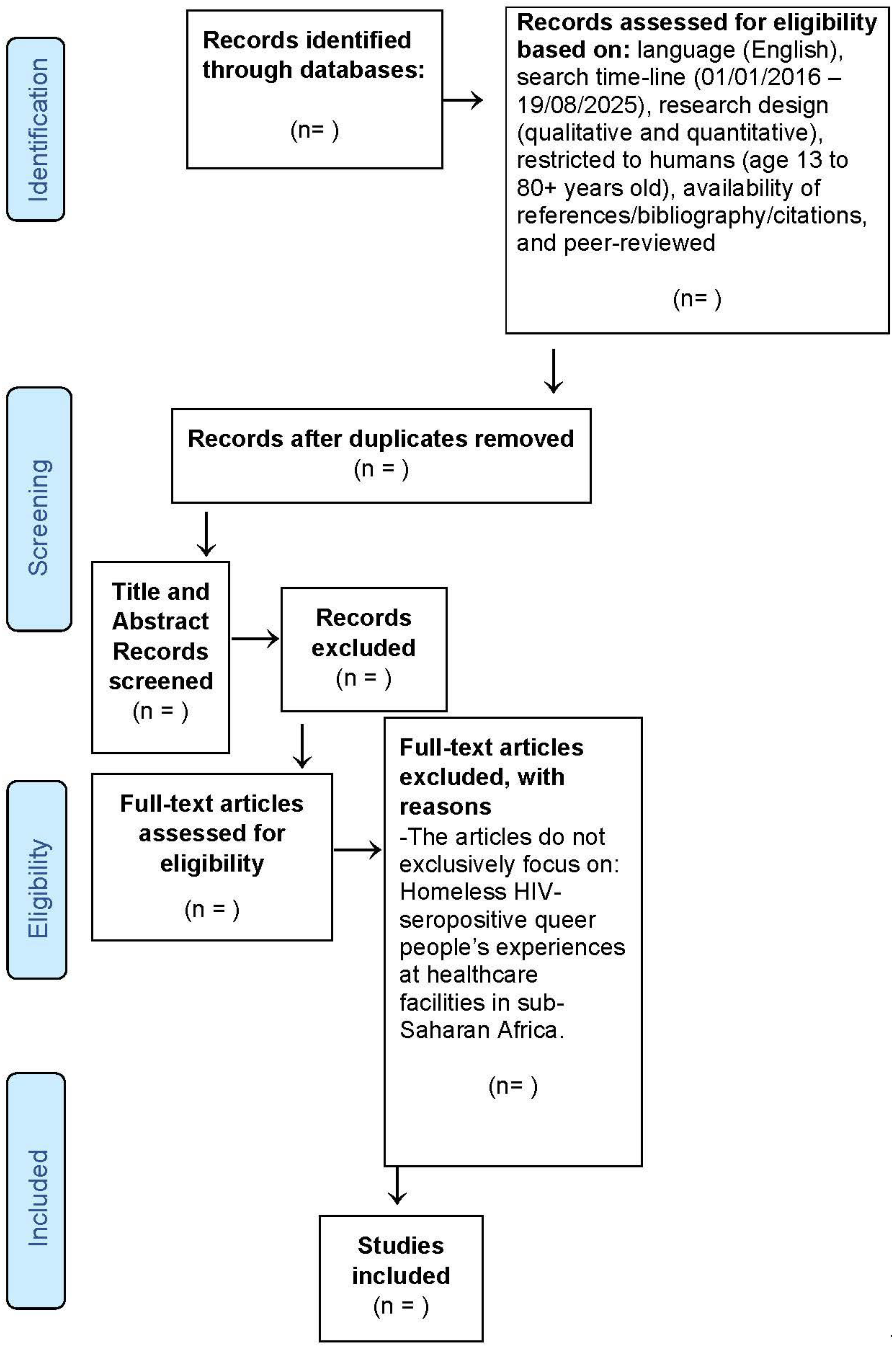
Figure 1. The Preferred Reporting Items for Systematic and Meta Analyses (PRISMA) ScR flow chart/diagram.
Preprints 173188 g001
Table 1. Preliminary database search results.
Preprints 173188 i001
Disclaimer/Publisher’s Note: The statements, opinions and data contained in all publications are solely those of the individual author(s) and contributor(s) and not of MDPI and/or the editor(s). MDPI and/or the editor(s) disclaim responsibility for any injury to people or property resulting from any ideas, methods, instructions or products referred to in the content.
Copyright: This open access article is published under a Creative Commons CC BY 4.0 license, which permit the free download, distribution, and reuse, provided that the author and preprint are cited in any reuse.
Prerpints.org logo

Preprints.org is a free preprint server supported by MDPI in Basel, Switzerland.

Subscribe

Disclaimer

Terms of Use

Privacy Policy

Privacy Settings

© 2026 MDPI (Basel, Switzerland) unless otherwise stated