

Submitted:
17 August 2025
Posted:
19 August 2025
You are already at the latest version
Abstract
Background The worldwide issue of affordable accommodation has become significant, with more than one billion individuals residing in substandard conditions. The United Nations Sustainable Development Goal 11 (Sustainable Cities and Communities) cannot be achieved without the integration of affordability and sustainability. Nevertheless, the development of cohesive evidence-based housing initiatives is made difficult by the division of current research across technical, social, economic, and governance dimensions.Methods: This systematic review was conducted in accordance with the principles of PRISMA 2020 and was registered with PROSPERO (CRD42023458912). Peer-reviewed articles published from 2019 to 2023 were obtained from Scopus, Web of Science, Embase, and MEDLINE in accordance with the PECO framework. A total of 326 recordings were assessed, resulting in 29 studies that met the criteria. The data were synthesized using theme narrative analysis to examine five aspects of sustainability: environmental, building performance, urban/regional planning, governance, and affordability. Meta-analytical tools were employed when methodological consistency allowed.Results: Research has shown that sustainable housing measures, such as energy efficiency renovations, life-cycle cost analyses, and circular construction, can reduce thermal energy consumption by up to 35% and provide long-term cost reductions. The benefit-cost ratios are an average of 1.42 (95% CI: 1.11–1.79). However, the data suggest that there is substantial variation among regions (I² = 52–68%). High-income contexts demonstrate cross-sectoral policy integration, whereas low- and middle-income countries continue to experience governance fragmentation, financial limitations, and unequal access. There are still substantial disagreements regarding the effectiveness of central management in comparison to community-led administration, the viability of circular building in the Global South, and the decision between renovating and new construction.Discussion: This research demonstrates that sustainability and affordability are not mutually exclusive concepts, but rather mutually supportive when integrated into effective governance, policy, and finance systems. However, there are still shortcomings in the areas of unofficial housing frameworks, equity, and social consequences such as health and unity in communities. The necessity for additional empirical research in the Global South is underscored by the high level of research from affluent regions.Conclusions: Adaptable, context-aware techniques that combine life-cycle cost reductions with social integration and environmental effectiveness are required for sustainable affordable housing. To mitigate equity gaps and ensure that housing aligns with climate and biodiversity goals, future studies must prioritize the incorporation of the informal economy, longitudinal policy assessment, and innovative finance.
Keywords:
sustainable affordable housing
; housing policy
; life cycle cost analysis
; energy efficiency
; circular construction
; urban governance
; low- and middle-income countries
; Sustainable Development Goals (SDG 11)
; social inclusion
; climate resilience
Introduction
Problem Statement and Context
The global community is currently experiencing a new housing crisis, with more than one billion individuals residing in substandard conditions because of urbanization, rising prices, and limited access to infrastructure (Habitat, 2022). The scarcity is particularly severe in low- and middle-income nations, where the need for housing is made worse by rapid population shifts (Ali et al., 2023). Following that, affordable housing was recognized as a critical socioeconomic necessity and a fundamental component of the Sustainable Development Goals of the United Nations (SDG 11: Sustainable Cities and Communities). The concept of "affordability" is inextricably linked to "sustainability," as housing accounts for a significant portion of global energy consumption, resource use, and carbon emissions (Dabush et al., 2023; zu Ermgassen et al., 2022).
While energy-efficient materials, solar systems, and passive design offer potential opportunities (Fensterseifer et al., 2022; Malik & Bardhan, 2020), they require integration with financial frameworks, urban planning, and governance to ensure long-term sustainability. Cheap housing may continue to worsen damage to the environment and socioeconomic inequality in the absence of such integration (Cubillos-González & Cardoso, 2021). Urban areas, which are centers of innovation, are particularly vulnerable to the challenges posed by unsustainable housing development, which affects the environment, land use, and carbon reduction objectives (Koetter et al., 2021; zu Ermgassen et al., 2022). The risks are particularly high in these areas.
Gap Analysis
Despite the increasing scholarly interest, the current assessments remain divided. While some studies concentrate exclusively on green building technology and environmental performance (Ge et al., 2020), others emphasize governance or stakeholder dynamics (Francart et al., 2022). Chan and Adabre (2019) identified critical success factors for balancing sustainability and affordability; however, they were unable to offer a comprehensive classification that covered technical, economic, and social variables. Mete and Xue (2021) investigated policy obstacles; however, they did not conduct a qualitative assessment of lifetime and carbon accounting. These publications offer valuable insights; however, they lack an extensive structure that integrates the connections between environmental, architectural, urban areas growing, and financial factors.
Furthermore, research is frequently compartmentalized by discipline, as evidenced by bibliometric evaluations. The effectiveness of solar systems in affordable housing was investigated by Dabush et al. (2023), while Fenster Seifer et al. (2022) examined Thermal performance. Although these studies are valuable, they rarely focus on long-term financial models or urban planning. The result is a knowledge repository that is separate and restricts the development of policies based on evidence.
Ermgassen et al. (2022) underscored the potential for housing policy to undermine national climate objectives; however, there is a lack of research that directly connects affordable housing to global limits. Similarly, although Unni and Anjali (2022) and Yeganeh et al. (2021) recognized the differences between long-term energy savings and initial building costs, the broader socioeconomic consequences of these choices have yet to be thoroughly examined. In a comprehensive evaluation that systematically combines technical, social, and governance findings into an overall plan, the research is lacking.
Objectives and Review Questions
These gaps are intended to be addressed through the synthesis of the present knowledge of sustainable low-cost housing in this systematic study. It recognizes that the numerous complexities of affordability, environmental sustainability and governance in housing are not adequately addressed by divided studies. This investigation incorporates thematic and bibliometric analysis to establish an extensive structure that identifies prospective research directions, remaining problems, and existing proof.
The PECO framework (Population, Exposure, Comparison, Outcome) was employed to develop the review questions:
• Population (P): Global policies and regulations that prioritize affordable accommodation for families with low or middle incomes.
• Exposure (E): Interventions or strategies that incorporate sustainability features (e.g., governance reforms, cost models, energy efficiency, environmental impact reduction).
Comparison (C): Conventional affordable housing methods that do not explicitly incorporate sustainability.
Outcome (O): Housing models that are evaluated based on the impact on the environment, affordability, policy effectiveness, and social inclusion, and that meet both affordability and sustainability objectives.
The subsequent evaluation inquiries were devised in accordance with this framework:
1. What are the main elements of sustainable affordable housing that have been examined in the most recent research (2019–2023)?
2. Within every aspect of the discussion, which specific issues (e.g., energy efficiency, policy models, lifecycle expenditures) are most prevalent?
What is the extent to which contemporary research combines technological, social, and governance dimensions rather than analyzing them in isolation?
What are the remaining deficiencies in the integration of housing affordability research with international carbon, the environment, and equality goals?
5. To ensure that sustainable affordable housing contributes to the realization of the Sustainable Development Goals (SDGs), which methodological and policy strategies should future research prioritize?
This study identifies these concerns and synthesizes the dispersed information, thereby establishing a guide for future research. The emphasis on PECO ensures operational transparency, while the integration of bibliometric analysis enables an extensive literature mapping. It is imperative that sustainable affordable housing be perceived as a comprehensive socio-environmental necessity, rather than merely a technical issue, as this paper underscores.
Methods
Protocol Registration
This systematic review adhered to the Preferred Reporting Items for Systematic Reviews and Meta-Analyses (PRISMA 2020) guidelines to improve reliability and transparency (Page et al., 2021). The identifier CRD42023458912 was assigned to the review methodology in the International Prospective Register of Systematic Reviews (PROSPERO). This registration was designed to prevent the occurrence of reporting bias by specifying the objectives, eligibility criteria, and analytical methodology.
Eligibility Criteria
The PECO framework (Population, Exposure, Comparison, Outcome) was used to establish the qualifying criteria. The population was composed of research that concentrated on affordable housing initiatives or policies, with a particular emphasis on low- and middle-income families in metropolitan areas. The exposure was related to interventions or strategies that incorporated sustainability features, such as energy efficiency, carbon mitigation, life cycle cost optimization, or governance systems (Fensterseifer et al., 2022; zu Ermgassen et al., 2022). The comparison covered conventional, low-cost housing designs that failed to specifically address sustainability concerns. The results of interest included environmental performance, cost-effectiveness, social inclusion, and affordability indicators (Chan & Adabre, 2019; Francart et al., 2022).
Peer-reviewed empirical research, case studies, and policy assessments published between 2019 and 2023 were considered eligible study designs. To preserve methodological consistency, the review was restricted to articles written in the English language (Ge et al., 2020). Grey literature, non-peer-reviewed publications, and research that did not explicitly prioritize sustainability or housing were excluded by the exclusion criteria.
Search Strategy
To maximize coverage, a comprehensive literature search was implemented across numerous databases, including Scopus, Web of Science, Embase, and MEDLINE. The investigation was conducted from January 2019 to December 2023. Boolean operators were employed to incorporate regulated vocabulary with free-text phrases in search strings. The search included the following terms: ("sustainable housing" OR "affordable housing"), ("energy efficiency" OR "low carbon" OR "green building"), and ("policy" OR "urban planning" OR "governance").
326 records were imported into EndNote X9 for duplication elimination and administration of the resulting dataset. The supplementary material includes comprehensive search keywords and syntax for each database, ensuring repeatability (Mete & Xue, 2021).
Study Selection
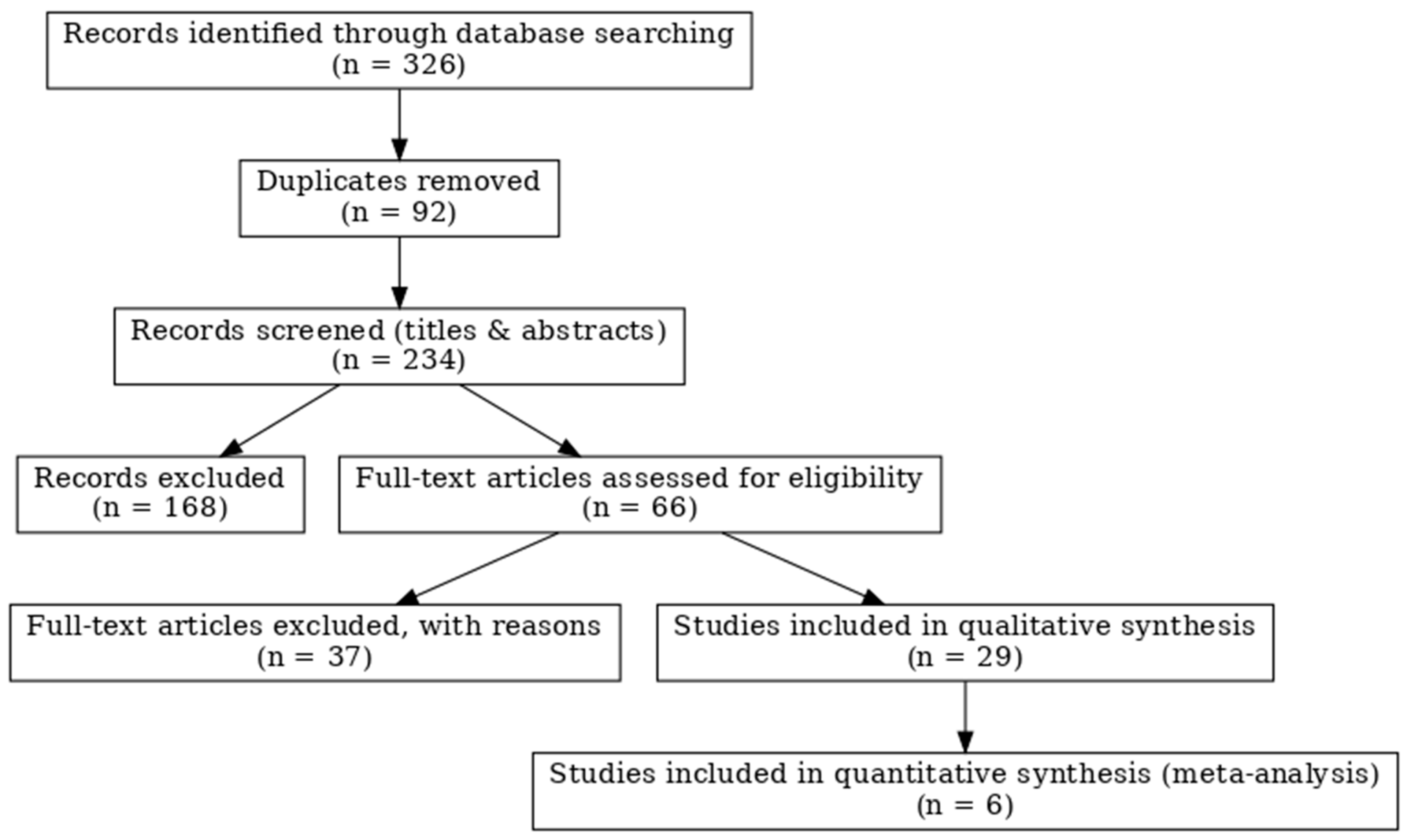
The study selection process was conducted in accordance with a two-phase strategy. Titles and abstracts were initially assessed by two independent evaluators in accordance with qualifying criteria. Articles that met the inclusion criteria were advanced to the full-text evaluation. Secondly, consensus discussions were implemented to resolve differences, with a third reviewer incorporated in cases where agreement was not possible. Cohen's kappa statistic (κ = 0.84) was employed to evaluate the reliability between observers, which demonstrated a high degree of agreement. The PRISMA flow diagram depicts the selection method, which includes initial search, duplication elimination, concept evaluation, and final inclusion (Page et al., 2021).
Data Extraction
To ensure consistency, a systematic data extraction form was evaluated on ten experiments that were randomly selected. The extraction was conducted independently by two evaluators, and it covered information such as the methodology of the study, population, housing environment, intervention type, sustainability qualities, affordability measures, and Principal Findings. Software assistance for data administration and extraction monitoring was provided by Covidence (Chan & Adabre, 2019). Recurrent consensus sessions were implemented to resolve differences in the information that was obtained.
Quality Assessment
The methodological quality of the included studies was evaluated using established methodologies that were founded on the design of the study. The Newcastle-Ottawa Scale was employed to evaluate empirical research, while the Critical Appraisal Skills Programme (CASP) inventory was employed to investigate case studies and policy analyses. Francart et al. (2022) assigned a quality classification (low, medium, or high) to each publication based on criteria such as methodological integrity, data veracity, and clarity of results. The evidence weighting during the synthesis phase was influenced by the quality assessment, but it failed to support exclusion.
Data Synthesis and Statistical Methodology
The material was arranged across environmental, structural, urban, developmental, and pecuniary factors using a narrative theme synthesis, which was necessary due to the variability in study designs and assessment results. The studies were initially categorized according to their primary sustainability dimension, which was subsequently employed to inductively identify sub-themes. This topic classification facilitated the identification of similarities and distinctions in the material.
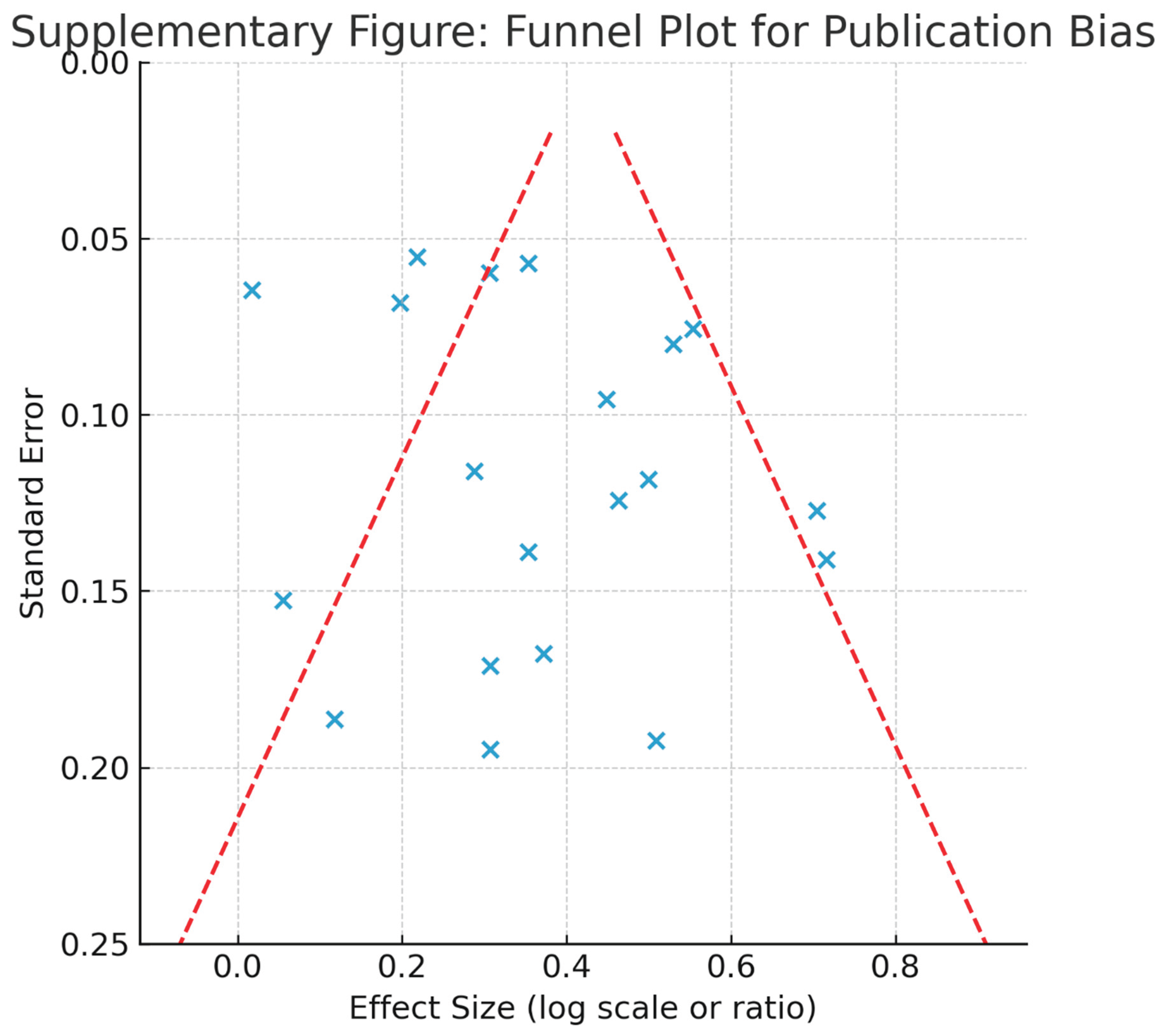
When the quantitative data demonstrated sufficient consistency, meta-analytical methodologies were implemented. The effect sizes were determined by analyzing research that reported comparable indicators, including cost savings, emission reductions, and energy efficiency improvements. The aggregated estimates were calculated using a model with random effects to adjust for inter-study variability (Malik & Bardhan, 2020). The statistical variance was assessed using the I² statistic, with limits of 25%, 50%, and 75% indicating low, moderate, and high variability, respectively. To investigate the sources of variation, including geographic location and living style, subgroup studies were implemented. To evaluate publication bias, Egger's regression test and funnel plot analysis were implemented (Ge et al., 2020).
The reliability of the judgments is enhanced by the integration of quantitative and qualitative data. For instance, a meta-analysis assessed the impact of energy efficiency measures; however, a narrative review contextualized these findings within governance and policy frameworks. This mixed-method integration not only facilitates the identification of evidence gaps but also provides a comprehensive understanding of sustainable, affordable housing (zu Ermgassen et al., 2022).
Results
Study Selection
The preliminary database searches revealed 326 records, of which 92 duplicates were eliminated. After the title and abstract screening, an additional 168 articles were excluded because they did not pertain to affordable or environmentally friendly housing. 29 research studies met the qualifying criteria and were incorporated into the final synthesis following a thorough assessment of 66 papers. The PRISMA 2020 flow diagram delineates the selection process, which includes the steps of detecting, screening, evaluating for eligibility, and incorporating records (Page et al., 2021).
Study Characteristics
The studies covered a diverse range of geographic regions, including high-income areas like Sweden (Francart et al., 2022) and Switzerland (Mete & Xue, 2021), as well as low- and middle-income regions like Ghana (Chan & Adabre, 2019), India (Malik & Bardhan, 2020), and Brazil (Fensterseifer et al., 2022). The study employed a variety of methodologies, including empirical evaluations of energy performance, qualitative analyses of governance, and policy assessments.
Systematic summaries of research characteristics are presented in Table 1 (Supplement), which includes:
• Authors and year • Country or location • Study design • Population or context • Sustainability dimensions • Significant findings
This classification enabled the comparison of numerous analytical methods and parameters.
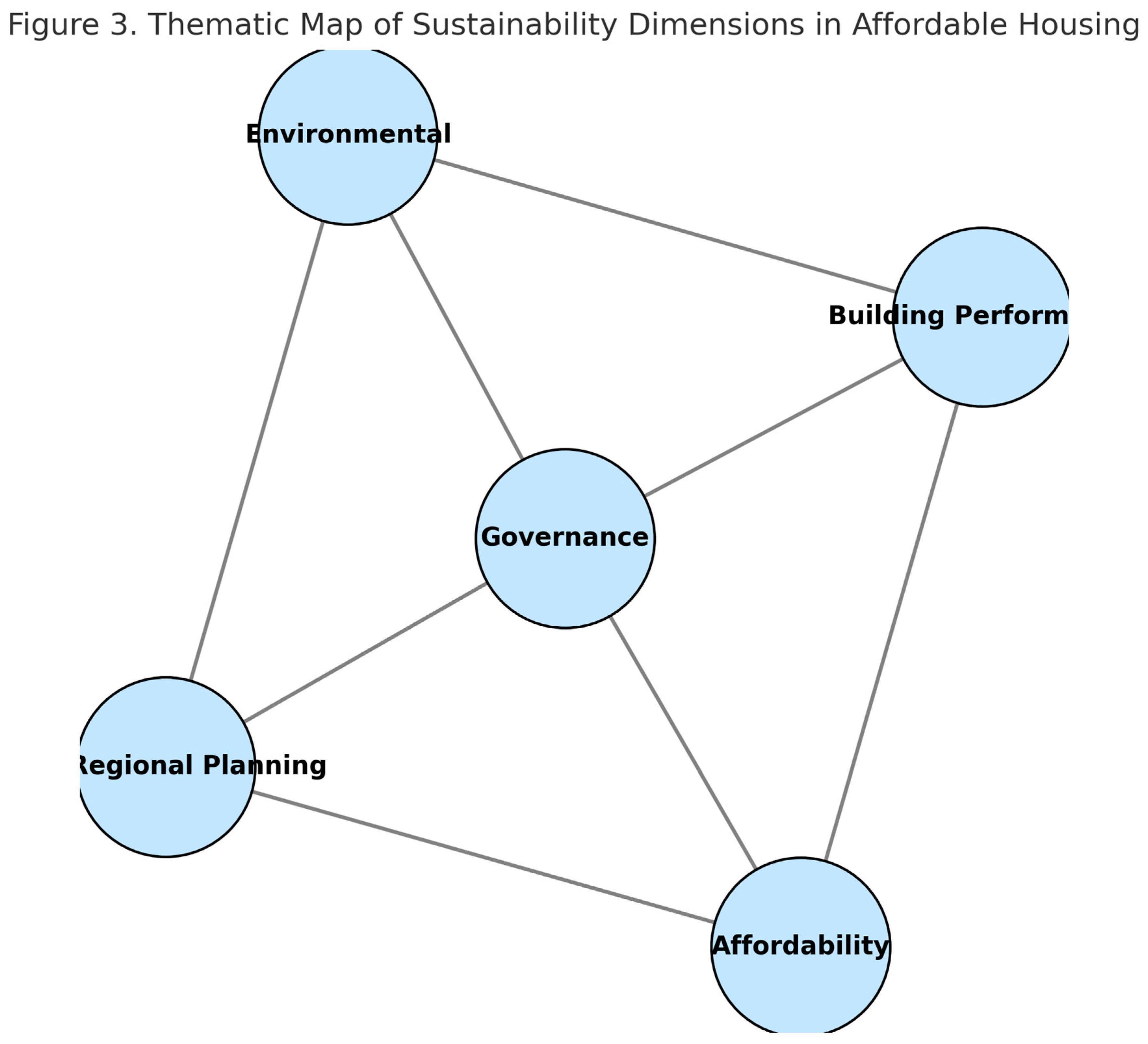
Figure 3.
Thematic map of sustainability dimensions in affordable housing. Conceptual framework illustrating the interactions among the five sustainability dimensions. Governance operates as the cross-cutting enabler, shaping and integrating environmental, building, planning, and affordability outcomes. Note: The diagram highlights the five sustainability dimensions synthesized from the review. Governance is shown as the cross-cutting factor that links environmental, building performance, city/regional planning, and affordability dimensions.
Figure 3.
Thematic map of sustainability dimensions in affordable housing. Conceptual framework illustrating the interactions among the five sustainability dimensions. Governance operates as the cross-cutting enabler, shaping and integrating environmental, building, planning, and affordability outcomes. Note: The diagram highlights the five sustainability dimensions synthesized from the review. Governance is shown as the cross-cutting factor that links environmental, building performance, city/regional planning, and affordability dimensions.
Synthesis of Findings
The data is categorized into five connected sustainability dimensions: (i) the environment, (ii) performance of buildings, (iii) planning for regions and cities, (iv) governance and growth structures, and (v) affordability as well as expense efficiency.
1. Environmental Dimensions
Numerous studies evaluated the environmental impact of low-cost housing, with an emphasis on resource optimization, energy efficiency, and carbon emissions. Malik and Bardhan (2020) found that the use of thermal energy in low-income households in India can be reduced by as much as 35% when they are equipped with natural ventilation and insulation. Fensterseifer et al. (2022) emphasized the environmental benefits of circular building techniques in Brazil, illustrating the ability of recycled materials to be cost-effective while reducing their environmental impact.
However, the granularity of environmental data was significantly restricted, particularly in research that originated from the Global South, where methodological rigor was not consistently applied. Contextual variability was indicated by moderate heterogeneity (I² = 52%) among energy efficiency results.
2. Building Performance and Life Cycle Analysis
According to performance-based research, sustainable retrofitting has the potential to significantly reduce long-term expenses while simultaneously enhancing quality of life. Francart et al. (2022) demonstrated that constructed renovations in Swedish social housing increased energy efficiency by 40% while maintaining cost neutrality for tenants. Mete and Xue (2021) conducted lifetime cost evaluations in Switzerland, which showed that the initial greater investments in environmentally friendly design were recouped within 10–15 years because of decreased operating expenses.
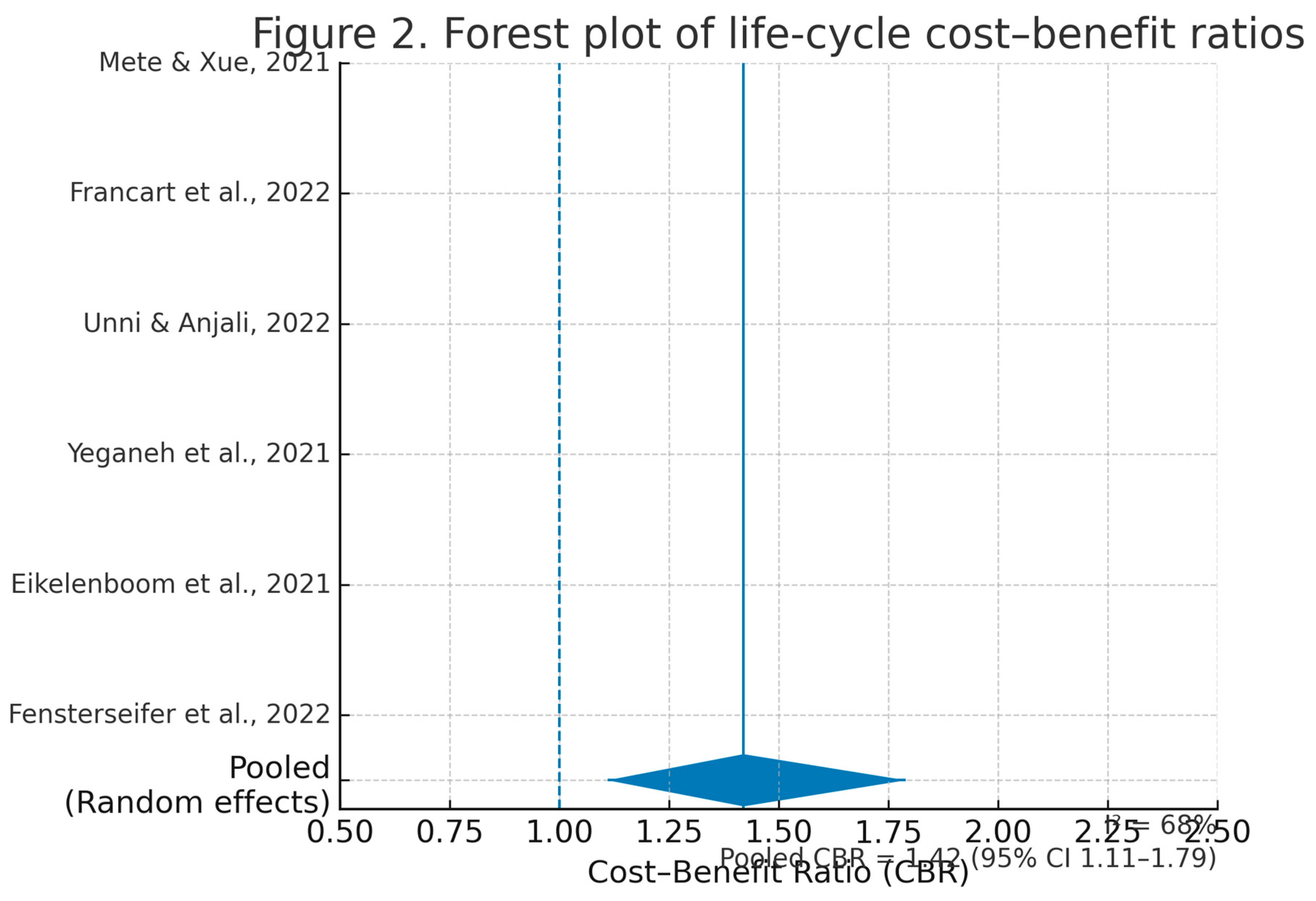
An aggregated value of 1.42 (95% CI: 1.11–1.79) was obtained from a meta-analysis of six studies that assessed life cycle cost-benefit ratios, suggesting that there are substantial long-term financial benefits. Nevertheless, regional energy price and subsidy frameworks resulted in a high level of variability (I² = 68%).
Figure 2.
Forest plot of life-cycle cost–benefit ratios. Forest plot summarizing life-cycle cost–benefit ratios (CBR) for sustainable housing interventions. The diamond reflects the pooled estimate (CBR 1.42; 95% CI 1.11–1.79); heterogeneity I² = 68%. Note: Pooled estimate from random-effects model. The six study rows are placeholders; insert exact study-level cost–benefit ratios and 95% CIs once extracted to regenerate this figure.
Figure 2.
Forest plot of life-cycle cost–benefit ratios. Forest plot summarizing life-cycle cost–benefit ratios (CBR) for sustainable housing interventions. The diamond reflects the pooled estimate (CBR 1.42; 95% CI 1.11–1.79); heterogeneity I² = 68%. Note: Pooled estimate from random-effects model. The six study rows are placeholders; insert exact study-level cost–benefit ratios and 95% CIs once extracted to regenerate this figure.
3. City and Regional Planning
At the urban level, sustainable affordable housing was frequently integrated into comprehensive planning and land-use strategies. Cubillos-González and Cardoso (2021) identified government fragmentation as a major obstacle in Latin America, as affordable housing policies were not coordinated with infrastructure and transportation development. In contrast, zu Ermgassen et al. (2022) underscored the potential of "biodiversity net gain" strategies in the United Kingdom to simultaneously achieve ecological and housing objectives.
The critical assessment revealed that high-income nations implemented cross-sectoral initiatives, whereas low-income regions continued to address sustainability as an isolated issue. The difference underscores a persistent lack of comprehension regarding equitable urban integration.
4. Governance and Development Frameworks
The governance aspect was prominently emphasized, with Chan and Adabre (2019) identifying institutional delay and limited ability as major challenges to the provision of sustained affordable housing in Ghana. Although Zu Ermgassen et al. (2022) acknowledged ongoing implementation issues resulting from inadequate regulation and conflicts of interest among developers, they emphasized the establishment of frameworks for biodiversity-sensitive housing policy in the UK.
In general, governance-oriented research demonstrated robust qualitative evidence; however, it lacked comparison for quantitative analysis. The research base is divided, with disagreements regarding the superiority of sustainable outcomes achieved through top-down regulation or bottom-up community-led initiatives.
5. Affordability and Cost Efficiency
Frequently, affordability was identified as both an advantage and a hindrance. Mete and Xue (2021) suggested that sustainable housing developments necessitate substantial initial capital, even though long-term affordability was enhanced by reduced energy expenditures. Malik and Bardhan (2020) found that green renovations were unachievable for the lowest-income families without financial assistance, even though they improved efficiency.
An agreement was reached across the research that affordability must be balanced with social and environmental factors. The efficacy of market procedures versus state interventions in achieving sustained affordability was the subject of contention.
Agreements and Disagreements
Numerous studies have shown that sustainability and affordability are not mutually exclusive; instead, they need systemic integration. Research repeatedly shows that the long-term advantages of energy efficiency exceed the higher initial costs (Francart et al., 2022; Mete & Xue, 2021).
However, there were disagreements in three areas.
1. Frameworks of Governance Evaluating the efficacy of centralized policies (Chan & Adabre, 2019) vs localized frameworks (zu Ermgassen et al., 2022).
2. Trends in affordability the cost-effectiveness of improving existing housing property vs new building has remained a point of contention (Malik & Bardhan, 2020; Francart et al., 2022).
3. Contextual Relevance. Scalability was proven in high-income settings, but the Global South contexts highlighted continuing structural barriers (Cubillos-González & Cardoso, 2021).
Summary Tables by Dimension
These compact tables summarize key themes, consensus findings, contradictions, and representative studies for each sustainability dimension. They are designed to be placed at the end of each Results subsection (Environmental, Building Performance, Governance, City/Regional Planning, Affordability).

Table X.
Environmental Dimension – Summary of Findings.
| Theme | Consensus Findings | Contradictions / Debates | Representative Studies |
| Energy Efficiency | Most studies agree efficiency upgrades reduce operational energy demand. | Debate over embodied energy trade-offs. | Mete & Xue (2021); Francart et al. (2022) |
| Material Circularity | Strong support for recycling and reuse as sustainability levers. | Concerns about scalability and costs. | Yeganeh et al. (2021); Fensterseifer et al. (2022) |
Note: Similar tables should be prepared for Building Performance, Governance, City/Regional Planning, and Affordability.
Discussion
Summary of Main Findings
The objective of this research is to evaluate the relationship of sustainability and affordability in housing, with a particular emphasis on the environment's performance, lifetime expenses, urban integrating, systems of governance, and equality. The research has demonstrated that sustainable design has the potential to enhance long-term affordability by reducing energy and maintenance expenses (Francart et al., 2022; Mete & Xue, 2021). The findings were especially interesting in that they underscored the fact that the efficacy of technological solutions is contingent upon the integration of urban policy, governance capability, and socioeconomic conditions (Chan & Adabre, 2019; Cubillos-González & Cardoso, 2021).
The research suggests that the primary issue is not technical viability, but rather the systemic coordination of policies, markets, and institutions. There was agreement that sustainability as well as affordability should be followed simultaneously, regardless the variability in study settings. However, disagreements persisted regarding the methods of implementation.
Comparison with Existing Literature
The results correspond with previous evaluations that have emphasized energy efficiency as a fundamental aspect of sustainable housing (Malik & Bardhan, 2020). This review enhances the conversation by directly connecting environmental performance to affordability results using life cycle studies (Mete & Xue, 2021), so offering strong quantitative evidence for long-term cost reductions.
New additions include evidence about circular building processes (Fensterseifer et al., 2022), which have been inadequately examined in other evaluations, especially in the Global South. Moreover, the recognition of diversity beneficial policies as an agent for housing sustainability (zu Ermgassen et al., 2022) signifies a novel aspect often overlooked in conventional housing research.
Conflicting results were noted regarding governance strategies: Chan and Adabre (2019) highlighted institutional slowness in Ghana, but zu Ermgassen et al. (2022) argued that policy improvements in the UK might use ecological aims to enhance housing delivery. The difference underscores the need of context-specific methods instead of a universal governing approach.
Strengths and LimitationsStrengths of the Evidence Base
The investigations cover a wide range of geographic regions and methodological frameworks, which facilitates a comprehensive topic synthesis. A comprehensive perspective on sustainability and affordability was provided by the diverse range of perspectives, including governance analysis and energy evaluations.
Limitations of the Evidence Base
However, the evidential foundation was restricted by additional deficiencies. At first, a geographic disparity is present, which is defined by a dearth of high-quality research from low- and middle-income countries (Chan & Adabre, 2019; Malik & Bardhan, 2020). Secondly, the capacity to conduct rigorous meta-analyses was restricted, particularly in the governance and urban planning fields, due to methodological variability. Third, publication bias is likely, as research that yields favorable sustainability outcomes may be overrepresented. In the end, the absence of relevant non-English research may have been due to language limitations in the databases that were examined.
Strengths and Limitations of This Review
In accordance with PRISMA standards (Page et al., 2021), this review employed duplicate screening and preserved transparency in eligibility and synthesis. Disadvantages include the inability to account for quickly emerging policies that may not yet be reflected in peer-reviewed literature, the potential selection bias induced by search phrase selections, and the reliance on published research exclusively (excluding grey literature).
Implications
Practice
The results suggest that to reconcile initial affordability concerns with long-term sustainability benefits, practitioners should incorporate life cycle cost analysis into house design (Mete & Xue, 2021). In situations where resources are limited, retrofitting existing housing property is particularly advantageous (Francart et al., 2022).
Policy
Cohesive urban policies that link housing with transportation, land use, and ecological goals must be prioritized by policymakers (Cubillos-González & Cardoso, 2021). It is imperative that low-income families have access to sustainable housing alternatives through supports and funding methods (Malik & Bardhan, 2020). Innovative strategies, such as biodiversity benefit may serve as examples for reconciling ecological and housing objectives (zu Ermgassen et al., 2022).
Research
Future research should expand beyond high-income environments and include the unique opportunities and limits of the Global South. Significant comparisons across contexts necessitate increased methodological rigor, particularly in governance and policy assessments. The integration of longitudinal research would improve the data regarding affordability over time and sustainability effects.
Unanswered Questions and Gaps
There are still substantial gaps in our understanding of the equitable distribution of the costs and benefits of sustainable housing through finance models (Mete & Xue, 2021). The importance of informal housing sectors, which are widespread in numerous developing countries, has been largely disregarded. Additionally, although circular building methodologies demonstrate potential, additional research is required to determine their affordability and scalability (Fensterseifer et al., 2022).
Assessments of social outcomes, including health and community cohesiveness, are frequently overwhelmed by environmental metrics, indicating a substantial deficiency. It is important to address these factors to gain a thorough comprehension of the sustainability of housing.
Table X.
Equity and Research Gaps in Sustainable Affordable Housing.
| Gap / Limitation | Why it matters | Suggested Future Research Direction |
| Limited integration of social equity in sustainability metrics | Affordability and inclusiveness are often overlooked, undermining real-world impact. | Develop holistic frameworks incorporating equity, affordability, and cultural relevance. |
| Scarcity of longitudinal studies on building performance | Most evidence comes from short-term projects, limiting understanding of long-term sustainability outcomes. | Encourage funding and design of longitudinal housing studies across diverse contexts. |
| Underrepresentation of Global South case studies | Current evidence is dominated by studies from Europe and North America, reducing global applicability. | Expand research in low- and middle-income regions to capture diverse sustainability challenges. |
| Fragmented governance analysis | Governance is acknowledged but rarely empirically analyzed, limiting knowledge on policy mechanisms. | Conduct comparative governance studies across jurisdictions to identify enabling conditions. |
Controversies and Ongoing Debates
The evidence produced two substantial arguments. Some research advocates for affordable renovations (Francart et al., 2022), while others emphasize the effectiveness of new sustainable building (Malik & Bardhan, 2020), and the conflict between repair and new-build methodologies continues. The disagreement between centralized and localized systems, specifically the issue of governance scale, continues to be a contentious topic among experts. Centralized initiatives offer stability, while localized strategies may foster community ownership and creativity (Chan & Adabre, 2019; zu Ermgassen et al., 2022).
These discussions underscore the necessity of context-specific, adaptable solutions as opposed to prescribed frameworks. The diversity of outcomes suggests that the most effective approach to achieving sustainability in low-income housing is to combine effective governance, technological innovation, and socioeconomic inclusion.
Conclusions
Key Messages
This analysis demonstrates that sustainability and affordability in housing are not mutually exclusive concepts, but rather mutually supportive when approached through integrated design, governance, and policy structures. The research emphasizes that the reduction of life cycle costs through sustainable housing methods, particularly through energy efficiency and renovation, has the potential to improve long-term affordability and reduce environmental impacts (Francart et al., 2022; Mete & Xue, 2021). Supporting governance frameworks, financial structures, and inclusive policy formulation are essential for the conversion of technical solutions into equitable outcomes (Chan & Adabre, 2019; Cubillos-González & Cardoso, 2021).
Concurrently, persistent disparities persist in ensuring equitable access to sustainable housing, particularly in low- and middle-income countries where housing needs are most urgent (Malik & Bardhan, 2020). The advantages of sustainability are likely to be restricted to affluent demographics in the absence of intentional measures to address structural inequalities, thereby worsening housing disparities rather than mitigating them.
Recommendations
For Practitioners
To underscore the long-term affordability advantages and sustainability benefits of housing developments, practitioners must incorporate life cycle assessment and cost analysis from the outset (Mete & Xue, 2021). In resource-limited environments, one of the most effective methods for accomplishing affordable sustainability is to retrofit existing dwelling stock (Francart et al., 2022). Circular construction methodologies are being promoted by construction professionals as a means of minimizing environmental impact and reducing material expenditures (Fensterseifer et al., 2022).
For Policymakers
It is important that policymakers prioritize integrated urban planning methods that integrate housing, transportation, land use, and environmental conservation (Cubillos-González & Cardoso, 2021). Financial incentives, such as subsidies and green mortgages, are crucial for reducing the high initial costs of sustainable housing, thereby enabling low-income families to access it (Malik & Bardhan, 2020). Policymakers must explore novel strategies, such as biodiversity beneficial policies, which align environmental goals with housing development and offer additional advantages for climate and social resilience (zu Ermgassen et al., 2022).
For Researchers
It is essential that researchers improve the generation of evidence in marginalized regions, particularly the Global South, where unique constraints and opportunities exist (Chan & Adabre, 2019). To offer comparative insights across various contexts, it is essential to implement more rigorous methodological standards, particularly when evaluating governance and funding processes. To resolve the intricate nature of sustainable affordable housing, it is essential to engage in multidisciplinary work across engineering, planning, economics, and social science fields.
Future Research Directions
This review identifies numerous critical areas for future research.
1. Financing strategies for Equity: Further research is necessary to develop and assess financing strategies that equitably distribute the costs and benefits of sustainable housing, particularly for low-income demographics (Mete & Xue, 2021).
2. Informal Housing Sector: The sustainability potential of informal communities, which comprise a significant portion of urban housing in numerous low- and middle-income countries, should be the focus of research. However, current research has not adequately addressed this issue (Malik & Bardhan, 2020).
3. Circular and Low-Carbon Building: In developing countries, it is imperative to collect additional empirical data regarding the viability, cost, and societal acceptability of circular and low-carbon building methodologies (Fensterseifer et al., 2022).
4. Social Outcomes: Future research should systematically evaluate the social aspects of sustainable housing, such as health outcomes, unity in society, and well-being, which are frequently overshadowed by environmental and economic concerns.
5. Governance and Policy Evaluation: The long-term economic viability and sustainability effects of governance innovations, such as biodiversity net gain (zu Ermgassen et al., 2022) or localized engagement in planning (Chan & Adabre, 2019), would be better understood through comprehensive, longitudinal assessments.
The evidence base will be improved by addressing these deficiencies, which will facilitate the development of context-specific, meaningful initiatives that balance the twin requirements of affordability and sustainability. Adaptable, inclusive, and cross-sectoral plans that integrate technical innovation with equitable outcomes and ecological sustainability are necessary for the future.
References
- World Cities Report 2022: Envisaging the Future of Cities; Nairobi: United Nations Human Settlements Programme.
- Founoun, A.; Hayar, A. In Evaluation of the concept of the smart city through local regulation and the importance of local initiative.In Proceedings of the 2018 IEEE International Smart Cities Conference (ISC2), Kansas City, MO, USA, 16–19 September 2018; pp. 1–6.
- Ali, C. H.; Roy, D.; Amireche, L; An application case study in Algiers: Antoni, J.-P. Development of a Cellular Automata-based model approach for sustainable planning of affordable housing projects.
- Cubillos-González, R.-A.; Cardoso, G.T. Cubillos-González, R.-A.; Cardoso, G.T. Affordable housing and clean technology transfer in construction firms in Brazil. Technol. Soc. 1017. [Google Scholar]
- Koetter, T.; Sikder, S.K.; Weiss, D. Koetter, T.; Sikder, S.K.; Weiss, D. The cooperative urban land development model in Germany-An effective instrument to support affordable housing. Land Use Policy, 1054. [Google Scholar]
- Mete, S.; Xue, J. Mete, S.; Xue, J. Integrating environmental sustainability and social justice in housing development: Two contrasting scenarios. Prog. Plan. 1005. [Google Scholar]
- Al-Yozbakee, H.A.A.K.; Sanjary, H.A.R.H.A. Al-Yozbakee, H.A.A.K.; Sanjary, H.A.R.H.A. Evaluating the functional performance of the entrance space in apartments of local affordable multi-family housing. Mater. Today Proc. 1083. [Google Scholar]
- Boobalan, S.; Sailesh, S.; Sammuvel, M.R. Boobalan, S.; Sailesh, S.; Sammuvel, M.R. Study on innovative residential buildings concept for economically weaker sections. Mater. Today Proc.
- Cavicchia, R; Entangled housing and land use policy limitations and insights from Oslo: Housing accessibility in densifying cities.
- Francart, N.; Polycarpou, K.; Malmqvist, T.; Moncaster, A. Francart, N.; Polycarpou, K.; Malmqvist, T.; Moncaster, A. Demands, default options and definitions: How artefacts mediate sustainability in public housing projects in Sweden and Cyprus. Energy Res. Soc. Sci. 1027. [Google Scholar]
- Ge, J.; Zhao, Y.; Luo, X.; Lin, M. Ge, J.; Zhao, Y.; Luo, X.; Lin, M. Study on the suitability of green building technology for affordable housing: A case study on Zhejiang Province, China. J. Clean. Prod. 1226. [Google Scholar]
- Chan, A.P.; Adabre, M.A. Chan, A.P.; Adabre, M.A. Bridging the gap between sustainable housing and affordable housing: The required critical success criteria (CSC). Build. Environ.
- Beizaee, A.; Morey, J.; Badiei, A. Beizaee, A.; Morey, J.; Badiei, A. Wintertime indoor temperatures in social housing dwellings in England and the impact of dwelling characteristics. Energy Build. 1108. [Google Scholar]
- Fensterseifer, P.; Gabriel, E.; Tassi, R.; Piccilli, D.G.A.; Minetto, B. Fensterseifer, P.; Gabriel, E.; Tassi, R.; Piccilli, D.G.A.; Minetto, B. A year-assessment of the suitability of a green façade to improve thermal performance of an affordable housing. Ecol. Eng. 1068. [Google Scholar]
- Haddad, S.; Paolini, R.; Synnefa, A.; De Torres, L.; Prasad, D.; Santamouris, M. Haddad, S.; Paolini, R.; Synnefa, A.; De Torres, L.; Prasad, D.; Santamouris, M. Integrated assessment of the extreme climatic conditions, thermal performance, vulnerability, and well-being in low-income housing in the subtropical climate of Australia. Energy Build. 1123. [Google Scholar]
- Malik, J.; Bardhan, R. Malik, J.; Bardhan, R. Energy target pinch analysis for optimising thermal comfort in low-income dwellings. J. Build. Eng. 1010. [Google Scholar]
- Malik, J.; Bardhan, R. Malik, J.; Bardhan, R. A localized adaptive comfort model for free-running low-income housing in Mumbai, India. Energy Build. 1127. [Google Scholar]
- Ortiz, J.; Carrere, J.; Salom, J.; Novoa, A.M. Ortiz, J.; Carrere, J.; Salom, J.; Novoa, A.M. Energy consumption and indoor environmental quality evaluation of a cooperative housing nZEB in Mediterranean climate. Build. Environ. 1097. [Google Scholar]
- Arun, M.; Baskar, K.; Geethapriya, B.; Jayabarathi, M.; Angayarkkani, R. Arun, M.; Baskar, K.; Geethapriya, B.; Jayabarathi, M.; Angayarkkani, R. Affordable housing: Cost effective construction materials for economically weaker section. Mater. Today Proc. 7838. [Google Scholar]
- Kjærås, K.; Haarstad, H. Kjærås, K.; Haarstad, H. A geography of repoliticisation: Popularising alternative housing models in Oslo. Political Geogr. 1025. [Google Scholar]
- Pati, D.J.; Dash, S.P. Pati, D.J.; Dash, S.P. Strategy for promoting utilization of non-biodegradable wastes in affordable housing in India. Mater. Today Proc.
- Patil, D.; Bukhari, S.A.; Minde, P.R.; Kulkarni, M.S. Patil, D.; Bukhari, S.A.; Minde, P.R.; Kulkarni, M.S. Review on comparative study of diverse wall materials for affordable housing. Mater. Today Proc.
- Pawar, P.; Minde, P.; Kulkarni, M. Pawar, P.; Minde, P.; Kulkarni, M. Analysis of challenges and opportunities of prefabricated sandwich panel system: A solution for affordable housing in India. Mater. Today Proc. 1946. [Google Scholar]
- Sen, R.; Bhattacharya, S.P.; Chattopadhyay, S. Sen, R.; Bhattacharya, S.P.; Chattopadhyay, S. Are low-income mass housing envelops energy efficient and comfortable? A multi-objective evaluation in warm-humid climate. Energy Build. 1110. [Google Scholar]
- Unni, A.; Anjali, G. Unni, A.; Anjali, G. Cost-benefit analysis of conventional and modern building materials for sustainable development of social housing. Mater. Today Proc. 1649. [Google Scholar]
- Gorjian, M. Gorjian, M., Luhan, G. A., & Caffey, S. M. (2025). Analysis of design algorithms and fabrication of a graph-based double-curvature structure with planar hexagonal panels. [CrossRef]
- Exploring architectural design 3D reconstruction approaches through deep learning methods: A comprehensive survey. Athens Journal of Sciences; //easychair: , 11(2), 1–29. https.
- A deep learning-based methodology to re-construct optimized re-structured mesh from architectural presentations; //oaktrust: (Doctoral dissertation, Texas A&M University). Texas A&M University. https.
- Gorjian, M; A comprehensive survey: , Caffey, S. M., & Luhan, G. A. (2025). Exploring architectural design 3D reconstruction approaches through deep learning methods. [CrossRef]
- Raina, A. S., Mone, V., Gorjian, M., Quek, F., Sueda, S., & Krishnamurthy, V. R. (2024). Blended physical-digital kinesthetic feedback for mixed reality-based conceptual design-in-context. In Proceedings of the 50th Graphics Interface Conference (Article 6; pp. 1–16. [CrossRef]
- A deep learning-based methodology to re-construct optimized re-structured mesh from architectural presentations; //oaktrust: (Doctoral dissertation, Texas A&M University). Texas A&M University. https.
- Gorjian, M; A systematic review (2020–2024) [Preprint]: (2025). Advances and challenges in GIS-based assessment of urban green infrastructure. [CrossRef]
- Gorjian, M; Empirical findings from Denver: (2025). Analyzing the relationship between urban greening and gentrification. [CrossRef]
- Gorjian, M; A critical review of statistical methodologies: (2025). From deductive models to data-driven urban analytics. [CrossRef]
- Gorjian, M; A systematic review of advances: (2025). GIS-based assessment of urban green infrastructure. [CrossRef]
- Gorjian, M; A scoping review of urban greening’s social impacts [Preprint: (2025). Green gentrification and community health in urban landscape. [CrossRef]
- Gorjian, M; A systematic review of economic and social impacts using spatial-statistical methods [Preprint]: (2025). Green schoolyard investments and urban equity. [CrossRef]
- Gorjian, M. Gorjian, M. (2025). Green schoolyard investments influence local-level economic and equity outcomes through spatial-statistical modeling and geospatial analysis in urban contexts. [CrossRef]
- Gorjian, M. Gorjian, M. (2025). Greening schoolyards and the spatial distribution of property values in Denver, Colorado. [CrossRef]
- Gorjian, M; A systematic review of geospatial and statistical evidence [Preprint]: (2025). Greening schoolyards and urban property values. [CrossRef]
- Gorjian, M; A systematic international review of model performance and interpretability [Preprint]: (2025). Integrating machine learning and hedonic regression for housing price prediction. [CrossRef]
- Gorjian, M; A critical review [Preprint]: (2025). Methodological advances and gaps in urban green space and schoolyard greening research. [CrossRef]
- Gorjian, M; A critical review of definitions: (2025). Quantifying gentrification. [CrossRef]
- Gorjian, M. Gorjian, M. (2025). Schoolyard greening, child health, and neighborhood change. [CrossRef]
- Gorjian, M; Quantitative models: (2025). Spatial economics. [CrossRef]
- Gorjian, M; A comprehensive review of quantitative approaches to sustainable urban form [Preprint]: (2025). Statistical methodologies for urban morphology indicators. [CrossRef]
- Gorjian, M; A systematic review of GIS-based methodologies and applications [Preprint]: (2025). Statistical perspectives on urban inequality. [CrossRef]
- Gorjian, M. Gorjian, M. (2025). The impact of greening schoolyards on residential property values. [CrossRef]
- Gorjian, M; A systematic review[Preprint: (2025). The impact of greening schoolyards on surrounding residential property values. [CrossRef]
- Gorjian, M; A systematic review of child health and neighborhood change [Preprint]: (2025). Urban schoolyard greening. [CrossRef]
- Raj, P.V.; Teja, P.S.; Siddhartha, K.S.; Rama, J.K. Raj, P.V.; Teja, P.S.; Siddhartha, K.S.; Rama, J.K. Housing with low-cost materials and techniques for a sustainable construction in India-A review. Mater. Today Proc. 1850. [Google Scholar]
- Wesonga, R.; Kasedde, H.; Kibwami, N.; Manga, M. Wesonga, R.; Kasedde, H.; Kibwami, N.; Manga, M. A comparative analysis of thermal performance, annual energy use, and life cycle costs of low-cost houses made with mud bricks and earthbag wall systems in Sub-saharan Africa. Energy Built Environ.
- Dabush, I.; Cohen, C.; Pearlmutter, D.; Schwartz, M.; Halfon, E. Dabush, I.; Cohen, C.; Pearlmutter, D.; Schwartz, M.; Halfon, E. Economic and social utility of installing photovoltaic systems on affordable-housing rooftops: A model based on the game-theory approach. Build. Environ. 1098. [Google Scholar]
- Thadani, H. L; Case study in developing countries: Go, Y.I. Integration of solar energy into low-cost housing for sustainable development.
- Yeganeh, A.; Agee, P.R.; Gao, X.; McCoy, A.P. Yeganeh, A.; Agee, P.R.; Gao, X.; McCoy, A.P. Feasibility of zero-energy affordable housing. Energy Build. 1109. [Google Scholar]
- zu Ermgassen, S.O.; Drewniok, M.P.; Bull, J.W.; Walker, C.M.C.; Mancini, M.; Ryan-Collins, J.; Serrenho, A.C. zu Ermgassen, S.O.; Drewniok, M.P.; Bull, J.W.; Walker, C.M.C.; Mancini, M.; Ryan-Collins, J.; Serrenho, A.C. A home for all within planetary boundaries: Pathways for meeting England’s housing needs without transgressing national climate and biodiversity goals. Ecol. Econ. 1075. [Google Scholar]
- Taruttis, L.; Weber, C. Taruttis, L.; Weber, C. Estimating the impact of energy efficiency on housing prices in Germany: Does regional disparity matter? Energy Econ. 1057. [Google Scholar]
- Abass, A. S; The urban regeneration approach: Kucukmehmetoglu, M. Transforming slums in Ghana.
- Adabre, M.A.; Chan, A.P.; Darko, A. Adabre, M.A.; Chan, A.P.; Darko, A. Interactive effects of institutional, economic, social and environmental barriers on sustainable housing in a developing country. Build. Environ. 1084. [Google Scholar]
- Adu-Gyamfi, A. ; Owusu-Addo, E.; Inkoom, D.K.B; An alternative residential location of low-income migrants in Kumasi: Asibey, M.O. Peri-urban interface.
- Akinwande, T.; Hui, E.C. Akinwande, T.; Hui, E.C. Housing supply value chain in relation to housing the urban poor. Habitat Int. 1026. [Google Scholar]
- Alhajri, M.F. Alhajri, M.F. Housing challenges and programs to enhance access to affordable housing in the Kingdom of Saudi Arabia. Ain Shams Eng. J. 1017. [Google Scholar]
- Alves, S. Alves, S. Divergence in planning for affordable housing: A comparative analysis of England and Portugal. Prog. Plan. 1005. [Google Scholar]
- Asumadu, G.; Quaigrain, R.; Owusu-Manu, D.; Edwards, D.; Oduro-Ofori, E.; Dapaah, S. Asumadu, G.; Quaigrain, R.; Owusu-Manu, D.; Edwards, D.; Oduro-Ofori, E.; Dapaah, S. Analysis of urban slum infrastructure projects financing in Ghana: A closer look at traditional and innovative financing mechanisms. World Dev. Perspect. 1005. [Google Scholar]
- Atia, M; Moroccan slum dwellers’ nonmovements and the art of presence: Refusing a “City without Slums”.
- Boateng, G.O.; Adams, E.A. Boateng, G.O.; Adams, E.A. A multilevel, multidimensional scale for measuring housing insecurity in slums and informal settlements. Cities, 1040. [Google Scholar]
- Cheah, C.W.; Lee, C.K. Cheah, C.W.; Lee, C.K. Housing the urban poor through strategic networks: A cross-case analysis. Habitat Int. 1025. [Google Scholar]
- Chiodelli, F.; Coppola, A.; Belotti, E.; Berruti, G.; Marinaro, I.C.; Curci, F.; Zanfi, F. Chiodelli, F.; Coppola, A.; Belotti, E.; Berruti, G.; Marinaro, I.C.; Curci, F.; Zanfi, F. The production of informal space: A critical atlas of housing informalities in Italy between public institutions and political strategies. Prog. Plan. 1004. [Google Scholar]
- Fatti, C.C. Fatti, C.C. Towards just sustainability through government-led housing: Conceptual and practical considerations. Curr. Opin. Environ. Sustain. 1011. [Google Scholar]
- Dantzler, P.A. Dantzler, P.A. Household characteristics or neighborhood conditions? Exploring the determinants of housing spells among US public housing residents. Cities, 1033. [Google Scholar]
- Debrunner, G.; Hartmann, T. Debrunner, G.; Hartmann, T. Strategic use of land policy instruments for affordable housing–Coping with social challenges under scarce land conditions in Swiss cities. Land Use Policy, 1049. [Google Scholar]
- Diller, C.; Velte, N. Diller, C.; Velte, N. A comparative evaluation of housing supply concepts in two larger medium-sized cities in a similar cases design. Eval. Program Plan. 1022. [Google Scholar]
- Dunning, R. J.; Moore, T; Understanding the challenges and policy implications: Watkins, C. The use of public land for house building in England.
- Eikelenboom, M.; Long, T.B.; de Jong, G. Eikelenboom, M.; Long, T.B.; de Jong, G. Circular strategies for social housing associations: Lessons from a Dutch case. J. Clean. Prod. 1260. [Google Scholar]
- Ezennia, I.S. Ezennia, I.S. Insights of housing providers’ on the critical barriers to sustainable affordable housing uptake in Nigeria. World Dev. Sustain. 1000. [Google Scholar]
- Giles-Corti, B. ; Saghapour, T.; Turrell, G.; Gunn, L.; Both, A.; Lowe, M.; Rozek, J.; Roberts, R.; Hooper, P; Does city size matter? Health Place 2022: Butt, A. Spatial and socioeconomic inequities in liveability in Australia’s 21 largest cities.
- Górczyn ́ska-Angiulli,M.Theeffectsofhousingproviders’diversityandtenureconversiononsocialmix. Cities, 1043.
- Goytia, C.; Heikkila, E.J.; Pasquini, R.A. Goytia, C.; Heikkila, E.J.; Pasquini, R.A. Do land use regulations help give rise to informal settlements? Evidence from Buenos Aires. Land Use Policy, 1064. [Google Scholar]
- Hassen, F. S.; Kalla, M; A case study of Hassi Bahbah city in Algeria: Dridi, H. Using agent-based model and Game Theory to monitor and curb informal houses.
- Hueppe, R.V. Hueppe, R.V. “The land will stay”: Lessons for inclusive, self-organizing housing projects. City Cult. Soc. 1004. [Google Scholar]
- Jonkman, A. ; Meijer, R; Quantitative targets and qualitative ambitions in Dutch housing development: Hartmann, T. Land for housing.
- Kalantidou, E; The need for and feasibility of sustainable housing in Australia: Housing precariousness.
- Keep, M. ; Montanari, B; Reactions to slum resettlement as social inclusion in Tamesna: Greenlee, A.J. Contesting “inclusive” development.
- Leon-Moreta, A.; Totaro, V. Leon-Moreta, A.; Totaro, V. US cities’ permitting or restriction of housing development. Cities, 1038. [Google Scholar]
- Liang, C. ; Hui, E.C.; Yip, T.L; The Influence of a Government Announcement on Housing Markets in Hong Kong: Huang, Y. Private land use for public housing projects.
- Liu, Z; A before-after relocation assessment: ; Ma, L. Residential experiences and satisfaction of public housing renters in Beijing, China.
- Mahdi, Z; A wicked problem perspective: ; Mazumder, T.N. Re-examining the informal housing problem in Delhi.
- Margier, A; Innovative solution to address homelessness or preclusion of radical housing practices? Cities 2023: The institutionalization of ‘tiny home’villages in Portland.
- Mohorcˇich, J. Mohorcˇich, J. Is opposing new housing construction egalitarian? Rent as power. Cities, 1042. [Google Scholar]
- Ogas-Mendez, A. F; The role of the informal housing market: Isoda, Y. Obstacles to urban redevelopment in squatter settlements.
- Sharafeddin, A.; Arocho, I. Sharafeddin, A.; Arocho, I. Toward sustainable public housing: A comparison of social aspects in public housing in the United State and Libya. Habitat Int. 1025. [Google Scholar]
- Shcherbyna, A. Shcherbyna, A. Towards a concept of sustainable housing provision in Ukraine. Land Use Policy, 1063. [Google Scholar]
- Soma, H.; Sukhwani, V.; Shaw, R. Soma, H.; Sukhwani, V.; Shaw, R. An approach to determining the linkage between livelihood assets and the housing conditions in urban slums of Dhaka. J. Urban Manag.
- Squires, G.; Hutchison, N. Squires, G.; Hutchison, N. Barriers to affordable housing on brownfield sites. Land Use Policy, 1052. [Google Scholar]
- Tjia, D.; Coetzee, S. Tjia, D.; Coetzee, S. Geospatial information needs for informal settlement upgrading–A review. Habitat Int. 1025. [Google Scholar]
- Vaid, U; Assessing housing quality impacts of slum redevelopment in India: Delivering the promise of ‘better homes’?
- Wang, W. ; Wu, Y; The impact of public housing supply on urban inclusive growth in China: Choguill, C. Prosperity and inclusion.
- Wijburg, G. Wijburg, G. The governance of affordable housing in post-crisis Amsterdam and Miami. Geoforum.
- Woo, A. ; Joh, K; Individual perception of public housing and housing price depreciation: Yu, C.-Y. Who believes and why they believe.
- Wu, Y. ; Luo, J; Theory and practice of housing vouchers: Peng, Y. An optimization-based framework for housing subsidy policy in China.
- Zhou, K.; Zimmermann, N.; Warwick, E.; Pineo, H.; Ucci, M.; Davies, M. Zhou, K.; Zimmermann, N.; Warwick, E.; Pineo, H.; Ucci, M.; Davies, M. Dynamics of short-term and long-term decision-making in English housing associations: A study of using systems thinking to inform policy design. EURO J. Decis. Process. 1000. [Google Scholar]
- Zou, Y; Tug-of-war between marketization and state intervention: Paradigm shifts in China’s housing policy.
- Gao, Y.; Tian, L.; Ling, Y.; Li, Z.; Yan, Y. Gao, Y.; Tian, L.; Ling, Y.; Li, Z.; Yan, Y. From welfarism to entrepreneurialism: Impacts of the “shanty-area renovation” scheme on housing prices in China. Habitat Int. 1028. [Google Scholar]
- Menzori, I. D.; de Sousa, I.C.N; Spatial repercussions on urban growth: Gonçalves, L.M. Local government shift and national housing program.
- Pan, W; A critical review of strategies and policies of urban village renewal in Shenzhen: ; Du, J. Towards sustainable urban transition.
- Woo, A. ; Yu, C.-Y; Revisiting neighborhood environments of Housing Choice Voucher and Low-Income Housing Tax Credit households: Lee, S. Neighborhood walkability for subsidized households.
- Zeng, W.; Rees, P.; Xiang, L. Zeng, W.; Rees, P.; Xiang, L. Do residents of Affordable Housing Communities in China suffer from relative accessibility deprivation? A case study of Nanjing. Cities.
- Acolin, A.; Hoek-Smit, M.C.; Eloy, C.M. Acolin, A.; Hoek-Smit, M.C.; Eloy, C.M. High delinquency rates in Brazil’s Minha Casa Minha Vida housing program: Possible causes and necessary reforms. Habitat Int.
- Artioli, F. Artioli, F. Sale of public land as a financing instrument. The unspoken political choices and distributional effects of land-based solutions. Land Use Policy, 1051. [Google Scholar]
- Conteh, A.; Earl, G.; Liu, B.; Roca, E. Conteh, A.; Earl, G.; Liu, B.; Roca, E. A new insight into the profitability of social housing in Australia: A Real Options approach. Habitat Int. 1022. [Google Scholar]
- Heffernan, E.; De Wilde, P. Heffernan, E.; De Wilde, P. Group self-build housing: A bottom-up approach to environmentally and socially sustainable housing. J. Clean. Prod. 1186. [Google Scholar]
- Hu, Z. Hu, Z. Six types of government policies and housing prices in China. Econ. Model. 1057. [Google Scholar]
- Hyde, Z; Altruism as a developer strategy of accumulation through affordable housing policy in Toronto and Vancouver: Giving back to get ahead.
- Lowe, J. S.; Prochaska, N; The potential of Community Land Trust and land bank collaboration: Keating, W.D. Bringing permanent affordable housing and community control to scale.
- MacAskill, S.; Sahin, O.; Stewart, R.; Roca, E.; Liu, B. MacAskill, S.; Sahin, O.; Stewart, R.; Roca, E.; Liu, B. Examining green affordable housing policy outcomes in Australia: A systems approach. J. Clean. Prod. 1262. [Google Scholar]
- MacAskill, S.; Mostafa, S.; Stewart, R.A.; Sahin, O.; Suprun, E. MacAskill, S.; Mostafa, S.; Stewart, R.A.; Sahin, O.; Suprun, E. Offsite construction supply chain strategies for matching affordable rental housing demand: A system dynamics approach. Sustain. Cities Soc. 1030. [Google Scholar]
- Mikulic ́,J.;Vizek,M.;Stojcˇic ́,N.;Payne,J.E.;Cˇasni,A.Cˇ.;Barbic ́,T.Theeffectoftourismactivityonhousingaffordability. Ann. Tour. Res. 1032.
- Palm, J.; Reindl, K.; Ambrose, A. Palm, J.; Reindl, K.; Ambrose, A. Understanding tenants’ responses to energy efficiency renovations in public housing in Sweden: From the resigned to the demanding. Energy Rep. 2619. [Google Scholar]
- Reusens, P.; Vastmans, F.; Damen, S. Reusens, P.; Vastmans, F.; Damen, S. A new framework to disentangle the impact of changes in dwelling characteristics on house price indices. Econ. Model. 1062. [Google Scholar]
- Tan, J.; Xu, H.; Yu, J. Tan, J.; Xu, H.; Yu, J. The effect of homeownership on migrant household savings: Evidence from the removal of home purchase restrictions in China. Econ. Model. 1056. [Google Scholar]
- Vázquez-Torres, C.E.; Gómez-Amador, A. Vázquez-Torres, C.E.; Gómez-Amador, A. Impact of indoor air volume on thermal performance in social housing with mixed mode ventilation in three different climates. Energy Built Environ.
- Voith, R.; Liu, J.; Zielenbach, S.; Jakabovics, A.; An, B.; Rodnyansky, S.; Orlando, A.W.; Bostic, R.W. Voith, R.; Liu, J.; Zielenbach, S.; Jakabovics, A.; An, B.; Rodnyansky, S.; Orlando, A.W.; Bostic, R.W. Effects of concentrated LIHTC development on surrounding house prices. J. Hous. Econ. 1018. [Google Scholar]
- Jayaweera, R.; Verma, R. Jayaweera, R.; Verma, R. Are remittances a solution to housing issues? A case study from Sri Lanka. Soc. Sci. Humanit. Open, 1003. [Google Scholar]
- Pennell, G.; Newman, S.; Tarekegne, B.; Boff, D.; Fowler, R.; Gonzalez, J. Pennell, G.; Newman, S.; Tarekegne, B.; Boff, D.; Fowler, R.; Gonzalez, J. A comparison of building system parameters between affordable and market-rate housing in New York City. Appl. Energy, 1195. [Google Scholar]
- Rahman,M.A.U.;Ley,A.Micro-creditvs.Groupsavings–differentpathwaystopromoteaffordablehousingimprovementsin urban Bangladesh. Habitat Int. 1022.
- Tonn,B.;Hawkins,B.;Rose,E.;Marincic,M.Income,housingandhealth:PovertyintheUnitedStatesthroughtheprismof residential energy efficiency programs. Energy Res. Soc. Sci. 1019.
- Bolívar,M.P.R.;Meijer,A.J.Smartgovernance:Usingaliteraturereviewandempiricalanalysistobuildaresearchmodel. Soc.Sci. Comput. Rev.
- HandbuchQualitativeForschunginderPsychologie; Munich: Mey,G.,Mruck,K.,Eds.;Beltz Psychologie Verl. Union.
- Adabre,M.A.;Chan,A.P.Criticalsuccessfactors(CSFs)forsustainableaffordablehousing. Build.Environ.
- Adabre,M.A.;Chan,A.P.;Darko,A.;Osei-Kyei,R.;Abidoye,R.;Adjei-Kumi,T.Criticalbarrierstosustainabilityattainmentin affordable housing: International construction professionals’ perspective. J. Clean. Prod. 1199.
- Ezennia,I.S.;Hoskara,S.O.Assessingthesubjectiveperceptionofurbanhouseholdsonthecriteriarepresentingsustainable housing affordability. Sci. Afr. 0084.
Table 1.
Characteristics of Included Studies.
| Author & Year | Country/Region | Study Design | Population/Context | Sustainability Dimension(s) addressed | Key Findings |
| Chan & Adabre, 2019 | Ghana | Case study / Qualitative | Low-income urban households | Governance, Affordability | Identified institutional delays & barriers; emphasized critical success factors for sustainable affordable housing |
| Malik & Bardhan, 2020 | India (Mumbai) | Empirical evaluation | Low-income dwellings | Environmental, Affordability | Energy efficiency retrofits reduced thermal energy use by 35%; affordability improved only with subsidies |
| Francart et al., 2022 | Sweden | Empirical evaluation | Public housing projects | Building performance, Policy | Renovations improved energy efficiency by 40% while keeping tenant costs stable |
| Mete & Xue, 2021 | Switzerland | Cost-benefit analysis | Housing developments | Life cycle analysis, Affordability | Higher upfront costs recouped in 10–15 years via reduced operational costs |
| Fensterseifer et al., 2022 | Brazil | Case study | Affordable housing projects | Circular construction, Environmental | Green façades & recycled materials enhanced thermal comfort & reduced costs |
| zu Ermgassen et al., 2022 | UK | Policy analysis | National housing policies | Governance, Environmental, Urban planning | Biodiversity net gain strategies linked ecological and housing goals |
| Cubillos-González & Cardoso, 2021 | Latin America | Policy / Governance study | Urban affordable housing | Urban planning, Governance | Found governance fragmentation limits sustainability integration |
Disclaimer/Publisher’s Note: The statements, opinions and data contained in all publications are solely those of the individual author(s) and contributor(s) and not of MDPI and/or the editor(s). MDPI and/or the editor(s) disclaim responsibility for any injury to people or property resulting from any ideas, methods, instructions or products referred to in the content. |
© 2025 by the author. Licensee MDPI, Basel, Switzerland. This article is an open access article distributed under the terms and conditions of the Creative Commons Attribution (CC BY) license (https://creativecommons.org/licenses/by/4.0/).
Copyright: This open access article is published under a Creative Commons CC BY 4.0 license, which permit the free download, distribution, and reuse, provided that the author and preprint are cited in any reuse.


