

Submitted:
08 August 2025
Posted:
11 August 2025
You are already at the latest version
Abstract
This study presents a comprehensive examination of the most recent developments and challenges related to implementing artificial intelligence models for sentiment analysis using cross-lingual transfer learning techniques. This paper aims to provide an overview of the historical context and theoretical foundations of sentiment analysis, cross-lingual transfer learning, and the significance of Artificial Intelligence (AI) models. It will also discuss the latest advancements and cutting-edge methodologies in these domains. In addition, we engage in examine research methods, establishing assessment criteria, identifying developing trends, and the identification of persistent issues. Furthermore, we explore the implications of cross-lingual sentiment analysis across many fields.
Keywords:
transfer learning
; sentiment analysis
; cross-lingual
; information extraction
; transformers
; trends and challenges
1. Introduction
The abundance of multilingual material and the global character of information interaction in the modern evolving digital world have created both unparalleled potential and severe problems in the disciplines of Natural Language Processing (NLP) and AI [1]. Deciphering the mood behind the broad range of textual data created across languages has emerged as a crucial challenge with substantial consequences for a variety of applications as the world becomes interconnected through the internet [2]. This phenomenon has sparked tremendous interest and study into the use of AI models for sentiment analysis via cross-lingual transfer learning [3].
Moreover, a developing field in NLP and AI called "cross-lingual sentiment analysis" attempts to solve the problem of interpreting the emotional tone of writing in several languages. The ability to comprehend thoughts conveyed in several languages has become essential for a variety of applications in a world where there is a growing amount of multilingual material and connections. Cross-lingual sentiment analysis broadens the scope to include a variety of languages, in contrast to standard sentiment analysis, which concentrates on a single language. This method includes analyzing sentiments across languages and cultures by using transfer learning techniques and AI models. In this procedure, transfer learning models—which are renowned for their capacity to identify intricate language correlations and patterns—are indispensable. These models enable interpreting textual material in several linguistic settings by utilizing prior information from one language to comprehend attitudes in another.
On the other hand, the study of sentiment, which involves identifying the emotional tone expressed in written material, is of utmost importance in comprehending public opinion and feeling in many languages [4]. Cross-lingual sentiment analysis, a nascent discipline, expands the aforementioned capabilities to encompass a multitude of languages. This study summarizes the current trends and issues related to implementing AI models in the field of cross-lingual sentiment analysis.
Furthermore, NLP has a significant place within the domain of Intelligent Systems, alongside machine vision and pattern recognition. Language plays a crucial role in the process of encoding and distributing information, distinguished by its carefully structured grammar [5]. Nevertheless, researchers are faced with significant obstacles when dealing with the complex network of several languages, changes in dialects, contextual subtleties, and even little variances in communication channels [6]. As a result, the endeavor to achieve universal language modeling and comprehension has given rise to several sub-domains. The methods encompassed in this category consist of surveys, photo description, and captioning, text classification and summarization, machine translation, and natural language production [7]. It is worth mentioning that attention mechanisms have become a prevalent characteristic in state-of-the-art methodologies, allowing systems to assign priority to particular phrases or paragraphs depending on their relevance and significance.
In the field of NLP, Recurrent Neural Networks (RNNs) have gained considerable recognition and accomplished notable advancements [7]. Nevertheless, the computing requirements for using RNNs to capture complex associations among words or text segments are significant. The accurate representation of these complex interconnections is of utmost importance in tasks such as text production and comprehension in intelligent systems. The use of RNNs in such situations has the potential to negatively affect performance [8]. To mitigate these constraints, Vaswani et al. (2017) proposed the use of the Transformers architecture [9]. The primary aim of this study was to utilize attention processes while addressing challenges related to sequential processing. The Transformers model rapidly gained prominence as the prevailing framework in a substantial portion of NLP, accumulating more than 4,000 citations and making noteworthy contributions since its initial release in December 2017. The sector had a significant increase in growth, leading to a shift in focus towards the development of bigger models incorporating weighted Transformers and enlarged contextual frameworks. This movement indicates a departure from task-specific learning approaches and a move towards more comprehensive language modeling. Nevertheless, despite the remarkable ability of modern algorithms to produce very intricate content, their primary reliance is on statistical data extracted from text corpora, rather than understanding the underlying core of language. As a result, the resulting output frequently consists of segments that have moderate relevance, which are occasionally interrupted by sequences that are difficult to understand. This is a challenge that cannot be adequately resolved by just focusing on enhancing attention processes [7,10].
In contemporary times, Transformer models have demonstrated exceptional competence in a diverse range of language-related tasks, encompassing text categorization, machine translation, and question-answering. Notable models in this category include BERT (Bidirectional Encoder Representations from Transformers) [11], GPT (Generative Pre-trained Transformer) versions 1 to 3 [12,13], RoBERTa (Robustly Optimized BERT Pre-training) [14], and T5 (Text-to-Text Transfer Transformer) [15]. The ability of Transformer models to effectively handle significantly big capacity models has revealed their significant influence.
Moreover, the self-attention module has greatly enhanced the long-range temporal modeling capabilities of Transformers, enabling them to achieve remarkable performance in several domains, including natural language processing and vision-related tasks. Previous studies have emphasized the computational efficiency and higher convergence properties of Transformers in comparison to topologies based on RNNs. Based on the aforementioned qualities, Transformer models inherently offer a highly promising approach for the job of online action detection [16].
Within the scope of this research article, which explores the use of transfer learning in cross-lingual sentiment analysis, the significance of transfer learning models in comprehending and representing language becomes particularly pertinent [17,18]. These models are well recognized for their ability to capture intricate linguistic patterns and correlations effectively. They serve as the foundation for the effort to analyze sentiment across a wide range of languages and cultures. In conclusion, by offering a thorough overview of current trends and obstacles in the area, this work seeks to close the knowledge gap and deploy AI models for cross-lingual sentiment analysis. We hope to shed light on the potential of AI-driven techniques in interpreting feelings expressed in multilingual environments by investigating the impact of transfer learning models in capturing complex linguistic patterns across languages and cultures. Furthermore, our examination of issues like language nuances and cultural variances highlights the necessity for creative fixes to improve the efficacy of cross-lingual sentiment analysis. Below are our main Research Questions and Objectives set for this review paper:
1.1. Research Questions (RQs)
What are the key stages in the evolution of AI models used for cross-lingual sentiment analysis, and how have changes in model architectures and evaluation metrics shaped the field over time?
- RQ-1.
- How is the status of AI models in this field now influenced by historical advancements and theoretical bases in sentiment analysis and cross-lingual transfer learning?
- RQ-2.
- What are the main obstacles and recent advances in the use of AI models for sentiment analysis using cross-lingual transfer learning approaches?
- RQ-3.
- What are the implications and uses of cross-lingual sentiment analysis in various fields, and how can AI-powered methodologies influence sentiment interpretation in multilingual environments?
1.2. Research Objectives
- To thoroughly examine the problems and current advances in the usage of AI models for sentiment analysis using cross-lingual transfer learning methodologies.
- To examine the current challenges encountered and creative solutions produced in the application of AI models for sentiment analysis across many languages.
- To give context and explanations for the theoretical basis and historical evolution of sentiment analysis and cross-lingual transfer learning.
- To help readers comprehend the historical backdrop and fundamental concepts that have affected the evolution of sentiment analysis and cross-lingual transfer learning, emphasizing their importance in AI research.
- To investigate the larger implications and uses of cross-lingual sentiment analysis across diverse domains, emphasizing the importance of AI-driven methodologies in a globally linked
In summary, this study aims to stimulate future research projects focused on tackling the challenges of sentiment analysis in an increasingly linked world, in addition to adding to the body of knowledge now available in natural language processing and artificial intelligence. Below are the specific contributions of the paper:
- Comprehensive Analysis: Using cross-lingual transfer learning approaches, the study analyzes in detail the difficulties and recent advancements in the use of artificial intelligence models for sentiment analysis.
- Contextualization and Theoretical Foundations: This study will assist readers in comprehending the theoretical foundations and historical development of sentiment analysis, cross-lingual transfer learning, and the importance of AI models by providing a contextual background and explanation of these fields.
- Latest Developments and Approaches: This research contributes to the body of knowledge on state-of-the-art methods in sentiment analysis and cross-lingual transfer learning by investigating the most recent developments and innovative approaches in these domains.
- Analysis of Research Methodologies and Evaluation Standards: This work analyses research methodologies and develops evaluation standards, pointing out emerging patterns and enduring problems in sentiment analysis and cross-lingual transfer learning studies and providing insightful information about the methodological strategies employed in these fields.
- Consequences in Different Domains: In addition to helping to comprehend the broader implications and applications of AI-driven techniques in interpreting sentiments expressed in multilingual environments, the exploration of cross-lingual sentiment analysis implications across various fields highlights the significance of this field in the globally interconnected digital world.
1.3. Motivation and Significance
Despite the growing availability of multilingual content and the impressive performance of AI models in Natural Language Processing (NLP), there remains a significant gap in consolidated understanding of how cross-lingual transfer learning (CLTL) has transformed sentiment analysis. The need to analyze sentiment in low-resource languages, enable cross-cultural AI applications, and develop more scalable NLP pipelines has made CLTL an increasingly critical research area. This review addresses this gap by synthesizing developments across AI model architectures, transfer strategies, evaluation methods, and application domains. The motivation stems from the fragmented nature of current literature, and this study aims to serve as a comprehensive guide for researchers and practitioners navigating this complex yet promising field.
For further sections of articles, Section 2 presents the detailed background of the domains, Section 3 defines the foundation or basis of the cross-lingual transfer learning through sentiment analysis. Similarly, Section 4 discusses the modern trends and techniques followed by Section 5 presenting the challenges. Section 6 shows the impact of this study on various domains and lastly, Section 7 discusses the future directions and research areas. During this study, we came across several surveys and review papers but to the best of our knowledge, this is the first review that combines these three critical domains. Further, this review will provide new researchers with a place where they can find the most recent research articles between 2017-2023. Figure 1 illustrates the breakdown of the paper structure in a graphical view.
2. Review Methodology
To ensure methodological rigor, a structured review protocol was adopted. Academic databases including IEEE Xplore, ACM Digital Library, SpringerLink, Scopus, and Google Scholar were queried using combinations of keywords such as "cross-lingual sentiment analysis", "transfer learning", and "multilingual AI models". The search was limited to publications from 2017 to 2024.
A total of 254 articles were initially retrieved. The inclusion criteria required papers to (i) involve cross-lingual or multilingual sentiment analysis, (ii) apply or evaluate AI or deep learning models, and (iii) be peer-reviewed journal or conference papers. Exclusion criteria included: opinion articles, studies focused solely on monolingual settings, or those lacking empirical validation.
After title and abstract screening, followed by full-text reviews, 106 papers were finalized. Thematic analysis was used to identify trends in model architecture, datasets, evaluation metrics, and application areas.
- RQ-1.
- “What are the key stages in the evolution of AI models used for cross-lingual sentiment analysis, and how have changes in model architectures and evaluation metrics shaped the field over time?”
3. Background and Related Work
3.1. Sentiment Analysis
Sentiment analysis, often known as opinion mining, is an important aspect of NLP that focuses on determining the sentiment or emotional tone communicated within a particular piece of text [19]. Its ramifications are vast, spanning sectors such as polling public opinion [17], evaluating consumer feedback [20], comprehending political discourse [10], and much more.
In the corporate world, sentiment analysis is critical to understanding client feedback and sentiment towards products and services. Companies, for example, use sentiment analysis to analyze product evaluations, social media comments, and customer surveys to get insights into consumer happiness, identify problems, and make data-driven choices about product enhancements and marketing tactics [4,21,22]. Attitude analysis is used in politics to evaluate public opinion and attitudes toward leaders and policies. Sentiment analysis is used by news organizations to monitor and analyze public reactions to news articles and events, allowing them to modify their reporting and coverage [23].
The issue, however, is the global diversity of languages and dialects. Traditionally, sentiment analysis models for individual languages were constructed and fine-tuned [24,25,26,27,28]. When dealing with the great linguistic diversity represented internationally, this traditional technique confronts significant obstacles. Creating distinct models for each language consumes a lot of resources and restricts the scalability of sentiment analysis systems. Furthermore, for languages with fewer resources, such as labeled datasets and pre-trained models, developing specialized sentiment analysis systems might be exceedingly difficult, if not impossible [2,29,30]. For instance, below are some of the studies that applied variant transfer learning techniques on different datasets. Also, Figure 2 shows the Transformers Generalized Architecture.
3.2. Cross-Lingual Transfer Learning
The authors of the paper [31] look at the use of transfer learning (TL) in dialectal Arabic sentiment analysis. The major goal is to improve sentiment classification performance and resolve the low resource issue with the Arabic dialect. To do this, the author applies the BERT method to convert contextual knowledge gained from the language modeling assignment into sentiment categorization. The multilingual models mBert and XLM-Roberta, the Arabic-specific models ARABERT, MARBERT, QARIB, and CAMEL, and the Moroccan dialect Darijabert are all used extensively. The performance of sentiment classification in Moroccan Arabic was shown to be greatly improved by applying TL after downstream fine-tuning studies using several Moroccan SA datasets. Nevertheless, these trials have shown that multilingual models might be more efficient in texts characterized by an intensive usage of code-switching, even though specialized Arabic models have proved to perform far better than multilingual and dialectal models.
Identifying event specifics from news articles at the sentence and token levels while considering their exquisite granularity. The author [32] suggests a brand-new learning method based on transformers called Two-phase Transfer Learning (TTL), which enables the model to apply its knowledge from one task at one level of data granularity to another task at a different level of granularity and assesses how well it performs in sentence and token level event detection. To empirically examine, using monolingual and multilingual pre-trained transformers, language-based learning methodologies, and the suggested learning approach, how the event detection performance may be enhanced for different languages (high- and low-resource). For trials, the author employed several monolingual and multilingual pre-trained transformer models together with the multilingual version of the GLOCON gold standard dataset. Their results primarily show the usefulness of multilingual models in detecting low-resource language events. TTL can also significantly enhance model performance, depending on the order in which the tasks are learned and how closely they connect to the outcomes.Similarly, authors [33] proposed a semi-supervised learning approach with SCL and space transfer for cross-lingual sentiment classification tasks. They used a semi-supervised learning paradigm to choose private instances from unlabeled data in the target language domain and then proposed a one-to-many mapping strategy to improve the connection of pivots between two domains. By employing unlabeled documents in the target language domain twice, this suggested model, as opposed to typical SCL-CL, recovered the valuable information lost during projection. In other words, by transferring the feature spaces using the semi-supervised learning approach, some of the useful information lost during the knowledge transfer process is regained. The efficiency of the suggested methodology has been confirmed by experimental findings using widely used product review datasets.
The transfer learning capabilities of BERT were applied by the author [19] in 2022 to a CNN-BiLSTM deep integrated model for improved sentiment analysis decision-making. For the performance comparison of CNN-BiLSTM, the author additionally added the capability of transferring learning to traditional machine learning algorithms. The author also investigates other word embedding methods, including Word2Vec, GloVe, and fastText. then evaluate how well they performed using the BERT transfer learning approach. It manifests as a result. A cutting-edge binary classification results for sentiment analysis in Bangla that considerably surpasses all methods and embedding. The BERT scans the target text in its whole, which is a drawback. Because of this, a BERT embedding-based model outperforms other models and performs impressively in sentiment analysis tasks.
To create an Arabic task-oriented DS from start to finish, this study [34] investigates the efficiency of cross-lingual transfer learning utilizing the mT5 transformer model. To train and test the model, the author uses the Arabic task-oriented conversation dataset (Arabic-TOD). They demonstrate how cross-lingual transfer learning was implemented using three different methods: mixed-language pre-training (MLT), cross-lingual pre-training (CPT), and mSeq2Seq. Using the same conditions, achieved good results when compared to Chinese language literature. Additionally, MLT approach-deployed cross-lingual transfer learning beats the other two techniques. Finally, we demonstrate that increasing the size of the training dataset can enhance our results. However, they employ non-domain data, which might not be entirely appropriate for the problem they are attempting to answer.
Authors in a study [35] assess how well zero-shot transfer learning and cross-lingual contextual word embeddings perform when projecting predictions from the resource-rich English language to the resource-poor Hindi language. The English language Benchmark SemEval 2017 dataset Task 4 A is used to train and fine-tune the multilingual XLM-RoBERTa classification classifier. and then the classification model is assessed using zero-shot transfer learning on the IITP-Movie and IITP-Product review datasets, two Hindi sentence-level sentiment analysis datasets. The suggested model offers an efficient response to sentiment analysis at the phrase level (or tweet level) in a situation with limited resources. It compares favorably to state-of-the-art techniques. On both Hindi datasets, the suggested model performs well in comparison to cutting-edge methods, with an average performance accuracy of 60.93. But like other Indian languages, Hindi is also a low-resource language. Also, there is no fair comparison when the amount of training data is different between languages in the zero-shot learning scenario. Unfortunately, the author just compared the performance of the XLM-R large model to deep learning approaches; it is difficult to conclude that the XLM-R model is suitable for zero-shot scenarios.
In addition, the authors 2021 [2] evaluated 24 papers that looked at 11 different languages and 23 different topics. The author anticipates that this tendency will continue since the observed pattern shows that there has been a consistent interest in this field. The multilingual approach appears to be losing appeal in terms of the various MSA settings. Aspect-based sentiment analysis, however, is still a little-explored area and an open research area with lots of room for future efforts. The author emphasized the key suggestions made by other writers to address the problem of the dearth of annotated data or to produce language-independent models. However, the simpler backbone made up of embeddings, a feature extractor, and a classifier look inappropriate for more complicated scenarios, notwithstanding some state-of-the-art outcomes. Additionally, there are unanswered issues such as whether embedding style best conveys the specifics of MSA.
In this article, the author [25] covered a variety of approaches to address low-resource languages’ shortcomings in the sentiment analysis task. The author used cross-lingual embedding as a transfer learning model to model sentiment analysis. We discovered that combining training data of a low-resource language, such as Persian, with a rich-resource language, such as English, achieves excellent performance on sentiment classification also used learning methods, such as CNN and LSTM, and combinations of them, namely CNN-LSTM and LSTM-CNN, as our architectures for this task. Cross-lingual word embedding, which may be produced using a variety of methods, including sentence-aligned and word-aligned models with equivalent performance, was used to achieve these results.
Researchers may now examine public perceptions of HPV vaccinations on social media by utilizing machine learning-based methodologies that could help identify the causes behind low vaccine coverage. This is made possible by data for public sentiment analysis in social media. As a result, the author [36] suggested three transfer-learning techniques to examine Twitter user attitudes toward HPV immunizations. 6,000 tweets were chosen at random between July 15, 2015, and August 17, 2015, and annotated using fine-tuning bidirectional encoder representations from transformers (BERT). The outcomes demonstrated the effectiveness of the suggested strategy, which contributed to the discovery of tactics to increase vaccination uptake. The scale of data gathering presents problems, including the complexity of building huge datasets and the processing time required by conventional processing approaches, including ML and DL models.
Due to a paucity of annotated data and text processing methods, sentiment analysis research is still underdeveloped in low-resource languages like Bengali. Therefore, the author’s focus in this study [23] is on creating resources and demonstrating the relevance of the cross-lingual method to sentiment analysis in Bengali. A thorough corpus of over 12000 Bengali reviews was produced for benchmarking. The performance of supervised machine learning (ML) classifiers in the machine-translated English corpus is also determined, and it is compared with the original Bengali corpus, to overcome the lack of standard text-processing tools in Bengali. Authors leverage resources from English via machine translation. Additionally, using Cohen’s Kappa and Gwet’s AC1, the author investigates sentiment preservation in the machine-translated corpus. The author investigates lexicon-based methodologies and investigates the usefulness of using cross-domain labeled data from the resource-rich language to avoid the time-consuming data labeling procedure. Their research demonstrates that supervised ML classifiers perform similarly in Bengali and machine-translated English corpora. They attain 15%–20% better F1 scores using labeled data compared to both lexicon-based and transfer learning-based techniques. The experimental findings show that the cross-lingual strategy based on machine translation is a useful technique for Bengali sentiment categorization.
The first type of disaster domain emotion dataset in Hindi was produced by the author [37] for this article. The author created a powerful deep-learning classifier for categorizing emotions. The classifier is underfitted since the dataset is not large enough. The author uses similar-domain big datasets in English and Hindi to transfer information and enhance the performance of our classifier to address this underfitting problem. For this, several transfer learning methodologies and cross-lingual embeddings are used. With the help of the techniques outlined in this study, classifier performance was significantly improved above baseline values. The tests demonstrate that when information is transferred between related datasets, the language of the dataset is not a barrier. They also tried our approach to determine if a classifier trained on a low-resource dataset might outperform one trained on a high-resource dataset. For this experiment, the results improved statistically significantly using this strategy. However, the authors focused on problems like the scarcity of labeled data in many interactions with the inductive transfer learning paradigm. However, this approach could not account for the categorization of emotions concerning the context in which words were used in publications.
In short, adopting cross-lingual transfer learning for sentiment analysis is motivated by the need to overcome these problems and produce more efficient and scalable solutions. Cross-lingual transfer learning adapts models learned in one language to perform sentiment analysis in another, even when labeled data for the target language is insufficient. This method uses information and patterns learned in one language to improve sentiment analysis performance in other languages.
3.3. Artificial Intelligence
3.3.1. The Generative Pre-Trained Transformer 3 (GPT-3)
The latest iteration of the Generative Pre-trained Transformer model is referred to as GPT-3 [38]. The language model in question has the distinction of being the most expensive in terms of size, surpassing all others by a significant margin. It operates as an autoregressive language model, having undergone training with an impressive 175 billion parameters, enabling it to produce writing that closely resembles human-generated content. The findings of GPT-3 indicate that the approach of scaling up language models results in notable improvements in task-agnostic, few-shot capabilities. GPT-3 demonstrates robust performance across several natural language generation tasks, even in scenarios where gradient updates or finetuning are not employed. The accuracy rate for accurately identifying model-generated news articles, namely those with a length of 200 words, was found to be 52 percent.
Additionally, the author [39] proposed the concept of Brilliance Bias concerning generative models. This underlying and widespread bias perpetuates the belief that intellectual genius is inherently associated with masculinity, impeding the achievements of women, even from the early stages of childhood (around ages 5-7). Furthermore, this analysis will focus on two GPT-3 models, namely the base GPT-3 model. The examination will center on the lexical items, verbs, and descriptors employed in the creation process of each model. The analysis reveals that both models have a notable tendency towards Brilliance Bias.
To assess the efficacy of individuals’ ability to deduce replies from simulated dialogues, the researcher [40] conducted a series of empirical investigations. The sample interviews are extracted from studies that have been undertaken. The findings indicate that individuals had difficulty in reaching a consensus when tasked with choosing one out of the seven emotions that were made available for selection. It is important to emphasize that the backdrop plays a pivotal role in the situation of interviewing a child. Despite its simplicity, the single-sentence classification method fails to fulfill the requirements of its intended use case. GPT-3 exhibits positive results and applies to the use of the Communicating Child-Avatar.
In addition, the author [41] examines three language models based on the Transformer architecture that have significant ramifications in the area. The initial model, GPT-3, stands out as the largest with a staggering 170 billion characteristics. This finding demonstrates that the size and range of a Transformer-based language model may have a significant impact, even when it is not specifically optimized for certain activities. One of the models, known as BERT, was the initial one to effectively utilize two perspectives and is currently employed by Google in its query optimization system. The XLNet model, which incorporates Transformer-XL, has demonstrated superior performance compared to BERT.
3.3.2. GPT-2
GPT-2 [13] is an updated iteration of the GPT model (architecture in Figure 3), which underwent training with a vast dataset sourced from 10 million websites, encompassing a total of 2.5 billion attributes. In direct comparison to GPT-2, it is evident that GPT-3 emerges as the more advantageous alternative. This model might be considered an advanced version of GPT, including a wider range of information and customizable options. In contrast to the prevailing approach of supervised learning, which relies on meticulously constructed datasets designed for specific tasks, this discovery illustrates that language models have the potential to gain information in novel areas without explicit supervision.
In this study, the authors [42] employed an alternative method using GPT-2 medium to dynamically rectify programs. The first dataset was generated through the use of GitHub contributions. A total of 18,736 JavaScript files were utilized during the mining process. The aforementioned files are utilized in generating a total of 16,863 training examples for the GPT-2 model, thereby resulting in the identification of 1,559 potential bugs. Based on the findings of these tests, the authors conclude that despite its primary purpose of analyzing human language, GPT can acquire proficiency in software development and debugging, achieving an accuracy level of 17.25 percent.
This study [43] investigates the textual outputs generated by deep learning models, namely the RNN and GPT-2 models, intending to provide support networks. The results indicate that the GPT-2 model has superior performance compared to the RNN model in terms of word perplexity, readability, and contextual consistency. An examination of the informational, emotional, and social support provided by individuals and GPT-2-generated responses indicated that the latter may provide a similar degree of emotional and communal support as humans, but the former may give significantly less satisfactory information.
3.3.3. Bidirectional Encoder Representations from Transformers (BERT)
BERT is a very efficient pre-training technique utilized in the field of NLP. It relies on the analysis of contextual representations [44]. BERT is a pioneering model that introduces a novel approach to language representation, characterized by its bidirectional and unsupervised nature, distinguishing it from previous models.
The author [44] devised a unique model called MacBERT to address the existing barrier between the pre-trained and fine-tuned stages of the language rectification process. The job description for the Masked Language Model (MLM) has been revised to encompass the alterations made to this particular model. Furthermore, the author has created a compilation of pre-existing language models that have been trained specifically for the Chinese language. The researchers in this work conduct a subsequent round of assessment on Chinese language models that have already completed training. The author devised a unique model called MacBERT and a suite of pre-trained language frameworks in Chinese to address the existing disparity between pre-training and fine-tuning phases. Furthermore, an evaluation was conducted to assess the efficacy of Chinese pre-trained language models, including MacBERT, by subjecting them to comprehensive testing across a set of 10 Chinese natural language processing tasks. This was conducted to assess their performance level. The results obtained from the trials indicate that MacBERT has the potential to significantly enhance performance across a wide range of activities. Furthermore, a more detailed examination reveals that the MLM task demands greater attention compared to the NSP test and its variations.
The structure of word representation in deep contextualized models is examined by researchers [45] through a systematic analysis of each layer. Subsequently, the author introduces a phrase-embedded approach that involves the dissection of BERT-based word models through a geometric study of the word representation space. The precise terminology used to refer to this approach is SBERT-WK. The current implementation of SBERTWK does not require any further instructions. The evaluation of the SBERT-WK method will encompass not only semantic textual similarity but also downstream supervised tasks. Furthermore, there are ten exploratory exercises available at the sentence level that facilitate further investigation into the subtleties of the language. The experimental results suggest that SBERT-WK exhibits a level of performance that is equivalent to state-of-the-art technology.
In a separate study, the authors [46] utilized a pre-existing deep learning model called BERT and modified it to perform fine-grained sentiment categorization tasks specifically related to the SST dataset. Although our model had a simple downstream architecture, its performance surpassed that of models with more complex structures like recursion, repetition, and CNN. Based on the study findings, which unveiled the use of advanced contextual linguistic models like BERT, it can be argued that the process of domain adaptation in NLP has become more straightforward in contemporary times.
3.3.4. XLNet
XLNet is a language model that addresses the limitations of BERT and GPT, as highlighted in previous research [47]. The unsupervised learning approach is based on the underlying design of Transformer-XL [48]. According to XLNet, BERT demonstrates superior performance compared to pre-training approaches that rely on autoregressive language modeling. This may be attributed to BERT’s capability to effectively model bidirectional contexts. However, it is important to note that BERT overlooks the dependence between the masked places and instead depends on masking input as a means to enhance its performance. To overcome the limitations of BERT in this particular scenario, XLNet incorporates Transformer-XL during the pretraining phase and utilizes an autoregressive approach to acquire knowledge about bidirectional contexts by maximizing the projected likelihood.
Text classification in the context of NLP is a challenging task, particularly when dealing with shorter texts. The author [49] presents a comparative analysis of the text classification accuracy achieved by BERT and XLNet models in comparison to typical machine learning models and methodologies, including SVM, Bernoulli naive Bayes classifiers, gaussian naive Bayes classifiers, and multinomial naive Bayes classifiers. The findings indicate that XLNet achieves a notable accuracy rate of 96 percent while classifying a dataset of 50,000 English comments.
Another research paper [50] suggests the implementation of a sentiment classification approach in French literature. This approach combines RNN, convolutional neural networks (CNN), and multi-contextual word-based models. The model underwent training on data sourced from three distinct French databases that operate independently. We conducted a comparative analysis of several deep learning models, such as the Attention mechanism, BiLSTM, and other CNN variations, in conjunction with many words embedding modeling methodologies, including XLNet and CamemBERT. This comparison was performed with the objective of validation. The findings indicate that the combination of Autoencoder and XLNet demonstrates superior performance compared to the baseline approaches when applied to the FACR datasets. This combination achieves an effectiveness rate of 97.6 percent, showcasing its efficacy over time.
Furthermore, the author has put up the XLNet base fine-tuning technique [24] as a means to detect bogus news in both multi-class and binary-class scenarios. The approach employed in this study involves the utilization of randomized language modeling to simultaneously gather contextual information from both the right and left contexts. Additionally, it calculates a contextualized representation of the input. The examination of the data demonstrates that the suggested fine-tuning model enhances the accuracy of false news detection algorithms for both multiclass and binary class scenarios.
In contrast, the author [51] presents a novel methodology for sentiment analysis that categorizes textual content into predefined sentiment classes at a comprehensive textual level, taking into account entity characteristics. The recommended approach incorporates the utilization of Bi-LSTM networks to classify attributes inside online user reviews. Several research have been conducted to identify Adverse Drug Reactions (ADRs) by analyzing real-world datasets containing drug-related social information. These investigations aim to evaluate the efficacy of the proposed strategy utilizing several indicators. The experimental results indicate that the proposed strategy demonstrates superior performance compared to other state-of-the-art approaches that were assessed. This is achieved by improving the extraction of features from unstructured digital information, resulting in an overall increase in accuracy for sentiment classification. The proposed approach for aspect-based sentiment analysis in ADRs demonstrates a notable level of accuracy, reaching 98%, along with a commendable F1 score of 94.6%.
The author [52] uses XLNet as a foundation to devise many algorithms to predict sentiment expressed in tweets. The accuracy of the proposed model on a benchmark dataset ranges from 90.32 to 96.45 percent, resulting in a reduction of errors by 63.32 percent.
3.3.5. Transformers
Transformer models have proven to be advantageous in several linguistic tasks, including text classification, Machine Translation (MT), and information retrieval [9]. T5 (Text-to-Text Transfer Transformer) [15] and RoBERTa (Robustly Optimized BERT Pre-training) [14] are well-recognized as two prominent models within this particular domain.
The author of a study [53] proposes a novel Hierarchical Graph Transformer for broad multi-label text classification. To capture the many interpretations and their interconnections inside the text, it is important to initially transform the text into a graph-based representation. To effectively capture the textual data and accurately assess the relative importance of different components, a multi-layer transformer structure with a multi-head attention mechanism is introduced. This structure incorporates word, phrase, and graph divisions, enabling a comprehensive analysis of the text’s features. To construct a comprehensive depiction of the label and establish a loss function that incorporates the semantic disparity of the label, it is imperative to use the hierarchical structure of the labels to explore the hierarchical connections among tags. Extensive testing conducted on three benchmark datasets validates that the proposed model captures the hierarchical structure and logical coherence of the text, as well as the hierarchical relationships among the labels.
Moreover, the present study [54] aims to get a comprehensive understanding of the perspectives held by American residents about energy production. This study reveals significant disparities in the public opinion of solar and wind power at the state level, based on an analysis of 266,684 tweets collected in the year 2020. By employing RoBERTa, a state-of-the-art language model that encompasses three distinct categories, namely favorable, neutral, and negative, it is possible to achieve an accurate rate of 80%. The results obtained from our solar-specific model exhibit a high degree of similarity when compared to earlier sentiment research utilizing the BERT-based approach and employing three categories. Figure 4 and Figure 5 depict the accuracy and parameter comparison, respectively, across several models.
3.4. Discussion
The literature study in Section 2 explores further sentiment analysis, cross-lingual transfer learning, and AI models. While it effectively emphasizes the relevance of sentiment analysis in a variety of fields, including consumer feedback evaluation and political discourse analysis, it also shows the limitations presented by linguistic diversity and a lack of labeled data in low-resource languages. However, the review may benefit from a more in-depth critical appraisal of the methodology utilized in the research addressed. For example, while cross-lingual transfer learning approaches show promise for enhancing sentiment analysis performance across languages, their effectiveness and application across diverse language pairings and domains require additional investigation. Furthermore, while the paper briefly discusses the achievements and limits of AI models such as GPT-3 and GPT-2, it does not delve further into the ethical implications of utilizing such models, such as biases and fairness concerns. Furthermore, while innovative approaches such as hierarchical graph transformers are mentioned, the study fails to address the possible obstacles and constraints of putting these sophisticated models into real-world applications, such as computing costs and scalability issues. Overall, while the literature review provides a thorough overview of the area, a more humanized discussion of methodology, constraints, and ethical issues is required in a research report to increase its comprehensiveness and thoroughness.
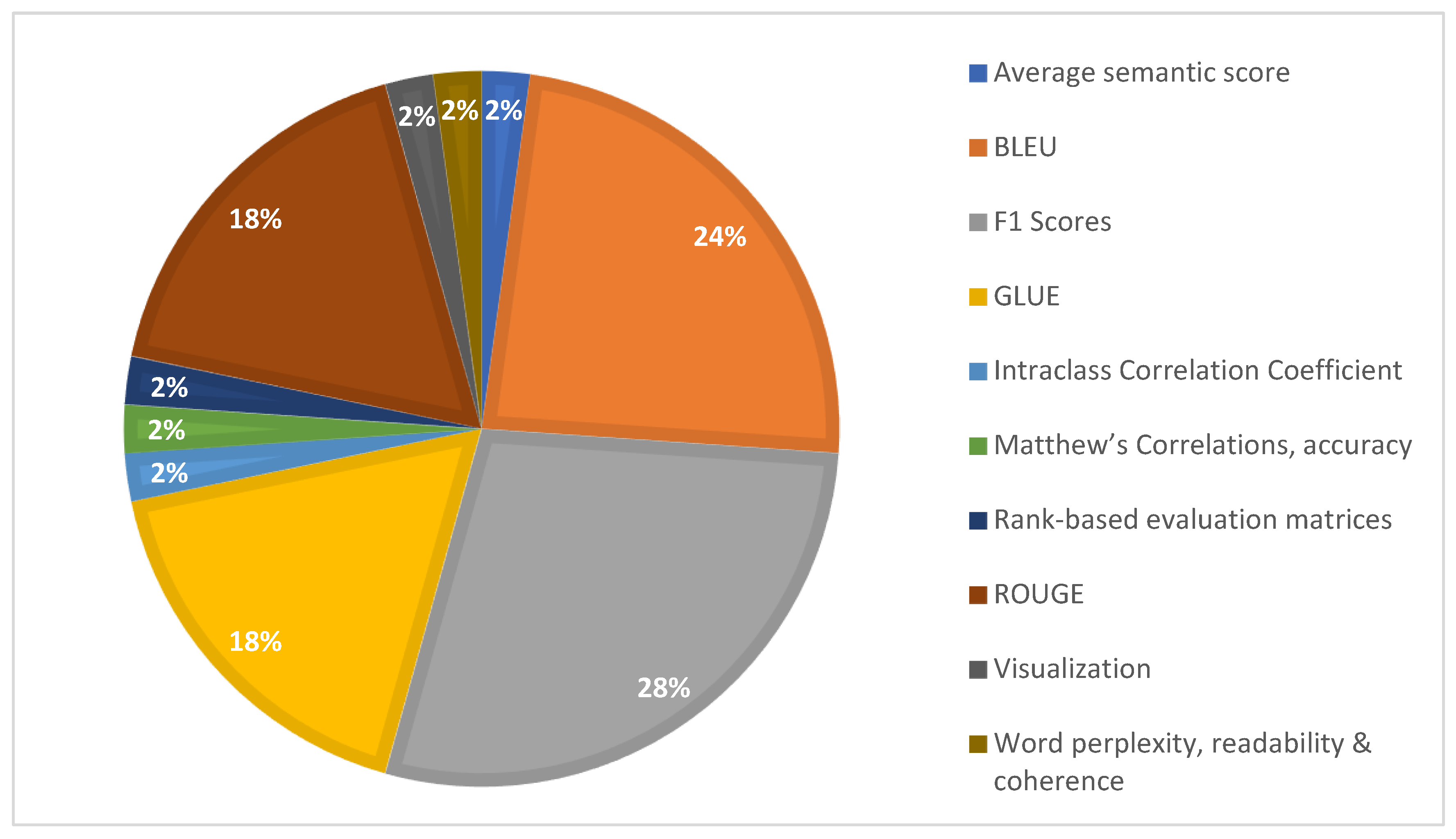
Figure 6 shows the graphical view of the performance of Transfer Learning models on datasets given in Table 1. Similarly, Figure 7 shows the distribution of Evaluation Metrics as counted from Table 2.
Figure 6.
Number of Parameters Used in Various Models.
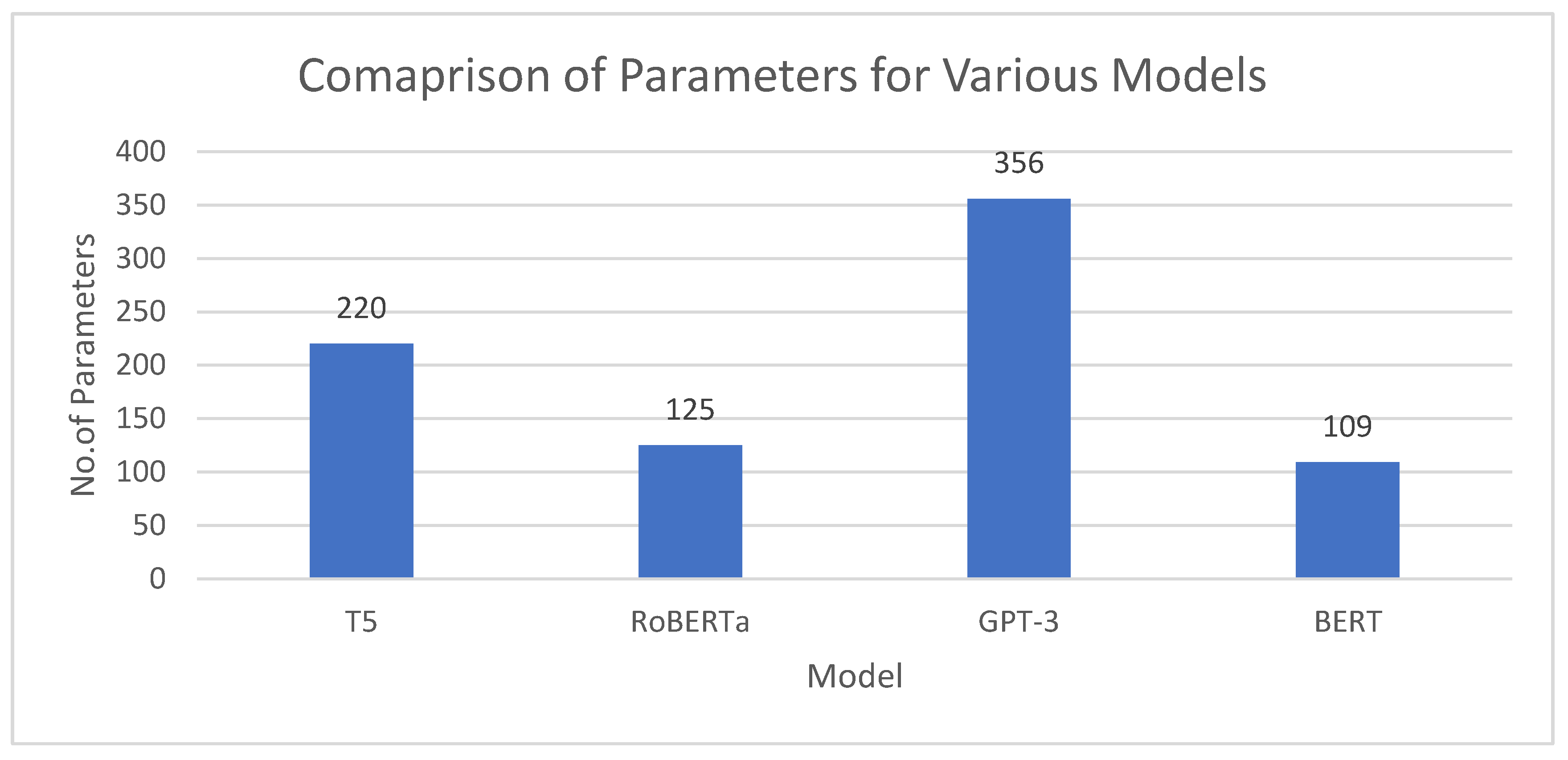
Figure 7.
Scores Achieved on Different Datasets.
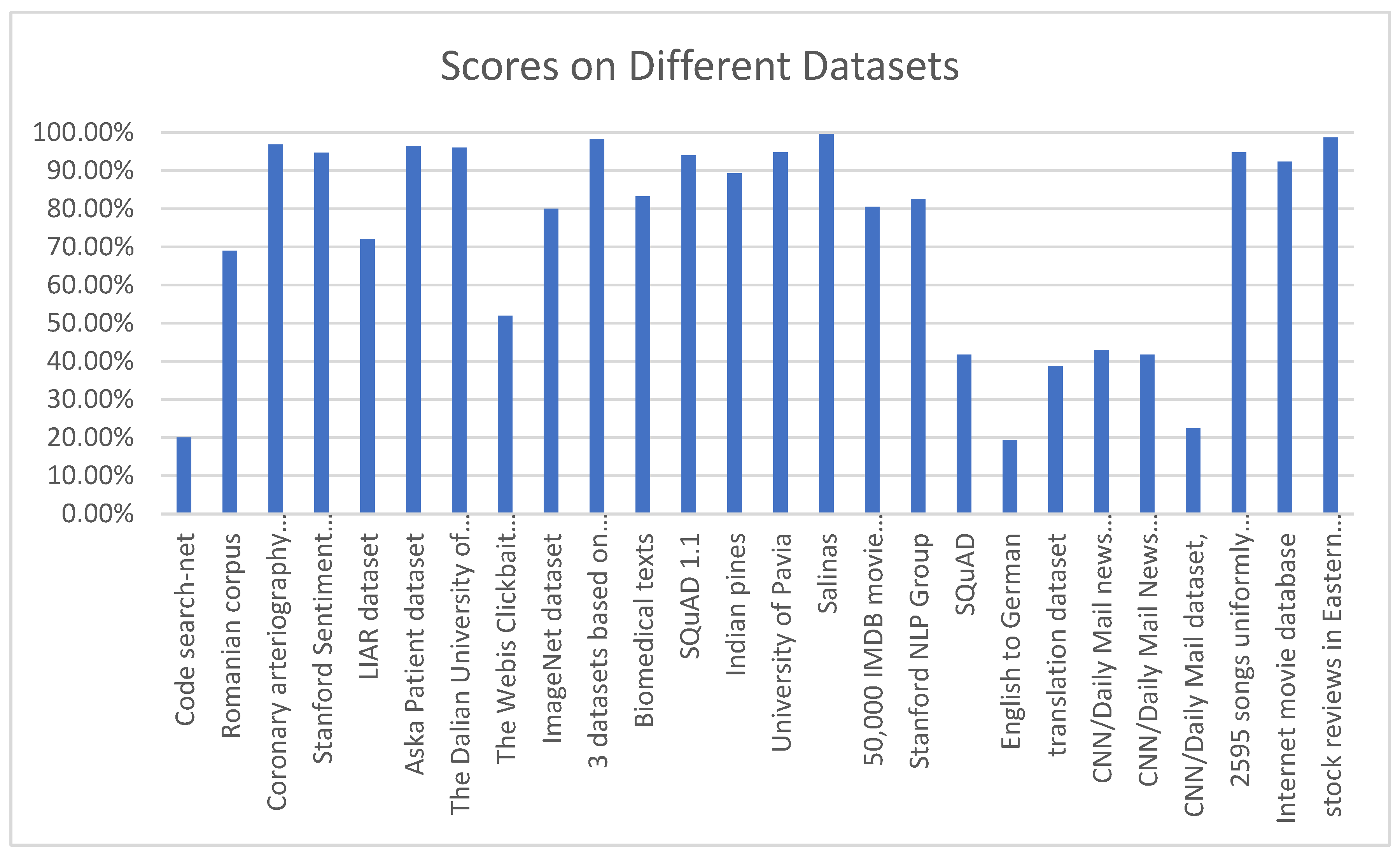
Figure 8.
Commonly Used Evaluation Metrics.
- RQ-2.
- “How is the status of AI models in this field now influenced by historical advancements and theoretical bases in sentiment analysis and cross-lingual transfer learning?”
4. Foundations of Cross-Lingual Transfer Learning
Cross-lingual transfer learning is a derivative of the overarching principle of transfer learning, wherein a model is initially trained on a specific task or domain and subsequently leverages that acquired knowledge to address a related task or domain. Pre-trained language models have brought about a significant transformation in the field of NLP [77,78]. The aforementioned models, namely BERT (Bidirectional Encoder Representations from Transformers) [79], GPT (Generative Pre-trained Transformer) [7], and their derivatives have undergone pre-training using extensive collections of textual data in a single language. As a result, they have demonstrated exceptional proficiency across various NLP tasks, including sentiment analysis.
The utilization of pre-trained language models has facilitated the advancement of sentiment analysis models that exhibit enhanced accuracy and efficiency. These models are capable of extracting semantic and contextual information from extensive collections of text data. They may be further optimized for sentiment analysis tasks using relatively limited quantities of annotated data [1,51,80,81,82]. Nevertheless, the primary training of these models is usually focused on a certain language, hence posing a difficulty when attempting to utilize them for languages that lack pre-existing trained models [83].
To tackle this particular difficulty, scholars have devised methodologies for the use of cross-lingual transfer learning [3,84,85,86]. A frequently employed strategy involves the alignment of word and phrase embeddings or representations across different languages. Researchers have put forth many methodologies for acquiring bilingual word embeddings, which facilitate the mapping of words from distinct languages into a common embedding space [87,88]. This facilitates the transmission of information between languages by capitalizing on the similarity in word representations.
An alternative method involves employing machine translation as a means to overcome the linguistic barrier. This approach involves the translation of text from the source language to the target language, enabling the use of a pre-trained model in the source language for sentiment analysis in the target language. This methodology has demonstrated efficacy, particularly when supplemented by the process of refining and optimizing using domain-specific data in the desired language [89,90,91].
Cross-lingual transfer learning signifies a fundamental change in the wider domain of transfer learning. The process entails the training of a model on a specific task or domain, followed by the transfer of the obtained knowledge to comparable activities or domains within a distinct language context. Within the domain of NLP, this particular methodology has garnered considerable interest owing to its capacity to tackle a key obstacle: the analysis of sentiment across a diverse range of languages [33].
The emergence of pre-trained language models has had a profound impact on the field of NLP. Models such as BERT (Bidirectional Encoder Representations from Transformers), GPT (Generative Pre-trained Transformer), and their respective variations have undergone pre-training using extensive textual corpora in a monolingual context. These models can capture a substantial amount of semantic and contextual information, hence allowing them to perform very well in a wide range of NLP tasks, such as sentiment analysis [92].
Pre-existing language models provide a notable benefit in terms of both effectiveness and precision. Remarkable performance may be achieved by fine-tuning models with very modest quantities of labeled data for certain tasks, such as sentiment analysis. Nevertheless, the inherent language-specific characteristics of these models provide a significant obstacle when attempting to utilize them in languages that lack pre-existing trained models [93].
To surmount this particular issue, scholars have developed inventive methodologies within the field of cross-lingual transfer learning. The objective of these strategies is to facilitate sentiment analysis in languages that lack specialized pre-trained models. This allows for the use of the information contained inside pre-trained models for a distinct language [30].
One of the primary techniques utilized in cross-lingual transfer learning is aligning embeddings or representations across different languages. The fundamental tenet posits that words or phrases possessing comparable meanings or contextual associations across distinct languages ought to exhibit analogous embeddings. This technique enables the transfer of information between languages by establishing a shared embedding space [35]. Approaches for acquiring bilingual word embeddings have been created by researchers. These approaches facilitate the mapping of words from different languages into a single embedding space. Within this communal domain, the observable manifestations of semantic and contextual resemblances among words originating from diverse linguistic backgrounds become apparent. For example, it is probable that the term "happiness" in the English language and its corresponding counterpart in French, "bonheur," have comparable embeddings inside this same semantic domain [87,94,95]. The embedding space that is shared facilitates the connection between different languages. When a sentiment analysis model that has been pre-trained in one language is presented with text in a different language, it can leverage the common embedding space to successfully comprehend and analyze sentiment. The acquisition of knowledge from the source language facilitates the ability to make well-informed predictions about sentiment in the target language.
An additional robust methodology in the field of cross-lingual sentiment research is employing machine translation as an intermediate mechanism. This approach involves the translation of text from the source language to the target language, enabling a sentiment analysis model that has been pre-trained in the source language to evaluate sentiment in the target language. The utilization of machine translation efficiently serves as a means to overcome the language barrier. For example, when a sentiment analysis model that has been trained in the English language meets content written in Spanish, it is possible to translate the Spanish text into English before doing sentiment analysis. The use of the translation process allows the model to successfully apply its pre-existing knowledge, as the analysis is performed in a language that is comprehensible to it [91,96].
The performance of the model may be further improved by fine-tuning it using domain-specific data in the target language. This stage is crucial in ensuring that the model effectively adjusts to the unique characteristics of emotional expression within the target language and domain. The translation process encompasses the ability to grasp subtle distinctions, informal expressions, and cultural allusions that might not be evident in the original language [91].
In summary, cross-lingual transfer learning has emerged as a crucial approach in the domain of NLP, specifically in the context of sentiment analysis across many languages. This section discusses the inherent difficulty of utilizing pre-trained models that are exclusive to a certain language in situations where there are no dedicated resources available for other languages. Cross-lingual transfer learning enables NLP models to surpass linguistic barriers and deliver precise sentiment analysis outcomes in many linguistic environments, either by aligning embeddings or employing machine translation as an intermediary.
- RQ-3.
- “What are the main obstacles and recent advances in the use of AI models for sentiment analysis using cross-lingual transfer learning approaches?”
5. State-of-the-Art Models and Techniques
This section summarizes the state-of-the-art techniques that are commonly implied and could have futuristic scope for cross-lingual sentiment analysis.
The domain of cross-lingual sentiment analysis has experienced significant advancements, resulting in the development of several cutting-edge models and methodologies. These advancements have effectively tackled the difficulties associated with overcoming linguistic and cultural barriers, therefore enabling accurate sentiment analysis across many languages [7].
Bidirectional Encoder Representations from Transformers (BERT) and its several iterations have emerged as formidable entities in the domain of NLP, showcasing remarkable proficiencies across a diverse array of tasks, encompassing sentiment analysis. The effective adaptation of BERT for cross-lingual sentiment analysis has been achieved by the utilization of its pre-trained multilingual representations by researchers. The utilization of multilingual datasets in the fine-tuning process of BERT enables sentiment analysis models to adeptly grasp the subtle intricacies inherent in many languages. Furthermore, the utilization of strategies such as translation augmentation, which involves the translation of text to and from the desired language during the training process, serves to further improve the cross-lingual capabilities of BERT-based models. These methodologies facilitate the transfer of information from BERT across other languages, leading to notable improvements in accuracy and generalization [97].
The alignment of cross-lingual embeddings has become a crucial method in the field of cross-lingual sentiment analysis. Canonical Correlation Analysis (CCA) and adversarial training are two methodologies employed to achieve the alignment of word embedding across different languages, intending to map them into a common embedding space. The use of this collaborative platform enables sentiment analysis models to leverage the commonalities in word representations across many languages, notwithstanding their inherent linguistic disparities. The alignment of cross-lingual embeddings enables models to consistently identify sentiment-bearing words and phrases across different languages, hence enhancing the accuracy of cross-lingual sentiment analysis [98].
Multilingual pre-trained models have been specially designed to address the complexities associated with processing various languages. Several examples of cross-lingual language models are XLM-R (Cross-lingual Language Model with RoBERTa), mBERT (Multilingual BERT), and XLM (Cross-lingual Language Model). The models have been specifically developed with an emphasis on multi-lingually, enabling them to effectively and effortlessly process a diverse range of languages. Through the process of pre-training on vast multilingual datasets, these models develop a comprehensive comprehension of linguistic subtleties, rendering them exceptionally proficient at doing cross-lingual sentiment analysis. Furthermore, the capacity to utilize pre-existing information from a variety of languages provides a cost-efficient and data-efficient approach to doing sentiment analysis across different linguistic contexts [99,100].
These techniques leverage cross-lingual embeddings and concepts of transfer learning to extend the applicability of sentiment analysis models to new languages, especially in scenarios where there is a scarcity or absence of annotated data. Zero-shot learning utilizes the intrinsic connections between languages that are contained in the embeddings of the model. This enables the model to adapt to unfamiliar languages and generate meaningful sentiment predictions [77].
Unsupervised algorithms for cross-lingual sentiment analysis propose a novel strategy to reduce dependence on annotated data. These strategies aim to minimize the reliance on a large number of labeled examples in the target languages. Frequently, researchers employ unsupervised machine translation, back-translation, and adversarial training techniques to effectively adjust models for target languages in the absence of labeled data. Unsupervised approaches enhance the capability of models to do sentiment analysis proficiently in languages with limited or absent labeled resources by creating synthetic parallel data and using cross-lingual embeddings.
Table 3 presents the list of modern techniques used in cross-lingual sentiment analysis. Table 4 presents the common datasets, applied techniques, and languages used in cross-lingual sentiment analysis.

Table 3.
Common Models of Transfer Learning from Literature Study.
| Publications | Model | Technique | Dataset | Evaluation Matrix | Results |
|---|---|---|---|---|---|
| [46] | BERT | NLP | Stanford Sentiment Treebank (SST) | F1 Score | 94.7% |
| [57] | BERT | syntax-infused Transformer, syntax-infused BERT | WMT ’14 EN-DE dataset | BLUE, GLUE benchmark | BERT perform better |
| [66] | BERT | Sent WordNet, LR, and LSTM | 50,000 IMDB movie reviews. | GLUE | 80.5% |
| [53] | Transformer | Hierarchical graph-based transformer | 3 Benchmark dataset | Rank-based evaluation matrices | Outperforms other deep learning models |
| [27] | Transformer with Bi-LSTM (TRANS-BLSTM) | BERT, Bidirectional LSTM, RNN, and transformer | SQuAD 1.1 GLUE |
F1 score | 94:01% |
| [69] | BERT | LASO (Listen Attentively, and Spell Once). | AISHELL-1 and AISHELL-2 | Visualization | speedup of about 50× and competitive performance |
| [70] | BERT | BERT-base, BERT-mix-up | GLUE benchmark | Matthew’s Correlations, accuracy | BERT-mix-up outperforms |
| [24] | XLNet | FNN (feed-forward neural network) | LIAR dataset | F1 Score, Precision, Recall | 72% |
| [51] | XLNet | Bidirectional Long Short-Term Memory (Bi-LSTM) | Aska Patient dataset | F measures | 96.4% |
| [71] | XLNet | Smooth Algorithm | The Webis Clickbait Corpus (Webis-Clickbait-17) is | F1 Scores | 52% |
| [43] | GPT-2 | RNN, GPT-2 | 13,850 entities of post-reply pairs | Word perplexity, readability & coherence | GPT-2 outperforms RNN |
| [26] | GPT-2 | RoGPT2 | Romanian corpus | BLEU | F0.5: 69.01 |
| [72] | GPT-2 | NLP | Biomedical texts | F1 score | 3.43 |
| [73] | GPT-2 | SP-GPT2, GPT2-SL and GPT2-WL | Luc-Bat dataset | Average semantic score | SP-GPT2 outperforms |
| [74] | XLNet | EXLNet-BG-Att-CNN | The Dalian University of Technology. | F1 Score, Precision, Recall | 96.05% |
| [40] | GPT-3 | Talking child avatar | Interviews data | Intraclass Correlation Coefficient | GPT-3 outperforms |
| [75] | GPT-3 | Codex | Code search-net | BLEU | 20.6 |
| [76] | GPT-2 | Variational RNN | 3 datasets based on BiLSTM and DistilBERT and a combination of them | Precision, Recall, F1 scores | 98.3%, |
Table 4.
Literature of Common Techniques for Word Embedding and Transfer Learning in Cross-Lingual Sentiment Analysis.
Table 4.
Literature of Common Techniques for Word Embedding and Transfer Learning in Cross-Lingual Sentiment Analysis.
| Publication | Technique | Contribution |
|---|---|---|
| [101] | GloVe | The embedding is pre-trained by including supplementary statistical word co-occurrence data. |
| [102] | SENTIX | In this study, a sentiment-aware language model (SENTIX) was pre-trained using four distinct pretraining objectives. The aim was to extract and consolidate domain-invariant sentiment information. |
| [103] | FastText | One potential approach to enhance the performance of word embeddings is to incorporate subword information during the pretraining phase. |
| [104] | SOWE | The word embedding should be pre-trained using the sentiment lexicon specific to the financial area. |
| [105] | AEN-BERT | The attentional encoder network is proposed as a means to enhance the alignment between the target and context words. |
| [106] | BERT | In this study, we propose to perform fine-tuning on the BERT model to improve its performance in the task of emotion detection. |
| [107] | BERT-emotion | The integration of ensemble BERT with bi-LSTM and capsule models is proposed as a means to enhance the efficacy of emotion detection. |
| [108] | BERT-Pair-QA/NLI | To adapt ABSA (Aspect-Based Sentiment Analysis) into a sentence-pair classification task, an auxiliary sentence can be constructed. |
| [109] | BERT-PT | The BERT model was fine-tuned using domain-specific review data and machine reading comprehensive data. |
| [110] | DialogueGCN | This study aims to address the challenges associated with context propagation in RNNs by leveraging graph embedding techniques. |
| [111] | DialogueRNN | In this study, the author analyzes and models the emotional dynamics associated with a given speech, specifically focusing on the emotional dynamic of utterance |
| [112] | GCN | The adoption of a dependency tree was employed to effectively utilize structural syntactical information. |
| [113] | HAGAN | The proposed approach involves the utilization of Ensemble BERT combined with hierarchical attention generative adversarial networks (GANs) to distill sentiment-distinct yet domain-indistinguishable representations. |
| [114] | mBERT | BERT was pre-trained by utilizing 104 distinct language versions of Wikipedia as the foundational corpus. |
| [115] | mBERT-SL | The use of the prediction outcome from mBERT as supplementary input data for the fine-tuning of a multilingual model. |
| [116] | XLM | The enhancement of cross-lingual model generalization can be achieved by including supervised cross-lingual and unsupervised monolingual pretraining objectives. |
| [117] | BAT | One potential approach to enhance the performance of the BERT model is to use adversarial training throughout the fine-tuning process. |
| [118] | BERT | The suggestion of employing intramodality and inner-modality attention mechanisms to more effectively capture incongruent information. 28. The contribution made by this study. |
| [119] | BERT | The integration of picture and text representation was enhanced by the use of an applied bridge layer and a 2D-intra-attention layer. |
| [80] | BERT-ADA | The BERT model was fine-tuned using post-training techniques and further enhanced by incorporating more data from several domains. |
| [120] | BERT-DAAT | Following the pretraining phase, the BERT model underwent post-training, whereby target domain masked language model tasks and a domain differentiating task were employed to extract the domain-specific features. |
| [121] | CM-BERT | The application of masked multimodal attention was utilized to modify the word embedding by including non-verbal cues. |
| [122] | HFM | A hierarchical fusion approach is proposed to rebuild the characteristics across three modalities. |
| [98] | ICCN | The outer-product pair was utilized in conjunction with deep canonical correlation analysis to enhance the fusion of multimodal data. |
| [123] | MAG-BERT | The proposed multimodal adaptation gate (MAG) is suggested as a means to enhance the incorporation of multimodal information inside a pre-trained model during the process of fine-tuning. |
| [124] | MISA | The modality invariant and modality-specific mechanisms were employed to enhance the process of multimodal fusion. |
| [125] | Multitask training- BERT | The performance of a multitask learning framework is significantly impacted when the learning process is asynchronous across many subtasks. |
| [126] | SDGCN-BERT | The present study introduces a graph convolutional network as a means to effectively capture the interdependencies of sentiment among various characteristics. |
| [127] | WTN | The utilization of an ensemble BERT model in conjunction with a Wasserstein distance module is proposed as a means to enhance the caliber of domain invariant characteristics. |
| [128] | BERT | The use of an ensemble BERT model in conjunction with a contrastive learning framework is proposed as a means to augment the depiction of domain adaptation. |
| [129] | CG-BERT | The context-aware information was utilized to enhance the identification of the target-aspect pair. |
| [130] | CL-BERT | The application of contrastive learning was incorporated into BERT to exploit emotion polarity and patterns. |
| [131] | CLIM | The integration of contrastive learning into BERT has been implemented to enhance the capture of domain-invariant and task-discriminative characteristics. |
| [132] | Knowledge-enabled BERT | The utilization of external sentiment domain information was included in the BERT model. |
| [133] | P-SUM | Two straightforward modules, namely parallel aggregation and hierarchical aggregation, are proposed to use the latent capabilities of hidden layers in BERT. |
| [134] | SpanEmo | The emotion categorization job may be framed as a span prediction issue. |
| [135] | SSNM | The interpretability of CDSA was enhanced by using both pivot and non-pivot information. |
| [136] | BERT-AAD | The catastrophic forgetting issue was addressed by employing adversarial adaptation together with a distillation approach. |
| [137] | BertMasker | The purpose of this study is to discover domain invariant characteristics by applying tokens that are linked to the domain and masking them. |
| [138] | BiERU | The proposed Entity Recognition and Understanding (ERU) system aims to enhance the extraction of contextual compositional and emotional elements in the task of conversational emotion detection. |
| [139] | PD-RGAT | The utilization of the phrase dependency graph in the Graph Convolutional Network (GCN) was leveraged to effectively exploit both short and long dependencies among words. |
| [140] | – | The sarcasm detection tasks were performed by directly fine-tuning several pre-trained models. |
| [141] | - | Discussed the Taxonomy of Sentiment Analysis in detail. Also, proposed a mechanism for the Bombay Stock Exchange. Targeted SENSEX and NIFTY Data for classification purposes. |
Table 5.
Literature of Datasets and Methods for Cross-Lingual Domain.
| Publications | Model | Characteristics | Datasets | Languages |
|---|---|---|---|---|
| [142] | Density-driven projection | The process of obtaining cross-lingual clusters and transferring lexical information may be achieved through the utilization of translation dictionaries that are produced from parallel corpora. | Google universal treebank; Wikipedia data; Bible data; Europarl |
MS-en / MS-de MS-es / MS-fr MS-it / MS-pt MS-sv |
| [143] | RBST | In this study, the author represents the language disparity as a static transfer vector that exists between the source language and the destination language for each specific polarity. | Amazon product reviews; 5 million Chinese posts from Weibo |
en-ch |
| [144] | Adversarial Deep Averaging Network (ADAN) | The proposed technique for language adversarial training consists of three components: a feature extractor, a language discriminator, and a sentiment classifier. | Yelp reviews; Chinese hotel reviews; BBN Arabic Sentiment Analysis data set; |
ch-en en-ar |
| [145] | Attention-based CNN model with adversarial cross-lingual learning | To address the issue of limited personal data on Sina Weibo and Twitter datasets, a potential solution is to extract language-independent characteristics. This approach aims to mitigate the problem by identifying and using traits that are not reliant on specific languages. | Twitter; |
en-ch (Twitter) en-ch (Weibo) |
| [146] | Bilingual-SGNS | The SGNS algorithm is utilized to generate word embedding vectors for two languages, which are subsequently aligned to a shared space. This alignment enables the application of fine-grained aspect-level sentiment analysis. | ABSA dataset in Hindi; English dataset of SemEval-2014 |
en-hi |
| [147] | BLSE | Employ a compact bilingual dictionary and annotated sentiment data from the source language to derive a bilingual translation matrix that incorporates sentiment information. | OpeNER; MultiBooked dataset |
en-es en-ca en-EU |
| [148] | DC-CNN | One approach to include latent sentiment information into Cross-Lingual Word Embeddings (CLWE) involves utilizing an annotated bilingual parallel corpus. | SST; TA; AC; SE16-T5; AFF | en-es/ en-nl en-ru/ en-de en-cs/ en-it en-fr/ en-ja |
| [149] | Vecmap | The unsupervised model Vecmap may be utilized to generate the first solution, hence eliminating the reliance on tiny seed dictionaries. | Public English-Italian dataset; Europarl; OPUS |
en-it en-de en-fi en-es |
| [150] | Ermes | The use of emojis as an additional source of sentiment supervision data can be employed to acquire sentiment-aware representations of words. | Amazon review dataset; Tweets | en-ja en-fr en-de |
| [151] | SVM; SNN; BiLSTM |
To enhance the effectiveness of brief text sentiment analysis, it is recommended to modify the word order of the target language. | OpeNER corpora; Catalan MultiBooked dataset |
en-es en-ca |
| [152] | Language Invariant Sentiment Analyzer (LISA) | The use of adversarial training across many languages with abundant resources to extrapolate sentiment information in a language with limited resources. | Amazon Review Dataset; Sentiraama Dataset |
en-de en-fr en-jp |
| [153] | NBLR+POSwemb; LSTM |
The use of Generative Adversarial Networks (GANs) for the initial pre-training of word embeddings, followed by a subsequent fine-tuning process. | OpenNER; NLP&CC 2013 CLSC |
en-es en-ca en-eu |
| [154] | TL-AAE-BiGRU | The use of Automatic Alignment Extraction (AAE) is employed to acquire bilingual parallel text and afterward align bilingual individuals inside a shared vector space through the application of a linear translation matrix. | Product comments on Amazon | en-ch en-de |
| [155] | Conditional Language Adversarial Network (CLAN) | The model may be enhanced by the use of conditional adversarial training, which involves training both the language model and discriminator in a manner that maximizes their performance. | Websis-CLS-10 Dataset | en-de en-fr en-jp |
| [33] | ATTM | The training samples should be further refined. | COAE2014 | ch-de ch-en ch-fr ch-es |
5.1. Strengths and Limitations of Existing Techniques
Contemporary models utilised in cross-lingual sentiment analysis (CLSA) exhibit a combination of encouraging potential and technical limitations. As this discipline progresses, comprehending the practical advantages and disadvantages of these models is essential for both scholarly and applied research settings.
5.1.1. Strengths
Transformer-based designs like mBERT (Multilingual BERT), XLM-R (Cross-lingual RoBERTa), and mT5 have markedly enhanced efficacy in multilingual sentiment analysis. These models get advantages from pretraining on extensive multilingual corpora, enabling them to acquire contextual embeddings that generalise effectively across languages, even in zero-shot or few-shot scenarios. Their language-agnostic representations facilitate the efficient transfer of sentiment knowledge from high-resource to low-resource languages.
Hybrid architectures (e.g., CNN-BiLSTM-BERT) augment performance by integrating the advantages of many model types: convolutional layers collect local n-gram features, BiLSTM captures long-range relationships, and BERT provide contextual embeddings. This collaboration results in enhanced precision in sentiment analysis across many topics and languages. Furthermore, CLSA models have shown useful in noisy, real-world social media messages, exhibiting resilience in multilingual online contexts.
5.1.2. Limitations
Despite their advantages, current CLSA models can entail high computational costs, necessitating robust GPUs and substantial memory, which may impede resource-limited implementations. Optimising large transformer models in many languages frequently incurs substantial training and inference expenses.
A further constraint is domain adaptability. Models developed on conventional benchmarks or general-purpose datasets sometimes encounter difficulties when applied to specialised areas like healthcare, disaster response, or finance. Linguistic subtleties, like idiomatic phrases, sarcasm, and code-switching, provide issues that existing models often mismanage, particularly in low-resource languages.
Furthermore, the absence of interpretability in deep learning-based CLSA models generates apprehensions regarding their implementation in sensitive or high-stakes contexts. The opaque nature of models such as mBERT complicates the comprehension of emotional decision-making, posing challenges for transparency, auditing, and compliance.
Despite substantial progress in the field through existing approaches, a compromise persists among performance, computing efficiency, and flexibility. Future research should concentrate on developing models that are accurate, efficient, interpretable, and adept at addressing the complete range of language and domain-specific difficulties in multilingual contexts.
In summary, the current state-of-the-art models and methodologies utilized in cross-lingual sentiment analysis represent the forefront of research in natural language processing. Researchers and practitioners are making significant advancements in the field of sentiment analysis by utilizing pre-trained language models such as BERT, cross-lingual embedding alignment, dedicated multilingual models, zero-shot learning, and innovative unsupervised methods. These approaches allow sentiment analysis to surpass linguistic barriers and offer precise insights across a wide range of languages and cultures. These technological breakthroughs exhibit considerable potential for many applications, ranging from the surveillance of global social media platforms to the analysis of international corporate data.
6. Limitations and Challenges
The limited availability of labeled data is a substantial challenge in the field of cross-lingual sentiment analysis. Pre-existing models depend on a substantial amount of annotated data to optimize their performance for certain tasks. Nevertheless, several languages suffer from a scarcity of the requisite resources essential for the efficient training of models. The phenomenon of scarcity is most evident in languages that are spoken by tiny populations or have little representation in the internet domain [131,152].
The restricted availability and accuracy of sentiment analysis models can be attributed to the paucity of labeled data in specific languages. Numerous solutions have been investigated by researchers and practitioners to effectively tackle this particular issue. These strategies encompass a wide range of approaches and methodologies.
6.1. Zero-Shot Learning
Zero-shot learning techniques [35,84,156] are designed to address the task of text classification in languages when annotated data is not available. The aforementioned techniques utilize cross-lingual embeddings and transfer learning to extrapolate sentiment analysis expertise to unfamiliar languages, even in scenarios where there is limited or absent annotated data. Transfer learning techniques can be utilized in situations when there is accessed to labeled data for a closely related language or a language that has abundant resources. Pre-trained models that have been trained in a single language might experience knowledge transfer when they are adapted to related languages, partially addressing the problem of limited data availability.
6.2. Data Augmentation
Another method can be data augmentation which refers to the utilization of several ways to generate more labeled data by applying modifications to existing data. This methodology has the potential to enhance the quantity of annotated data accessible for certain languages, hence enhancing the efficacy of sentiment analysis models [71].
6.3. Language Divergence
The wide range of linguistic structures and variations in sentiment expressions among different languages poses a significant obstacle in the field of cross-lingual sentiment analysis. Languages that exhibit significant divergence sometimes possess distinct sentence structures, word use patterns, and markers of mood, hence posing challenges in the smooth transmission of knowledge.
The resolution of language divergence necessitates the use of strategies that may effectively bridge the linguistic disparities. Several strategies can be employed [26,157]. The process of aligning cross-lingual embeddings involves employing techniques such as Canonical Correlation Analysis (CCA) or adversarial training [98]. The objective of these techniques is to establish a mapping between words or phrases from diverse languages, enabling them to exist inside a common embedding space. This facilitates sentiment analysis models in capturing shared patterns in emotional expression and sentiment-carrying words across different languages, even in the presence of linguistic variations.
6.4. Domain Adaptation
Domain adaptation is a crucial aspect in the field of sentiment analysis as it frequently requires domain-specific information to yield precise and reliable outcomes [158,159]. A sentiment analysis model that has been trained on a corpus of generic text may encounter difficulties when attempting to adapt to specialized areas where sentiment expressions exhibit substantial variations. The difficulty is in modifying the model’s comprehension of sentiment to align with the contextual nuances of a particular domain. The utilization of effective domain adaptation approaches is of utmost importance in tackling this difficulty. The process of fine-tuning involves optimizing pre-trained models using data that is specific to a certain domain, which might result in improved performance within that specialized area. By subjecting the model to domain-specific linguistic patterns and expressions of sentiment, it can enhance its ability to adjust to the distinct context of the intended domain.
The use of transfer learning and domain adaptation algorithms can enhance the ability of sentiment analysis models to transfer information and comprehend sentiment across different domains. This mitigates the necessity for extensive labeled datasets that are specialized to a certain domain.
6.5. Cultural Effects
Cultural subtleties exert a significant effect on sentiment analysis, rendering it very context sensitive. The perception of positive emotion can vary between cultures, leading to situations where what is deemed good in one culture may be perceived as neutral or bad in another society [83,160]. It is important to comprehend and incorporate these cultural discrepancies to conduct a comprehensive study of sentiment across different languages. The collection of sentiment annotations from individuals with varied cultural and language backgrounds is of utmost importance in cross-cultural annotation. This enables models to acquire knowledge and identify sentiment expressions and contextual signals that are peculiar to a particular culture.
The integration of several modalities, such as photos, videos, or audio, in conjunction with textual data, might offer more contextual information for the study of sentiment. Cultural signals and subtleties frequently become apparent in various modalities, and doing a collaborative study of them can significantly improve the precision of sentiment analysis [161].
In summary, the use of cross-lingual transfer learning exhibits considerable promise for sentiment analysis in many languages. However, it encounters several obstacles including limited data availability, linguistic disparities, adaptation to specific domains, cultural subtleties, and ethical implications. Scholars and professionals in this particular domain are now engaged in the development of novel approaches to tackle these obstacles and enhance the resilience and dependability of cross-lingual sentiment analysis.
- RQ-4.
- “What are the implications and uses of cross-lingual sentiment analysis in various fields, and how can AI-powered methodologies influence sentiment interpretation in multilingual environments?”
7. Impacts of Cross-lingual Sentiment Analysis
This study explores the diverse practical uses of cross-lingual sentiment analysis. The application of cross-lingual sentiment analysis in several domains has significantly transformed the comprehension and decision-making processes in multilingual contexts. These technologies are revolutionizing several sectors and facilitating corporations’ engagement with global consumers through the analysis of emotions in multiple languages. A few of the applications of Cross-lingual sentiment analysis are given below:
7.1. Customer Review Analysis
The comprehension of customer emotion holds significant importance in the highly competitive e-commerce industry. Enterprises have the potential to get valuable insights by utilizing cross-lingual sentiment analysis to analyze product evaluations, consumer comments, and social media input. The acquisition of this knowledge has the potential to enhance several aspects of a product, including its quality, marketing strategies, and overall consumer pleasure. By gaining insights into consumer emotions across different languages, e-commerce enterprises have the opportunity to adapt their products and services to cater to diverse markets, hence enhancing customer connections [50,109,155].
7.2. Social Media Monitoring
Furthermore, Social media monitoring is the systematic observation and analysis of communication taking place on worldwide platforms that have evolved into hubs for multilingual debates. To effectively monitor the sentiment expressed on social media, companies, and organizations require the implementation of cross-lingual sentiment analysis. This facilitates the ability of organizations to effectively monitor and assess their brand image, identify recurring trends, and promptly address consumer issues across diverse linguistic communities. This technology enables businesses to establish and sustain a continuous online presence, facilitating effective communication with a diverse global audience [162,163].
7.3. Public Sentiments Analysis
Besides the social media monitoring Cross-lingual sentiment analysis facilitates the comprehension of public sentiment across different languages, hence aiding governments and political entities in gaining insights into public opinion. This evaluates the emotions associated with policy, political leaders, and societal concerns. By comprehending public sentiment among different linguistic communities, governments have the potential to enhance communication, address public grievances, and formulate informed policy choices. The assessment of public sentiment in real-time holds significant value in rapidly evolving political environments [54,164].
7.4. Healthcare Domain
The enhancement of healthcare quality is contingent upon the use of patient input. Cross-lingual sentiment analysis facilitates the comprehension of patients’ statements in several languages. The aforementioned data plays a crucial role in enhancing healthcare professionals’ services, augmenting patient happiness, and facilitating effective cultural dialogue. The utilization of multilingual sentiment analysis enables healthcare organizations to customize their patient-centered efforts to a broader and more heterogeneous patient population, hence enhancing the overall effectiveness of healthcare results [36].
7.5. Financial News Analysis
The efficacy of financial markets is contingent upon the availability of precise and punctual information, which serves as the foundation for making informed investment choices. The significance of cross-lingual sentiment analysis lies in its ability to effectively analyze sentiment in many domains such as news articles, social media debates, and financial datasets. Investors possess the ability to discern and acknowledge shifts in market sentiment, enabling them to make informed investment choices. The utilization of real-time sentiment monitoring enables financial institutions to effectively respond to market dynamics and enhance the performance of their investment portfolios, hence maintaining their competitiveness within the global financial market [165,166].
7.6. Online Platforms Marketing Analysis
Online platforms and communities have challenges in effectively moderating material across several languages to maintain adherence to community guidelines and mitigate the dissemination of bad information. The importance of cross-lingual sentiment analysis lies in its ability to detect and manage improper information in several languages. One potential approach to ensuring uniform and efficient enforcement of content rules across different languages on platforms is through the analysis of user sentiment. This method enhances online security and fosters diversity, hence yielding global benefits for users [167].
In general, the application of cross-lingual sentiment analysis has significantly enhanced decision-making processes and increased audience engagement across several industries. The utilization of multilingual sentiment analysis aids organizations in effectively managing language and cultural disparities. This enables individuals to make decisions based on empirical evidence and effectively interact with a diverse international audience in a manner that respects and aligns with their cultural context. The aforementioned applications demonstrate that cross-lingual sentiment analysis possesses the potential to exert a significant impact on global society.
8. Open Research Questions in Cross-Lingual Sentiment Analysis
The emergence of cross-lingual sentiment analysis presents novel opportunities and offers solutions to existing challenges. Enhanced methodologies and novel conceptual frameworks have the potential to enhance the resilience and inclusivity of cross-lingual sentiment analysis.
The task of sentiment analysis in low-resource languages poses significant challenges. The objective of research should be to advance methodologies for languages that possess limited data. This involves investigating unsupervised and semi-supervised learning techniques that assist languages with limited resources employing cross-lingual knowledge transfer, data augmentation, and other approaches.
The incorporation of textual content, visual representations, and auditory elements into cross-lingual sentiment analysis has considerable potential. The integration of different modalities has the potential to enhance the capabilities of sentiment analysis systems in the interpretation and evaluation of sentiment data from several sources. Scholars have the opportunity to investigate AI techniques that may be employed to integrate multimodal data and conduct sentiment analysis across several data sources.
Cross-lingual sentiment analysis algorithms must exhibit impartiality and parity across many languages and cultures. Future research should incorporate methods aimed at mitigating prejudice and ensuring fairness in model training. The construction of equitable sentiment analysis models across diverse linguistic groups can be facilitated by the implementation of debiasing techniques guided by artificial intelligence.
One of the challenges faced by sentiment analysis algorithms is their limited ability to effectively adapt to various contexts. Robust cross-domain adaptation methods are necessary to facilitate practical implementations across many sectors. To enhance the adaptability of models across different domains, it is suggested that future research should investigate AI-driven methodologies for domain adaptation, such as transfer learning and domain-specific fine-tuning.
The application of multilingual conversational sentiment analysis is prevalent in the domains of chatbots and customer service. There is an increasing focus on the research and development of the cross-lingual sentiment analysis extension. The analysis of sentiment in conversations necessitates the consideration of contextual factors and the tracking of sentiment over time. The advancement of this discipline might be facilitated by the utilization of AI contextual analysis, discourse modeling, and sentiment dynamics.
The integration of user profiles, temporal trends, and geographical data has the potential to enhance the performance of cross-lingual sentiment analysis models. Future research might explore the utilization of AI in sentiment analysis algorithms, which incorporate contextual information to enhance the intricacy and sensitivity of the analysis.
The key challenges in CLSA are:
- Data Scarcity in Low-Resource Languages: Many models perform poorly due to lack of labeled data, especially for morphologically rich or minority languages.
- Domain Adaptability: Cross-domain transferability remains weak. Models trained on product reviews often fail in healthcare or disaster communication domains.
- Bias and Fairness: Biases inherent in training data can be amplified across languages. Few studies address fairness in multilingual AI systems.
- Explainability: Most models are black-box in nature, making it difficult to understand or debug misclassifications across languages.
- Evaluation Standards: The field lacks consistent benchmarks and multilingual datasets, complicating model comparison and progress tracking.
Addressing these challenges requires collaborative efforts in dataset development, ethical AI design, and cross-domain model generalization.
9. Future Directions and Opportunities
9.1. Model Compression for Resource-Limited Environments
Contemporary state-of-the-art multilingual transformer models, however potent, are computationally demanding and sometimes impractical for deployment in settings with constrained processing capabilities, memory, or connection. Future research should focus on creating lightweight and efficient model architectures utilising approaches like knowledge distillation, quantisation, and pruning. Distilled models such as DistilBERT and TinyBERT can be further adapted for multilingual and cross-lingual applications to maintain performance while minimising computational expenses. Furthermore, sparse attention methods and transformer versions such as Linformer and Longformer may be investigated to decrease complexity while maintaining model correctness. These tiny models will be essential for on-device sentiment analysis in mobile, embedded, and IoT settings, especially in remote or resource-limited areas.
9.2. Ethical and Equitable AI in Multilingual Contexts
Cross-lingual sentiment analysis raises significant ethical concerns, particularly pertaining to fairness across diverse languages and cultures. Neglecting language-specific subtleties, dialects, and sentiment expressions may lead to model bias. Future endeavours should concentrate on formulating ethical principles for multilingual AI that include fairness assessments, bias identification in training datasets, and transparency in model outputs. Fairness-oriented training objectives, multilingual bias reduction methods, and context-sensitive sentiment normalisation algorithms must be included into both the model construction and deployment processes. It is imperative to advocate for the development of diverse, inclusive training datasets and to encourage collaboration across linguistically and culturally diverse populations to guarantee comprehensive representation.
9.3. Practical Implementations and Case Analyses
Although theoretical advancements in CLSA have occurred, its practical application remains insufficiently assessed. Future endeavours should focus on demonstrating and validating CLSA models in practical applications, including worldwide customer support systems, multilingual public health monitoring platforms, and emergency response systems. Case studies must elucidate data gathering issues, deployment infrastructure, user input, domain-specific performance, and ethical implications. Comparative analyses of monolingual and cross-lingual models in operational settings would yield significant insights into the trade-offs concerning performance, scalability, and dependability. Moreover, multidisciplinary cooperation can facilitate the integration of CLSA models into real decision-making frameworks.
9.4. Multimodal Sentiment Analysis
Sentiment expression is frequently multimodal, particularly in online communication where users integrate text with auditory, visual, and symbolic indicators. Subsequent CLSA research could thus incorporate multimodal learning frameworks that amalgamate text with auditory cues, facial expressions, emojis, or video material. Cross-lingual multimodal fusion models, capable of aligning sentiment across languages and media types, have significant promise for enhanced emotional comprehension. Investigate techniques include cross-modal transformers, multimodal embedding alignment, and transfer learning across modalities. Multimodal CLSA will significantly influence areas such as education, social media analysis, and video customer evaluations, facilitating contextually nuanced and precise sentiment interpretation.
9.5. Creation of the Benchmark Dataset
The absence of extensive, equitable, and varied datasets remains a continual impediment to the progress of CLSA. Current standards either exhibit insufficient linguistic variety or fail to represent authentic variability in mood expressions. Future research should emphasise the development of standardised, annotated, and multilingual sentiment databases encompassing low-resource and under-represented languages. These datasets must encompass several domains?such as politics, healthcare, entertainment, and e-commerce?and incorporate both official and informal text forms. Multilingual parallel corpora with sentiment annotations, zero-shot and few-shot benchmark suites, and open-access community-driven data projects can enhance reproducibility and consistency in model assessment. The accessibility of these datasets will be essential for enabling cross-study comparisons and evaluating future advancements in CLSA.
10. Conclusions
In conclusion, this research study has explored the ever-changing field of cross-lingual sentiment analysis and the significant contribution of artificial intelligence models, with a special emphasis on transfer learning methods. In the course of this work, we conducted an extensive investigation into the historical backgrounds, theoretical foundations, and increasing significance of AI models in the field of sentiment analysis.
The review article also conducted a comprehensive analysis of the most recent breakthroughs and cutting-edge approaches in these areas, offering insights into the continuous improvements in the field. Moreover, we explored various research approaches and the development of evaluation criteria, intending to guide researchers and practitioners in their endeavor to achieve high standards.
This research study has made a valuable contribution to the comprehensive comprehension of the dynamic field of cross-lingual sentiment analysis by highlighting rising trends and persisting obstacles. The research findings have wide-ranging ramifications that span several disciplines, including but not limited to multilingual communication, cultural comprehension, and domain-specific sentiment analysis.
In summary, the exploration of cross-lingual sentiment analysis and artificial intelligence models highlights the continuous expansion of knowledge in the field of sentiment understanding and the significant impact these breakthroughs have on the development of language processing in the future. As individuals traverse the complex interplay between diverse linguistic systems and affective experiences, the possibility of generating novel approaches and fostering intercultural communication becomes more feasible.
References
- De Arriba, A.; Oriol, M.; Franch, X. Applying Transfer Learning to Sentiment Analysis in Social Media. Proc. IEEE Int. Conf. Requir. Eng. 2021, 2021, 342–348. [Google Scholar] [CrossRef]
- Agüero-Torales, M.M.; Abreu Salas, J.I.; López-Herrera, A.G. Deep learning and multilingual sentiment analysis on social media data: An overview. Appl. Soft Comput. 2021, 107, 107373. [Google Scholar] [CrossRef]
- Ostendorff, M.; Rehm, G. Efficient Language Model Training through Cross-Lingual and Progressive Transfer Learning. arXiv 2301, arXiv:2301.09626. [Google Scholar]
- Garner, B.; Thornton, C.; Luo Pawluk, A.; Mora Cortez, R.; Johnston, W.; Ayala, C. Utilizing text-mining to explore consumer happiness within tourism destinations. J. Bus. Res. 2022, 139, 1366–1377. [Google Scholar] [CrossRef]
- Larsen, A.B.L.; Sønderby, S.K.; Larochelle, H.; Winther, O. Autoencoding beyond pixels using a learned similarity metric. Proceedings of The 33rd International Conference on Machine Learning 2016, 48, 2341–2349. Available online: http://proceedings.mlr.press/v48/larsen16.html.
- Jusoh, S. A study on nlp applications and ambiguity problems. J. Theor. Appl. Inf. Technol. 2018, 96, 1486–1499. [Google Scholar]
- Singh, S.; Mahmood, A. The NLP Cookbook: Modern Recipes for Transformer Based Deep Learning Architectures. IEEE Access 2021, 9, 68675–68702. [Google Scholar] [CrossRef]
- Karita, S.; Wang, X.; Watanabe, S.; Yoshimura, T.; Zhang, W.; Chen, N.; Hayashi, T.; Hori, T.; Inaguma, H.; Jiang, Z.; et al. A Comparative Study on Transformer vs RNN in Speech Applications. In Proceedings of the 2019 IEEE Automatic Speech Recognition and Understanding Workshop (ASRU), Singapore, 14-18 December 2019; pp. 449–456. [Google Scholar] [CrossRef]
- Vaswani, A.; Shazeer, N.; Parmar, N.; Uszkoreit, J.; Jones, L.; Gomez, A.N.; Kaiser, Ł.; Polosukhin, I. Attention is all you need. Adv. Neural Inf. Process. Syst. 2017, 2017, 5999–6009. [Google Scholar]
- Zhao, L.; Li, L.; Zheng, X.; Zhang, J. A BERT based Sentiment Analysis and Key Entity Detection Approach for Online Financial Texts. In Proceedings of the 2021 IEEE 24th International Conference on Computer Supported Cooperative Work in Design (CSCWD), Dalian, China, 5-7 May 2021; pp. 1233–1238. [Google Scholar] [CrossRef]
- Devlin, J.; Chang, M.W.; Lee, K.; Toutanova, K. BERT: Pre-training of deep bidirectional transformers for language understanding. In Proceedings of the 2019 Conference of the North American Chapter of the Association for Computational Linguistics: Human Language Technologies, Volume 1 (Long and Short Papers); Association for Computational Linguistics, 2019; pp. 4171–4186. [Google Scholar] [CrossRef]
- Toppo, A.; Kumar, M. A Review of Generative Pretraining from Pixels. In Proceedings of the 2021 3rd International Conference on Advances in Computing, Communication Control and Networking (ICAC3N), Greater Noida, India, 17-18 December 2021; pp. 495–500. [Google Scholar] [CrossRef]
- Alec, R.; Jeffrey, W.; Rewon, C.; David, L.; Dario, A.; Ilya, S. Language Models are Unsupervised Multitask Learners | Enhanced Reader. OpenAI Blog 2019, 1, 9. [Google Scholar]
- Liu, Y.; Ott, M.; Goyal, N.; Du, J.; Joshi, M.; Chen, D.; Levy, O.; Lewis, M.; Zettlemoyer, L.; Stoyanov, V. RoBERTa: A Robustly Optimized BERT Pretraining Approach. arXiv 1907, arXiv:1907.11692. [Google Scholar]
- Raffel, C.; Shazeer, N.; Roberts, A.; Lee, K.; Narang, S.; Matena, M.; Zhou, Y.; Li, W.; Liu, P.J. Exploring the limits of transfer learning with a unified text-to-text transformer. J. Mach. Learn. Res. 2020, 21, 1–67. [Google Scholar]
- Wang, X.; Zhang, S.; Qing, Z.; Shao, Y.; Zuo, Z.; Gao, C.; Sang, N. OadTR: Online Action Detection with Transformers. In Proceedings of the 2021 IEEE/CVF International Conference on Computer Vision (ICCV), Montreal, QC, Canada, 10-17 October 2021; pp. 7545–7555. [Google Scholar] [CrossRef]
- Duan, H.K.; Vasarhelyi, M.A.; Codesso, M.; Alzamil, Z. Enhancing the government accounting information systems using social media information: An application of text mining and machine learning. Int. J. Account. Inf. Syst. 2023, 48, 100600. [Google Scholar] [CrossRef]
- Liang, B.; Su, H.; Gui, L.; Cambria, E.; Xu, R. Aspect-based sentiment analysis via affective knowledge enhanced graph convolutional networks. Knowledge-Based Syst. 2022, 235, 107643. [Google Scholar] [CrossRef]
- Prottasha, N.J.; Sami, A.A.; Kowsher, M.; Murad, S.A.; Bairagi, A.K.; Masud, M.; Baz, M. Transfer Learning for Sentiment Analysis Using BERT Based Supervised Fine-Tuning. Sensors 2022, 22, 1–19. [Google Scholar] [CrossRef]
- Deshpande, G.; Rokne, J. User Feedback from Tweets vs App Store Reviews: An Exploratory Study of Frequency, Timing and Content. In Proceedings of the 2018 5th International Workshop on Artificial Intelligence for Requirements Engineering (AIRE), Banff, AB, Canada, 21-21 August 2018; pp. 15–21. [Google Scholar] [CrossRef]
- Wu, S.; Liu, Y.; Zou, Z.; Weng, T.H. S_I_LSTM: stock price prediction based on multiple data sources and sentiment analysis. Conn. Sci. 2022, 34, 44–62. [Google Scholar] [CrossRef]
- Li, M.; Li, W.; Wang, F.; Jia, X.; Rui, G. Applying BERT to analyze investor sentiment in stock market. Neural Comput. Appl. 2021, 33, 4663–4676. [Google Scholar] [CrossRef]
- Kowsher, M.; Sami, A.A.; Prottasha, N.J.; Arefin, M.S.; Dhar, P.K.; Koshiba, T. Bangla-BERT: Transformer-Based Efficient Model for Transfer Learning and Language Understanding. IEEE Access 2022, 10, 91855–91870. [Google Scholar] [CrossRef]
- Kumar J, A.; Esther Trueman, T.; Cambria, E. Fake News Detection Using XLNet Fine-Tuning Model. In Proceedings of the 2021 International Conference on Computational Intelligence and Computing Applications (ICCICA), Nagpur, India, 26-27 November 2021. [Google Scholar] [CrossRef]
- Farahani, M.; Gharachorloo, M.; Farahani, M.; Manthouri, M. ParsBERT: Transformer-based Model for Persian Language Understanding. Neural Process. Lett. 2021, 53, 3831–3847. [Google Scholar] [CrossRef]
- Niculescu, M.A.; Ruseti, S.; Dascalu, M. RoGPT2: Romanian GPT2 for Text Generation. In Proceedings of the 2021 IEEE 33rd International Conference on Tools with Artificial Intelligence (ICTAI), Washington, DC, USA, 1-3 November 2021; pp. 1154–1161. [Google Scholar] [CrossRef]
- Huang, Z.; Xu, P.; Liang, D.; Mishra, A.; Xiang, B. TRANS-BLSTM: Transformer with Bidirectional LSTM for Language Understanding. arXiv 2003, arXiv:2003.07000. [Google Scholar]
- Beltagy, I.; Lo, K.; Cohan, A. SCIBERT: A pretrained language model for scientific text. In Proceedings of the 2019 Conference on Empirical Methods in Natural Language Processing and the 9th International Joint Conference on Natural Language Processing (EMNLP-IJCNLP); Association for Computational Linguistics, 2019. [Google Scholar] [CrossRef]
- Dabre, R.; Chu, C.; Kunchukuttan, A. A Survey of Multilingual Neural Machine Translation. ACM Comput. Surv. 2020, 53. [Google Scholar] [CrossRef]
- Kanclerz, K.; Milkowski, P.; Kocon, J. Cross-lingual deep neural transfer learning in sentiment analysis. Procedia Comput. Sci. 2020, 176, 128–137. [Google Scholar] [CrossRef]
- Boudad, N. Cross-Multilingual, Cross-Lingual and Monolingual Transfer Learning For Arabic Dialect Sentiment Classification. 2023; 1–10. [Google Scholar]
- Hettiarachchi, H.; Adedoyin-Olowe, M.; Bhogal, J.; Gaber, M.M. TTL: transformer-based two-phase transfer learning for cross-lingual news event detection. Int. J. Mach. Learn. Cybern. 2023, 14, 2739–2760. [Google Scholar] [CrossRef]
- Wang, D.; Wu, J.; Yang, J.; Jing, B.; Zhang, W.; He, X.; Zhang, H. Cross-Lingual Knowledge Transferring by Structural Correspondence and Space Transfer. IEEE Trans. Cybern. 2022, 52, 6555–6566. [Google Scholar] [CrossRef] [PubMed]
- Fuad, A.; Al-Yahya, M. Cross-Lingual Transfer Learning for Arabic Task-Oriented Dialogue Systems Using Multilingual Transformer Model mT5. Mathematics 2022, 10. [Google Scholar] [CrossRef]
- Kumar, A.; Albuquerque, V.H.C. Sentiment Analysis Using XLM-R Transformer and Zero-shot Transfer Learning on Resource-poor Indian Language. ACM Trans. Asian Low-Resource Lang. Inf. Process. 2021, 20, 90. [Google Scholar] [CrossRef]
- Zhang, L.; Fan, H.; Peng, C.; Rao, G.; Cong, Q. Sentiment analysis methods for hpv vaccines related tweets based on transfer learning. Healthcare 2020, 8, 307. [Google Scholar] [CrossRef]
- Ahmad, Z.; Jindal, R.; Ekbal, A.; Bhattachharyya, P. Borrow from rich cousin: transfer learning for emotion detection using cross lingual embedding. Expert Syst. Appl. 2020, 139, 112851. [Google Scholar] [CrossRef]
- Brown, T.B.; Mann, B.; Ryder, N.; Subbiah, M.; Kaplan, J.; Dhariwal, P.; Neelakantan, A.; Shyam, P.; Sastry, G.; Askell, A.; et al. Language Models are Few-Shot Learners. Adv. Neural Inf. Process. Syst. 2020, 2020, 1877–1901. [Google Scholar]
- Shihadeh, J.; Ackerman, M.; Troske, A.; Lawson, N.; Gonzalez, E. Brilliance Bias in GPT-3. In Proceedings of the 2022 IEEE Global Humanitarian Technology Conference (GHTC), Santa Clara, CA, USA, 8-11 September 2022; pp. 62–69. [Google Scholar] [CrossRef]
- Lammerse, M.; Hassan, S.Z.; Sabet, S.S.; Riegler, M.A.; Halvorsen, P. Human vs. GPT-3: The challenges of extracting emotions from child responses. In Proceedings of the 2022 14th International Conference on Quality of Multimedia Experience (QoMEX), Lippstadt, Germany, 5-7 September 2022. [Google Scholar] [CrossRef]
- Topal, M.O.; Bas, A.; van Heerden, I. Exploring Transformers in Natural Language Generation: GPT, BERT, and XLNet. arXiv 2021. [Google Scholar] [CrossRef]
- Lajko, M.; Csuvik, V.; Vidacs, L. Towards JavaScript program repair with Generative Pre-trained Transformer (GPT-2). In Proceedings of the ICSE '22: 44th International Conference on Software Engineering, Pittsburgh, PA, USA, 19 May 2022. [Google Scholar] [CrossRef]
- Li, C.; Xing, W. Natural Language Generation Using Deep Learning to Support MOOC Learners. Int. J. Artif. Intell. Educ. 2021, 31, 186–214. [Google Scholar] [CrossRef]
- Cui, Y.; Che, W.; Liu, T.; Qin, B.; Yang, Z. Pre-Training with Whole Word Masking for Chinese BERT. IEEE/ACM Trans. Audio Speech Lang. Process. 2021, 29, 3504–3514. [Google Scholar] [CrossRef]
- Wang, B.; Kuo, C.C.J. SBERT-WK: A Sentence Embedding Method by Dissecting BERT-Based Word Models. IEEE/ACM Trans. Audio Speech Lang. Process. 2020, 28, 2146–2157. [Google Scholar] [CrossRef]
- Munikar, M.; Shakya, S.; Shrestha, A. Fine-grained Sentiment Classification using BERT. In Proceedings of the 2019 Artificial Intelligence for Transforming Business and Society (AITB), Kathmandu, Nepal, 5 November 2019. [Google Scholar] [CrossRef]
- Yang, Z.; Dai, Z.; Yang, Y.; Carbonell, J.; Salakhutdinov, R.; Le, Q. V. XLNet: Generalized autoregressive pretraining for language understanding. Adv. Neural Inf. Process. Syst. 2019, 32. Available online: https://proceedings.neurips.cc/paper/2019/hash/dc6a7e655d7e5840e66733e9ee67cc69-Abstract.html.
- Dai, Z.; Yang, Z.; Yang, Y.; Carbonell, J.; Le, Q. V.; Salakhutdinov, R. Transformer-XL: Attentive language models beyond a fixed-length context. In Proceedings of the 57th Annual Meeting of the Association for Computational Linguistics; Association for Computational Linguistics: Florence, Italy, 2019. [Google Scholar] [CrossRef]
- Arabadzhieva-Kalcheva, N.; Kovachev, I. Comparison of BERT and XLNet accuracy with classical methods and algorithms in text classification. In Proceedings of the 2021 International Conference on Biomedical Innovations and Applications (BIA), Varna, Bulgaria, 2-4 June 2022; pp. 74–76. [Google Scholar] [CrossRef]
- Habbat, N.; Anoun, H.; Hassouni, L. Combination of GRU and CNN deep learning models for sentiment analysis on French customer reviews using XLNet model. IEEE Eng. Manag. Rev. 2022, 1–9. [Google Scholar] [CrossRef]
- Sweidan, A.H.; El-Bendary, N.; Al-Feel, H. Sentence-Level Aspect-Based Sentiment Analysis for Classifying Adverse Drug Reactions (ADRs) Using Hybrid Ontology-XLNet Transfer Learning. IEEE Access 2021, 9, 90828–90846. [Google Scholar] [CrossRef]
- Alshahrani, A.; Ghaffari, M.; Amirizirtol, K.; Liu, X. Identifying Optimism and Pessimism in Twitter Messages Using XLNet and Deep Consensus. In Proceedings of the 2020 International Joint Conference on Neural Networks (IJCNN), Glasgow, UK, 19-24 July 2020. [Google Scholar] [CrossRef]
- Gong, J.; Ma, H.; Teng, Z.; Teng, Q.; Zhang, H.; Du, L.; Chen, S.; Bhuiyan, M.Z.A.; Li, J.; Liu, M. Hierarchical Graph Transformer-Based Deep Learning Model for Large-Scale Multi-Label Text Classification. IEEE Access 2020, 8, 30885–30896. [Google Scholar] [CrossRef]
- Kim, S.Y.; Ganesan, K.; Dickens, P.; Panda, S. Public sentiment toward solar energy—opinion mining of twitter using a transformer-based language model. Sustain. 2021, 13, 1–19. [Google Scholar] [CrossRef]
- Imamura, K.; Sumita, E. Recycling a pre-trained BERT encoder for neural machine translation. EMNLP-IJCNLP 2019 - Proc. 3rd Work. Neural Gener. Transl. 2019; 23–31. [Google Scholar] [CrossRef]
- Chan, Y.H.; Fan, Y.C. A recurrent bert-based model for question generation. MRQA@EMNLP 2019 - Proc. 2nd Work. Mach. Read. Quest. Answering, 2019; 154–162. [Google Scholar] [CrossRef]
- Sundararaman, D.; Subramanian, V.; Wang, G.; Si, S.; Shen, D.; Wang, D.; Carin, L. Syntax-Infused Transformer and BERT models for Machine Translation and Natural Language Understanding. arXiv, 1911; arXiv:1911.06156. [Google Scholar]
- Xenouleas, S.; Malakasiotis, P.; Apidianaki, M.; Androutsopoulos, I. SUM-QE: A BERT-based summary quality estimation model. EMNLP-IJCNLP 2019 - 2019 Conf. Empir. Methods Nat. Lang. Process. 9th Int. Jt. Conf. Nat. Lang. Process. Proc. Conf. 2019; 6005–6011. [Google Scholar] [CrossRef]
- Gillioz, A.; Casas, J.; Mugellini, E.; Khaled, O.A. Overview of the Transformer-based Models for NLP Tasks. Proc. 2020 Fed. Conf. Comput. Sci. Inf. Syst. FedCSIS 2020 2020, 21, 179–183. [Google Scholar] [CrossRef]
- Li, B.; Kong, Z.; Zhang, T.; Li, J.; Li, Z.; Liu, H.; Ding, C. Efficient transformer-based large scale language representations using hardware-friendly block structured pruning. Find. Assoc. Comput. Linguist. Find. ACL EMNLP 2020 2020, 3187–3199. [Google Scholar] [CrossRef]
- Shavrina, T.; Fenogenova, A.; Emelyanov, A.; Shevelev, D.; Artemova, E.; Malykh, V.; Mikhailov, V.; Tikhonova, M.; Chertok, A.; Evlampiev, A. RussianSuperGLUE: A Russian language understanding evaluation benchmark. EMNLP 2020 - 2020 Conf. Empir. Methods Nat. Lang. Process. Proc. Conf. 2020; 4717–4726. [Google Scholar] [CrossRef]
- Geerlings, C.; Meroño-Peñuela, A. Interacting with {GPT}-2 to Generate Controlled and Believable Musical Sequences in {ABC} Notation. Proc. 1st Work. NLP Music Audio, 2020; 49–53. Available online: https://www.aclweb.org/anthology/2020.nlp4musa-1.10.
- Guo, J.; Zhang, Z.; Xu, L.; Wei, H.R.; Chen, B.; Chen, E. Incorporating BERT into parallel sequence decoding with adapters. Adv. Neural Inf. Process. Syst. 2020, 2020, 10843–10854. [Google Scholar]
- Ramina, M.; Darnay, N.; Ludbe, C.; Dhruv, A. Topic level summary generation using BERT induced Abstractive Summarization Model. Proc. Int. Conf. Intell. Comput. Control Syst. ICICCS 2020 2020, 747–752. [Google Scholar] [CrossRef]
- Savelieva, A.; Au-Yeung, B.; Ramani, V. Abstractive summarization of spoken and written instructions with BERT. CEUR Workshop Proc. 2020, 2666. [Google Scholar] [CrossRef]
- Alaparthi, S.; Mishra, M. Bidirectional Encoder Representations from Transformers (BERT): A sentiment analysis odyssey. arXiv, 2007; arXiv:2007.01127. [Google Scholar]
- Aaditya, M.D.; Lal, D.M.; Singh, K.P.; Ojha, M. Layer Freezing for Regulating Fine-tuning in BERT for Extractive Text Summarization. Pacis, 2021; 182. Available online: https://scholar.archive.org/work/ezki3fvotva2bovduugg4mdlmq/access/wayback/.
- Agrawal, Y.; Shanker, R.G.R.; Alluri, V. Transformer-Based Approach Towards Music Emotion Recognition from Lyrics. Lect. Notes Comput. Sci. (including Subser. Lect. Notes Artif. Intell. Lect. Notes Bioinformatics), 2021; 12657, 167–175. [Google Scholar] [CrossRef]
- Bai, Y.; Yi, J.; Tao, J.; Tian, Z.; Wen, Z.; Zhang, S. Fast End-to-End Speech Recognition Via Non-Autoregressive Models and Cross-Modal Knowledge Transferring from BERT. IEEE/ACM Trans. Audio Speech Lang. Process. 2021, 29, 1897–1911. [Google Scholar] [CrossRef]
- Sun, L.; Xia, C.; Yin, W.; Liang, T.; Yu, P.S.; He, L. Mixup-Transformer: Dynamic Data Augmentation for NLP Tasks. COLING 2020 - 28th Int. Conf. Comput. Linguist. Proc. Conf. 2020; 3436–3440. [Google Scholar] [CrossRef]
- Rajapaksha, P.; Farahbakhsh, R.; Crespi, N. BERT, XLNet or RoBERTa: The Best Transfer Learning Model to Detect Clickbaits. IEEE Access 2021, 9, 154704–154716. [Google Scholar] [CrossRef]
- Schneider, E.T.R.; De Souza, J.V.A.; Gumiel, Y.B.; Moro, C.; Paraiso, E.C. A GPT-2 language model for biomedical texts in Portuguese. Proc. - IEEE Symp. Comput. Med. Syst. 2021; 2021, 474–479. [CrossRef]
- Nguyen, P.; Pham, H.; Bui, T.; Nguyen, T.; Luong, D. SP-GPT2: Semantics Improvement in Vietnamese Poetry Generation. Proc. - 20th IEEE Int. Conf. Mach. Learn. Appl. ICMLA 2021, 2021; 1576–1581. [Google Scholar] [CrossRef]
- Xu, Z.Z.; Liao, Y.K.; Zhan, S.Q. Xlnet Parallel Hybrid Network Sentiment Analysis Based on Sentiment Word Augmentation. 2022 7th Int. Conf. Comput. Commun. Syst. ICCCS 2022 2022, 63–68. [CrossRef]
- Khan, J.Y.; Uddin, G. Automatic Code Documentation Generation Using GPT-3. arXiv, 2022. [Google Scholar] [CrossRef]
- Demirci, D.; Sahin, N.; Sirlancis, M.; Acarturk, C. Static Malware Detection Using Stacked BiLSTM and GPT-2. IEEE Access 2022, 10, 58488–58502. [CrossRef]
- Tu, L.; Qu, J.; Yavuz, S.; Joty, S.; Liu, W.; Xiong, C.; Zhou, Y. Efficiently Aligned Cross-Lingual Transfer Learning for Conversational Tasks using Prompt-Tuning. EACL 2024 - 18th Conf. Eur. Chapter Assoc. Comput. Linguist. Find. EACL 2024, 2024; 1278–1294arXiv:2304.01295. [Google Scholar]
- Zhao, C.; Wu, M.; Yang, X.; Zhang, W.; Zhang, S.; Wang, S.; Li, D. A Systematic Review of Cross-Lingual Sentiment Analysis: Tasks, Strategies, and Prospects. ACM Comput. Surv. 2024, 56. [CrossRef]
- Gupta, M.; Agrawal, P. Compression of Deep Learning Models for Text: A Survey. ACM Trans. Knowl. Discov. Data 2022, 16, 1–55. [CrossRef]
- A. Rietzler, S. Stabinger, P. Opitz, and S. Engl. “Adapt or get left behind: Domain adaptation through BERT language model finetuning for aspect-target sentiment classification.“ LREC 2020 - 12th International Conference on Language Resources and Evaluation, Conference Proceedings arXiv. 2020; 4933–4941.
- Goldfarb-Tarrant, S.; Ross, B.; Lopez, A. Cross-lingual Transfer Can Worsen Bias in Sentiment Analysis. EMNLP 2023 - 2023 Conf. Empir. Methods Nat. Lang. Process. Proc. 2023; 5691–5704. [Google Scholar] [CrossRef]
- Hameed, R.; Ahmadi, S.; Daneshfar, F. Transfer Learning for Low-Resource Sentiment Analysis. arXiv, 2304; arXiv:2304.04703. [Google Scholar]
- Sun, J.; Ahn, H.; Park, C.Y.; Tsvetkov, Y.; Mortensen, D.R. Cross-cultural similarity features for cross-lingual transfer learning of pragmatically motivated tasks. EACL 2021 - 16th Conf. Eur. Chapter Assoc. Comput. Linguist. Proc. Conf. 2021; 2403–2414. [Google Scholar] [CrossRef]
- Ding, K.; Liu, W.; Fang, Y.; Mao, W.; Zhao, Z.; Zhu, T.; Liu, H.; Tian, R.; Chen, Y. A Simple and Effective Method to Improve Zero-Shot Cross-Lingual Transfer Learning. Proc. - Int. Conf. Comput. Linguist. COLING, 2022; 29, 4372–4380.
- Han, S. Cross-lingual Transfer Learning for Fake News Detector in a Low-Resource Language. arXiv, 2022; arXiv:2208.12482. [Google Scholar]
- Lee, C.-H.; Lee, H.-Y. Cross-Lingual Transfer Learning for Question Answering. arXiv, 2019; arXiv:1907.06042.
- Edmiston, D.; Keung, P.; Smith, N.A. Domain Mismatch Doesn’t Always Prevent Cross-Lingual Transfer Learning. 2022 Lang. Resour. Eval. Conf. Lr. 2022, 2022; 892–899.
- Zhou, H.; Chen, L.; Shi, F.; Huang, D. Learning bilingual sentiment word embeddings for cross-language sentiment classification. In Proceedings of the 53rd annual meeting of the association for computational linguistics and the 7th international joint conference on natural language processing (vol 1: Long Papers); pp. 430–440.
- De Mulder, W.; Bethard, S.; Moens, M.F. A survey on the application of recurrent neural networks to statistical language modeling. Comput. Speech Lang. 2015, 30, 61–98. [CrossRef]
- Ranathunga, S.; Lee, E.-S.A.; Skenduli, M.P.; Shekhar, R.; Alam, M.; Kaur, R. Neural Machine Translation for Low-Resource Languages: A Survey. ACM Comput. Surv. 2022; 1–35. [Google Scholar] [CrossRef]
- S. Manchanda and G. Grunin, “Domain Informed Neural Machine Translation: Developing Translation Services for Healthcare Enterprise,” Proc. 22nd Annu. Conf. Eur. Assoc. Mach. Transl. EAMT 2020. 2020; 255–262. Available online: https://aclanthology.org/2020.eamt-1.27.
- Acheampong, F.A.; Nunoo-Mensah, H.; Chen, W. Transformer models for text-based emotion detection: a review of BERT-based approaches. Artif. Intell. Rev. 2021, 54, 5789–5829. [CrossRef]
- Babanejad, N.; Davoudi, H.; An, A.; Papagelis, M. Affective and Contextual Embedding for Sarcasm Detection. COLING 2020 - 28th International Conference on Computational Linguistics, Proceedings of the Conference, 2020; 225–243. [Google Scholar] [CrossRef]
- Taghizadeh, N.; Faili, H. Cross-lingual transfer learning for relation extraction using Universal Dependencies. Comput. Speech Lang. 2022, 71, 101265. [CrossRef]
- Rao, R.S.; Umarekar, A.; Pais, A.R. Application of word embedding and machine learning in detecting phishing websites. Telecommun. Syst. 2022, 79, 33–45. [CrossRef]
- Unanue, I.J.; Haffari, G.; Piccardi, M. T3L: Translate-and-Test Transfer Learning for Cross-Lingual Text Classification. Trans. Assoc. Comput. Linguist. 2023, 11, 1147–1161. [CrossRef]
- Yang, Z.; Dai, Z.; Yang, Y.; Carbonell, J.; Salakhutdinov, R.; Le, Q. V. XLNet: Generalized autoregressive pretraining for language understanding. Adv. Neural Inf. Process. Syst. 2019, 32. [Google Scholar]
- Sun, Z.; Sarma, P.K.; Sethares, W.A.; Liang, Y. Learning relationships between text, audio, and video via deep canonical correlation for multimodal language analysis. AAAI 2020 - 34th AAAI Conf. Artif. Intell. 2020, 34, 8992–8999. [Google Scholar] [CrossRef]
- Khurana, S.; Dawalatabad, N.; Laurent, A.; Vicente, L.; Gimeno, P.; Mingote, V.; Glass, J. Improved Cross-Lingual Transfer Learning For Automatic Speech Translation. arXiv, 2023; arXiv:2306.00789. [Google Scholar]
- Chaturvedi, I.; Cambria, E.; Welsch, R.E.; Herrera, F. Distinguishing between facts and opinions for sentiment analysis: Survey and challenges. Inf. Fusion 2018, 44, 65–77. [Google Scholar] [CrossRef]
- Pan, S.J.; Yang, Q.; Pennington, J.; Socher, R.; Manning, C.D.; Phan, H.T.; Nguyen, N.T.; Hwang, D.; S, C.I.; E, C.; et al. A_Survey_on_Transfer_Learning (中文(简体)). IEEE Trans Knowl Data Eng 22, 1359; 22, 1345–1359. [Google Scholar]
- Zhou, J.; Tian, J.; Wang, R.; Wu, Y.; Xiao, W.; He, L. Sentix: a sentiment-aware pre-trained model for cross-domain sentiment analysis. In Proceedings of the 28th international conference on computational linguistics, Barcelona, Spain, 8-13 December 2020; pp. 568–579. [Google Scholar]
- Bojanowski, P.; Grave, E.; Joulin, A.; Mikolov, T. Enriching Word Vectors with Subword Information. Trans. Assoc. Comput. Linguist. 2017, 5, 135–146. [Google Scholar] [CrossRef]
- Li, Q.; Shah, S. Learning stock market sentiment lexicon and sentiment-oriented word vector from stocktwits. CoNLL 2017 - 21st Conference on Computational Natural Language Learning, Proceedings, 2017; 301–310. [Google Scholar] [CrossRef]
- Song, Y.; Wang, J.; Jiang, T.; Liu, Z.; Rao, Y. Targeted Sentiment Classification with Attentional Encoder Network. Lect. Notes Comput. Sci. (including Subser. Lect. Notes Artif. Intell. Lect. Notes Bioinformatics), 2019; 11730, 93–2019. [Google Scholar] [CrossRef]
- Luo, L.; Wang, Y. EmotionX-HSU: Adopting Pre-trained BERT for Emotion Classification. arXiv 2019, arXiv:1907.09669. [Google Scholar]
- Vlad, G.-A.; Tanase, M.-A.; Onose, C.; Cercel, D.-C. Sentence-Level Propaganda Detection in News Articles with Transfer Learning and BERT-BiLSTM-Capsule Model. Proceedings of the second workshop on natural language processing for internet freedom: Censorship, Disinformation, and Propaganda, 2019; 148–154. [Google Scholar] [CrossRef]
- Sun, C.; Huang, L.; Qiu, X. Utilizing BERT for aspect-based sentiment analysis via constructing auxiliary sentence. arXiv 2019, arXiv:1903.09588. [Google Scholar]
- Xu, H.; Liu, B.; Shu, L.; Yu, P.S. BERT post-training for review reading comprehension and aspect-based sentiment analysis. NAACL HLT 2019 - 2019 Conference of the North American Chapter of the Association for Computational Linguistics: Human Language Technologies - Proceedings of the Conference, 2019. [Google Scholar]
- Ghosal, D.; Majumder, N.; Poria, S.; Chhaya, N.; Gelbukh, A. DialogueGCN: A graph convolutional neural network for emotion recognition in conversation. arXiv, 2019. [Google Scholar] [CrossRef]
- Majumder, N.; Poria, S.; Hazarika, D.; Mihalcea, R.; Gelbukh, A.; Cambria, E. DialogueRNN: An attentive RNN for emotion detection in conversations. 33rd AAAI Conference on Artificial Intelligence, AAAI 2019, 31st Innovative Applications of Artificial Intelligence Conference, IAAI 2019 and the 9th AAAI Symposium on Educational Advances in Artificial Intelligence, EAAI 2019, 2019; vol. 33, 6818–6825. [Google Scholar] [CrossRef]
- C. Zhang, Q. Li, and D. Song, “Aspect-based sentiment classification with aspect-specific graph convolutional networks,” EMNLP-IJCNLP 2019 - 2019 Conference on Empirical Methods in Natural Language Processing and 9th International Joint Conference on Natural Language Processing, Proceedings of the Conference. pp. 4568–4578, 2019. [CrossRef]
- Y. Zhang, D. Miao, and J. Wang, “Hierarchical Attention Generative Adversarial Networks for Cross-domain Sentiment Classification.” p. 11334, 2019. [Online]. Available: http://arxiv.org/abs/1903.
- J. Devlin, M. W. Chang, K. Lee, and K. Toutanova, BERT: Pre-training of deep bidirectional transformers for language understanding, 2019, vol. 1. arXiv:1810.04805.
- X. Dong and G. de Melo, “A robust self-learning framework for cross-lingual text classification,” EMNLP-IJCNLP 2019 - 2019 Conference on Empirical Methods in Natural Language Processing and 9th International Joint Conference on Natural Language Processing, Proceedings of the Conference. 2019; pp. 6306–6310. [CrossRef]
- A. Conneau and G. Lample, “Cross-lingual language model pretraining,” Advances in Neural Information Processing Systems, 2019, vol. 32.
- A. Karimi, L. Rossi, and A. Prati, “Adversarial training for aspect-based sentiment analysis with BERT,” Proceedings - International Conference on Pattern Recognition. 2020; pp. 8797–8803. [CrossRef]
- H. Pan, Z. Lin, P. Fu, Y. Qi, and W. Wang, “Modeling intra and inter-modality incongruity for multi-modal sarcasm detection,” Findings of the Association for Computational Linguistics Findings of ACL: EMNLP 2020. 2020, pp. 1383–1392. [CrossRef]
- X. Wang, X. Sun, T. Yang, and H. Wang, “Building a Bridge: A Method for Image-Text Sarcasm Detection Without Pretraining on Image-Text Data,” In: Proceedings of the first international workshop on natural language processing beyond text. 2020, pp. 19–29. [CrossRef]
- Sun, J. Wang, Q. Qi, and J. Liao, “Adversarial and domain-aware BERT for cross-domain sentiment analysis,” Proceedings of the Annual Meeting of the Association for Computational Linguistics. 2020, pp. 4019–4028. [CrossRef]
- K. Yang, H. Xu, and K. Gao, “CM-BERT: Cross-Modal BERT for Text-Audio Sentiment Analysis,” MM 2020 - Proceedings of the 28th ACM International Conference on Multimedia. 2020, pp. 521–528. [CrossRef]
- Y. Cai, H. Cai, and X. Wan, “Multi-modal sarcasm detection in Twitter with hierarchical fusion model,” ACL 2019 - 57th Annual Meeting of the Association for Computational Linguistics, Proceedings of the Conference. 2020, pp. 2506–2515. [CrossRef]
- W. Rahman et al., “Integrating multimodal information in large pretrained transformers,” Proceedings of the Annual Meeting of the Association for Computational Linguistics, 2020, vol. 2020. pp. 2359–2369. [CrossRef]
- D. Hazarika, R. Zimmermann, and S. Poria, “MISA: Modality-Invariant and -Specific Representations for Multimodal Sentiment Analysis,” MM 2020 - Proceedings of the 28th ACM International Conference on Multimedia. 2020, pp. 1122–1131. [CrossRef]
- W. Yu et al., “CH-SIMS: A Chinese multimodal sentiment analysis dataset with fine-grained annotations of modality,” Proceedings of the Annual Meeting of the Association for Computational Linguistics. pp. 3718–3727, 2020. [CrossRef]
- P. Zhao, L. Hou, and O. Wu, “Modeling sentiment dependencies with graph convolutional networks for aspect-level sentiment classification,” Knowledge-Based Syst., vol. 193, p. 105443, 2020. [CrossRef]
- Y. Du, M. He, L. Wang, and H. Zhang, “Wasserstein based transfer network for cross-domain sentiment classification,” Knowledge-Based Syst., vol. 204, p. 106162, 2020. [CrossRef]
- T. Shi, L. Li, P. Wang, and C. K. Reddy, “A Simple and Effective Self-Supervised Contrastive Learning Framework for Aspect Detection,” 35th AAAI Conference on Artificial Intelligence, AAAI 2021, vol. 15. pp. 13815–13824, 2021. [CrossRef]
- Z. Wu and D. C. Ong, “Context-Guided BERT for Targeted Aspect-Based Sentiment Analysis,” 35th AAAI Conference on Artificial Intelligence, AAAI 2021, vol. 16. pp. 14094–14102, 2021. [CrossRef]
- B. Liang et al., “Enhancing Aspect-Based Sentiment Analysis with Supervised Contrastive Learning,” International Conference on Information and Knowledge Management, Proceedings. pp. 3242–3247, 2021. [CrossRef]
- T. Li, X. Chen, S. Zhangy, Z. Dongy, and K. Keutzer, “Cross-Domain Sentiment Classification with Contrastive Learning and Mutual Information Maximization,” ICASSP, IEEE International Conference on Acoustics, Speech and Signal Processing - Proceedings, vol. 2021-June. pp. 8203–8207, 2021. [CrossRef]
- A. Zhao and Y. Yu, “Knowledge-enabled BERT for aspect-based sentiment analysis,” Knowledge-Based Systems, vol. 227. p. 107220, 2021. [CrossRef]
- A. Karimi, L. Rossi, and A. Prati, Improving BERT Performance for Aspect-Based Sentiment Analysis. 2021; arXiv:2010.11731.
- H. Alhuzali and S. Ananiadou, “SpanEmo: Casting multi-label emotion classification as span-prediction,” EACL 2021 - 16th Conference of the European Chapter of the Association for Computational Linguistics, Proceedings of the Conference. pp. 1573–1584, 2021. [CrossRef]
- Y. Fu and Y. Liu, “Cross-domain sentiment classification based on key pivot and non-pivot extraction,” Knowledge-Based Systems, vol. 228. 2021. [CrossRef]
- M. Ryu, G. Lee, and K. Lee, “Knowledge distillation for BERT unsupervised domain adaptation,” Knowledge and Information Systems, vol. 64, no. 11. pp. 3113–3128, 2022. [CrossRef]
- J. Yuan, Y. Zhao, and B. Qin, “Learning to share by masking the non-shared for multi-domain sentiment classification,” International Journal of Machine Learning and Cybernetics, vol. 13, no. 9. pp. 2711–2724, 2022. [CrossRef]
- W. Li, W. Shao, S. Ji, and E. Cambria, “BiERU: Bidirectional emotional recurrent unit for conversational sentiment analysis,” Neurocomputing, vol. 467, pp. 73–82, 2022. [CrossRef]
- H. Wu, Z. Zhang, S. Shi, Q. Wu, and H. Song, “Phrase dependency relational graph attention network for Aspect-based Sentiment Analysis,” Knowledge-Based Syst., vol. 236, p. 107736, 2022. [CrossRef]
- E. Wallace, M. Gardner, and S. Singh, “Interpreting Predictions of NLP Models,” EMNLP 2020 - Conference on Empirical Methods in Natural Language Processing, Tutorial Abstracts. pp. 20–23, 2020. [CrossRef]
- A. Bhardwaj, Y. Narayan, Vanraj, Pawan, and M. Dutta, “Sentiment Analysis for Indian Stock Market Prediction Using Sensex and Nifty,” Procedia Comput. Sci., 2015, vol. 70, pp. 85–91. [CrossRef]
- M. S. Rasooli and M. Collins, “Cross-Lingual Syntactic Transfer with Limited Resources,” Trans. Assoc. Comput. Linguist., vol. 5, pp. 279–293, 2017. [CrossRef]
- Q. Chen, C. Li, and W. Li, “Modeling language discrepancy for cross-lingual sentiment analysis,” Int. Conf. Inf. Knowl. Manag. Proc., vol. Part F1318, pp. 117–126, 2017. [CrossRef]
- X. Chen, Y. Sun, B. Athiwaratkun, C. Cardie, and K. Weinberger, “Adversarial Deep Averaging Networks for Cross-Lingual Sentiment Classification,” Trans. Assoc. Comput. Linguist., vol. 6, pp. 557–570, 2018. [CrossRef]
- W. Wang, S. Feng, W. Gao, D. Wang, and Y. Zhang, “Personalized microblog sentiment classification via adversarial cross-lingual multi-task learning,” Proc. 2018 Conf. Empir. Methods Nat. Lang. Process. EMNLP 2018, pp. 338–348, 2018. [CrossRef]
- E. Çano and M. Morisio, “A deep learning architecture for sentiment analysis,” ACM International Conference Proceeding Series. pp. 122–126, 2018. [CrossRef]
- J. Barnes, R. Klinger, and S. Schulte Im Walde, “Bilingual sentiment embeddings: Joint projection of sentiment across languages,” ACL 2018 - 56th Annu. Meet. Assoc. Comput. Linguist. Proc. Conf. (Long Pap.), vol. 1, pp. 2483–2493, 2018. [CrossRef]
- X. Dong and G. De Melo, “Cross-lingual propagation for deep sentiment analysis,” 32nd AAAI Conf. Artif. Intell. AAAI 2018, pp. 5771–5778, 2018. [CrossRef]
- M. Artetxe, G. Labaka, and E. Agirre, “A robust self-learning method for fully unsupervised cross-lingual mappings of word embeddings,” ACL 2018 - 56th Annu. Meet. Assoc. Comput. Linguist. Proc. Conf. (Long Pap.), vol. 1, pp. 789–798, 2018. [CrossRef]
- Z. Chen, X. Lu, S. Shen, Q. Mei, Z. Hu, and X. Liu, “Emoji-powered representation learning for cross-lingual sentiment classification,” Web Conf. 2019 - Proc. World Wide Web Conf. WWW 2019, pp. 251–262, 2019. [CrossRef]
- A. R. Atrio, T. Badia, and J. Barnes, “On the effect of word order on cross-lingual sentiment analysis,” Proces. del Leng. Nat., vol. 63, pp. 23–30, 2019. [CrossRef]
- J. Antony, A. Bhattacharya, J. Singh, and G. R. Mamidi, “Leveraging Multilingual Resources for Language Invariant Sentiment Analysis,” Proc. 22nd Annu. Conf. Eur. Assoc. Mach. Transl. EAMT 2020, pp. 71–80, 2020.
- C. Ma and W. Xu, “Unsupervised Bilingual Sentiment Word Embeddings for Cross-lingual Sentiment Classification,” ACM Int. Conf. Proceeding Ser., pp. 180–183, 2020. [CrossRef]
- J. Shen, X. Liao, and S. Lei, “Cross-lingual sentiment analysis via AAE and BiGRU,” Proc. 2020 Asia-Pacific Conf. Image Process. Electron. Comput. IPEC 2020, pp. 237–241, 2020. [CrossRef]
- S. H. Kandula and B. Min, “Improving Cross-Lingual Sentiment Analysis via Conditional Language Adversarial Nets,” SIGTYP 2021 - 3rd Work. Res. Comput. Typology Multiling. NLP, Proc. Work., pp. 32–37, 2021. [CrossRef]
- A. Ramesh et al., “Zero-Shot Text-to-Image Generation,” in Proceedings of the 37th International Conference on Machine Learning, chine Learning, Jul. 2021, pp. 8821–8831. Accessed: Oct. 15, 2022. [Online]. Available online: https://proceedings.mlr.press/v139/ramesh21a.html.
- A. S. Cohen et al., “Natural Language Processing and Psychosis: On the Need for Comprehensive Psychometric Evaluation,” Schizophr. Bull., vol. 48, no. 5, pp. 939–948, 2022. [CrossRef]
- J. Blitzer, M. Dredze, and F. Pereira, Domain adaptation for sentiment classification, vol. 45, no. 1. Linguistics, 2007.
- T. Al-Moslmi, N. Omar, S. Abdullah, and M. Albared, “Approaches to Cross-Domain Sentiment Analysis: A Systematic Literature Review,” IEEE Access, vol. 5, pp. 16173–16192, 2017. [CrossRef]
- E. Cambria, Y. Li, F. Z. Xing, S. Poria, and K. Kwok, “SenticNet 6: Ensemble Application of Symbolic and Subsymbolic AI for Sentiment Analysis,” International Conference on Information and Knowledge Management, Proceedings. pp. 105–114, 2020. [CrossRef]
- K. K. Dashtipour et al., “Towards Cross-Lingual Audio-Visual Speech Enhancement,” pp. 30–32. 2024. [CrossRef]
- M. A. Ashraf, R. M. A. Nawab, and F. Nie, “Author profiling on bi-lingual tweets,” J. Intell. Fuzzy Syst., 2020, vol. 39, no. 2, pp. 2379–2389. [CrossRef]
- R. Gupta and M. Chen, “Sentiment Analysis for Stock Price Prediction,” Proceedings - 3rd International Conference on Multimedia Information Processing and Retrieval, MIPR 2020, vol. MIPR. [on. pp. 213–218, 2020. [CrossRef]
- I. Fleury and E. Dowdy, “Social Media Monitoring of Students for Harm and Threat Prevention: Ethical Considerations for School Psychologists,” Contemp. Sch. Psychol., 2022, vol. 26, no. 3, pp. 299–308. [CrossRef]
- S. Mokhtari, K. K. Yen, and J. Liu, “Effectiveness of Artificial Intelligence in Stock Market Prediction based on Machine Learning,” Int. J. Comput. Appl. 2021; 183, 1–8. [CrossRef]
- M. G. Sousa, K. Sakiyama, L. D. S. Rodrigues, P. H. Moraes, E. R. Fernandes, and E. T. Matsubara, “BERT for stock market sentiment analysis,” Proceedings - International Conference on Tools with Artificial Intelligence, ICTAI, vol. 2019-Novem. pp. 1597–1601, 2019. [CrossRef]
- G. Zhang et al., “EFraudCom: An E-commerce Fraud Detection System via Competitive Graph Neural Networks,” ACM Trans. Inf. Syst. 2022; 40. [CrossRef]
Figure 1.
Structure of the Paper.

Figure 2.
PRISMA Diagram for Inclusion Exclusion Criteria.
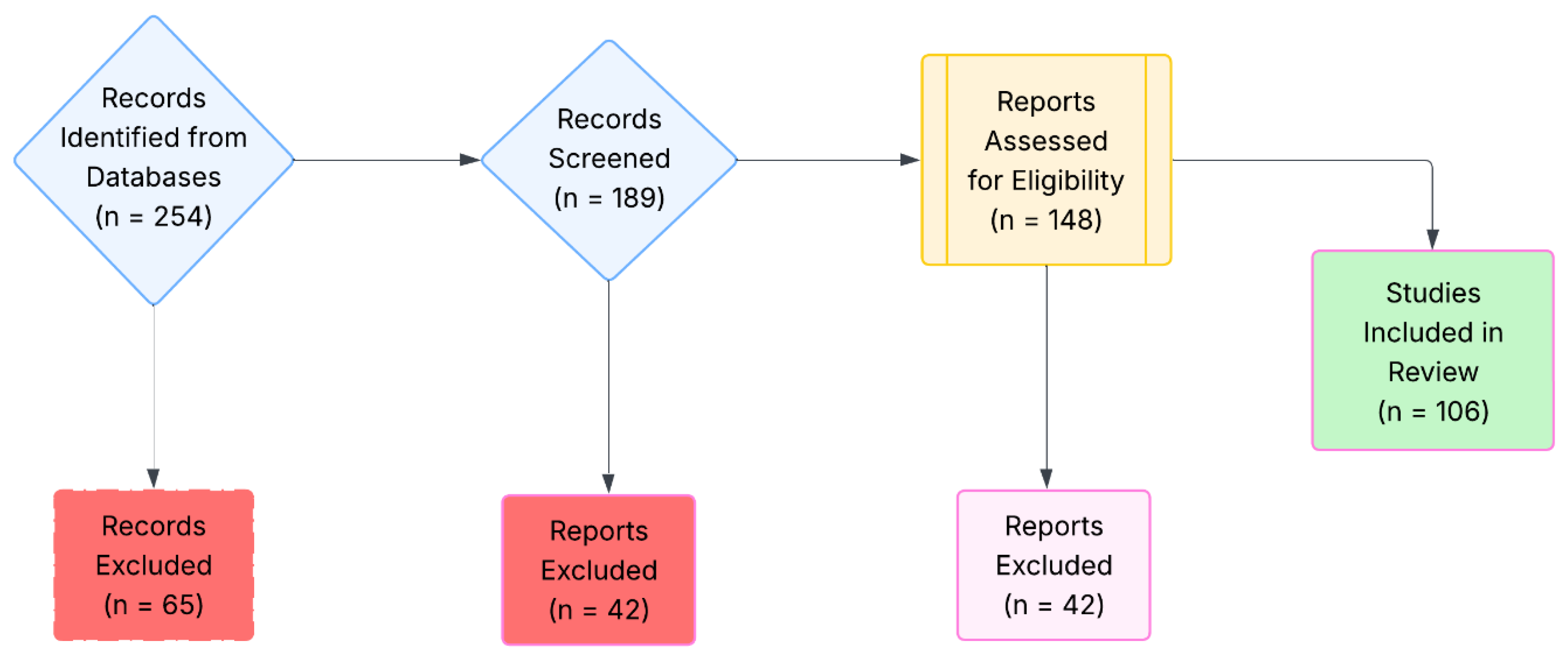
Figure 3.
Transformers Architecture.
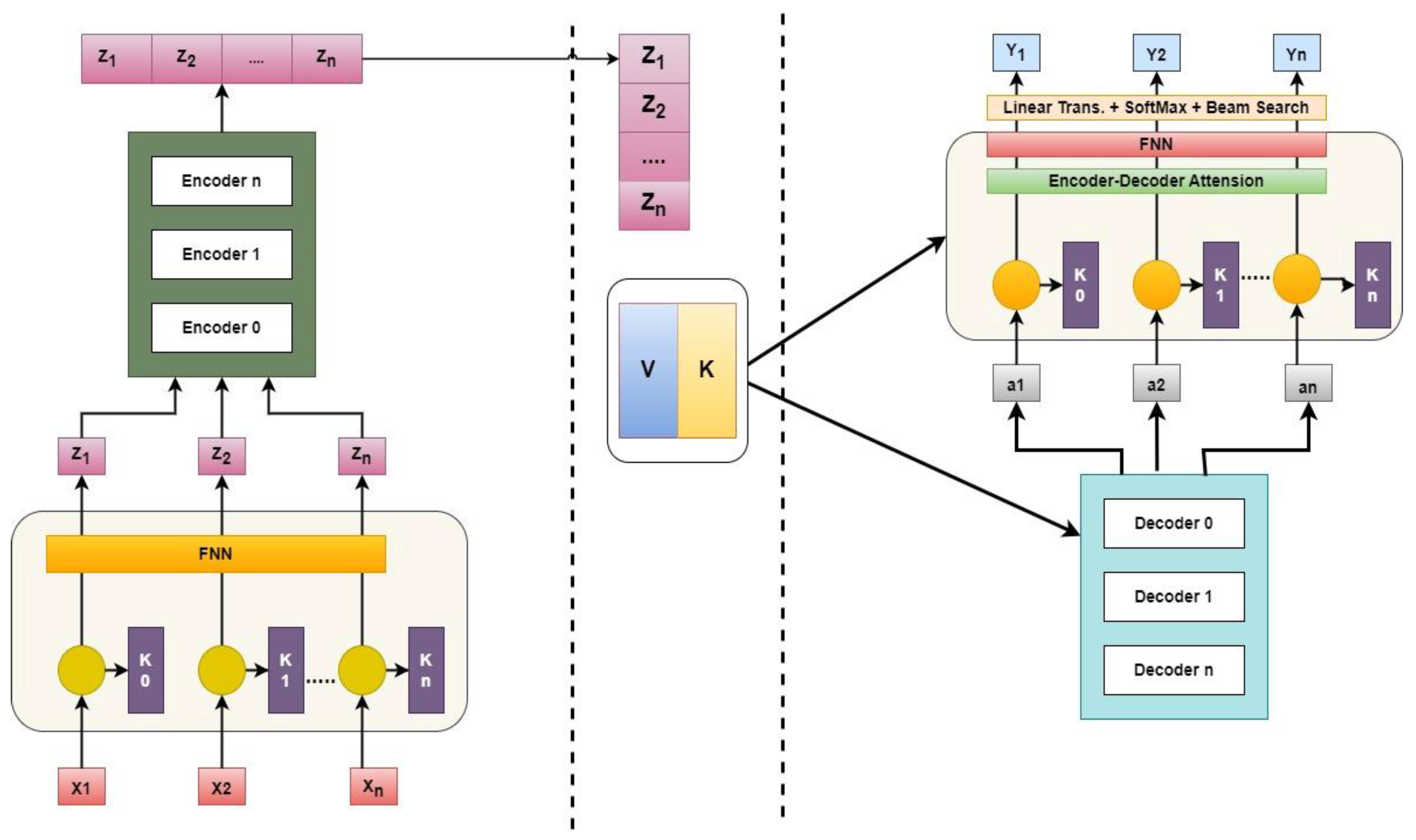
Figure 4.
Architecture of GPT-2 model.
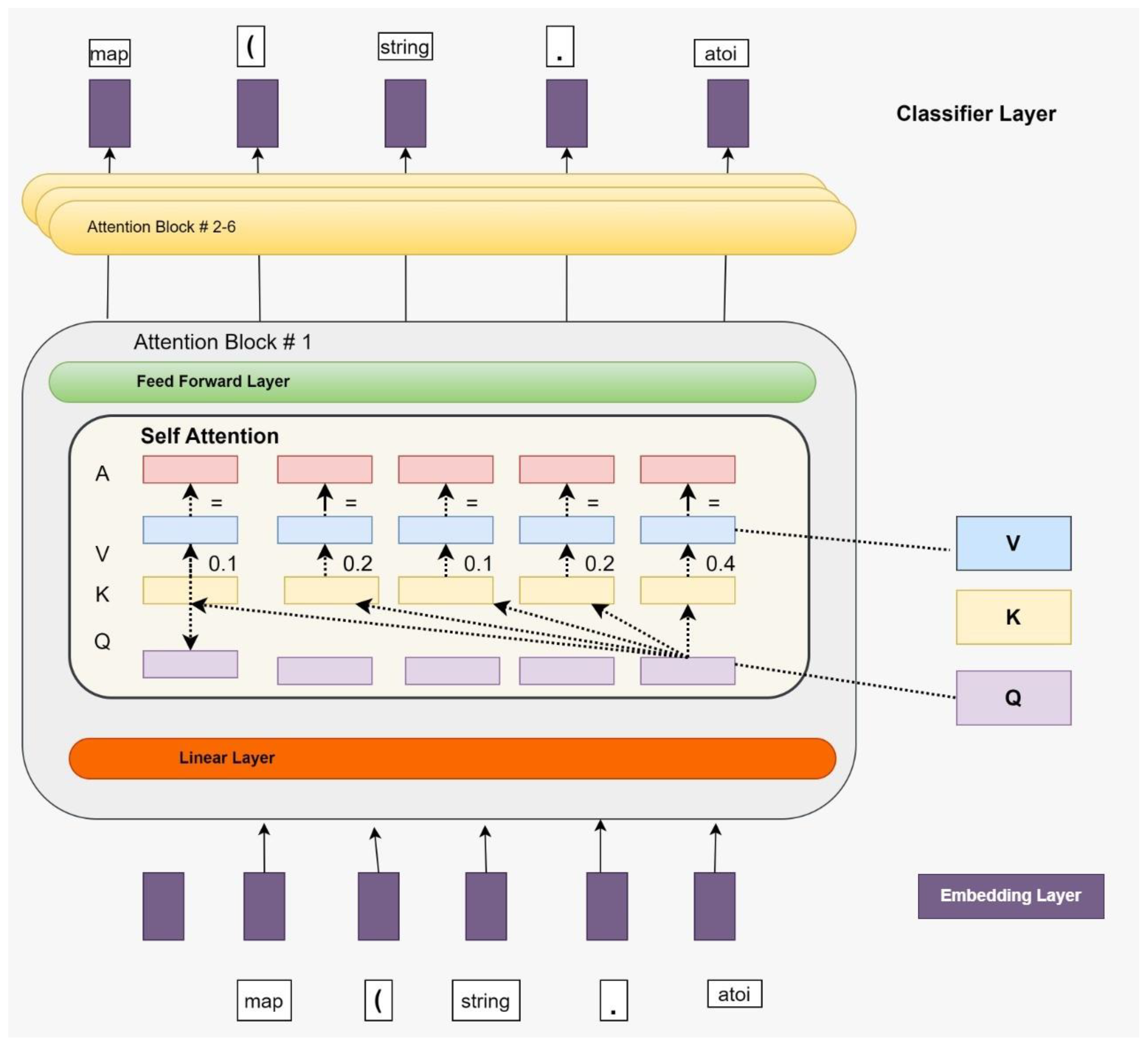
Figure 5.
Accuracy Scores of Models on Benchmark Matrices.
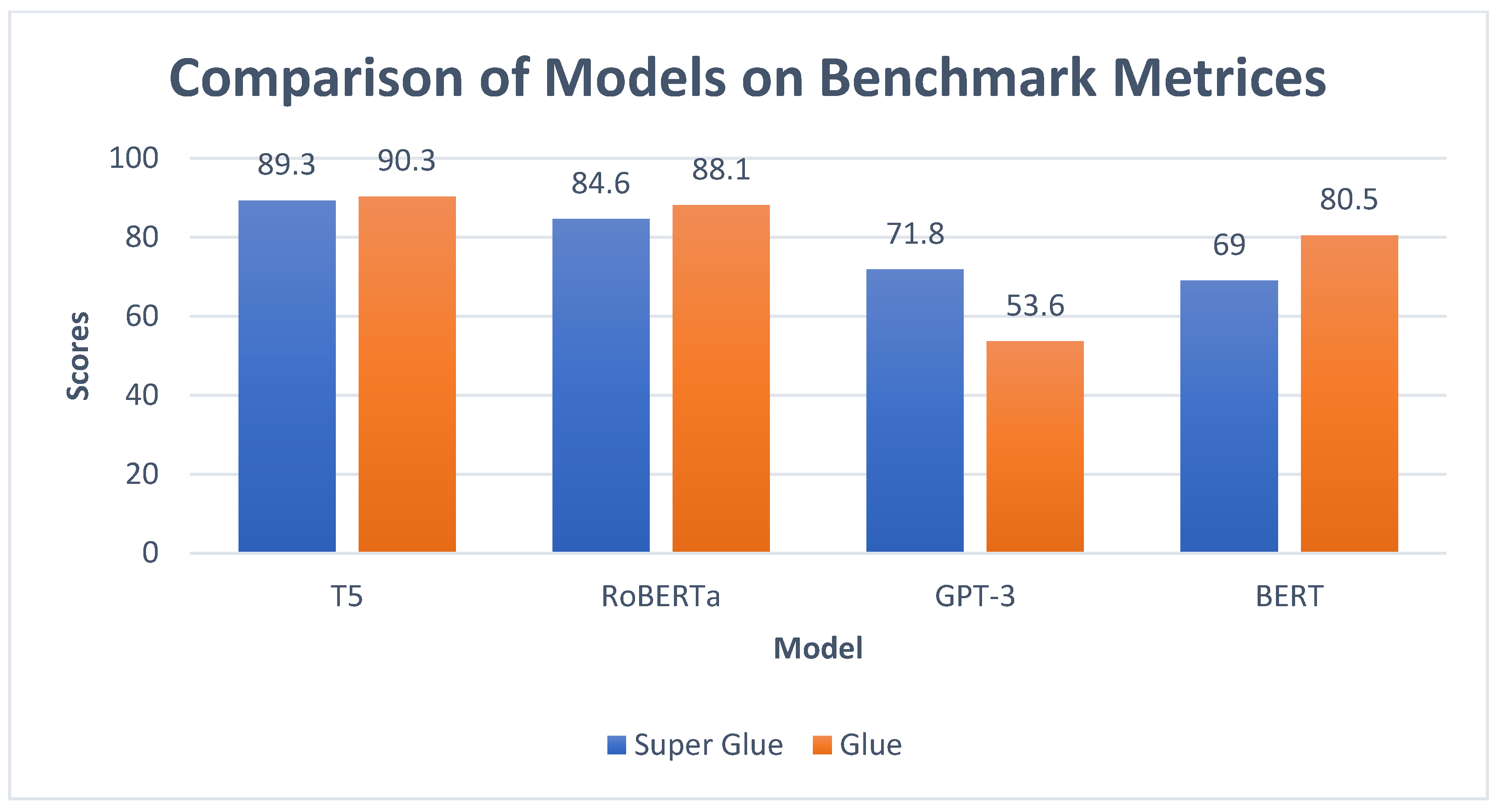
Table 1.
Inclusion and Exclusion Criteria for Literature Selection.
| Criteria Type | Inclusion Criteria | Exclusion Criteria |
|---|---|---|
| Language | Articles published in English | Articles in other languages |
| Time Frame | Published between 2017–2024 | Published before 2017 |
| Relevance | Focused on sentiment analysis using cross-lingual or multilingual techniques | Monolingual sentiment analysis only |
| Model Type | Utilized AI, machine learning, deep learning, or transformer-based approaches | Studies not involving computational models |
| Peer Review | Published in peer-reviewed journals or conferences | Preprints, whitepapers, or non-peer-reviewed sources |
| Empirical Basis | Provided experiments, datasets, or comparative analysis | Conceptual, theoretical, or opinion-only papers |
| Accessibility | Full-text accessible for detailed review | Abstract-only access or unavailable full-text |
Table 2.
Evaluation Techniques for Transfer Learning Models.
| Publication | Evaluation Model | Dataset | Result |
|---|---|---|---|
| [55] | BLEU | Stanford NLP Group | Achieve higher results |
| [56] | BLEU 1 BLEU 2 BLEU 3 BLEU 4 |
SQuAD | BLEU 4 shows more accurate results |
| [57] | BLEU | English to German translation dataset |
improvement of 0.7 |
| [58] | ROUGE | DUC-05, DUC06 and DUC-07 | Achieve High results |
| [59] | GLUE | GLUE benchmark SQuAD RACE |
GLUE outperforms |
| [27] | GLUE | GLUE SQuAD |
Achieve higher accuracy on both benchmarks |
| [60] | GLUE | GLUE | 5.0x accuracy |
| [61] | GLUE | RussianGLUE SuperGLUE |
Achieve high results |
| [62] | BLEU ROUGE |
A large dataset in ABC notation | Both models achieve the best results |
| [63] | BLEU | benchmark datasets | 36.49/33.57 |
| [64] |
ROUGE-1 ROUGE-2
ROUGE-L |
CNN/Daily Mail News Dataset |
41.72
19.39 38.76 |
| [65] |
ROUGE-1
ROUGE-L |
CNN/Daily Mail dataset, wikiHow dataset, How2Dataset |
22.5
20 |
| [66] | Accuracy Precision Recall F1-score |
Internet movie database | 92.31% |
| [67] |
ROUGE-1 ROUGE-2
ROUGE-L |
CNN/Daily Mail news highlights | 42.98 20.12 39.40 |
| [68] | Accuracy Precision Recall F1-score |
2595 songs uniformly distributed | 94.78% 94.77% 94.75% 94.77% |
| [22] | Accuracy Recall F1-score |
stock reviews in Eastern Stock Exchange | 97.35% 98.43% 98.69% |
Disclaimer/Publisher’s Note: The statements, opinions and data contained in all publications are solely those of the individual author(s) and contributor(s) and not of MDPI and/or the editor(s). MDPI and/or the editor(s) disclaim responsibility for any injury to people or property resulting from any ideas, methods, instructions or products referred to in the content. |
© 2025 by the authors. Licensee MDPI, Basel, Switzerland. This article is an open access article distributed under the terms and conditions of the Creative Commons Attribution (CC BY) license (http://creativecommons.org/licenses/by/4.0/).
Copyright: This open access article is published under a Creative Commons CC BY 4.0 license, which permit the free download, distribution, and reuse, provided that the author and preprint are cited in any reuse.


