

Submitted:
05 August 2025
Posted:
06 August 2025
You are already at the latest version
Abstract
This review seeks to identify the processes, concepts and order of studies on the identification of sporting talent, to interpret them critically and generate a proposal for sports talent identification system (STIS) that is flexible and can be adapted to different contexts and ages. The population studied were children and young people. The concept was the talent identification systems, and the context is sports, in different places. The study was registered on the Open Science Framework (OSF). Searches were carried out in indexed databases and search engines with AI. For the study selection process, the protocol called Preferred Reporting Items for Systematic reviews and Meta-Analyses extension for Scoping Reviews (PRISMA ScR) was applied, using the COVIDENCE systematic review tool. 58 papers were selected, mostly original studies and reviews, 47 of which considered the study of Biomedical and physiological aspects, 19 Psychological and 19 Environmental and sociocultural components. Geographically, most of the works were developed in Europe, North America and Asia. it is concluded that a STIS must be a continuous and cyclical process, considering physical and anthropometric characteristics, maturational state and psychosocial aspects, by means of easy-to-apply batteries, will allow the identification, creation of databases, monitoring and performance follow-up of sports talents in an efficient mode.
Keywords:
talent identification
; sports training
; performance parameters
; performance tracking
; youth athletes
; development
; sport talent
Introduction
The Systems are an ordered set of interrelated components, existing systems of conceptual and material type, in this sense conceptual systems represent sets of concepts and ideas related to each other with an order and coherence established or designed according to the objective that is intended, being then abstract in intangible since they are not composed of physical elements. In sport it is common to use systems to organize the competition, and to establish the route of development of one or several sports, as well as to select and identify talents; in the above mentioned classification we can find the systems for the identification of sport talent (SITS), which require multiple stages and dimensions of the process (Krasilshchikov, 2010), considering the particularities of each sport. Understanding that there are arguments for and against STIS at an early age (Koenigsberg et al., 2021). There are cases where the success of STIS has been demonstrated at different stages of sport development (Wood, 2008), although they are regularly performed with subjects at infant ages (Baker et al., 2012; Hariadi et al., 2022; Susanto et al., 2023; Unnithan et al., 2012) including Paralympic sport (Dehghansai et al., 2021, 2022).
Each system has coincidences and particularities, with a wide variety of criteria based on the results of the process carried out, therefore, it is difficult to establish which would be the adequate or ideal system to identify the children with greater possibilities of future sporting success. Although STIS is necessary to guarantee the sporting reserve of a discipline and to project the future possibilities of success of a club in a region or country where it is developed, it is necessary to accompany its progress. Although science provides multiple tools at present, in different contexts it is usual that STIS are based on the expertise of the coach in charge, to identify extraordinary characteristics in a child or young person that can predict high probabilities of sporting success.
It should also be considered that STIS eventually include anthropometric and physical performance variables that can be observed in competition or through physical tests; psychological, social and environmental components are also taken into account, and although there is talk of genetic aspects, they are not usually evaluated, nor are biochemical aspects; However, taking into account the limitations and potentialities of each system, it is important to know what would be the appropriate characteristics and components of the STIS, as a process of estimating the future probability of sporting success in different contexts and sporting disciplines.
Until as known, systematic reviews related to the identification of sport talent can be found where they have evidenced the need to deepen in STIS research, given the inconsistencies and unreliability of some predictors (Johnston et al., 2018), a commentary of the aforementioned work indicates that current definitions and measures of talent may not adequately reflect the complexities of sport performance across sports (Bergkamp et al., 2018); other reviews have focused on coaches' knowledge of STIS indicating that instinctive expertise or the so-called “coach’ eye” is commonplace in making such decisions within coaching (Roberts et al., 2021) and a scoping review on research on talent in sport in a window of 18 years, found imbalance in the studies according to sex and ages, so it considers necessary to continue research in early ages and contexts such as Africa, Asia and South America (Baker et al., 2020), in synthesis, the reviews found have observed predictor variables, criteria on the experience of coaches, sex and variables such as types of tests and ages; but they do not address the system as such, in other words the STIS, for which reason the present review seeks beyond describing the studies analyzed, to identify the processes, concepts and order of the studies on the identification of sports talent, in order to interpret them critically and generate a STIS proposal that is flexible and allows for adaptation to different contexts and ages.
Material and Methods
This scoping review was drafted by Preferred Reporting Items for Systematic Reviews and Meta-Analyses Extension for Scoping Reviews (PRISMA-ScR) guidelines (Tricco et al., 2018). The review protocol has been published in BMJ Open (Aromataris et al., 2024), this methodology has made it possible to improve the transparency and quality of the finalized scoping review (McGowan et al., 2020). The identification of the research question involves structuring it according to the population, concept and context (PCC), this being the first step recommended for conducting studies of this type (Mak & Thomas, 2022), therefore, the population studied were children and young people. The concept was the talent identification systems, and the context is sports, in different places. The study was registered on the Open Science Framework (OSF) on 03 July 2024.
In this case to follow the good practices of a scoping review (Arksey & O’Malley, 2005) the following steps were developed: (i) the research question was identified, (ii) the relevant studies were identified, (iii) the studies were selected, (iv) the data were plotted in the results (v) the results were collated, summarized and communicated in the discussion.
- ▪
- Stage 1: Identifying the research question
What do we know about the existing literature on the processes, concepts and order that make up a STIS?; two sub-questions underpin the analysis: 1) What are the studies that address the identification of sports talent, with emphasis on children or youth, and relate to a system; 2) What would be the structure of a flexible STIS, prioritizing early ages and adaptable to different contexts; and 3) What would be the structure of a flexible STIS, prioritizing early ages and adaptable to different contexts?
- ▪
- Stage 2: Identifying relevant studies: Data sources and search strategy
For the identification of relevant studies, a search strategy was designed in which several options of formulas with Boolean operators were tested. The decision was made to use the simplest formula, but it was considered to be the one that yielded the best results in terms of stability and number of possible relevant studies: (System) AND (Identification) AND (Sport Talent).
The latter option, considering that AI tools for research transform the search and analysis of scientific literature through personalized recommendations, intuitive visualizations and evidence-based answers, facilitating access to and understanding of relevant information, was used in academic databases and search engines with artificial intelligence (AI); subsequently, for the study selection process, the protocol called Preferred Reporting Items for Systematic reviews and Meta-Analyses extension for Scoping Reviews (PRISMA ScR) was applied, using the systematic review tool COVIDENCE (Covidence - Better Systematic Review Management, 2024), obtaining the summary of the process shown in Figure 1.
- ▪
- Stage 3: Study selection
References are imported and duplicates in the databases were automatically eliminated in covidence; Scopus, Pubmed Sport discus y Google Schoolar and the AI search engines: Research Rabbit app, Open Knowledge Map, Consensus and Search.carrot2. Subsequently, in the next round, the reviewers began the process, for which several inclusion criteria were developed, starting with the eligibility of the studies, which required that the papers published in English be added as outstanding, that the population addressed be children or young people, that they include the terms “system, process or methodology”, that they speak of identification; excluding studies with adults, as well as those that used the term “selection”. In the first instance, the works were selected by screening from the titles and abstracts; then a round of review of the complete text was made where the above criteria were also applied, indicating the reason for exclusion.
Once the selection was made, the final extraction began for the organization of the data, taking into account what is summarized in Table 1. The selection of the papers was carried out by two reviewers in case of conflicts in the concordance, the first reviewer made a round of verification for the papers where consensus was not evident.
Results
- ▪
- Stage 4: Charting the data
Figure 2 shows that the largest volume of studies included after screening is between 2018 and 2023, with 7 papers having the highest rate of production, which shows that there is greater interest in the last 8 years in addressing the STIS.
Figure 3 shows that original works have the highest volume of production with 17 papers, compared to the other types of literature, followed by textual articles and literature reviews, and mixed model studies only present one work.
Figure 4 shows that the production of textual articles has been constant since 2008 with at least one article per year, while original studies in the period 2022-2024 present 10 papers, and since 2020 only one literature review with STIS-related topics has been published. The highest density of studies is concentrated in Europe and North America (Figure 5).
Table 2 shows the selected papers and that 47 of them consider the study of Biomedical and physiological aspects, 19 Psychological and 19 Environmental and sociocultural components. On the other hand, the sports addressed in them are diverse, however, there is an important group of works that address only soccer, confirming that it is a sport that has been studied a lot, probably due to the commercial projection it has today and the urgency of the teams to find a star player, because of what it represents economically.
Discussion
It has been considered that sports talent is a condition that involves the combination of different factors such as physical fitness, structural aspects from the morphological, anthropometric, biological and genetic conditions, psychological abilities, social and environmental environment where it develops, all must be presented in a favorable way and above the common denominator, in other words, with extraordinary conditions; this linkage is sensitive to any change, and can positively or negatively affect the development of the athlete. Traditionally, subjects with superior biological predispositions have been referred to as talented; this approach has been called deterministic, while the dynamics and evolution resulting from the socio-cultural environment are considered to increase the probabilities of developing sports talent; this approach has been called probabilistic (Morganti et al., 2023). In consideration of the above, it can be said that subjects with evident extraordinary abilities from the biological point of view also require an environment that favors the use of their innate abilities, to be considered sports talents.
In this study, it was found that most of the selected studies contemplate within their SITS the evaluation of biomedical and physiological variables; almost half of the works consider the psychological component, environmental and sociocultural aspects, being the physical and anthropometric tests the most prioritized by the researchers for the detection of talent, as well as their criteria and expertise within the experience of each one.
On the other hand, within the medical tests have been taken into account those involving biochemical controls including enzymes and genetic markers (Jacob et al., 2018; Simonek & Židek, 2018; Till, 2023; Varillas-Delgado et al., 2022), also hemoglobin and red series, mainly for endurance and ultra-endurance sports (Huang et al., 2021). As for the psychological component, it has been evaluated mainly through temperament, willpower and motivation, other works have also considered intelligence (Johnston et al., 2018; Lorenzo et al., 2014; Rommers & Rössler, 2019), even within the criteria of coaches intelligence and willpower are factors that they take into account for talent detection (Roberts et al., 2019, 2021); well-being is another factor of interest (MacNamara & Collins, 2015; Williams & Reilly, 2000), assessed by psychometric questionnaires (Li et al., 2018), being able to be summarized in neurocognitive and personality trait aspects.
In the environmental and sociocultural aspect, the variables of environmental influence (Janssens et al., 2023; Li et al., 2018; Roberts et al., 2021; Tucker & Collins, 2012; van Keulen et al., 2024), social status (Li et al., 2018; Pankhurst & Collins, 2013; Roberts et al., 2021; Wattie & Baker, 2017) geographic location (Howell, 2023; Røsten et al., 2023; Rütten & Ziemainz, 2002) and cultural context (Krasilshchikov, 2010; Leite et al., 2021; Pankhurst & Collins, 2013; Visalim et al., 2018; Williams & Reilly, 2000), indicating basic social aspects related to the economic component and the geographic area inhabited.
As for the physical tests, 34 of the 58 papers mainly considered the following variables: motor skills, strength and endurance, endurance, speed, reaction speed, mobility, competitive performance, while 38 of the 58 papers considered the following anthropometric variables: body mass, height, body composition, body proportionality and somatic maturation. In this sense, it is evident that the early identification of talents is of great interest, however, it is not a linear or unidimensional action as it has been intended to expose in various models of identification in several countries (Australian Sports Commission, 2021; Kerr, 2019; Rütten & Ziemainz, 2002; Susanto et al., 2023), in the face of which identification and development models have been proposed that contemplate 4 major stages, initiation, development, improvement and enhancement (Abbott et al., 2005), it should be considered that psychological aspects such as attitude and motivation enhance the performance of extraordinary talents, provided that specific objectives have been set (Abbott & Collins, 2004).
Some talent identification systems consider competitive outcomes using predictive algorithms (Janssens et al., 2023), for other sports such as soccer they have taken into account sociological, physical, psychological and motor skill aspects, to predict adult performance (Williams et al., 2020), somehow coinciding with the “instinct” of coaches, who prioritize “ambition and drive”, as well as “game intelligence” and “physical and technical skills” (Roberts et al., 2019). In turn, computer tools have also been developed that are used as data processing systems that allow comparing young people with others of their age and sporting interests, thus establishing classifications according to the potential for certain sports (Ramli Buhari et al., 2023), in any case most systems have in common the monitoring of structural aspects related to phenotype such as body size and proportions (van Keulen et al., 2024; Wattie & Baker, 2017; Wrang et al., 2022), even the degree of maturation (Jürimäe, 2018; Müller et al., 2015), considering that they can mean a competitive advantage in the medium and long term.
Recent proposals take into account genetic aspects, such as ACE and ACTN3 genes (Jacob et al., 2018) associated with predicting athletic prowess in both endurance and strength; although there is an increase in access to this type of tests and progressive decrease in their cost (McAuley et al., 2023), their access to most countries is limited, because they are still expensive and not very effective in contrasting the cost-benefit ratio (Till, 2023) compared to other evaluations; in addition to the limitations of its proper interpretation, therefore it is not an efficient resource for coaches and professionals who are dedicated to train athletes. Therefore, regardless of the own and underlying conditions, to be considered a talent with probabilities of success in a certain sport the subject must practice it and foster skills specific to it, investing time until reaching the necessary skill to be successful (Rommers & Rössler, 2019).
In synthesis, according to what has been observed, it is necessary to identify sports talents at early ages, however, it will depend mainly on the maturational state of the subject rather than only the chronological age and in this way, identify subjects in a mature state before reaching the peak height velocity (PHV) and genetic potential evidenced by the projection of their adult height and structural predisposition suitable for certain disciplines, as well as outstanding physical abilities, favorable social environments, competitive systems with increasing and healthy demands in their sporting nature, In other words, integrated management is required, without vices of administrative corruption or segregation of any kind, favoring participation and equality of competitive conditions, without any advantage beyond their own qualities as a team or as an athlete. Consequently, the competitive level, motivation and resilient attitude in the pursuit of medium and long-term goals will be enhanced.
Although different sports, their sports disciplines and modalities, as well as subspecialties or playing positions, will have favorable phenotypic and genotypic requirements for future competitive performance; psychological and social environment aspects are of continuous construction, monitoring and care so that those subjects identified initially reach their best potential in adulthood, being able to reach the international elite.
Therefore, identification is not a transversal evaluative activity, but a longitudinal process of continuous adaptation to sport and social contexts; For this reason, the standardization of reproducible physical tests, as well as the monitoring of social and psychological aspects through tools of easy application and interpretation by coaches and trainers, is a fundamental step in the construction of solid bases for the identified children, since they would go from being detected with probabilities of success to consolidating their potential, and along the way new identified talents can be added that will enhance the demand and performance of the constituted groups.
Finally, for the development of future STIS, it is proposed to follow the stages (Figure 6) of initial execution of the tests where physical, anthropometric characteristics and psychosocial aspects are evaluated, by means of easily applied batteries that collect relevant information to cover the performance of strength, speed, endurance, agility, maturation, growth projection, social, economic and geographic characteristics, as well as psychological, neurocognitive and personality traits, the next step is the creation or feeding stage of the database that allows the establishment of comparisons appropriate to their age, maturity and competitive level where they perform, among other variables; Subsequently, once incorporated into a sports discipline, the monitoring stage can be implemented, applying the same initial tests and thus demarcating the stage that completes the system, by tracking their performance, tracing the evolution curve of each one, it should be noted that the system, once started, can incorporate new subjects from the first stage.
Conclusions
Most studies agree that in the identification of sports talent it is necessary to perform functional and biomedical evaluations, considering physical-motor and anthropometric tests; also, a significant number of studies agree on the importance of performing psycho-logical and social evaluations, which are summarized in neurocognitive aspects and personality traits, as well as socioeconomic characteristics and geographic location.
Finally, it is concluded that a continuous and cyclical identification process, considering physical and anthropometric characteristics, including maturational status and psychosocial aspects, using simple and easy to apply batteries, will allow to identify, create databases, monitor and follow up the performance of identified talents in an efficient way.
Conflicts of Interests
The authors declare that they have no known competing financial interest
Data Availability Statement
The data and materials this study is based on are available from the corresponding author and in Open Science Framework.
References
- Abbott, A., Button, C., Pepping, G.-J., & Collins, D. (2005). Unnatural selection: Talent identification and development in sport. Nonlinear Dynamics, Psychology, and Life Sciences, 9(1), 61–88. https://www.researchgate.net/publication/8102048.
- Abbott, A., & Collins, D. (2004). Eliminating the dichotomy between theory and practice in talent identification and development: Considering the role of psychology. Journal of Sports Sciences, 22(5), 395–408. [CrossRef]
- Arksey, H., & O’Malley, L. (2005). Scoping studies: Towards a methodological framework. International Journal of Social Research Methodology: Theory and Practice, 8(1), 19–32. [CrossRef]
- Aromataris, Edoardo., Munn, Zachary., & Joanna Briggs Institute. (2024). JBI manual for evidence synthesis. Joanna Briggs Institute. [CrossRef]
- Australian Sports Commission. (2021). Talent | Australian Institute of Sport. https://www.ais.gov.au/ftem/talent.
- Baker, J., Bagats, S., Büsch, D., Strauss, B., & Schorer, J. (2012). Training Differences and Selection in a Talent Identification System. Talent Development and Excellence, 4(1), 23–32.
- Baker, J., Cobley, S., & Schorer, J. (2020). Talent identification and development in sport: International perspectives: Second edition. In Talent Identification and Development in Sport: International Perspectives: Second Edition. [CrossRef]
- Bergkamp, T. L. G., Niessen, A. S. M., den Hartigh, R. J. R., Frencken, W. G. P., & Meijer, R. R. (2018). Comment on: “Talent Identification in Sport: A Systematic Review.” In Sports Medicine (Vol. 48, Issue 6, pp. 1517–1519). Springer International Publishing. [CrossRef]
- Covidence - Better systematic review management. (2024). https://www.covidence.org/.
- Dehghansai, N., Pinder, R. A., & Baker, J. (2021). “Looking for a Golden Needle in the Haystack”: Perspectives on Talent Identification and Development in Paralympic Sport. Frontiers in Sports and Active Living, 3, 635977. [CrossRef]
- Dehghansai, N., Pinder, R. A., & Baker, J. (2022). Talent Identification and Development in Paralympic Contexts: Current Challenges. Frontiers in Sports and Active Living, 4, 926974. [CrossRef]
- Hariadi, I., Hanief, Y. N., & Fadhli, N. R. (2022). Sport talent identification among children in Malang. Jurnal SPORTIF : Jurnal Penelitian Pembelajaran, 8(1), 81–95. [CrossRef]
- Howell, S. (2023). Examining Equity, Diversity, and Inclusion in Talent Identification and Talent Development in Youth Soccer in Canada: Coaches’ Perspectives. University of Manitoba.
- Huang, X., Wang, G., Chen, C., Liu, J., Kristiansen, B., Hohmann, A., & Zhao, K. (2021). Constructing a Talent Identification Index System and Evaluation Model for Cross-Country Skiers. Journal of Sports Sciences, 39(4), 368–379. [CrossRef]
- Jacob, Y., Spiteri, T., Hart, N. H., & Anderton, R. S. (2018). The potential role of genetic markers in talent identification and athlete assessment in elite sport. In Sports (Vol. 6, Issue 3). MDPI. [CrossRef]
- Janssens, B., Bogaert, M., & Maton, M. (2023). Predicting the next Pogačar: a data analytical approach to detect young professional cycling talents. Annals of Operations Research, 325(1), 557–588. [CrossRef]
- Johnston, K., & Baker, J. (2022). Sources of information used by elite distance running coaches for selection decisions. PLoS ONE, 17(8 August). [CrossRef]
- Johnston, K., Wattie, N., Schorer, J., & Baker, J. (2018). Talent Identification in Sport: A Systematic Review. Sports Medicine, 48(1), 97–109. [CrossRef]
- Jürimäe, J. (2018). Grow, Maturation, and Exercise During Youth―The Year That Was 2017. Pediatric Exercise Science, 38(3), 201–209. [CrossRef]
- Kandrac, R., Kokinda, M., Peric, T., Dzugas, D., Kacur, P., Tomkova, P., & Turek, M. (2020). The use of individual sports profiles of child athletes and nonathletes in recommending sports to be practiced. Physical Activity Review, 8(1), 1–8. [CrossRef]
- Kerr, R. (2019). The role of science in the practice of talent identification: a case study from gymnastics in New Zealand. Sport in Society, 22(9), 1589–1603. [CrossRef]
- Koenigsberg, A., Korf, J., & Farah, L. (2021). For or Against? The Pros and Cons of Early Talent Identification in Sport. https://sirc.ca/blog/early-talent-identification/.
- Krasilshchikov, O. (2010). Talent Identification and Development-International Trends and Principle Models. Boletin Kejurulatihan, 1, 5–14. https://www.researchgate.net/publication/305208903.
- Leigh Kelly, A., Calvo, A. L., dos Santos, S. D. L., & Jiménez Sáiz, S. L. (2022). Special Issue “Talent Identification and Development in Youth Sports.” In Sports (Vol. 10, Issue 12). MDPI. [CrossRef]
- Leite, N., Calvo, A. L., Cumming, S., Gonçalves, B., & Calleja-Gonzalez, J. (2021). Editorial: Talent Identification and Development in Sports Performance. Frontiers in Sports and Active Living, 3. [CrossRef]
- Li, C., Martindale, R., Wu, Y., & Si, G. (2018). Psychometric properties of the Talent Development Environment Questionnaire with Chinese talented athletes. Journal of Sports Sciences, 36(1), 79–85. [CrossRef]
- Lidor, R., & Anshel, M. H. (2012). Talent Detection Programs in Sport: The Questionable Use of Psychological Measures. Journal of Sport Behavior, 35(3), 239–266. https://psycnet.apa.org/record/2012-22008-001.
- Lorenzo, A., Jiménez, S., & Lorenzo, J. (2014). Programas de detección, nuevos horizontes. Kronos, 13(1). https://openurl.ebsco.com/EPDB%3Agcd%3A1%3A3082145/detailv2?sid=ebsco%3Aplink%3Ascholar&id=ebsco%3Agcd%3A97447063&crl=c.
- Louzada, F., Maiorano, A. C., & Ara, A. (2016). iSports: A web-oriented expert system for talent identification in soccer. Expert Systems with Applications, 44, 400–412. [CrossRef]
- MacNamara, A., & Collins, D. (2015). Profiling, exploiting, and countering psychological characteristics in talent identification and development. Sport Psychologist, 29(1), 73–81. [CrossRef]
- Mak, S., & Thomas, A. (2022). Steps for Conducting a Scoping Review. Journal of Graduate Medical Education, 14(5), 565–567. [CrossRef]
- Martindale, R. J. J., Collins, D., Wang, J. C. K., McNeill, M., Lee, K. S., Sproule, J., & Westbury, T. (2010). Development of the talent development environment questionnaire for sport. Journal of Sports Sciences, 28(11), 1209–1221. [CrossRef]
- McAuley, A. B. T., Baker, J., Johnston, K., Varley, I., Herbert, A. J., Suraci, B., Hughes, D. C., Tsaprouni, L. G., & Kelly, A. L. (2023). Talent inclusion and genetic testing in sport: A practitioner’s guide. Current Issues in Sport Science (CISS), 8(1), 008. [CrossRef]
- McGowan, J., Straus, S., Moher, D., Langlois, E. V., O’Brien, K. K., Horsley, T., Aldcroft, A., Zarin, W., Garitty, C. M., Hempel, S., Lillie, E., Tunçalp, Ӧzge, & Tricco, A. C. (2020). Reporting scoping reviews—PRISMA ScR extension. In Journal of Clinical Epidemiology (Vol. 123, pp. 177–179). Elsevier USA. [CrossRef]
- Morganti, G., Lascu, A., Apollaro, G., Pantanella, L., Esposito, M., Grossi, A., & Ruscello, B. (2023). (Beyond) the field of play: contrasting deterministic and probabilistic approaches to talent identification and development systems. Sport, Education and Society. [CrossRef]
- Müller, L., Müller, E., Hildebrandt, C., Kapelari, K., & Raschner, C. (2015). Die Erhebung des biologischen Entwicklungsstandes für die Talentselektion - welche Methode eignet sich? Sportverletzung-Sportschaden, 29(1), 56–63. [CrossRef]
- Pankhurst, A., & Collins, D. (2013). Talent Identification and Development: The Need for Coherence Between Research, System, and Process. Quest, 65(1), 83–97. [CrossRef]
- Papić, V., Rogulj, N., & Pleština, V. (2011). Expert System for Identification of Sport Talents: Idea, Implementation and Results. In P. Vizureanu (Ed.), Expert systems for human, materials and automation. IntechOpen. www.intechopen.com.
- Peltola, E. (1992). Talent identification. 7–12.
- Pickering, C., Kiely, J., Grgic, J., Lucia, A., & Del Coso, J. (2019). Can genetic testing identify talent for sport? In Genes (Vol. 10, Issue 12). MDPI AG. [CrossRef]
- Prasetyo, Y., Pamungkas, O. I., Prasetyo, H., & Susanto, S. (2022). Analysis Of Anthropometry, Physical Conditions, And Archering Skills As The Basic For Identification Of Talent In The Sport Of Arrow. Sportske Nauke i Zdravlje, 12(2), 183–188. [CrossRef]
- Prieto-ayuso, A., Pastor-vicedo, J. C., González-víllora, S., & Fernández-río, J. (2020). Are physical education lessons suitable for sport talent identification? A systematic review of the literature. In International Journal of Environmental Research and Public Health (Vol. 17, Issue 6). MDPI AG. [CrossRef]
- Ramli Buhari, M., Nugroho Hidayanto, D., Sjamsir, H., & Haryaka, U. (2023). Management Information System Data Processing Results of Sports Talent Identification Test: Borneo Sport Talent Id Software Implementation. Educational Studies: Conference Series, 3(1), 1–11. https://www.logique.co.id/blog/2020/08/10/sistem-informasi-manajemen/.
- Roberts, A. H., Greenwood, D. A., Stanley, M., Humberstone, C., Iredale, F., & Raynor, A. (2019). Coach knowledge in talent identification: A systematic review and meta-synthesis. In Journal of Science and Medicine in Sport (Vol. 22, Issue 10, pp. 1163–1172). Elsevier Ltd. [CrossRef]
- Roberts, A. H., Greenwood, D., Stanley, M., Humberstone, C., Iredale, F., & Raynor, A. (2021). Understanding the “gut instinct” of expert coaches during talent identification. Journal of Sports Sciences, 39(4), 359–367. [CrossRef]
- Rommers, N., & Rössler, R. (2019). Innate talent in sport: from theoretical concept to complex reality – comment on Baker & Wattie. Current Issues in Sport Science (CISS). [CrossRef]
- Rongen, F., McKenna, J., Cobley, S., & Till, K. (2018). Are youth sport talent identification and development systems necessary and healthy? Sports Medicine - Open, 4(1), 18. [CrossRef]
- Røsten, S., Saether, S. A., Aspvik, N. P., & Bjørndal, C. T. (2023). Embedded, embodied, enculturated, and enabling processes: The identification and evaluation of sporting talent by ice hockey coaches in Norwegian youth national teams. International Sport Coaching Journal, 11(1), 113–123.
- Rütten, A., & Ziemainz, H. (2002). Looking to the future: Analysis of Talent Identification and Development Systems in Different Countries.
- Schorer, J., Baker, J., Büsch, D., Wilhelm, A., & Pabst, J. (2009). Relative age, talent identification and youth skill development: Do relatively younger athletes have superior technical skills? Talent Development and Excellence, 1(1), 45–56. https://www.scopus.com/inward/record.uri?eid=2-s2.0-77953896908&partnerID=40&md5=50c758fd8e7a8dce71a1a6ae33b67868.
- Simonek, J., & Židek, R. (2018). Sports talent identification based on motor tests and genetic analysis. Trends in Sport Sciences, 25(4), 201–207. [CrossRef]
- Spies, F., Schauer, L., Bindel, T., & Pfeiffer, M. (2022). Talent detection—importance of the will and the ability when starting a sport activity. German Journal of Exercise and Sport Research, 52(4), 647–656. [CrossRef]
- Staff, T., Gobet, F., & Parton, A. (2021). Early specialization and critical periods in acquiring expertise: A comparison of traditional versus detection talent identification in team GB cycling at London 2012. In Journal of Motor Learning and Development (Vol. 9, Issue 2, pp. 296–312). Human Kinetics Publishers Inc. [CrossRef]
- Susanto, E., Bayok, M., Satriawan, R., Festiawan, R., Kurniawan, D. D., & Putra, F. (2023). Talent Identification Predicting in Athletics: A Case Study in Indonesia. Annals of Applied Sport Science, 11(1). [CrossRef]
- Till, K. (2023). Genetic testing: A good use of resource in talent identification and development? – Comment on McAuley et al. Current Issues in Sport Science (CISS), 8(1), 010. [CrossRef]
- Till, K., & Baker, J. (2020). Challenges and [Possible] Solutions to Optimizing Talent Identification and Development in Sport. Frontiers in Psychology, 11. [CrossRef]
- Till, K., Jones, B. L., Cobley, S., Morley, D., O’Hara, J., Chapman, C., Cooke, C., & Beggs, C. B. (2016). Identifying talent in youth sport: A novel methodology using higher-dimensional analysis. PLoS ONE, 11(5). [CrossRef]
- Tricco, A. C., Lillie, E., Zarin, W., O’Brien, K. K., Colquhoun, H., Levac, D., Moher, D., Peters, M. D. J., Horsley, T., Weeks, L., Hempel, S., Akl, E. A., Chang, C., McGowan, J., Stewart, L., Hartling, L., Aldcroft, A., Wilson, M. G., Garritty, C., … Straus, S. E. (2018). Preferred Reporting Items for Systematic reviews and Meta-Analyses extension for Scoping Reviews (PRISMA-ScR) Checklist SECTION. Ann Intern Med, 169(7), 11–12. [CrossRef]
- Tsao, J. P., Liu, C. C., & Chang, B. F. (2022). Application of the Motor Abilities Assessment as Part of a Talent Identification System in Tennis Players: A Pilot Study. International Journal of Environmental Research and Public Health, 19(15). [CrossRef]
- Tucker, R., & Collins, M. (2012). What makes champions? a review of the relative contribution of genes and training to sporting success. British Journal of Sports Medicine, 46(8), 555–561. [CrossRef]
- Unnithan, V., White, J., Georgiou, A., Iga, J., & Drust, B. (2012). Talent identification in youth soccer. Journal of Sports Sciences, 30(15), 1719–1726. [CrossRef]
- Vaeyens, R., Lenoir, M., Williams, A. M., & Philippaerts, R. M. (2008). Talent identification and development programmes in sport: Current models and future directions. Sports Medicine, 38(9), 703–714. [CrossRef]
- van Keulen, G. E., Werneck, F. Z., Coelho, E. F., Aguiar, C. M., Miranda, L., & Lima, J. R. P. de. (2024). Gold Score Athletics: Talent Detection Model For Track And Field. Revista Brasileira de Medicina Do Esporte, 30. [CrossRef]
- Varillas-Delgado, D., Del Coso, J., Gutiérrez-Hellín, J., Aguilar-Navarro, M., Muñoz, A., Maestro, A., & Morencos, E. (2022). Genetics and sports performance: the present and future in the identification of talent for sports based on DNA testing. In European Journal of Applied Physiology (Vol. 122, Issue 8, pp. 1811–1830). Springer Science and Business Media Deutschland GmbH. [CrossRef]
- Vinueza, E., & Aldas, H. (2021). Structuring a selection test for talents in sport A estruturação de um teste de seleção para talentos no esporte. Revista PODIUM, Septiembre-Diciembre, 16(3), 685–699. http://podium.upr.edu.cu/index.php/podium/article/view/948.
- Visalim, A., Fauziah, H., Kusuma, G., & Sugeng, P. (2018, April 21). The Importance Of Sport Talent Identification To Early Childhood. Proceeding of International Conference On Child-Friendly Education,.
- Wattie, N., & Baker, J. (2017). An uneven playing field: Talent identification systems and the perpetuation of participation biases in high performance sport. In Sport and Physical Activity Across the Lifespan: Critical Perspectives (pp. 117–133). Palgrave Macmillan. [CrossRef]
- Williams, A. M., Ford, P. R., & Drust, B. (2020). Talent identification and development in soccer since the millennium. Journal of Sports Sciences, 38(11–12), 1199–1210. [CrossRef]
- Williams, A. M., & Reilly, T. (2000). Talent identification and development in soccer. Journal of Sports Sciences, 18(9), 657–667. [CrossRef]
- Wood, R. (2008). eTID (Talent Identification) System. Topend Sports Website. https://www.topendsports.com/testing/etid.htm.
- Wrang, C. M., Rossing, N. N., Agergaard, S., & Martin, L. J. (2022). The missing children: a systematic scoping review on talent identification and selection in football (soccer). European Journal for Sport and Society, 19(2), 135–150. [CrossRef]
Figure 1.
PRISMA ScR flow diagram.
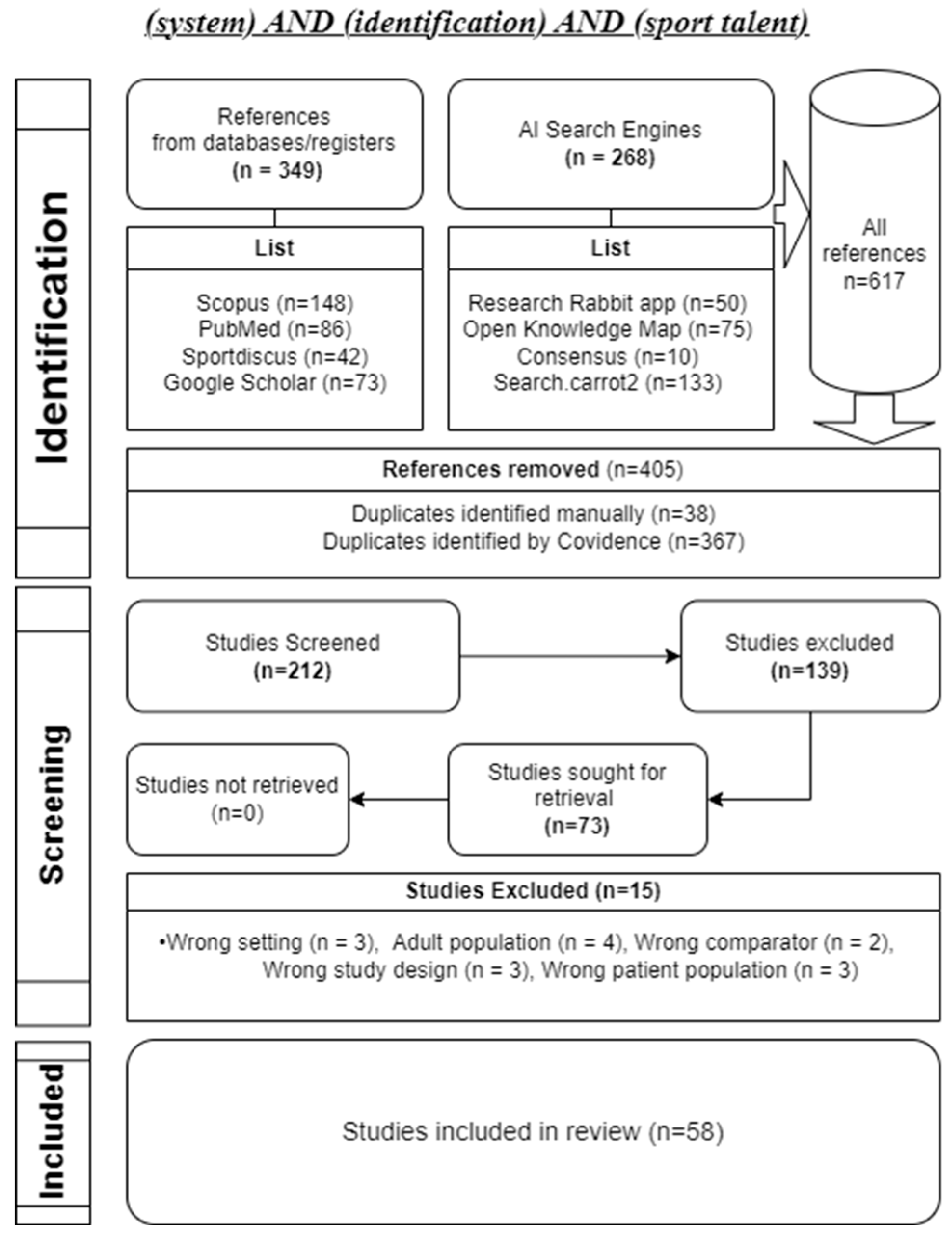
Figure 2.
Annual production rate of studies addressing STIS.
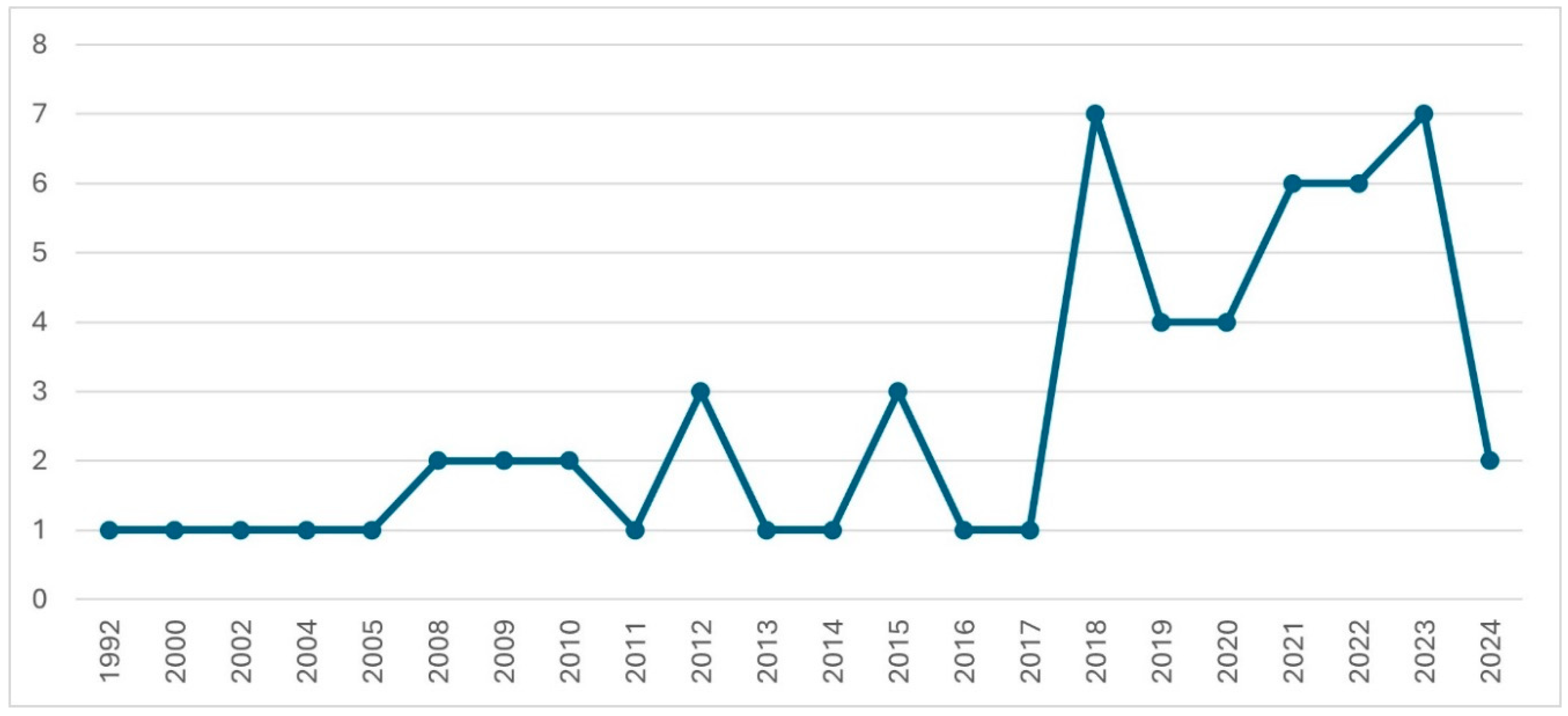
Figure 3.
Volume of studies addressing STIS by type of publication.
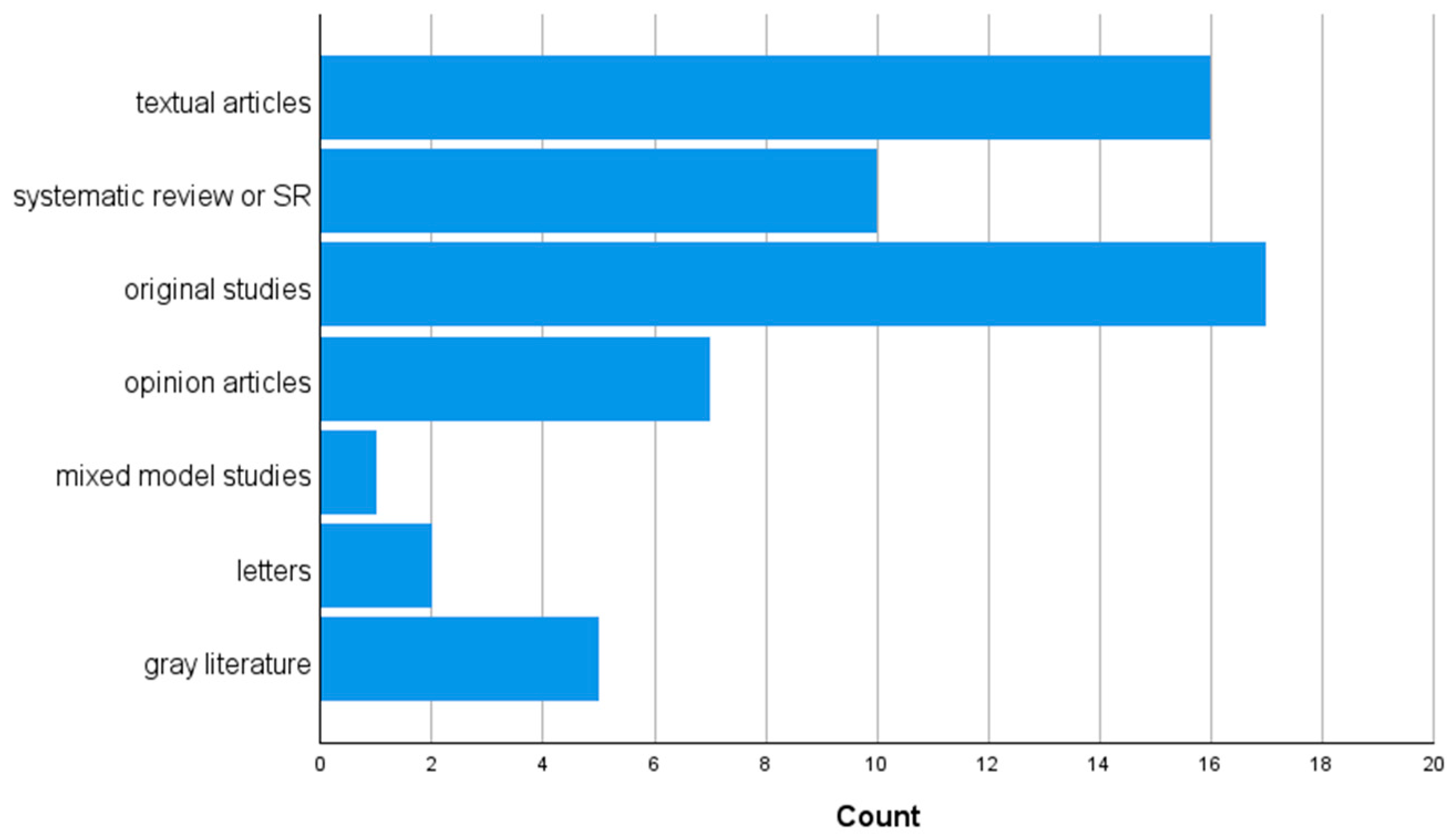
Figure 4.
Volume of studies addressing STIS by year and type of publication.
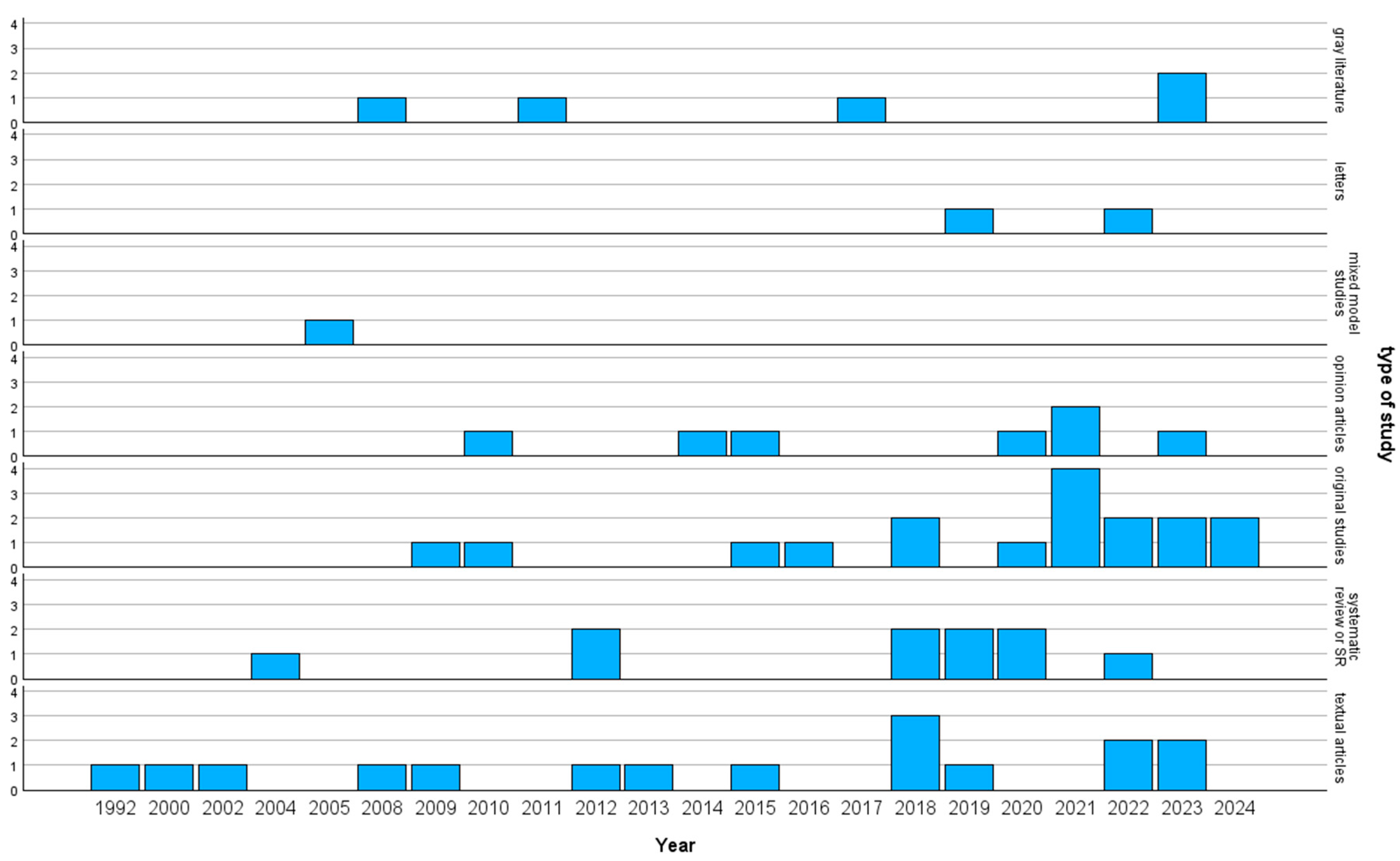
Figure 5.
Density of studies by country and region.
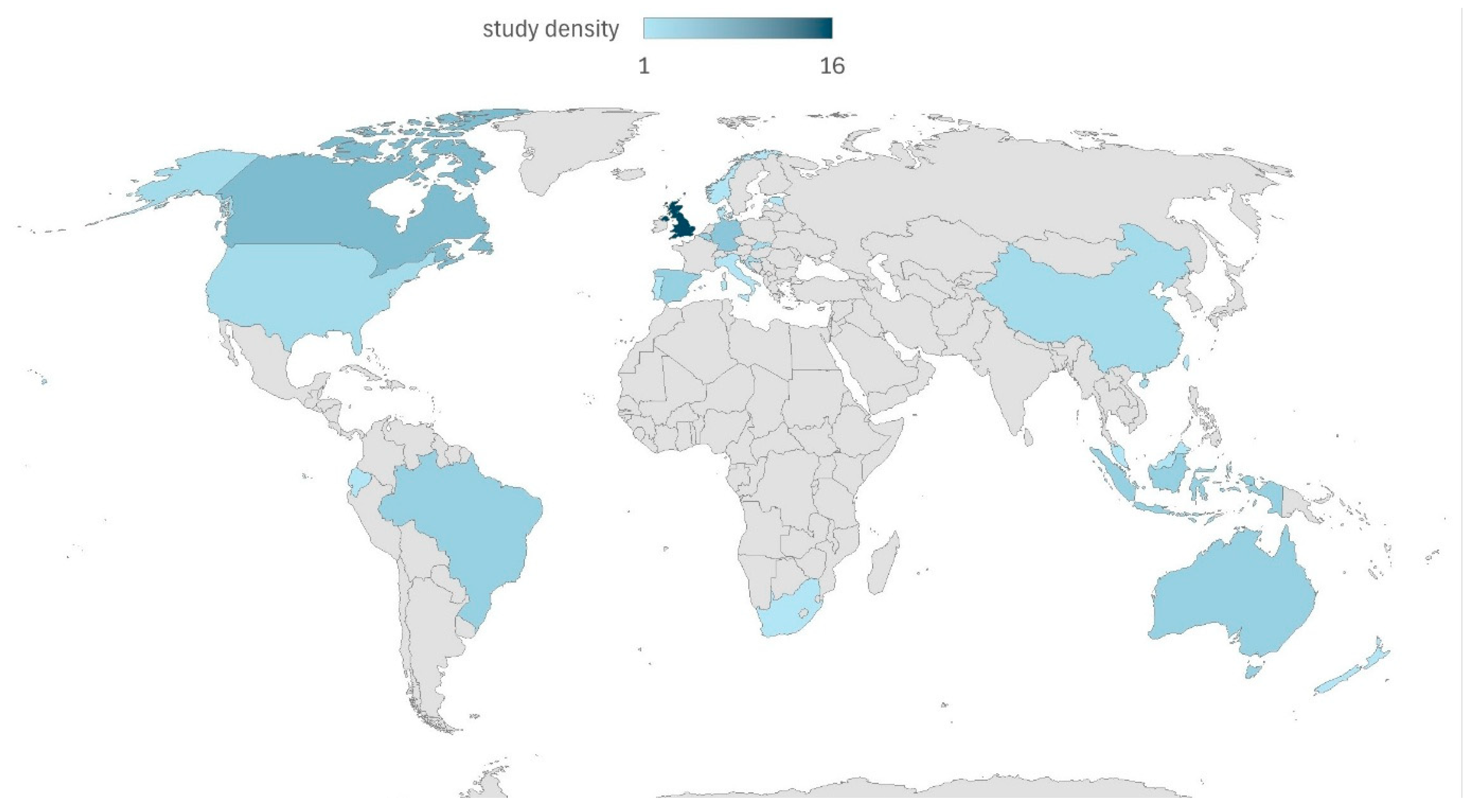
Figure 6.
Components and stages of the proposed STIS.
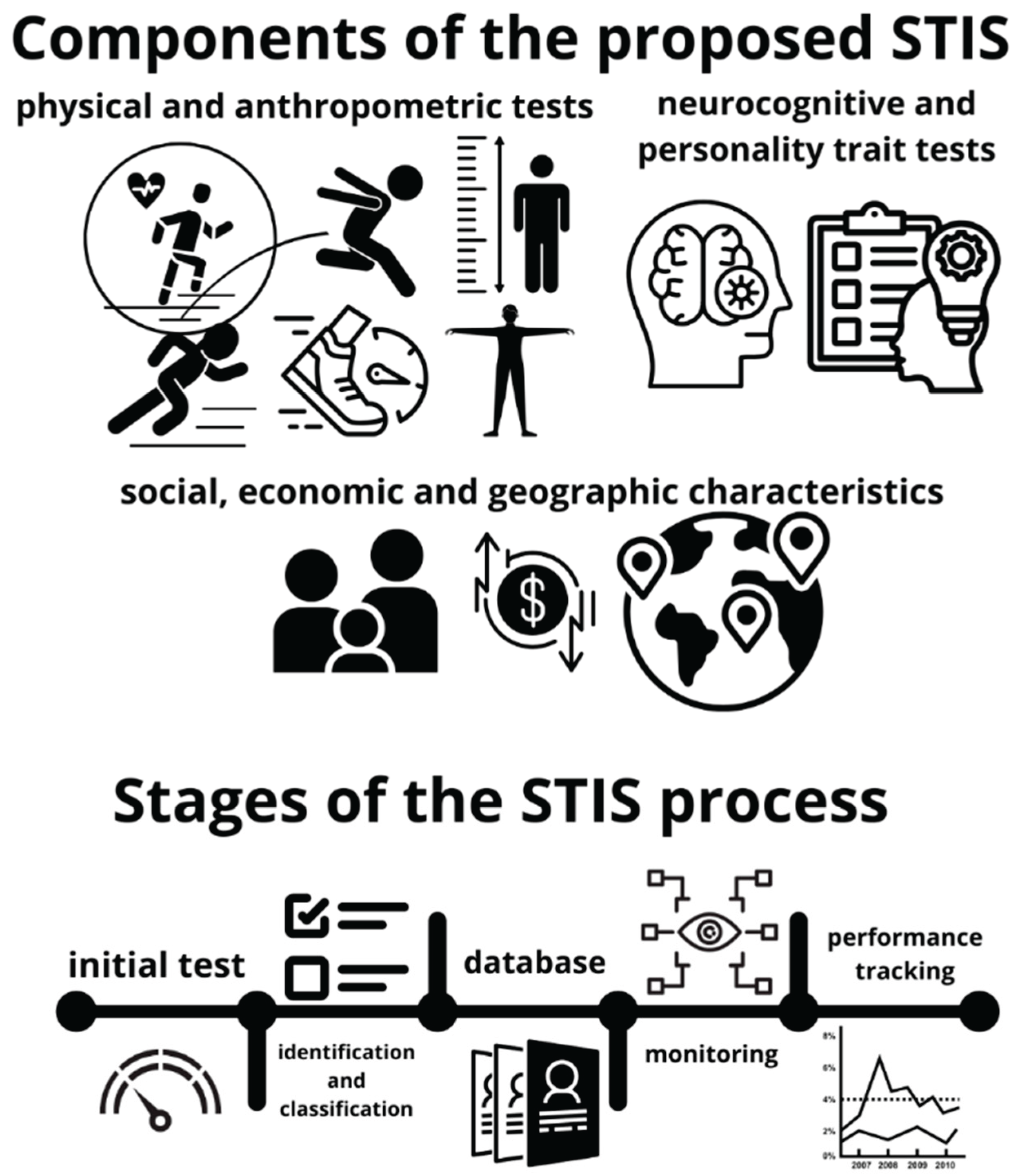

Table 1.
Data Extraction Template.
| Category | Data observed in the full text |
|---|---|
| system for |
|
| type of study |
|
| categories |
|
| variables considered |
|
| variables for social or environmental studies |
|
| variables for biochemical tests |
|
| main anthropometric variables |
|
| main variables considered for physical testing |
|
| variables for psychological testing |
|
Table 2.
Sports and general categories of the evaluations considered by the studies selected through PRISMA.
Table 2.
Sports and general categories of the evaluations considered by the studies selected through PRISMA.
| Author and Year | Sports where the system is emphasized | BMaPhy | Phy | EnvSoc |
|---|---|---|---|---|
| (Abbott & Collins, 2004) | Athletics | X | X | |
| (Abbott et al., 2005) | Several Sports | X | X | |
| (Howell, 2023) | Soccer | X | ||
| (Huang et al., 2021) | Cross-Country Skiers | X | ||
| (Jacob et al., 2018) | Several Sports | X | ||
| (Janssens et al., 2023) | Cycling | X | X | |
| (Johnston & Baker, 2022) | Several Sports | X | X | X |
| (Johnston et al., 2018) | Several Sports | X | ||
| (Jürimäe, 2018) | Soccer | X | ||
| (Kandrac et al., 2020) | Soccer, ice hockey, artistic gymnastic | X | ||
| (Kerr, 2019) | Rhythmic gymnastics | X | X | |
| (Krasilshchikov, 2010) | Several Sports | X | ||
| (Leigh Kelly et al., 2022) | Several Sports | X | ||
| (Leite et al., 2021) | Several Sports | X | ||
| (Li et al., 2018) | Several Sports | X | X | |
| (Lidor & Anshel, 2012) | Several Sports | X | ||
| (Lorenzo et al., 2014) | Several Sports | X | ||
| (Louzada et al., 2016) | Soccer | X | ||
| (MacNamara & Collins, 2015) | Several Sports | X | ||
| (Martindale et al., 2010) | Several Sports | X | ||
| (McAuley et al., 2023) | Several Sports | X | ||
| (Morganti et al., 2023) | Several Sports | X | ||
| (Müller et al., 2015) | Several Sports | X | ||
| (Pankhurst & Collins, 2013) | Several Sports | X | X | X |
| (Papić et al., 2011) | Several Sports | X | ||
| (Papić et al., 2011) | Several Sports | X | ||
| (Peltola, 1992) | Several Sports | X | ||
| (Pickering et al., 2019) | Several Sports | X | ||
| (Prasetyo et al., 2022) | Archery | X | ||
| (Prieto-ayuso et al., 2020) | Several Sports | X | X | X |
| (Ramli Buhari et al., 2023) | Several Sports | X | ||
| (Roberts et al., 2019) | Several Sports | X | X | X |
| (Roberts et al., 2021) | Boxing, judo, and taekwondo | X | X | X |
| (Rommers & Rössler, 2019) | Several Sports | X | X | X |
| (Rongen et al., 2018) | Several Sports | X | ||
| (Røsten et al., 2023) | Ice hockey | X | X | |
| (Rütten & Ziemainz, 2002) | Several Sports | X | ||
| (Schorer et al., 2009) | Handball | X | ||
| (Simonek & Židek, 2018) | Several Sports | X | ||
| (Spies et al., 2022) | Several Sports | X | ||
| (Staff et al., 2021) | Cycling | X | X | |
| (Susanto et al., 2023) | Athletics | X | ||
| (Till & Baker, 2020) | Several Sports | X | X | |
| (Till et al., 2016) | Rugby | X | ||
| (Till, 2023) | Several Sports | X | ||
| (Tsao et al., 2022) | Tennis | X | ||
| (Tucker & Collins, 2012) | Several Sports | X | ||
| (Unnithan et al., 2012) | Soccer | X | ||
| (Vaeyens et al., 2008) | Several Sports | X | ||
| (van Keulen et al., 2024) | Athletics | X | ||
| (Varillas-Delgado et al., 2022) | Several Sports | X | ||
| (Vinueza & Aldas, 2021) | Several Sports | X | X | X |
| (Visalim et al., 2018) | Several Sports | X | X | X |
| (Wattie & Baker, 2017) | Several Sports | X | ||
| (Williams & Reilly, 2000) | Soccer | X | X | X |
| (Williams et al., 2020) | Soccer | X | X | |
| (Wood, 2008) | Canoeing, cycling, rowing, triathlon, athletics, beach volleyball | X | X | |
| (Wrang et al., 2022) | Soccer | X | X | X |
Leyend: BMaPhy: Biomedical and physiological; Phy: Psychological; EnvSoc: Environmental and sociocultural
Disclaimer/Publisher’s Note: The statements, opinions and data contained in all publications are solely those of the individual author(s) and contributor(s) and not of MDPI and/or the editor(s). MDPI and/or the editor(s) disclaim responsibility for any injury to people or property resulting from any ideas, methods, instructions or products referred to in the content. |
© 2025 by the authors. Licensee MDPI, Basel, Switzerland. This article is an open access article distributed under the terms and conditions of the Creative Commons Attribution (CC BY) license (http://creativecommons.org/licenses/by/4.0/).
Copyright: This open access article is published under a Creative Commons CC BY 4.0 license, which permit the free download, distribution, and reuse, provided that the author and preprint are cited in any reuse.