
Submitted:
21 July 2025
Posted:
21 July 2025
You are already at the latest version
Abstract
Bridging the gap between fundamental scientific knowledge and its real-world application remains a major challenge in research and development (R&D). This paper highlights the critical role of synthetic R&D in addressing this challenge. While analytical R&D breaks down complex systems to generate new factual knowledge using well-established methods, synthetic R&D—which integrates diverse scientific and technological knowledge into practical applications—still lacks a coherent and widely recognized methodological framework. To address this methodological shortcoming, the paper proposes a structured, scenario-based approach to support the practice of synthetic R&D. A “scenario” here refers to a coherent development pathway that systematically links scientific understanding with clearly defined application goals. The proposed methodology explores both internal and external scenario structures, providing a reproducible model for guiding and evaluating synthetic R&D projects. Its utility is demonstrated through three case studies in the fields of nanotechnology, measurement technology, and environmental science. These examples illustrate how structured scenarios can effectively integrate scientific knowledge, technological expertise, and stakeholder needs. Furthermore, these scenarios serve as frameworks that facilitate interdisciplinary and cross-organizational collaboration, while remaining adaptable to evolving application demands. By enabling such integration and adaptability, this scenario-based methodology supports broader recognition of synthetic R&D as a vital partner of analytical R&D.
Keywords:
synthetic R&D
; scenario-based methodology
; knowledge integration
; interdisciplinary collaboration
; cross-organizational coordination
; strategic planning
; innovation framework
1. Introduction
Transforming scientific knowledge into real-world innovation remains a central issue in research and development (R&D), particularly in the so-called “valley of death,” where promising scientific findings often fail to translate into practical applications. Among R&D approaches, analytical R&D focuses on breaking down complex systems and phenomena to generate new factual knowledge, whereas synthetic R&D integrates such knowledge with technological insights to create novel artifacts and methodologies.
Since the 2000s, increasing attention has been paid to interorganizational strategies—such as open innovation, technology transfer, and collaboration among academia, industry, and government—as means to enhance the real-world effectiveness of R&D. In parallel with these institutional efforts, a new methodological perspective has emerged that explores the logic and processes intrinsic to synthetic R&D, with a particular focus on the use of scenarios [1].
A scenario for synthetic R&D—defined as a structured, goal-oriented process—aligns foundational inputs (e.g., scientific knowledge and technological insights) with application objectives while facilitating interdisciplinary collaboration and adaptive development. This perspective has gained growing interest among researchers in applied science and technology, leading to the launch of a dedicated journal on synthetic R&D [2].
Although the methodology of analytical R&D is well established, grounded in a long-standing tradition of peer review, synthetic R&D—despite its substantial contributions to industrial and societal innovation—remains under-theorized and fragmented across technological domains. Since the 2010s, practical efforts have aimed to systematize its methodology, with scenario-based approaches emerging as a central theme [3,4]. These approaches provide a strategic framework for implementing synthetic R&D, thereby enabling more coherent and adaptive R&D projects.
Building on this foundation, this paper further elaborates and advances the scenario-based synthetic approach as a structured methodology. It examines the contrasting characteristics of analytical and synthetic R&D and highlights how scenarios function as dynamic, hierarchical, and scalable frameworks for integrating diverse knowledge sources and navigating complex problem environments.
Drawing on three representative synthetic R&D projects—nanomaterials standardization for innovative applications, reliable ear thermometer deployment during public health emergencies, and geochemical mapping for environmental policymaking—this paper explores how scenario-based frameworks can generate industrial and societal value. It also illustrates how scenarios evolve over time within individuals, teams, and collaborative environments.
Ultimately, this paper aims to strengthen the methodological foundation of synthetic R&D by positioning it as a rigorous and indispensable complement to analytical R&D. By providing a foundational structure, this perspective on R&D methodology can support emerging strategies such as co-creation, mission-oriented R&D, and convergence science. The paper calls for the broader adoption of scenario-based frameworks in R&D literature to facilitate the translation of scientific knowledge into tangible industrial and societal applications.
In this paper, the term “R&D professional” is used to refer to individuals engaged in research and/or development activities, rather than using the term “researcher”.
2. Analytical vs. Synthetic R&D: A Methodological Comparison
This chapter examines the methodologies of synthetic R&D in comparison with analytical R&D, with a focus on their complementary contributions to scientific and technological progress and innovation. It highlights how these approaches differ in their goals, methods, evaluation criteria, and societal roles—yet are mutually reinforcing in advancing knowledge and application.
Analytical R&D has long played a central role to the progress of science and continues to dominate many academic disciplines. In contrast, synthetic R&D remains less recognized in scholarly contexts. One contributing factor is its association with “development,” which is often misperceived as separate from “research.” Some may assert that “simply creating artifacts does not constitute research.” This perception has led to an underappreciation of the value of artifact creation and a lack of consensus on how synthetic approaches should be defined within the R&D community, resulting in a relatively small body of literature on the subject.
Analytical and synthetic R&D exhibit contrasting features, which are summarized in Table 1.
As their names suggest, analytical R&D focuses on analysis—dissecting systems and phenomena to discover truths—while synthetic R&D emphasizes synthesis, or the integration of diverse knowledge to develop practical artifacts. Analytical R&D addresses questions such as “What is it?” and “Why is it so?”, aiming to uncover factual knowledge. In contrast, synthetic R&D asks “What should be done?” and “How should it be done?”, seeking methodological knowledge for purposeful creation.
Scenarios—structured process that guide R&D projects—are central in synthetic R&D but often peripheral in analytical work. In synthetic R&D, scenarios identify essential components, align them with overarching goals, and provide a roadmap for development. They are crucial for guiding the integration of components into coherent products, systems, or methods.
Analytical R&D tends to focus within a single discipline, aiming for a unique, definitive outcome. Research typically progresses toward a single solution that gains consensus. In contrast, synthetic R&D often involves multiple fields and allows for multiple acceptable solutions, each tailored to evolving industrial or societal contexts.
The evaluation of outcomes also differs. Analytical R&D values the coherency in each discipline and contribution of new factual knowledge. Synthetic R&D is judged by its external value—usefulness or impact on stakeholders. Originality in analytical R&D lies in the novelty of findings; in synthetic R&D, it lies in the novelty of artifacts or methodologies that respond to real-world needs.
Lastly, the evaluation mechanisms differ significantly. Analytical R&D is typically assessed through peer review by experts within the same field, whereas synthetic R&D is evaluated by stakeholders who prioritize the practical value and real-world impact of the outcomes.
3. Scenario-Based Framework for Synthetic R&D
This chapter explores the structural framework of scenarios in synthetic R&D, with a focus on both internal organization and external interrelationships.
3.1. Internal Structures
Synthetic R&D seeks to create practical value by integrating scientific knowledge with technological insights. Structured scenarios guide this integration, serving as testable hypotheses that combine diverse scientific and technical elements to achieve impactful outcomes.
As illustrated in Figure 1, the process begins with two key inputs:
- Scientific knowledge (theories, datasets, predictive models)
- Technological insights (design strategies, integration methods, performance goals)
These inputs form technical modules—functional building blocks evaluated against criteria such as performance, feasibility, and alignment with objectives. This modular design allows for flexible arrangement and combination of different modules, facilitating easier comparison of alternative approaches and adaptation of scenarios to evolving project requirements or new insights.
Evaluated modules are integrated into tangible R&D outputs such as prototypes, established methods, or validated models, which can be applied to industrial deployment, policy development, or further synthetic R&D.
Well-structured scenarios incorporate clear objectives, coherent relationships among modules, and transparent evaluation logic. Multiple scenarios may run in parallel to explore strategic options and refine underlying hypotheses.
The impact and relevance of synthetic R&D are validated across sectors:
- Industry: product innovation, technology transfer, compliance and benchmarking, and IP protection
- Society: sustainability, public health, policymaking support, and open data for civic engagement
- Universities and public research institutes: publications, collaborations with industry and society, open-source releases, contributions to standards, and patents
This scenario-based modular framework fosters cross-sector communication and collaboration among academic, industrial, and public innovation efforts.
3.2. External Structures
Synthetic R&D is not confined to isolated, single-scale activities. Rather, it operates in a broader system of interrelated scenarios functioning at different scales and addressing various objectives. Figure 2 illustrates this external structure, where multiple synthetic R&D scenarios are hierarchically organized and interconnected, forming a modular and scalable architecture. This configuration enables the dynamic exchange and integration of outputs across projects with varying scopes and timeframes.
In this framework, smaller-scale scenarios—such as those addressing specific technical challenges (e.g., optimizing a manufacturing process, designing a novel material, or developing a measurement method)—produce validated outputs that serve as modules or foundational components for more complex, higher-level scenarios. These larger-scale scenarios often focus on broader societal or industrial goals, such as the implementation of low-carbon energy systems, the design of resilient public health infrastructures, or the advancement of circular manufacturing strategies. The reusability of these modules ensures methodological coherence, reduces duplication, and accelerates progress toward strategic objectives.
This hierarchical structure is fractal-like, meaning that similar patterns of integration, hypothesis refinement, and scenario validation recur at multiple levels of scale. Each scenario—regardless of its size—follows a common logic grounded in modular composition, iterative evaluation, and outcome-driven hypothesis testing. Such a recursive structure supports both the vertical integration of R&D efforts—from foundational research through to application—and the traceability of knowledge and results throughout the R&D pipeline.
Moreover, the external structure facilitates collaboration across disciplinary and institutional boundaries. Shared reference points—such as standardized scenario documentation, common evaluation frameworks, and agreed-upon performance metrics—allow different project teams to align their efforts while maintaining independence within their respective domains. This interoperability strengthens interdisciplinary collaboration and fosters cumulative learning across projects.
In summary, the external structure of scenario-based synthetic R&D functions as a multi-level integration framework. It connects technical, organizational, and strategic dimensions of R&D efforts, enabling coordinated progress toward system-level innovation. This structural coherence is particularly essential for addressing complex societal challenges that demand sustained collaboration across diverse knowledge domains and institutional contexts.
4. Representative Scenario Case Studies
This chapter examines three scenarios of different scales and objectives, demonstrating the successful application of scenario-based methods in nanotechnology, measurement technology, and geoscience. These cases highlight the role of synthetic approaches in enhancing coordination, fostering consensus, and promoting interdisciplinary collaboration across institutional boundaries.
4.1. Developing Testing Standards for Nanomaterials
Standards are essential intellectual assets for industry, often developed through synthetic approaches that integrate diverse bodies of knowledge and expertise. Nanomaterials, characterized by their nanoscale dimensions, frequently exhibit unique properties that enable innovative applications across a wide range of industrial sectors.
Standardization is crucial for facilitating the reliable and transparent trade of these materials, with testing standards playing a particularly vital role. Such standards ensure consistent and accurate assessment of nanomaterial quality, thereby fostering trust and credibility in the marketplace.
For over 15 years, the International Organization for Standardization (ISO) has been developing testing standards for a variety of nanomaterials. This sustained effort exemplifies the practical outcomes of a synthetic R&D approach—one that integrates technological advancement with evolving market needs. A scenario-based methodology has proven particularly effective in coordinating these efforts and in establishing robust, consensus-driven international standards.
Figure 3 illustrates the scenario employed in the development of testing standards for the quality assessment of nanomaterials within ISO [5]. It delineates essential components across multiple phases of the standardization process and presents a structured, step-by-step framework designed to ensure coherent and harmonized outcomes. Given the involvement of diverse stakeholders, the scenario serves as a vital mechanism for facilitating coordination and fostering effective consensus-building. The resulting standards provide practical guidance to manufacturers, users, and testing laboratories on the proper handling and evaluation of nanomaterials. Furthermore, the applicability of this scenario extends to a broad array of emerging advanced materials beyond nanomaterials [6].
To date, this approach has facilitated the development of more than 15 ISO testing standards for nanomaterials, covering general nanoparticles, graphene-related two-dimensional materials, clay nanoplate materials, and nanoporous silica materials. These standards—shaped by the scenario-based framework—enable manufacturers to provide users with comprehensive and consistent information about product quality, thereby enhancing trust and reliability in the global marketplace.
4.2. Deploying Reliable Ear Thermometers for Public Health Emergencies
Accurate body temperature measurement is critical for detecting illness, especially during infectious disease outbreaks. Ear thermometers, which detect infrared radiation from the eardrum, are particularly valuable because they offer fast, non-contact readings—making them ideal for high-traffic settings such as airports.
However, when ear thermometers were first introduced in the early 2000s, concerns arose about their accuracy in uncontrolled environments. To address this, Japanese thermometer manufacturers and Japan’s National Metrology Institute launched a joint R&D initiative shortly before the 2002 SARS epidemic. Their goal was to achieve a measurement accuracy of ± 0.2 °C under diverse conditions.
A key outcome was the development of a calibration system using an infrared radiation source with a blackbody cavity immersed in a temperature-controlled water bath. This setup provided traceability to national temperature standards. When the SARS outbreak occurred, the technology was rapidly shared with national metrology institutes across East Asia, ensuring consistent and reliable thermometer performance in the field.
Figure 4 illustrates the scenario that guided the initiative, showing how responsibilities were divided between industry and public research institutions. This structured collaboration helped clarify roles, standardize calibration procedures, and ensure the rapid deployment of reliable thermometers during the crisis.
The initiative culminated in the establishment of Japan’s national standard (JIS T 4207) in 2005, providing long-term quality assurance for ear thermometers. Nearly two decades later, during the COVID-19 pandemic, the same calibration method was adapted for thermographic cameras used in mass screening—demonstrating the approach’s versatility and enduring relevance.
Today, ear thermometers are widely trusted in both clinical and home settings. Their importance is expected to grow alongside advances in smart health monitoring technologies.
4.3. Publishing Nationwide Geochemical Maps for Environmental Monitoring
Understanding the distribution of chemical elements across Earth’s surface is essential for evaluating environmental conditions and risks. Geochemical maps—visualizing these distributions—aid in identifying pollution hotspots and supporting policymaking in public health, agriculture, and resource management.
Nationwide mapping requires sustained interdisciplinary collaboration across geology, chemistry, environmental science, and data science. A synthetic R&D approach—integrating methods from these domains—is key to setting priorities, ensuring data quality, and managing long-term projects.
In Japan, geochemical mapping began regionally and expanded to land and coastal areas nationwide [9]. Sediment samples from stream junctions, river mouths, and coastal sites captured element flows from land to sea.
Figure 5 shows the scenario that structured the project. To address constraints like limited personnel and funding, survey design was optimized—for example, using a coarser sampling mesh to balance coverage and efficiency.
This scenario-based method enabled the detection of widespread contamination by hazardous elements in water systems [10], combining scientific rigor with practical constraints to establish a monitoring model.
Today, the Geochemical Map of Sea and Land Japan continues to support regulation, health, resource use, and forensic science. Its sustained relevance highlights the role of synthetic R&D in addressing complex, long-term environmental issues.
5. Evolution of Scenarios in Synthetic R&D Projects
In synthetic R&D, scenarios—integrated frameworks that connect scientific knowledge with societal or industrial outcomes—do not appear fully formed at the outset. Rather, they evolve incrementally through iterative interaction among researchers, collaborators, and institutional structures. Based on interviews with experienced R&D professionals, this chapter outlines a four-stage model that characterizes the typical trajectory of scenario development in synthetic R&D projects.
5.1. Stage Model of Scenario Evolution
Table 3 summarizes the progressive stages through which scenarios evolve:

Table 3.
Typical Stages in the Evolution of Scenarios.
| Stage | Expression | Logical Structure | Actors |
|---|---|---|---|
| Concept Initiation | Implicit, intuitive | Minimal | Individual |
| Scenario Formation | Verbalized and discussed | Emerging | Close colleagues |
| Framework Structuring | Documented for external use | Reinforced | Project team |
| Scenario Finalization | Publishable and validated | Coherent and tested | Project team |
Stage 1: Concept Initiation
Scenarios for synthetic R&D typically begin as vague but intuitively compelling ideas, often inspired by real-world problems or prior experiences. Although the integration of knowledge and potential value is not yet explicit, R&D professionals may unconsciously gravitate toward promising directions.
Stage 2: Scenario Formation
Through discussions with colleagues, the initial idea becomes verbalized and gains structure. Key assumptions and goals are tentatively clarified. Feedback and informal collaboration help reinforce its plausibility, setting the stage for further development.
Stage 3: Framework Structuring
The scenario is articulated in documented form—such as proposals, presentations, or internal plans. This step strengthens the internal logic, attracts collaborators, and facilitates coordination across disciplines. It also marks the transition from exploratory vision to actionable project framework.
Stage 4: Scenario Finalization
Once the project is implemented, the scenario is tested in practice. Deviations from the original plan provide feedback that is used to refine the framework. Matured scenarios are often published, contributing to the collective knowledge base and serving as templates for future projects.
5.2. Reflections and Implications
Interviews suggest that many R&D professionals embark on synthetic R&D projects with an implicit scenario shaped by personal experience, disciplinary background, or societal concerns. These initial ideas, while lacking formal structure, often serve as intuitive anchors for project direction. However, as projects evolve, these early motivations may fade from memory or become retrospectively reconstructed, making it difficult to extract lessons or evaluate outcomes systematically.
Proactive articulation of scenarios—especially during the formative and structuring stages—not only improves project alignment and communication but also facilitates critical reflection. Documenting how knowledge was integrated, what assumptions were made, and how trade-offs were managed creates a foundation for evaluative criteria specific to synthetic R&D. These criteria can complement traditional academic metrics, which often focus narrowly on novelty or disciplinary rigor, by incorporating dimensions such as transdisciplinary integration, stakeholder engagement, and real-world impact.
Moreover, mature scenarios that have been tested and refined through implementation serve as valuable case materials for research education. They reveal the decision-making logic behind synthetic R&D projects and help early-career R&D professionals understand how to structure projects that bridge disciplinary knowledge with societal needs. Unlike traditional curricula that emphasize linear research processes, scenario-based learning offers a more holistic view that encompasses uncertainty, coordination, and iterative refinement.
Sharing structured scenarios across institutional and disciplinary boundaries can also foster mutual understanding and reduce duplication of effort. By accumulating a repertoire of published scenarios, the synthetic R&D community can build a shared methodological foundation, gradually strengthening its identity and legitimacy as a distinct R&D paradigm.
In summary, recognizing and cultivating the scenario development process not only enhances project execution but also supports the broader goals of R&D evaluation, capacity building, and community formation in synthetic R&D.
These reflections underscore the need for institutional mechanisms that support scenario development, evaluation, and dissemination. The following chapter explores such mechanisms and offers actionable recommendations to build a shared methodology for scenario-based synthetic R&D.
6. Discussions
Scenario-based synthetic R&D represents a potentially distinct paradigm in contemporary science and technology methodology. This chapter addresses the operational and systemic challenges involved in making synthetic R&D sustainable, assessable, and transferable across various domains. Table 3 summarizes the issues.
6.1. Structured Documentation of Synthetic R&D
Although scenario development plays a central role in synthetic R&D, institutional frameworks for systematic documentation remain underdeveloped. In contrast to analytical R&D, which benefits from well-structured documentation, synthetic R&D lacks standardized formats for documenting both final outcomes and the integrative rationale behind them.
6.1.1. Scenario-Based Templates
To promote transparency and reproducibility, synthetic R&D would benefit from widely accepted documentation templates that explicitly link outputs (e.g., artifacts, methods) to the underlying scenario logic. These frameworks should be adaptable across domains while grounded in a shared structure that emphasizes integration, trade-offs, and intended outcomes.
6.1.2. Scenario Representation Forms
Scenario structures need not be limited to the linear formats illustrated in Figure 1, Figure 2, Figure 3, Figure 4 and Figure 5. Depending on the context, scenarios may take cyclical [11,12], layered [13], or narrative forms [14,15]. Different forms may suit different R&D contexts. Cyclical structures can effectively represent iterative development processes. Layered formats are useful for integrating multiple levels of abstraction—such as scientific principles, technological components, and societal implications. Narrative scenarios may be particularly effective in interdisciplinary or policy-oriented projects, where clarity, logical flow, and stakeholder engagement are essential.
6.2. Evaluation and Publication of Scenario-Based R&D
While documenting the scenario development process facilitates internal reflection, it is equally important to recognize and assess scenarios as legitimate outcomes of synthetic R&D, in order to gain broader acceptance within the R&D and innovation community.
Current evaluation systems—whether for analytical or synthetic R&D—tend to prioritize final outputs, such as novel findings or artifacts published in peer-reviewed journals, while often overlooking the integrative scenario frameworks that support their development.
To address this imbalance, several measures should be considered:
- Establish clear evaluative criteria encompassing dimensions such as coherence, relevance, usability, and transdisciplinary integration.
- Introduce dedicated publication formats—such as standalone scenario papers, designated scenario sections within articles, or scenario databases—to enhance visibility, facilitate citation, and support cumulative knowledge development.
- Expand the scope of evaluation to include industrial and societal dimensions, thereby enabling broader recognition of the value that scenario-based work can offer.
6.3. Scenario Disclosure and Organizational Constraints
In industrial settings, scenario development in synthetic R&D is often tied to competitive strategy and intellectual property. Consequently, companies are generally reluctant to disclose scenarios publicly, especially when they involve sensitive information about future products, technologies, or market positioning. As in analytical R&D, disclosure is typically limited to pre-competitive topics or occurs after commercialization is completed [14,16].
In contrast, public research institutions and universities operate under fewer confidentiality constraints. They are often more willing to disclose scenarios [2]—particularly when doing so demonstrates their synthetic R&D capabilities and highlights their institutional contributions to innovation and knowledge generation.
However, this asymmetry in disclosure practices poses a significant challenge to the broader dissemination and standardization of scenario-based methodologies, as well as to deeper engagement with industry stakeholders. Addressing this imbalance will require coordinated efforts to develop disclosure frameworks that respect competitive sensitivities while supporting methodological progress.
While sharing structured scenarios across projects and institutions is essential for advancing synthetic R&D, organizational realities—particularly in industry—often pose significant barriers. Competitive and proprietary concerns frequently deter companies from disclosing scenario-related information, particularly when it involves future products or strategic positioning. In contrast, universities and public research institutes typically operate under fewer constraints and are well positioned to take the lead in promoting scenario transparency.
To address this asymmetry, disclosure frameworks should be designed to:
- Balance openness and confidentiality through approaches such as redaction, delayed release, or tiered access;
- Promote selective sharing of pre-competitive scenarios;
- Establish mechanisms that recognize and reward industrial contributors to scenario transparency.
Such frameworks would help protect commercial interests while enabling the creation of a shared methodological repository, thereby supporting cumulative learning and fostering cross-sector collaboration.
While this chapter has focused on structural and operational improvements, the sustainable advancement of scenario-based synthetic R&D may rely on supportive institutional cultures and the competencies of R&D professionals—particularly in integrative and transdisciplinary thinking.
7. Conclusions
Although synthetic R&D has often been pursued in the name of applied research or technical development for industrial and societal purposes, its conceptual foundations and methodologies have remained underexplored. This paper clarified the nature of synthetic R&D in contrast to analytical R&D, identifying its distinctive features across multiple dimensions.
To address the limitations of conventional approaches—which tend to rely on implicit or loosely organized methods—we proposed a structured, scenario-based methodology. By defining internal and external scenario structures, this approach provides a systematic basis for planning, implementing, and evaluating synthetic R&D with greater predictability and strategic coherence.
The methodology’s practical value was illustrated through case studies in nanotechnology, healthcare, and environmental policy. These examples demonstrated how structured scenarios can transform fragmented efforts into coherent initiatives with measurable industrial and societal outcomes.
For project teams, managers, and strategic planners in R&D, the proposed methodology offers a clear framework for organizing R&D activities, defining success criteria, and making informed strategic decisions. Embedding structured scenarios into synthetic R&D strengthens both its methodological rigor and real-world relevance—ensuring that scientific insights yield concrete value for society.
Looking ahead, the future development of synthetic R&D will increasingly depend on how effectively scenario-based approaches are articulated, evaluated, and shared across R&D communities. In this regard, addressing the challenges of documentation, evaluation, and disclosure—discussed in the previous section—will be essential not only to ensure internal consistency and transparency, but also to enhance broader recognition of synthetic R&D as a vital partner of analytical R&D.
Funding
This research received no external funding.
Data Availability Statement
Data are contained within the article.
Acknowledgments
The author is grateful to Dr. H. Yoshikawa, former President of the National Institute of Advanced Industrial Science and Technology, for his thoughtful guidance and encouragement in publishing the journal Synthesiology, and to Dr. M. Akamatsu and Dr. N. Kobayashi for their valuable discussions and collaborative efforts in editing the journal.
Conflicts of Interest
The author declares no conflicts of interest.
References
- Yoshikawa H. A journal of Original Papers of Type Two Basic Research. Synthesiology-English Edition. 2008, 1, 1-6. [CrossRef]
- National Institute of Advanced Industrial Science and Technology. Synthesiology English edition. 2008 to 2019. https://www.jstage.jst.go.jp/browse/syntheng.
- Kobayashi, N., et al. Analysis of Synthetic Approaches Described in Papers of the Journal Synthesiology. Synthesiology-English Edition. 2012, 5, 37-55. [CrossRef]
- Ono, A., Akamatsu, M., Kobayashi, N. Scenario in Synthetic-Type Research: Its Role and Description—An Investigation from Synthesiology Papers, Synthesiology-English Edition. 2016, 9, 27–41. [CrossRef]
- Ono, A. A methodology for Developing Nanomaterial Testing Standards. SICE J. Control Meas. Syst. Integr. 2023, 16, 310–321. [Google Scholar] [CrossRef]
- Ono. A. A Metrological Approach to Developing Quality Testing Standards for Emerging Advanced Materials, Metrology. 2025, 5, 42. [CrossRef]
- Ishii, J. Improving the Reliability of Temperature Measurements Taken with Clinical Infrared Thermometers. Synthesiology-English Edition. 2008, 1, 47-58. [CrossRef]
- JIS T 4207:2005. Infrared Ear Thermometers, Japanese Industrial Standards Committee.
- Imai, N. Investigation of the Distribution of Elements of the Whole of Japan and their Applications. Synthesiology-English Edition. 2010, 3, 281–291. [Google Scholar] [CrossRef]
- National Institute of Advanced Industrial Science and Technology, Geochemical Map of Sea and Land Japan. https://staff.aist.go.jp/a.ohta/english/GeochemicalMap_en.htm.
- Mochimaru, M., Kouchi, M. Technologies for the design and retail service of well-fitting eyeglass frames—Toward the mass customization business. Synthesiology-English Edition. 2008, 1, 38-46. [CrossRef]
- Komai, T., et al. Development of a risk assessment system for soil contamination and the application to the social system — Processes in Synthesiology for practicing an advanced environmental risk management. Synthesiology-English Edition. 2009, 1, 251-262. [CrossRef]
- Baba, T., Akoshima, M. A social system for production and utilization of thermophysical quantity data. Synthesiology-English Edition. 2014, 7, 49-64. [CrossRef]
- Hara, M. Development and popularization of QR code—Code development pursuing reading performance and market forming by open strategy. Synthesiology-English Edition. 2019, 12, 19-28. [CrossRef]
- Ehara, K., et al. Measurement of mass of aerosol particles. Synthesiology-English Edition. 2021, 12, 93-109. [CrossRef]
- Ikeda, H., Kobayashi, Y., Hirano, K. How car navigation systems have been put into practical use—Development management and commercialization process, Synthesiology-English Edition, 2010, 3, 280-289. [CrossRef]
Figure 1.
Internal structure of a synthetic R&D scenario, showing hierarchical integration from foundational inputs to R&D outcomes and target applications.
Figure 1.
Internal structure of a synthetic R&D scenario, showing hierarchical integration from foundational inputs to R&D outcomes and target applications.
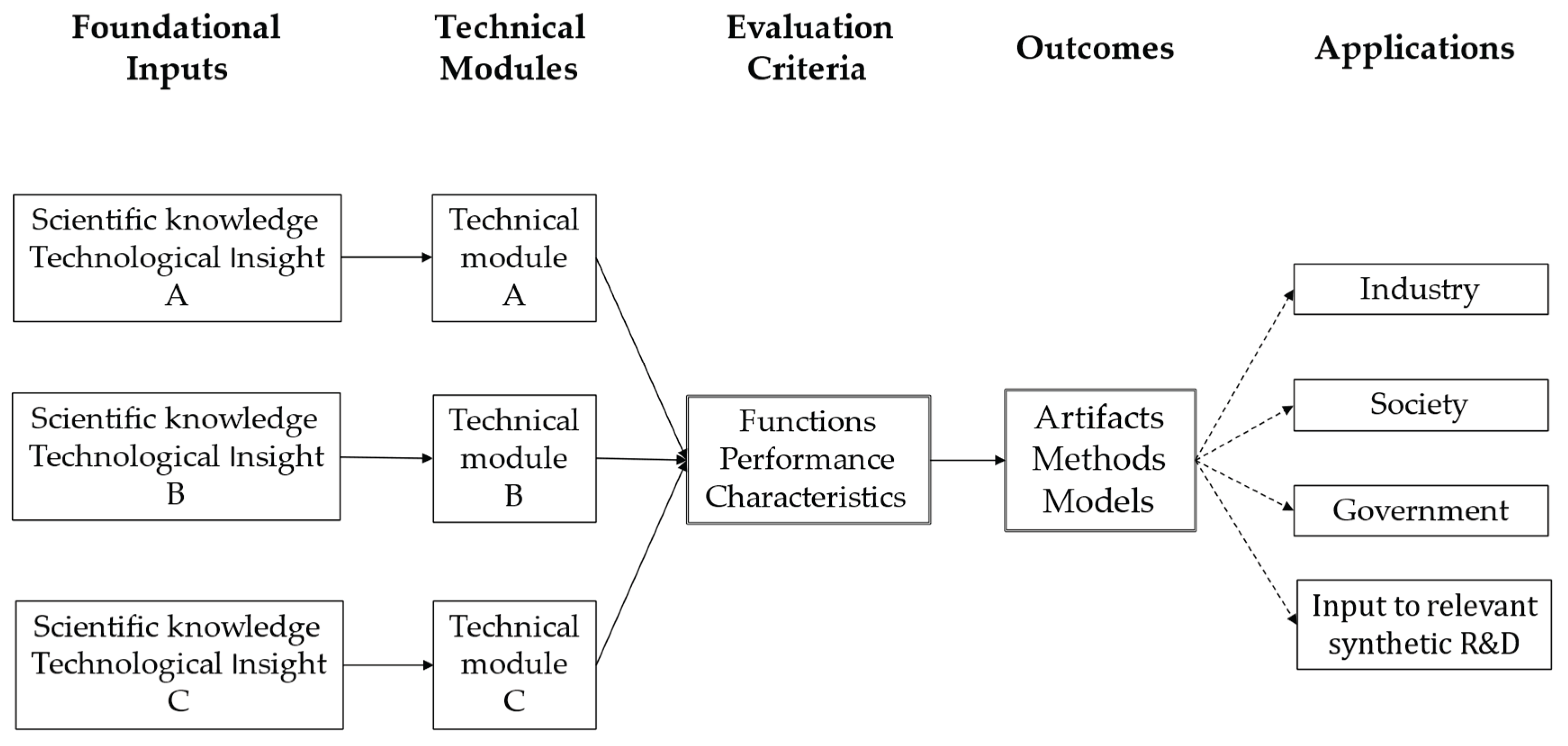
Figure 2.
External structure of synthetic R&D scenarios across multiple scales, illustrating a hierarchical and fractal-like configuration.
Figure 2.
External structure of synthetic R&D scenarios across multiple scales, illustrating a hierarchical and fractal-like configuration.
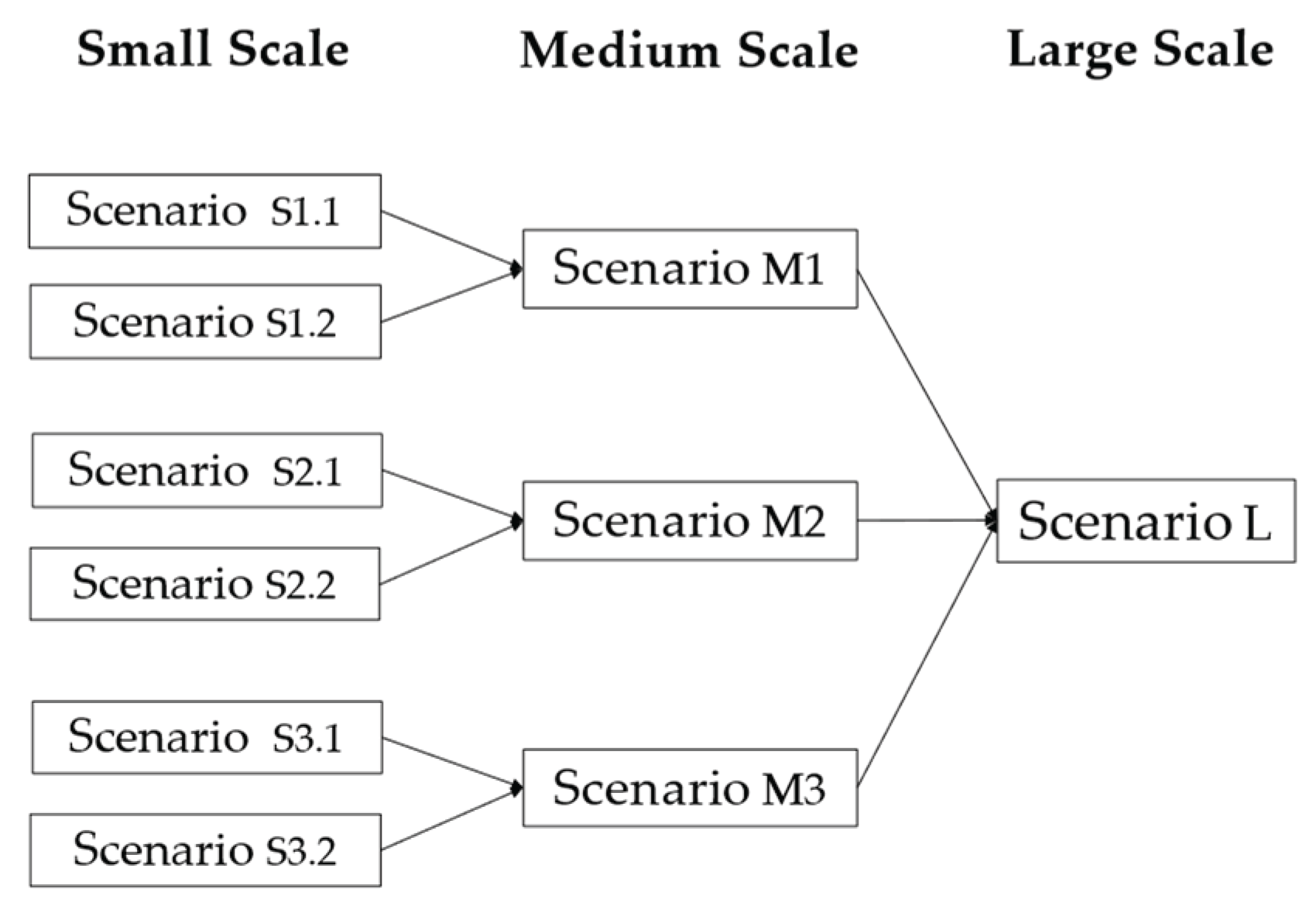
Figure 3.
Scenario for establishing nanomaterial testing standards for the quality assessment (Modified from [5]).
Figure 3.
Scenario for establishing nanomaterial testing standards for the quality assessment (Modified from [5]).
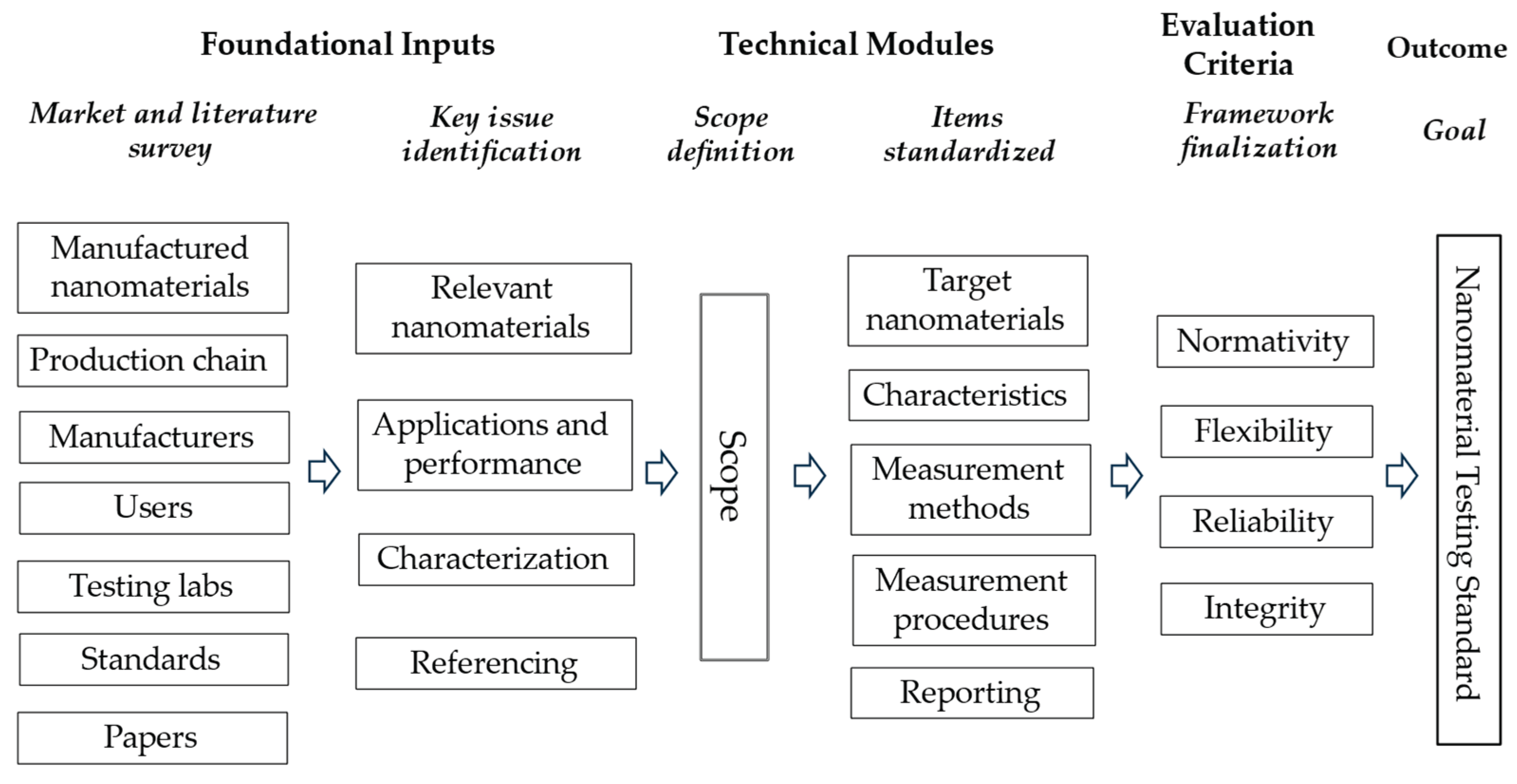
Figure 4.
Scenario for deploying reliable ear thermometers through collaboration between manufacturers and a national metrology institute.
Figure 4.
Scenario for deploying reliable ear thermometers through collaboration between manufacturers and a national metrology institute.
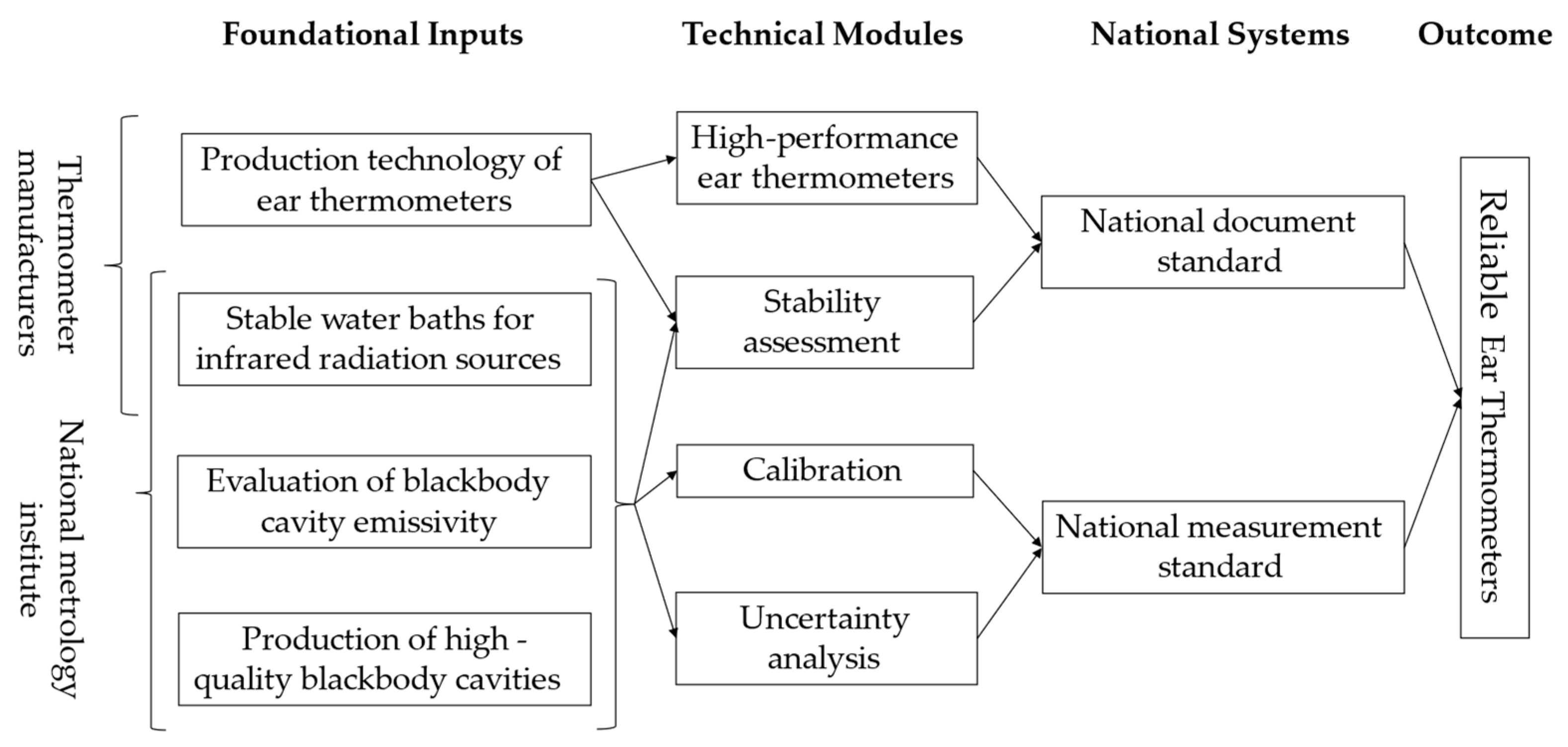
Figure 5.
Scenario for the development and publication of nationwide geochemical maps.
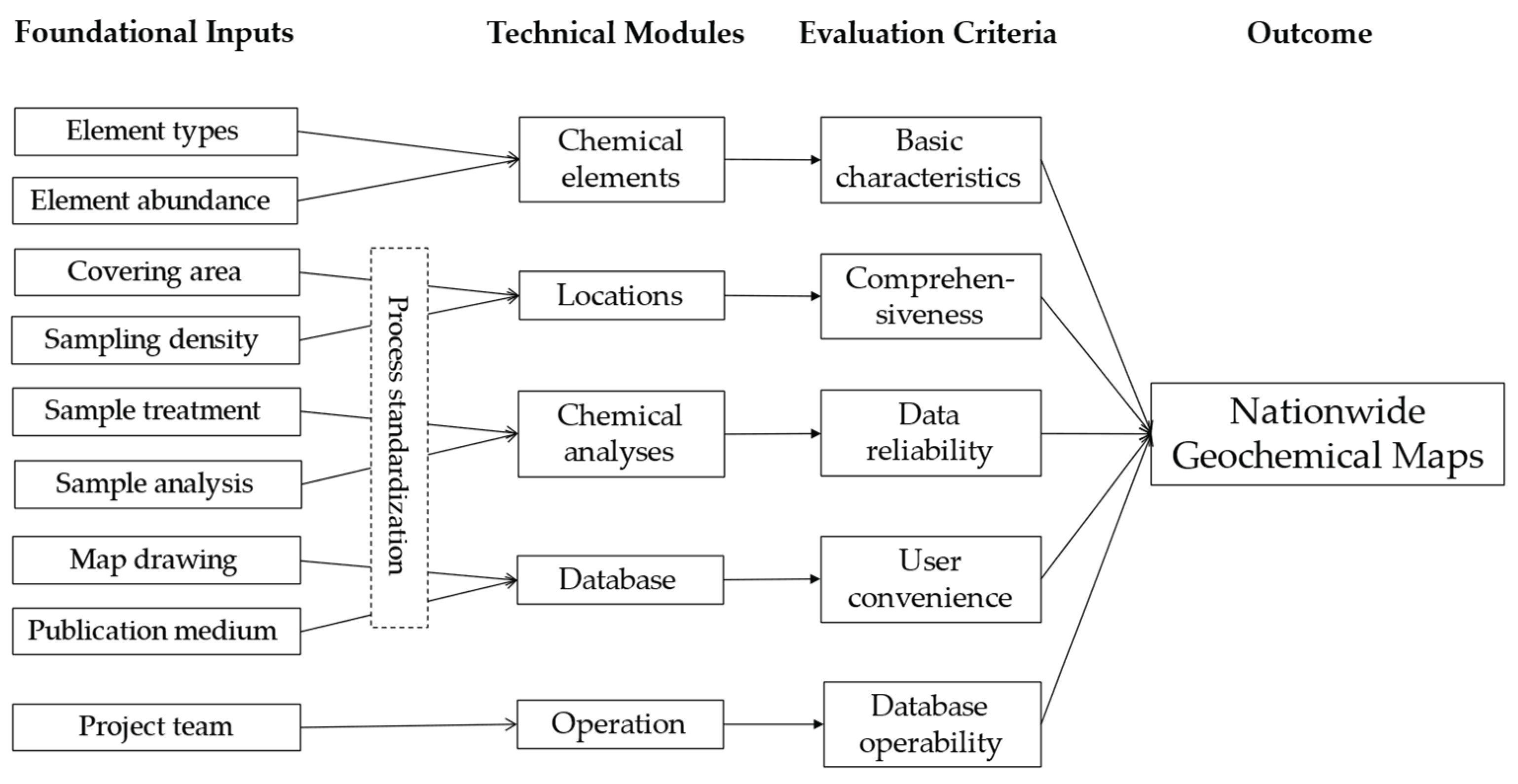
Table 1.
Contrasting Characteristics of Analytical and Synthetic R&D.
| Characteristic | Analytical R&D | Synthetic R&D |
|---|---|---|
| Objective | Seeking the truth | Creating artifacts |
| Approach | Analysis | Synthesis |
| Action | Discovery | Invention |
| Knowledge type | Factual knowledge (laws, data, formulas) |
Methodological knowledge (methods, models) |
| Motivation | Intellectual curiosity | Realizing practical value |
| Scenario | Peripheral | Central |
| Field(s) involved | Single field | Multiple fields |
| Solution uniqueness | One unique solution | Multiple acceptable solutions |
| Evaluation criterion | Consistency and coherence | Practical value |
| Originality | Novelty in factual findings | Novelty in artifacts and methodologies |
| Review | Peer review | Stakeholder review |
Table 3.
Key Issues and Potential Solutions in Scenario-Based Synthetic R&D.
| Area and Section | Key Issues | Potential Solutions |
|---|---|---|
| Documentation (6.1) | Lack of standardized formats for scenario documentation | Develop standardized templates and practical guidelines |
| Evaluation & Publication (6.2) | Scenarios are not formally recognized as R&D outputs; lack of clear evaluative criteria | Define quality benchmarks; create citation-ready formats and public repositories |
| Scenario Disclosure (6.3) | Confidentiality in industrial scenarios limits knowledge sharing | Establish frameworks that balance openness with competitive interests |
Disclaimer/Publisher’s Note: The statements, opinions and data contained in all publications are solely those of the individual author(s) and contributor(s) and not of MDPI and/or the editor(s). MDPI and/or the editor(s) disclaim responsibility for any injury to people or property resulting from any ideas, methods, instructions or products referred to in the content. |
© 2025 by the authors. Licensee MDPI, Basel, Switzerland. This article is an open access article distributed under the terms and conditions of the Creative Commons Attribution (CC BY) license (http://creativecommons.org/licenses/by/4.0/).
Copyright: This open access article is published under a Creative Commons CC BY 4.0 license, which permit the free download, distribution, and reuse, provided that the author and preprint are cited in any reuse.