

Submitted:
14 July 2025
Posted:
15 July 2025
You are already at the latest version
Abstract
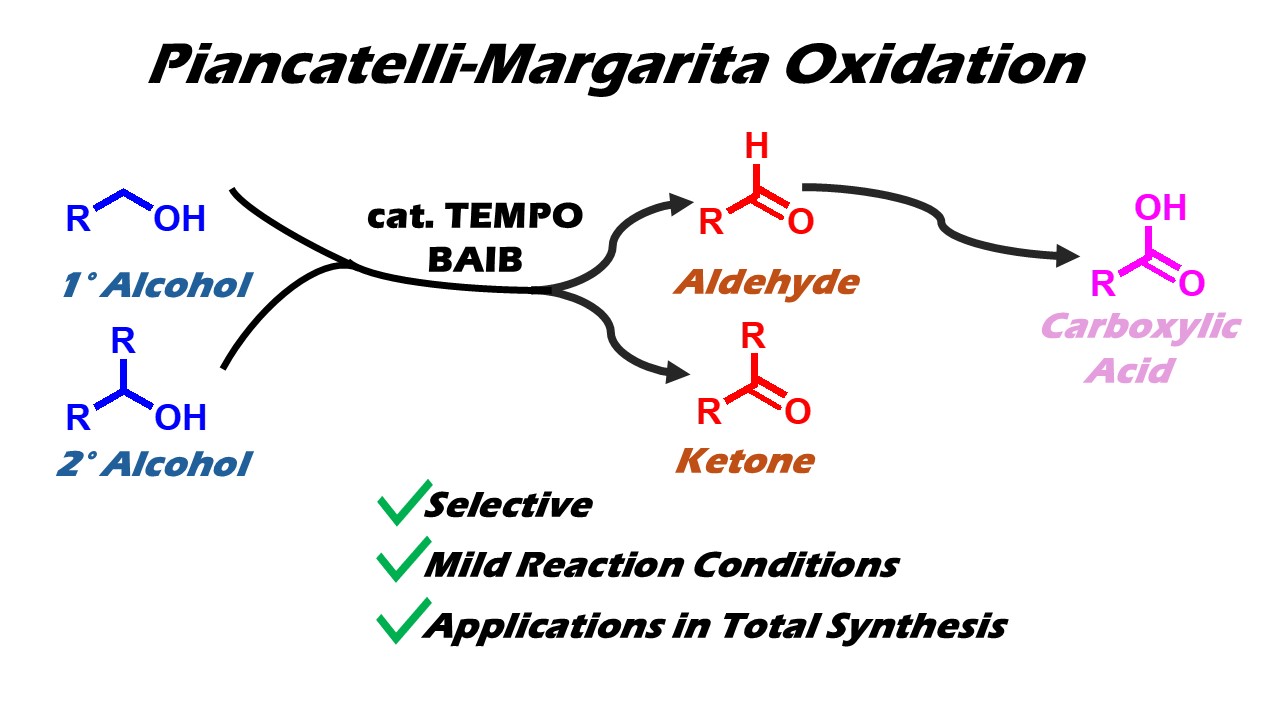
The Piancatelli-Margarita oxidation is a chemical reaction where primary and secondary alcohols are converted to aldehydes and ketones, respectively. It utilizes TEMPO, (2,2,6,6-tetramethylpiperidine 1-oxyl), a stable aminoxy radical as the catalyst and BAIB (bis(acetoxy)iodobenzene), a hypervalent iodine compound, as the stoichiometric oxidant. The reaction proceeds at room temperature, without the need for strong acids, bases, or anhydrous conditions. Mild reaction conditions allow for the selective oxidation of complex and sensitive substrates, and to selectively oxidize primary alcohols the presence of secondary alcohols. The reaction conditions can be controlled to favor the oxidation of primary alcohols to aldehydes or promote the over-oxidation of aldehydes to carboxylic acids. This Review highlights some recent applications (2020-2025), especially in total synthesis, with special emphasis on large-scale reactions. This review aims to honor the memory of Prof. Piancatelli and Dr. Roberto Margarita who developed this reaction.
Keywords:
Aldehydes
; Alcohols
; BAIB
; TEMPO
; Oxidation
; Organic catalysis
; Metal-free
; Mild Oxidation Methods
; Hypervalent iodine
; Total Synthesis
; Large-Scale Reactions
1. Introduction.
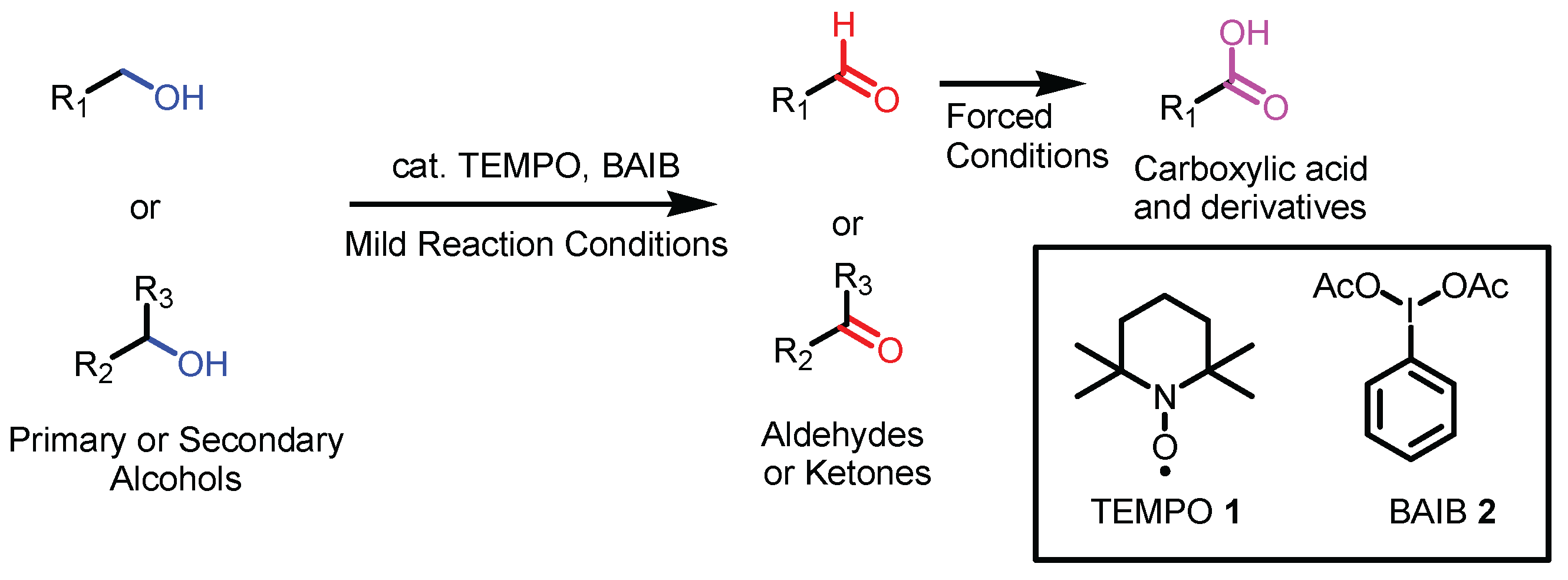
Back in 1997, funding and instrumentation were limited at the chemistry department at Roma Sapienza. No exact mass spectrometer was available; the NMR instrument was an old Gemini 200 MHz and there was limited access to a 300 MHz instrument. However, something was not limited: scientific creativity and most of all, scientific freedom. Professor Giovanni Piancatelli left his then-first-year PhD student Roberto Margarita free to test new ideas and reactions. While most of the ideas they attempted lead to non-useful reactions, one of them developed into an very interesting oxidation methodology: the combination of a catalytic amount of TEMPO 1, ((2,2,6,6-tetramethylpiperidin-1-yl)oxyl) or (2,2,6,6-tetramethylpiperidin-1-yl)oxidanyl) and BAIB 2 (bis(acetoxy)iodobenzene, also known as PIDA, phenyliodine(III) diacetate, or phenyl-λ3-iodanediyl diacetate) which acted as the stoichiometric oxidant. The combination of these two reagents leads to a unique methodology for the oxidation of primary and secondary alcohols to aldehydes and ketones (Scheme 1), with the possibility of further in situ over-oxidation of the aldehyde to a carboxylic moiety if the reaction conditions are forced. Since the publication of the original paper in 1997 [1], this methodology has been applied several times on various complex substrates, on small and large scale. This reaction should not be confused with the Piancatelli Rearrangement, a unique chemical transformation also developed by Prof Piancatelli in 1976, which was nearly forgotten for decades and recently surged to popularity [2].
The initial J. Org. Chem. article on the oxidation of alcohols, co-authored by Prof- Piancatelli and Dr. Margarita, has been cited over 750 times to date. Sadly, Roberto Margarita, after a brilliant career in the industry with BMS and Corden Pharma, departed in his forties, and in June 2025 Prof. Piancatelli also passed away.
As said earlier, researchers have applied this transformation hundreds of times over the last decades. There appears to be no existing review specifically on this subject. Those who were the most entitled to write it, Piancatelli and Margarita, published just another paper on this subject, an invited contribution on Organic Synthesis [3, 4]. A measure of success for a new transformation in organic chemistry is how many times unrelated researchers cite this work, rather than relying on many self-citations, which is the case with the Piancatelli-Margarita oxidation.
The purpose of this Review is to describe a useful tool in organic synthesis and remember two brilliant scientists through the most well-known reaction they developed together. Additionally, the review will present some selected examples on complex molecules and in total synthesis, to illustrate its wide applicability. To keep the material to a manageable amount and give a timely report, I decided to select (with few exceptions) only papers published from the year 2020 and on. Special attention was dedicated to large-scale (tens of grams) reactions, because nowadays only transformations that use environmentally benign conditions are normally scaled up to these amounts. The fact that such large-scale reactions are reported is indirect evidence of the robustness of this reaction. I hope that this review can be of interest to academic and industrial scientists who need an easy, safe, and reliable protocol for the oxidation of alcohols.
2. The Original Piancatelli-Margarita Oxidation.
2.1. TEMPO, BAIB, and comparison with other hypervalent iodine compounds as oxidants.
TEMPO 1, a red-orange solid, is a stable aminoxyl radical, with several applications in synthesis, mechanism elucidation (as radical trap), and in biochemistry [5]. It is obtained by oxidation of 2,2,6,6-tetramethylpiperidine 3, and it is a stable N-O free-radical due to the steric hindrance around the oxygen atom. TEMPO 1 and its derivatives have been used as catalytic organic oxidants for alcohols in several instances. The most well-known reaction is Anelli-Montanari oxidation, [6] a biphasic oxidation protocol which employs bleach (NaClO) as the stoichiometric oxidant. The main difference between Anelli-Montanari oxidation and Piancatelli-Margarita oxidation is that the latter is a purely organic oxidation. While Anelli-Montanari oxidation has been widely used in process chemistry [7], Piancatelli-Margarita protocol is generally more often employed in total synthesis and medicinal chemistry.
The unsubstituted TEMPO 1 is relatively expensive (it costs about 60 US dollars for 5 grams) [8] but it must be considered that it is used only in catalytic amounts. Other derivatives of TEMPO (4-hydroxy-TEMPO, 4-acetamido TEMPO) which are used in industry are much cheaper when obtained in bulk amounts [7].
BAIB 2 (or PIDA), a white solid, is a hypervalent iodine compound, since the iodine atom has a +3 oxidation state [9]. Notably, hypervalent iodine (III) compounds are iodosobenzene 4 (PhI=O) which is explosive under heating and impact, IBX 5 (1-hydroxy-1λ5,2-benziodoxole-1,3-dione), which is an oxidized form of 2-iodobenzoic acid 6, which is also explosive and scarcely soluble in organic solvents. To avoid the issues linked to IBX 5, especially solubility and danger of explosion, a procedure for the tri-acetoxylation of IBX 5 has been developed [10], and the resulting compound, 3-oxo-1λ5,2-benziodoxole-1,1,1(3H)-triyl triacetate, better known as Dess-Martin periodinane 7 is widely used in organic synthesis [11]. The major drawback of this compound is that it is generally prepared from IBX 5, which itself must also be prepared from 2-iodobenzoic acid 6. Both compounds are commercially available: IBX costs around 750 US dollars for 50 grams [12], and Dess-Martin periodinane 7, costs around 740 US dollars for 50 grams [13] (see Scheme 2).
On the other hand, BAIB 2 is less expensive. It costs around 220 US dollars for 100 grams, and 1 kg can cost as little as 800 US dollars [14]. The potential risks related to explosions should be carefully evaluated when using any oxidant, especially in large-scale chemistry. According to its published SDS (substance data sheet), in terms of hazard identification, BAIB 2 is classified as “Not a hazardous substance or mixture”. In terms of GHS (Globally Harmonized System of Classification and Labelling of Chemicals) it is described as with “No hazard pictogram, no signal word, no hazard statement(s), no precautionary statement(s) required” [15]. It can be considered generally safe if handled with precaution, while Dess-Martin periodinane 7 is classified as flammable and irritating, and IBX 5 is also corrosive and presents a significant danger of explosions. One (large) explosion of IBX 5 on a 200 g scale was directly witnessed by the author during his postdoc at The Scripps Research Institute, San Diego, CA, and the extent of damage to people and things was significant. Besides personal experience, BAIB 2 is safer and cheaper with respect to other hypervalent compounds used as oxidants.
2.2. Reaction conditions and substrate scope in the original paper
In the original paper [1], many substrates were subject to the oxidation protocol, which uses 0.1 equiv. of TEMPO, 1.1 equiv. of BAIB, DCM as the solvent, and room temperature. A catalytic load of 0.05 equiv. of TEMPO still leads to the formation of some of the desired products, while no reaction occurred with 0.01 equiv. Simple primary alcohols such as compounds 8a-c can be oxidized to the corresponding aldehydes 8a-c within a couple of hours. The reaction works also on carbohydrate derivatives such as 8d, and more recent examples will be presented in a specific section of this review.
Scheme 3.
Alcohols 8 used in the original paper and yields of the resulting carbonyl compounds [1]. (THP= tetrahydropyranyl-).
Scheme 3.
Alcohols 8 used in the original paper and yields of the resulting carbonyl compounds [1]. (THP= tetrahydropyranyl-).
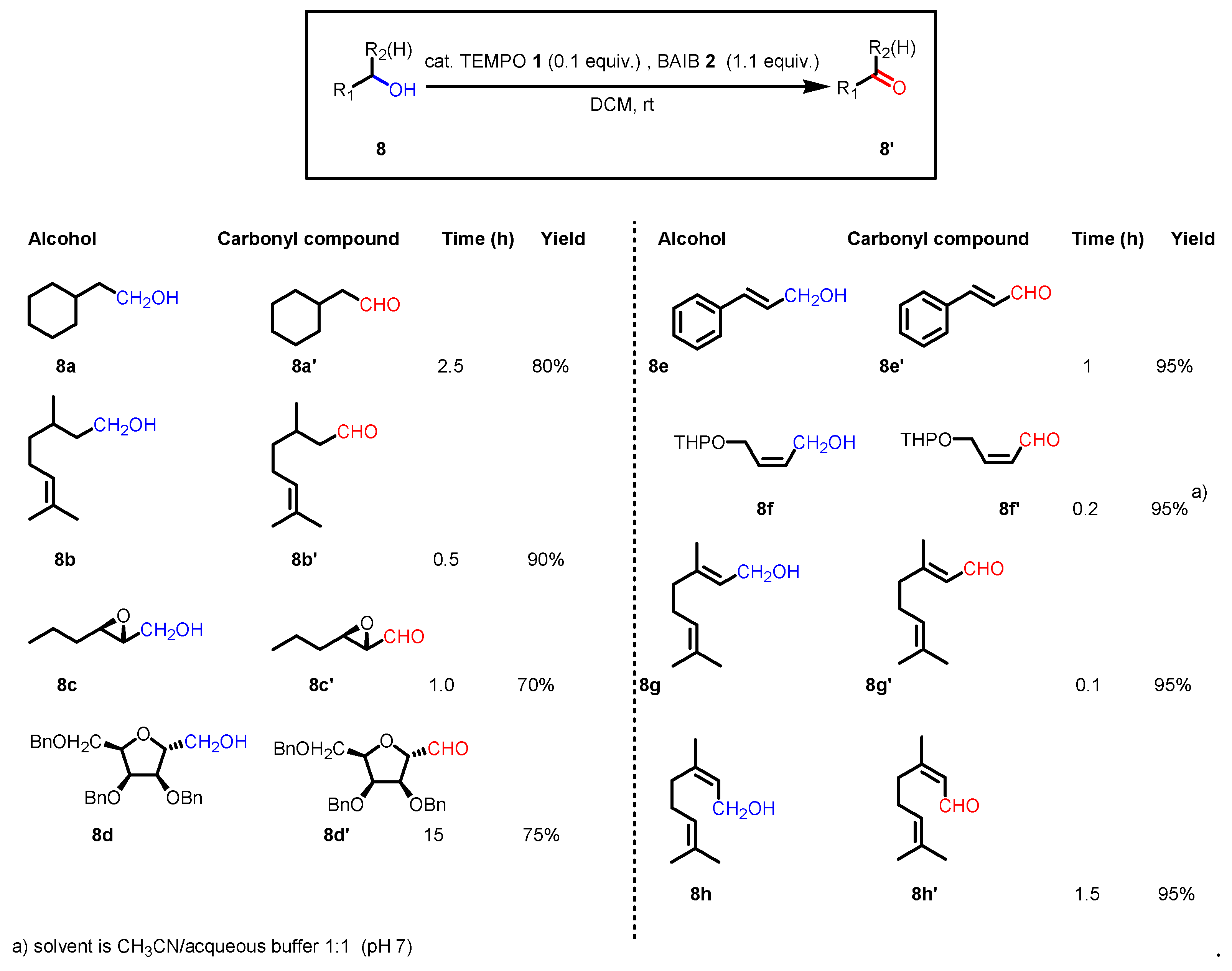
The reaction is faster on the allylic alcohols 8e-8h. Notably, no E-Z isomerization of the double bond occurs in the Z configurationally unstable compounds 8’f-g. The oxidation of nerol 8h to neral 8h’ is reported in the journal Organic Synthesis to set up a standard protocol [3] (see scheme 3).
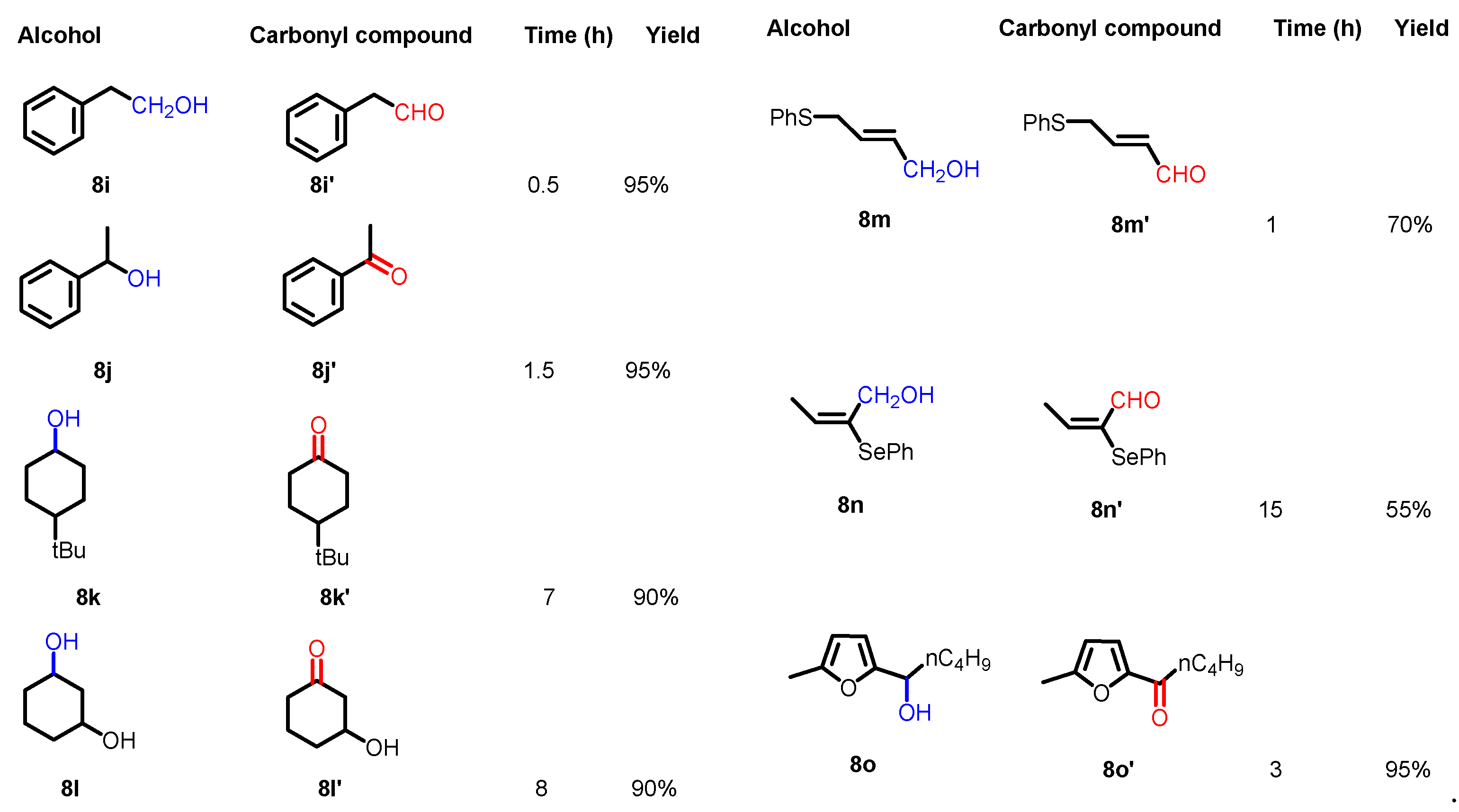
Primary and secondary benzylic alcohols 8i-j are readily oxidized to the corresponding carbonyl compounds 8’i-j. Also, secondary alcohols 8k-l are converted to ketones 8’k-l, however, longer reaction times are required. Alcohols 8m-n, which contain an easily oxidizable function as the sulfur or selenium atom are selectively oxidized to carbonyl compounds 8’m-n, in which only the hydroxy group is oxidized. Finally, furyl carbinol 8o is smoothly transformed into ketone 8’o. The attempted oxidation of furyl carbinol using acidic conditions is the reaction that led to the serendipitous discovery of Piancatelli rearrangement in 1976 [2]. Under these mild reaction conditions, no cyclopentanone rearranged product was observed (see scheme 3, continued).
Scheme 3.
(continued). Alcohols 8 used in the original paper and yields of the resulting carbonyl compounds [1].
Scheme 3.
(continued). Alcohols 8 used in the original paper and yields of the resulting carbonyl compounds [1].
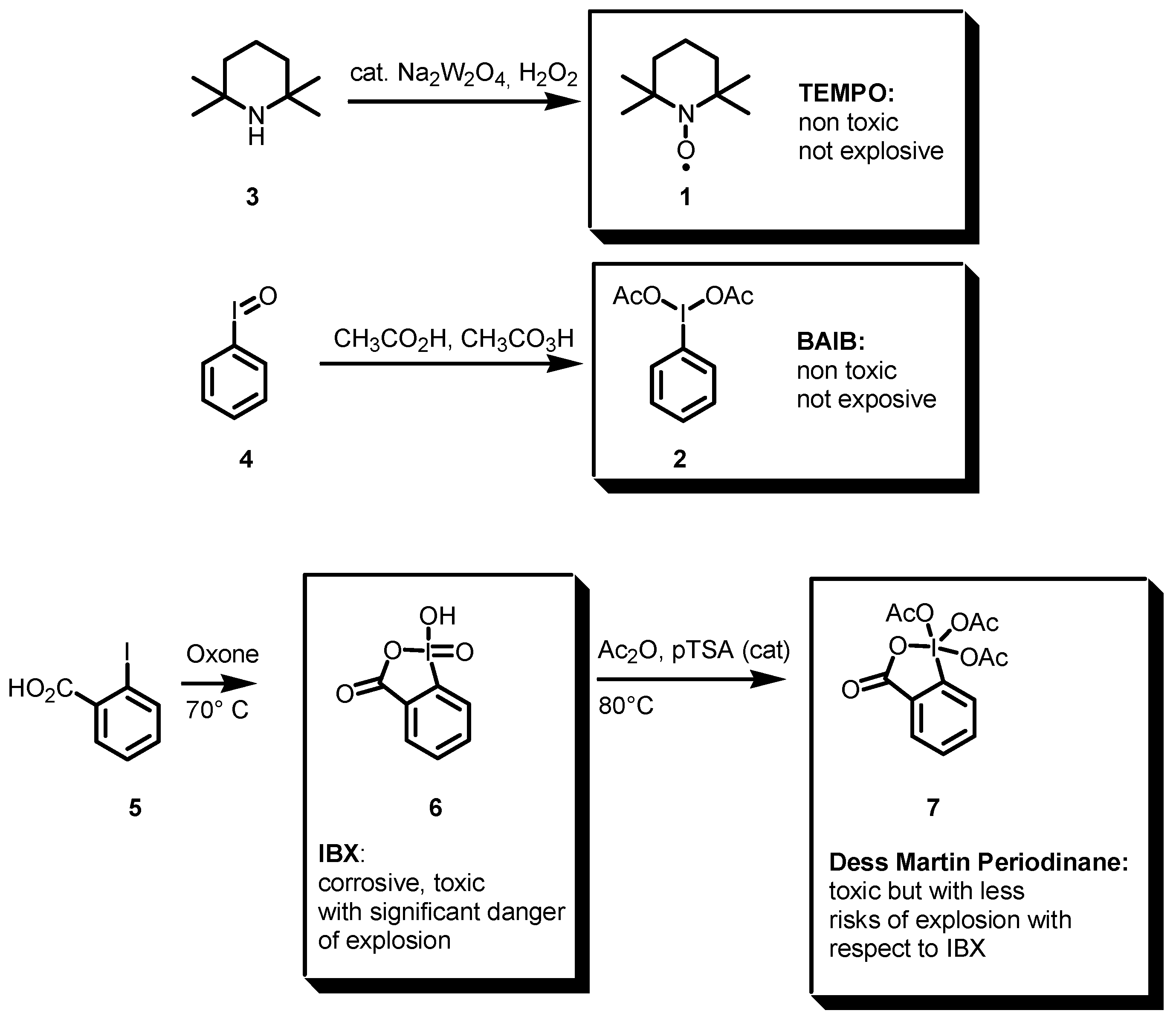
Piancatelli and Margarita also studied chemoselectivity for their reaction concerning different alcoholic functions. Thus, the primary alcohol functionality of compound 8p can be selectively oxidized in the presence of secondary alcohol 8q, affording the aldehyde 8’p but not the ketone 8’k; the primary allylic alcohol 8b can be selectively oxidized to aldehyde 8’b in the presence of secondary allylic alcohol 8r (the formation ketone 8’r is not observed) and benzyl alcohol 8s in the presence of secondary benzylic alcohol 8j is exclusively oxidized to benzaldehyde 8’s, without observing the formation of acetophenone 8’j (see Scheme 4).
2.3. Key features of the Piancatelli-Margarita oxidation.
- The reaction is catalytic with respect to the oxidant; the reagents are non-toxic or explosive and can be considered environmentally benign.
-For most reactions, only slightly more than one equivalent of BAIB 2 is needed. Solid BAIB 2 can be weighed and dosed in a better manner with respect to a solution of NaClO. Therefore, the Piancatelli-Margarita reaction can be performed on the very small scale employed in the last stages of a total synthesis.
-The reaction is purely organic. No water is necessary.
-With primary alcohols, the reaction can lead to the formation of the aldehyde, and only if the conditions are forced (longer reaction times) it leads to the formation of carboxylic acids (see following examples).
-The reaction is chemoselective: primary alcohols can be selectively oxidized in the presence of secondary alcohols and easily oxidizable sulfur/selenium functionalities are not affected.
2.4. Proposed reaction mechanism
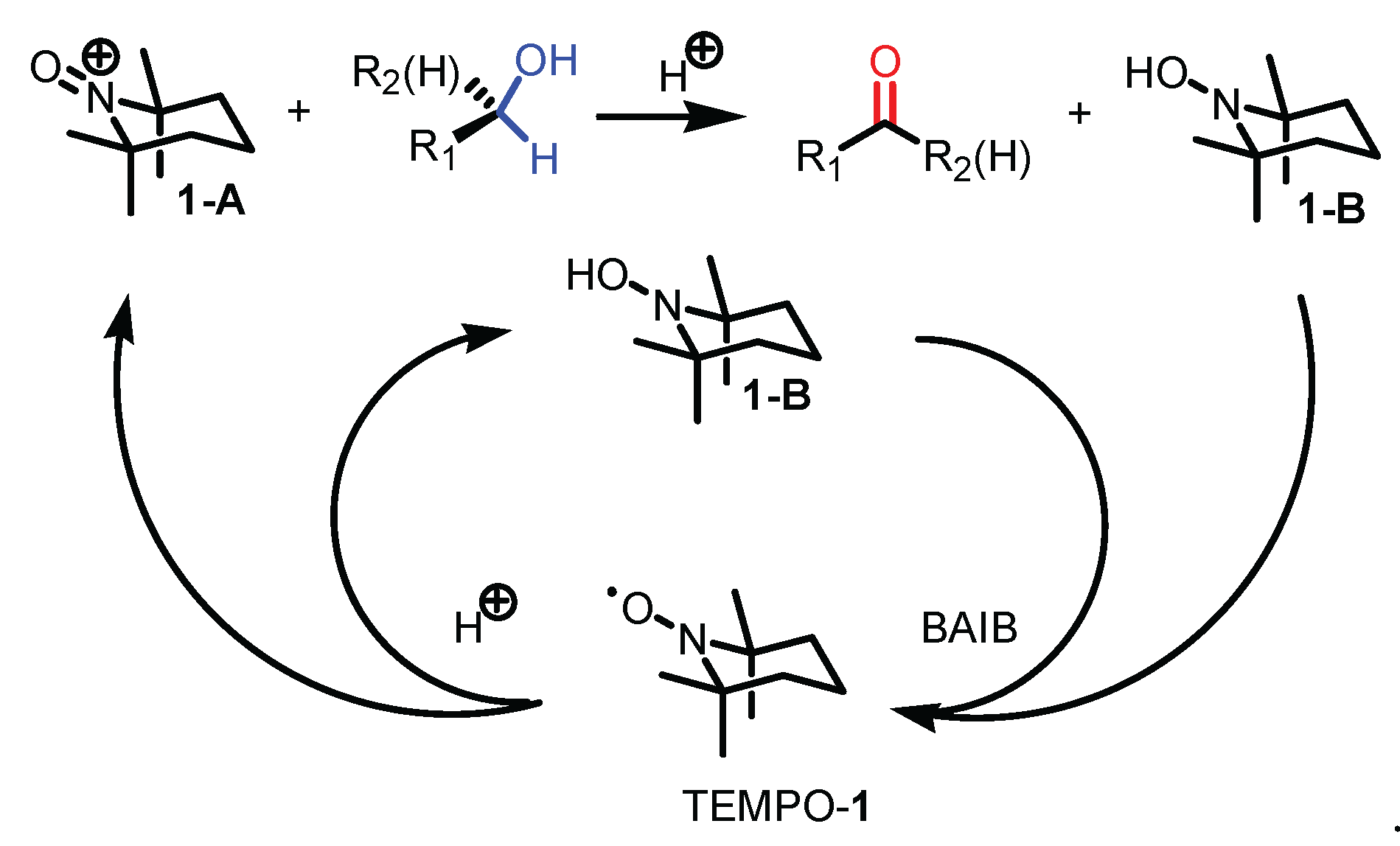
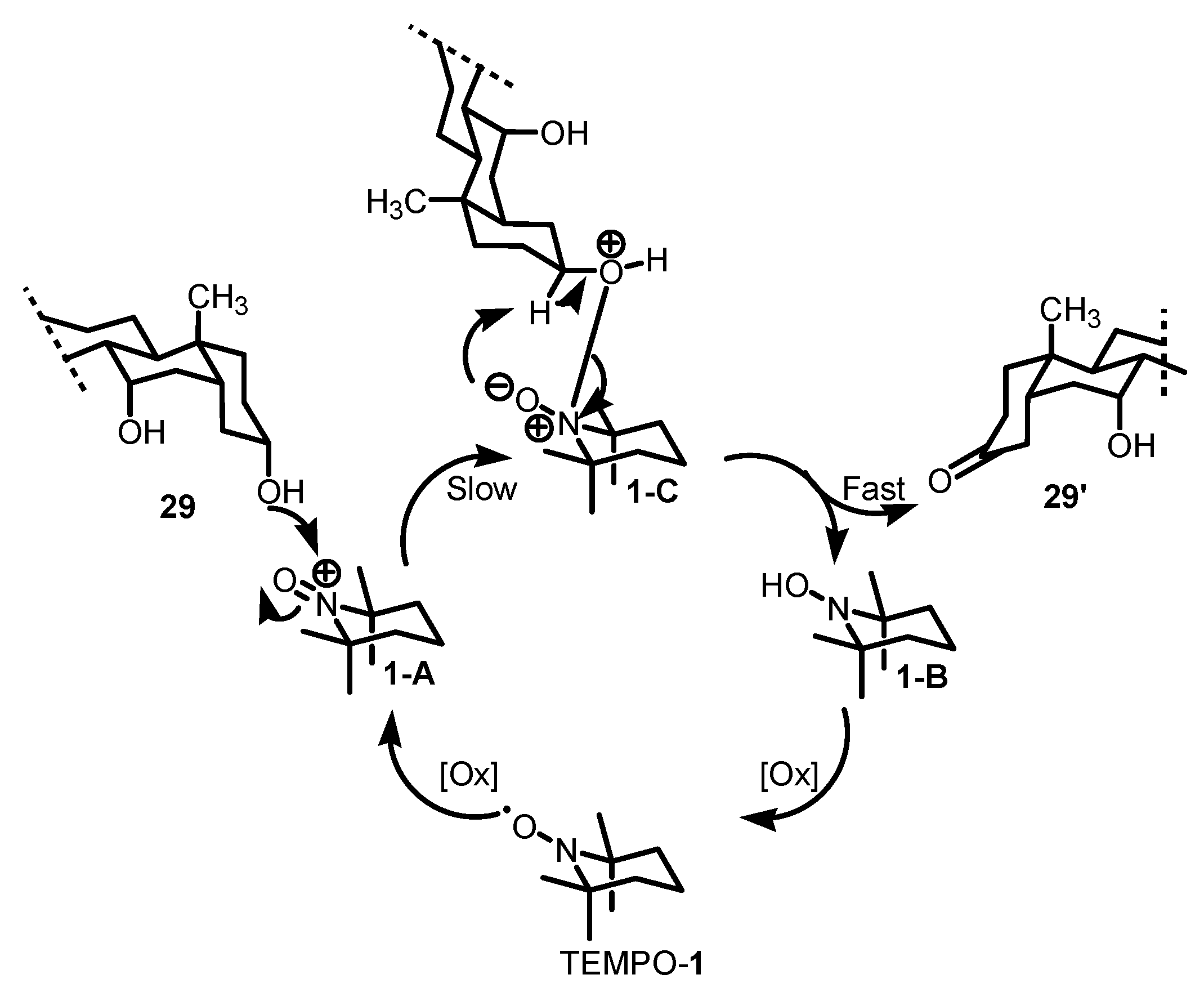
The free-radical TEMPO 1 can react with alcohols in its form 1-A to afford the corresponding carbonyl compound and its reduced form 1-B; the role of BAIB 2 is to re-oxidize 1-B to continue the catalytic cycle.
Scheme 5.
Proposed mechanism of the Piancatelli-Margarita oxidation.
3. Selected examples of Piancatelli-Margarita Oxidation applications in synthesis: large-scale reactions and small molecules.
In this section, it will be presented some examples published in the recent literature since 2020.
While reactions conducted on large molecules can be impressive, transformations of molecules with very few carbon atoms can also be difficult. Not always the synthesis of “small” molecules equals “easy”. First, a small molecule usually has a boiling point that is close to the solvent employed. Second, small molecules are often water-soluble, therefore their purification via phase extraction can be difficult. Third, small molecules, especially if bearing one or more reactive groups, can be quite unstable, making reactions difficult to reproduce if conditions are not exactly controlled.
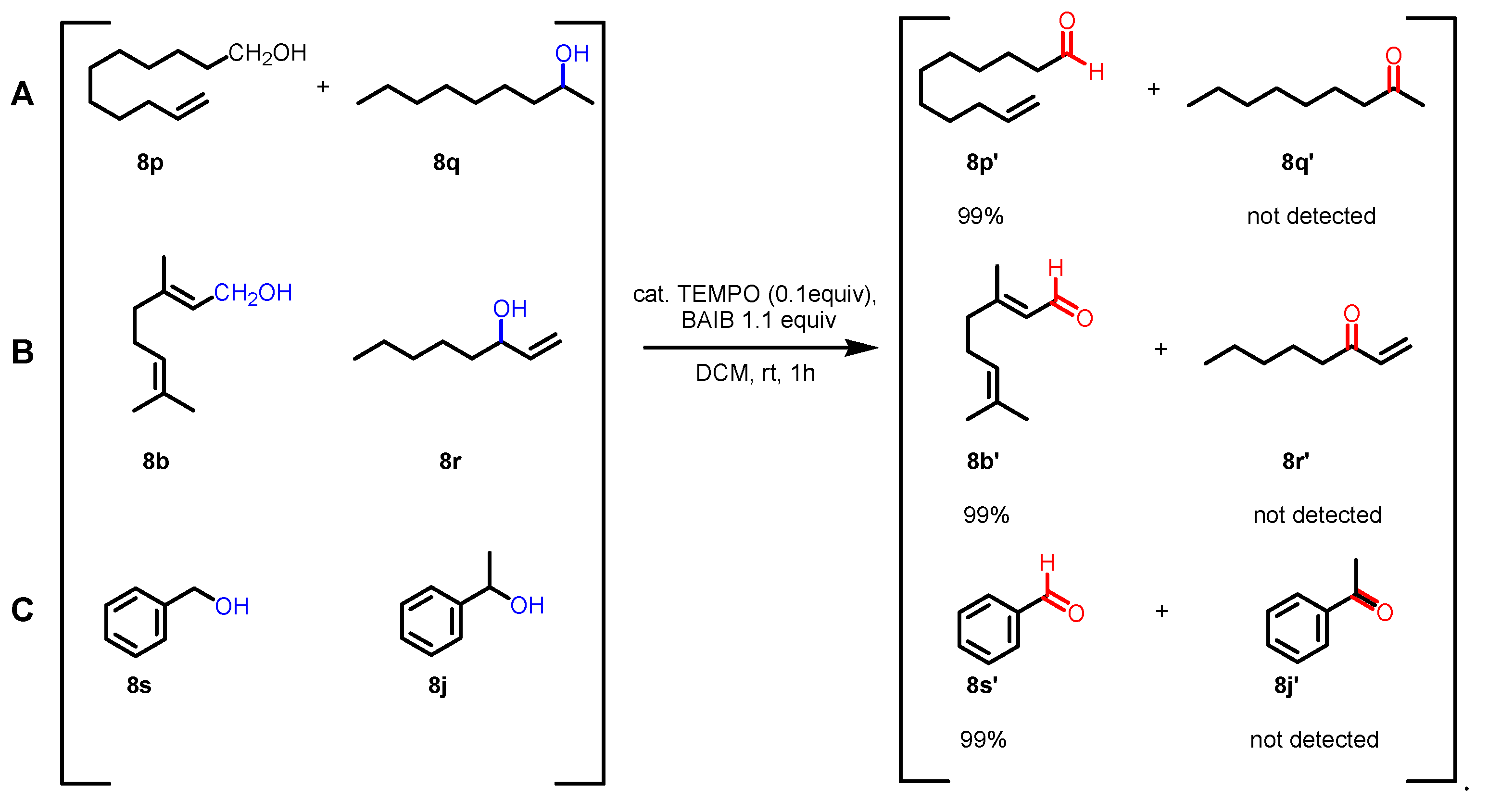
Keeping these aspects in mind, O’Reilly and coworkers attempted the oxidation of 3-chloro propanol 9 to 3-chloro propanal 9’ with catalytic TEMPO 1 and BAIB 2 [16]. The yields are given as a range (50-70%), since during purification and concentration in vacuo some decomposition of the aldehyde 9’ to acrolein via HCl elimination occurred. This was not a major issue, since aldehyde 9’ can be telescoped in DCM solution to the next reaction. However, in their synthesis of azetidines, they ultimately chose a different procedure based on the hydrolysis of acrolein diacetal, because it was found to be more convenient. Nevertheless, TEMPO 1/BAIB 2 oxidation has been proved to be effective in preparing the elusive aldehyde 9’ (Scheme 6).
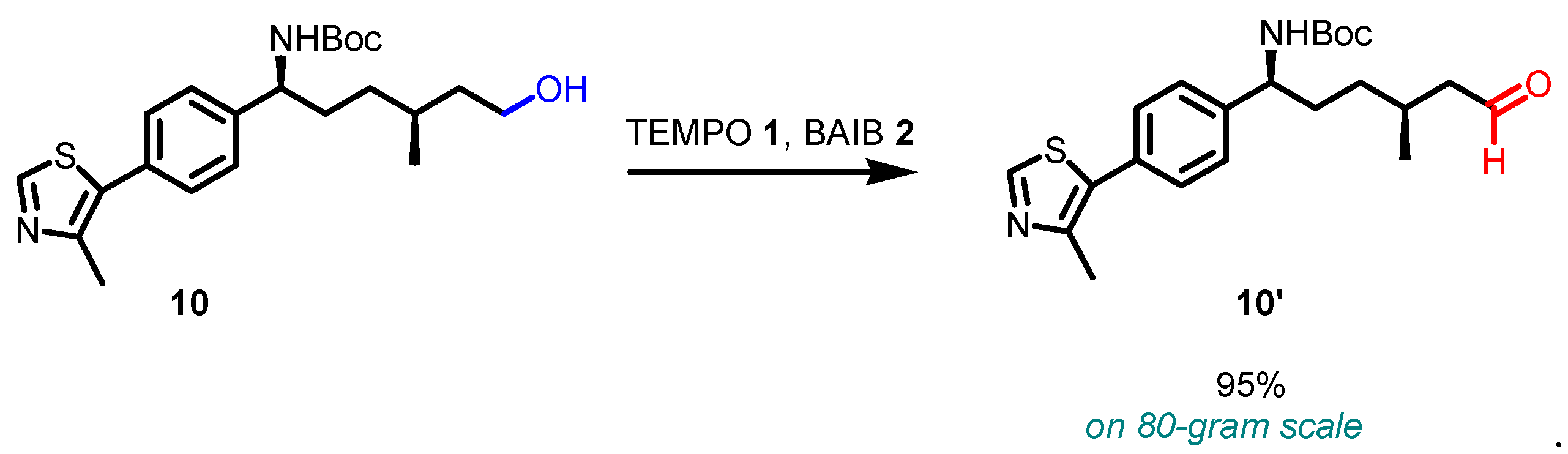
For their preparation of the anticancer agent BI 1810284, the industrial researchers of the group of Reevs reported an eighty-gram scale Piancatelli-Margarita oxidation of alcohol 10 to aldehyde 10’. In this reaction were employed 80 g of alcohol 10 (90% purity), 2.8 g of TEMPO 1, and 68 g of BAIB 2 and after a work-up and concentration were obtained 116 g of aldehyde 10’ (58% purity), most likely in a mixture with iodobenzene. An aliquot was purified, and the purity of the aldehyde was evaluated to be 95% [17]. Since purifications are expensive on a large-scale, it is not unusual that products are directly telescoped to the following steps. The by-product of Piancatelli-Margarita oxidation is iodobenzene, a relatively inert compound. This renders the reaction attractive when purifications should be avoided, as in industrial large-scale reactions (Scheme 7).
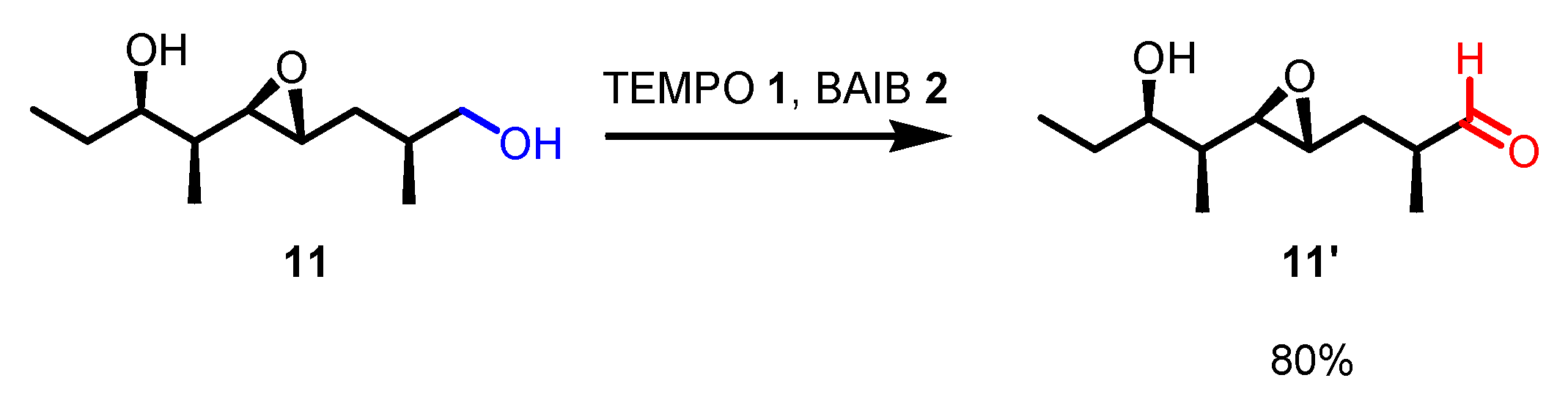
In their total synthesis of pladienolide A, Rhoades, Rheingold, O’Malley and Wang depicted a protective group-free sequence. One of the key steps was the oxidation of the primary alcohol functional group of intermediate 11 to aldehyde 11’, despite the presence of a secondary alcohol and of a reactive epoxide functionality. This task was successfully achieved by using the Piancatelli-Margarita oxidation, obtaining aldehyde 11’ in 80% yields [18] (Scheme 8).
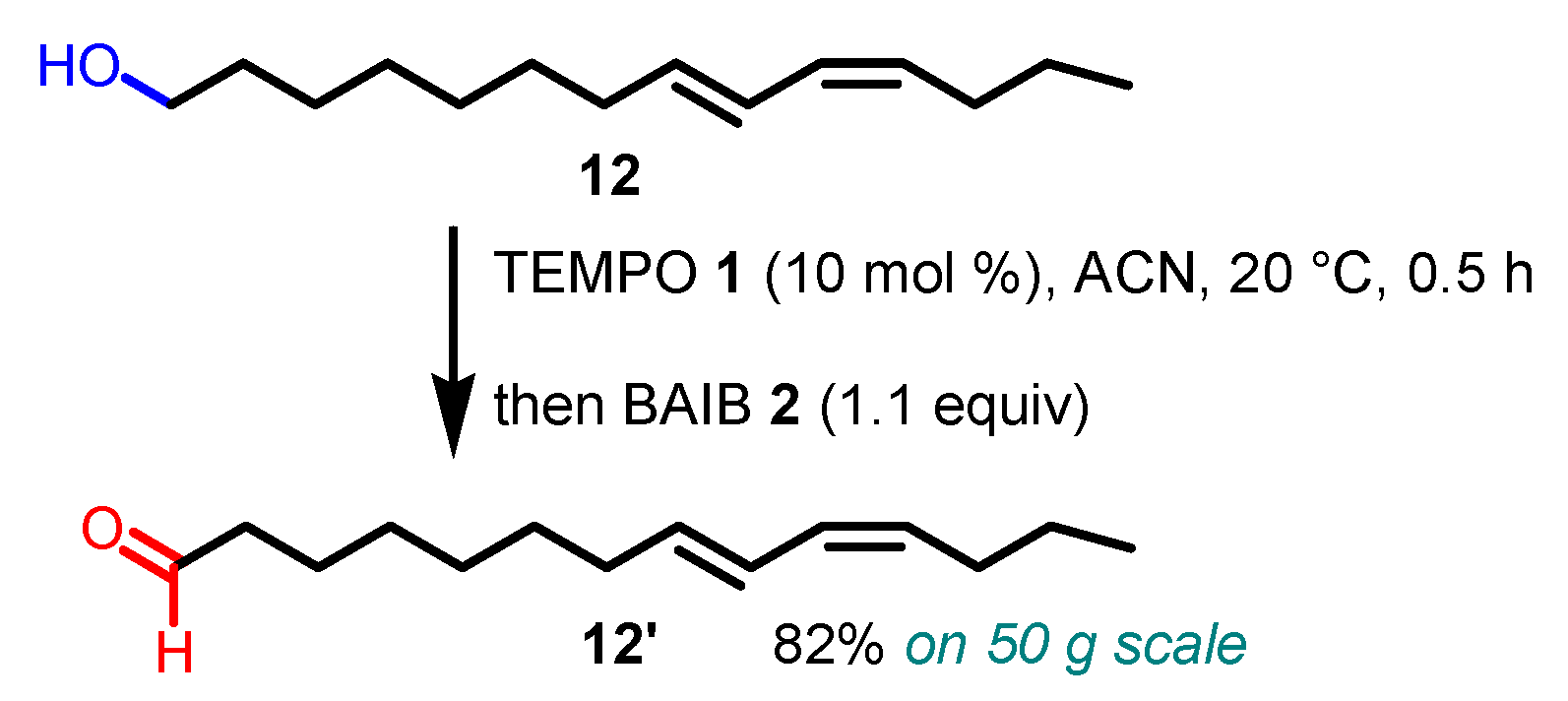
Gayon, Lefevre, and coworkers, in their large-scale synthesis of the sex pheromone of the horse-chestnut leaf miner, planned the oxidation of alcohol 12 to the desired target molecule 12’ [19]. The final reaction was run on a fifty-gram scale, using 51 grams of alcohol 12, 3.8 grams of TEMPO 1, and 85 grams of BAIB 2 (Scheme 9). According to the authors, this synthesis is easily scalable. Biodegradable pheromones can be a valuable alternative method in insect control if compared to other synthetic insecticides. Nevertheless, the preparation of pheromones must employ eco-friendly conditions, and to develop a synthesis with these characteristics was the goal of the industrial researchers.
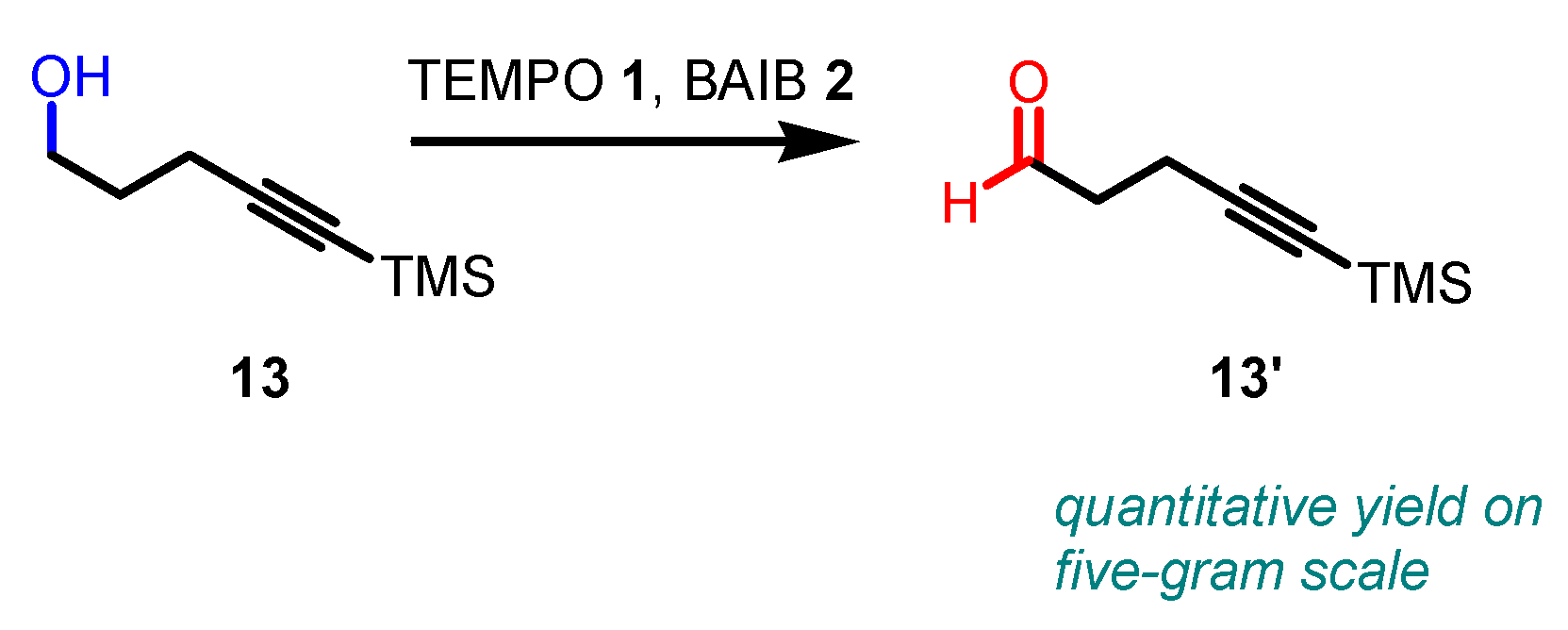
During their asymmetric synthesis of (-)-dehydrocostus lactone, [20] Metz and co-workers employed oxidation reactions in several steps. In some instances, these authors exploited Piancatelli-Margarita oxidation. They commenced their synthesis with the preparation of aldehyde 13’ from alcohol 13, on a five-gram scale. Aldehyde 13’ was obtained in quantitative yields either with Piancatelli-Margarita oxidation or Swern oxidation (Scheme 10).
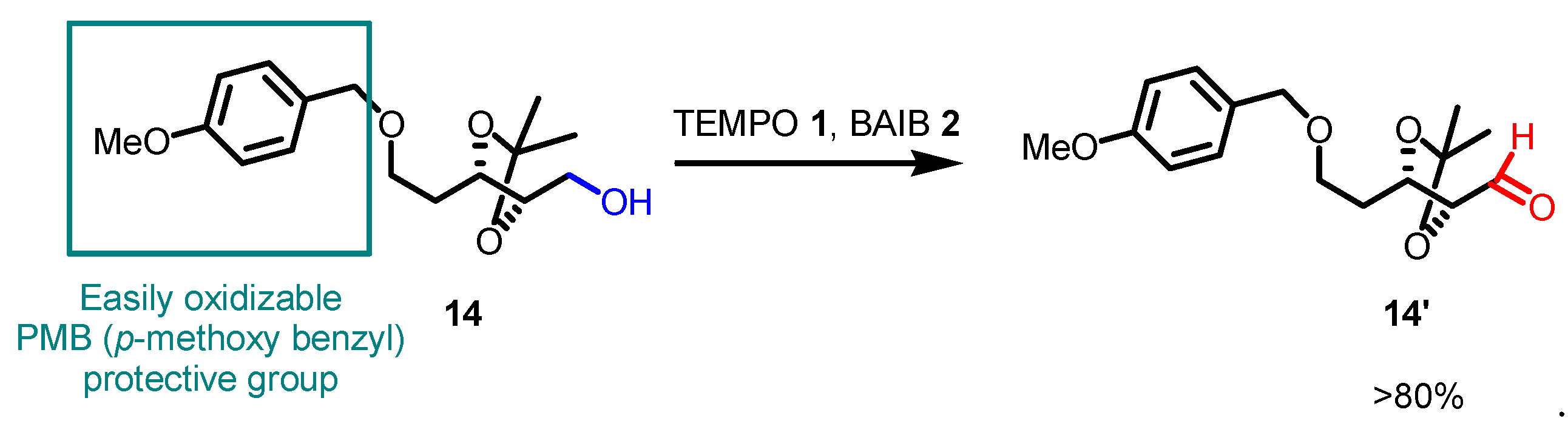
A useful protective group for the alcoholic moiety is the PMB or p-methoxybenzyl group. This protective group can be removed either with catalytic hydrogenation or using a mild oxidant, giving back the free alcohol functionality. Gosh and Hsu, in their total synthesis of (+)-EBC-23, an anticancer agent from the Australian Rainforest, showed that the PMB protective group of intermediate 14 is not affected by the Piancatelli-Margarita oxidation protocol, giving aldehyde 14’ in good yields [21]. This transformation is part of a four-step sequence in which the intermediate alcohol 14 is telescoped from the previous reaction in DCM solution. 80% yields are reported for the entire sequence (Scheme 11).
In their total synthesis of the pseudopterosin A-F agylcone, Schmalz and co-workers employed the Piancatelli-Margarita oxidation on primary alcohol 15 to give aldehyde 15’ [22]. The reaction proceeded in good yields despite the presence of an electron-rich aromatic ring which can, in principle, be easily oxidized and instead is not affected. The yield of this reaction (including the previous double bond hydrogenation) is 75% (Scheme 12).
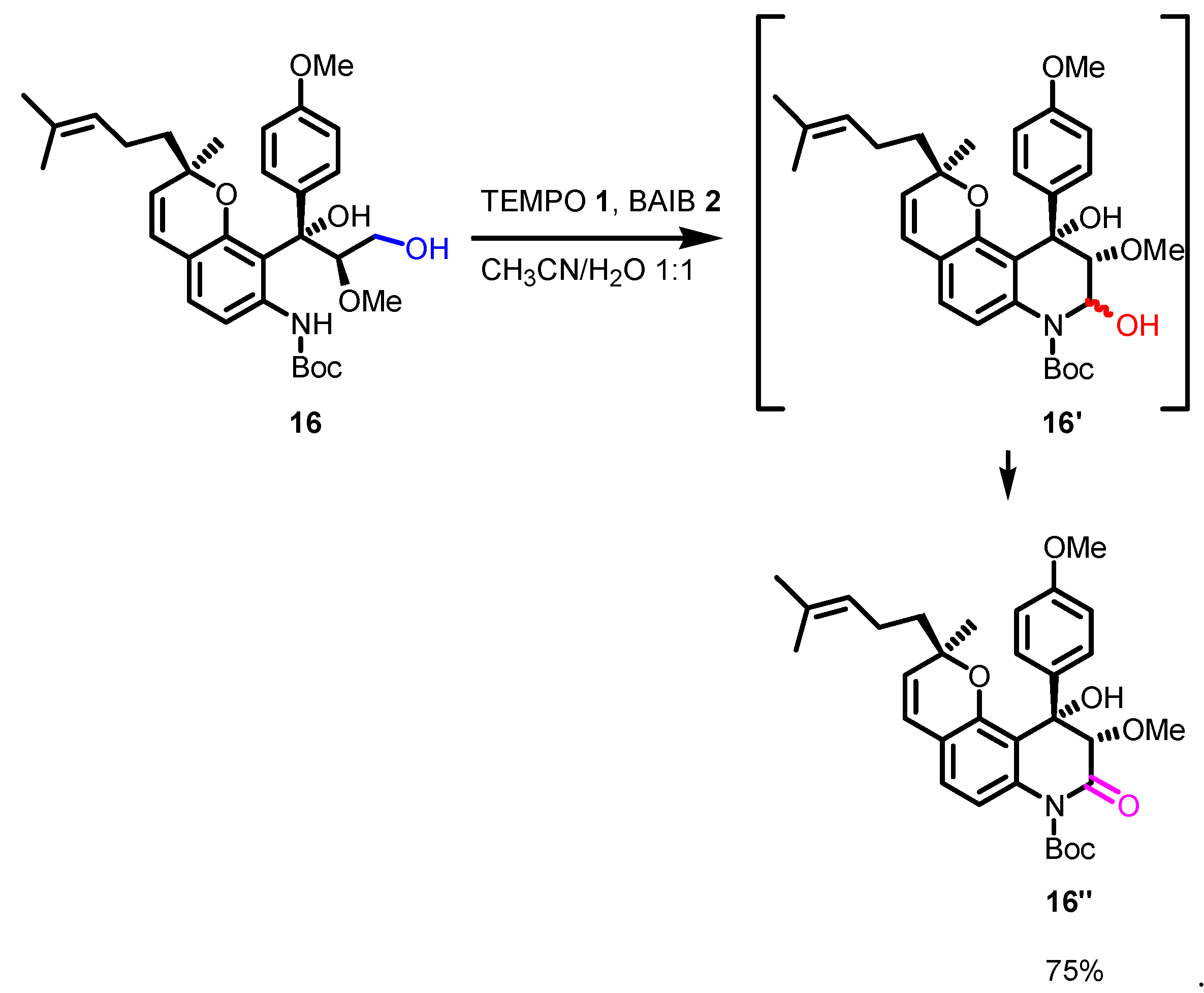
An example of the chemoselectivity of Piancatelli-Margarita oxidation was reported by Hanessian and co-workers in their synthesis of insecticide metabolite yaequinolones J1 and J2. These authors needed an oxidation method for primary alcohol 16 that would afford an intermediate, the N-protected hemiaminal 16’ which can undergo further oxidation to a lactam, specifically N-Boc dihydroquinolin-2-one 16’. They tested several oxidants (PDC, Corey−Schmidt, PCC), but none of them was as effective and selective as the TEMPO 1/BAIB 2 combination. The hemiaminal intermediate 16 c be detected by NMR analysis after 3 h before further oxidation to the lactam took place. The authors state that, to the best of their knowledge, the TEMPO/BAIB reagent combination was used here for the first time for the direct synthesis of an N-Boc lactam from a primary alcohol [23]. It is worth noticing that neither the enol ether functionality, the aryl methoxy group nor the labile acid-sensitive benzylic tertiary alcohol were affected (Scheme 13).
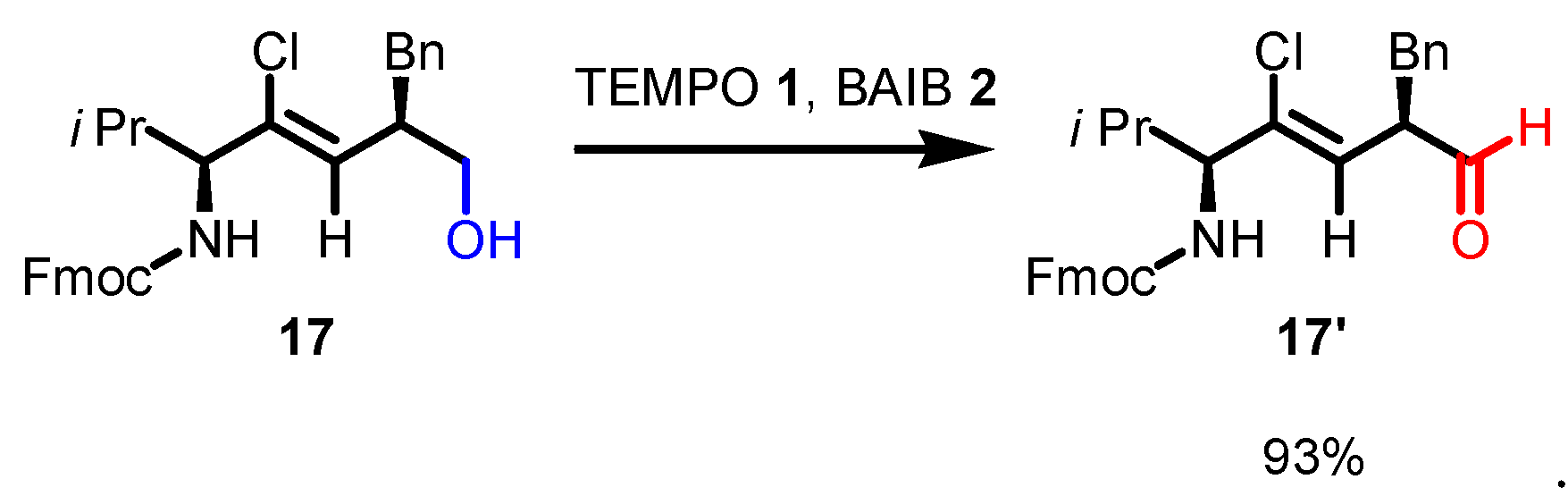
To develop a synthesis of chloroalkene dipeptide isosteres, Tamamura et al. resorted to Piancatelli-Margarita oxidation for omoallylic alcohol 17 to aldehyde 17’ in 93% yield [24] (Scheme 14). The following step of their synthesis is the oxidation of the aldehyde functionality to a carboxylate, which was achieved by means of Pinnick oxidation. It is surprising that the authors used a two-step oxidation protocol, since forcing the reaction conditions would presumably lead to the same carboxylate. However, no explanation is given in the original paper.
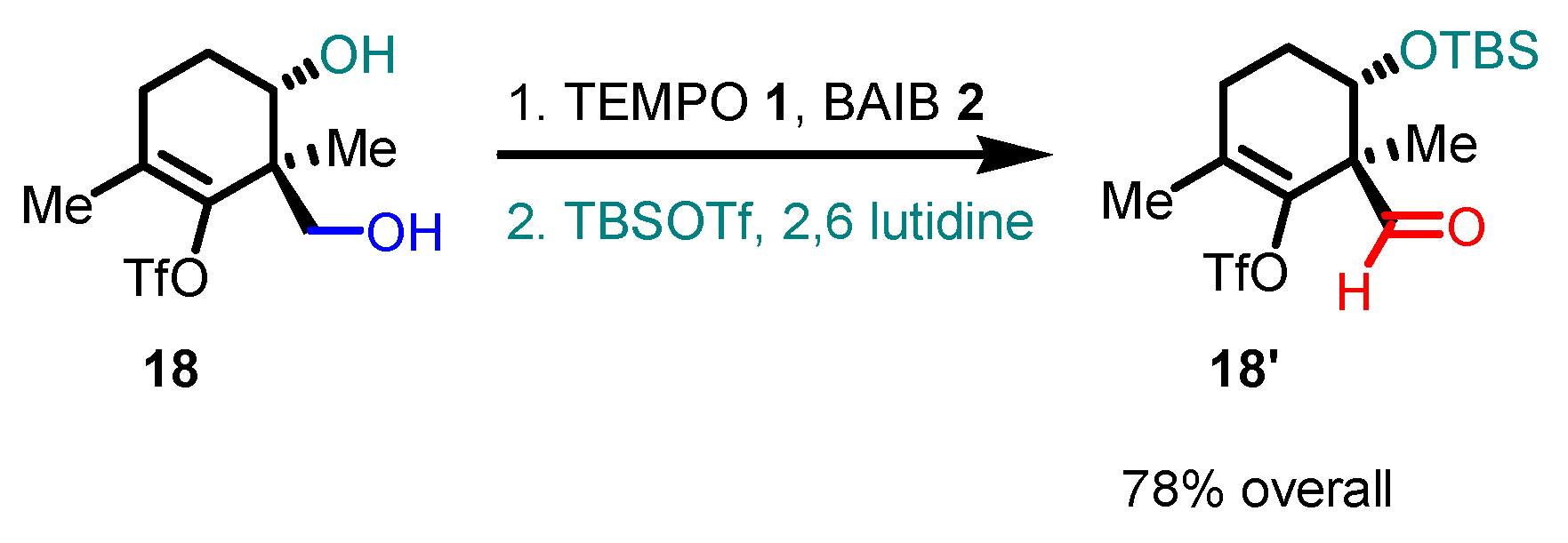
Another example of oxidation of the primary alcohol in the presence of a double bond and a secondary alcohol was reported by Sarpong and co-workers in their studies towards the synthesis of diverse taxane cores, specifically in the oxidation of alcohol 18 to aldehyde 18’, to give, after TBS protection of the secondary alcohol functional group, the taxane C-ring fragment [25]. This two-step sequence has 78% yields (Scheme 15).
In the original paper by Piancatelli and Margarita [1], it was reported that phenylthiol and phenylselenium functional groups are not affected by their oxidation methodology. This is noteworthy, since the phenylthiol and phenylselenium groups are usually introduced into molecules to generate a double bond upon oxidation, for example with NaIO4. Their findings on the selective alcohol group oxidation are confirmed by the work of Gardiner et al., in their efforts towards the synthesis of heparan sulfate- and dermatan sulfate-related oligosaccharides. The Piancatelli-Margarita oxidation of alcohol 19 afforded [2.2.2] bicyclic lactone 19’ in 73% yields using the “forced” conditions (acetonitrile and water) [26] (Scheme 16).
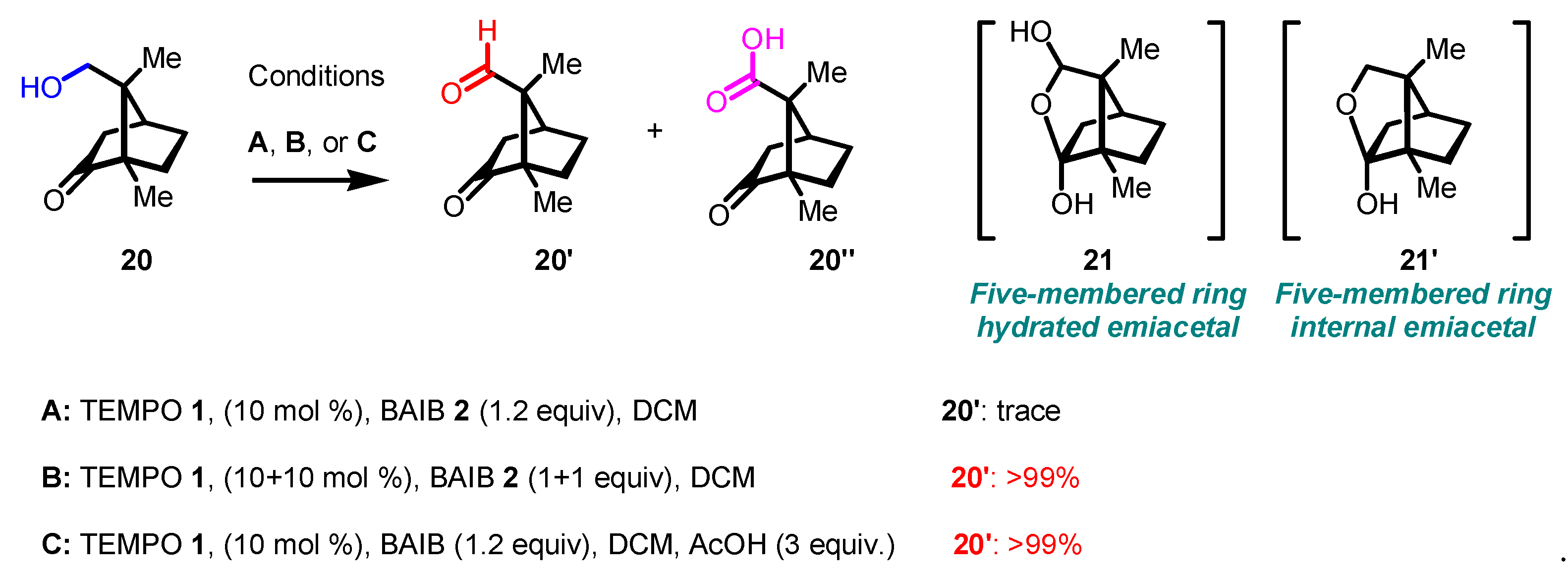
Sarpong and coworkers solved an intriguing problem in their studies towards the synthesis of the longiborneol sesquiterpenoids. [27] Their goal was to oxidize the alcohol functionality of intermediate 20 to the corresponding aldehyde in compound 20’.
However, when they used Dess-Martin periodinane 7 or other oxidation methods (Ley−Griffith oxidation) their product was instead carboxylic acid 20’’. They hypothesized that the over-oxidized compound 20’’ can be derived from the fast oxidation of internal hydrate acetal 21. Then testing the standard conditions of Piancatelli-Margarita oxidation (Scheme 17, conditions A) none of the desired aldehyde 20’ was isolated. They also hypothesized that an analogue internal acetal of 21, specifically compound 21’¸can prevent the oxidation. They then tested two new approaches: the addition of a second equivalent of BAIB 2 (conditions B) or the addition of 3 equivalents of acetic acid (conditions C) in order to break the internal acetal. Both these modifications were successful, delivering the desired aldehyde 20’ in 99% yield (Scheme 17).
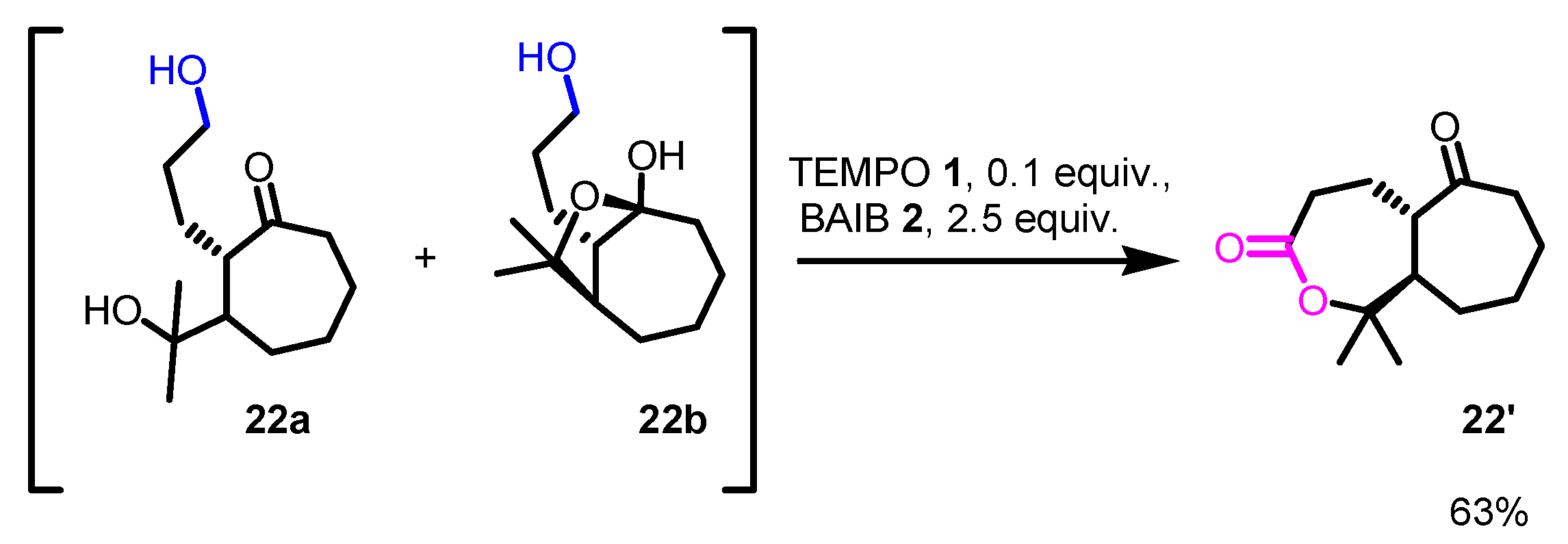
The formation of internal emiketal was also an issue faced during the synthesis of the ABC ring system of kadlongilactones reported by Wang and Chen [28]. The ketone 22a existed as a mixture with emiketal 22b which was detected by NMR. Also, in this case, the oxidation to the corresponding lactone 22’ required more equivalents of BAIB 2 (2.5 equiv. according to the supporting information of the article, see Scheme 18).
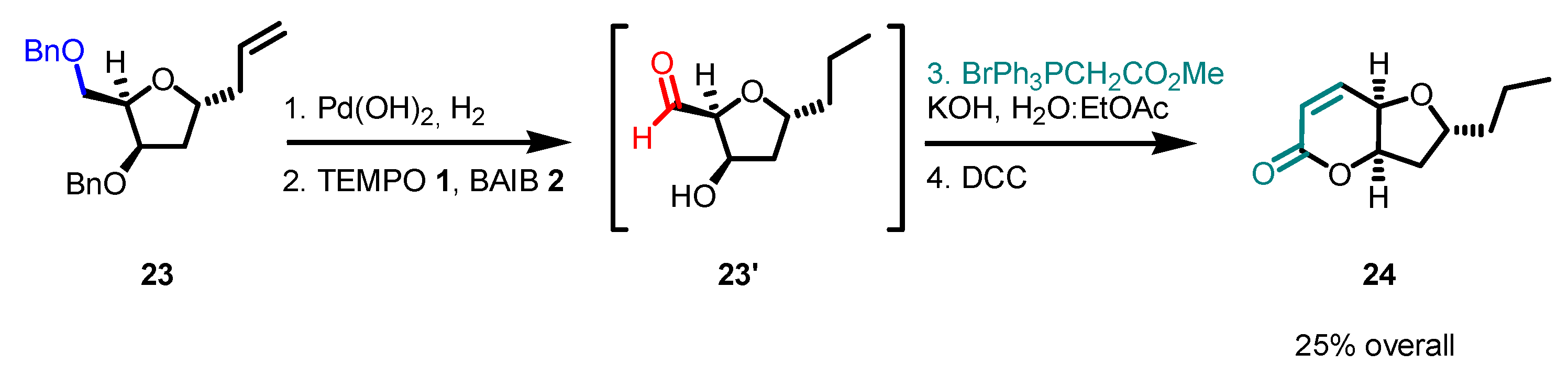
Being a versatile and robust reaction, the Piancatelli-Margarita oxidation can be incorporated in some standard synthetic sequences. One of these is the primary-alcohol oxidation-Wittig reaction. An interesting example is reported by Cordero-Vargas, Sartillo-Piscil, and co-workers in their synthesis of (+)-lasionectrin [29]. Tetrahydrofuran intermediate 23 was first subject to simultaneous double bond reduction and primary alcohol deprotection, and then to the oxidation of the alcoholic function to give intermediate 23’. This compound was then subject to the Wittig-Horner reaction with the resulting methyl (triphenylphosphanylidene)acetate and hydrolysis of the methyl ester, to give, after DCC-mediated intramolecular lactonization, the desired compound 24 in 25% overall yields (Scheme 19).
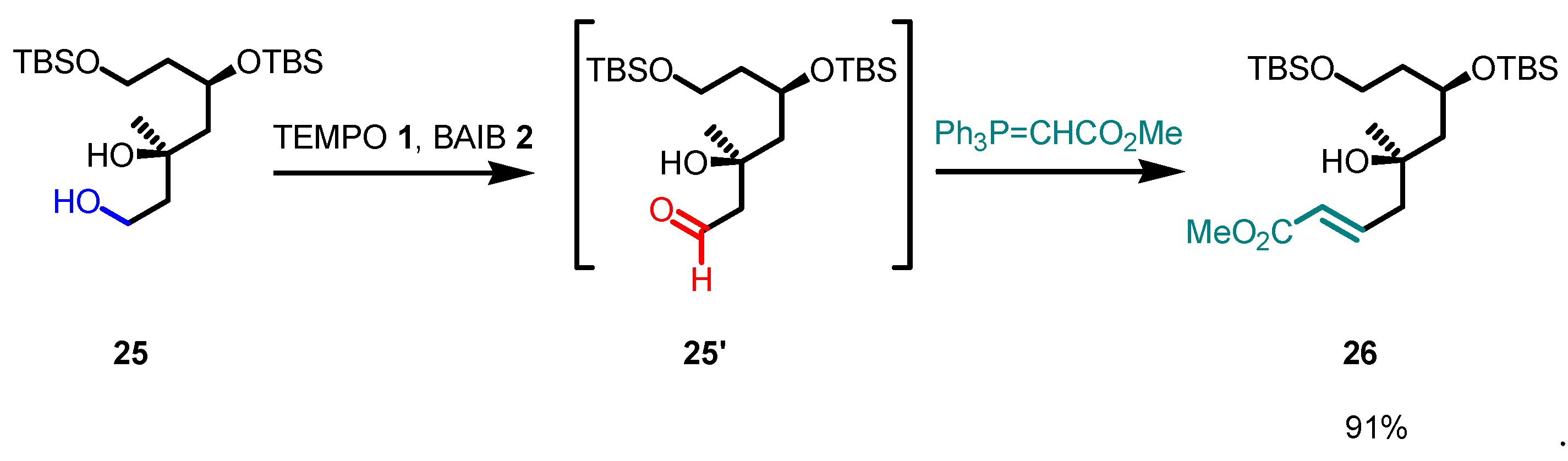
A similar example was reported by Takamura and co-workers during their synthetic approach towards the preparation of scabrolide F [30]. Thus, double-protected intermediate 25 was first oxidized with the standard Piancatelli-Margarita protocol to give aldehyde 25’, and then subjected to Wittig-Horner reaction to give alkene 26 in 91% overall yield (Scheme 20).
It is well-known that esters can be reduced to the corresponding aldehydes using DIBAL-H reduction. However, it can be difficult to dose the exact amount equivalent of the reducing reagent and, since aldehydes are easily reduced with respect to esters, often the result is the formation of a primary alcohol, incomplete reduction of a mixture of compounds. From a practical point of view, it can be more convenient to use a two-step sequence: first total reduction of the ester to primary alcohol and then partial re-oxidation to the aldehyde. Piancatelli-Margarita oxidation can be conveniently and successfully employed in the second step. A recent example can be found in the work of Saito, Shimokawa, and Yorimitsu in their studies of the dioxasilepanyl groups [31]. These authors first reduced ester 27 to the primary alcohol 28¸ and then re-oxidized it to the desired compound 28’ in 85% and 91% yields respectively (77% overall, Scheme 21).
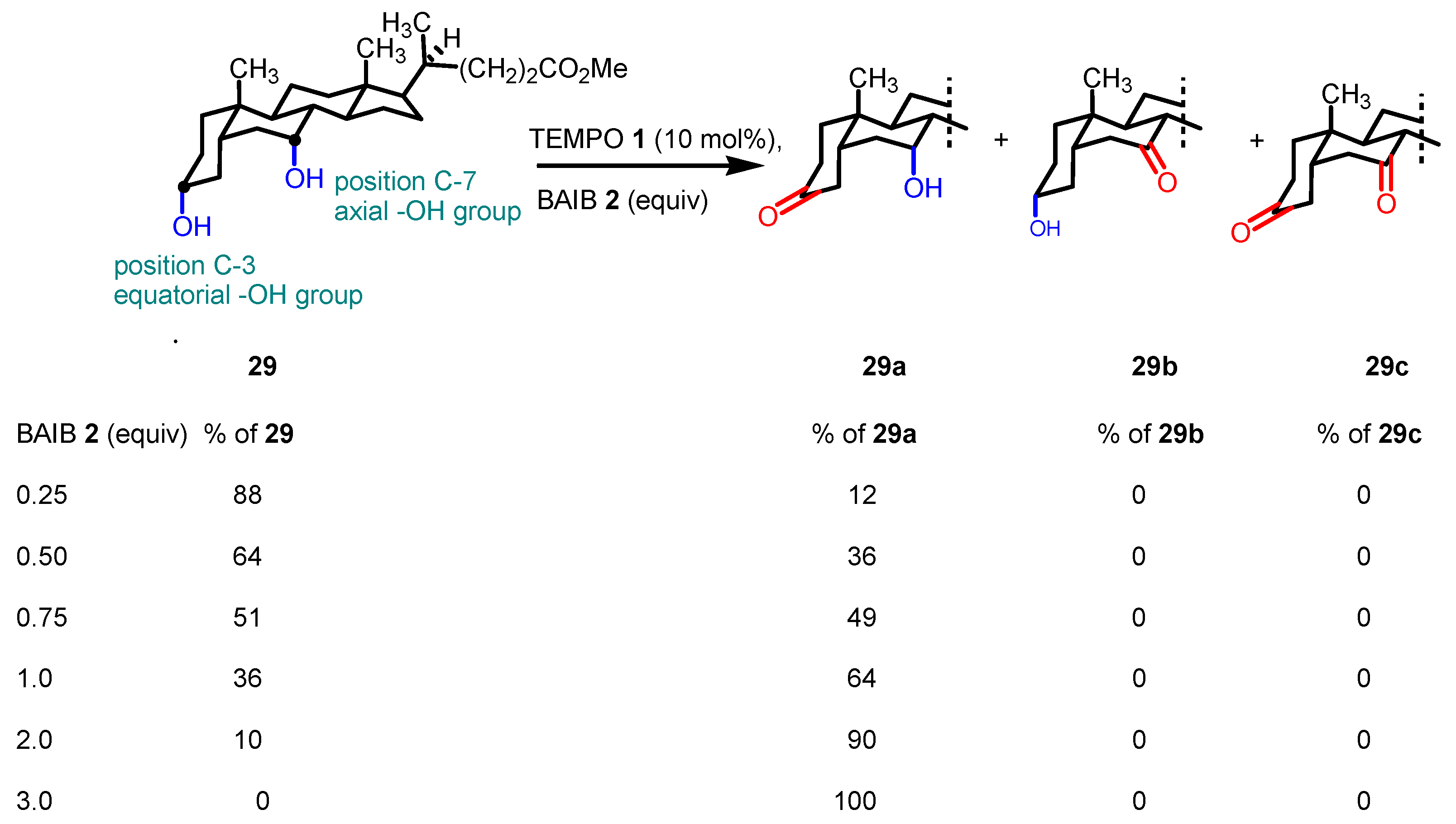
Kaspar and Kudova investigated the selectivity of oxidizing agents towards axial and equatorial hydroxyl groups. Among the several oxidants tested, there was the combination TEMPO 1/BAIB 2. Methyl chenodeoxycholate 29 bears both an axial and an equatorial group in blocked positions. When this compound was reacted with catalytic TEMPO 1 and an increasing amount of BAIB only the formation of axial-oxidized compound 29a was observed; no amount of equatorial-oxidized compound 29b or diketone 29c could be detected [32], see Scheme 22.
This selectivity was reversed with other hypervalent iodine (III) oxidants such as Dess-Martin periodinane 7, confirming that in Piancatelli-Margarita oxidation the oxidizing molecule is the organic aminoxy radical TEMPO 1. The authors hypothesized that this selectivity can arise from the steric hindrance around the C7 hydroxy group, leaving only the C3 hydroxy group accessible (see mechanism in Scheme 23).
The authors also studied the oxidation of cis 4-t-butyl cyclohexanol 30ax, in which, due to the bulky t-butyl group, the hydroxy moiety is conformationally blocked in the axial position and of trans 4-t-butyl cyclohexanol 30eq, where the hydroxy group is instead fixed in the equatorial position, but in this case they found that ketone 30’ was formed consuming in equal amounts cis 4-t-butyl cyclohexanol 30ax and of trans 4-t-butyl cyclohexanol 30eq. They hypothesize that the reason why this reaction is non-selective now is that no significant steric hindrance is present around the axial or equatorial hydroxy group (Scheme 24). Their results are relevant, because they suggest that TEMPO 1 /BAIB 2 combination can be quite sensitive to steric factors.
4. Noteworthy applications of Piancatelli-Margarita oxidation in carbohydrate chemistry: examples from the recent literature.
Oxidation in carbohydrate chemistry is an especially challenging transformation since it operates on polyoxygenated structures which, in the case of polysaccharides, are also acid-sensitive moieties. A first example of the oxidation of a protected sugar moiety was reported in the original paper by Piancatelli and Margarita [1], specifically the oxidation of five-membered sugar 8d to aldehyde 8d’. As seen before, forcing the reaction condition also carboxylic acid moiety can be obtained.
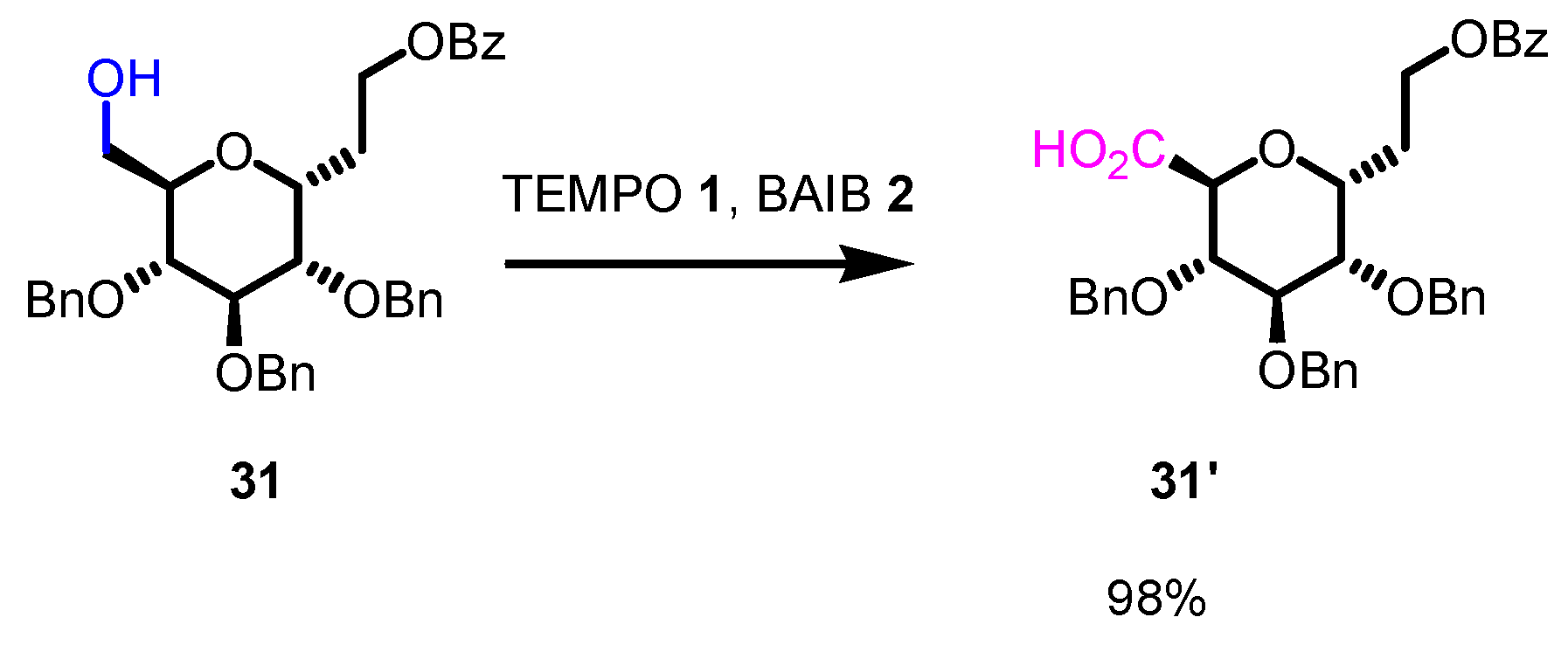
In a recent J. Am. Chem. Soc. paper by Li et al, the authors needed an efficient oxidation protocol for the transformation of the primary alcohol function of protected sugar 31 into carboxylate 31’ [33]. This one of the first reactions towards the synthesis of 6-deoxy-D-/L-heptopyranosyl fluorides and was conducted on 1 g scale (see supporting information of this article) with catalytic TEMPO 1 (0.3 equiv.) and excess BAIB 2(2.5 equiv.) to afford compound 31’ in excellent yields (98%, see Scheme 25).
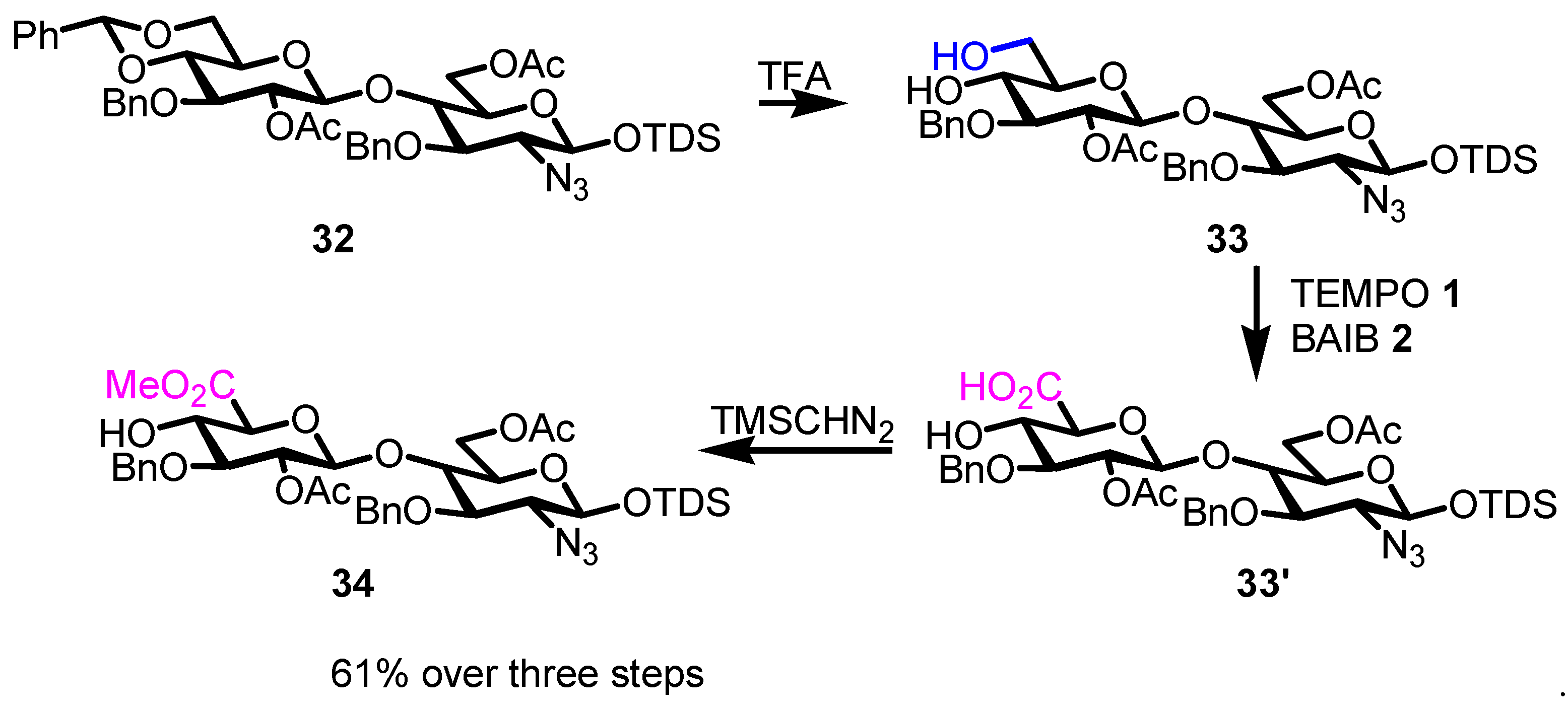
A similar oxidation procedure was incorporated in a three-step sequence, as reported by Boons in 2020, for the preparation of a disaccharide unit for the synthesis of heparan sulfate oligosaccharides [34]. These consecutive reactions were run on 1 g scale and involved first the TFA-mediated selective cleavage of the acetal on disaccharide 32; then, the TEMPO 1-catalyzed/BAIB oxidation of the primary alcohol of intermediate 33 to give carboxylate 33’ in a mixture of DCM, and finally the formation of the methyl ester 34 using trimethyl silyl diazomethane (TMSCHN2). The entire sequence has a satisfying yield of 61%, despite the presence of several functional and protective groups (see Scheme 26).
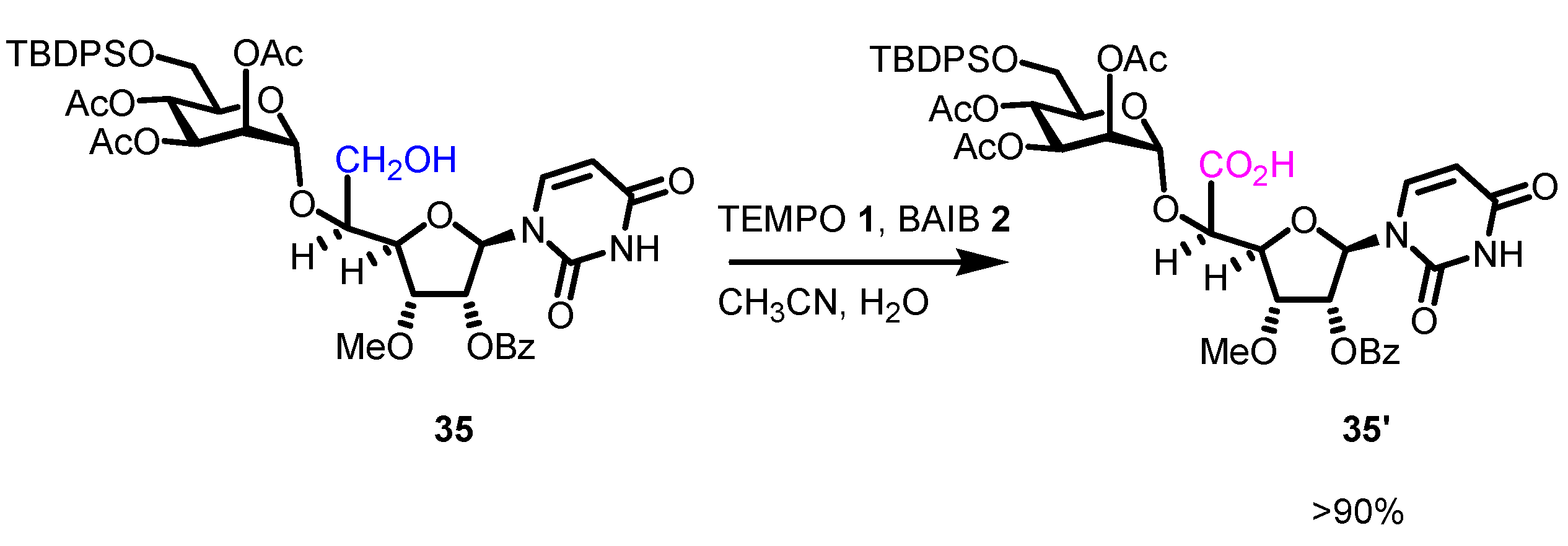
While working towards the total synthesis of the natural substance capuramycin, Xiao and co-workers needed to oxidize the primary alcohol function on compound 35 to a carboxylate moiety [35]. The usual combination of catalytic TEMPO and BAIB in acetonitrile and water proved effective, accessing intermediate 35’ in a gratifying over 90% yield (Scheme 27).
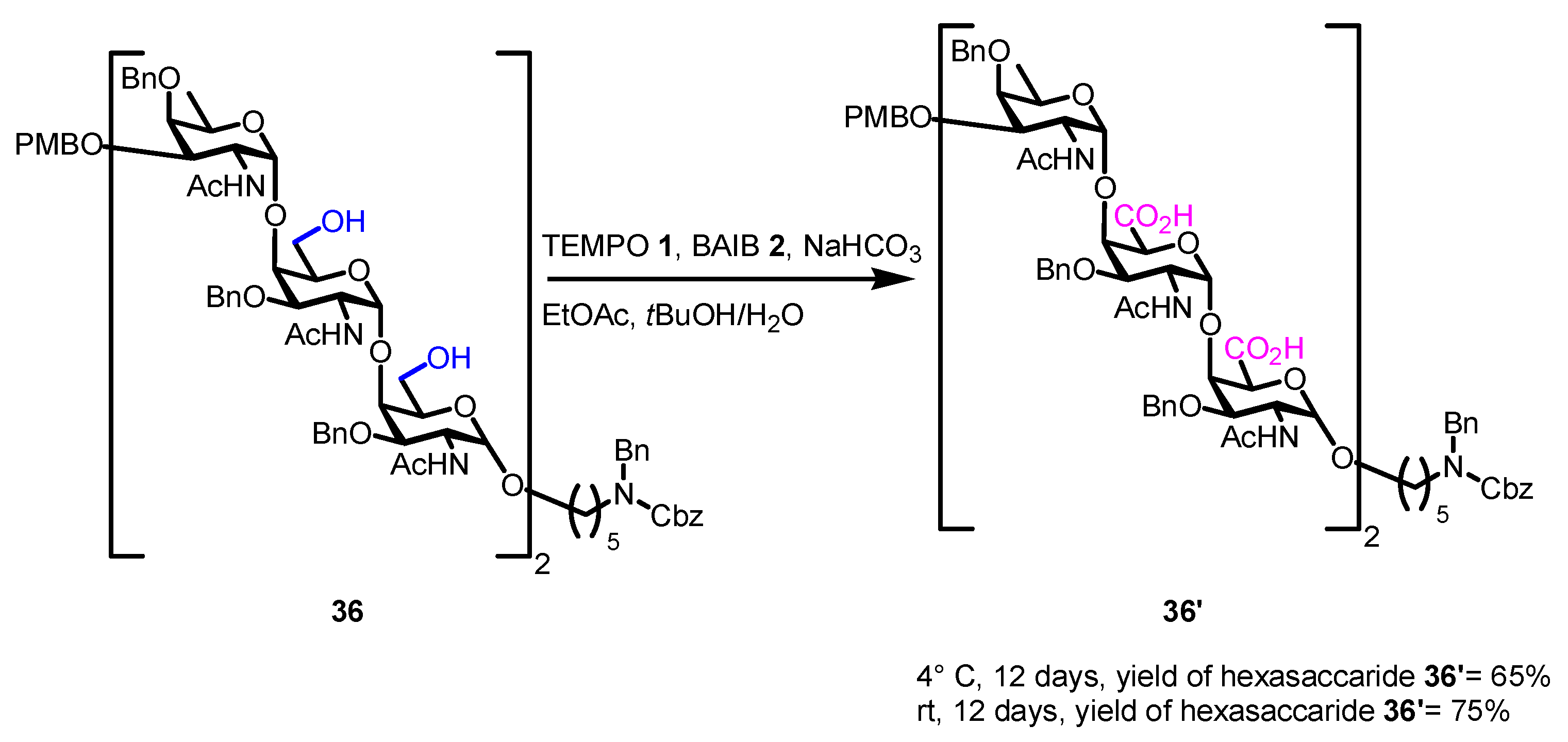
An impressive example of TEMPO 1/BAIB 2 multiple oxidations on complex molecules was reported by the group of Codée while synthesizing a set of Staphylococcus Aureus capsular polysaccharides [36]. These authors needed to oxidize a primary alcohol functional group to a carboxylic moiety. They modified the original protocol, using instead a mixture of ethyl acetate and t-butanol/water with the addition of sodium bicarbonate. They tested their improved condition reaction on some substrates and even on the complex molecule hexasaccharide 36, which also contains an easily oxidizable protective group (PMB= p-methoxybenzyl). As mentioned before, this moiety can normally be cleaved by mild oxidation with DDQ (2,3-dichloro-5,6-dicyano-1.4-benzoquinone). Despite this, hexasaccharide 36’ was obtained in 65% yield after 12 days, and, if the reaction time is shortened to 6 days and the reaction temperature is increased to room temperature, the yield rose to 75% (Scheme 28).
5. Selected examples of Piancatelli-Margarita Oxidation applications in total synthesis: late-stage intermediates and endgame.
The strength, effectiveness, and usefulness of a methodology are ultimately proven by its application in total synthesis. Only a robust methodology can pass this crucial test which involves selectivity (are other functional groups affected?), large- and small-scale tests, and efficacy on a complex molecule. While the reaction on a simple substrate can be incorrectly reported, a low-yielding transformation in a multistep sequence can dramatically drop the global yield, to a level at which no significant amount of the final product can be detected. Therefore, when a reaction is incorporated in one or more complex successful total syntheses, this is the best possible guarantee that it works, at least to some extent.
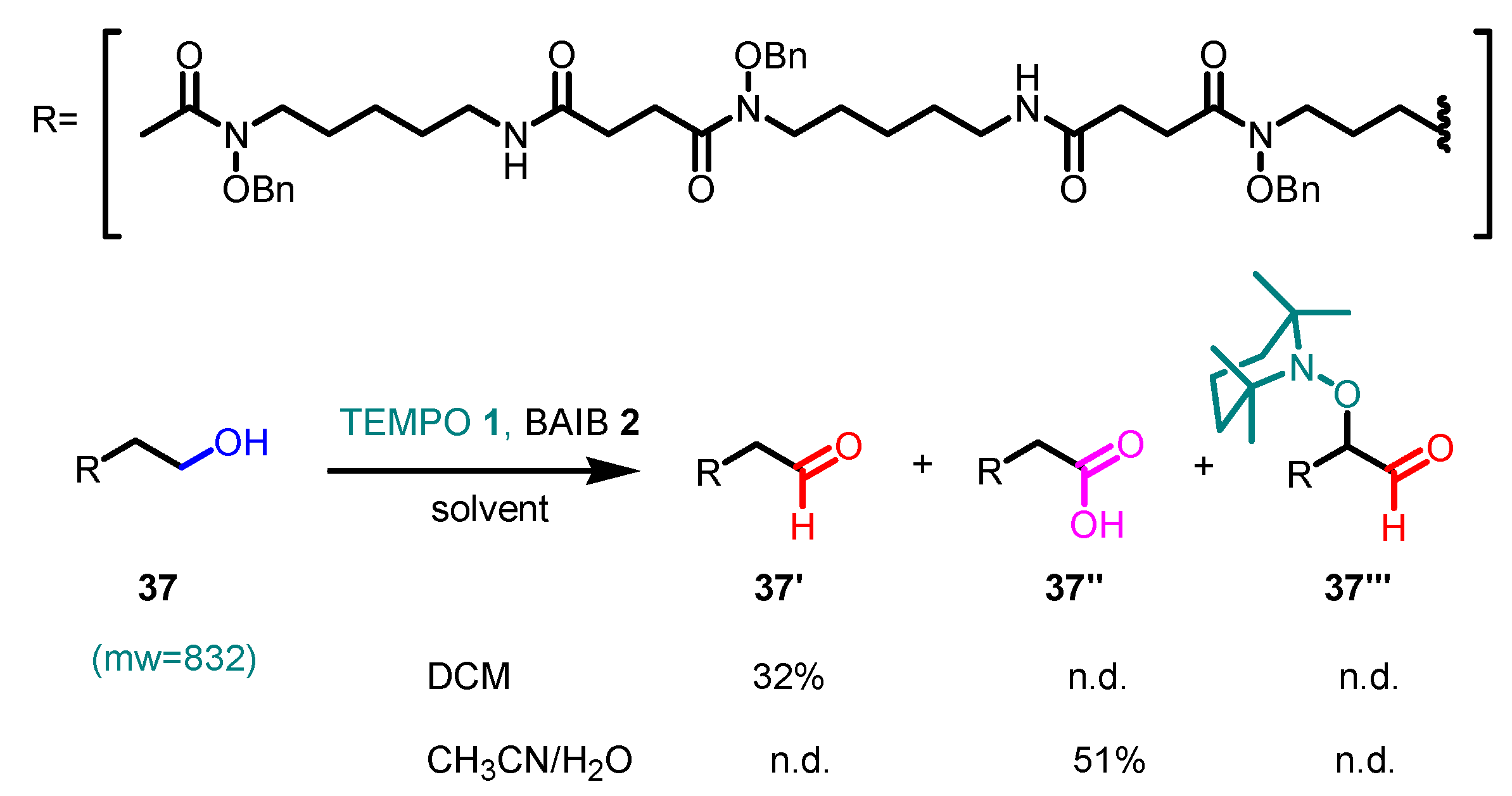
Reactions on molecules with high molecular weight represent a unique challenge. Reactions on similar small molecules can give a similar outcome. As an example, it is expected that an oxidation on a five-carbon primary alcohol would a similar reaction on a six-carbon primary alcohol, but the outcome might change dramatically if the same reaction is then run on a primary alcohol which has twenty carbon atoms or more. Organic molecules with few atoms can have a limited number of possible conformations. The number of conformations increases exponentially with the number of atoms, and therefore the functional group can be “hidden” in a specific conformation. This is especially true with molecules with long chains. Therefore, finding a successful reaction on long-chain molecules is not straightforward. Chambron and co-workers were studying an enantiopure bifunctional chelator for 89Zr-immuno PET. Specifically, they were looking for a tetradentate ligand or zirconium [37]. One of the reactions they needed was the oxidation of primary alcohol 37 whose molecular weight is more than 800 Dalton. Even on this complex molecule, the Piancatelli-Margarita oxidation works well, affording aldehyde 37’ in 32% yields if the usual reaction conditions are used (DCM as the solvent) and carboxylic acid 37’’ in 51% yields if the solvent is changed to an acetonitrile/water mixture. These authors did not detect any of the TEMPO 1-substrate adducts (Scheme 29).
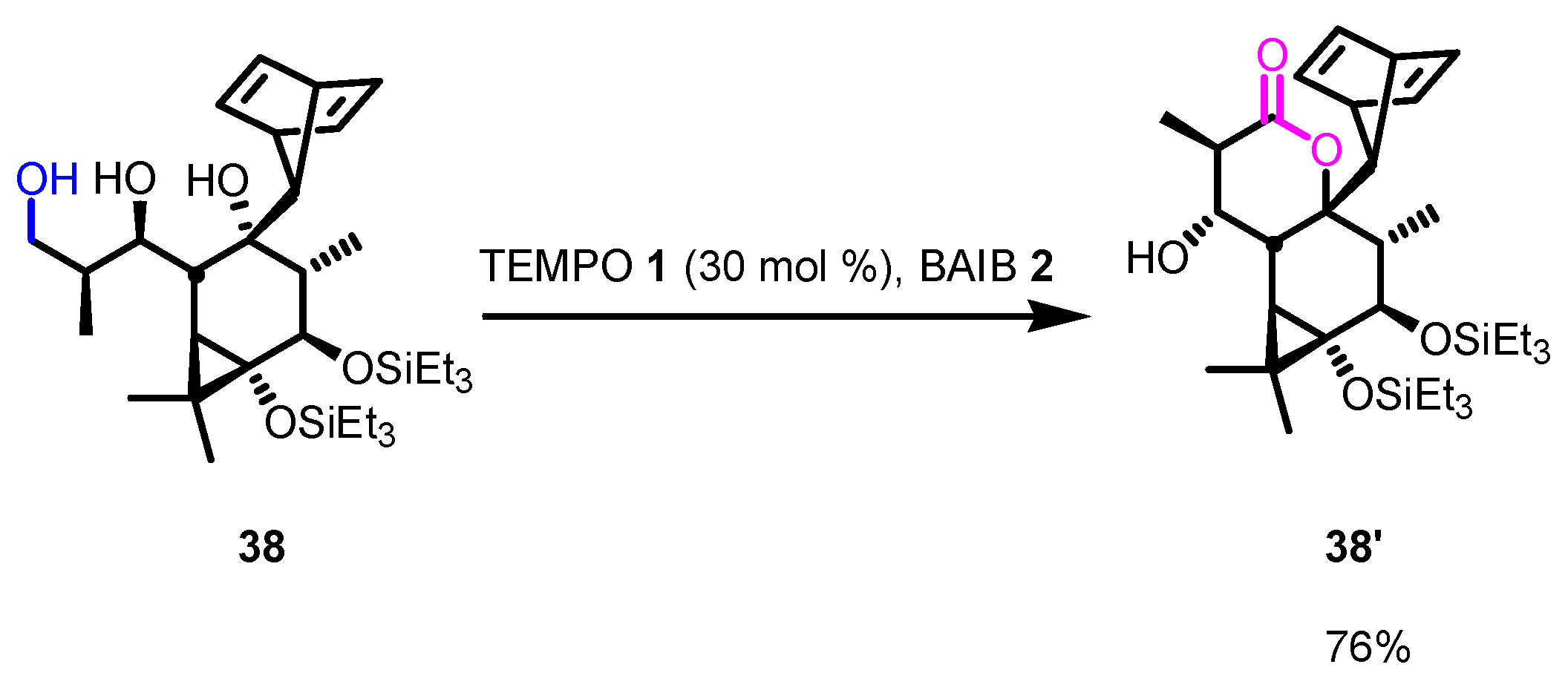
Carreira and Fadel reported in 2023 the first enantioselective total synthesis of (+)-pedrolide, a tigliane-derived diterpenoid, showing an unprecedently reported skeleton. One of their late-stage key transformations was the selective oxidation of the primary alcohol of intermediate 38 to give lactone 38’ in 76% yield using of what they called “Piancatelli’s and Margarita’s TEMPO oxidation protocol [38], see Scheme 30.
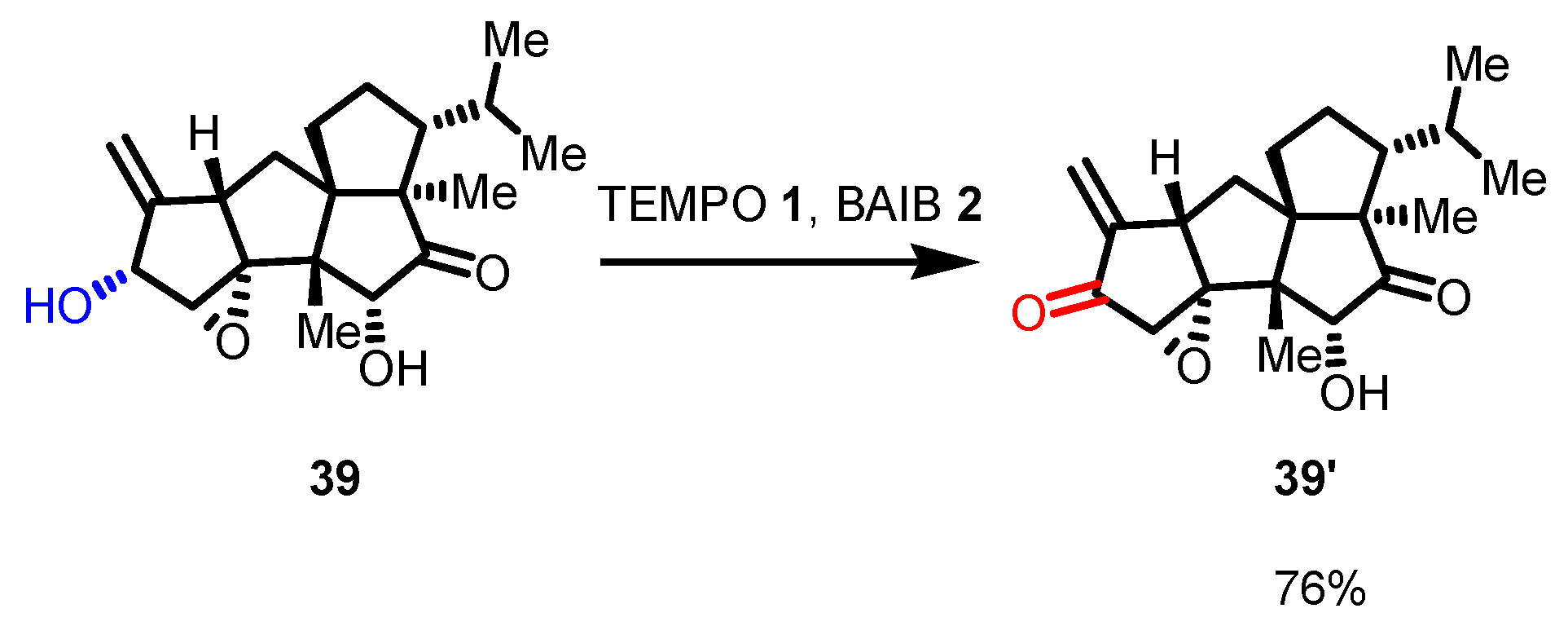
A selectivity between secondary alcohols oxidation has been reported by Hao, Ding, and co-workers in their synthesis of (−)-crinipellins [39]. In this case, the different reactivity of the two secondary hydroxy groups on compound 39 was beacuse the allylic hydroxy group can be easily oxidized. The reaction proceeded in good yields (76%) to give enone 39’ (Scheme 31).
A selective oxidation (primary alcohol vs secondary alcohol) was also needed by Woo and co-workers in their enantioselective synthesis of sangliferin A. These researchers installed a hydroxy group in a stereocontrolled manner on intermediate 40 [40]. The configuration of the C36 stereocenter was correct. Unfortunately, the configuration obtained at the C35 stereocenter was the opposite of the target compound. This was not unexpected, since hydroboration would most likely have occurred on the less hindered Re face of the C35-C36 double bond, because the Si face of compound 42 is hindered by the methyl group in the C34 position. To solve this issue, the authors had to re-oxidize the secondary alcoholic function (and most likely also the primary one) using Dess-Martin periodinane 7 and then operate a selective reduction on compound 43. In this case, both the methyl groups on the C34 and C36 positions direct the attack of the hydride on the less hindered Re face of the ketone on the C35 position of compound 43. Finally, the primary alcoholic function was oxidized with the standard Piancatelli-Margarita conditions to give aldehyde 43’ in 24% overall yield over four steps (Scheme 32).
Although protective groups introduction and removal is often (but not always) high-yielding and straightforward, the addition of these two steps in a long total synthesis is better avoided, considering also the possible loss of precious material in the purification procedures. It is then more desirable to find instead a chemoselective reaction, rather than rely on protective groups.
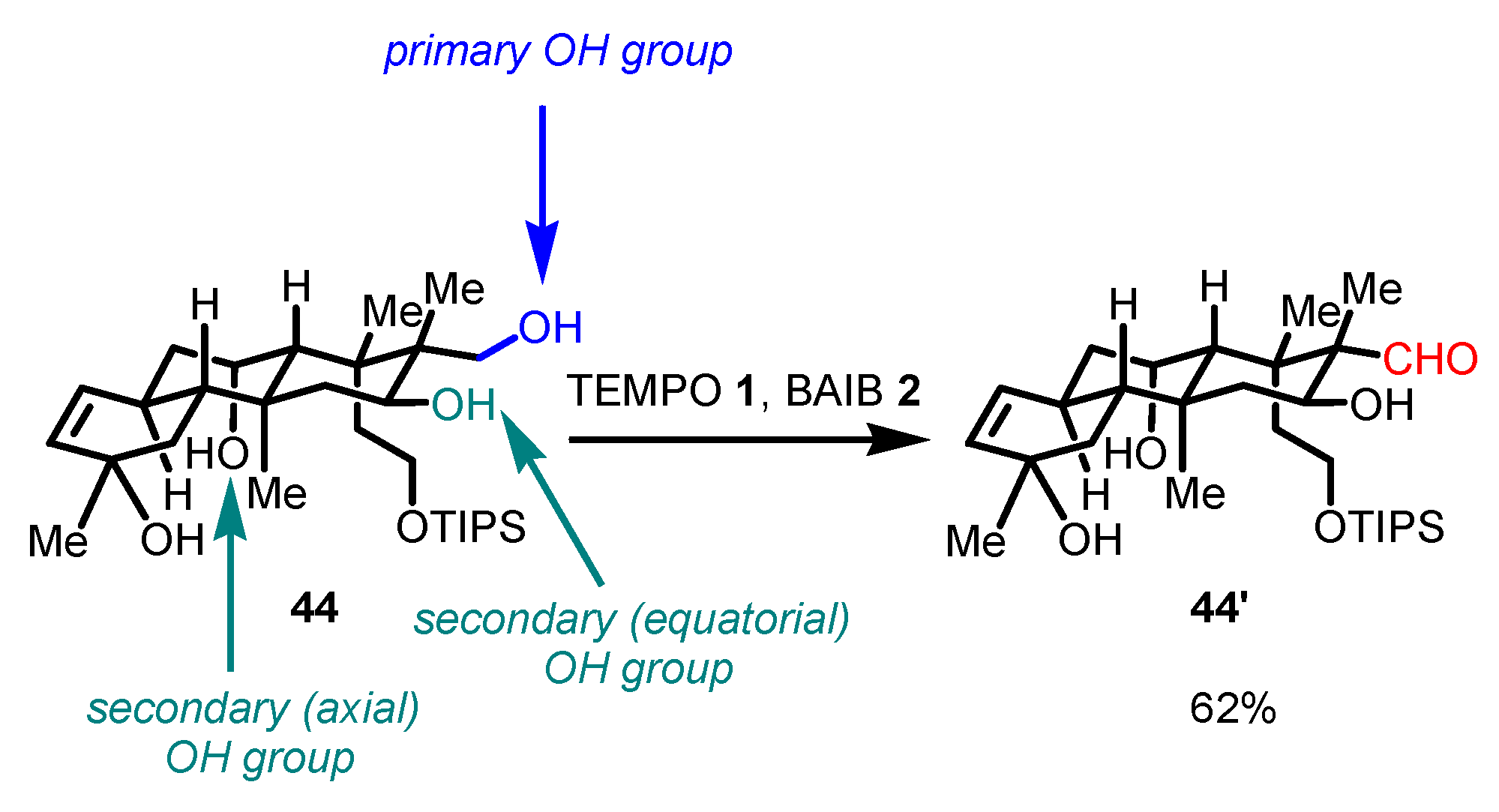
The issue of selective oxidation of a primary alcohol group in the presence of a secondary alcohol functionality was encountered by Gao and co-workers in a late synthetic step of their sequence during their efforts towards the synthesis of norzoanthamine [41]. The problem was solved by employing the selective Piancatelli-Margarita oxidation. In this case, intermediate 44 had three different hydroxy groups: one primary hydroxy group and two secondary alcoholic groups, an axial and an equatorial one. Using the Piancatelli-Margarita reaction, it was possible to oxidize only the primary alcohol group to give aldehyde 44’ in 62% yield (Scheme 33).
Another impressive example of selective primary hydroxy group oxidation in the presence of a secondary one at an advanced synthetic step was reported by Paterson and co-workers in their approach towards the synthesis of actinoallolides [42, 43]. Thus, the selective oxidation of alcohol 45 gave aldehyde 45’ in excellent yield (90%, see Scheme 34).
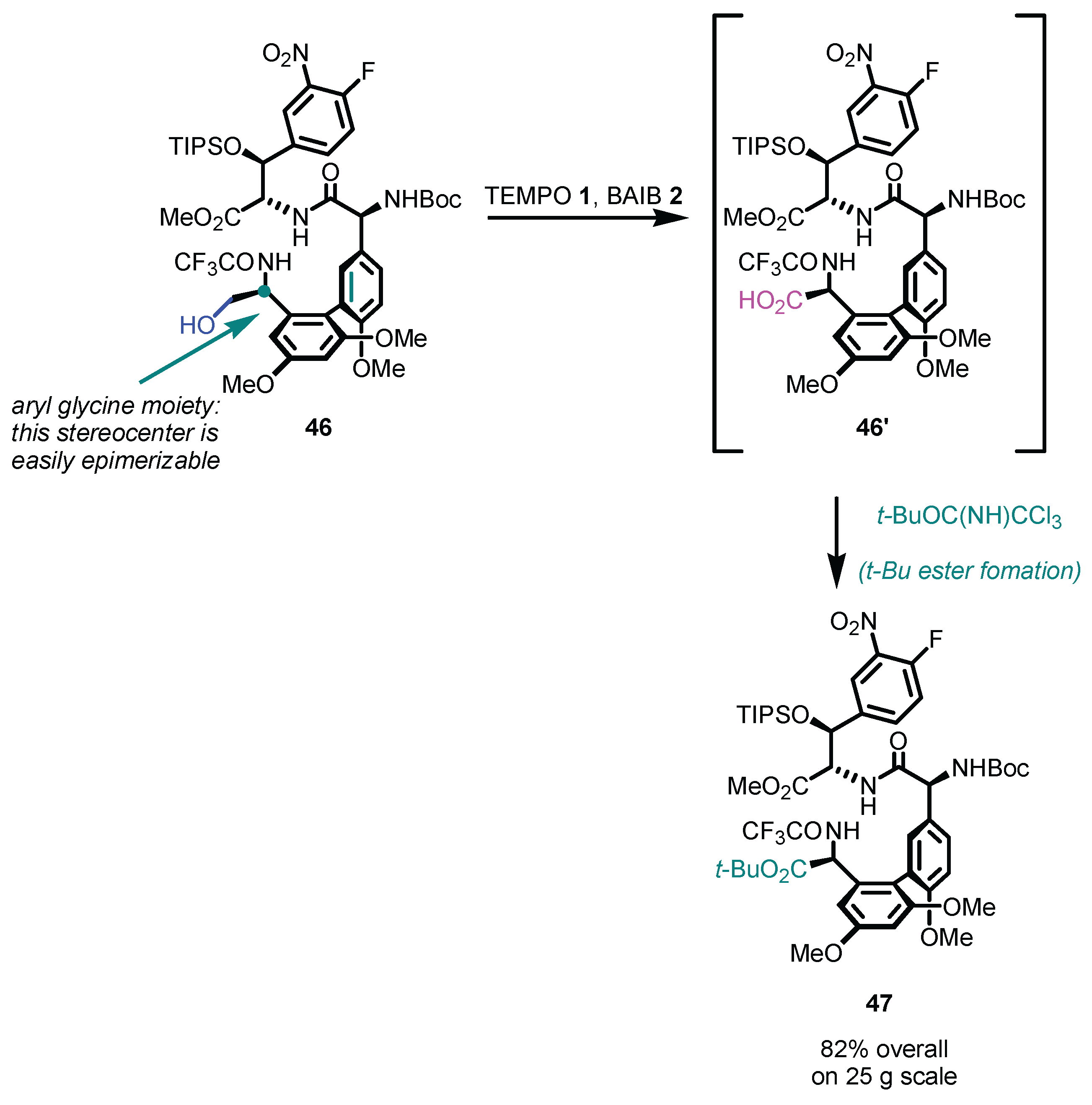
As the last example, I will present an important example of the work of Boger and co-workers in their synthesis of vancomycin and its analogue tetrachlorovancomycin [44,45], because it summarizes all the aspects we have encountered in this review (mild condition, selectivity, applicability in telescopic reactions applicability on large scale and on complex molecules). A late intermediate in the synthesis of vancomycin (compound 46) was subject to oxidation to carboxylic acid 46’ on an impressive 25-gram scale. A t-butyl ester was then formed by using t-butyl 2,2,2-trichloroacetimidate in an excellent 82 overall yield (Scheme 35).
6. Conclusions
I hope that the examples reported can help the chemists to understand the usefulness as well as the limitations of the Piancatelli-Margarita oxidation. To the best of my knowledge, despite the reported protocol having been widely used in the years, the term “Piancatelli-Margarita oxidation” is still not yet of common use, despite having sometimes been employed in the scientific literature, as examples by Kudova [32] and Carreira [38]. I believe that it would be correct to call this reaction Piancatelli-Margarita oxidation, to give recognition to these two outstanding scientists, and most of all, it would help the scientific community to better know a very useful chemical reaction, which should be an indispensable tool in any organic chemist’s toolbox.
Funding
This research received no external funding
Acknowledgments
This manuscript is dedicated to the memory of Professor Giovanni (“Gianni) Piancatelli, who passed away in June 2025, and to the memory of his student Dr. Roberto Margarita, as well as to the family of Giovanni (his beloved wife Luciana, along with Marco and Emanuele) and the family of Roberto (his wife Claudia, along with Ratan and Maria Sole). I want to believe that now that Gianni has come somewhere up there to meet Roberto and the two of them are discussing some interesting new reactions. If I could still speak to them, I would acknowledge and thank Gianni and Roberto for all they taught me.
Conflicts of Interest
The author declares no conflicts of interest.
Abbreviations
The following abbreviations are used in this manuscript:
| TEMPO | (2,2,6,6-tetramethylpiperidin-1-yl)oxyl |
| BAIB | bis(acetoxy)iodobenzene |
References
- De Mico, A.; Margarita, R.; Parlanti, L.; Vescovi, A.; Piancatelli, G. A Versatile and Highly Selective Hypervalent Iodine (III)/2,2,6,6-Tetramethyl-1-Piperidinyloxyl-Mediated Oxidation of Alcohols to Carbonyl Compounds. J. Org. Chem. 1997, 62, 6974–6977. [Google Scholar] [CrossRef]
- Piancatelli, G.; Scettri, A.; Barbadoro, S. A useful preparation of 4-substituted 5-hydroxy-3-oxocyclopentene. Tetrahedron Lett. 1976, 39, 3555–3558. [Google Scholar] [CrossRef]
- Piancatelli, G.; Leonelli, F. Oxidation of nerol to neral with iodobenzene and TEMPO. Org. Synth. 2006, 83, 18–23. [Google Scholar] [CrossRef]
- Leonelli, F.; Margarita, R.; Piancatelli, G. ; Discussion addendum for: oxidation of Nerol to Neral with iodosobenzene and TEMPO. Org. Synth. 2012, 89, 311–322. [Google Scholar] [CrossRef]
- Montanari, F.; Quici, S.; Henry-Riyad, H.; Tidwell, T. T. 2,2,6,6-Tetramethylpiperidin-1-oxyl. In Encyclopedia of Reagents for Organic Synthesis, John Wiley & Sons, 2005. https; ISBN 0471936235. [CrossRef]
- Anelli, P. L.; Biffi, C.; Montanari, F.; Quici, S. Fast and selective oxidation of primary alcohols to aldehydes or to carboxylic acids and of secondary alcohols to ketones mediated by oxoammonium salts under two-phase conditions, J. Org. Chem. 1987, 52, 2559–2562. [Google Scholar] [CrossRef]
- Ciriminna, R.; Pagliaro, M. Industrial Oxidations with Organocatalyst TEMPO and Its Derivatives. Org. Process Res. Dev. 2010, 14, 245–251. [Google Scholar] [CrossRef]
- https://www.sigmaaldrich.com/. Available online: https://www.sigmaaldrich.com/US/en/substance/tempo156252564832 (accessed on 12 July 2025).
- Moriarty R., M.; Chany, C. J.; Kosmeder, J. W.; Du Bois, J. Diacetoxyiodo)benzene. In Encyclopedia of Reagents for Organic Synthesis, John Wiley & Sons, 2001. ISBN 9780470842898. [CrossRef]
- Frigerio, M.; Santagostino, M.; Sputore, S. A User-Friendly Entry to 2-Iodoxybenzoic Acid (IBX). J. Org. Chem. 1999, 64, 4537–4538. [Google Scholar] [CrossRef]
- Boeckman, R. J.; George, K. M. 1,1,1-Triacetoxy-1,1-dihydro-1,2-benziodoxol-3(1H)-one. In Encyclopedia of Reagents for Organic Synthesis, 2009. ISBN 978-0471936237. [CrossRef]
- https://www.sigmaaldrich.com/. Available online: https://www.sigmaaldrich.com/US/en/search/ibx?focus=products&page=1&perpage=30&sort=relevance&term=ibx&type=product (accessed on 12 07 2025).
- https://www.sigmaaldrich.com/. Available online: https://www.sigmaaldrich.com/US/en/search/dess-martin-periodinane?focus=products&page=1&perpage=30&sort=relevance&term=Dess-Martin%20periodinane&type=product (accessed on 12 July 2025).
- https://www.sigmaaldrich.com/. Available online: https://www.sigmaaldrich.com/US/en/sds/aldrich/178721?userType=anonymous (accessed on 12 July 2025).
- https://www.sigmaaldrich.com/. Available online: https://www.sigmaaldrich.com/US/en/search/baib?focus=products&page=1&perpage=30&sort=relevance&term=BAIB&type=product (accessed on 12 July 2025).
- Zelch, D.; Russo, C. M.; Ruud, K. J.; O’Reilly, M. C. A General and Scalable Method toward Enantioenriched C2-Substituted Azetidines Using Chiral Tert-Butanesulfinamides. J. Org. Chem. 2024, 89, 15137–15144. [Google Scholar] [CrossRef] [PubMed]
- Lee, M.; Wu, J.-P.; Lee, J.; Wang, J.; White, J. A. H.; Rugg, K. W.; Sienkiewicz, A.; Lorenz, J. C.; Greb, P.; Bunner, M. H.; Hirsh, D. A.; Gonnella, N. C.; Nordstrom, F. L.; Kofink, C.; Weinstabl, H.; Reeves, J. T. A Chiral Pool Strategy for the Synthesis of a SMARCA2 Degrading PROTAC. Org. Process Res. Dev. 2024, 28, 1239–1252. [Google Scholar] [CrossRef]
- Rhoades, D.; Rheingold, A. L.; O’Malley, B. W.; Wang, J. Expedient Total Syntheses of Pladienolide-Derived Spliceosome Modulators. J. Am. Chem. Soc. 2021, 143, 4915–4920. [Google Scholar] [CrossRef] [PubMed]
- Chourreu, P.; Guerret, O.; Guillonneau, L.; Gayon, E.; Lefèvre, G. Short and Easily Scalable Synthesis of the Sex Pheromone of the Horse-Chestnut Leaf Miner (Cameraria Ohridella) Relying on a Key Ligand- and Additive-Free Iron-Catalyzed Cross-Coupling. Org. Process Res. Dev. 2020, 24, 1335–1340. [Google Scholar] [CrossRef]
- Kaden, F.; Nowotni, S.; Höfner, F.; Lorenz, M.; Barthel, A.; Jäger, A.; Hennersdorf, F.; Weigand, J. J.; Metz, P. Asymmetric Total Synthesis of (−)-Dehydrocostus Lactone by Domino Metathesis. Eur J Org Chem 2021, 2021, 3579–3586. [Google Scholar] [CrossRef]
- Ghosh, A. K.; Hsu, C.-S. Enantioselective Total Synthesis of (+)-EBC-23, a Potent Anticancer Agent from the Australian Rainforest. J. Org. Chem. 2021, 86, 6351–6360. [Google Scholar] [CrossRef] [PubMed]
- Movahhed, S.; Westphal, J.; Kempa, A.; Schumacher, C. E.; Sperlich, J.; Neudörfl, J.; Teusch, N.; Hochgürtel, M.; Schmalz, H. Total Synthesis of (+)-Erogorgiaene and the Pseudopterosin A−F Aglycone via Enantioselective Cobalt-Catalyzed Hydrovinylation. Chemistry A European J 2021, 27, 11574–11579. [Google Scholar] [CrossRef] [PubMed]
- Vece, V.; Jakkepally, S.; Hanessian, S. Total Synthesis and Absolute Stereochemical Assignment of the Insecticidal Metabolites Yaequinolones J1 and J2. Org. Lett. 2018, 20, 4277–4280. [Google Scholar] [CrossRef] [PubMed]
- Kobayakawa, T.; Azuma, C.; Watanabe, Y.; Sawamura, S.; Taniguchi, A.; Hayashi, Y.; Tsuji, K.; Tamamura, H. Development of Methods for Convergent Synthesis of Chloroalkene Dipeptide Isosteres and Its Application. J. Org. Chem. 2021, 86, 5091–5101. [Google Scholar] [CrossRef] [PubMed]
- Perea, M. A.; Wang, B.; Wyler, B. C.; Ham, J. S.; O’Connor, N. R.; Nagasawa, S.; Kimura, Y.; Manske, C.; Scherübl, M.; Nguyen, J. M.; Sarpong, R. General Synthetic Approach to Diverse Taxane Cores. J. Am. Chem. Soc. 2022, 144, 21398–21407. [Google Scholar] [CrossRef] [PubMed]
- Jeanneret, R. A.; Dalton, C. E.; Gardiner, J. M. Synthesis of Heparan Sulfate- and Dermatan Sulfate-Related Oligosaccharides via Iterative Chemoselective Glycosylation Exploiting Conformationally Disarmed [2.2.2] l-Iduronic Lactone Thioglycosides. J. Org. Chem. 2019, 84, 15063–15078. [Google Scholar] [CrossRef] [PubMed]
- Lusi, R. F.; Sennari, G.; Sarpong, R. Strategy Evolution in a Skeletal Remodeling and C–H Functionalization-Based Synthesis of the Longiborneol Sesquiterpenoids. J. Am. Chem. Soc. 2022, 144, 17277–17294. [Google Scholar] [CrossRef] [PubMed]
- Li, L.; Li, P.; Li, T.; Zhang, M.; Liu, W.; Li, J.; Wang, L.; Chen, Y. Synthesis of the ABC Ring System of Kadlongilactones. Org. Biomol. Chem. 2023, 21, 1704–1708. [Google Scholar] [CrossRef] [PubMed]
- López-Mendoza, P.; Porras-Santos, L. F.; Pérez-Bautista, J. A.; Quintero, L.; Bautista-Nava, J.; León-Rayo, D. F.; Cordero-Vargas, A.; Sartillo-Piscil, F. En Route to Furan-Fused Naphthopyrones: Formal Synthesis of the (+)-Lasionectrin and Its C12-Epimer. J. Org. Chem. 2023, 88, 17409–17419. [Google Scholar] [CrossRef] [PubMed]
- Takamura, H.; Sugitani, Y.; Morishita, R.; Yorisue, T.; Kadota, I. Total Synthesis and Structure–Antifouling Activity Relationship of Scabrolide F. Org. Biomol. Chem. 2024, 22, 5739–5747. [Google Scholar] [CrossRef] [PubMed]
- Saito, H.; Shimokawa, J.; Yorimitsu, H. The Dioxasilepanyl Group as a Versatile Organometallic Unit: Studies on Stability, Reactivity, and Utility. Chem. Sci. 2021, 12, 9546–9555. [Google Scholar] [CrossRef] [PubMed]
- Kaspar, M.; Kudova, E. Selectivity of Oxidizing Agents toward Axial and Equatorial Hydroxyl Groups. J. Org. Chem. 2022, 87, 9157–9170. [Google Scholar] [CrossRef] [PubMed]
- Li, T.; Wang, J.; Zhu, X.; Zhou, X.; Sun, S.; Wang, P.; Cao, H.; Yu, G.; Li, M. Synthesis of Rare 6-Deoxy-d-/l-Heptopyranosyl Fluorides: Assembly of a Hexasaccharide Corresponding to Campylobacter Jejuni Strain CG8486 Capsular Polysaccharide. J. Am. Chem. Soc. 2021, 143, 11171–11179. [Google Scholar] [CrossRef] [PubMed]
- Sun, L.; Chopra, P.; Boons, G.-J. Modular Synthesis of Heparan Sulfate Oligosaccharides Having N-Acetyl and N-Sulfate Moieties. J. Org. Chem. 2020, 85, 16082–16098. [Google Scholar] [CrossRef] [PubMed]
- He, H.; Xu, L.; Sun, R.; Zhang, Y.; Huang, Y.; Chen, Z.; Li, P.; Yang, R.; Xiao, G. An Orthogonal and Reactivity-Based One-Pot Glycosylation Strategy for Both Glycan and Nucleoside Synthesis: Access to TMG-Chitotriomycin, Lipochitooligosaccharides and Capuramycin. Chem. Sci. 2021, 12, 5143–5151. [Google Scholar] [CrossRef] [PubMed]
- Østerlid, K. E.; Cergano, R.; Overkleeft, H. S.; Van Der Marel, G. A.; Codée, J. D. C. Synthesis of a Set of Staphylococcus Aureus Capsular Polysaccharide Type 1 Oligosaccharides Carrying Taurine Esters. Chemistry A European J 2025, 31. [Google Scholar] [CrossRef] [PubMed]
- Zujew, L.; Raibaut, L.; Chambron, J. From Desferrioxamine B Umpolung to an Enantiopure Bifunctional Chelator for 89Zr-immunoPET. Chemistry A European J 2025, 31. [Google Scholar] [CrossRef] [PubMed]
- Fadel, M.; Carreira, E. M. Enantioselective Total Synthesis of (+)-Pedrolide. J. Am. Chem. Soc. 2023, 145, 8332–8337. [Google Scholar] [CrossRef] [PubMed]
- Zhao, Y.; Hu, J.; Chen, R.; Xiong, F.; Xie, H.; Ding, H. Divergent Total Syntheses of (−)-Crinipellins Facilitated by a HAT-Initiated Dowd–Beckwith Rearrangement. J. Am. Chem. Soc. 2022, 144, 2495–2500. [Google Scholar] [CrossRef] [PubMed]
- Chang, C.; Flaxman, H. A.; Woo, C. M. Enantioselective Synthesis and Biological Evaluation of Sanglifehrin A and B and Analogs. Angew Chem Int Ed 2021, 60, 17045–17052. [Google Scholar] [CrossRef] [PubMed]
- Xin, Z.; Wang, H.; He, H.; Zhao, X.; Gao, S. Asymmetric Total Synthesis of Norzoanthamine. Angew Chem Int Ed 2021, 60, 12807–12812. [Google Scholar] [CrossRef] [PubMed]
- Anketell, M. J.; Sharrock, T. M.; Paterson, I. Total Synthesis of the Actinoallolides and a Designed Photoaffinity Probe for Target Identification. Org. Biomol. Chem. 2020, 18, 8109–8118. [Google Scholar] [CrossRef] [PubMed]
- Anketell, M. J.; Sharrock, T. M.; Paterson, I. A Unified Total Synthesis of the Actinoallolides, a Family of Potent Anti-Trypanosomal Macrolides. Angew Chem Int Ed 2020, 59, 1572–1576. [Google Scholar] [CrossRef] [PubMed]
- Moore, M. J.; Qu, S.; Tan, C.; Cai, Y.; Mogi, Y.; Jamin Keith, D.; Boger, D. L. Next-Generation Total Synthesis of Vancomycin. J. Am. Chem. Soc. 2020, 142, 16039–16050. [Google Scholar] [CrossRef] [PubMed]
- Moore, M. J.; Qin, P.; Yamasaki, N.; Zeng, X.; Keith, D. J.; Jung, S.; Fukazawa, T.; Graham-O’Regan, K.; Wu, Z.-C.; Chatterjee, S.; Boger, D. L. Tetrachlorovancomycin: Total Synthesis of a Designed Glycopeptide Antibiotic of Reduced Synthetic Complexity. J. Am. Chem. Soc. 2023, 145, 21132–21141. [Google Scholar] [CrossRef] [PubMed]
Scheme 1.
The Piancatelli-Margarita Oxidation reaction [1]. .
Scheme 1.
The Piancatelli-Margarita Oxidation reaction [1]. .
Scheme 2.
Structure of TEMPO 1, BAIB 2 and of some hypervalent iodine (III) compounds. .
Scheme 4.
Selectivity in the Piancatelli-Margarita oxidation.
Scheme 6.
Piancatelli-Margarita oxidation of a small molecule (chloro-alcohol 9) to afford in good yield the unstable aldehyde 9’.
Scheme 6.
Piancatelli-Margarita oxidation of a small molecule (chloro-alcohol 9) to afford in good yield the unstable aldehyde 9’.
Scheme 7.
Large-scale Piancatelli-Margarita reaction of an amine bearing a thiazole unit. (Boc= t-butyloxycarbonyl-).
Scheme 7.
Large-scale Piancatelli-Margarita reaction of an amine bearing a thiazole unit. (Boc= t-butyloxycarbonyl-).
Scheme 8.
Chemoselective oxidation of the primary alcoholic function of epoxide 11 in the presence of an unprotected secondary alcohol group.
Scheme 8.
Chemoselective oxidation of the primary alcoholic function of epoxide 11 in the presence of an unprotected secondary alcohol group.
Scheme 9.
Large-scale oxidation of alcohol 12 to aldehyde 12’.
Scheme 10.
Oxidation of primary alcohol 13 in the presence of an alkyne functional group. (TMS= trimethylsilyl-).
Scheme 10.
Oxidation of primary alcohol 13 in the presence of an alkyne functional group. (TMS= trimethylsilyl-).
Scheme 11.
Oxidation of the alcoholic functionality of compound 14 without affecting the PMB (p-methoxybenzyl-) protective group.
Scheme 11.
Oxidation of the alcoholic functionality of compound 14 without affecting the PMB (p-methoxybenzyl-) protective group.
Scheme 12.
Chemoselective oxidation of the alcohol function of compound 15 despite the presence of an electron-rich aryl moiety.
Scheme 12.
Chemoselective oxidation of the alcohol function of compound 15 despite the presence of an electron-rich aryl moiety.

Scheme 13.
Oxidation of the primary alcohol in compound 16, emiaminal 16’ formation, and its oxidation to afford lactam 16’’. (Boc= t-butyloxycarbonyl-).
Scheme 13.
Oxidation of the primary alcohol in compound 16, emiaminal 16’ formation, and its oxidation to afford lactam 16’’. (Boc= t-butyloxycarbonyl-).
Scheme 14.
Oxidation of the primary alcohol in compound 17 without affecting the chloro-substituted double bond. (Fmoc= fluorenylmethyloxycarbonyl-).
Scheme 14.
Oxidation of the primary alcohol in compound 17 without affecting the chloro-substituted double bond. (Fmoc= fluorenylmethyloxycarbonyl-).
Scheme 15.
Selective oxidation of alcohol 18 to aldehyde 18’ in the presence of a secondary alcohol group and a double bond. (Tf= trifluoromethansulfonyl-; TBS= t-butyldimethylsilyl-).
Scheme 15.
Selective oxidation of alcohol 18 to aldehyde 18’ in the presence of a secondary alcohol group and a double bond. (Tf= trifluoromethansulfonyl-; TBS= t-butyldimethylsilyl-).
Scheme 16.
Chemoselective oxidation and lactonization of compound 19 without affecting the phenylthiol functional group.
Scheme 16.
Chemoselective oxidation and lactonization of compound 19 without affecting the phenylthiol functional group.

Scheme 17.
Oxidation of the alcoholic functionality of 20 with excess BAIB 2 or in the presence of acetic acid.
Scheme 17.
Oxidation of the alcoholic functionality of 20 with excess BAIB 2 or in the presence of acetic acid.
Scheme 18.
Oxidation and lactonization on the mixture of compounds 22a-b.
Scheme 19.
Tandem double bond reduction, alcohol oxidation, Wittig reaction, and DCC- (dicicyclohexyl carbodiimide) mediated lactonization on compound 23.
Scheme 19.
Tandem double bond reduction, alcohol oxidation, Wittig reaction, and DCC- (dicicyclohexyl carbodiimide) mediated lactonization on compound 23.
Scheme 20.
Tandem oxidation and Wittig reaction on compound 25. (TBS= t-butyldimethylsilyl-).
Scheme 21.
Two-step preparation of aldehyde 28’ from ester 27, via initial reduction to alcohol 28 and oxidation.
Scheme 21.
Two-step preparation of aldehyde 28’ from ester 27, via initial reduction to alcohol 28 and oxidation.

Scheme 22.
Axial-equatorial selectivity in Piancatelli-Margarita oxidation.
Scheme 23.
Possible explanation of the axial-equatorial selectivity in Piancatelli-Margarita oxidation.
Scheme 23.
Possible explanation of the axial-equatorial selectivity in Piancatelli-Margarita oxidation.
Scheme 24.
Nonselective axial-equatorial selectivity in compounds 30.

Scheme 25.
Oxidation of the primary alcohol of sugar 31 to give carboxylic acid 31’. (Bz= benzoyl-).
Scheme 25.
Oxidation of the primary alcohol of sugar 31 to give carboxylic acid 31’. (Bz= benzoyl-).
Scheme 26.
A three-step sequence for deprotection of primary alcohol, oxidation, and Me-esterification on functionalized disaccharide 33’.
Scheme 26.
A three-step sequence for deprotection of primary alcohol, oxidation, and Me-esterification on functionalized disaccharide 33’.
Scheme 27.
The oxidation of the primary alcohol on intermediate 35 to carboxylic acid 35’. (TBDPS= t-butyldiphenylsilyl-; Bz= benzoyl-).
Scheme 27.
The oxidation of the primary alcohol on intermediate 35 to carboxylic acid 35’. (TBDPS= t-butyldiphenylsilyl-; Bz= benzoyl-).
Scheme 28.
Four alcoholic functions are oxidized under modified conditions to give hexasaccharide 36’. (PMB= p-methoxybenzyl-; Cbz= benzyloxycarbonyl-).
Scheme 28.
Four alcoholic functions are oxidized under modified conditions to give hexasaccharide 36’. (PMB= p-methoxybenzyl-; Cbz= benzyloxycarbonyl-).
Scheme 29.
Piancatelli-Margarita oxidation of high molecular weight compound 37.
Scheme 30.
Primary vs secondary alcohol selectivity and lactonization in the synthesis of intermediate 38’.
Scheme 30.
Primary vs secondary alcohol selectivity and lactonization in the synthesis of intermediate 38’.
Scheme 31.
Selective oxidation of the secondary allylic function alcohol in compound 39.
Scheme 32.
Selective oxidation of a primary alcohol functional group in compound 43. (TBS=t-butyldimethylsilyl-).
Scheme 32.
Selective oxidation of a primary alcohol functional group in compound 43. (TBS=t-butyldimethylsilyl-).

Scheme 33.
The selective oxidation of the primary alcohol functional group of intermediate 44 in the presence of two secondary alcohol groups. (TIPS= triisopropylsilyl-).
Scheme 33.
The selective oxidation of the primary alcohol functional group of intermediate 44 in the presence of two secondary alcohol groups. (TIPS= triisopropylsilyl-).
Scheme 34.
Selective oxidation of the primary alcohol of compound 45 to give aldehyde 45’ in excellent yields. (TMS=trimethylsilyl-; TES= triethylsilyl-).
Scheme 34.
Selective oxidation of the primary alcohol of compound 45 to give aldehyde 45’ in excellent yields. (TMS=trimethylsilyl-; TES= triethylsilyl-).

Scheme 35.
Large-scale oxidation of the alcohol functionality of compound 46 without observing epimerization of aryl glycinate and subsequent t-butyl ester formation to give intermediate 47. (Boc= t-butyloxycarbonyl; TIPS= triisopropylsilyl-).
Scheme 35.
Large-scale oxidation of the alcohol functionality of compound 46 without observing epimerization of aryl glycinate and subsequent t-butyl ester formation to give intermediate 47. (Boc= t-butyloxycarbonyl; TIPS= triisopropylsilyl-).
Disclaimer/Publisher’s Note: The statements, opinions and data contained in all publications are solely those of the individual author(s) and contributor(s) and not of MDPI and/or the editor(s). MDPI and/or the editor(s) disclaim responsibility for any injury to people or property resulting from any ideas, methods, instructions or products referred to in the content. |
© 2025 by the authors. Licensee MDPI, Basel, Switzerland. This article is an open access article distributed under the terms and conditions of the Creative Commons Attribution (CC BY) license (http://creativecommons.org/licenses/by/4.0/).
Copyright: This open access article is published under a Creative Commons CC BY 4.0 license, which permit the free download, distribution, and reuse, provided that the author and preprint are cited in any reuse.