
Submitted:
23 June 2025
Posted:
25 June 2025
You are already at the latest version
Abstract
Introduction- Systemic sclerosis (SSc) is a heterogeneous, multisystem autoimmune disease characterized by fibrosis in genetically predisposed individuals. It can involve multiple organ systems, but hepatic involvement is rare. Methods- PubMed, Cochrane, Google Scholar, and Embase were searched for liver disease in SSc, and 11 studies were selected for analysis. Cochrane risk of bias tools and meta-analysis online were used. Controls were taken from the prevalence in the respective countries around the same time.Results- Among 11 studies including 2,797 patients with systemic sclerosis (SSc), 190 (6.7%) had liver disease, with 157 (5.6%) attributed to autoimmune causes. Primary biliary cholangitis (PBC) was the most common (5%), followed by autoimmune hepatitis (AIH) at 1.2%. PSC was only seen in 1 patient across the studies. There was a significant association in prevalence compared to the general population. Antimitochondrial antibodies (AMA) were positive in 10.87%, and anti-sp100 in 3.1%. Discussion-PBC was observed in approximately 5.6% of SSc patients—significantly higher than the general population prevalence of 0.02% to 0.04%—highlighting a strong association. This link is further supported by the presence of antimitochondrial antibodies (AMA) in 10.87% of patients, suggesting a high rate of subclinical or evolving PBC in this population. Autoimmune hepatitis (AIH) was identified in 1.2% of SSc patients. This rate exceeds general population estimates (0.02%–0.05%), suggesting that SSc may predispose patients to broader autoimmune liver involvement beyond PBC. In addition to AMA, anti-sp100 (3.1%) and anti-gp210 antibodies were frequently observed.
Keywords:
autoimmune hepatitis
; anti-sp100
; antimitochondrial antibodies
; primary biliary cholangitis
; systemic sclerosis
Introduction
Systemic sclerosis (SSc) is a heterogeneous, multisystem autoimmune disease characterized by fibrosis in genetically predisposed individuals. It has unclear pathogenesis but a strong predisposition in first-degree family members. It has a varying extent and often differs in clinical manifestations, skin involvement, complications, and mortality. It is more prevalent in middle-aged women, with incidence more common in North American countries. Poor prognostic factors include male gender and African American race [1].
In SSc, endothelial dysfunction and resultant microvascular damage promote tissue hypoxia and hence inflammation, including overproduction of transforming growth factor-β (TGF-β), resulting in fibrosis which can affect the gastrointestinal tract from mouth to anus, with smooth muscle atrophy and fibrosis on biopsy. Liver involvement with this pathway is rare and seldom documented. Liver biopsy is similar to PBC, ranging from intrahepatic bile duct damage to portal inflammation, necrosis, and lymphocyte invasion [2,3]. Autoimmunity, such as through anti-mitochondrial antibodies (AMA) is a common driver of cholangiocyte activation and dysfunction as seen in primary biliary cholangitis (PBC) [2,4].
Primary biliary cholangitis, autoimmune hepatitis, and overlap syndrome are common hepatic associations with SSc [5]. A review of 35 patients with AIH identified only 2 patients with SSc. Patients with SSc have increased rates of PBC compared with the general population (2% versus 0.04%) [6,7]. No treatment or management guidelines exist.
In this systematic review, we aim to look at studies that examine the incidence of liver disease in patients with SSc. Some of the studies also focus on the extent of liver injury, including steatosis, fibrosis, and cirrhosis.
Methods
The study aimed to observe the incidence of liver disease, associated antibodies, and degree of fibrosis in people diagnosed with scleroderma. PRISMA guidelines were followed.
Inclusion criteria for studies included-
- Patients aged more than 18 years.
- Patients with a confirmed diagnosis of scleroderma
- Patients with pre-existing scleroderma with elevated transaminases
- Observational cohort studies, systematic reviews or meta-analyses
Exclusion criteria for the studies
- Patients less than 18 years
- Studies focusing on multi-organ involvement.
- Case reports, case series, or literature reviews were excluded.
Databases explored included PubMed, PubMed Central, Scopus, Google Scholar, and Cochrane Library. MeSH terms included (“Scleroderma, Systemic”[MeSH] OR scleroderma) AND (“Liver Diseases”[MeSH] OR liver disease).
The literature search yielded 18 articles; 3 were duplicates and were excluded. Among the 15 leftover articles, 2 literature reviews and one case report were excluded. 11 articles, all observational cohort studies, were included in the study, as shown in Figure 1. The Cochrane risk of bias(RoB) 2.0 tool was used, and the risk of bias calculated is shown in Figure 2.
Three analyses were done. The incidence of patterns of liver injury, especially PBC, was examined. Secondly, the prevalence of different antibodies was determined. Lastly degree of fibrosis as a result of liver injury was checked. Meta analysis online software was used to derive forest plots
Results
Table 1 shows the name of the study, type, number of participants, year of study, and country.
Table 2 shows patients who were diagnosed with liver disease. 2797 patients with SSc were investigated, and 190 of them were diagnosed with liver disease. It, however, included 33 patients with alcoholic, metabolic, and viral liver disease, and the last 3 studies only studied PBC. Exclusively, 157 people had autoimmune-associated liver diseases, accounting for a 6.7% prevalence in SSc patients. PBC accounted for 5%, AIH for 1.20% PSC was only seen in 1 patient across the studies. Figure 3 and Figure 4 show forest plots for the prevalence of PBC and AIH in patients with SSc and general populations from the respective countries around the same time frame [19,20,21].
The incidence of AMA positivity was 172 in 1581 patients, accounting for 10.87%, as shown in Table 3. The second most common antibody is Anti-sp100 with 3.1% positivity.
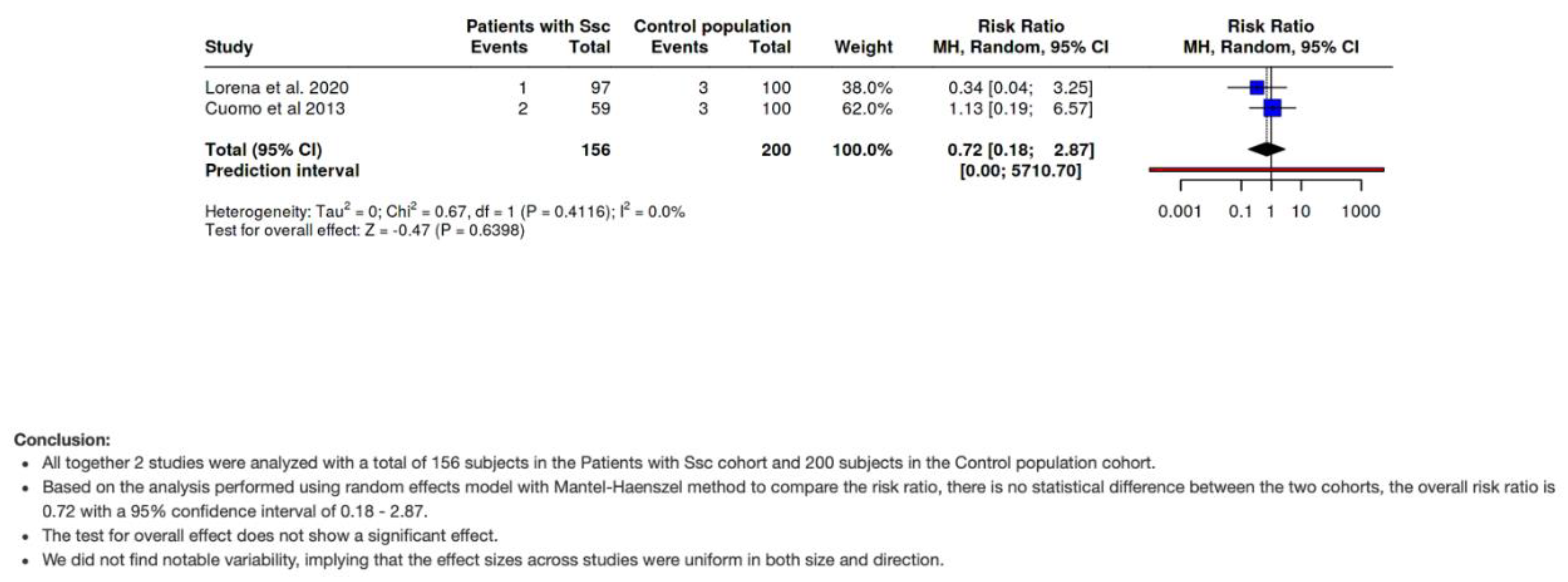
18 out of 156 patients had significant fibrosis, accounting for 12.5%. However, the distribution amongst the 2 studies was different as in Table 4. In the study by Lorena et al., the prevalence was 16.5%, and most associations were with autoimmune disease. On the other hand, the study by Cuomo et al. had a low prevalence of 3.4%. A commonly associated risk factor was triglyceride levels. Figure 5 shows the forest plot indicating an insignificant relationship with the SSc despite it being a primarily fibrosing condition.
Discussion
Fibrosis is a central pathological feature of systemic sclerosis (SSc) and contributes significantly to the disease’s morbidity and mortality. Alongside immune dysregulation and vasculopathy, fibrosis constitutes one of the three core mechanisms driving SSc pathology. While skin fibrosis is the most overt feature, internal organ involvement—particularly of the lungs, heart, and gastrointestinal tract—is common and clinically significant [10].
The fibrosing nature of the disease makes investigation into hepatic fibrosis a sensible approach. Secondly, the prevalence of autoimmune hepatobiliary conditions such as primary biliary cholangitis (PBC) in SSc patients, owing to overlapping features such as shared regulatory T cell abnormalities and common genetic variants (e.g., STAT4, IRF5, NF-κB, IRF8)—justifies a potential pathogenetic link. The prevalence of disease-specific autoantibodies is considerably higher, indicating a broader subclinical spectrum of hepatic involvement [22]. Hence investigation into associated autoimmune liver disease and antibody profile was also carried out.
This review of 11 retrospective observational studies highlights liver involvement in patients with systemic sclerosis (SSc), a primarily fibrosing autoimmune disease. Out of 2,797 patients with SSc across these studies, 190 were found to have liver disease, with 157 cases attributed to autoimmune etiologies, establishing a 6.7% prevalence of autoimmune liver diseases in this population.
Primary biliary cholangitis (PBC) emerged as the most common autoimmune liver disease associated with SSc, with a prevalence of approximately 5%. This is markedly higher than the general population prevalence of PBC, which ranges from 0.02% to 0.04% depending on the geographic region, underscoring a significant association between PBC and SSc. The association is further strengthened by the notable presence of antimitochondrial antibodies (AMA), detected in 10.87% of patients, which is considerably higher than in the general population and indicates subclinical or evolving PBC in many SSc patients.
Autoimmune hepatitis (AIH) was identified in 1.2% of SSc patients, a figure derived from studies 1 and 2 where a definitive diagnosis was made. This prevalence also exceeds general population estimates for AIH (approximately 0.02%-0.05%), further indicating that SSc patients may be predisposed to broader autoimmune liver involvement.
Serological profiles from studies 1, 5–11 revealed the presence of liver-specific autoantibodies in a substantial proportion of SSc patients. Apart from AMA, anti-sp100 and anti-gp210 antibodies were frequently observed. Anti-sp100, found in 3.1%, and anti-gp210, although less frequent, serve as useful markers for PBC diagnosis and prognosis.
Two studies specifically addressed liver fibrosis using elastography. Notably, 16.5% of patients in Study 1 exhibited liver fibrosis, which was independently associated with AMA positivity and elevated alkaline phosphatase (ALP). In contrast, Study 3 found fibrosis in only 3.4%, with elevated triglyceride levels being a more prominent association than autoimmunity. These findings suggest a heterogeneous pattern of liver fibrosis in SSc, potentially influenced by geographic, metabolic, and immunologic factors.
Although SSc is recognized as a fibrosing condition, the data do not strongly support a consistent or predominant hepatic fibrosing phenotype across all cohorts. Figure 5 underscores this variability, showing no significant pooled association between SSc and liver fibrosis, despite localized trends in select populations such as Italy.
Geographic variability was notable, with higher prevalence of autoimmune liver diseases observed in Italian and Japanese cohorts. This could reflect regional differences in diagnostic practices, genetic predisposition, or environmental triggers.
Conclusions
Hepatic involvement in SSc is under-investigated. Autoimmune conditions, including PBC and AIH, had a significant association as mentioned in the literature. The statistically significant elevation of anti-mitochondrial antibodies also consolidates it. As per fibrosis, despite the fibrosing nature of the disease, a significant association was not seen, and it was mostly associated with pre-existing conditions.
Author Contributions
Conceptualization, B.S., R.J., P.G.,J.E.G.K.,M.B.; methodology, B.S., R.J., P.G.,J.E.G.K.,M.B.; investigation, B.S., R.J., P.G.,J.E.G.K.,M.B.; resources, B.S., R.J., P.G.,J.E.G.K.,M.B.; data curation, B.S.,R.J.; writing—original draft preparation, R.J.,B.S..; writing—review and editing, B.S., R.J., P.G.,J.E.G.K.,M.B.; visualization, B.S..; supervision, M.B. All authors have read and agreed to the published version of the manuscript.
Funding
This research received no external funding.
Data Availability Statement
No new data was created.
Acknowledgments
None
References
- Green EW, Kahl L, Jou JH. Systemic Sclerosis and the Liver. Clin Liver Dis (Hoboken). 2021 Sep 6;18(2):76-80. PMID: 34584672; PMCID: PMC8450479. [CrossRef]
- Emmanuel A. Current management of the gastrointestinal com- plications of systemic sclerosis. Nat Rev Gastroenterol Hepatol 2016;13:461-472.
- Lindor KD, Bowlus CL, Boyer J, et al. Primary biliary cholangitis: 2018 Practice Guidance from the American Association for the Study of Liver Diseases. Hepatology 2019;69:394-419.
- McFarlane IM, Bhamra MS, Kreps A, et al. Gastrointestinal manifes- tations of systemic sclerosis. Rheumatology (Sunnyvale) 2018;8:235.
- Assassi S, Fritzler MJ, Arnett FC, et al. Primary biliary cirrhosis (PBC), PBC autoantibodies, and hepatic parameter abnormalities in a large population of systemic sclerosis patients. J Rheumatol 2009;36:2250-2256.
- Alastal Y, Hammad TA, Renno A, et al. Gastrointestinal manifesta- tions associated with systemic sclerosis: results from the nationwide inpatient sample. Ann Gastroenterol 2017;30:498-503.
- Chatterjee S, Dombi GW, Severson RK, et al. Risk of malignancy in scleroderma: a population-based cohort study. Arthritis Rheum 2005;52:2415-2424.
- Lorena M, Bellan M, Lepore M, Sola D, Pedrazzoli R, Rigamonti C, De Benedittis C, Manfredi GF, Acquaviva A, Tonello S, Rizzi M, Minisini R, Pirisi M, Sainaghi PP. Clinical Relevance of Liver Involvement in the Clinical Course of Systemic Sclerosis. J Clin Med. 2022 Feb 12;11(4):966. PMID: 35207242; PMCID: PMC8879679. [CrossRef]
- Marí-Alfonso B, Simeón-Aznar CP, Guillén-Del Castillo A, Rubio-Rivas M, Trapiella-Martínez L, Todolí-Parra JA, Rodríguez Carballeira M, Marín-Ballvé A, Iniesta-Arandia N, Colunga-Argüelles D, Castillo-Palma MJ, Sáez-Comet L, Egurbide-Arberas MV, Ortego-Centeno N, Freire M, Vargas Hitos JA, Chamorro AJ, Madroñero-Vuelta AB, Perales-Fraile I, Pla-Salas X, Fernández-De-La-Puebla RA, Fonollosa-Pla V, Tolosa-Vilella C; RESCLE Investigators; Systemic Autoimmune Diseases Study Group (GEAS). Hepatobiliary involvement in systemic sclerosis and the cutaneous subsets: Characteristics and survival of patients from the Spanish RESCLE Registry. Semin Arthritis Rheum. 2018 Jun;47(6):849-857. Epub 2017 Oct 6. PMID: 29246416. [CrossRef]
- Cuomo G, Iandoli C, Galiero R, Caturano A, Di Vico C, Perretta D, Adamo PV, Ferrara R, Rinaldi L, Romano C, Sasso FC. Liver Involvement in Patients with Systemic Sclerosis: Role of Transient Elastography in the Assessment of Hepatic Fibrosis and Steatosis. Diagnostics (Basel). 2023 May 17;13(10):1766. PMID: 37238250; PMCID: PMC10217307. [CrossRef]
- Sawadpanich K, Promasen P, Mairiang P, Sukeepaisarnjareon W, Sangchan A, Suttichaimongkol T, Tangvoraphonkchai K, Foocharoen C. Incidence and Predictors of an Abnormal Liver Function Test Among 674 Systemic Sclerosis Patients: A Cohort Study. Open Access Rheumatol. 2023;15:81-92.
- Salem GI, Abdulrahman AA. Evaluation of liver function tests in scleroderma patients. Rheumatol Int. 2012 Aug;32(8):2371-5. Epub 2011 Jun 5. PMID: 21644046. [CrossRef]
- Wielosz E, Majdan M, Koszarny A, et al. Presence of organ- specific antibodies in patients with systemic sclerosis. Pol Arch Med Wewn 2016; 11: 862–869.
- Assassi S, Fritzler MJ, Arnett CF, et al. Primary biliary cir- rhosis (PBC), PBC autoantibodies, and hepatic parameter abnormalities in a large population of systemic sclerosis patients. J Rheumatol 2009; 36(10): 2250–2256.
- Imura-Kumada S, Hasegawa M, Matsushita T, et al. High prevalence of primary biliary cirrhosis and disease-associated autoantibodies in Japanese patients with systemic sclerosis. Mod Rheumatol 2012; 22(6): 892–898.
- Cavazzana I, Ceribelli A, Taraborelli M, et al. Primary bil- iary cirrhosis-related autoantibodies in a large cohort of Italian patients with systemic sclerosis. J Rheumatol 2011; 38: 2180–2218.
- Norman GL, Bialek A, Encabo S, et al. Is prevalence of PBC underestimated in patients with systemic sclerosis? Dig Liver Dis 2009; 41: 762–764.
- Skare TL, Nisihara RM, Haider O, et al. Liver autoantibod- ies in patients with scleroderma. Clin Rheumatol 2011; 30: 129–132.
- Autoimmune hepatitis in Italy: The Bologna experience, Muratori, Paolo et al., Journal of Hepatology, Volume 50, Issue 6, 1210 – 1218.
- Hahn JW, Yang HR, Moon JS, Chang JY, Lee K, Kim GA, Rahmati M, Koyanagi A, Smith L, Kim MS, López Sánchez GF, Elena D, Shin JY, Shin JI, Kwon R, Kim S, Kim HJ, Lee H, Ko JS, Yon DK. Global incidence and prevalence of autoimmune hepatitis, 1970-2022: a systematic review and meta-analysis. EClinicalMedicine. 2023 Oct 17;65:102280. PMID: 37876996; PMCID: PMC10590724. [CrossRef]
- The Epidemiology of Primary Biliary Cholangitis in European Countries: A Systematic Review and Meta-Analysis, Jakub Gazda, Sylvia Drazilova, Martin Janicko, Peter Jarcuska, First Published: 21 June 2021. [CrossRef]
- Systemic sclerosis and primary biliary cholangitis: An overlapping entity? Gemma Lepri1, Silvia Bellando Randone1, Marco Matucci Cerinic1 and Yannick Allanore2.
Figure 1.
PRISMA flowchart.
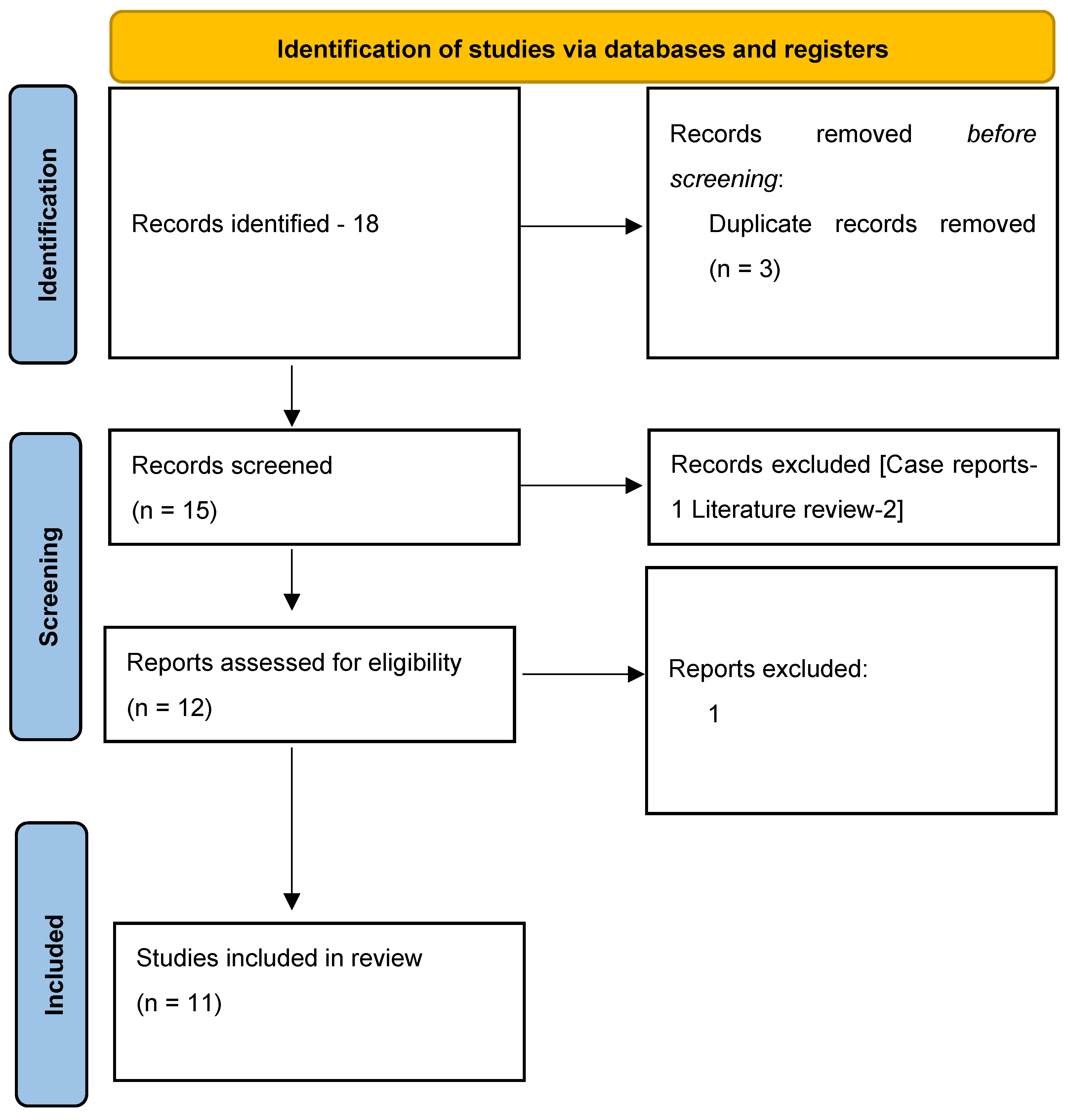
Figure 2.
Cochrane RoB.
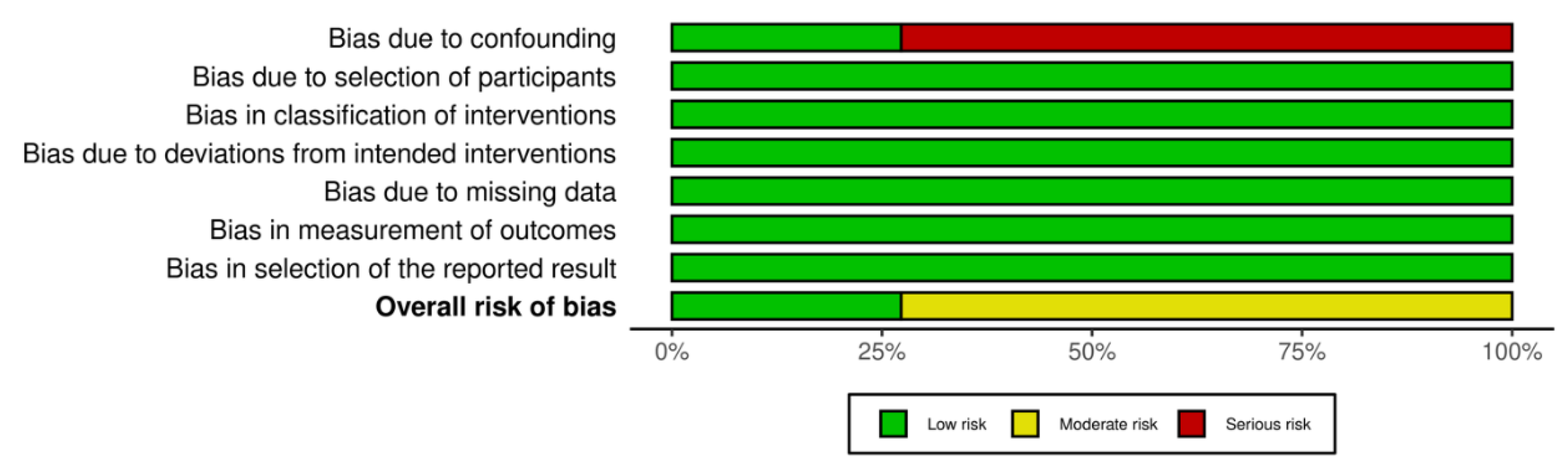
Figure 3.
Prevalence of PBC in SSc compared to the general population.

Figure 4.
Prevalence of AIH in SSc compared to the general population.
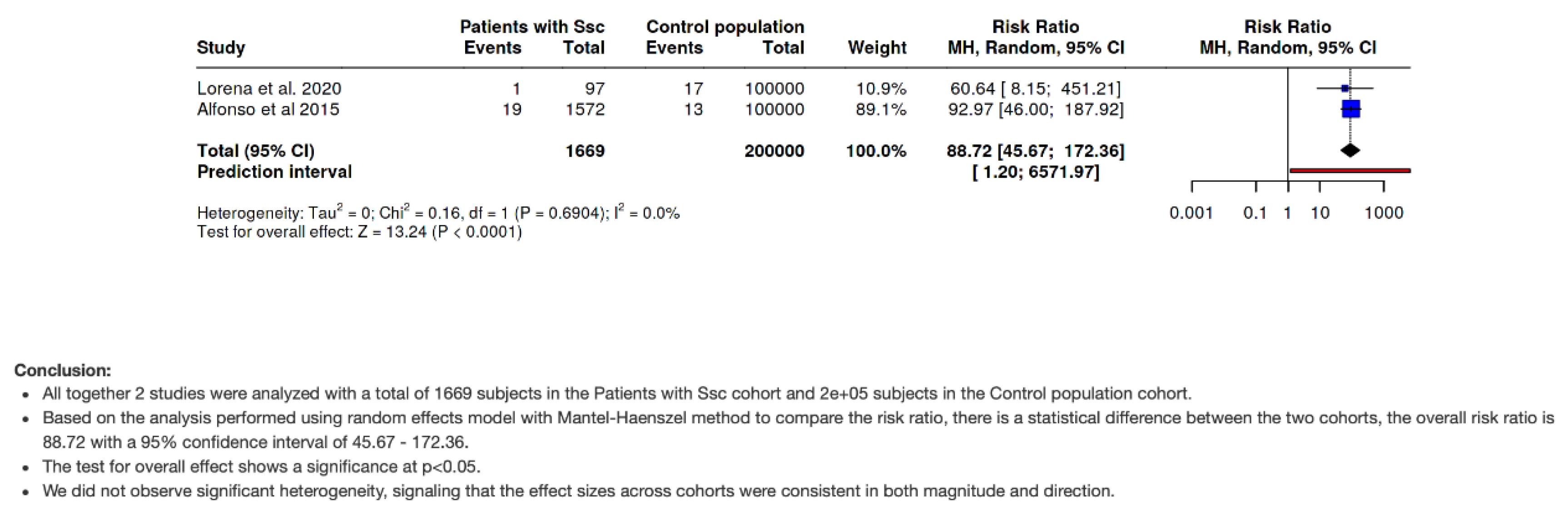
Figure 5.
shows the forest plot indicating the relationship of liver fibrosis with the SSc in 2 Italian studies.
Figure 5.
shows the forest plot indicating the relationship of liver fibrosis with the SSc in 2 Italian studies.

| STUDY | AUTHOR | TYPE | NUMBER | YEAR | PLACE |
| Clinical Relevance of Liver Involvement in the Clinical Course of Systemic Sclerosis- Study 1 | Lorena et al. | Retrospective observational cohort | 97 | 2018-20 | Italy |
| Hepatobiliary involvement in systemic sclerosis and the cutaneous subsets characteristics and survival of patients from the Spanish rescle registry- Study 2 | Alfonso et al. | Retrospective observational cohort | 1572 | 2015 | Spain |
| Liver Involvement in Patients with Systemic Sclerosis: Role of Transient Elastography in the Assessment of Hepatic Fibrosis and Steatosis- Study 3 | Cuomo et al. | Cross sectional | 59 | 2013 | Italy |
| Incidence and Predictors of an Abnormal Liver Function Test Among 674 Systemic Sclerosis Patients: A Cohort Study- Study 4 | Sawadpanich et al. | Retrospective observational cohort | 674 | 2012-2019 | Thailand |
| Evaluation of liver function tests in scleroderma patients- Study 5 | Salem et al. | Retrospective observational cohort | 40 | 2012 | Saudi Arabia |
| Presence of organ specific antibodies in patients with systemic sclerosis- Study 6 | Wielosz et al. | Retrospective observational cohort | 86 | 2006 | Poland |
| Primary biliary cirrhosis (PBC), PBC autoantibodies, and hepatic parameter abnormalities in a large population of systemic sclerosis patients- Study 7 | Assassi et al. | Retrospective observational cohort | 817 | 2009 | USA |
| High prevalence of primary biliary cirrhosis and disease-associated autoantibodies in Japanese patients with systemic sclerosis - Study 8 | Imura-Kumada et al. | Retrospective observational cohort | 225 | 2012 | Japan |
| Primary biliary cirrhosis-related autoantibodies in a large cohort of Italian patients with systemic sclerosis - Study 9 | Cavazzana et al. | Retrospective observational cohort | 201 | 2011 | Italy |
| Is prevalence of PBC underestimated in patients with systemic sclerosis? -Study 10 | GL Norman et al. | Retrospective observational cohort | 52 | 2009 | Poland |
| Liver autoantibodies in patients with scleroderma- Study 11 | TL Skare et al. | Retrospective observational cohort | 63 | 2011 | Brazil |
Table 2.
Prevalence of PBC, AIH, and other autoimmune liver diseases in SSc.
| Number of patients with SSc | Liver disease | PBC | AIH | Others | |
| Lorena et al. | 97 | 11 | 7 | 1 | 1 PSC 1 NRH 3 Viral Hepatitis 3 Alcoholic Hepatitis |
| Alfonso et al. | 1572 | 118 | 67 AMA positive 6 AMA negative |
19 | 26 Secondary liver diseases (n = 11), SSc-related HBI (n = 7), nodular regenerative hyperplasia (n = 3), liver cirrhosis (n = 3), and HBI of unknown origin (n = 2, 0.1%) |
| Sawadpanich et al. | 674 | 430 | Possibly 37 | NA | NA |
| Salem et al. | 40 | 14 | Possibly 12 | NA | 2 |
| Wielosz et al. | 86 | 10 | 10 | NA | NA |
| Assassi et al. | 817 | 16 | 16 | NA | NA |
| Imura-Kumada et al. | 225 | 35 | 35 | NA | NA |
Table 3.
AMA positivity across studies.
| Number of patients with SSc | AMA | Others | |
| Lorena et al. | 97 | 18 | Anti SP-100- 4 Anti gp120- 1 |
| Alfonso et al. | 1572 | NA | NA |
| Cuomo et al. | 59 | NA | NA |
| Sawadpanich et al. | 674 | NA | NA |
| Salem et al. | 40 | 1 | Anti-Smooth muscle- 8 |
| Wielosz et al. | 817 | 56 | sp100 -26 gp210 -3 |
| Assassi et al. | 225 | 37 | sp100 -13 gp210 -3 |
| Imura-Kumada et al. | 86 | 11 | |
| Cavazzana et al. | 201 | 36 | sp100 -5 gp210 -1 |
| GL Norman et al. | 52 | 7 | sp100-1 |
| TL Skare et al. | 63 | 6 |
Table 4.
Liver fibrosis across studies.
| Number of patients with SSc | Fibrosis | Comments | |
| Lorena et al. | 97 | 16 patients | AMA positivity and ALP were independently associated with liver fibrosis |
| Cuomo et al. | 59 | 2 | TAG levels were associated |
Disclaimer/Publisher’s Note: The statements, opinions and data contained in all publications are solely those of the individual author(s) and contributor(s) and not of MDPI and/or the editor(s). MDPI and/or the editor(s) disclaim responsibility for any injury to people or property resulting from any ideas, methods, instructions or products referred to in the content. |
© 2025 by the authors. Licensee MDPI, Basel, Switzerland. This article is an open access article distributed under the terms and conditions of the Creative Commons Attribution (CC BY) license (http://creativecommons.org/licenses/by/4.0/).
Copyright: This open access article is published under a Creative Commons CC BY 4.0 license, which permit the free download, distribution, and reuse, provided that the author and preprint are cited in any reuse.


