

Submitted:
19 June 2025
Posted:
19 June 2025
You are already at the latest version
Abstract
The integration of Extended Reality (XR) technologies, including Virtual Reality (VR), Augmented Reality (AR), and Mixed Reality (MR), is transforming forensic investigation by empowering processes such as crime scene reconstruction, evidence analysis, and pro-fessional training. This manuscript presents a systematic review of technological advanc-es in XR technologies developed and employed for forensic investigation, their impacts, challenges, and prospects for the future. A systematic review was carried out based on the PRISMA® methodology and considering articles published in repositories and scientific databases such as SCOPUS, Science Direct, PubMed, Web of Science, Taylor and Francis and IEEE Xplore; two observers carried out the selection of articles and a Cohen's Kappa coefficient of 0.7226 (substantial agreement) was evaluated. The results show that XR technologies contribute to improving accuracy, efficiency, and collaboration in forensic investigation processes, in addition to this, it facilitates the preservation of crime scene data and reduce training costs. Technological limitations, implementation costs, ethical aspects, and challenges persist in the acceptability of these devices. XR technologies have significant transformative potential in forensic investigations, although additional re-search is required to overcome current barriers and establish standardized protocols that enable their effective integration.
Keywords:
extended reality
; virtual reality
; augmented reality
; crime scene
; forensic investigation
1. Introduction
Accuracy, objectivity and reproducibility in the collection, analysis and presentation of evidence is a crucial aspect in crime scene investigation, its training and execution in the forensic field can be improved and enhanced with the use of extended reality (XR) technologies developed for crime scene investigation [1]. The systems implemented in several nations have demonstrated an increase in the effectiveness, accuracy, objectivity, and reproducibility in the collection, analysis, and presentation of evidence, promoting a more transparent and efficient justice system. In a context where technology redefines access to judicial truth, understanding its impact, limitations, and ethical potential is essential to ensure innovative, responsible, and aligned forensic practices that address contemporary challenges [2].
Although extended reality (XR) technologies are gaining increasing attention in the forensic sciences, there remains a notable lack of scientific literature that systematically evaluates their effectiveness in crime scene investigation. This limitation is primarily due to the sensitive and restricted nature of forensic data, which often prevents open access and complicates the external validation of technological implementations. Consequently, there is a pressing need for research that provides updated insights into new developments and practical applications of XR in forensic contexts. In particular, it is crucial to document the experiences of countries and institutions that are adopting these technologies to strengthen their forensic capabilities. Such contributions are essential to advancing the field, encouraging innovation, and promoting the responsible and evidence-based integration of XR in criminal investigations.
Extended reality technologies in forensic investigation raises conceptual controversies about the evidentiary validity of virtual reconstructions, since their fidelity depends on the data used and can induce cognitive biases in interpretation. Ethically, concerns exist about the potential for scene manipulation, exposure to sensitive content that compromises the dignity of victims, and unequal access to these tools, which could lead to gaps in justice. These issues highlight the need for clear regulatory frameworks, responsible practices and ethical training in their application. Extended Reality (XR) technologies provide immersive scenarios that combine real-world elements with virtual elements and comprise a set of three technologies: Virtual Reality (VR), Augmented Reality (AR) and Mixed Reality (MR).
VR is a technology that, through the use of computer images, creates immersive and simulated three-dimensional environments to provide an interactive experience to users, who use display devices such as helmets or visors [3]. AR is a technology that is based on the superimposition of digital information, such as images, sounds or data, on the visualization of the real world, for which devices such as smartphones, tablets or specific glasses for AR are used. The goal of AR is to enrich the perception of the physical environment, facilitating the interaction between the real and virtual worlds [4]. Figure 1 illustrates the relationships between the technologies addressed, revealing that the MR has both VR and AR Characteristics, which merge elements of the real and virtual worlds, allowing for real-time interaction with the user within the same environment. Through advanced devices, such as MR glasses, virtual and physical objects can be visualized and respond to the user’s actions seamlessly. This technology is utilized in various fields, including education, engineering, and medicine, to enhance visualization, interaction, and collaboration in real three-dimensional environments.
In the forensic field, multiple applications have been developed, primarily aimed at reducing human error by providing advanced tools for informed decision-making and investigator training [1,2].
In forensic investigation, the adoption of VR, AR, and MR technologies represents a significant advance in crime scene reconstruction and analysis [5]. Figure 2 presents a schematic of components of extended reality technologies and how virtual components and real crime scene elements contribute to XR technologies.
Over the past decade, XR technologies have emerged as effective solutions that improve accuracy in evidence collection and transform the way evidence is presented and understood by juries and other actors in the judicial system [2,6,7,8].
The VR enables researchers to create immersive three-dimensional simulations that facilitate the exploration of complex environments without compromising the integrity of physical evidence [1,6,8]. This possibility of virtual manipulation significantly reduces the potential damage to evidence and provides a richer understanding of the crime’s context.
AR brings an innovative approach by overlaying digital data on the physical environment in real-time. Using technological devices, investigators can visualize splash patterns, possible escape routes, and other key elements directly at the crime scene, streamlining analysis and enabling more informed decision-making [1,2]. The combination of AR, VR, MR technologies. Enhance forensic analytics capabilities to enable seamless data integration and dynamic information visualization.
According to studies related to the use of XR technologies applied to the forensic investigation of crime scenes, Figure 3 has been made taking into account the search chain: (“virtual reality” OR “VR” OR “augmented reality” OR “AR” OR “mixed reality” OR “mr”) AND (“forensic” OR “crime” OR “investigation” OR “evidence” OR “scene”) AND (“simulation” OR “training” OR “analysis” OR “reconstruction” OR “visualization”) AND (“technology” OR “application” OR “method” OR “tool”).
The bibliometric analysis generated from the search for terms related to virtual reality (VR), augmented reality (AR), mixed reality (MR), forensics, reconstruction, simulation, and technology, reveals a thematic structure divided into several interrelated clusters that reflect the predominant lines of research in the use of immersive technologies within the forensic field. The dark blue cluster, centered on the main node “virtual reality”, connects strongly with terms such as training systems, e-learning, software, and curricula, which evidences its central role in educational training and simulation applied to forensic scenarios. The red cluster, whose core is “augmented reality”, relates to concepts such as manufacture, decision-making, maintenance, and application, indicating a focus on practical and operational applications, including field assessment or the use of mobile devices to improve scene perception and analysis. The green cluster focuses on three-dimensional reconstruction, surface, and image technologies, encompassing terms such as three-dimensional computer graphics, surface reconstruction, 3D scenes, and image structure, indicating a technical emphasis on computational modeling of crime scenes for visual analysis and detailed reconstruction. In turn, the yellow cluster integrates terms such as data visualization, experimental study, cameras and sports science, pointing towards experimental and visual capture applications, possibly used in comparative studies or dynamic simulations. The purple cluster groups terms associated with technological methodologies such as reconstruction method, scene reconstruction, and computer hardware, which reflects the interest in the infrastructures and computational techniques that support forensic simulations. The relationships between these clusters, represented by the lines connecting nodes, indicate a high co-occurrence between virtual reality and reconstruction and training tools, while augmented reality is connected to both educational applications and operational functions in the field. This network evidence a strong interdisciplinarity between education, computational visualization, scene processing and practical applications, consolidating the use of XR technologies as a relevant trend in forensic innovation, both in academic environments and in fieldwork.
The use of 3D modeling platforms and simulation tools has enabled the creation of immersive learning environments, enhancing the training of forensic science professionals [2,9]. These platforms provide interactive experiences that allow students to practice collecting and analyzing evidence in simulated scenarios, eliminating the need for expensive physical resources [8].
XR technologies require multiple devices, as described in Table 1, along with their most representative functionalities and characteristics.
This paper presents the advances, developments, and applications of the AR, VR, and MR in forensic investigation, highlighting their impact on improving accuracy and efficiency in understanding the facts at the possible crime scene.
This article is useful for forensic professionals, researchers, educators, technology developers, and academics interested in integrating Extended Reality (XR) technologies into forensic investigation.
Section 2 provides details on the review conducted using the PRISMA® methodology. La sección 3 explica términos importantes para la comprension del manuscrito. Section 4, whichs the applications based on using XR for forensic investigation and thei,routlines Finally, a discussion and conclusions are presented.
2. Methodology
The systematic review was conducted in accordance with the PRISMA methodology guidelines. The dataset with the review details is available at [10]. Scientific articles published in the last decade, obtained from databases such as Scopus, ScienceDirect, Web of Science, PubMed, IEEE Xplore, and Taylor & Francis, have been considered.
Table A1 of Annex A was used, which indicates the pages where relevant information of the sections of this document can be found. The systematic review consisted of three phases: formulation of research questions, delimitation of the scope, and an exhaustive search for relevant reference documents.
The main research question was: What is the impact of XR on forensic investigation? This question is relevant because it allows us to understand how RV, RA, and MR have the potential to provide both advantages and challenges in forensic investigations. The primary objective of this research was to provide a current review of advances in VR, AR, and MR as applied in forensic investigations. As a second objective, the impact of the use of XR technologies in data collection, visualization, evidence analysis, and professional training was investigated. As a third objective, the challenges associated with implementing XR in forensic investigation and future developing trends were identified. In addition, ethical considerations that have been addressed in using these technologies are highlighted.
The research questions that were raised for the extraction of information in the reference documentation were: RQ1. What are the main technological developments based on using VR, AR, and MR technologies that have been applied in forensic investigation? RQ2. How have AR, VR and MR contributed to improving forensic investigation? RQ3. What challenges and limitations have arisen in the implementation of VR, AR, MR technologies in forensic investigation? RQ4. What future developments related to VR, AR, and MR are anticipated to improve forensic investigation? RQ5. What impact do VR, AR, and MR technologies have on the accuracy and efficiency of forensic evidence collection, analysis, and presentation in court? The quality of the scientific articles was evaluated using the criteria described in Table 2.
Figure 4 illustrates the workflow for selecting reference documents in accordance with the PRISMA methodology guidelines.
The search for reference documents was conducted using the scientific literature databases Web of Science, ScienceDirect, Scopus, Taylor & Francis, IEEE Xplore, and PubMed. Two review authors selected and included or excluded articles published in the last ten years. Following PRISMA®’s methodological guidelines, four steps were performed: (1) the relevant articles were identified through a database search; (2) the articles were selected from their abstracts; (3) the full texts were reviewed and evaluated; and (4) eligibility decisions were made for these items, as shown in Figure 2.
The search for scientific articles was conducted using the keywords “forensic sciences virtual augmented reality,” specifying the search by title and abstract, and considering publications from the last ten years, with a focus on peer-reviewed articles in English. As shown in Figure 4, 54 duplicate documents were excluded from the total of 275 items identified. Then, 189 studies were excluded according to the abstract, leaving 32 articles. A total of 14 documents that did not address the benefits of multiple technologies in forensic investigation were removed, leaving 18 articles. In addition, 55 references were consulted that addressed project developments of specific cases of applications that used XR technologies. The manuscript produced a total of 73 references. Two observers selected articles with a kappa coefficient of 0.7226, indicating substantial agreement.
Inclusion Criteria
Journal articles or conference papers published in high-impact journals and conference papers published in the last ten years were preferred (Table 3). The documents that were included described the use of at least one of the XR technologies in applications related to forensic investigation. Developments in VR, AR, MR or XR have been preferred, whose implementations have highlighted the advantages of their use in real cases.
Exclusion Criteria
Articles that explained technical and operational aspects of XR technologies, such as algorithms, equations and mathematical modeling, prototype testing of technologies and control systems, were excluded. All those documents that did not meet the requirements of quality, timeliness or thematic relevance according to Table 2 were excluded from the analysis. Articles published in peer-reviewed journals or conferences or with low impact factors were discarded, as they do not guarantee the scientific standards required for this study. Publications prior to the period of the last ten years were excluded since development in this area is frequently accelerated. Studies were omitted that, although they addressed emerging technologies, did not include a concrete application of extended reality in forensic investigation contexts. This includes research focused on virtual, augmented or mixed reality, but applied in fields outside of forensics, such as entertainment, general education or industrial design.
3. Theorical Background: Forensic Findings
Currently, the use of XR technologies drives a set of findings associated with forensic research that are addressed in this manuscript. The most frequent findings are described in Table 4, and their execution by traditional methods and the limitations they present are also highlighted.
4. Results
4.1. Advances in Extended Reality for Forensic Investigation.
In the last decade, there has been an increase in the development of XR applications for the forensic field. These technologies primarily contribute to the reconstruction and understanding of crime scenes, as well as the virtual manipulation of evidence, and provide tools for learning and developing skills and abilities in forensic investigators. Developments according to the types of technologies are described below.
According to an analysis of the relative frequency of appearance of the terms in articles related to the use of extended reality technologies in Forensic Sciences, Figure 5 has been generated, which shows the greater or lesser frequency with which virtual reality, augmented reality, mixed reality, and extended reality have been studied. The documents for this analysis were identified with the following text string: (“extended reality” OR “virtual reality” OR “augmented reality” OR “mixed reality”) AND (“forensic science” OR “forensics” OR “criminalistics” OR “crime scene”) AND (“simulation” OR “visualization” OR “training” OR “investigation”) AND (“evidence” OR “analysis” OR “reconstruction” OR “documentation”) AND (“technology” OR “tools” OR “applications” OR “methods”).
Figure 6 shows the development of the contents of section 3, the diagram clarifies the aspects that are addressed and have been systematized in this manuscript according to the advances obtained in scientific literature.
4.1.1. Virtual Reality
Virtual applications and simulators have been developed to address multiple VR-based forensic tools. To improve the training of forensic investigators in the analysis of autopsies, applications such as Virtopsy [11], Autopsy [12,13], Virtuamed [14], which allow dispensing with the handling of real corpses providing advantages such as cost reduction, minimization of risks and a graphic means of presentation of findings in trials [15]. They have developed tables with touch screens, such as VizTouch3D, which have also been developed, as well as the Anatomage table [16], specifically for non-invasive autopsies. These technologies provide dynamic visualization of the external and internal parts of the corpse, in some cases from scanned files of damaged bodies, and, for learning purposes, from examples of bodies previously loaded and viewed on a monitor or touchscreen by the coroner. Table 4 describes some of the characteristics of these technologies.
VR has been utilized for applications that contribute to the investigation of crime scenes, which were previously digitally reconstructed using photogrammetry techniques, allowing for a more thorough inspection without altering evidence. Deep learning models, such as Faster-RCNN, have been employed [17] to automatically identify and label objects of forensic value, thereby reducing contamination and improving analysis accuracy. In addition, it allows for the estimation of object measurement, virtual evidence manipulation, and data recording to ensure repeatability of analyses, providing forensic development with a safe environment for training and case review
Photogrammetry techniques have been developed using graphic applications [18], enabling the reconstruction of 3D models and the mapping of images (Pix4D). The photogrammetric processing that generates spatial data has been used (Agisoft Metashape), which generates 3D spatial data from captured images, providing accurate reconstructions of the crime scene in a timely manner. Online platforms that can also be run on smart devices, such as EyeCloud3D, enable the generation and export of three-dimensional models from a sequence of images or videos captured around the object of interest. For 360º visualizations, the application (SIRV) has been used, whose use through the Web allows for optimizing and processing images that can be viewed with close-ups. For the creation of models with lighting, rendering, and 3D animation, used in the composition of forensic scenes from digital graphics, open-source software (Blender) has been used. The application (Adobe Fuse) has proven versatile for the creation of human characters in 2D and 3D, facilitating the creation of more realistic environments. Adobe’s application (Mixamo) allows the animation of 3D characters by integrating them with Blender or Adobe Fuse. There are advances in techniques that reconstruct scenes from a single image, such as the CAST technique [19], which offers greater realism and precision in digital scene reconstruction.
To integrate multiple functions and expand the scope of VR use, several simulators have been developed. For the fundamental learning of crime scene investigation, the Visitech USA brand has developed VR Forensic Training [20], which provides an immersive virtual reality environment featuring modules for evidence collection and blood splatter analysis. The National Autonomous University of Mexico (UNAM) has developed a platform that allows real crimes to be recreated and criminal acts to be simulated for scientific purposes using VR [21] technologies used to enhance learning in its forensic science students. A more attractive environment for the user
Regarding the development of VR devices, some HMD (Head-Mounted Displays) stand out, which allow users to experience total immersion in 3D and have been used to enhance understanding of the facts. The Meta Quest 2 [22] and Quest 3 [1,8] headsets are standalone VR devices widely used in forensic simulations for their ease of use and portability. The HTC Vive and Vive Pro [23] models stand out for their high acceptance in forensic and training environments, as they feature precise tracking sensors that enable the exploration of 3D crime environments with high fidelity. Oculus Rift [24] headsets have been used in forensic investigation applications, offering an immersive experience with detailed graphics. High-end devices such as the Varjo XR-3 and VR-3 [25] scopes with high resolution have been used in research where extreme realism is required. HP Reverb G2 [26] devices are a devices with high resolution and suitable for forensic simulations and detailed reconstructions. Table 5 compares the technical characteristics of some VR headsets.
Of the devices presented in Table 5, those that stand out the most in their use in the forensic field have been compared in Figure 7. This comparison chart provides a detailed analysis of five virtual reality (VR) headsets used in forensic science, evaluating them against three key criteria: visual fidelity, ease of use, and forensic versatility, all on a scale of 1 to 10. This assessment was built from a review of recent scientific literature, technical reports, and reliable commercial sources, considering real-world applications in areas such as crime scene reconstruction, digital analysis, expert training, and evidence presentation. The Meta Quest 2/3 headset stands out as the most used globally due to its balance between performance and accessibility. Its autonomous operation, ease of configuration, and compatibility with multiple educational and forensic platforms make it an ideal choice for institutions looking for effective, low-cost immersion solutions. In contrast, the Varjo XR-4 is positioned as the device with the highest visual fidelity, suitable for tasks that require very high resolution, such as detailed inspection of evidence or millimeter-scale reconstruction. However, its adoption is more limited due to its high price and technical requirements. The HTC Vive and Oculus Rift, with intermediate levels of ease of use and accuracy, are commonly used in academic and professional environments where integration with specialized software is valued. Finally, the Pico 4 Enterprise, although more recent, offers competitive performance, especially in corporate training contexts. This analysis allows us to understand how different devices respond to the specific needs of the forensic field, facilitating informed decisions for their selection and implementation in laboratories, police units and specialized educational programs.
The capture of the crime scene environment, its evidence, and characteristic elements in digital format has become easier due to the development of 3D Capture and Scanning devices. LiDAR scanners, based on the use of amplified light, are being incorporated into devices such as iPads Pro and newer iPhones [27], allowing the rapid creation of three-dimensional digital models used in forensic scenes. For high-precision capture in the recreation of forensic scenes, 3D Laser scanners (FARO Focus, Leica BLK360) [28] have been preferred. For the digitization of models through photogrammetry techniques, DSLR cameras and subsequent processing applications such as Pix4D or Agisoft Metashape [29]have been used, allowing the 3D reconstruction of the crime scene from images.
For the integration of the objects in the virtual environment, video game development engines such as (Unreal Engine) [30] and (Unity) [31] have been used to integrate the digital elements and recreate scenes with a high level of realism, also allowing interaction, animation of virtual objects in addition to providing a dynamic visualization for the forensic investigator. The quality of the scenes provides clear visual evidence that can be used to show evidence to all actors in courtrooms
Forensic education has been enriched due to the development of forensic case simulation platforms, allowing the integration of multiple applications and the recreation of real situations in three-dimensional environments [5,8]. Students and trainees can access simulated environments by combining 3D modeling, photogrammetry, and 3D scanning techniques, allowing users to access an evidence base for their analysis without needing a real physical scene or incurring high costs [1,2,4,8]. These practices also improve juries’ understanding of the facts by observing the virtual re-enactment of events, allowing investigators to explore the scene from multiple angles and perspectives [3,6,7,8].
The creation of forensic databases integrated with virtual reality makes it possible to combine evidence and expert data within the virtual environment, facilitating the interactive upload and visualization of evidence and helping experts to analyze the information in real-time within the simulation [1,2,32,41].
Virtual reality (VR) has proven to be a powerful and effective tool for training researchers and creating environments that enhance collaboration between specialists [33] The integration of emerging technologies, such as artificial intelligence (A.I.), significantly expands the capabilities of VR [8], enabling automated scene analysis and the identification of patterns that might go unnoticed by human researchers. Machine learning algorithms can identify correlations between elements of the scene [2], such as bloodstains or projectile trajectories, and provide informed hypotheses about the dynamics of the events, facilitating a deeper and more accurate understanding of the investigated event to forensic personnel [7] . Integrating computer vision systems and machine vision techniques allows minute details to be captured in virtual environments, which can then be processed to generate interactive three-dimensional models. These models can be used both for collecting and analyzing evidence and for presenting evidence in a judicial context, allowing to visualize better and understand the facts presented [1,32].
Generative A.I. integrated into VR makes it possible to simulate different possible crime scenarios [2,6]. This facilitates the exploration of different versions of events and reinforces the ability to validate the proposed hypotheses. The combination of VR with predictive A.I. also makes it possible to anticipate possible developments in crime scenes or generate simulations of future events, which is particularly useful in investigations where time is a critical factor.
4.1.2. Augmented Reality
Augmented reality (AR) has significantly impacted forensic investigation by allowing the superimposition of three-dimensional elements in physical environments. This optimizes both documentation and evidence analysis without altering the original scene. Its implementation has increased accuracy in collecting and reconstructing crime scenes, providing investigators with advanced tools for interpreting evidence [2,37].
Various applications that employ AR have been developed to improve forensic analysis. The MagicPlan CSI app allows evidence to be scanned and georeferenced at the crime scene, ensuring its precise location, facilitating digital reconstructions [38], and allowing investigators to visualize evidence exactly where it was found, similar to the dynamics of AR games such as Pokémon Go [8,39]. The advantage of this type of application is that it provides a better interpretation of the scene by allowing specialists to explore the scene repeatedly in a precise way, optimizing decision-making [5,9,32,40].
The ForensicAR application allows the real-time simulation of forensic scenarios, facilitating the reconstruction of crimes by superimposing 3D models on the original scene[42] Forensic Mapping AR, creates interactive three-dimensional maps of crime scenes, allowing the recreation of events and a detailed analysis of evidence in its original context [43]. SceneAR has been developed to document crime scenes in real-time, incorporating virtual models of evidence and reconstructions within the scene, improving the interpretation of the facts [44].
For a deeper understanding of the facts at a crime scene, Queensland Police has developed the Forensics - Augmented Reality Crime Scene App, which offers users an immersive experience in forensic investigation using AR [45]. Oxygen’s Forensic Detective: Inside the Crime Scene employs virtual crime scenes, allowing users to collect and analyze evidence using real forensic techniques [46]. CSI & Forensic Science Training, created by VictoryXR, uses AR to train students in forensic science by strengthening practice in crime scene investigation [47].
The evolution of devices employed for AR, such as Microsoft’s HoloLens™, and Apple’s Vision Pro, have been used to project three-dimensional models onto crime scenes, avoiding physical tampering with evidence and minimizing the risk of tampering [48] and [4,49,50]. The Vuzix Blade device allows investigators to record images and videos in real-time without interrupting their work, minimizing the manipulation of physical evidence and reducing the risk of contamination. The overlay of key information in the field of view facilitates the identification of critical elements and optimizes decision-making at the scene [4,51]. Table 6 compares the technical characteristics of the AR goggle models most commonly used in forensic investigation.
Figure 8 shows a comparison of augmented reality (AR) glasses applied to forensic science evaluates five representative models based on three key criteria: visual fidelity, ease of use, and forensic versatility, each rated on a scale of 1 to 10. The analysis shows that Microsoft HoloLens 2 is the most balanced and adopted device in forensic environments, combining high visual fidelity (9), good usability (7) and a remarkable ability to adapt to multiple forensic applications (9), such as crime scene reconstruction and forensic training. In contrast, the Apple Vision Pro stands out for offering the best visual fidelity (10), ideal for tasks that require maximum graphic precision, although its technical complexity and high cost limit its ease of use (6) and its immediate adoption. Magic Leap 2 is presented as a solid intermediate option, especially useful in collaborative and interactive environments, while Vuzix Blade and Epson Moverio stand out for their portability and ease of implementation in field tasks, although with lower graphic and functional performance. Together, the graph allows you to visualize the strengths and limitations of each device, providing a comparative basis for selecting the most appropriate viewer according to the operational context and technical needs of the forensic investigation.
The headsets have applications with personalized functions that are specific to each brand of AR glasses. TuServ, a partner application compatible with HoloLens™ allows the capture of elements of the scene in real-time with the possibility of placing virtual markers on indications and carrying out 3D tracking. At the same time, the collected data can be instantly transferred to police stations and prosecutor’s offices, preserving the integrity of the evidence [52].
The use of haptic sensors has improved the interaction with digital models in AR, allowing virtual manipulation with a higher level of realism [1,4] , an important aspect in the reconstruction of events such as vehicular collisions and aggressions, as well as in the evaluation of ballistic trajectories and the interpretation of bloodstain patterns [5]. Apps such as HapTech Forensics [53] allow researchers to digitally manipulate objects in the scene with tactile feedback, while SenseGlove [54,55] has improved interaction with virtual models in simulations of crime scene reconstructions. HapticAR Investigator facilitates the reconstruction of shot trajectories and the analysis of impact patterns by combining AR and haptic feedback [56].
The integration of AR with technologies such as laser scanners and photogrammetry has made it possible to digitize crime scenes with unprecedented accuracy, creating detailed three-dimensional models. These technologies are essential for comprehensively analyzing impact patterns, ballistic trajectories, and evidence distribution, providing a more rigorous and replicable approach to forensic analysis [5].
The Crime-lite App, developed by Foster + Freeman, aids in the detection and analysis of forensic evidence using high-intensity light sources at different wavelengths, facilitating the identification of biological fluids, gunshot residue, and fingerprints [57]. Artec 3D scanners make it possible to capture entire scenes, including minute details such as blood patterns and bullet holes, creating photorealistic three-dimensional models that can be thoroughly analyzed [58].
The combination of AR with Artificial Intelligence (A.I.) has further optimized forensics, automating real-time analysis. Computer vision and deep learning algorithms have been implemented to automatically identify objects of interest at crime scenes [1,6,7,8,59]. In forensic facial recognition, tools such as Clearview A.I. have been used to identify suspects and victims by comparing images with crime databases [60,61,62,63]. Finally, in the judicial field, Prometea, developed by the Public Prosecutor’s Office of the Autonomous City of Buenos Aires, has optimized the automation of expert reports using A.I., considerably reducing case processing times [4,8,64].
4.1.3. Mixed reality.
Mixed reality (MR) features a powerful combination of AR and VR elements, allowing simultaneous interaction with both physical and digital objects [1] . MR not only facilitates the visualization of evidence but also enriches the training of forensic professionals through practical simulations that replicate real scenarios [2]. In this way, the advance in mixed reality represents a significant development at the intersection between technology and forensic sciences, optimizing investigation processes and training experts in this field [8]. MR is of great value in forensic science, as it allows experts to analyze crime scenes in more detail, possibly scanning and digitizing entire scenes, generating digital twins [4]. These digital twins can analyze the scene remotely, allowing investigators to review every detail from different locations at any time. Not only does this approach facilitate a a more profound analysis of the data collected, but it also improves the preservation of evidence as the need for physical manipulation is reduced [65].
Another significant benefit of MR is the ability to provide interactive virtual tutorials for using forensic equipment. By creating simulated environments in which experts can learn how to use specific devices, such as 3D scanners or evidence analysis systems, MR contributes to improving the training and preparation of investigators [2,49].
Some VR and AR devices have also been designed to run with MR environments, this is the case of Microsoft HoloLens 2, Apple Vision Pro, Meta Quest Pro, Varjo XR-3, Lenovo ThinkReality A3, HTC Vive XR Elite, Magic Leap 2. In addition to the possibility of adding virtual elements on top of real scenes, MRI applications have given importance to the realism of images to better recreate the dynamics of complex scenarios [1] and facilitate an immediate analysis of the evidence [2].
Advances have been made in emotion research with the use of Apple Vision Pro through advanced immersive experiences that allow emotions to be identified through facial recognition in virtual environments with the use of high-resolution multi-sensor technologies and remote cooperation capabilities [66]. These innovations not only streamline evidence collection and analysis but also allow for more effective collaboration between forensic experts, facilitating the resolution of complex cases and improving accuracy at every stage of the investigative process. Table 7 summarizes the most important developments with the use of XR technologies.
A success story in applying these technologies is the training system designed for young police officers in Kuwait, which uses mixed reality (MR) with the use of Microsoft HoloLens 2.0. The crime scene was recreated with 3D laser scanning (FARO X130) and photogrammetry and integrated into an app developed with Unity 3D and MRTK 2.0. The system was tested by 44 cadets, showing high levels of immersion, realism, and formative effectiveness. The commercialization of this application has been considered due to its positive impact on police training [2].
Researchers in Brazil developed a tool that connects a criminal database with a VR environment; the crime scene was modeled in 3D and allows the user to explore it, interact with the objects, and consult expert information in real-time, extracted from digital reports in comma-separated value (CSV) format. The solution was evaluated by forensic experts, lawyers, and ordinary users, who highlighted its usefulness and immersive capacity for expert analysis [3]. Virtual reality techniques and 3D animations have been used to recreate crime scenes in courtrooms and educational contexts. These virtual environments allow you to illustrate bullet trajectories, versions of events, or accident reconstructions using software such as 3D Studio Max and Blender. Interactive simulations with Oculus Rift and Xbox controllers have also been developed to train law students, promoting active and visual learning.
The Locard Project is an initiative of the Spanish Civil Guard that uses virtual and augmented reality technologies to simulate crime scenes in three-dimensional digital environments. Developed with the company Seabery Soluciones, this software allows researchers and students to practice technical-ocular inspections in an immersive, safe, and realistic way. Active since 2018 at the University Center of the Civil Guard, the project seeks to modernize forensic training, promote international collaboration, and reduce travel through virtual training. Its presentation has aroused the interest of national and foreign institutions for its innovative and adaptable approach [67]
The tuServ Scene of Crime project is a solution developed for law enforcement that uses mixed reality with Microsoft HoloLens to digitally collect evidence at crime scenes. It allows virtual markers to be placed and multimedia evidence to be captured without physically altering the environment, reducing the risk of contamination. Once the scene is cleared, investigators can virtually return to the scene to analyze the objects and evidence as they were found. The information collected is integrated with the tuServ platform and accessible from devices such as tablets, mobiles, Surface Hub, or the HoloLens itself, allowing fluid collaboration between field personnel and command teams. This tool represents a breakthrough in efficiency, accuracy, and collaboration in criminal investigation [68].
4.2. XR’s Contributions to Forensic Investigation
XR technologies have contributed positively to the development of forensic investigation in multiple aspects, such as scene reconstruction, presentation of evidence in the judicial field, forensic education and training, handling and analysis of evidence, and collaboration in investigation. Figure 9 shows the benefits of using XR technologies according to the multiple application domains.
4.2.1. Crime scene reconstruction
The contribution of VR has made it possible to generate and visualize complete three-dimensional recreations, eliminating spatial distortions typical of traditionally used two-dimensional images [2,3]. Digital archives allow evidence to be preserved unaltered for use in subsequent analyses, enabling millimetric measurements of crucial details such as footprints or impact marks. Techniques such as photogrammetry and laser scanning are key to recording data with millimeter accuracy [5] and digitizing objects from the actual scene [1]. AR allows us to observe reconstructions of objects in the scene from multiple perspectives, improving the interpretation of events and elements of the environment [8,9]. Using digital models, digital elements, and the real environment allows us MR to provide an accurate and more complete representation of crime scenes, overcoming the traditional method’s limitations.
The digital resources used by VR are used for interactive simulations that reconstruct projectile trajectories, victim movements, and event chronologies [2,3]; these simulations are useful for testing hypotheses and better understanding the dynamics of crime [5,41]. VR’s ability to represent data with pinpoint accuracy is essential in cases where even small details, such as the angle of a shot or the trajectory of an object, can determine the course of the investigation.
The MR has facilitated immersive simulations that have helped identify inconsistencies in the versions of events and generate new lines of investigation.
Virtual reality (VR), augmented reality (AR), and mixed reality (MR) technologies have transformed the analysis and simulation of events in forensic investigation by offering advanced tools to recreate complex dynamics and validate theories.
4.2.2. Presentation of evidence in the judicial sphere
Using three-dimensional graphic representations in VR increases the retention of information in juries (87% vs. 10% for oral information). This feature facilitates understanding complex events and supports decisions based on visual evidence [1]. One advantage of using three-dimensional digital representations is that they provide objective and neutral visualizations, eliminate emotional biases, and allow a clear explanation of technical concepts, such as fractures or traumas [8,32].
The immersive models employed in MR improve the communication of complex events, especially for non-experts, such as judges or juries.
Multimedia assets generated and used with the help of AR technologies make it easy to create detailed reports that integrate audio, video, 3D models, geographic data, and photographs. This enriches the presentation of evidence and reinforces the conclusions of the experts [69].
Extended reality (XR) in the multimedia support of forensic reports allows the presentation of findings to be enriched through interactive and immersive elements that facilitate understanding complex information. Technologies such as virtual reality (VR) and augmented reality (AR) make it possible to include 3D models at crime scenes, detailed simulations of events, and visual analysis of evidence, such as ballistic trajectories or impact patterns, which improves and facilitates the task of reconstructing events later. Not only does this improve the clarity of reports by offering accurate visual representations, but it also increases their impact in court contexts, helping judges, juries, and other stakeholders understand technical details more intuitively and immersively.
Extended reality (XR) strengthens the strength of evidence in the forensic field by allowing it to be documented, analyzed, and presented in a more accurate, objective, and accessible way. Virtual reality (VR) and augmented reality (AR) facilitate the faithful recreation of crime scenes in three-dimensional environments, preserving the original arrangement of evidence without the risk of physical alteration. Simulating scenarios and validating hypotheses in immersive environments improves the interpretation of evidence and reduces the possibility of errors or misunderstandings. In the judicial context, reconstructions made with XR offer a clear and convincing visual representation, helping to convey findings objectively and strengthening the credibility of evidence before judges and juries. Integrating three-dimensional models and interactive multimedia content reinforces reports’ transparency and scientific soundness, promoting informed and evidence-based decisions.
4.2.3. Forensic Education and Training
It enables repeatable simulations that do not require expensive physical installations. Students can adjust variables such as lighting and viewing angle to hone skills [2,7,8]. AR enables real-time on-site reconstructions, complementing training in real-world scenarios with digital data overlays on physical environments [32,70].
4.2.4. Evidence Management and Analysis
Three-dimensional holographic manipulation without physical contact reduces risks of damage to skeletal remains and delicate evidence [1,62]. The use of AR accelerates and improves the reconstruction of damaged or fragmented skeletal remains, allowing for faster and more accurate comparisons with digital reference elements [2,8].
4.2.5. Research Collaboration
It allows for real-time shared viewing of the crime scene, making it easier for investigators to collaborate regardless of their geographic location. XR improves efficiency, accuracy, and collaboration in forensic investigations, promoting an interdisciplinary and globalized approach [33,68]. These technologies enrich the analysis and contribute to a better understanding of complex cases [9].
4.3. Challenges on the Use of XR in Forensic Investigation
Challenges related to using and implementing XR technologies in forensic investigation have been found in terms of technological aspects, processing capacity, and information security. The most relevant challenges mentioned in the scientific literature are related to (1) high costs of technological and operational equipment, (2) resolution and accuracy of 3D models, (3) information security and privacy, (4) cognitive bias, (5) manipulation of evidence, (6) perception bias (Figure 10).
One of the main challenges in the application of Augmented Reality (AR) in the forensic field is the high cost of the necessary devices. Often, devices such as the HoloLens™ or Vision Pro have a processing system that depends on cloud servers, has been proposed as an alternative to reduce the cost of these devices; local data processing is proposed, which could decrease operational costs and improve information security [1].
The resolution and accuracy of the 3D models used in XR technologies represent another major challenge as they are relevant for forensic analysis. Capturing complex surfaces can result in inaccurate data, affecting the validity of investigations. It is essential to establish rigorous standards for creating and validating these simulations [2,3].
The handling of sensitive data in digitized data processing poses challenges regarding the security of sensitive data such as personal information or human remains. An effective solution would be to implement encryption measures and access controls to safeguard this sensitive data [32]. Difficulty in integrating data from different sources can result in inaccurate representations. Therefore, it is crucial to train researchers in using AR properly to ensure that simulations are based on verifiable information [5].
From an ethical point of view, cognitive bias represents a significant risk in using XR technologies, as immersive realism can influence the way judges and juries perceive information, leading them to rely more on the visualizations generated than tangible evidence. To mitigate this phenomenon, it is essential to properly document any modifications made to the 3D models, thus ensuring the integrity of the evidence presented [5]. Tampering with evidence is another relevant ethical challenge, as simulations can be altered without proper documentation, which could lead to distortions in testing. Following rigorous validation and auditing procedures is vital to ensure the representations’ reliability [6]. Concerns about data privacy and security are highlighted, since the collection and storage of digital evidence through XR may involve careful handling due to sensitive information, for this reason, it is essential to implement anonymization, encryption and controlled access mechanisms, in order to protect individual rights and avoid the misuse of personal data. 3D reconstructions allow crime scenes to be preserved and analyzed without risk of contamination, and it is important to ensure that these representations are objective, verifiable and legally valid.
XR technologies are dual-use, i.e., they can be used for legitimate or malicious purposes, so it is necessary to establish robust ethical guidelines that limit their harmful or fraudulent use, requiring clear and up-to-date legal frameworks that regulate the implementation of these technologies in forensic environments and ensure compliance with fundamental rights. such as due process or informed consent of the people involved.
The importance of applying an “ethics-by-design” approach is emphasized, incorporating ethical principles from the initial phases of the development and implementation of XR tools. Likewise, continuous research is required to update good practices in the face of new risks that may arise, including studies on the long-term effects of these technologies on users and society in general. These ethical challenges must be addressed in an interdisciplinary manner, balancing the innovation potential of XR with respect for human rights, legality and the integrity of justice.
Perceptual bias can influence the judgment of judges and juries, who may rely excessively on attractive visual representations. To address this concern, it is necessary to encourage a balanced use of these technologies in the courts, thus ensuring an objective assessment of the facts [1,6,8,71].
In the context of Virtual Reality (VR), hardware limitations represent a prominent challenge, given that these technologies require powerful equipment and often face battery life issues in portable devices, restricting their use in the field. Improving the energy efficiency and graphic quality of these devices is essential to increase their effectiveness in forensic situations [2,5].
Another significant technical challenge is the emotional impact that immersive simulations can have on judges and juries. These experiences can significantly influence your decisions. It is suggested that graphic quality be improved and adverse effects, such as dizziness, reduced, which can affect the user experience [1,3].
A critical challenge for forensic science institutions lies in developing highly customized simulators and virtual training environments. While commercial solutions exist, their high cost limits their widespread adoption. A more viable strategy is to establish inter-institutional collaborations with academic entities. Through these partnerships, virtual simulators could be designed and developed to faithfully reflect each region’s forensic particularities. Integrating disruptive technologies in these environments would allow an exhaustive analysis of large volumes of data generated during training, thus optimizing decision-making at the individual (experts) and institutional levels (laboratory management).
Extended reality (XR) technologies face significant technical, legal, and ethical challenges in their application to forensic science. Key issues include the accuracy of 3D reconstructions, the lack of interoperability between platforms, the dependence on specialized hardware, and the absence of standardized protocols, all of which hinder the transparency and reproducibility of results. Legally, the admissibility of XR-generated evidence remains under scrutiny and must align with rigorous standards such as the Daubert Standard, the Organizational Scientific Area Committees for Forensic Science (OSAC), and the European Network of Forensic Science Institutes (ENFSI), which require scientific precision, traceability, and reliability. Ethically, concerns about the manipulation of digital evidence, data privacy, and the cognitive influence of immersive environments on legal actors underscore the need for robust digital chain-of-custody protocols and protective measures. These limitations highlight the urgency of integrating technological advancement with strong regulatory and ethical frameworks to ensure that XR implementation in forensic contexts is rigorous, transparent, and scientifically valid. Table 8 summarizes the most representative findings presented in this section.
4.4. Prospects for the Future Use of XR Technologies in Forensic Investigation
Emerging trends in VR are shaping a future where forensic investigations will be more efficient, collaborative, and data-driven. This transformation will not only impact the way investigations are conducted but will also improve the education and training of future professionals in the forensic field, ensuring a more informed and effective practice.
Virtual Reality (VR) is transforming forensic investigations by introducing innovative tools that allow crime scenes to be reconstructed and professionals trained in safe and controlled environments [1,2,3]. Technologies such as NeRF, Gaussian Splatting [72] and platforms such as Unreal Engine not only facilitate remote collaboration between specialists but also drive a more efficient and collaborative future in forensics [32,73].
The photorealistic quality of VR simulations contributes to a better understanding of events during trials; the combination of VR with semantic analysis methodologies will allow the processing of large volumes of data and the correlation of events from digital evidence, facilitating a clearer understanding of complex cases through effective graphical representations [4,5].
VR will enhance collaboration in shared virtual environments, where experts can work together to reconstruct crime scenes, increasing the efficiency of investigations and case resolution. In training and education, VR is evolving to offer more realistic experiences, allowing students to practice in complex scenarios and thus improve their technical skills and preparation for real-world situations [2].
VR has been proposed to increase evidence collection and analysis automation, thus facilitating crime solving and real-time remote collaboration, making the process more efficient [9].
This technology is especially valuable for investigators, who can examine critical details, such as the trajectory of a bullet or the location of a body, without needing to deal with real human remains, which also contributes to safer training, AR is shaping a more efficient and effective future for forensic science [49].
AR is becoming more accessible and easier to use, allowing more professionals to incorporate it into their daily work and training [1]. The ability to interact with simulations in AR allows parameters to be adjusted, such as lighting and the position of objects, which helps to explore different hypotheses and improves the understanding of events [5].
Emerging trends in Augmented Reality (AR) significantly impact the future evolution of forensic investigations. Firstly, AR is becoming more accessible and easier to use, allowing professionals to integrate it into their daily work and training [1].
MR will transform the way crime scenes are documented. By creating highly detailed and accurate digital replicas of the investigated environments, experts could explore the scenes from multiple perspectives and accurately measure distances and angles. In addition, these digital replicas could be shared and collaborated in real-time with other research team members, facilitating communication and collaborative analysis.
The latest developments have focused on the development of specific algorithms for forensic examinations in XR environments, as well as their integration with technologies such as Light Detection and Ranging (LIDAR) scanning, GPS positioning, high-resolution video, and data mining, which will significantly enhance the accuracy, efficiency, and depth of forensic analysis in the coming years.
Trends related to applications have been identified that will allow XR technologies to be enhanced, disseminated and better used in forensic investigation, Table 9 summarizes some of the aspects under development.
5. Discussion
Immersive technologies, such as Augmented Reality (AR), Virtual Reality (VR), and Mixed Reality (MR), have significantly transformed the accuracy and efficiency in the collection, analysis, and presentation of forensic evidence in court. In terms of accuracy, these technologies allow for three-dimensional manipulation of holograms, making it easier to identify critical details in bone fragments or crime scenes that might go unnoticed by traditional methods. Forensics can possibly analyze evidence from different angles, increasing the likelihood of detecting crucial information such as projectile trajectories or the number of fractures [1].
Evidence collection has also benefited, as tools such as 3D scanning and photogrammetry allow scenes to be captured non-invasively, improving three-dimensional documentation and eliminating common errors associated with two-dimensional photography [2,3]. The ability to virtually return to the crime scene also streamlines the analysis process, allowing investigators to review evidence without needing to be physically present.
When presenting evidence in court, immersive visualizations offer clear and understandable representations of evidence, reducing the margin of error associated with common misinterpretations in two-dimensional presentations. Three-dimensional simulations allow judges and juries to interact with evidence more effectively, improving information retention and facilitating more informed and objective decision-making [5,32].
Automation in the collection and analysis of evidence also plays a crucial role. The ability to organize and visualize large volumes of digital data improves the identification of relationships between different elements of the crime scene, optimizing both the analysis and presentation of evidence. In addition, using devices such as HoloLens 2, Meta Quest 3, or Meta Quest Pro to overlay key data at the crime scene increases accuracy and reduces the risk of losing critical information [2,5].
Mixed reality (MR), on the other hand, allows researchers to visualize three-dimensional models in real-time, improving measurements and evidence collection in complex scenes. Immersive technologies are revolutionizing the way forensic evidence is collected, analyzed, and presented, improving accuracy and efficiency at all stages of the forensic process and offering judges and juries a clear and understandable presentation that facilitates more objective decisions in court [5,6,7,8].
Despite the great contributions of XR technologies to the benefit of Forensic Sciences, Figure 11 shows the pros and cons of implementing XR technologies.
As discussed in previous sections and based on the development of [80] reports over the past 20 years, most applications intended strictly for crime scene investigation focus on increased use of VR as seen in Figure 12. This implies that VR technology to this day predominates the field, focusing the rest of AR applications in other areas.
The stacked bar graph represents the distribution of studies in criminology that employ Extended Reality (XR) technologies, organized by research topic and type of environment interaction (interactive or non-interactive). The topics that concentrate the largest number of studies are Memory, Treatment of Victims and Aggression, evidencing a strong presence of research that seeks to simulate emotional or decision-making contexts in controlled scenarios.
The vast majority of these studies use Virtual Reality (VR), while Augmented Reality (AR) appears in very few cases, suggesting that, currently, VR is the most consolidated tool for conducting immersive experiments in criminology. For example, in topics such as aggression or victimization, the use of interactive environments is preferred, where participants can act or react within the virtual scenario, thus increasing the ecological validity of the findings. On the other hand, in studies linked to CPTED (Crime Prevention through Environmental Design) or Empathy, non-interactive environments are usually used, possibly because the objective is to observe more passive perceptions or reactions.
This visualization allows not only to identify which technologies are most applied in certain topics, but also to understand how user experiences (interactivity) are configured according to the research purpose. In addition, the scarce presence of AR highlights a future development opportunity to integrate this technology into the study of criminal behavior and crime prevention.
There are many gaps to address about these XR applications, in future work it will be advisable to address questions such as: How can extended reality (XR) technologies be integrated in a secure and standardized way into real forensic procedures without compromising the legal validity of the evidence? What cognitive and perceptual impacts does immersive visualization generate in judges, experts and juries, and how can these effects be measured and controlled? What technological and regulatory strategies would overcome today’s barriers to access, cost, and accuracy in diverse forensic environments? These questions open new lines of inquiry that will allow us to delve into the responsible, ethical and effective use of XR technologies in forensic science.
6. Conclusions
Extended reality (XR) technologies hold transformative potential for forensic investigation, enabling significant improvements in the accuracy, objectivity, and efficiency of investigative processes. The implementation of virtual and augmented reality in crime scene reconstruction facilitates more detailed three-dimensional analyses, more accurate injury assessments, and better preservation of evidence. These tools enable interactive simulations, real-time tests, and immediate access to specialized databases, thereby strengthening the scientific and evidentiary value of forensic results. In addition, their use contributes to a greater spatial understanding of the facts, which can be crucial in judicial contexts where the clear visualization of the scene impacts the interpretation of the case.
Although extended reality (XR) technologies have great potential to transform forensic investigation, their adoption still faces significant technical, economic, and ethical limitations. Among the primary challenges are the complexity of 3D capture systems, the requirement for specialized equipment, high costs, and technological variability among laboratories. Additionally, there are risks related to the accuracy of the reconstructions and the possible biapotential to overcome these barriers, it is essential to establish standardized protocols that guarantee the validity of data and encourage the development of more accessible technologies, supported by artificial intelligence and local processing systems. With these enhancements, XR could establish itself as a critical tool for increasing accuracy, efficiency, and collaboration in modern forensic investigations.
Extended reality (XR) technologies enhance the visualization and analysis of crime scenes, but they have significant limitations, including dependence on specialized equipment, inaccuracies in 3D models, and potential biases in the interpretation of evidence. Virtual immersion can influence the perceptions of judges and experts, potentially affecting their objectivity in judicial contexts. Therefore, it is essential to apply solid technical and ethical frameworks, along with specialized training and continuous validation, to ensure the responsible and rigorous use of forensic methods.
Author Contributions
Conceptualization, X.C.; methodology, X.C. and O.F.-U.; software, X.C. and O.F.-U. and A.B.-E.; validation, X.C. and O.F.-U.; investigation, X.C. and A.B.-E.; resources, X.C. and A.B.-E.; writing—original draft preparation, X.C. and O.F.-U.; writing—review and editing, X.C., O.F.-U., P.G.-J. and H.G.-M.; visualization, X.C. and A.B.-E.; supervision, X.C. and O.F.-U.; project administration, X.C.; funding acquisition, O.F.-U. All authors have read and agreed to the published version of the manuscript.
Funding
Universidad de las Américas S/N.
Institutional Review Board Statement
Not applicable.
Informed Consent Statement
Not applicable.
Acknowledgments
The support of the National Directorate of Scientific Police of Ecuador, the University of the Americas of Ecuador, and the University of Alcalá in Spain is appreciated for their comments, guidance, and contributions in gathering information and sharing their investigative and technical experience.
Conflicts of Interest
The authors declare no conflicts of interest.
Appendix A
Check list PRISMA® for Scoping Review (Prisma-ScR)

Table A1.
Preferred Reporting Items for Systematic reviews and Meta-Analyses extension for Scoping Reviews (PRISMA-ScR) Checklist.
Table A1.
Preferred Reporting Items for Systematic reviews and Meta-Analyses extension for Scoping Reviews (PRISMA-ScR) Checklist.
| SECTION | ITEM | PRISMA-ScR CHECKLIST ITEM | REPORTED ON PAGE # |
| TITLE | |||
| Title | 1 | Identify the report as a scoping review. | 1 |
| ABSTRACT | |||
| Structured summary | 2 | Provide a structured summary that includes (as applicable): background, objectives, eligibility criteria, sources of evidence, charting methods, results, and conclusions that relate to the review questions and objectives. | 1 |
| INTRODUCTION | |||
| Rationale | 3 | Describe the rationale for the review in the context of what is already known. Explain why the review questions/objectives lend themselves to a scoping review approach. | 1, 2, 3, 4 |
| Objectives | 4 | Provide an explicit statement of the questions and objectives being addressed with reference to their key elements (e.g., population or participants, concepts, and context) or other relevant key elements used to conceptualize the review questions and/or objectives. | 4 |
| METHODS | |||
| Protocol and registration | 5 | Indicate whether a review protocol exists; state if and where it can be accessed (e.g., a Web address); and if available, provide registration information, including the registration number. | 3,4 |
| Eligibility criteria | 6 | Specify characteristics of the sources of evidence used as eligibility criteria (e.g., years considered, language, and publication status), and provide a rationale. | 4.5 |
| Information sources* | 7 | Describe all information sources in the search (e.g., databases with dates of coverage and contact with authors to identify additional sources), as well as the date the most recent search was executed. | 5 |
| Search | 8 | Present the full electronic search strategy for at least 1 database, including any limits used, such that it could be repeated. | 5 |
| Selection of sources of evidence† | 9 | State the process for selecting sources of evidence (i.e., screening and eligibility) included in the scoping review. | 5 |
| Data charting process‡ | 10 | Describe the methods of charting data from the included sources of evidence (e.g., calibrated forms or forms that have been tested by the team before their use, and whether data charting was done independently or in duplicate) and any processes for obtaining and confirming data from investigators. | 4 |
| Data items | 11 | List and define all variables for which data were sought and any assumptions and simplifications made. | 4 |
| Critical appraisal of individual sources of evidence§ | 12 | If done, provide a rationale for conducting a critical appraisal of included sources of evidence; describe the methods used and how this information was used in any data synthesis (if appropriate). | 4 |
| Synthesis of results | 13 | Describe the methods of handling and summarizing the data that were charted. | 12 |
| RESULTS | |||
| Selection of sources of evidence | 14 | Give numbers of sources of evidence screened, assessed for eligibility, and included in the review, with reasons for exclusions at each stage, ideally using a flow diagram. | 5-11 |
| Characteristics of sources of evidence | 15 | For each source of evidence, present characteristics for which data were charted and provide the citations. | - |
| Critical appraisal within sources of evidence | 16 | If done, present data on critical appraisal of included sources of evidence (see item 12). | - |
| Results of individual sources of evidence | 17 | For each included source of evidence, present the relevant data that were charted that relate to the review questions and objectives. | - |
| Synthesis of results | 18 | Summarize and/or present the charting results as they relate to the review questions and objectives. | 12, 13 |
| DISCUSSION | |||
| Summary of evidence | 19 | Summarize the main results (including an overview of concepts, themes, and types of evidence available), link to the review questions and objectives, and consider the relevance to key groups. | 12, 13 |
| Limitations | 20 | Discuss the limitations of the scoping review process. | 13 |
| Conclusions | 21 | Provide a general interpretation of the results with respect to the review questions and objectives, as well as potential implications and/or next steps. | 13 |
| FUNDING | |||
| Funding | 22 | Describe sources of funding for the included sources of evidence, as well as sources of funding for the scoping review. Describe the role of the funders of the scoping review. | 13 |
References
- Kim, D.; Oh, S.; Shon, T. Digital forensic approaches for metaverse ecosystems. Forensic Sci. Int. Digit. Investig. 2023, 46. [Google Scholar] [CrossRef]
- Albeedan, M.; Kolivand, H.; Hammady, R.; Saba, T. Seamless Crime Scene Reconstruction in Mixed Reality for Investigation Training: A Design and Evaluation Study. IEEE Trans. Learn. Technol. 2023, 17, 856–873. [Google Scholar] [CrossRef]
- Cover, A.; Posser, R.D.; Campos, J.P.A.; Rieder, R. Methodology of Communication between a Criminal Database and a Virtual Reality Environment for Forensic Study. In Proceedings of the 2017 19th Symposium on Virtual and Augmented Reality (SVR), Curitiba, Brazil; 2017; pp. 215–222. [Google Scholar] [CrossRef]
- Maneli, M.A.; Isafiade, O.E. 3D Forensic Crime Scene Reconstruction Involving Immersive Technology: A Systematic Literature Review. IEEE Access 2022, 10, 88821–88857. [Google Scholar] [CrossRef]
- Albeedan, M.; Kolivand, H.; Hammady, R. Effect of Augmented Reality and Virtual Reality in Crime Scene Investigations. In Proceedings of the 2023 16th International Conference on Developments in eSystems Engineering (DeSE), Istanbul, Turkiye; pp. 653–657. [CrossRef]
- Schofield, D. Animating Evidence: Computer Game Technology in the Courtroom. Journal of Information Law & Technology (JILT) Available in: https://warwick.ac.uk/fac/soc/law/elj/jilt/2009_1/schofield. 2009, 27. [Google Scholar]
- Arici, F.; Yildirim, P.; Caliklar, Ş.; Yilmaz, R.M. Research trends in the use of augmented reality in science education: Content and bibliometric mapping analysis. Comput. Educ. 2019, 142. [Google Scholar] [CrossRef]
- Mayne, R.; Green, H. Virtual reality for teaching and learning in crime scene investigation. Sci. Justice 2020, 60, 466–472. [Google Scholar] [CrossRef]
- Wilkins, H.V.; Spikmans, V.; Ebeyan, R.; Riley, B. Application of augmented reality for crime scene investigation training and education. Sci. Justice 2024, 64, 289–296. [Google Scholar] [CrossRef]
- X. Chango, A. Bustos-Estrella, y O. Flor, «XR Technologies in Forensic Investigation». Mendeley Data, 26 february 2025. [CrossRef]
- Tejaswi, K.B.; Periya, E.A.H. Virtopsy (virtual autopsy): A new phase in forensic investigation. J. Forensic Dent. Sci. 2013, 5, 146–8. [Google Scholar]
- Opsy | Digital Forensics», Autopsy. Accessed on 27 February 2025. [Online]. Available in: https://www.autopsy.com/.
- Virtual Autopsy - Digital Autopsy | Forensic Autopsy India». Accessed on 27 February 2025. [Online]. Available in: https://virtual-autopsy.com/.
- Medical Simulators for Laparoscopy, Arthroscopy, Gynecology & Urology», VirtaMed. Accessed on 27 February 2025. [Online]. Available in: https://www.virtamed.com/en/index.
- Virtual Autopsy UK», Virtual Autopsy UK. Accessed on 27 February 2025. [Online]. Available in: https://virtualautopsyuk.com/.
- Anatomage, Inc | Digital Anatomy and Physiology Learning Tool», Anatomage. Accessed on 27 February 2025. [Online]. Available in: https://anatomage.com/.
- Zappalà, A.; Guarnera, L.; Rinaldi, V.; Livatino, S.; Battiato, S. Enhancing Crime Scene Investigations through Virtual Reality and Deep Learning Techniques. arxiv 2025. [Google Scholar] [CrossRef]
- Haro, H.D.P.; Guerrero, K.D.M.; Guamán, V.E.A.; Naranjo, K.M.C. Reconstrucción virtual como técnica de recreación de prototipos en evaluaciones de escenas del crimen: una revisión bibliográfica. Cienc. AL Serv. SALUD Nutr. 2024, 15, 160–169. [Google Scholar] [CrossRef]
- K. Yao et al., CAST: Component-Aligned 3D Scene Reconstruction from an RGB Image. https://arxiv.org/abs/2502.12894v1.
- VR Forensics», Vizitechusa. Accessed on 27 February 2025. [Online]. Available in: https://www.vizitechusa.com/walking-with-the-diciples.
- Escena del crimen: el simulador forense de la UNAM para resolver crímenes - Máspormás». Accessed on 1 April 2025. [Online]. Available in: https://www.maspormas.com/ciudad/escena-del-crimen-el-simulador-forense-de-la-unam-para-resolver-crimenes/.
- Raymer, E.; MacDermott, Á.; Akinbi, A. Virtual reality forensics: Forensic analysis of Meta Quest 2. Forensic Sci. Int. Digit. Investig. 2023, 47. [Google Scholar] [CrossRef]
- Wang, J.; Li, Z.; Hu, W.; Shao, Y.; Wang, L.; Wu, R.; Ma, K.; Zou, D.; Chen, Y. Virtual reality and integrated crime scene scanning for immersive and heterogeneous crime scene reconstruction. Forensic Sci. Int. 2019, 303, 109943. [Google Scholar] [CrossRef]
- Guarnera, L.; Giudice, O.; Livatino, S.; Paratore, A.B.; Salici, A.; Battiato, S. Assessing forensic ballistics three-dimensionally through graphical reconstruction and immersive VR observation. Multimedia Tools Appl. 2022, 82, 20655–20681. [Google Scholar] [CrossRef]
- Spain, R.; Bailey, S.K.; Goldberg, B.; Sail, R.; Carmody, K.; Ficke, C.; Bayro, A.; Jeong, H.; Kim, J.; Yeo, W.H.; et al. Me and My VE 2022: Human Factors Applications Using Virtual Reality, Mixed Reality, and Virtual Environments. Proc. Hum. Factors Ergon. Soc. Annu. Meet. 2022, 66, 2188–2192. [Google Scholar] [CrossRef]
- Wu, Y.C.; Maymon, C.; Paden, J.; Liu, W. Launching Your VR Neuroscience Laboratory. In Reality in Behavioral Neuroscience: New Insights and Methods; Springer: Cham, 2023; pp. 25–46. [Google Scholar] [CrossRef]
- Kottner, S.; Thali, M.J.; Gascho, D. Using the iPhone's LiDAR technology to capture 3D forensic data at crime and crash scenes. Forensic Imaging 2023, 32. [Google Scholar] [CrossRef]
- Portable LiDAR Scanners: Precision Mapping at Your Fingertips | Proceedings of the 29th International ACM Conference on 3D Web Technology», ACM Conferences. Accessed on 27 February 2025. [Online]. Available in: https://dl.acm.org/doi/10.1145/3665318.3677168.
- Kim, S.S.; Shin, D.Y.; Lim, E.T.; Jung, Y.H.; Cho, S.B. DISASTER DAMAGE INVESTIGATION USING ARTIFICIAL INTELLIGENCE AND DRONE MAPPING. ISPRS - Int. Arch. Photogramm. Remote. Sens. Spat. Inf. Sci. 2022, XLIII-B3-2, 1109–1114. [Google Scholar] [CrossRef]
- Pringle, J.K.; Stimpson, I.G.; Jeffery, A.J.; Wisniewski, K.D.; Grossey, T.; Hobson, L.; Heaton, V.; Zholobenko, V.; Rogers, S.L. Extended reality (XR) virtual practical and educational eGaming to provide effective immersive environments for learning and teaching in forensic science. Sci. Justice 2022, 62, 696–707. [Google Scholar] [CrossRef]
- Guarnera, L.; Giudice, O.; Livatino, S.; Paratore, A.B.; Salici, A.; Battiato, S. Assessing forensic ballistics three-dimensionally through graphical reconstruction and immersive VR observation. Multimedia Tools Appl. 2022, 82, 20655–20681. [Google Scholar] [CrossRef]
- Carew, R.M.; French, J.; Morgan, R.M. 3D forensic science: A new field integrating 3D imaging and 3D printing in crime reconstruction. Forensic Sci. Int. Synerg. 2021, 3, 100205. [Google Scholar] [CrossRef]
- Rinaldi, V.; Hackman, L.; NicDaeid, N. Virtual Reality as a Collaborative Tool for Digitalised Crime Scene Examination. In Extended Reality; Springer, Cham, 2022; pp. 154-161. [CrossRef]
- Albeedan, M.; Kolivand, H.; Hammady, R.; Saba, T. Seamless Crime Scene Reconstruction in Mixed Reality for Investigation Training: A Design and Evaluation Study. IEEE Trans. Learn. Technol. 2023, 17, 856–873. [Google Scholar] [CrossRef]
- Forensic Computer ‘Animations’ vs. ‘Simulations’: Why Attorneys Need to Know Difference» Strategic Criminal Defense, accessed: 27 march 2025, Available in: https://www.lauderdalecriminaldefense.com/forensic-computer-animations-vs-simulations-why-attorneys-need-to-know-difference/.
- Cover, A.; Posser, R.D.; Campos, J.P.A.; Rieder, R. Methodology of Communication between a Criminal Database and a Virtual Reality Environment for Forensic Study. 2017 19th Symposium on Virtual and Augmented Reality (SVR), Curitiba, 2017; pp. 215–222. [CrossRef]
- Zhao, R.; Zhang, Y.; Zhu, Y.; Lan, R.; Hua, Z. Metaverse: Security and Privacy Concerns. J. Metaverse 2023, 3, 93–99. [Google Scholar] [CrossRef]
- Baechler, S.; Gélinas, A.; Tremblay, R.; Lu, K.; Crispino, F. Smartphone and Tablet Applications for Crime Scene Investigation: State of the Art, Typology, and Assessment Criteria. J. Forensic Sci. 2017, 62, 1043–1053. [Google Scholar] [CrossRef] [PubMed]
- Sablatura, J.; Karabiyik, U. Pokémon GO Forensics: An Android Application Analysis. Information 2017, 8, 71. [Google Scholar] [CrossRef]
- Lukosch, S.; Billinghurst, M.; Kiyokawa, K.; Feiner, S.; Alem, L. Collaboration in Mediated and Augmented Reality (CiMAR) Summary. In Proceedings of the 2015 IEEE International Symposium on Mixed and Augmented Reality Workshops (ISMARW), Fukuoka, Japan, sep. 2015; pp. 1–2. [Google Scholar] [CrossRef]
- Albeedan, M.; Kolivand, H.; Hammady, R. Effect of Augmented Reality and Virtual Reality in Crime Scene Investigations. In Proceedings of the 2023 16th International Conference on Developments in eSystems Engineering (DeSE), Istanbul, Turkiye, dic. 2023; pp. 653–657. [Google Scholar] [CrossRef]
- Kramer, J.; Burrus, N.; Echtler, F.; Daniel, H.C.; Parker, M. Hacking the Kinect; Springer Nature: Dordrecht, GX, Netherlands, 2012. [Google Scholar] [CrossRef]
- I Haque, S.E.; Saleem, S. Augmented reality based criminal investigation system (ARCRIME). In Proceedings of the 2020 8th International Symposium on Digital Forensics and Security (ISDFS), Beirut, Lebanon, jun. 2020; pp. 1–6. [Google Scholar] [CrossRef]
- SceneAR: Scene-based Micro Narratives for Sharing and Remixing in Augmented Reality». Accessed on 27 February 2025. [Online]. Available in: https://ieeexplore.ieee.org/document/9583804.
- Forensics - Augmented Reality Crime Scene App | QPS». Accessed on 27 February 2025. [Online]. Available in: https://www.police.qld.gov.au/museum/forensics-augmented-reality-crime-scene-app.
- R. J. Onditi, «Comparative Evaluation Of The Effectiveness Of Smartphone Forensics Tools.», Thesis, University Of Nairobi, 2019. Accessed on 27 February 2025. [Online]. Available in: http://erepository.uonbi.ac.ke/handle/11295/109875.
- CSI & Forensics Virtual Reality VR Education Software & Augmented Reality Learning - VictoryXR», Virtual Reality VR Education Software & Augmented Reality Learning - VictoryXR. Accessed on 27 February 2025. [Online]. Available in: https://www.victoryxr.com/csi-forensics/.
- A Comparative Evaluation of a Virtual Reality Table and a HoloLens-Based Augmented Reality System for Anatomy Training». Accessed on 27 February 2025. [Online]. Available in: https://ieeexplore.ieee.org/document/9106786.
- Chango, X.; Flor-Unda, O.; Gil-Jiménez, P.; Gómez-Moreno, H. Technology in Forensic Sciences: Innovation and Precision. Technologies 2024, 12, 120. [Google Scholar] [CrossRef]
- Maneli, M.A.; Isafiade, O.E. A Comparative Analysis of Augmented Reality Frameworks Aimed at Diverse Computing Applications. 2022 ITU Kaleidoscope: Extended reality − How to boost quality of experience and interoperability (ITU K), Accra, Ghana: IEEE, dic. 2022; pp. 1–8. [CrossRef]
- Crime Scene Investigations of the Future with Smart Glasses», Vuzix Corporation. Accessed on 27 February 2025. [Online]. Available in: https://www.vuzix.com/blogs/vuzix-blog/crime-scene-investigations-of-the-future-with-smart-glasses.
- Augmented reality based criminal investigation system (ARCRIME) | IEEE Conference Publication | IEEE Xplore». Accessed on 27 February 2025. [Online]. Available in: https://ieeexplore.ieee.org/document/9116204.
- Haptics in forensics: The possibilities and advantages in using the haptic device for reconstruction approaches in forensic science - ScienceDirect». Accessed on 27 February 2025. [Online]. Available in: https://www.sciencedirect.com/science/article/abs/pii/S0379073808003083?via%3Dihub.
- Virtual Reality Methods». Accessed on 27 February 2025. [Online]. Available in: https://library.oapen.org/handle/20.500.12657/57076.
- Exploring the Intersection of Virtual Reality and Haptic Technology to Aid the Interpretation and Interaction with The Thornhill Collection of East Asian Ceramics - STORE - University of Staffordshire Online Repository». Accessed on 27 February 2025. [Online]. Available in: https://eprints.staffs.ac.uk/8499/.
- UBIRA ETheses - Augmented reality and scene examination». Accessed on 27 February 2025. [Online]. Available in: https://etheses.bham.ac.uk/id/eprint/1773/.
- Crime-lite AUTO | Foster + Freeman». Accessed on 27 February 2025. [Online]. Available in: https://fosterfreeman.com/crime-lite-auto/.
- Zhang, W.; Kosiorek, D.A.; Brodeur, A.N. Application of Structured-Light 3-D Scanning to the Documentation of Plastic Fingerprint Impressions: A Quality Comparison with Traditional Photography. J. Forensic Sci. 2019, 65, 784–790. [Google Scholar] [CrossRef]
- Amato, F.; Castiglione, A.; Cozzolino, G.; Narducci, F. A semantic-based methodology for digital forensics analysis. J. Parallel Distrib. Comput. 2020, 138, 172–177. [Google Scholar] [CrossRef]
- V. Shepitko, et al., «Artificial intelligence in crime counteraction: From legal regulation to implementation» Scientific and Analytical Journal 2024, ISSN 2617-4162 e-ISSN 2617-4170. Available in: https://sls-journal.com.ua/en/journals/tom-7-1-2024/shtuchny-intelekt-v-protidiyi-zlochinnosti-vid-pravovogo-regulyuvannya-do-realiy-zastosuvannya.
- Sieberth, T.; Dobay, A.; Affolter, R.; Ebert, L.C. Applying virtual reality in forensics – a virtual scene walkthrough. Forensic Sci. Med. Pathol. 2018, 15, 41–47. [Google Scholar] [CrossRef] [PubMed]
- Cover, A.; Posser, R.D.; Campos, J.P.A.; Rieder, R. Methodology of Communication between a Criminal Database and a Virtual Reality Environment for Forensic Study. 2017 19th Symposium on Virtual and Augmented Reality (SVR), Curitiba: IEEE, nov. 2017; pp. 215–222. [CrossRef]
- van Asten, A.C. On the added value of forensic science and grand innovation challenges for the forensic community. Sci. Justice 2014, 54, 170–179. [Google Scholar] [CrossRef]
- Barrio, F. The Procrustean Nature of AI and the Legal Implications of Its Use in the Criminal System Decision Making of Argentina. In Advances in Public Policy and Administration; Edwards, S.B., Masterson, I.J.R., Eds.; IGI Global, 2023; pp. 80–92. [Google Scholar] [CrossRef]
- Dihan, S.; Akash, A.I.; Tasneem, Z.; Das, P.; Das, S.K.; Islam, R.; Islam, M.; Badal, F.R.; Ali, F.; Ahamed, H.; et al. Digital twin: Data exploration, architecture, implementation and future. Heliyon 2024, 10, e26503. [Google Scholar] [CrossRef]
- Kolpan, K.E.; Vadala, J.; Dhanaliwala, A.; Chao, T. Utilizing augmented reality for reconstruction of fractured, fragmented and damaged craniofacial remains in forensic anthropology. Forensic Sci. Int. 2024, 357, 111995. [Google Scholar] [CrossRef]
- Ministerio del Interior | El secretario de Estado de Seguridad presenta el proyecto Locard para la reconstrucción virtual de escenas del crimen». Accessed on 1 April 2025. [Online]. Available in: https://www.interior.gob.es/opencms/es/detalle/articulo/El-secretario-de-Estado-de-Seguridad-presenta-el-proyecto-Locard-para-la-reconstruccion-virtual-de-escenas-del-crimen/.
- tuServ | tuServ Scene of Crime». Accessed on 1 April 2025. [Online]. Available in: https://tuserv.com/about-tuserv/microsoft-hololens/tuserv-scene-of-crime/.
- Dwivedi, Y.K.; Hughes, L.; Baabdullah, A.M.; Ribeiro-Navarrete, S.; Giannakis, M.; Al-Debei, M.M.; Dennehy, D.; Metri, B.; Buhalis, D.; Cheung, C.M.; et al. Metaverse beyond the hype: Multidisciplinary perspectives on emerging challenges, opportunities, and agenda for research, practice and policy. Int. J. Inf. Manag. 2022, 66. [Google Scholar] [CrossRef]
- Wilkins, H.V.; Spikmans, V.; Ebeyan, R.; Riley, B. Application of augmented reality for crime scene investigation training and education. Sci. Justice 2024, 64, 289–296. [Google Scholar] [CrossRef] [PubMed]
- Carew, R.M.; Errickson, D. Imaging in forensic science: Five years on. J. Forensic Radiol. Imaging 2019, 16, 24–33. [Google Scholar] [CrossRef]
- Rangelov, D.; Waanders, S.; Waanders, K.; van Keulen, M.; Miltchev, R. Impact of Camera Settings on 3D Reconstruction Quality: Insights from NeRF and Gaussian Splatting. Sensors 2024, 24, 7594. [Google Scholar] [CrossRef] [PubMed]
- Lukosch, S.; Billinghurst, M.; Kiyokawa, K.; Feiner, S.; Alem, L. Collaboration in Mediated and Augmented Reality (CiMAR) Summary. In Proceedings of the 2015 IEEE International Symposium on Mixed and Augmented Reality Workshops (ISMARW), Fukuoka, Japan, sep. 2015; pp. 1–2. [Google Scholar] [CrossRef]
- Pooryousef, V.; Cordeil, M.; Besançon, L.; Bassed, R.; Dwyer, T. Towards Crime Scene Analytics with Extended Reality: Opportunities, Challenges, and Direction. In Proceedings of the 2024 IEEE International Symposium on Mixed and Augmented Reality Adjunct (ISMAR-Adjunct); pp. 256–259. [CrossRef]
- Engström, P.; Dennison, M.S. Visualizations techniques for forensic training applications. Virtual, Augmented, and Mixed Reality (XR) Technology for Multi-Domain Operations. p. 114260C. [CrossRef]
- Kassenova, S.O.; Voyevodkin, D.V. Role of virtual reality in advancing forensic medical examination in cases of occupational safety violations: a review. Russ. J. Forensic Med. 2024, 10, 99–112. [Google Scholar] [CrossRef]
- Ligthart, S.; Meynen, G.; Biller-Andorno, N.; Kooijmans, T.; Kellmeyer, P. Is Virtually Everything Possible? The Relevance of Ethics and Human Rights for Introducing Extended Reality in Forensic Psychiatry. AJOB Neurosci. 2021, 13, 144–157. [Google Scholar] [CrossRef]
- Moraga, F.R.G.; Tuente, S.K.; Perrin, S.; Enebrink, P.; Sygel, K.; Veling, W.; Wallinius, M. New Developments in Virtual Reality-Assisted Treatment of Aggression in Forensic Settings: The Case of VRAPT. Front. Virtual Real. 2022, 2. [Google Scholar] [CrossRef]
- Kip, H.; Kelders, S.M.; Weerink, K.; Kuiper, A.; Brüninghoff, I.; Bouman, Y.H.A.; Dijkslag, D.; van Gemert-Pijnen, L.J.E.W.C. Identifying the Added Value of Virtual Reality for Treatment in Forensic Mental Health: A Scenario-Based, Qualitative Approach. Front. Psychol. 2019, 10, 406. [Google Scholar] [CrossRef]
- van Sintemaartensdijk, I.; Meenaghan, A. The use of XR technology in criminological research: a scoping review. J. Exp. Criminol. 2024, 1–25. [Google Scholar] [CrossRef]
Figure 1.
Relationship between extended reality and its components.
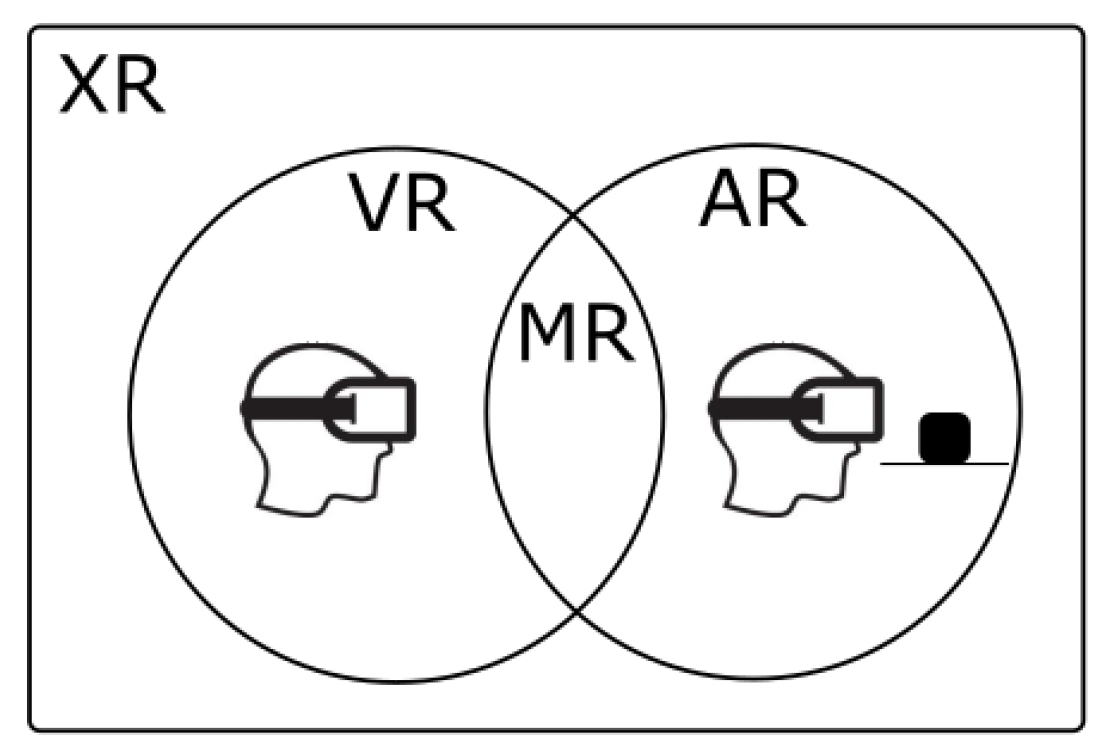
Figure 2.
Schematic of components of extended reality technologies. .
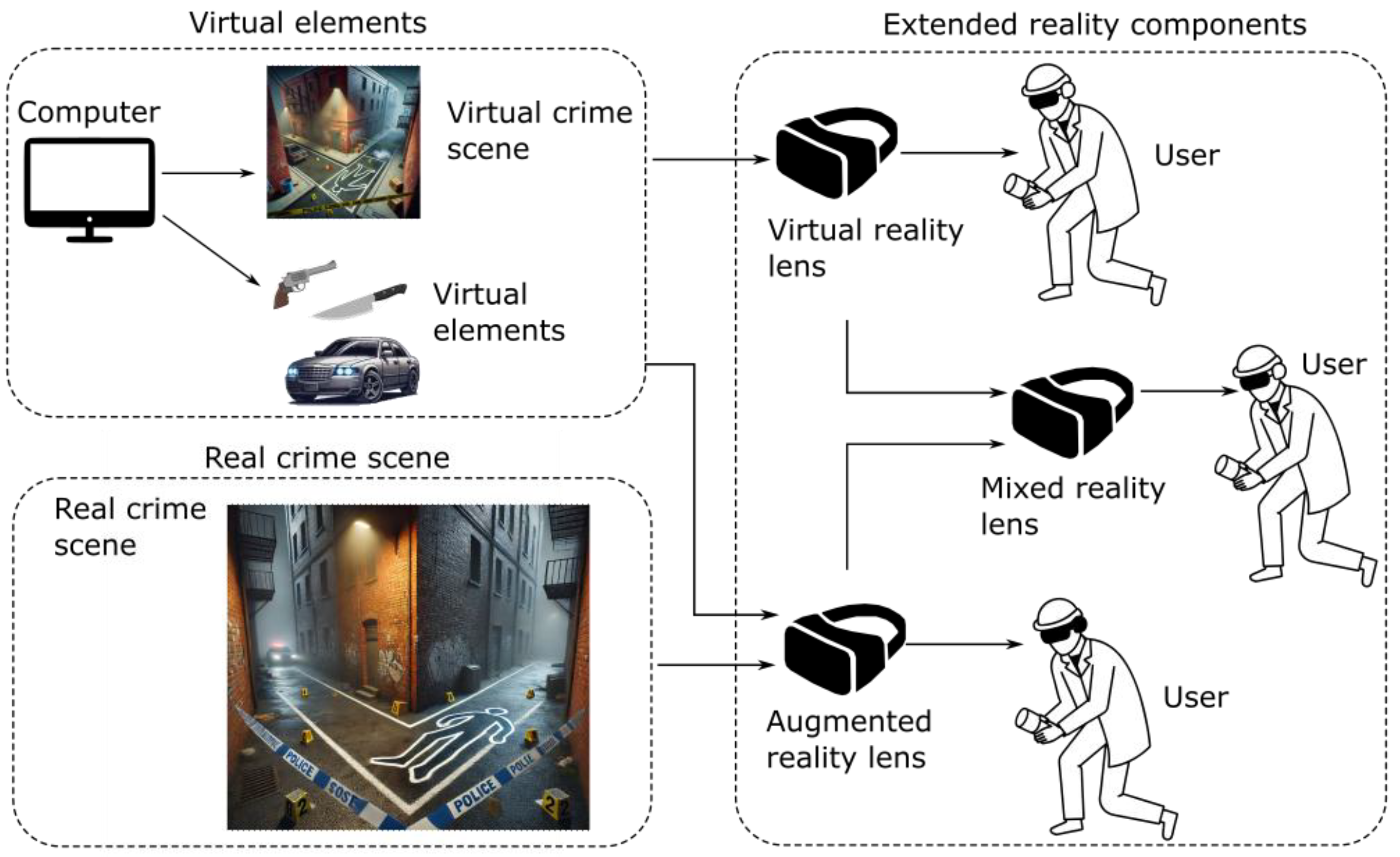
Figure 3.
Bibliometric graph of co-occurrence of terms related to studies on XR technologies used in forensic crime scene investigation.
Figure 3.
Bibliometric graph of co-occurrence of terms related to studies on XR technologies used in forensic crime scene investigation.
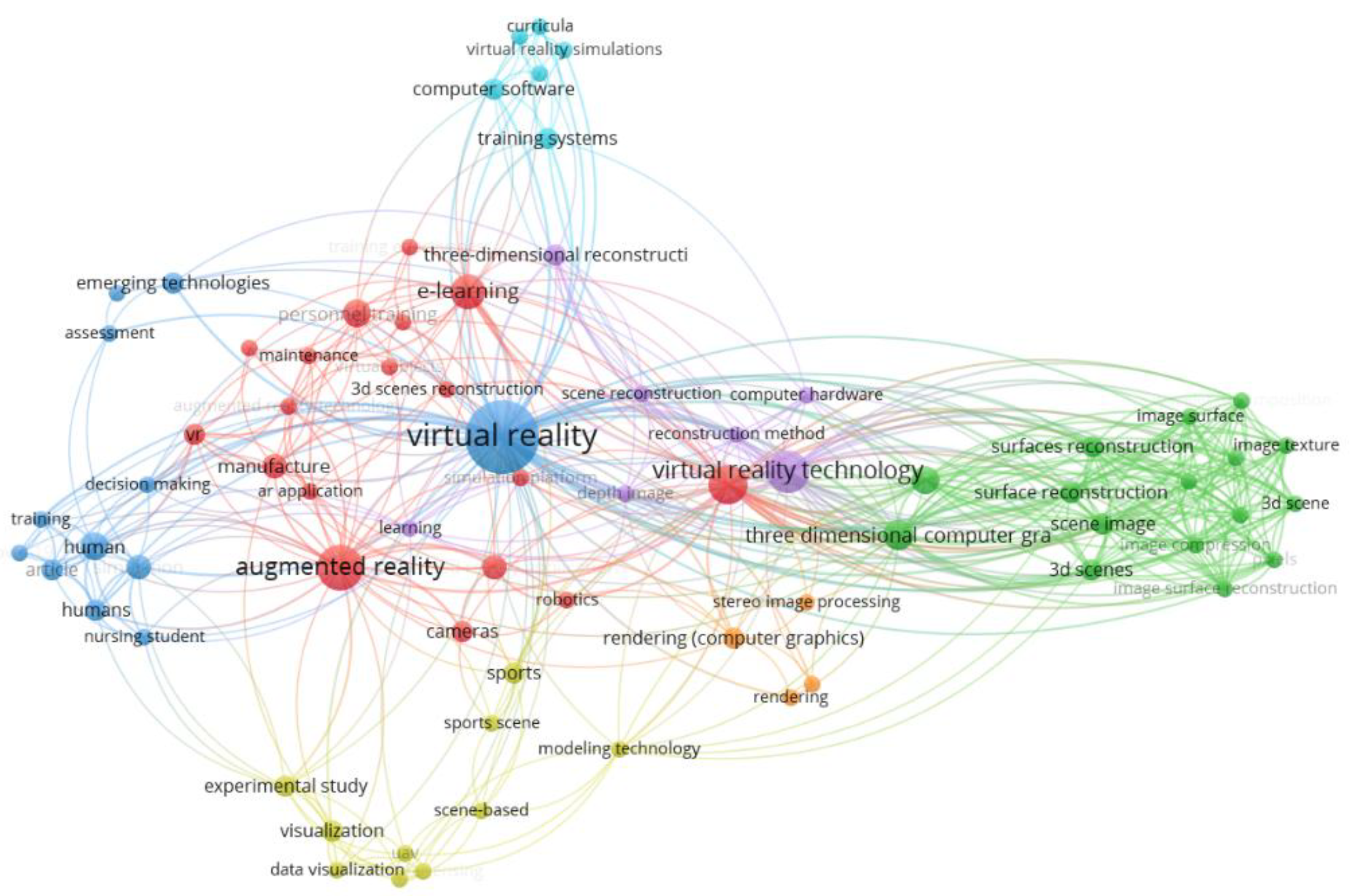
Figure 4.
Workflow in the selection of information documentation.
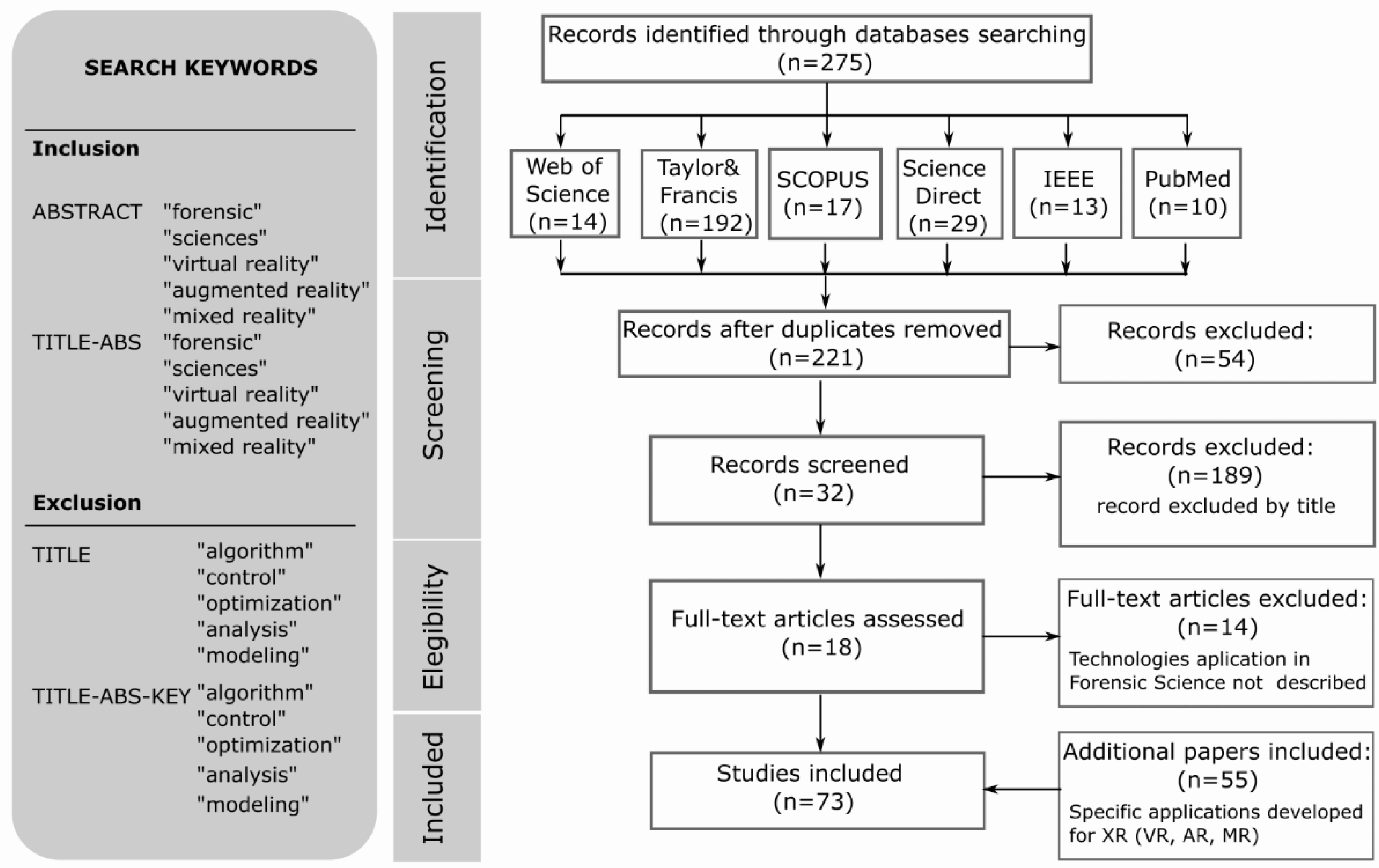
Figure 5.
Relative frequency of occurrence of the terms virtual reality, augmented reality and mixed reality in studies related to extended reality in Forensic Sciences.
Figure 5.
Relative frequency of occurrence of the terms virtual reality, augmented reality and mixed reality in studies related to extended reality in Forensic Sciences.
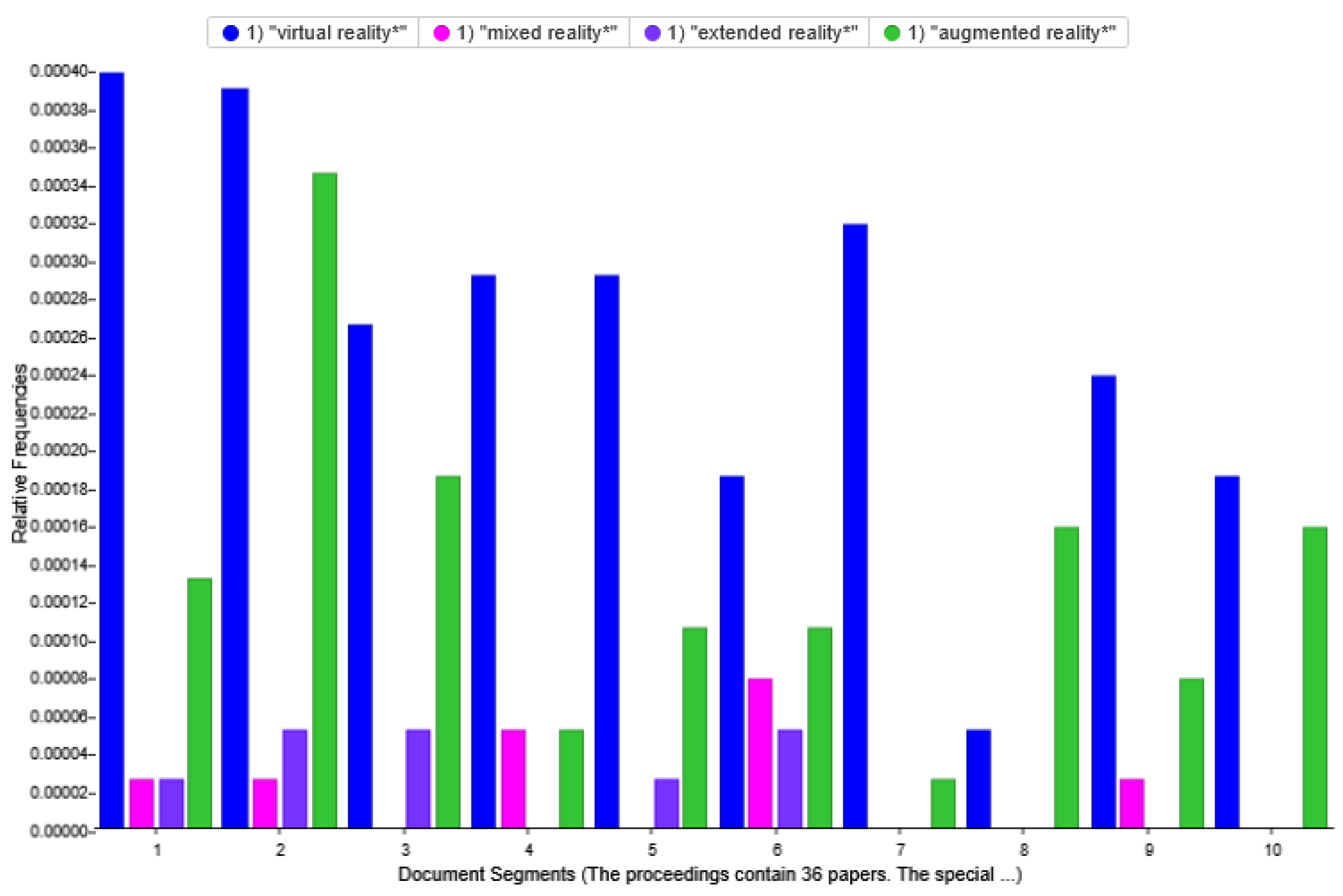
Figure 6.
Summary of content of section 3.
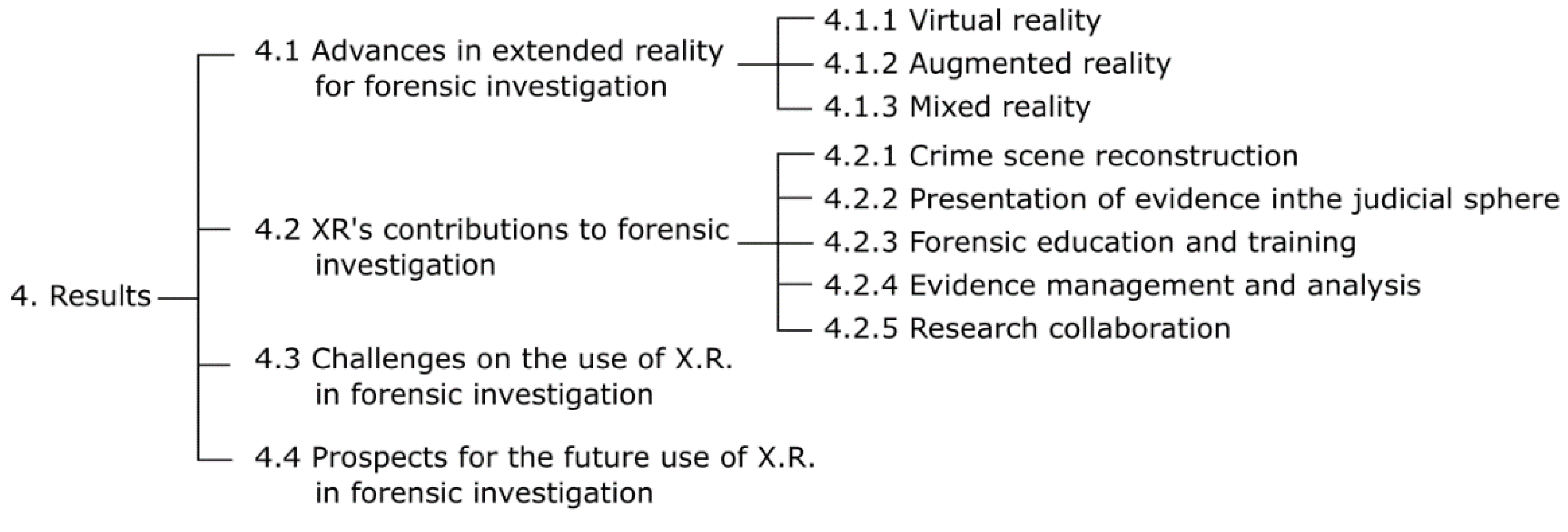
Figure 7.
Comparison of VR headsets in Forensic Science.
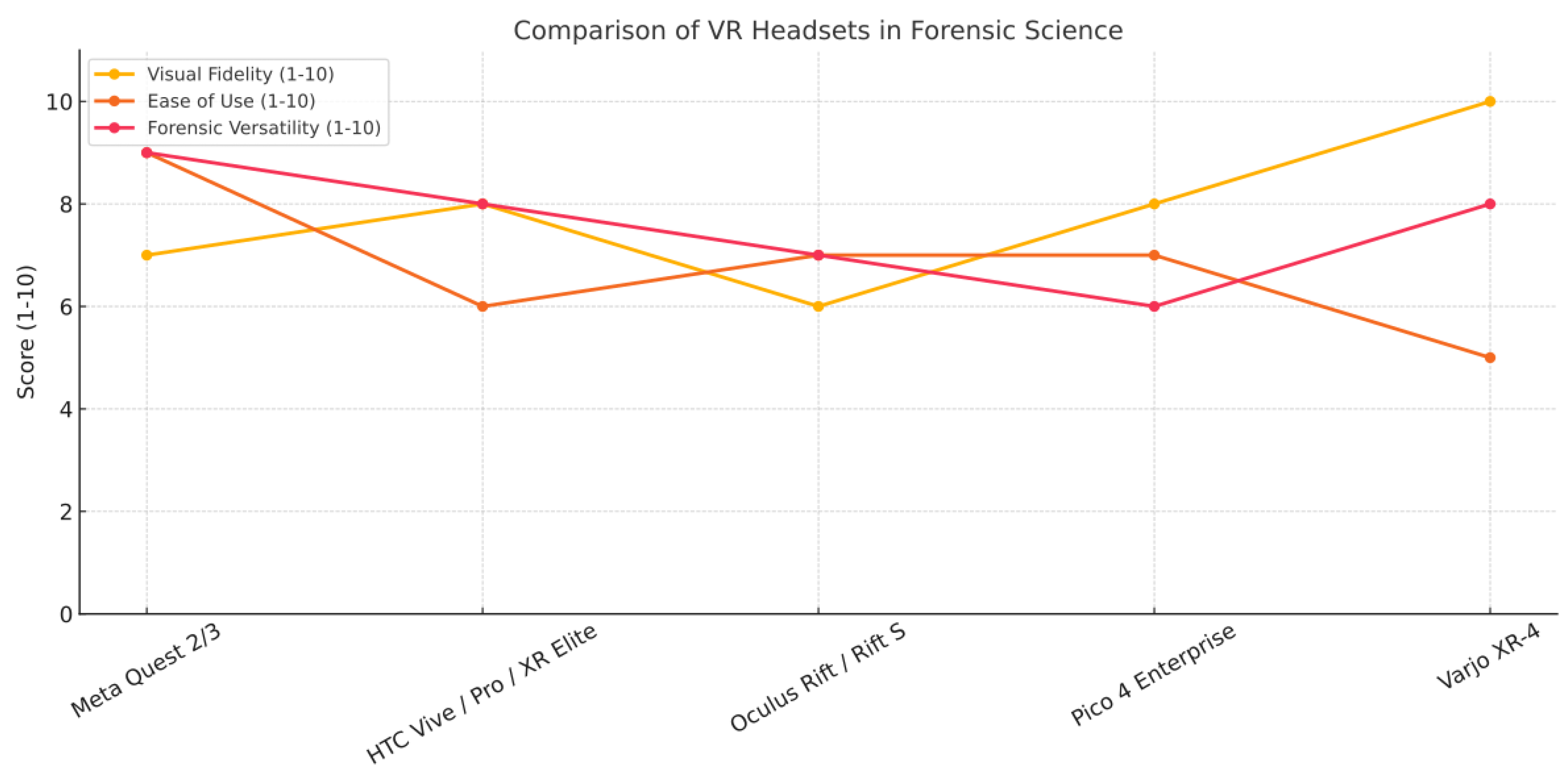
Figure 8.
Comparison of AR Glasses use in Forensic Science.
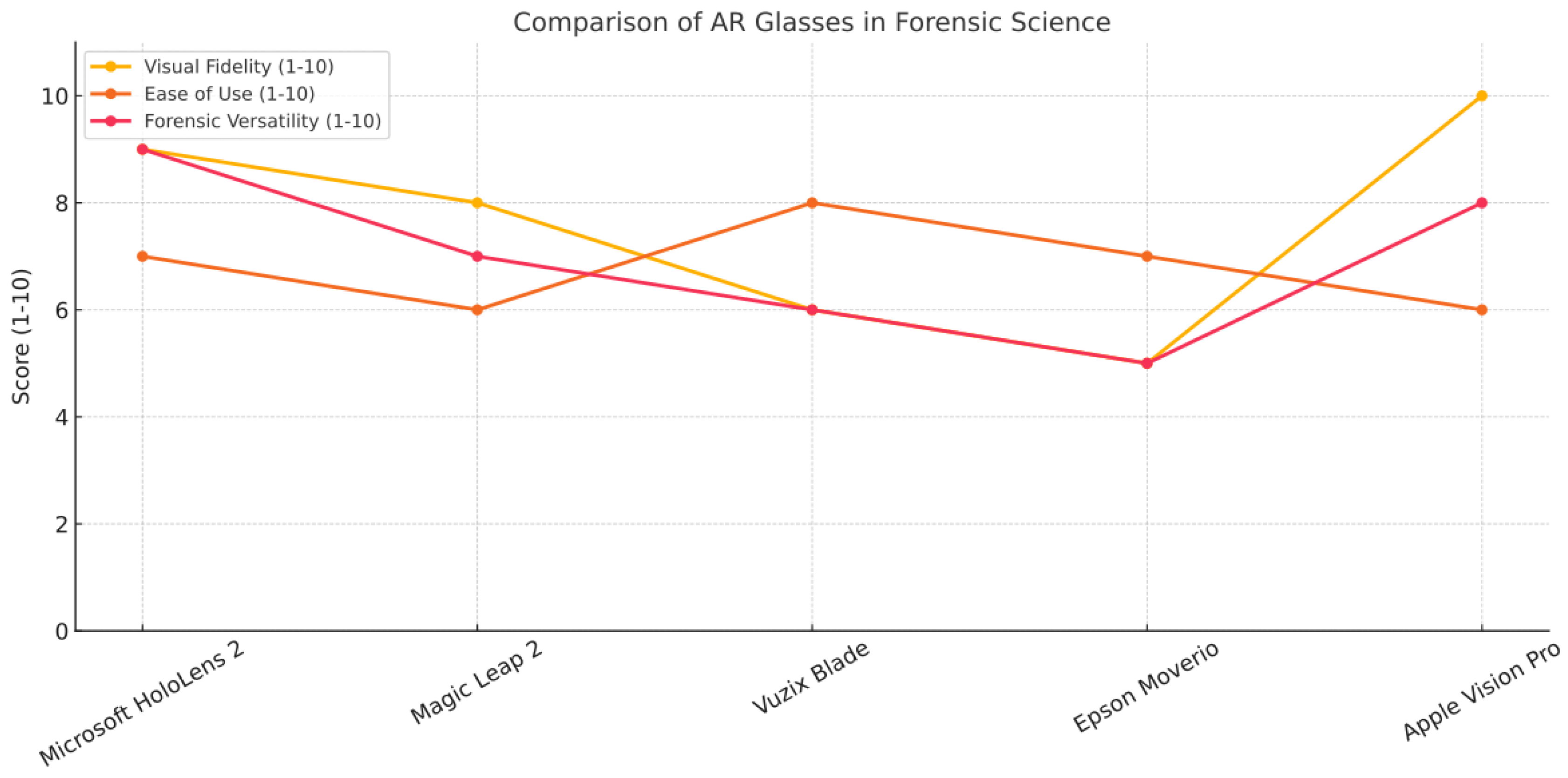
Figure 9.
Benefits of use XR technologies in forensic investigation.
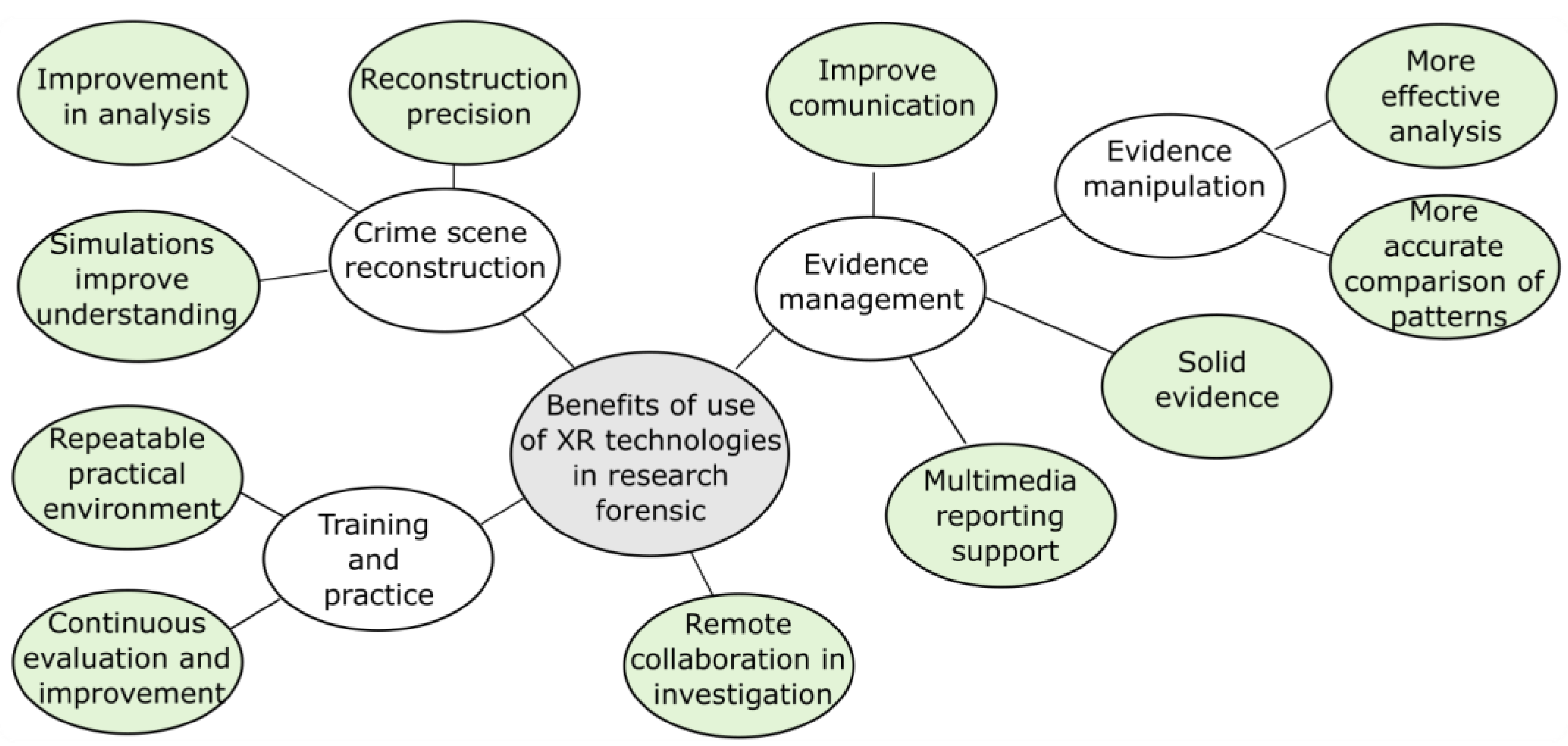
Figure 10.
Challenges and limitations of use and implementation XR in forensic investigation.
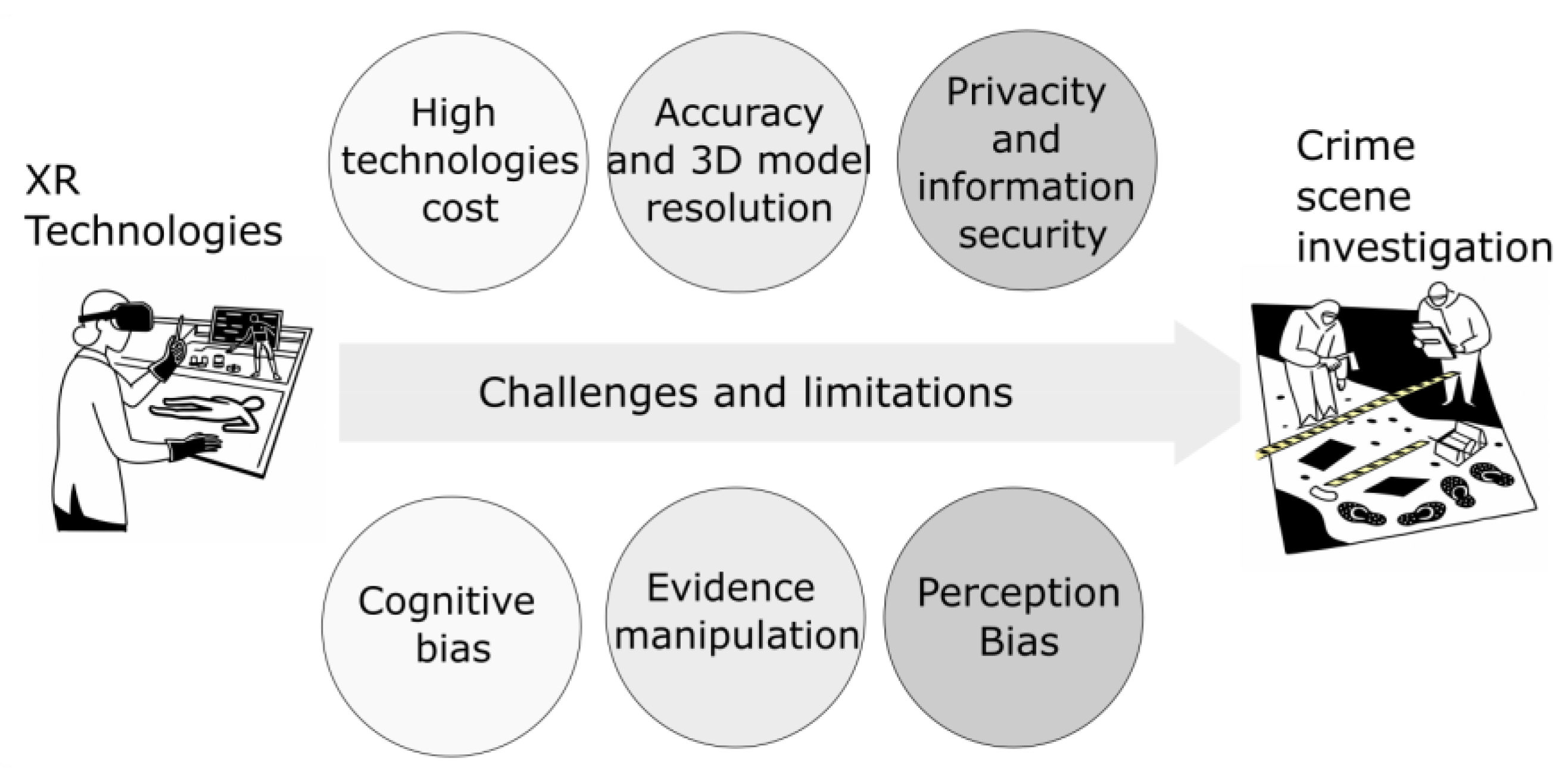
Figure 11.
Pros and Cons of Using XR in Forensic Investigation.
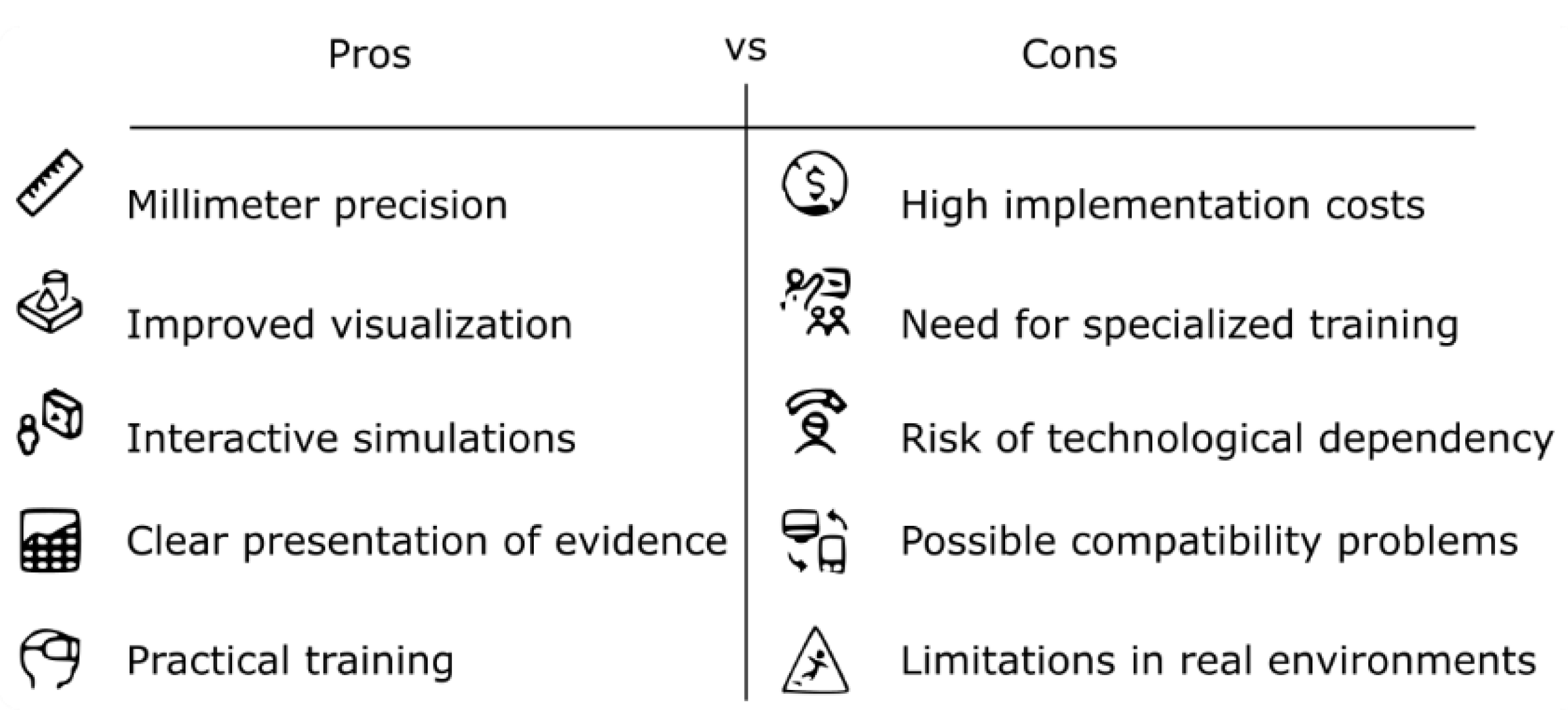
Figure 12.
Technologies and interaction of XR technologies.
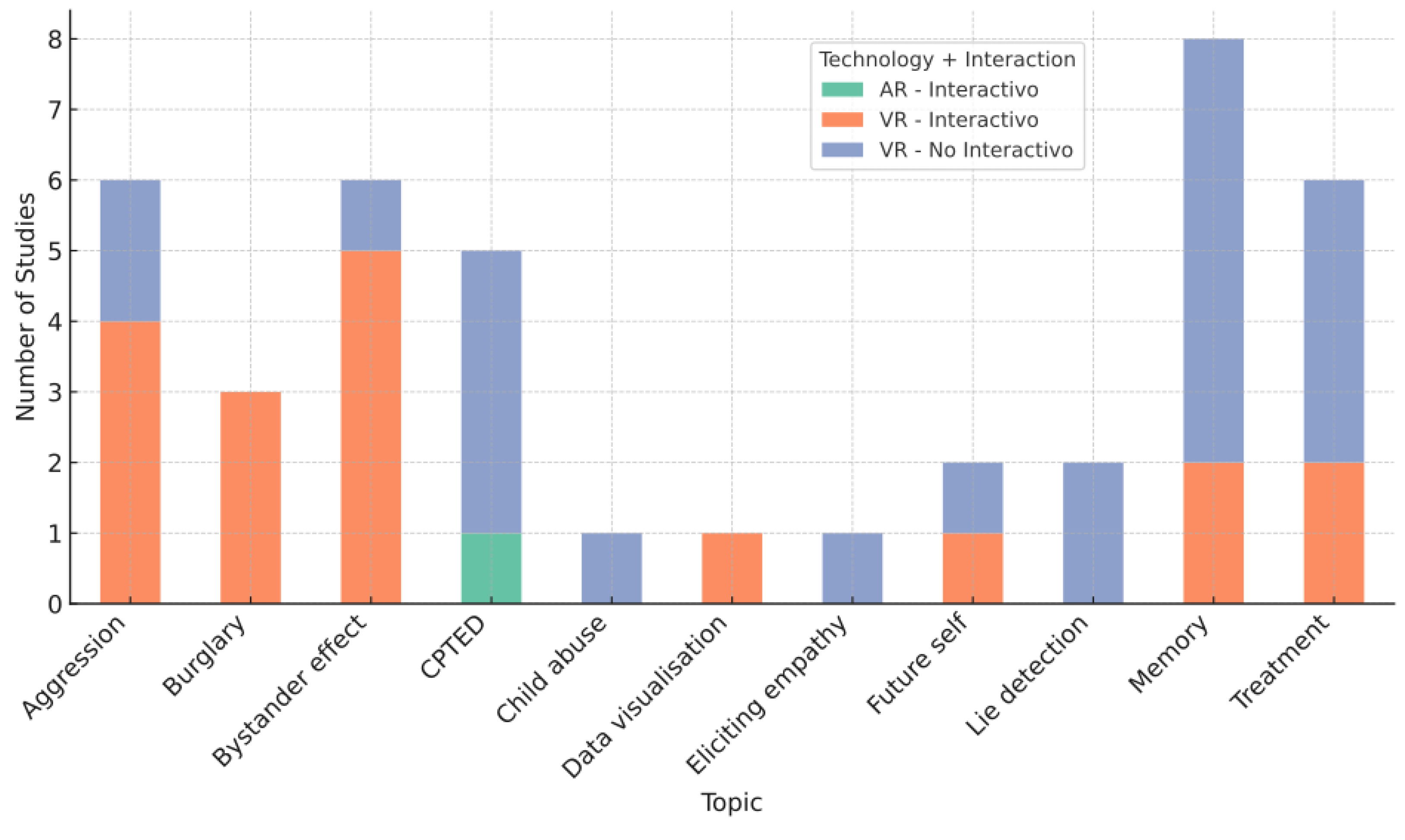
Table 1.
Extended Reality Device Features.
| Feature | Virtual reality (VR) | Augmented reality (AR) | Mixed Reality (MR) |
|---|---|---|---|
| Functions | Simulate a fully digital and immersive environment. | It overlays digital information on top of the real world. | Combine digital and physical elements with real-time interaction. |
| Immersion Level | Complete blocks out the real world. | Partial integrates virtual elements into the physical world. | Mixed allows seamless interaction between physical and virtual environments. |
| Representative Devices | Meta Quest 2, HTC Vive, Valve Index, PlayStation VR. | Microsoft HoloLens 2, Magic Leap 2, Epson Moverio, Google Glass. | Apple Vision Pro, Varjo XR-3, Trimble XR10. |
| Sensors | Motion and positioning sensors for tracking in space. | Cameras and sensors for data overlay in the real environment. | Advanced sensors to track physical and digital objects in real-time. |
| Interaction | Physical controllers, hand movement detection. | Gestures, voice, and touch screens. | Controllers, gestures, and direct manipulation of physical and virtual objects. |
| Visualization | Visor-mounted displays with total blocking of the outside environment. | Transparent or semi-transparent screens that allow you to see the real environment. | Transparent screens that mix the physical and the virtual without perceptible transitions. |
| Common Applications | Training, simulation, entertainment, immersive education. | Design, engineering, maintenance, logistics, real-time training. | Collaborative design, forensics, advanced training, industry, and health. |
| Hardware Requirements | Powerful graphics processors and external or integrated tracking systems. | Mobiles, AR glasses with cameras and integrated processors. | Advanced equipment with high processing capacity and multiple sensors. |
| Limitations | Isolation from the real environment, possible eye strain. | Limited graphic resolution and accuracy in complex environments. | High cost and complex integration requirements. |
Table 2.
Quality Assessment Questions for papers.
| Quality Assessment Questions Answer | Answer |
|---|---|
| Does the document describe augmented reality (AR), virtual reality (VR), and mixed reality (MR) technologies currently used in forensic investigation? | (+1) Yes/(+0) No |
| The paper addresses how the implementation of AR, VR, and MR has improved forensic investigation? | (+1) Yes/(+0) No |
| Does the paper discuss the ethical considerations related to using new technologies in real forensic investigation cases? | (+1) Yes/(+0) No |
| Is the journal or conference in which the article was published indexed in SJR? | (+1) if it is ranked Q1, (+0.75) if it is ranked Q2, (+0.50) if it is ranked Q3, (+0.25) if it is ranked Q4, (+0.0) if it is not ranked |
Table 3.
Strings for searching articles in scientific databases and reviews.
| Database | String search | Studies number |
|---|---|---|
| Web of Science | forensic science (Topic) and extended reality (Topic) | 14 |
| Taylor & Francis | [Abstract: forensic science] AND [Abstract: extended reality] | 192 |
| IEEE xplore | (“All Metadata”:forensic sciences) AND (“All Metadata”:extended reality) | 13 |
| Scopus | ALL ( “forensic science” AND “extended reality” ) | 17 |
| Science Direct | “forensic science” “virtual reality” “augmented reality” | 29 |
| PubMed | Search: (forensic sciences) AND (extended reality) | 10 |
| Total number of studies | 275 |
Table 4.
Findings in forensic investigation.
| Forensic Finding/Task | Description | Traditional Approach | Limitations |
|---|---|---|---|
| 1. Crime Scene Reconstruction (CSR) | Process of meticulously recreating what the crime scene looked like and what happened, using all available evidence | 2D photography, manual sketches, tape measurements | Spatial distortions, loss of 3D details, fragmented documentation, difficulty conveying scene dynamics, and risk of scene alteration due to repeated visits. |
| 2. Bloodstain Pattern Analysis (BPA) | Interpreting the shape, size, and distribution of bloodstains to reconstruct the actions that caused the bloodshed. | Visual observation, photography, manual measurements, use of strings to estimate convergence areas and impact angles | Subjectivity, difficulty documenting complex 3D patterns, cumbersome string method |
| 3. Ballistic Trajectory Analysis (BTA) | Determining the bullet’s path from the weapon to the final impact point, including shooter positioning. | Use of rods, strings, lasers, and trigonometry. | Challenging in complex scenes, “sagging factor” of strings, potential alteration of entry/exit holes. |
| 4. Bone Analysis and Facial Reconstruction | Examining bones to determine physical traits or reconstruct a face from a skull for identification purposes. | Physical examination, manual measurements. Facial reconstruction: manual clay modeling | Risk of damage to fragile bones, labor-intensive and artist-dependent reconstruction |
| 5. Post-Mortem Examination (Virtual Autopsy) | Digital medical investigation of a body to determine cause and manner of death | Invasive physical autopsy, dissection. | Destructive, irreversible, traumatic for relatives, limited training availability, biological hazards. |
| 6. Forensic Training and Education | Teaching forensic professionals techniques and procedures | Theoretical classes, labs with limited/costly simulated scenarios. | High cost, difficulty replicating rare/dangerous situations, material wear, limited repeatability |
| 7. Judicial Presentation of Evidence | Presenting and explaining evidence clearly to judges and juries | Oral testimonies, 2D photographs, diagrams. | Difficulty conveying complex spatial information, risk of misinterpretation, low visual engagement. |
| 8. Digital Evidence Analysis (from XR Devices and Others) | Extracting and analyzing data from electronic devices (including XR) relevant to an investigation. | Data acquisition from computers and phones; file and metadata analysis. | Emerging field, lack of standardized tools, volatile data, large volumes of biometric data. |
Table 5.
Comparison of VR headset technical characteristics.
| VR Headset | Country | Weight (gr) | AI Capabilities | FOV | Resolution (per eye) | Processing speed | |
|---|---|---|---|---|---|---|---|
| Meta Quest 3 | EE.UU | 514 | Basic (gesture tracking and facial recognition) | ~96°-110° | 2064 x 2208 | Snapdragon XR2 (up to 2.84 GHz) |  |
| Meta Quest Pro | EE.UU | 722 | Advanced (eye and facial tracking, AI optimization) | ~95°–106° | 1800 x 1920 | Snapdragon XR2+ (up to 2.84 GHz) |  |
| HTC Vive Pro | Taiwan | 555 | Not integrated (depends on PC for processing) | ~110° | 1440 x 1600 | Depends on the PC |  |
| Valve Index | EE.UU | 809 | Not integrated | ~130° | 1440 x 1600 | Depends on the PC |  |
| HP Reverb G2 | EE.UU | 500 | Not integrated | ~114° | 2160 x 2160 | Depends on the PC |  |
| PlayStation VR2 | Japan | 560 | AI integration for eye and gesture tracking | ~110° | 2000 x 2040 | Depends on the PS5 |  |
| Pimax 8K | China | 850 | Not integrated | ~200° (diagonal) | 3840 x 2160 | Depends on the PC |  |
Table 6.
Comparison of technical characteristics of AR headsets.
| AR Headset | Country | Weight (gr) | Level of A.I. Capabilities | FOV | Resolution (per eye) | Processing speed | |
|---|---|---|---|---|---|---|---|
| Orion (Meta) | EE.UU | ~90 | High | ~70° | 1080p (Full HD) | High |  |
| Spectacles 5 (Snap) | USA | ~80 | Middle | ~40 | 720p | Middle |  |
| Meta Ray-Ban* | USA/Italia | ~70 | Middle | ~25 | 720p | Middle |  |
| One Pro (XReal) | China | ~90 | Middle | ~57 | 1080p | Middle |  |
| RayNeo X3 Pro (TCL)* | China | ~95 | Low | ~50 | 1080p | Middle |  |
| Rokid MAX 2 | China | ~80 | Middle | ~50 | 720p | Middle |  |
| Halliday | USA | ~75 | High | ~35 | 720p | High | 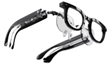 |
| INMO GO 2 | China | ~70 | Low | ~30 | 720p | Low |  |
| Viture Pro XR | China | ~100 | Low | ~60 | 1080p | Low |  |
| INMO AIR 3 | China | ~70 | Low | ~35 | 1080p | Low | 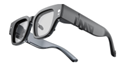 |
Table 7.
XR technologies applications in Forensic Investigation.
| XR Technologies | Application in Forensic Investigation | Ref. |
|---|---|---|
| AR evidence (AR) | Overlaying real-world digital information for forensic data collection without contaminating the crime scene | [1,37,38] |
| Complete post-mortem documentation, blood spatter analysis, and shoe print analysis | [1,51,52] | |
| ARCore / ARKit (AR) | Crime scene measurement and analysis with high accuracy using face tracking, mapping, and accurate measurement | [1,8] |
| Measurement Applications (AR) | Comparison of AR measurement accuracy between ARCore (89.42%) and ARKit (99.36%) for forensic use | [1,7] |
| Virtual Reality (VR) | Simulations and three-dimensional recreations of crime scenes, manipulation, and detailed analysis of evidence | [3,28,43] |
| Mixed Reality (MR) | Interaction with virtual objects in the real world for evidence manipulation and crime scene reconstruction | [4] |
| 3D Analysis (AR) Tools | Comparison and analysis of electronic and conventional signatures using computer vision | [2,4,8] |
| Digital Twins (MR) | Creation of virtual replicas of physical systems for analysis and monitoring in anomaly detection | [4,5] |
| Crime Scene Simulations (VR) | Evaluation of physiological and psychological responses in simulated environments for the identification of deceptive behavior patterns | [3,7] |
| Deception Detection with ERPs (VR) | Using ERPs in combination with VR scenarios to measure brain responses to specific stimuli and detect deception | [8] |
| Meta Quest 2 Headset (VR) | Forensic analysis of user data, devices, and VR headset activity logs | [3,9] |
| Headset Forensic Data Acquisition (VR) | Methodology for forensic data acquisition using tools such as AXIOM Process and Android Debug Bridge (ADB) | [10] |
| Head Mounted Displays (HMDs) (AR) | Integration of virtual content into the user’s physical environment, applications in AR video playback, and games | [8,9,11] |
| Projection of information on the vehicle’s windshield, improving safety and efficiency in the automotive field | [11] | |
| Applications in Forensic Education (AR) | Teaching forensic science in higher education and active casework, improving the execution of procedures at the crime scene | [8,12,32] |
| Learning Platforms (XR) | Creating interactive and visually enriched learning environments for teaching forensic techniques and procedures | [5,8,13] |
| Educational Games (XR) | Simulating forensic searches in field scenarios to teach best practices in forensic search investigations | [13,30] |
Table 8.
Proposed solutions to address the challenges in the implementation of XR in forensic investigation.
Table 8.
Proposed solutions to address the challenges in the implementation of XR in forensic investigation.
| Challenges | Solutions |
|---|---|
| Technical Complexity | - High Cost and Technical Complexity: Implementing XR technologies such as LIDAR scanning and VR systems can be expensive and technically challenging [69]. - Solution: Investment in training and development of cost-effective solutions can mitigate these issues. Efficient data processing and visualization techniques are also essential [19]. |
| Data Privacy and Security | - Data Privacy Concerns: Handling sensitive forensic data in XR environments raises significant privacy and security issues [1,37]. - Solution: Developing robust data protection protocols and ensuring compliance with legal standards can address these concerns [32]. |
| Hardware Variability | - Hardware Variability: Differences in XR hardware can affect the consistency and reliability of forensic investigations. - Solution: Standardizing hardware and software platforms used in forensic XR applications can help ensure uniformity and reliability [6]. |
| Participant Safety | - Safety Concerns: Ensuring the safety of participants in XR environments, especially in remote settings, is a significant challenge. - Solution: Implementing safety protocols and using built-in data collection functionalities like hand and gaze tracking can enhance safety [11]. |
| Training and Expertise | - Need for Qualified Staff: Effective use of XR technologies requires specialized training and expertise, which can be a barrier [2]. - Solution: Providing comprehensive training programs and developing best practices for XR technology use in forensic contexts can address this issue [49]. |
| Legal and Regulatory Issues | - Jurisdiction and Liability Issues: The global nature of digital evidence and XR applications can lead to complex jurisdictional and liability issues 5. - Solution: Establishing clear legal frameworks and international cooperation can help navigate these challenges [32]. |
| Ethical and Privacy Concerns | - Ethical Concerns: The use of XR in forensic investigations raises ethical issues, particularly related to privacy and data manipulation [2]. - Solution: Developing ethical guidelines and ensuring transparency in XR applications can mitigate these concerns [6]. |
| Integration with Existing Systems | - Integration Challenges: Integrating XR technologies with existing forensic systems and workflows can be difficult [32]. - Solution: Creating interoperable systems and ensuring compatibility with current forensic tools can facilitate smoother integration [32] |
Table 9.
Future Prospects of XR Technologies in Forensic Applications.
| Area | Description | Reference |
| Tools for Non-Experts | Development of user-friendly XR tools that enable non-experts (e.g., regular police officers) to quickly and efficiently create digital twins of crime scenes. | [74] |
| Legal Proceedings | Use of XR to present evidence in court, helping judges and juries gain a better understanding of the crime scene and forensic evidence. | [75,76] |
| Forensic Collaboration | AR facilitates collaboration among forensic teams by allowing collective visualization and manipulation of evidence, fostering consensus and decision-making. | [40,73] |
| Forensic Psychiatry & Treatment | VR is being explored for use in forensic psychiatry, particularly for assessing and treating aggression and behavioral issues in safe, controlled environments. | [77,78,79] |
Disclaimer/Publisher’s Note: The statements, opinions and data contained in all publications are solely those of the individual author(s) and contributor(s) and not of MDPI and/or the editor(s). MDPI and/or the editor(s) disclaim responsibility for any injury to people or property resulting from any ideas, methods, instructions or products referred to in the content. |
© 2025 by the authors. Licensee MDPI, Basel, Switzerland. This article is an open access article distributed under the terms and conditions of the Creative Commons Attribution (CC BY) license (http://creativecommons.org/licenses/by/4.0/).
Copyright: This open access article is published under a Creative Commons CC BY 4.0 license, which permit the free download, distribution, and reuse, provided that the author and preprint are cited in any reuse.


