

Submitted:
09 June 2025
Posted:
10 June 2025
You are already at the latest version
Abstract
The adoption of artificial intelligence (AI) in marketing and social media is gaining growing scholarly interest. While AI technologies offer significant potential for enhancing customer engagement (CE), their effectiveness depends on an industry's level of digital and AI readiness. This is especially relevant for people-centric sectors such as tourism and hospitality, where digital maturity remains relatively low. This study aims to understand how AI supports CE and social media marketing (SMM), and to identify the key antecedents and consequences of its use. Using the PRISMA approach, we conduct a systematic review of 55 peer-reviewed empirical studies on AI-based CE and SMM. Our analysis identifies the main contributing theories and AI technologies in the field, and uncovers four central themes: (1) AI in customer service and user experience design, (2) AI-based customer relationships with brands, (3) AI-driven development of customer trust, and (4) cultural differences and varying levels of AI readiness. We also develop a conceptual framework that outlines the determinants and outcomes of AI-based CE, including relevant moderators and mediators. The study concludes with directions for future research and provides theoretical and managerial implications, particularly for the tourism and hospitality industries.
Keywords:
artificial intelligence
; marketing
; customer engagement
; consumer engagement
; customer engagement marketing
; social media marketing
; tourism and hospitality
; systematic literature review
1. Introduction
Over the years, marketing management has evolved from a purely transactional focus to a relationship-oriented approach, and more recently, to engagement marketing (Pansari and Kumar, 2017)[1]. Today, firms aim to engage customers in various ways, as customer engagement (CE) can enhance a company’s competitive advantage (Kumar et al., 2010)[2]. Customers actively seek information, suggestions, and recommendations on social media. Advances in information technology have driven the goal of delivering information instantly across numerous social media platforms. Social media enable the rapid dissemination of user-generated content, helping businesses operate more efficiently (Gupta and Kan, 2024) [3]. To foster CE through social media, firms are increasingly adopting artificial intelligence (AI)-based technologies (Hollebeek et al. 2024)[4]. AI is used to manage the vast amount of user-generated content and provides tools for predicting demand, analyzing customer behavior, and enhancing engagement (Gupta and Kan, 2024; Davenport i Ronaki, 2018) [3,5].
The successful integration of AI to enhance CE marketing efficiency must align with the digital readiness of the focal company, which is, in turn, strongly influenced by the digital maturity of the industry in which it operates. Kotler et al., (2021) emphasize that a firm’s ability to adopt advanced technologies—such as AI, machine learning, and robotics—is significantly shaped by the digital infrastructure and capabilities available in the industry, on both the supply and demand sides [6]. In industries with high digital readiness among both firms and customers—such as financial services—there is typically greater pressure and opportunity to adopt AI tools. In contrast, firms operating in low-digital-readiness industries (e.g., healthcare), where business processes still depend heavily on physical employee–customer interactions, face a strategic dilemma: whether to proactively invest in digitalization or wait until a larger share of customers engage in digital activities. Tourism and hospitality (TH) represents a low-digital-readiness sectors. While the TH industry has introduced some digital solutions—such as online booking systems and customer review platforms—these technologies are typically used at the beginning or end of the customer journey. The core of the experience, particularly the service delivery phase, remains largely analogue (Kotler et al., 2021)[6]. As TH is a labor-intensive industry, firms must develop AI capabilities to leverage AI technologies profitably. AI capabilities are defined as a firm’s ability to select, orchestrate, and utilize AI-specific resources (Dogru et al., 2025)[7]. Therefore, it is essential to review past studies to establish a foundation for future research and to deepen our understanding of how AI can support CE in social media marketing (SMM), as well as to identify the key antecedents and consequences of its effective use. This will support TH business in developing AI capabilities and implementing AI technologies to enhance CE and SMM strategies.
In recent years, several literature reviews have been published addressing AI-based marketing in academic research. Some of them were focusing on the implications of the development of new technologies in marketing. For example, Sang (2024) in his literature review drew attention to the growing interest in AI, perceived as a key tool for optimizing marketing strategies and making data-driven decisions [8]. The author emphasized the potential of AI in marketing, especially in the context of its integration with social media, which play an important role in communicating with recipients. The article notes that combining AI with new social media opens up new possibilities - AI can analyze huge data sets from social platforms in real time, which allows the creation of dynamic campaigns adapted to current trends, user emotions and their online behavior. The results of Bash’s (2023)[9] research indicate that companies feel the need to implement AI due to competitive pressure and growing customer expectations. The use of AI has enabled a better understanding of customer data, which has translated into a higher return on investment and increased customer satisfaction thanks to personalized services. AI is radically transforming the marketing environment, offering new opportunities, but at the same time requiring companies to adapt significantly. Şenyapar (2024)[10], notes that AI enables in-depth analysis of customer data, such as purchase history, online interactions, and content engagement. AI identifies patterns and preferences that are invisible to humans, which increases the effectiveness of marketing activities and improves customer experience. AI enables the creation of highly personalized content and ads based on behavioral data. Ads are precisely tailored to the needs of a specific recipient, which translates into higher engagement and conversion rates.
While previous literature reviews have significantly contributed to our understanding of AI’s potential in marketing, the foundations of AI-based strategies for CE and SMM—particularly in the context of firms’ AI readiness and competencies—still warrant further investigation. A comprehensive systematic review that not only synthesizes current findings but also clarifying research questions and outlines future research directions is urgently needed. Addressing this research gap, this review aims to explore the potential of AI as an effective tool for enhancing CE in SMM, while capturing the diversity and depth of existing research in this area. We examine the key themes that have emerged in the literature, along with the evolving AI-based technologies for CE and SMM over time. In doing so, it lays the foundation for future research questions and directions relevant to scholars and practitioners involved in CE marketing on social media platforms. Specifically, the review offers insights into several key research questions:
RQ1. What are the key characteristics of the empirical research literature on artificial intelligence in customer engagement and social media marketing, particularly in terms of theories, research contexts, and methodologies?
RQ2. Which specific artificial intelligence technologies are examined in the empirical research literature on customer engagement and social media marketing?
RQ3. What are the main thematic areas identified in empirical research on artificial intelligence in customer engagement and social media marketing?
RQ4. How is customer engagement conceptualized and measured in these studies, and what other related variables (e.g., independent, dependent, moderating, mediating, control) are included in the research models?
RQ5. What opportunities exist for further research on artificial intelligence in customer engagement and social media marketing within the tourism and hospitality sectors?
The remainder of the paper is structured as follows. The next section outlines the theoretical background and details the systematic literature review methodology. This is followed by an in-depth analysis of the reviewed studies and a discussion of key findings. The paper concludes with proposed future research directions, theoretical and managerial implications, acknowledged limitations, and final conclusions.
2. Theoretical Background
2.1. Customer Engagement Marketing
Customer engagement (CE)—also referred to as customer engagement behavior (CEB)—refers to a customer’s behavioral manifestations toward a brand or firm beyond purchase, driven by underlying motivational factors (van Doorn et al., 2010)[11]. CE encompasses a range of non-transactional behaviors, including word of mouth, recommendations, assisting other customers, writing reviews, taking legal action, providing feedback, submitting complaints, and contributing ideas for new products (Braun et al., 2016 [12]; Żyminkowska et al., 2023 [13]). These engagement behaviors can indirectly contribute to firm performance. For instance, customers who spread positive word of mouth or provide referrals assist in acquiring new customers, thereby reducing firms’ acquisition costs. When customers offer feedback or suggest new ideas, firms can leverage this input to enhance existing products or develop new offerings, which may further lower costs and improve both customer acquisition and retention (Kumar et al., 2010)[2].
Engaged customers also tend to be more loyal and less price-sensitive than their non-engaged counterparts (So et al., 2021)[14]. Consequently, CE is widely regarded as critical to both short-term performance and long-term business success (Shawky et al. 2020)[15]. The firm-level benefits of CE include increased sales, higher customer equity, and greater shareholder value (Wird et al., 2013)[16]. As a result, many companies continue to invest heavily in CE initiatives (Convero, 2016)[17] despite the challenges involved in cultivating an engaged customer (Itani et al., 2019[18]; Żyminkowska, 2019)[19].
Customer engagement marketing (CEM) refers to a firm’s deliberate effort to motivate, empower, and measure customers’ voluntary contributions to its marketing functions beyond the core economic transaction (Harmeling et al., 2017) [20].Karam (2018) [24] views CEM as a foundational tool and a technique for organizations to capitalize on customer engagement to achieve their objectives [21]. CEM is a strategic aspect of the engagement process focusing on the planning phase of customer engagement from a firm perspective (Karam et al., 2019)[22]. Alvarez-Milán et al. (2017) introduced a decision-making framework for strategic CEM, which consists of five stages mapped at the foundational and instrumental levels[23]. Detailed propositions of initiatives undertaken by firms to develop customer engagement have also been introduced to the prior literature. Harmeling et al. (2017) proposed two distinct types of CEM initiatives: task-based initiatives which motivate participating customers to complete a single firm-defined task, and experiential initiatives, which use events to motivate autonomous customer contributions [20]. Beckers et al. (2018) distinguished two general types of firm initiatives in CEB stimulation: customer-to-customer interactions (word of mouth) when a company stimulates their customers to write a review or recommend the firm, and customer feedback (voice) when a company invites their customers to give feedback on for instance a new product or service [24]. In line with Beckers et al. 2018[24], Karam et al. 2019[22] also identified two types of CEM initiatives including influential CEM initiatives such as social media engagement and product reviews, and developmental CEM initiatives which include product development input and communication platforms.
2.2. Artificial Intelligence in Marketing
In fostering CE, firms are increasingly implementing AI-based technologies (Hollebeek et al., 2024)[4]. Jensen Huang, CEO of NVIDIA, outlines a progression of AI development through four key stages, each representing a significant evolution in capabilities and aligning with advancements in computing power and algorithmic sophistication (Business Insider, 2025)[25]. The first stage, perception AI, focuses on enabling machines to interpret and understand sensory data such as images, speech, and text. The second stage, generative AI, involves creating new content—text, images, audio, and video—based on learned patterns. The emergence of large language models exemplifies this phase, with applications ranging from creative writing to code generation. The third stage, agentic AI, introduces autonomy, allowing AI systems to make decisions, plan actions, and adapt to new situations without explicit human instructions. This stage includes AI agents capable of self-coding and dynamic problem-solving, marking a shift toward more interactive and responsive applications. The fourth stage, physical AI, integrates AI into the physical world through robotics and autonomous systems. These entities can perceive their environment, make decisions, and perform actions in real time, enabling applications such as autonomous vehicles, drones, and humanoid robots.
Among these, generative artificial intelligence (GenAI) has emerged as a transformative force, driving enterprise-wide AI adoption (Kshetri et al., 2024) [26]. GenAI refers to systems capable of creating new text, images, videos, and other types of content in response to a prompt (i.e., a query). These systems can interact with humans and are built—or ‘trained’—on datasets that vary in size and quality, ranging from small language models to large language models (Kshetri et al., 2024; Ooi et al. 2023) [26,27]. GenAI empowers marketers to create customized content tailored to specific audience segments, enhancing relevance and resonance. It can also be used to develop virtual assistants for customer service, enabling rapid, personalized responses to customer inquiries. Additionally, GenAI tools support the creation of individualized marketing materials, allowing firms to engage customers in more distinctive and meaningful ways (Gupta et al., 2024)[3]. As a result, GenAI facilitates the delivery of personalized, timely, and relevant communication across preferred customer platforms, thereby enriching the customer experience and boosting engagement with products and brands (Kshetri et al. 2024)[26]. When applied to marketing functions in the TH industry, GenAI can use travel history, consumption preferences, and social media content to create personalized recommendations for travelers, generate descriptions of destinations and hotel properties, and even create virtual tours of hotels and attractions (Dogru et al. 2025)[7].
The adoption of GenAI in marketing is accelerating rapidly. As of January 2025, 78% of 2,773 directors surveyed by Deloitte across 14 countries reported plans to increase their GAI spending in the next fiscal year. Further GenAI development is anticipated, with directors identifying two high-priority areas: automation through agentic AI (52%) and multi-agent systems (45%) (Delloite, 2025)[28].
2.3. Social Media Marketing
Social media are a collection of Internet-based applications that rely on the ideological and technological foundations of Web 2.0, enabling users to create and share their own content( Kaplan and Haenlein 2010)[29]. Social media appear in many forms, such as blogs, microblogs (e.g., Twitter), social networking sites (e.g., Facebook, LinkedIn), media-sharing platforms (e.g., YouTube, Flickr), social bookmarking and voting sites (e.g., Digg, Reddit), review sites (e.g., Yelp), online forums, and virtual worlds (e.g., Second Life).( Zarrella, 2010)[30]. Due to their viral nature, social media platforms offer an attractive solution for companies looking to promote their products and services (Xiang and Gredel, 2010)[31]. Social media enable companies to gather, store, analyze, and utilize customer data and feedback, allowing for more effective targeting of online audiences and personalization of messages (Gurau 2008, Kaplan and Haenlein 2010) [29,32].
Social media marketing (SMM) is the process of generating website traffic or capturing attention through social media platforms( Barker et al., 2016)[33]. SMM refers to the use of social media platforms to promote a company and its offerings. It can be considered a part of broader online marketing efforts that complement traditional web-based promotional methods, such as email campaigns and online advertisements (Barefoot and Szabo 2010)[34].
SMM is a relatively inexpensive way to reach the right customer in a relatively short amount of time. Compared to traditional forms of promotion, such as sales representatives, intermediaries, or distributors, the use of social media is generally more cost-effective. Moreover, it enables businesses to reach customers who may be inaccessible due to time or location constraints of existing distribution channels. Social media platforms enhance efficiency and reduce costs by providing customers with three key areas of benefit (Watson et al., 2002, Sheth and Sharma, 2005)[35,36].
Effective SMM requires a well-thought-out strategy and regular data analysis. Analytical tools, along with the appropriate use of artificial intelligence, make it possible to assess and increase audience engagement, reach, and conversions (Kiedmann et al. 2011)[37].
Despite its many advantages, SMM also comes with challenges, such as the rapid spread of negative opinions, the need for constant monitoring of communication channels, and the difficulty in measuring the direct impact of actions (Kiedmann et al., 2011) [37]. Companies must be prepared for reputation crises, which in the online environment can escalate within just a few hours (Kiedmann et al.,. 2011)[37]. In the era of social media, consumers are no longer just passive recipients of marketing messages—they increasingly take on the role of engaged brand ambassadors by commenting, sharing, and creating content related to the company. This phenomenon creates new opportunities but also requires brands to continuously monitor their online presence.
3. Materials and Methods
A systematic literature review (SLR) was employed as the research method. A SLR is a reliable research method that enables an objective analysis of available study results within a given field. It allows for a comprehensive understanding of the topic and helps identify research gaps, which serve as valuable guidance for future investigations. Thanks to clearly defined criteria for source selection and methodology, it ensures high repeatability and credibility of findings. Additionally, it provides a solid foundation for making evidence-based decisions [38,39]. The SLR serves as a confirmation of the current state of the available literature, thoroughly analyzing the quality of peer-reviewed journals while adhering to the reporting standards composed of a meta-analytical structure (PRISMA)[40]. PRISMA (Preferred Reporting Items for Systematic Reviews and Meta-Analyses) is a set of guidelines designed to improve the quality of systematic review reporting, developed in response to concerns about their inadequate preparation [41].
In this study, the main objectives of SLR approach include:
- (i)
- Evaluating significant and high-quality articles dedicated to the use of AI in CE and SMM.
- (ii)
- Identifying existing theories, main themes and research models related to AI, CE, and SMM.
- (iii)
- Identifying research gaps in the literature and suggesting directions for future research.
In our analysis we adapted PRISMA protocol which comprises three main phases, including Identification, Screening, and Inclusion (Page et al., 2021)[41] presented in Figure 1. The review consisted of (1) establishing exclusion criteria for the study (2) assessing the existing literature, and (3) reporting the findings.
The Scopus database was used in the identification process of searching available peer-reviewed scientific literature. Bibliometric analyses are based on the most reputable data sources, such as Scopus, which ensures access to the highest-quality and most frequently cited publications [57]. The Scopus database offers one of the most comprehensive overviews of global scientific output.
Bibliometric analysis is used to identify the research sample and involves the process of searching for relevant keyword pairs, as well as evaluating their relevance and quality. Based on the selected keywords, three specific pairs were created: “artificial intelligence and customer engagement,” “artificial intelligence and social media marketing,” and “customer engagement and social media marketing.”
Keywords were searched in keyword sections, titles, and abstracts. The first inclusion criterion was that the work be published in English. The search process conducted on April 10, 2025, initially identified 19,733 articles. However, we only included publications that appeared within the fields of Marketing, Business, and AccountingTherefore, studies published in other disciplines (n = 19,334) were excluded. Additionally, only peer-reviewed journal articles were included, while other types of studies were excluded (e.g., conference proceedings, books, trade journals; n = 103) (Zorzela et al., 2016)[42], resulting in a sample of 296 publications eligible for further analysis.
During the screening phase, we conducted a title-abstract-keyword review of these 296 articles (Page et al., 2021; Rehman et al. 2020), narrowing our focus to studies examining the impact ofAI on CE and SMM. e excluded 43 irrelevant articles [41,43]. For example, we excluded Diwanji et al. (2024) who analyzed understandings of the role of AI in programmatic advertising. At this stage we also excluded 5 duplicates. Finally, this step yielded 248 articles qualified for full-text review (Moriuchi 2019, Perez-Vega et al. 2021) [44,45].
In the next step of scanning procedure we excluded 59 articles irrelevant to our research questions (e.g., Capatina et al., 2020) [46], which presented the identification of potential users’ expectations towards future AI software for SMM. Additionally, we excluded a further 43 theoretical articles from our (SLR, as we focused on empirical research articles to develop a conceptual framework outlining the determinants and outcomes of AI-based CE and SMM, based on prior empirical investigations. With the aim to analyze valuable, high-quality articles published in peer-reviewed journals, we continued the screening phase and applied the selection criterion based on the recommendations of Rowlinson et al. [47], who emphasized that articles published in journals with an impact factor above 3 are considered to be internationally outstanding in terms of originality and reliability. Following these guidelines, we adopted an impact factor threshold of at least 3 and above. Therefore, in the last step, we excluded n= 91 articles. No date restrictions were applied during the selection process, as the aim was to observe the development of AI, CE, and SMM over time.
Ultimately, 55 empirical articles were included in the analysis presented in this paper (see Table 1, Appendix 1).
4. Results
4.1. Descriptive Analysis
An analysis of the annual distribution of publications revealed a sharp increase in the number of articles related to AI in CE and SMM. As many as 56% of the reviewed studies (23 articles) were published between 2023 and 2025, confirming the growing popularity of these research areas, and the remaining (29%) were published in the years 2020-2022 (e.g., Shawky et.al 2020; Wahid et.al, 2022)[15,48]. Another 15% were published in the years 2013-2019,) (e.g., Chauhan et.al 2013, Yang et.al 2019) [49,50].
Our sample of articles came from 37 journals including Journal of Retailing and Consumer Services (5 articles), Marketing Intelligence & Planning (3), Cogent Business & Management (3), Psychology & Marketing (3), Journal of Business Research (3), Journal of Service Research(2) and International Journal of Contemporary Hospitality Management (2), Journal of Research in Interactive Marketing(2) International Journal of Bank Marketing (2), Asia Pacific Journal of Tourism Research (2), Journal of Hospitality and Tourism Insights (2) and others (Figure 2).
The empirical research literature on AI in CE and SMM reveals several key characteristics across three core dimensions: contributing theories, research contexts, methodologies, and AI technologies.
4.1.1. Theories
The studies are grounded in a diverse set of theories, indicating a multidimensional approach to understanding AI’s role in CE and SMM:
- Other notable theories include: Flow Theory, Social Exchange Theory, Parasocial Relationship Theory, Theory of Planned Behavior, and Narrative Transportation Theory.
Overall, our review revealed that 83 different theories were adopted by the authors. This set of theories reflects a diverse methodological approach, combining perspectives from psychology, sociology, marketing, and information systems. The use of theories such as Customer Engagement Theory, the S-O-R model, UGT, and TAM/UTAUT indicates an interdisciplinary research framework that enables a comprehensive analysis of AI’s role in CE and SMM.
4.1.2. Research Contexts
The studies encompass a diverse range of geographical locations and industry sectors, highlighting the global significance of a AI, CE and SMM. The most frequently analyzed regions include:
Most of the research has come from the following sectors:
This suggests that research is primarily focused on service-oriented and consumer-facing industries, such as hospitality, tourism, retail, e-commerce, food services, banking, and education. In these sectors, customer interactions play a crucial role in building brand value, loyalty, and user satisfaction. The global scope of research demonstrates that the role of AI in CE and SMM is not limited to any one region—it is a phenomenon of international relevance.
4.1.3. Research Methods
Among the empirical articles, quantitative studies predominated—used in 42 publications, accounting for over 76% of the total (Table 1). Qualitative research appeared in only 2 articles (approx. 3%) hile mixed methods were applied in 11 studies (20%).The dominance of quantitative studies provides a strong foundation for future cross-study comparisons and meta analysis, which may deepen our understanding of these rapidly evolving fields.
This also highlights the need for more qualitative and longitudinal studies to better capture evolving user experiences and behaviors over time. The global scope of research demonstrates that the role of AI in CE and SMM extends beyond regional boundaries, confirming its international relevance.
4.1.4. AI Technologies Examined
In the reviewed empirical literature on the use of AI in SMM and CE, several main categories of technologies are identified. The research primarily focuses on solutions that support customer communication, experience personalization, and service process automation. The most frequently analyzed technologies include chatbots, voice assistants, immersive systems (AR/VR, Metaverse), machine learning algorithms, generative systems, service robotics, and the Internet of Things (IoT).
4.1.4.1. Interactive Customer Communication Systems
The most frequently studied solution is chatbots, which are a key tool for automating customer interactions in e-commerce and service sectors. Examples include research conducted in various parts of the world, such as Portugal (Gomes et al., 2025) [66], Europe (Elmashhara et al., 2024)[74], India (Behera et al. 2024[77]), Oman (Rahman et al., 2023) [43], and China (Gao et al.,. 2023)[60].The study by Azer and Alexander (2024)[76] explores specific applications of ChatGPT in the service sector.Voice assistants, such as Apple Siri, Amazon Alexa, and Samsung Bixby, are also analyzed as tools that support natural communication with users. Their role is discussed by Maduku et al. (2024)[78], who highlight their growing presence in digital marketing.
4.1.4.2. Immersive Systems: AR/VR and the Metaverse
Immersive technologies, such as augmented reality (AR), virtual reality (VR), and Metaverse environments, are gaining increasing attention in empirical research. These solutions create new, engaging forms of interaction between brands and consumers. Farah et al. (2024)[68] examine their application in the UK market, while Rahman et al. (2023)[43] explore their impact on customer experiences in Oman. Farah et al. (2024)[68] also indicate the use of GenAI in immersive technology environments.
4.1.4.3. AI Learning Algorithms
A significant portion of the technologies analyzed in the literature includes analytical algorithms, such as machine learning (ML), deep learning, and natural language processing (NLP) For instance, Behera et al. (2024)[77] describe the use of ML and voice bots in the e-retail sector in India, while Liu et al. (2021)[79] and Lee et al. (2018)[80] focus on NLP in the context of luxury brands and celebrity marketing.
4.1.4.4. Robotics and Sensors in the Service Sector
The literature also provides examples of the use of customer service robots, facial recognition systems, smart lighting, and haptic technology, especially in the hospitality and tourism industries. Yin et al. (2023)[61] describe the comprehensive implementation of these technologies in China, emphasizing their impact on enhancing the guest experience. Prentice et al. (2020)[52] also describe the use of digital assistants and concierge robots in the context of tourism in Australia.
4.1.4.5. Internet of Things (IoT) and Decision Support Systems
An extension of AI research includes the analysis of Internet of Things (IoT) technologies and decision support systems, particularly in the context of small and medium-sized enterprises (SMEs). For example, Abrokwah-Larbi et al. (2024)[81] examine their application in Ghana, illustrating the growing importance of AI technologies beyond traditional consumer-facing industries.
The reviewed empirical literature demonstrates a diverse and evolving landscape of AI technologies used in CE and SMM. While chatbots and voice assistants dominate current applications, immersive systems and advanced algorithms—particularly generative AI—are rapidly gaining prominence. The inclusion of robotics, IoT, and decision support systems indicates a broadening of AI use cases, not only in consumer-facing contexts but also in backend and strategic decision-making processes.
4.2. Key Thematic Areas in Empirical Research
The analysis of selected empirical studies reveals clearly defined thematic areas that dominate the literature on the application of AI in CE and SMM These studies cover a broad spectrum of issues—from technologies used in customer interactions, through psychological mechanisms of engagement, to cultural and sector-specific contexts.
4.2.1. AI in Customer Service and User Experience Design
AI-based technologies—such as chatbots, voice assistants, recommendation systems, GenAI (e.g., ChatGPT), and service robots—are the subject of intense research interest. Studies highlight their functionality in process automation, improving interaction quality, and personalizing content and offers. For example, Gomes et al. (2025)[66] demonstrate how AI-powered chatbots enhance customer experience and behavioral intentions through engagement. Another important thematic area is user experience (UX) and the psychological state of flow. Research explores elements such as ease of use, cognitive control, emotional involvement, and interface aesthetics, all of which influence the level of CE and users’ overall evaluation of AI-based technologies. For instance, Lopes et al. (2025)[57] identify ease of use, perceived control, and emotional responses (especially awe) as key mediators between UX and purchase intention. Yin et al. (2023)[61] show that technology readiness and ideal self-congruity shape how users experience and evaluate AI service environments.
4.2.2. AI-Based Customer Relationships with Brands
Innovative forms of interaction are playing an increasingly important role—such as gamified chatbots, virtual influencers, Metaverse environments, and immersive experiences based on AR/VR. These technologies serve not only functional purposes but also symbolic ones, helping consumers build identity and establish emotional connections with brands. Notable studies in this area include Farah et al. (2024)[68] and Azer and Alexander (2024)[76]. Some studies introduce new typologies of engagement, such as Human-Machine Engagement (HME) and Visual Modality Engagement (VME). These concepts aim to capture the distinct nature of user relationships with intelligent systems, which differ substantially from traditional interpersonal relationships.
4.2.3. AI- Driven Development of Customer Trust
AI-based technologies are increasingly integrated into users’ daily lives, transforming how people interact with digital systems. As these technologies become more prevalent, researchers not only explore their functional capabilities but also examine the psychological and social dimensions of their use. For instance, Tian et al. (2025)[73] investigate anthropomorphized AI in hospitality services, showing that perceived cuteness, service capacity, and novelty influence customers’ willingness to collaborate with AI, thereby enhancing engagement and value co-creation. Attention is paid to the emotional and relational impact of AI technologies on users, especially in relation to anthropomorphic features and their ability to generate trust. Maduku et al. (2024)[78] demonstrate that digital voice assistants evoke positive emotional responses and long-term loyalty when users perceive them as both human-like and functionally competent. Similarly, Hernández-Ortega et al. (2023)[70] highlight that relational cohesion with smart voice assistants, driven by pleasure and satisfaction, fosters brand-related behaviors such as repeat purchases and advocacy.
Trust in technology, perceived usefulness, and the level of personalization are often mentioned as mediators in theoretical models, as these variables help explain how users form attitudes toward and engage with AI technologies. Teepapal et al. (2025)[53] confirm that trust and usefulness significantly mediate the relationship between AI-driven personalization and engagement. Mostafa et al. (2023)[58] further emphasize that trust in chatbots, built on ease of use and compatibility, is a key driver of both usage intention and customer engagement.
4.2.4. Cultural Differences and Varying Levels of AI Readiness
The effectiveness of AI-based customer engagement strategies is highly contingent upon cultural context and the varying levels of AI readiness across global markets. Emerging markets such as Vietnam, Ghana, and the Philippines frequently serve as study settings, offering insight into how socio-cultural norms and technological infrastructure influence the adoption and effectiveness of AI-driven marketing tools (Nguyen et al., 2025 [64]; Santos et al., 2024[82]; Abrokwah-Larbi et al., 2024[81]). For instance, Nguyen et al. (2025)[64] explore how ephemeral content marketing resonates with Vietnamese consumers, emphasizing dimensions like entertainment and perceived relevance that align with local digital behavior. Similarly, Long et al. (2024)[65] highlight that in Vietnam’s FMCG sector, the impact of AI on CE is amplified by factors such as social influence and brand activism—elements deeply embedded in the region’s collectivist cultural framework.
Levels of AI readiness are shown to significantly moderate customer responses to intelligent technologies. Yin et al. (2023)[61] demonstrate that technology readinessoptimism positively influences engagement outcomes in smart service environments. High readiness customers display stronger alignment with AI services, especially when ideal self-congruity and trust are present. Conversely, customers with lower readiness levels require greater personalization and trust-building for AI initiatives to be effective.
Cultural dimensions and AI readiness significantly shape the trajectory of AI–customer relationships. Brands operating in diverse markets must therefore tailor AI applications to local digital maturity and cultural expectations to maximize engagement
4.3. Review of Quantitative Research Models
In this section, we present the results of our review of quantitative research models proposed in the existing literature on CE, SMM, and AI. We explain how CE has been conceptualized and measured, and identify the related variables examined, including independent, dependent, moderating, mediating, and control variables. Additionally, we outline the data analysis techniques and sampling procedures employed in previous empirical studies.
4.3.1. Conceptualization and Measurement of Customer Engagement in Marketing
In empirical studies on the application of AI in marketing and social media, CE is conceptualized as a multidimensional and context-dependent construct. It is most commonly understood as a psychological state or behavioral manifestation resulting from a customer’s interaction with a brand, product, or technology.The literature is dominated by an approach that distinguishes five main dimensions of engagement:
- Cognitive engagement – refers to attention, concenon, and mental absorption during interactions with the brand or its tools, such as a chatbot or a social media campaign;
- Emotional engagement – includes affective responses such as enthusiasm, excitement, pleasure, or a sense of emotional attachment to the brand;
- Behavioral engagement – is expressed through concrete customer actions such as commenting, sharing content, posting reviews, or being active on a platform;
- Social engagement – relates to interactions with other users or members of a brand-focused community (e.g., participating in discussions, recommending the brand to others, or co-creating content);
- Transactional engagement – concerns actions directly related to purchasing, product recommendations, repeated brand choice, or the willingness to pay a premium price for a product or service.
In some studies, CE is conceptualized as a second-order construct composed of interrelated dimensions such as purchasing, social influence, providing recommendations, and sharing feedback. This approach captures the complexity and diversity of how customers engage with a brand and respond to AI-driven marketing activities. An example of this type of conceptualization can be found in the study by Nguyen et al. (2025)[64], where CE is composed of four dimensions: purchases, referrals, social influence, and knowledge sharing. This approach captures both the transactional and social aspects of engagement, which is particularly relevant in the context of platforms like TikTok, where the impact of AI and influencer marketing was analyzed.
Such a broad conceptualization of CE not only enables more accurate modeling of the impact of AI on brand–customer relationships but also allows for the inclusion of psychological and social variables that play a key role in the engagement process within the digital environment.
In quantitative empirical studies, CE is commonly measured using Likert scales with 5 or 7 points. Many of these studies rely on recognized and previously validated measurement instruments drawn from marketing and psychological literature. The most frequently used scales originate from authors such as Hollebeek et al. (2014)[83], Vivek et al. (2012)[84], and Kumar and Pansari (2016)[85]. These instruments include sets of items designed to measure cognitive, emotional, and behavioral components, for example: “I feel excited when interacting with this brand” or “I enjoy sharing my opinion about this brand with others.”
In some studies—especially those based on social media analytics—behavioral measures are also applied. These include objective indicators of user activity such as the number of likes, comments, shares, clicks, or time spent on a brand’s website or profile. This approach enables researchers to capture actual customer behavior, which may not be fully reflected in self-reported survey responses.
Combining self-reported (declarative) and behavioral data is considered particularly valuable, as it allows for a more comprehensive understanding of the levels and forms of engagement, integrating both intentions and emotions with real-world customer actions.
4.3.2. Variables in Research Models
In the analyzed empirical literature, CE plays a diverse set of roles in the context of AI and SMM, depending on the adopted research model and the context of analysis. CE may function as a dependent, mediating, moderating, or independent variable—which confirms its critical importance in understanding the dynamics of AI-supported marketing.
In several studies, CE is treated as a dependent variable, emerging as the outcome of AI applications designed to enhance customer interaction and experience. Technologies such as chatbots, personalization engines, and voice assistants are frequently investigated for their ability to generate engagement by offering tailored communication and interactive experiences. Examples include studies by Behera et al. 2024[77], So et al. 2024[86] , and Maduku et al.2024[78], which demonstrate how these AI tools can effectively foster CE through convenience and personalization.
In other research, CE functions as a mediating variable, explaining how cognitive or emotional constructs influence marketing outcomes. Trust, perceived usefulness, and immersiveness often act as antecedents that shape CE, which in turn impacts loyalty or purchase intentions. For instance, Elmashhara et al. 2024[74], Rahman et al. 2023[43], and Hernández-Ortega et al. 2023[70] identify CE as the central link between consumer perceptions and behavioral outcomes. Other relevant mediators include brand authenticity and emotional attachment, which contribute to emotional bonding; emotional responses such as joy, excitement, and awe, which drive motivational involvement; and the self-brand connection, reflecting the extent to which individuals identify with a brand. Additionally, the perceived value of advertising is found to mediate the relationship between AI-driven content and consumer responses, influencing how marketing strategies are received and evaluated.
CE also serves as a moderating variable in certain conceptual models, affecting the strength or direction of relationships between other constructs. For example, Lee et al., 2018 [80] demonstrate that CE moderates the relationship between customer-perceived value and purchasing decisions. Beyond this, factors such as service convenience—measured through ease of access and system responsiveness—can influence how engagement unfolds. Other moderating elements include users’ level of technological readiness and various cultural or demographic characteristics such as age, education, and background. Concerns related to perceived control and data privacy also emerge as significant moderators, especially in contexts where digital trust is crucial for technology acceptance.
Finally, CE is also conceptualized as an independent variable, acting as a predictor of key marketing outcomes. Researchers often examine its impact on behavioral intentions, such as the willingness to purchase, as well as long-term relational indicators including brand loyalty and emotional attachment. Studies by Mostafa et al. 2023[58], Khan et al.2024 [87], and Yin et al. 2023 [61] Show that CE positively influences co-creation behaviors and perceived brand value, highlighting customers’ active participation in shaping brand experiences. Satisfaction with digital platforms and attachment to them are additional outcomes linked to CE, underscoring its importance in sustaining meaningful consumer–brand relationships in AI-enhanced ecosystems.
As illustrated in Figure 3, the empirical models associate CE with a wide array of constructs. For example, independent variables typically include AI-enabled personalization, ephemeral content marketing, and customer experience drivers such as interactivity or customization (Nguyen et al., 2025 [64], Teeppal et al., 2025[53], Gomes et al., 2025 [66]). On the other hand, dependent variables often reflect outcome measures such as purchase intention, loyalty, brand preferences, or sales revenue (e.g., Lopes et al., 2025 [57], Han et al., 2024 [55]). The reviewed research articles incorporate moderating variables such as emotional intelligence, consumer trust, and others. Moderating variables include, among others, Customer Ability Readiness (CAR), consumer trust, level of interaction, and emotional intelligence. Mediating variables include brand love, initial chatbot trust, advertising value, and social media marketing effectiveness.
4.3.3. Data Analysis Techniques
Quantitative approaches, primarily using structural equation modeling (SEM), including both CB-SEM and PLS-SEM, dominate the literature. Mediation and moderation models are often used, with CE often positioned as a dependent or mediating variable. The most commonly used analytical technique is Partial Least Squares Structural Equation Modeling (PLS-SEM), used by Nguyen et al. (2025)[64], Lopes et al. (2025)[57], Mustafa et al. (2024)[51], and Khan et al. (2024)[54]. This method works particularly well in exploratory studies and in the analysis of complex models with many mediating and moderating variables. The Covariance-Based SEM (CB-SEM) technique has also been used in the studies by Tian et al. (2025)[73] and Behera et al. (2024[77]). This variant of SEM allows for more precise verification of theoretical hypotheses and assessment of the model fit to the data.
Some authors, such as So et al. (2024)[14], use more complex panel models, such as the Autoregressive Cross-Lagged Panel Model (CLPM), which allow for the analysis of changes over time and causal inference based on longitudinal data.
Another frequently used approach is mediation and moderation analyses using the PROCESS tool or AMOS software. An example is the study by Meng et al. (2025)[59], in which the mediating relationships between variables were precisely specified using the PROCESS model. This approach allows for testing complex paths of influence between variables and taking into account interactions between them.
In experimental studies, in which participants are divided into experimental and control groups, classical techniques such as ANOVA (Analysis of Variance) or MANOVA (Multivariate Analysis of Variance) are used. For example, Azer et al. (2024)[92] used these techniques to analyze visual forms of customer engagement (VoE) in social media.In the case of analyses of panel data of companies or analyses of online user behavior, some researchers use random effects regression (e.g., Han et al., 2024)[55] or negative binomial regression (e.g., Wahid et al., 2023[88]), which is effective in modeling the number of interactions (likes, comments). An interesting approach is also the use of Bayesian knowledge and Gibbs sampling in the study by Kumar et al. (2025)[67], which allows for inference under conditions of uncertainty and work on samples with diverse distributions.
4.3.4. Sampling Procedures
Quantitative research articles examined in our SLR predominantly focus on consumer populations (38 articles- 69% e.g., Nguyen et.al 2025[64], Meng et.al 2025 [59], Teepapal et.al 2025 [53], Kumar et.al 2025[67]) , while companies—specifically employees and managers —are rarely investigated in the context of AI in CE and SMM (5 articles 9% e.g., Han et.al 2024 [55], Abrokwah-Larbi et.al 2024 [81], Santos et.al 2024[82], Wei et.al 2022[71]. The remaining 14% were studies of the following types: content analysis and post analysis on SMM ( e.g Chauhan et.al 2013[49], Ge et.al 2018[89], Han et.al 2019 [55]).
In empirical studies, the selection of an appropriate research sample plays a key role in shaping the credibility and generalizability of the obtained results. The choice of the sampling method has a direct impact on the quality of the data, the representativeness of respondents and the risk of systematic errors. Our analysis showed a clear dominance of non-probabilistic methods, which were used in as many as 48 out of 55 cases. Only 7 studies used probabilistic procedures, assuming a random nature of the selection of respondents.
The most commonly used technique was convenience sampling, used by Teepapal et al. 2025[53], Lopes et al. 2025[57], Gomes et al. 2025[66], Long et al. 2024 [65], and Mostafa et al. 2023[58], among others. Purposive sampling was also often used, visible in the studies of Tian et al. 2025[73], Azer et al. 2024 [92], Abbasi et al. 2024[90], as well as in earlier works such as Han et al. 2019[55], Ge et al. 2018[89], or Gupta et al. 2018 [63]. This choice was most often justified by the need to reach specific target groups – e.g., specialists from a given industry, users of specific technologies or representatives of specific companies.
Snowball sampling also played a noticeable role, used by Nguyen et al. 2025[64], Farah et al. 2024[68], Elmashhara et al. 2024[74], Wei et al. 2022[71] and Khan 2022 [87]. In some cases, methods were combined, as in the study by Behera et al. 2024[77], where both random sampling (for companies) and snowball sampling (for customers) were used, which allowed for reconciling practicality with the desire for partial randomness.
5. Discussion
In this paper, we examined the key themes that have emerged in the literature, along with the evolution of AI-based technologies for customer engagement and social media marketing over time. Our aim was to develop a deeper understanding of AI’s potential in low-digital-readiness sectors such as tourism and hospitality, and to explore the managerial implications related to developing AI capabilities for companies operating in these sectors.
Based on a review of 55 empirical studies, we conducted a bibliometric analysis revealing key characteristics of the empirical research literature on AI in CE and SMM, particularly in terms of underlying theories, research contexts, methodologies, and the types of AI technologies examined in previous studies. Additionally, we identified four main research themes: (1) AI in customer service and user experience design, (2) AI-based customer relationships with brands, (3) AI-driven development of customer trust, and (4) cultural differences and varying levels of AI readiness. Building on insights from previous quantitative research, we developed a conceptual framework that outlines the determinants and outcomes of AI-based CE in social media context.
Our review lays the foundation for future research questions and directions relevant to scholars and practitioners in CE marketing on social media platforms, particularly within the tourism and hospitality sector. These are discussed in the following sections.
5.1. Further Research Directions
In the field of research on the application of AI in CE and SMM sectors, several promising but still underdeveloped research directions are emerging.
First, although the impact of AI readiness on customer engagement marketing has been confirmed in previous research (e.g., Yin et al., 2023[61]), it has primarily been examined from the perspective of consumer studies—specifically, customer AI readiness. In contrast, the AI readiness of companies and the development of AI capabilities for marketing strategies remain underexplored and warrant further investigation. This gap exists because the majority of prior empirical research has focused on customers, with only 9% of the reviewed studies examining companies. Therefore, future empirical investigations are needed to explore the determinants and levels of AI readiness within companies—including the roles of managers and employees—and to understand how this readiness influences firms’ AI capabilities and the implementation of AI in CE marketing on social media platforms.
Second, due to the relatively low number of business-focused studies, our understanding of profitable AI-based engagement marketing processes remains limited. Marketers generally regard AI as a powerful productivity enhancer that enables value co-creation among various stakeholders. However, AI adoption also introduces important ethical, legal, social, and economic considerations that require careful reflection by firms. If left unaddressed, these issues may lead to value co-destruction rather than creation (Dogru et al., 2025[7]). The empirical studies reviewed in our paper predominantly reflect this optimistic outlook, while investigations into the associated risks and potential downsides remain scarce. It is therefore crucial to conduct further business-oriented research on the risks of AI-based CE in social media, in order to better inform marketers’ decisions regarding digitalization strategies.
Third, existing analyses are largely rooted in geographically limited contexts—many studies have been conducted in countries such as Vietnam, Pakistan, or Portugal (Nguyen et al. 2025[64]) .Therefore, there is a strong need to extend research to other regions of the world in order to capture cross-cultural and structural differences that may influence the effectiveness of AI technologies in enhancing customer engagement. Equally important is the need to broaden the scope of research to include various segments of the tourism industry, such as airlines, hotels, leisure resorts, and travel agencies. This would enable meaningful cross-sector comparisons and enhance the generalizability of findings.
Fourth, it is also essential to emphasize the value of comparative analyses of different AI technologies applied in the CE marketing process, particularly within the tourism and hospitality sector. Chatbots, virtual assistants, recommendation systems, and predictive analytics vary not only in terms of functionality but also in their impact on customer experience. Comparative research into the effectiveness of these tools in various service contexts could provide valuable guidance for managers and marketing strategists (Kumar et al., 2025[67]).
A fifth key research direction involves the analysis of mediating and moderating variables in the relationship between AI implementation and customer engagement levels. Greater understanding is required of the roles played by psychological factors (e.g., trust, perceived usefulness), technological characteristics (e.g., level of anthropomorphism in AI), and demographic elements (e.g., age, level of digital competence) (Teepapal et al., 2025[53]; Tian et al., 2025[73]). Deeper insights into these mechanisms would support more informed design of AI–customer interactions that are tailored to the needs and expectations of diverse user groups.
Sixth, our review highlights the need to shift from cross-sectional studies to longitudinal research approaches. Longitudinal analyses allow for a better grasp of the dynamics of customer engagement over time and enable the observation of behavioral changes throughout the different stages of the customer journey (pre-trip, in-trip, post-trip) (So et al. 2024[14]). In the context of tourism services—which are often experiential and time-extended—such an approach appears particularly justified.
Finally, a highly promising area for further exploration is the integration of AI with visual content and influencer marketing. The growing importance of visual media (photos and videos) in the communication strategies of tourism brands, coupled with the rise of influencer marketing, creates new challenges and opportunities for message personalization through AI algorithms. There is a need for studies examining how AI can support the personalization of content generated by influencers and how visual materials affect brand perception, emotional engagement, and customer loyalty (Azer & Alexander, 2024[76], Kumar et al., 2025[67]). Understanding these mechanisms could significantly enhance the effectiveness of marketing campaigns in the tourism sector.
5.2. Implications for Tourism and Hospitality
5.2.1. Theoretical Implications
The application of artificial intelligence in social media marketing and customer engagement within the tourism and hospitality sectors opens up new avenues for the development and adaptation of existing theoretical models. In particular, there is a growing need to expand and empirically validate frameworks such as the Stimulus–Organism–Response (S-O-R) model and Customer Engagement Theory. Integrating AI as a key stimulus in the S-O-R model can offer new insights into how intelligent technologies influence customers’ internal responses—such as emotions, attitudes, and brand perception—and, consequently, their external behaviors, including social media activity, recommendations, and loyalty toward service providers.
Similarly, in the context of Customer Engagement Theory, AI may be considered a tool that amplifies both the emotional and behavioral dimensions of engagement. Through personalization, interactivity, and the ability to respond in real time, artificial intelligence fosters deeper forms of customer engagement that go beyond transactional interactions and contribute to building long-term brand relationships.
At the same time, there is room to adapt and further develop other consumer behavior theories, such as Self-Congruity Theory and the Uses and Gratifications Theory. The former—based on the assumption that consumers prefer brands aligned with their self-concept—can be extended to examine how AI-driven algorithms support personalized communication that reinforces customer-brand identification. The latter, which focuses on how individuals actively seek media that fulfill their personal needs, may be applied to analyze how AI assists in meeting customers’ digital expectations through recommendations, interactive content, and real-time message customization.
Expanding these theoretical frameworks in light of the growing role of AI in digital marketing not only enriches the analytical landscape of consumer behavior research but also allows for a deeper understanding of the psychological and technological processes underlying effective customer engagement in digital environments.
5.2.2. Managerial Implications
The application of artificial intelligence in tourism and hospitality sectors in customer engagement and social media marketing carries several important managerial implications that can significantly enhance the effectiveness of promotional efforts and the quality of customer experiences. One of the key areas is travel personalization—through advanced data analysis, AI enables dynamic customization of marketing content based on user preferences at various stages of the customer journey: before, during, and after travel. Such personalization not only boosts engagement but also leads to higher conversion rates and increased customer loyalty (Huang & Rust, 2021)[91].
Another essential aspect is the automation of customer interactions. AI-powered chatbots and virtual assistants provide fast, consistent, and round-the-clock customer support while reducing the burden on operational staff. In the tourism industry—where quick response times and high service quality are crucial—AI can significantly improve customer satisfaction and reduce operational costs (Teepapal et al., 2025[53]). AI also plays a critical role in the optimization of influencer marketing campaigns. AI algorithms can analyze audience reactions to visual and textual content, measure emotional engagement, and identify the most effective forms of communication. Moreover, AI allows for the automatic personalization of influencer content for different audience segments, enhancing targeting precision and the overall effectiveness of promotional activities (Azer and Alexander, 2024[76]).
With the growing adoption of AI, there is also an increased need for responsible management of risk and ethical considerations. This includes transparent collection, storage, and use of customer data. In the context of tourism—where services often involve highly personal decisions and sensitive data (e.g., location, travel preferences)—open communication regarding privacy and the scope of automation is essential for building trust in both the brand and the technology (Tian et al., 2025 [73]).
5.3. Limitations
Although this paper offers both theoretical and practical contributions, it also has certain limitations. First, our review pertains to the rapidly evolving field of artificial intelligence. We anticipate that the growing interest in AI’s role in customer engagement and social media marketing will, in the coming years, lead to an expanding body of empirical research. As a result, our sample of 55 articles will need to be supplemented with future publications to further enrich and complement the findings of our study.
Second, our study relied solely on the Scopus database to identify relevant research articles in English focusing on AI in CE and SMM. As a result, we excluded non-English articles and studies published in non-Scopus journals. Future research could broaden the scope by sourcing data from additional databases (e.g., EBSCO or Google Scholar) and including non-English publications.
Third, although we employed a range of search keywords to address the proposed research questions, the anticipated growth in research on AI adoption in marketing may lead to the emergence of new AI-related terminology not captured in our original search. This development could necessitate future updates to the key thematic areas identified in our paper.
6. Conclusions
By reviewing past studies in this paper, we aimed to establish a foundation for future research and to enhance our understanding of how AI can support customer engagement in social media marketing. Additionally, our goal was to gain deeper insights into AI’s potential in low-digital-readiness sectors, such as tourism and hospitality, and to explore the managerial implications of developing AI capabilities for companies operating in these industries.
Based on a review of 55 empirical studies published in journals indexed in Scopus, we conducted a PRISMA-based systematic literature review to address five research questions. First, we identified key characteristics of the empirical research literature on AI in customer engagement and social media marketing, particularly with regard to underlying theories, research contexts, and methodologies. Second, we identified the specific artificial intelligence technologies investigated in previous studies related to CE and SMM. Third, we categorized the topics covered in the existing literature into four main research themes: (1) AI in customer service and user experience design, (2) AI-based customer relationships with brands, (3) AI-driven development of customer trust, and (4) cultural differences and varying levels of AI readiness. Fourth, building on insights from previous quantitative research, we developed a conceptual framework that outlines customer engagement conceptualizations and measurement approaches within AI and social media contexts. This framework also incorporates related variables, such as CE determinants and outcomes, as well as moderating, mediating, and control variables. Additionally, we reviewed the sampling procedures and data analysis techniques employed in these studies. Finally, we provided insights into existing opportunities for further research on artificial intelligence in customer engagement and social media marketing, particularly within the tourism and hospitality sectors.
Our paper contributes to the understanding of AI-based marketing strategies for customer engagement on social media, thereby supporting marketers in developing AI capabilities and implementing AI technologies to enhance customer engagement.
Author Contributions
Conceptualization, K.Ż.; methodology, K.Ż. and E.Z-S.; formal analysis, K.Ż. and E.Z-S.; writing—original draft preparation, K.Ż. and E.Z-S. ; writing—review and editing, K.Ż. and E.Z-S.; visualization E.Z-S.; supervision, K.Ż. All authors have read and agreed to the published version of the manuscript.
Funding
This research received no external funding.
Institutional Review Board Statement
Not applicable.
Data Availability Statement
Not applicable.
Acknowledgments
Not applicable.
Conflicts of Interest
The authors declare no conflict interest.
Appendix A
Appendix A.1

Table A1.
This is a table caption.
| Numb er | Author | Contributing theory/theories | Research context | Research method (s) | AI technologies examined | ||
|
1 |
Chauhan et.al (2013) |
Brand Community Theory, Customer Engagement Theory, Content Strategy Theory |
India, Higher Education |
Quantitative research method |
N/A |
||
| 2 | Kabadayi et.al (2014) |
Consumer Engagement |
USA, Social media | Quantitative research method |
N/A | ||
| 3 | Gupta et.al (2018) |
Uses and Gratifications Theory |
India, Tourism sector | Quantitative research method |
N/A | ||
|
4 |
Lee et.al (2018) |
Signaling Theory, Consumer Behavior and Psychology Theories, Brand-Personality Congruence Theory |
USA, Celebrities & Public Figures, Entertainment, Consumer Products & Brands Organizations & Company, Websites, Local Places & Businesses |
Quantitative research method |
Natural Language Processing (NLP)Machine Learning (ML) |
||
|
5 |
Ge et.al (2018) |
Humour Theories, Affordance Theory, Use and Gratification Theory, Rhetorical Theory |
China, tourism industry |
Quantitative research method |
N/A |
||
|
6 |
Han et.al (2019) |
Electronic Word-of-Mouth, heories of Online Consumer Reviews, Customer Engagement Theory |
USA, American companies |
Mixed research method |
N/A |
||
|
7 |
Yang et.al (2019) |
Electronic Word-of-Mouth (eWOM), Customer Engagement, Grounded Theory |
USA, B2C sector |
Mixed research method |
N/A |
||
|
8 |
Sheng (2019) |
Social Influence Network Theory, Customer Engagement Theory |
United Kingdom, hospitality and tourism industry |
Quantitative research method |
N/A |
||
|
9 |
Prentice & Nguyen (2020) |
Service Experience Typology, Customer Engagement Framework, Theory of Emotional Intelligence |
China, Home-sharing |
Quantitative research method |
N/A |
||
|
10 |
Ho et.al (2020) |
Service-Dominant Logic, Customer Equity Model, Social Exchange Theory, Theory of Customer Engagement |
Taiwan, the mobile applications and electric vehicles sector |
Quantitative research method |
N/A |
||
|
11 |
Shawky et.al (2020) |
Customer Engagement Theory, Multi-Actor Ecosystem Perspective, Sashi’s Customer Engagement Cycle, Value Co-Creation Theory |
Egypt, sector digital marketing- SMM |
Qualitative research method |
N/A |
||
| 12 | Grover et.al (2020) | Uses and Gratification Theory | India, mobile payment service providers |
Quantitative research method |
N/A |
||
|
13 |
Prentice et.al (2020) |
Customer Engagement Theory, Customer Experience Theory, Emotional Intelligence Theory |
Australia, hospitality sector ( hotels industry) |
Quantitative research method |
chatbots, concierge robots, digital assistance, voice-activated services, and travel experience enhancers. |
||
|
14 |
Mukherjee (2020) |
Social Identity Theory, Social-Interactive Engagement Theory |
India, smartphone market |
Quantitative research method |
N/A |
||
|
15 |
Zhang et.al (2020) |
Marketing Communication Theory, Customer Engagement Theory, Customer Perceived Value Theory, Media Richness Theory, Task-Technology Fit Theory, Social Exchange Theory |
China, sector B2B, sector B2C |
Mixed research method |
N/A |
||
|
16 |
Mao et.al (2020) |
Uses and Gratifications Theory, Media Richness Theory |
China, tourism industry |
Quantitative research method |
N/A |
||
| 17 | Kim et.al (2021) |
Flow Theory |
South Korea, Hospitality – Restaurants Sector |
Quantitative research method |
N/A |
||
|
18 |
Liu et.al (2021) |
Dual Perspective of Customer Engagement, Value Co-Creation / Value Fusion, Dimensions of Luxury Brand Social Media Marketing, Customer Engagement Behaviors |
Global, luxury fashion brands |
Quantitative research method |
Natural language processing(NLP) |
||
|
19 |
Vinerean et.al (2021) |
Relationship Marketing Theory, Service-Dominant Logic |
Europe,North America, Oceania, Africa, South America. Consumer goods sector, including the electronics industry, entertainment and leisure brands, apparel and accessories, automotive brands, and food and beverages. |
Quantitative research method |
N/A |
||
|
20 |
Mishra (2021) |
Uses and Gratifications Theory (UGT), Stimulus–Organism– Response (SOR) Theory |
India, retail banking |
Mixed research method |
N/A |
||
| 21 | Zhong et.al (2021) | Parasocial Relationship Theory |
USA, hospitality industry |
Quantitative research method |
N/A | ||
|
22 |
Khan (2022) |
Experiential Marketing Theory. Brand Experience Theory, Customer Engagement |
Saudi Arabia, N/A |
Quantitative research method |
N/A |
||
|
23 |
Wei et.al (2022) |
Service Profit Chain (SPC) Theory |
Australia, hospitality industry |
Quantitative research method |
|||
|
24 |
Wahid et.al (2022) |
Interaction Theory (IT) | Indonesia, higher education | Quantitative research method |
N/A |
||
|
25 |
Mostafa et.al (2023) |
Technology Acceptance Model (TAM), Unified Theory of Acceptance and Use of Technology , Diffusion of Innovation Theory |
Lebanon, e-commerce |
Quantitative research method |
Chatbot |
||
| 26 | Hernández-Or tega et.al (2023) | Relational Cohesion Theory (RCT) | USA, Marketing of services and digital technologies |
Quantitative research method |
SVA |
||
|
27 |
Rahman et.al (2023) |
S–O–R (Stimulus–Organism– Response) Framework, TRAM (Technology Readiness and Acceptance Model) |
Oman, online luxury retail sector |
Mixed research method |
Chatbots, AR, VR, |
||
|
28 |
Gerlich et.al (2023) |
Source Credibility Theory, Parasocial Interaction Theory, Opinion Leadership Theory, Uncanny Valley Theory |
Singapore, Japan, US, Influencer marketing, |
Quantitative research method |
N/A |
||
|
29 |
Wahid et.al (2023) |
Theory of Exchange (TE), Uses and Gratifications Theory (UGT) |
Indonesia, smarphone sector ( Xiaomi, Oppo, Vivo, Realme i Samsung) |
Quantitative research method |
N/A |
||
|
30 |
Yin et.al (2023) |
Affordance Theory |
China, hospitality and tourism |
Quantitative research method |
guest service robots (greeting, reception, food delivery), face recognition, smart lighting, interactive screens and 3D animations, haptic technologies |
||
|
31 |
Gao et.al (2023) |
S-O-R (Stimulus-Organism- Response), Engagement Marketing Theory. Value Co-Creation Theory |
China, services sector |
Quantitative research method |
Chatbots |
||
|
32 |
Abbasi et.al (2024) |
Stimulus-Organism-R esponse (S–O–R) Theory |
Pakistan, e-commerce |
Quantitative research method |
N/A |
||
|
33 |
Long et.al (2024) |
Self-Congruity Theory, Uses and Gratification Theory (UGT) |
Vietnam, FMCG |
Quantitative research method |
N/A |
||
|
34 |
Santos et.al (2024) |
Customer Engagement Theory, Brand Awareness Theory | San Isidro, Nueva Ecija- Philippines, retail, food and beverage, services |
Quantitative research method |
N/A |
||
|
35 |
Behera et.al (2024) |
Customer Engagement Theory, Customer Commitment Theory, E-marketing Automation Theory, E-marketing Error Minimization Theory, E-marketing Decision-making Theory |
Indian, e-retailing |
Quantitative research method |
Chatbot, machine learning, voice bots, deep learning |
||
|
36 |
Maduku et.al (2024) |
Social Response Theory (SRT) |
RPA, N/A |
Quantitative research method |
DVAs -Digital Voice Assistants ( Apple Siri Amazon Alexa, Samsung Bixby) | ||
|
37 |
Lee et.al (2024) |
Means-End Chain Theory, Multi-Attribute Value Theory |
N/A hospitality sector |
Quantitative research method |
N/A |
||
|
38 |
Otopah et.al (2024) |
Theory of Planned Behavior,Technology Acceptance Model, Commitment-Trust Theory |
Ghana, banking sector |
Quantitative research method |
Chatbot, Metaverse |
||
|
39 |
Abrokwah-Lar bi et.al (2024) |
Resource-Based View Theory |
Ghana, sector of small and medium-sized enterprises (SMEs) |
Quantitative research method |
Internet of Things, Collaborative Decision-Making Systems Virtual and Augmented Reality (VAR), Personalization |
||
|
40 |
Han et.al (2024) |
Customer Engagement Marketing Theory, Uses and Gratification (U&G) Theory |
USA, hospitality – restaurants |
Quantitative research method |
N/A |
||
|
41 |
Khan et.al (2024) |
Model S-O-R (Stimulus–Organism– Response), Engagement Theory |
Pakistan, hospitality sector |
Quantitative research method |
N/A |
||
|
42 |
Jain et.al (2024) |
Narrative Transportation Theory, Theories of Consumer Well-Being, Transformative Consumer Research |
United States, Australia, Canada, digital marketing |
Qualitative research method |
VIs |
||
|
43 |
Elmashhara et.al (2024) |
Motivation Theory (Utilitarian vs. Hedonic Motivation) Customer Engagement Theory, |
Europe, e-commerce |
Mixed research method |
Chatbot |
||
|
44 |
Farah et.al (2024) |
Place Attachment Theory, Need for Uniqueness Theory |
United Kingdom, Virtual reality / Metaverse / immersive technologies |
Mixed research method |
Generative AI |
||
| 45 |
So et.al (2024) |
Uses-and-Gratificatio ns Theory,Construal Level Theory | N/A, Tourism industry | Quantitative research method |
N/A |
||
|
46 |
Azer et.al (2024) |
Customer Engagement Behavior (CEB) Theory, Image Act Theory,Communicati on Theory, Visual Content and Visual Rhetoric Theories |
N/A, retailing, technology, travel services,fashion |
Mixed research method |
N/A |
||
|
47 |
Azer & Alexander (2024) |
Engagement Theory (Actor Engagement - AE), Socio-Technical Systems Theory, Computer Science and Human–Computer Interaction (HCI) |
United Kingdom, service sector: customer services, hospitality services,financial services, retail services |
Mixed research method |
ChatGPT |
||
|
48 |
Mustafa et.al (2024) |
Customer Engagement Theory, Stimulus-Organism-R esponse (S-O-R) Model |
Jordan, retail brand store |
Quantitative research method |
N/A |
||
|
49 |
Gomes et.al (2025) |
Social Exchange Theory (SET), Resource Exchange Theory (RET) |
Portugal, e-commerce |
Quantitative research method |
Chatbot |
||
|
50 |
Lopes et.al (2025) |
Technology Acceptance Model (TAM), Unified theory of acceptance and use of technology, Flow theory |
Portugal, e-commerce |
Quantitative research method |
chatbots, voice assistants, augmented reality, smart technology, adaptation to each customer with customization, smart clothing, among others | ||
|
51 |
Tian et.al (2025) |
Social Information Processing Theory, PAD emotional state model |
China, hospitality sector |
Quantitative research method |
N/A |
||
|
52 |
Kumar et.al (2025) |
Parasocial relationship theory, Social identity theory |
Finland, a food and beverage firm |
Mixed research method |
N/A |
||
|
53 |
Teepapal et.al (2025) |
Stimulus-Organism-R esponse (S-O-R) Model |
Thailand, N/D |
Quantitative research method |
N/A |
||
|
54 |
Meng et.al (2025) |
Inoculation theory, Construal level theory |
China, USA, hospitality and tourism |
Mixed research method |
food delivery robots, chatbots, welcome robots, leading AI robots |
||
|
55 |
Nguyen et.al (2025) |
Self-expansion theory, Entertainment-based model of communication |
Vietnam, various sectors |
Quantitative research method |
N/A |
||
References
- Pansari, A.; Kumar, V. Customer engagement: The construct, antecedents, and consequences. J. Acad. Mark. Sci. 2017, 45, 294–311. [Google Scholar] [CrossRef]
- Kumar, V.; Aksoy, L.; Donkers, B.; Venkatesan, R.; Wiesel, T.; Tillmanns, S. Undervalued or Overvalued Customers: Capturing Total Customer Engagement Value. J. Serv. Res. 2010, 13, 299–302. [Google Scholar] [CrossRef]
- Gupta, Y.; Khan, F.M. Role of artificial intelligence in customer engagement: A systematic review and future research directions. J. Model. Manag. 2024, 19, 1535–1565. [Google Scholar] [CrossRef]
- Hollebeek, L.D.; Menidjel, C.; Sarstedt, M.; Jansson, J.; Urbonavicius, S. Engaging consumers through artificially intelligent technologies: Systematic review, conceptual model, and further research. Psychol. Mark. 2024, 41, 880–898. [Google Scholar] [CrossRef]
- Davenport, T.H.; Ronanki, R. Artificial intelligence for the real world. Harv. Bus. Rev. 2018, 96, 108–116. [Google Scholar]
- Kotler, P.; Kartajaya, H.; Setiawan, I. Marketing 5.0: Technology for Humanity; John Wiley & Sons: Hoboken, NJ, USA, 2021. [Google Scholar]
- Dogru, T.; Line, N.; Mody, M.; Hanks, L.; Abbott, J.; Acikgoz, F.; Assaf, A.; Bakir, S.; Berbekova, A.; Bilgihan, A.; Dalton, A.; Erkmen, E.; Geronasso, M.; Gomez, D.; Graves, S.; Iskender, A.; Ivanov, S.; Kizildag, M.; Lee, M.; Zhang, T. Generative artificial intelligence in the hospitality and tourism industry: Developing a framework for future research. J. Hosp. Tour. Res. 2025, 49, 235–253. [Google Scholar] [CrossRef]
- Sang, N.M. Bibliometric insights into the evolution of digital marketing trends. Innov. Mark. 2024, 20, 1–14. [Google Scholar] [CrossRef]
- Basha, M. Impact of artificial intelligence on marketing. East Asian J. Multidiscip. Res. 2023, 2, 993–1004. [Google Scholar]
- Şenyapar, H.N.D. Artificial intelligence in marketing communication: A comprehensive exploration of the integration and impact of AI. Technium Soc. Sci. J. 2024, 55, 64–81. [Google Scholar]
- van Doorn, J.; Lemon, K.N.; Mittal, V.; Nass, S.; Pick, D.; Pirner, P.; Verhoef, P.C. Customer engagement behavior: Theoretical foundations and research directions. J. Serv. Res. 2010, 13, 253–266. [Google Scholar] [CrossRef]
- Braun, C.; Batt, V.; Bruhn, M.; Hadwich, K. Differentiating customer engaging behavior by targeted benefits – An empirical study. J. Consum. Mark. 2016, 33, 528–538. [Google Scholar] [CrossRef]
- Żyminkowska, K.; Perek-Białas, J.; Humenny, G. The effect of product category on customer motivation for customer engagement behaviour. Int. J. Consum. Stud. 2023, 47, 299–316. [Google Scholar] [CrossRef]
- So, K.K.F.; Kim, H.; King, C. The thematic evolution of customer engagement research: A comparative systematic review and bibliometric analysis. Int. J. Contemp. Hosp. Manag. 2021, 33, 3585–3609. [Google Scholar] [CrossRef]
- Shawky, S.; Kubacki, K.; Dietrich, T.; Weaven, S. A dynamic framework for managing customer engagement on social media. J. Bus. Res. 2020, 121, 567–577. [Google Scholar] [CrossRef]
- Wird, J.; Ambtman, A.D.; Bloemer, J.; Horváth, C.; Ramaseshan, B.; van der Klundert, J.; Canli, Z.G.; Kandampully, J. Managing brands and customer engagement in online brand communities. J. Serv. Manag. 2013, 24, 223–244. [Google Scholar]
- Convero. Convero Customer Engagement Study. Customer Loyalty, Sales and Profits. How Formal Engagement Programs Impact Business Performance and Retention. Available online: http://www.converoinc.com/#fancyboxID-2 (accessed on 23 May 2020).
- Itani, O.S.; Kassar, A.-N.; Loureiro, S.M.C. Value get, value give: The relationships among perceived value, relationship quality, customer engagement, and value consciousness. Int. J. Hosp. Manag. 2019, 80, 78–90. [Google Scholar] [CrossRef]
- Żyminkowska, K. Customer Engagement in Theory and Practice. A Marketing Management Perspective; Palgrave Macmillan: Cham, Swiderland, 2019. [Google Scholar]
- Harmeling, C.M.; Moffett, J.W.; Arnold, M.J.; Carlson, B.D. Toward a theory of customer engagement marketing. J. Acad. Mark. Sci. 2017, 45, 312–335. [Google Scholar] [CrossRef]
- Karam, E. Exploring Customer Engagement Marketing (CEM) and its impact on Customer Engagement Behaviour (CEB) stimulation. In Proceedings of the 10th SERVSIG Conference: Opportunities for Services in a Challenging World, Paris, France; 2018. [Google Scholar]
- Karam, E.; Alexander, M.; Kumar, V. Customer Engagement Marketing Framework (CEM): A strategic perspective. In Proceedings of the 16th International Research Symposium on Advancing Service Research and Practice, Karlstad, Sweden; 2019. [Google Scholar]
- Alvarez-Milán, A.; Felix, R.; Rauschnabel, P.A.; Hinsch, Ch. Strategic customer engagement marketing: A decision making framework. J. Bus. Res. 2018, 92, 61–70. [Google Scholar] [CrossRef]
- Beckers, S.F.M.; van Doorn, J.; Verhoef, P.C. Good, better, engaged? The effect of company-initiated customer engagement behavior on shareholder value. J. Acad. Mark. Sci. 2018, 46, 366–383. [Google Scholar] [CrossRef]
- Business Insider 2025. Availableonline: https://www.businessinsider.com/jensen-huang-nvidia-physical-ai-doctor-strange-robots-ces-2025-1?IR=T. (accessed on 12 May 2025).
- Kshetri, N.; Dwivedi, Y.K.; Davenport, T.H.; Panteli, N. Generative artificial intelligence in marketing: Applications, opportunities, challenges, and research agenda. Int. J. Inf. Manag. 2024, 75, 102716. [Google Scholar] [CrossRef]
- Ooi, K.-B.; Tan, G.W.-H.; Al-Emran, M.; Al-Sharafi, M.A.; Capatina, A.; Chakraborty, A.; Dwivedi, Y.K.; Huang, T.-L.; Kar, A.K.; Lee, V.-H.; Loh, X.-M.; Micu, A.; Mikalef, P.; Mogaji, E.; Pandey, N.; Raman, R.; Rana, N.P.; Sarker, P.; Sharma, A.; Wong, L.-W. The Potential of Generative Artificial Intelligence Across Disciplines: Perspectives and Future Directions. J. Comput. Inf. Syst. 2025, 65, 76–107. [Google Scholar] [CrossRef]
- Deloitte. Now Decides Next: Generating a New Future. Deloitte’s State of Generative AI in the Enterprise Quarter Four Report. January 2025. Available online: https://www2.deloitte.com/us/en/pages/consulting/articles/state-of-generative-ai-in-enterprise.html (accessed on 16 May 2025).
- Kaplan, A.M.; Haenlein, M. Users of the world, unite! The challenges and opportunities of social media. Bus. Horiz. 2010, 53, 59–68. [Google Scholar] [CrossRef]
- Zarrella, D. The Social Media Marketing Book; O’Reilly Media: Sebastopol, CA, USA, 2010. [Google Scholar]
- Xiang, Z.; Gredel, U. Role of social media in online travel information search. Tour. Manag. 2010, 31, 179–188. [Google Scholar] [CrossRef]
- Gurau, C. Integrated online marketing communication: Implementation and management. J. Commun. Manag. 2008, 12, 169–184. [Google Scholar] [CrossRef]
- Barker, M.; Barker, D.I.; Bormann, N.F.; Zahay, D. Social Media Marketing: A Strategic Approach, 2nd ed.; Cengage Learning: Boston, MA, USA, 2016. [Google Scholar]
- Barefoot, D.; Szabo, J. Friends with Benefits: A Social Media Marketing Handbook; No Starch Press: San Francisco, CA, USA, 2010. [Google Scholar]
- Watson, R.T.; Leyland, F.P.; Berthon, P.; Zinkhan, G. U-commerce: Expanding the universe of marketing. J. Acad. Mark. Sci. 2002, 30, 333–347. [Google Scholar] [CrossRef]
- Sheth, J.N.; Sharma, A. International e-marketing: Opportunities and issues. Int. Mark. Rev. 2005, 22, 611–622. [Google Scholar] [CrossRef]
- Kiedmann, J.H.; Hermkens, K.; McCarthy, I.P.; Silvestre, B.S. Social media? Get serious! Understanding the functional building blocks of social media. Bus. Horiz. 2011, 54, 241–251. [Google Scholar] [CrossRef]
- Petticrew, M.; Roberts, H. Systematic Reviews in the Social Sciences: A Practical Guide; Blackwell Publishing: Oxford, UK, 2006. [Google Scholar]
- Booth, A.; Sutton, A.; Papaioannou, D. Systematic Approaches to a Successful Literature Review, 2nd ed.; SAGE Publications: London, UK, 2016. [Google Scholar]
- Moher, D.; Liberati, A.; Tedlaff, J.; Altman, D.G.; The PRISMA Group. Preferred reporting items for systematic reviews and meta-analyses: The PRISMA statement. PLoS Med. 2009, 6, e1000097. [Google Scholar] [CrossRef]
- Page, M.J.; McKenzie, J.E.; Bossuyt, P.M.; Boutron, I.; Hoffmann, T.C.; Mulrow, C.D.; Moher, D. The PRISMA 2020 statement: An updated guideline for reporting systematic reviews. J. Clin. Epidemiol. 2021, 134, 178–189. [Google Scholar] [CrossRef]
- Zorzela, L.; Loke, Y.K.; Ioannidis, J.P.; Golder, S.; Santaguida, P.; Altman, D.G.; Moher, D.; Vohra, S. PRISMA harms checklist: Improving harms reporting in systematic reviews. BMJ 2016, 352, i157. [Google Scholar] [CrossRef]
- Rahman, M.S.; Bag, S.; Hossain, M.A.; Abdel Fattah, F.A.M.; Gani, M.O.; Rana, N.P. The new wave of AI-powered luxury brands online shopping experience: The role of digital multisensory cues and customers’ engagement. J. Retail. Consum. Serv. 2023, 72, 103273. [Google Scholar] [CrossRef]
- Moriuchi, E. Okay, Google! An empirical study on voice assistants on consumer engagement and loyalty. Psychol. Mark. 2019, 36, 489–501. [Google Scholar] [CrossRef]
- Perez-Vega, R.; Kaartemo, V.; Lages, C.R.; Borghei Razavi, N.; Männistö, J. Reshaping the contexts of online customer engagement behavior via artificial intelligence: A conceptual framework. J. Bus. Res. 2021, 129, 902–910. [Google Scholar] [CrossRef]
- Capatina, A.; Kachour, M.; Lichy, J.; Micu, A.; Micu, A.-E.; Codignola, F. Matching the future capabilities of an artificial intelligence-based software for social media marketing with potential users’ expectations. Technol. Forecast. Soc. Change 2020, 151, 119794. [Google Scholar] [CrossRef]
- Rowlinson, M.; Harvey, C.; Kelly, A.; Morris, H.; Todeva, E. Accounting for research quality: Research audits and the journal rankings debate. Crit. Perspect. Account. 2015, 26, 2–22. [Google Scholar] [CrossRef]
- Wahid, R.M.; Gunarto, M. Factors driving social media engagement on Instagram: Evidence from an emerging market. J. Glob. Mark. 2022, 35, 169–191. [Google Scholar] [CrossRef]
- Chauhan, K.; Pillai, A. Role of content strategy in social media brand communities: A case of higher education institutes in India. J. Prod. Brand Manag. 2013, 22, 40–51. [Google Scholar] [CrossRef]
- Yang, M.; Ren, Y.; Adomavicius, G. Understanding user-generated content and customer engagement on Facebook business pages. Inf. Syst. Res. 2019, 30, 839–855. [Google Scholar] [CrossRef]
- Mustafa, S.M.B.; Altaany, F.; Ebbini, M.M.; Al-Hamad, A.A.A.; Alkaraky, S.N.; Ahmad, A.Y.A.B.; Alrefai, A.A. The mediating role of social media marketing effectiveness in the relationship between customer engagement and brand loyalty: A study of Amazon as a retail brand store. Uncertain Supply Chain Manag. 2024, 12, 2137–2152. [Google Scholar] [CrossRef]
- Prentice, C.; Nguyen, M. Engaging and retaining customers with AI and employee service. J. Retail. Consum. Serv. 2020, 56, 102186. [Google Scholar] [CrossRef]
- Teepapal, T. AI-driven personalization: Unraveling consumer perceptions in social media engagement. Comput. Hum. Behav. 2025, 165, 108549. [Google Scholar] [CrossRef]
- Khan, S.; Wahab, A. Engaging customers through satisfaction: Does social media marketing and perceived innovativeness really matter? A time-lagged study in the hospitality industry. J. Hosp. Tour. Insights 2024, 7, 2347–2366. [Google Scholar] [CrossRef]
- Han, W.; Ozdemir, O.; Agarwal, S. Linking social media marketing to restaurant performance – The moderating role of advertising expenditure. J. Hosp. Tour. Insights 2024, 7, 1852–1870. [Google Scholar] [CrossRef]
- Mishra, A.S. Exploring COBRAs, its antecedents and consequences in the context of banking brands. Int. J. Bank Mark. 2021, 39, 900–921. [Google Scholar] [CrossRef]
- Lopes, J.M.; Gomes, S.; Nogueira, E.; Trancoso, T. AI’s invisible touch: How effortless browsing shapes customer perception, experience and engagement in online retail. Cogent Bus. Manag. 2025, 12, 2440628. [Google Scholar] [CrossRef]
- Mostafa, R.B.; Kasamani, T. Antecedents and consequences of chatbot initial trust. Eur. J. Mark. 2022, 56, 1748–1771. [Google Scholar] [CrossRef]
- Meng, L. (Monroe); Chen, J.; Yang, M.; Wang, Y. Effects of customer inoculation on artificial intelligence service failure. Int. J. Contemp. Hosp. Manag. 2025, 37, 444–461. [Google Scholar] [CrossRef]
- Gao, L.; Li, G.; Tsai, F.; Gao, C.; Zhu, M.; Qu, X. The impact of artificial intelligence stimuli on customer engagement and value co-creation: The moderating role of customer ability readiness. J. Res. Interact. Mark. 2023, 17, 317–333. [Google Scholar] [CrossRef]
- Yin, D.; Li, M.; Qiu, H. Do customers exhibit engagement behaviors in AI environments? The role of psychological benefits and technology readiness. Tour. Manag. 2023, 97, 104745. [Google Scholar] [CrossRef]
- Mukherjee, K. Social media marketing and customers’ passion for brands. Mark. Intell. Plan. 2020, 38, 509–522. [Google Scholar] [CrossRef]
- Gupta, A.; Bakshi, S.; Dogra, N. Engaging consumers in the digital era: An analysis of official tourism Facebook pages in India. Tourism 2018, 66, 63–77. [Google Scholar]
- Nguyen, K.M.; Nguyen, N.T.; Pham, T.T.X.; Tran, N.H.M.; Cap, N.C.B.; Nguyen, V.K. How ephemeral content marketing fosters brand love and customer engagement. Span. J. Mark. 2025. [Google Scholar] [CrossRef]
- Long, H.C.; Phan Nguyen, A.Q.; Nguyen Ho, X.T.; Pham, T.-D.; Nguyen, T.L.; Ngo Huynh, K.D. Factors affecting customer engagement and brand loyalty in Vietnam FMCG: The moderation of artificial intelligence. Cogent Bus. Manag. 2024, 11, 2428778. [Google Scholar] [CrossRef]
- Gomes, S.; Lopes, J.M.; Trancoso, T. Customer experience in digital transformation: The influence of intelligent chatbots toward a sustainable market. Int. J. Innov. Sci. 2025. [Google Scholar] [CrossRef]
- Kumar, A.; Rayne, D.; Salo, J.; Yiu, C.S. Battle of influence: Analysing the impact of brand-directed and influencer-directed social media marketing on customer engagement and purchase behaviour. Australas. Mark. J. 2025, 33, 87–95. [Google Scholar] [CrossRef]
- Farah, M.F.; Ramadan, Z.; Nassereddine, Y. When digital spaces matter: The influence of uniqueness and place attachment on self-identity expression with brands using generative AI on the metaverse. Psychol. Mark. 2024, 41, 2965–2976. [Google Scholar] [CrossRef]
- Sheng, J. Being active in online communications: Firm responsiveness and customer engagement behaviour. J. Interact. Mark. 2019, 46, 40–51. [Google Scholar] [CrossRef]
- Hernández-Ortega, B.; Aldas-Manzano, J.; Ferreira, I. Relational cohesion between users and smart voice assistants. J. Serv. Mark. 2023, 36, 725–740. [Google Scholar] [CrossRef]
- Wei, H.; Prentice, C. Addressing service profit chain with artificial and emotional intelligence. J. Hosp. Mark. Manag. 2022, 31, 730–756. [Google Scholar] [CrossRef]
- Prentice, C.; Weaven, S.; Wong, I.A. Linking AI quality performance and customer engagement: The moderating effect of AI preference. Int. J. Hosp. Manag. 2020, 90, 102629. [Google Scholar] [CrossRef]
- Tian, M.; Yan, J.; Li, X. Anthropomorphism of service-oriented AI and customers’ propensity for value co-creation. Mark. Intell. Plan. 2025, 43, 50–72. [Google Scholar] [CrossRef]
- Elmashhara, M.G.; De Cicco, R.; Silva, S.C.; Hammerschmidt, M.; Silva, M.L. How gamifying AI shapes customer motivation, engagement, and purchase behavior. Psychol. Mark. 2024, 41, 134–150. [Google Scholar] [CrossRef]
- Otopah, A.A.; Dogbe, C.S.K.; Amofah, O.; Ahlijah, B. Digital marketing and purchase intention of bank services: The role of trust and engagement. Int. J. Bank Mark. 2024, 42, 1920–1945. [Google Scholar] [CrossRef]
- Azer, J.; Blasco-Arcas, L.; Alexander, M. Visual modality of engagement: Conceptualization, typology of forms, and outcomes. J. Serv. Res. 2024, 27, 231–249. [Google Scholar] [CrossRef]
- Behera, R.K.; Bala, P.K.; Rana, N.P.; Algharabat, R.S.; Kumar, K. Transforming customer engagement with artificial intelligence: An E-marketing perspective in the era of Retail 4.0. Mark. Intell. Plan. (in press). 2024, 42. [Google Scholar] [CrossRef]
- Maduku, D.K.; Rana, N.P.; Mpinganjira, M.; Thusi, P.; Mkhize, N.H.-B.; Ledikwe, A. Do AI-powered digital assistants influence customer emotions, engagement and loyalty? An empirical investigation. Asia Pac. J. Mark. Logist. 2024, 36, 2849–2868. [Google Scholar] [CrossRef]
- Liu, X.; Shin, H.; Burns, A.C. Examining the impact of luxury brand’s social media marketing on customer engagement: Using big data analytics and natural language processing. J. Bus. Res. 2021, 125, 815–826. [Google Scholar] [CrossRef]
- Lee, D.; Hosanagar, K.; Nair, H.S. Advertising content and consumer engagement on social media: Evidence from Facebook. Manag. Sci. 2018, 64, 5105–5131. [Google Scholar] [CrossRef]
- Abrokwah-Larbi, K.; Awuku-Larbi, Y. The impact of artificial intelligence in marketing on the performance of business organizations: Evidence from SMEs in an emerging economy. J. Entrep. Emerg. Econ. 2024, 16, 1090–1117. [Google Scholar] [CrossRef]
- Santos, A.R.; Ortiz, A.F.; Fronda, J.G.; Galano, J.A.; Savellano, J.N. Effective approaches to enhance social media marketing for Philippine small enterprises. Int. Rev. Manag. Mark. 2024, 14, 205–215. [Google Scholar] [CrossRef]
- Hollebeek, L.; Glynn, M.; Brodie, R. Consumer brand engagement in social media: Conceptualization, scale development and validation. J. Interact. Mark. 2014, 28, 149–165. [Google Scholar] [CrossRef]
- Vivek, S.D.; Beatty, S.E.; Morgan, R.M. Customer engagement: Exploring customer relationships beyond purchase. J. Mark. Theory Pract. 2012, 20, 122–146. [Google Scholar] [CrossRef]
- Kumar, V.; Pansari, A. Competitive advantage through engagement. J. Mark. Res. 2016, 53, 497–514. [Google Scholar] [CrossRef]
- So, K.K.F.; Li, J.; King, C.; Hollebeek, L.D. Social media marketing activities, customer engagement, and customer stickiness: A longitudinal investigation. Psychol. Mark. 2024, 41, 1597–1613. [Google Scholar] [CrossRef]
- Khan, I. Do brands’ social media marketing activities matter? A moderation analysis. J. Retail. Consum. Serv. 2022, 64, 102794. [Google Scholar] [CrossRef]
- Wahid, R.; Karjaluoto, H.; Taiminen, K.; Asiati, D.I. Becoming TikTok famous: Strategies for global brands to engage consumers in an emerging market. J. Int. Mark. 2023, 31, 106–123. [Google Scholar] [CrossRef]
- Ge, J.; Gredel, U. Impact of humour on firm-initiated social media conversations. Inf. Technol. Tour. 2018, 18, 61–83. [Google Scholar] [CrossRef]
- Abbasi, A.Z.; Qummar, H.; Bashir, S.; Aziz, S.; Ting, D.H. Customer engagement in Saudi food delivery apps through social media marketing: Examining the antecedents and consequences using PLS-SEM and NCA. J. Retail. Consum. Serv. 2024, 81, 104001. [Google Scholar] [CrossRef]
- Huang, M.H.; Rust, R.T. Engaged to a robot? The role of AI in service. J. Serv. Res. 2021, 24, 30–41. [Google Scholar] [CrossRef]
- Azer, J.; Blasco-Arcas, L.; Alexander, M. Visual modality of engagement: Conceptualization, typology of forms, and outcomes. J. Serv. Res. 2024, 27, 231–249. [Google Scholar] [CrossRef]
- Jain, R.; Schuster, L.; Luck, E.; Jin, H.S. Influencer marketing, narrative transportation, and consumer well-being: An exploration of how virtual influencers impact followers’ well-being. Int. J. Consum. Stud. 2024, 48, e13105. [Google Scholar] [CrossRef]
Figure 1.
PRIMSA- based model of the article selection process. PRIMSA, Preferred Reporting Items for Systematic reviews and Meta-Analyses.
Figure 1.
PRIMSA- based model of the article selection process. PRIMSA, Preferred Reporting Items for Systematic reviews and Meta-Analyses.
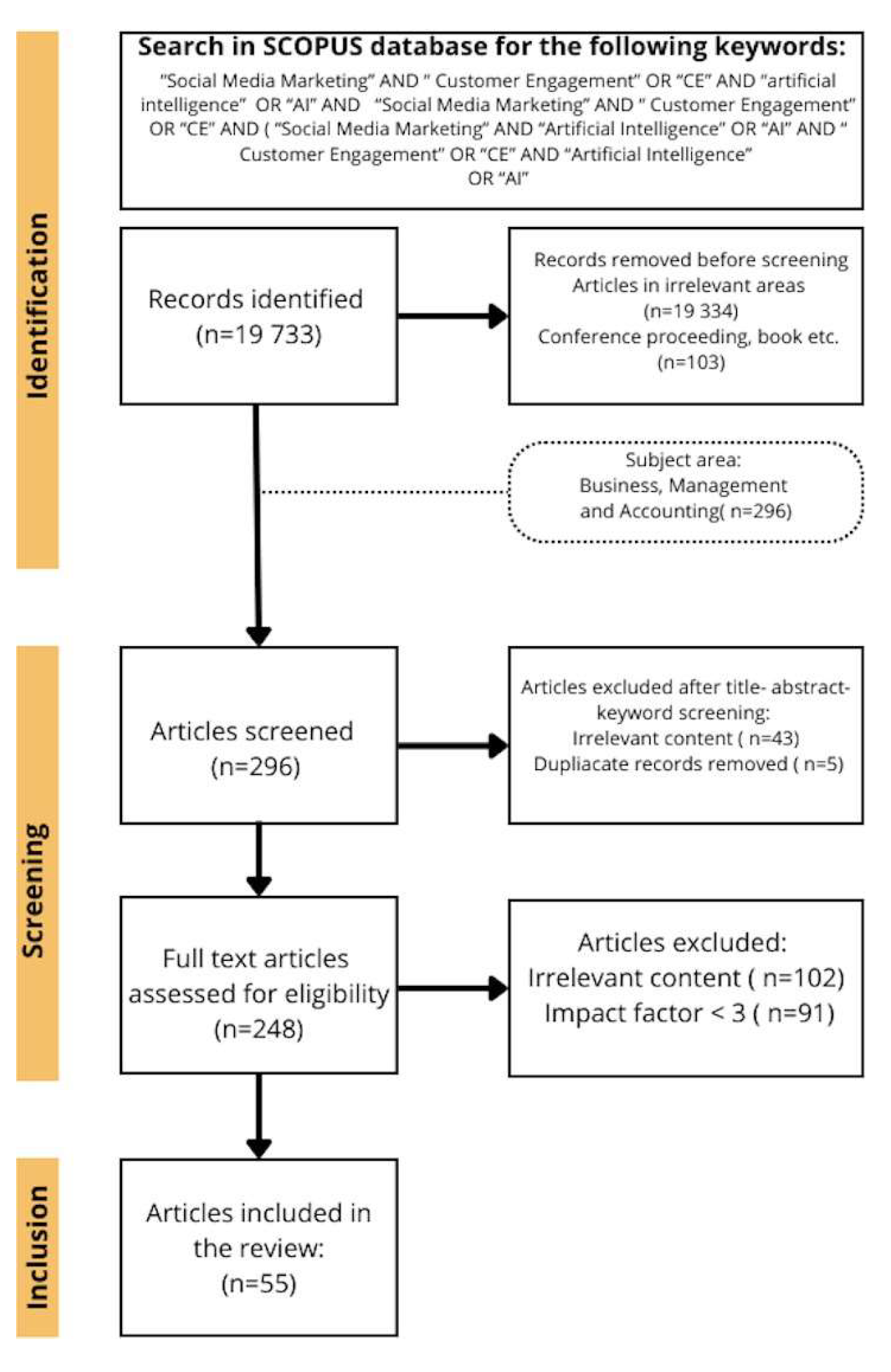
Figure 2.
Number of individual journals used in the analysis.
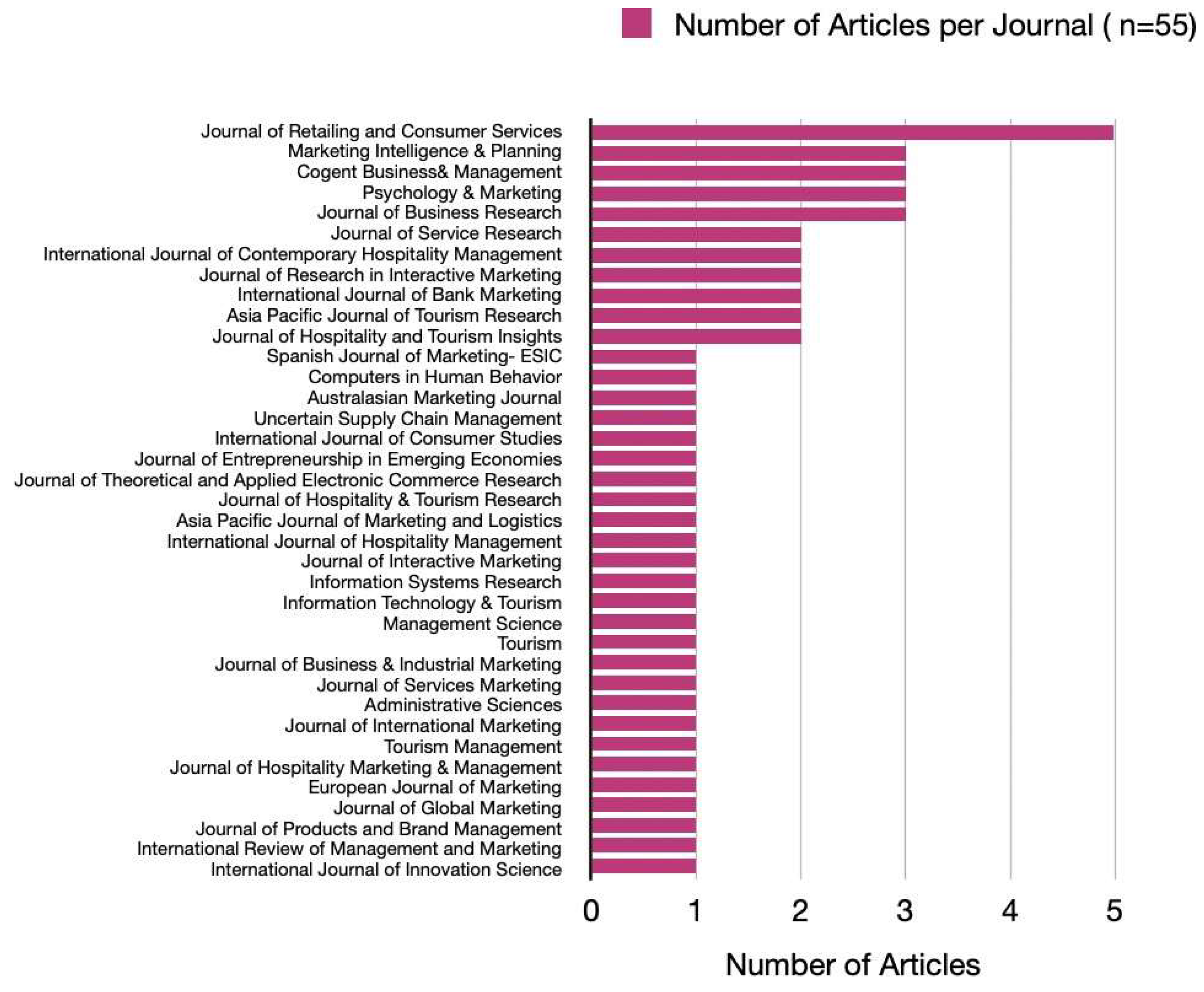
Figure 3.
Customer Engagement- Related Variables in Reviewed Quantitative Research Models.
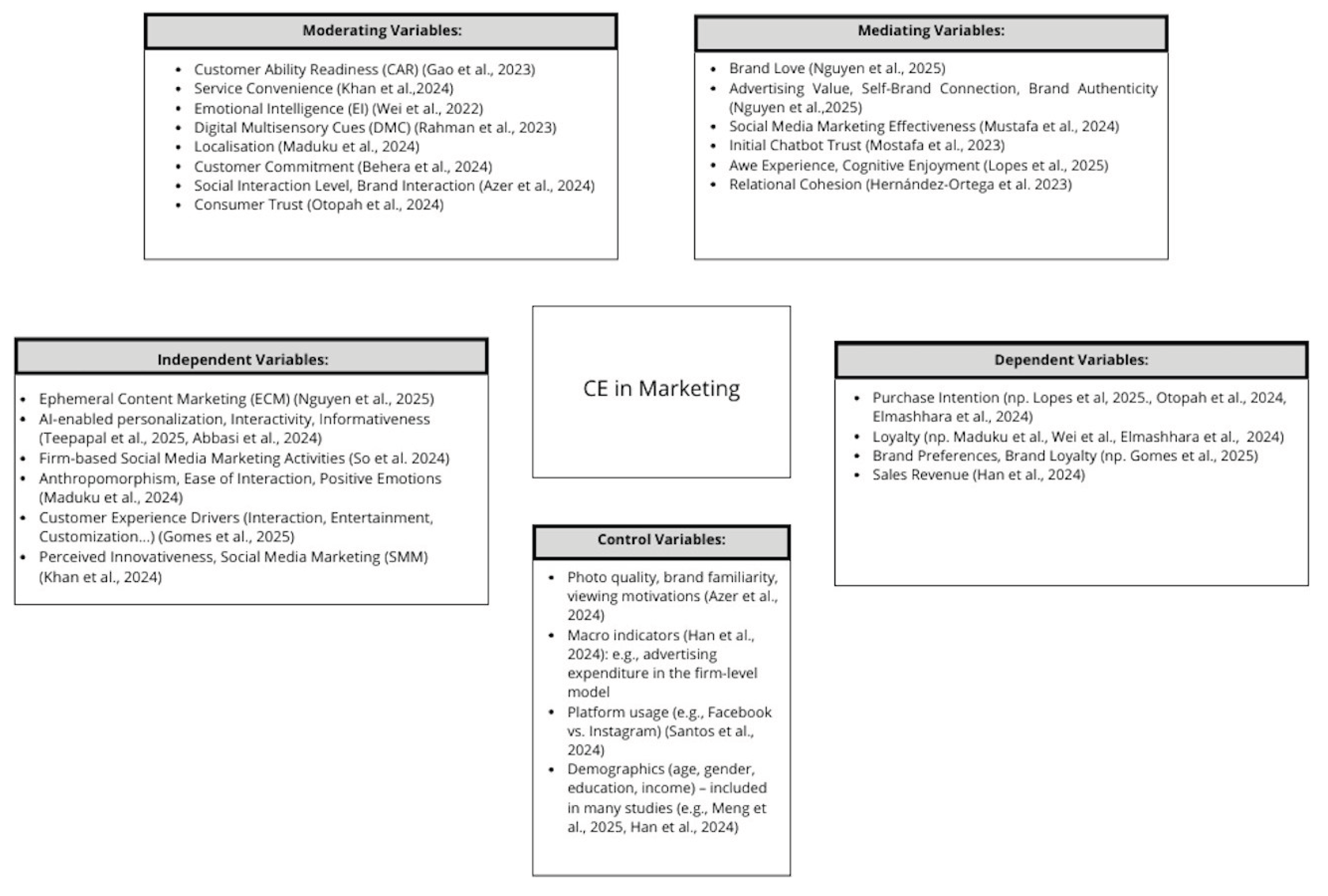
Disclaimer/Publisher’s Note: The statements, opinions and data contained in all publications are solely those of the individual author(s) and contributor(s) and not of MDPI and/or the editor(s). MDPI and/or the editor(s) disclaim responsibility for any injury to people or property resulting from any ideas, methods, instructions or products referred to in the content. |
© 2025 by the authors. Licensee MDPI, Basel, Switzerland. This article is an open access article distributed under the terms and conditions of the Creative Commons Attribution (CC BY) license (http://creativecommons.org/licenses/by/4.0/).
Copyright: This open access article is published under a Creative Commons CC BY 4.0 license, which permit the free download, distribution, and reuse, provided that the author and preprint are cited in any reuse.


