

Submitted:
16 May 2025
Posted:
17 May 2025
You are already at the latest version
Abstract
Ambient-temperature dried meat products are an ancient form of preservation, now exemplified by South African biltong and droëwors. Biltong is a spiced, salted dried meat (often beef or game) cured in vinegar and air-dried, while droëwors is a thin dried sausage derived from boerewors (typically made of beef and mutton fat). These traditional products originate from indigenous African and early settler practices of salting and sun-drying meat, adapted with spices and vinegar to improve flavor and preservation. This review provides a historical overview and defines the characteristics of biltong and droëwors, comparing traditional open-air processing with modern controlled drying methods. Key processing parameters (e.g., salt content, air flow, temperature, and relative humidity) and their influence on product quality are discussed. Microbiological safety is a central focus: although drying and curing substantially reduce water activity and inhibit many pathogens, the absence of a cooking step raises concerns about Salmonella, Shiga-toxin producing Escherichia coli, Staphylococcus aureus, and Listeria monocytogenes. We summarize current knowledge on these hazards, including occasional outbreaks, and the hurdles (low water activity, pH, salt) that control them. Finally, we highlight knowledge gaps in spoilage and pathogen dynamics, food safety challenges (such as the trend toward higher-moisture “wet” biltong), and the need for further research to ensure the safety and quality of these increasingly global meat snacks.
Keywords:
biltong
; droëwors
; Salmonella
; dried meat products
; food safety
; regulations
1. Introduction
Dry-curing and air-drying of meat have been used for centuries as a means of preservation, long before refrigeration. In Southern Africa, indigenous communities preserved game by salting and drying it in the sun, a practice later adopted by European settlers during the 17th–19th centuries[1]. Early pioneers (Voortrekkers) dried meat for weeks, often after curing it with salt, vinegar, and local spices, enabling long-term storage during overland treks [1,2]. The word “biltong” itself is derived from the Dutch words bil (rump) and tong (strip or tongue), reflecting its origin as strips of meat cured and dried for preservation [2]. These traditional practices laid the foundation for today’s ambient-temperature dried meat products, notably biltong and droëwors, which remain popular in South Africa and have spread internationally in niche markets [3,4].
Biltong is a ready-to-eat dried meat product typically made from lean beef or game muscle that has been cut into strips, cured with coarse salt and spices (such as coriander, black pepper, and brown sugar), marinated in an acidic solution (often vinegar), and then dried at ambient or low heat conditions [2,5].
Traditional biltong preparation involves salting and spicing the meat, sometimes for several hours, followed by dipping or marinating in vinegar, and then hanging the strips to air-dry for about 3–7 days depending on thickness and weather conditions[2,3]. The result is a highly desiccated, shelf-stable tabletabltameat with a dark, dry exterior and a slightly softer interior. Droëwors (Afrikaans for “dry sausage”) is a related product made from ground meat seasoned similarly to biltong (often using the same spice blend as the fresh sausage boerewors) and stuffed into thin natural casings to form sausages [6]. These sausages are then hung and air-dried. Unlike European dry sausages, droëwors is not fermented and typically contains no nitrite-based curing agents, relying solely on salt, spices, and drying for preservation. To prevent spoilage, traditional recipes replace pork (commonly used in fresh boerewors) with beef and mutton fat, since pork fat can become rancid during drying [6]. Droëwors are usually dried relatively quickly in warm, arid conditions; they may be flattened or rolled during drying to eliminate air pockets that could foster mold growth [7]. Historically, droëwors were hung on wooden rods and dried at ambient temperature for up to two weeks, though modern producers often use the same temperature-controlled drying chambers as used for biltong to achieve a consistent product [2]. The end products, biltong and droëwors, are nutritionally dense, high-protein snacks with low water activity, enabling them to be stored without refrigeration for extended periods when properly made.
Over time, processing methods for biltong and droëwors have evolved from purely traditional, small-batch techniques to more standardized commercial operations. Traditional methods depended on ambient climate—sunny, dry weather and good airflow—to gradually desiccate the meat. This uncontrolled drying could lead to inconsistency, and in cooler or humid conditions the process was prone to spoilage. Modern processors have introduced climate-controlled drying rooms or cabinets that maintain optimal conditions (e.g., ~30–35 °C air temperature with low relative humidity and adequate ventilation) to ensure uniform drying [3,8]. The use of drying chambers allows better regulation of air flow and temperature than open-air hanging, reducing drying times and variability. For instance, beef biltong strips (~2–3 cm thick) can reach a safe moisture level in approximately 4–7 days at 30 °C and 30% relative humidity with sufficient air circulation [7]Commercial recipes often still adhere to traditional ingredients (salt, vinegar, coriander, pepper), but may include additional preservative measures. Some large-scale manufacturers dip the meat in food-grade antimicrobial solutions or incorporate food preservatives like potassium sorbate or natamycin to inhibit mold on the surface during storage [7]. Despite these improvements, the fundamental “low and slow” drying process remains central: biltong and droëwors are distinct from North American beef jerky in that they typically do not employ a high-temperature cooking step to pre-cook or smoke the meat [5]. Jerky is usually heated to >60 °C at some stage for pasteurization, whereas biltong is dried at ambient or mildly warmed air temperatures (often 20–35 °C) without a dedicated heat lethality step [8] . This difference in processing underscores the need to carefully control other factors (like marinade pH, salt concentration, and drying time) to assure safety in biltong and droëwors production.
The microbiological and food safety aspects of biltong and droëwors are a major concern, given that these are ready-to-eat meat products made from raw ingredients without any cooking. The preservation hurdles in biltong/droëwors include reduced water activity, elevated salt content, and mild surface acidity from vinegar – factors which together inhibit many microorganisms[8]. Indeed, properly dried biltong typically has a final water activity around 0.70 or below and moisture content below ~30%, which is hostile to most bacteria [7]. However, if the drying process is insufficient or the product is formulated to be higher in moisture (for example, “wet” biltong preferred by some consumers can have water activity 0.85 or above), the risk of microbial survival and growth increases [9]. Several pathogenic bacteria have been associated with dried meat products like biltong. Salmonella enterica and Shiga toxin-producing E. coli (STEC) are enteric pathogens of particular concern since they can be present in raw beef and may survive drying if not adequately inhibited. Staphylococcus aureus is another critical hazard; its tolerance to salt and lower water activities allows it to persist on salted dried meats, and it can produce heat-stable enterotoxins if it grows to high numbers. Notably, high salt, low water activity foods favor S. aureus over many other bacteria, making its control the “key food safety issue” in biltong safety [3,7]. Listeria monocytogenes, a psychrotolerant pathogen, has occasionally been detected on biltong as well, though its growth is prevented by low water activity – it remains a post-process contamination concern if products are handled or packaged improperly [3]. In general, the drying process provides significant microbial reduction: studies have found that the combination of salt, acidity, and dehydration during biltong manufacturing can reduce pathogen levels by roughly 2–4 log₁₀ CFU (depending on organism and process specifics)[3,7]. For example, one challenge study reported average reductions on the order of 3 log₁₀ for Salmonella and E. coli O157:H7 on biltong strips, and somewhat lower reductions on droëwors, after typical ambient drying – indicating a substantial decrease but not complete elimination of these pathogens [7]. These findings underscore that while traditional biltong and droëwors are relatively safe due to low water activity, they are not inherently sterile. Indeed, there have been occasional reports of foodborne illness linked to improperly made dried meats: a salmonellosis outbreak in South Africa was attributed to contaminated biltong [3] and isolated cases of E. coli infection have raised concerns about “wet” biltong sold in some markets. As a result, food safety authorities recommend stringent controls or validations for commercial production. In the United States, where biltong has recently gained popularity via the South African diaspora and health-conscious consumers, producers are required to demonstrate a 5-log reduction in the most resistant pathogen (usually Salmonella) through their process [5]. Meeting this standard without a heat step has been challenging. Recent research has explored process modifications to enhance pathogen lethality: for instance, increasing vinegar concentration, extending marination time, or using antimicrobial dipping treatments can significantly improve pathogen kill during drying [5]. One study successfully achieved >5.0 log₁₀ Salmonella reductions in biltong by vacuum-tumbling beef in a 3–4% vinegar brine and drying at ~23–25 °C for 6–8 days [8]. Such findings demonstrate that traditional methods can be adapted to modern safety requirements. Nonetheless, producers must be vigilant. If suboptimal meat quality is used, if drying parameters are not well controlled, or if products are stored in moist conditions, biltong and droëwors can support spoilage molds or allow pathogenic survivors to persist [4,9]. This balance between maintaining artisanal quality and ensuring microbial safety is an ongoing focus of research and industry practice.
Biltong and droëwors are culturally and historically significant dried meat products that have transitioned from local tradition to global markets. Their processing involves relatively simple ingredients and low-temperature drying, yet the underlying microbiological dynamics are complex. The increasing international popularity of these high-protein snacks (fueled in part by emigrant communities and specialty food enthusiasts) has brought greater attention to their safety and stability [3]. This review introduces the background of biltong and droëwors production, outlines traditional versus modern processing techniques, and highlights the key microbiological safety issues associated with these ambient-stored dried meats. By examining current knowledge and gaps, we aim to provide a foundation for understanding how these products can be produced more safely without sacrificing their unique qualities.
2. History of Ambient Temperature Dried Meat Products
Drying meat at ambient temperatures is one of the oldest and most widely used methods of food preservation, dating back thousands of years. Early human societies relied on dried meat as a primary method for ensuring food availability during periods of scarcity, long journeys, and harsh seasonal conditions [10]. Before the advent of refrigeration and modern food preservation techniques, people across various continents developed unique drying methods tailored to their specific climates and available resources. The process typically involved cutting meat into thin strips, salting or seasoning it to prevent spoilage, and leaving it to air-dry in the sun or under controlled environmental conditions. This natural preservation technique significantly reduced moisture content, inhibiting microbial growth and enzymatic activity, thus extending the meat's shelf life [11].
The practice of air-drying meat evolved independently in different regions of the world. In Africa, indigenous communities developed biltong and droëwors, using vinegar, salt, and spices to enhance flavor and safety before drying [3]. The use of vinegar in biltong production lowers the pH of the meat, creating an unfavorable environment for spoilage microorganisms while improving palatability. In South America, the Inca civilization created charqui, which involved salting and drying llama or alpaca meat in the high-altitude, arid conditions of the Andes [12]. This method provided lightweight, protein-rich food source that could be stored for months and rehydrated when needed. Similarly, in Asia, particularly in Mongolia and China, dried meats such as rougan and bakkwa were produced to sustain armies and nomadic tribes, providing a crucial source of protein and energy during long treks across vast landscape. In Europe, methods such as pastirma (Middle East), bresaola (Italy), and saucisson sec (France) were developed, often incorporating air-drying combined with curing agents such as salt and spices [13]. These techniques not only preserved meat but also enhanced its flavor through fermentation and enzymatic reactions.
During the age of exploration (15th–18th centuries), dried meat products played a crucial role in sustaining sailors, explorers, and military forces. European navies carried salted and dried beef to prevent spoilage on long voyages, reducing the risk of scurvy and starvation [14]. Indigenous populations in North America introduced early European settlers to pemmican, a combination of dried meat, fat, and berries that provided a highly nutritious and long-lasting food source [15]. The demand for dried meat products continued into the Industrial Revolution, as technological advancements allowed for mass production and improved drying techniques. The introduction of controlled drying environments and the use of food-grade antimicrobial agents further enhanced the safety and consistency of dried meat [16].
In the 20th and 21st centuries, the globalization of food markets and increasing consumer demand for convenient, high-protein snacks led to the resurgence of ambient-temperature dried meats [16]. Products like biltong and droëwors have gained significant popularity in the United States, particularly among health-conscious consumers seeking protein-rich alternatives to conventional snacks [3]. The introduction of scientific approaches, such as predictive microbiology and hurdle technology, has enabled the optimization of drying methods to enhance food safety and extend shelf life [17]. Despite these advancements, traditional ambient temperature drying techniques remain widely used, particularly in artisanal and regional meat production. Today, the study of dried meat products continues to evolve, with ongoing research focusing on improving food safety standards, exploring novel antimicrobial interventions, and assessing the impact of climate change on natural drying conditions [18].
3. Ambient Temperature Dried Meat Products
3.1. Biltong
Biltong is a traditional South African dried meat product made by marinating strips of beef in a mixture of vinegar, salt, and spices before air-drying them at ambient temperatures. The vinegar serves as a microbial inhibitor by lowering the pH, while the salt helps to draw out moisture, thereby reducing water activity and preventing bacterial growth [3]. Unlike jerky, which is often heat-treated, biltong undergoes a natural drying process that results in a tender texture with a rich, concentrated flavor. The drying period typically lasts several days, depending on humidity and temperature conditions. Due to its high protein content and minimal processing, biltong has gained popularity globally as a healthy, preservative-free snack [16].
3.2. Droëwors
Droëwors, meaning "dry sausage" in Afrikaans, is another South African delicacy that is made from minced beef mixed with coriander, black pepper, cloves, and salt, stuffed into thin sausage casings, and then air-dried under controlled conditions [3]. Unlike traditional fresh sausages, droëwors is designed to be shelf-stable and is dried at ambient temperatures to ensure proper moisture reduction while retaining its characteristic flavor. The spice blend plays a critical role in preserving the sausage by inhibiting bacterial growth and preventing rancidity. Due to its portability and long shelf life, droëwors has become a popular protein-rich snack, especially among athletes and outdoor enthusiasts[12].
3.3. Pastrima
Pastirma, a traditional dried meat product from the Middle East and Eastern Europe, is made from beef, camel, or lamb that is heavily seasoned with a spice paste known as "çemen," which contains fenugreek, garlic, and paprika. The meat is first cured in salt to remove moisture and then coated with the çemen paste before undergoing an extended air-drying period [13]. This drying process allows the meat to develop a complex, aromatic flavor while the spice paste creates a protective barrier against bacterial contamination. Pastirma is often sliced thinly and served as an appetizer or incorporated into various dishes. Its production method is similar to other dried meats but emphasizes bold seasoning and prolonged drying to achieve a unique texture and taste [15].
3.4. Charqui
Charqui is a South American dried meat product that dates back to the Inca civilization. Traditionally made from llama, alpaca, or beef, charqui involves salting thin slices of meat and drying them under the intense sun and wind of the Andean highlands [12]. The natural low humidity and high altitude contribute to an effective drying process, resulting in a lightweight, durable meat product that can be stored for extended periods without refrigeration. Historically, charqui was a staple food for Andean travelers and warriors due to its high protein content and portability. Modern versions of charqui have adapted to contemporary markets, often incorporating vacuum-sealing and controlled drying environments to ensure consistency and safety [16].
3.5. Cecina
Cecina is a traditional Spanish and Latin American dried meat product, typically made from beef, pork, or goat. The process involves salting and air-drying the meat, sometimes with an added smoking step to enhance flavor and preservation [13]. In Spain, cecina de León is a well-known variety that is aged for several months, allowing for the development of a rich, smoky taste and firm texture. Unlike jerky, which is often thinly sliced before drying, cecina is usually air-dried in large cuts, requiring longer drying times and careful moisture control. The final product is commonly eaten as thin slices, much like prosciutto, and is praised for its deep, umami-rich flavor. With a growing appreciation for traditional cured meats, cecina has gained international recognition as a gourmet specialty[15].
4. Market Trends for Ambient Temperature Dried Meat Products
The market for ambient temperature dried meat products has seen a consistent rise over the past decade, driven by increasing consumer demand for high-protein, shelf-stable snacks. In 2023, the global market for these products was valued at approximately $1.2 billion and is projected to grow at a CAGR of 5.3%, reaching $2.15 billion by 2030 [19], (Figure 1 & Table 1) . The steady growth can be attributed to the convenience of these products, their suitability for high-protein and low-carb diets, and the expansion of premium dried meat snacks like biltong and droëwors beyond their traditional markets. Consumers are also increasingly looking for clean-label products free from artificial preservatives, nitrates, and excessive sodium, prompting manufacturers to reformulate their products while maintaining food safety and quality [20]. As seen in Figure 1, the projected market growth follows an upward trajectory, reflecting the increasing demand for ambient temperature dried meat products worldwide.
A key contributor to this trend is the growing demand for premium dried meat products, particularly biltong and droëwors, which have gained traction in markets like the United States and Europe. These products are positioned as healthier alternatives to traditional jerky due to their natural curing process, which eliminates the need for added sugars and artificial preservatives. The introduction of grass-fed and organic options has further fueled this segment's growth, catering to the premium market. The breakdown of different product categories in Figure 2 highlights that jerky still holds the largest market share at 30%, followed by biltong at 25%, droëwors at 20%, and meat sticks at 15%, with the remaining 10% comprising other dried meat products such as pastirma, charqui, and cecina [21], (Figure 2). The growing awareness of these products has led to increased availability in mainstream grocery stores and online platforms, further driving sales.
Another factor contributing to this market expansion is the rapid growth of e-commerce and direct-to-consumer sales channels. Online sales of dried meat snacks have grown by more than 15% annually, with companies leveraging digital marketing strategies and subscription-based models to attract new customers [22]. The convenience of online shopping, coupled with the ability to offer customizable snack packs and bulk discounts, has significantly increased consumer engagement in this category. Furthermore, the rising trend of on-the-go snacking has made dried meat products more appealing, especially among athletes, travelers, and busy professionals. The impact of these factors is evident in Figure 3, which illustrates how online sales have driven growth across different regions, with North America and Europe leading the way in overall market value.
Regionally, North America remains the dominant market for ambient temperature dried meat $0.45 billion in 2023, expected to products, with an estimated market size of nearly double to $0.85 billion by 2030 (Figure 3).
Meanwhile, Europe is projected to grow from $0.35 billion to $0.65 billion, supported by increasing consumer demand for natural and organic snack options. However, Asia-Pacific is experiencing the fastest growth, with its market size expected to double from $0.25 billion to $0.5 billion during the same period, fueled by rising meat consumption, urbanization, and the expansion of international food brands into this region [20]. The increasing popularity of biltong and droëwors in Asia-Pacific suggests a shift in consumer preferences toward high-protein, minimally processed meat snacks, as illustrated in Table 1, where Asia-Pacific shows the highest growth rate across different product type.
The growing demand for these products has also prompted manufacturers to innovate and differentiate their offerings. The increasing emphasis on sustainability and eco-friendly packaging has led brands to invest in recyclable and biodegradable packaging solutions to align with global sustainability goals. Additionally, advancements in drying technology have enabled manufacturers to improve efficiency and enhance the sensory qualities of dried meats without compromising food safety. Looking ahead, the ongoing focus on nutrition, convenience, and sustainability is expected to drive further expansion in the market for ambient temperature dried meat products.
5. Economic Importance of Ambient Temperature Dried Meat Products for Small Meat Processors.
For small and very small meat processing operations, producing ambient temperature dried meat products such as biltong and droëwors provides a crucial economic advantage. Unlike fresh meat, which has a limited shelf life and requires refrigeration, dried meat products can be stored for extended periods without spoilage. This extends the marketability of meat products, allowing small processors to sell beyond their immediate region, enter the e-commerce space, and reduce product loss due to spoilage [18]. Additionally, dried meat products allow processors to create higher-value products from lower-demand meat cuts, improving profitability and maximizing the use of the entire carcass [12].
The COVID-19 pandemic severely disrupted the U.S. meat supply chain, as major meatpacking plants were forced to shut down due to outbreaks, leading to shortages and price spikes in retail meat markets [23]. This crisis highlighted the risks of centralized meat processing and the need for more regional and decentralized processing capacity. To protect the food supply in the future, the U.S. Department of Agriculture (USDA) invested billions of dollars into expanding small and local meat processing operations. In 2021, the Biden administration announced a $1 billion investment to expand independent meat processing capacity and increase competition in the industry (USDA, 2022). These investments aimed to support small and regional processors, reduce reliance on the Big Four meat packers, and create a more resilient food system.
Since 2021, the USDA has provided grants and loans to establish new federally inspected, state-inspected, and custom-exempt processing facilities. While an exact number is difficult to pinpoint without updated data, estimates suggest that over 300 new or expanded small meat processing plants have received federal or state funding [24]. Many of these processors have faced difficulties in competing with large-scale operations, particularly in securing steady livestock supply, meeting regulatory requirements, and navigating marketing challenges. The ability to produce minimally processed, value-added meat products such as biltong and droëwors presents an opportunity for these small processors to increase revenue and stabilize their operations.
Small processors often struggle to compete with large industrial meat packers, commonly referred to as the "Big Four" beef processors—Tyson Foods, JBS USA, Cargill Meat Solutions, and National Beef Packing Company. These four companies control approximately 85% of the U.S. beef processing market [25]. Large-scale processors benefit from economies of scale, allowing them to process meat at lower costs and distribute it more widely, making it difficult for small operators to remain competitive. Additionally, small processors face challenges in disposing of byproducts such as hides, bones, and fat, which large processors efficiently monetize through established supply chains [26]. The inability to sell byproducts significantly increases processing costs, reducing the overall profitability of small-scale meat operations. By producing value-added dried meat products, small processors can create an additional revenue stream, making their businesses more financially sustainable.
For small-scale meat processors, the ability to diversify their product offerings is critical to long-term sustainability. Value-added products, such as biltong, droëwors, and other dried meat snacks, allow small meat businesses to expand beyond traditional fresh meat sales and enter niche markets where large meat packers have less influence. These products cater to the growing high-protein snack market, which is projected to grow at a CAGR of 6.5% in North America and 9.2% in Asia-Pacific from 2023 to 2030 [22].
Additionally, producing dried meat products reduces waste by utilizing lower-demand meat cuts and trimmings, which are often discarded or sold at a lower price in traditional fresh meat processing [12]. This increases overall carcass utilization and maximizes profitability per animal processed. The extended shelf life of these products also allows small processors to market them through e-commerce and specialty retailers, creating new revenue opportunities beyond their immediate geographic region [18].
With USDA-backed investments continuing to support small processors, many of these businesses have an opportunity to develop innovative, minimally processed meat products to strengthen their economic viability. However, ensuring compliance with USDA Hazard Analysis and Critical Control Point (HACCP) regulations for ambient temperature dried meat products presents significant challenges. The USDA's Food Safety and Inspection Service (FSIS) requires that these products undergo rigorous validation to demonstrate effective control of foodborne pathogens such as Salmonella, Escherichia coli O157:H7, and Listeria monocytogenes [27]. This involves establishing scientifically validated critical control points (CCPs) within their HACCP plans, often necessitating microbial challenge studies or validation studies to confirm the safety of the drying processes used [28]. Due to the limited scientific data available on the safety of ambient temperature dried meat products, such studies may be necessary to meet regulatory requirements, but they can impose a substantial financial burden on small processors [29].
Recognizing these challenges, the USDA has identified the safety of ambient temperature air-dried beef products as a priority research area. The FSIS has acknowledged "knowledge gaps" regarding the lethality of processes used for products like droëwors and biltong, which are dried at ambient temperatures without a heat lethality step [30]. Consequently, processors are required to provide microbial validation to ensure the safety of these products [31]. This lack of standardized guidelines necessitates that processors conduct their own research to validate pathogen control measures, leading to increased costs and operational complexity. The financial and logistical burden of these studies can make it difficult for smaller operations to introduce new dried meat products while maintaining compliance with USDA regulations [29].
As regulatory oversight continues to evolve, success in this space requires investment not only in food safety compliance but also in branding, consumer education, and marketing. Educating consumers about the differences between biltong, droëwors, and traditional jerky is essential to expanding market acceptance. By focusing on scientifically validated, high-quality, minimally processed meat snacks, small processors can navigate USDA compliance challenges while maintaining a competitive edge in the industry. However, addressing the regulatory and financial challenges of food safety validation remains a critical need for the long-term sustainability of small-scale dried meat production.
Due to the growing popularity of ambient temperature dried meat products, especially biltong and droëwors, the remainder of this review will focus primarily on these two products. Biltong has gained significant consumer interest in international markets, particularly in the United States and Europe, as a high-protein, minimally processed alternative to traditional jerky. Similarly, droëwors, a dried sausage with distinct seasoning and processing methods, is becoming increasingly recognized. While some research exists on the safety of biltong, scientific data on droëwors remains extremely limited, particularly regarding microbial safety and validation of drying processes. Given this gap in scientific knowledge, this review ultimately emphasizes droëwors, highlighting the need for further research to ensure its safety and regulatory compliance.
6. Production Process of Biltong ad Droëwors
Biltong and droëwors are traditional South African dried meat products that have gained international popularity due to their unique taste, high protein content, and shelf stability. These products differ in their preparation methods, ingredients, and processing techniques, but both rely on drying as a primary means of preservation. The following is the generalized process developed from the feedback received from three biltong and Droëwors processors in the United States.
6.1. Biltong Production Ingredients
- Beef (or alternative meats such as game or ostrich)
- Coarse salt
- Vinegar (typically apple cider or malt vinegar)
- Coriander
- Black pepper
- Sugar (optional)
- Additional spices such as cloves or chili powder (optional)
6.1.1. Production Process
- Meat Selection & Trimming: High-quality lean cuts of meat, such as the silverside or topside, are selected and trimmed of excess fat to prevent rancidity during drying.
- Cutting into Strips: The meat is cut into long strips, usually about 1-2 inches thick, to allow for even drying.
- Marination: The strips are coated with coarse salt, vinegar, and spices to enhance flavor and aid in preservation. The vinegar lowers the pH, creating an unfavorable environment for bacterial growth.
- Resting/Absorption: The meat is left to marinate for several hours to allow the flavors and preservation agents to penetrate.
- Drying: The strips are hung in a well-ventilated area with controlled temperature and humidity. Traditional drying occurs at room temperature for 4-10 days, depending on environmental conditions.
- Packaging: Once the desired dryness is achieved, the biltong is sliced into smaller pieces and packaged in vacuum-sealed bags or moisture-resistant packaging.
- Storage & Distribution: The final product is stored at ambient temperature and distributed for sale.
6.2. Droëwors Production Ingredients
- Beef or lamb (or a mix)
- Beef fat (helps maintain texture and flavor)
- Coriander
- Vinegar
- Black pepper
- Salt
- Other optional spices like nutmeg or cloves
- Sausage casings (traditionally natural casings, but synthetic can be used)
6.2.1. Production Process
- I.
- Meat Selection & Trimming: Lean cuts of beef or lamb are selected and trimmed, with a small amount of fat retained for texture.
- II.
- Grinding & Mixing: The meat is ground and mixed with salt, spices, and vinegar improve preservation and enhance flavor.
- III.
- Stuffing into Casings: The seasoned meat is stuffed into natural or synthetic sausage casings, ensuring even distribution.
- IV.
- Hanging for Drying: The sausages are hung in a well-ventilated drying chamber or room.
- V.
- Drying at Controlled Temperature: Unlike biltong, which is dried in open air, droëwors is usually dried in a controlled environment with regulated humidity and temperature.
- VI.
- Packaging: Once dried to the desired consistency, the sausages are cut into smaller portions and vacuum-sealed.
- VII.
- Storage & Distribution: The final product is stored at ambient temperature and distributed through retail channels.
7. Food Safety Concerns Associated with the Ambient Temperature Dried Meat Products
Ambient temperature dried meat products, such as biltong, droëwors, and jerky, are popular for their unique flavors and extended shelf life. However, these products pose significant food safety risks due to potential contamination with foodborne pathogens. The drying process, often conducted at ambient temperatures without a heat lethality step, may not sufficiently eliminate harmful bacteria, leading to outbreaks and recalls (Table 2)
Several factors contribute to the high prevalence of foodborne pathogens in ambient temperature dried meat products:
- Lack of Heat Treatment: Traditional drying methods often omit a heat lethality step, relying solely on drying to reduce water activity. This approach may be insufficient to eliminate pathogens like Salmonella and E. coli O157:H7, which can survive in low-moisture environments [29].
- Ambient Temperature Drying: Drying at ambient temperatures without controlled conditions can allow pathogens to survive and potentially proliferate if the drying process is not adequately managed [29].
- Cross-Contamination: Improper handling during processing, such as cross-contamination from raw to finished products, can introduce pathogens [3].
- Inadequate Process Validation: Small-scale producers may lack the resources to conduct microbial challenge studies to validate their processes, leading to potential safety hazards [29].
8. Regulatory Compliance for Biltong and Droëwors Production in the U.S.
Biltong and droëwors are traditional South African dried meat products made from spiced, salted meat (biltong from strips of beef, and droëwors from ground meat sausage) that are air-dried without a cooking step. These ready-to-eat (RTE) products gain their shelf stability from low water activity (Aw) achieved through salting, vinegar marination, and drying. However, because they are not exposed to high heat, there is concern about the survival of foodborne pathogens like Salmonella, Escherichia coli O157:H7, Listeria monocytogenes, and Staphylococcus aureus. Regulatory agencies such as the U.S. Department of Agriculture Food Safety and Inspection Service (USDA-FSIS) mandate that RTE dried meat processes achieve a sufficient lethality (often a ≥5-log₁₀ reduction of a target pathogen) or otherwise require strict testing of each batch. This response reviews scientific studies on biltong and droëwors processing and food safety, including microbial safety assessments, the roles of salt and vinegar and drying conditions in pathogen reduction, process validation approaches (traditional vs. modern) for USDA-FSIS compliance, microbial challenge studies, and comparisons of drying techniques on microbial reductions.
9. Microbial Safety of Biltong and Droëwors
9.1. Pathogen Presence and Survival
Studies have identified that if pathogenic bacteria contaminate the meat or processing environment, they may survive the hurdles of biltong and droëwors production. Surveys of finished biltong have found S. aureus, L. monocytogenes, and other microbes present at point-of-sale, indicating these products can act as vehicles for foodborne pathogens. In one study, isolates of L. monocytogenes from retail biltong were able to grow at refrigeration (marination) temperatures, highlighting a risk since biltong meat is often marinated at ~4 °C. Salmonella has also been linked to biltong: there are documented outbreaks and recalls implicating contaminated biltong, despite difficulties in recovering the pathogen from the desiccated product. These findings underline that biltong and droëwors, if made from contaminated raw meat or under unsanitary conditions, could harbor pathogens unless the process hurdles reliably inactivate them.
9.2. Baseline Microbial Reductions
Traditional biltong/droëwors processing (marinating in salt and vinegar, then ambient-air drying) does reduce pathogen levels, but early research showed it may not always achieve the high log reductions required for absolute safety. In a foundational challenge study [7] inoculated beef strips (biltong) and sausages (droëwors) with Salmonella, E. coli O157:H7, S. aureus, and L. monocytogenes, then replicated a typical drying process. They observed significant decreases in all four pathogens during drying: for biltong, pathogen counts dropped by roughly 3–4 log₁₀ CFU, and for droëwors by about 2–3 log₁₀ CFU, depending on the organism. This natural lethality was attributed to the combined effect of salt, acid, and moisture loss. Notably, the fattier droëwors showed slightly less kill than lean biltong – higher fat content can protect bacteria by lowering water-phase salt concentration and slowing drying. Burnham et al. concluded that while drying alone provides “significant lethality”, the observed reductions (around 2–4 logs) were below U.S. regulatory standards (which call for ≥5-log or even 6.5-log reductions for some RTE meats). Thus, they recommended that processors incorporate additional safety interventions or raw material testing to ensure the final product is free of hazards.
9.3. Role of Salt, Vinegar and Drying Conditions in Pathogen Reduction
Biltong and droëwors rely on a hurdle approach – primarily salt, organic acids (vinegar), and dehydration – to inhibit and kill microbes. Scientific studies have explored how each of these factors contributes to pathogen reduction:
- Salt: Salt binds available water and lowers water activity (Aw), creating an osmotic stress for bacteria. Even a modest salt concentration in biltong (around 2% w/w in the meat) can significantly inhibit microbial growth once drying progresses. Interestingly, increasing salt beyond a certain point yields diminishing returns in lethality. Karolenko et al. (2020) varied the salt level in biltong marinade from 1.7% up to 2.7% and found no significant difference in Salmonella kill – all batches achieved >5.5-log reductions after 6 days of drying. This suggests that even the lowest salt level tested (1.7%) was sufficient to facilitate major pathogen decline when combined with vinegar and drying, and higher salt did not markedly improve the kill. In practice, a ≥2% salt content is common and effective for safety, while also keeping the product palatable [8].
- Vinegar (Acid): Vinegar (acetic acid) in the marinade lowers the meat surface pH and has direct bactericidal effects. Traditional recipes use vinegar (often malt, cider, or wine vinegar) sprayed or mixed with the spiced meat. The acidity is crucial for Salmonella and E. coli inactivation. Karolenko et al. tested different vinegar concentrations and found 2% vinegar (relative to meat weight) was insufficient – biltong with 2% vinegar did not quite reach a 5-log Salmonella reduction even after 8 days. In contrast, increasing vinegar to 3% or 4% accelerated the kill, achieving >5-log Salmonella reductions by day 7–8 (with no significant difference between 3% and 4%). Vinegar’s antimicrobial action is evidenced in vitro as well: Naidoo and Lindsay (2010) reported that full-strength (glacial) acetic acid could inhibit all test strains isolated from biltong, whereas household vinegars (diluted acetic acid, like apple cider or brown spirit vinegar) inhibited some but not all strains [3]. This indicates vinegar contributes to pathogen control, but typical marinade concentrations may be bacteriostatic rather than instantly bactericidal, especially against acid-tolerant organisms. Indeed, acid-adapted bacteria can better survive acidic marinades. Recent validation studies purposely used acid-adapted challenge cultures (grown in mildly acidic media) to ensure the biltong process can kill even acid-tolerant cells. The consensus is that a sufficiently acidic marinade (pH ~4) provides an important initial reduction and works in synergy with drying.
- Drying Time & Conditions: The drying step is ultimately the critical kill step in biltong and droëwors production. As moisture is removed, water activity drops below levels that support pathogen growth or toxin production (a critical safety threshold is aW < 0.85 for staphylococcal toxin prevention). Drying at ambient temperature (typically ~22–25 °C) and moderate humidity (50–60% RH) for several days will gradually inactivate pathogens. The rate of drying can influence how quickly pathogens are reduced. Higher drying temperatures (still far below cooking, but slightly warmer air) cause faster moisture loss – one study found that drying at 25 °C vs 22 °C (at constant 55% RH) led to a quicker drop in aW and achieved the target moisture loss a bit sooner. However, final safety is more tied to ultimate Aw than the exact drying schedule. In practice, biltong is often dried for 4–10 days until it is quite dry (aW ~0.6–0.8). Pathogen reductions tend to follow first-order decline with time until they reach an undetectable or injury phase. For example, Burnham et al. observed about 1–2 log reductions once biltong reached an intermediate aW ≈0.85, and around 2–3 log by the time aW ≈0.60 was achieved. If drying continues longer or product is stored dry, additional minor declines may occur (they noted a small further drop after an extra week of dry storage). It’s important that drying is uniform: thick pieces or the centers of droëwors sticks may retain higher internal aW even when the surface feels dry. Researchers emphasize measuring the internal water activity of biltong/droëwors, since the core can be less dry than the surface. Overall, the drying process creates a low-moisture, high-salt, acidic environment that is increasingly hostile to pathogens, and sufficient drying time is key to reaching the ≥5-log reduction mark.
10. Traditional vs. Modern Processing Methods and USDA-FSIS Compliance
10.1. Regulatory Requirements
Because biltong and droëwors are not heated, USDA-FSIS requires processors to validate that their method can safely reduce pathogens. Two compliance pathways have been outlined: (1) a test-and-hold approach (demonstrating raw ingredients are free of pathogens and achieving at least a 2-log kill during drying), or (2) a process validation study showing ≥5-log reduction of a pathogen of concern (typically Salmonella) in the finished product. The latter has become the practical standard for commercial biltong in the U.S., effectively treating biltong processes similarly to jerky or fermented sausage in terms of required lethality. Historically, traditional South African biltong-making was an artisanal process without formal validation – meat was marinated in vinegar and spices (often overnight) and hung to dry at ambient conditions, relying on the intrinsic hurdles to ensure safety. Modern producers, especially those exporting or operating under USDA inspection, have adapted or supplemented the traditional process to meet the 5-log kill requirement.
10.2. Traditional Process Efficacy
A “traditional” biltong process (marinate overnight and air-dry) can approach the required lethality, but may take a long time or still fall short without interventions. Karolenko et al. (2020) tested a classic South African recipe process: beef strips were dry-tumbled with salt and spice (no vacuum) and then vinegar was gradually added; the meat was marinated overnight at 5 °C with periodic turning of pieces, then dried at 75 °F/55% RH. This traditional-style method (which used a relatively large vinegar amount, ~10% by weight) achieved about 1.0–1.3 log Salmonella reduction from the marination alone, and a further ~2.3 log reduction in the first 2 days of drying. By day 6–7 of drying, it reached the full 5-log reduction required, and by 8 days it exceeded it comfortably. In other words, a properly executed traditional process can produce safe product, but it may require a week or more of drying to ensure all pieces hit the target, especially if using lower initial acidity [7] found that without any extra hurdles, their biltong and droëwors did not quite meet the 5-log standard in the time frame studied (drying + one week storage). They emphasized that processors using traditional ambient drying should add intervention steps or robust testing if they wish to guarantee safety [7]. For droëwors especially, traditional methods are riskier – the internalized fat and bacteria in sausage make it harder to rely on surface-only treatments. Their data showed droëwors had less overall kill than biltong, likely due to fat protecting bacteria and slower drying internally. Thus, traditional droëwors might need even longer drying or additional hurdles (e.g. curing salts, starter cultures, or surface decontamination) to achieve equivalent safety. It’s worth noting that other dried meat processes which include curing or fermentation steps (for example, dry-cured basturma) have demonstrated higher lethality. A study cited by Burnham et al. noted a basturma process achieved around 4.7–5 log reductions of Salmonella and E. coli, exceeding the ~3 log reductions seen in biltong/droëwors, likely because basturma includes a salt cure and rinse that provide extra kill steps. This comparison illustrates that additional hurdles (curing, heat, or acid washes) can markedly improve safety in dried meats.
10.3. Modern Process Enhancements
Modern biltong producers have adopted several strategies to reliably hit the 5-log reduction while maintaining product quality:
- Vacuum Tumbling Marination: Instead of static soaking, marinating the meat under vacuum while tumbling can drive the brine (vinegar and salt) into the tissue more effectively and uniformly. Karolenko et al., [8] used a 30-minute vacuum tumble in marinade as a “short marination” process, allowing them to start drying the same day. This yielded comparable or faster pathogen reductions than a long soak. In fact, a combined approach (brief vacuum tumble plus an overnight hold in marinade) achieved a full 5-log Salmonella reduction after only 4 days of drying – effectively shortening the required drying time. Vacuum tumbling ensures all surfaces see the marinade and likely causes some physical cell injury, enhancing lethality.
- Additional Antimicrobial Dips: Some processors introduce a pre-marination dipping step in a stronger antimicrobial solution (organic acid or other sanitizers) to knock down surface bacteria prior to drying. Karolenko et al., [8] evaluated dips such as acidified calcium sulfate (applied at a level equivalent to 5% or 10% lactic acid) and lactic acid solutions on inoculated beef strips. The results were dramatic: a dip adjusted to 10% lactic acid yielded >5-log Salmonella reduction in only 4 days of drying (and >6-log by 8 days). Even a milder 5% lactic acid dip achieved ~5-log in 6 days. By contrast, the no-dip control in that experiment (just the standard vinegar/salt marinade) took longer – around 8+ days – and some replicates just under 5-log reduction in that time. These findings echo Burnham et al.’s suggestions that a pre-treatment like a peracetic acid spray on the raw meat can dramatically reduce initial contamination and help meet the lethality standard . Modern recipes may also incorporate food-grade antimicrobials (e.g. sodium acid sulfate or potassium sorbate) into the marinade for an extra hurdle.
- Climate-Controlled Drying: Traditional biltong might be hung in ambient air (which can vary in temperature/humidity), but commercial production often uses drying cabinets or rooms where temperature and relative humidity are regulated. Maintaining ~50–60% RH is important – too high and drying is too slow (risking mold or survival), too low and the outside may case-harden before the inside dries. Studies have used chambers at 55% RH and found consistent results in pathogen decline. As noted, slightly elevating the air temperature (to the mid-20s °C) can speed drying without cooking the meat. Modern methods thus optimize drying parameters to reliably reach a safe A_w throughout the product in a reasonable timeframe. The use of drying chambers also allows uniform airflow and prevents fluctuating conditions that could occur if weather changes (a concern in true open-air drying).
Overall, modern validated processes for biltong have shown that the combination of vacuum tumbling in a salt-vinegar marinade, controlled ambient drying (~75 °F/24 °C, 50–55% RH), and optional antimicrobial pre-treatments can consistently achieve the USDA-FSIS 5-log pathogen reduction requirement without any cooking step. These process validations are now accepted by regulators and have been recommended to industry as scientific support for safe biltong production.
10.4. Microbial Challenges Studies and Findings
A number of microbial challenge studies have been conducted to validate the safety of biltong and, to a lesser extent, droëwors. These studies inoculate raw meat with high levels of pathogens and then apply biltong/droëwors processing to quantify pathogen survival. Key studies and their findings include:
Burnham et al., [7] – Biltong & Droëwors: As mentioned, this early study challenged both beef strips and sausage with a cocktail of four pathogens. Their process (simulating a traditional drying with spiced, vinegar-marinated meat at room temperature) achieved on average about 2–3 log₁₀ reduction in Salmonella and E. coli O157:H7 on droëwors, and slightly higher (~3–4 log) on biltong strips . L. monocytogenes and S. aureus showed similar modest declines (roughly 1–3 logs). These results fell short of the 5-log target, highlighting a gap in safety that needed to be addressed for U.S. regulatory acceptance. Burnham et al. demonstrated that additional lethality could be added: for example, they cite that spraying the beef with peracetic acid before drying greatly increased pathogen reduction (in their trials, an acid pre-spray “dramatically” lowered counts, though those specific data were not in the published tables) . The study’s overall conclusion was that drying alone does significantly reduce pathogens, but “in order to meet USDA requirements for process lethality, processors... should incorporate additional intervention treatments and/or raw material pathogen testing” . This study served as a catalyst for further research to achieve full compliance lethality.
Karolenko et al. (2020) [8] – Salmonella 5-Log Validation: This research (published in Microorganisms 2020) was one of the first peer-reviewed studies to report a biltong process that meets the 5-log kill criterion. The authors inoculated beef with a 5-strain cocktail of Salmonella and tested various marination and drying conditions (short vs. extended marination, different salt/vinegar levels, and antimicrobial dips). They found that nearly all their processing approaches achieved ≥5.0 log₁₀ reduction of Salmonella by the end of drying . In particular, a standard process (beef marinated in ~3% vinegar, ~2% salt, vacuum-tumbled 30 min, then dried at ~23–25 °C/55% RH) consistently reached >5-log kill after about 6–8 days of drying. Using more vinegar hastened the kill (batches with 3–4% vinegar dropped Salmonella levels faster than those with 2%). Salt concentration (in the tested range 1.7–2.7%) did not significantly change the outcome, indicating even reduced-sodium formulations can be safe. Importantly, when they omitted any extra antimicrobial interventions, the 5-log mark was still eventually attained – some replicates hit 5-log by day 6, though on average the no-dip control was just under 5-log at day 8. By contrast, including a pre-dip in acid (such as acidified calcium sulfate or lactic acid) ensured the 5-log reduction was achieved more quickly (in 4–6 days) and with a margin above 5 logs.
Gavai et al. (2022) [32] – Multi-Pathogen Validation: Building on the Salmonella work, Gavai, Karolenko & Muriana (2022) performed challenge trials for E. coli O157:H7, Listeria monocytogenes, and Staphylococcus aureus under a typical biltong process. Their goal was to confirm that the process is equally effective against these other relevant pathogens. In each trial, beef was inoculated with a cocktail of acid-adapted strains (to simulate hardy, stress-resistant cells) and vacuum-tumble marinated for 30 minutes in a vinegar (~50-grain, i.e. ~5% acidity) and salt spice solution, then dried at 23.9 °C/55% RH. The outcomes were very positive: all three pathogens were reduced by >5 log₁₀ within 6–8 days of processing. Internal Aw fell below 0.85 by the time a 5-log drop was reached, confirming the product had entered the safe, shelf-stable zone of moisture. Notably, S. aureus was included to assess toxin risk – they checked for staphylococcal enterotoxins (SEA, SEB) before and after drying and found toxin levels were lower after drying than post-marination (and none increased), alleviating concern of toxin surviving the process.. When Gavai et al. compared the kill curves for all four pathogens (Salmonella data from the prior study vs. E. coli, Listeria, Staph in this study), they found no significant differences – the biltong process was consistently lethal across the board. Their conclusion was that a properly controlled biltong process (without any heat step) “produces a safe beef product according to USDA-FSIS guidelines”. This multi-pathogen validation provided robust evidence that biltong can be as safe as heat-processed jerky, given the right conditions.
Other Studies: Additional research has examined specific aspects like pathogen physiology. For instance, a study on acid adaptation [33] found that using acid-adapted Salmonella vs. non-adapted in biltong validation made little difference in the final log reduction – non-adapted cells were not “unrealistically” sensitive, meaning even wild-type strains would be adequately controlled by the process. However, for L. monocytogenes there were some complexities, and the authors suggested following the USDA-FSIS recommendation to use acid-adapted cultures for conservative validation. There has also been work in South Africa on comparing traditional vs. industrial methods: [3] reported that biltong made with a modern method (using known safe parameters) had lower microbial counts than traditionally made biltong, and they highlighted that pathogens like Salmonella or Listeria could potentially survive in improperly controlled home processes.
11. Impact of Drying Techniques on Microbial Reduction
The method of drying – whether traditional outdoor air-drying, indoor climate-controlled drying, or variations in technique – can influence the rate and uniformity of pathogen inactivation, though the final achievable reduction mostly depends on reaching a sufficiently low water activity throughout the product. Key comparisons and insights include:
11.1. Ambient Air vs. Controlled Drying
Traditional biltong is often dried by hanging in ambient conditions (which may be outdoors or in a ventilated room). This can lead to variability because temperature and humidity fluctuate with weather. In contrast, controlled drying (using an oven or drying room set to specific temperature/RH) provides reproducible results. Research studies typically use controlled conditions; for example, Karolenko et al. dried biltong at preset temperatures (22, 24, or 25 °C) and 55% RH, and documented very consistent pathogen reductions once a given Aw was reached. While there are no side-by-side challenge test of outdoor vs. chamber drying, it’s reasonable to assume that maintaining optimal RH avoids overly slow drying (which could allow some microbial survival early on) or overly fast surface drying (which could trap moisture inside). Controlled drying also ensures every piece gets similar air flow. In practice, many small-scale producers simulate traditional drying using dedicated “biltong boxes” or cabinets with a fan – these provide steady airflow and moderate heat, effectively a mini controlled environment. As long as the final moisture content/Aw is equivalent, traditional and controlled drying should achieve the same ultimate lethality, but controlled techniques offer more certainty and efficiency in reaching that point.
11.2. Temperature and RH Regimens
Within the realm of controlled drying, researchers have looked at different temperature set-points. A higher dry temperature (e.g. 77 °F/25 °C vs 72 °F/22 °C) will remove moisture faster. Karolenko et al. observed that biltong dried at 25 °C/55% RH reached the target Aw and weight loss in slightly less time than at 22 °C/55% RH. Correspondingly, Salmonella dropped to undetectable levels a bit sooner at the higher temperature, although by 6–8 days all temperatures produced >5-log kill. Importantly, all these temperatures are relatively low (room temperature); none approach the lethal heat of cooking, so the differences are mainly in drying kinetics. Relative humidity is also key: the studies maintained 55% RH as a balance – this is dry enough to permit steady water evaporation, but not so dry that the meat surface hardens too quickly. If RH were higher (say 70%), drying would slow and pathogens might survive longer; if RH were extremely low, case-hardening could leave internal pockets of moisture where bacteria linger. Thus, an optimized drying climate (≈50–60% RH, 20–25 °C) is considered best for both product quality and safety, and this has been validated in the cited studies.
11.3. Drying Whole Strips vs. Ground Sausage
The physical form of the product is a “technique” difference that impacts microbial reduction. Biltong strips are exposed on all sides to drying, and any contamination is primarily surface-bound (assuming the interior muscle was sterile). Droëwors, however, is made of ground meat stuffed into casings, so bacteria can be distributed throughout the interior and also protected by fat content. The droëwors generally has a smaller diameter but higher initial water content and fat, and it may dry more slowly in the center. Burnham et al. found that pathogens in droëwors declined more gradually than on biltong – even after reaching similar final Aw, droëwors had ~1 log less reduction in some cases. They surmised that fat content in the sausage offered a protective effect (in one trial, droëwors with ~35% fat showed notably reduced lethality compared to leaner biltong). Consequently, validating droëwors processes may require extra caution. USDA-FSIS has recognized this and currently considers droëwors a separate case where internalized pathogens need studying. Ongoing research is aiming to scientifically validate droëwors with tailored processes (possibly longer drying or different formulation) to ensure it reliably achieves 5-log reductions of internal pathogens. In practice, some droëwors producers might ferment the sausage slightly (like a salami) or use curing agents, which could add hurdles to pathogen survival.
12. Conclusions
Biltong and droëwors exemplify the successful preservation of meat through ambient-temperature drying, combining simple ingredients and natural processes to achieve a shelf-stable product. They offer significant advantages – notably extended shelf life and concentrated nutrients – but also pose distinct food safety challenges that differentiate them from heat-processed meats. The review of current literature reveals that substantial progress has been made in understanding and improving the safety of these products, yet important knowledge gaps remain. For instance, while numerous studies have characterized the survival of pathogenic bacteria during drying [3,7], there is comparatively little scientific data on spoilage organisms, such as molds and yeasts, and on the true shelf-life of biltong and droëwors under various packaging and storage conditions [4]. Addressing these gaps is critical for preventing quality degradation (e.g., surface mold growth or fat rancidity) in higher-moisture “wet” biltong and in droëwors, especially as producers experiment with new flavors and formulations.
Current evidence underscores that food safety cannot be taken for granted in uncooked dried meat products. Key hazards – Salmonella, E. coli O157:H7, S. aureus, L. monocytogenes – must be carefully controlled by strict hygiene, proper curing, and sufficient drying to low water activities. One challenge is that biltong and droëwors lack a kill-step like cooking, so they rely on cumulative hurdles to inactivate or inhibit pathogens. Traditional methods have generally been effective in reducing bacterial counts to safe levels for local consumption, but the margin of safety can be slim. Small outbreaks and case reports, though infrequent, demonstrate that failure to achieve a sufficiently low Aw or introduction of contamination post-drying can result in illness[3]. Moreover, as consumer trends shift towards softer, moister biltong, manufacturers must reconcile sensory preferences with safety, since higher moisture content can permit microbial survival or growth [9]. The regulatory environment in some export markets (e.g., USDA-FSIS in the United States) now demands quantitative validation of pathogen reduction. This has led to research confirming that a 5-log pathogen reduction is achievable in biltong through optimized processes [8], which is a promising development for international trade and consumer safety. Nonetheless, ensuring consistent adoption of such validated methods across the diverse biltong and droëwors industry – which ranges from small butcheries and street vendors to large-scale exporters – remains a challenge.
Future research and innovation should focus on several priorities. First, a deeper investigation into the microbial ecology of biltong and droëwors is needed, beyond just the major pathogens. This includes identifying predominant spoilage microbes and understanding how processing variables (meat type, slice thickness, spice composition, drying rate, etc.) affect the growth or inhibition of both pathogens and spoilage organisms. Such knowledge could inform better guidelines for drying parameters and ingredient use [4]. Second, the development of enhanced hurdle strategies could significantly improve safety without altering the traditional character of the products. Examples include natural antimicrobial dips (organic acids, plant extracts) prior to drying, or mild processing interventions like low-dose irradiation [9] to reduce initial microbial loads. These interventions should be evaluated for their efficacy in droëwors as well, which has received less research attention than biltong. Third, standardization and training in artisanal and small-scale production settings are crucial. Many producers still rely on empirical methods passed down through generations; translating scientific findings (such as the importance of a given salt concentration or drying time to achieve a target water activity into practical, easy-to-follow protocols can help reduce variability and enhance safety across the board. Finally, consumer education and quality assurance will play a role in the future of these products. As biltong and droëwors become more globally available, consumers should be informed about proper storage (e.g., keeping “wet” biltong refrigerated or consuming it quickly) and producers should implement batch testing (for water activity and microbial counts) as part of quality control. By addressing these areas, the industry can better preserve the heritage and flavor of biltong and droëwors while meeting modern safety standards.
In conclusion, biltong and droëwors stand at the intersection of tradition and science. They are time-honored foods with growing international appeal, and ensuring their microbiological safety is essential to protect public health and maintain consumer confidence. Ongoing research is illuminating how traditional drying techniques confer stability, and how they might be augmented with new technologies to close the remaining safety gaps. There is a strong impetus for future studies to explore innovative preservation methods, optimize processes for consistent pathogen reduction, and extend the focus beyond pathogens to include spoilage and quality preservation. Such efforts will help sustain these products as safe, enjoyable delicacies for global consumers. By emphasizing rigorous science alongside respect for tradition, producers and researchers can work together to uphold the quality and safety of ambient-dried meat products in the years to come.
Author Contributions
Conceptualization, R.J.; Writing: HS; KG; XT; and RJ; Review and editing; RJ and MP Project administration: R.J., Funding Acquisition: R.J.; All authors have read and agreed to the published version of the manuscript. .
Funding
Please add: This review article was supported by the USDA NIFA award number 2023-67018-39830.
Data Availability Statement
The original contributions presented in this study are included in the article. Further inquiries can be directed to the corresponding author.
Conflicts of Interest
The authors declare that the review was prepared in the absence of any commercial or financial relationships that could be construed as a potential conflict of interest.
Abbreviations
Abbreviations are explained in the text.
References
- R. Coetzee, “Spys en drank: Die oorsprong van die Suid-Afrikaanse eetkultuur,” C Struik Uitgewers Kaapstad South Afr., 1977.
- P. Strydom and B. Zondagh, “Biltong: A Major South African Ethnic Meat Product,” Encycl. Meat Sci., vol. 1, pp. 515–517, 2014. [CrossRef]
- K. Naidoo and D. Lindsay, “Pathogens associated with biltong product and their in vitro survival of hurdles used during production.,” Food Prot. Trends, vol. 30, no. 9, pp. 532–538, 2010.
- M. Jones, E. Arnaud, P. Gouws, and L. C. Hoffman, “Processing of South African biltong – A review,” South Afr. J. Anim. Sci., vol. 47, no. 6, p. 743, Nov. 2017. [CrossRef]
- C. E. Karolenko, A. Bhusal, J. L. Nelson, and P. M. Muriana, “Processing of Biltong (Dried Beef) to Achieve USDA-FSIS 5-log Reduction of Salmonella without a Heat Lethality Step,” Microorganisms, vol. 8, no. 5, p. 791, May 2020. [CrossRef]
- H. Van Tonder and W. Van Heerden, “Make your own biltong and droëwors, Illustrated edition,” Struik Cape Town, pp. 9–19, 1992.
- G. M. Burnham, D. J. Hanson, C. M. Koshick, and S. C. Ingham, “Death of Salmonella Serovars, Escherichia coli O157: H7, Staphylococcus aureus and Listeria monocytogenes During the Drying of Meat: A Case Study Using Biltong and Droëwors,” J. Food Saf., vol. 28, no. 2, pp. 198–209, May 2008. [CrossRef]
- C. E. Karolenko, A. Bhusal, J. L. Nelson, and P. M. Muriana, “Processing of Biltong (Dried Beef) to Achieve USDA-FSIS 5-log Reduction of Salmonella without a Heat Lethality Step,” Microorganisms, vol. 8, no. 5, p. 791, May 2020. [CrossRef]
- K. Nortjé, E. M. Buys, and A. Minnaar, “Effect of γ-irradiation on the sensory quality of moist beef biltong,” Meat Sci., vol. 71, no. 4, pp. 603–611, Dec. 2005. [CrossRef]
- J. M. Jay, M. J. Loessner, and D. A. Golden, Modern food microbiology. Springer Science & Business Media, 2008. [CrossRef]
- G. V. Barbosa-Cánovas, A. J. Fontana Jr, S. J. Schmidt, and T. P. Labuza, Water activity in foods: fundamentals and applications. John Wiley & Sons, 2020.
- M. Flores, “Understanding the implications of current health trends on the aroma of wet and dry cured meat products,” Meat Sci., vol. 144, pp. 53–61, 2018. [CrossRef]
- G. Feiner, Meat products handbook: Practical science and technology, vol. 145. Elsevier, 2006.
- L. M. Prescott, J. P. Harley, and D. A. Klein, Microbiology. McGraw-Hill, 1999.
- Davidson, The Oxford companion to food. Oxford University Press, 2014.
- F. Toldrá and Y. H. Hui, Handbook of fermented meat and poultry. Wiley, 2021.
- L. Leistner, “Basic aspects of food preservation by hurdle technology,” Int. J. Food Microbiol., vol. 55, no. 1–3, pp. 181–186, Apr. 2000. [CrossRef]
- F. Toldrá, M. Reig, and M. C. Aristoy, “Advances in meat drying: Processing, safety, and quality.,” Trends Food Sci. Technol., vol. 122, pp. 36–50, 2022.
- Zion Market Reasearch, “Dehydrated Meat Product Market Size, Growth & Trends 2032,” Zion Market Reasearch, 2023.
- The Business Research Company, “Canned and Ambient Food Global Market Report 2024,” The Business Research Company, 2024.
- MarketsandMarkets, “Meat Snacks Market: Trends, Growth, and Forecasts.,” 2023.
- Grand View Research, “Global Meat Snacks Market Size, Share & Growth Report,” 2023.
- J, C. P, and C. A, “COVID-19 disruptions in the U.S. meat supply chain: Impacts and policy responses,” Appl. Econ. Perspect. Policy, vol. 34, no. 1, pp. 55–72, 2021.
- J, H. R, and S. L, “Expanding small meat processing: USDA grants and loans in response to COVID-19,” J. Agric. Econ., vol. 76, no. 2, pp. 211–225, 2023.
- J. MacDonald, “Market concentration and competition in U.S. meatpacking,” USDA Economic Research Service Report, 2021.
- J. Lusk, G. Tonsor, and L. Schulz, “The economics of small meat processing: Challenges and opportunities,” Am. J. Agric. Econ., vol. 104, no. 3, pp. 789–806, 2022.
- USDA-FSIS, “FSIS Ready-to-Eat Fermented, Salt-Cured, and Dried Products Guideline (FSIS-GD-2023-0002).,” Food Safety and Inspection Service, U.S. Department of Agriculture., 2023.
- FSIS, “FSIS Cooking Guideline for Meat and Poultry Products (Revised Appendix A),” U.S. Department of Agriculture, 2021a.
- USDA National Institute of Food and Agriculture., “Filling USDA-FSIS Food Safety ‘Knowledge Gaps’: The Safety of Ambient Temperature Air-Dried Beef (Droëwors),” 2023.
- FSIS, “Meat and Poultry Hazards and Controls Guide,” U.S. Department of Agriculture, 2023c.
- FSIS, “Food Safety Research Priorities & Studies,” U.S. Department of Agriculture, 2023d.
- K. Gavai, C. Karolenko, and P. M. Muriana, “Effect of Biltong Dried Beef Processing on the Reduction of Listeria monocytogenes, E. coli O157:H7, and Staphylococcus aureus, and the Contribution of the Major Marinade Components,” Microorganisms, vol. 10, no. 7, p. 1308, Jun. 2022. [CrossRef]
- J. Wilkinson, “The effect of acid adaptation on pathogenic bacteria used as challenge organisms for microbial validation of biltong processing,” Unpublished undergraduate thesis, Oklahoma State University, 2021.
- K. Naidoo and D. Lindsay, “Pathogens associated with biltong products and their in vitro survival of hurdles used during production,” Food Protection Trends, vol. 30, no. 9, pp. 532–538, 2010.
- FSIS, “Beef Biltong recalled in Canada after testing finds Salmonella,” U.S. Department of Agriculture, 2024.. Available: https://www.fsis.usda.gov/recalls.
Figure 1.
Projected Market Growth of Ambient Temperature Dried Meat Products (2023-2030).

Figure 2.
Regional Market Trends For Ambient Temperature Dried Meat Products 2023 Vs 2030.
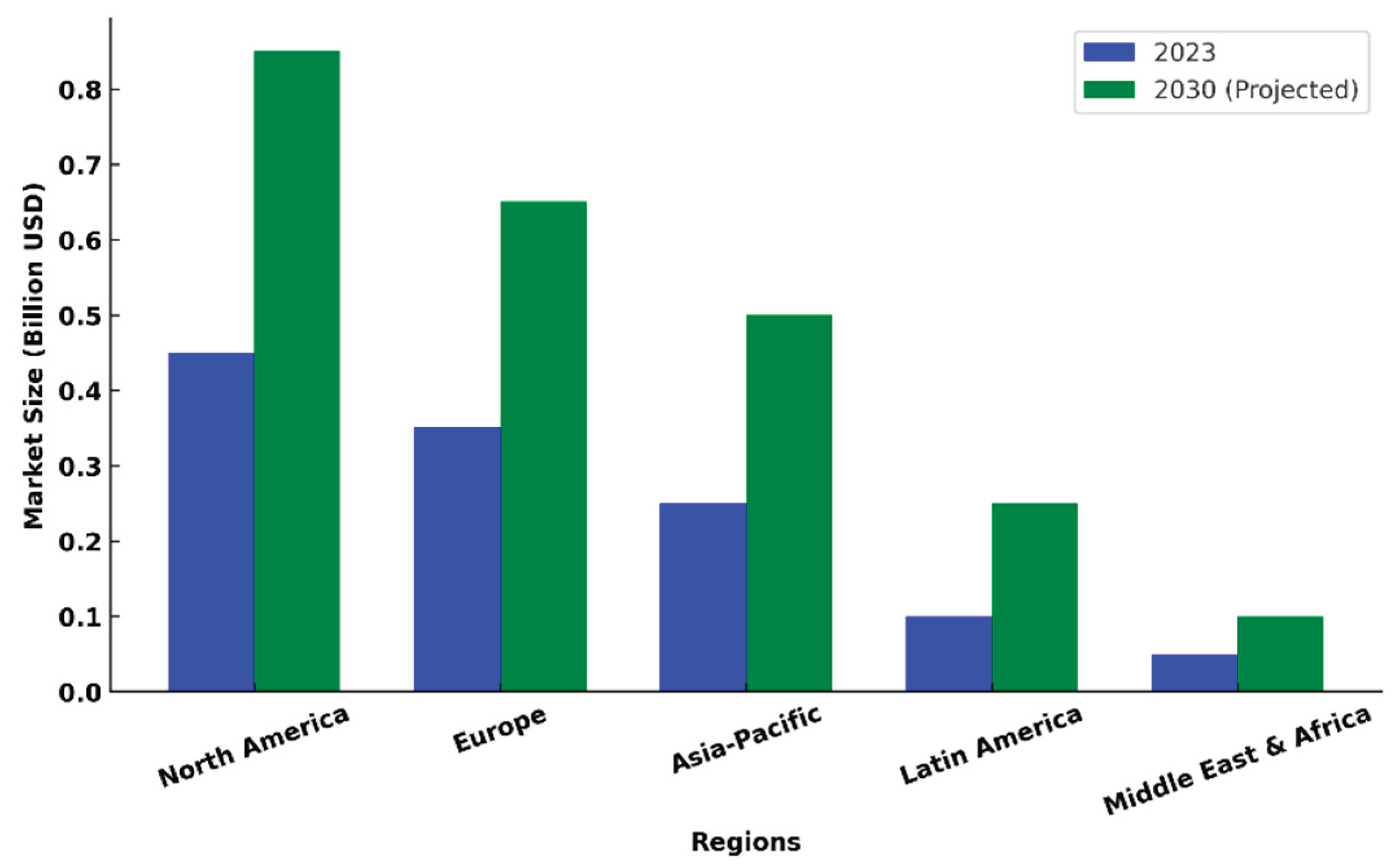
Figure 3.
Market Share of Ambient Temperature Dried Meat Products in 2023.
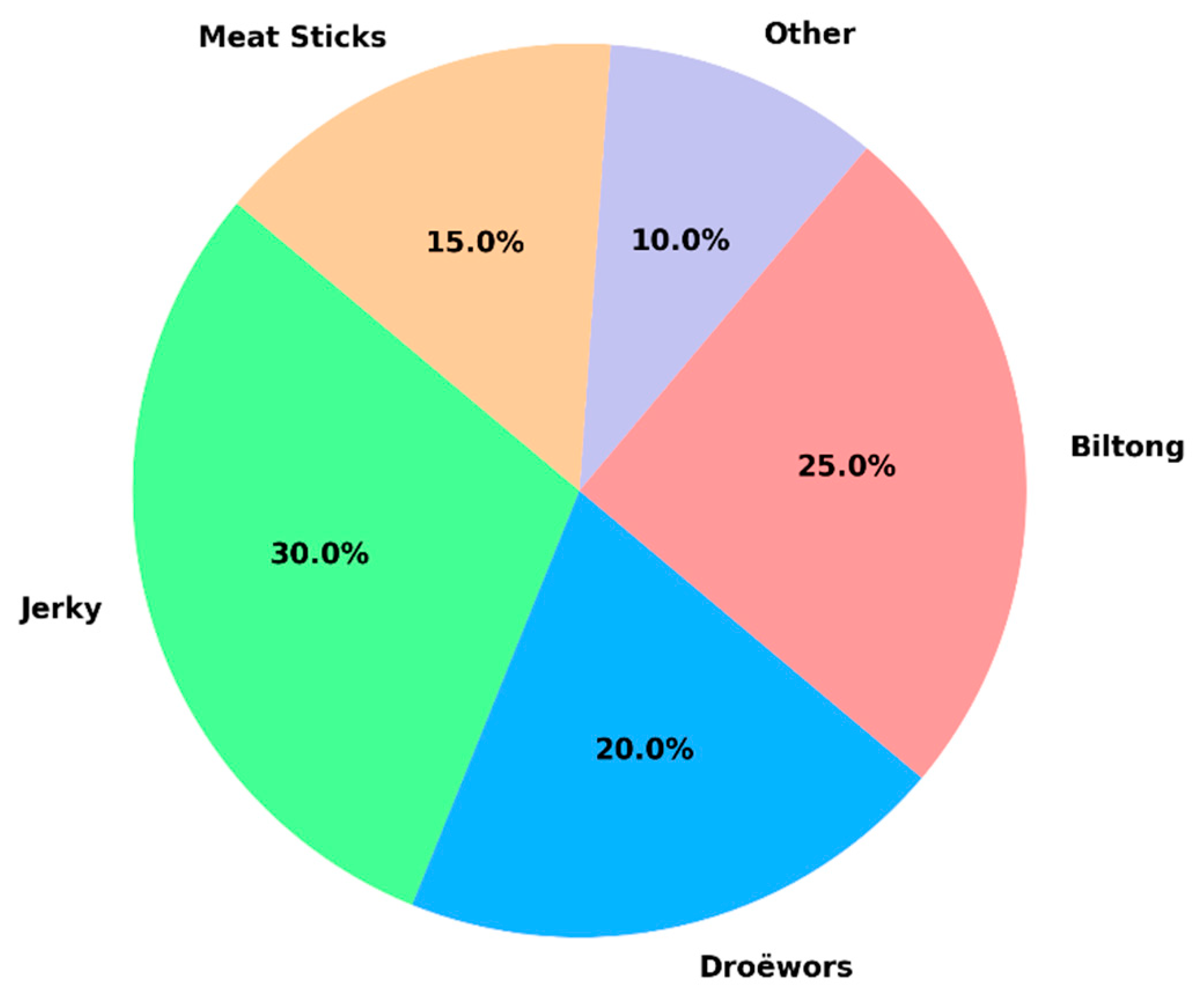

Table 1.
CAGR Summary for High-Protein, Minimally Processed Meat Snacks (2023-2030).
| Region | CAGR(%) | Project Growth Trend |
|---|---|---|
| North America | 6.5 | Steady growth driven by clean-label and organic meat snacks |
| Europe | 5.8 | Moderate growth with strong demand for specialty meat snacks |
| Asia Pacific | 9.2 | Fastest-growing region, fueled by increasing protein consumption |
| Latin America | 4.3 | Moderate growth due to urbanization and higher disposable incomes |
| Middle East & Africa | 3.8 | Slowest growth, with expansion in select premium markets |
Table 2.
Foodborne Outbreaks and Recalls Associated with Ambient Temperature Dried Meat Products.
| Product | Pathogen | Year | Location | Illnesses | Amount Recalled | Reference |
|---|---|---|---|---|---|---|
| Biltong | Salmonella | 2001 | USA | 6 | Not specified | [34] |
| Beef Biltong | Salmonella | 2024 | Canada | Not reported | Not specified | [35] |
| Jerky | E. coli O157:H7 | 1995 | USA | 9 | Not specified | [14] |
| Lebanon Bologna | E. coli O157:H7 | 2011 | USA | Not reported | Not specified | [14] |
| Italian-style Meats | Salmonella | 2021 | USA | 40 | Not specified | [14] |
Disclaimer/Publisher’s Note: The statements, opinions and data contained in all publications are solely those of the individual author(s) and contributor(s) and not of MDPI and/or the editor(s). MDPI and/or the editor(s) disclaim responsibility for any injury to people or property resulting from any ideas, methods, instructions or products referred to in the content. |
© 2025 by the authors. Licensee MDPI, Basel, Switzerland. This article is an open access article distributed under the terms and conditions of the Creative Commons Attribution (CC BY) license (http://creativecommons.org/licenses/by/4.0/).
Copyright: This open access article is published under a Creative Commons CC BY 4.0 license, which permit the free download, distribution, and reuse, provided that the author and preprint are cited in any reuse.