

Submitted:
14 May 2025
Posted:
15 May 2025
You are already at the latest version
Abstract
This paper explores the role of digital platforms in enhancing ocean governance by improving communication and collaboration among stakeholders. It analyses several platforms based on their collaborative initiatives, digital tools, and ability to function as networks of knowledge. Findings show that these platforms bridge gaps between regional, national, and non-governmental organisations, promoting informed decision-making. Their online presence enhances transparency and engagement, especially post-COVID-19. The study highlights the need for hybrid platforms combining informative and interactive elements to better serve to both experts and the public. The results include the rules and design for cooperation and co-design of a platform to foster better communication, collaboration, and sustainable ocean management practices.
Keywords:
Digital Platform
; Ocean Governance
; Communication
; Stakeholder Engagement
; Maritime Spatial Planning
; Outermost Regions
1. Introduction
Ocean governance refers to the collective management and regulation of oceanic resources and ecosystems, emphasising the need for integrated strategies that consider environmental, social, and economic factors [1,2]. The primary objective of Ocean Governance is to achieve a fair and equitable balance among the various powers and interests involved, as is the aim of all governance systems [2]. One of the primary challenges in ocean governance is the fragmentation of responsibilities among various sectors and jurisdictions, which often leads to conflicting policies and ineffective management [3]. Enhancing communication and collaboration across different governmental levels and among diverse stakeholders is crucial for overcoming these challenges. Successful governance requires coordinated efforts that engage local communities, national authorities, and international entities to ensure that the multifaceted interests of ocean stakeholders are addressed and that sustainable practices are implemented effectively [4,5]. Without strong communication and collaborative frameworks, efforts to achieve cohesive management of marine resources are likely to fall short [6].
The United Nations Decade for Ocean Sustainability, from 2021 to 20301, is a comprehensive global effort to address ocean and coastal challenges. It emphasises international cooperation, scientific progress, and societal engagement for the well-being of marine ecosystems and coastal communities. The initiative aims to advance knowledge, technology, policy, and community involvement throughout core challenges, encompassing ecological, technological, and socio-economic issues affecting ocean governance.
Among the essential tools that the Ocean Decade relies on to support ocean governance are collaborative networks and platforms2. These platforms facilitate interaction, collaboration, and information exchange among diverse stakeholders, including scientific communities, government bodies, NGOs, and the public [7,8]. They serve as meeting points for stakeholders to share ideas and research findings and collectively develop strategies to tackle ocean challenges [8]. More than just information hubs, these platforms catalyse innovation, driving the progress of ocean governance and encouraging collaborative efforts [9].
Ocean governance platforms are dynamic tools designed to facilitate interaction, collaboration, and knowledge-sharing among stakeholders involved in ocean governance and maritime spatial planning (MSP) [10,11]. These platforms serve as a channel for data exchange, coordination of activities, and fostering partnerships across various scales and sectors, integrating stakeholders' perspectives and enabling cross-border cooperation [10,12]. By incorporating digital fora, interactive tools, and shared repositories, these platforms support adaptive management, capacity building, and aligning governance frameworks with international sustainability goals [13]. Effective platforms ensure transparency, inclusivity, and accessibility, overcoming barriers such as data inconsistencies and communication gaps while fostering trust and stakeholder engagement in ocean governance initiatives [11]. The effectiveness of such platforms relies on mechanisms that ensure inclusive participation, respect for local knowledge, and the incorporation of diverse perspectives in decision-making processes, ultimately aiming to enhance the resilience and sustainability of ocean ecosystems [13,14].
Different levels/scales of government (local, regional, national, and international) are involved in marine governance, often leading to fragmented approaches or miscommunication between ocean governance actors [7,8]. To overcome this challenge, effective communication and coordination across these levels to ensure coherent policy-making is needed [6]. One key issue is that despite having multiple frameworks in place, many regions still struggle with integrating policies and coordinating efforts across different governance levels and sectors [6].
Platforms facilitate collaboration among Nation States, economic sectors, and a range of stakeholders. For example, the platforms serving regional fisheries' management organisations and international conventions help align efforts to address shared challenges like overfishing, pollution, and habitat protection [3].
The need for change in dialogue creation within ocean governance arises primarily from the limitations of existing top-down approaches that often result in ineffective processes and insufficient stakeholder engagement [15]. Traditional governance mechanisms tend to impose decisions from higher authorities without adequately considering the insights and needs of local communities and various sectors within the ocean realm. This approach can lead to a disconnect between policy objectives and the realities faced by those directly involved in or impacted by marine resource management [15]. To develop more effective and well-informed decisions, there is a pressing need to implement a bottom-up dialogue process that actively involves all stakeholders across the ocean [14,16,17]. Such an inclusive model encourages diverse inputs, fosters collaborative problem-solving, and enhances the legitimacy and acceptance of governance outcomes [14,18]. By prioritising dialogue that reflects a wide array of perspectives, governance frameworks can better align with ecological and socio-economic realities, ultimately leading to more sustainable management of ocean resources [13].
Achieving sustainable ocean governance demands a paradigm shift from sector-specific strategies to a more holistic and integrated approach that considers environmental, economic, social, and institutional dynamics [19,20]. In outermost regions, this challenge is reinforced by their unique vulnerabilities, in special the geographic isolation and archipelago fragmentation [21]. Transparent and inclusive stakeholder dialogue offers a viable path toward biodiversity conservation in these areas [22]. Strengthening networks and communication across borders is essential to advancing transdisciplinary maritime spatial planning [22,23]. Platforms play a critical role in facilitating stakeholder exchange, preserving the continuity of governance activities, and enabling informed decision-making by compiling and sharing data [23,24]. These tools support the sustainable development of regions by aiding in the implementation and monitoring of effective maritime spatial planning [25].
Aiming to foster collaboration in the European Macaronesia area, arises the MSP-OR project3. The main objective of the project was to provide support to the competent authorities in the implementation of the EU MSP Directive (2014/89/UE), advancing it in the Outermost Regions of the Azores and Madeira (Portugal), Canary Islands (Spain) and French Guiana (France), contributing to promote ocean governance through MSP and applying an ecosystem-based approach. Another objective was the creation of the OR´s Ocean Governance Hub4, an online platform, common to all the MSP-OR regions, to provide support to the regional MSP processes, focusing on their particularities and challenges. This hub intended to have a broad audience and coverage, bringing on-board different actors from the different Member States and ORs, as well as to facilitate discussion and sharing of experiences, especially on national and regional authorities with competencies in MSP implementation, promoting cooperation and definition of common solutions. Good practices already in place are continuously incorporated when suitable, building upon other successful initiatives.
This paper examines key aspects of ocean governance related (OGr), emphasising their functions, interactions, and effectiveness in tackling some of the challenges identified by the Ocean Decade. The main goal is to establish the strengths and good practices of these platforms by enabling OGr; build on these lessons learned to design, implement and optimise the OR's Ocean Governance Hub, and to shed clarification on the needs and enablers when building such platforms.
2. Methodology: Criteria for platforms overview
For the purpose of this research, several Ocean Governance related (OGr) platforms were analysed to understand how these platforms are currently functioning and creating dialogue. The online platforms were assessed through desktop research, alongside online interviews conducted with representatives of ten selected platforms to evaluate their barriers, enablers, and clarifying the needs ahead of the design of an Ocean Governance Hub.
In the process of analysing various OGr, a criteria selection was applied to ensure a comprehensive evaluation of their efficacy in fostering dialogue and interaction within the ocean governance landscape. The criteria employed for platform selection centred on their (I) collaborative nature, (II) utilisation of digital platforms for collaboration (e-collaboration), (III) the enhancement of knowledge exchange following a 'network of knowledge' approach, and (IV) alignment with the challenges outlined by the Ocean Decade initiative.
- I.
- Collaborative Initiative Criterion
The first selection criterion emphasised the collaborative nature of the platforms. Collaborative initiatives were prioritised in the context of fragmented ocean governance networks operating across diverse geographical scales [26]. This criterion recognises the significance of coordinated efforts among ocean users at local, regional or national levels to enhance the effectiveness of environmental goals. These collaborative structures enable engagement from governmental bodies at various levels and from non-state actors, facilitating a more inclusive and comprehensive approach to addressing oceanic challenges [27].
- II.
- Utilisation of Digital Platforms (E-Collaboration):
The second criterion focused on the digital aspect of these platforms. All selected platforms maintained an online presence and employed digital platforms to communicate their work, thus fostering transparency. The concept of e-collaboration in governmental spheres accentuates the partnership between various stakeholders, both public and private, working toward shared goals [28]. This criterion's importance is magnified in today's societal context, especially during the COVID-19 pandemic, when significant interactions and social engagement took place online [29]. Thus, this criterion became crucial in assessing the platforms' functionalities within the current socio-technological landscape.
- III.
- 'Network of Knowledge' Approach:
The third criterion focused on the concept of a 'network of knowledge'. Derived from the European Platform for Biodiversity Research Strategy (EPBRS), it is used to describe a low-cost way to build on existing structures and networks, to gather existing knowledge, derive policy-relevant information, and to deliver the peer-reviewed result to the science-policy interface’ [30]. Platforms were assessed based on their capacity to improve access to reliable and timely information and facilitate knowledge creation. These platforms must communicate their findings to their network's clients, other scientists, and, when appropriate, the wider public, further enhancing their role in information dissemination and knowledge sharing with ocean stakeholder sectors.
- IV.
- Alignment with Ocean Decade Challenges:
The final criterion focused on the Ocean Decade's challenges [31]. The Ocean Decade has identified ten challenges encompassing social, ecological, economic, and technological issues facing ocean governance as part of its strategy. The selected platforms were evaluated based on their efforts to address at least four interconnected challenges. Platforms were analysed to demonstrate their commitment to multi-sector policies, incorporating appropriate technologies and advocating behavioural changes necessary for the sustainable use of coastal and marine resources.
Applying these four criteria ensured a comprehensive assessment of the platforms' functionalities their contributions to foster dialogue, collaboration, and address the challenges within the ocean governance domain as outlined by the Ocean Decade initiative5.
3. Results and Discussion
3.1. Ocean Governance In Maritime Spatial Planning
Due to its ecological, social, and political intricacies, the ocean is a complex system that requires a comprehensive worldview approach to management [24]. This complexity is reflected in governance frameworks, which often need to move beyond traditional sectoral strategies towards more integrated approaches incorporating social, environmental, and economic dimensions for sustainability [19,24].
3.1.1. Needs on Ocean Governance in MSP
Effective ocean governance demands a comprehensive, science-based approach incorporating social, environmental, and cross-border factors while addressing regional complexities like climate vulnerability in outermost regions [21,31,33]. Adaptive management and stakeholder engagement are critical for ensuring balanced, inclusive decision-making processes and overcoming existing social and power imbalances [19,34]. Bridging knowledge gaps and fostering continuous capacity building are indispensable for sustainable MSP frameworks [14,22,24].
3.1.2. Barriers on Ocean Governance in MSP
Key challenges include limited stakeholder involvement, fragmented governance, and inadequate capacity and awareness [22,24,34,35]. These issues undermine participation, trust-building, and the long-term success of MSP processes [22]. Additionally, the lack of coherent data systems and accessible communication strategies exacerbates integration and coordination difficulties [19,34]. The 3 dimensions components and oceans dynamically also make difficult to map the mobility of resources (e.g. fish, plankton and of course the water itself) [19].
3.1.3. Enablers on Ocean Governance in MSP
Collaborative initiatives such as MSP-OR enable participatory and transdisciplinary governance by promoting dialogue, knowledge-sharing platforms, and alignment with international sustainability policies [22,24]. Tools like social impact assessments and ecosystem services evaluations enhance decision-making quality [19]. Continuous evaluation, capacity-building programs, and accessible platforms can strengthen MSP implementation and stakeholder trust [14,22,34].
3.2. Results on Platforms Relevance
Appendix A presents the selection of ten OGr, identified through desktop research, as suitable baseline examples relevant to the MSP-OR objectives. These platforms were chosen based on defined criterion assessing their scope, participation ambition, and thematic focus on ocean-related governance, as described in the methodology. The platforms encompass various geographical scales, governance structures, and thematic priorities, reflecting varied approaches to maritime spatial planning and ocean governance. Interviewing contact points from each platform provided insights into their stated priorities, operational mechanisms, and challenges. The findings highlight the importance of inclusive stakeholder engagement, adaptive management, and evidence-based decision-making as common enabling factors across platforms, as summarised in Table 1 [36].
An analysis of ten ocean governance platforms reveals diverse configurations in their setup, roles, and interactions, shaped by their specific mandates and geographic or thematic focus. These platforms delineate clear functions, ranging from information sharing and coordination to active stakeholder collaboration, and vary in their capacity to engage multi-level governance bodies and civil society actors. Participation methods include formal consultations, interactive online tools, workshops, and multi-stakeholder forums designed to foster transparent communication and inclusive decision-making processes. By clearly defining ‘who does what and why’, these platforms enhance clarity in roles and responsibilities, facilitating effective dialogue across governance scales. The platforms address key ocean governance challenges by creating spaces for continuous interaction and learning, enabling adaptive management approaches. Overall, organisations of different natures—governmental, intergovernmental, and non-governmental—employ tailored participation strategies to enable ocean governance, emphasising collaboration, co-creation, and knowledge exchange to improve governance outcomes and stakeholder buy-in.
Gutierrez et al. [14] highlight the significance of online platforms in facilitating participation and communication regarding Marine Protected Areas (MPAs) in areas beyond national jurisdiction (ABNJ). It emphasises that all experts agree on the value of transmitting meetings online, improving accessibility for participants from resource-limited regions. The consensus is to establish a regular frequency for these online meetings, ensuring inclusiveness and transparency, with publicly available materials to foster stakeholder engagement. Moreover, it points out that while digital tools can enhance participation, existing guidelines still have gaps in specifying effective communication strategies for the maritime community. Overall, Gutierrez et al. [14] advocates for a participatory approach in MPA management that utilises online platforms to engage a broader range of stakeholders and improve governance processes.
3.3. The MSP-OR Platform Creation
The exploration of varied OGr, guided by a set of selection criteria, brought clear insights into the building in creating the MSP-OR Platform (Figure 1). This comprehensive analysis encompasses an array of platforms, including HELCOM, OSPAR, Island Innovation, and Sargasso Sea Commission, among others, thereby illuminating critical themes that substantively shape the MSP-OR Platform.
3.3.1. Stakeholder Inclusion
The inception phase emphasises the pivotal theme of stakeholder inclusion. Platforms provided by Regional Seas Conventions (RGC), such as HELCOM in the Baltic Sea region and OSPAR in the North Atlantic, have deal with challenges in extending their reach beyond governmental and high-level stakeholders. The diagnostic phase underscores the imperative for the MSP-OR Platform to adopt a more inclusive approach, informed by insights derived from interviews, surveys, and an exploration of existing networks. These perspectives identify gaps in stakeholder engagement, guiding the platform's creation to ensure the comprehensive involvement of diverse stakeholders, including non-governmental entities and academic institutions.
3.3.2. Digital Landscape
The digital landscape assumes a central role in creating the MSP-OR Platform. The transformative impact of the COVID-19 pandemic accentuates the exigency for a robust online presence and the optimisation of digital tools to facilitate effective collaboration. Guided by the 'network of knowledge' approach, the diagnostic phase underscores the significance of leveraging existing structures for knowledge creation and dissemination. Lessons learned from platforms provided by RGC, like OSPAR and Island Innovation, become instrumental in shaping the creation of the MSP-OR Platform, with an emphasis on active participation in information exchange and drawing from established networks to amplify its functionality.
3.3.3. Alliance-Based Model
Insights from the Sargasso Sea Commission underscore the importance of an alliance-based model in creating the MSP-OR Platform. Collaborative efforts with ocean experts, governments, and allied states can significantly contribute to international recognition and support for the platform's objectives. In essence, an alliance-based approach emerges as a strategic imperative for bolstering the MSP-OR Platform's efficacy and reach.
Furthermore, the establishment of local focal points and working groups has been identified as a crucial strategy for promoting the effective engagement of maritime communities within these governance structures, thereby bridging existing gaps in participation [14].
3.4. Design and Implementation of the MSP-OR Platform
Stakeholder inclusion remains central during the implementation phase, with insights from interviews and surveys guiding the platform's design to overcome limitations in other governance bodies. The MSP-OR Platform aspires to embody a dynamic, inclusive design tailored to meet the diverse needs and expectations of stakeholders. It functions as a facilitator of collaboration, bridging governmental bodies, non-governmental entities, and academic institutions, embodying collaborative and inclusive principles stressed by the Ocean Decade.
With the intention of having a fun and visually appealing platform, drawings were developed that brought these elements to life. The platform is seen as a “stilt house” with several rooms. The design of each “room” serves the different working groups in the project, namely: Data knowledge, Filling the Gaps, Ecosystem-Based Management, Monitoring and Evaluation. The “decoration” of all the rooms was also designed to contain elements that represented the work carried out in each of the groups and all of them have a chill out zone (were partners can have invitees to exchange ideas) and a “shelve” that is connect to the “central Library” were links and MSP related documents are available. The “theatre” room represents the common space where the project's work and partners can meet. The “ball room” is an open space where events involving non partners can be held. The “kitchen” symbolises the heart of the house, the space dedicated to administrative activities. It also has a “lobby” where anyone can enter and direct their enquiry to one of the specific groups [37].
The Platform also streamlines the project's day-to-day activities, whether with the up-to-date library, categorised according to the 10 steps of the MSP [38], or with the shelves in each of the workrooms for up-to-date bibliography on the subject. Active platforms such as OCTO, it was observed that email was the most effective tool for engaging those involved in OGr (Appendix A).
The implementation of the MSP-OR Platform is further influenced by lessons learned from platforms like Island Innovation, where the optimisation of digital platforms for collaboration is evident (Appendix A). A user-friendly accessible interface and cutting-edge digital tools are key to enhance communication and cooperation. Insights from the Sargasso Sea Commission underscore the importance of a well-structured alliance and collaborative model, integrable into the platform's implementation strategy (Appendix A). The 'network of knowledge' approach continues to guide the implementation phase, emphasising not only the gathering and derivation of knowledge but also the effective communication of findings to stakeholders and the wider public [37]. Drawing on the experiences of other platforms, the MSP-OR Platform aspires to establish itself as a knowledge hub, actively contributing to informed decision-making in the realm of ocean governance, specifically in Maritime Spatial Planning processes in the ORs concerned.
3.5. Evaluation of MSP-OR Platform
The process of reviewing the platform as part of the MSP-OR project has been established since the start of the project and includes regular evaluation meetings. These evaluation meetings were held periodically in each 4 months. During the evaluation process, some questionnaires were distributed to Platform users, such as a Google forms. A notable trend in evaluating the MSP-OR Platform is the evident decrease in reported technical difficulties between the first and second surveys. This positive shift indicates a commitment to continually improving the platform's technical infrastructure and user experience. As the MSP-OR Platform addresses and refines its technical aspects, it emerges itself as a more reliable and user-friendly. This proactive move towards overcoming technical challenges contributes to a productive interaction for users, aligning with the platform's dedication to enhance usability, even though this issue is continually being looked at for adjustments and improvements [9].
Insights from survey responses shed light on the favoured tools within the MSP-OR Platform. Blogs emerge as the most widely utilised feature, emphasising a preference for narrative-driven content and collaborative storytelling, usually discussing the MSP process and presenting their knowledge and experience. This insight underscores the importance of fostering engaging and informative content within the platform. Following closely are information libraries, highlighting the significance placed on structured repositories of data and knowledge. Understanding and enhancing the functionality of these favoured tools can contribute to a more tailored and effective user experience, meeting the diverse needs expressed by the platform's user base [9].
An intriguing finding from the Google Forms evaluations is the perceived role of the MSP-OR Platform in users activities. Users consistently report that the platform primarily serves as a point of coordination and communication, specifically focusing on tasks such as uploading and commenting on work. This emphasis collaborative work and communication to foster dialogue and engagement within ocean governance. On the opposite, the platform's reported role in administration, such as scheduling and planning events or milestones, could be more pronounced, suggesting potential areas for improvement in administrative functionalities. Importantly, there is a notable and positive shift in user perceptions from the first survey to the second, as participants increasingly express a belief in the MSP-OR Platform's necessity for work related to MSP-OR [9]. This development underscores the platform's growing relevance and effectiveness in addressing its user base's specific needs and challenges, solidifying its role as a valuable component within the ocean governance landscape and the MSP process of ORs.
3.6. New Initiatives and Future Perspective for Ocean Governance Platforms
‘Ocean Governance Platform’ is still a little explored term, with a total of zero results on the Web of Science search platform. It is still a topic that is worth to be explored and developed. Although several initiatives exist in various governmental spheres, few comparative studies of these tools are available. Many initiatives are emerging in the meantime, and the use of digital platforms is increasingly becoming an important tool in the context of disseminating and engaging in dialogue on spatial planning issues.
Countries like Brazil, for example, have used platforms like LinkedIn and Instagram6 to carry out information and awareness-raising work on the MSP under development in the country. Stakeholder engagement is essential for advancing multi-use initiatives, as it fosters collaborative governance, builds trust among diverse actors, integrates local knowledge, and enables participatory decision-making that addresses social, environmental, and legal challenges effectively [39].
The newly created MPA Community Network, an initiative developed under the Blue4All project, aims to serve as a central hub for resources, tools, and networking for professionals and stakeholders working with MPAs7.The MPA Community Network has a website, and a Platform called BlueBioMatch hosted by Submariner Network. The BlueBioMatch Platform is a tool that promotes dialogue between MPA managers, political decision-makers, local communities, and actors who are linked to the blue economy. During the kick-off campaign, eight European projects supported and embraced, and more than five were eager to join the initiative. Its primary purpose is to support MPA managers by providing tools and best practices, facilitating collaboration among individuals engaged in MPA-related projects, and fostering community engagement through a growing network of participants and newsletter subscribers.
5. Conclusions: Charting A Course For E-Sustainable Oceans Platforms
In summary, the analysis performed of OGr platforms offers valuable insights into their functions, interactions, and effectiveness in meeting the challenges outlined by the Ocean Decade. The building and implementation of the MSP-OR Platform, guided by a thorough analysis and diagnosis of existing platforms, exemplifies the iterative nature of ocean governance evolution. Stakeholder inclusion, a robust digital presence, and an alliance-based model emerge as critical themes, providing the basis for future platform development.
A main conclusion is that the role of digital platforms in the context of marine governance improves transparency and communication between different actors and highlights the need to create hybrid platforms that combine informative and interactive aspects. These platforms should serve both experts, with detailed formal information, and the interested public, promoting an inclusive and accessible dialogue that strengthens the co-management of ocean resources.
A focus on collaborative processes and the use of structured dialogue mechanisms that engage multiple actors, including governments, non-governmental organisations and civil society, is essential for the success of these platforms. This favours the exchange of knowledge and facilitates more informed and adaptive decision-making. Continuous evaluation work, which includes listening to those involved in the platform's use and integrating the suggestions received, is a key element in achieving positive results tailored to users' needs.
Author Contributions
Conceptualization, DG. and HC.; methodology, DG, HC and FT.; software development, FC.; validation, LP, NS and NM.; investigation, DG, HC, FT and MM.; writing—original draft preparation, DG, HC, FT and MM.; writing—review and editing, DG, HC, MM, NS and AN.; supervision, AN; project administration, LP, NS, NM; funding acquisition, LP, HC. All authors have read and agreed to the published version of the manuscript.
Funding
This article was supported by the MSP-OR project, funded by the European Union's European Maritime and Fisheries Fund under Grant Agreement No. 101035822 - MSP-OR - EMFF-MSP-2020. We would like to thank the partners and organisations involved for their contribution to the progress of Maritime Spatial Planning in the Outermost Regions.
Informed Consent Statement
Informed consent was obtained from all subjects involved in the study.
Acknowledgments
The author(s) would like to thank all MSP-OR Consortium. This article acknowledges the assistance of ChatGPT-4, developed by OpenAI, which was used to improve spelling, grammar, and overall readability. The authors thoroughly reviewed, edited, and validated the content, maintaining full responsibility for the final version of the publication. The AI tool was utilised solely to organise and present ideas more effectively, without replacing the critical analysis and professional judgement essential to academic research and writing.
Conflicts of Interest
The authors declare no conflicts of interest.
Appendix A

Table A1.
Ocean Governance related platforms interviewed/ assessed.
| Name | Type of platform | Format | Topic | Who, what entities | Frequency of meetings/ how to create dialogue | Ocean governance lens |
|---|---|---|---|---|---|---|
| HELCOM | Governance platform | Website, news page, database with publications and map tool, meeting database, sign in to SharePoint (interactive platform for authorised people). Social media: Twitter, Facebook, LinkedIn, Flickr | HELCOM serves as a regional platform for environmental policy making in the Baltic Sea region. Signed in 1974 by the Baltic countries and amended over time to keep up with International Maritime Law modifications | The ministerial representatives from membership countries and 8 working groups: Gear, maritime, pressure, response, state & conservation, agriculture, fish, MSP. HELCOM makes recommendations of policies which have to be implemented by the member states. Workgroups consist of representatives from each member state (Baltic state + EU) | Ministerial meetings once every 3/4 years, workgroup meetings ±5 times a year (differs per workgroup), online or in person. | HELCOM facilitates cross-border cooperation between the Baltic states, makes legally binding decisions for the management of the Baltic Sea, and works in groups with representatives from all countries. |
| OSPAR | Governance platform, advisory/ recommendation function, | Website, newsletters, OSMIS as a data and information management system, OAP as an assessments portal, publications subcategorised by topic, social media: LinkedIn, Twitter, member login (Basecamp) for communication among the working group members | OSPAR is a regional sea convention and aims to make agreements with its member states on sustainable practices in the North Atlantic Ocean. Working areas: biological diversity & ecosystems, hazardous substances & eutrophication, human activities, offshore industry, radioactive substances and cross-cutting issues with all subtopics in these areas | OSPAR has a commission and 15 contracting parties and the European Union. OSPAR makes decisions and recommendations, where the decisions are legally binding to its contracting parties, the contracting parties have to set up the measures while OSPAR sets up guidelines | Monthly meetings, meetings per thematic working group, ministerial meetings, presence at international conferences | Not so much a governing function, but more a legislative function. Member States who, if signed, have to comply with agreements. Exchange of knowledge on best techniques and practices. Common framework of monitoring practices. Collaboration from an ecosystem-based approach. |
| MSP Global forum | Learning platform, networking platform, supporting platform | Website with portals to MSP global (international guidance plan and pilot project, MSP forum, with links to past forums and documents and videos archived and MSP roadmap with all the countries MSP profiles layed out and links to evaluation documents and MSP toolkit. Social media: YouTube, Facebook, Twitter and LinkedIn, News portal and event page | MSP Global aims to support governments with their MSP process to speed up and synchronise MSP projects. The forum is led by a team of MSP specialists who have worked to develop a joint roadmap and international MSP guide to support the government's MSP processes, along with six policy briefs for governments about topics related to marine spatial planning. Exchange of knowledge and best practices. | A group of experts and a consultancy group of thematic experts aimed to support MSP planners from all levels of governments all over the world. Platform for governments and planners, as well as other people (such as students). | Six large MSP forum workshops between 2018 and 2020 and regular webinars and workshops, monthly, to present projects and work on themes. | Works towards a common framework of practices in Maritime Spatial Planning that can be implemented all over the world. Facilitates cooperation between projects and countries. By making content available in multiple languages, the knowledge can reach many people. |
| MSP EU | Learning platform, networking platform, supporting platform | Newsletters, workshops, seminars, round-the-table discussions, FAQ page, regional experts available for questions, databases of former practices and library available, links to training and funding opportunities social media: twitter | Gateway for information and communication about MSP development in the EU member states | Who? A team of MSP experts, central and regional (Sea Basins) for European MSP projects | Several meetings a year and additional activities such as thematic workshops on request, frequent newsletter | In terms of ocean governance, MSP EU is a good example of how a platform can be an extension of an implemented regulation (EU MSP-directive), targeting everyone involved in the MSP process |
| IOG Forum | Learning platform, informative platform | Website, Interactive stakeholder conferences, thematic workshops, webinars and discussions, online surveys, social media, login portal for EU(?) | The forum aims to support the framework for international governance and bring stakeholders and ocean actors together. | Stakeholders in all marine sectors in workshops | Frequently supported meetings, upcoming events, and events organised in the past are all documented. | |
| Sargasso Sea Commission | Informative platform, government platform, advising | Newsletter sign up, social media: LinkedIn, Twitter, Facebook, YouTube, Instagram. Website with archives of past meetings and workshops on important themes | Since there is no regional sea authority in the Sargasso Sea (sargassum sea more an sargassum 'forest' in North Atlantic ocean, with no land borders, formed by currents), the Commission works together to get international recognition for the importance of the sea and its ecosystems, work together with the fragmented jurisdictions, to forward proposals for protection and work with UNCLOS to develop better legislation for areas like this: advice and guide. | An advisory group of oceans experts’ representatives of allied states (stewardship role), work with the governments of Azores, Bahamas, Bermuda, British Virgin Islands, Canada, Cayman Islands, Dominican Republic, Monaco, UK and US. | Quarterly newsletters, yearly meetings (since corona every two months), workshops | In terms of ocean governance, the Sargasso Sea Commission is an initiative that attempts to manage an area that is beyond borders on national jurisdiction. Even though it has no binding power, it works with governments (regional and national) to play a role in international decision-making and advising international maritime law by working with experts in the field. |
| High Sea Alliance | Informative platform | Website, news portal, Youth Ambassador program with blogs, social media channels: YouTube, Facebook, Twitter, Instagram. Treaty Tracker as a portal to enable stakeholders to follow the negotiations about the high seas on a daily basis in order to increase transparency | The High Sea Alliance aims to connect NGOs to work together to create better conservation for the high seas, establish protected areas for the high seas, and facilitate access to information to increase transparency in order to inform and engage the public and decision makers | Group of ocean specialists, from marine biologists to environmental lawyers working with NGOs to speak on UN conventions as representatives of the high seas | n/a (yearly representation on UN conventions), treaty tracker updated daily | |
| Atlantic Platform (Atlantic Action Plan) | Informative platform | Website with newsletter (signup), database of past projects, teams and descriptions, events (their events and external events) on different topics, workshops and conferences. Links to social media: Facebook, Twitter, LinkedIn, YouTube (EUAtlantic), EU datahub as an interactive map where all the projects and initiatives can be found | Atlantic Action Plan aims to support the Atlantic Marine Strategy, a EU-mandated strategy to connect and coordinate cooperation between ocean stakeholders across the Atlantic. A team of experts assists with initiatives and accessing EU funding schemes. Promote entrepreneurship and innovation, improve accessibility and connectivity, advance regional development models. Action plan is structured in 7 goals and 4 strategic themes covering both conservation goals as well as blue growth objectives | Team of specialists to advance the workings of the EU Atlantic strategy, working with stakeholders in France, Spain, Portugal and Ireland) | Workshops and other thematic events at least once a month | |
| Ocean and Climate Platform | Collaboration platform, information platform | Website, newsletter, resource database with infographics, scientific sheets, policy recommendations, and help in understanding IPCC reports. Archives with all publications, Links to social media: Facebook, Twitter and LinkedIn. On Social media, links to all ocean-related events of partner organisations. Content available in English and French. Workshops and thematic meetings | Science-polity interface where all actors in ocean issues can exchange knowledge and mobilize people from the scientific community, civil society, and policy-makers to advocate for integrating ocean issues in national and international policy-making. | Over 90 research institutes, NGOs, aquariums, private sector, French institutions and international agencies, local authorities. The organization is supported by a scientific expert committee and technical staff | Conferences and thematic meetings, communication campaigns and production of informational tools, frequency not available. Endorsing monthly events of partners in OCP network | OCP aims to be a large network of all layers of society and spread their message to everyone in order to mobilize people and influence governance. Bottom up approach. They interact through events from NGO's, art shows, exhibitions, conferences and workshops and present information from governmental institutions in information sheets to make it accessible for everyone. |
| EU Marine Board | Scientific platform | Website, newsletter, projects, meeting documents (restricted page), webinars, representation in other forums, work documents, research publications and outputs archived, social media: Instagram, Facebook, twitter, YouTube (with recordings of all webinars) | The Forum aims to facilitate action at the regional level, thereby supporting the implementation of the 2030 Agenda for Sustainable Development, in particular SDG 14, and build a bridge to a post-2020 pathway for ocean health. EU Marine Board aims to connect scientific research to policy and make recommendations based on scientific research to national governments as well as European Institutions. Bring together scientific stakeholders and identify common challenges | 35 research institutes from 18 European countries, all represented in the board and working together with thousands of scientists to create science policy advice | Bi-annual meetings, monthly webinars to discuss EMB's publications | EBM is more design to support ocean governance, by providing scientific support, and identify priority issues for governance to work on. In the scientific based policy making, research is vital and EBM is a tool to collect the ongoing research and inform the decision makers |
| 1 | https://www.oceandecade.org/ |
| 2 | Home | The Ocean Decade |
| 3 | www.msp-or.eu. |
| 4 | www.platform-msp-or.eu |
| 5 | https://oceandecade.org/challenges/ |
| 6 | https://www.instagram.com/pem.sul/ |
| 7 | https://mpacommunity.network/ |
References
- Zacharias, M. An introduction to governance and international law of the oceans. Marine policy. Routledge. London. 2014. [Google Scholar] [CrossRef]
- Fernandes, J., Trigal, L., & Sposito, E. (Eds.). Dicionário de Geografia Aplicada: Terminologia da análise, do planeamento e da gestão do território. Porto Editora, 2016, 568 pp. Available at: https://www.wook.pt/livro/dicionario-de-geografia-aplicada/16807109?srsltid=AfmBOoqpuIweR02ZhCLyutP_AVjBF00BE_ObeFRTXYyjE7SIz6i8xPjQ.
- UN. The ocean and the sustainable development goals under the 2030 agenda for sustainable development – A technical abstract of the first global integrated marine assessment. 2017. Available at: https://www.un.org/depts/los/global_reporting/8th_adhoc_2017/Technical_Abstract_on_the_Ocean_and_the_Sustainable_Development_Goals_under_the_2030_Agenda_for_Susutainable_Development.pdf.
- Zaucha, J. Sea basin maritime spatial planning: A case study of the Baltic Sea region and Poland. Marine Policy, 2014; 50, 34–45. [Google Scholar]
- Carneiro, C., Thomas, H., Olsen, S., Benzaken, D., Fletcher, S., Stanwell-Smith, D., & Roldan, S. M. Cross-border cooperation in maritime spatial planning. In Final Report: Study on International Best Practices for Cross-border MSP. Publications of the European Union, Luxembourg, 2017, 109 pp. [CrossRef]
- Partelow, S., Hadjimichael, M., & Hornidge, A.-K. Ocean Governance. Springer Cham, 2023. [CrossRef]
- Koski, C. , Rönneberg, M., Kettunen, P., Armoškaitė, A., Strake, S., & Oksanen, J. "User Experiences of Using a Spatial Analysis Tool in Collaborative GIS for Maritime Spatial Planning." Transactions in GIS, 2021 25(4), 1809–1824. [CrossRef]
- Majidi Nezhad, M. , Neshat, M., Piras, G., Astiaso Garcia, D., & Sylaios, G. 'Marine Online Platforms of Services to Public End-Users—The Innovation of the ODYSSEA Project.’ Remote Sensing, 2022 14(3): 572. [CrossRef]
- Calado, H., Moreira, M., Santos, N., Melo, N., Cipriano, F. D.2.3 - Report on Main Discussed Issues on the Platform. MSP-OR Project, European Climate, Infrastructure and Environment Executive Agency, 2024 Grant Agreement No. GA 101035822—MSP-OR—EMFF-MSP-2020.
- Ansell, C., and Alison G. Collaborative Platforms as a Governance Strategy. Journal of Public Administration Research and Theory, 2018, 28 (1), 16–32. [CrossRef]
- Bonnevie, I. M., Hansen H.S, Schrøder L., Rönneberg M., Kettunen P., Koski C., and Oksanen J. “Engaging Stakeholders in Marine Spatial Planning for Collaborative Scoring of Conflicts and Synergies within a Spatial Tool Environment.” Ocean & Coastal Management, 2023, 233 (February): 106449. https://doi.org/10.1016/j.ocecoaman.2022.106449.
- Emerson, K. Emerson, K., T. Nabatchi, and S. Balogh. “An Integrative Framework for Collaborative Governance.” Journal of Public Administration Research and Theory, 2012. 22 (1): 1–29. [CrossRef]
- Calado, H. Better Participation Means Better Governance. In Ocean Governance in Archipelagic Regions Conference, 2020. (p. 59). Horta, Azores, Portugal: International Conference.
- Gutierrez, D., Calado, H., and García-Sanabria, J. “A Proposal for Engagement in MPAs in Areas beyond National Jurisdiction: The Case of Macaronesia.” Science of the Total Environment, 2023, 854 (July 2022): 158711. [CrossRef]
- Gaymer, C. F., Stadel, A. V., Ban, N. C., Cárcamo, P. F., Ierna, J., and Lieberknecht, L. M. “Merging Top-down and Bottom-up Approaches in Marine Protected Areas Planning: Experiences from around the Globe.” Aquatic Conservation: Marine and Freshwater Ecosystems, 2014, 24 (S2): 128–144. [CrossRef]
- Saha, K., and Alam, A. “Planning for Blue Economy: Prospects of Maritime Spatial Planning in Bangladesh.” AIUB Journal of Science and Engineering, 2018. 17 (2): 59–66.
- Wever, L., Glaser, M., Gorris, P., and Ferrol-Schulte, D. “Decentralisation and Participation in Integrated Coastal Management: Policy Lessons from Brazil and Indonesia.” Ocean & Coastal Management, 2012. 66: 63–72. [CrossRef]
- Rasheed, A., and Abdulla, A. “Engaging Stakeholders in Marine Governance: Challenges and Opportunities.” Ocean & Coastal Management, 2020. 184: 104861.
- von Thenen, M. , Armoškait˙ė, A., Cordero-Penín, V., García-Morales, S., Gottschalk, J. B., Gutierrez, D., Ripken, M., Thoya, P., and Schiele, K. S. “The Future of Marine Spatial Planning: Perspectives from Early Career Researchers.” Sustainability, 2021, 13 (24): 13879. [CrossRef]
- Dawson, N. M. , Coolsaet, B., Sterling, E. J., Loveridge, R., Gross-Camp, N. D., Wongbusarakum, S., Sangha, K. K., et al. “The Role of Indigenous Peoples and Local Communities in Effective and Equitable Conservation.” Ecology and Society, 2021, 26 (3): 19. [CrossRef]
- Seijo, C. , Calado, H., McClintock, W. J., Gil, A., and Fonseca, C. “Mapping Recreational Ecosystem Services from Stakeholders’ Perspective in the Azores.” One Ecosystem, 2021. 6. [CrossRef]
- Weiand, L. , Unger, S., Rochette, J., Müller, A., and Neumann, B. “Advancing Ocean Governance in Marine Regions through Stakeholder Dialogue Processes.” Frontiers in Marine Science, 2021, 8 (May): 1–12. [CrossRef]
- UNESCO-IOC. MSPglobal International Guide on Marine/Maritime Spatial Planning. Paris: UNESCO, 2021. (IOC Manuals and Guides No. 89).
- Rudolph, T. B. , Ruckelshaus, M., Swilling, M., Allison, E. H., Österblom, H., Gelcich, S., and Mbatha, P. “A Transition to Sustainable Ocean Governance.” Nature Communications, 2020. 11 (1): 1–14. [CrossRef]
- Pınarbaşı, K. , Galparsoro, I., Borja, Á., Stelzenmüller, V., Ehler, C. N., and Gimpel, A. “Decision Support Tools in Marine Spatial Planning: Present Applications, Gaps, and Future Perspectives.” Marine Policy, 2017, 83 (February): 83–91. [CrossRef]
- Fanning, L. , and Mahon R. “Governance of the Global Ocean Commons: Hopelessly Fragmented or Fixable?” Coastal Management, 2020. 48 (6): 527–533. [CrossRef]
- Bennett, N. J. , Cisneros-Montemayor, A. M., Blythe, J., Silver, J. J., Singh, G., Andrews, N., Calò, A., Christie, P., Di Franco, A., Finkbeiner, E.M., Gelcich, S., Guidetti, P., Harper, S., Hotte, N., Kittinger, J.N., Le Billon, P., Lister, J., López de la Lama, R., McKinley, E., Scholtens, J., Solås, A.-M., Sowman, M., Talloni-Álvarez, N., Teh, L.C.L., Voyer, M., Sumaila, U.R. “Towards a Sustainable and Equitable Blue Economy.” Nature Sustainability, 2019, 2 (11): 991–993. [CrossRef]
- Kassen, M. “Promoting Public Cooperation in Government: Key Drivers, Regulation, and Barriers of the E-Collaboration Movement in Kazakhstan.” International Review of Administrative Sciences, 2018. 85 (4): 743–762. [CrossRef]
- , Crowe, P. R., Stori, F., Ballinger, R., Brew, T. C., Blacklaw-Jones, L., and Foley, K. ‘Going Digital’ – Lessons for Future Coastal Community Engagement and Climate Change Adaptation.” Ocean & Coastal Management, 2021, 208 (November 2020): 105629. [CrossRef]
- EPBRS. “Concept Note: Network of Knowledge for Biodiversity Governance.” EPBRS. 2009. http://www.epbrs.org/PDF/2009%2009%2010%20Concept%20note%20on%20the%20network%20of%20knowledge_version%202-1.pdf.
- J. Claudet, L. J. Claudet, L. Bopp, W.W.L. Cheung, R. Devillers, E. Escobar-Briones, P. Haugan, J. J. Heymans, V. Masson-Delmotte, N. Matz-Lück, P. Miloslavich, L. Mullineaux, M. Visbeck, R. Watson, A.M. Zivian, I. Ansorge, M. Araujo, S. Aric`o, D. Bailly, J. Barbi`ere, F. Gaill, A roadmap for using the UN decade of ocean science for sustainable development in support of science, policy, and action, One Earth 2 (1), 2020, 34–42,. [CrossRef]
- Ribalaygua, C. , García, F., and Sánchez, H. G. “European Island Outermost Regions and Climate Change Adaptation: A New Role for Regional Planning.” Island Studies Journal, 2019. 14 (1): 21–40. [CrossRef]
- Vergílio, M. H. , and Calado, H. M. G. P. “Spatial Planning in Small Islands: The Need to Discuss the Concept of Ecological Structure.” Planning Practice & Research, 2016. 31 (4): 452–471. [CrossRef]
- UNESCO-IOC. MSPglobal Policy Brief: Ocean Governance and Marine Spatial Planning. Paris: UNESCO, 2021b. (IOC Policy Brief).
- García-Sanabria, J. , García-Onetti, J., Pallero Flores, C., Cordero Penín, V., Andrés García, M., and Arcila Garrido, M. MSP Governance Analysis of the European Macaronesia. Deliverable D.6.5 under the WP6 of MarSP: Macaronesian Maritime Spatial Planning Project, 2019. (GA No. EASME/EMFF/2016/1.2.1.6/03SI2.763106).
- Gutierrez, D. , Van Toor, F., Calado, H., Campillos, M., Nuñez, C. C., Santos, N., and Silva, A. Report on Needs, Barriers, and Enablers for MSP and Capacity Building (D2.1). MSP-OR Project, European Climate, Infrastructure and Environment Executive Agency, 2022. (GA No. 101035822).
- Calado, H. , Gutierrez D., Dores V., Haroun R., Lequesne B., Nogueira N., Nuñez C. C., Santos N., Silva A., Vergílio M. Platform Manual. MSP-OR Project, European Climate, Infrastructure, and Environment Executive Agency, 2022. (GA No. 101035822). Deliverable 2.2 – Platform Manual.
- Ehler, C. , and F. Douvere. Marine Spatial Planning: A Step-by-Step Approach Toward Ecosystem-Based Management. Paris: UNESCO, 2009. (IOC Manual & Guide No. 53).
- Diederichsen, S. D. , Weiss, C. V. C., Lukic, I., Rebours, C., Walsh, J. P., McCann, J., Juell-Skielse, E., Gröndahl, F., & Scherer, M. E. G. “Assessment Framework for Successful Development of Viable Ocean Multi-Use Systems: A Case Study from the Pirajubaé Marine Extractive Reserve, Brazil.” Ocean & Coastal Management, 2025. 266: 107689. [CrossRef]
Figure 1.
Ocean Governance HUB designed for the MSP-OR Project (www.platform-msp-or.eu).
Figure 1.
Ocean Governance HUB designed for the MSP-OR Project (www.platform-msp-or.eu).
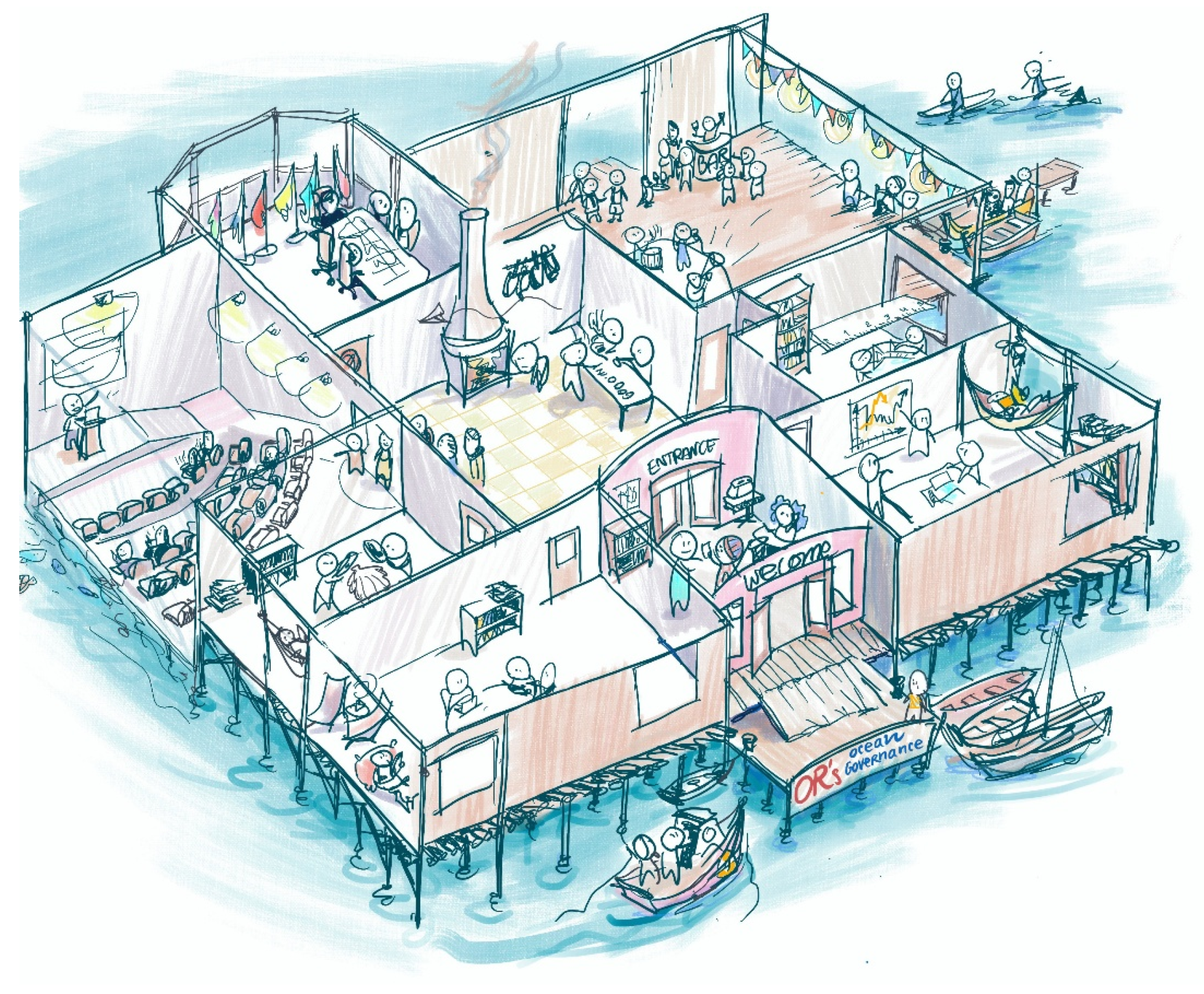
Table 1.
Summary of the barriers and enablers of the OGr platforms. Adapted from: Gutierrez et al., 2022. Report on needs, barriers and enablers for MSP and Capacity Building (D2.1). MSP-OR project [36].
Table 1.
Summary of the barriers and enablers of the OGr platforms. Adapted from: Gutierrez et al., 2022. Report on needs, barriers and enablers for MSP and Capacity Building (D2.1). MSP-OR project [36].
| Barriers | Enablers |
|---|---|
| Logging in to a platform takes too much time. | Push notifications to generate platform use. |
| Expensive to keep a platform going and moderate interaction and content. | Create a network/ community to make interaction and collaboration easier --> effective collaboration. |
| Data protection laws can make platform transparency challenging. | Platform as moderator, bringing together data from different working groups. |
| Collaboration strands on checking the compatibility of the initiative rather than a collaborative project. Sometimes, published knowledge can also prevent interaction. | Non-governmental input can be generated through a platform, by presenting documents and making them accessible. |
| Links, websites, and videos expire after a while. To maintain content, move it to a more permanent host. | Platform as a knowledge centre, publish best practices. Tools and guidelines for future projects within the region and outside of the region. |
| Multimedia and innovative solutions can also exclude certain groups and areas (for example, inaccessibility due to a lack of internet). | An interactive PDF presents data in a concentrated but readable way. Other formats of interaction do not always have to be new (e.g., YouTube). |
| Mailing lists can be useful during the implementation phase to highlight new inputs; after that, the tool becomes less useful. | Multiple languages can extend reach and generate more input. |
| Usually, government platforms are more about information rather than communication. | Incorporate different levels of information, aimed at different types of users. |
| When introducing interactive aspects, consider the vetting process to avoid spam and robot accounts. | Several projects seek interactive aspects. The implementation phase requires input from civil society and other non-governmental actors. |
| User engagement is needed before it can be an effective tool. | Online platforms can include hidden groups, where certain content stays private, and other content can be public. |
Disclaimer/Publisher’s Note: The statements, opinions and data contained in all publications are solely those of the individual author(s) and contributor(s) and not of MDPI and/or the editor(s). MDPI and/or the editor(s) disclaim responsibility for any injury to people or property resulting from any ideas, methods, instructions or products referred to in the content. |
© 2025 by the authors. Licensee MDPI, Basel, Switzerland. This article is an open access article distributed under the terms and conditions of the Creative Commons Attribution (CC BY) license (https://creativecommons.org/licenses/by/4.0/).
Copyright: This open access article is published under a Creative Commons CC BY 4.0 license, which permit the free download, distribution, and reuse, provided that the author and preprint are cited in any reuse.