

Submitted:
01 May 2025
Posted:
07 May 2025
You are already at the latest version
Abstract
Polyphenols -active substances with structural diversities- are recognized as of great interest. Their compositions are versatile, depending on their structures, including the number of rings in the composition of polyphenols. Based on these attributes, polyphenols can be classified as flavanols, flavonols, anthocyanins, flavones, phenolic acids, stilbenes, and lignans. Most polyphenols mainly possess inhibition of viral replication, interference with viral protein synthesis, and modulation of immune responses, providing significant antiviral effects against numerous virus types, including herpes simplex virus, hepatitis virus, and influenza. They are crucial for pharmaceutical compounds in diverse, versatile treatments, namely in diabetes, cardiovascular diseases, several types of cancer, and neurological problems. Plants are the primary source of bioactive molecules, which are valued for their anti-inflammatory, antioxidant, anticancer, and antiviral activities. Especially polyphenols extracted as the most abundant bioactive compound of plants. Also, viral infections are one of the major factors in illnesses and diseases, along with bacteria and fungi. There has been a complete set of evidence of antiviral effects of various phenolic compounds on diseases, including SARS-CoV-2, Mayaro virus, Dengue virus, Herpesvirus, and Influenza A virus viral infection. Additionally, modulation of host immune response after a viral infection, inhibition of viral entry, interference with viral replication, and direct virucidal effects were examined.
Keywords:
polyphenols
; antiviral effect
; viral diseases
1. Introduction
Polyphenols -active substances with over 8,000 structural diversities- are recognized as being of great interest [1,2]. Their compositions are versatile, depending on their structure and number of rings, as well as attached groups to these rings [3]. Based on these attributes, the classification of polyphenolic compounds can be grouped as flavonoids, phenolic acids, stilbenes, and lignans [4]. Flavonoids mainly possess inhibition of viral replication, interference with viral protein synthesis, and modulation of immune responses, exhibiting significant antiviral effects against multiple viruses, including hepatitis C virus (HCV), herpes simplex virus (HSV), and influenza [5,6]. Additionally, phenolic acids donate their hydrogen atoms, providing significant anticancer and antioxidant activity. Their activities are significantly crucial for medicinal compounds in multiple, versatile treatments, including in diabetes, cancer, cardiovascular disorders, and neurodegenerative problems [7,8]. Stilbenes, a type of phenylpropanoid, are a significant class of nonflavonoid phytochemicals [7]. One of the best-known compounds in this category is resveratrol, which is naturally present in grapes and peanuts and abundant in red wine [9]. The composition of resveratrol possesses antioxidant and anti-inflammatory activity, as well as the possibility of preventing chronic diseases [10]. Moreover, lignans are predominantly present in vegetables, legumes, and cereals, suggesting a fiber-rich diet is essential for human health [11]. They significantly exhibit anticancer, anti-inflammatory, antioxidant, anti-menopausal, and antimicrobial activity [12,13]. Plants comprise numerous types of polyphenols, including isovitexin, vitexin, quercetin, diosgenin, rutin, and saponins [14]. Several studies reveal that quercetin possesses antiviral properties for the hepatitis B virus (HBV) 5/6/2025 1:08:00 PM. Green tea polyphenols, commonly known as epigallocatechin-3-gallate (EGCG), have potent antiviral activity against various types of hepatitis viruses [15,16].
For centuries, natural bioactive substances have been recognized as potential alternative treatments [17]. These bioactive molecules are primarily sourced by plants, which are valued for their antioxidant/anti-inflammatory, anticancer, and antiviral activities [15,18]. Subsequently, these attributes have gained significant interest as a safer option for treatments and new sources of pharmaceuticals [15,19]. Viral infections have been one of the essential topics to study for potential treatment for human health, including hepatocellular carcinoma, type 1 diabetes, and Alzheimer’s disease [20]. During COVID-19, these studies have emerged to comprehend more about viral infections, namely common viral and gastrointestinal infections, including severe acute respiratory syndrome coronavirus 2 (SARS-CoV-2) [21,22]. To explore the nuances of COVID-19 prophylaxis and treatment, alternative bioagents have been investigated, namely, black tea (theaflavins) and green tea (EGCG) polyphenols. Experimental studies revealed that they exhibit significant antiviral activity against single-stranded RNA viruses, key viral proteins (e.g., 3CLpro, RdRp), and receptors (e.g., ACE2) [23]. To advocate, another associated study suggested that polyphenols like quercetin, kaempferol, EGCG, and catechins show efficacy against viruses like influenza and COVID-19 [24,25]. Additionally, a study based on retroviruses, particularly on lentivirus types like human immunodeficiency viruses (HIV), revealed that despite combined antiretroviral therapy (cART) and highly active antiretroviral therapy (HAART) being effective in the treatment of HIV, they were not curative [26]. Therefore, the overall study suggested that natural compounds like flavonoid derivatives, namely, tectorigenin and apigenin, have potential for treatment, especially considering the limitations and side effects associated with combined cART and HAART [27,28]. Another recent study licensed by the Food and Drug Administration (FDA) revealed a list of potential natural products, widely plant-based compounds that are being studied as potential antiviral drugs [29]. According to the analysis, despite an estimated 250,000 higher plant species, approximately only a low percentage have been studied for their potential medicinal properties. This position of studies offers a promising avenue to discover novel bioactive compounds. A study that references this analysis offered to discover and develop unique antiviral drugs with influential antiviral activity, obtained from polyphenolic compounds, including phytochemical antiviral plant extracts, as well as various marine and microbial sources [30]. Despite having several treatments and therapies available, the dengue virus (DENV) infection has been observed on polyphenols such as flavone baicalein, giving a promising potential to address limitations on preventing the DENV infection by exerting a potent activity against the host and post-entry replication [20]. Such marine phytochemicals, including quercetin and narasin, have been observed to exhibit anti-DENV activities [31,32]. Another polyphenol-rich plant, Aronia melanocarpa (A. melanocarpa), exhibited antiviral activity with its enriched polyphenolic content as an ethanolic extract [33]. Although these polyphenols possess antiviral activity, having a complex mechanism makes it difficult to understand and creating limitations to food applications of polyphenols [34,35]. Furthermore, their laboratory conditions are very limited for their utility, bioavailability, and antiviral potency [36,37]. To evaluate the bioavailability, several techniques have been investigated, including nanoparticle encapsulation and liposomal technology [18,38]. Depending on the source, storage conditions, and methods of isolation of polyphenols, the required nanoparticle is selected [39,40,41]. Most studies based on antiviral polyphenols are investigated as in vitro or cell line-based experiments. Developmental studies on these compounds require thorough examination to evaluate properly and select a therapeutic dose [15]. In this review article, we have evaluated the general concept of polyphenols and their advantageous effects on health and diseases. Also, we evaluated the specific antiviral effects on certain viruses and indicated the mechanism behind their effects. Related studies were also evaluated and summarized in this concept.
2. Overview of Polyphenols
- a)
- Classification of Polyphenols and Sources of Polyphenols Dietary Sources
Polyphenols are plant-based bioactive components of foods, and they can be divergent (Figure 1.) Flavonoids are common polyphenols in plants, including onions, tea, grapes, and hot peppers [42]. Several different subclasses of flavonoids contain flavanones, isoflavones, flavonols, flavan-3-ols (catechins), flavones, and anthocyanins [43]. Flavonols are mostly in vegetables like onions, broccoli, and kale, or in fruits like berries, apples, and cherries. They have divergent health-promoting effects, including antioxidant, antiviral, and anti-inflammatory effects and activities [44,45]. Additionally, they have common types, particularly quercetin and kaempferol . They are abundant in celery and chamomile, and their common types are luteolin and apigenin, which possess anti-inflammatory and anticancer activities on humans and other living things [46,47]. Flavan-3-ols (catechins) are another subclass of flavonoid [48]. Green tea, berries, and cocoa have epigallocatechin gallate and epicatechin, which are common types of flavan-3-ols. Flavanones, which are sourced from citrus fruits, including oranges and mandarins, are another subclass of flavonoids. The components of citrus fruits provide antiviral and antioxidant effects, and these fruits have flavanones, including hesperidin and naringenin [49,50]. Cyanidin and malvidin are several commonly used examples of anthocyanins that are generally present in maize, berries, red cabbage, and grapes [44,51]. They have anti-inflammatory and antibacterial activity against diseases, as well as competence to improve cardiovascular health [52,53]. Isoflavones are the last subclass of flavonoids that have several types, including daidzein and genistein, and can provide several effects of polyphenols, namely phytoestrogens, which regulate sex development, bone health, and anticancer support [54,55].
Phenolic acids are other subgroups of polyphenols that are mostly contained in several foods, fruits and beverages, including tea, coffee, and red fruits[56]. Two of the most detected phenolic acids were found in numerous experiments [57]. The first of these phenolic acids is hydroxybenzoic acid, which exists particularly in tea, onions, and red fruits [58,59]. In addition to these, several common hydroxybenzoic acids are determined to be vanillic acid and gallic acid, which have several health-promoting activities including antioxidant and antimicrobial [60,61]. Furthermore, another known phenolic acid is hydroxycinnamic acid, which is generally contained in different types of fruits, coffee, and vegetables [62]. Hydroxycinnamic acids can be divided to subgroups, including caffeic, chlorogenic acids, and ferulic that demonstrate anti-inflammatory, neuroprotective, anti-cancer and antioxidant effects on living organisms [63,64].
The other subgroup of the polyphenols is stilbenes, which are widely detected polyphenols, generally in grapes, red wine, and berries [65,66]. This polyphenol is resveratrol, that is used in several medical trainings associated with its longevity-promoting, anticancer, and anti-inflammatory effects [66,67,68]. Other key polyphenols are lignans, which have different types, including pinoresinol and secoisolariciresinol [69,70]. Secoisolariciresinol and pinoresinol are present mostly in flaxseeds, sesame seeds, and whole grains [69,71]. These have several biological benefits, including phytoestrogenic effects, hormonal balance protection, and antioxidant activity, especially in terms of humans [72,73].
Curcumin and tannins are other common polyphenols; however, they are not in any previously explained subgroups [74]. Curcumin is mostly present in Lakadong turmeric (Curcuma longa) and golden milk, and it has several health-benefiting activities, including anti-inhibitory and antiviral activities [75,76]. The other common polyphenols are tannins present in divergent beverages or foods containing red wine, grapes, green tea, black tea, and other fruits, which especially have red colors [77,78]. They have antioxidant, antimicrobial, and cardiovascular benefits, which are important for living organisms [79,80].
- b)
- General Biological Activities of Polyphenols Relevant to Antiviral Activity
Several polyphenol subclasses and types have biological activities associated with antiviral activity [81]. These biological activities can be exemplified by antioxidant, anti-inflammatory, lung-protective, cardiovascular-preservative, cytotoxic, antibiofilm, anticancer, and antibacterial activities [82]. In a study in which curcuminoids and curcumin were obtained from Curcuma Longa extract, their potent antiviral, anti-inflammatory, and antioxidant activities were evaluated in SARS-CoV-2-infected human neuroblastoma SH-SY5Y cells [83]. The results demonstrated that plasma membrane-associated transmembrane protease serine 2 (TMPRSS2) and TMPRSS11D expressions were decreased by Me23, which is a curcuminoid. The inhibition positively affected the reactive oxygen species (ROS) level elevated by SARS-CoV-2. This inhibition showed antioxidant activity associated with antiviral activity. Moreover, Me23 enhanced antioxidative activity by increasing NRF2 gene expression, which has an active pathway in the reduction of pro-inflammatory cytokines, including MCP-1, TNF-a, IL-6e, and IL-1b, and retaining NQO1 activity, which is a mostly abundant enzyme in antioxidative pathways and regulates the expression of the NRF2 gene that deals with the infection. Additionally, Me23 and Me08, which are curcuminoids, effectively reduced the replicative activities associated with the disease that came from the infection. Additionally, the anti-inflammatory effects of curcuminoids and curcumin were detected by suppressing the levels of pro-inflammatory cytokines such as IL-6, TNF-α, IL-17, and INF-γ, which can cause demyelination and axonal damage to the cells. Also, especially Me08, decreased INF-γ levels. These findings demonstrated that curcumin and curcuminoids have anti-inflammatory and antioxidant effects, exhibited with antiviral effects.
In another study, ginger and garlic were combined to detect bioactive compounds' enhanced antiviral, antimicrobial, and antioxidant activities, especially polyphenols [84]. Garlic and ginger increased the inhibition of viral and microbial infection and provided each other with activation. Compounds including polyphenols have antioxidant activity, providing antimicrobial and antiviral activity while decreasing the damage from viruses and microbial living. For this study, generally, flavonoid compounds were detected, and their activities, which were explained in the study, were searched for. Additionally, researchers showed that the combination of garlic and ginger provided more antioxidant, antiviral, and antimicrobial properties in these foods than either alone.
In a study determining the antiviral and cytotoxicity activities of quercetin-O-deoxyhexoside which obtained from Bauhinia holophylla leaves, the improvement of antiviral and cytotoxicity determining results was detected [85]. In the antiviral study, Zika virus activity on the African green monkey kidney epithelial cells deals with the cytotoxic effect of the quercetin-O-deoxyhexoside, a phenolic component of the leaves. The results of the study demonstrated that quercetin-O-deoxyhexoside obtained from Bauhinia holophylla leaves was effective while elevating the viral defection mechanism of African green monkey kidney epithelial cells and indirectly altering the cytotoxic activities with an antiviral effect.
According to a study, a polyphenol subclass, chlorogenic acid, served as an increasing factor for antiviral, anti-inflammatory, and antioxidant activities of Arctium lappa Linn. [44]. Antiviral activity was determined by the usage of the white spot syndrome virus on red swamp crayfish (Procambarus clarkii). Moreover, it also was attributed to antioxidant, antiviral, and anti-inflammatory activity in various cases, including inhibition of numerous biological pathways.
4. Mechanisms of Antiviral Action of Polyphenols
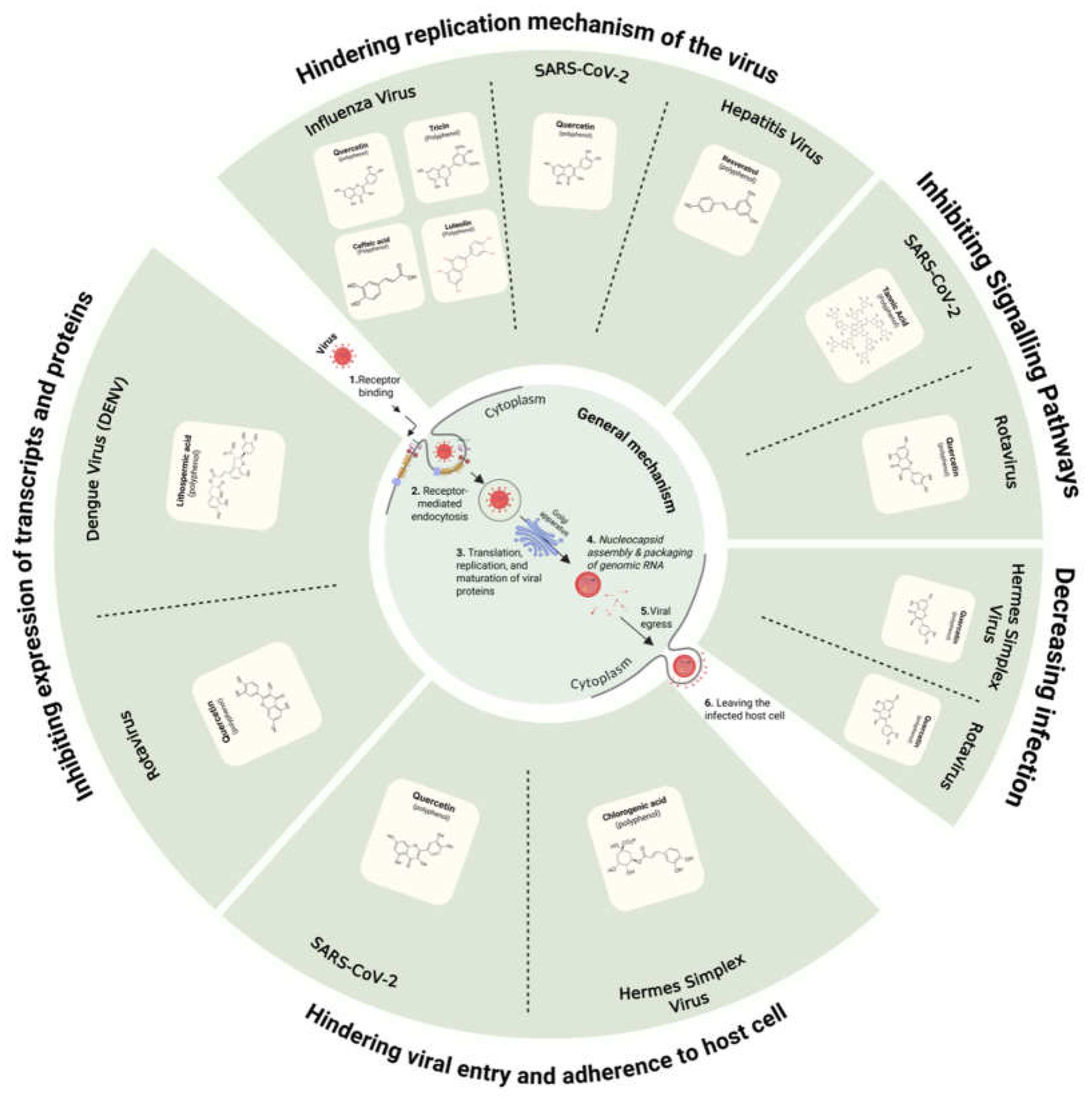
Viral infections are one of the major factors in illnesses and diseases along with bacteria and fungi [122,123,124,125]. There have been a complete set of evidenced antiviral effects of various phenolic compounds on diseases including SARS-COV-2, Mayaro virus, Dengue virus, Newcastle disease virus, Murine norovirus, Feline Herpesvirus type-1, Human Herpesvirus type-1, Influenza A virus, Mouse coronavirus MHV-A59, White spot syndrome virus, and Chikungunya viral infection [2,121,126,127]. SARS-CoV-2 pseudo-virions were also investigated with polyphenols and evidenced that viral particles can also be affected by these compounds [128].
Figure 2.
General summary of polyphenols and their multi-targeted antiviral strategies to different types of viruses.
Figure 2.
General summary of polyphenols and their multi-targeted antiviral strategies to different types of viruses.
- i)
- SARS-CoV-2
During 2019 pandemic, SARS-CoV-2 virus caused a huge global epidemic and influenced the entire planet recently. Studies based on SARS-CoV-2 brought remarkable results and gave rise to the importance of polyphenolic compounds [129,130]. In a newly published study, it has been purposed to identify triphenol compounds and their potential to help the inhibition capability of these phenols on different compartments of the virus, including SARS-CoV-2 spike protein receptor binding domain (S-RBD), SARS-CoV-2 3-chymotrypsin-like protease (3CLpro), and angiotensin-converting enzyme 2 (ACE2) [43]. The study demonstrated that bioactive polyphenols, namely benserazide hydrochloride and exifone, inhibited the activity of SARS-COV-2 3CLpro protease, a preserved cysteine protease that is vital for the coronavirus replication processes [130]. Specifically, benserazide hydrochloride exhibited time-dependent inhibition effects, whereas exifone did not have any significant results. Correspondingly, the mode of inhibitory activities of these triphenols with 3CLpro was further investigated. According to this further investigation, these two triphenols were exhibiting inhibitory activities where exifone bonded at a cleft between domains II and III of 3CLpro through hydrogen binding, and benserazide hydrochloride interacted in the catalytic pocket of this enzyme. The results also pointed out that exifone exhibited antiviral activity against particularly several types of SARS-CoV-2 pseudovirus strains dose-dependently with the inhibition of viral entry into hACE2-HEK293 T cells that are important for viral infection. It was also demonstrated that exifone impeded the association between ACE2 and S-RBD, which is a critical pathway in the viral infection of human cells [131].
There are various polyphenols whose effects on SARS-CoV-2 have been studied extensively [132]. Tannic acid is a polyphenol found abundantly in cereals, tea, vegetables, red wine, herbs, and coffee [133]. The therapeutic properties of this phenolic compound have been studied, and it has been exposed that tannic acid is showing promise as a therapeutic agent [134,135]. In a dedicated study for tannic acid, the host-protein interaction, anti-inflammatory, and antioxidant efficiency of this compound were detected [123]. The in silico analysis proved that tannic acid possesses interaction capability with key virulence factors such as TLR-4, MAPK, COX-2, and NF-κB, playing key roles in the inflammatory responses and immune modulation during viral infections in the immunopathogenesis of SARS-CoV-2. Furthermore, tannic acid is capable of decreasing and partially preventing MAPK and NF-κB signaling pathways, which are present in viral infection, by hindering mediator production, leading to the alleviation of organism response [136,137]. The results also reported that the tannic acid possesses a binding affinity to COX-2, suggesting the ability to bind SARS-CoV-2 proteins, taking a role in viral entry and replication, strongly and with low energy requirements. In a dedicated study examining the ex vivo ability of quercetin in the decrease of SARS-CoV-2 replication, the mechanism behind this function has been elucidated [132]. By infecting green monkey kidney Vero E6 cells and human colon carcinoma Caco-2 cells and incubating them in the quercetin media, the replicated viral RNA was measured by the RT-qPCR technique. The obtained results indicated that quercetin successfully inhibited SARS-CoV-2 replication in both cells in a concentration-dependent manner. With the aid of decreased expression levels, spike and ACE2 co-expressions were also decreased. The mechanism behind this inhibition indicated that quercetin prevents the syncytium formation mechanistically and facilitates virion propagation. After data collection, results have been assessed that quercetin has the potential to be used as a therapeutic agent against COVID-19.
- ii)
- Influenza Virus
Influenza infections are the most common type of viral illnesses, which are seasonal, antigenically variable, and generally impact the populations annually [121]. The effects of influenza viruses on the respiratory system affect a wide range of age groups and may greatly impact the mortality of aged and chronically ill patients [138]. Polyphenols have been studied on influenza viruses, and their antiviral effects have been reported [116]. In a recent study, it was reported that polyphenol-rich sugarcane extract (PRSE) was found to be antiviral against a wide class of influenza A virus (IAV) strains in vitro [116]. IAV is an enveloped and negative sense ssRNA virus in the Orthomyxoviridae family [139]. As a result, PRSE was shown to exhibit inhibitory properties on a wide range of IAV strains, mainly H1N1 and H3N2 subtypes, in vitro. The liquid-chromatography – mass spectrometry (LC-MS) results revealed that chlorogenic acid, a polyphenol found in the polyphenol composition of PRSE along with tricin and luteonin, exerted the antiviral activity of this extract and potentially inhibited the neuraminidase activity [116,140]. It was also reported that this extract was potentially targeting the early replication stage of IAV replication. Therefore, PRSE was concluded to be an antiviral agent candidate, yet further and specific studies were advised in the elucidation of the mode of action and direct target of PRSE. The prevalence and variety of phenolic compounds indicate that diverse plant species can be exploited as polyphenol sources, and their effects can be identified to assign potential pharmaceutical components. Apiaceae plants are widely used in studies owing to their various pharmacological benefits, namely anti-inflammatory, anti-cancer, antimicrobial, and antioxidant properties, as well as other remarkable effects (hypoglycemic, anxiolytic, and so on). Since their antiviral effects have not been investigated extensively, Apiaceae plants, and specifically Peucedanum japonicum (also known as coastal hog fennel or Sacna), have been used in a dedicated study to elucidate and identify their active components taking a role in the function of their constituents along with antiviral properties. This plant is especially common in Far East countries such as Japan, South Korea, and China and has been used traditionally to treat cough diseases. Antiviral effects of the plant were studied on influenza virus strains that exhibit resistance to current traditional drugs. After carefully examining experiments, the results showed that all Apiaceae plants successfully inhibited influenza viruses. Sacna, on the other hand, hindered the replication mechanism of influenza strains. The insight of the inhibition pointed out the multiplication of A-type viruses, H3N2 and H1N1, and B-type viruses, oseltamivir-resistant and amantadine-resistant, were blocked by Sacna extract polyphenols. Additionally, the viral replication phase was also inhibited by Sacna. After the mode of action was verified, the antiviral compounds were identified by the LC20ADXR high performance liquid chromatography system. The bioactive components were found as flavonoids namely luteolin and quercetin, and other classes of polyphenols, namely umbelliferone, hymecromone, and caffeic acid. The whole results concluded that caffeic acid was the key compound for the antiviral activity of Sacna plants. This study is valuable since the anti-influenza activity of Sacna plants was first reported in this study, according to the authors, and leads to the potential of this plant as a novel candidate in the therapy of influenza virus types.
- iii)
- Hepatitis Virus
Hepatitis emerging from viral infections has been a devastating health problem worldwide, and millions of people have been affected every year [141,142]. The severity and mortality of hepatitis viruses are remarkably high, and infection pathways vary depending on the virus belonging to the hepatitis family [136]. It is estimated that hepatocellular carcinoma, one of the most common cancer types, is associated with the hepatitis family, mainly with B and C viruses. Several affiliated investigations have been designed to examine the activities of numerous polyphenols on the mechanism of these viruses. In a study in which the hepatitis B virus (HBV) was in the center, the effects of resveratrol were investigated [143]. RES is capable of exhibiting antioxidant and antiviral properties. HBV is known to raise oxidation, ultimately causing liver injuries. The main purpose was to examine the positive effects of resveratrol on the oxidative stress resulting from oxidation pathways, specifically SIRT1-Nrf2 regulation, and the replication of B type viruses. The study concluded that resveratrol enhanced the viability of cells and modulated SIRT1-Nrf2 regulation by upregulating SIRT1 and promoting Nrf2 phosphorylation pathways, as well as providing antioxidative actions. The ultimate result revealed resveratrol hindered the replication of HBV. The responsible protein, HBc, and HBV DNA were hindered successfully by resveratrol, concluding this phenolic compound is a promising candidate in HBV-directed liver infections.
- iv)
- Herpes Simplex Virus
Herpes simplex virus (HSV) is a widespread human pathogen, with HSV-1 primarily affecting the orofacial mucosa and HSV-2 targeting the genital mucosal surfaces (HSV-2) [144]. During active infection, the virus leads to the development of vesicular lesions in the epithelial tissues. It subsequently spreads to sensory neurons, where it establishes a lifelong latent infection. In efforts to better understand HSV pathogenesis and explore new therapeutic approaches, considerable attention has been given to biologically active compounds—particularly polyphenols—due to their proven antiviral properties [122,144]. In a recent study, Ajwa date extract was investigated to determine its phenolic profile and potential effects of these phenolic compounds [122]. Accordingly, 17 bioactive compounds with their anti-HSV effects were detected, including flavonoids and phenolic acid derivatives. These identified phenolic compounds were able to exhibit significant responses against HSV type I by hindering viral cell adherence to protect the host cell. One of these phenolic compounds, chlorogenic acid, which is within the composition of Ajwa extract, was found to be the most active component by binding to glycoprotein D and blocking the viral entry mechanisms. Except for specific plant extracts, common types of polyphenols have also been investigated. In a recent study, commonly known polyphenols, namely quercetin, resveratrol, acyclovir, and doxorubicin, were examined on HSV-1 strains. Experimental studies indicated that quercetin successfully decreased HSV-1 infection in a dose-dependent manner. To continue, inflammation occurring during viral infections was reduced by quercetin, concluding that it has a potential in the treatment of side effects of HSV-1 infections. Doxorubicin, identified as an anticancer drug, successfully inhibited HSV-1 infection at lower doses than quercetin as well as acyclovir, showing significant changes in viral titrations. Interestingly, no significant effect was found for resveratrol.
- v)
- Dengue Virus (DENV)
The dengue virus is a harmful virus of the Flaviviridae family composed of a single-stranded RNA structure [145]. Structurally, its virion possesses three structural proteins, namely membrane, envelope, and core, along with non-structural proteins. Envelope proteins are responsible for the biological organization of this virus, in which it interacts with receptors found on the host cells and infects the organism [145]. Lithospermum erythrorhizon is known as one of the commonly used medicinal plants in China and has been used in various clinical studies [136]. The study mainly focused on the active components of plant extracts, including ethanol and lithospermic acid. Results of the study revealed that both extracts exhibited an inhibitory effect on viral replication of dengue virus. Furthermore, Lithospermum erythrorhizon has been widely used for a long time for the treatment of severe effects of various diseases, including cancer, viral infections, inflammation, and rheumatism. Lithospermic acid extract has the capability to exhibit effective antiviral activity in the beginning of the replication. This response of the plant extract is represented as an interference with the viral proteins E and NS3 expression pathways. Moreover, lithospermic acid was reported to express an indirect antiviral effect by binding protein E and inhibiting viral activities. Correspondingly, the whole result of these studies summarizes that this phenolic compound is exhibiting effective viral responses against dengue virus infections and can provide insights for therapeutic applications.
Every type of therapeutic plant or herb is commonly used to examine their effects on a specific disease or illness. Arachis hypogaea is a biologically beneficial plant that has been employed in a dedicated study for DENV [146]. The study aimed to examine the antiviral and cytotoxicity of ethanol extracts from this plant to combat dengue virus 2 (DENV-2). As a result, tegument ethanolic extract (TEE) of A. hypogaea completely stopped the DENV-2 infection by hindering viral entry mechanisms and intracellular organisms. Moreover, specific virions of DENV-2 were also detected by TEE. Although the seed ethanolic extract of A. hypogaea was also obtained, there was no significant effect compared to TEE. This study ultimately reported that the pure compounds in TEE should be investigated to address the direct antiviral components and mechanism of TEE extracts on any dengue virus.
- vi)
- Rotavirus
Rotavirus is a non-enveloped double-stranded RNA (dsRNA) responsible for infectious diarrhea specifically in infants and children [147]. The structural and non-structural abundance of viral proteins gives rotaviruses their complexity and identity elements such as host specificity, the entry mechanism, and enzymatic reactions for the production of viral transcripts [147]. According to the FDA, there is no approved drug or therapy, remaining as an important problem currently. The inquiry for the active component in challenging rotavirus leads to various studies designed with various sources, including polyphenols. In a dedicated study, it was indicated that quercetin, a natural flavonoid, has potent anti-rotaviral effects. In vitro, it significantly reduced viral replication and protein expression in simian, bovine, and human RV strains. In vivo, quercetin-treated mice showed lower viral titers and reduced viral protein levels in the small intestine. The antiviral effect was interferon-independent and associated with inhibition of RV-induced early NF-κB activation. Overall, the study highlights quercetin’s potential as a therapeutic agent against rotaviral diarrhea.

Table 1.
Studies of polyphenols against viral infections.
| Polyphenols | Against | Mechanisms of Antiviral Action | References |
|---|---|---|---|
| Resveratrol | Hepatitis B virus | -Resveratrol alleviates oxidative stress and inhibits Hepatitis B virus replication. | [143] |
| -Exifone - Benserazide hydrochloride) |
SARS-CoV-2 | -These polyphenols impede the 3CLpro protease activity vital for SARS-CoV-2 replication. | [43] |
| Curcumin | Hepatitis B virus | -It triggers a cell-type-specific response in hepatoma cell lines. -It prevents an adaptive cellular optimization that enhances replication of the hepatitis B virus. |
[87] |
| Epigallocatechin-3-Gallate | Mayaro virus | -It shows antiviral activity against Mayaro virus. | [86] |
| Ajwa date extract | Herpes Simplex virus type 1 | -It protects cells by preventing virus uptake to host cells. | [122] |
| Silibinin | Influenza A virus (H1N1) | -It inhibits Influenza A virus infection with its strong immunomodulatory properties and reduces dose-dependently lung tissue damage. | [124] |
| Polyphenol rich Spiraea extracts | Influenza A virus (H1N1) | -It shows highly antiviral effect. | [125] |
| Tannic acid | SARS-CoV-2 | -It prevents the virus uptake to cells by regulating the proteins. -It exhibits an antioxidant role in ROS that is caused by viral infection. |
[123] |
| Lithospermic acid | Dengue virus | -It inhibits viral replication by binding Envelope Protein and Non-Structural Protein 3 which are important for viral uptake, at the onset of infection. | [136] |
| Pongamia pinnata L. seed-derived karanjin | Newcastle disease virus | - It enhances antiviral responses and influences glucose metabolism. - It reduces Newcastle disease virus replication. |
[6] |
| Polygonum aviculare extract | Murine norovirus | - It efficiently inactivates norovirus and prevents the infection. | [148] |
| Arachis hypogaea L. extract | Dengue virus | -Tegument ethanolic extract from A. hypogaea could be an antiviral agent against dengue virus 2 infections. |
[146] |
| -Resveratrol -Quercetin |
Herpes Simplex Virus type 1 | -It reduced viral infectivity. - It showed significant potential for virus suppression. |
[144] |
| Kalanchoe daigremontiana extract | Human herpesvirus type 1 | - It inhibits viral infection and treats an already present infection. | [1] |
| Curcumin | SARS-CoV-2 | - It exhibits anti-inflammatory effects in low-symptom individuals who have SARS-CoV-2 infection. | [149] |
| Polyphenol rich Ilex paraguariensis extract | Hepatitis B virus | - Its antiviral phenolic compounds exhibit potential therapeutic efficacy. | [150] |
| Quercetin | SARS-CoV-2 | -It inhibits viral replication processes by preserving syncytium formation. | [132] |
| Curcumin containing film spray | SARS-CoV-2 and Influenza infection | -Its ability to inhibit inflammation and apoptosis in alveolar epithelial cells, adjust macrophage polarization and protect alveolar epithelial cell integrity. | [74] |
| Polyphenol rich sugarcane extract | Influenza A virus | -It shows antiviral effects against viral strains in vitro. | [116] |
| Plant extracts of Caesalpinia spinosa and Petiveria alliacea | Mouse coronavirus MHV-A59 | - They continue or increase the exposure of calreticulin on the surface, which is induced during infection. | [2] |
| Nonvolatile polyphenols | SARS-CoV-2 | -It exhibits an inhibitory effect on the viral infection. | [129] |
| Catechin | Dengue virus | -It inhibits Dengue Virus replication. | [151] |
| Opuntia ficus-indica peel | Rotavirus | -It exhibits antioxidant, antimicrobial and anticancer properties. | [152] |
| Cranberry pomace extract | Zika and Dengue virus | -They exhibit nutraceutical antiviral effects on Zika and Dengue virus. | [153] |
| Quercetin | Influenza A virus (H1N1) | -It exhibits clinical therapeutic agent treatment against Influenza A virus infection. | [24] |
| -Catechin -Epicatechin |
Hepatitis B virus | - They particularly inhibit the viral antigen surface and show antiviral effect. | [141] |
| Peucedanum japonicum (Sacna) | Influenza A and B virus | - It inhibits the viral replication of both types of influenza infection. | [34] |
| Polyphenol- rich plant extracts | Zika virus | -They exhibit inhibitory activity against Zika virus. | [35] |
| Polydatin | Influenza A virus | -Its treatment reduces IL-6 cytokine production by correcting its anti-inflammatory properties during the viral infection. | [25] |
| Brazilin, theaflavin-3,3’-digallate, and curcumin | SARS-CoV-2 pseudo-virions | -It exhibits multiple anti-SARS-CoV-2 activities. | [128] |
| Epigallocatechin-3-Gallate | Human Papillomavirus | -It has anti-viral activity by targeting the E6 and E7 proteins. | [17] |
| Catechin | Influenza A virus | -It reduces viral infection in mice by absorption on the pharyngeal mucosa. | [5] |
5. Conclusions
Polyphenols are plant-derived bioactive compounds, that exhibit several health-promoting activities, and they have divergent subclasses that have distinct activities, including antioxidant, anti-inflammatory, and antiviral; they also have the ability to prevent several diseases, especially viral infections. When the studies are evaluated, it has been determined that polyphenols obtained from different sources exhibit various effects against various viral infections due to their potent antioxidant and antiviral activities. It has been demonstrated that polyphenols can play an effective role in inhibiting viral entry, suppressing viral replication, and reducing viral spread in infections including herpes simplex virus, rotavirus, dengue virus, SARS-CoV-2, hepatitis virus, and influenza, which have recently been responsible for a substantial number of illnesses. Divergent specific viruses are affected by several specific polyphenol types, including catechin, epigallocatechin-3-gallate, curcumin, resveratrol, and quercetin. For instance, catechin, curcumin derivatives, and quercetin are effective on influenza A virus infections, while resveratrol exhibits antiviral activity by hindering expression and signaling pathways of hepatitis B virus. Furthermore, biological compounds such as lithospermic acid tend to exhibit antiviral activity against dengue virus by suppressing expression pathways of viral proteins like E and NS3. Moreover, flavonoids like quercetin show a potent inhibitory activity against rotavirus by reducing viral replication and protein expression. Additionally, SARS-CoV-2 infection is affected by hymecromone, brazilin, curcumin, and resveratrol polyphenols. Accordingly, pioneering studies have been purposed to discover the potential of polyphenols in preventing these diseases and contributing to the development of treatments. While several studies have explored the antiviral effects of polyphenol-rich products, including green tea, berries, and other plant-based foods, the efficacy and potential side effects of many polyphenols have not yet been fully elucidated. Moreover, the antiviral properties of polyphenols vary depending on their source and specific type. Considering these factors, it is evident that further research and clinical studies are required.
Author Contributions
Conceptualization, S.K., S.S., R.D., A.A.C., B.P., and N.C.; writing—original draft preparation, N.C., R.D., A.A.C., B.P., M.B., and S.S.; writing—review and editing, S.K., S.S., R.D., A.A.C., B.P., M.B., and N.C.; visualization, N.C., S.S., R.D., A.A.C., B.P., and S.K. All authors have read and agreed to the published version of the manuscript.
Funding
This article received no external funding.
Institutional Review Board Statement
Not applicable.
Informed Consent Statement
Not applicable.
Data Availability Statement
Not applicable.
Conflicts of Interest
The authors declare no conflicts of interest.
References
- Chodkowski, M.; Nowak, S.; Janicka, M.; Sobczak, M.; Granica, S.; Bańbura, M.W.; Krzyzowska, M.; Cymerys, J. In Vitro Antiviral Activity of Kalanchoe Daigremontiana Extract against Human Herpesvirus Type 1. IJMS 2024, 25, 7507. [Google Scholar] [CrossRef] [PubMed]
- Prieto, K.; Arévalo, C.; Lasso, P.; Carlosama, C.; Urueña, C.; Fiorentino, S.; Barreto, A. Plant Extracts Modulate Cellular Stress to Inhibit Replication of Mouse Coronavirus MHV-A59. Heliyon 2024, 10, e23403. [Google Scholar] [CrossRef]
- Giovinazzo, G.; Gerardi, C.; Uberti-Foppa, C.; Lopalco, L. Can Natural Polyphenols Help in Reducing Cytokine Storm in COVID-19 Patients? Molecules 2020, 25, 5888. [Google Scholar] [CrossRef] [PubMed]
- Liu, Y.; Shi, Y.; Zhang, M.; Han, F.; Liao, W.; Duan, X. Natural Polyphenols for Drug Delivery and Tissue Engineering Construction: A Review. European Journal of Medicinal Chemistry 2024, 266, 116141. [Google Scholar] [CrossRef]
- Onishi, S.; Mori, T.; Kanbara, H.; Habe, T.; Ota, N.; Kurebayashi, Y.; Suzuki, T. Green Tea Catechins Adsorbed on the Murine Pharyngeal Mucosa Reduce Influenza A Virus Infection. Journal of Functional Foods 2020, 68, 103894. [Google Scholar] [CrossRef]
- Singh, R.; Kumar, S.; Rangan, L. Pongamia Pinnata L. Seed-Derived Karanjin as Prominent Antiviral Agent against Newcastle Disease Virus. Virology 2024, 600, 110272. [Google Scholar] [CrossRef] [PubMed]
- Food Bioactives and Health; Galanakis, C.M., Ed.; Springer International Publishing: Cham, 2021; ISBN 978-3-030-57468-0. [Google Scholar]
- Sun, X.; Ye, H.; Liu, J.; Wu, L.; Lin, D.; Yu, Y.; Gao, F. Assessment of Anti-Diabetic Activity of Peanut Shell Polyphenol Extracts. J. Zhejiang Univ. Sci. B 2018, 19, 764–775. [Google Scholar] [CrossRef]
- Science and Engineering of Polyphenols: Fundamentals and Industrial Scale Applications, 1st ed.; Verma, C., Ed.; Wiley, 2024; ISBN 978-1-394-20390-1. [Google Scholar]
- Rivière, C.; Pawlus, A.D.; Mérillon, J.-M. Natural Stilbenoids: Distribution in the Plant Kingdom and Chemotaxonomic Interest in Vitaceae. Nat. Prod. Rep. 2012, 29, 1317. [Google Scholar] [CrossRef]
- Goldberg, D. Critical Reviews in Clinical Laboratory Sciences. Critical Reviews in Clinical Laboratory Sciences 2010, 47, 1–4. [Google Scholar] [CrossRef]
- Jang, W.Y.; Kim, M.-Y.; Cho, J.Y. Antioxidant, Anti-Inflammatory, Anti-Menopausal, and Anti-Cancer Effects of Lignans and Their Metabolites. IJMS 2022, 23, 15482. [Google Scholar] [CrossRef]
- Tago, R.; Yamauchi, S.; Maruyama, M.; Akiyama, K.; Sugahara, T.; Kishida, T.; Koba, Y. Structure-Antibacterial Activity Relationship for 9- O,9′- O -Demethyl (+)-Virgatusin. Bioscience, Biotechnology, and Biochemistry 2008, 72, 1032–1037. [Google Scholar] [CrossRef] [PubMed]
- Wani, S.A.; Kumar, P. Fenugreek: A Review on Its Nutraceutical Properties and Utilization in Various Food Products. Journal of the Saudi Society of Agricultural Sciences 2018, 17, 97–106. [Google Scholar] [CrossRef]
- Chojnacka, K.; Skrzypczak, D.; Izydorczyk, G.; Mikula, K.; Szopa, D.; Witek-Krowiak, A. Antiviral Properties of Polyphenols from Plants. Foods 2021, 10, 2277. [Google Scholar] [CrossRef]
- Ciesek, S.; Von Hahn, T.; Colpitts, C.C.; Schang, L.M.; Friesland, M.; Steinmann, J.; Manns, M.P.; Ott, M.; Wedemeyer, H.; Meuleman, P.; et al. The Green Tea Polyphenol, Epigallocatechin-3-Gallate, Inhibits Hepatitis C Virus Entry. Hepatology 2010, 54, 1947–1955. [Google Scholar] [CrossRef] [PubMed]
- Yap, J.K.W.; Kehoe, S.T.; Woodman, C.B.J.; Dawson, C.W. The Major Constituent of Green Tea, Epigallocatechin-3-Gallate (EGCG), Inhibits the Growth of HPV18-Infected Keratinocytes by Stimulating Proteasomal Turnover of the E6 and E7 Oncoproteins. Pathogens 2021, 10, 459. [Google Scholar] [CrossRef]
- Bolat, E.; Sarıtaş, S.; Duman, H.; Eker, F.; Akdaşçi, E.; Karav, S.; Witkowska, A.M. Polyphenols: Secondary Metabolites with a Biological Impression. Nutrients 2024, 16, 2550. [Google Scholar] [CrossRef] [PubMed]
- Karimi, A.; Majlesi, M.; Rafieian-Kopaei, M. Herbal versus Synthetic Drugs; Beliefs and Facts. J Nephropharmacol 2015, 4, 27–30. [Google Scholar]
- Lin, L.-T.; Hsu, W.-C.; Lin, C.-C. Antiviral Natural Products and Herbal Medicines. Journal of Traditional and Complementary Medicine 2014, 4, 24–35. [Google Scholar] [CrossRef]
- Mulay, A.; Konda, B.; Garcia, G.; Yao, C.; Beil, S.; Villalba, J.M.; Koziol, C.; Sen, C.; Purkayastha, A.; Kolls, J.K.; et al. SARS-CoV-2 Infection of Primary Human Lung Epithelium for COVID-19 Modeling and Drug Discovery. Cell Reports 2021, 35, 109055. [Google Scholar] [CrossRef]
- Terliesner, N.; Unterwalder, N.; Edelmann, A.; Corman, V.; Knaust, A.; Rosenfeld, L.; Gratopp, A.; Ringe, H.; Martin, L.; Von Bernuth, H.; et al. Viral Infections in Hospitalized Children in Germany during the COVID-19 Pandemic: Association with Non-Pharmaceutical Interventions. Front. Pediatr. 2022, 10, 935483. [Google Scholar] [CrossRef]
- Mhatre, S.; Srivastava, T.; Naik, S.; Patravale, V. Antiviral Activity of Green Tea and Black Tea Polyphenols in Prophylaxis and Treatment of COVID-19: A Review. Phytomedicine 2021, 85, 153286. [Google Scholar] [CrossRef] [PubMed]
- Lin, H.-Y.; Zeng, Y.-T.; Lin, C.-J.; Harroun, S.G.; Anand, A.; Chang, L.; Wu, C.-J.; Lin, H.-J.; Huang, C.-C. Partial Carbonization of Quercetin Boosts the Antiviral Activity against H1N1 Influenza A Virus. Journal of Colloid and Interface Science 2022, 622, 481–493. [Google Scholar] [CrossRef] [PubMed]
- De Angelis, M.; Della-Morte, D.; Buttinelli, G.; Di Martino, A.; Pacifici, F.; Checconi, P.; Ambrosio, L.; Stefanelli, P.; Palamara, A.T.; Garaci, E.; et al. Protective Role of Combined Polyphenols and Micronutrients against Influenza A Virus and SARS-CoV-2 Infection In Vitro. Biomedicines 2021, 9, 1721. [Google Scholar] [CrossRef]
- Siew, Z.Y.; Asudas, E.; Khoo, C.T.; Cho, G.H.; Voon, K.; Fang, C.-M. Fighting Nature with Nature: Antiviral Compounds That Target Retroviruses. Arch Microbiol 2024, 206, 130. [Google Scholar] [CrossRef]
- Jeong, J.-J.; Kim, D.-H. 5,7-Dihydroxy-6-Methoxy-Flavonoids Eliminate HIV-1 D3-Transfected Cytoprotective Macrophages by Inhibiting the PI3K/Akt Signaling Pathway: Dihydroxymethoxyflavonoids Eliminate HIV1-Transfected Macrophages. Phytother. Res. 2015, 29, 1355–1365. [Google Scholar] [CrossRef] [PubMed]
- Panche, A.N.; Diwan, A.D.; Chandra, S.R. Flavonoids: An Overview. J Nutr Sci 2016, 5, e47. [Google Scholar] [CrossRef]
- Patridge, E.; Gareiss, P.; Kinch, M.S.; Hoyer, D. An Analysis of FDA-Approved Drugs: Natural Products and Their Derivatives. Drug Discovery Today 2016, 21, 204–207. [Google Scholar] [CrossRef]
- Saini, R.; Ali, M.I.; Pant, M.; Warghane, A. Current Status of Potential Antiviral Drugs Derived from Plant, Marine,and Microbial Sources. AIA 2024, 22, e090124225414. [Google Scholar] [CrossRef]
- Raposo, R.; Chinnici, F.; Ruiz-Moreno, M.J.; Puertas, B.; Cuevas, F.J.; Carbú, M.; Guerrero, R.F.; Ortíz-Somovilla, V.; Moreno-Rojas, J.M.; Cantos-Villar, E. Sulfur Free Red Wines through the Use of Grapevine Shoots: Impact on the Wine Quality. Food Chemistry 2018, 243, 453–460. [Google Scholar] [CrossRef]
- Guerrero, R.F.; Valls-Fonayet, J.; Richard, T.; Cantos-Villar, E. A Rapid Quantification of Stilbene Content in Wine by Ultra-High Pressure Liquid Chromatography – Mass Spectrometry. Food Control 2020, 108, 106821. [Google Scholar] [CrossRef]
- Park, S.; Kim, J.I.; Lee, I.; Lee, S.; Hwang, M.-W.; Bae, J.-Y.; Heo, J.; Kim, D.; Han, S.-Z.; Park, M.-S. Aronia Melanocarpa and Its Components Demonstrate Antiviral Activity against Influenza Viruses. Biochemical and Biophysical Research Communications 2013, 440, 14–19. [Google Scholar] [CrossRef] [PubMed]
- Kanazawa, R.; Morimoto, R.; Horio, Y.; Sumitani, H.; Isegawa, Y. Inhibition of Influenza Virus Replication by Apiaceae Plants, with Special Reference to Peucedanum Japonicum (Sacna) Constituents. Journal of Ethnopharmacology 2022, 292, 115243. [Google Scholar] [CrossRef] [PubMed]
- Santos Pereira, R.; Vasconcelos Costa, V.; Luiz Menezes Gomes, G.; Rodrigues Valadares Campana, P.; Maia De Pádua, R.; Barbosa, M.; Oki, Y.; Heiden, G.; Fernandes, G.W.; Menezes De Oliveira, D.; et al. Anti-Zika Virus Activity of Plant Extracts Containing Polyphenols and Triterpenes on Vero CCL-81 and Human Neuroblastoma SH-SY5Y Cells. Chemistry & Biodiversity 2022, 19, e202100842. [Google Scholar] [CrossRef]
- Actis-Goretta, L.; Lévèques, A.; Rein, M.; Teml, A.; Schäfer, C.; Hofmann, U.; Li, H.; Schwab, M.; Eichelbaum, M.; Williamson, G. Intestinal Absorption, Metabolism, and Excretion of (–)-Epicatechin in Healthy Humans Assessed by Using an Intestinal Perfusion Technique. The American Journal of Clinical Nutrition 2013, 98, 924–933. [Google Scholar] [CrossRef]
- De Freitas Queiroz Barros, H.D.; Maróstica Junior, M.R. Phenolic Compound Bioavailability Using In Vitro and In Vivo Models. In Bioactive Compounds; Elsevier, 2019; pp. 113–126. ISBN 978-0-12-814774-0. [Google Scholar]
- Ozkan, G.; Ceyhan, T.; Çatalkaya, G.; Rajan, L.; Ullah, H.; Daglia, M.; Capanoglu, E. Encapsulated Phenolic Compounds: Clinical Efficacy of a Novel Delivery Method. Phytochem Rev 2024, 23, 781–819. [Google Scholar] [CrossRef]
- Eker, F.; Akdaşçi, E.; Duman, H.; Bechelany, M.; Karav, S. Gold Nanoparticles in Nanomedicine: Unique Properties and Therapeutic Potential. Nanomaterials 2024, 14, 1854. [Google Scholar] [CrossRef]
- Duman, H.; Akdaşçi, E.; Eker, F.; Bechelany, M.; Karav, S. Gold Nanoparticles: Multifunctional Properties, Synthesis, and Future Prospects. Nanomaterials 2024, 14, 1805. [Google Scholar] [CrossRef]
- Coşkun, N.; Sarıtaş, S.; Jaouhari, Y.; Bordiga, M.; Karav, S. The Impact of Freeze Drying on Bioactivity and Physical Properties of Food Products. Applied Sciences 2024, 14, 9183. [Google Scholar] [CrossRef]
- Yu, H.; Li, H.-Y.; Zhou, S.-H.; Cheng, G.; Wei, R.-F.; Zhou, Y.-M.; Zhang, Y.; Xie, T.-L.; Zhang, L. The Metabolomic Profiling of the Flavonoid Compounds in Red Wine Grapes and the Impact of Training Systems in the Southern Subtropical Region of China. IJMS 2024, 25, 8624. [Google Scholar] [CrossRef]
- Lu, J.; Tang, Y.; Li, H.; Chen, X.; Qin, P.; Xu, J.; Li, W.; Chen, L. Identifying Exifone as a Dual-Target Agent Targeting Both SARS-CoV-2 3CL Protease and the ACE2/S-RBD Interaction Among Clinical Polyphenolic Compounds. IJMS 2025, 26, 2243. [Google Scholar] [CrossRef]
- Chen, C.-Y. Tannic Acids and Proanthocyanidins in Tea Inhibit SARS-CoV-2 Variants Infection. Am J Cancer Res 2024, 14, 2555–2569. [Google Scholar] [CrossRef] [PubMed]
- Vojnović, Đ.; Maksimović, I.; Tepić Horecki, A.; Milić, A.; Šumić, Z.; Žunić, D.; Adamović, B.; Ilin, Ž. Biostimulants Improve Bulb Yield, Concomitantly Affecting the Total Phenolics, Flavonoids, and Antioxidant Capacity of Onion (Allium Cepa). Horticulturae 2024, 10, 391. [Google Scholar] [CrossRef]
- Qin, Y.; Liu, X.; Li, C.; Chu, Q.; Cheng, S.; Su, L.; Shao, D.; Guo, X.; He, Z.; Zhou, X. Effect of Light Intensity on Celery Growth and Flavonoid Synthesis. Front. Plant Sci. 2024, 14, 1326218. [Google Scholar] [CrossRef]
- Foschi, M.; Marsili, L.; Luciani, I.; Gornati, G.; Scappaticci, C.; Ruggieri, F.; D’Archivio, A.A.; Biancolillo, A. Optimization of the Cold Water Extraction Method for High-Value Bioactive Compounds from Chamomile (Matricaria Chamomilla L.) Flower Heads Through Chemometrics. Molecules 2024, 29, 4925. [Google Scholar] [CrossRef] [PubMed]
- Curtasu, M.V.; Nørskov, N.P. Quantitative Distribution of Flavan-3-Ols, Procyanidins, Flavonols, Flavanone and Salicylic Acid in Five Varieties of Organic Winter Dormant Salix Spp. by LC-MS/MS. Heliyon 2024, 10, e25129. [Google Scholar] [CrossRef]
- Arora, B.; Lather, V.; Pathalingappa, M.B.; Walia, R. Enhancement of Aqueous Solubility of Hesperidin and Naringenin Utilizing Hydrotropic Solubilization Technique: Characterization and in Vitro Evaluation. Journal of Asian Natural Products Research 2024, 26, 1207–1218. [Google Scholar] [CrossRef]
- Mohammed, H.; Abdullah, A.S.; AL-Mozie’l, M.S.G. Protection Effect of Soy Isoflavones (Genistein and Daidzein) on Hematologic Parameters in Acute Kidney Injury. acopen 2024, 9. [Google Scholar] [CrossRef]
- Jiang, N.; Gomez, L.; Grotewold, E. Extraction and Quantification of Total Anthocyanins, Determination of Anthocyanidin Core Structures, and Characterization of Specific Anthocyanins from Maize. Cold Spring Harb Protoc 2024, protocols;pdb.prot108577v1. [Google Scholar] [CrossRef]
- Abdullah, Z.L.; Mohammed, R.K. The Study of the Antibacterial Effect of Anthocyanin Pigment Extracted From Red Cabbage (Brassica Oleracea Var. Capitata f. Rubra) and Red Radish Peels (Raphanus Sativus. Var. Sativus). IOP Conf. Ser.: Earth Environ. Sci. 2024, 1371, 052089. [Google Scholar] [CrossRef]
- Hariri, M.; Amirkalali, B.; Gholami, A. Effects of Purified Anthocyanins Supplementation on Serum Concentration of Inflammatory Mediators: A Systematic Review and Dose–Response Meta-analysis on Randomized Clinical Trials. Phytotherapy Research 2024, 38, 1494–1508. [Google Scholar] [CrossRef]
- Bo, S.; Chang, S.K.; Chen, Y.; Sheng, Z.; Jiang, Y.; Yang, B. The Structure Characteristics, Biosynthesis and Health Benefits of Naturally Occurring Rare Flavonoids. Critical Reviews in Food Science and Nutrition 2024, 64, 2490–2512. [Google Scholar] [CrossRef] [PubMed]
- Arzuk, E.; Armağan, G. Genistein and Daidzein Induce Ferroptosis in MDA-MB-231 Cells. Journal of Pharmacy and Pharmacology 2024, 76, 1599–1608. [Google Scholar] [CrossRef]
- Mehrabi, M.; Esmaeili, S.; Ezati, M.; Abassi, M.; Rasouli, H.; Nazari, D.; Adibi, H.; Khodarahmi, R. Antioxidant and Glycohydrolase Inhibitory Behavior of Curcumin-Based Compounds: Synthesis and Evaluation of Anti-Diabetic Properties in Vitro. Bioorganic Chemistry 2021, 110, 104720. [Google Scholar] [CrossRef]
- Lassouane, N.; Aïd, F.; Quinet, M.; Lutts, S. Phenolic Acids and Flavonoids Classes in Acacia Arabica (Lam) Willd. Seedling during Water Stress and Subsequent Re-Hydration. Plant Soil 2024, 496, 449–471. [Google Scholar] [CrossRef]
- Kika, J.; Jakubczyk, K.; Ligenza, A.; Maciejewska-Markiewicz, D.; Szymczykowska, K.; Janda-Milczarek, K. Matcha Green Tea: Chemical Composition, Phenolic Acids, Caffeine and Fatty Acid Profile. Foods 2024, 13, 1167. [Google Scholar] [CrossRef] [PubMed]
- Özel, H.B.; Baş Topcu, K.S.; Dere, S.; Genç, N.; Kisa, D. In Vitro and in Silico Based Assessment of Biological Activity of Endemic Allium Species: LC-MS/MS Analysis of Onions. Food Bioscience 2024, 59, 104209. [Google Scholar] [CrossRef]
- Milinčić, D.D.; Vidović, B.B.; Gašić, U.M.; Milenković, M.; Kostić, A.Ž.; Stanojević, S.P.; Ilić, T.; Pešić, M.B. A Systematic UHPLC Q-ToF MS Approach for the Characterization of Bioactive Compounds from Freeze-Dried Red Goji Berries (L. Barbarum L.) Grown in Serbia: Phenolic Compounds and Phenylamides. Food Chemistry 2024, 456, 140044. [Google Scholar] [CrossRef] [PubMed]
- AboelAinin, M.A.; El-Ashmony, R.M.S.; Tantawy, I.A.A.; Mohamed, H.S.; Galal, A.A. Acetic Acid and Hydrogen Peroxide Improved Defense-Related Biochemical Responses of Onion Bulbs to Black Mold Rot Caused by Aspergillus Niger L. International Journal of Vegetable Science 2024, 30, 411–428. [Google Scholar] [CrossRef]
- Wang, D.; Wang, G.; Lu, X.; Liu, Z.; Sun, S.; Guo, H.; Tian, W.; Li, Z.; Wang, L.; Li, L.; et al. Dynamic Changes in Polyphenols in Fruit Development of Red Flesh Apple ‘Hongxun 2. ’ Horticulturae 2024, 10, 1125. [Google Scholar] [CrossRef]
- Ceylan, F.D.; Günal-Köroğlu, D.; Saricaoglu, B.; Ozkan, G.; Capanoglu, E.; Calina, D.; Sharifi-Rad, J. Anticancer Potential of Hydroxycinnamic Acids: Mechanisms, Bioavailability, and Therapeutic Applications. Naunyn-Schmiedeberg’s Arch Pharmacol 2025, 398, 469–495. [Google Scholar] [CrossRef]
- Piccolo, V.; Maisto, M.; Schiano, E.; Iannuzzo, F.; Keivani, N.; Manuela Rigano, M.; Santini, A.; Novellino, E.; Carlo Tenore, G.; Summa, V. Phytochemical Investigation and Antioxidant Properties of Unripe Tomato Cultivars (Solanum Lycopersicum L.). Food Chemistry 2024, 438, 137863. [Google Scholar] [CrossRef] [PubMed]
- Beilankouhi, S.; Pourfarzad, A.; Ghanbarzadeh, B.; Rasouli, M.; Hamishekar, H. Identification of Polyphenol Composition in Grape ( Vitis Vinifera Cv. Bidaneh Sefid) Stem Using Green Extraction Methods and LC–MS/MS Analysis. Food Science & Nutrition 2024, 12, 6789–6798. [Google Scholar] [CrossRef]
- Hanzouli, F.; Daldoul, S.; Zemni, H.; Boubakri, H.; Vincenzi, S.; Mliki, A.; Gargouri, M. Stilbene Production as Part of Drought Adaptation Mechanisms in Cultivated Grapevine ( Vitis Vinifera L.) Roots Modulates Antioxidant Status. Plant Biol J 2025, 27, 102–115. [Google Scholar] [CrossRef]
- Gołąbek-Grenda, A.; Juzwa, W.; Kaczmarek, M.; Olejnik, A. Resveratrol and Its Natural Analogs Mitigate Immune Dysregulation and Oxidative Imbalance in the Endometriosis Niche Simulated in a Co-Culture System of Endometriotic Cells and Macrophages. Nutrients 2024, 16, 3483. [Google Scholar] [CrossRef]
- D’Amico, E.; Cinquini, C.; Petrini, M.; Barone, A.; Iezzi, G.; D’Ercole, S.; De Filippis, B.; Pierfelice, T.V. The Application of Resveratrol Derivatives in Oral Cells Reduces the Oxidative Stress Induced by Glucocorticoids. Metabolites 2024, 14, 350. [Google Scholar] [CrossRef] [PubMed]
- Zhu, J.; Cai, Z.; Song, Z.; Li, Y.; Shim, Y.Y.; Reaney, M.J.T.; Lee, Y.Y.; Wang, Y.; Zhang, N. Bioconversion of Lignans in Flaxseed Cake by Fermented Tofu Microbiota and Isolation of Enterococcus Faecium Strain ZB26 Responsible for Converting Secoisolariciresinol Diglucoside to Enterodiol. Food Chemistry 2024, 457, 140077. [Google Scholar] [CrossRef]
- Wang, S.; Hu, Y.; Liu, B.; Li, Y.; Wang, M.; Sun, Q. Lignan Intake and Type 2 Diabetes Incidence Among US Men and Women. JAMA Netw Open 2024, 7, e2426367. [Google Scholar] [CrossRef] [PubMed]
- Sintim, H.O. Seed Quality and Relative Lignan Profiles of Sesame Prospected from Northern Ghana. Heliyon 2024, 10, e39108. [Google Scholar] [CrossRef]
- Kim, Y.; Kim, H.-W.; Sung, J.; Kim, Y. Optimal Extraction Conditions and Quantification of Lignan Phytoestrogens in Cereal Grains Using Targeted LC-MS/MS. Front. Nutr. 2024, 11, 1409309. [Google Scholar] [CrossRef]
- Oguz, M.C. Stimulating Endogenous Hormone Content by Plant Extracts: Increased in Vitro Regeneration of Flax (Linum Usitatissimum) Cultivars. J. Crop Sci. Biotechnol. 2025, 28, 93–105. [Google Scholar] [CrossRef]
- Nittayananta, W.; Lerdsamran, H.; Chutiwitoonchai, N.; Promsong, A.; Srichana, T.; Netsomboon, K.; Prasertsopon, J.; Kerdto, J. A Novel Film Spray Containing Curcumin Inhibits SARS-CoV-2 and Influenza Virus Infection and Enhances Mucosal Immunity. Virol J 2024, 21, 26. [Google Scholar] [CrossRef] [PubMed]
- Vardhini, N.M.; Punia, J.; Jat, S.; Pawar, S.D.; Devi, N.; Radhakrishnanand, P.; Murty, U.S.; Saini, A.; Sethi, K.K.; Kumar, P. Purification and Characterization of Pure Curcumin, Desmethoxycurcumin, and Bisdemethoxycurcumin from North-East India Lakadong Turmeric (Curcuma Longa). Journal of Chromatography A 2023, 1708, 464358. [Google Scholar] [CrossRef] [PubMed]
- Idowu-Adebayo, F.; Fogliano, V.; Linnemann, A. Turmeric-Fortified Cow and Soya Milk: Golden Milk as a Street Food to Support Consumer Health. Foods 2022, 11, 558. [Google Scholar] [CrossRef] [PubMed]
- Watrelot, A.A. Tannin Content in Vitis Species Red Wines Quantified Using Three Analytical Methods. Molecules 2021, 26, 4923. [Google Scholar] [CrossRef]
- Rouxinol, M.I.; Martins, M.R.; Murta, G.C.; Mota Barroso, J.; Rato, A.E. Quality Assessment of Red Wine Grapes through NIR Spectroscopy. Agronomy 2022, 12, 637. [Google Scholar] [CrossRef]
- Ghendov-Mosanu, A.; Cojocari, D.; Balan, G.; Patras, A.; Lung, I.; Soran, M.-L.; Opriş, O.; Cristea, E.; Sturza, R. Chemometric Optimization of Biologically Active Compounds Extraction from Grape Marc: Composition and Antimicrobial Activity. Molecules 2022, 27, 1610. [Google Scholar] [CrossRef]
- Radulescu, C.; Olteanu, R.L.; Buruleanu, C.L.; (Tudorache), M.N.; Dulama, I.D.; Stirbescu, R.M.; Bucurica, I.A.; Stanescu, S.G.; Banica, A.L. Polyphenolic Screening and the Antioxidant Activity of Grape Pomace Extracts of Romanian White and Red Grape Varieties. Antioxidants 2024, 13, 1133. [Google Scholar] [CrossRef]
- Stannard, H.; Koszalka, P.; Deshpande, N.; Desjardins, Y.; Baz, M. Pre-Clinical Evaluation of the Antiviral Activity of Epigalocatechin-3-Gallate, a Component of Green Tea, against Influenza A(H1N1)Pdm Viruses. Viruses 2023, 15, 2447. [Google Scholar] [CrossRef]
- Yuna, L.; Bo-Gyeong, Y.; Fengjia, C.; Eui-Baek, B.; Ha-Yeon, S. Fermented Codonopsis Lanceolata Root Extract Exhibits Anti-Viral Effects against Influenza A Infection by Inhibiting Neuraminidase Activity and Inflammatory Responses. Food Bioscience 2024, 61, 104617. [Google Scholar] [CrossRef]
- Nicoliche, T.; Bartolomeo, C.S.; Lemes, R.M.R.; Pereira, G.C.; Nunes, T.A.; Oliveira, R.B.; Nicastro, A.L.M.; Soares, É.N.; Da Cunha Lima, B.F.; Rodrigues, B.M.; et al. Antiviral, Anti-Inflammatory and Antioxidant Effects of Curcumin and Curcuminoids in SH-SY5Y Cells Infected by SARS-CoV-2. Sci Rep 2024, 14, 10696. [Google Scholar] [CrossRef]
- Rajendrasozhan, S. Antioxidant, Antibacterial and Antiviral Effect of the Combination of Ginger and Garlic Extracts. Bioinformation 2024, 20, 11–17. [Google Scholar] [CrossRef] [PubMed]
- Thomasi, R.M.D.O.; Teixeira, T.R.; Lopes, G.F.M.; Mendonça, S.C.; Gomes, B.A.; Leitão, S.G.; Oliveira, T.A.D.; Fonseca, S.T.D.D.; Taranto, A.G.; Ferreira, J.M.S.; et al. Antiviral Activity of Flavonoids from Bauhinia Holophylla Leaves against Zika Virus. Microbiology Research 2024, 15, 582–597. [Google Scholar] [CrossRef]
- Da Conceição, P.J.P.; Ayusso, G.M.; Carvalho, T.; Duarte Lima, M.L.; Marinho, M.D.S.; Moraes, F.R.; Galán-Jurado, P.E.; González-Santamaría, J.; Bittar, C.; Zhang, B.; et al. In Vitro Evaluation of the Antiviral Activity of Polyphenol (-)-Epigallocatechin-3-Gallate (EGCG) Against Mayaro Virus. Viruses 2025, 17, 258. [Google Scholar] [CrossRef] [PubMed]
- Elizalde, M.M.; Fuentes, P.; Chiappetta, D.; Flichman, D.M. Contrasting Effect of Curcumin on Hepatitis B Virus Replication According to the Hepatoma Cell Line. Pathogens 2025, 14, 203. [Google Scholar] [CrossRef]
- Jeong, H.J.; Ryu, Y.B.; Park, S.-J.; Kim, J.H.; Kwon, H.-J.; Kim, J.H.; Park, K.H.; Rho, M.-C.; Lee, W.S. Neuraminidase Inhibitory Activities of Flavonols Isolated from Rhodiola Rosea Roots and Their in Vitro Anti-Influenza Viral Activities. Bioorganic & Medicinal Chemistry 2009, 17, 6816–6823. [Google Scholar] [CrossRef]
- Kim, Y.; Narayanan, S.; Chang, K.-O. Inhibition of Influenza Virus Replication by Plant-Derived Isoquercetin. Antiviral Research 2010, 88, 227–235. [Google Scholar] [CrossRef]
- Ochnik, M.; Franz, D.; Sobczyński, M.; Naporowski, P.; Banach, M.; Orzechowska, B.; Sochocka, M. Inhibition of Human Respiratory Influenza A Virus and Human Betacoronavirus-1 by the Blend of Double-Standardized Extracts of Aronia Melanocarpa (Michx.) Elliot and Sambucus Nigra L. Pharmaceuticals 2022, 15, 619. [Google Scholar] [CrossRef]
- Ryu, Y.B.; Jeong, H.J.; Yoon, S.Y.; Park, J.-Y.; Kim, Y.M.; Park, S.-J.; Rho, M.-C.; Kim, S.-J.; Lee, W.S. Influenza Virus Neuraminidase Inhibitory Activity of Phlorotannins from the Edible Brown Alga Ecklonia Cava. J. Agric. Food Chem. 2011, 59, 6467–6473. [Google Scholar] [CrossRef]
- Carneiro, B.M.; Batista, M.N.; Braga, A.C.S.; Nogueira, M.L.; Rahal, P. The Green Tea Molecule EGCG Inhibits Zika Virus Entry. Virology 2016, 496, 215–218. [Google Scholar] [CrossRef]
- Naderi, M.; Salavatiha, Z.; Gogoi, U.; Mohebbi, A. An Overview of Anti-Hepatitis B Virus Flavonoids and Their Mechanisms of Action. Front. Cell. Infect. Microbiol. 2024, 14, 1356003. [Google Scholar] [CrossRef]
- Wu, C.-Y.; Yu, Z.-Y.; Chen, Y.-C.; Hung, S.-L. Effects of Epigallocatechin-3-Gallate and Acyclovir on Herpes Simplex Virus Type 1 Infection in Oral Epithelial Cells. Journal of the Formosan Medical Association 2021, 120, 2136–2143. [Google Scholar] [CrossRef] [PubMed]
- He, Y.; Hao, M.; Yang, M.; Guo, H.; Rayman, M.P.; Zhang, X.; Zhang, J. Influence of EGCG Oxidation on Inhibitory Activity against the SARS-CoV-2 Main Protease. International Journal of Biological Macromolecules 2024, 274, 133451. [Google Scholar] [CrossRef] [PubMed]
- Wang, Y.-Q.; Li, Q.-S.; Zheng, X.-Q.; Lu, J.-L.; Liang, Y.-R. Antiviral Effects of Green Tea EGCG and Its Potential Application against COVID-19. Molecules 2021, 26, 3962. [Google Scholar] [CrossRef]
- Setyawati, I.; Setiawan, A.G.; Nemchinova, M.; Vidilaseris, K. The Potential Inhibitory Mechanism of EGCG against the Chikungunya Virus Targeting Non-Structural Protein 2 through Molecular Dynamics Simulation. Sci Rep 2024, 14, 29797. [Google Scholar] [CrossRef]
- Chowdhury, P.; Sahuc, M.-E.; Rouillé, Y.; Rivière, C.; Bonneau, N.; Vandeputte, A.; Brodin, P.; Goswami, M.; Bandyopadhyay, T.; Dubuisson, J.; et al. Theaflavins, Polyphenols of Black Tea, Inhibit Entry of Hepatitis C Virus in Cell Culture. PLoS ONE 2018, 13, e0198226. [Google Scholar] [CrossRef] [PubMed]
- Liu, S.; Chen, R.; Hagedorn, C.H. Tannic Acid Inhibits Hepatitis C Virus Entry into Huh7.5 Cells. PLoS ONE 2015, 10, e0131358. [Google Scholar] [CrossRef]
- Hesari, A.; Ghasemi, F.; Salarinia, R.; Biglari, H.; Tabar Molla Hassan, A.; Abdoli, V.; Mirzaei, H. Effects of Curcumin on NF-κB, AP-1, and Wnt/Β-catenin Signaling Pathway in Hepatitis B Virus Infection. J of Cellular Biochemistry 2018, 119, 7898–7904. [Google Scholar] [CrossRef]
- Yaikwawong, M.; Jansarikit, L.; Jirawatnotai, S.; Chuengsamarn, S. Curcumin Extract Diminishes Atherogenic Risk in Type 2 Diabetes Mellitus Patients With Obesity 2024.
- Siddiqui, S.A.; Singh, S.; Nayik, G.A. Bioactive Compounds from Pomegranate Peels - Biological Properties, Structure–Function Relationships, Health Benefits and Food Applications – A Comprehensive Review. Journal of Functional Foods 2024, 116, 106132. [Google Scholar] [CrossRef]
- Sundararajan, A.; Ganapathy, R.; Huan, L.; Dunlap, J.R.; Webby, R.J.; Kotwal, G.J.; Sangster, M.Y. Influenza Virus Variation in Susceptibility to Inactivation by Pomegranate Polyphenols Is Determined by Envelope Glycoproteins. Antiviral Research 2010, 88, 1–9. [Google Scholar] [CrossRef]
- Kwon, E.-B.; Kim, Y.S.; Han, S.M.; Kim, S.-G.; Choi, J.-G. The Protective Effect of Tilia Amurensis Honey on Influenza A Virus Infection through Stimulation of Interferon-Mediated IFITM3 Signaling. Biomedicine & Pharmacotherapy 2022, 153, 113259. [Google Scholar] [CrossRef]
- Filardo, S.; Di Pietro, M.; Mastromarino, P.; Sessa, R. Therapeutic Potential of Resveratrol against Emerging Respiratory Viral Infections. Pharmacology & Therapeutics 2020, 214, 107613. [Google Scholar] [CrossRef]
- De Leo, A.; Arena, G.; Lacanna, E.; Oliviero, G.; Colavita, F.; Mattia, E. Resveratrol Inhibits Epstein Barr Virus Lytic Cycle in Burkitt’s Lymphoma Cells by Affecting Multiple Molecular Targets. Antiviral Research 2012, 96, 196–202. [Google Scholar] [CrossRef]
- Yiu, C.-Y.; Chen, S.-Y.; Chang, L.-K.; Chiu, Y.-F.; Lin, T.-P. Inhibitory Effects of Resveratrol on the Epstein-Barr Virus Lytic Cycle. Molecules 2010, 15, 7115–7124. [Google Scholar] [CrossRef]
- Wu, C.-C.; Fang, C.-Y.; Hsu, H.-Y.; Chen, Y.-J.; Chou, S.-P.; Huang, S.-Y.; Cheng, Y.-J.; Lin, S.-F.; Chang, Y.; Tsai, C.-H.; et al. Luteolin Inhibits Epstein-Barr Virus Lytic Reactivation by Repressing the Promoter Activities of Immediate-Early Genes. Antiviral Research 2016, 132, 99–110. [Google Scholar] [CrossRef] [PubMed]
- Nomura, E.; Hosoda, A.; Morishita, H.; Murakami, A.; Koshimizu, K.; Ohigashi, H.; Taniguchi, H. Synthesis of Novel Polyphenols Consisted of Ferulic and Gallic Acids, and Their Inhibitory Effects on Phorbol Ester-Induced Epstein–Barr Virus Activation and Superoxide Generation. Bioorganic & Medicinal Chemistry 2002, 10, 1069–1075. [Google Scholar] [CrossRef]
- Liu, H.; Chen, H.; Liu, Z.; Le, Z.; Nie, T.; Qiao, D.; Su, Y.; Mai, H.; Chen, Y.; Liu, L. Therapeutic Nanovaccines Sensitize EBV-Associated Tumors to Checkpoint Blockade Therapy. Biomaterials 2020, 255, 120158. [Google Scholar] [CrossRef]
- Beik, A.; Joukar, S.; Najafipour, H. A Review on Plants and Herbal Components with Antiarrhythmic Activities and Their Interaction with Current Cardiac Drugs. Journal of Traditional and Complementary Medicine 2020, 10, 275–287. [Google Scholar] [CrossRef]
- Huang, H.; Liao, D.; Zhou, G.; Zhu, Z.; Cui, Y.; Pu, R. Antiviral Activities of Resveratrol against Rotavirus in Vitro and in Vivo. Phytomedicine 2020, 77, 153230. [Google Scholar] [CrossRef]
- Silva-Beltrán, N.P.; Galvéz-Ruíz, J.C.; Ikner, L.A.; Umsza-Guez, M.A.; De Paula Castro, T.L.; Gerba, C.P. In Vitro Antiviral Effect of Mexican and Brazilian Propolis and Phenolic Compounds against Human Coronavirus 229E. International Journal of Environmental Health Research 2023, 33, 1591–1603. [Google Scholar] [CrossRef]
- Tallei, T.E.; Tumilaar, S.G.; Niode, N.J.; Fatimawali, *!!! REPLACE !!!*; Kepel, B.J.; Idroes, R.; Effendi, Y.; Sakib, S.A.; Emran, T.B. Potential of Plant Bioactive Compounds as SARS-CoV-2 Main Protease (Mpro) and Spike (S) Glycoprotein Inhibitors: A Molecular Docking Study. Scientifica 2020, 2020, 1–18. [Google Scholar] [CrossRef]
- Paraiso, I.L.; Revel, J.S.; Stevens, J.F. Potential Use of Polyphenols in the Battle against COVID-19. Current Opinion in Food Science 2020, 32, 149–155. [Google Scholar] [CrossRef] [PubMed]
- Tang, C.; Carrera Montoya, J.; Fritzlar, S.; Flavel, M.; Londrigan, S.L.; Mackenzie, J.M. Polyphenol Rich Sugarcane Extract (PRSE) Has Potential Antiviral Activity against Influenza A Virus in Vitro. Virology 2024, 590, 109969. [Google Scholar] [CrossRef] [PubMed]
- Arrigoni, R.; Ballini, A.; Jirillo, E.; Santacroce, L. Current View on Major Natural Compounds Endowed with Antibacterial and Antiviral Effects. Antibiotics 2024, 13, 603. [Google Scholar] [CrossRef]
- Valdiviezo-Campos, J.E.; Rodriguez-Aredo, C.D.; Ruiz-Reyes, S.G.; Venegas-Casanova, E.A.; Bussmann, R.W.; Ganoza-Yupanqui, M.L. Identification of Polyphenols by UPLC-MS/MS and Their Potential in Silico Antiviral Activity from Medicinal Plants in Trujillo, Peru. J Pharm Pharmacogn Res 2024, 12, 323–347. [Google Scholar] [CrossRef]
- Tarbeeva, D.V.; Pislyagin, E.A.; Menchinskaya, E.S.; Berdyshev, D.V.; Krylova, N.V.; Iunikhina, O.V.; Kalinovskiy, A.I.; Shchelkanov, M.Y.; Mishchenko, N.P.; Aminin, D.L.; et al. Polyphenols from Maackia Amurensis Heartwood Protect Neuronal Cells from Oxidative Stress and Prevent Herpetic Infection. IJMS 2024, 25, 4142. [Google Scholar] [CrossRef]
- Okumuş, N.; Erdoğmuş, S.F.; Doğan, H.H.; Altintaş, Ö.E.; Çelik, S.; Duman, R.; Ünlü, Ü. Anti HSV-1 Activity of Cistus Laurifolius and Development of Antiviral Herbal Lip Balm. Rev. Bras. Farmacogn. 2024, 34, 625–636. [Google Scholar] [CrossRef]
- Zima, K.; Khaidakov, B.; Sochocka, M.; Ochnik, M.; Lemke, K.; Kowalczyk, P. Exploring the Potency of Polyphenol-Rich Blend from Lonicera Caerulea Var. Kamtschatica Sevast., Aronia Melanocarpa, and Echinacea Purpurea: Promising Anti-Inflammatory, Antioxidant, and Antiviral Properties. Heliyon 2024, 10, e35630. [Google Scholar] [CrossRef] [PubMed]
- Aljohani, A.K.; Maghrabi, N.A.; Alrehili, O.M.; Alharbi, A.S.; Alsihli, R.S.; Alharthe, A.M.; Albladi, R.S.; Alosaimi, K.A.; Albadrani, B.M.; Miski, S.F.; et al. Ajwa Date Extract ( Phoenix Dactylifera L. ): Phytochemical Analysis, Antiviral Activity against Herpes Simplex Virus-I and Coxsackie B4 Virus, and in Silico Study. SMJ 2025, 46, 26–35. [Google Scholar] [CrossRef]
- Augustus, A.R.; Radhakrishnan, Y.; Bhaskar, J.P.; Ramamurthi, S.; Shunmugiah, K.P. Tannic Acid Modulates SARS-CoV-2 Pathogenesis by Curbing Key Host Receptors and Oxidative Stress. Toxicology in Vitro 2025, 103, 105971. [Google Scholar] [CrossRef]
- Keshavarz, M.; Ghorbani, M.; Shamsizadeh, F.; Namdari, H.; Salimi, V.; Rezaei, F. Effects and Mechanisms of Silibinin on Influenza A/H1N1 Pathogenesis in a Mouse Model. Journal of Tropical Medicine 2025, 2025, 6618423. [Google Scholar] [CrossRef]
- Kostikova, V.A.; Esaulkova, Y.L.; Ilyina, P.A.; Zarubaev, V.V.; Sheikin, V.V.; Petruk, A.A.; Rubtsova, E.D.; Veklich, T.N. Antiviral Potential of Spiraea Extracts (Prepared by Repercolation) Against Influenza A (H1N1) Virus. Foods 2024, 13, 4008. [Google Scholar] [CrossRef] [PubMed]
- Hirabayashi, T.; Ochiai, H.; Sakai, S.; Nakajima, K.; Terasawa, K. Inhibitory Effect of Ferulic Acid and Isoferulic Acid on Murine Interleukin-8 Production in Response to Influenza Virus Infections in Vitro and in Vivo. Planta Med 1995, 61, 221–226. [Google Scholar] [CrossRef]
- Zhang, L.; Cheng, Y.-X.; Liu, A.-L.; Wang, H.-D.; Wang, Y.-L.; Du, G.-H. Antioxidant, Anti-Inflammatory and Anti-Influenza Properties of Components from Chaenomeles Speciosa. Molecules 2010, 15, 8507–8517. [Google Scholar] [CrossRef] [PubMed]
- Goc, A.; Sumera, W.; Rath, M.; Niedzwiecki, A. Phenolic Compounds Disrupt Spike-Mediated Receptor-Binding and Entry of SARS-CoV-2 Pseudo-Virions. PLoS ONE 2021, 16, e0253489. [Google Scholar] [CrossRef] [PubMed]
- Maaroufi, I.; Jamsransuren, D.; Hashida, K.; Matsuda, S.; Ogawa, H.; Takeda, Y. An Abies Extract Containing Nonvolatile Polyphenols Shows Virucidal Activity against SARS-CoV-2 That Is Enhanced in Increased pH Conditions. Pathogens 2023, 12, 1093. [Google Scholar] [CrossRef]
- Chen, C.; Yu, X.; Kuo, C.; Min, J.; Chen, S.; Ma, L.; Liu, K.; Guo, R. Overview of Antiviral Drug Candidates Targeting Coronaviral 3C-like Main Proteases. The FEBS Journal 2021, 288, 5089–5121. [Google Scholar] [CrossRef]
- Ahmad, I.; Pawara, R.; Surana, S.; Patel, H. The Repurposed ACE2 Inhibitors: SARS-CoV-2 Entry Blockers of Covid-19. Top Curr Chem (Z) 2021, 379, 40. [Google Scholar] [CrossRef]
- Roy, A.V.; Chan, M.; Banadyga, L.; He, S.; Zhu, W.; Chrétien, M.; Mbikay, M. Quercetin Inhibits SARS-CoV-2 Infection and Prevents Syncytium Formation by Cells Co-Expressing the Viral Spike Protein and Human ACE2. Virol J 2024, 21, 29. [Google Scholar] [CrossRef]
- Jang, M.; Park, Y.-I.; Cha, Y.-E.; Park, R.; Namkoong, S.; Lee, J.I.; Park, J. Tea Polyphenols EGCG and Theaflavin Inhibit the Activity of SARS-CoV-2 3CL-Protease In Vitro. Evidence-Based Complementary and Alternative Medicine 2020, 2020, 5630838. [Google Scholar] [CrossRef]
- Jing, W.; Xiaolan, C.; Yu, C.; Feng, Q.; Haifeng, Y. Pharmacological Effects and Mechanisms of Tannic Acid. Biomedicine & Pharmacotherapy 2022, 154, 113561. [Google Scholar] [CrossRef]
- Pandey, K.B.; Rizvi, S.I. Plant Polyphenols as Dietary Antioxidants in Human Health and Disease. Oxidative Medicine and Cellular Longevity 2009, 2, 270–278. [Google Scholar] [CrossRef]
- Zhong, M.; Wang, X.; Meng, Y.; Liao, F.; Li, Z.; Zheng, W.; Wang, W.; Dai, W.; Zhang, S.; Li, G. Lithospermic Acid Inhibits Dengue Virus Infection through Binding with Envelope Proteins. Microbial Pathogenesis 2024, 197, 107055. [Google Scholar] [CrossRef] [PubMed]
- Kim, Y.; Lee, S.; Kim, C.; Yoon, S.-W.; Jeon, S.; Kweon, M.-N.; Seong, B.-L.; Seo, S.-U.; Jang, Y.H. Antiviral Activity of the Water Extract and Ethanol Extract of Sorbus Commixta against Influenza A Virus in Vitro. Heliyon 2024, 10, e39049. [Google Scholar] [CrossRef] [PubMed]
- Hayden, F.G.; Palese, P. Influenza Virus. In Clinical Virology; Richman, D.D., Whitley, R.J., Hayden, F.G., Eds.; Wiley, 2009; pp. 943–976. ISBN 978-1-68367-407-8. [Google Scholar]
- Influenza Virus. Transfus Med Hemother 2008, 35, 42–49. [CrossRef] [PubMed]
- Ding, Y.; Cao, Z.; Cao, L.; Ding, G.; Wang, Z.; Xiao, W. Antiviral Activity of Chlorogenic Acid against Influenza A (H1N1/H3N2) Virus and Its Inhibition of Neuraminidase. Sci Rep 2017, 7, 45723. [Google Scholar] [CrossRef]
- Parvez, M.; Al-Dosari, M.; Abdelwahid, M.; Alqahtani, A.; Alanzi, A. Novel Anti-hepatitis B Virus-active Catechin and Epicatechin from Rhus Tripartita. Exp Ther Med 2022, 23, 398. [Google Scholar] [CrossRef]
- Pan, P.; Li, J.; Lin, W.; Long, G. Effects of Resveratrol on Hepatitis B Virus Replication: In Vitro and in Vivo Experiments. Intervirology 2022, 65, 206–214. [Google Scholar] [CrossRef]
- Yang, G.; Li, T.; Zhang, X.; Wang, L.; Li, T.; Zhang, X. Resveratrol Mitigates Oxidative Stress and Suppresses HBV Replication via Modulation of the SIRT1-Nrf2 Pathway in Liver Cells. Future Virology 2025, 20, 83–92. [Google Scholar] [CrossRef]
- Zangooie, S.; Ghanbari, R.; Jalilian, F.A.; Mahmoudvand, S.; Teimoori, A. Antiviral Potential of Phenolic Compounds against HSV-1: In-Vitro Study. Antiviral Therapy 2024, 29, 13596535241271589. [Google Scholar] [CrossRef]
- Malavige, G.N.; Fernando, S.; Fernando, D.J.; Seneviratne, S.L. Dengue Viral Infections. Postgraduate Medical Journal 2004, 80, 588–601. [Google Scholar] [CrossRef]
- Menis Candela, F.; Soria, E.A.; Moliva, M.V.; Suárez Perrone, A.; Reinoso, E.B.; Giordano, W.; Sabini, M.C. Anti-DENV-2 Activity of Ethanolic Extracts from Arachis Hypogaea L.: Peanut Skin as a Relevant Resource of Bioactive Compounds against Dengue Virus. Plants 2024, 13, 2881. [Google Scholar] [CrossRef] [PubMed]
- Crawford, S.E.; Ramani, S.; Tate, J.E.; Parashar, U.D.; Svensson, L.; Hagbom, M.; Franco, M.A.; Greenberg, H.B.; O’Ryan, M.; Kang, G.; et al. Rotavirus Infection. Nat Rev Dis Primers 2017, 3, 17083. [Google Scholar] [CrossRef]
- Han, J.-H.; Lee, N.; Choi, S.-W.; Yoo, M.; Yun, S.-I.; Chang, H.-J. Antiviral Activity of Polygonum Aviculare Extract against Murine Norovirus as Norovirus Surrogate and Its Application in Model Food. LWT 2024, 211, 116887. [Google Scholar] [CrossRef]
- Kishimoto, A.; Komiyama, M.; Wada, H.; Satoh-Asahara, N.; Yamakage, H.; Ajiro, Y.; Aoyama, H.; Katsuura, Y.; Imaizumi, A.; Hashimoto, T.; et al. Efficacy of Highly Bioavailable Oral Curcumin in Asymptomatic or Mild COVID-19 Patients: A Double-Blind, Randomized, Placebo-Controlled Trial. J Health Popul Nutr 2024, 43, 93. [Google Scholar] [CrossRef] [PubMed]
- Parvez, M.K. Antiviral Flavonoids and Polyphenols Driven Novel Anti-HBV Efficacy of Ilex Paraguariensis. Arch Med Sci 2024. [Google Scholar] [CrossRef]
- Yi, B.; Chew, B.X.Z.; Chen, H.; Lee, R.C.H.; Fong, Y.D.; Chin, W.X.; Mok, C.K.; Chu, J.J.H. Antiviral Activity of Catechin against Dengue Virus Infection. Viruses 2023, 15, 1377. [Google Scholar] [CrossRef] [PubMed]
- Ali, S.K.; Mahmoud, S.M.; El-Masry, S.S.; Alkhalifah, D.H.M.; Hozzein, W.N.; Aboel-Ainin, M.A. Phytochemical Screening and Characterization of the Antioxidant, Anti-Proliferative and Antibacterial Effects of Different Extracts of Opuntia Ficus-Indica Peel. Journal of King Saud University - Science 2022, 34, 102216. [Google Scholar] [CrossRef]
- Tamkutė, L.; Haddad, J.G.; Diotel, N.; Desprès, P.; Venskutonis, P.R.; El Kalamouni, C. Cranberry Pomace Extract Exerts Antiviral Activity against Zika and Dengue Virus at Safe Doses for Adult Zebrafish. Viruses 2022, 14, 1101. [Google Scholar] [CrossRef]
Figure 1.
Several plant-based foods have divergent polyphenolic components.
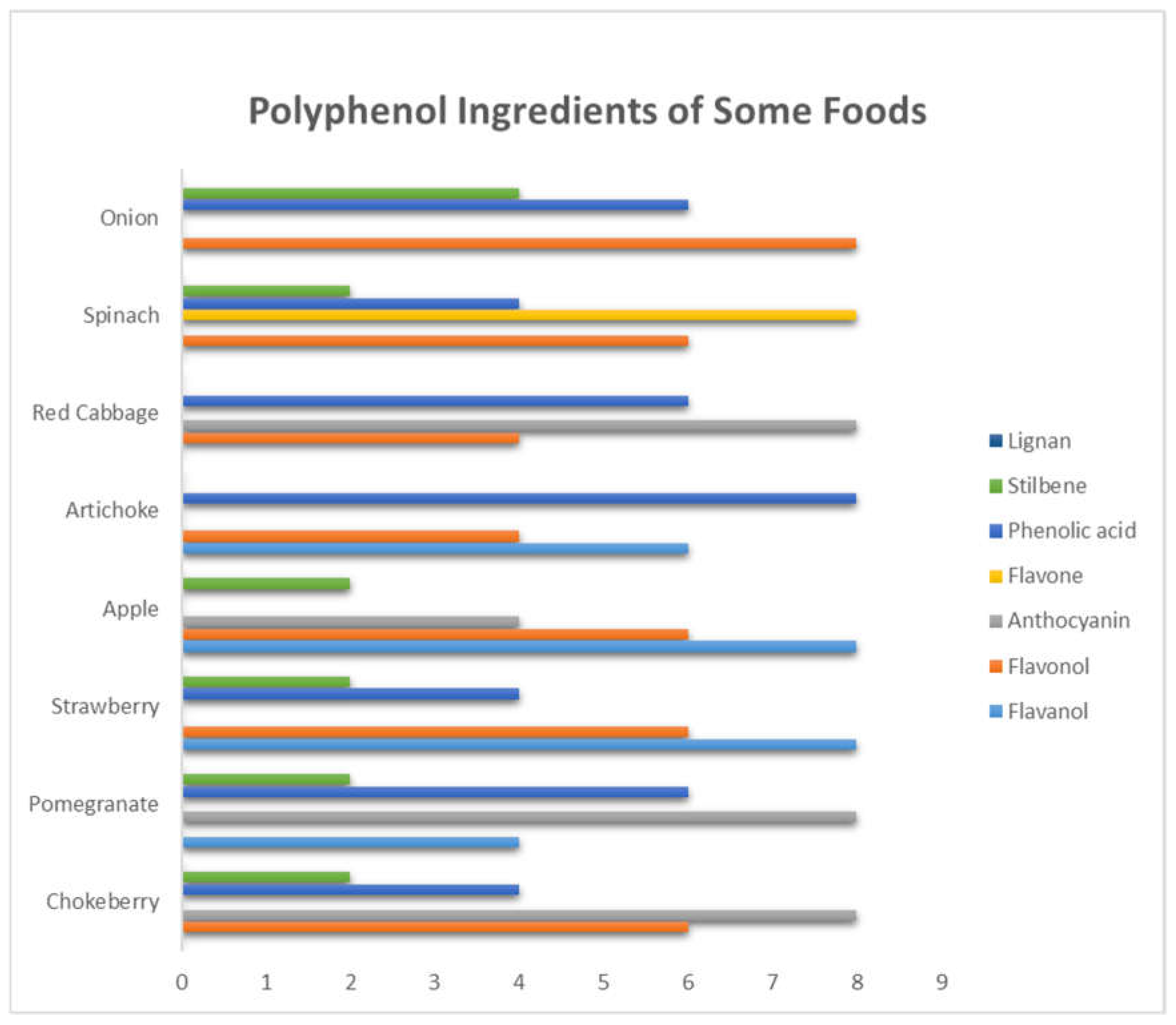
Disclaimer/Publisher’s Note: The statements, opinions and data contained in all publications are solely those of the individual author(s) and contributor(s) and not of MDPI and/or the editor(s). MDPI and/or the editor(s) disclaim responsibility for any injury to people or property resulting from any ideas, methods, instructions or products referred to in the content. |
© 2025 by the authors. Licensee MDPI, Basel, Switzerland. This article is an open access article distributed under the terms and conditions of the Creative Commons Attribution (CC BY) license (http://creativecommons.org/licenses/by/4.0/).
Copyright: This open access article is published under a Creative Commons CC BY 4.0 license, which permit the free download, distribution, and reuse, provided that the author and preprint are cited in any reuse.