

Submitted:
22 April 2025
Posted:
23 April 2025
You are already at the latest version
Abstract
Background/Objectives: Liver and tumor-infiltrating T cells in hepatocellular carcinoma (HCC) are heterogeneous, comprising the CD69+ tissue-resident T cell and the CD69- circulating T-cell populations. However, the impact of these distinct T-cell populations on patient prognosis is unclear; hence further studies are needed.
Methods: Tumor and distant liver tissues from 57 HCC patients with various chronic liver disease etiologies were analyzed. Single-cell dissociation and flow cytometry were used to assess CD69+ and CD69- T-cell populations and their correlation with recurrence-free survival (RFS).
Results: CD69+/CD69- subpopulations within CD4+ and CD8+ T cells varied by patient and alcohol etiology. CD69- populations among CD4+ T cells were less frequent in both tumor and non-tumor tissues of alcohol-related HCC patients (p< 0.05). Higher frequencies of CD69-CD4+ and CD8+ T cells in tumors and CD69+CD103+CD8+ T cells in liver tissues were associated with better RFS. CD69- T cells expressed lower PD-1 levels, indicating less exhaustion, with PD-1 expression inversely correlated with CD69- frequency. PD-1 ex-pression was higher on CD69-CD4+ T cells in alcohol-related HCC.
Conclusions: We provided a detailed analysis of the heterogeneous characteristics of tumor- and liver-infiltrating T cells in HCC, emphasizing the distinct roles of CD69+ and CD69- cell populations and their impact on RFS. CD69+ T cells were associated with immune exhaustion and tumor aggressiveness, whereas CD69- T cells appeared to sig-nificantly contribute to the influence of alcohol intake on the immune landscape of HCC in the tumor microenvironment. However, further research should validate these findings in larger cohorts to enhance our understanding.
Keywords:
hepatocellular carcinoma
; liver-infiltrating T cells
; tumor-infiltrating T cells
; recurrence-free survival
; resection
1. Introduction
Hepatocellular carcinoma (HCC) is the most common primary liver cancer and the fourth leading cause of cancer-related mortality worldwide [1]. Surgical resection is the recommended treatment for early stages in patients with HCC having a single tumor. This treatment is also considered a curative option; however, a substantial proportion of these patients experience tumor recurrence during the postoperative period [2,3]. Some prediction models for tumor recurrence following surgical resection have been suggested. These models use various clinical or histopathologic factors. However, various criteria across different guidelines or clinical trials impact their use. Hence, highlighting the need for developing biomarkers to predict recurrence and guide future investigation of perioperative treatment strategies [4].
T cells are crucial for antitumor immunity and cancer therapy. CD8+ cytotoxic T lymphocytes (CTLs) target cancer cells by recognizing tumor-specific antigens on major histocompatibility complex (MHC) class I molecules and induce apoptosis through perforin and granzymes [5]. CD4+ helper T cells support this process by secreting cytokines, such as interleukin-2 and interferon-γ, which activate and expand CTLs and also recruit other immune cells [6]. Cancer cells evade T cell responses by downregulating MHC class I or expressing inhibitory molecules like programmed death ligand 1 (PD-L1) [7,8]. Additionally, they create immunosuppressive environments that weaken T cell functions. Immune checkpoint inhibitors, such as those targeting programmed death protein 1 (PD-1) or CTL-associated protein-4 (CTLA-4), restore T cell activity and enhance antitumor immunity [9,10]. Therefore, understanding these mechanisms is vital for developing innovative therapies and improving cancer treatment outcomes [11].
Tissue-infiltrating T cells significantly contribute to modulating immune responses in the liver and the tumor microenvironment (TME) of HCC. These cells can be classified into tissue-resident memory T (TRM) cells, characterized by CD69 expression, and recirculating T cells (CD69- T cells), which lack CD69 expression [12]. CD69+ TRM cells are widely involved in tissue retention and local immune surveillance [13]. CD103, which is expressed on a subset of TRM cells, interacts with E-cadherin to mediate adhesion to epithelial cells [14]. In contrast, CD69- T cells are considered a population that contains recirculating potential; however, their characteristics compared with those of peripheral T cells or other tissue-infiltrating populations need to be understood [15,16].
Most studies on the association between tissue-infiltrating T cells and clinical outcomes of patients with HCC focused on the TRM populations. One study reported that tumor-infiltrating CD8+ TRM cells express high levels of PD-1, and their increased infiltration was correlated with poor overall survival (OS) in HCC cases [17]. However, another study revealed that increased tumor infiltration of CD8+ TRM cells correlated with a good OS for patients [18]. These variations may be due to the heterogeneity of the tumor-infiltrating populations, suggesting the need for a detailed analysis. Furthermore, liver-infiltrating T-cell populations, which might be important in post-operative tumor immune surveillance, should be investigated as a therapeutic target or predictive biomarker.
Therefore, in the present study, we aimed to investigate the distinct characteristics of CD69+ and CD69- T cells of the liver and tumor and their associations with clinical or histopathological parameters. Notably, we analyzed whether the frequencies of T-cell subpopulations can predict recurrence-free survival (RFS). These data may provide unique information for perioperative treatment and patient selection considering the findings from the current IMbrave050 clinical trials using immune-checkpoint inhibitors after surgical resections in patients with HCC having a high risk of recurrence [19,20].
2. Materials and Methods
2.1. Study Samples
This study was conducted with a patient cohort established between October 2022 and August 2024. In total, 57 patients with HCC who underwent surgical resection were consecutively enrolled in this study. The study protocol was approved by the Institutional Review Board of Seoul St. Mary’s Hospital, and informed consent was obtained from all patients (approval number: KC21TISI0413). In addition, the authors have no conflict of interest to declare. The study was performed following the principles outlined in the Declaration of Helsinki. HCC tissues (tumor) and the farthest liver tissues (non-tumor) were collected to analyze liver tissue-infiltrating lymphocytes during hepatectomy (Supplementary Figure S1). Single-cell suspensions were prepared using the Tumor Dissociation Kit (Miltenyi Biotec, Bergisch Gladbach, Germany) and gentleMACS Dissociator (Miltenyi Biotec, Bergisch Gladbach, Germany) following the manufacturer’s instructions. The dissociation process included enzymatic digestion at 37 °C for 30 min with periodic mechanical agitation using a mixture of Enzyme H, Enzyme R, and Enzyme A, as provided in the Tumor Dissociation Kit. The resulting suspensions were filtered through a 70-µm cell strainer (FALCON, Corning, NY, USA) to remove debris and undigested tissue fragments, which was followed by centrifuging at 300 × g for 10 min. Isolated cells were either cryopreserved in a solution containing fetal bovine serum (Gibco, Thermo Fisher Scientific, Waltham, MA, USA) and 10% dimethyl sulfoxide (Sigma-Aldrich, St. Louis, MO, USA) or immediately used for further experiments. There was no significant difference in marker expression between fresh and cryopreserved samples. The diagnosis of HCC was made based on the most recent guidelines of the Korean Association for the Study of the Liver [2]. Alcohol-related liver disease (ALD) was defined as chronic alcohol consumption exceeding 60 g/day for males and 50 g/day for females, as previously described [21]. Based on this definition, a total of 21 patients with alcohol-related etiology, including those with HBV combined with ALD, were included in the analysis.
2.2. Flow cytometry
Fluorescence staining was performed on isolated cells using surface marker antibodies at room temperature for 15 min. The antibodies used for flow cytometry are as follows: BV421-conjugated anti-CD69 (BioLegend, San Diego, CA, USA), V500-conjugated anti-CD3 (BD Biosciences, Franklin Lakes, NJ, USA), PerCP-Cy5.5-conjugated anti-CD4 (BD Biosciences, Franklin Lakes, NJ, USA), PE-conjugated anti-CD103 (BioLegend, San Diego, CA, USA), PE-Cy7-conjugated anti- natural killer group 2 member D (NKG2D) (BioLegend, San Diego, CA, USA), PE-Texas Red-conjugated anti-CD14 (eBioscience, San Diego, CA, USA), PE-Texas Red-conjugated anti-CD19 (eBioscience, San Diego, CA, USA), APC-conjugated anti-PD-1 (BioLegend, San Diego, CA, USA), APC-H7-conjugated anti-CD8 (BD Biosciences, Franklin Lakes, NJ, USA) and LIVE/DEAD red fluorescent reactive dye (Invitrogen, Waltham, MA, USA). Multicolor flow cytometry was conducted using the LSRFortessa flow cytometer (BD Biosciences, Franklin Lakes, NJ, USA), and the data were analyzed using the FlowJo software (TreeStar, Ashland, OR, USA).
2.3. Statistical analysis
Univariate and multivariate Cox regression analyses were performed to identify factors associated with RFS. The hazard ratios (HRs) and their corresponding 95% confidence intervals (CIs) were calculated to quantify the strength of the associations. Kaplan–Meier curves were used to evaluate RFS across different groups. Statistical significance was set at p<0.05. Continuous variables were compared using independent t-tests, and relationships between two parameters were assessed using the Pearson correlation coefficient. The Mann–Whitney U test was used to compare data between two independent groups. For multiple group comparisons, statistical significance was determined using one-way analysis of variance. Furthermore, propensity score matching with one-to-one nearest-neighbor matching within a 0.20 caliper width was used to mitigate baseline differences between groups. All statistical analyses were performed using R statistical software version 4.0.3 (R Foundation for Statistical Computing, Vienna, Austria) and GraphPad Prism version 8 (GraphPad Inc., La Jolla, CA, USA).
3. Results
3.1. Differential Expressions of Tissue-Resident Markers Among T Cells Between Tumor and Background Liver Tissues
In total, we consecutively enrolled 57 patients (Table 1). These patients comprised individuals with HCC caused by hepatitis B virus (HBV) (n=28), alcohol-related liver disease (Alc, n=9), HBV combined with ALD (HBV+Alc, n=12), and others (n=8). The mean age of all patients was 62.7 years, with more men (n=43, 75%) than women. The median alpha-feroprotein (AFP) and protein induced by vitamin K absence or antagonist-II (PIVKA-II) level were 4.5 ng/mL and 43.0 mAU/mL, respectively. The median size of the largest tumor was 3.7 cm, and microvascular invasion was observed in 33% of the patients (n=19). The Cancer Genome Atlas (TCGA) liver cancer dataset was used to stratify patients into high (hi) and low (lo) expression groups based on the expression levels of CD3, CD4, and CD8 markers, and OS was compared (Supplementary Figure S2). The results showed that CD3 expression did not affect the OS, whereas CD4 and CD8 expressions were weakly associated with the OS, suggesting that detailed analysis of T-cell subsets in HCC cases may be needed to identify their associations with the patients’ outcomes. Subsequently, we analyzed the expression of CD69 and CD103 on CD4+ and CD8+ T cells, comparing the relative frequencies of each subset between the two tissue types (Figrue 1A and B). The gating strategy for the flow cytometry analysis is illustrated in Figure 1. The results of the analysis of the relative frequencies of CD4+ and CD8+ T cells between liver and tumor tissues showed that tumor tissues contained significantly higher number of CD4+ T cells but lower number of CD8+ T cells compared to the background liver tissues, suggesting distinct infiltrations of T-cell populations among both tissue types. Regarding CD69 and CD103 expressing populations, CD69+ populations were major populations among CD4+ and CD8+ T cells of both tissue types. However, CD69+CD4+ T cells barely expressed CD103 compared with CD69+CD8+ T cells, and slightly lower frequencies of CD69+CD8+ T cells were observed in the tumor tissues than in liver tissues (Figure 1B).
Data are presented as n (%) or mean ± standard deviation. Clinicopathological factors are presented as median (interquartile range). AFP, alpha fetoprotein; AST, aspartate aminotransferase; ALT, alanine aminotransferase; HBV, hepatitis B virus; MASH, metabolic associated steatohepatitis; PIVKA-II, protein induced by vitamin K absence or antagonist-II.
3.2. Associations Between Clinical or Pathologic Characteristics and Each T-Cell Subpopulation Within Tumor and Background Liver Tissues
Next, we investigated whether differential infiltration of liver and tumor T cells is associated with clinical or pathologic characteristics (Figure 2A). The results showed that liver inflammation reflected by serum aspartate aminotransferase (AST) level correlated with the infiltration of CD69+CD103- T cells of liver tissue. Additionally, the frequency of liver CD69+CD4+ T cells was associated with the serum total bilirubin level, whereas serum albumin level negatively correlated with the frequency of liver CD69+CD8+ T cells. Furthermore, portoperiportal inflammation of the liver positively correlated with the CD4+ T cells; however, it negatively correlated with the CD8+ T cells. Higher tumor grade positively correlated with CD69+CD103+CD4+ T cells in the tumor. Notably, alcohol intake was significantly associated with the reduced infiltrations of CD69-CD4+/CD8+ T cells both in the liver and tumor tissues.
The relative frequencies of T-cell subpopulations in liver and tumor tissues showed diverse patterns and variations depending on alcohol etiology (Figure 2B and C). In the liver tissue, the frequency of CD69-CD4+ T cells was significantly lower, whereas the frequencies of CD69+, CD69+CD103+, and CD69+CD103-CD4+ T cells were significantly higher when alcohol etiology was present than when it was not. In contrast, only the frequency of CD69+CD103+CD8+ T cells was significantly increased in patients with alcohol etiology. In tumor tissues, the frequency of CD69-CD4+ T cells was significantly lower, whereas those of CD69+ and CD69+CD103-CD4+ T cells were significantly higher in patients with alcohol etiology than in those without (Figure 2C), although there were no statistically significant differences observed in CD8+ T cell subpopulations in tumor tissues based on alcohol etiology. These findings demonstrate the varying impact of alcohol etiology on the distribution of CD4+ T cell subpopulations in both tissue types. To further support these observations, we performed a subgroup analysis limited to patients with ALD (i.e., without HBV co-infection). While the reduced sample size precluded statistical significance, the overall distributional trends were preserved. The results of this subgroup analysis are presented in Supplementary Figure S4.
3.3. Clinical Relevance of Relative Infiltration of Each T-Cell Subpopulation Within Tumor and Background Liver Tissues in Patients with HCC with Resection
Next, we investigated whether differential infiltration of liver and tumor T cells predicts clinical outcomes in surgically resected patients with HCC. In liver tissues, increased frequencies of CD69+CD8+ and CD69+CD103-CD8+ T cells were associated with a high risk of recurrence (Table 2), whereas a high frequency of CD69+CD103+CD8+ T cells correlated with a reduced recurrence risk (p<0.005, Table 2), suggesting a protective role for this subset. In contrast, within tumor tissues, T cells expressing CD69, including the CD69+CD103+CD8+ population, were associated with an increased recurrence risk, whereas increased frequencies of CD69-CD4+ and CD69-CD8+ T cells were associated with better outcomes (Table 2). Of the clinicopathological factors, the largest tumor size, followed by elevated PIVKA-II, AFP, and pathological T stage, showed the strongest correlation with recurrence (Table 2), whereas patient age, liver function parameters, tumor number, and histological fibrosis were not significantly associated. Furthermore, the alcohol-related etiology of HCC did not influence RFS (p=0.718, Supplementary Figure S3). The lack of a significant difference in RFS between alcohol-related and non-alcohol-related patients with HCC (Supplementary Figure S3) suggests that even though alcohol etiology influences T-cell subset distributions and phenotypes, it may not directly determine long-term survival outcomes. These findings were further supported by the Kaplan–Meier analyses, which revealed that patients with higher frequencies of CD69+CD103+CD8+ T cells in liver tissues (Figure 3A) experienced significantly improved RFS, whereas those with higher frequencies of CD69-CD4+ and CD69-CD8+ T cells in tumor tissues (Figure 3B and C) showed lower recurrence rates.
Overall, these results underscore the importance of the local immune context and distinct prognostic roles of the T-cell subsets in liver and tumor compartments. The presence of CD69- T cells—particularly CD4+ and CD8+ subsets—within the TME, is potentially impacting an effective anti-tumor response that improves RFS. In the liver tissues, CD69+CD103+CD8+ T cells may be essential to maintain immune surveillance and prevent recurrence post-hepatectomy.
Bold values indicate statistical significance (p < 0.05). PSM, propensity-score matching; n.s, not-significant; HCC, hepatocellular carcinoma; NT, non-tumor; T, tumor; AST, aspartate aminotransferase; ALT, alanine aminotransferase; INR, international normalized ratio; AFP, alpha-fetoprotein; PIVKA-II, protein induced by vitamin K antagonist-II.
3.4. Expressions of Exhaustion and Cytotoxicity Markers of Each T-Cell Subpopulation Within Tumor and Background Liver
Finally, we investigated PD-1, which is an exhaustion marker that is upregulated by chronic antigenic stimulation, and NKG2D, which is related to the antigen-independent cytotoxicity in each subpopulation. Representative histograms (Figure 4A) and quantification (Figure 4B) revealed that PD-1 expression was generally higher on CD69+ T cells than on CD69- T cells. This difference was particularly pronounced in tumor tissues, suggesting that a more exhausted phenotype was associated with CD69+ T cells. The presence of CD69-CD4+ and CD69-CD8+ T cells, characterized by lower PD-1 expression, was associated with better prognosis, indicating that reduced exhausted functional CD69-T-cell population may contribute to improved clinical outcomes. On the other hand, NKG2D also showed higher expressions on CD8+ T cells, particularly in CD69+CD103+CD8+ T cells, in both tissue types. Considering that CD69+CD103+CD8+ T cells in the liver and tumor tissues influence RFS differently, their contributions to tumor immune surveillance and tumor progression may depend on their specific location. Alcohol-related etiology influenced PD-1 expression levels. PD-1 was uniformly expressed in CD69+ populations; however, its expression on CD69-CD4+ and CD69-CD8+ T cells in tumor tissues differed significantly between patients with and without alcohol etiology (Figure 5A). In contrast, NKG2D expression patterns were less influenced by alcohol intake.
Furthermore, in tumor tissues, a significant negative correlation was observed between the frequency of CD69-CD4+ and CD69-CD8+ T cells and PD-1 MFI (Figure 5B). This finding aligns with the observation that CD69- T cells exhibit relatively low levels of PD-1 expression and are less prone to exhaustion. Notably, the inverse correlation between the frequency of CD69- T cells and PD-1 expression suggests that this subset maintains more effective functional activity. These results support the idea that CD69- T cells play a crucial role in sustaining anti-tumor immune responses within the TME and ultimately contribute to improved clinical outcomes.
4. Discussion
In this study, we investigated the prognostic implications of distinct T-cell subsets infiltrating both the liver and tumor tissues of patients undergoing surgical resection for HCC. Our key findings reveal that the relative distribution and phenotypic characteristics of these subsets have distinct effects on RFS. Specifically, within the TME, a higher frequency of CD69- T cells—comprising the CD4+ and CD8+ lineages—significantly improved RFS. However, the presence of CD69+CD103+CD8+ T cells correlated closely with favorable prognosis in the liver compartments, suggesting that this population residing in the tissue may contribute to effective immune surveillance post-surgery. Overall, these findings underscore the functional heterogeneity of liver-infiltrating T cells and highlight the need for a more detailed understanding of immune cell dynamics in HCC.
Generally, increased tumor-infiltrating T cells were associated with improved patient outcomes in various cancers, including HCC, in previous studies [22,23,24]. However, the TME in HCC is known to be influenced by chronic inflammation and cirrhosis, creating a complex and often immunosuppressive niche that can reprogram immune cell populations [25,26]. The presence of tumor-infiltrating T cells often implies a more robust anti-tumor immune response; however, the functional diversity among these subsets can yield opposing prognostic implications [27,28]. For example, in certain studies, CD69+ and CD103+ T cells were associated with enhanced cytotoxicity and better outcomes [29,30,31]; contrastingly, others have demonstrated that under chronic antigenic stimulation and within immunosuppressive TMEs, these same markers may be associated with T-cell exhaustion and diminished anti-tumor efficacy [17,32,33,34].
Our findings help resolve this complexity by revealing that CD69- T cells within the tumor—a subset typically considered to be circulating or residing less in tissues—were strongly associated with improved RFS. These CD69- T cells exhibited lower levels of PD-1, indicating they were functionally less exhausted compared with CD69+ T cells. Additionally, reduced PD-1 expression on CD69- T cells suggests that they may retain more robust effector functions, which contributes to sustained anti-tumor immunity. Accordingly, a reduced PD-1 expression on CD69- populations correlated with an increased frequency of these cells, reinforcing the concept that CD69- T cells serve as a relatively “functional” subset capable of effectively contributing to anti-tumor response.
PD-1 is generally considered a marker of T-cell exhaustion, but its co-expression with CD69—particularly in TRM cells—may reflect tissue retention and adaptation rather than exhaustion. In our study, CD69⁺ T cells showed higher PD-1 expression than CD69⁻ cells, while CD38 levels, a marker of recent activation, were comparable between the groups (Supplementary Figure S5). This suggests that CD69⁺PD-1⁺ T cells likely represent tissue-adapted TRM cells rather than exhausted or recently activated cells. This interpretation aligns with previous reports showing that TRM cells can express PD-1 even in a non-activated state [35].
Notably, we identified CD69+CD103+CD8+ T cells as a favorable prognostic subset within the liver tissues. This observation implies that tissue-resident T cells situated in the broader liver parenchyma—beyond the immediate tumor border—may continuously survey and contain emerging malignant clones, thus preventing early recurrence [15,36,37,38,39]. Furthermore, CD69+ TRM cells can become exhausted in a highly immunosuppressive TME [30,32,40]; however, their presence in non-tumor areas may allow them to function under less suppressive conditions, effectively serving as a frontline defense against microscopic residual disease occurring after resection [36,41].
Another notable finding was that those with alcohol-related etiology showed alterations in T-cell subset frequencies and higher PD-1 expression, particularly in CD69- T cells. Alcohol consumption has been linked to immune dysregulation and T-cell dysfunction, potentially augmenting the immunosuppressive milieu [42,43,44]. These etiological factors may influence the functional states and distribution of tumor-infiltrating T cells, necessitating tailored immunotherapeutic strategies that will target the underlying liver disease etiology.
Nonetheless, this study has some limitations. We did not assess antigen specificity; hence it is unclear whether CD69- and CD69+ T cells are directed against tumor-specific antigens. Moreover, deeper functional and molecular characterization is warranted to delineate the exact mechanisms by which these subsets exert their effects on tumor surveillance and recurrence.
In addition, some variables demonstrated hazard ratios with lower bounds of the confidence intervals approaching 1.0, indicating borderline statistical significance. This may be attributed to limited sample sizes within specific subsets or skewed data distribution. Accordingly, further validation in larger, independent cohorts will be required to ensure the robustness and clinical relevance of these findings.
5. Conclusions
In conclusion, our findings highlight distinct prognostic roles for CD69- and CD69+CD103+CD8+ T cells in HCC. The beneficial impact of CD69- T cells within the tumor and CD69+CD103+CD8+ T cells in liver tissues underscores the complexity of T cell-mediated immunity in HCC and the importance of spatial context. These insights provide a rationale for developing individualized immunotherapeutic approaches that capitalize on the unique functional profiles and locations of these T-cell subsets, ultimately aiming to improve long-term outcomes for HCC patients.
Supplementary Materials
The following supporting information can be downloaded at: www.mdpi.com/xxx/s1, Figure S1: T-cell analysis in tumor and farthest non-tumor liver tissues from patients with hepatocellular carcinoma (HCC). Figure S2: Overall survival analysis based on T-cell marker expression levels in patients with The Cancer Genome Atlas (TCGA) liver cancer. Figure S3: Recurrence-free survival (RFS) in patients with alcohol-related and non-alcohol-related liver disease. Figure S4: Specifically, the dataset was reanalyzed by categorizing 9 patients as ALD (without HBV co-infection) and 31 as non-ALD. While the overall patterns were maintained, the results for CD69⁻, CD69⁺, and CD69⁺CD103⁻ subsets of CD4⁺ T cells from both NT and T tissues, which were previously significant in Figure 2B and C, became non-significant after reanalysis. Statistical analysis was performed using the Mann-Whitney U test. Statistical significance is indicated as follows: * p<0.05, ** p<0.01, **** p<0.0001; n.s., not signifi-cant; NT, non-tumor tissue; T, tumor tissues; ALD, alcohol-related liver disease. Figure S5: Staining and mean fluorescence intensity (MFI) analysis of CD69, PD-1, and CD38 in T cells. Statistical analysis was performed using the Mann-Whitney U test.
Author Contributions
Conceptualization, J.W.H. and P.S.S. ; Methodology, J.W.H. and P.S.S. ; Validation, E.J.J. and J.W.H. ; Investigation, E.J.J., H.J.C., Y.K.Y., D.H.S., M.H.K., K.Y., J.L., J.W.J. and S.K.Y. ; Resources, H.J.C., Y.K.Y., D.H.S., M.H.K., K.Y., J.L., J.W.J. and S.K.Y. ; Data curation, E.J.J. and J.W.H. ; Writing—original draft preparation, E.J.J. ; Writing—review and editing, J.W.H. and P.S.S. ; Supervision, J.W.H. and P.S.S. All authors have read and agreed to the published version of the manuscript.
Funding
This research was supported by a grant from the Korea Health Technology R&D Project through the Korea Health Industry Development Institute (KHIDI), funded by the Ministry of Health & Welfare, Republic of Korea (HI23C1489000023 to J.W.H.). This study was also supported by the Research Fund of Seoul St. Mary’s Hospital, The Catholic University of Korea (J.W.H.). This work was supported by the Internal Research Fund of the Korean Liver Cancer Association (KLCA) (P.S.S.).
Institutional Review Board Statement
The study was conducted in accordance with the Declaration of Helsinki, and approved by the Institutional Review Board of Seoul St. Mary’s Hospital (Approval No.: KC21TISI0413).
Informed Consent Statement
Written informed consent was obtained from all subjects involved in the study.
Data Availability Statement
All data relevant to the study are included in the article or uploaded as online supplemental information.
Conflicts of Interest
The authors declare no conflicts of interest.
Abbreviations
The following abbreviations are used in this manuscript:
| Alc | Alcohol-related liver disease |
| AFP | Alpha fetoprotein |
| AST | Aspartate aminiotransferase |
| ALT | Alanine aminotransferase |
| CI | Confidence interval |
| CTL | Cytotoxic T lymphocytes |
| CTLA-4 | Cytotoxic T-lymphocyte-associated protein 4 |
| HBV | Hepatitis B virus |
| HCC | Hepatocellular carcinoma |
| HR | Hazard ratio |
| MFI | Mean fluorescence intensity |
| MHC | Major histocompatibility complex |
| PD-1 | Programmed death protein 1 |
| NKG2D | Natural killer group 2 member D |
| NT | Non-tumor |
| OS | Overall survival |
| PIVKA-II | Protein induced by vitamin K absence or antagonist-II |
| RFS | Recurrence-free survival |
| T-tissue | Tumor tissue |
| TME | Tumor microenvironment |
| TRM | Tissue-resident memory T cells |
| TCGA | The cancer genome atlas |
References
- Sung, H.; Ferlay, J.; Siegel, R.L.; Laversanne, M.; Soerjomataram, I.; Jemal, A.; Bray, F. Global Cancer Statistics 2020: GLOBOCAN Estimates of Incidence and Mortality Worldwide for 36 Cancers in 185 Countries. CA Cancer J Clin 2021, 71, 209–249. [Google Scholar] [CrossRef] [PubMed]
- Korean Liver Cancer, A.; National Cancer Center, K. 2022 KLCA-NCC Korea practice guidelines for the management of hepatocellular carcinoma. Clin Mol Hepatol 2022, 28, 583–705. [Google Scholar] [CrossRef]
- Kim, N.R.; Rho, S.Y.; Navarro, J.; An, C.; Han, D.H.; Choi, J.S.; Kim, M.J.; Choi, G.H. Additional nodules detected using EOB-MRI in patients with resectable single hepatocellular carcinoma: an implication for active treatment strategy. J Liver Cancer 2024, 24, 92–101. [Google Scholar] [CrossRef] [PubMed]
- Huang, Y.; Su, Y.; Chen, Y.; Xu, J.; Zhu, L.; Wei, H.; Qin, S.; Peng, Y.; Qi, L. Risk factors and nomogram predictive models for postsurgical progression/hyperprogression recurrence in hepatocellular carcinoma with macroscopic vascular invasion. World J Surg Oncol 2024, 22, 305. [Google Scholar] [CrossRef]
- St Paul, M.; Ohashi, P.S. The Roles of CD8(+) T Cell Subsets in Antitumor Immunity. Trends Cell Biol 2020, 30, 695–704. [Google Scholar] [CrossRef]
- Pardoll, D.M.; Topalian, S.L. The role of CD4+ T cell responses in antitumor immunity. Curr Opin Immunol 1998, 10, 588–594. [Google Scholar] [CrossRef]
- Liu, Z.; Zhang, Y.; Ma, N.; Yang, Y.; Ma, Y.; Wang, F.; Wang, Y.; Wei, J.; Chen, H.; Tartarone, A.; et al. Progenitor-like exhausted SPRY1(+)CD8(+) T cells potentiate responsiveness to neoadjuvant PD-1 blockade in esophageal squamous cell carcinoma. Cancer Cell 2023, 41, 1852–1870. [Google Scholar] [CrossRef]
- Zeng, W.; Liu, F.; Liu, Y.; Zhang, Z.; Hu, H.; Ning, S.; Zhang, H.; Chen, X.; Liao, Z.; Zhang, Z. Targeting TM4SF1 promotes tumor senescence enhancing CD8+ T cell cytotoxic function in hepatocellular carcinoma. Clin Mol Hepatol 2024. [Google Scholar] [CrossRef]
- Ran, L.F.; Xie, X.P.; Xia, J.Z.; Xie, F.L.; Fan, Y.M.; Wu, F. T-lymphocytes from focused ultrasound ablation subsequently mediate cellular antitumor immunity after adoptive cell transfer immunotherapy. Front Immunol 2023, 14, 1155229. [Google Scholar] [CrossRef]
- Suzuki, H.; Mishra, S.; Paul, S.; Hoshida, Y. Molecular and immune landscape of hepatocellular carcinoma for therapeutic development. J Liver Cancer 2024. [Google Scholar] [CrossRef]
- Sharma, P.; Goswami, S.; Raychaudhuri, D.; Siddiqui, B.A.; Singh, P.; Nagarajan, A.; Liu, J.; Subudhi, S.K.; Poon, C.; Gant, K.L.; et al. Immune checkpoint therapy-current perspectives and future directions. Cell 2023, 186, 1652–1669. [Google Scholar] [CrossRef]
- Buggert, M.; Price, D.A.; Mackay, L.K.; Betts, M.R. Human circulating and tissue-resident memory CD8(+) T cells. Nat Immunol 2023, 24, 1076–1086. [Google Scholar] [CrossRef] [PubMed]
- Tang, K.; Li, X.; Mo, J.; Chen, Y.; Huang, C.; Li, T.; Luo, T.; Zhong, Z.; Jiang, Y.; Yang, D.; et al. CD69 serves as a potential diagnostic and prognostic biomarker for hepatocellular carcinoma. Sci Rep 2023, 13, 7452. [Google Scholar] [CrossRef] [PubMed]
- Skon, C.N.; Lee, J.Y.; Anderson, K.G.; Masopust, D.; Hogquist, K.A.; Jameson, S.C. Transcriptional downregulation of S1pr1 is required for the establishment of resident memory CD8+ T cells. Nat Immunol 2013, 14, 1285–1293. [Google Scholar] [CrossRef]
- Wiggins, B.G.; Pallett, L.J.; Li, X.; Davies, S.P.; Amin, O.E.; Gill, U.S.; Kucykowicz, S.; Patel, A.M.; Aliazis, K.; Liu, Y.S.; et al. The human liver microenvironment shapes the homing and function of CD4(+) T-cell populations. Gut 2022, 71, 1399–1411. [Google Scholar] [CrossRef] [PubMed]
- Li, Y.; Gu, Y.; Yang, P.; Wang, Y.; Yu, X.; Li, Y.; Jin, Z.; Xu, L. CD69 is a Promising Immunotherapy and Prognosis Prediction Target in Cancer. Immunotargets Ther 2024, 13, 1–14. [Google Scholar] [CrossRef]
- Ma, J.; Zheng, B.; Goswami, S.; Meng, L.; Zhang, D.; Cao, C.; Li, T.; Zhu, F.; Ma, L.; Zhang, Z.; et al. PD1(Hi) CD8(+) T cells correlate with exhausted signature and poor clinical outcome in hepatocellular carcinoma. J Immunother Cancer 2019, 7, 331. [Google Scholar] [CrossRef]
- Lim, C.J.; Lee, Y.H.; Pan, L.; Lai, L.; Chua, C.; Wasser, M.; Lim, T.K.H.; Yeong, J.; Toh, H.C.; Lee, S.Y.; et al. Multidimensional analyses reveal distinct immune microenvironment in hepatitis B virus-related hepatocellular carcinoma. Gut 2019, 68, 916–927. [Google Scholar] [CrossRef]
- Hack, S.P.; Spahn, J.; Chen, M.; Cheng, A.L.; Kaseb, A.; Kudo, M.; Lee, H.C.; Yopp, A.; Chow, P.; Qin, S. IMbrave 050: a Phase III trial of atezolizumab plus bevacizumab in high-risk hepatocellular carcinoma after curative resection or ablation. Future Oncol 2020, 16, 975–989. [Google Scholar] [CrossRef]
- Yim, S.Y.; Lee, S.H.; Baek, S.W.; Sohn, B.; Jeong, Y.S.; Kang, S.H.; Park, K.; Park, H.; Lee, S.S.; Kaseb, A.O.; et al. Genomic biomarkers to predict response to atezolizumab plus bevacizumab immunotherapy in hepatocellular carcinoma: Insights from the IMbrave150 trial. Clin Mol Hepatol 2024, 30, 807–823. [Google Scholar] [CrossRef]
- Sohn, W.; Lee, Y.S.; Kim, S.S.; Kim, J.H.; Jin, Y.J.; Kim, G.A.; Sung, P.S.; Yoo, J.J.; Chang, Y.; Lee, E.J.; et al. KASL clinical practice guidelines for the management of metabolic dysfunction-associated steatotic liver disease 2025. Clin Mol Hepatol 2025, 31, S1–S31. [Google Scholar] [CrossRef] [PubMed]
- Wada, Y.; Nakashima, O.; Kutami, R.; Yamamoto, O.; Kojiro, M. Clinicopathological study on hepatocellular carcinoma with lymphocytic infiltration. Hepatology 1998, 27, 407–414. [Google Scholar] [CrossRef] [PubMed]
- Yao, W.; He, J.C.; Yang, Y.; Wang, J.M.; Qian, Y.W.; Yang, T.; Ji, L. The Prognostic Value of Tumor-infiltrating Lymphocytes in Hepatocellular Carcinoma: a Systematic Review and Meta-analysis. Sci Rep 2017, 7, 7525. [Google Scholar] [CrossRef]
- Ding, W.; Xu, X.; Qian, Y.; Xue, W.; Wang, Y.; Du, J.; Jin, L.; Tan, Y. Prognostic value of tumor-infiltrating lymphocytes in hepatocellular carcinoma: A meta-analysis. Medicine (Baltimore) 2018, 97, e13301. [Google Scholar] [CrossRef]
- Park, D.J.; Sung, P.S.; Kim, J.H.; Lee, G.W.; Jang, J.W.; Jung, E.S.; Bae, S.H.; Choi, J.Y.; Yoon, S.K. EpCAM-high liver cancer stem cells resist natural killer cell-mediated cytotoxicity by upregulating CEACAM1. J Immunother Cancer 2020, 8. [Google Scholar] [CrossRef]
- Sung, P.S.; Jang, J.W. Natural Killer Cell Dysfunction in Hepatocellular Carcinoma: Pathogenesis and Clinical Implications. Int J Mol Sci 2018, 19. [Google Scholar] [CrossRef]
- Simoni, Y.; Becht, E.; Fehlings, M.; Loh, C.Y.; Koo, S.L.; Teng, K.W.W.; Yeong, J.P.S.; Nahar, R.; Zhang, T.; Kared, H.; et al. Bystander CD8(+) T cells are abundant and phenotypically distinct in human tumour infiltrates. Nature 2018, 557, 575–579. [Google Scholar] [CrossRef] [PubMed]
- Kim, J.H.; Han, J.W.; Choi, Y.J.; Rha, M.S.; Koh, J.Y.; Kim, K.H.; Kim, C.G.; Lee, Y.J.; Kim, A.R.; Park, J.; et al. Functions of human liver CD69(+)CD103(-)CD8(+) T cells depend on HIF-2alpha activity in healthy and pathologic livers. J Hepatol 2020, 72, 1170–1181. [Google Scholar] [CrossRef]
- Chu, Y.; Liao, J.; Li, J.; Wang, Y.; Yu, X.; Wang, J.; Xu, X.; Xu, L.; Zheng, L.; Xu, J.; et al. CD103(+) tumor-infiltrating lymphocytes predict favorable prognosis in patients with esophageal squamous cell carcinoma. J Cancer 2019, 10, 5234–5243. [Google Scholar] [CrossRef]
- Barsch, M.; Salie, H.; Schlaak, A.E.; Zhang, Z.; Hess, M.; Mayer, L.S.; Tauber, C.; Otto-Mora, P.; Ohtani, T.; Nilsson, T.; et al. T-cell exhaustion and residency dynamics inform clinical outcomes in hepatocellular carcinoma. J Hepatol 2022, 77, 397–409. [Google Scholar] [CrossRef]
- Chen, L.; Huang, H.; Huang, Z.; Chen, J.; Liu, Y.; Wu, Y.; Li, A.; Ge, J.; Fang, Z.; Xu, B.; et al. Prognostic values of tissue-resident CD8(+)T cells in human hepatocellular carcinoma and intrahepatic cholangiocarcinoma. World J Surg Oncol 2023, 21, 124. [Google Scholar] [CrossRef]
- Mita, Y.; Kimura, M.Y.; Hayashizaki, K.; Koyama-Nasu, R.; Ito, T.; Motohashi, S.; Okamoto, Y.; Nakayama, T. Crucial role of CD69 in anti-tumor immunity through regulating the exhaustion of tumor-infiltrating T cells. Int Immunol 2018, 30, 559–567. [Google Scholar] [CrossRef] [PubMed]
- Han, J.W.; Kim, J.H.; Kim, D.H.; Jang, J.W.; Bae, S.H.; Choi, J.Y.; Yoon, S.K.; Ahn, J.; Yang, H.; Sung, P.S. Higher Number of Tumor-Infiltrating PD-L1+ Cells Is Related to Better Response to Multikinase Inhibitors in Hepatocellular Carcinoma. Diagnostics (Basel) 2023, 13. [Google Scholar] [CrossRef]
- Huang, C.X.; Lao, X.M.; Wang, X.Y.; Ren, Y.Z.; Lu, Y.T.; Shi, W.; Wang, Y.Z.; Wu, C.Y.; Xu, L.; Chen, M.S.; et al. Pericancerous cross-presentation to cytotoxic T lymphocytes impairs immunotherapeutic efficacy in hepatocellular carcinoma. Cancer Cell 2024, 42, 2082–2097. [Google Scholar] [CrossRef] [PubMed]
- Kumar, B.V.; Ma, W.; Miron, M.; Granot, T.; Guyer, R.S.; Carpenter, D.J.; Senda, T.; Sun, X.; Ho, S.H.; Lerner, H.; et al. Human Tissue-Resident Memory T Cells Are Defined by Core Transcriptional and Functional Signatures in Lymphoid and Mucosal Sites. Cell Rep 2017, 20, 2921–2934. [Google Scholar] [CrossRef] [PubMed]
- Park, S.L.; Gebhardt, T.; Mackay, L.K. Tissue-Resident Memory T Cells in Cancer Immunosurveillance. Trends Immunol 2019, 40, 735–747. [Google Scholar] [CrossRef]
- Pallett, L.J.; Maini, M.K. Liver-resident memory T cells: life in lockdown. Semin Immunopathol 2022, 44, 813–825. [Google Scholar] [CrossRef]
- Liu, L.; Liu, J.; Li, P.; Luo, J.; Qin, R.; Peng, Q.; Li, B.; Wei, X.; Wang, T.; Shi, H.; et al. Single-cell analysis reveals HBV-specific PD-1(+)CD8(+) TRM cells in tumor borders are associated with HBV-related hepatic damage and fibrosis in HCC patients. J Exp Clin Cancer Res 2023, 42, 152. [Google Scholar] [CrossRef]
- Park, J.G.; Roh, P.R.; Kang, M.W.; Cho, S.W.; Hwangbo, S.; Jung, H.D.; Kim, H.U.; Kim, J.H.; Yoo, J.S.; Han, J.W.; et al. Intrahepatic IgA complex induces polarization of cancer-associated fibroblasts to matrix phenotypes in the tumor microenvironment of HCC. Hepatology 2024, 80, 1074–1086. [Google Scholar] [CrossRef]
- Kumar, B.V.; Kratchmarov, R.; Miron, M.; Carpenter, D.J.; Senda, T.; Lerner, H.; Friedman, A.; Reiner, S.L.; Farber, D.L. Functional heterogeneity of human tissue-resident memory T cells based on dye efflux capacities. JCI Insight 2018, 3. [Google Scholar] [CrossRef]
- Dumauthioz, N.; Labiano, S.; Romero, P. Tumor Resident Memory T Cells: New Players in Immune Surveillance and Therapy. Front Immunol 2018, 9, 2076. [Google Scholar] [CrossRef] [PubMed]
- Zhang, H.; Zhu, Z.; Zhang, F.; Meadows, G.G. Alcohol consumption and antitumor immunity: dynamic changes from activation to accelerated deterioration of the immune system. Adv Exp Med Biol 2015, 815, 313–331. [Google Scholar] [CrossRef] [PubMed]
- Ratna, A.; Mandrekar, P. Alcohol and Cancer: Mechanisms and Therapies. Biomolecules 2017, 7. [Google Scholar] [CrossRef] [PubMed]
- Qiu, X.; Zhou, J.; Xu, H.; Li, Y.; Ma, S.; Qiao, H.; Zeng, K.; Wang, Q.; Ouyang, J.; Liu, Y.; et al. Alcohol reshapes a liver premetastatic niche for cancer by extra- and intrahepatic crosstalk-mediated immune evasion. Mol Ther 2023, 31, 2662–2680. [Google Scholar] [CrossRef]
Figure 1.
Flow cytometry analysis of CD69 and CD103 expression in CD4+ and CD8+ T cells in non-tumor liver and tumor tissues (A) Gating strategy for identifying CD69 and CD103 subsets within CD4+ and CD8+ T cells. (B) Comparison of the relative frequencies and CD69/CD103 marker expression between NT and T tissues. Statistical significance is indicated as follows: * p<0.05, ** p<0.01, **** p<0.0001; n.s., not significant; Statistical analysis was performed using the Mann–Whitney U test. n = 49 for NT and n = 40 for T. NT, non-tumor tissue; T, tumor tissues.
Figure 1.
Flow cytometry analysis of CD69 and CD103 expression in CD4+ and CD8+ T cells in non-tumor liver and tumor tissues (A) Gating strategy for identifying CD69 and CD103 subsets within CD4+ and CD8+ T cells. (B) Comparison of the relative frequencies and CD69/CD103 marker expression between NT and T tissues. Statistical significance is indicated as follows: * p<0.05, ** p<0.01, **** p<0.0001; n.s., not significant; Statistical analysis was performed using the Mann–Whitney U test. n = 49 for NT and n = 40 for T. NT, non-tumor tissue; T, tumor tissues.
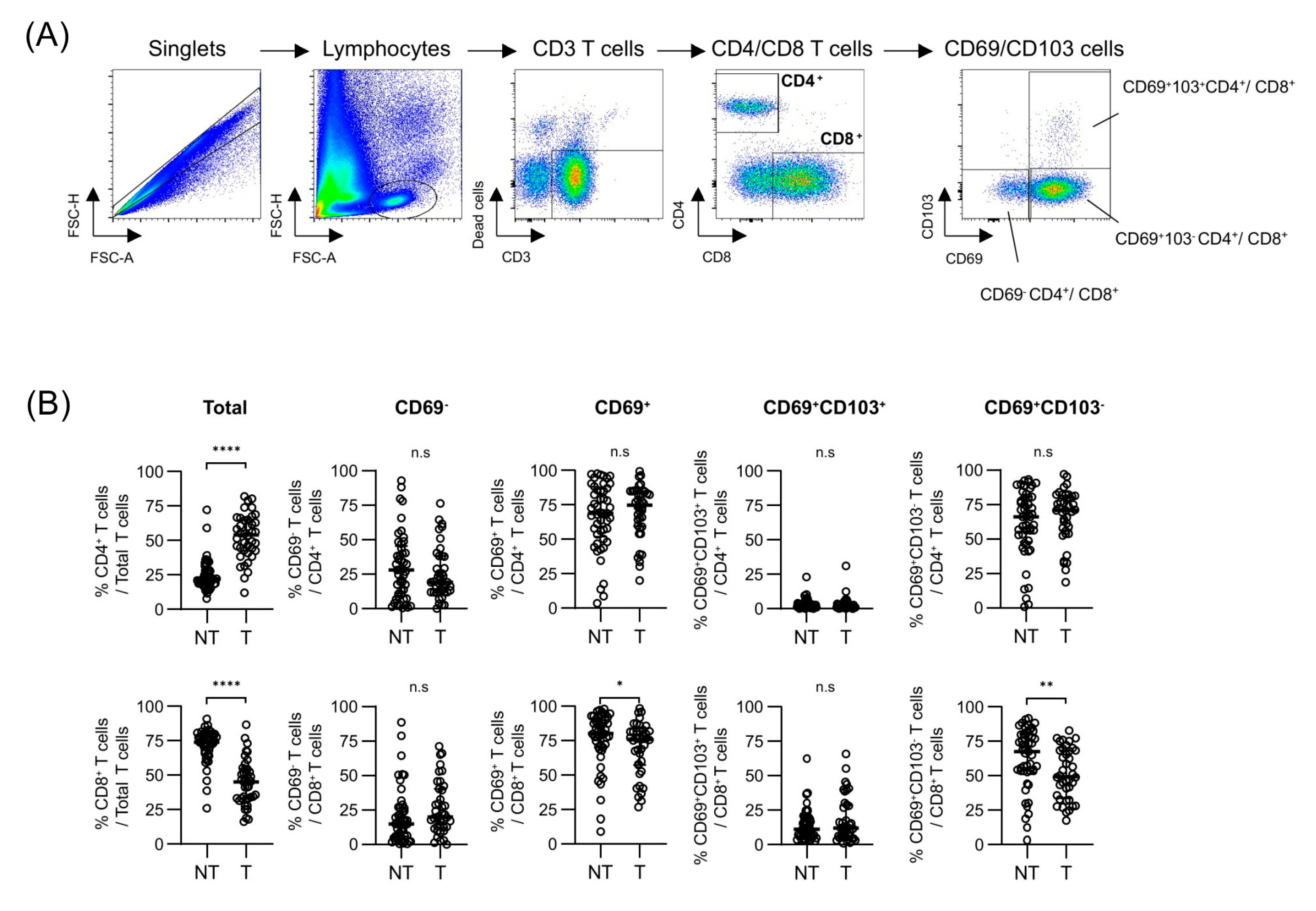
Figure 2.
Correlations between T-cell subpopulations and clinicopathological factors in non-tumor and tumor tissues (A) Spearman's correlation analysis between T-cell subpopulations and clinicopathological factors in NT and T tissues. Positive correlations are shown in red, and negative correlations are shown in blue, with statistical significance was set at p<0.05. (B−C) Comparison of the relative frequencies of T-cell subpopulations based on alcohol consumption in NT and T tissues. In the NT group, non-alcohol (n = 31) and alcohol (n = 18) patients were analyzed; in the T group, non-alcohol (n = 24) and alcohol (n = 16) patients were analyzed. Statistical analysis was performed using the Mann–Whitney U test. Statistical significance is indicated as follows: * p<0.05, ** p<0.01, **** p<0.0001; n.s., not significant; NT, non-tumor tissue; T, tumor tissues.
Figure 2.
Correlations between T-cell subpopulations and clinicopathological factors in non-tumor and tumor tissues (A) Spearman's correlation analysis between T-cell subpopulations and clinicopathological factors in NT and T tissues. Positive correlations are shown in red, and negative correlations are shown in blue, with statistical significance was set at p<0.05. (B−C) Comparison of the relative frequencies of T-cell subpopulations based on alcohol consumption in NT and T tissues. In the NT group, non-alcohol (n = 31) and alcohol (n = 18) patients were analyzed; in the T group, non-alcohol (n = 24) and alcohol (n = 16) patients were analyzed. Statistical analysis was performed using the Mann–Whitney U test. Statistical significance is indicated as follows: * p<0.05, ** p<0.01, **** p<0.0001; n.s., not significant; NT, non-tumor tissue; T, tumor tissues.
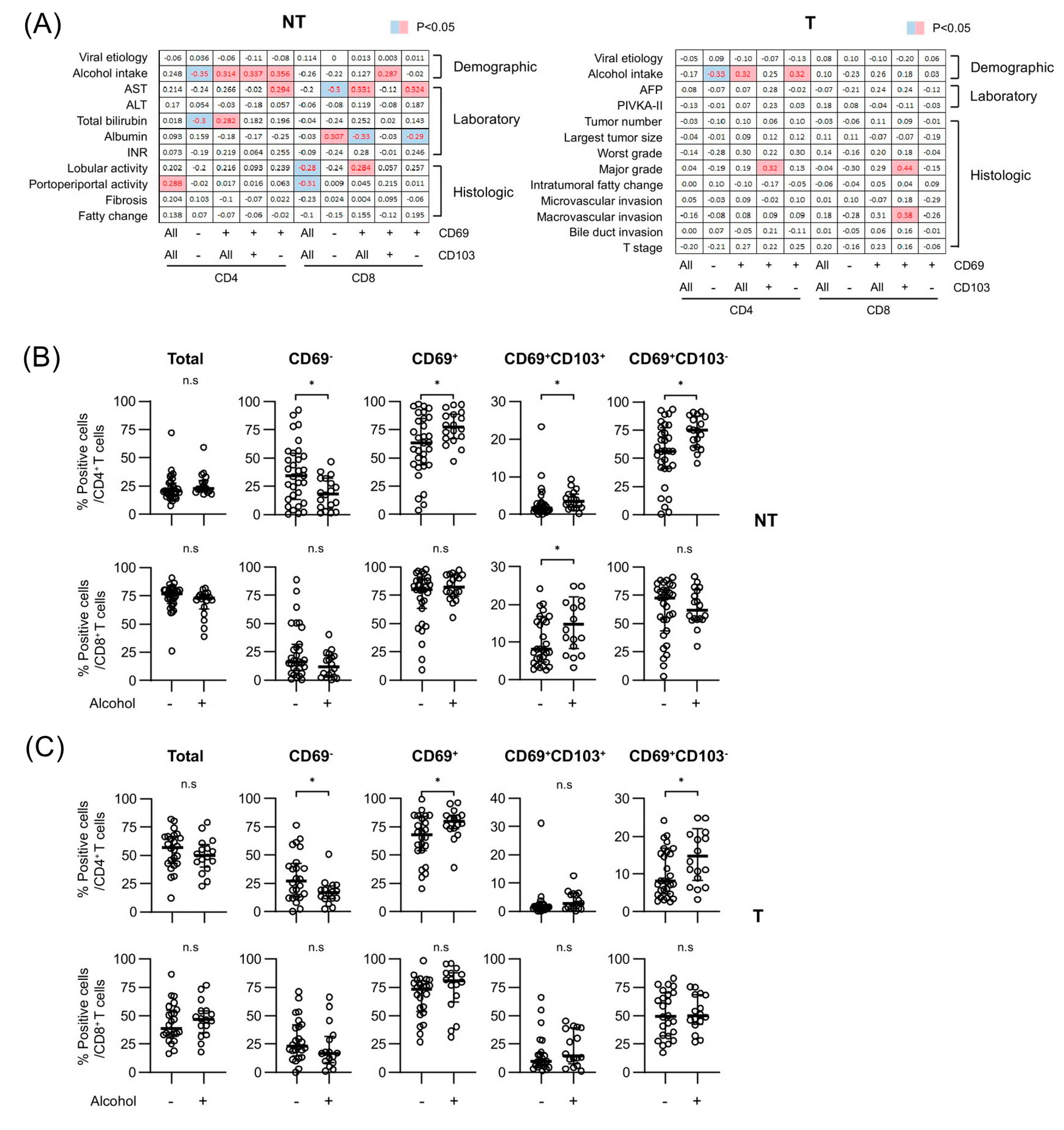
Figure 3.
Kaplan–Meier survival analysis of T-cell subpopulations in non-tumor and tumor tissues (A-C) The unmatched cohort includes all eligible patients without adjusting for confounding variables, providing a comprehensive view of survival outcomes. The matched cohort was adjusted for key clinicopathological variables, including age, sex, tumor stage, and etiology, ensuring balanced group comparisons and minimizing potential biases. (A) RFS curves comparing the frequencies of CD69+CD103+CD8+ T cells in NT tissues. (B) RFS curves comparing the frequencies of CD69−CD4+ T cells in T tissues. (C) RFS curves comparing the frequencies of CD69−CD8+ T cells in T tissues. NT, non-tumor tissue; T, tumor tissues; RFS, recurrence-free survival
Figure 3.
Kaplan–Meier survival analysis of T-cell subpopulations in non-tumor and tumor tissues (A-C) The unmatched cohort includes all eligible patients without adjusting for confounding variables, providing a comprehensive view of survival outcomes. The matched cohort was adjusted for key clinicopathological variables, including age, sex, tumor stage, and etiology, ensuring balanced group comparisons and minimizing potential biases. (A) RFS curves comparing the frequencies of CD69+CD103+CD8+ T cells in NT tissues. (B) RFS curves comparing the frequencies of CD69−CD4+ T cells in T tissues. (C) RFS curves comparing the frequencies of CD69−CD8+ T cells in T tissues. NT, non-tumor tissue; T, tumor tissues; RFS, recurrence-free survival
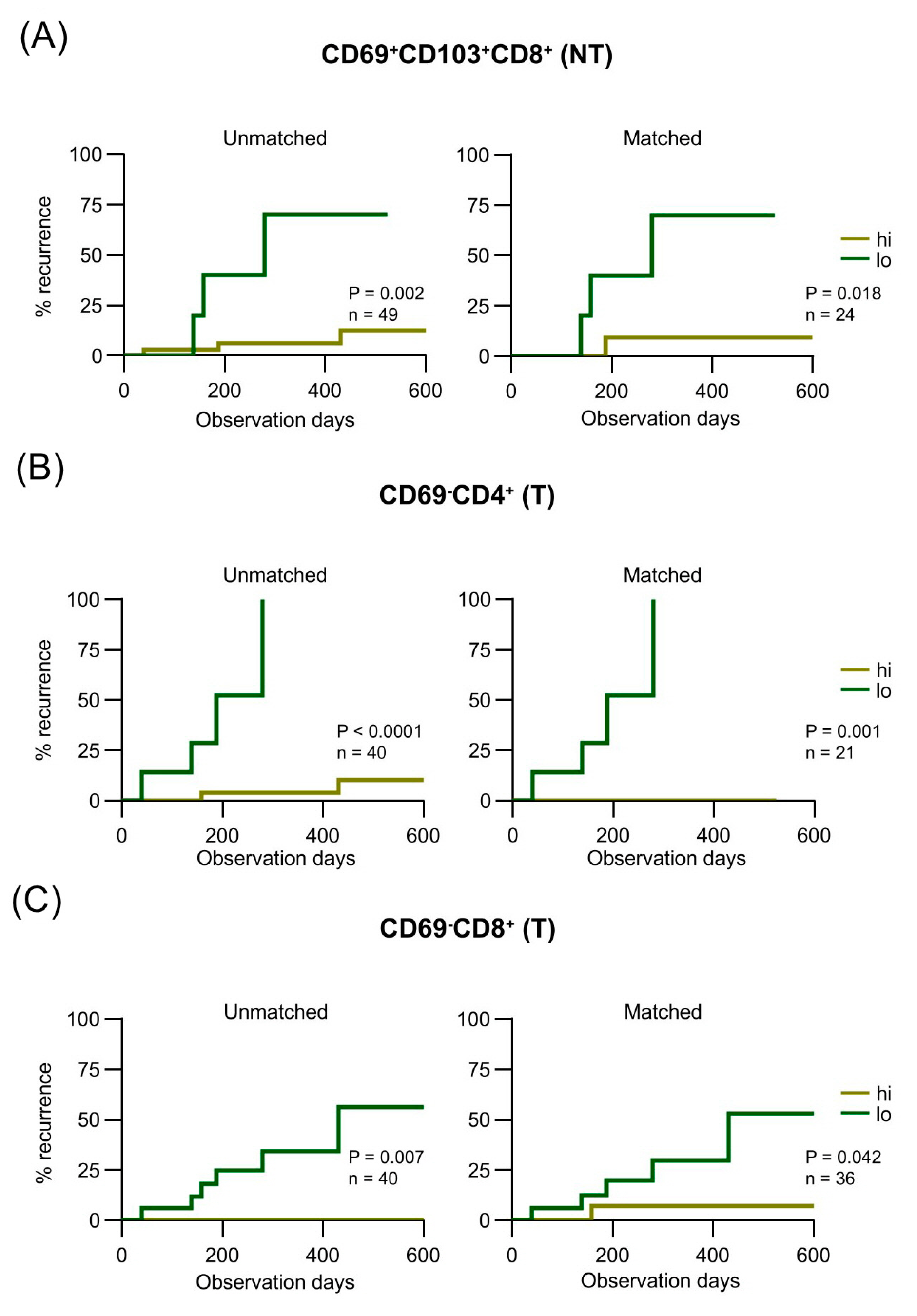
Figure 4.
PD-1 and NKG2D expression levels in CD4+ and CD8+ T-cell subsets based on CD69 and CD103 expression in non-tumor and tumor tissues. (A) Representative histograms showing PD-1 and NKG2D expression in CD4+ and CD8+ T cells across CD69 and CD103 subsets in NT and T tissues. (B) MFI of PD-1 and NKG2D in CD4+ and CD8+ T cells from NT and T tissues. Analyses were performed on 32 NT tissue samples and 24 T tissue samples. Statistical analysis was performed using one-way analysis of variance. Statistical significance is indicated as follows: * p<0.05, ** p<0.01, **** p<0.0001; n.s., not significant. NT, non-tumor tissue; T, tumor tissues; MFI, mean fluorescence intensity; PD-1, programmed death protein 1; NKG2D, natural killer group 2 member D.
Figure 4.
PD-1 and NKG2D expression levels in CD4+ and CD8+ T-cell subsets based on CD69 and CD103 expression in non-tumor and tumor tissues. (A) Representative histograms showing PD-1 and NKG2D expression in CD4+ and CD8+ T cells across CD69 and CD103 subsets in NT and T tissues. (B) MFI of PD-1 and NKG2D in CD4+ and CD8+ T cells from NT and T tissues. Analyses were performed on 32 NT tissue samples and 24 T tissue samples. Statistical analysis was performed using one-way analysis of variance. Statistical significance is indicated as follows: * p<0.05, ** p<0.01, **** p<0.0001; n.s., not significant. NT, non-tumor tissue; T, tumor tissues; MFI, mean fluorescence intensity; PD-1, programmed death protein 1; NKG2D, natural killer group 2 member D.
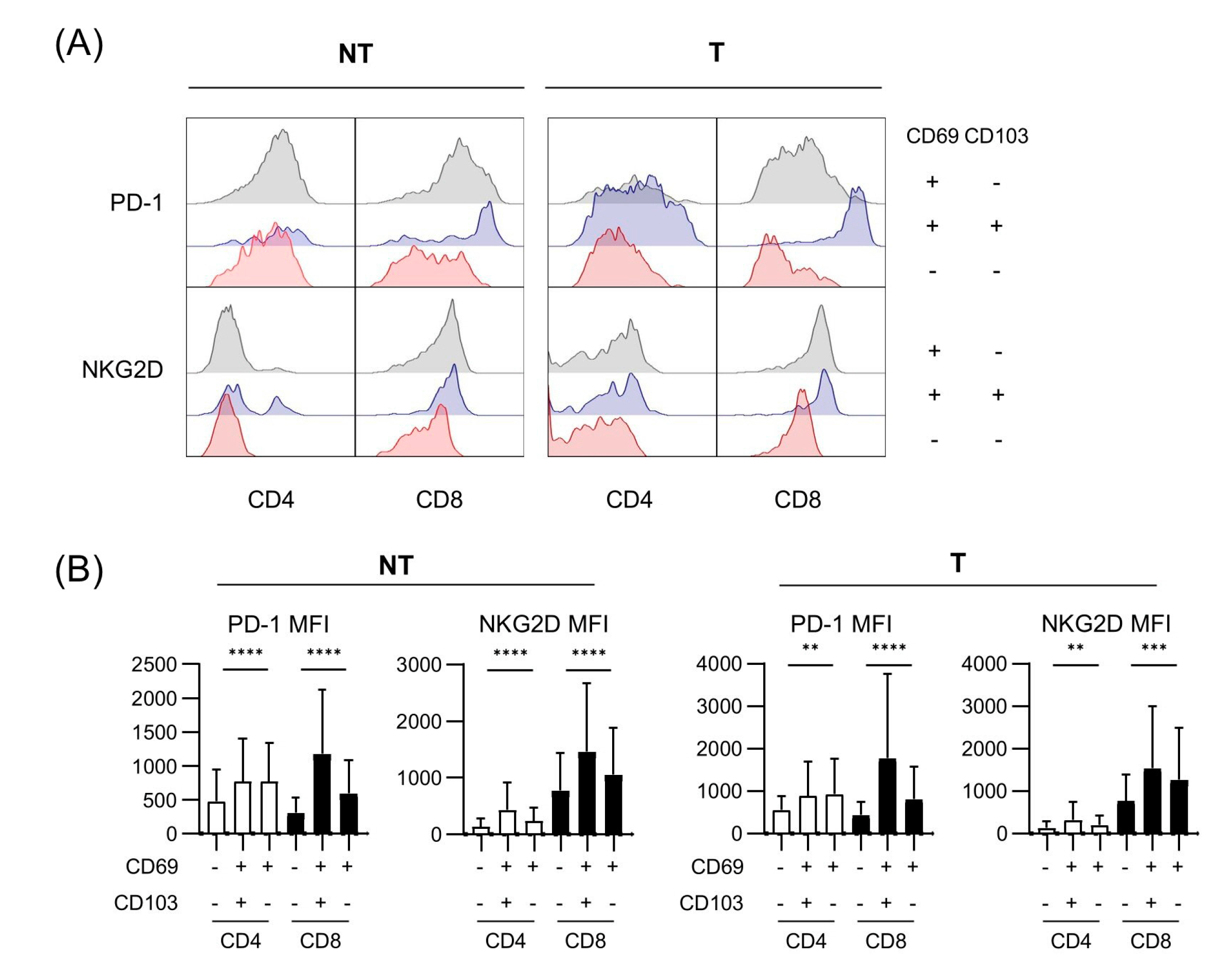
Figure 5.
PD-1 and NKG2D expression levels in T-cell subsets based on alcohol etiology. (A) MFI of PD-1 and NKG2D in the CD69+CD103+CD8+ T-cell subset from NT tissues and the CD69−CD4+ and CD69−CD8+ T-cell subsets from T tissues, comparing alcohol and non-alcohol etiology groups. In the NT group, non-alcohol (n = 21) and alcohol (n = 11) patients were analyzed; in the T group, non-alcohol (n = 16) and alcohol (n = 9) patients were analyzed. Statistical analysis was performed using the Mann–Whitney U test. (B) Correlation between the percentage of CD69−CD4+ and CD69−CD8+ T cells and MFI of PD-1 in T tissues (n=24). Statistical significance (p-values) and correlation coefficients (R-values) are indicated in each panel. The Pearson correlation coefficient was applied to evaluate the correlation between the variables. Statistical significance is indicated as follows: * p<0.05, ** p<0.01, **** p<0.0001; n.s., not significant. NT, non-tumor tissue; T, tumor tissues; MFI, mean fluorescence intensity; PD-1, programmed death protein 1; NKG2D, natural killer group 2 member D.
Figure 5.
PD-1 and NKG2D expression levels in T-cell subsets based on alcohol etiology. (A) MFI of PD-1 and NKG2D in the CD69+CD103+CD8+ T-cell subset from NT tissues and the CD69−CD4+ and CD69−CD8+ T-cell subsets from T tissues, comparing alcohol and non-alcohol etiology groups. In the NT group, non-alcohol (n = 21) and alcohol (n = 11) patients were analyzed; in the T group, non-alcohol (n = 16) and alcohol (n = 9) patients were analyzed. Statistical analysis was performed using the Mann–Whitney U test. (B) Correlation between the percentage of CD69−CD4+ and CD69−CD8+ T cells and MFI of PD-1 in T tissues (n=24). Statistical significance (p-values) and correlation coefficients (R-values) are indicated in each panel. The Pearson correlation coefficient was applied to evaluate the correlation between the variables. Statistical significance is indicated as follows: * p<0.05, ** p<0.01, **** p<0.0001; n.s., not significant. NT, non-tumor tissue; T, tumor tissues; MFI, mean fluorescence intensity; PD-1, programmed death protein 1; NKG2D, natural killer group 2 member D.
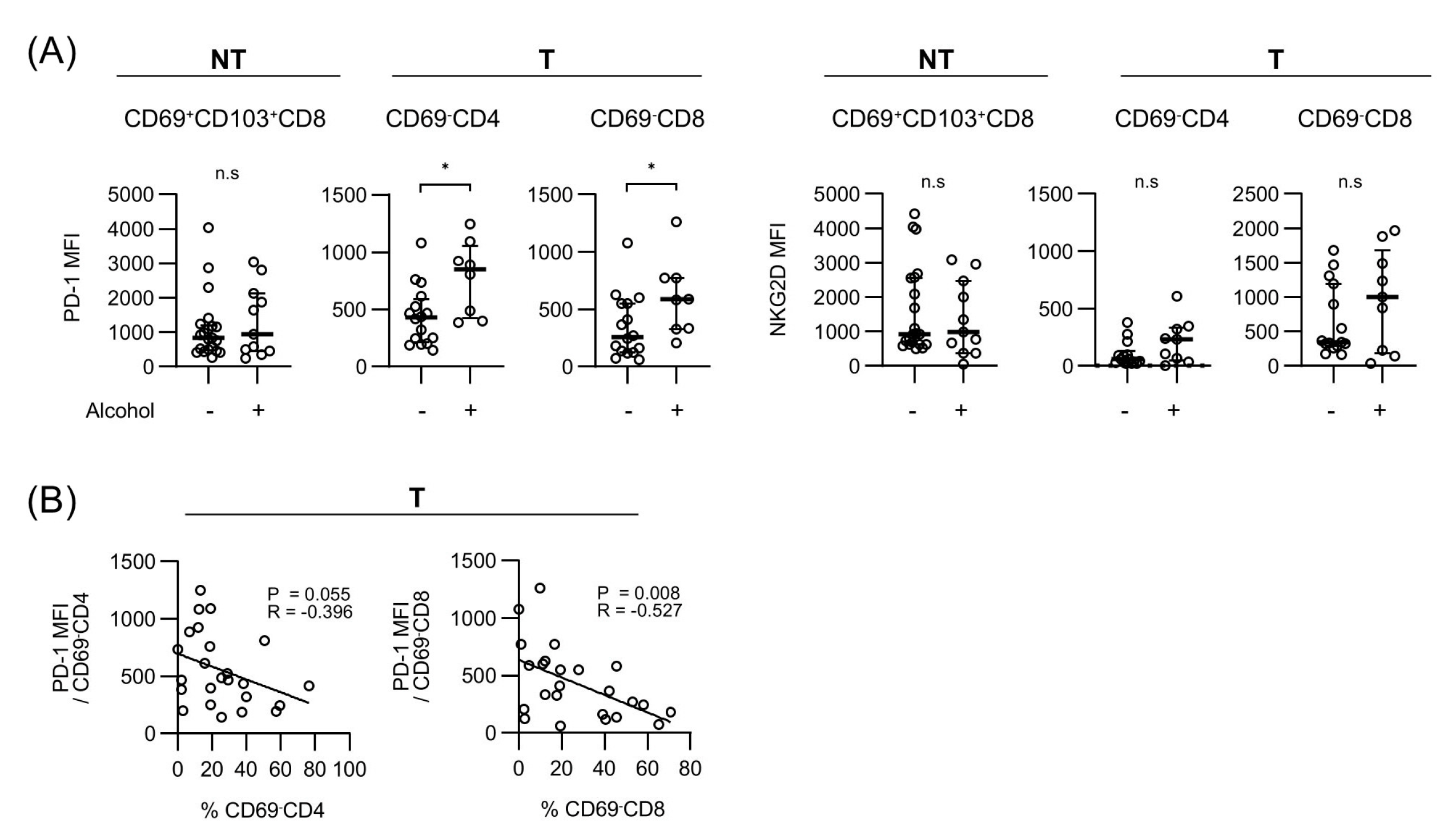

Table 1.
Baseline characteristics of enrolled patients.
| Total (n=57) | |
| Age (y) | 62.7 ± 8.8 |
| Male gender (n, %) | 43 (75) |
| Etiology | |
| HBV (n, %) | 28 (49) |
| Alcohol (n, %) | 9 (16) |
| HBV + Alc (n, %) | 12 (21) |
| MASH (n, %) | 4 (7) |
| Unknown (n, %) | 4 (7) |
| AST (U/L) | 32.0 (23.0-39.0) |
| ALT (U/L) | 29.0 (20.0-45.0) |
| Total bilirubin (mg/dL) | 0.7 (0.5-1.0) |
| Albumin (g/dL) | 4.4 (4.1-4.6) |
| AFP (ng/mL) | 4.5 (2.7-47.5) |
| PIVKA-II (mAU/mL) | 43.0 (20.0-274.0) |
| Tumor number | 1.0 (1.0-1.0) |
| Largest tumor size | 3.7 (2.0-5.6) |
| Worst tumor grade | 3.0 (2.0-3.0) |
| Major tumor grade | 2.0 (2.0-2.0) |
| Microvascular invasion (n, %) | 19 (33) |
| Pathologic T stage | 1.0 (1.0-2.0) |
Table 2.
Predictive value of tissue-infiltrating T-cell populations and clinicopathologic factors regarding recurrence-free survivals using univariate Cox-regression analysis.
Table 2.
Predictive value of tissue-infiltrating T-cell populations and clinicopathologic factors regarding recurrence-free survivals using univariate Cox-regression analysis.
|
Non-tumor/ Tumor tissue/ Clinicopathological |
Population | HR (95% CI) | P | cutoff |
| NT | CD69-CD4 | 0.98 (0.93 - 1.02) | 0.294 | |
| NT | CD69+CD4 | 1.03 (0.98 - 1.07) | 0.275 | |
| NT | CD69+CD103+CD4 | 0.98 (0.89 - 1.08) | 0.712 | |
| NT | CD69+CD103-CD4 | 1.03 (0.98 - 1.09) | 0.184 | |
| NT | CD69-CD8 | 0.96 (0.89 – 1.03) | 0.258 | |
| NT | CD69+CD8 | 1.97 (1.04 - 3.71) | 0.037 | 85.6 |
| NT | CD69+CD103+CD8 | 0.41 (0.23 - 0.73) | 0.002 | 3.7 |
| NT | CD69+CD103-CD8 | 2.14 (1.33 - 3.44) | <0.001 | 82.3 |
| T | CD69-CD4 | 0.48 (0.32 - 0.72) | <0.001 | 11.5 |
| T | CD69+CD4 | 2.23 (1.44 - 3.45) | <0.001 | 85.4 |
| T | CD69+CD103+CD4 | 1.89 (1.19 - 3.01) | 0.007 | 1.6 |
| T | CD69+CD103-CD4 | 1.93 (1.22 - 3.05) | 0.005 | 81.2 |
| T | CD69-CD8 | 0.46 (0.26 - 0.81) | 0.007 | 19.5 |
| T | CD69+CD8 | 2.15 (1.33 - 3.49) | 0.002 | 76.5 |
| T | CD69+CD103+CD8 | 1.63 (1.01 - 2.65) | 0.049 | 41.1 |
| T | CD69+CD103-CD8 | 1.74 (1.04 - 2.93) | 0.036 | 75.3 |
| Clinicopathological | Age | 1.00 (0.97 - 1.03) | 0.964 | |
| Clinicopathological | Male gender | 1.41 (0.46 - 4.30) | 0.756 | |
| Clinicopathological | Viral etiology | 0.67 (0.31 - 1.42) | 0.295 | |
| Clinicopathological | Alcohol etiology | 1.34 (0.27 - 6.66) | 0.72 | |
| Clinicopathological | AST | 1.00 (0.99 - 1.01) | 0.901 | |
| Clinicopathological | ALT | 0.99 (0.98 - 1.01) | 0.473 | |
| Clinicopathological | Total bilirubin | 0.86 (0.31 - 2.34) | 0.761 | |
| Clinicopathological | Albumin | 0.56 (0.28 - 1.13) | 0.107 | |
| Clinicopathological | INR | 1.15 (0.09 - 14.76) | 0.913 | |
| Clinicopathological | AFP | 1.86 (1.18 - 2.93) | 0.007 | 102 |
| Clinicopathological | PIVKA-II | 2.07 (1.26 - 3.39) | 0.004 | 493 |
| Clinicopathological | Tumor number | 1.19 (0.52 - 2.72) | 0.688 | |
| Clinicopathological | Largest tumor size | 2.82 (1.47 - 5.41) | 0.002 | 6.9 |
| Clinicopathological | Worst tumor grade | 1.45 (0.75 - 2.81) | 0.264 | |
| Clinicopathological | Major tumor grade | 1.67 (0.80 - 3.49) | 0.172 | |
| Clinicopathological | microvascular invasion | 1.55 (0.47 - 5.11) | 0.469 | |
| Clinicopathological | Pathologic T stage | 1.94 (1.22 - 3.08) | 0.005 | 3 |
| Clinicopathological | Histologic liver fibrosis | 1.18 (0.59 - 2.39) | 0.64 |
Disclaimer/Publisher’s Note: The statements, opinions and data contained in all publications are solely those of the individual author(s) and contributor(s) and not of MDPI and/or the editor(s). MDPI and/or the editor(s) disclaim responsibility for any injury to people or property resulting from any ideas, methods, instructions or products referred to in the content. |
© 2025 by the authors. Licensee MDPI, Basel, Switzerland. This article is an open access article distributed under the terms and conditions of the Creative Commons Attribution (CC BY) license (http://creativecommons.org/licenses/by/4.0/).
Copyright: This open access article is published under a Creative Commons CC BY 4.0 license, which permit the free download, distribution, and reuse, provided that the author and preprint are cited in any reuse.