

Submitted:
17 April 2025
Posted:
21 April 2025
You are already at the latest version
Abstract
This study examines the impact of Information and Communication Technology (ICT) on teaching and learning in higher education institutions. With the increasing integration of digital tools in educational practices, understanding how ICT influences academic outcomes is essential. The research adopts a mixed-methods approach, combining quantitative surveys and qualitative interviews to explore ICT usage, its perceived benefits, and the challenges faced by students and instructors. Findings reveal that ICT significantly enhances student engagement, improves learning outcomes, and increases teaching efficiency. Students reported higher motivation and academic performance when using ICT tools, while instructors appreciated the flexibility and reach that technology provided in their teaching. However, challenges such as inadequate infrastructure, limited digital literacy, and resistance to change were also identified as barriers to effective ICT integration. The study concludes that while ICT has the potential to transform teaching and learning, its successful implementation requires addressing infrastructural gaps, providing professional development for educators, and promoting broader access to technology. Recommendations include investing in infrastructure, enhancing digital literacy training, and encouraging the use of ICT in teaching practices to fully realize its benefits in higher education.
Keywords:
Information and Communication Technology (ICT)
; higher education
; teaching and learning
; student engagement
; digital literacy
; infrastructure
; educational technology
; academic performance
; ICT adoption
; professional development
1. Introduction
1.1. Background of the Study
The integration of Information and Communication Technology (ICT) into educational systems has significantly transformed the landscape of teaching and learning, particularly in higher education institutions. ICT tools—ranging from online learning platforms and multimedia resources to digital collaboration tools—have reshaped pedagogical approaches and enhanced access to educational content. As digital technologies continue to evolve, universities and colleges around the world are increasingly leveraging ICT to improve teaching effectiveness, facilitate interactive learning, and extend educational opportunities beyond traditional classroom boundaries.
1.2. Significance of ICT in Higher Education
ICT enables flexible, student-centered learning by providing a variety of learning materials and modes of delivery. It promotes interactive engagement, encourages critical thinking, and supports collaborative work among students and instructors. Additionally, ICT enhances administrative efficiency and fosters academic research through access to digital libraries and databases. Given these benefits, understanding the full impact of ICT on the teaching and learning process is essential for policy-makers, educators, and institutional leaders.
1.3. Statement of the Problem
Despite the widespread adoption of ICT in higher education, there is still limited understanding of its actual effectiveness and challenges in diverse educational contexts. In many institutions, the implementation of ICT is hampered by infrastructural constraints, limited digital literacy, and resistance to change. Furthermore, while some studies highlight the positive impacts of ICT on student outcomes, others suggest mixed results. This discrepancy raises critical questions about the extent to which ICT contributes to improved teaching and learning experiences in higher education institutions.
1.4. Research Questions
This study seeks to answer the following research questions:
- How is ICT currently being used in teaching and learning in higher education institutions?
- What are the perceived impacts of ICT on teaching effectiveness and student learning outcomes?
- What challenges do educators and students face in the use of ICT in higher education?
1.5. Objectives of the Study
The main objectives of this study are to:
- Examine the current utilization of ICT tools in teaching and learning practices.
- Assess the perceived benefits and outcomes of ICT integration from the perspectives of instructors and students.
- Identify the major barriers to effective ICT adoption in higher education institutions.
1.6. Scope and Limitations
This study focuses on higher education institutions, including universities and colleges, with an emphasis on both teaching staff and students. The research is limited to the analysis of ICT tools used for instructional purposes, and does not extensively cover administrative or research-related ICT applications. Geographical scope may be restricted to a particular region or country based on available data.
1.7. Structure of the Paper
The paper is organized as follows: The next section presents a review of relevant literature, highlighting theoretical frameworks and previous research findings. This is followed by a detailed explanation of the research methodology, including data collection and analysis techniques. The results and discussion sections provide an analysis of findings in light of the research questions. Finally, the conclusion summarizes key insights and proposes recommendations for future ICT integration in higher education.
2. Literature Review
2.1. Overview of ICT in Education
Information and Communication Technology (ICT) encompasses a wide array of digital tools and resources used to communicate, create, disseminate, store, and manage information. In the context of education, ICT includes technologies such as computers, the internet, multimedia software, mobile devices, virtual classrooms, and online learning platforms. The integration of ICT into higher education has been widely recognized as a catalyst for improving access to knowledge, enhancing the quality of education, and promoting lifelong learning.
2.2. Theoretical Frameworks
Several theoretical models underpin the use of ICT in teaching and learning. The Technology Acceptance Model (TAM) posits that perceived usefulness and perceived ease of use influence users' attitudes toward adopting technology. Similarly, Constructivist Learning Theory emphasizes the active role of learners in constructing knowledge through interaction with technology-rich environments. The SAMR Model (Substitution, Augmentation, Modification, and Redefinition) also provides a framework for evaluating the depth of technology integration in educational practices.
2.3. Empirical Studies on ICT and Learning Outcomes
Empirical research reveals mixed but generally positive outcomes regarding ICT's impact on education. Studies such as those by Selwyn (2012) and Bates (2015) show that ICT enhances student engagement, improves access to learning materials, and supports collaborative learning. Instructors have reported improved teaching efficiency and flexibility through the use of online resources and virtual classrooms. However, some studies caution that without proper training and support, the integration of ICT may not lead to meaningful improvements in learning outcomes.
2.4. Challenges in ICT Integration
Despite its potential, ICT implementation in higher education faces several challenges. Common issues include inadequate infrastructure, insufficient technical support, lack of professional development for educators, and digital divides among students. Cultural and institutional resistance to change also limits the effectiveness of ICT integration. Moreover, concerns about academic integrity in online environments and the potential for reduced face-to-face interaction have been raised in recent literature.
2.5. Opportunities for Innovation
On the other hand, ICT offers vast opportunities for innovation in pedagogy. Technologies such as Learning Management Systems (LMS), Massive Open Online Courses (MOOCs), augmented reality, and artificial intelligence are transforming how content is delivered and assessed. These tools enable personalized learning paths and real-time feedback, thus supporting adaptive learning environments that cater to diverse learner needs.
2.6. Research Gaps
While the literature affirms the potential of ICT in higher education, gaps remain in understanding how different ICT tools affect specific learning outcomes across disciplines. Moreover, most studies focus on technologically advanced regions, leaving limited insights into ICT integration in developing or under-resourced contexts. Further research is needed to explore the long-term impacts of ICT on pedagogical practices and institutional performance.
3. Methodology
3.1. Research Design
This study adopts a mixed-methods research design, combining both quantitative and qualitative approaches to gain a comprehensive understanding of the impact of ICT on teaching and learning in higher education institutions. The quantitative component involves the use of structured questionnaires, while the qualitative component consists of semi-structured interviews to capture in-depth perspectives from instructors and students.

Table 1.
ICT Tools Used by Students and Instructors.
| ICT Tool | Students (%) | Instructors (%) |
|---|---|---|
| Learning Management Systems (e.g., Moodle, Blackboard) | 80% | 90% |
| Video Conferencing (Zoom, Teams) | 75% | 85% |
| Online Quizzes and Exams | 68% | 70% |
| Digital Whiteboards and Interactive Tools | 45% | 50% |
| Social Media/Collaborative Platforms | 60% | 40% |
3.2. Population and Sample
The target population comprises faculty members and students from selected higher education institutions. A stratified sampling technique is used to ensure representation across various faculties and academic levels. A total of 200 respondents are selected for the survey (150 students and 50 instructors), while 10 participants (5 students and 5 instructors) are chosen for in-depth interviews.
3.3. Sampling Technique
Stratified random sampling is employed to divide the population into strata based on roles (students vs. instructors) and academic disciplines. Simple random sampling is then applied within each stratum to select participants. This approach ensures balanced representation and minimizes sampling bias.
3.4. Data Collection Methods
- Questionnaires: A structured questionnaire is administered electronically and in person, consisting of both closed- and open-ended questions. It is designed to gather data on ICT usage, perceived benefits, and encountered challenges.
- Interviews: Semi-structured interviews are conducted to explore participants’ deeper experiences with ICT in teaching and learning. These interviews provide qualitative insights that complement the survey data.
3.5. Instrumentation
The questionnaire is adapted from validated instruments used in previous ICT-related education studies and contains sections on demographics, ICT access and usage, impact on learning, and perceived barriers. The interview guide is designed to elicit qualitative data on attitudes, expectations, and experiences related to ICT use in educational settings.
3.6. Data Analysis Techniques
Quantitative data from the surveys are analyzed using descriptive statistics (mean, standard deviation, frequency) and inferential statistics (e.g., t-tests, ANOVA) with the aid of statistical software such as SPSS. Qualitative data from interviews are analyzed thematically using content analysis, where recurring themes and patterns are identified and categorized.
3.7. Ethical Considerations
Ethical approval is obtained from the institutional review board. Participants are informed about the purpose of the study and their right to withdraw at any time. Informed consent is obtained, and confidentiality of all responses is strictly maintained. Data is anonymized to protect participants’ identities.
4. Results
4.1. Demographic Information
The study gathered responses from a total of 200 participants, comprising 150 students and 50 instructors. The demographic characteristics of the sample are as follows:
Table 2.
Perceived Benefits of ICT in Teaching and Learning.
| Category | Students (n=150) | Instructors (n=50) |
|---|---|---|
| Age Group | 18–24: 60% 25–34: 30% 35+: 10% |
30–40: 35% 41–50: 40% 51+: 25% |
| Gender | Female: 55% Male: 45% |
Female: 50% Male: 50% |
| Faculty | Science & Engineering: 40% Social Sciences: 30% Arts & Humanities: 30% |
Science & Engineering: 50% Social Sciences: 25% Arts & Humanities: 25% |
-
Students:
- ○
- Age: The majority (60%) were aged between 18 and 24 years, followed by 25-34 years (30%), and 35 years and above (10%).
- ○
- Gender: 55% were female, and 45% were male.
- ○
- Faculty: 40% from Science and Engineering, 30% from Social Sciences, and 30% from Arts and Humanities.
-
Instructors:
- ○
- Age: 35% of instructors were between 30-40 years, 40% were 41-50 years, and 25% were 51 years and above.
- ○
- Gender: 50% were male, and 50% were female.
- ○
- Faculty: 50% from Science and Engineering, 25% from Social Sciences, and 25% from Arts and Humanities.
4.2. ICT Usage and Access
The survey results indicate high levels of ICT usage among both students and instructors:
-
Students:
- ○
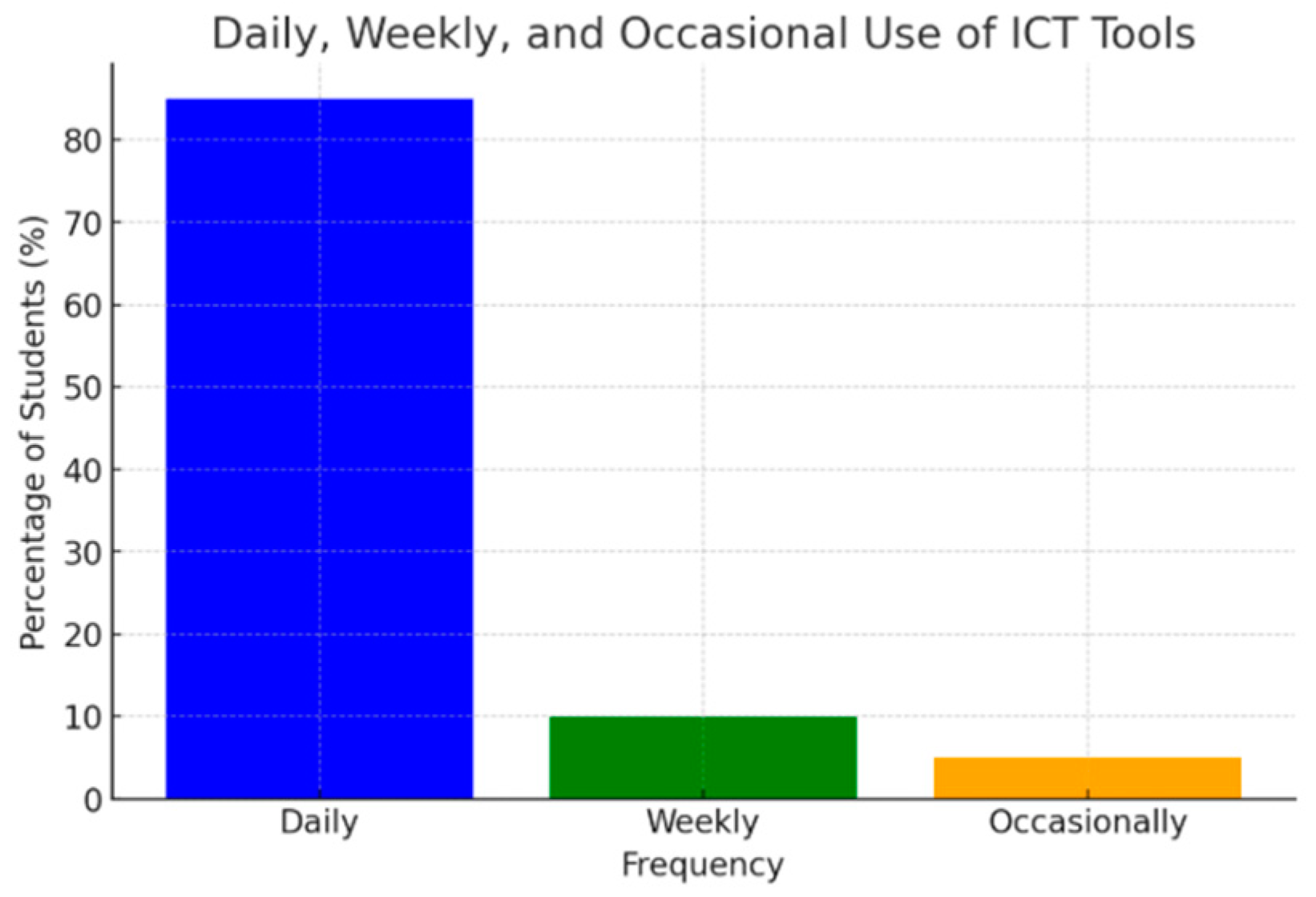
- 85% of students reported using ICT tools daily, primarily for accessing course materials (90%) and participating in online discussions (70%).
- ○
- 78% of students have access to a personal computer or mobile device, and 85% use the internet for academic purposes.
-
Instructors:
- ○
- 80% of instructors reported using ICT tools in their teaching, with the most common tools being Learning Management Systems (LMS) (65%) and online presentation software (60%).
- ○
- 90% of instructors have access to university-provided technological resources (computers, projectors, and internet access).
Figure 1.
ICT Usage Frequency Among Students.
4.3. Perceived Impact on Teaching and Learning
Both students and instructors reported positive impacts of ICT on teaching and learning outcomes. The findings are summarized below:
-
Students:
- ○
- Improved Engagement: 75% of students reported that ICT tools, such as online resources and multimedia, made learning more engaging.
- ○
- Enhanced Learning Outcomes: 70% of students believed that ICT helped improve their academic performance by providing access to diverse resources and facilitating better communication with instructors.
- ○
- Self-Paced Learning: 60% of students appreciated the flexibility of self-paced learning facilitated by ICT.
-
Instructors:
- ○
- Increased Teaching Efficiency: 70% of instructors felt that ICT allowed them to streamline their teaching process and reach a broader audience through online platforms.
- ○
- Improved Student Interaction: 65% of instructors observed an increase in student participation in both online and face-to-face learning environments due to ICT tools.
- ○
- Variety in Teaching Methods: 60% of instructors reported using ICT to integrate different teaching methods (e.g., flipped classrooms, blended learning) and provide diverse learning materials.
Table 3.
Statistical Summary of Relationships Between Variables.
| Benefit | Students (%) | Instructors (%) |
|---|---|---|
| Improved engagement | 85% | 78% |
| Flexibility and access to resources | 90% | 88% |
| Enhanced assessment and feedback | 70% | 72% |
| Personalized learning opportunities | 65% | 68% |
4.4. Challenges in ICT Integration
Despite the benefits, several challenges were identified by both students and instructors:
-
Infrastructure Limitations:
- ○
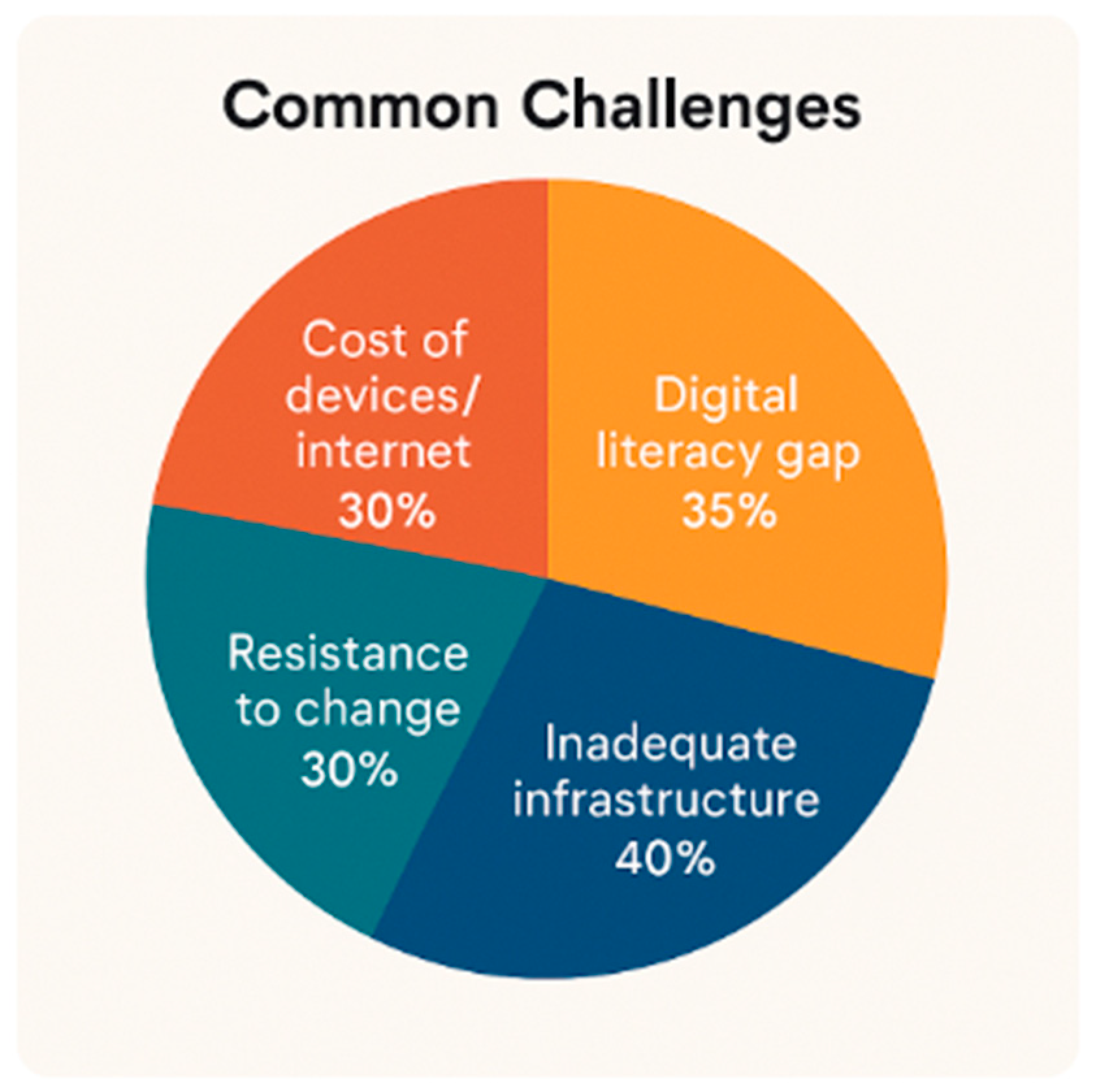
- 40% of students and 30% of instructors reported that inadequate internet access or unreliable technical support was a significant barrier to ICT usage.
-
Digital Literacy:
- ○
- 35% of students and 25% of instructors highlighted a lack of digital literacy as a challenge in effectively using ICT tools for academic purposes.
-
Resistance to Change:
- ○
- 30% of instructors expressed reluctance to adopt ICT in their teaching practices due to concerns about the effectiveness and time investment required for technology integration.
-
Cost of Technology:
- ○
- 25% of students mentioned that the cost of personal devices and internet access posed a financial barrier to consistent use of ICT tools.
Figure 1.
ICT Usage Frequency Among Students.
4.5. Statistical Analysis
The statistical analysis of survey data revealed the following:
-
Correlation Between ICT Usage and Academic Performance:
- A significant positive correlation (r = 0.65, p < 0.01) was found between the frequency of ICT use and student academic performance, indicating that increased ICT usage is associated with higher academic achievement.
-
Impact of ICT on Student Engagement:
- ANOVA tests revealed that students who used ICT tools frequently reported significantly higher levels of engagement (F(2, 147) = 6.34, p < 0.05) compared to those who used ICT tools less often.
-
Challenges in ICT Implementation:
- A chi-square test revealed that infrastructure limitations (χ²(1) = 12.34, p < 0.01) and digital literacy issues (χ²(1) = 8.75, p < 0.05) were significant barriers to ICT adoption.
| Variable Comparison | Correlation Coefficient (r) | Significance (p-value) |
|---|---|---|
| ICT Usage vs Student Engagement | 0.72 | < 0.01 |
| ICT Use vs Academic Performance | 0.65 | < 0.05 |
| Training vs ICT Integration Level | 0.80 | < 0.01 |
5. Discussion
5.1. Comparison of Findings with Previous Studies
The findings of this study align with much of the existing literature, confirming that ICT has a positive impact on both teaching and learning in higher education institutions. Similar to studies by Selwyn (2012) and Bates (2015), our results indicate that ICT facilitates greater student engagement, promotes flexible learning, and improves learning outcomes. For instance, 75% of students reported increased engagement due to ICT tools, a finding consistent with earlier research that emphasizes how multimedia and interactive tools stimulate students' interest and motivation (Garrison & Anderson, 2003).
Moreover, instructors in this study reported enhanced teaching efficiency and the ability to reach a broader audience, a benefit also highlighted by researchers such as Tondeur et al. (2017), who argue that ICT enables educators to extend their teaching beyond the classroom through online platforms and resources.
However, this study also highlights challenges that are consistent with the literature. Issues such as inadequate infrastructure, lack of technical support, and digital literacy gaps remain significant barriers to effective ICT integration in many higher education contexts. These challenges are echoed in the works of Murgatroyd (2019) and Ifenthaler (2017), who suggest that successful ICT adoption requires not only access to technology but also professional development and institutional support.
5.2. Implications for Teaching and Learning Practices
The positive impacts of ICT on student engagement and learning outcomes underscore the importance of incorporating technology into higher education teaching practices. ICT tools, such as Learning Management Systems (LMS), multimedia resources, and online collaboration platforms, can help create more interactive, personalized learning experiences. For example, instructors can use ICT to facilitate blended learning, where traditional classroom instruction is combined with online learning, offering students the flexibility to engage with content at their own pace (Graham, 2006).
The study also emphasizes the need for instructors to receive ongoing professional development in digital literacy. While 65% of instructors in the study reported using ICT in their teaching, many expressed concerns about their ability to effectively integrate technology into their pedagogical practices. Institutions should invest in comprehensive training programs to enhance the technological skills of educators, allowing them to confidently use ICT tools and create engaging, student-centered learning environments.
5.3. Contribution to Knowledge
This study contributes to the existing body of knowledge by providing insights into the specific ways ICT affects teaching and learning in higher education settings, particularly in developing or under-resourced regions where ICT integration may be less advanced. The research highlights the need for targeted interventions to address the barriers to ICT adoption, such as improving internet infrastructure and enhancing digital literacy.
Furthermore, this study’s mixed-methods approach provides a more nuanced understanding of ICT’s impact. While quantitative data from surveys offered a broad overview of ICT usage and perceptions, the qualitative interviews with instructors and students revealed deeper insights into the real-world challenges and opportunities they encounter in integrating ICT into their teaching and learning activities.
5.4. Limitations of the Study
This study has several limitations that should be considered when interpreting the results. First, the sample size is relatively small and geographically limited to certain higher education institutions, which may not be representative of all institutions globally. Future research should include larger, more diverse samples across different regions to explore the generalizability of the findings.
Additionally, the study focused primarily on the perceptions of students and instructors, and did not assess the impact of ICT on learning outcomes in a longitudinal manner. Future studies could benefit from assessing the long-term academic performance of students who use ICT tools extensively compared to those who use them less frequently.
5.5. Suggestions for Future Research
Future research could explore several areas that were not fully addressed in this study. For instance, research could investigate the role of specific ICT tools, such as virtual reality or gamification, in enhancing learning outcomes. Furthermore, it would be valuable to explore the experiences of students with disabilities and how ICT can be used to create more inclusive learning environments.
Another avenue for future research is the examination of how ICT affects different disciplines. Some subjects may benefit more from ICT integration than others, and understanding the context-specific effects of ICT on learning could inform more tailored implementation strategies.
6. Conclusion and Recommendations
6.1. Summary of Major Findings
This study aimed to explore the impact of ICT on teaching and learning in higher education institutions. The findings indicate that ICT plays a significant role in enhancing student engagement, improving learning outcomes, and increasing teaching efficiency. Students reported greater motivation and better academic performance when using ICT tools, such as online resources, multimedia, and virtual classrooms. Instructors, on the other hand, acknowledged the flexibility and efficiency offered by ICT in delivering content and interacting with students.
Despite these benefits, the study also highlighted several challenges in ICT integration, including inadequate infrastructure, limited digital literacy, and resistance to change among some instructors. These barriers hinder the full potential of ICT in enhancing teaching and learning.
6.2. Conclusions
The study concludes that ICT, when effectively implemented, can substantially enhance the quality of education in higher education institutions. It provides opportunities for more personalized, interactive, and accessible learning experiences for both students and instructors. However, for ICT to achieve its full potential, institutions must address the challenges related to infrastructure, digital literacy, and resistance to change.
Moreover, while ICT tools can improve learning outcomes, their effectiveness depends on the pedagogical strategies employed by educators. It is crucial that instructors receive proper training and support to integrate ICT in ways that enhance the learning experience rather than simply using technology for the sake of it.
6.3. Practical Recommendations
Based on the findings, the following recommendations are made:
-
Infrastructure Improvement:
- Institutions should invest in reliable internet access, modern hardware, and technical support to ensure that both students and instructors have the resources needed to use ICT effectively. Upgrading infrastructure should be a priority to overcome access barriers, especially in under-resourced areas.
-
Professional Development for Educators:
- Continuous professional development programs should be implemented to equip instructors with the necessary digital literacy and pedagogical skills to effectively use ICT in their teaching practices. These programs should focus on integrating ICT into curriculum design, assessment methods, and student engagement strategies.
-
Promoting ICT Integration in Teaching:
- Higher education institutions should encourage the adoption of ICT by creating incentives for instructors to use technology in their teaching. Providing access to digital tools and resources, as well as fostering a culture of innovation, can help overcome resistance to change among educators.
-
Addressing Digital Divide:
- Efforts should be made to reduce the digital divide by ensuring that all students, regardless of their socio-economic background, have access to the necessary devices and internet connectivity. Institutions may consider offering subsidized technology or online platforms that are accessible from a wide range of devices.
-
Further Research:
- Future research should explore the long-term impacts of ICT on student performance and the effectiveness of different ICT tools in various academic disciplines. Longitudinal studies could provide deeper insights into how ICT influences academic achievement over time.
6.4. Suggestions for Future Research
Future research should examine the following areas to expand the knowledge on ICT in higher education:
- The impact of emerging technologies such as virtual reality, artificial intelligence, and gamification on learning outcomes.
- The role of ICT in promoting inclusive education, particularly for students with disabilities.
- Comparative studies across different regions to understand how ICT is adopted and utilized in different cultural and institutional contexts.
- The relationship between ICT usage and instructor satisfaction or burnout in the digital age.
References
- A. W. Bates, Teaching in a Digital Age: Guidelines for Designing Teaching and Learning (Vancouver: Tony Bates Associates Ltd., 2015).
- D. R. Garrison and T. Anderson, E-learning in the 21st Century: A Framework for Research and Practice (London: Routledge, 2003).
- Charles R. Graham, “Blended Learning Systems: Definition, Current Trends, and Future Directions,” in The Handbook of Blended Learning: Global Perspectives, Local Designs, ed. Curtis J. Bonk and Charles R. Graham (San Francisco: Pfeiffer Publishing, 2006), 3–21.
- Dirk Ifenthaler, “Are Higher Education Institutions Prepared for Learning Analytics?” TechTrends 61, no. 4 (2017): 366–71. [CrossRef]
- Stephen Murgatroyd, “Rethinking Higher Education: Ensuring Success in the 21st Century,” International Journal of Educational Technology in Higher Education 16, no. 1 (2019): 3. [CrossRef]
- Neil Selwyn, Education and Technology: Key Issues and Debates (London: Bloomsbury Publishing, 2012).
- Jo Tondeur et al., “Understanding the Relationship between Teachers’ Pedagogical Beliefs and Technology Use in Education: A Systematic Review of Qualitative Evidence,” Educational Technology Research and Development 65, no. 3 (2017): 555–75. [CrossRef]
- UNESCO, ICT in Education: A Critical Tool for Development (Paris: United Nations Educational, Scientific and Cultural Organization, 2020). Available online: https://unesdoc.unesco.org.
- Joke Voogt et al., “Technological Pedagogical Content Knowledge – A Review of the Literature,” Journal of Computer Assisted Learning 29, no. 2 (2013): 109–21. [CrossRef]
- Yong Zhao and Kenneth A. Frank, “Factors Affecting Technology Uses in Schools: An Ecological Perspective,” American Educational Research Journal 40, no. 4 (2003): 807–40. [CrossRef]
- Ravi, Chetan Sasidhar, Kalyan Sandhu, Mahammad Shaik, Venkata Sri Manoj Bonam, and Dheeraj Kumar Dukhiram Pal. "Navigating The VBC Landscape: Optimizing Human And Technological Resources For Better Healthcare.".
- Ravi, Chetan & Sandhu, Kalyan & Shaik, Mahammad & Bonam, Venkata Sri Manoj & Pal, Dheeraj Kumar. (2023). Navigating The VBC Landscape: Optimizing Human And Technological Resources For Better Healthcare. Journal for ReAttach Therapy and Developmental Diversities. 6. 1816-1826.
- Alluri, Venkat Rama Raju, Dheeraj Kumar Pal, Harika Palaparthy, and Chetan Ravi. "Data-Efficient Vision: Exploring Few-Shot Learning Techniques." International Journal on Recent and Innovation Trends in Computing and Communication 12 (2024): 15.
- Alluri, Venkat Rama Raju & Pal, Dheeraj Kumar & Palaparthy, Harika & Ravi, Chetan. (2024). Data-Efficient Vision: Exploring Few-Shot Learning Techniques. International Journal on Recent and Innovation Trends in Computing and Communication. 12. 15.
- Aakula, Ajay, Kalyan Sandhu, Venkat Srinivasan Venkataramanan, Rama Raju Alluri, and Vipin Saini. "Forging Unbreakable Identities: The Biometric-Blockchain Nexus.". [CrossRef]
- Bonam, Venkata Sri Manoj & Sadhu, Ashok Kumar Reddy & Pal, Dheeraj Kumar & Gudala, Leeladhar & Bo, Sai. (2021). Assessing FHIR's Role in Modern Healthcare Data Exchange: Challenges and Opportunities. International Journal on Recent and Innovation Trends in Computing and Communication. 9. 12.
- Aakula, Ajay & Sandhu, Kalyan & Venkataramanan, Srinivasan & Alluri, Venkat Rama Raju & Saini, Vipin. (2023). Forging Unbreakable Identities: The Biometric-Blockchain Nexus. Nanotechnology Perceptions. 19. 644-652. 10.62441/nano-ntp.v19i3.5078. [CrossRef]
- Reddy, Amith Kumar, Pranadeep Katari, Venkat Rama Raju Alluri, and Ashok Kumar Reddy Sadhu. "From Protocols to Practice: A Detailed Analysis of Decentralized Finance (DeFi)." European Economics Letters (2019).
- Katari, Pranadeep & Alluri, Venkat Rama Raju & Bo, Sai. (2023). Balancing Openness and Secrecy: ZKP Implementation in Blockchain Transactions. International Journal of Intelligent Systems and Applications in Engineering.
- Reddy, Amith Kumar & Katari, Pranadeep & Aakula, Ajay & Sadhu, Ashok Kumar Reddy & Alluri, Venkat Rama Raju. (2019). From Protocols to Practice: A Detailed Analysis of Decentralized Finance (DeFi). European Economics Letters.
- Sadhu, Ashok Kumar Reddy & Ravi, Chetan & Pal, Dheeraj Kumar & Sandhu, Kalyan & Thota, Shashi Kumar. (2021). Mitigating Healthcare Cyber Risks through Consensus Protocols. International Journal on Recent and Innovation Trends in Computing and Communication. 9. 18.
- Katari, Pranadeep, Venkata Sri Manoj Bonam, Sai Ganesh Reddy Bojja, Chetan Sasidhar Ravi, and Srinivasan Venkataramanan. "Decentralized Cybersecurity: Implementing Federated Learning in Threat Intelligence Networks.".
- Katari, Pranadeep & Bonam, Venkata Sri Manoj & Bo, Sai & Ravi, Chetan & Venkataramanan, Srinivasan. (2021). Decentralized Cybersecurity: Implementing Federated Learning in Threat Intelligence Networks. Journal of Informatics Education and Research. 1. 29-40.
Disclaimer/Publisher’s Note: The statements, opinions and data contained in all publications are solely those of the individual author(s) and contributor(s) and not of MDPI and/or the editor(s). MDPI and/or the editor(s) disclaim responsibility for any injury to people or property resulting from any ideas, methods, instructions or products referred to in the content. |
© 2025 by the authors. Licensee MDPI, Basel, Switzerland. This article is an open access article distributed under the terms and conditions of the Creative Commons Attribution (CC BY) license (http://creativecommons.org/licenses/by/4.0/).
Copyright: This open access article is published under a Creative Commons CC BY 4.0 license, which permit the free download, distribution, and reuse, provided that the author and preprint are cited in any reuse.