
Submitted:
09 March 2025
Posted:
10 March 2025
You are already at the latest version
Preprints on COVID-19 and SARS-CoV-2
Abstract
The COVID-19 pandemic has significantly redefined the dynamics of workplace environments, necessitating a pivotal shift towards traditional on-site working model to remote work and leading further transformations in office design and operational strategies. Through a systematic review of literature published spanning 2020 to 2025, this study explores the multifaceted impacts of workplace transformations. Key findings indicate: 1) the accelerated adoption of digital technologies, 2) a shift towards hybrid work models, and 3) the integration of health, safety, and sustainability practices in workplace design and operation. These transformations suggest a permanent shift in how organizations approach workplace management, prioritizing flexibility, resilience, and the technology intergration to support a diverse and evolving workforce. This research contributes to growing body of literature on post-pandemic workplace strategies, providing valuable insights that could shape future organizational policies and enhance workplace design and functionality.
Keywords:
Workplace transformation
; post COVID-19 era
; remote work
; hybrid work
; office design
1. Introduction
The COVID-19 pandemic has served as a significant catalyst for transformation across various sectors, with particularly profound impact within the realm of office workplaces. The enforced transition to remote work, precipitated by global lockdowns, has induced significant alterations in both the configuration of physical office spaces and the operational dynamics of organizations. This study undertakes a systematic review of the literature addressing the transformation of office workplaces in the post-COVID-19 era, examining how these changes persistently influence the nature of work, the workplace design and operation, and the employee productivity and well-being.
Initiating with a systematic literature search through the Scopus database, this review covers studies published from 2020 to 2025, focusing on the impacts and continual adaptations in office workplace environments due to the pandemic. The research methodology includes an screening of titles, abstracts, and keywords to pinpoint studies relevant to the COVID-19 within office settings. A thematic analysis was followed to categorize the collected data into pertinent themes such as hybrid and remote work trends, transformative office design and utilization, workplace health and safety strategies, alteration in work culture and behavior, digital and technological transformations a, strategic workforce management and organizational adaptations, and environmental impact strategies.
The review findings point to a substantial initial surge in related research, reflecting strong academic and industry interest in understanding and navigating to the new norms of work life. Key trends identified include the accelerated adoption of remote work practices, the gradual stabilization of hybrid work models that combine in-office and remote work, and strategic modifications in physical office layouts to comply with new health guidelines. These adaptations are not merely reactive but represent a strategic shift in organizational culture and operational strategies, indicating a broader, lasting transformation in global work practices.
This study sets the stage for a detailed examination of how post-pandemic workplace transformations are reshaping organizational structures, enhancing employee engagement, promoting well-being, and boosting productivity. The structure of this study is as follows: Section 2 elaborates the historical evolution of office workplace studies and highlights the importance of examining the impacts of COVID-19 on these environments. Section 3 outlines the research gaps that this study aims to address, while Section 4 details the methodology employed in the literature review. Section 5 and Section 6 synthesize the review results and key findings, presenting significant trends in workplace transformation and categorizing these trends based on the reviewed literature. Section 7 discusses the strategic adaptations made by organizations in response to changing work dynamics, the integration of health, safety, and sustainability practices, and the pivotal role of digital technologies in these transformations. The final section discusses the implications of these findings for future research and the development of adaptive, resilient workplace strategies, tailored to meet the needs of a globally diverse workforce.
2. Office Workplace Environment
2.1. Definition
Office workplace environment refers to a physical and psychological setting designed to facilitate the completion of organizational tasks by employees [1]. It encompasses the physical layout, the aesthetic features, and the technological infrastructure that support both individual and collaborative work. The environment is structured and maintained to promote employee well-being, productivity, and satisfaction, integrating aspects of comfort, flexibility, and alignment with the employees’ values and needs for professional growth and work-life balance [2].
2.2. Overview of History Of Office Workplace Studies
The study of office workplace environments has evolved significantly, mirroring advancements in management theories and broader societal changes from the 20th into the 21st century [3]. The early decades of the 20th century were dominated by the principles of scientific management, introduced by Frederick W. Taylor, which sought to enhance business efficiency through scientifically optimization of worker productivity and mechanical processes. Initially applied to workspace in manufacturing factories, these principles were later adapted to office settings, with emphasis on task efficiency and the rational organization of office tasks [4]. As time progressed, the human relations movement gained prominence. This paradigm shift redirected the focus from solely enhancing work efficiency to considering the psychological well-being of employees [5]. This movement emphasized the importance of social dynamics and employee satisfaction, recognizing their role in facilitating productivity and advocating for a workplace that address workers’ social and emotional needs.
By the late 20th century, with the emergence of digital technology transforming the workplace, scholarly attention shifted towards the integration of new technologies and their impact on office dynamics [6]. This era witnessed the development of various office layouts, such as open plan and cubicles, designed to support different types of work environments that catered to the evolving nature of work tasks [7]. In addition, ergonomics became a significant focus, aiming to align workspaces with the physical and cognitive demands of workers to enhance comfort and reduce strain [8]. Meanwhile, the proliferation of information technology necessitated studies on how these technologies reshaped communication, collaboration, and the physical layout of offices [9]. The advent of the internet also introduced the concept of remote work, expanding the boundaries of the traditional office and initiating studies into telecommuting’s effectiveness and challenges [10].
Entering the 21st century, research in workplace environment has increasingly centered on fostering employee-centric settings that prioritize worker satisfaction, health, and a balance between work and personal life [11]. This contemporary era highlights the importance of sustainable and flexible workspaces that accommodate the needs of a diverse workforce, including environmental sustainability considerations. The outbreak COVID-19 pandemic has further accelerated the transition to remote work, pushing researchers into how virtual environments affect productivity, mental health, and team interactions. Current studies persist in exploring the integration of flexibility and technology in workplaces, striving to design work environments that are not only maximize efficient but also promote well-being and are responsive to future shifts in work culture [12]. This ongoing evolution in office workplace studies reflects a broader understanding of the complex interactions between work environments and employee effectiveness, satisfaction, and well-being.
2.3. Importance of Examining the Impact of COVID-19 on Office Workplace
The COVID-19 pandemic has fundamentally reshaped the landscape of office work, triggering extensive research to informs strategic workplace adaptations [13]. This research is essential for understanding the implications of these shifts on productivity, employee engagement, and work-life balance, as well as for enabling organisations to optimise technology use and remote work policies, ensuring that they support effective communication and sustain productivity levels. Additionally, the abrupt shift to remote work has raised serious concerns about employee mental health, as isolation and the blurring of boundaries between work and home have exacerbated stress and burnout. Research in this domain is vital for devising supportive practices and health resources that enhance well-being and promote a sustainable work-from-home culture.
Additionally, the pandemic has forced a reassessment of actual office spaces, spurring innovation in office architecture to accommodate new health regulations and accommodate a workforce that combines remote and in-office work. Knowing the effects of COVID-19 makes it easier to reorganise workspaces to put safety, adaptability, and teamwork first while meeting changing employee demands. Organisational cultures have also been put to the test during this disruptive time, highlighting the necessity of robust, flexible cultures that foster teamwork and virtual communication in a largely digital environment. In addition to helping with immediate adaptation, researching the effects of COVID-19 prepares organisations for future disruptions, guaranteeing continuity and resilience in a world that is always changing. This research is indispensable for crafting strategies that foster robust, agile, and supportive workplaces, well prepared for navigate the challenges of tomorrow.
3. Research Gaps
Current understanding of the impacts of hybrid and remote work models on productivity, employee engagement, organizational culture, and career development remains limited, particularly when differentiated by sector and geographic region. There is an absence of comprehensive research exploring how various industries -- from technology to education -- and different regions -- from urban centers in developed nations to rural areas in developing countries -- have adapted to these new work paradigms and the unique challenges they encounter. Furthermore, research on the effectiveness of leadership and management in remote or hybrid settings is lacking, particularly in sustaining team cohesion and motivation in the absence of regular face-to-face interactions. Similarly, investigations into office design and configuration that effectively balance safety, collaboration, and flexibility to support a hybrid workforce are lacking. Futhermore, there is a limited exploration of the long-term implication, both mental and physical, associated with \these new working environments. This gap extends to how these transformations impact equity and inclusion within organizations, ensuring that all groups have equal access to opportunities and resources.
4. Review Methodology
This study adopts a systematic literature review approach, which encompasses three structured stages to analyze the transformations in office workplaces post-COVID-19. A systematic literature review is chosen for its ability to provide comprehensive and unbiased coverage of existing research through explicit, reproducible methodologies. It ensures reliability and objectivity by using predetermined criteria for selecting and assessing studies, making the findings reproducible and trustworthy [14]. This approach not only helps identify gaps in the current research, prompting future studies, but also supports evidence-based conclusions essential for informed decision-making in policy and practice. Thus, systematic reviews are invaluable in fields requiring a robust synthesis of complex research landscapes.
4.1. Stage 1—Literature Search
The initial stage utilised the Scopus search engine to gather a broad set of publications using the keywords combinations: (“workplace” and “post-Covid”) or (“office” and “post-Covid”). This initial query yielded 254 publications, including journal articles, conference proceedings, and books published between 2020 and 2025. To refine the search and increase the relevance of the results to the research questions, an exclusion criterion was applied. This criterion filtered out non-journal articles and those not written in English, reducing the pool to 153 articles suitable for further detailed review. This stage is essential for establishing a comprehensive foundation of existing research, ensuring that subsequent analyses are based on a carefully curated selection of scholarly work.
4.2. Stage 2—Key Literature Identification
In the second stage, the researchers conducted an in-depth examination of the 153 remaining articles by reviewing their titles, abstracts, and keywords. The purpose was to identify publications that specifically address the transformations in office workplaces resulting from the pandemic. The selection process involved evaluating the central theme and relevant of each publication to post-COVID-19 office transformations. Articles were selected based on how directly they addressed related issues, ensuring that the final set of key literature was tightly aligned with the core research objectives. This meticulous process enabled the identification of the most pertinent studies, providing valuable insights into the changes and challenges in office environments following the pandemic.
4.3. Stage 3—Thematic Analysis of Key Literature
The final stage involved conducting a thematic analysis of the key literature identified in the previous stage. Each article was systematically analyzed to extract its main themes and ideas. The extracted content was categorized into several themes, including “remote working”, “telecommunication” and “hybrid work models”. These themes were then synthesized to facilitate a comprehensive critical analysis. This thematic grouping supports a structured discussion of the interconnections among various facets of workplace transformation and illustrates how these elements have evolved in response to the pandemic. This approach provides a nuanced understanding of the shifts in workplace design and strategy, highlighting the trends and implications for future office environment.
Each stage of this methodology builds on the previous one, moving from broad data collection to focused analysis, which is essential for conducting robust research that can inform policy, design, and management strategies in post-pandemic workplace environments.
5. Review Results
5.1. An Overview of the Search Results of Stage-1
Following stage 1, 153 literatures were generated by Scopus search engine. Figure 1 shows the trend in publications from 2020 to 2025, revealing an initial surge in research interest, peaking in 2022 with 44 publications, likely driven by the emerging significance of the topic following the onset of COVID-19. This peak is followed by a gradual decline to 30 publications in 2023 and a more pronounced decrease to 39 in 2024, suggesting a stabilization and potential saturation of the research field. In the early 2025 (by January 11th), 4 publications were identified. This pattern reflects a common academic response cycle to global events, characterized by a robust initial focus that diminishes as the immediate relevance or novelty of the topic subsides.
Figure 2 illustrates the distribution of 153 publications across various academic disciplines. Notably, Medicine and Social Sciences each account for 18% of the total, underscoring a strong emphasis on health and societal issues. The next significant segments include Business, Management, and Accounting at 11%, followed by Engineering at 10%, and Environmental Science at 8%, showcasing substantial research activity in these fields as well. Computer Science accounts for 6%, while Economics, Econometrics, and Finance cover 4%. More niche areas such as Biochemistry, Genetics, and Molecular Biology, and Decision Sciences each represent 2%. The category labeled Others makes up 17%, indicating a diverse range of other disciplines contributing to the academic landscape. This distribution reflects the multi-disciplinary nature of contemporary research on office workplace transformation after COVID 19 outbreak, with a particular emphasis on health, social issues, and technological advancements.
Health concerns have been a primary focus during and after the COVID-19 pandemic, with the literature emphasizing several key areas. The expansion and integration of telehealth services have been critical in ensuring continuous access to medical care and improving the efficiency of healthcare delivery. Concurrently, the adoption of digital health solutions, including digital diagnostics and mobile health applications, has facilitated a shift towards a more patient-centric model of care. Moreover, the mental and behavioral health of the public health workforce has garnered significant attention, prompting the development of robust support systems to sustain their well-being. The increase in home office setups has also led to an evaluation of their health impacts, highlighting the need for ergonomic and environmental adjustments to safeguard health. Furthermore, maintaining preventive behaviors in office settings through educational and behavioral interventions has been deemed essential for minimizing virus transmission and supporting ongoing health protocols.
Research on office workplace transformation extends across various sectors, including healthcare, work environments, urban planning, and transportation. Studies highlight the accelerated adoption of telemedicine to enhance patient-provider relationships and document the shift towards remote and hybrid work models that impact urban and corporate planning. These changes have, in turn, prompting a reevaluation of transportation policies due to altered commuting patterns. In addition, the integration of digital technologies in education and the emphasis on indoor environmental quality reflect broader trends towards sustainable, health-oriented living and working environment. Collectively, these studies underscore a significant transformation in societal norms and structures, driven by the pandemic, leading to revised policies and practices that address the evolving economic, social, and health-related challenges.
A subset of the identified publications—comprising 30 studies—examines the profound impacts of the COVID-19 pandemic on business, management and accounting. These studies explore the transition towards remote and agile working models that have reshaped traditional workplace norms and necessitated the adoption of digital tools and telecommunication. Such changes have prompted a reassessment of office space utilization, thereby influencing urban and corporate planning strategies. Several studies also delve into the shifts in transportation habits due to increased remote work, indicating a significant decrease in public transport usage and an uptick in home-based activities. The pandemic’s effect on sectors like tourism and airlines is also discussed, with a focus on adaptive strategies to mitigate economic losses and forecasts about the recovery processes. Together, these studies collectively underscore a broader societal transition towards digital integration, remote working, and redefined public and corporate spaces, suggesting lasting changes in work, communication, and personal interactions in the post-pandemic world.
5.2. Key Dimensions of Studies Relating to Office Workplace Transformation
After examining the abstracts of the 153-literature generated using the search engine, 47 of them were identified as the key literature related to office workspace design. Detailed examination was applied in the 47 literatures and a series of codes were developed representing the research areas / investigation targets of the literature. These codes were further categorized into seven categories, indicating the research areas of the identified literatures, as shown in Table 1.
Table 2 provides a structured overview of 47 key pieces of literature examining the transformation of workplaces in response to the COVID-19 pandemic. The table categorizes each publication—identified by the author(s) and the publication year—across seven thematic domains: (1) hybrid and remote work trends and strategy; (2) workplace design and utilization trends; (3) workplace health and safety strategies; (4) work culture and behavioral adaptations; (5) digital transformation and technological adaptations; (6) strategic workforce management and organizational adaptations; (7) energy and environmental impact strategies. This layout aids in quick navigation and offers a thematic exploration of the literature, with checkmark symbols (✓) indicating the relevant aspects addressed in each study. Such categorization facilitates easy access to relevant studies, making the table a valuable resource for researchers, practitioners, and policymakers interested in specific facets of workplace transformation.
The table further illustrates the interdisciplinary nature of workplace transformation research. Publications marked with multiple checkmarks highlight the intersection of themes, such as the convergence of hybrid work models and health safety strategies. This convergence highlights the complex interplay among technological, cultural, and health-related factors that collectively shape modern work environments in the post-pandemic era.
According to Table 2, the highest number of studies focus on “Hybrid and remote work trends and strategy” with 20 publications. This predominance reflects the substantial shift toward remote and hybrid models as a direct consequence of pandemic conditions. This suggests a strong interest in how organizations are adapting to the increasing demand for flexibility amid rapid changes in work practices, while also highlighting the need to understand the long-term implications on work-life balance, employee engagement, and organizational culture. In contrast, only four studies focus on “Digital transformation and technological adaptations”. Despite the essential role of technology in enabling the rapid transition to remote work and maintaining operational continuity, this area appears underrepresented in the literature. This gap suggests that further research is warranted to explore how technological tools are integrated into daily work routines and their subsequent impact on productivity and security.
Furthermore, the categories “Workplace health and safety strategies” and “Workplace design and utilization trends” are notably represented by 11 and 14 studies, respectively. These figures highlight the importance of reimagine physical office spaces to adhere to new health guidelines and to support a hybrid workforce. They indicate that considerations related to health, safety, and design are fundamental to the current evolution of workplace transformations. In addition, “Work culture and behavioral adaptations”, with 13 studies, highlighting the cultural shifts necessary within organizations to effectively accommodate new modes of working, thereby addressing shift in employee behavior and attitudes as remote work becomes more prevalent. The interplay between these categories reveal a dynamic research landscape in which themes frequently overlap.
6. Main Findings
The examination of key literature on workplace transformation since the COVID-19 pandemic reveals a concentrated focus on three primary areas: the transition to remote work, the redesign of physical workspaces, and the integration of technology to support these changes. All identified studies are empirical and applied in nature, predominantly utilizing case studies and surveys to evaluate the real-world impacts on organizational behavior, employee productivity, and office design.
Remote work dynamics have emerged as a critical area of study, reflecting the global and rapid transition to remote working arrangements in response to pandemic’s related lockdown measures. This body of research frequently investigate how this transition has reshaped work-life balance, enhanced employee engagement, and influenced overall productivity. The findings underscore the necessity for innovative management strategies that effectively support a remote or hybrid workforce, adapting to the new norms of work arrangements.
The fluctuating need for physical office space has also prompted a significant volume of research focused on optimizing office designs to enhance health and safety while increasing flexibility. These studies explore various design concepts, such as hot-desking and open layouts that facilitate social distancing and foster environments conducive to both in-person and virtual collaboration. These studies reflect a keen interest in how physical spaces can evolve to meet the changing requirements of the workforce and workplace safety standards.
Technological integration commands substantial attention, with studies examining the increased reliance on digital tools that facilitate collaboration. This line of research examines the adoption and effectiveness of communication platforms, project management tools, and security software essential for remote operations. Furthermore, there is a notable interest in the potential of advanced technologies like artificial intelligence and automation can streamline workflows and boost productivity, reflecting a broader trend towards leveraging technology to enhance workplace efficiency.
These dominant research themes are further corroborated by the findings presented in Table 2, which illustrates the interdisciplinary nature of the studies. For instance, the integration of technology is not solely concerned with improving communication but also supports hybrid work models that blend remote and in-office activities. Similarly, the redesign of office spaces often incorporates technological advancements to ensure that these new environments are both efficient and safe for employees.
To sum up, the research landscape is characterized by diverse methodologies that provide deep insights into the evolving dynamics of the workplace. Empirical studies using surveys and interviews aim to quantify changes in productivity and employee satisfaction, while case studies provide practical insights into how specific organizations navigate these transformations. Review articles synthesize these findings, providing a broader perspective on global trends and challenges. This comprehensive approach contributes to a robust understanding of how organizations are adapting to the post-pandemic world, offering crucial insights into how to effectively manage and thrive in this new and continually evolving work environment.
7. Discussion
This study synthesizes a wide array of studies from 2020 to 2025, providing a detailed view of the transformations in workplace strategy and design due to the pandemic. The findings reveal the centrality of remote work in new operational strategies, the redesign of office spaces to meet health and safety protocols, and the growing importance of digital technologies in supporting work from anywhere. Moreover, a significant pivot towards sustainability and energy efficiency underscores a shift towards environmentally conscious business practices. The ensuing sections of the paper delve into detailed discussions outlined in the following sub-sections:
7.1. The Acceleration of Remote Work as an Initiation of Office Workplace Transformation
Remote work was historically viewed as a progressive employment arrangement, often advocated by tech industries and forward-thinking companies to enhance work-life balance and reduce operational costs. Prior to the pandemic, its adoption was gradual and often met with skepticism concerning its impact on productivity and team cohesion. The pandemic necessitated an abrupt shift to remote work, compelling organizations globally to adapt swiftly to maintain operations and ensure employee safety. The enforced shift to remote work has not only addressed immediate health concerns but also initiated significant changes in office design, use of technology, and managerial practices, necessitating a balance that supports sustainable remote work environments [1]. Furthermore, it is suggested that existing frameworks for assessing workplace design need to be reevaluated to better align with the evolving needs of hybrid work environments [20].
The mandatory adoption of remote work has led to a broader reassessment of office space utilization, technological investments, and corporate culture. Organizations are now rethinking their physical office spaces, moving away from dense, cubicle-heavy environments towards more flexibility, collaboration, and importantly, health and safety. The shift has not only physical but also cultural implications, altering how employees perceive and interact with their workspaces and colleagues. Furthermore, the need for ongoing organizational support for employees, particularly those facing long-term health effects is underscored, pointing to a deeper understanding of the holistic impacts of remote work setups on employee health and productivity [39].
With remote work, the role of technology has become more central than ever. Organizations have accelerated their digital transformation initiatives, integrating advanced communication tools, cloud services, and cybersecurity measures to support seamless remote operations. The integration of Internet of Things (IoT) frameworks has been crucial for monitoring indoor air quality in office spaces that remain operational, ensuring compliance with health standards [35]. This technological pivot is likely to persist post-pandemic, as companies recognize the efficiency and data-driven decision-making enabled by these technologies.
The acceleration of remote work is expected to have lasting effects on workplace strategies. The pandemic has demonstrated the viability of remote work, potentially leading to a permanent increase in its adoption, which may reduce the demand for traditional office spaces and encourage more companies to adopt a hybrid model that balances in-office and remote work. Moreover, this shift has influenced managerial attitudes towards remote work, particularly in regions with traditionally rigorous work culture, illustrating a global move towards more flexible work policies that could redefine professional norms worldwide [18]. The forced adoption of remote work during the COVID-19 pandemic has accelerated a transformation in the workplace that is likely to have enduring impacts. This shift has initiated significant changes in organizations approach to office design, employee engagement, and operational strategies. As companies continue to navigate these changes, the insights garnered from ongoing research will provide invaluable in shaping the workplaces of the future, ensuring they are resilient, efficient, and responsive to the needs of a diverse workforce.
7.2. Transformative Trends in Office Design and Utilization
The post-COVID-19 era has witnessed a significant transformation in office design and space utilization, driven largely by the widespread adoption of remote work. This has led to a comprehensive re-evaluation of human resource strategies and workplace management, suggesting a permanent change in work practices. Organizations are increasingly integrating remote work into their strategies planning, aligning it with health, safety, and corporate social responsibility to support a hybrid work model [1]. This realignment has not only modified the physical and operational aspects of office environments but has also re-engineered them to meet emerging demands.
The shift toward remote work has positively influenced perceptions towards work-life balance, especially among Generation Z, although it has also blurred the physical boundaries between work and home spaces [2,45]. Strategic decisions now prioritize balancing health and safety standards with cost control, fundamentally redefining the role and structure of office spaces [1]. Technological advancements have become instrumental in enabling these shifts, with tools such as Zoom and Microsoft Teams enhancing remote collaboration and reducing the need for traditional office spaces, thereby decreasing fixed costs and carbon footprints [30]. Furthermore, the necessity for advanced ventilation systems in nearly Zero Energy Building (nZEB) is discussed, aiming to maintain indoor air quality without compromising the energy efficiency [41,44].
Operational modifications in workplace management are crucial for aligning with external pressures and stakeholder expectations in the post-COVID-19 period. These changes compel businesses to reconcile health safety with environmental sustainability, as evidence by the increase in energy consumption and CO2 emissions under new health guidelines [13,16]. The continued integration of remote and corporate work environments remains a key theme of interest.
In addition, the emphasis on flexible work arrangements that cater to employees with disabilities advocates for an inclusive work culture that extends beyond traditional office spaces [42]. The adaptation of coworking space to evolving market needs and post-pandemic realities highlights the necessity for flexibility and inclusivity as foundational elements of workplace strategies [21]. The psychological dimensions of workplace design are explored, focusing on how agile working and organizational support impact employee engagement and productivity [19,46]. Moreover, the critical use of data-driven approaches to optimize workplace design addresses the health benefits and challenges associated with teleworking [36].
The evolving demands for office spaces in urban areas signal a shift towards more adaptable and hybrid work models, reshaping how and where work is conducted [26]. These transformations suggest a future where workplace strategies are fundamentally characterized by flexibility and inclusivity, impacting organizational structures and urban planning significantly.
7.3. Integrating Health, Safety, and Sustainability in Organizational Strategies
Organizations worldwide have responded to the COVID-19 pandemic by prioritizing the enhancement of workplace health and safety, leading to significant advancements in workspace engineering and ventilation systems. These initiatives focus on creating healthier workspaces through specific ventilation designs aimed at improving ventilation rates and point-source effectiveness to mitigate airborne transmission in densely populated settings such as offices, classrooms, and gyms [41]. There is also an emphasis on upgrading ventilation systems to efficiently manage higher rates of outdoor air supply, crucial in nearly Zero Energy Buildings (nZEB), balancing health safety with operational efficiency [44].
Understanding the psychological impacts associated with return-to-office decisions is crucial for navigating organizational dynamics in the post-COVID era. These decisions can induce organizational trauma, necessitating leadership that is attuned to employees’ psychological well-being to sustain productivity and foster a healthy work culture [37]. In addition, there is a need for the reassessment of HVAC systems to meet health standards without exacerbating energy consumption and CO2 emissions, highlighting the importance of aligning health safety measures with sustainability in workplace designs [16].
The pandemic’s psychological also impacts on employee behavior are significant, affecting job insecurity, presenteeism, and turnover intentions, especially among hotel staff [40]. These impacts underscore the necessity for HR policies that effectively address employee anxiety and insecurity across various sectors. Moreover, there is a highlighted need for comprehensive health education and psychological counseling to enhance compliance with preventive behaviors, emphasizing the importance of ongoing support to address the mental health impacts of the pandemic [29].
Research into the long-term effects of post-COVID-19 conditions on work ability indicates that individuals afflicted by these conditions face considerable challenges in meeting both physical and mental demands of their roles. This scenario necessitates interdisciplinary interventions to enhance work ability and sustain productivity [39]. On the policy front, the shift toward remote work, along with its enduring implications for workplace operations and design, suggests that the remote work model will continue to shape the structuring and management of workplaces moving forward [17]. These insights highlight the need for integrated approaches that address both the physical and psychological well-being of the workforce while aligning with environmental and operational efficiencies.
7.4. Leveraging Digital Technologies for Enhanced Collaboration and Productivity
The rapid escalation of remote work during the COVID-19 pandemic has underscored the pivotal role of digital technologies in driving workplace transformation. This shift represent not only an immediate response to a global health crisis but also a broader trend towards digital integration that enhances collaboration and productivity across various sectors. Digital communication platform, such as Zoom, Microsoft Teams, and Slack have become indispensable for maintaining connectivity and fostering collaboration among remote workforces [30]. These platforms effectively simulate in-office interactions by supporting real-time communication and collaboration without requiring physical presence. Moreover, the utility extend beyond simple communication by integrating file-sharing, project management, and real-time feedback mechanisms into a unified interface, thereby facilitating seamless workflow, sustaining team cohesion and enhancing project efficiency regardless of the team dispersion.
The adoption of cloud computing and project management software has similarly played a crucial role in boosting productivity. Cloud-based solutions provide scalable resources, granting teams access to robust computing capabilities and data storage without necessitating substantial investment in physical infrastructure [35]. These technologies ensure that all team members have timely access to project files and communications, reducing delays and overcoming the challenges posed by fragmented technological environment. Furthermore, Artificial intelligence (AI) and automation technologies have revolutionized operational efficiency by streamlining routine tasks. AI-driven analytics tools can predict project bottlenecks, optimize resource allocation, and offer actionable insights that enhance decision-making processes while automation tools assume responsibility for repetitive tasks such as data entry, scheduling, and certain aspects of customer service. This allocation of labour allows human resources to focus on more strategic and creative endeavors that generate greater organization value..
Despite these advancements, the transition to digital workspaces is not without challenges. Data security becomes a paramount concern as organizations increasingly rely on digital platforms to manage sensitive information. Robust cybersecurity measures are essential to mitigate risk of data breaches and to sustain trust in digital systems [30]. In addition, the human aspect of technology adoption warrants careful consideration. Not all employees may be equally comfortable or proficient with new technologies. Thus, providing comprehensive training and support is crucial to ensure that all team members can leverage these tools effectively. This involves not only technical training but also fostering an organizational culture that embraces continuous learning and adaptation.
7.5. Advancing Energy Efficiency in the Post-COVID Workplace
The post-COVID era has prompted a renewed focus on advancing energy efficiency in workplaces setting, driven by heightened awareness of environmental sustainability and the necessity for cost reductions amid evolving work pattern. As organizations worldwide transition to new modes of operation, particularly with the integration of remote and hybrid models, there is a significant opportunity emerges to reassess and improve energy efficiency strategies in office environments [41].
Hybrid work models have resulted in variable occupancy levels in office buildings, presenting both challenges and opportunities for energy management. With fewer employees physically present each day, traditional pattern of energy consumption have shifted dramatically. This change necessitates a dynamic approach to energy management, wherein heating, ventilation, air conditioning (HVAC) systems, and lighting are modulated in real-time based on actual occupancy rather than fixed schedules [44]. Such adaptive systems can significantly reduce energy wastage by preventing unnecessary energy use in unoccupied areas. Technological advancements are central to driving energy efficiency in the post-COVID workplace. Smart building technologies, which incorporate IoT sensors and intelligent management systems, play a crucial role in this transformation. These systems enable precise control and monitoring of energy usage, optimizing consumption from lighting to climate control based on real-time data [35]. Moreover, advancements in AI enable predictive analytics to forecast peak usage times and adjust systems accordingly to maximize efficiency.
The focus on energy efficiency also aligns with rising health and sustainability standards in workplace environments. Improved ventilation systems that maintain energy efficiency are crucial in the aftermath of the pandemic, ensuring a healthy indoor environment while curbing energy use [41]. In addition, many companies are investing in green building certifications, such as LEED (Leadership in Energy & Environmental Design) and WELL (The WELL Building Standard), which not only enhance the sustainability of the building but also foster healthier workspace, thereby contributing to employee well-being and productivity.
Despite these advancements, several challenges persist in the implementation of energy-efficient solutions, particularly concerning the initial costs and integration complexities with existing infrastructures. Addressing these challenges requires supportive policies and incentives from government bodies to encourage businesses to invest in energy-efficient technologies. Furthermore, as buildings are retrofitted or newly constructed with with these systems, there is a need to focus to train facilities managers in the effective operation and maintenance of these advanced technologies.
Overall, the trend towards energy efficiency in the workplace is poised to expand, driven by economic benefits, regulatory pressures, and a corporate commitment to sustainability goals. The continual evolution of work patterns will significantly influence energy management strategies, with an increasing focus on technologies that offer flexibility and adaptability to dynamics demands of modern workplace.
8. A Summative Framework of Workplace Transformation Studies
The post-COVID19 workplace is characterized by a series of interconnected development that emerged from the accelerated adoption of remote work. As illustrated in Figure 3, this transformative landscape has fundamentally redefined traditional work paradigms, compelling organizations to embark on a path of digital transformation and adopt hybrid work models. Remote work, once a peripheral option mainly utilized within tech and progressive sectors, became an essential strategy overnight to maintain continuity and ensure employee safety during the pandemic. This necessitated a swift and comprehensive integration of digital technologies, which facilitated not only the basic operational needs but also fostered enhanced collaboration and productivity through platforms such as Zoom and Microsoft Teams. As organizations adapted to these new digital environments, the very fabric of workplace interaction and operational efficiency evolved, thereby laying the groundwork for sustained changes in corporate culture and workspace management.
In response to these shifts, organizations have critically reassessed office designs, prioritizing flexibility, health, and safety to support the hybrid work model wherein remote and on-site work coexist. This reevaluation has led to significant enhancements in health and safety practices within physical office spaces, including improved ventilation systems and spatial reconfigurations to adhere to social distancing guidelines, thereby reinforcing a commitment to employee well-being. Furthermore, the push towards more flexible and adaptive work environments was mirrored by a deeper integration of sustainability and energy efficiency in office management. By aligning office redesigns initiatives with environmental standards and leveraging advanced technologies, companies have not only addressed immediate health concerns but also embraced a broader vision of sustainability. This comprehensive approach to workplace transformation also demanded a rethinking of organizational policies and management strategies to support the emerging dynamics of the transformed workspace. Revisions in HR policies, management training, and leadership development have emerged as pivotal factors in nurturing a culture that values flexibility, continuous learning, and a balance emphasis on operational efficiency and employee well-being. Thus, the post-pandemic workplace transformation represents a multi-dimensional evolution, driven by technological advancements and a strategic reconfiguration of work environments and organizational cultures, ensuring resilience and sustainability in a rapidly changing world.
9. Conclusions
The transformation of workplaces in response to the COVID-19 pandemic has inaugurated an era defined by flexibility, digital integration, and an intensified focus on employee health and sustainability. As organizations worldwide navigate these evolving conditions, the imperative for ongoing scholar inquiry intensifies. Such research is essential not only for devising adaptive strategies that address a diverse workforce’s needs but also for supporting work environments that bolster both productivity and well-being. This shift has seen a significant reliance on digital tools which have become essential in maintaining operational continuity and enhancing collaborative efforts across dispersed teams. However, this transition also presents challenges such as security concerns, the necessity for comprehensive employee training, and the need to uphold an inclusive corporate culture.
Environmental considerations have similarly assumed prominence, as the new work models present both opportunities and challenges for sustainable development. With the contraction of physical office spaces, the potential for significant environmental benefits escalates, emphasizing the necessity for rigorous evaluation to ensure that these practices contribute constructively to global sustainability goals. Furthermore, as workplace transformations continue to evolve, there is a concomitant need for polices that govern them. Future research should therefore focus on creating frameworks that support flexible work environments while upholding equitable labor practices and equity, scrutinizing the influence of legislation on remote work, and establishing best practices for compliance and governance.
In conclusion, the future of workplace transformation demands a multidisciplinary approach in research, covering technological, social, psychological, and environmental aspects. Continued exploration into hybrid work models, technological advancements, and health and safety initiatives will be vital in guiding the organizations as they formulate responsive strategies that address of global business while simultaneously supporting workforce well-being. By addressing these multifaceted challenges through robust research and adaptable policy-making, a future can be shaped in which the workplace is not only productive but also resilient and responsible.
Author Contributions
Conceptualization, H.H.; methodology, H.H. ; validation, H.H. and M.S.; formal analysis, H.H.; investigation, H.H. and M.S.; resources, H.H. and M.S.; data curation, H.H.; writing—original draft preparation, H.H. and M.S.; writing—review and editing, H.H. and M.S.; visualization, H.H.; funding acquisition, H.H. All authors have read and agreed to the published version of the manuscript.
Conflicts of Interest
The authors declare no conflicts of interest.
References
- Parker, L.D. The COVID-19 office in transition: cost, efficiency and the social responsibility business case. Accounting, Auditing & Accountability Journal. 2020, 33, 1943–67. [Google Scholar]
- Pataki-Bittó, F.; Kapusy, K. Work environment transformation in the post COVID-19 based on work values of the future workforce. Journal of Corporate Real Estate. 2021, 23, 151–69. [Google Scholar] [CrossRef]
- Spell, C.; Bezrukova, K. What management history can tell us about the post pandemic workplace, and other useful things? Journal of Management History. 2023, 29, 167–78. [Google Scholar]
- Dar, S.A. The relevance of Taylor’s scientific management in the modern era. Journal of Psychology and Political Science (JPPS). 2022, 2, 1–6. [Google Scholar]
- Rautrao, R.R.; Nille, N.S. Organizational Behavior. Ashok Yakkaldevi; 2025.
- Yu, Y.; Jiang, Y. Understanding the Digital Revolution and Its Influences. Springer Books. 2024.
- Rishi, S.; Breslau, B.; Miscovich, P. The workplace you need now: shaping spaces for the future of work. John Wiley & Sons; 2021 Oct 26.
- Latini, A.; Di Giuseppe, E.; D’Orazio, M.; Di Perna, C. Exploring the use of immersive virtual reality to assess occupants’ productivity and comfort in workplaces: An experimental study on the role of walls colour. Energy and Buildings. 2021, 253, 111508. [Google Scholar]
- Richardson, L. Coordinating office space: Digital technologies and the platformization of work. Environment and Planning D: Society and Space. 2021, 39, 347–65. [Google Scholar]
- Bouncken, R.B.; Lapidus, A.; Qui, Y. Organizational sustainability identity:‘New Work’of home offices and coworking spaces as facilitators. Sustainable Technology and Entrepreneurship. 2022, 1, 100011. [Google Scholar]
- Ganu, J. Corporate Social Responsibility: A Paradigm Shift towards Organizational Care for Employees’ Wellbeing. East African Journal of Education and Social Sciences. 2024, 5, 23–32. [Google Scholar]
- Hou, H.; Ho, D.C.; Yau, Y. Smart tools to facilitate digitalisation of facilities management service delivery: stakeholders’ perspectives. Facilities 2024, 42, 27–50. [Google Scholar]
- Hou, H.; Remøy, H.; Jylhä, T.; Vande Putte, H. A study on office workplace modification during the COVID-19 pandemic in The Netherlands. Journal of Corporate Real Estate. 2021, 23, 186–202. [Google Scholar]
- Hou, H.; Lai, J.H.; Wu, H.; Wang, T. Digital twin application in heritage facilities management: Systematic literature review and future development directions. Engineering, Construction and Architectural Management. 2024, 31, 3193–221. [Google Scholar] [CrossRef]
- Madero Gómez, S.; Ortiz Mendoza, O.E.; Ramírez, J.; Olivas-Luján, M.R. Stress and myths related to the COVID-19 pandemic’s effects on remote work. Management Research: Journal of the Iberoamerican Academy of Management. 2020, 18, 401–20. [Google Scholar] [CrossRef]
- Cortiços, N.D. and Duarte, C.C., 2021. COVID-19: The impact in US high-rise office buildings energy efficiency. Energy and Buildings, 249, p.111180.
- Ancillo, A.D.; del Val Núñez, M.T.; Gavrila, S.G. Workplace change within the COVID-19 context: a grounded theory approach. Economic Research-Ekonomska Istraživanja. 2021, 34, 2297–316. [Google Scholar] [CrossRef]
- Rose, P.A.; Brown, S. Reconstructing attitudes towards work from home during COVID-19: a survey of South Korean managers. Behavioral Sciences. 2021, 11, 163. [Google Scholar] [CrossRef] [PubMed]
- Schmidtner, M.; Doering, C.; Timinger, H. Agile working during COVID-19pandemic. IEEE Engineering Management Review. 2021, 49, 18–32. [Google Scholar] [CrossRef]
- Surma, M.J.; Nunes, R.J.; Rook, C.; Loder, A. Assessing employee engagement in a post-COVID-19 workplace ecosystem. Sustainability. 2021, 13, 11443. [Google Scholar] [CrossRef]
- Ayodele, T.O.; Kajimo-Shakantu, K.; Gbadegesin, J.T.; Babatunde, T.O.; Ajayi, C.A. Exploring investment paradigm in urban office space management: perspectives from coworking space investors in Nigeria. Journal of Facilities Management. 2022, 20, 19–31. [Google Scholar] [CrossRef]
- Cooke, H.; Fiorentino, S.; Harris, R.; Livingstone, N.; McAllister, P. Corporate occupiers’ attitude to flex space in the post-Covid environment. Journal of Property Investment & Finance. 2022, 40, 493–507. [Google Scholar]
- Cortiços, N.D.; Duarte, C.C. Energy efficiency in large office buildings post-COVID-19 in Europe’s top five economies. Energy for Sustainable Development. 2022, 68, 410–24. [Google Scholar] [CrossRef]
- Dianat, A.; Hawkins, J.; Habib, K.N. Assessing the impacts of COVID-19 on activity-travel scheduling: A survey in the greater Toronto area. Transportation Research Part A: Policy and Practice. 2022, 162, 296–314. [Google Scholar] [CrossRef]
- Duarte, C.C.; Cortiços, N.D. The energy efficiency post-COVID-19 in China’s office buildings. Clean Technologies. 2022, 4, 174–233. [Google Scholar]
- Fiorentino, S.; Livingstone, N.; McAllister, P.; Cooke, H. The future of the corporate office? Emerging trends in the post-Covid city. Cambridge Journal of Regions, Economy and Society. 2022, 15, 597–614. [Google Scholar] [CrossRef]
- Kong, X.; Zhang, A.; Xiao, X.; Das, S.; Zhang, Y. Work from home in the post-COVID world. Case Studies on Transport Policy. 2022, 10, 1118–31. [Google Scholar] [CrossRef]
- Jogunola, O.; Morley, C.; Akpan, I.J.; Tsado, Y.; Adebisi, B.; Yao, L. Energy consumption in commercial buildings in a post-covid-19 world. IEEE Engineering Management Review. 2022, 50, 54–64. [Google Scholar]
- Liu, J.; Tong, Y.; Li, S.; Tian, Z.; He, L.; Zheng, J. Compliance with COVID-19-preventive behaviours among employees returning to work in the post-epidemic period. BMC Public Health. 2022, 22, 369. [Google Scholar]
- Mehra, S.K. The post-scarcity world and the post-pandemic office. Frontiers in Research Metrics and Analytics. 2022, 12, 9450. [Google Scholar]
- Smite D, Tkalich A, Moe NB, Papatheocharous E, Klotins E, Buvik MP. Changes in perceived productivity of software engineers during COVID-19 pandemic: The voice of evidence. Journal of Systems and Software. 2022 Apr 1;186:111197.
- Stefaniec A, Brazil W, Whitney W, Caulfield B. Desire to work from home: Results of an Irish study. Journal of Transport Geography. 2022 Oct 1;104:103416.
- Sundermeier J. Lessons for and from Digital Workplace Transformation in Times of Crisis. MIS Quarterly Executive. 2022 Dec 1;21(4).
- Weber C, Golding SE, Yarker J, Lewis R, Ratcliffe E, Munir F, Wheele TP, Häne E, Windlinger L. Future teleworking inclinations post-COVID-19: examining the role of teleworking conditions and perceived productivity. Frontiers in Psychology. 2022 May 9;13:863197.
- Yasin A, Delaney J, Cheng CT, Pang TY. The design and implementation of an IoT sensor-based indoor air quality monitoring system using off-the-shelf devices. Applied Sciences. 2022 Sep 21;12(19):9450.
- Zalat, M.; Bolbol, S. Telework benefits and associated health problems during the long COVID-19 era. Work. 2022, 71, 371–8. [Google Scholar] [CrossRef]
- Bogosian, R.; Byrd-Poller, L. The return-to-office decision post-COVID: The effects on firm performance. Rutgers Business Review. 2023, 8, 251–75. [Google Scholar]
- Gupta, A.; Bajaj, D. Commercial office portfolio risks during the COVID pandemic and the future beyond–a survey of stakeholders in India. Journal of Property Investment & Finance. 2023, 41, 523–37. [Google Scholar]
- Kerksieck, P.; Ballouz, T.; Haile, S.R.; Schumacher, C.; Lacy, J.; Domenghino, A.; Fehr, J.S.; Bauer, G.F.; Dressel, H.; Puhan, M.A.; Menges, D. Post COVID-19 condition, work ability and occupational changes in a population-based cohort. The Lancet Regional Health–Europe. 2023, 31. [Google Scholar]
- Kim, Y.S.; Shin, D.J.; Kim, B.K. Effect of covid-19-induced changes on job insecurity, presenteeism, and turnover intention in the workplace—an investigation of generalized anxiety disorder among hotel employees using the GAD-7 scale. Sustainability. 2023, 15, 5377. [Google Scholar]
- Kurnitski, J.; Kiil, M.; Mikola, A.; Vosa, K.V.; Aganovic, A.; Schild, P.; Seppänen, O. Post-COVID ventilation design: infection risk-based target ventilation rates and point source ventilation effectiveness. Energy and Buildings. 2023, 296, 113386. [Google Scholar]
- Lake, B.; Maidment, D.W. “Is this a new dawn for accessibility?” A qualitative interview study assessing remote working experiences in adults with physical disabilities post COVID-19. Work. 2023, 76, 437–51. [Google Scholar]
- Shih, K.K.; Anderson, A.; Dai, J.; Fellman, B.; Rozman de Moraes, A.; Stanton, P.; Nelson, C.; DeLa Cruz, V.; Bruera, E. Hybrid Work from Home Clinical Academic Environment: A One-Year Follow-Up Survey of Attitudes and Beliefs of Members of a Department of Palliative Care, Rehabilitation, and Integrative Medicine. Journal of palliative medicine. 2023, 26, 342–52. [Google Scholar] [PubMed]
- Stamatellou, A.M.; Zogou, O.; Stamatelos, A. Energy Cost Assessment and Optimization of Post-COVID-19 Building Ventilation Strategies. Sustainability. 2023, 15, 3422. [Google Scholar]
- Yang, E.; Kim, Y.; Hong, S. Does working from home work? Experience of working from home and the value of hybrid workplace post-COVID-19. Journal of corporate real estate. 2021, 25, 50–76. [Google Scholar]
- Al Riyami, S.; Razzak, M.R.; Al-Busaidi, A.S. Work from home and workplace ostracism, beyond the COVID-19 pandemic: moderating effect of perceived organizational support. International Journal of Manpower. 2024, 45, 466–83. [Google Scholar]
- Chalabi, G.; Dia, H. The impacts of remote work and attitudinal shifts on commuting reductions in post-COVID Melbourne, Australia. Sustainability. 2024, 16, 7289. [Google Scholar]
- Farjoo, M. Be An Impactful, Proactive Technology Transfer Office in a Globalized and Digitalized World: A Lived Experience. IEEE Engineering Management Review. 2023. [Google Scholar]
- Hernández-Tamurejo, Á.; Rodríguez Herráez, B.; Mora Agudo, M.L. Teleworking and commuting mode choice in the post-COVID-19 era as a challenge for organisations. Management Decision. 2024. [Google Scholar]
- Hosseini, M.; Heiranipour, M.; Wang, J.; Hinkle, L.E.; Triantafyllidis, G.; Attia, S. Enhancing Visual Comfort and Energy Efficiency in Office Lighting Using Parametric-Generative Design Approach for Interactive Kinetic Louvers. Journal of Daylighting. 2024, 11, 69–96. [Google Scholar] [CrossRef]
- Moen, P.; Chu, Y. Time work in the office and shop: Workers’ strategic adaptations to the 4-day week. Work and Occupations. 2024, 51, 607–33. [Google Scholar]
- Pulman, A.; Fenge, L.A. The evolving workplace: the possible impacts of hybrid working and hotdesking on retention of social workers. The British Journal of Social Work. 2024, 54, 3755–72. [Google Scholar]
- Riahi Samani, A.; Riahisamani, R.; Mishra, S.; Golias, M.M.; Jung-Hwi Lee, D. Evaluating relocation behavior of establishments: Evidence for the short-term effects of COVID-19. Environment and Planning B: Urban Analytics and City Science. 2024, 23998083241230580. [Google Scholar]
- Asaoka, R.; Umishio, W.; Kagi, N.; Hayashi, M.; Sawachi, T.; Ueno, T. Office environments and worker satisfaction with thermal and air environments during and after the COVID-19 pandemic in Japan. Building and Environment. 2025, 268, 112349. [Google Scholar] [CrossRef]
Figure 1.
Identified publications by year.
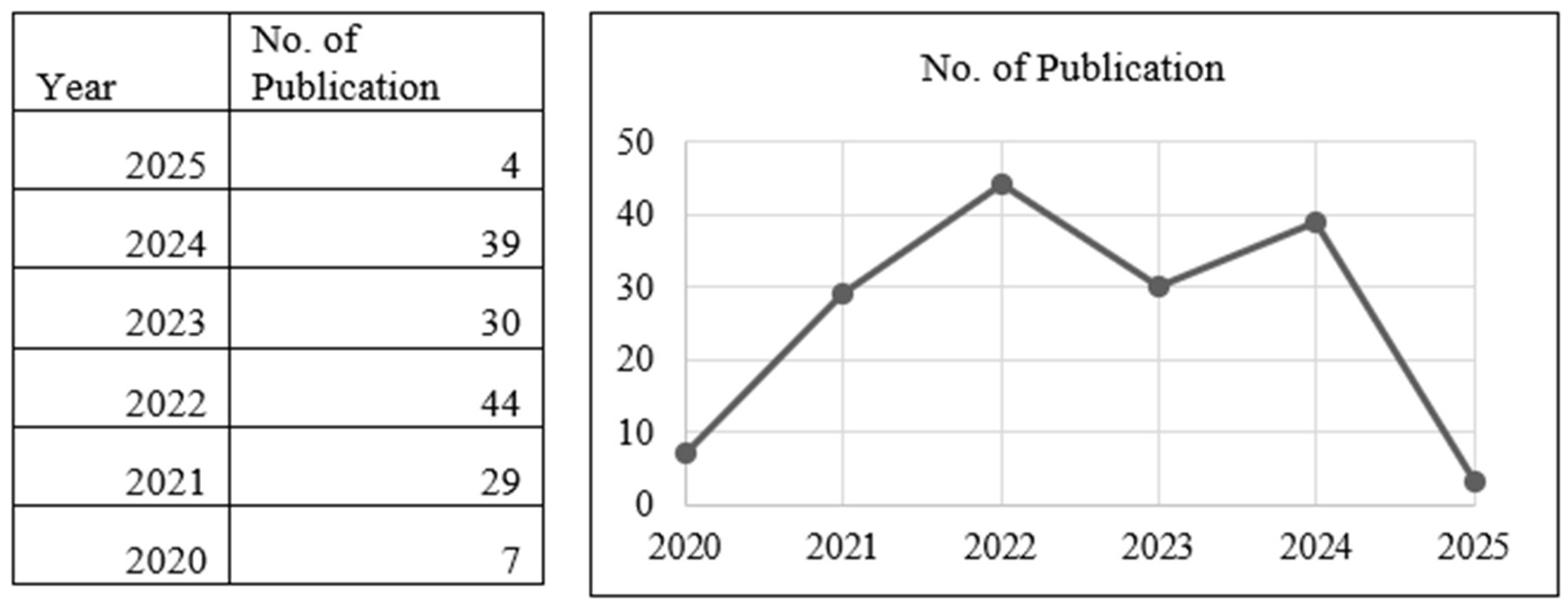
Figure 2.
Publication by subject areas developed by Scopus.
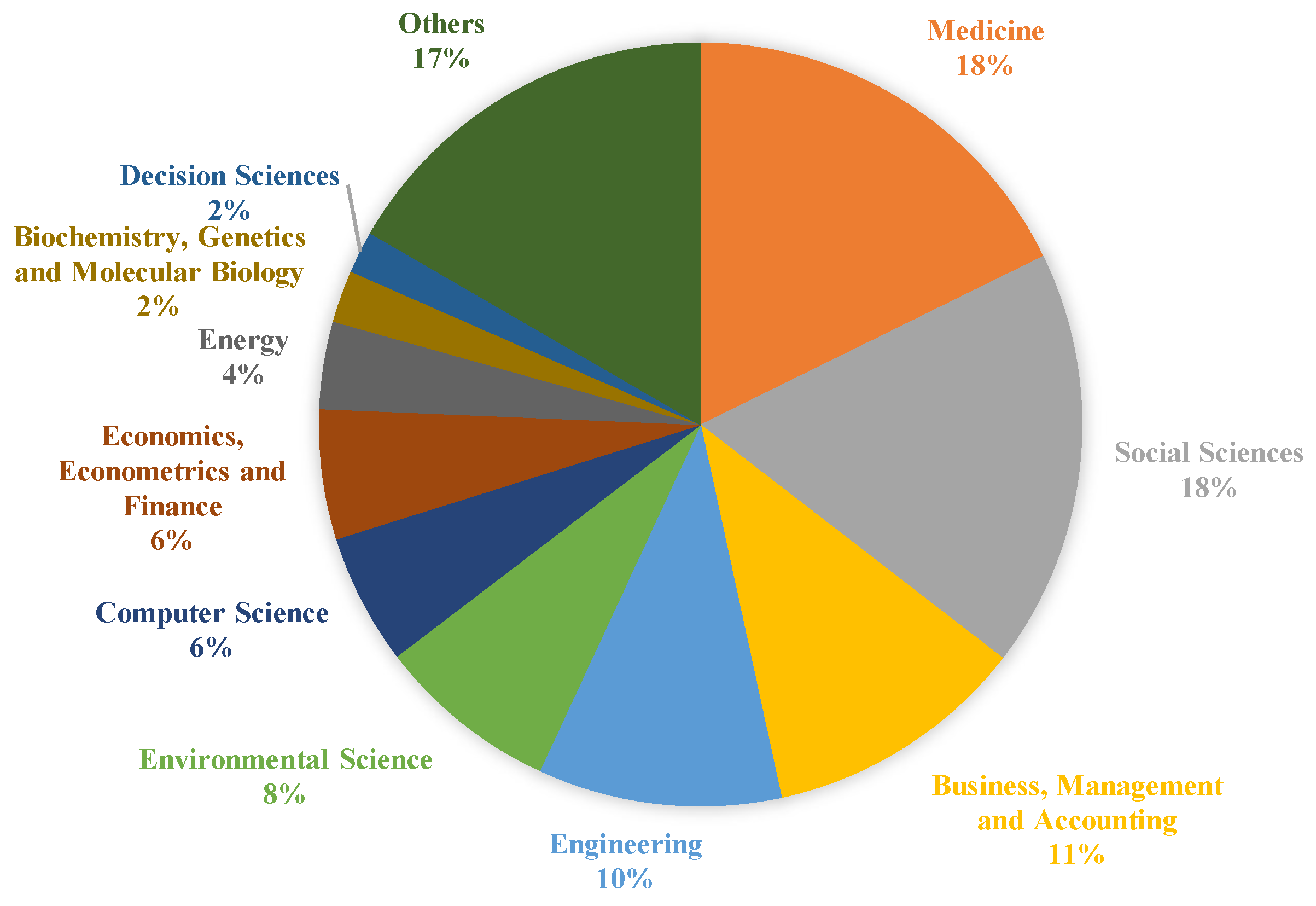
Figure 3.
A summative framework for workplace transformation since COVID-19.
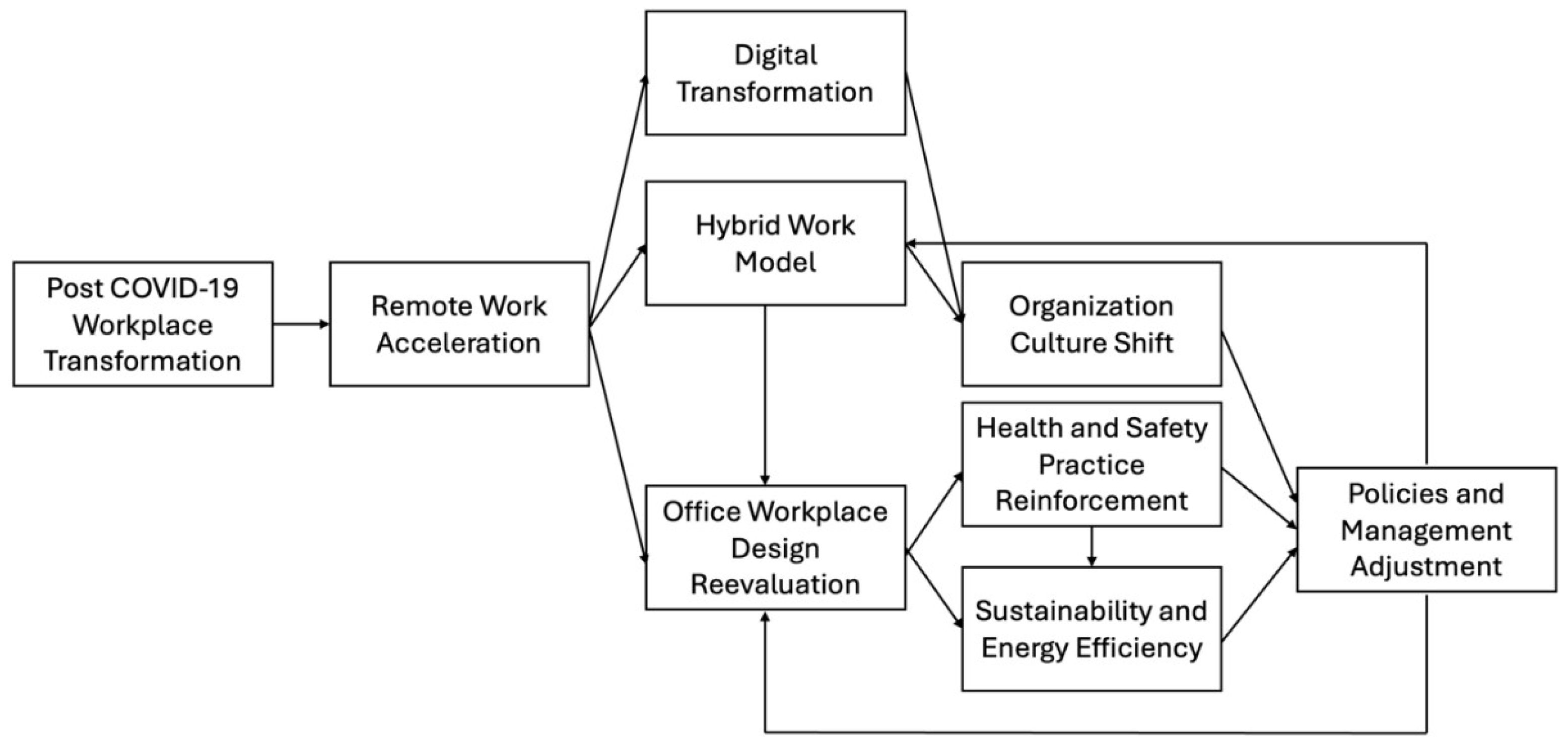

Table 1.
Codes and categories of the key literatures.
| No. | Codes | Category |
| 1 | Remote work and its implications Hybrid and remote work dynamics Hybrid and remote work models Remote work adoption and integration Acceleration of remote work |
Hybrid and remote work trends and strategy |
| 2 | Workplace environment and design Work environment preferences of emerging generations Performance and user experience in office spaces Workplace design and spatial adjustments Changes in office demand and space utilization Changes in office design and use |
Transformative Trends in Office Design and Utilization |
| 3 | Health and Well-being Health and safety enhancements Health and safety concerns Health and safety enhancement Health and safety in the workplace Public Health Workforce and Policy Development |
Workplace health and safety strategies |
| 4 | Cultural and attitudinal changes towards work Behavioural and cultural shifts Behavioural changes and work culture Productivity and employee well-being Effects of COVID-19 on Establishment Relocation |
Work Culture and Behavioral Adaptations |
| 5 | Technological integration Digital transformation and technology utilization Digital and agile workplace adaptations Redefinition and Impact Measurement in Technology Transfer |
Digital Transformation and Technological Adaptations |
| 6 | Organisational strategy and management Workforce and organizational adaptations |
Strategic Workforce Management and Organizational Adaptations |
| 7 | Environmental impact and energy efficiency Energy efficiency and environmental concerns Impact on energy consumption and environment concerns |
Energy and Environmental Impact Strategies |
Table 2.
Research areas covered in each publication.
| Reference | 1 | 2 | 3 | 4 | 5 | 6 | 7 |
| [1] | √ | √ | √ | ||||
| [15] | √ | √ | √ | ||||
| [16] | √ | √ | |||||
| [17] | √ | √ | √ | ||||
| [13] | √ | √ | |||||
| [2] | √ | √ | |||||
| [18] | √ | √ | |||||
| [19] | √ | √ | √ | ||||
| [20] | √ | √ | |||||
| [21] | √ | √ | √ | ||||
| [22] | √ | ||||||
| [23] | √ | √ | √ | ||||
| [24] | √ | ||||||
| [25] | √ | ||||||
| [26] | √ | √ | |||||
| [27] | √ | √ | |||||
| [28] | √ | √ | |||||
| [29] | √ | √ | √ | ||||
| [30] | √ | √ | √ | ||||
| [31] | √ | √ | |||||
| [32] | √ | ||||||
| [33] | √ | √ | |||||
| [34] | √ | √ | |||||
| [35] | √ | √ | |||||
| [36] | √ | √ | |||||
| [37] | √ | √ | |||||
| [38] | √ | ||||||
| [39] | √ | ||||||
| [40] | √ | ||||||
| [41] | √ | √ | |||||
| [42] | √ | √ | |||||
| [43] | √ | ||||||
| [44] | √ | √ | |||||
| [45] | √ | ||||||
| [46] | √ | √ | √ | ||||
| [47] | √ | ||||||
| [48] | √ | √ | |||||
| [49] | √ | √ | |||||
| [50] | √ | √ | √ | ||||
| [51] | √ | ||||||
| [52] | √ | ||||||
| [53] | √ | ||||||
| [54] | √ | ||||||
| Total number | 13 | 20 | 11 | 14 | 4 | 13 | 7 |
1 Hybrid and remote work trends and strategy; 2 Workplace design and utilization trends; 3 Workplace health and safety strategies; 4 Work culture and behavioral adaptations; 5 Digital transformation and technological adaptations; 6 Strategic workforce management and organizational adaptations; 7 Energy and environmental impact strategies.
Disclaimer/Publisher’s Note: The statements, opinions and data contained in all publications are solely those of the individual author(s) and contributor(s) and not of MDPI and/or the editor(s). MDPI and/or the editor(s) disclaim responsibility for any injury to people or property resulting from any ideas, methods, instructions or products referred to in the content. |
© 2025 by the authors. Licensee MDPI, Basel, Switzerland. This article is an open access article distributed under the terms and conditions of the Creative Commons Attribution (CC BY) license (http://creativecommons.org/licenses/by/4.0/).
Copyright: This open access article is published under a Creative Commons CC BY 4.0 license, which permit the free download, distribution, and reuse, provided that the author and preprint are cited in any reuse.