

Submitted:
26 February 2025
Posted:
28 February 2025
You are already at the latest version
Abstract
This study investigates the transition towards a circular economy electronics sector, focusing on the interplay between environmental regulations, technological innovation, regional context, and business models. Utilizing a systematic literature review (SLR) and bibliometric analysis of 78 publications (2012-2025), the research reveals a growing scholarly interest in this field, with an annual growth rate of 5.48%. The SLR highlights the significant impact of regulations like the EU Eco-design Directive and Extended Producer Responsibility (EPR) schemes in driving sustainable practices. The analysis identifies key strategies for a circular economy, including eco-design, innovative recycling technologies, and circular business models (CBMs) such as product-as-a-service.However, challenges remain, including a lack of harmonized policies, limited consumer awareness, varying infrastructure, and the complexity of the global electronics value chain. The bibliometric analysis pinpoints influential journals, authors, and geographical research hotspots, emphasizing the global nature of the e-waste challenge and the need for international collaboration. The keyword analysis reveals key themes such as recycling, material recovery, and the importance of stakeholder engagement. The study concludes by proposing a framework for a regionally sensitive circular economy business model in WEEE management, emphasizing the crucial role of regulations in driving innovation and the need for collaborative efforts across the value chain. A significant contribution of this work is the demonstration of a need for local adaptation for a circular economy, rather than a one-size-fits-all solution.in the This study investigates the transition towards a circular economy in the electronics sector, focusing on the interplay between environmental regulations, technological innovation, and business models. Utilizing a systematic literature review (SLR) and bibliometric analysis of 78 publications (2012-2025), the research reveals a growing scholarly interest in this field, with an annual growth rate of 5.48%. The SLR highlights the significant impact of regulations like the EU Eco-design Directive and Extended Producer Responsibility (EPR) schemes in driving sustainable practices. The analysis identifies key strategies for a circular economy, including eco-design, innovative recycling technologies, and circular business models (CBMs) such as product-as-a-service. However, challenges remain, including a lack of harmonized policies, limited consumer awareness, and the complexity of the global electronics value chain. The bibliometric analysis pinpoints influential journals, authors, and geographical research hotspots, emphasizing the global nature of the e-waste challenge and the need for international collaboration. The keyword analysis reveals key themes such as recycling, material recovery, and the importance of stakeholder engagement. The study concludes by proposing a framework for a circular economy business model in WEEE management, emphasizing the crucial role of regulations in driving innovation and the need for collaborative efforts across the value chain.
Keywords:
Circular economy
; e-waste management
; sustainable innovation
; electronics industry
; environmental regulations
1. Introduction
The escalating generation of waste electrical and electronic equipment (WEEE), or e-waste, mirrors the rapid expansion of the global electronics market (Barapatre & Rastogi, 2021). This growing volume presents a two-fold problem: significant risks to both the environment and public health due to the presence of hazardous materials (Zhang et al., 2022), alongside a lost opportunity to recover valuable resources (Fröhlich et al., 2017; Golzar-Ahmadi et al., 2024). The traditional linear economic model, based on a “take-make-dispose” approach, has proven inadequate for tackling this issue, necessitating a shift towards circular economy (CE) approaches (Dumée, 2022; Velvizhi et al., 2020). These approaches prioritize minimizing waste creation, encouraging product reuse, maximizing material recycling, and enabling energy recovery from remaining waste (Ayçin & Kaya, 2021; Compagnoni, 2022).
Achieving a successful transition to a CE within the electronics industry requires a multifaceted strategy. This includes the implementation of eco-design principles (De-Azua-Lahidalga et al., 2024), the development of advanced recycling technologies (Iqbal et al., 2024; Salviulo et al., 2021), the promotion of business models that prolong product lifecycles (Hunger et al., 2024; Williams & Shittu, 2022), and the increased implementation of extended producer responsibility (EPR) schemes (Li et al., 2023). However, the complexity of the electronics value chain, characterized by globalized production and consumption patterns (Althaf et al., 2019; Cicerelli & Ravetti, 2023), coupled with insufficient data and infrastructure for effective e-waste management in many areas (Dias et al., 2022; Ottoni et al., 2022), creates substantial barriers to a fully realized circular economy for electronics (Bhattacharjee et al., 2023; Rimantho et al., 2022). Furthermore, progress is hindered by a lack of consumer awareness and participation in recycling initiatives (Jayasiri et al., 2024), and the absence of strong, standardized policies across different regions (Cheshmeh et al., 2023).
This study examines the relationship between technological progress, particularly artificial intelligence (AI), and societal factors in achieving sustainable e-waste management and a circular economy for electronics.
To address the shortcomings posed by the challenges of e-waste, this study investigates these questions.
- (1)
- What roles do stakeholders play in implementing AI-integrated e-waste management strategies, and how can collaboration be improved?
- (2)
- How does AI integration affect e-waste generation and management in different regions, considering varying contexts?
2. Materials & Methods
This study employed a mixed-methods approach, combining a systematic literature review (SLR) with a bibliometric analysis, to explore the complexities of transitioning to a circular economy in the electronics industry.
2.1. Data Sources and Search Strategy
The SLR was conducted following the Preferred Reporting Items for Systematic Reviews and Meta-Analyses (PRISMA) guidelines (Page et al., 2021), as illustrated in Figure 1. The search strategy was formulated to identify relevant publications focusing on circular economy, sustainable innovation, e-waste management, and the electronics industry. An initial search was conducted in the Scopus, Web of Science (WoS), and Dimensions databases, yielding 1077 publications. The search terms are (“Circular economy” OR “sustainable innovation”) AND (“electronics industry” OR “e-waste management”) AND (“WEEE” OR “Eco-design Directive” OR “9R framework”).
The study employed inclusion criteria like peer-reviewed journal articles, book chapters, and conference proceedings. The publications focused on the electronics industry and e-waste management and were in English. After applying these inclusion criteria, 159 publications were retained. Subsequently, articles that were not relevant to the study topic were removed, leaving 87 publications. Finally, duplicate entries were removed, resulting in a final set of 78 publications for the SLR.
2.2. Bibliometric Analysis
To gain a quantitative overview of the field, bibliometric analysis was performed using a combination of tools. R's Bibliometrix package and Biblioshiny library were utilized for data extraction, cleaning, and processing. VOSviewer was employed to enhance visualization of the key trends, emerging topics, and collaborative networks within the literature. The combined insights from the SLR and the bibliometric analysis formed the basis for the development of a conceptual framework to guide future research and action.
The bibliometric analysis, summarized in Table 1, of 78 publications concerning e-waste and the circular economy from 2012 to 2025 across 57 sources, demonstrates a field with an annual growth rate of 5.48% and an average document age of 3.46 years, in which articles represent the largest portion of publications and have received on average 25 citations per document, indicating a sustained and relatively recent area of scholarly focus. Collaborative characteristics include an average of 4.28 authors per document and 23% international co-authorships among the 319 authors.
2.3. Ethical Considerations
This study is based on published scholarly articles. Therefore, no ethics committee approvals were needed.
2.4. Study Limitations
The limitations of this study are the possibility of potential selection bias from search strategy, the databases used for the study were limited to Scopus, Web of Science, and Dimensions and only publications in the English language were included.
3. Results
This section focuses on discoveries from the 78 selected publications on e-waste management. The study will ensure an in-depth analysis of findings from the literature review and bibliometric analysis to derive valuable insights.
3.1. Literature Review
The systematic literature review highlights the complex interplay between environmental regulations, technological innovation, and business models in the transition towards a circular economy in the electronics sector. The findings provide insight into how various regulatory interventions and innovative strategies can contribute to a more sustainable and resource-efficient industry.
3.1.1. Environmental Regulations and Innovation
Environmental regulations are vital for fostering sustainable innovation and guiding e-waste management practices. Policies such as the EU's Eco-design Directive and Extended Producer Responsibility (EPR) schemes have significantly influenced producers to adopt more sustainable approaches (Fetanat et al., 2021). For instance, regulations focused on electronic product design (De-Azua-Lahidalga et al., 2024; O’Connor et al., 2016) have prompted manufacturers to prioritize recyclability and material composition. Research indicates that environmental regulations stimulate stakeholder networks for both the creation and dissemination of technical and managerial innovations (Mazon et al., 2012). Moreover, effective collaboration among governments, businesses, and civil society organizations can build trust and cooperation, which are essential for achieving long-term sustainability (Evans & Vermeulen, 2021). The analysis also highlights a growing need to expand producer responsibility through the adoption of eco-design strategies (Compagnoni, 2022). International collaborations are also critical for promoting recycling and preventing the illegal e-waste trade (Mihai et al., 2022b), serving as a key strategy for harmonizing circular economy principles with eco-sustainability goals (Zhang et al., 2022).
3.1.2. Beyond the Linear: Embracing Circular Business Models
A transition to a circular economy demands a departure from traditional linear business models, favouring innovative approaches that prioritize resource efficiency and waste reduction. This shift is evident in the adoption of circular business models (CBMs) such as product-as-a-service, product-sharing platforms, and strategies for extending product lifecycles (Marke et al., 2020). These models emphasize repair, reuse, and remanufacturing (Rimantho et al., 2022) to reduce reliance on virgin materials and extend the useful life of electronic products. Moreover, new business models are emerging that create value streams from electronic waste (Khan et al., 2023). However, the implementation of circularity in the electronics sector faces several hurdles (Williams & Shittu, 2022), requiring the establishment of a supportive environment for circular economy models to thrive (Fetanat et al., 2021) and the active engagement of consumers in the circularity of products (Hunger et al., 2024; Cordova-Pizarro et al., 2020).
3.1.3. Sustainable Innovation in Practice: Success from the Ground up
Successful e-waste management hinges on the development of novel processes and techniques for effective material reuse, recycling, and recovery (Fröhlich et al., 2017). Numerous studies are exploring the use of bioleaching and biocyanide methods (Golzar-Ahmadi et al., 2024) to improve resource recovery. Emerging technologies, such as augmented reality (AR) systems, are also playing a role in improving e-waste recycling processes, facilitating the identification and separation of recyclable materials (Sureshkumar et al., 2023), and promoting circular supply chains (Senna et al., 2022).
Simultaneously, promoting decentralized and localized material recycling (Dumée, 2022), adopting more efficient and cost-effective technologies (Velvizhi et al., 2020), and integrating the informal sector into e-waste management processes are crucial steps (Tong et al., 2018).
Finally, accurate data tracking (Dias et al., 2022) and material transparency and traceability throughout the supply chain (Li et al., 2023) are essential. Blockchain technology can also enhance transparency, reduce transaction costs, and encourage sustainable e-waste management practices (Hasan et al., 2023; Joshi et al., 2022). Furthermore, there is a recognized need for improved environmental management systems and a greater understanding of CE practices among all stakeholders (Ayçin & Kaya, 2021; Yazdi et al., 2024).
3.2. Quantitative Findings on Scientific Production, Influential Authors, and Geospatial Analysis
The examination of the scholarly output on e-waste and the circular economy reveals trends in scientific production, highlights influential contributors and suggests a geographic distribution of research emphasis, which are instrumental in shaping a framework for innovation in the circular economy.
3.2.1. Scientific Output Over Time
The analysis of publication trends, presented in Table 2, demonstrates a fluctuating but generally increasing interest in this research area over the last decade (2012-2025). There were no publications between 2013 and 2015, but this changed drastically in 2017, where the top mean total citations per article (80.8) and “per year” (8.98) were registered, followed by 2021, indicating a shift from an initial period of low activity to a more sustained period of scholarly investigation that peaked in 2023 (20 articles) (see Table 2). Notably, publication frequency has generally increased, peaking in 2023 with 20 publications. The mean total citation per article and year varied significantly across the years (see Table 2). However, the most recent years show a lower average of citations per year, which indicates an emerging trend. These findings highlight the increasing importance of this field and a developing understanding of e-waste and the circular economy.
3.2.2. Influential Sources and Authors
The analysis of relevant sources, as shown in Table 3, identifies certain journals as key contributors to the field. The Journal of Cleaner Production (8 articles) and Sustainability (7 articles) are the most frequently cited sources. Other journals and book series, including Resources, Conservation and Recycling, Environmental Science and Pollution Research, and The Science of the Total Environment, along with conference proceedings such as 2024 Electronics Goes Green 2024+ (EGG), 2023 9th International Conference on Advanced Computing and Communication Systems (ICACCS), and 2023 IEEE International Conference on Blockchain and Cryptocurrency (ICBC), also play a significant role in disseminating related research (Table 3). Notably, several publications in Sustainability and the Journal of Cleaner Production focus on strategies for promoting a circular economy for e-waste through reverse chain analysis and highlight effective e-waste management systems and practices (De-Oliveira-Neto et al., 2023; Pan et al., 2022). These publications also examine consumer behavior related to WEEE, specifically concerning circular or transformational practices (Hunger et al., 2024).
3.2.3. Most Productive Authors
Table 4 identifies authors who have been particularly active in the e-waste and circular economy domain, with key contributors like Amorim, M and Tucci, HNP contributing 3 publications each. The work of authors such as Babbitt, CW, Cordova-Pizarro, D, Romero, D, and Rodriguez CA has been instrumental in analyzing material flow and identifying challenges within the e-waste stream (Cordova-Pizarro et al., 2019; Althaf et al., 2019). The involvement of authors such as Senna, P, shows a dedication to exploring supply chain dynamics for e-waste (Senna et al., 2023). These authors have helped define the key challenges and opportunities within this field.
3.2.4. Geospatial Emphasis
Although a detailed geospatial analysis was not explicitly undertaken, the affiliations of contributing authors, as detailed in Figure 2, evidently reveal a heterogeneous distribution of research activity. Predominantly, countries such as Brazil, India, and China ostensibly demonstrate a higher number of publications in the field, arguably indicating a focused research effort in these regions. Conversely, other regions, including Australia, several European countries, and the USA, show a moderate presence. Furthermore, although other countries display some research activity, most contributions were single-country publications (SCP) when juxtaposed to the multiple-country publications (MCP), indicating an initial phase of collaborative efforts (Figure 2). This international spread, while purportedly diverse, inevitably highlights the global nature of the e-waste challenge and fundamentally emphasizes the need for a common approach within the framework, which must draw from diverse key players that are practically working to improve the e-waste sector.
3.2.5. Keyword Analysis and Circular Economy Solutions for WEEE Management
The keyword analysis, as depicted in Figure 3, offers nuanced perspectives on the predominant themes within research on the circular economy and e-waste management. The frequent appearance of terms such as “recycling,” “waste management,” and “electronic waste,” ostensibly highlights a substantial focus on these fundamental elements of e-waste management. Meanwhile, terms including “solid waste,” “refuse disposal,” and “soil pollutants” unremittingly underscore the environmental impacts associated with e-waste and the inherent demand for appropriate handling methods. Furthermore, the occurrence of terms such as “metals,” “metals, heavy,” “metals, rare earth,” “lithium,” “cobalt,” and “neodymium” explicitly reveals a clear understanding of the material recovery possibilities within e-waste (Della-Bella et al., 2023; Fröhlich et al., 2017; Golzar-Ahmadi et al., 2024) and the fundamentally significant role they effectively play in the e-waste management sector. Consequently, these findings suggest the importance of ongoing research focused on material recovery and resource efficiency within a circular economy framework.
The inclusion of geographically significant terms, such as China, Brazil, Australia, Germany, Italy, Romania, Sweden, and Turkey, illustrates the inextricable nature of the global context within e-waste management. Alternatively, the European Union purportedly indicates the influence of its policy measures in this specific area (Ibanescu et al., 2018; Constantinescu et al., 2022). Moreover, the presence of terms such as “humans,” “consumer behavior,” and “probability” invariably emphasizes that successful implementation of circular models necessarily requires an understanding of public perceptions and the importance of stakeholder engagement. Furthermore, terms such as “heterotrophic processes”, “technology,” and “environmental monitoring” arguably highlight the role of emerging technologies (Kurniawan et al., 2021), biological processes (Golzar-Ahmadi et al., 2024), and enhanced monitoring protocols as crucial factors in innovation in this field. Finally, terms such as “game theory,” “models, economic,” “models, theoretical,” and “uncertainty” demonstrate the need for robust frameworks to support informed decisions when designing effective e-waste management strategies.
3.2.5. Co-Word Network Analysis and Circular Economy Solutions for WEEE Management
The co-word network analysis presented in Figure 4 provides detailed insights into the key themes emerging from research on the circular economy and WEEE management. The frequent co-occurrence of terms such as “e-waste,” “waste,” “management,” “circular,” “electronics,” and “economy” underscores the significant interconnections between these concepts. It suggests that a comprehensive understanding of “electronic waste,” “waste,” and “management” is essential for the effective implementation of the circular economy model. The high betweenness centrality of terms like “waste,” “management,” “circular,” and “electronic” identifies them as pivotal connectors within the network, highlighting their crucial roles in the framework for WEEE. This indicates that much of the relevant research focuses on developing circular models for improved waste management. Conversely, several less frequently mentioned terms also play important roles in this field.
Terms with high closeness centrality, such as “e-waste,” “waste,” “management,” “circular,” “electronic,” and “economy,” clearly indicate that these concepts are closely related and form the foundation of current discussions. PageRank scores, which measure relative influence, identify terms like “recycling,” “waste,” “management,” “circular,” and “economy” as the most significant within this domain (Figure 4). These findings emphasize that any framework aiming for circularity must consider these interconnected components.
Additionally, smaller yet influential clusters are evident. The group comprising “environmental,” “equipment,” “sustainable,” “electronics,” “electrical,” “countries,” “research,” and “development” highlights the significance of broader sustainability contexts and the ongoing need for research and development in this sector. Other clusters emphasize the importance of terms such as “reuse,” “analysis,” “paper,” “industry,” “sustainability,” and “practices,” which point to the necessity of innovative solutions that include reuse and sustainable practices. The role of various strategies, including “data,” “systems,” “consumer,” “approach,” and “chain,” in creating effective circular models is reflected in terms like “supply,” “recovery,” “technologies,” “recycling,” “products,” “study,” “materials,” “challenges,” “review,” “literature,” “potential,” “global,” “implementation,” “product,” and “critical,” aligning with the broader trend towards a circular economy.
4. Discussion
This section synthesizes the insights from the literature review, the keyword analysis, and the co-word network analysis to discuss key elements that can inform the development of a circular economy business model framework for WEEE.
To address RQ1: What roles do stakeholders play in implementing AI-integrated e-waste management strategies, and how can collaboration be improved?
Analysis of Table 3, which lists key publications such as the Journal of Cleaner Production and Sustainability, reveals a significant emphasis on policy and innovative business models within the context of e-waste. This highlights an active engagement among stakeholders in exploring novel approaches to e-waste management. Furthermore, Table 4 identifies productive authors like AMORIM M, TUCCI HNP, and Aguilar-Barajas I publishing in these prominent journals, suggesting that their work aligns with these themes. Drawing on this data, enhanced stakeholder collaboration is crucial to successfully implementing innovative technologies, and effectively addressing diverse needs and concerns within e-waste management systems.
4.1. Insights for the Circular Economy Business Model Framework
The identified trends in scientific output, leading sources, and influential authors, effectively, highlight a clear pathway for a robust circular economy framework. This framework has to fundamentally emphasize compliance with regulations, while simultaneously promoting innovation and generating value.
4.1.1. Regulations as Drivers of Innovation
Regulations, undeniably, play a crucial role in stimulating innovation within e-waste management, recycling and eco-design (Compagnoni, 2022; Li et al., 2023; De-Azua-Lahidalga et al., 2024). However, to achieve full effectiveness, such regulatory frameworks must foster collaboration between all actors in the value chain (Evans & Vermeulen, 2021) and also guarantee the implementation of new technologies (Jayasiri et al., 2024). Consequently, well-designed regulations can incentivize stakeholders to transition to circular models.
Business models that embrace circularity are essentially important for waste reduction and for increasing recycling rates (Marke et al., 2020). Moreover, these models can be used as a pathway to increased profitability and competitive advantage for businesses (Fetanat et al., 2021). Specifically, companies focused on creating value through recycling, remanufacturing, and development of more sustainable products, coupled with a more transparent supply chain (Senna et al., 2023) using advanced technologies (Sureshkumar et al., 2023; Hasan et al., 2023), will be able to achieve more competitive advantage while also meeting compliance requirements and contributing to the United Nations Sustainable Development Goals (Fawole et al., 2023).
Innovation is invariably essential in overcoming the challenges to compliance that include aspects such as a lack of recycling capacity, high costs of collection and recycling and a deficient infrastructure (Althaf et al., 2019; Velvizhi et al., 2020). Therefore, innovative approaches to reverse logistics and material recovery, coupled with the creation of new business models, and the adoption of new materials (Salviulo et al., 2021; Kaya & Tita, 2023) are crucial to overcoming the existing obstacles.
4.2. Circular Economy Business Model Framework Insights
The keyword analysis, in essence, highlights the critical need to prioritize innovation, and the 9Rs in the transition to circular models for WEEE. The analysis of relevant literature, particularly that of Ibanescu et al. (2018) and Constantinescu et al. (2022) demonstrates that regulatory frameworks, policies, and the economic aspects of circular models are fundamentally important for companies in the e-waste sector. Moreover, policy and legislation from developed nations are indisputably essential in generating innovative business models within this context.
The recurring use of terms such as “recycling,” “recovery,” “materials,” “products,” and “system”, along with “reuse,” undeniably underscores the importance of resource recovery and value creation from waste. Consequently, a successful framework must prioritize these components to achieve circularity for WEEE, and consider the economic viability of material recovery, as highlighted by Della Bella et al. (2023), Fröhlich et al. (2017), and Golzar-Ahmadi et al. (2024).
Ultimately, e-waste management must transcend basic disposal and actively generate value through “recycling,” “refuse disposal,” and the recovery of “metals” using “heterotrophic processes”. Additionally, the development of innovative business models that promote a circular economy must be pursued to guarantee human well-being and protect the ecosystem.
4.3. Conceptual Framework for Circular Economy in E-Waste Management
Figure 5 ostensibly outlines an integrated approach to e-waste management through a circular economy model, and highlights the interconnectedness of different stages and key elements that are fundamentally important to achieve a sustainable and economically sound system. This framework integrates key aspects of design, consumption, end-of-life management, continuous improvement, and stakeholder collaboration, forming a dynamic and adaptable system that incorporates feedback loops for continual optimization.
This central core, depicted in Figure 5, is the foundation of the framework and shows a circular flow organized in three interconnected quadrants. The initial quadrant, which is the “Sustainable Design and Production”, addresses the inherent design and manufacturing processes for electronic products.
The input for this phase is the unmistakable requirement for "Regulated Design & Materials Choices" (O'Connor et al., 2016) to enforce compliance with standards such as the Eco-design Directive and related regulations. The approach always emphasizes the application of eco-design principles such as durability, modularity, easy disassembly, and careful material selection to promote recycling and reduce the use of harmful substances (Dumée, 2022). As a result, the output of this stage implicitly includes goods that are easier to repair, reuse, and recycle (Jayasiri et al., 2024), while also encouraging optimal resource use and effectively "reducing" demand for raw materials through inventive product designs.
The Second quadrant, which is the “Responsible Consumption and Use” focuses on the consumer phase of electronic products and the adoption of responsible consumption behaviors. The input, from the previous quadrant, emphasizes "Transparent Supply Chains" that use blockchain or similar technologies to improve consumer trust and explicitly communicate product origins and circularity (Hasan et al., 2023; Joshi et al., 2023), and the use of eco-labels to empower more informed decision-making by consumers. The process promotes extended product lifespans through initiatives for repair, refurbishment, and reuse, and by promoting product sharing while simultaneously engaging consumers in take-back programs (Cordova-Pizarro et al., 2020). The output of this stage is ostensibly characterized by extended product lifespans, reduced demand for new products and enhanced consumer engagement (Khan et al., 2023), supporting the “reuse, repair, refurbish, repurpose” strategies of the 9Rs and encouraging consumers to make more conscious choices (refuse).
The third quadrant is the Value Capture through Effective End-of-Life Management which addresses the most efficient management of e-waste at the end of its useful life. The input, in this stage, highlights a need for a robust and easily accessible "Effective Collection System” created through public awareness campaigns and accessible collection mechanisms (Islam et al., 2022). The process includes the use of optimized logistics for collection, dismantling, sorting and testing while using AI-based systems for efficient recovery and the proper and safe disposal of hazardous substances (Rimantho et al., 2022; Sureshkumar et al., 2023). Meanwhile, a focus on secure disposal of hazardous substances remains paramount. The output of this stage is the “recovery” of valuable materials through recycling, the remanufacturing of functional parts, and the secure disposal of non-recoverable waste (Ibanescu et al., 2018). This quadrant embodies the "recover" and "recycle" strategies, transforming "waste" into valuable products.
Drawing from the Conceptual Framework (Figure 4) to address RQ2. The conceptual framework illustrates that AI-integrated e-waste management is influenced across several key stages. The first is the Sustainable Design and Production phase, which can leverage AI to analyze material data and eco-design principles, influencing design decisions that improve product recyclability tailored to specific regional capabilities. Regions with limited advanced recycling may benefit most from AI-guiding designs that enable easier manual disassembly. The second is the Responsible Consumption and Use phase, where AI contributes to greater supply chain transparency, improving consumer awareness of the environmental impacts of electronics. The implementation of blockchain, for instance, can provide consistent tracking and improve awareness across various regions, driving demand for more sustainable products. Value Capture through an Effective End-of-Life Management phase demonstrates the most direct impact of AI through AI-powered sorting systems optimizing material recovery. AI is used to enhance reverse logistics and optimize collection processes based on regional factors such as population density and infrastructure.
Synthesizing Literature Review Insights to Connect Stakeholders and AI Implementation establishes that innovation drives AI adoption in e-waste to overcome obstacles such as limited recycling capacity, high costs, or inadequate infrastructure, as highlighted by Salviulo et al. (2021), Althaf et al. (2019), and Velvizhi et al. (2020).
4.3.1. Key Enablers: Driving Forces for a Successful Framework
Positioned around the core circular flow are key enablers that act as driving forces for the entire system. The Compliance Regulations and Policy Support section represents the external drivers that guide the e-waste management sector. This includes policies and regulations that promote sustainability and that can support a transition to a circular economy (Fetanat et al., 2021), as shown by the presence of the WEEE Directive, REACH, the Ecodesign Directive and global standards. Moreover, the inclusion of governmental incentives will ensure that all parties engage in eco-design practices, promote R&D and adopt circular business models. The main aim of this is to guarantee adherence to all levels of regulations while also promoting a shift toward sustainable objectives.
Meanwhile, the Firms Leveraging Regulations for Market Differentiation and Competitive Advantage element emphasizes that strategic implementation of regulations is inherently a pathway to achieve a competitive advantage. By adopting certifications, embracing eco-labeling, and building consumer trust, companies are establishing a better position in the market (Fetanat et al., 2021). As supported by existing research, firms can use compliance to build their brand and attract environmentally conscious consumers (Cordova-Pizarro et al., 2020; Hunger et al., 2024).
The Overcoming Compliance Challenges through Innovation section explicitly highlights the role of continuous research and development in addressing compliance barriers. Innovation is arguably crucial in reducing costs, enhancing material recovery techniques, addressing resource limitations, and fundamentally developing new business models that can generate economic and environmental value from e-waste (Salviulo et al., 2021).
Next is the Stakeholder Collaboration and Transparency section which emphasizes the need for a collaborative approach among all actors in the value chain, such as producers, recyclers, consumers, governments, and research institutions (Velvizhi et al., 2020). Furthermore, transparency in the supply chain, ensured by technologies like blockchain, is an important element in establishing accountability and trust within the system (Joshi et al., 2023; Hasan et al., 2023).
Figure 5, which embodies the conceptual framework, does more than simply outline a process; it intrinsically incorporates a series of innovations that are designed to improve the framework. The “Innovation and Improvement Loops” quadrant provides a channel for continual learning, adaptation, and optimization, based on data analysis and performance evaluation. To integrate all enablers, this framework makes use of “compliance,” “innovation,” “stakeholder collaboration,” and “transparency” to support every phase and shows that a successful framework has to address the technical, social and organizational aspects. The use of regulations for competitive advantage shows the framework is aimed at promoting sustainable choices, which in turn will enhance market positions for companies that fully embrace circular economy business models. Ultimately, the framework underscores the use of technology to achieve higher levels of material recovery, helping ensure a balance between economic viability and sustainability.
To answer RQ2, it is evidenced that the impact of AI integration on e-waste management varies significantly across different regions due to differing economic, regulatory, infrastructural, and societal contexts. A generalized positive or negative statement is insufficient; a nuanced understanding is crucial.
In economically developed regions with robust financial and technological infrastructure (e.g., parts of Europe, North America, and East Asia), AI-driven solutions can be more readily implemented. This includes AI-powered sorting systems for efficient material recovery, predictive analytics to optimize collection logistics, and AI-enhanced eco-design to minimize waste generation at the product design stage. However, the type of economic model in place (e.g., state-directed vs market-driven) can further influence the AI application (e.g., state-directed may prioritize centralized large-scale AI systems).
Regions with stricter environmental regulations and extended producer responsibility (EPR) schemes (e.g., the European Union) are more likely to incentivize the adoption of AI-based e-waste management solutions. The Eco-design Directive pushes for more recyclable products from the start, while AI-powered sorting and collection systems can increase EPR efficiency in practice. AI then becomes an economic necessity to meet regulatory requirements efficiently. In regions with weaker regulations, AI adoption may be driven primarily by cost savings or market competitiveness.
Meanwhile, in developing countries, limited access to reliable data, computing power, and skilled personnel may hinder the effective deployment of sophisticated AI systems. In these contexts, AI applications may be more focused on simpler tasks, such as improving informal waste collection systems through route optimization or providing basic material identification support using augmented reality (AR) apps, as suggested by Sureshkumar et al. (2023). AI solutions must also integrate and respect the already established social infrastructure of these regions with inclusive and sustainable practices.
Moreover, the efficacy of AI in e-waste management hinges on access to large, high-quality datasets. Regions with robust data collection and management infrastructure are better positioned to leverage AI for predictive modeling, material flow analysis, and supply chain optimization. Conversely, in regions with limited data availability, AI applications may be constrained by data scarcity and biases, hindering accurate analysis and effective decision-making. In any case, transparency in the collection and the accessibility for those who do not have such reliable access must be protected.
In addition, consumer awareness and engagement with responsible e-waste disposal practices also play a critical role. AI-powered solutions can be used to educate consumers about proper recycling procedures, incentivize participation in take-back programs, and personalize e-waste management services. This could include gamification of recycling or apps that allow users to easily schedule e-waste pickup. In regions with low awareness, public education campaigns and community-based initiatives may be necessary to promote AI adoption and maximize its effectiveness. Ultimately, the composition of e-waste differs regionally. Some regions produce more of specific items. AI implementation should be adaptable to the regional needs of this type of e-waste.
Consequently, the integration of AI into e-waste management is not a one-size-fits-all solution. Its impact depends heavily on the specific regional context, the interplay of economic, regulatory, infrastructural, and societal factors, and the accessibility of reliable data. Effective AI implementation requires a localized, adaptive, and multi-stakeholder approach that addresses the unique challenges and opportunities in each region.
5. Conclusion
The transition to a circular economy in electronics demands a move beyond broad aspirations to meticulously crafted, localized solutions. This review reveals that simply deploying generic "best practices" is insufficient. Success hinges on strategically combining adaptable (agile/lean) methods and deploying suitable AI technologies, which must in turn be based on context. This has all shown to be a necessity in future planning frameworks.
While AI, blockchain, IoT, and digital twins hold significant promise for advancing circularity, it is equally crucial to proactively address the inherent ethical, environmental, and geographically specific considerations. Ignoring these factors risks undermining the potential for building a truly sustainable and competitive global economy. The integration of AI should, therefore, not be viewed as a universal remedy. A regionally-sensitive, adaptive, and collaborative approach is vital to effectively tackle challenges and leverage opportunities unique to individual regions. This localized implementation relies on the interaction of economic, regulatory, infrastructural, and societal factors, and the availability of reliable data.
Future research needs to shift away from purely theoretical constructs and instead concentrate on developing frameworks that are practical, implementable, and informed by real-world evidence and case studies. Policy interventions must be carefully evaluated to ensure they are effective and relevant across diverse regional and sectoral settings. This calls for robust collaboration across all stakeholders, including academia, industry, governments, and civil society groups. The objective is to forge a collaborative ecosystem. The ultimate goal is an inclusive and sustainable sector, where those already involved are not negatively affected, but rather, benefit from the integration of such programs, while at the same time, generating prosperity and mitigating environmental impact.
Author Contributions
Henry Efe Onomakpo Onomakpo conceived and designed the study conducted the literature review, performed the bibliometric and content analysis, developed the integrated framework, and led the writing and revision of the manuscript.
Funding
This research did not receive any specific grant from funding agencies in the public, commercial, or not-for-profit sectors. All activities contributing to this work were conducted using the resources of the author's institution.
Data Availability Statement
The bibliometric data analyzed in this study originates from the Scopus, Web of Science, and Dimensions databases. Due to the proprietary nature of these databases, direct access to the raw data is subject to individual subscription agreements with the respective database providers. However, the processed data, along with the analytical code used in this study (primarily utilizing the "bibliometrix" package in R), is deposited in the Open Science Framework (OSF) and can be accessed freely at the publisher’s website. The materials will remain archived permanently.
Acknowledgments
The author gratefully acknowledges the support of the faculty and staff of the Economics and Business Department of the University of Gadjah Mada for their invaluable assistance in the preparation of this manuscript. Their guidance and encouragement were instrumental in the successful completion of this research.
Conflict of Interest
The author declares that there are no known conflicts of interest associated with this publication, and there were no financial, commercial, legal, or professional relationships that could influence or bias the research.
References
- Ali, S., & Shirazi, F. (2023). The paradigm of circular economy and an effective electronic waste management. Sustainability, 15(3), 1998. [CrossRef]
- Althaf, S., Babbitt, C. W., & Chen, R. (2019). Forecasting electronic waste flows for effective circular economy planning. Resources, Conservation & Recycling, 151, 104362. [CrossRef]
- Arsan, B., & Demirel, A. G. (2024). The Impact of e-Waste Minimization on the Actualization of SDG 12: Responsive Consumption and Production. In CSR, Sustainability, Ethics & Governance (pp. 27-36). Springer. [CrossRef]
- Assawadithalerd, M., Srisa-ard, S., Akkajit, P., & Prueksasit, T. (2020). E-waste Dismantling Community Toward Circular Economy with Ineffective Hazardous Waste Management: A Case Study in Buriram Province, Thailand. In Environmental Science and Engineering (pp. 127-136). Springer. [CrossRef]
- Awasthi, A. K. (2023). Circular economy of the WEEE: A potential waste resource. Waste Management & Research, 41(8), 1601-1602. [CrossRef]
- Ayçin, E., & Kaya, S. K. (2021). Towards the circular economy: analysis of barriers to implementation of Turkey’s zero waste management using the fuzzy DEMATEL method. Waste Management & Research, 39(7), 1078-1089. [CrossRef]
- Azevedo, L. P., da Silva Araújo, F. G., Lagarinhos, C. A. F., Tenório, J. A. S., & Espinosa, D. C. R. (2017). E-waste management and sustainability: a case study in Brazil. Environmental Science and Pollution Research, 24(20), 25221-25232. [CrossRef]
- Azizi, D. D. S., Hanafiah, M. M., & Woon, K. S. (2023). Material Flow Analysis in WEEE Management for Circular Economy: A Content Review on Applications, Limitations, and Future Outlook. Sustainability, 15(4), 3505. [CrossRef]
- Barapatre, S., & Rastogi, M. (2021). E-waste management: a transition towards a circular economy. In Handbook of Solid Waste Management (pp. 1-23). Springer. [CrossRef]
- Bhattacharjee, P., Howlader, I., Rahman, A., Taqi, H. M. M., Hasan, T., Ali, S. M., & Alghababsheh, M. (2023). Critical success factors for circular economy in the waste electrical and electronic equipment sector in an emerging economy: Implications for stakeholders. Journal of Cleaner Production, 401, 136767. [CrossRef]
- Chakrabarty, A., & Nandi, S. (2021). Electronic waste vulnerability: circular economy as a strategic solution. Clean Technologies and Environmental Policy, 23(2), 429-443. [CrossRef]
- Cheshmeh, Z. A., Bigverdi, Z., Eqbalpour, M., Kowsari, E., Ramakrishna, S., & Gheibi, M. (2023). A comprehensive review of used electrical and electronic equipment management with a focus on circular economy-based policy-making. Journal of Cleaner Production, 389, 136132. [CrossRef]
- Cicerelli, F., & Ravetti, C. (2023). Sustainability, resilience and innovation in industrial electronics: a case study of internal, supply chain and external complexity. Journal of Economic Interaction and Coordination, 19(2), 343-372. [CrossRef]
- Cimprich, A., Young, S. B., Schrijvers, D., Ku, A. Y., Hagelüken, C., Christmann, P., Eggert, R., Habib, K., Hirohata, A., Hurd, A. J., Lee, M.-H., Peck, D., Petavratzi, E., Tercero Espinoza, L. A., Wäger, P., & Hool, A. (2022). The role of industrial actors in the circular economy for critical raw materials: a framework with case studies across a range of industries. Mineral Economics, 36(3), 301-319. [CrossRef]
- Compagnoni, M. (2022). Is Extended Producer Responsibility living up to expectations? a systematic literature review focusing on electronic waste. Journal of Cleaner Production, 367, 133101. [CrossRef]
- Constantinescu, A., Platon, V., Surugiu, M., Frone, S., Antonescu, D., & Mazilescu, R. (2022). The Influence of Eco-Investment on E-Waste Recycling-Evidence From EU Countries. Frontiers in Environmental Science, 10, 928955. [CrossRef]
- Cordova-Pizarro, D., Aguilar-Barajas, I., Rodriguez, C. A., & Romero, D. (2020). Circular Economy in Mexico’s Electronic and Cell Phone Industry: Recent Evidence of Consumer Behavior. Applied Sciences, 10(21), 7744. [CrossRef]
- Cordova-Pizarro, D., Aguilar-Barajas, I., Romero, D., & Rodriguez, C. A. (2019). Circular Economy in the Electronic Products Sector: Material Flow Analysis and Economic Impact of Cellphone E-Waste in Mexico. Sustainability, 11(5), 1361. [CrossRef]
- De-Azua-Lahidalga, I. R., Valor, E. M., Lozano, D. J., & Mendoza, J. M. F. (2024). Circular Power Electronics: Exploring the Scope and Suitability of Ecodesign Criteria for the Power Electronics Industry. In 2024 Electronics Goes Green 2024+ (EGG) (pp. 1-8). IEEE. [CrossRef]
- De-Oliveira-Neto, G. C., De Jesus Cardoso Correia, A., Tucci, H. N. P., Melatto, R. A. P. B., & Amorim, M. (2023). Reverse Chain for Electronic Waste to Promote Circular Economy in Brazil: A Survey on Electronics Manufacturers and Importers. Sustainability, 15(5), 4135. [CrossRef]
- Della-Bella, S., Sen, B., Cimpan, C., Rocco, M. V., & Liu, G. (2023). Exploring the impact of recycling on the demand-supply balance of critical materials in green transition: a dynamic multi-regional waste input-output analysis. Environmental Science & Technology, 57(24), 10221-10230. [CrossRef]
- Dias, P., Palomero, J., Cenci, M. P., Scarazzato, T., & Bernardes, A. M. (2022). Electronic waste in Brazil: Generation, collection, recycling and the covid pandemic. Clean. Waste Systems, 3, 100022. [CrossRef]
- Dumée, L. F. (2022). Circular materials and circular design—review on challenges towards sustainable manufacturing and recycling. In Circular Economy and Sustainability, 2(pp. 9-23). Springer. [CrossRef]
- Evans, R., & Vermeulen, W. J. V. (2021). Governing electronics sustainability: Meta-evaluation of explanatory factors influencing modes of governance applied in the electronics value chain. Journal of Cleaner Production, 278, 122952. [CrossRef]
- Fawole, A. A., Orikpete, O. F., Ehiobu, N. N., & Ewim, D. R. E. (2023). Climate change implications of electronic waste: strategies for sustainable management. Bulletin of the National Research Centre, 47(1), 147. [CrossRef]
- Fetanat, A., Tayebi, M., & Shafipour, G. (2021). Management of waste electrical and electronic equipment based on circular economy strategies: navigating a sustainability transition toward waste management sector. Clean Technologies and Environmental Policy, 23(2), 343-369. [CrossRef]
- Fygansvær, B., Dahlstrom, R., & Nygaard, A. (2019). Green innovation in recycling – a preliminary analysis of reversed logistics in Norway. World Review of Entrepreneurship, Management and Sustainable Development, 15(6), 719-733. [CrossRef]
- Fröhlich, P., Lorenz, T., Martin, G., Brett, B., & Bertau, M. (2017). Valuable metals—recovery processes, current trends, and recycling strategies. Angewandte Chemie International Edition, 56(10), 2544-2580. [CrossRef]
- Golzar-Ahmadi, M., Bahaloo-Horeh, N., Pourhossein, F., Norouzi, F., Schoenberger, N., Hintersatz, C., Chakankar, M., Holuszko, M., & Kaksonen, A. H. (2024). Pathway to industrial application of heterotrophic organisms in critical metals recycling from e-waste. Biotechnology Advances, 77, 108438. [CrossRef]
- Hasan, M., Plamthottathil, R. K., Morshed, J., Sarkar, D., Hameed, N., & Cirstea, S. (2023). Circulogy: An AI-Enabled Blockchain-Based e-Waste Management Framework Using Non-Fungible Tokens (NFT) to Achieve Net Zero and Imply the Circular Economy. In 2023 IEEE International Conference on Blockchain and Cryptocurrency (ICBC) (pp. 1-3). IEEE. [CrossRef]
- Houessionon, M. G. K., Ouendo, E.-M. D., Bouland, C., Takyi, S. A., Kedote, N. M., Fayomi, B., Fobil, J. N., & Basu, N. (2021). Environmental Heavy Metal Contamination from Electronic Waste (E-Waste) Recycling Activities Worldwide: A Systematic Review from 2005 to 2017. International Journal of Environmental Research and Public Health, 18(7), 3517. [CrossRef]
- Hunger, T., Arnold, M., & Ulber, M. (2024). Circular value chain blind spot – a scoping review of the 9R framework in consumption. Journal of Cleaner Production, 440, 140853. [CrossRef]
- Ibanescu, D., Cailean, D., Teodosiu, C., & Fiore, S. (2018). Assessment of the waste electrical and electronic equipment management systems profile and sustainability in developed and developing European Union countries. Waste Management, 73, 39-53. [CrossRef]
- Ilyassova, G., Nukusheva, A., Arenova, L., Karzhassova, G., & Akimzhanova, M. (2021). RETRACTED ARTICLE: Prospects of legal regulation in the field of electronic waste management in the context of a circular economy. International Environmental Agreements: Politics, Law and Economics, 21(3), 367-388. [CrossRef]
- Iqbal, A., Akhter, S., Mahmud, S., & Noyon, L. M. (2024). Empowering the circular economy practices: Lifecycle assessment and machine learning-driven residual value prediction in IoT-enabled microwave oven. Heliyon, 10(9), e38609. [CrossRef]
- Islam, M. T., Huda, N., Baumber, A., Hossain, R., & Sahajwalla, V. (2022). Waste battery disposal and recycling behavior: a study on the Australian perspective. Environmental Science and Pollution Research, 29(39), 58980-59001. [CrossRef]
- Jaiswal, S. K., Mukti, S. K., & Agrawal, A. (2023). Circular economy of e-waste: A critical analysis in the Indian context. In AIP Conference Proceedings, 3006, 040002. [CrossRef]
- Jayasiri, G., Herat, S., & Kaparaju, P. (2024). Repair and Reuse or Recycle: What Is Best for Small WEEE in Australia? Sustainability, 16(7), 3035. [CrossRef]
- Johnson, M., McMahon, K., & Fitzpatrick, C. (2020). A Preparation for Reuse Trial of Washing Machines in Ireland. Sustainability, 12(3), 1175. [CrossRef]
- Joshi, S., Sharma, M., & Barve, A. (2023). Implementation challenges of blockchain technology in closed-loop supply chain: A Waste Electrical and Electronic Equipment (WEEE) management perspective in developing countries. Supply Chain Forum: An International Journal, 24(1), 59-80. [CrossRef]
- Kaya, M., & Tita, A. M. (2023). Electronic Waste Recycling in Maintaining a Circular Economy. In Electronic Waste Management (pp. 301-316). Wiley. [CrossRef]
- Khan, S. A. R., Tabish, M., & Yu, Z. (2023). Investigating recycling decisions of internet recyclers: A step towards zero waste economy. Journal of Environmental Management, 340, 117968. [CrossRef]
- Kurniawan, T. A., Lo, W., Singh, D., Othman, M. H. D., Avtar, R., Hwang, G.-H., Albadarin, A. B., Kern, A. O., & Shirazian, S. (2021). A societal transition of MSW management in Xiamen (China) toward a circular economy through integrated waste recycling and technological digitization. Environmental Pollution, 277, 116741. [CrossRef]
- Li, K., Qin, Y., Zhu, D., & Zhang, S. (2023). Upgrading waste electrical and electronic equipment recycling through extended producer responsibility: A case study. Circular Economy, 2, 100025. [CrossRef]
- Marke, A., Chan, C., Taskin, G., & Hacking, T. (2020). Reducing e-waste in China's mobile electronics industry: the application of the innovative circular business models. Asian Education and Development Studies, 9(4), 591-610. [CrossRef]
- Martinho, G., Magalhães, D., & Pires, A. (2017). Consumer behavior with respect to the consumption and recycling of smartphones and tablets: An exploratory study in Portugal. Journal of Cleaner Production, 156, 147-158. [CrossRef]
- May, S. O., & Steuer, B. (2025). Electrical and electronic equipment repair in a circular economy: Investigating consumer behavior in Hong Kong. Resources, Conservation & Recycling, 215, 108036. [CrossRef]
- Mazon, M. T., de Azevedo, A. M. M., Pereira, N. M., & Silveira, M. A. (2012). Does Environmental Regulation Foster the Diffusion of Collaborative Innovations? A Study on Electronics Waste Regulation on Brazil. Procedia - Social and Behavioral Sciences, 52, 259-268. [CrossRef]
- Mihai, F. C., Gnoni, M. G., Meidiana, C., Schneider, P., Ezeah, C., & Elia, V. (2022a). A Global Outlook on the Implementation of the Basel Convention and the Transboundary Movement of E-waste. In Paradigm Shift in E-waste Management (pp. 49-75). CRC Press. [CrossRef]
- Mihai, F. C. (2022b). Paradigm Shift in E-waste Management, Vision for the Future. Paradigm Shift in E-waste Management. [CrossRef]
- Minado, S. O., Mapema, N., & Misiko, N. (2024). Circular Economy Development Metrics for E-waste Residuals and Attendant Economic Consequences. Preprints.org. [CrossRef]
- Neto, G. C. O., Correia, A. J. C., Rodrigues, F. L., Tucci, H. N. P., Amorim, M., & Matias, J. (2023). Circular Economy in the Electronic Waste Reverse Chain in Brazil. In Lecture Notes in Mechanical Engineering (pp. 904-911). Springer. [CrossRef]
- Nithyananda, K. V. M., & Murthy, S. K. (2024). Tiered Incentivization-Based E-Waste Management Standards. In 2024 ITU Kaleidoscope: Innovation and Digital Transformation for a Sustainable World (ITU K) (pp. 1-8). IEEE. [CrossRef]
- O’Connor, M. P., Zimmerman, J. B., Anastas, P. T., & Plata, D. L. (2016). A Strategy for Material Supply Chain Sustainability: Enabling a Circular Economy in the Electronics Industry through Green Engineering. ACS Sustainable Chemistry & Engineering, 4(11), 5879-5888. [CrossRef]
- Oliveira-Neto, G. C., Correia, A. J. C., Rodrigues, F. L., Tucci, H. N. P., & Amorim, M. (2023). Evaluation of the Implementation of Recycling, Reuse, Remanufacturing, and Reduction in the Reverse Chain of Brazilian WEEE: Survey in Electronics Companies. In Springer Proceedings in Mathematics & Statistics (pp. 329-338). Springer. [CrossRef]
- Ottoni, M., Xavier, L. H., & Junior, A. O. P. (2022). E-Waste Management and Valorization Options Towards Circular Economy in Brazil: Status and Perspectives. In Industrial Ecology and Environmental Management (pp. 219-244). Springer. [CrossRef]
- Pan, X., Wong, C. W. Y., & Li, C. (2022). Circular economy practices in the waste electrical and electronic equipment (WEEE) industry: A systematic review and future research agendas. Journal of Cleaner Production, 365, 132671. [CrossRef]
- Parajuly, K., & Wenzel, H. (2017). Product Family Approach in E-Waste Management: A Conceptual Framework for Circular Economy. Sustainability, 9(5), 768. [CrossRef]
- Page, M. J., McKenzie, J. E., Bossuyt, P. M., Boutron, I., Hoffmann, T. C., Mulrow, C. D., Shamseer, L., Tetzlaff, J. M., Aki, E. A., Brennan, S. E., Chou, R., Glanville, J., Grimshaw, J. M., Hróbjartsson, A., Lalu, M. M., Li, T., Loder, E. W., Mayo-Wilson, E., McDonald, S., & Moher, D. (2021). The PRISMA 2020 statement: An updated guideline for reporting systematic reviews. PLOS Medicine, 18(3), Article e1003583. [CrossRef]
- Rimantho, D., Syaiful, S., Nurfaida, & Sulandari, U. (2022). Electronic waste bank model as a solution for implementing circular economy: Case study DKI Jakarta-Indonesia. Frontiers in Built Environment, 8, 1030196. [CrossRef]
- Ryen, E. G., Gaustad, G., Babbitt, C. W., & Babbitt, G. (2018). Ecological foraging models as inspiration for optimized recycling systems in the circular economy. Resources, Conservation & Recycling, 135, 48-57. [CrossRef]
- Salviulo, G., Lavagnolo, M. C., Dabalà, M., Bernardo, E., Polimeno, A., Sambi, M., Bonollo, F., & Gross, S. (2021). Enabling circular economy: the overlooked role of inorganic materials chemistry. Chemistry - A European Journal, 27(24), 6676-6695. [CrossRef]
- Sarkhoshkalat, M. M., Afkham, A., Bonyadi Manesh, M., & Sarkhosh, M. (2024). Circular Economy and the Recycling of E-Waste. In New Technologies for Energy Transition Based on Sustainable Development Goals (pp. 319-354). Springer. [CrossRef]
- Senna, P., Marujo, L. G., Da Cunha Reis, A., & De Souza Gomes dos Santos, A. C. (2022). Circular E-Waste Supply Chains’ Critical Challenges: An Introduction and a Literature Review. In Sustainable Materials and Technology (pp. 233-250). Springer. [CrossRef]
- Senna, P., Marujo, L. G., Dos Santos, A. C. G., Ferreira, A. C., & Da Silva, L. A. A. (2023). E-waste supply chain risk management: a framework considering the omnichannel and circular economy. Benchmarking: An International Journal, 31(9), 3429-3458. [CrossRef]
- Serpe, A., Purchase, D., Bisschop, L., Chatterjee, D., De Gioannis, G., Garelick, H., Kumar, A., Peijnenburg, W. J. G. M., Piro, V. M. I., Cera, M., Shevah, Y. & Verbeek, S. (2025). 2002–2022: 20 years of e-waste regulation in the European Union and the worldwide trends in legislation and innovation technologies for a circular economy. RSC Sustainability. [CrossRef]
- Singh, A., Yadav, A., Le, T. T., & Singh, S. (2023). Recycling of Electronic Waste for Circular Economy Goals: Systematic Literature Review. International Journal of Global Business and Competitiveness, 18(2), 145-161. [CrossRef]
- Singh, S., Trivedi, B., Dasgupta, M. S., & Routroy, S. (2021). A bibliometric analysis of the circular economy concept in E-waste research during the period 2008–2020. Materials Today: Proceedings, 46, 8519-8524. [CrossRef]
- Stoddard, N., Peterson, L., Schaffer, M., Etheridge, T., Mathur, N., Morris, K. C., Laurin, L. & Ncube, A. (2024). Towards Sustainable Electronics: Exploring IC Reuse for Circular Economy Transformation. In 2024 Electronics Goes Green 2024+ (EGG) (pp. 1-8). IEEE. [CrossRef]
- Sundar, D., Mathiyazhagan, K., Agarwal, V., Janardhanan, M. & Appolloni, A. (2023). From linear to a circular economy in the e-waste management sector: Experience from the transition barriers in the United Kingdom. Business Strategy and the Environment, 32(7), 4282-4298. [CrossRef]
- Sureshkumar, S., Rani, P. K., C, P. A., Kumar, B. A., & R, K. (2023). Augmented Reality and Waste Reduction: Enhancing the Recycling Process for Mobile E-Waste in Automotive Manufacturing. In 2023 9th International Conference on Advanced Computing and Communication Systems (ICACCS) (pp. 549-553). IEEE. [CrossRef]
- Tong, X., Wang, T., Chen, Y., & Wang, Y. (2018). Towards an inclusive circular economy: Quantifying the spatial flows of e-waste through the informal sector in China. Resources, Conservation & Recycling, 135, 163-171. [CrossRef]
- Velvizhi, G., Shanthakumar, S., Das, B., Pugazhendhi, A., Priya, T. S., Ashok, B., Nanthagopal, K., Vignesh, R., & Karthick, C. (2020). Biodegradable and non-biodegradable fraction of municipal solid waste for multifaceted applications through a closed loop integrated refinery platform: Paving a path towards a circular economy. Science of the Total Environment, 731, 138049. [CrossRef]
- Williams, I. D., & Shittu, O. S. (2022). Development of sustainable electronic products, business models and designs using circular economy thinking. Detritus, 21, 45. [CrossRef]
- Xavier, L. H., & Xavier, V. A. (2018). Modelling e-Waste Management Towards the Circular Economy Concept: A South America Case Study. In Progress in IS (pp. 81-87). Springer. [CrossRef]
- Yang, B. C., Lee, C. H., & Suryawan, I. W. K. (2024). Consumers’ willingness to pay and importance-performance gaps for resilient e-waste management in Taiwan. Journal of Cleaner Production, 484, 144313. [CrossRef]
- Yazdi, M., Moradi, R., Nedjati, A., Ghasemi Pirbalouti, R., & Li, H. (2024). E-waste circular economy decision-making: a comprehensive approach for sustainable operation management in the UK. Neural Computing and Applications, 36(28), 13551-13577. [CrossRef]
- Yuksekdag, A., Kose-Mutlu, B., Siddiqui, A. F., Wiesner, M. R., & Koyuncu, I. (2022). A holistic approach for the recovery of rare earth elements and scandium from secondary sources under a circular economy framework – A review. Chemosphere, 293, 133620. [CrossRef]
- Zhang, Z., Malik, M. Z., Khan, A., Ali, N., Malik, S., & Bilal M. (2022). Environmental impacts of hazardous waste, and management strategies to reconcile circular economy and eco-sustainability. Sci Total Environ 807: 150856. [CrossRef]
Figure 1.
PRISMA Diagram of Search Strategy. The diagram illustrates the systematic review process, detailing records identified, screened, assessed for eligibility, and included in the final analysis. Data sources include Scopus, Web of Science, and Dimensions.
Figure 1.
PRISMA Diagram of Search Strategy. The diagram illustrates the systematic review process, detailing records identified, screened, assessed for eligibility, and included in the final analysis. Data sources include Scopus, Web of Science, and Dimensions.
Figure 2.
Geographic distribution and collaboration patterns in e-waste management research: a country-level analysis. Source: Data compiled by the author from the Scopus database were analyzed using the R package “bibliometrix”.
Figure 2.
Geographic distribution and collaboration patterns in e-waste management research: a country-level analysis. Source: Data compiled by the author from the Scopus database were analyzed using the R package “bibliometrix”.
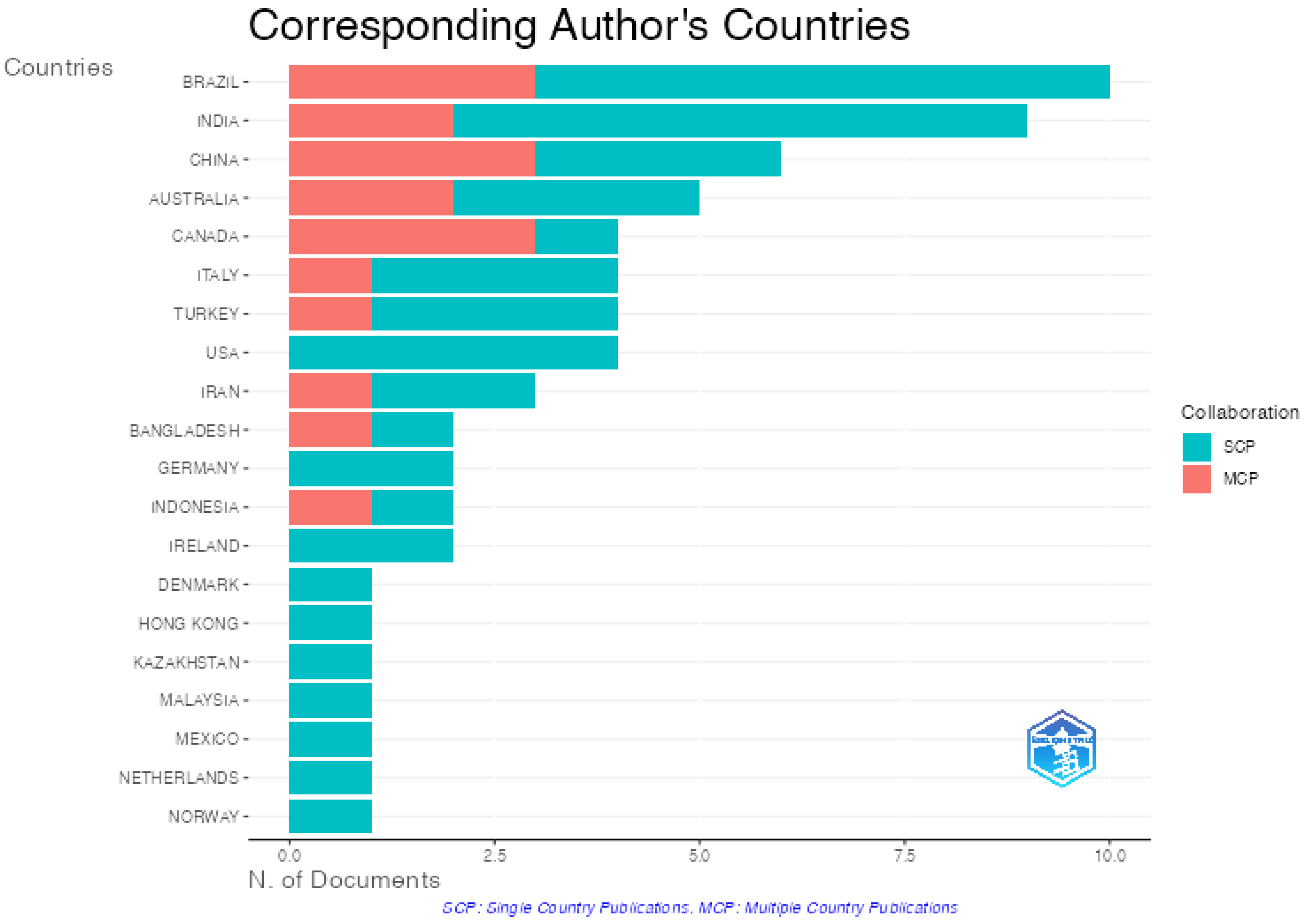
Figure 3.
Frequency distribution of key terms in e-waste management research. Source: Data compiled by the author from the Scopus database were analyzed using the R package “bibliometrix”.
Figure 3.
Frequency distribution of key terms in e-waste management research. Source: Data compiled by the author from the Scopus database were analyzed using the R package “bibliometrix”.
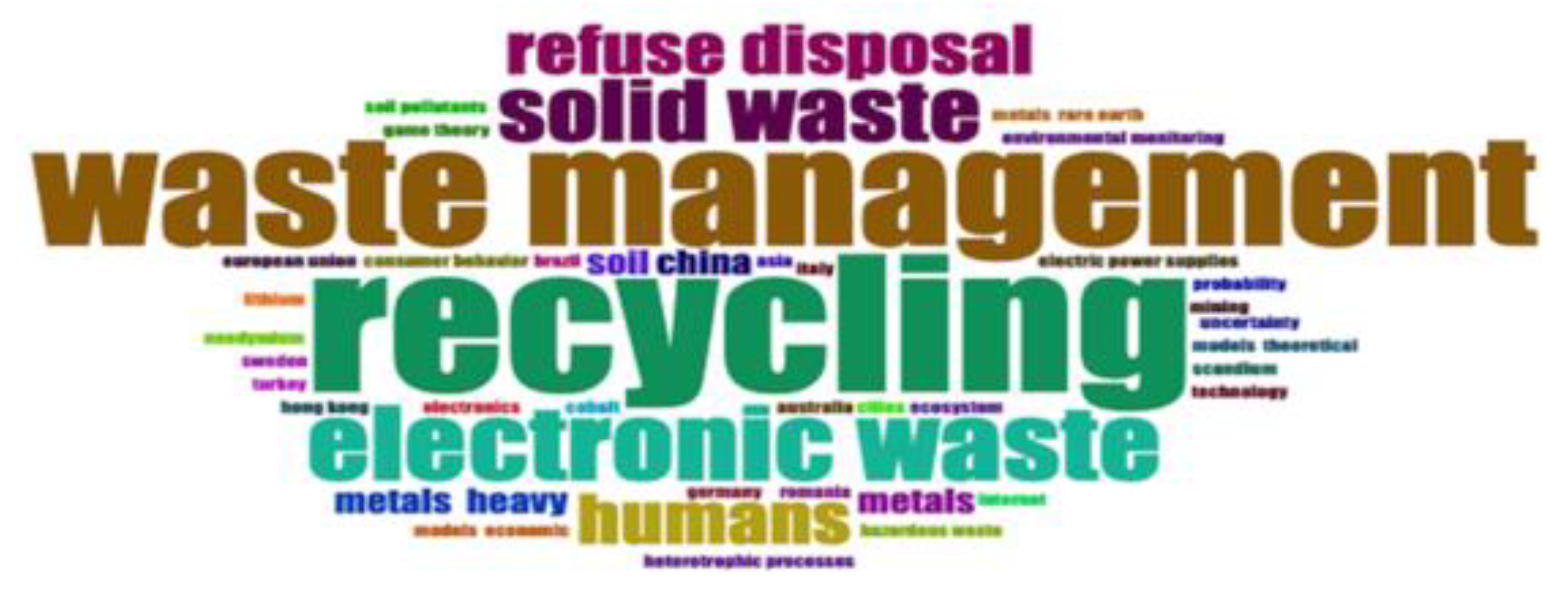
Figure 4.
Most Relevant Words. This figure presents the key concepts in e-waste management research: cluster, centrality, and importance metrics. Source: Data compiled by the author from the Scopus database were analyzed using the R package “bibliometrix”.
Figure 4.
Most Relevant Words. This figure presents the key concepts in e-waste management research: cluster, centrality, and importance metrics. Source: Data compiled by the author from the Scopus database were analyzed using the R package “bibliometrix”.
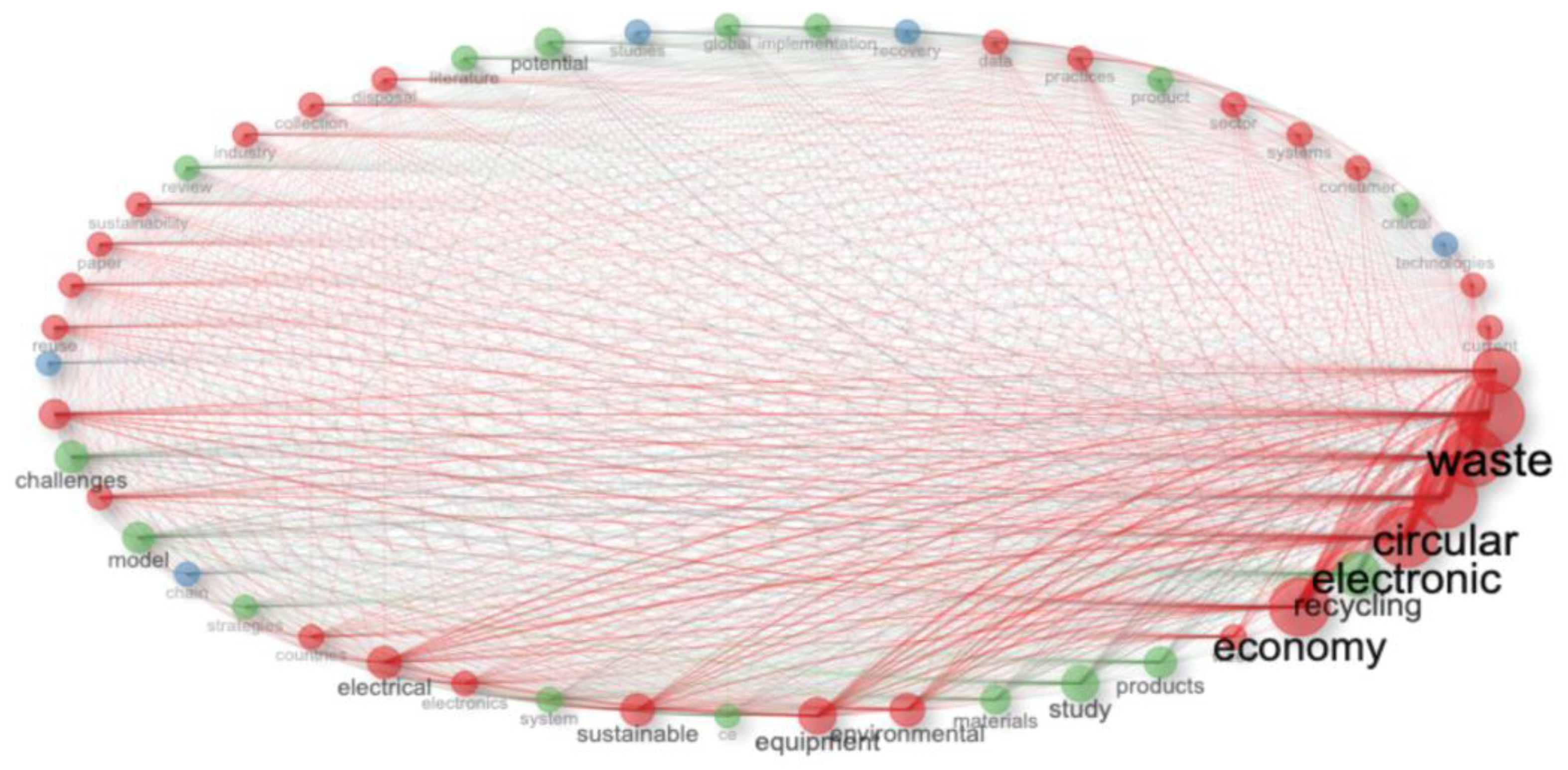
Figure 5.
Conceptual framework for circular economy in e-waste Management. An integrated approach to sustainable design, consumption, and end-of-life management.
Figure 5.
Conceptual framework for circular economy in e-waste Management. An integrated approach to sustainable design, consumption, and end-of-life management.
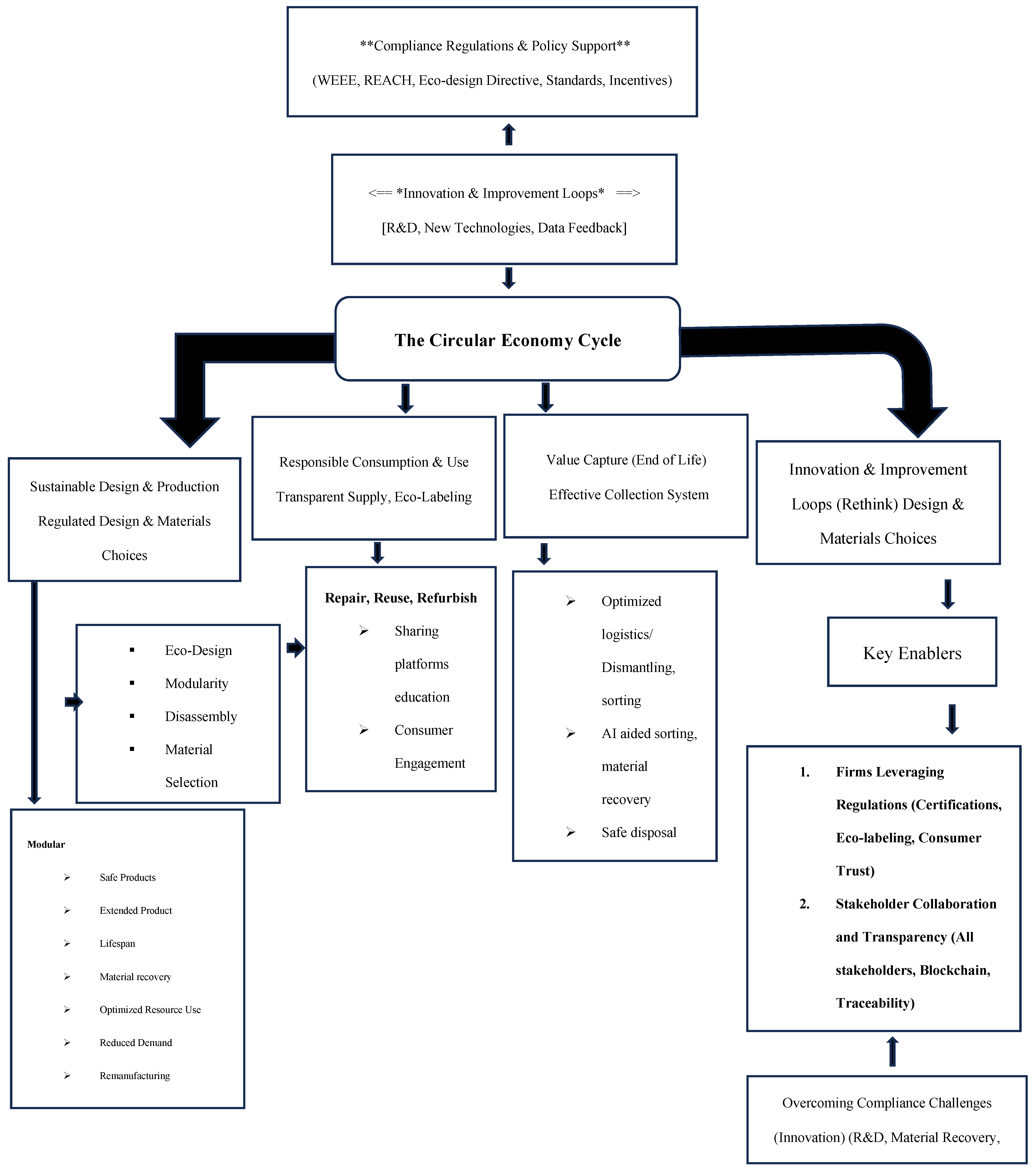

Table 1.
Bibliometric overview of dataset - key metrics and descriptive statistics.
| Description | Results |
|---|---|
| Documents | 78 |
| Timespan | 2012:2025 |
| Sources (Journals, Books, etc.) | 57 |
| Annual Growth Rate % | 5.48 |
| Document Average Age | 3.46 |
| Average citations per doc | 25.15 |
| References | 0 |
| Keywords Plus (ID) | 42 |
| Author's Keywords (DE) | 42 |
| Authors | 319 |
| Authors of single-authored docs | 4 |
| Single-authored docs | 4 |
| Co-Authors per Doc | 4.28 |
| International co-authorships % | 23.08 |
| Article | 59 |
Table 2.
Average scholarly output and citation impact - average citations and citation longevity.
| Year | Articles | MeanTCperArt | N | MeanTCperYear | CitableYears | |
|---|---|---|---|---|---|---|
| 2012 | 1 | 11 | 1 | 0.79 | 14 | |
| 2013 | 0 | 0 | 0 | 0 | 0 | |
| 2014 | 0 | 0 | 0 | 0 | 0 | |
| 2015 | 0 | 0 | 0 | 0 | 0 | |
| 2016 | 1 | 82 | 1 | 8.2 | 10 | |
| 2017 | 5 | 80.8 | 5 | 8.98 | 9 | |
| 2018 | 3 | 41.33 | 3 | 5.17 | 8 | |
| 2019 | 3 | 43 | 3 | 6.14 | 7 | |
| 2020 | 7 | 28.29 | 7 | 4.72 | 6 | |
| 2021 | 10 | 49.6 | 10 | 9.92 | 5 | |
| 2022 | 14 | 22.21 | 14 | 5.55 | 4 | |
| 2023 | 20 | 9.1 | 20 | 3.03 | 3 | |
| 2024 | 12 | 2.08 | 12 | 1.04 | 2 | |
| 2025 | 2 | 0 | 2 | 0 | 1 | |
| Articles = The total number of articles published in the given year, MeanTCperArt = The average total citations per article for the year, N = The number of articles considered in the calculation for that year, MeanTCperYear = The average citations per year for the articles published in that year, CitableYears = The number of years the articles from that year have been citable or available for citation. | ||||||
Table 3.
Distribution of articles on e-waste management across top scientific sources.
| Sources | Articles |
|---|---|
| JOURNAL OF CLEANER PRODUCTION | 8 |
| SUSTAINABILITY | 7 |
| RESOURCES CONSERVATION AND RECYCLING | 4 |
| 2024 ELECTRONICS GOES GREEN 2024+ (EGG) | 2 |
| CLEAN TECHNOLOGIES AND ENVIRONMENTAL POLICY | 2 |
| ENVIRONMENTAL SCIENCE AND POLLUTION RESEARCH | 2 |
| THE SCIENCE OF THE TOTAL ENVIRONMENT | 2 |
| WASTE MANAGEMENT & RESEARCH THE JOURNAL FOR A SUSTAINABLE CIRCULAR ECONOMY | 2 |
| 2023 9TH INTERNATIONAL CONFERENCE ON ADVANCED COMPUTING AND COMMUNICATION SYSTEMS (ICACCS) | 1 |
| 2023 IEEE INTERNATIONAL CONFERENCE ON BLOCKCHAIN AND CRYPTOCURRENCY (ICBC) | 1 |
| Sources = These refer to the journals, conferences, or other outlets where the articles related to your research topic were published, Articles = This column lists the number of articles from each source. | |
Table 4.
Top contributing authors in e-waste management research: publication count and fractional authorship.
Table 4.
Top contributing authors in e-waste management research: publication count and fractional authorship.
| Authors | Articles | Articles Fractionalized |
|---|---|---|
| AMORIM M | 3 | 0.57 |
| TUCCI HNP | 3 | 0.57 |
| AGUILAR-BARAJAS I | 2 | 0.50 |
| BABBITT CW | 2 | 0.58 |
| CORDOVA-PIZARRO D | 2 | 0.5 |
| CORREIA AJC | 2 | 0.37 |
| MARUJO LG | 2 | 0.45 |
| RODRIGUES FL | 2 | 0.37 |
| RODRIGUEZ CA | 2 | 0.50 |
| ROMERO D | 2 | 0.50 |
| SENNA P | 2 | 0.45 |
| SINGH S | 2 | 0.50 |
| XAVIER LH | 2 | 0.83 |
| Authors = The names of the authors who contributed to the publications, Articles = The total number of articles published by each author, Articles Fractionalized = The fractional contribution of the author to the articles, based on co-authorship. This accounts for the share of authorship, ensuring proportional credit when multiple authors are involved. For example, if an article has three authors, each might receive a fractional contribution of 1/3. | ||
Disclaimer/Publisher’s Note: The statements, opinions and data contained in all publications are solely those of the individual author(s) and contributor(s) and not of MDPI and/or the editor(s). MDPI and/or the editor(s) disclaim responsibility for any injury to people or property resulting from any ideas, methods, instructions or products referred to in the content. |
© 2025 by the author. Licensee MDPI, Basel, Switzerland. This article is an open access article distributed under the terms and conditions of the Creative Commons Attribution (CC BY) license (http://creativecommons.org/licenses/by/4.0/).
Copyright: This open access article is published under a Creative Commons CC BY 4.0 license, which permit the free download, distribution, and reuse, provided that the author and preprint are cited in any reuse.


