

Submitted:
17 February 2025
Posted:
19 February 2025
You are already at the latest version
Abstract
Management of sustainable solid waste MSW, it is how to deal with sustainable waste through services provided to the community and how to benefit from it as a product that affects the national income. which refers to the collection and treatment of solid waste before final disposal. The Mu-nicipal solid waste management in Dammam is based on generating and collecting MSW from different sources in Dammam, including individual and community bins. The main aim of this study was accessing the generation rate and composition of MSW in different income levels, evaluating the current MSW practice including knowledge, attitude, and satisfaction of residents toward the MSW management services in Dammam as a representative city of other large and important cities in Saudi Arabi. A multi-stage grouping method was used for dividing the population into three soci-oeconomic groups (high, middle- and low-class), and an equal number of participants was selected by a statistically simple random method. Collection of data was conducted by a pre-designed questionnaire for six months. Wood and garden waste represented the highest amounts (38.39 and 33.76 ton/year respectively), followed by Aluminum, paper and plastic (29.31, 28.53 and 27.29 ton/year respectively). Most of the solid waste collected from homes and community gathering places in Dammam is collected by collecting garbage and transporting it to private landfills, then the final stage is where it is buried by companies that fall under the responsibility of the Eastern Province Municipality, but it produces unpleasant odors whether in transportation or burial, which prompted the Saudi government to develop dealing with waste in a better way. Only 10-15% of the collected MSW is recycled including paper, metals, and plastics. Indeed, sorting and recycling sustainable waste has had a significant psychological impact on the community and the residents of Dammam are trying to understand how recycling can improve their income.
Keywords:
Municipal solid waste
; Management
; household
; waste handling
; landfilling
; Saudi Arabia
1. Introduction
Municipal solid waste (MSW) is defined as the waste collected by municipalities in a conventional manner through companies specialized in collecting, transporting and disposing of it safely [1]. Except for hazardous industrial waste, solid waste includes many types, including household waste, commercial waste, construction and demolition waste, sewage residues and street waste [2,3]. Municipal solid waste consists of various wastes, but there are basic wastes such as paper, plastic, textiles, metals, glass, yard waste, organic materials such as food scraps and inorganic materials such as metal cans and dirt [4,5]. Usually, there are factors that control the impact of waste generation in a clear and distinct way, such as population growth, standard of living and social and economic development [6,7]. In addition, municipal solid waste contains a huge amount of energy, which can be used economically by applying modern and effective management systems and technology [8,9].
Solid waste management, especially municipal waste, is considered a service provided to the community in a manner consistent with the types of waste and how to collect and treat it in the best way to preserve the environment so that it is safe and human health with a basic vision and to preserve the aesthetic, engineering and economic environment in a basic way. It provides a set of solutions to recycle solid waste in an advanced way and transform it into a valuable resource [10]. Therefore, municipal solid waste management requires specialized competencies and knowledge of how to deal with solid waste in a better way because management that does not have competencies and plans for how to manage solid waste is an obstacle to developing and benefiting from it in a big way, as it does not pose harmful effects on human health and the surrounding environment, including air pollution due to unfavorable gas emissions, vapors and unpleasant odors, which leads to very large groundwater pollution and also leads to attracting insects and rodents and more sewage floods, climate change and global warming [11,12]. Several studies have indicated that municipal solid waste accounts for (55-80%), followed by the markets and commercial areas (10-30%) through varying amounts from industries, institutions, streets, etc. [13,14]. In developing countries, there is a lack of proper procedures on how to manage solid waste and especially on the methods of final disposal in illegal solid waste dumps which eventually lead to pollution of groundwater and surface water sources due to the leaching formed [15,16]. Effective municipal solid waste management practices, especially reducing waste generation at source, help avoid illegal dumping of waste, provide required disposal sites and reduce potential pollution of air, soil and groundwater [17,18].
In many cases, developing countries suffer from a severe lack of effective solid waste management procedures, especially the methods used to dispose of them unsafely in (illegal solid waste dumps), which leads to the pollution of groundwater and surface water sources by the resulting leaching [19]. The Kingdom of Saudi Arabia is considered one of the most important promising economies in the Gulf region and the Arab world, where there is rapid population growth, urban expansion and industrialization, accompanied by an increase in solid waste production, especially in major cities such as Riyadh, Dammam and Jeddah. Based on the World Counter’s preparation of the latest United Nations data [20], the population of the Kingdom of Saudi Arabia has increased from 20,663,843 in 2000 to 36,142,229 in December 2022. The rate of municipal solid waste generation in the Kingdom of Saudi Arabia is 15.3 million tons per year (metric tons/year) at an average rate of 1.4 kilograms per day per capita (kg/capita/day) (Nizami et al., 2015a). The concentration of more than 75% of the Kingdom’s population in urban areas makes the government take the initiative to take measures to improve the recycling and waste management scenario in the country [20,21]. The municipal solid waste produced is generally regulated by local affairs and the Ministry of Municipalities, while management is carried out by local municipalities, which includes the collection, transportation and disposal of waste to landfills or dumping sites without recovering materials or energy, more specifically in the eastern regions, especially Dammam city, through various variations in waste collection and illegal dumping of solid waste in open landfills [22].
The main aim of this study was accessing the generation rate and composition of MSW in different income levels, evaluating the current MSW practice including knowledge, attitude, and satisfaction of residents toward the MSW management services in Dammam as a representative city of other large and important cities in Saudi Arabi. Based on the results of this study, the proper management practices will be recommended to improve the MSW management, which in its turn will ultimately step-up environmental protection.
2. Methodology
This part of the article describes the importance of managing solid waste in a specific way so that we can continue to face the challenges of increasing solid waste, which is a burden on the community, and deal with sustainable solid waste in specific ways, as it requires knowing the proportions of each type to facilitate dealing with its benefit.
2.1. Study Area
Dammam is considered one of the most important cities in the Kingdom of Saudi Arabia. It is one of the largest Saudi cities and has the highest population in the Eastern Province due to its large number of industries, universities, government agencies and centers. It is also considered the main seaport. It is noticeable that there is an increase in the number of people migrating to it for study and work. There is evidence of the population increase in the increase in daily quantities of solid waste.
The generated MSW in the city is transported from local waste collection sites to the regional waste disposal site using large transport vehicles by appointed companies under the supervision of the Eastern Province Municipality in the Abqaiq landfill. Climatically, Dammam has a hot desert climate. The winter temperatures range from mild to warm, while the summer temperatures are extremely hot, usually exceeding 40 °C (104 °F) for about 5 months. Consequently, the collection and storage of waste in Dammam should not take a long time because it may have a risky effect on the environment and needs an effective management system.
The number of households in the Dammam metropolitan area is estimated to be 331,000 households distributed on 95 neighborhoods in the East, Middle and West districts of the city. Most of those households are low and medium residential buildings with considerable number of independent villas in each district [22]. Figure 2 shows the distribution of different districts in different regions (East, Middle, and West) of Dammam City.
2.2. Selection of the Study Sample
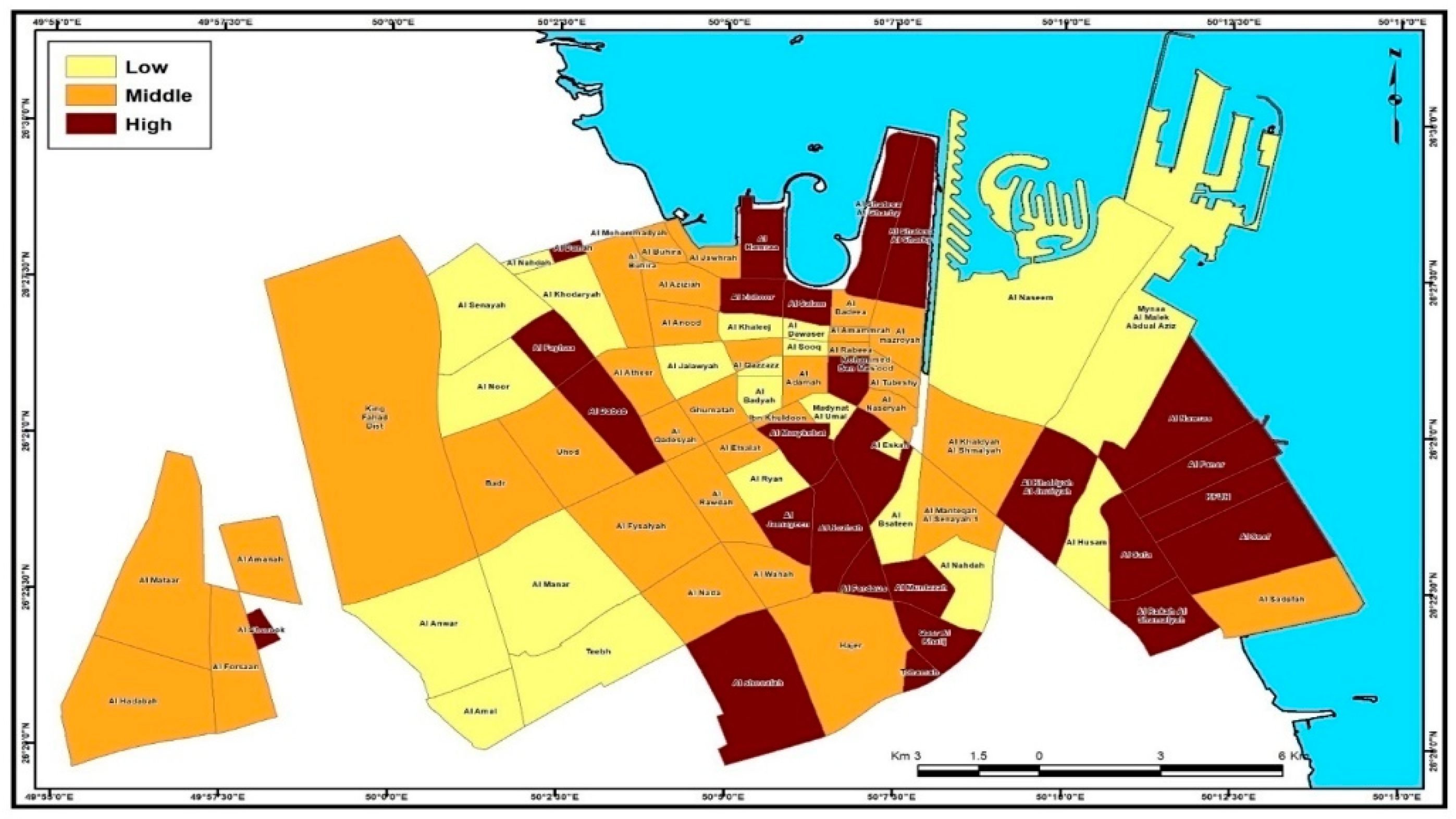
Participants of this study were selected from the householder population residing within Dammam City. A probability sampling technique was employed to draw the study sample. The probability sampling technique assures that all participants in the population target have an equal opportunity for selection [23]. A multi-stage grouping method was used for this study by dividing the population into three socioeconomic groups (high, middle- and low-class) to allow the researcher to reach each group, where the participants were selected statistically by simple random method [24,25]. This selection method was used to create a representative population of different income levels because it is challenging to identify each population [26,27]. As shown in Figure 1, Dammam is classified into three different socioeconomic areas; high, middle- and low-class; according to the income level which is already stratified by the city authorities and based on the ability of inhabitants to pay for the waste collection services.
Figure 1.
GIS Map of Dammam districts by neighborhoods.
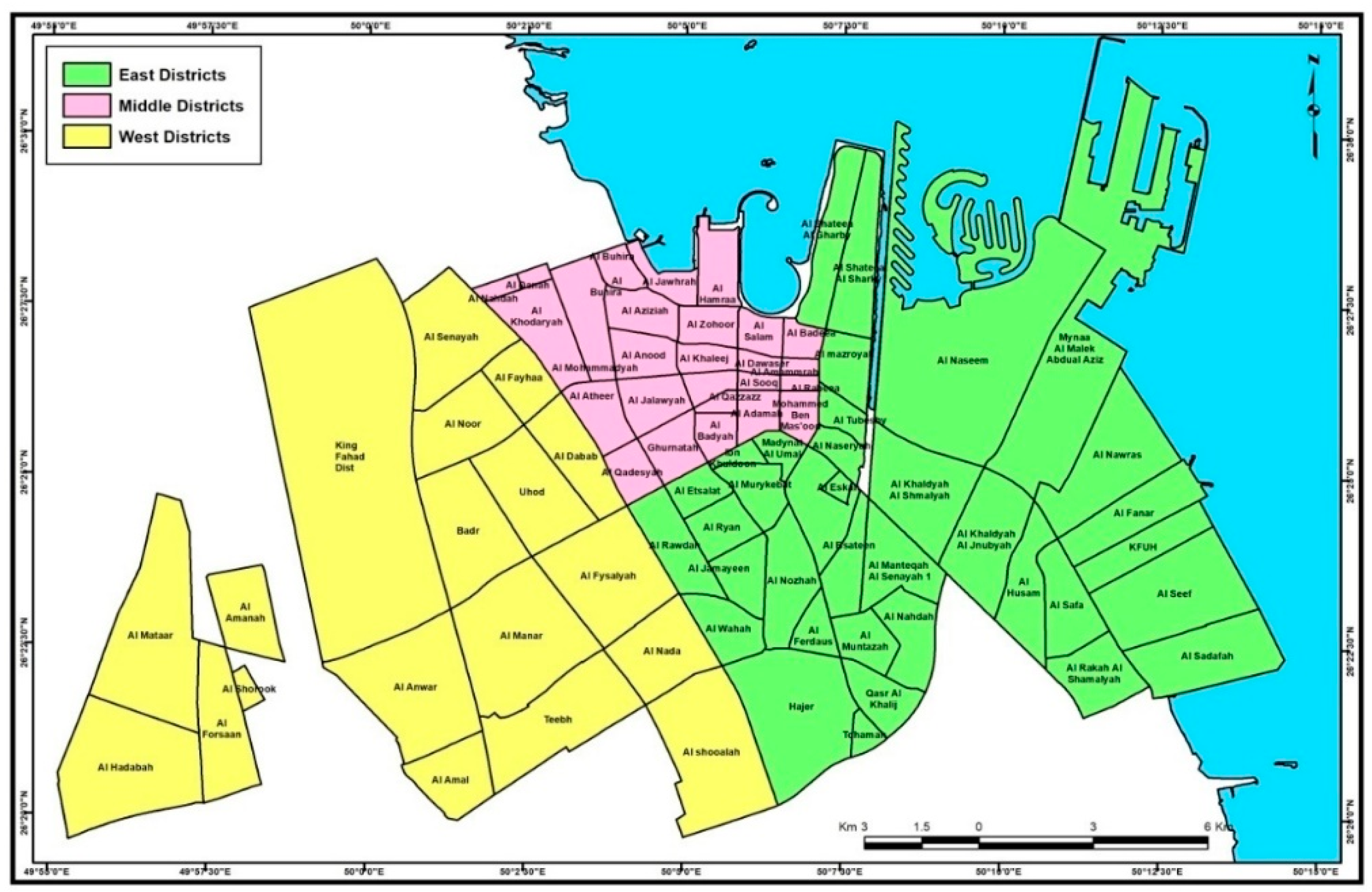
Figure 2.
Map of income distribution by neighborhoods in the districts of Dammam.
2.3. Sample Size
Cohen (1977) suggested that using a representative sample of the population should be based on constituent factors, including the level of significance, effect size, required strength, and estimated variance [28]. In addition, Cohen’s (1988) statistical strength analysis is among the most common methods in behavioral science and education for calculating the sample size required for a study [29]. Thus Cohen`s (1988) was used for calculating the sample size of this study. Adequate sample size was required for regression analysis to examine the contribution of each of the independent variables. This investigation required the use of multiple regression analysis using Structure Equation Model (SEM). The sample size in our study is crucial to produce meaningful results because reducing the sample size would reduce the power value to less than 0.80, which would be undesirable. With a specified power of 0.80, a medium effect size of f2 = 0.15, and a significance alpha of 0.05, Cohen’s (1988) statistical power analysis formula indicates that a sample size of 318 households was sufficient to run this analysis. Therefore, based on the above, the sample of this study could have ranged from 194 for product-moment correlations to a maximum of 393 as shown in Table 1.

Table 1.
Sample size determination for different statistical analysis, Cohen (1988).
| Statistic | Sample size Needed |
|---|---|
| Pearson correlation | 194 |
| Regression analysis | 318 |
Additionally, Cohen’s method and Cochran (1977) developed a formula to estimate a representative sample size for analysis. This method is applied and recommended for a substantial population. The Cochran formula allows the calculation of an ideal sample size given the level of precision required. This method is particularly appropriate and accurate for cities with large population densities such as Dammam. According to Cochran (1977), the formula for sample size selection is represented as follows [30]:
| Sample size = | z² p(1-p)/e² |
| 1+ (z² p(1-p)/e²N) |
Where: N population size, Z Z-score, e margin of error and P standard of deviation
| Z | z² | p | q=1-p | e | e² | N |
| 1.96 | 3.8416 | 0.5 | 0.5 | 0.05 | 0.0025 | 800,000 |
We calculated the sample size through using the Cochran formula.
n0=z²p(1-p)/e², Sample Size=n0/1+(n0)N
n0 = 384.16 and finally the sample size= 383.976095=384
According to the Cochran method, the total sample size was 383, suitable for the population area. Still, we increased the sample size to 450 which is related to different districts in Dammam not distributed as normal distribution but some gaps between high and middle levels in relating to low level. Sample sizes proportionate to the population in each district were selected. Distribution of the sample size between the three income levels is presented in table (1).
Table 1.
Income levels of population/ region in Dammam City.
| Income Level | Population/Region | Percentage (%) | No of respondents |
| High Level | 310,000 | 39 | 175 |
| Middle Level | 320,000 | 40 | 180 |
| Low Level | 170,000 | 21 | 95 |
| Total | 800,000 | 100 | 450 |
2.4. Data Collection
Collection of data for this study was conducted by a pre-designed questionnaire which was validated by a statistical expert and an expert in the municipal solid waste management. The questionnaire was composed of four main parts. The first part represented the demographic factors including the monthly income of the selected home. The second part represented the municipal solid waste handling, which was divided into 10 subgroups such as the daily generated amount of solid waste, the most types of generated solid waste, types and capacities of collection and storage of solid wastes, rating of the municipal solid waste services, and others. The third part represented the perception for municipal solid waste management which included 13 questions to evaluate the services that are provided by the formal municipality such as collection and transportation of the solid wastes. The fourth part represented the satisfaction of the participant with the improvement rate of the proceeded solid waste management procedures and his willingness to participate. This part was composed of four subgroups such as his willingness for payment, major problems associated with the solid waste management system in Dammam and his satisfaction with the municipal solid waste management procedures.
Because standard tools of randomization like lists and telephone directories were difficult and unavailable, the required information was collected by the researchers themselves through direct interview with the participants. The interviews were conducted through the daily gathering places for residents of each area, such as mosques and stores where people buy food and their stuff. The coordination with the formal Eastern Province Municipality (AMANAH) was conducted for all procedures of data collection. The period of study was nearly six months from September 2023 to March 2024.
2.5. Statistical Analysis
Descriptive statistics were to summarize the demographic findings and relevant attributes of the respondents and to determine the levels of all the variables under study. This study was designed to make comparisons between sustainable solid waste by dividing the neighborhoods into western, central and eastern Dammam regions in order to obtain which percentages were higher than others. The independent variables were determined on the desire of Dammam residents to participate in dealing with sustainable solid waste. Pearson's correlation coefficient was used and the moderating effect of demographic factors such as gender, income levels and desire to participate in dealing with sustainable waste was also examined [30].
3. Results
3.1. Number of Population in Dammam City
Table 2 indicates the number of populations in different regions of Dammam City during the period from 2010 to 2020. The metro area population of Dammam City in 2020 was 1,253,000, with a 2.29% increase from 2019, and the metro area population of Dammam in 2019 was 1,225,000, with a 2.34% increase from 2018.
3.2. Waste Generation in Dammam City
Table 3 shows that the generation of MSW generation of different region in Dammam City, while Tables 4.and 5 indicate the waste composition of the generated wastes. The highest amounts of MSW were found in the west of Dammam, followed by middle, while the lowest amounts were obtained from the east of Dammam. Wood and garden wastes represented the highest amounts (38.39 and 33.76 ton/year respectively), followed by Aluminium, paper and plastic (29.31, 28.53 and 27.29 ton/year respectively). Furthermore, the main types of paper were newspapers in the middle region (24.65%), cardboard in the west region (32.52%) and paper officers in the middle region (27.31%). For plastic waste, the main type of plastic was PET #1 (soda & water bottles) which was concentrated in the west region (27.35%), HDPE #2 (detergent, milk jugs, etc.) in west region (28.54%) and finally the PVCs were concentrated in the three regions around (15-19%).
Table 3.
Waste generation in different region of Dammam City.
| Region | MSW / ton/year | |||||
| 2010 | 2012 | 2014 | 2016 | 2018 | 2020 | |
| West of Dammam | 10154792 | 10465983 | 12843560 | 15420165 | 16003264 | 16545879 |
| Middle of Dammam | 10143569 | 10546972 | 11857901 | 13649965 | 14501256 | 15567980 |
| East of Dammam | 7543562 | 7825602 | 11070597 | 11588387 | 12522176 | 12787945 |
Table 4.
Composition of MSW in different region of Dammam City.
| Component | Region % | ||
| West of Dammam | Middle of Dammam | East of Dammam | |
| Paper | 28.53 | 49.23 | 22.24 |
| Plastic | 27.29 | 55.43 | 17.28 |
| Organic or Food waste | 19.37 | 58.41 | 22.22 |
| Glass and ceramic | 20.32 | 51.44 | 28.24 |
| Ferrous metal | 26.42 | 44.33 | 29.25 |
| Aluminum | 29.31 | 44.52 | 26.17 |
| Wood | 38.39 | 27.28 | 34.33 |
| Textile and rubber | 24.38 | 47.34 | 28.28 |
| Garden waste | 33.76 | 25.61 | 40.63 |
Table 5.
Composition of MSW in different region of Dammam City.
| Types of solid wastes | Region (%) | |||
| West of Dammam | Middle of Dammam | East of Dammam | ||
| Paper | ||||
| Newspaper | 17.62 | 24.65 | 16.37 | |
| Corrugated Cardboard | 32.52 | 18.34 | 29.25 | |
| Office paper | 19.67 | 27.31 | 25.31 | |
| Box Board (cereal and tissue boxes, etc.) | 18.65 | 18.35 | 14.33 | |
| Magazines | 11.54 | 11.35 | 14.74 | |
| Glass | ||||
| Clear Glass | 58.65 | 47.62 | 64.26 | |
| Brown Glass | 22.01 | 26.13 | 17.21 | |
| Green Glass | 19.34 | 26.25 | 18.53 | |
| Plastic | ||||
| PET #1 (soda & water bottles) | 27.35 | 20.59 | 18.74 | |
| HDPE #2 (detergent, milk jugs, etc.) | 28.54 | 17.78 | 20.54 | |
| PVC #3 (salad dressing bottles, etc.) | 15.64 | 19.45 | 16.23 | |
| LDPE #4 (bread bags, shrink wrap, etc.) | 11.62 | 21.62 | 18.32 | |
| PP #5 (bottle labels, etc.) | 9.54 | 14.93 | 17.72 | |
| PS & EPS #6 (packaging peanuts, etc.) | 7.31 | 5.63 | 8.45 | |
3.3. Municipal Solid Waste Collection and Storage
Based on the formal data from the Eastern Province Municipality of Dammam City, the total quantities of solid waste generated range from all regions in Dammam range between 20,000 and 35,000 m3 per month, and all the waste is collected one time at least every day. The Municipality workers use one wheeled vehicle and two wheelers for the first transport of solid waste to the storage area. Table 6 shows that different types of containers that are used for collecting the MSW from the three regions of Dammam city, where the plastic bins were mainly used as individual containers, while the Oil drums were mainly used as commercial containers. Table 7 shows that the different responsibility of solid waste collection the three different regions of Dammam City.
3.4. Transportation and Treatment of MSW in Dammam City
We find that some of the types of equipment used in the sanitary landfill such as bulldozers, and dump trucks with a capacity of 16 square meters, as well as lead. Specialized companies collect solid waste from different places in Dammam neighborhoods and transport it to collection areas specified by the Eastern Province Municipality through 15 m3 containers, where it is transported to temporary stations specified by the Eastern Province Municipality, for example, the first region (east and Middle of Dammam) and the second region (west of Dammam), where the municipality provides approximately 40 vehicles to lift solid waste from neighborhoods and main streets every three months. Not only that, but it has also provided trucks with an automatically opened cover, numbering 115 trucks, while other waste such as furniture, appliances, and others are transported through small, open trucks with a capacity of approximately 15-20 m3. The vehicles have been classified into two main types: the first type is the 7-yard sled, which is about 32 cubic meters, and the other type is the 2.5-yard dent. The waste is transported by a specific mechanism and in coordination with government agencies such as the Eastern Province Municipality once a day as a minimum, where it is disposed of permanently without treatment to the sanitary landfill through contracting with private companies to transport it from the temporary collection sites to the final collection site and from there to the sanitary landfill in Abqaiq. The containers are made of steel and have a capacity of 15 cubic meters, where 100% of the solid waste is buried there. The cleaning contractor transports the solid municipal waste to the sanitary landfill under the supervision of the Eastern Province Municipality and from there to the final landfill where it is buried in an organized manner. Table 8 represents the average percentage of each MWS management services during the last two years in Dammam city including collection and transportation, street sweeping, grass cutting and landfill operation.
4. Discussion
The total amount of solid waste generated in 1999 was estimated at 8.5 million tons. The amount generated increased significantly and exceeded 10.4 million tons in 2004. The amount of tons in 2013 reached about 13 million tons [31]. At present, the sustainable solid waste generation rate in the Kingdom of Saudi Arabia is about 15.3 million tons per year [32]. The total is expected to reach more than 20 million tons in 2030 [33]. In addition, the average per capita generation rate in 2004 was 1.2 kg/capita/day. However, this amount reached about 1.5 kg/capita/day in Riyadh, and 2 kg/capita/day during peak months in the city of Mecca, as reported by the Ministry of Economy and Planning [22]. Solid waste contains large amounts of organic waste such as food waste, which is considered one of the most common types of solid waste and its sources are concentrated in hotels, cafeterias, restaurants, homes and other diverse and varied sources [34]. Composting is used to obtain a valuable product, as it is an effective and economically optimal method [35]. Plastic waste is considered one of the most produced wastes in the Kingdom, as only about 20% of all plastic waste is recycled, as plastic waste is finally disposed of in solid waste landfills, where the accumulation of waste represents an environmental and operational burden on the landfill due to the decomposition process that takes place very slowly, so it is possible to replace it by using thermal decomposition with energy generation in the form of fuel oil and valuable products such as coal [22,36].
Solid waste is collected from homes in special bins and then disposed of in safe waste cubes, but the lack of waste disposal facilities, waste handling fees and disposal methods has led to the trend towards waste sorting, recycling and reuse, and the availability of the necessary energy. However, sorting is in its early stages, and although informality is the main driving force behind waste sorting and recycling, the recycling rate in Saudi Arabia ranges from 10-15%, as it is directly and fundamentally affected by the presence of an informal sector that extracts paper, plastic and metal waste from municipal waste [37]. Indicators indicate that the participation of the population in sorting and recycling solid waste is low, as it has not been verified whether the population is aware and knowledgeable about waste sorting and recycling in Dammam. Moreover, it is unclear whether it is possible to predict how sustainable waste handling practices among the population (sorting and recycling) can be predicted through social, psychological and external variables, as it was found that they predicted waste management behavior in different countries [38,39].
We find that disposing of solid waste in dedicated landfills is the final stage of solid waste disposal methods, the lining of which differs from the ground lining and is considered one of the most widely used and most economical methods in most developing countries. Therefore, disposing of solid waste is more important in landfills with a lower lining and upper covers that prevent the penetration of leaching into the soil. It also helps in the generation of methane gas (CH4), causing pollution and leaching that can harm humans and natural systems. We find that landfill gases are produced when methane molecules decompose, so the percentage of methane and carbon dioxide reaches 90%. In addition, carbon monoxide, alcohol, nitrogen, hydrocarbons, organic sulfur compounds, and heavy metals are also formed [40]. It is well known that leaching can pollute the surface and groundwater, which prompts us to treat these gases and use them more to generate energy. Therefore, biological landfills are among the advanced technologies that must be introduced in major cities in the Kingdom of Saudi Arabia due to their importance in utilizing landfill gases to generate electricity. It is a new technology whose mission is to solve the problems of global warming and reduce electricity consumption rates in waste disposal stations [41,42]. The Saudi government is working hard to develop solid waste management. It understands there is an urgency to find solutions to invest solid waste properly and a final solution to the problems of solid waste accumulation without effective treatment. It has allocated a national budget for 2011 estimated at 29 billion Saudi riyals to develop the municipal services sector, including water drainage and waste disposal. Therefore, it is making concerted efforts to improve solid waste recycling activities and safe methods of disposal, including working to improve solid waste management in the country [43,44]. The Ministry of Environmental Affairs has added regulations for sustainable waste management and treatment from collection sources to final disposal with an energy recovery program. Currently, waste is disposed of in landfills without recycling or burning [45,46]. It is expected that dumping sites in Saudi Arabia will reach their maximum capacity in the next few years. Therefore, the matter should shift from mainstream waste management to advanced technologies such as energy recovery.
The Kingdom of Saudi Arabia has become increasingly interested in focusing on the concept of sustainable solid waste recycling, as the country produces more than 15 million tons of municipal solid waste annually, at a daily cumulative rate of 1.4 kg per person, and the rate is expected to double to nearly 30 million tons annually by 2033 with the current annual population growth rate of 3.4%. The main components of municipal solid waste in the Kingdom of Saudi Arabia are food waste (40-51%), paper (12-28%), cardboard (7%), plastic (5-17%), glass (3-5%), wood (2-8%), textiles (2-6%), and metals (2-8%) [47]. Therefore, recycling and treating solid waste in a beneficial way, turning it into a product that can be used, which provides an opportunity to reduce the consumption of raw materials, is an accurate strategy for achieving solid waste management that has an environmental and economic impact, as it helps in preserving natural resources and environmental balance, improving the environment and public health, and raising the quality of environmental life [44]. It is noted that according to the studies conducted, the Ministry of Economy and Planning in the Kingdom of Saudi Arabia confirmed that 35% of the total waste produced in the country is recycled annually [48], but the GCC Environment Report stated that the current recycling rate in the Kingdom of Saudi Arabia is only 23.5% of the total waste. It is certain that sustainable waste recycling is a major factor controlling the accumulation of waste without benefiting from it. Major cities are among the most important cities that deal with solid waste by recycling it primarily, such as the capital city of Riyadh, Jeddah, which is the second largest city, and Dammam, where recycling is done in some Saudi factories while the rest is exported to other countries such as India and China. This is because recycling facilities are often dedicated to recycling industrial waste because it is cheaper and cleaner than classified municipal solid waste [49].
The process of composting is based on aerobic bioconversion of waste into fertilizer due to the activity of microorganisms [51]. In the current scenario, solid waste is managed by conventional waste dumping processes which are causing significant impacts on environmental such as Green House Gas (GHG) emission, leachate production and soil contamination etc. The problems of municipal solid waste are associated with uncontrolled dumping which can be avoided by shifting towards waste to energy approach, as it can provide both environmental as well as economical sustainability. The present review is focused on the status of waste disposal system in KSA with respect to their environmental effects. It is noted that the composting process has recently received great and increasing attention in the Kingdom of Saudi Arabia due to the high organic content of solid waste, i.e. about 40%, as the government is spreading health and educational awareness among citizens to devote these efforts to spreading technologies for converting solid waste into energy that can be used within the Kingdom through mutual coordination of all activities related to solid waste management and funding through the government [52].
On the other hand, environmental education is a basic means provided by the government to raise health and environmental awareness among citizens and to educate and encourage them to practice recycling behaviorally and morally to reduce the accumulated solid waste resources. The government is constantly raising awareness in schools and universities because it has a great impact on sustainable waste management practices in the Kingdom of Saudi Arabia. In addition, environmental education describes environmental issues in an understandable manner and moves forward towards true sustainability to benefit from solid waste in all its forms, such as using agricultural engineering for household waste and treating it as an improved, nutritious and beneficial fertilizer for the soil, not only that, but also converting waste into energy stations that can be used in the Kingdom of Saudi Arabia [52].
Recently, there have been attempts to motivate and financially encourage citizens to participate in sustainable solid waste sorting and recycling activities in most countries of the world on an ongoing basis. International governments have been keen to participate in encouraging their citizens to participate in sorting and recycling solid waste on a daily basis and how to benefit from it primarily. One of the strategies was presented in the form of financial incentives to motivate citizens to sort and recycle [53,54,55,56,57,58]. It was assumed that incentives are economically motivating citizens to participate in recycling, whether short- or long-term participation. It is an effective and important means that contribute greatly to motivating citizens and caring for recycling by providing facilities and programs for recycling in detail, as it aims to raise educational awareness among citizens and residents, as it contributes greatly to the success of waste separation and recycling [59,60,61,62]. Positive changes in people's attitudes and behaviors depend directly on the extent of understanding the social and psychological differences of the individual, which greatly affects the decision-making process to participate in sorting and recycling. We can confirm that waste sorting and recycling will have a significant impact on improving the environment, by moving towards participation in solid waste recycling [63,64,65]. Therefore, more efforts are needed to motivate and enlighten people to understand and appreciate the importance of responsible and sustainable waste management practices and manage their waste in a more sustainable way by sorting waste at source and recycling it [66,67,68].
Municipal solid waste in Dammam is collected more than once a day from homes in designated garbage collection points and then transported to solid waste dumps where it is buried in designated solid waste dumps. However, this waste certainly emits unpleasant odors in addition to rainwater leaking through landfill sites where it leaks from pollutants to landfills and is transported to nearby water bodies where it can cause groundwater pollution, leading to significant pollution of drinking water. Separating solid waste is not mandatory for residents as there are no regulations forcing citizens and residents to sort and recycle waste unless they are fully convinced. Municipal solid waste is usually disposed of by residents incorrectly, which negatively affects recycling as the waste is largely mixed, hindering proper sorting and recycling, so residents dispose of waste in containers located on the streets. Later, waste collectors or cleaning contractors sort these waste containers to extract recyclable materials. The residents of Dammam city are generally not involved in sustainable waste management, partly because the authorities in Saudi Arabia have not established a viable waste management program. Residents may be willing to participate in sorting and recycling to benefit from it rather than improper disposal. Social, psychological and external variables have been found to predict sustainable waste management practices in different countries. The proper handling of solid waste in sorting and recycling by residents in Dammam city is still in its infancy, although sorting and recycling are gaining increasing attention. Currently, the informal sector is the main driving force in sorting and recycling of municipal solid waste. In this process, metals, paper and plastics are sorted from municipal waste. The report indicates that the recycling rate in Dammam ranges from 10% to 15%. However, the degree or level of waste sorting and recycling practices of residents in Dammam city has not been investigated to understand the behavior of municipal solid waste management as a basis for supporting recovery activities [66,67,68].
5. Conclusion
Through this article, the focus was on the municipal solid waste management practices in Dammam, which is considered one of the most important Saudi cities in terms of solid waste management, recycling, composting, anaerobic digestion, environmental education, and landfilling. The interest in reducing the environmental problems related to solid waste has not stopped, and the recovery of electricity and biogas will be the best option for managing municipal solid waste in the Kingdom of Saudi Arabia. Moreover, waste-to-energy practices prevent the potential loss of materials from municipal solid waste, which increases environmental and economic impacts. However, providing incentives and training in the formal and informal sectors will greatly help in separating waste at sources, which reduces energy and material losses.
As this study adopts the theory of planned behavior, which is widely applied in many environmental behavioral studies and motivating households to participate in recycling, the current study tends to introduce and integrate some external variables as potential contributing factors. Additional hypothesized variables that influence the determination of the willingness of residents to participate in the practice of dealing with solid waste include social influence, market incentives, and government facilitators. In addition, solid waste management is a good investment because it supports integrated demographic variables to investigate their moderating effect on the willingness of the population to engage in sustainable waste management practice.
References
- Fernando, R.L.S. Solid waste management of local governments in the Western province of Sri Lanka: an implementation analysis. Waste Manag. 2019, 84, 194–203. [Google Scholar] [CrossRef] [PubMed]
- Bazrafshan, E.; Zarei, A.; Mostafapour, F.K.; Poormollae, N.; Mahmoodi, S.; Zazoul, M.A. Maturity and stability evaluation of composted municipal solid wastes. Health Scope 2016, 5, e3320. [Google Scholar] [CrossRef]
- Liu, A.; Ren, F.; Lin. , W.Y.; Wang, J.Y. A review of municipal solid waste environmental standards with a focus on incinerator residues. Inter. J. Sust. Built. Environ. 2015, 4, 165–188. [Google Scholar] [CrossRef]
- Cetinkaya, AY.; Bilgili, L. , LeventKuzu, S. Life cycle assessment and greenhouse gas emission evaluation from Aksaray solid waste disposal facility. Air Qual. Atmos. Health 2018, 11, 549–558. [Google Scholar] [CrossRef]
- Habib, K. : Schmidt, J.H.: Christensen, P. A historical perspective of global warming potential from municipal solid waste management. Waste Manag. 2013, 33, 1926–1933. [Google Scholar] [CrossRef] [PubMed]
- Cobbinah, P.B.; Erdiaw-Kwasie, M.O.; Amoateng, P. Africa’s urbanization: implications for sustainable development. Cities 2015, 47, 62–72. [Google Scholar] [CrossRef]
- Cobbinah, P.B.; Darkwah, R.M. African Urbanism: The Geography of Urban Greenery. Urban Forum 2016, 27, 149–165. [Google Scholar] [CrossRef]
- Meena, M.D.; Biswas, D.R. Changes in biological properties in soil amended with rock phosphate and waste mica enriched compost using biological amendments and chemical fertilizers under wheat-soybean rotation. J. Plant. Nutri. 2014, 37, 2050–2073. [Google Scholar] [CrossRef]
- Derkzen, M.L.; Nagendra, H.; Van Teeffelen, A.J.A.; Purushotham, A.; Verburg, P.H. Shifts in ecosystem services in deprived urban areas: understanding people’s responses and consequences for well-being. Ecol. Soc. 2017, 22. [Google Scholar]
- Erlingsson, C.; Brysiewicz, P. A hands-on guide to doing content analysis. Afr. J. Emerg. Med. 2017, 7, 93–99. [Google Scholar] [CrossRef]
- Khandelwal, H.; Kumar, A.T.; Kumar. S.; Rakesh, K. Life Cycle Assessment of Municipal Solid Waste Management Options for India. 2019. Bioresource Technology 2019, 288, 121515. [Google Scholar] [CrossRef]
- Essel, B. Depletion of urban green space and its adverse effect: a case of Kumasi, the Former Garden City of West- Africa. J. Environ. Ecol. 2017, 8, 1–10. [Google Scholar] [CrossRef]
- Iqbal, M.; Breivik, K.; Syed, J.H.; Malik, R.N.; Li, J.; Zhang, G.; Jones, K.C. Emerging issue of e-waste in Pakistan: A review of status, research needs and data gaps. Environ Pollut. 2015, 207, 308–318. [Google Scholar] [CrossRef]
- Zafar, S. Waste Management in Jeddah. Retrieved from: http://www.ecomena.org/tag/solid-waste management-in-jeddah/2015.
- Wang, F.; Cheng, Z.; Reisner, A.; Liu, Y. Compliance with household solid waste management in rural villages in developing countries. J. Clean. Prod. 2018, 202, 293–298. [Google Scholar] [CrossRef]
- Ibrahim, M. I.; Mohamed, N.A. Towards Sustainable Management of Solid Waste in Egypt. Procedia Environ. Sci. 2016, 34, 336–347. [Google Scholar] [CrossRef]
- Rodrigues, A.P.; Fernandes, M.L.; Rodrigues, M.F.F.; Bortoluzzi, S.C.; da Costa, S.G.; de Lima, E.P. Developing criteria for performance assessment in municipal solid waste management. J. Clean. Prod. Elsevier. 2018, 186, 748–757. [Google Scholar] [CrossRef]
- Oteng-Ababio, M. The role of the informal sector in solid waste management in the GAMA, Ghana: Challenges and opportunities’, Tijdschrift voor economische ensociale geografie 2012, 103, 412–425.
- Wang, H.; Guo, Y.; Guo, H.; Safar, B. Energy policy influences the surplus welfare of subscribers in present of cleaner energy sources. J. Clean. Prod. 2021, 280, 124145. [Google Scholar] [CrossRef]
- Zafar, S. Municipal wastes in Saudi Arabia. Bio-Energy Consult, 2020. Available online: https://www.bioenergyconsult.com/municipal-wastes-in-saudi-arabia.
- Anjum, M.; Miandad, R.; Waqas, M.; Ahmad, I.; Ahmad, Z.O.; Aburiazaiza, A.S.; Barakat, M.A. Solid waste management in Saudi Arabia. J. Appl. Agri. Biotech. 2016; 1, 13–26. [Google Scholar]
- Ministry of Economy and Planning (MEP). Sustainable development goals: 1st voluntary national review kingdom of Saudi Arabia July 9-18, 2018. Paper presented at the Transformation towards sustainable and resilient societies, New York, NY.
- Cobbinah, P.B.; Asibey, M.O.; Zuneidu, M.A.; Erdiaw-Kwasie, M.O. Accommodating green spaces in cities: perceptions and attitudes in slums. Cities 2021, 111, 103094. [Google Scholar] [CrossRef]
- Girma, Y.; Terefe, H.; Pauleit, S. Urban green spaces use and management in rapidly urbanizing countries: the case of emerging towns of Oromia special zone surrounding Finfinne, Ethiopia. Urban For. Urban Green. 2019, 43, 126357. [Google Scholar] [CrossRef]
- Pinz, A.; Roudyani, N.; Thaler, J. Public–private partnerships as instruments to achieve sustainability-related objectives: the state of the art and a research agenda. Public Manag. Rev. 2018, 20, 1–22. [Google Scholar] [CrossRef]
- Labib, O.A.; Abd Manaf, L.B.; Bin Sharaai, A.H.; Zaid, S.S.B.M.; Khalil, M.S. The influence of Socio-Psychological Factors on Residents’ Willingness to Practice Sustainable Waste Handling in Dammam City, Saudi Arabia. Sustainability 2023, 15, 13654. [Google Scholar] [CrossRef]
- Kabera, T.; Nishimwe, H. Systems Analysis of Municipal Solid Waste Management and Recycling System in East Africa: Benchmarking Performance in Kigali City, Rwanda; EDP Sciences: Les Ulis, France, 2019. [Google Scholar]
- Cohen, J. Statistical Power Analysis for Behavioral Sciences. 1st Ed. New York: Academic Press, 1977. StataCorp. 2003. STATA Reference Manual Release 10. Texas: Stata Press.
- Cohen, J. Statistical Power Analysis for the Behavioral Sciences, 2nd Ed. Hillsdale, New Jersey: Lawrence Erlbaum Associates, 1988.
- Cochran, W. G. Sampling techniques (3rd ed.). New York: John Wiley & Sons, 1977.
- Ouda, O.K.; Cekirge, H.M.; Raza, S.A. An assessment of the potential contribution from waste-to-energy facilities to electricity demand in Saudi Arabia. Energy Conservation. Manager. 2013, 75, 402–406. [Google Scholar] [CrossRef]
- Al-Hassan and Al-Mutairi. The impact of oil revenues on economic growth in Saudi Arabia: An empirical investigation using ARDL approach to cointegration test. IJEEP, 2010; 10, 454–462.
- Radwan, N.; Khan, N.A.; Elmanfaloty, R.A.G. Optimization of solid waste collection using RSM approach, and strategies delivering sustainable development goals (SDG’s) in Jeddah, Saudi Arabia. Sci. Rep. 2021, 11, 16612. [Google Scholar] [CrossRef]
- Arshad, M.; Hasan, M.A.; Al Mesfer, M.K.; Al Alwan, B.A.; Qureshi, M.N.; Eldirderi, M. Sustainable landfill sites selection using geospatial information and AHP-GDM approach: A case study of Abha-Khamis in Saudi Arabia. Helion 2023, 9, e16432. [Google Scholar] [CrossRef]
- Abubakar, I.R.; Aina, Y.A. Achieving sustainable cities in Saudi Arabia: Juggling the competing urbanization challenges. In Population Growth and Rapid Urbanization in the Developing World. IGI Global: Hershey, 2016; 234–255. [Google Scholar]
- Mallick, J. Municipal solid waste landfill site selection based on fuzzy-AHP and geoinformation techniques in Asir Region Saudi Arabia. Sustainability 2021, 13, 1538. [Google Scholar] [CrossRef]
- Labib, O.A.; Abd Manaf, L.; Bin Hamza, A.S.; Zaid, S.S. A review of Municipal Solid Waste Management Practices in Saudi Arabia. J. Waste Manag. Disposal 2021, 3, 1–7. [Google Scholar]
- Shammout, M.; Ahmed, U.I.; Ouda, O. Municipal Solid Waste (MSW) in Greater Dammam Area. Arabian Journal for Science and Engineering, 2016. 10.13140/RG.2.1.3591.9127.
- Ouda, O.K.M.; Raza, S.A.; Al-Waked, R.; Al-Asad, J.F. ; Nizami, A-S. Waste-to-energy potential in the Western Province of Saudi Arabia. J. King Saud Univ. Sci. 2017; 29, 212–220. [Google Scholar]
- Håkansson, A. Portal of Research Methods and Methodologies for Research Projects and Degree Projects. International Conference on Frontiers in Education: Computer Science and Computer Engineering, 2013.
- Pujaraa, Y.; Pathaka, P.; Sharmaa, A.; Govania, J. Review on Indian Municipal Solid Waste Management practices for reduction of environmental impacts to achieve sustainable development goals. J. Environ. Manag. 2019, 248, 1–14. [Google Scholar] [CrossRef]
- Xu, L.; Ling, M.; Lu, Y.; Shen, M. Understanding Household Waste Separation Behaviour: Testing the Roles of Moral, Past Experience, and Perceived Policy Effectiveness within the Theory of Planned Behaviour. Sustainability 2017, 9, 625. [Google Scholar] [CrossRef]
- World Bank. Kingdom of Saudi Arabia National Waste Management Study, Report No: ACS13627, Washington DC, USA, 2015.
- Ouda, O.K.M.; Rehan, M.; Nader, N. ; Nizami, A-S. Environmental and Economic Benefits of Recovered Paper: A Case Study of Saudi Arabia. Energy Procedia, 2017; 142, 3753–3758. [Google Scholar]
- Midgley, W.J.; Henshaw, M.D.C.; Alshuhri, S. A systems-engineering approach to nation-scale problems: Municipal solid waste management in Saudi Arabia. Sys. Eng. 2021, 24, 480–496. [Google Scholar] [CrossRef]
- Alruqaie, I.; Alharbi, B. Environmental Advantage Assessment of Recycling Food Waste in Riyadh, Saudi Arabia. J. Environ. Sci. 2012, 6, 230–270. [Google Scholar]
- Zhang, D.; Huang, G.; Yin, X.; Gong, Q. Residents’ Waste Separation Behaviors at the Source: Using SEM with the Theory of Planned Behavior in Guangzhou, China. Int. J. Environ. Res. Public Health 2015, 12, 9475–9491. [Google Scholar] [CrossRef]
- Al-Rashed. Saudi Arabia’s vision 2030: Challenges and opportunities for the kingdom's economic transformation. IJEFI, 2019; 9, 563–571.
- Morsy, E.A. Geo-Environmental Evaluation of the Kaakia Landfill, Southwest Makkah, Saudi Arabia. Sustainability 2022, 15, 500. [Google Scholar] [CrossRef]
- Osra, F.; Morsy, E.A.; Abd El-Rahim, I.H. Guidance plans for solid waste management during COVID-19 in Makkah, Saudi Arabia. Arab. J. Geosci. 2021, 14, 1–13. [Google Scholar] [CrossRef]
- Pearson, C.; Littlewood, E.; Douglas, P.; Robertson, S.; Gant, T.W.; Hansell, A.L. Exposures and health outcomes in relation to bioaerosol emissions from composting facilities: a systematic review of occupational and community studies. JTEHS, Part B, 2015; 18, 43–69. [Google Scholar]
- Al Khaldi, N.; Almadani, F.; Ouerghi, S. Landfill Siting Evaluation Using GIS and Multi-Criteria Decision-Making Method: A Case Study: Dammam Municipal Solid Waste Landfill. J. Geogr. Inf. Syst. 2021, 13, 508–522. [Google Scholar] [CrossRef]
- Rabeiy, R.; Almutairi, S.; Birima, A.; Kassem, L.; Nafady, A. A Cross-Sectional Study of Knowledge, Practice, and Management of Solid Waste Segregation in Higher Educational Institutes: A Case Study in KSA. Sustainability 2023, 15, 5516. [Google Scholar] [CrossRef]
- Saeedi, K.; Visvizi, A.; Alahmadi, D.; Babour, A. Smart cities and households’ recyclable waste management: the case of Jeddah. Sustainability 2023, 15, 6776. [Google Scholar] [CrossRef]
- Zhang, H.; Wen, Z.G. Residents’ Household Solid Waste (HSW) Source Separation Activity: A Case Study of Suzhou, China. Sustainability 2014, 6, 644–6466. [Google Scholar] [CrossRef]
- Pérez, L.E.; Ziegler-Rodríguez, K.; Pérez, A.T.E.; Vásquez, Ó.C.; Vázquez-Rowe, I. Closing the gap in the municipal solid waste management between metropolitan and regional cities from developing countries: A life cycle assessment approach. Waste Manag. 2021, 124, 314–324. [Google Scholar] [CrossRef]
- De Morais Lima, P.; Paulo, P.L. Solid-waste management in the rural area of Brazil: A case study in Quilombo communities. J. Mater. Cycles Waste Manag. 2018, 20, 1583–1593f. [Google Scholar] [CrossRef]
- De, S.; Debnath, B. Prevalence of health hazards associated with solid waste disposal—A case study of Kolkata, India. Procedia Environ. Science. 2016, 35, 201–208. [Google Scholar] [CrossRef]
- Cucchiella, F.; D'Adamo, I.; Gastaldi, M.; Miliacca, M. efficiency and allocation of emission allowances and energy consumption over more sustainable European economies. J. Clean. Prod. 2018, 182, 805–817. [Google Scholar] [CrossRef]
- Goulart Coelho, L.M.; Lange, L.C.; Coelho, H.M. Multi-criteria decision making to support waste management: A critical review of current practices and methods. Waste Manag. Res. 2017, 35, 3–28. [Google Scholar] [CrossRef]
- Hanoshenko, O.; Vambol, V.; Vambol, S.; Yeremenko, S.; Fialka, M.I.; Bodnar, I.; Inozemtseva, O. Medical waste generation, handling and crime statistics' analysis in this activity field: a case study of the Poltava region (Ukraine). Ecol. Quest. 2022, 33, 79–88. [Google Scholar] [CrossRef]
- Mosbah, E.B.; Alsanad, M.A.; Sassine, Y.N. Assessment of Environmental and 19 Economic Impacts of Municipal Solid Wastes Management System: A Case Study. JEE 2022, 23, 137–145. [Google Scholar]
- Dlamini, S.; Simatele, M.D.; Serge Kubanza, N. Municipal solid waste management in South Africa: From waste to energy recovery through waste-to-energy technologies in Johannesburg. Local Environ. 2019, 24, 249–257. [Google Scholar] [CrossRef]
- Friedrich, E.; Trois, C. Current and future greenhouse gas (GHG) emissions from the management of municipal solid waste in the eThekwini Municipality—South Africa. J. Clean. Prod. 2016, 112, 4071–4083. [Google Scholar] [CrossRef]
- Salam, M.; Zheng, L.; Shi, D.; Huaili, Z.; Vambol, V.; Chia, S.Y.; Ullah, E. Exploring Insect-based technology for waste management and livestock feeding in selected South and East Asian countries. Environ. Technol. Innov. 2023, 32, 103260. [Google Scholar] [CrossRef]
- Sequeiros, B. Application of performance indicators in municipal waste services. Técnico Lisboa, 2012; 12, 1–12. [Google Scholar]
- Botetzagias, I.; Dima, A.F.; Malesios, C. Extending the Theory of Planned Behavior in the context of recycling: The role of moral norms and of demographic predictors. Resources. Conserve. Recycle. 2015, 95, 58–67. [Google Scholar] [CrossRef]
- Grazhdani, D. Assessing the variables affecting the rate of solid waste generation and recycling: An empirical analysis in Prespa Park. Waste Manag. 2016, 48, 3–13. [Google Scholar] [CrossRef]
Table 2.
Population of different regions in Dammam City.
| Population | 2010 | 2012 | 2014 | 2016 | 2018 | 2020 |
| West of Dammam | 410933 | 410933 | 452552 | 530000 | 523439 | 562400 |
| Middle of Dammam | 314476 | 314476 | 347555 | 450000 | 419576 | 435820 |
| East of Dammam | 183735 | 183735 | 207454 | 200000 | 213985 | 254780 |
| Total | 909144 | 909144 | 1043000 | 1118000 | 1157000 | 1253000 |
Table 6.
Types of MSW storage containers in Dammam city.
| Type of Containers | Residential Premise (Used) % | ||||||||||||
| Almost | Frequently | Sometimes | Never | ||||||||||
| West | Middle | East | West | Middle | East | West | Middle | East | West | Middle | East | ||
| Individual Containers (Especially) | Metal bin | 13.6 | 21.2 | 19.2 | 23.5 | 37.4 | 34.1 | 35.6 | 33.2 | 32.7 | 2.5 | 3.56 | 1.3 |
| Plastic bin | 65.9 | 54.2 | 48.2 | 41.2 | 39.7 | 33.2 | 37 | 31.5 | 32.2 | 2.4 | 2.8 | 1.6 | |
| Plastic bag | 20.5 | 24.6 | 32.6 | 35.3 | 22.9 | 32.7 | 34.7 | 35.3 | 35.1 | 1.4 | 1.5 | 1.9 | |
| Communal Containers (Ordinary) | Oil drum | 63.7 | 59.8 | 55.2 | 50.7 | 48.1 | 58.6 | 54.1 | 51.1 | 50.4 | 1.3 | 1.2 | 1.3 |
| Stationary concrete | 3.5 | 4.9 | 6.6 | 6.5 | 7.3 | 4.2 | 6.2 | 6.2 | 6.2 | 39.3 | 49.2 | 48.3 | |
| Roll-on roll-off | 31.2 | 27.7 | 31.6 | 39.2 | 39.3 | 35.7 | 37.5 | 38.3 | 39.1 | 1.1 | 1.1 | 1.2 | |
| Haul bin | 1.5 | 7.7 | 6.5 | 3.7 | 5.3 | 1.5 | 2.1 | 4.4 | 4.3 | 42.4 | 48.6 | 49.2 | |
Table 7.
Responsibility of MSW collection in different regions of Dammam City.
| Responsibility of Collection | Premises % | Frequency of Collection/day | ||||
| West | Middle | East | West | Middle | East | |
| Collected by the Department | 12.4 | 13.2 | 14.4 | 1 | 1 | 1 |
| Collected by the Department’s contractor | 68.3 | 71.3 | 70.2 | 1 | 1 | 1 |
| Collected by owner’s contractor | 14.7 | 12.1 | 11.2 | 2 | 2 | 2 |
| No collection service (done by owner) | 4.5 | 3.4 | 4.3 | 1 | 1 | 1 |
Table 8.
MWS management services during the last two years in Dammam city.
| Service Component | Proportion of contractual service last 2 years (out of yearly total of 100%) | Number of contractors in last 2 years (out of yearly total of 100%) | ||||
| West | Middle | East | West | Middle | East | |
| Collection and transport | 25.1 | 24.2 | 22.5 | 21.7 | 22.5 | 19.6 |
| Street sweeping | 16.3 | 17.4 | 17.6 | 13.8 | 15.5 | 16.7 |
| Grass cutting | 14.4 | 14.2 | 16.1 | 17.8 | 17.5 | 17.3 |
| Landfill operation | 25.6 | 25.6 | 25.3 | 28.2 | 25.8 | 26.7 |
| Vehicle maintenance | 18.5 | 18.5 | 18.5 | 18.5 | 18.8 | 19.7 |
Disclaimer/Publisher’s Note: The statements, opinions and data contained in all publications are solely those of the individual author(s) and contributor(s) and not of MDPI and/or the editor(s). MDPI and/or the editor(s) disclaim responsibility for any injury to people or property resulting from any ideas, methods, instructions or products referred to in the content. |
© 2025 by the authors. Licensee MDPI, Basel, Switzerland. This article is an open access article distributed under the terms and conditions of the Creative Commons Attribution (CC BY) license (http://creativecommons.org/licenses/by/4.0/).
Copyright: This open access article is published under a Creative Commons CC BY 4.0 license, which permit the free download, distribution, and reuse, provided that the author and preprint are cited in any reuse.